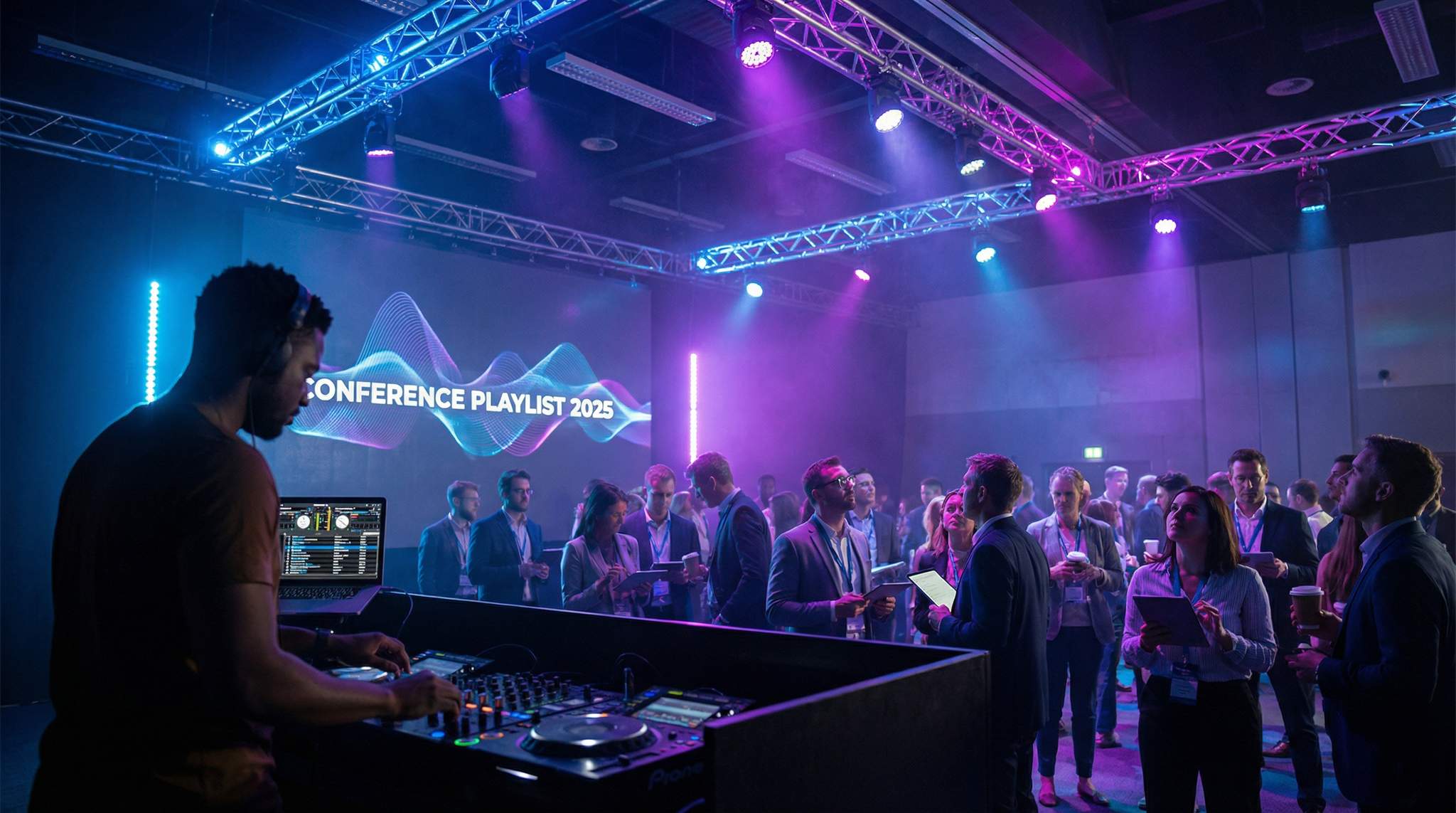
Creating a conference playlist is a unique way to ensure that your conferences stay exciting and lively. Conferences have a reputation for being overly serious, often associated with a corporate-level atmosphere. However, events such as conferences are in reality networking opportunities where your attendees are meant to socialize and make connections. No one enjoys attending an event that lacks energy and excitement. People are meant to be stimulated and all their senses should be catered to at events. Having music played at your conferences will set the atmosphere and tone for your event and elevate your attendee’s experience.
Attendees get to enjoy the company of similar people and listen to great music that was carefully curated for the event. Conferences, especially corporate events, don’t have to be boring. A carefully curated playlist played through an actual live band, DJ, or speakers will add to the general atmosphere of your event, especially if you carefully select the music that will be played. Most of your conferences will follow a specific subject or theme. For instance, it could be a slightly fancier event than a normal conference so it makes sense to play smooth-sounding jazz music in the background. The point of having a curated conference playlist is to elevate and add to the whole experience of the event. It will keep your attendees alert and upbeat as opposed to being bored and filled with quiet murmurs of conversation.
Three Things You Should Take Into Consideration Before Deciding on a Conference Playlist
As mentioned, music adds a level of energy and vitality to an otherwise silent event. You as the event planner want to do more for your attendees and choosing the correct playlist will add to their experience. A lot of your conferences will follow a specific theme or subject matter that is being highlighted during the main event. With music, you can smartly select specific tracks to play that support the whole atmosphere of your conference. It depends on the theme, the demographics of your target audience and potential attendees, and the size of the venue.
Let’s get into these three critical points to help you plan a better conference playlist.
Grow Your Social Following With Every Sale
Require social media follows, shares, or playlist adds to unlock presale access or special pricing. Turn every ticket purchase into audience growth.
1. You want to think about the theme of your conference
The theme is vital to the success of your conference. Therefore, understanding how creating event themes can help drive promotion is crucial when you are deciding on your music playlist. You want the music played at the event to be cohesive with the event theme or subject matter and neatly tie up the whole atmosphere together. The music that you choose for your event could end up leaving an impact on your attendees that affects the whole atmosphere of your conference. When you start creating your playlist (through a DJ, live band, etc.), you want to think about what will be the center of your conference. This could be the theme, the subject of the conference (for example, a sports conference), and even the main keynote speakers of the event.
The point is to select music that amplifies the theme of the conference. Take for instance that you are hosting an AR/VR conference. AR and VR are the main characters of your event so think about what type of music could be played. When people think about AR and VR technology, they think about the future so clue in on music with a futuristic appeal. This could be even a genre of music like EDM that expresses a vibrant and futuristic sound through the use of specific tech in music. As you go on to create your conference playlist, you have to consider the theme of your conference in order to set the tone for your event that makes sense and parallels the context of the event.
Ready to Sell Tickets?
Create professional event pages with built-in payment processing, marketing tools, and real-time analytics.

2. Select music that your target demographic will be familiar with and approve of
Your target demographic is the most important aspect of your event planning—this also goes for creating your conference playlist. Consider the demographics of your attendees such as their age, background, and occupation. You not only want to choose music that matches the theme of the conference, but you also want to play the music that your attendees will be familiar with, and most importantly, approve of. If the main demographic of your event will be professionals in their late 30s-50s, you want to of course create a playlist that your attendees will enjoy. Managing your events through Ticket Fairy over time will help you get a good glimpse of various audience demographics that can come in handy during event planning and marketing of future events.
You will most likely go with a live band since this seems to be a slightly elevated corporate conference, and the music will most likely be soft, instrumental music that adds to the professional atmosphere of the conference. The demographics of your audience are important to consider when creating your playlist and will offer you insight to create one that will truly impress your attendees.
3. Consider the size of the venue when deciding what type of music tech to go with
Your venue will affect how music will be received, especially when deciding what tech to go with. If your event space will be on the smaller side, it probably doesn’t make sense to go with a live band that will take up a lot of space. On the other hand, you might have issues with the volume of music played by a DJ since they’re known to be louder, and in a smaller event space, a DJ could literally burst some eardrums. A good compromise might be to go with a singular pianist or a trio of musicians that could take up smaller space at the event and still keep your attendees entertained. Always consider the size of your event space and how music will affect the venue in order to produce the best possible experience for your attendees.
Adapting Your Audio Strategy: From Large Summits to Focused Seminar Music
While massive corporate summits might benefit from high-energy EDM or a live jazz band, smaller educational workshops require a different approach. Effective seminar music should prioritize focus and knowledge retention. When programming audio for a seminar, opt for ambient, low-tempo instrumental tracks that eliminate distracting vocals. Playing this subtle background music during registration, coffee breaks, and transition periods prevents awkward silences without overwhelming the educational atmosphere of the room.
Free Tool: Price Your Venue Like a Pro
Capacity, city tier, day of week and amenity mix produce a suggested rate band and a full day-by-day rate card for your space. Free estimator.
Bonus Tip: Distribute the Audio with the Registration
A clever way to build anticipation before the event even begins is to share your curated audio selections early. When an attendee secures their spot, consider including a link to your official Spotify or Apple Music curation right alongside their confirmation. Pairing the playlist with the ticket delivery sets the tone weeks in advance, giving delegates a taste of the networking vibe they can expect on-site.
Taking this a step further, you can create a dedicated “playlist ticket” bundle or VIP tier where attendees gain access to exclusive, curated audio content or post-event recordings. Integrating your music strategy directly into the ticketing flow not only boosts early engagement but also provides a unique value-add that differentiates your event from competitors.
Grow Your Events
Leverage referral marketing, social sharing incentives, and audience insights to sell more tickets.
Scaling Up: Programming Convention Music for Massive Show Floors
When you transition from a standard corporate summit to a multi-day expo, your audio strategy must scale accordingly. Convention music requires a zoned approach. Unlike a single-room seminar, a sprawling convention center features distinct acoustic environments: high-energy exhibitor halls, quiet panel rooms, and bustling networking lounges. For the main show floor, convention audio should maintain an upbeat, driving tempo to combat attendee fatigue, while transition areas benefit from mid-tempo, ambient tracks. As a veteran producer, I always recommend working closely with your AV team to establish separate sound zones, ensuring that the energetic playlist on the expo floor doesn’t bleed into the focused discussions happening in breakout rooms.
Curating High-Energy Tracks to Combat Attendee Fatigue
Timing is everything when programming your event’s audio landscape. While ambient tracks work well for networking lounges, you need to strategically deploy high-energy songs for conferences during specific programming lulls. The dreaded post-lunch slump or the early morning registration rush are prime opportunities to inject vitality into the room. As a producer, I often rely on upbeat funk, driving synth-pop, or instrumental electronic tracks to serve as auditory espresso shots. Using these dynamic, tempo-driven selections as walk-on music for keynote speakers or during main stage transitions effectively resets the audience’s attention span and keeps delegates stimulated throughout a long day of sessions.
Navigating Event Music Licensing and Professional Curation
As a veteran producer, I cannot stress enough that executing a flawless event music strategy goes beyond simply plugging an aux cable into the house PA. When you are programming audio for a commercial gathering, you must ensure your background tracks and live performances are fully compliant with local performance rights organizations (such as ASCAP, BMI, or PRS, depending on your region). Securing the proper licensing protects your organization from hefty fines and ensures artists are compensated for their work.
If managing these legalities feels overwhelming, consider partnering with a professional curation service or a specialized corporate DJ. These experts not only handle the licensing logistics but also possess the technical know-how to read a room, seamlessly blending high energy songs for conferences during peak networking hours with subtle, ambient soundscapes during focused sessions. Investing in professional audio management guarantees that your sonic branding is both legally sound and perfectly tailored to your delegate experience.
Free Tool: Will the Room Actually Be Full?
Forecasts expected attendance from ticket type, event type and day of week. Calculates safe over-book count for free-RSVP events. Free estimator.
A smart playlist will elevate your attendee’s conference experience
When creating a conference playlist, you have to be smart and clue in on these three core points: the theme, the type of people attending, and your venue space. Music is always a welcome addition to any event because people absorb the energy from the music being played. Your playlist doesn’t have to get complicated because music is an added aspect of your conference to enliven the atmosphere.
Are you ready to get started? Create your event with Ticket Fairy, a ticketing platform that will support and help your event ticketing. Get started by setting up your next event account today!
FEATURED IMAGE VIA NEW MUSIC CONFERENCE’S RESEARCH ON CONTEMPORARY PRACTICES
Frequently Asked Questions
Why is music important for corporate conferences?
Music transforms the atmosphere of corporate conferences from overly serious to energetic and lively. It elevates the attendee experience by keeping people alert and upbeat rather than bored. Additionally, a curated playlist sets the tone for the event, stimulating the senses and creating a better environment for socializing and networking.
What factors determine the best conference playlist?
Three critical factors determine a successful conference playlist: the event theme, audience demographics, and venue size. The music must align with the subject matter to create a cohesive atmosphere, appeal to the specific age and background of attendees, and fit the physical space constraints regarding volume and equipment setup.
How does the conference theme affect music selection?
The conference theme dictates the genre and vibe of the playlist to ensure a cohesive experience. For example, a futuristic AR/VR event might feature EDM or tech-inspired sounds, while a formal corporate gathering might utilize smooth jazz. The music should amplify the subject matter and parallel the event’s context.
Why are demographics important for conference music?
Audience demographics, including age, background, and occupation, determine what music attendees will recognize and approve of. A playlist for professionals in their late 30s to 50s often requires soft, instrumental music or a live band to match a professional atmosphere, ensuring the entertainment resonates with the specific target audience.
How does venue size impact conference music choices?
Venue size directly influences the choice of music technology and performance type. Small spaces may not accommodate large live bands or loud DJs that could overwhelm the room. In these instances, a singular pianist or a trio of musicians offers a compromise that entertains attendees without bursting eardrums.
How should organizers approach convention music for large-scale expos?
Programming convention music requires a zoned audio strategy. Because large expos feature multiple environments, organizers should use upbeat, high-energy tracks on the main exhibitor floor to keep attendees engaged, while utilizing softer, ambient audio in networking lounges and breakout rooms to prevent sound bleed and support focused conversations.
When should organizers play high-energy songs during a conference?
High-energy tracks are best utilized during key transition periods to combat attendee fatigue. Strategic moments include morning arrivals, the post-lunch slump, and as walk-on music for keynote speakers. Upbeat selections help reset the room’s energy and keep delegates engaged throughout long programming blocks.
Do organizers need special licensing to play event music?
Yes, playing copyrighted audio at a commercial gathering requires a public performance license. Event producers must typically secure permissions from performance rights organizations (like ASCAP, BMI, or SESAC in the US) to legally broadcast background tracks, live band covers, or DJ sets. Failing to obtain the proper licensing can result in significant legal penalties for the hosting organization or venue.