Beyond Sponsors – The Untapped Festival Funding Source
Overlooked Revenue Streams in Festival Budgets
Many festival producers rely heavily on ticket sales and corporate sponsorships, overlooking substantial grants and public funding that could bolster their budgets. This is a missed opportunity – public arts agencies and tourism boards worldwide invest millions in cultural events annually. For instance, the UK government’s Culture Recovery Fund disbursed £257 million to 1,385 arts organizations in one funding round, a move that Pollstar reported as a lifeline for the sector, illustrating the scale of support available. Experienced festival organizers know that grants can be a game-changer: they infuse non-repayable funds that ease financial pressure while often advancing the festival’s cultural mission. By diversifying beyond sponsors, festivals tap into new revenue streams that not only bring in cash but also strengthen community ties.
Financial Relief with Community Benefits
Unlike corporate sponsors (who expect branding exposure or ROI), grants come with a public service mandate – they support your festival’s cultural, social, or economic value to the community. This creates a win-win scenario: the festival gains funding to improve programming (or cover essentials like production costs) while delivering tangible benefits like free performances, tourism boosts, or environmental initiatives. Public funding often enables festivals to offer free or discounted access for community members, commission local artists, or implement green practices that might otherwise be unaffordable. For example, the Montreal International Jazz Festival in Canada receives government grants so it can keep a large portion of its concerts free to the public, allowing millions to attend at no cost. This approach illustrates a festival revenue mix that preserves mission while securing funding. Grants can thus help festivals fulfill their mission – spreading art and joy – without solely chasing profit.
A Pillar of a Balanced Budget
Shrewd festival producers treat grants and public funding as integral pillars of their financing strategy, alongside tickets and sponsors. It is crucial to diversify your festival’s income streams rather than leaning on one source. A recent promoter analysis found that grants are essential when building a healthy festival budget that blends four main revenue streams, complementing sponsorships, ticket sales, and merchandise. By securing public funds, events become less dependent on volatile ticket sales or the whims of a few big sponsors. This diversification reduces financial risk – if a sponsor pulls out or ticket sales dip, grant money can keep core operations afloat. Moreover, landing a prestigious grant (say, from a national arts council) adds credibility to your festival’s brand, which can even attract more sponsors and media interest. In short, grants provide not just money but also validation that your festival delivers public value.
Identifying Grant Opportunities for Festivals
Local Government Arts & Culture Programs
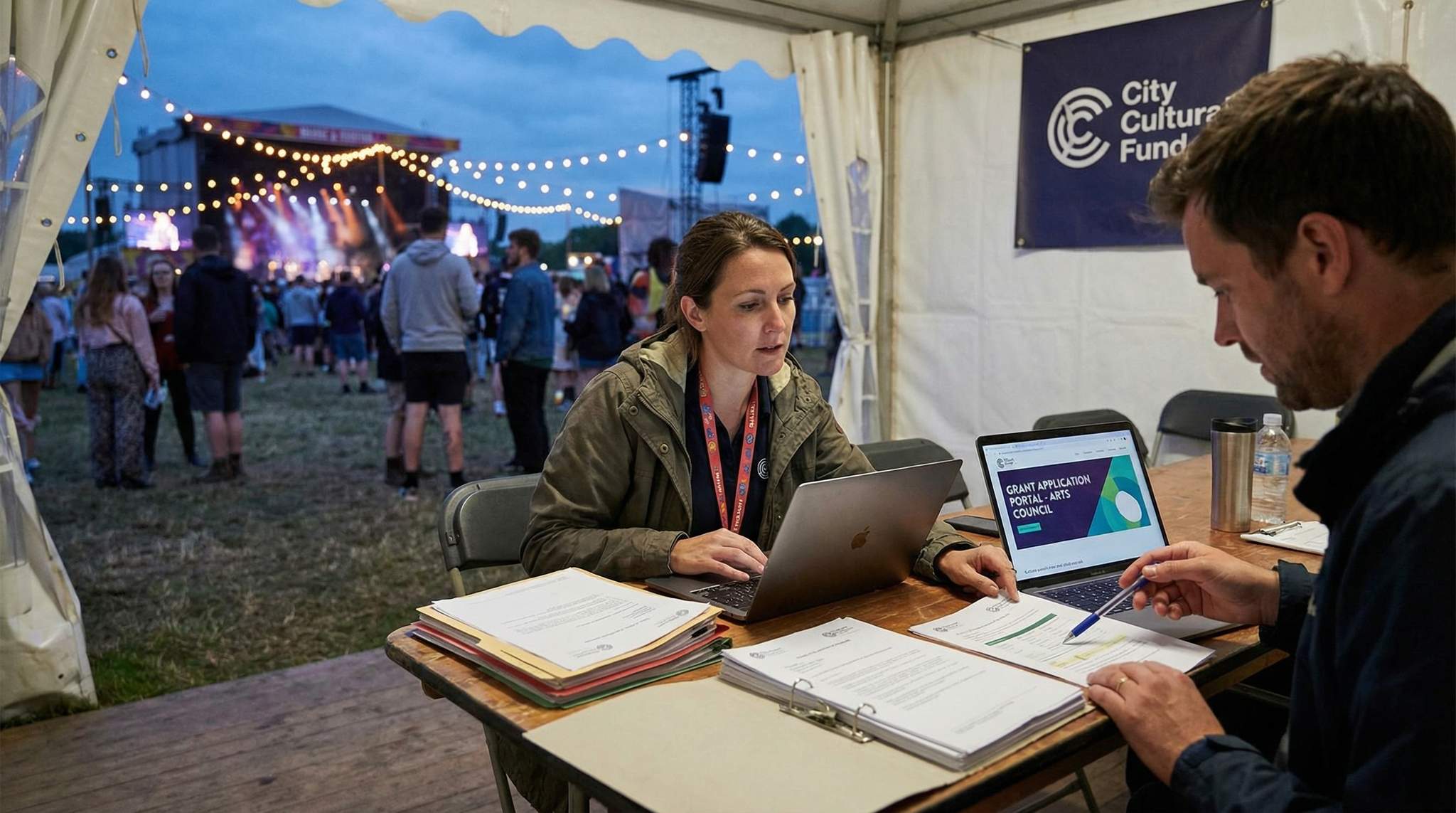
Start your grant search close to home. City councils, county arts commissions, and local cultural trusts often offer small grants or co-funding for events that enrich the community. These local grants may range from a few hundred to several thousand dollars (or equivalent), targeting community arts festivals, neighborhood celebrations, or niche cultural events. Don’t be fooled by the smaller amounts – local grants can cover specific budget items (e.g. youth workshops, a local band stage) and often serve as seed money that helps unlock bigger funding later. Check with your city’s arts office or cultural affairs department for programs that support festivals, parades, or public art events. For example, in Wexford County, Ireland, the Arts Office runs a Small Arts Festival Fund granting around €1,000–€3,000 per event; in 2025 they funded 20 local festivals through this scheme, as reported by local news outlets in Wexford. Likewise, many U.S. cities have Arts & Culture Councils awarding community arts grants – Los Angeles, New York, Austin, Seattle, and others regularly invite applications from local event producers. These municipal grants typically prioritize events that engage local artists, celebrate heritage or diversity, and provide public access (often requiring that some portion of the festival is free or educational). Building relationships with local officials and demonstrating how your festival benefits the town (e.g. by drawing visitors or reviving downtown streets) can significantly boost your chances with city-level funders.
Data-Driven Event Marketing
Track ticket sales, demographics, marketing ROI, and social reach in real time. Exportable reports give you the insights to make smarter decisions.
Regional and National Cultural Funds
Beyond the city limits, look at state, provincial, and national arts funding bodies. Many countries have government agencies or arts councils that bankroll cultural projects – including festivals – to promote the arts nationwide. For instance, the National Endowment for the Arts (NEA) in the U.S. offers Grants for Arts Projects which have backed music, film, and folk festivals among thousands of grants for arts projects nationwide. The NEA specifically aims to fund arts projects in diverse communities. Festivals typically need a nonprofit arm or partner to be eligible (since most government arts grants go to nonprofit organizations or municipalities), but if your festival’s mission is artistic or educational, you might qualify. In the U.K., Arts Council England provides National Lottery-funded grants for festivals that meet cultural engagement goals, and Creative Scotland and Arts Council of Ireland have similar programs. According to one report, the Edinburgh International Festival – a premier arts event in Scotland – covers about 51% of its budget with public grants, including over £2.5 million from the city council and substantial support from Creative Scotland, a funding model detailed in guides on Edinburgh festival financing. Clearly, national arts funding can be pivotal for even world-class festivals. Research your country’s cultural ministry or arts agency for grant schemes dedicated to events, theatre, music, heritage, or community celebrations. Many have annual or biannual grant cycles specifically for festivals or live events. Tip: Sign up for newsletters or alerts from these agencies so you don’t miss calls for applications. And don’t overlook legislative earmarks or one-off government initiatives – sometimes a special cultural fund is created for a thematic year (e.g. Year of Indigenous Culture) that your festival could tap into.
Navigating Festivals Australia Grants and Regional Funds
For promoters operating down under, securing Festivals Australia grants is a highly sought-after milestone. This specific federal program is designed to fund arts and cultural initiatives at regional and remote events, meaning your production must take place outside major metropolitan cities to qualify. When applying for these Australian government grants, organizers must emphasize community participation and audience engagement. It’s not just about booking a headline band; it’s about funding a specific project within your event—like a First Nations storytelling marquee, a regional youth art installation, or a collaborative performance piece. Beyond the federal level, Australian promoters should also layer their funding strategy by applying to state-level bodies like Creative Victoria or Create NSW, which often provide complementary funding for operational logistics and marketing.
Planning a Festival?
Ticket Fairy's festival ticketing platform handles multi-day passes, RFID wristbands, and complex festival operations.
Tourism Boards and Economic Development Grants
Festivals that drive tourism or economic activity can access public funding earmarked for tourism development. City and regional tourism boards, as well as economic development agencies, often sponsor events that attract visitors, especially if they fill hotels and restaurants. Tourism grant programs may not always be labeled as “arts” funding – they might come in the form of visitor bureau sponsorships, hospitality tax grants, or state tourism department initiatives. For example, Visit California has been known to support major events that promote travel to the state, and many U.S. counties use a portion of lodging tax revenue to fund local festivals and fairs. National governments also invest in marquee events to boost country branding and visitation. Canada’s federal tourism agency (CED) recently gave $3 million in non-repayable funding to the Québec Winter Carnival, a move highlighted in government press releases, recognizing the festival’s role in drawing crowds during the off-season. Similarly, the Australian government’s “Festivals Australia” program distributes about A$1.4 million per year to regional festivals to strengthen arts in country festivals. If your festival can show it will bring tourists (especially overnight visitors) or revitalize a region’s economy, make that case to tourism bodies. Key targets: city convention and visitor bureaus, state or provincial tourism departments, national tourism ministries, and chambers of commerce. These entities might offer grants or in-kind support (like marketing assistance, police services, or venue fee waivers) if they see a clear ROI in terms of economic impact, which requires strict grant accounting and compliance.
Private Foundations and International Funds
In addition to government sources, non-profit foundations and international cultural organizations can be viable funding sources. Philanthropic foundations with arts or community missions (e.g. Mellon Foundation, Ford Foundation in the U.S., or Wellcome Trust in the U.K.) sometimes issue grants for cultural festivals, particularly those that foster social inclusion or education. These grants often require the festival to have non-profit status or a fiscal sponsor. Keep an eye on foundation directories or local community foundations for any “special initiative” funding that might align with your event’s purpose (for example, a foundation grant supporting youth music education could fund a youth stage at your festival). On the international front, organizations like the British Council, Goethe-Institut, Alliance Française, and other cultural institutes provide grants or sponsorships to festivals that promote cultural exchange. The European Union’s Creative Europe program is another major funder – it supports cross-border arts festivals and networks (for example, by funding collaborations among film festivals across Europe), helping them share content and audiences across borders, fostering international festival revenue mixes. If your festival has an international angle or partnership, look for grants targeting cultural diplomacy. Even the UNESCO and other UN agencies have been known to endorse or financially assist heritage festivals that align with their cultural preservation goals. While these opportunities are competitive, they can bring not just money but international prestige. Do thorough research to uncover all potential grants beyond your borders – you might find, for instance, an Asia-Europe Foundation fund for arts festivals or a global climate action grant for events implementing sustainability (more on that in the sustainability section). The main lesson is to cast a wide net: explore public and private grants at local, national, and international levels, and don’t assume you’re ineligible just because your festival is new or outside the mainstream.
Who Sponsors Cultural Festivals in the U.S.?
A frequent question from emerging promoters is: exactly who sponsors cultural festivals in the U.S. beyond the NEA? The landscape is actually quite diverse, blending public agencies with private philanthropy. At the state level, organizations like the California Arts Council or the New York State Council on the Arts (NYSCA) are major benefactors. On the private side, corporate foundations such as the Mellon Foundation, the Doris Duke Charitable Foundation, and the Ford Foundation frequently underwrite cultural events that emphasize heritage, equity, and community storytelling. Additionally, regional humanities councils and local community foundations act as vital sponsors for cultural programming that reflects local demographics. Building a matrix of these U.S.-based cultural sponsors allows you to layer federal, state, and private philanthropic dollars effectively.
Start Early: Planning Your Grant Hunt
Identifying the right grants is only half the battle – timing is critical. Most grant programs have fixed application windows and long lead times before money is disbursed. Successful festival organizers start the grant process 12–18 months in advance of their event to ensure funding arrives on time. Below is a rough timeline for incorporating grants into your festival planning:
Free Tool: How Many Tickets to Break Even?
Enter your venue, artist, production and marketing costs with your ticket price. See how many tickets cover your costs and how many you still need to sell.
| Timeline (Before Festival) | Grant Strategy Milestones |
|---|---|
| 18–24 months out (2 years before) |
Research and list potential grants. Begin identifying all relevant grant programs (arts, tourism, etc.) at local, national, and international levels. Note application deadlines and eligibility criteria. Start networking: introduce your festival to arts councils, tourism boards, and community leaders so they know your event’s value early on. |
| 12–18 months out | Strategic alignment and partners. Refine your festival’s mission and programming to align with grant opportunities. If needed, line up a nonprofit fiscal sponsor or partners (like a local museum or charity) to qualify for certain grants. Begin drafting core grant proposal materials (mission statement, community impact narrative, preliminary budget). |
| 9–12 months out | Prepare and apply. Develop tailored grant applications for each target fund. Gather support letters from community organizations, tourism authorities, or artists to bolster your case. Ensure your budget clearly shows how grant funds will be used and any matching funds you’ll provide. Submit applications for major national or state grants (many have deadlines ~1 year out). Apply for tourism board support around this time as well. |
| 6–8 months out | Apply for local grants and smaller funds. Many city or county arts grants have deadlines closer to the event (6–9 months prior). Apply to these now, customizing each application to highlight local community benefits. Follow up on previously submitted grants if allowed – sometimes a conversation with the grant officer can provide helpful feedback or show your enthusiasm. |
| 3–4 months out | Plan grant-funded elements. By now you’ll know which grants you secured (or have strong indications). Integrate the grant funds into your budget and planning. For example, if you got a tourism grant to add a free opening night concert, lock in those artists and start promoting it. Ensure you are ready to fulfill any conditions (like logo placements or data collection plans for reporting). |
| During Festival | Host funders and execute commitments. Invite representatives of granting agencies to attend VIP events or tours so they can directly see the impact of their support. Implement required public acknowledgments (e.g. announcements like “This stage is supported by City Arts Council grant”). Collect data and media (photos, videos) that document grant-funded activities – you’ll need these for reports. |
| Post-Festival (1–3 months after) | Reporting and thank-yous. Complete all required grant reports diligently. Provide attendance figures, economic impact, participant feedback, and budget accounting to show the grant was used as intended. Send personalized thank-you letters (or even a post-event report booklet) to the funding agencies and key officials, highlighting the successes their support enabled. This courtesy and transparency set the stage for renewing the grant next year. |
By mapping out the grant cycle alongside your festival’s timeline, you ensure no deadlines are missed and that you can smoothly integrate public funding into your event. The earlier you start, the more options you’ll have – many major arts grants won’t wait for latecomers. Remember, applying for grants can be time-consuming (each often requires detailed proposals), so build grant research and writing into your project plan just like you schedule booking artists or marketing. It’s an investment that can pay off tremendously when those checks arrive.
Arts and Cultural Grants: Fueling Creative Missions
City Arts Grants and Local Cultural Funds
Arts and culture grants are a natural fit for festivals with creative programming. On the local level, city and county arts grants tend to focus on how your festival enriches the area’s cultural life. When pursuing these, emphasize community engagement: Are you showcasing local artists? Providing arts education? Celebrating heritage or diversity? Grantors like to see a direct cultural benefit to residents. For example, a small city’s arts council might fund your festival’s family arts workshop tent or a performance by the local youth orchestra. If your town has an Arts Commission or cultural affairs department, review their grants program guidelines – often they spell out priorities such as “supporting innovative arts experiences in underserved neighborhoods” or “animating public spaces through art”. Tailor your application to mirror those goals. Pro tip: Attend public arts meetings or join local arts coalitions if possible; being an active player in the community arts scene can put your festival on the radar when grant budgets are allocated. And don’t overlook library boards, parks departments, or historical societies – they sometimes have small grant programs or sponsorship budgets for events aligned with their mission (e.g. a historical society might help fund a folk festival that showcases local traditions).
Need Festival Funding?
Get the capital you need to book headliners, secure venues, and scale your festival production.
National Arts Councils and Endowments
For larger grants, aim higher up the ladder to national arts councils and endowments. These bodies generally fund projects that have wide cultural impact, reach underserved audiences, or preserve important art forms. When crafting proposals to national agencies, stress the artistic excellence and cultural significance of your festival. Are you premiering new work or commissioning artists? Are you one of the few festivals spotlighting a particular genre or cultural community? For instance, the U.S. NEA will look for artistic merit and public engagement in festivals it funds, and often requires detail on how you’ll document or evaluate success. National grants can range from modest (e.g. $10k–$50k from a federal arts program) to huge multi-year commitments. In Europe, government cultural ministries sometimes underwrite flagship festivals with six- or seven-figure sums, not only for prestige but to ensure broad public access. Spain’s Ministry of Culture, for example, supports regional flamenco and film festivals as part of preserving cultural heritage missions. Success story: The Montreal Jazz Festival mentioned earlier is backed by both federal and provincial funding in Canada, creating a sustainable festival revenue model which was instrumental in allowing the festival to offer 300+ free outdoor shows alongside its ticketed events. That public funding model has not only made the arts accessible to all but also helped Montreal Jazz become one of the largest jazz festivals in the world, drawing tourists and acclaim that further justify the government’s investment. If you can illustrate this kind of virtuous cycle – public funding enabling greater cultural reach, which in turn elevates the festival’s profile and economic impact – you’ll have a compelling case for national arts grantors. Just be prepared: high-level grants are competitive and often come with specific requirements, like matching funds (the NEA, for instance, usually requires at least a 1:1 non-federal match, as outlined in NEA grant guidelines) or detailed outcome evaluations. Make sure to read all guidelines carefully and possibly reach out to grant officers with questions before applying; showing that you’ve done your homework can set you apart.
Navigating Music Festival Funding Specifically
When organizers ask how to get funding for a music festival, the answer often lies in specialized music export offices and industry-specific foundations. Unlike multi-disciplinary arts events, music festival funding frequently taps into organizations dedicated solely to the music economy. For example, in Canada, FACTOR provides substantial grants for live music events featuring domestic talent, while the PRS Foundation in the U.K. offers the Open Fund for Organisations to support new music programming. If you are producing a music-centric event, look beyond general arts councils to performing rights organizations (PROs), music export bureaus, and even local music city initiatives. These entities are highly motivated to subsidize events that provide paid stages for emerging artists or stimulate the local nighttime economy.
Cultural Institutions and Cross-Border Programs
Festivals with a strong cultural or international dimension can tap grants from cultural institutions and cross-border programs. If your event highlights a particular ethnic or cultural community, look into grants from institutes dedicated to that culture. For example, Alliance Française might assist a French film or music festival, or the Japan Foundation might support a Japanese cultural festival abroad. These organizations often provide funding or in-kind support (like covering travel for artists or providing film/media resources) to promote cultural exchange. Your festival might need to align with their goal of showcasing that culture authentically and educating audiences. Meanwhile, multi-country grant programs can help festivals that collaborate internationally. The EU’s Creative Europe is a prime example: it has funded networks of festivals in the performing arts, helping them share content and audiences across borders to expand festival reach internationally. If you partner with festivals in other countries or have an idea for cross-country programming, a Creative Europe Cooperation Project grant could be relevant (though Brexit complicates UK involvement, EU grants remain a big resource for continental Europe). Similarly, ASEF (Asia-Europe Foundation) and other regional bodies sometimes offer funds for festivals fostering intercultural dialogue. Don’t forget bilateral cultural years or city partnerships – e.g., if 2026 is a special “Year of Culture” between two nations or a city has sister-city grants, your festival could be the platform for their cultural showcase. To leverage these, emphasize your festival’s global ties or how it will bring different communities together. A practical step is to engage foreign embassies or consulates in your country; many have cultural arms (and modest budgets) to sponsor events that feature their nation’s artists or films. In summary, think beyond domestic funding – the world’s cultural organizations may have a stake in your festival’s success if it resonates with their mission.
Leveraging Travel Subsidies and Delegate Programs
For outdoor events and showcase festivals that rely on international talent or B2B networking, comparing travel subsidies in hosted buyer programs for outdoor events can reveal hidden budget relief. Many countries’ music export offices offer travel grants to their domestic artists to perform at your festival. Furthermore, if your event includes an industry conference component, you can often secure public funding to host international talent buyers, booking agents, and media. These delegate subsidies effectively reduce your programming and hospitality costs, allowing you to curate a globally diverse lineup while the artists’ home countries foot the bill for their flights and accommodations.
Free Tool: Forecast Every Day of Your Fair
Spread attendance across your fair days, see what rain would cost, and check gate and parking peaks before the gates open.
Example: Grant-Funded Arts Festival Impact
To illustrate the power of arts grants, consider the National Arts Festival in Makhanda (formerly Grahamstown), South Africa. It’s one of Africa’s biggest arts festivals and historically received substantial funding from the national Department of Arts and Culture. This support enabled the festival to provide hundreds of performance grants to artists and sustain an event that draws tens of thousands annually, despite being in a small city. However, in 2025 several long-standing South African festivals (including the National Arts Festival) faced a crisis when expected government grants were delayed or withheld, leaving arts festivals in funding limbo. The festivals generated huge local economic benefits (visitors spent an estimated R32 million in Makhanda during NAF 2024), yet funding cuts impacted artists and organizers, leaving organizers scrambling. The lesson here is twofold: 1) arts grants can elevate a festival into a major cultural institution, but 2) one must plan for the possibility of funding fluctuations due to politics or budget changes. Proactively building relationships with funders, advocating for your festival’s value, and maintaining a diversified budget (so you’re not entirely dependent on one grant) are all crucial to resilience.
Tourism and Economic Development Grants: Bringing Visitors = Backing
Courting City and Regional Tourism Boards
If your festival can draw visitors from outside the immediate area, tourism boards should be one of your first stops for funding. City and regional tourism agencies often have grant or sponsorship programs for events that will increase hotel occupancy, restaurant spending, and media attention for the locale. To win these grants, you must essentially pitch your festival as a tourism product. This means providing data or credible estimates on expected attendance (especially out-of-town attendees), marketing plans targeting tourists, and partnerships with local hospitality businesses. Highlight if your festival occurs in a shoulder season or off-peak time for tourism – many tourism boards are eager to support events that boost visitation in slow months (e.g., a winter festival in a summer beach town or a mid-week event that fills hotels on normally empty nights). Be specific: for example, “We anticipate 5,000 attendees from outside the region, generating an estimated 1,500 hotel room-nights and $1 million in local spending.” Back up those numbers if possible with past stats or economic impact studies from similar events. Tourism officials respond to ROI in terms of economic impact and publicity for the destination. Ensure your festival will credit the tourism board in marketing (logos, “Visit [City] Presents…” titles) as they love visibility in attracting travelers. As a case in point, Vivid Sydney – a major light and music festival in Australia – is heavily promoted by Destination NSW (the state tourism agency) because it generates huge tourism gains; in 2016, Vivid Sydney reportedly injected A$110 million into the NSW economy, proving the value of public funds compliance for destination festivals, a figure that undoubtedly justifies continued government backing. While your festival may not (yet) be a Vivid Sydney, you can still underscore how even a modest event can catalyze tourism for your area (maybe by targeting a niche travel segment like foodies, music fans, or cultural tourists).
National and Regional Economic Development Funds
Beyond tourism departments, many governments have economic development funds or events grants aimed at stimulating local economies and supporting job creation. These can be at the state/province level or a national initiative. Often, they’re not exclusively for arts – they might fund county fairs, sporting events, conferences, or festivals under the umbrella of economic stimulation. For example, Ireland’s Fáilte Ireland (the national tourism development authority) runs festival funding schemes to drive tourism, and in one county it merged with local arts funding to support 20 small festivals in a year, as noted in Wexford district news reports. Meanwhile, Australia’s federal RISE fund (Restart Investment to Sustain and Expand) was launched to kickstart events and festivals post-COVID, distributing A$20 million to 63 organizations in one round, providing lifeline funding for Aussie festivals – a lifeline that kept many festivals alive. Keep an eye out for such one-off programs; governments sometimes inject funds into the live events sector after crises or as part of economic recovery plans. If your event can help a town “on the rebound” (think of festivals re-energizing areas hit by downturns or disasters), there could be grants for that purpose. Tip: Connect with your local economic development office or business improvement district – they might have grant programs or be willing to advocate for council support of your festival, especially if you can quantify jobs supported (e.g. gig workers, vendors) or revenue generated by the event.
Making the Economic Case in Your Proposal
When seeking funding for tourism/economic reasons, the narrative of your application should be data-driven and aligned with public policy goals. Include any stats you have from past editions: out-of-town ticket sales (zip code analysis from your ticketing platform can show this), hotel booking codes redeemed, or surveys showing attendees’ spending. If you lack past data, use analogies from similar festivals or studies – for example, “A study by Tourism Bureau X found that events of this size typically yield a 3:1 return in local spending per grant dollar invested.” It’s also smart to mention how your festival complements the region’s strategic plans. If the city has a goal to become a “music capital” or attract tech tourism or highlight indigenous culture, tie your festival into that objective by aligning festivals with community goals. Show that you are helping the government hit its targets (whether it’s boosting off-peak tourists, revitalizing a district, or improving quality of life for residents), which can open the door to substantial civic backing. One effective technique is to include letters of support from local businesses and civic leaders: a hotel association vouching that your fest will fill rooms, or a downtown merchant group noting increased foot traffic during your event, will reinforce your claims. Real-world example: The organizers of SXSW (South by Southwest) in Austin famously produce an extensive economic impact report each year, demonstrating tens of millions of dollars in value to the city. This data has helped them garner support ranging from police overtime funding to marketing assistance from the city. While smaller festivals may not need such a heavy-duty report, the principle stands – speak the language of economic benefit when dealing with tourism and development agencies. Lastly, be prepared for grants in this category to come with strings: some require you to use official logos and slogans (promoting the destination brand), or to participate in economic impact surveys funded by the agency. These are usually minor obligations in exchange for potentially substantial funding, so it’s well worth accommodating them.
Example: Tourism Grant Success Story
An excellent illustration of leveraging tourism grants is the Québec Winter Carnival (Carnaval de Québec) in Canada. This historic festival takes place each February and is a cornerstone of winter tourism for Québec City. Recognizing its importance, the Canadian government has heavily supported it – including a recent contribution of over $3 million through a federal economic development initiative. With these funds, the Carnival invested in major enhancements: a new heated performance dome, improved visitor experiences, and off-season programming to attract tourists year-round, assistance granted under the Major Festivals and Events Support Initiative. The result has been record attendance and international media coverage that further boosts Québec’s profile as a winter destination. Notably, government officials often attend the Carnival’s opening ceremonies to share in the positive spotlight, reinforcing the partnership. This case shows how a festival can turn public funding into a virtuous cycle of better programming -> more tourists -> greater economic impact -> continued funding. Even if your festival is on a much smaller scale, aim to demonstrate that cycle. For example, a region in Australia supported a “Food and Wine Week” with a modest grant on the premise that it would extend the tourist season – after the event showed strong visitor numbers and local business uptick, the grant was renewed at double the amount for the next year. Success breeds support: once you prove that public investment in your festival yields real returns, you’ll find doors open to larger or multi-year funding commitments.
Sustainability and Environmental Grants: Going Green (and Getting Green)
Environmental Initiatives as Funding Magnets
Sustainability isn’t just good for the planet – it can unlock new funding streams for your festival. With governments and organizations increasingly prioritizing climate action, grants for environmental initiatives are on the rise. Festivals that incorporate eco-friendly projects or messaging may qualify for support from environment ministries, energy agencies, or climate-focused nonprofits. Examples of festival-related green grants include funding to implement solar power, grants for innovative waste reduction programs, or subsidies for public transit schemes to reduce event carbon footprints. When seeking environmental grants, frame your festival as a pilot site for sustainability solutions. Perhaps you plan to run a “green stage” powered by solar panels and batteries – an environmental agency might have a grant for community renewable energy demonstrations. Or if you aim for a zero-waste festival, there could be funding for composting systems or reusable cup programs (some cities will financially support events that reduce landfill use, since it aligns with their waste management goals). The key is to connect your event’s needs with broader environmental objectives. For instance, if a city has a target to cut plastic pollution, emphasize your plan to eliminate single-use plastics on-site, and you might secure a grant or sponsorship for reusable bottles or water stations. Case in point: After Glastonbury Festival in the UK banned single-use plastic bottles, it gained praise and potential partnerships for sustainability, helping in building a sustainable festival brand. Many municipalities now even include sustainability criteria in event permitting, viewing the event as a responsible citizen rather than a nuisance – meeting or exceeding those standards can make you eligible for special green event funding or at least goodwill that leads to indirect support (e.g. waiving certain fees as a reward for eco-friendly practices).
Government and NGO Grants for Sustainable Events
To find sustainability grants, check environmental agencies at all levels. National environmental ministries sometimes have “environmental education” or “community climate action” grant programs – a festival can qualify if it includes workshops, exhibits, or campaigns about sustainability. Local governments may offer green grants to businesses and events, especially if they have a climate action plan or are part of initiatives like Net Zero Cities. For example, Sustainability Victoria in Australia has funded community events that demonstrate clean energy tech through community climate change action grants. In the U.S., some state energy offices give grants or rebates for events installing solar lighting or EV charging stations on site. Public health agencies might fund festivals that promote environmental health (e.g. an air quality management district sponsoring a car-free music festival to encourage public transit usage). On the NGO side, look at organizations like Friends of the Earth, WWF, Sierra Club or local conservation groups – while they typically don’t fund festivals outright, they might partner with you on a grant or contribute small grants if your event helps advance their mission (for instance, a river conservation charity funding an arts festival by the river that features ecology education). Additionally, corporate foundations tied to sustainability are an avenue: many utility companies or renewable energy firms have foundations or CSR budgets for community projects. A utility might give a grant for a festival’s energy-saving initiative because it generates positive PR and community engagement around energy efficiency. One more angle: apply for innovation challenges or awards (some come with prize money) for green events – for instance, the A Greener Festival Awards program doesn’t give cash, but winning such recognition can help you then secure grants by proving you meet high sustainability standards.
Aligning Your Festival’s Green Goals with Funding
To maximize success with environmental funding, bake sustainability into your festival’s core plan, not as an afterthought. This means developing a robust sustainability strategy that you can show to potential funders. Identify specific projects: e.g., “We will power the second stage entirely with solar energy and biodiesel, cutting CO2 emissions by X%.” “We will eliminate single-use plastics, preventing an estimated 50,000 cups and bottles from landfills.” Quantify the impact where possible, as environmental grants are often justified by metrics (tons of carbon reduced, amount of waste diverted, number of trees planted, etc.). Grantors will also look for the educational aspect: how will your festival raise environmental awareness among attendees? Perhaps you plan on signage that displays real-time energy generated by your solar panels, or you’re hosting talks on sustainability in a “green village” area of the festival. If so, highlight that – it adds public value. Also, underline any collaborations: maybe you’re working with a local recycling company, a university environmental department (students monitoring waste sorting), or a cleantech startup demoing gear on site. These partnerships show that your festival is part of a bigger solution ecosystem and can make funders more confident that you’ll deliver. Finally, ensure you budget for the sustainability measures and mention that budget in the grant proposal – whether it’s the cost of biodegradable plateware or renting solar generators, be explicit that this is what the grant will fund to improve the event’s environmental performance. Transparency here is crucial; funders want to see that their money leads to clear, measurable green outcomes, and that you have a plan to measure and report those outcomes.
Example: Greening a Festival with Grant Support
Consider a mid-sized music festival that decided to become a zero-waste pioneer. The organizers partnered with the city’s environmental department and applied for a special “Zero Waste City” grant. With the ~$25,000 grant they received, the festival purchased a reusable cup system and dishwashing stations, and hired a waste management consultant to design on-site recycling/composting streams. They also set up educational booths with local eco-NGOs. During the festival, they achieved a 90% waste diversion rate, which they documented and reported back. The grant not only paid for the infrastructure but also gave the city a successful case study in waste reduction, aligning perfectly with its goal to cut landfill use. As a result, the city committed to funding the initiative for two more years and even upped the grant amount, while a national environmental foundation took notice and awarded an additional grant to extend the program to other events in the city. This anecdote (a composite of real scenarios from several green festivals) highlights how doing good for the planet can directly do good for your budget. By setting ambitious sustainability targets and rigorously tracking the results, festivals can attract dedicated funding streams and establish themselves as leaders – which also boosts their appeal to eco-conscious fans and sponsors. In short, if you can dream up a way to make your festival greener, there is likely a grant or sponsor out there eager to help fund it – so outline your green dreams and go for it.
Crafting Grant Applications That Win
Aligning with the Grant’s Mission
Writing a grant proposal is in many ways an exercise in empathy: you must put yourself in the funder’s shoes and address their goals. Before typing a word, study the grant guidelines and mission statements. Is the arts council primarily interested in community outreach? Is the tourism grant aimed at overnight stays? Tailor your application to explicitly show how your festival will achieve those outcomes. Mirror the language of the grant where appropriate. For example, if a cultural fund’s objective is “to increase public access to the arts,” use that phrasing: “Our festival increases public access to the arts by offering two free community stages and outreach programs in local schools.” By aligning your proposal with the funder’s priorities, you demonstrate that supporting your festival will further their mission – making it a clear win for them. It’s also wise to reference any conversations or info sessions you’ve had with the agency (if applicable): e.g., “As discussed with the Grants Officer, we have designed our program to directly address the city’s Music for All initiative by ….” – this shows you took initiative to understand their expectations. Remember, funders, especially public ones, are accountable to stakeholders (taxpayers, boards, etc.), so help them justify funding you by explicitly connecting dots: your festival ? achieves X public good ? aligns with Y mandate or policy, effectively aligning festivals with community goals. The easier you make it for the grant committee to see your event as a fulfillment of their mandate, the higher your chances of securing civic partnerships.
Telling a Compelling Story (Backed by Data)
A great application strikes a balance between emotional narrative and solid data. Start by painting a vivid picture of your festival’s vision and impact. Who does it inspire? Whose lives will it enrich? For example, “Each summer, our small town’s main square comes alive as 5,000 people of all ages gather to celebrate our diverse music scene – for many residents, this festival is their only opportunity to experience live symphony and opera in person.” Such storytelling sets the scene and makes your festival’s purpose tangible. But don’t stop at anecdotes – reinforce them with facts: “Last year, 40% of our attendees were first-time arts patrons, and 500 local children participated in our music workshops.” Use any metrics you have (attendance growth, demographic reach, survey satisfaction rates, social media engagement, etc.) to prove that your festival is thriving and valued. If you’re a new festival, you can cite stats or research from comparable events or a pilot you’ve done. Also, clarify why you need the grant and what difference it will make. For instance, “With a grant of $50,000, we will be able to book internationally renowned artists and keep 80% of performances free of charge, removing financial barriers for low-income families. Without this support, ticket prices would need to double, significantly limiting access.” This frames the funding as transformational. Funders love to feel that their dollars have a multiplier effect or enable something that wouldn’t happen otherwise. One more tip: incorporate quotes or testimonials if possible. A brief quote from a community member, artist, or local official saying “This festival changed our town for the better by…” can be gold in illustrating impact (just be sure you have permission to include it). In summary, weave a narrative that tugs at the heart – showcasing community joy, cultural pride, personal stories – and buttress it with numbers that lend credibility.
Budget Clarity and Realistic Requests
Every grant application will require a budget section, and this is where many fall short. A funder scrutinizing your budget wants to see three things: (1) the funds are needed, (2) the funds will be used efficiently for the intended purpose, and (3) you have a sustainable financial plan beyond their contribution. Present your festival budget in a neat, itemized format with the grant’s portion clearly identified. For example, break down Programming Costs: $100,000 (Grant X to cover $50,000 of artist fees, City sponsorship covering staging $20,000, etc.). Be explicit about what specific expenses the grant money will pay for – be it artist fees, stage rentals, outreach program costs, security, or marketing. Ensure those expenses align with the grant’s allowed uses (don’t list alcohol or merch costs if the arts grant only covers artistic and operational costs!). It often helps to include a budget narrative explaining each category briefly, especially if you have unusual costs. Importantly, denote any matching funds or revenue you are contributing. Many grants love to see that you have “skin in the game” and other income sources: “We are requesting $25,000 which we will match with $10,000 from ticket sales and $15,000 in corporate sponsor contributions to fully fund the $50,000 outdoor film series.” Showing multiple sources illustrates stability. Avoid inflated numbers – be realistic with costs (grant panels often include industry experts who know approximate costs; if you over-budget $200/hour for volunteers or list 20 staff for a job needing 5, it’s a red flag). Conversely, don’t severely under-budget either – claiming you can stage a three-day festival for $5,000 might make funders doubt your competency. Provide quotes or precedents if you think a cost might raise eyebrows. Lastly, double-check your math and ensure the budget totals match the ask. A clean, error-free budget builds trust in your management, which is crucial for trustworthiness in the eyes of the grantor.
Free Tool: Size Your Festival Site
Zoned capacity planning for arena, campsite, parking and entry lanes — against UK Purple Guide and NFPA density standards. Finds your bottleneck zone.
Showcasing Community Support and Partnerships
Grants, especially public ones, often want assurance that your festival has broad support and won’t operate in a vacuum. Including letters of support or detailing partnerships can significantly strengthen your application. A letter from the mayor, tourism bureau, or local arts organizations endorsing your festival shows that key stakeholders believe in your event’s value. Judges often read these letters to gauge community buy-in. Similarly, if you have collaborations (maybe a local university is curating a stage, or a charity is co-hosting an activity), mention them. It demonstrates that you’re working with others to maximize impact – a sign of efficiency and community integration. Some grants (like those from a community foundation) may require a certain number of support letters, so check requirements. Even when not required, you can typically attach a few; just ensure they are concise and pertinent. Beyond letters, you can strengthen narrative sections by naming partners: “We have partnered with the Downtown Merchants Association to create a vendor market that highlights local businesses, and the Association has committed $5,000 in-kind services for decor and signage.” This tells funders that others are investing in your success too. Also, highlight any volunteer force or public input that went into the festival – e.g. “Over 100 volunteers contribute to our operations, underlining widespread community enthusiasm,” or “We conducted a community survey to shape our programming.” These details reassure grantors that your festival isn’t a lone wolf project; it’s a community-driven venture worthy of public funds. Finally, make sure your application materials (including support letters) collectively tell a cohesive story without contradictions. If your narrative says you need funding to expand outreach, ideally one support letter might be from a school or library excited about you bringing festival programs to their kids – the pieces should reinforce each other.
Managing Grant Funds and Compliance
Meeting Grant Conditions and Expectations
Winning a grant is cause for celebration – but it also comes with responsibilities. Every grant or public funding source will specify conditions that you, as a recipient, must adhere to. Common conditions include: acknowledgment requirements (e.g. displaying the funder’s logo on all posters, banners, websites, and press releases), specific use-of-funds restrictions (money may only be spent on certain budget items outlined in your proposal), programming deliverables (you might be required to carry out particular activities you promised, like free workshops or an accessibility initiative), and reporting deadlines (usually a post-event report detailing how funds were used and what outcomes were achieved). It’s essential to read the grant contract or agreement thoroughly and even create a checklist of all compliance items. Failure to meet a condition – say, forgetting to put the state arts logo on your flyers – might seem minor but can jeopardize future funding or even violate the contract, creating compliance issues for destination festivals. Some grants require that you credit the funder verbally at the event’s opening or have an official banner onsite; others require tickets or invites be given to the funder’s representatives. There may also be legal requirements attached, such as nondiscrimination policies, accessibility standards (especially for government funds), or competitive bidding for how you spend the money. Treat these conditions with utmost seriousness. One seasoned festival producer mantra is, “If it’s in the grant agreement, it’s non-negotiable.” Assign someone on your team (or yourself, if you’re small) to be the compliance point-person who keeps track of all obligations. A good practice is to incorporate funder requirements into your production schedule: e.g., add a task in your marketing timeline to include logos on materials, plan a moment in your MC’s script to thank sponsors and grantors, etc. By proactively integrating these conditions, you ensure there are no last-minute scrambles or accidental oversights. Not only does this fulfill your current obligations, but it builds a reputation with funders that you are professional and dependable, increasing your chances of renewal.
Financial Oversight and Audit-Ready Bookkeeping
When public money is involved, transparency and detailed record-keeping are absolutely critical. Festival organizers worldwide have learned that every dollar (or euro, pound, etc.) of grant funding must be tracked and justified. In practice, this means establishing an accounting system that can isolate grant expenses. A great approach is to set up a separate ledger or project code for each grant within your accounting software (or spreadsheets) – record all the income and expenses associated with the grant under that code. This makes it easy to show exactly how the funds were used. Save every receipt, invoice, and timesheet for costs paid by grant money to ensure proper grant accounting. Many grants disburse funds in installments (e.g., 80% upfront, 20% after final report) and that final payment might hinge on proving proper use. Even if not required to submit receipts, you should have them in case of an audit. Public funders can and do audit events, sometimes even years later. Adopt the mindset: if it’s not documented, it didn’t happen, a core tenet of public funds compliance. This extends beyond paper receipts – keep email correspondence related to grant expenditures (like quotes from vendors), and document in-kind contributions as well (e.g., if the city gave you $10,000 worth of police services, note that in your records with an official letter or invoice marked as in-kind). Another essential practice is monitoring budget vs actuals throughout the project. If you see that you need to deviate from the budget you submitted (over- or underspending in categories), check the grant’s terms. Some allow reallocation with permission; others don’t. It’s far better to inform a grant officer and seek an amendment to use funds differently than to surprise them later. By diligently tracking finances, you not only avoid potential misuse but also set yourself up to produce a thorough final report that satisfies the funder. On the positive side, when you handle grant finances correctly and transparently, it builds trust and goodwill, often making agencies eager to continue support in subsequent years, avoiding the risks of poorly accounting for funds. In fact, a well-organized report showing money well-spent and objectives met can turn a one-off grant into a long-term partnership by treating in-kind support seriously.
Reporting Outcomes and Impact
Virtually all grants require a post-event report detailing what was accomplished. This is your chance to shine and prove that their money was put to great use. A strong grant report will typically include: a narrative summary (what happened at the festival, highlighting successes and any challenges), financial accounting (often comparing the actual expenses to the proposed budget, and noting any variances), and crucially, the outcomes/impact data. Remember those KPIs the funder cares about? Now you must report them. This means you should be prepared to gather data during the festival. If you promised to report attendance figures, ensure you have a ticketing system or crowd estimate method in place. If one of your goals was economic impact, you might need to provide an estimate of visitor spending – sometimes a simple attendee survey asking about their spending can give you that. For community or cultural impact, maybe include counts of artists who participated, demographic info on attendees (if collected through ticket sales or surveys), number of free shows held, etc. Visuals help too: include high-quality photos of key moments (especially those involving the community or anything the grant specifically funded), and samples of media coverage or attendee testimonials if available. Many funders love stories or quotes in reports – e.g., an anecdote about a local student who decided to take up violin after seeing a performance at your festival funded by the grant. Of course, express gratitude and credit the funder prominently in the report. Treat the report like a public document, because in a sense it is – governments might publish summaries of what they funded. If you can demonstrate that the grant objectives were met or exceeded, with clear evidence, you not only satisfy the immediate requirements but also make a strong case for future funding by proving money was well spent. As one festival funding advisor puts it, “Your report is your next application.” Impressing auditors and officials with meticulous reporting and compelling results can tip the scales in your favor when you apply again, ensuring you present as required on all fronts. A practical hint: some festivals create a “reporting pack” or appendix with detailed backups (like survey data, press clippings, financial statements) beyond the main report. Having this depth ready shows you’ve done due diligence. Finally, be honest in your report. If something didn’t go as planned, you can mention it briefly along with a lesson learned or how you’ll improve next time. Funders know events face challenges; what they appreciate is transparency and professionalism in addressing them.
Fostering Long-Term Relationships with Funders
Grants and public funding are not just transactional – they’re relational. Treat funders like key stakeholders or even sponsors in terms of relationship management. This means maintaining communication beyond just applications and reports. Invite representatives of your funding agencies to your festival and give them the VIP treatment. Show them the impact of their contribution firsthand: a tour backstage to see youth workshop participants, or a simple chat with festival-goers about their experience can personalize the value. During the off-season, keep funders updated with significant news: did your festival win an award or did an initiative they funded get positive press? Send a short note to let them know. Many festival producers also acknowledge major funders publicly (some dedicate a section in the program or on their website to thanking government partners and grants). This kind of recognition can feed the funder’s own publicity needs – for instance, a city council that grants money might appreciate a public thank you which they can show to their council members or constituents as evidence of supporting the community. Additionally, plan ahead if you aim for multi-year funding. Some places (like certain cities or national programs) offer multi-year grants or sponsorship contracts. To secure those, you often need to demonstrate a track record of compliance and success over a couple of single-year grants. When you’re ready, approach the funder about longer-term opportunities: “We’d love to discuss a three-year partnership to provide stability that will allow us to grow the festival significantly – here’s what we envision for the next three years with sustained support.” If you’ve built trust, they might welcome such discussions, as building multi-year partnerships provides stability. In line with this, consider signing a Memorandum of Understanding (MOU) with a city or tourism board for long-term civic support – it’s not a funding guarantee, but sets a framework. Finally, always abide by the golden rule: no surprises for the funder. If something at the festival goes awry that could concern them (say an unavoidable program change affecting a deliverable, or an incident at the event that hits the news), let them hear it from you first with an explanation. This proactive transparency goes a long way to show that you treat public trust seriously. Over time, a funder who sees your event consistently delivering value and handling funds prudently may become a champion for you – advocating internally or publicly for continued and increased support. That kind of champion can be priceless in the often bureaucratic world of public funding.
Real-World Wins and Cautionary Tales
How Festivals Boosted Budgets with Grants
Around the globe, many festivals have climbed from shoestring budgets to robust, world-class events thanks in part to public funding. One success story is the Glastonbury Festival’s free sister event, “The Glastonbury Abbey Extravaganza” – a smaller annual concert that has at times received local council grants to ensure ticket prices remain accessible and that local residents benefit culturally. By working hand-in-hand with local authorities on outcomes (like boosting the area’s cultural tourism on an otherwise quiet weekend), the organizers secured recurring funding that helps keep the event sustainable. On a different scale, small community festivals have also thrived with grants: the Imaginate Children’s Festival in Edinburgh started as a tiny program and grew after receiving Scottish Arts Council funding that allowed it to expand programming and reach schools across the country. Each year, they diligently reported how many children and families engaged, helping justify ongoing support. Meanwhile, in the U.S., niche festivals like the National Book Festival in D.C. have leveraged federal agency partnerships (Library of Congress and NEA) to grow attendance into the hundreds of thousands. The takeaway is that aligning with a public interest – whether it’s education, cultural heritage, or community well-being – often unlocks funding that directly fuels festival growth. Many veteran producers advise newer festivals: “Don’t be afraid of grants just because they are competitive – if your event is well-conceived, go for it. Those dollars can be the seed that sprouts an entire forest.”
Free Tool: Will the Money Be There in Time?
Map your deposits and balances against when ticket money reaches you. See your lowest balance and how much you need to find before it arrives.
Major Festivals Sustained by Public Support
Even some of the world’s most famous festivals rely on public funding to maintain their scale and accessibility. We’ve mentioned the Edinburgh International Festival, which historically gets roughly half its budget from government sources; this allows the festival to host top international artists and projects that might not be commercially lucrative but have high artistic value, a funding model detailed in reports on Edinburgh Festival funding. Similarly, continental Europe provides many examples: the Avignon Festival in France and Salzburg Festival in Austria enjoy state subsidies that let them pursue artistic excellence without purely commercial pressure. These events often deliver broad civic pride and cultural prestige in return. In Asia, the Singapore Arts Festival (now the Singapore International Festival of Arts) was initiated and heavily funded by the National Arts Council, shaping it into a marquee regional event. One particularly interesting case is Burning Man in the USA – though it doesn’t take traditional grants, it operates as a nonprofit with significant BLM (Bureau of Land Management) support in terms of permits and below-market land use fees, which is a form of public accommodation due to its cultural significance. What these examples demonstrate is that public stakeholders often see enduring festivals as public goods – akin to museums or libraries – deserving of investment. However, with this support comes responsibility: large publicly funded festivals often face scrutiny from media and politicians about their use of funds. For instance, the organizers of Oktoberfest in Munich work very closely with the city council on everything from security to noise ordinances, balancing public funding (for security and cleanup) with community impact. It’s a reminder that accepting significant public money can make your festival somewhat a matter of public interest – transparency and community responsiveness become even more paramount at that level.
Pitfalls: Over-Reliance and Compliance Failures
While grants can be a boon, there are cautionary tales of festivals running into trouble with public funding. One common pitfall is over-reliance on a single funding source. A festival that builds its entire budget around one annual grant risks collapse if that grant is cut. A real example emerged in South Africa in 2025: several major festivals did not receive their expected government grants due to shifting priorities, causing some events to cancel or dramatically scale back, leaving arts festivals in funding limbo. The sudden shortfall highlighted the danger of not having backup plans or diversified income. The lesson: always prepare a Plan B in case a grant doesn’t come through, and try to line up multiple smaller grants rather than one big one if possible. Another pitfall is failure to comply with grant conditions, which can lead to having to repay funds or being blacklisted from future grants. There have been instances of festival organizers mistakenly spending grant money on ineligible expenses – for example, using part of an arts grant to pay for VIP amenities or unrelated overhead. In some cases, audits caught this and the festivals had to return money or were publicly embarrassed. Even something as simple as missing a reporting deadline or not providing adequate documentation can sour a funder. Additionally, ignoring community or stakeholder feedback – especially for grants tied to community outcomes – can backfire. If a festival took a community development grant but then got complaints from residents that it didn’t deliver promised local benefits, you can bet that will reach the ears of the grant committee. The takeaway is professionalism: treat grant commitments with the same seriousness you’d treat a major investor contract. If anything changes (lineup, venue, schedule) that might affect your grant promises, communicate early with the funder to seek approval or advice. One more “don’t”: don’t chase grants that force your festival to become something it’s not. It might be tempting to pivot your festival’s theme just to qualify for a grant (e.g., suddenly adding a science exhibit to get a STEM education grant), but if it doesn’t align naturally, it could dilute your brand and confuse your audience. Pursue funding that fits your festival’s authentic mission, or adapt in a meaningful way – not just for the money. In summary, avoid putting all your eggs in one basket, honor every commitment you make to funders, and stay true to your festival’s identity even as you evolve with public partnerships.
Lessons Learned for the Next Generation
The experiences of festivals that have secured grants – and those that stumbled – provide a rich learning ground. First, start local and small if needed: many renowned festivals began with a modest city arts grant or local business sponsorship that validated their concept, then scaled up to larger funding. Use early grants as proof-of-concept and leverage. Second, build relationships, not just transactions: festival producers who regularly chat with arts council officers, attend city meetings, or invite officials for coffee often find a champion who will fight for their funding internally. It personalizes your festival in the bureaucrats’ eyes. Third, demonstrate gratitude and reciprocity: festivals that publicly acknowledge public funding and give back (perhaps offering free community tickets or volunteering at city events) generate goodwill that money can’t buy. Fourth, stay adaptable and informed: the funding landscape can change with economic conditions and political winds – for example, a new mayor might slash arts funding or a tourism boom might shift focus. Savvy organizers keep an ear to the ground and diversify accordingly (maybe one year you lean more on corporate sponsors if grants dip, and vice versa). Lastly, mentor and share knowledge: as you gain experience with grants, share tips with other festival producers and even involve your team in the process to build capacity. This creates a stronger festival community where everyone better navigates public funding (and it doesn’t hurt your reputation with funders as a collaborative leader in the sector). The next wave of festival producers will face new challenges, but the core principles of aligning with community goals, proving value with data, and managing funds honorably will remain their guiding stars.
Blending Grants with Ticket Sales and Sponsors
A Holistic Funding Strategy
Achieving a stable festival budget in 2026 and beyond will require combining grants, sponsorships, and earned income strategically. Grants should be viewed as complementary revenue that can unlock or underwrite things that other funding sources can’t. For instance, you might use grant funds to cover “mission-driven” components – like an educational stage or accessibility services – that don’t generate profit but are important to your values (and attractive to grantors). Then you rely on sponsors for more commercial elements (like branded activations or the main stage production) and on ticket sales for the core entertainment value. This separation can actually make your sponsorship pitch stronger: sponsors often prefer their money go toward sexy, visible elements, while grants cover community-focused, inclusive programming. Together, it ensures every aspect of your festival is funded by the most appropriate source. When crafting your overall budget, identify which line items could be offset by grants or public support. You may find that by obtaining a grant for, say, $50k of cultural programming, you can free up that $50k of your ticket revenue to invest in better headliners – thus selling more tickets and pleasing sponsors with bigger crowds. In this way, grants, tickets, and sponsorships can have a synergistic effect. A concrete example: a mid-sized festival in New Zealand received a city grant to create a large local art installation area on site (something they couldn’t monetize directly). The presence of that installation made the festival grounds more vibrant and unique, which made attendees happier (supporting ticket sales) and gave sponsors more interesting backdrops for engagement. The festival’s survey later showed attendee satisfaction and sponsor exposure both rose thanks to the grant-funded element. The lesson is to plan these streams not in isolation but as pieces of an ecosystem that sustain your event financially and qualitatively.
Emerging Sponsorship Trends for State and County Fairs 2025–2026
As we look toward the next few seasons, emerging sponsorship trends for state and county fairs in 2025 and 2026 show a distinct shift toward blending traditional agricultural grants with modern corporate ESG (Environmental, Social, and Governance) initiatives. Fairs are increasingly securing public agricultural extension funds alongside sponsorships from regional green-energy providers and ag-tech companies. This hybrid model allows fair organizers to fund traditional community exhibits through state grants while monetizing high-traffic areas with experiential sponsor activations. By aligning public agricultural funding with these forward-looking sponsorship trends, county fairs can modernize their infrastructure and appeal to younger demographics without losing their heritage.
Communicating Value to Stakeholders
When you successfully secure grants, it’s important to communicate that achievement and its benefits to all stakeholders – attendees, sponsors, media, and the community. Why? Because it reinforces your festival’s credibility and community-oriented image. Announce grant awards on your social channels or press releases (unless the funder prohibits publicity – most are happy to be acknowledged). For example: “We’re thrilled to share that our festival received a grant from the National Arts Council to expand our cultural village – come see new performances made possible by this support!” Such messaging shows ticket buyers that part of their experience is supported by public investment (which can increase goodwill and pride – they feel their community cares about this event). Sponsors also like to know that your festival has backing from reputable institutions; it signals stability and import. One festival producer recounts how, after they touted a state arts grant in their newsletter, they had an uptick in sponsor inquiries because the grant acted as a “stamp of approval.” Internally, make sure your team and volunteers understand and appreciate the grants too – it fosters a sense of purpose, knowing the festival isn’t just a business but a mission supported by the public. However, a delicate balance: be transparent but also reassure stakeholders that grants augment rather than replace core revenue. For instance, if sponsors fear that a heavily government-funded event might neglect brand partnerships, clarify that grants are used for specific nonprofit-style programming and sponsor ROI remains paramount in other areas. Essentially, frame grants as leveraging more value for everyone: “With the city’s support, we’ve added free daytime concerts that will draw bigger crowds – which means more exposure for our sponsors and a richer experience for fans, all without raising ticket prices.” When people see how grants make the pie bigger, not just reallocate slices, they’ll be on board.
Accept Payments Across 13 Countries
Local currency processing via Stripe, Razorpay, Xendit, Paystack, and OXXO across 13 countries with region-specific payment methods.
Strengthening Community and Sponsor Relationships
One often overlooked benefit of grants is the narrative of community trust they bring to your festival. Being grant-funded signals that your festival has been vetted for positive community impact – a powerful message when cultivating partnerships. Sponsors, for instance, increasingly seek association with events that have authentic community credibility and purpose. If your festival can say, “Supported by the Ministry of Culture for our contribution to the arts” or “City-funded for our sustainability efforts,” that instantly communicates a level of integrity. It can help convince a cautious sponsor that this isn’t a fly-by-night venture and that aligning with you is aligning with something civic-minded and respected, especially as sponsors demand green credentials. Community organizations and local businesses also respond to this. You may find more local vendors, artists, or collaborators eager to participate when they learn your festival has public support – it implies a certain legitimacy and reduces fear that you’re just a commercial operation out to make a buck off the community. Additionally, involving the community in grant-backed initiatives (like volunteer programs or free neighborhood concerts) deepens local goodwill. Over time, a festival that leverages grants to give back – whether through educational workshops, environmental cleanup, or cultural preservation – becomes viewed as a community institution rather than just an event. That status pays dividends: cities will be more inclined to work with you on permits and logistics, residents will defend the festival if issues arise, and media will highlight your positive impact in coverage. In the long run, blending grants with your other revenue isn’t just about financial math – it’s about storytelling. You’re telling a story of a festival that stands for something and has broad support, which in turn attracts more fans and partners, creating a virtuous cycle of growth and impact.
Avoiding Dependency and Maintaining Flexibility
While integrating grants into your revenue mix, guard against becoming too dependent or inflexible. Grants can sometimes create a temptation to shape your festival solely around what gets funded (a phenomenon where “the tail wags the dog”). To avoid this, periodically step back and ensure your revenue streams are balanced. A good rule of thumb used by some producers is: try not to let any single grant exceed ~20-30% of your total budget. If one grant makes up half your budget, you’re very vulnerable; work on growing other areas or finding additional grants to balance it out. Also, budget conservatively with grants – for example, maybe allocate grant money to one-time or “expandable” projects rather than core recurring expenses, so if a grant disappears, you can scale that project down without sinking the whole festival. Maintaining a cash reserve or contingency fund with a portion of grant money (if allowed) is wise in case of cost overruns or delays in grant disbursement. Another aspect of flexibility: be ready to pivot if a grant program’s priorities change. Perhaps a cultural fund shifts focus to youth programming – can your festival introduce a youth element to align, without betraying your identity? Ideally yes, in a thoughtful way; if not, you might seek a different grant next cycle and find a private sponsor for the youth idea instead. By staying agile and not taking any funding source for granted (pun intended), you’ll navigate the evolving landscape. Remember that grants complement, not replace, entrepreneurial spirit – you still want to innovate in ticketing, merchandising, and unique sponsor deals (like year-round engagements) to continually strengthen your financial base and build a sustainable festival brand. The goal is a festival that’s financially resilient, with multiple pillars supporting it. Public funding is one important pillar – but the structure stands strongest when it’s one of many holding up the roof.
Frequently Asked Questions About Festival Funding
Who typically sponsors cultural festivals in the U.S.?
Beyond federal agencies like the National Endowment for the Arts, U.S. cultural events are frequently underwritten by state arts councils, regional humanities bodies, and private philanthropic organizations such as the Mellon or Ford Foundations. Additionally, corporate brands with strong diversity and inclusion (DEI) mandates often step in as title sponsors for heritage and community-focused gatherings.
How can promoters get funding for a music festival specifically?
Securing capital for live music events requires a mix of public and private strategies. Promoters should look into music export offices, performing rights organizations (PROs), and local “music city” economic initiatives. Blending these specialized grants with brand partnerships and early-bird ticket revenue creates a diversified, resilient financial foundation.
What are the emerging sponsorship trends for state and county fairs in 2025 and 2026?
Industry forecasts show a strong pivot toward hybrid funding models. Fair organizers are increasingly combining traditional agricultural extension grants with corporate ESG (Environmental, Social, and Governance) sponsorships. Brands are eager to fund green-energy activations, ag-tech demonstrations, and zero-waste initiatives at historic fairgrounds.
How do travel subsidies in hosted buyer programs benefit outdoor events?
By evaluating and comparing travel subsidies across different international music export offices, festival producers can significantly offset talent buying and delegate hospitality costs. These programs often cover flights and accommodations for international artists and industry professionals, freeing up your core programming budget.
What types of projects do Festivals Australia grants support?
Festivals Australia grants specifically fund arts and cultural projects that take place at festivals in regional or remote areas of the country. Rather than covering general festival operating costs, this federal funding is designed to support specific community-driven initiatives, such as interactive art installations, indigenous cultural performances, or youth workshops that encourage local participation.