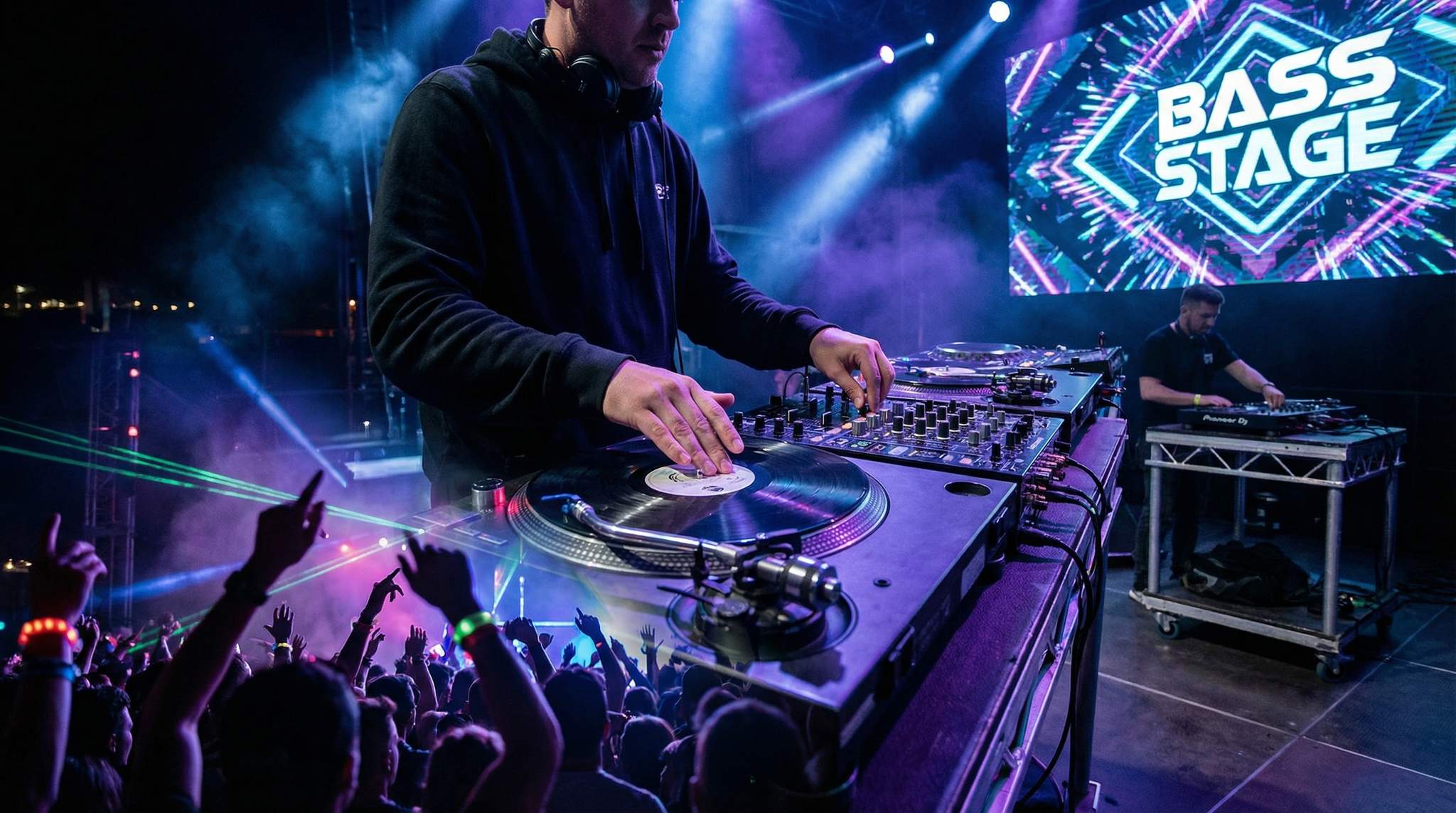
Turntablism—the art of scratching and creative mixing on decks—has long been rooted in hip-hop, but it also has a place on the thundering stages of bass music festivals. When properly integrated, scratch and controller showcases can electrify a drum ’n’ bass or dubstep crowd, adding live showmanship to the DJ set. However, incorporating these technical performances requires careful planning to ensure they amplify the energy rather than disrupt it. Below, festival producers will find best practices to seamlessly blend turntablist artistry into bass-heavy events, drawn from years of festival production experience around the globe.
Curate Short, High-Impact Showcases
In a high-energy bass event, attention spans revolve around the drop and continuous, driving beats. A full-length turntablist or controller set can test the patience of a crowd primed to dance. Instead, aim for short, explosive showcases of scratch or controller skills (for example, 5–10 minutes as a featured segment) that accentuate the music. These bite-sized performances should be tightly choreographed to keep momentum – think of them as quick solos within a DJ’s set.
For instance, a drum & bass DJ might incorporate a fast-paced scratch routine over a breakdown just before a massive drop, giving the audience a surge of excitement without interrupting the flow. Around the world, successful bass festivals from London’s underground clubs to outdoor stages in Sydney have embraced this approach: brevity and intensity ensure the crowd stays engaged and the dancefloor energy remains high.
Provide Specialized Needles, Mixers, and Isolation to Avoid Feedback
The low-frequency rumble at bass music festivals can wreak havoc on traditional turntable setups. To prevent nasty bass feedback and needle skipping, use the right gear and setup techniques. Start by equipping scratch DJs with high-quality, skip-resistant needles/cartridges designed for turntablism (such as models famous for ultra high skip resistance in demanding settings (www.gear4music.ie)). These cartridges track the vinyl groove securely even when the stage vibrates from heavy sub-bass, reducing the chance of a mid-routine skip. Also, provide a professional “battle” mixer that the artist prefers – common choices include scratch mixers from Rane or Pioneer with ultra-responsive crossfaders. These mixers are built to withstand aggressive cutting and have features like adjustable crossfader curves and software integration (Serato/Traktor) for digital vinyl systems.
Free Tool: Size Your Festival Site
Zoned capacity planning for arena, campsite, parking and entry lanes — against UK Purple Guide and NFPA density standards. Finds your bottleneck zone.
Isolation is equally important. Place turntables on sturdy, vibration-damping surfaces. Many festival teams use isolation pads or shock-absorbing platforms – even DIY tricks like placing half?tennis balls or foam under the turntable feet – to minimize vibrations. This prevents low-end feedback (that ominous bass “hum” or rumble) caused by the needle picking up speaker vibrations. Additionally, take control of stage sound: if monitors or subwoofers are directly facing the decks, temporarily lower their volume or cut some bass frequencies during the scratch showcase. The DJ can rely on headphones or a side-fill monitor for cueing. Modern solutions like the Phase wireless timecode system or motorized controller turntables (which eliminate the need for a physical needle) can also help bypass the skipping issue entirely. By covering these technical bases, festival organizers in places from the US to Europe to Asia have delivered clean, uninterrupted scratch performances on even the most bass-heavy sound systems.
Brief MCs and LDs on Spotlight Moments
Turntablism and controller routines are as much a spectacle as they are a sound. To make these showcases shine, coordinate with your MCs (emcees) and LDs (lighting designers) so everyone knows when a special moment is coming. Festival organizers should brief the MC to build up the upcoming scratch/controller showcase to the crowd – for example, announcing the turntablist’s credentials or simply hyping, “Make some noise for some live scratching!” – and then step back during the routine itself. A great MC will know not to rhyme or shout over an intricate scratch solo; instead, they’ll let the crowd hear every twist and tear, chiming in only at key points to amplify the excitement.
Planning a Festival?
Ticket Fairy's festival ticketing platform handles multi-day passes, RFID wristbands, and complex festival operations.
Meanwhile, work with the lighting and stage production team to put the spotlight (literally) on the artist. Plan to highlight the DJ with focused lighting or visuals when the routine kicks in. For instance, you can momentarily dim the background lights and hit a single spotlight on the decks or the performer, signaling to the audience that something special is happening. On larger stages – from Singapore to Los Angeles – consider using the video screens to show a close-up of the DJ’s hands in action, so even the back of the crowd can appreciate the technical skill on display. By briefing MCs and LDs (and even camera operators for festivals with live video), you create a true spotlight moment: the crowd’s attention zeroes in on the performance, elevating the artist and stirring up energy that will carry on into the next beat.
Keep Changeovers Tight with Pre-Patched Rigs
Nothing saps a dancefloor’s energy like a long, awkward silence between acts. When inserting a specialist DJ setup (turntables, custom controllers, etc.) into a lineup, minimize downtime with smart planning. The key is to have the scratch artist’s gear ready to go in advance. Set up the turntables and mixer (or controller rig) off to the side of the main stage, already connected to power and an open channel on the mixer or soundboard. If space allows, some festivals use a rolling cart or secondary DJ table that can be whisked onstage with everything plugged in and tested. This way, the changeover is as simple as fading out the previous music (or having a transition track playing), rolling the new rig into position, and fading the sound from the main setup to the scratch setup.
For example, at some large concerts in Mexico City and Berlin, stages have rotating platforms with DJ gear on either side, allowing one artist to set up while another performs. While you might not have a high-tech turntable stage, the principle is the same: eliminate lengthy cable swaps and sound checks during the show. Use color-coded and pre-labeled cables so that hooking into the main system is foolproof. Ideally, a dedicated stage technician should handle the switchover, allowing the turntablist to focus on performing. And always have a bit of ambient sound or an MC engaging the crowd during the few seconds of transition – never let the room go dead. Tight, well-rehearsed changeovers mean the crowd barely has time to notice a new setup being swapped in, keeping the atmosphere electric and continuous.
Celebrate Skill Without Making It a Circus
A showcase of scratching or controllerism should feel like a natural extension of the music, not a random circus act dropped into a DJ set. It’s all about context and respect for the crowd’s energy. Festival producers can achieve this by booking turntablists whose style complements the event’s genre and by timing their showcases wisely. The goal is to wow the audience and enhance the vibe – without giving people whiplash from a jarring change in mood.
Free Tool: Project Your Bar Revenue
Per-head spend benchmarks by event type turned into projected bar and food revenue, with a stock-mix estimate and gross-margin line. Free calculator.
Pay attention to genre flow. If you’re running a dubstep or drum & bass stage, a skilled DJ who scratches over bass-heavy tracks or remixes is a better fit than someone who only does old-school hip-hop routines at a mismatched tempo. Many top drum & bass DJs (like Brazil’s DJ Marky, known for his quick scratches and even spinning a record on his finger mid-set) incorporate turntablism within their sets, weaving it into the fabric of the music. That’s the ideal to aim for: the crowd should feel like the scratching is part of the show they came for.
Also, use these showcases sparingly for maximum impact. One or two standout performances in a night can become a talking point (“Did you see that insane scratch routine before the headliner?”) and leave the audience wanting more. But if you pepper every hour with extended technical solos, you risk turning a dance party into a talent exhibition that not everyone asked for. It’s about balance.
Need Festival Funding?
Get the capital you need to book headliners, secure venues, and scale your festival production.
As an example of getting it right: at a major European bass festival, organizers gave a world-champion turntablist a ten-minute slot right before the final headliner. The DJ crafted his routine around familiar drum & bass anthems and the headliner’s own tracks, which kept the crowd fully engaged and even more hyped for the next set. The showcase felt like a celebration of skill that amplified the night’s energy. In contrast, an out-of-place showcase (imagine a slow-tempo scratch interlude in the middle of a high-octane dubstep set) can confuse or lull the crowd. By celebrating turntablism in a way that suits the event’s identity – and by not overdoing it – festival organizers ensure these moments are remembered as highlights, not oddities.
Frequently Asked Questions
How long should a turntablist showcase be at a bass music festival?
Turntablist showcases at high-energy bass events should be short and explosive, ideally lasting 5–10 minutes as a featured segment. These bite-sized performances function like quick solos within a DJ set, ensuring the crowd remains engaged without disrupting the momentum of driving beats or testing the audience’s patience.
How do DJs prevent needle skipping on bass-heavy festival stages?
DJs prevent needle skipping by using high-quality, skip-resistant cartridges and placing turntables on vibration-damping surfaces like isolation pads or foam. Festival teams also ensure monitors and subwoofers are not directly facing the decks to minimize low-end feedback. Alternatively, modern wireless timecode systems like Phase eliminate physical needles entirely.
What is the best way to handle equipment changeovers for live turntablists?
Efficient changeovers rely on having the scratch artist’s gear pre-patched and ready on a rolling cart or secondary table off-stage. This setup allows technicians to quickly wheel the rig into position and fade sound from the main system to the scratch setup, eliminating long silences and keeping the dancefloor energy continuous.
How can lighting designers enhance scratch performances at festivals?
Lighting designers can enhance scratch performances by dimming background lights and focusing a single spotlight on the DJ or decks when the routine begins. For larger stages, using video screens to display close-ups of the artist’s hands allows the audience to appreciate the technical skill, creating a true spotlight moment.
What should an MC do during a scratch routine?
An MC should build anticipation by introducing the turntablist or hyping the crowd before the routine starts, then step back to let the performance shine. Effective MCs avoid rhyming or shouting over intricate scratching, only chiming in at key moments to amplify excitement without drowning out the technical details.
Why is it important to match turntablism styles with the festival genre?
Matching turntablism styles to the specific genre ensures the showcase feels like a natural extension of the music rather than a jarring interruption. For example, a drum ‘n’ bass DJ scratching over bass-heavy tracks maintains the event’s high-octane vibe, whereas mismatched tempos or styles can confuse the crowd and stall momentum.