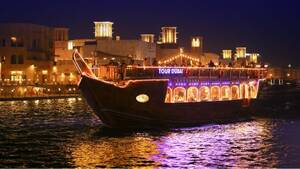
About Souk Al Seef
Al Seef is not a conventional theatre, arena or concert hall. It is a 1.8-kilometre pedestrian waterfront destination beside Dubai Creek in Bur Dubai, next to Al Fahidi Historical Neighbourhood. Visitors come for creekside walks, restaurants, cafés, shops, hotels, abra trips and seasonal outdoor events staged throughout its lanes, plazas and waterfront areas. Since 2025, its operator has formally used the name Souk Al Seef , although Al Seef remains the name most visitors recognise. It remains open and trading under Dubai Retail, part of Dubai Holding Asset Management.
The destination opened in stages. Its contemporary waterfront retail and dining area began operating in September 2017, followed by the heritage district and hotels during 2018. The three original Jumeirah-managed hotels were transferred to Hilton brands around the end of 2019 and beginning of 2020. They now operate as Canopy by Hilton Dubai Al Seef, Hampton by Hilton Dubai Al Seef and Al Seef Heritage Hotel Dubai, Curio Collection by Hilton.
There is no published destination-wide audience capacity because Souk Al Seef is an open district rather than an enclosed venue. No permanent auditorium seating chart, maximum concert attendance, stage dimensions or fixed standing capacity has been released publicly. The contemporary section alone covers approximately 670 metres of waterfront, with an 85,000-square-metre gross floor area on a 104,543-square-metre site. Outdoor event footprints and crowd-management arrangements therefore change for each festival.
Events and Programming
Programming centres on free, family-oriented cultural festivals rather than regular ticketed concerts. Typical bookings include Emirati dance, oud and qanun musicians, roaming entertainers, parades, theatrical street acts, children’s workshops, storytelling, light installations, fireworks, artisan demonstrations and seasonal markets. The programme is strongest during Dubai Shopping Festival, Ramadan, Eid, summer retail campaigns, Eid Al Etihad and New Year’s Eve.
2021–2022: Souk Al Seef hosted UAE National Day activities, Dubai Shopping Festival’s outdoor play market and nightly creekside pyrotechnics. The winter calendar demonstrated the destination’s preference for free, walk-through entertainment rather than headline concerts. 2022–2023: The Dubai Shopping Festival market brought a street market, stage shows, children’s activities and dining offers. Winter programming included a 39-metre festive tree, an 18-metre illuminated fishing-net sculpture, heritage-themed Dubai Lights installations, the Al Seef Creek Festival, a circus-style winter parade and an Italian comedy spectacle. 2023: The destination presented UAE 52nd National Day celebrations and participated in citywide Eid and summer programming. These events continued the established mix of heritage imagery, family entertainment, hospitality promotions and waterfront gatherings. 2024: Programming included Ramadan fireworks and evening light shows, Eid Al Adha celebrations, summer experiences, home-grown musical performances through Tunes DXB, and Noor: Festival of Lights. Noor featured Indian music, theatre, comedy, storytelling, giant puppets and a fireworks finale. Eid Al Etihad 53 added pottery, Sadu weaving, oud, qanun and Harbiya performances. 2025: Ramadan brought projected light art, a nightly market, Hakawati storytelling and live oud and qanun music. Other recurring programmes covered Eid, summer dining and retail experiences, Eid Al Etihad performances and New Year’s Eve fireworks. 2026: Wulfa and Ramadan Nights & Lights included daily 9.30pm fireworks, immersive wall projections, Saturday Hakawati sessions, traditional musicians, a nostalgic dukkan area and activities extending from iftar towards suhoor. Eid Al Adha added cultural entertainment, dining promotions and a destination-wide retail prize campaign.
As of 13 August 2026, no detailed venue-specific programme for late 2026 or later years had been formally published. Visitors can reasonably expect the established seasonal pattern to continue, but future fireworks, National Day shows and winter festivals should not be treated as confirmed until dates and operating arrangements are announced.
Tickets and Booking
Entry to the promenade and most public entertainment is free. Fireworks, parades, roaming performances, Ramadan projections and many cultural demonstrations normally do not require reserved tickets. Paid attractions, hotel events, cruises, workshops and restaurant packages operate independently, so there is no single Souk Al Seef box office or standard ticket price.
For major evenings, the most useful “booking” is often a creek-facing restaurant reservation. Waterfront tables give better comfort and a more reliable view than arriving shortly before fireworks. Book early for Eid, National Day, New Year’s Eve and cool-season weekends, and confirm whether a restaurant is imposing a set menu or minimum spend.
Seating, Layout and Viewing Areas
Souk Al Seef has two visually distinct zones. The modern western section provides wider promenades, glass-fronted hotels, contemporary pavilions and open waterfront terraces. The heritage section uses narrower sikkas, courtyards, wind towers, timber details and irregular-looking façades. Events may occupy the dhow deck, art-walk areas, creekside walls, lanes or temporary stages rather than one permanent performance space.
There is no fixed general-admission pit or permanent VIP grandstand. For fireworks, choose an unobstructed creekside position away from trees, roofs and tightly enclosed lanes. Restaurant terraces are preferable for seated viewing. The heritage alleys offer the strongest atmosphere for musicians, storytellers and roaming performers but become congested quickly. The modern section is generally easier for families using pushchairs or visitors who want more circulation space.
No destination-wide house sound, lighting or rigging specification is published. Public events use temporary stages, loudspeakers, lighting, projection equipment and crowd barriers selected for each production. Souk Al Seef therefore should not be described as having a permanent concert PA, lighting desk, video wall inventory or acoustically engineered auditorium.
Getting There and Parking
Souk Al Seef is on Al Seef Street along Embassies Street in Umm Hurair 1, Bur Dubai, opposite the consular district and beside Dubai Creek. Because the destination is 1.8 kilometres long, the best arrival point depends on whether you want the modern hotels and broad promenade or the heritage souk near Al Fahidi.
The official visitor information lists more than 3,000 parking spaces, with free self-parking available on both the modern and heritage sides. Published valet prices begin at approximately AED20 for the first two hours for standard service, followed by an hourly charge. VIP valet is substantially more expensive, beginning at approximately AED105 for three hours. Parking queues and exit delays are possible after fireworks.
BurJuman station, served by the Red and Green Metro lines, is convenient for the modern end. Sharaf DG station on the Green Line is useful for the Al Fahidi and heritage end. Walking time depends on the entrance and weather, but visitors should allow roughly 15 to 25 minutes. Bus C07 is identified as a connection between BurJuman and Al Seef Marine Station.
Marine transport is part of the experience. The Al Seef station has been served by petrol abras connecting with Baniyas, Old Souq and Al Ghubaiba, along with private electrical-abra trips and selected ferry services. The published petrol-abra fare is around AED2 per journey, while private electrical-abra trips cost considerably more. Marine schedules and payment arrangements can change, so allow time for queues and service variations.
Inside the Destination
There is no single entrance or indoor concourse. Visitors move freely between the open promenade, shaded lanes, shops, restaurants, museum, hotels and marina. Information hubs provide destination guides, while an internal EZ Taxi service can reduce the amount of walking. A 24-hour Smart Police Station is located within Souk Al Seef.
The current tenant mix includes more than 25 restaurants and over 15 cafés and kiosks, ranging from Emirati and Middle Eastern dining to Indian vegetarian food, international cafés and desserts. Food and drink are purchased directly from individual businesses. There is no central merchandise stand, public coat check or venue-wide cashless policy. Restroom arrangements, photography restrictions and security checks may vary between the public areas, attractions, hotels and individual events.
Nearby Dining, Attractions and Hotels
On-site dining includes creek-facing Emirati food, Indian restaurants, grills, Palestinian and broader Middle Eastern menus, coffee shops and casual snacks. Al Fanar is especially appropriate for visitors seeking Emirati dishes, while Chokhi Dhani and Kailash Parbat provide contrasting Indian experiences. Doors Freestyle Grill occupies the modern section, while numerous cafés and souvenir shops cluster in the heritage lanes. Tenant openings and operating hours can vary seasonally.
The Museum of Illusions is the principal paid family attraction within the heritage area. Al Fahidi Historical Neighbourhood, cultural centres, the Textile Souk and traditional abra crossings towards Deira’s Gold and Spice Souks can be combined with the same visit. The three on-site Hilton hotels suit visitors who want to remain beside the creek, with the Heritage Hotel offering the most immersive old-Dubai-inspired setting.
What Makes Souk Al Seef Special
The architecture deliberately shifts from contemporary Dubai to a theatrical interpretation of an earlier creek settlement. Godwin Austen Johnson prepared the overall masterplan and heritage areas, using wind towers, narrow lanes, exposed beams and carefully aged finishes. Watermarks, imperfect plaster, bulging edges and calculated surface degradation were introduced so the new buildings appeared weathered. The modern waterfront was designed by 10 Design with stand-alone pavilions, terraces and façades inspired partly by Dubai Creek’s trading and shipping character.
Visitors should understand that most of Souk Al Seef is a modern development, not a preserved historic village. That distinction has generated debate: many guests value its photogenic, accessible introduction to Dubai’s trading heritage, while some architects and residents consider the artificially aged design too theatrical. Its importance lies in connecting heritage storytelling with active hotels, dining, retail, marine transport and public events rather than in preserving original buildings.
No standalone economic-impact study or verified annual attendance total is publicly available. Its visible contribution is nonetheless practical: it draws visitors into Bur Dubai, supports restaurants, hotels, artisans and retailers, provides stages for Emirati craft and performance, and encourages people to explore Al Fahidi and both banks of the Creek rather than limiting a Dubai visit to newer districts.
Visitor Tips, Accessibility and Policies
Dubai uses the term People of Determination for visitors with disabilities. Metro stations, public buses and much of the RTA network provide wheelchair spaces, ramps, lifts and other inclusive facilities. However, Souk Al Seef does not publish a sufficiently detailed accessibility audit to confirm every accessible toilet, tactile route, hearing facility or step-free entrance. It does not claim compliance with the United States’ ADA, which is not the governing standard in the UAE.
The promenade involves considerable walking, and some heritage-style lanes have tighter turns and textured surfaces. Visitors with limited mobility should start near their main restaurant or attraction, use the modern-side parking where practical and ask an information hub about the shortest step-free route. The internal taxi service may also help.
Wear comfortable footwear and modest, lightweight clothing appropriate to a family destination. Bring sun protection and water during the day; summer humidity can make even a short walk tiring. Public displays of disruptive behaviour, unsafe access to the creek edge and interference with performers or temporary production areas are not permitted. Individual attractions and hotels may impose separate rules concerning bags, professional photography, pets, food and children.
Recent visitors continue to praise the creek views, evening atmosphere, heritage-style architecture and inexpensive abra experience. Common criticisms include intense summer heat, long walking distances, crowds around fireworks and a quieter tenant mix during the hottest months. One recent visitor described some summer sections as subdued because outlets were closed, reinforcing the value of visiting after sunset and checking restaurant availability on arrival.
Frequently Asked Questions
Is Al Seef now called Souk Al Seef?
Yes. The destination’s current official name is Souk Al Seef, although road signs, hotel names, maps and many residents still use Al Seef. The updated name became prominent after the destination joined Dubai Retail’s unified portfolio in 2025. Both names refer to the same 1.8-kilometre waterfront district beside Dubai Creek.
Do you need a ticket to enter Souk Al Seef?
No. Walking through the promenade, heritage lanes and modern waterfront is free. Most public fireworks, projections, parades and roaming performances are also free. You pay separately for food, shopping, museum admission, cruises, hotel activities and any workshop or special dining package that requires advance booking.
How long should I allow for a visit?
Allow two to three hours for a relaxed waterfront walk, refreshments and photography. A visit combining dinner, the Museum of Illusions and an abra ride can take four hours or more. Add extra time during Ramadan, National Day or New Year’s Eve because crowds, temporary closures and transport queues can slow movement considerably.
What is the best time of day to visit?
Late afternoon through evening is generally best. Arriving before sunset provides daylight for architecture photographs, followed by cooler walking conditions and illuminated waterfront views. Between June and September, evening is strongly preferable because daytime heat and humidity are demanding. Winter weekends are more comfortable but also substantially busier.
Which part of Souk Al Seef should I visit first?
Start in the modern section if you want wide promenades, hotels and contemporary waterfront restaurants. Begin at the heritage end if your priority is wind towers, atmospheric lanes, souvenir shops and traditional-looking cafés. Walking the full destination in one direction is easier than repeatedly returning between areas, particularly in warm weather.
Where is the best place to watch fireworks?
Choose an open creekside position with a clear view over the water, or reserve an outdoor table at a waterfront restaurant. Avoid narrow internal lanes, low roofs and areas behind trees. Arrive at least 45 to 60 minutes early for major celebrations, as temporary barriers and crowd-control routes may change normal access.
Is there permanent seating for performances?
No permanent auditorium seating is provided. Most entertainment is designed for standing audiences, people walking between locations or diners watching from restaurant terraces. Temporary chairs may appear for selected storytelling sessions, workshops or private functions, but visitors should not assume that seating will be available at free public performances.
Is Souk Al Seef suitable for young children?
Yes. Seasonal programming frequently includes craft activities, storytelling, parades, family shows and interactive installations. The promenade also provides space for pushchairs, especially in the modern section. Families should supervise children closely beside the creek, carry water and avoid expecting every heritage lane or crowded event area to be easy with a large pushchair.
Can I visit Souk Al Seef during Ramadan?
Ramadan is one of the destination’s most atmospheric periods. Recent programmes have included lanterns, projections, fireworks, Hakawati storytelling and traditional music between iftar and suhoor. Restaurants may follow special hours or offer fixed iftar menus. Dress respectfully and expect the area to become busiest after sunset rather than during the afternoon.
Is self-parking free at Souk Al Seef?
Official visitor information describes free self-parking on both the modern and heritage sides, with more than 3,000 spaces across the destination. Valet parking is charged separately. During major fireworks and festival nights, parking may fill early and the most significant delay often occurs when many vehicles attempt to leave immediately afterwards.
Which Metro station is closest?
BurJuman is generally more convenient for the modern western end, while Sharaf DG is useful for Al Fahidi and the heritage end. Neither station is directly at the waterfront. Depending on your route, walking speed and chosen entrance, allow approximately 15 to 25 minutes between the Metro and Souk Al Seef.
Can I reach Souk Al Seef by abra?
Yes. Al Seef Marine Station has creek connections involving petrol abras and other marine services. It is one of the most memorable ways to arrive, especially when combining the destination with Deira, the Old Souq or Al Ghubaiba. Carry a small amount of cash because some routes or ticket arrangements may not accept every payment method.
Is Souk Al Seef wheelchair accessible?
Large parts of the modern promenade appear suitable for wheelchairs, and Dubai’s Metro and bus systems have extensive accessibility provisions. The destination does not publish a full route-by-route accessibility guide, however. Heritage-style surfaces and long distances may present difficulties, so begin near your main activity and ask the information team about the shortest step-free route.
Is photography allowed at Souk Al Seef?
Casual personal photography is a major part of the visitor experience and is generally possible throughout the public areas. Professional shoots, tripods, large lighting equipment, drones or commercial filming may require permission. Respect other visitors, avoid obstructing narrow lanes and follow staff instructions when temporary stages, fireworks equipment or security zones are operating.
What should I wear to Souk Al Seef?
There is no formal public dress code, but modest casual clothing suits this family-oriented heritage destination. Lightweight fabrics and comfortable walking shoes are strongly recommended. Bring an extra layer on breezy winter evenings and stronger sun protection during the day. Individual hotel restaurants or private events may apply smarter dress requirements.
Are events cancelled in bad weather?
Souk Al Seef’s entertainment is predominantly outdoors, so fireworks, projections, temporary stages and roaming shows can be delayed, relocated or cancelled because of wind, rain, poor visibility or operational restrictions. Dubai weather is usually settled during the main winter season, but visitors should avoid planning an entire evening around one short performance without an alternative activity.