
Running the production
Settle a show with an artist after your event
Promoters and venues settle with the artist's tour manager on the night or the morning after, and every figure gets questioned. A settlement built from your own ticket sales, costs and the agreed deal shows where each number came from, so the conversation is about the deal, not the arithmetic.
Let Fai draft the settlement for a show from its ticket sales, budget costs and the artist's deal, check where every figure came from, add or reverse lines, and share it, mark it agreed and mark it paid.
- For
- Settling a show with the artist's side after the event
- Takes
- 8 minutes
Before you start
- You need an owner, admin or producer role on the brand.
- For the artist's fee to be worked out for you, the show needs an accepted offer. Enter show costs as actuals in the event's budget first if you want them on the settlement.
-
Open Settlements
In the sidebar, select your brand, then Event Operations, then Settlements, and select Settle a show.
Note: Once a show has ended with no settlement, Needs attention lists it with Settle, and an accepted offer's panel has Settle this show. Both open the same dialog.
-
Choose the show and the deal
Choose the Event, choose the accepted offer under Performer deal, then select Draft the settlement.
Note: Ticket sales come from the event's ticket records after refunds, costs from its budget actuals and the fee from the deal. Choose No performer deal to settle a show without an artist fee.
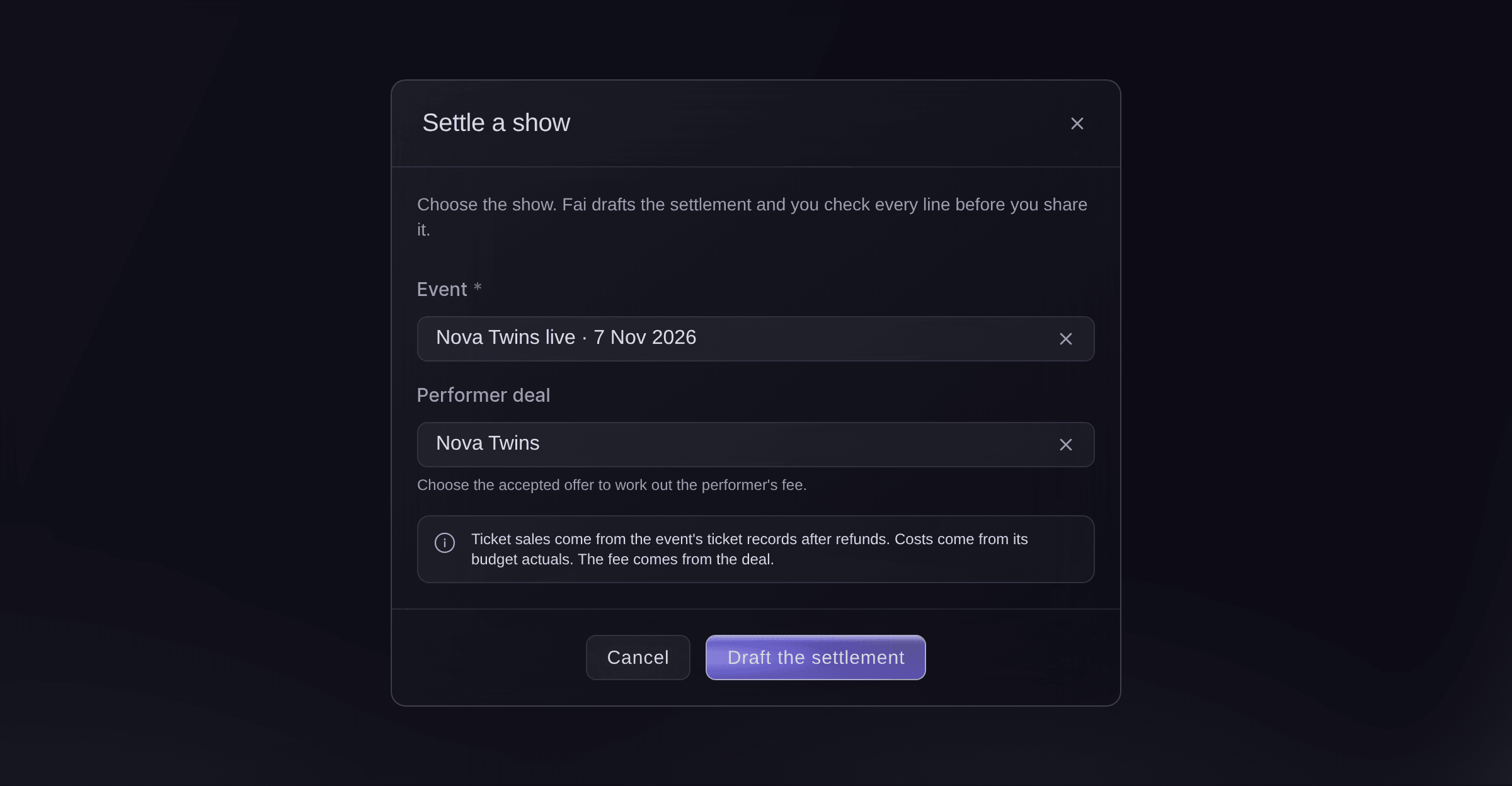
Settle a show. -
Check every line
Read each line under Lines. Each one says where its figure came from, such as From ticket sales or From the deal, and how it was worked out.
Note: The lines are grouped into income, deductions, show costs and payments to the performer. Totals adds them up and shows Left for you.
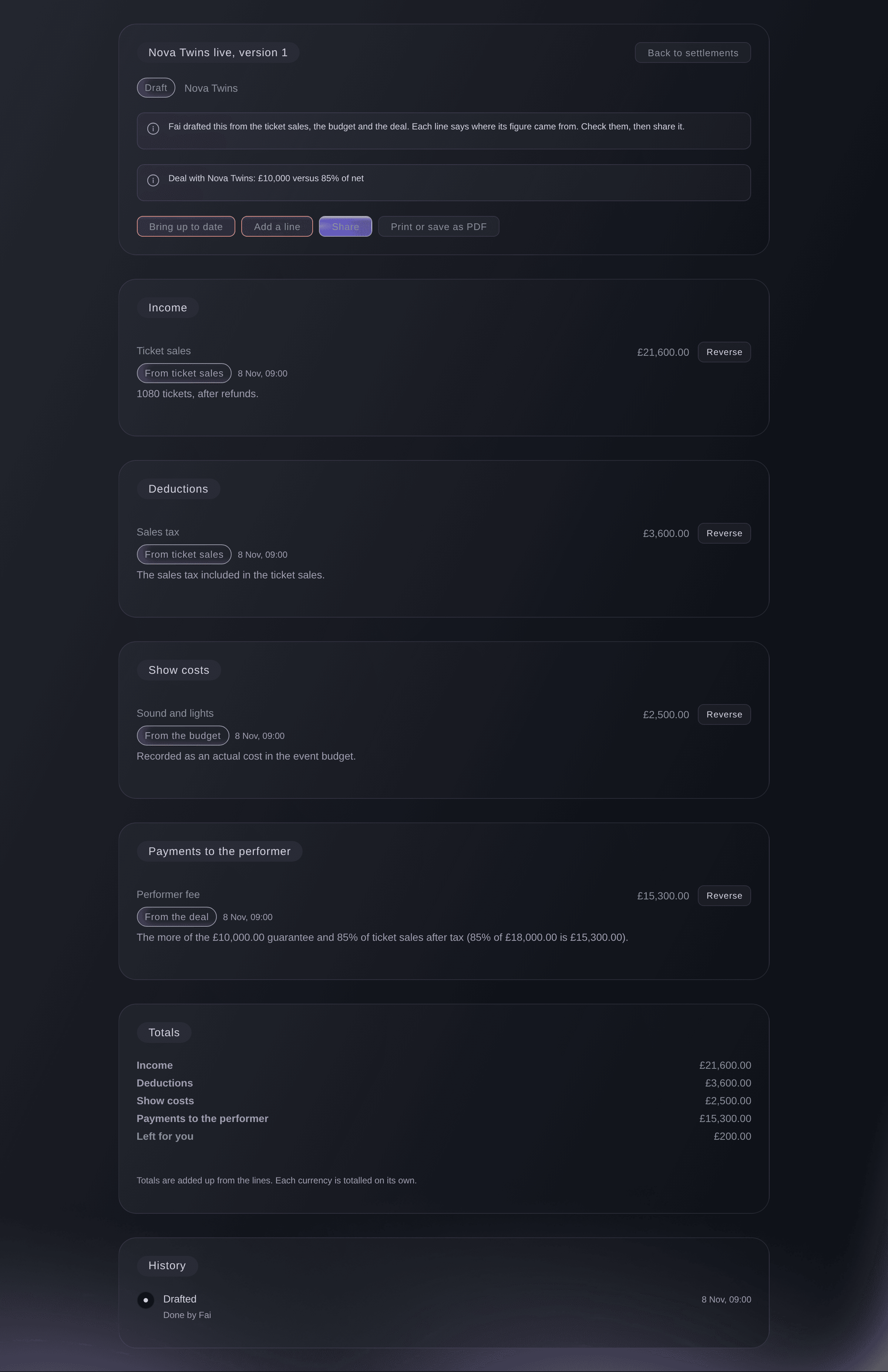
A settlement Fai drafted. -
Update the settlement with the latest figures
Optional: Select Bring up to date after a late refund or a new budget actual. The lines that come from the ticket sales, the budget and the deal are worked out again.
Note: A line you reversed is not added back.
-
Add a line
Optional: Select Add a line, choose the Kind, enter What it's for and the Amount, then select Add line.
Note: Enter a minus amount for a credit, such as a merchandise share you owe back.
-
Reverse a wrong line
If a line is wrong, select Reverse on it, then Reverse in the dialog. A new line cancels it and both stay on the sheet.
-
Share the settlement
Select Share, then Share in the dialog.
Warning: The lines are locked once it is shared. To change anything after that, you reopen it as a new version.
-
Send a copy to the artist's side
Select Print or save as PDF, save the file and send it to the tour manager or agent.
-
Mark it agreed, then paid
When both sides agree the figures, select Mark as agreed. Once the artist has been paid, select Mark as paid.
Note: Marking it paid records the payment. It does not move any money.
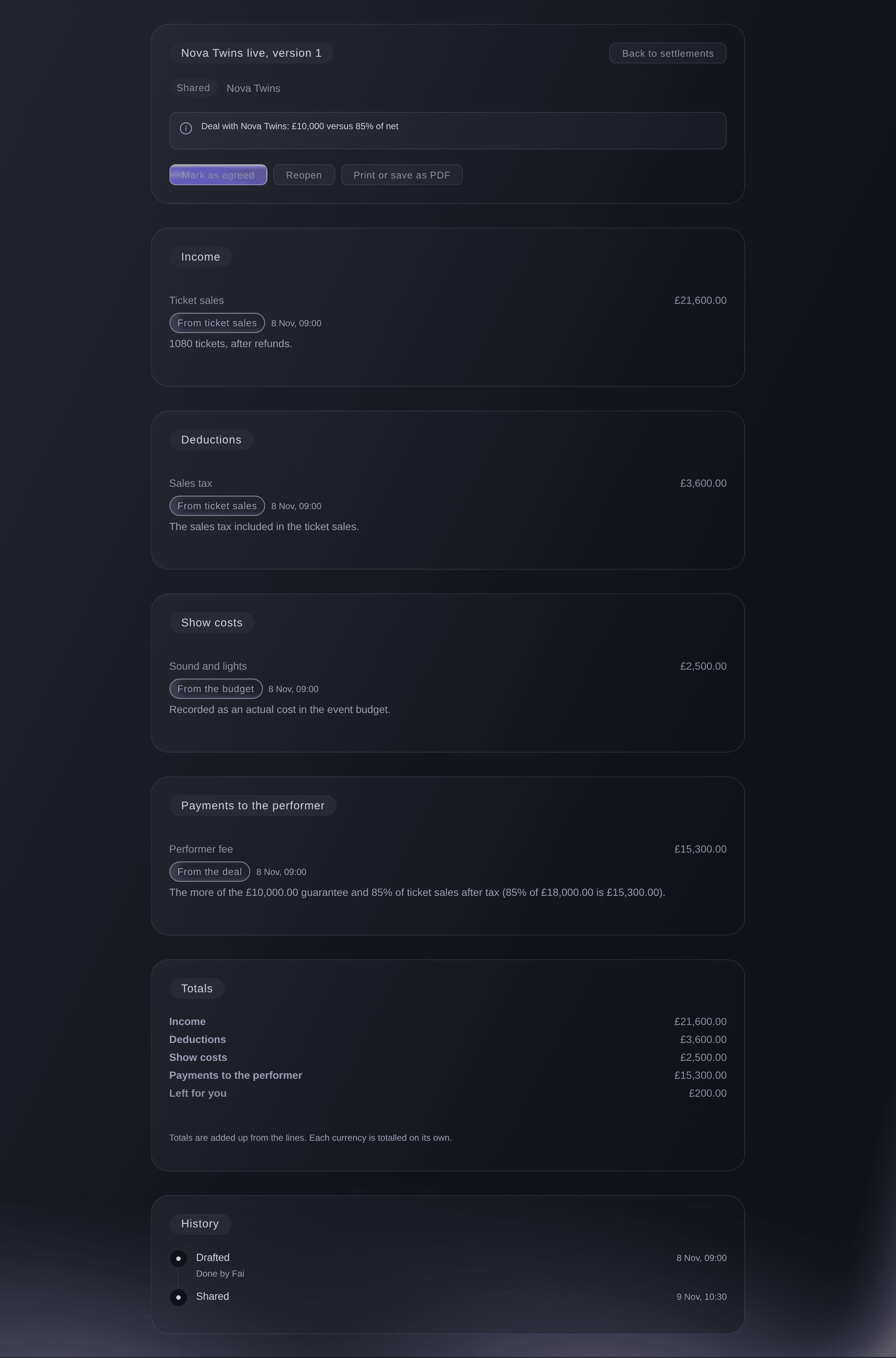
A shared settlement.


Try these steps on your own event
Create a free account, build your event and follow the steps above in your own dashboard. It takes a few minutes and you do not need to book a sales call.
No setup fees. No required monthly ticketing fee. No credit card required.
Or have it done for you
Fai drafts a show's settlement, brings it up to date, adds or reverses lines, and shares it, marks it agreed or paid, or reopens it, asking you before each change.
In your dashboard, with Fai
Draft the settlement for <EVENT NAME> with <ARTIST NAME>'s deal and tell me what is left for us
From your own assistant, over MCP
Connect your assistant to our MCP server and ask it:
Keep --read-only in your MCP configuration. This task only reads data, so your assistant does not need tools that make changes.
Pick the brand, list the settlements for <EVENT NAME> and show me the lines and totals of the latest one
From your terminal
Install the CLI from our CLI page, sign in with ticketfairy auth login, and choose the brand you are working on with ticketfairy brand use <BRAND_ID>. ticketfairy brand list and ticketfairy event list show the IDs the other commands use.
The CLI reads settlements: the list for an event and one settlement's lines and totals. Drafting, changing and sharing a settlement are done in the dashboard or through Fai. You need an owner, admin or producer login on the brand.
List the settlements for one event, with their status and version.
ticketfairy event-os venue settlements list --brand <BRAND_ID> --event <EVENT_ID>
Show one settlement with its lines and totals.
ticketfairy event-os venue settlements show <SETTLEMENT_ID> --brand <BRAND_ID>
Let Fai do it for you
Fai works inside your Ticket Fairy dashboard. Create your account, open Fai and paste the prompt above.
No setup fees. No required monthly ticketing fee. No credit card required.
Correct a settlement after it is shared
-
Reopen it as a new version
Open the settlement, select Reopen, enter why under Why are you reopening it?, then select Reopen.
Note: The version you reopened stays exactly as it was, marked Replaced, and a new draft starts with the same lines for you to correct.
Fai reopens a shared, agreed or paid settlement as a new version after you confirm and give the reason.
In your dashboard, with Fai
Reopen the settlement for <EVENT NAME>, the bar share was left off
Questions you might have
- Why is the ticket income different from my sales report?
- The settlement counts tickets after refunds, so a refund after the show brings it down. Select Bring up to date on a draft to pick up refunds since it was drafted.
- Does Fai draft settlements on her own?
- Fai lists shows that ended with no settlement in Needs attention. Where the show is linked to an event, she also suggests drafting it in that event's suggestions, and nothing is drafted until someone approves it.
- Why can I not delete a line?
- Nothing on a settlement is deleted, so the artist's side can always see what changed. Reverse the line instead, and the history shows both.
- Can a settlement hold more than one currency?
- Yes. Each currency is totalled on its own under Totals.
Still have a question?
Book a demo and we will answer it on a call, on your kind of event. Or create your account and see it for yourself.
No setup fees. No required monthly ticketing fee. No credit card required.
Related guides
Do this on your own event
Create your account, build your event and follow the steps in your own dashboard. You do not need to book a sales call.