Hold your dates and make offers agents say yes to
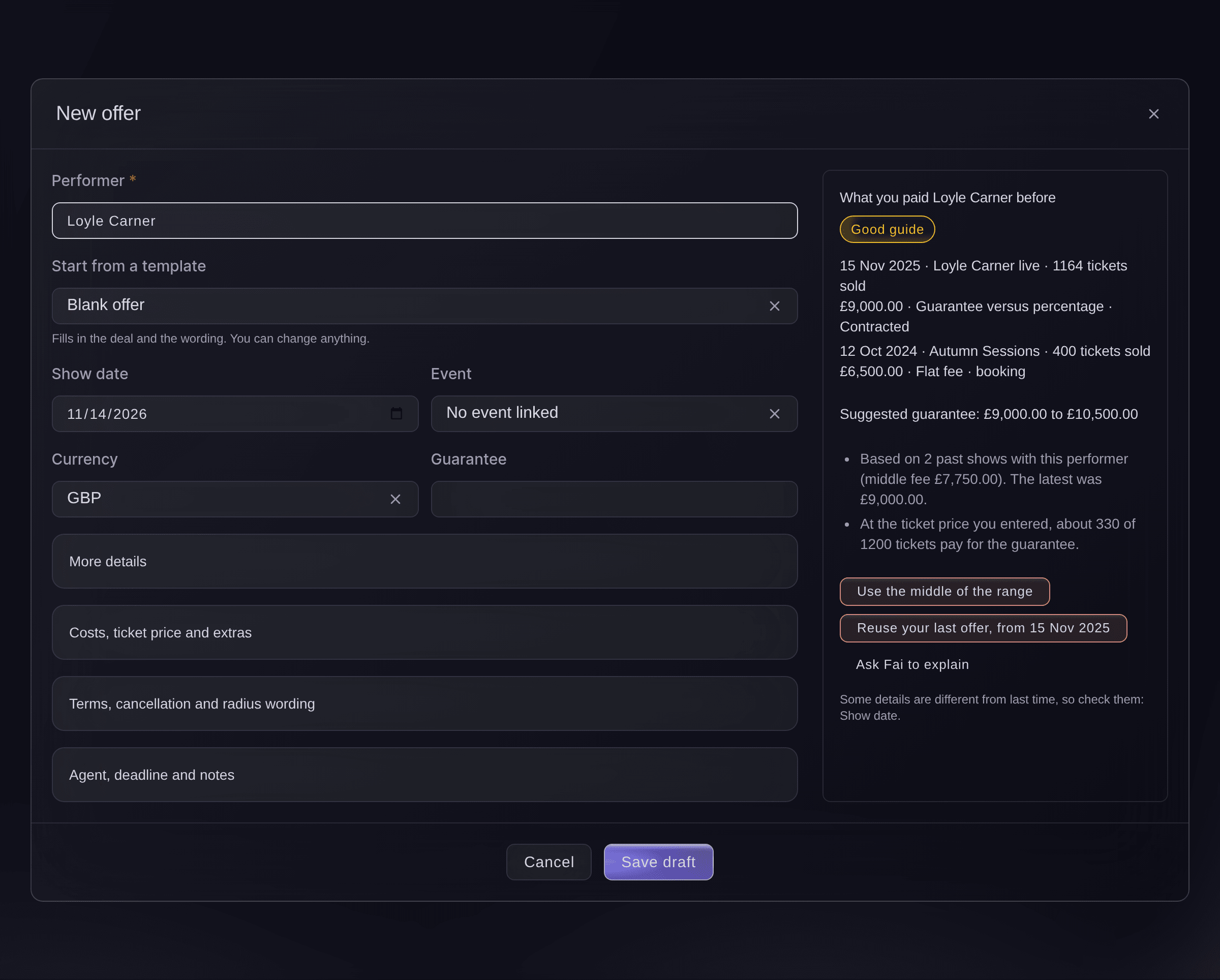
Run your bookings like a company many times your size. Each new offer shows what you paid this act before and the fee range Fai suggests. It can start from a template or reuse your last offer.
Read more
You add the deposit, due dates, set length and the agency fee, as an amount or a share of the fee. You then email the offer to the agent. Each counter-offer stays with the offer, so anyone on your team can see where the deal stands. When the agent accepts, the act is booked onto your event.
A venue's calendar shows every confirmed show and every first, second and third hold on each room, so you and your venue team never book the same Saturday twice. When a better offer arrives, you can challenge the first hold. The Needs attention list shows a missed challenge or a hold about to lapse, so you can act before a date slips while you wait on an agent. When a show is confirmed, you choose whether to keep the other holds on that date as backups or release them.
Acts and speakers who apply through your own Apply to play or Submit a talk form arrive scored by Fai and your review panel. Reviewers can score without seeing names. When you accept an application, the act joins your line-up with a draft offer and a started advance. You fill your smaller stages from an open call without a second round of paperwork.
- What you paid before: past fees for the act beside the new offer
- Suggested fee range: a range from Fai to check your offer against
- Holds and challenges: first, second and third holds on each room
- Applications: acts and talks scored by Fai and your review panel