Inside Noriko Shakti’s Cross-Cultural Alchemy
We sat down with trailblazing Japanese DJ and producer Noriko Shakti for a chat about her cross-cultural journey, the deeper meaning behind merging bass music with traditional Japanese and Indian sounds, and her plans…

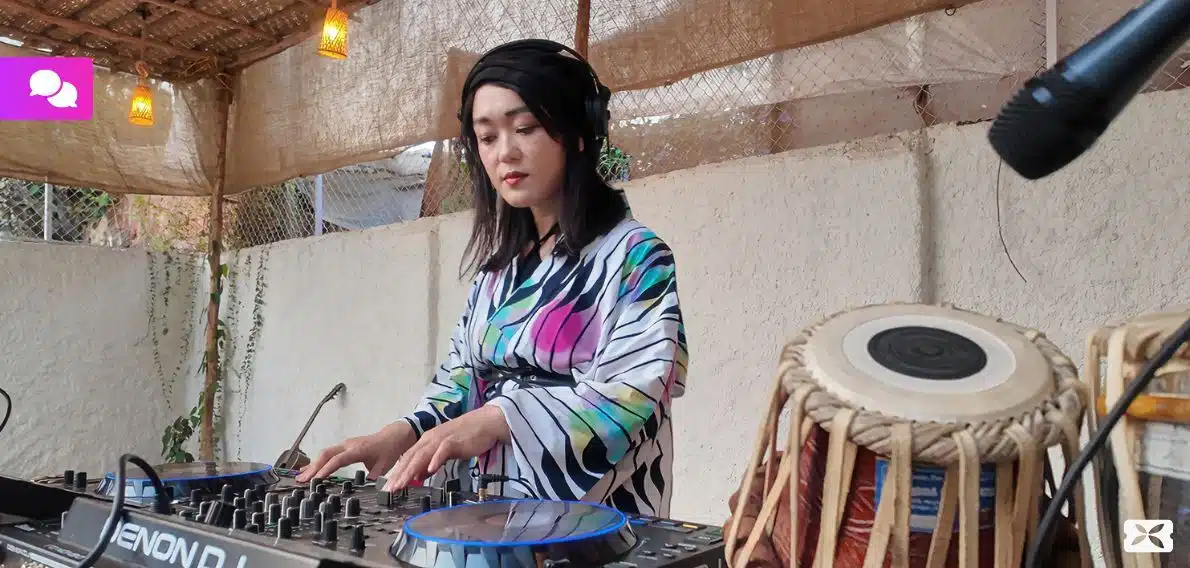
We sat down with trailblazing Japanese DJ and producer Noriko Shakti for a chat about her cross-cultural journey, the deeper meaning behind merging bass music with traditional Japanese and Indian sounds, and her plans for the future.
As much as people like to say that the blending of cultures comes naturally, the reality is far more difficult and complex. Especially when we’re talking about the two distinct and rich cultures of India and Japan, and when these cultures are brought together via music.
About a decade or so ago, Noriko, better known as Noriko Shakti, approached this journey not as an experiment, but as a cultural embrace. While firmly rooted in her Japanese heritage, she found deep resonance in traditional Indian rhythms, which she gradually intertwined and integrated into her artistic identity.
The beauty of this fusion lies in how seamlessly Noriko has channeled her passion and influences through drum & bass, dubstep, breaks, and electronica; genres that are intricate by default and aren’t naturally built to accommodate the intricacies of traditional Indian or Japanese music. Noriko never saw a challenge but an exploration; a cultural conversation that led to something genuinely organic and authentic.
Noriko Shakti’s journey began in Tokyo, where she first made her mark as a DJ and track maker, where she started building meaningful connections across cultures through her trademark sound which was accentuated with global tours and releases. Her growing artistry saw her write, sing, and master a range of instruments, including tabla, khartal, ektara, melodica, piano, and koto. Her back catalog includes the ‘Shanti Protocol’ Remixes EP, ‘Reunion’ EP, ‘Anatani Kimeta’ (a Japanese-language tribute to Raag Bhopali), and ‘Within the Time and Place’ EP, which has been praised for seamlessly blending Indian classical, jazz, and electronica. Among her recent singles are ‘One Spliff a Day Keeps the Evil Away,’ a jungle anthem with Lady Skavya, and ‘Echoes of the East,’ a melancholic, tabla and koto-driven bass journey.
Long before global bass became a recognized term and hybrid bass movement took shape, Noriko was exploring the digital dancehall underground of the early 2000s. Under her alias Ms. Pusumusu, she released “Act Dubwise Riddim Mix” 2007, blending Jamaican riddims with experimental dub processing. Around the time The Bug released “London Zoo” on Ninja Tune in 2008, a landmark moment for UK’s heavy dancehall sound. Noriko had already been connecting with him and that community, drawn to bass culture. In 2025, that long journey came full circle with “Back to Margao Days”, a track that fuses hip-hop & reggae basslines with garage switch-ups, live tabla, Bansuri, and the voice of Indian hip-hop/reggae pioneer Apache Indian
Along with making supremely rich and emotive music, Noriko Shakti has also shared stages with Apache Indian, Karsh Kale, MIDIval Punditz, and Pandit Purbayan Chatterjee, while also working with UK bass pioneers such as General Levy, Roska, and Killa P.
Across the Atlantic, Noriko has worked with Grammy Award-winning engineer Daddy Kev, a collaboration that has further expanded her sonic reach into new territories of production and sound design. Her live performances offer an immersive experience of pulsing basslines, layered percussions, and intricate melodies that weave together the textures of the East and the energy and intense depth of electronica.
What truly sets Noriko Shakti apart is her academic and artistic rigor. She is the first Japanese national to earn an M.A. in Indian Music and, later, a Ph.D. in Instrumental Music from the State University of Kolkata. Naturally, we were eager to learn what fuels this creative bridge between two powerful cultures, to trace her roots, explore her process, and understand how she balances the worlds of performance and teaching; and it was time for a chat.
TFword: Can you take us back to your early days in Tokyo? What initially drew you to electronic music production and DJing, and how did those formative experiences shape your artistic vision?
NORIKO SHAKTI: I started out in Tokyo’s underground scene, where genres constantly collided, hip-hop cyphers next to experimental noise shows, or jazz musicians jamming with electronic producers. I was fascinated by how music could cross those invisible lines and build unexpected communities.
Back then, I was collaborating with people across very different worlds from underground hip-hop rappers like Fake? and KSK from 8th Wonder, performing with a hardcore band called BOSS GORILLA. Those early years taught me that music doesn’t need to stay inside borders. That mindset eventually pushed me to look beyond Japan to see how sound connects people globally.
As a big fan of Reggae and Dub music, around the mid 2000s, I got really deep into digital dancehall riddims. I used to collect instrumental versions and release a mix CD (Ms. Pusumusu – Act Dubwise Riddim Mix), layering effects and reshaping in a different way. That was also when I connected with The Bug (Kevin Martin), who was pioneering that heavy dub dancehall sound from the UK.
Those experiences opened my mind to bass culture, not just as a genre, but as a universal pulse that connects Jamaica, the UK, Japan, and eventually India. That curiosity naturally led me toward the cross-cultural direction I’ve been exploring ever since.
Most recently, that journey has continued through my releases; “Baya” a deep-house track infused with tabla rhythmic traditions, co-produced with DJ Pawas and “Motivators” a UK bass-dancehall tune featuring General Levy.
TF: Your stage name, Noriko Shakti, carries a powerful resonance. Could you share the story behind how it came together, what “Shakti” signifies to you both personally and artistically, and how the name reflects your journey of bridging Japanese roots with Indian and global influences?
NORIKO SHAKTI: The name Noriko Shakti represents both where I come from and what I’ve been expressing through music. Noriko is my original given name, it connects me to my cultural roots, thoughtfulness, and a sense of subtlety.
Shakti, on the other hand, means divine energy or creative force. During my academic years in Kolkata, I noticed how people there worship goddesses like Durga and Kali more prominently than deities such as Shiva or Ganesha, which are more common in other parts of India. Those goddess figures at once beautiful and terrifying, made me feel that perhaps Bengali people on an instinctive level, hold both fear and deep respect toward feminine power.
That observation stayed with me. After years of living in India, Shakti came to me naturally as a name that could express that duality, strength and gentleness, light and darkness which also exists in every form of art and sound.
TF: Your sound has evolved significantly over the decades, incorporating everything from drum & bass to traditional Indian percussion. How would you describe this musical journey, and what were the key moments that defined your artistic evolution?
NORIKO SHAKTI: It’s been a very organic evolution rather than something I planned. I’ve always followed where sound takes me. In the early days, I was deeply involved in Tokyo’s underground: hip-hop, experimental, noise, and early electronic. Then, after coming to India, my perception of rhythm completely changed.
Learning tabla opened new dimensions for me; I started to understand rhythm not just as tempo, but as texture and emotion. That naturally began blending with my earlier love for bass music and global club culture.
TF: Your unique position as someone who bridges electronic music with traditional Indian sounds is fascinating. How did you discover this musical intersection, and what drew you to pursue formal education in Indian classical music?
NORIKO SHAKTI: My sound has always evolved through curiosity. When I first arrived in India, I was already producing electronic music, but I felt something was missing. A certain depth of rhythm and emotional resonance. That search led me to Indian classical music, where rhythm isn’t just a structure but a language of expression.
I began learning tabla, and through that process, I discovered a completely different relationship with time, space, and sound. It eventually led me to pursue an M.A. and later a Ph.D. in Instrumental Music in India.
TF: How has this academic side of your journey as an M.A. and Ph.D. in Indian Music influenced your approach to blending electronic and traditional elements?
NORIKO SHAKTI: Studying Indian classical music gave me a completely different way of perceiving sound. Through my M.A. and Ph.D. research, I learned to see rhythm and melody as living systems; always evolving, never fixed.
My doctoral thesis compared Japanese and Indian percussion traditions. I found that both were originally passed down orally from master to disciple, like spoken languages that carry emotion, memory, and identity. It breathes, transforms, and connects generations. It changed how I listen and how I create.
TF: How does the electronic music scene in Japan differ from what you’ve experienced in India? What are the unique characteristics of each scene?
NORIKO SHAKTI: Having experienced both Japan and India, I see two very different approaches to sound. Japan gives great attention to detail and carries a strong sense of aesthetics. India, on the other hand, celebrates rawness and spontaneity. There’s a fearless connection between performer and audience.
In Japan, people listen deeply; in India, they feel and respond. Both are powerful in their own ways. I’m always trying to bring those worlds together. I’ve always been drawn to both sides of music. The stillness of listening and the joy of movement. That’s the reason I can feel at home in both Japan and India; they complete each other in how they experience sound.
TF: Your collaborations with legends like Apache Indian, Karsh Kale, MIDIval Punditz, and Pandit Purbayan Chatterjee must have been an incredible experience. How has the Indian music scene embraced you, and what has this journey been like personally?
NORIKO SHAKTI: Collaborating with artists like Apache Indian, Karsh Kale, MIDIval Punditz, and Pandit Purbayan Chatterjee has been deeply inspiring. Each of them approaches music with a rare balance of purpose and authenticity, and being part of those creative exchanges taught me a lot about how tradition and experimentation can coexist, how discipline can flow into freedom.
The Indian music scene has been incredibly welcoming. What I love most is that audiences here are open to emotion first. They feel the music before they analyze it. That openness has given me the space to be myself, to experiment, and to evolve my sound.
Personally, this journey has been transformative. India didn’t just influence my music; it changed how I listen, how I create, and how I connect with people through sound.
TF: How has your time in India shaped your perspective as a musician and performer?
NORIKO SHAKTI: My time in India has shaped me on every level, not just as a musician, but as a person. Living here taught me patience and resilience. The relationship between music and life feels very organic in India; music and performance aren’t separate from daily rhythm.
In Japan, I rarely used flashy sounds, and audiences usually listened quietly rather than shouting or reacting physically. In India, it’s completely different. People express themselves freely. Experiencing that openness changed the way I perform. It reminded me that music isn’t only about sound design or precision, but about shared energy.
TF: What do you find most fascinating about the Indian electronic and live music scene right now?
NORIKO SHAKTI: What fascinates me most about the Indian electronic and live music scene right now is its confidence. There’s a new generation of artists who are not trying to imitate global trends but shaping their own sound, rooted in local yet globally aware.
Classical, folk, bass, ambient, and club music all blend in fresh ways. There’s a strong DIY spirit and a sense of community that feels very alive.
TF: Is there something unique about Indian audiences and their response to fusion and bass-heavy sounds compared to elsewhere?
NORIKO SHAKTI: Indian audiences are very intuitive; they don’t just listen with their ears, they respond with their whole body. There’s a deep emotional connection to rhythm here, maybe because percussion and pulse are part of life in Indian culture.
When I play fusion or bass-heavy sets, people feel it. I remember after one show, someone came up to me and said, “I’ve only ever been to techno and psytrance parties, but your music really moved me.” Moments like that mean a lot because it shows how open and curious the audience is. That kind of response is special to India.
TF: How do you envision pushing your sound further in the years to come?
NORIKO SHAKTI: In the coming years, I plan to develop projects that connect Asian and global bass communities even further, creating collaborations that aren’t just cross-genre, but cross-energy. My goal is to keep music alive as dialogue, between people, cultures, and time itself.
I’ve been performing solo live sets, but I’m now developing a new one built around tabla, blending it with lo-fi textures, drum & bass, and experimental elements. It reflects a deeper, more atmospheric side of my sound.
TF: Are there specific projects or collaborations you’re excited to explore next?
NORIKO SHAKTI: Right now, I’m working on a dual-EP project that represents two different sides of what I do. The first EP is rooted in ragga-bass. It comes directly from my DJ sets. It’s inspired by the sound system culture, more energetic, groove-oriented, and focused on the energy of the dancefloor.
The second EP is more of a live and exploratory project, where tabla, organic textures, and improvisation play a central role. This one explores the more live and introspective side of my work, built around tabla, voice, and detailed textural sound design and more about bridging ritual and contemporary electronic aesthetics. I’m also inviting a few artists from the UK to help shape it into a complete live set experience.
The two EPs carry the qualities of fire and water. One representing physical energy and movement of the dancefloor, and the other, reflection and flow.
For more conversations with dance music artists, news and insights, follow TFword on Instagram | Facebook | X
You May Also Like:
Soundcloud’s Most-Streamed Female Electronic Artist of the Year is Jazzy
The Bold, the Brave, and the Unstoppable Featuring Sky Adams