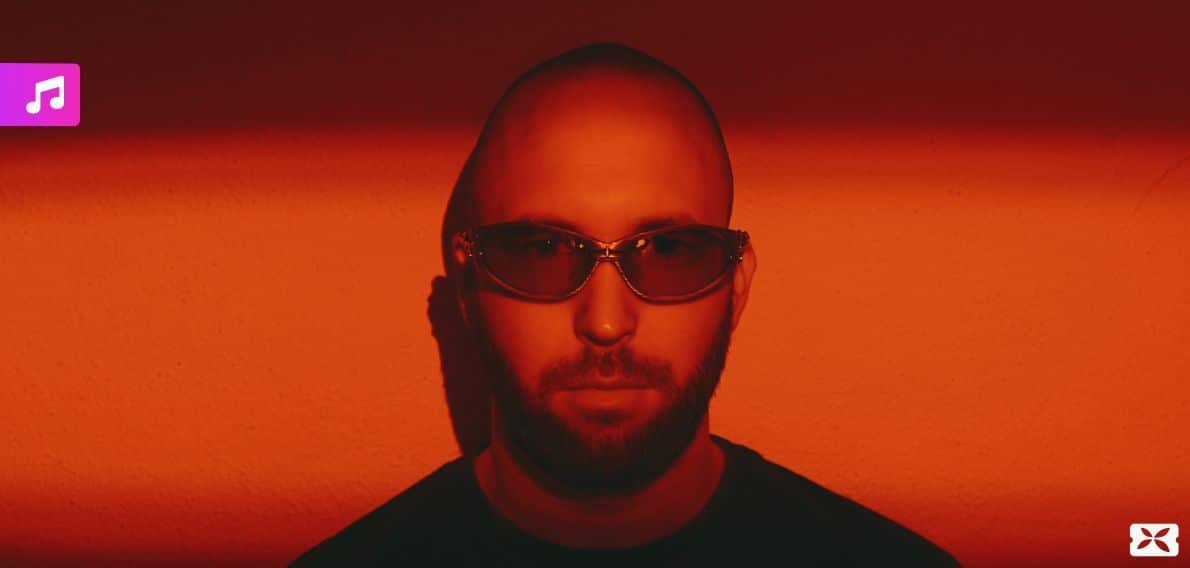
LEGION Breaks Down the Journey Behind ‘Wakefield Dub’
We sat down with the celebrated drum & bass DJ and producer to reflect on his journey through music, the story behind ‘Wakefield Dub,’ his collaboration with Rene LaVice on the single, and lots more.


We sat down with the celebrated drum & bass DJ and producer to reflect on his journey through music, the story behind ‘Wakefield Dub,’ his collaboration with Rene LaVice on the single, and lots more.
We’re talking about one of the most enduring legacies in drum & bass, one that has spanned across seventeen years through the laser-focused vision of Atlanta-based producer and DJ Hunter Watson. What started as a university dorm room experiment with sampling and analog mixing steadily evolved into a relentless creative force that earned exclusive artist status with Andy C’s RAM Records and etched the American outfit’s moniker into the bedrock of the UK and global drum & bass movement forever.
Formerly part of the acclaimed project Legion & Logam, Watson helped elevate the project to new heights across the pond with over 26 releases on parent and sub-labels, including ‘Coming Home,’ ‘House of Cards,’ ‘Holding On,’ ‘To Be Alone,’ and ‘I Blame Myself,’ alongside remixes from legendary producers like Calyx & Teebee and Gerra & Stone.
Over nearly two decades, LEGION’s music has appeared on RAM Records, Playaz Recordings, Hospital Records, Grid Recordings / Allsorts, Audioporn Records, ProgRAM, as well as the project’s own bespoke digital and vinyl imprints, Sine Language and Lexicon Records. Most recently, that impressive list has grown further with a release on DeVice Recordings, the label founded by former RAM Records stablemate Rene LaVice.
‘Wakefield Dub‘ has an interesting narrative to its structure with just the perfect amount of enterprising and underground energy. It carries the razor-sharp precision that one would associate with LEGION but also has a dancefloor edge to make the tune perfectly DJ-friendly.
Following the release, we caught up with the American drum & bass veteran to discuss the origins of ‘Wakefield Dub,’ his collaboration with Rene LaVice, the evolution of the LEGION project, and the creative journey that has shaped his music over the years. Here’s what he had to say.
TFword: What was the original spark behind ‘Wakefield Dub,’ and at what point did you realize it was leading to something solid?
LEGION: The original spark behind “Wakefield Dub” came from a simple arpeggiated sample I stumbled across. As I started itching it around and experimenting with different textures, the track began taking on a life of its own. Once I introduced a creeping low-pass filter automation and started layering drums underneath it, I realized there was something special there.
The moment it really clicked was when I dropped in an old breakbeat that Logam and I had used in some earlier work. Suddenly the track had this dubby, warehouse-driven energy that felt authentic and exciting. From there, everything else seemed to fall into place naturally.
TF: The track carries a darker, more underground energy compared to some of your earlier melodic releases. Was that a deliberate creative choice?
LEGION: Absolutely. Some of my earliest work, particularly the releases on DJ Hype’s Playaz Recordings, was rooted in darker, more underground drum & bass. Those tracks relied heavily on sine-wave basslines, breakbeats, and stripped-back groove rather than polished commercial production.
During my years on RAM and ProgRAM, much of the focus was on more melodic and accessible material, which was fantastic and led to some great records. But I’ve always had this darker side in my arsenal, and it’s been refreshing to revisit that sound. “Wakefield Dub” was definitely a conscious return to those roots.
TF: Can you walk us through the production process behind ‘Wakefield Dub?’ Were there any techniques, samples, or happy accidents that became central to the final version?
LEGION: The track started with a 32nd-note arpeggiated sample that I manipulated and pitched into different tonal spaces. I then automated a one-bar low-pass filter sweep to gradually introduce tension and create a more eerie atmosphere.
I experimented with several drum breaks and one-shot combinations before settling on an older breakbeat that instantly gave the tune the warehouse energy I was looking for. I also recorded some microphone textures and drenched them in Valhalla Reverb to create depth and movement throughout the arrangement. One of the defining elements became a large octave pitch bend on the sub-bass that occurs on the downbeat. It’s a simple technique, but it ended up shaping the groove and identity of the track in a really effective way.
TF: The title itself is quite engrossing. What’s the story behind it?
LEGION: The story is actually very simple. My studio is located in an area of Atlanta called Wakefield Forest. The track went through a few working titles, but one day I happened to drive past the Wakefield Forest sign while listening to the tune and thought, “That’s it.” There isn’t any great mystery behind it, but sometimes the simplest titles end up fitting best.
TF: You’ve recently begun releasing music through Device Recordings. How did the connection with Rene LaVice come about?
LEGION: Like most independent artists, I reached out to labels directly when sending out demos. I always try to be realistic and ask whether a particular track genuinely fits a label’s sound and audience before submitting it.
I’d known Rene LaVice through our mutual connection to RAM Records and had crossed paths with him several times over the years. I’ve always respected what he’s doing with Device Recordings and felt the label was creating opportunities for fresh and forward-thinking music. I sent him “Wakefield Dub,” and I was thrilled that it resonated with him.
TF: What, according to you, makes Device the right home for your music?
LEGION: One of the biggest strengths of Device is that it’s run by an active artist. When the person steering the label is also making records and touring, there’s often a deeper understanding of what artists need creatively. The environment feels open-minded and flexible. There’s room to experiment, take risks, and explore different directions without feeling boxed into a formula. After spending years in more structured environments, that creative freedom has been incredibly refreshing.
TF: You’ve released music on labels ranging from RAM and Hospital to Playaz and Audioporn. How would you describe the evolution of the LEGION sound over the last decade?
LEGION: It’s been a long and sometimes unexpected journey. The earliest LEGION material was heavily influenced by classic jungle, minimal drum & bass, and the Playaz sound—sine-wave basslines, rolling breaks, and groove-driven arrangements. As time went on, especially during the RAM years, the music expanded into more melodic and cinematic territory. Working alongside Logam was a huge part of that evolution, and some of the records we created together remain among my favorite pieces of music I’ve ever been involved in.
For more interviews, electronic music updates and reviews, keep up with TFword on: Instagram | Facebook | X
You May Also Like:
Quite Lucky Launches Record Label, Drops ‘ECHOES’ Documentary and Debut Single
AIRGLO Talks Orchestral Influences, New Music and Exploring Genres
Flexout and Sofa Sound Join Forces in New Independent Partnership