Inside The Mechanics of Franz Scala’s Retro-Futurist Groove
Following the release of his album late last year, we dive deep into how the Berlin-based producer weaves retro influences with cosmic textures in his music, what 2026 has in store for him, and more.

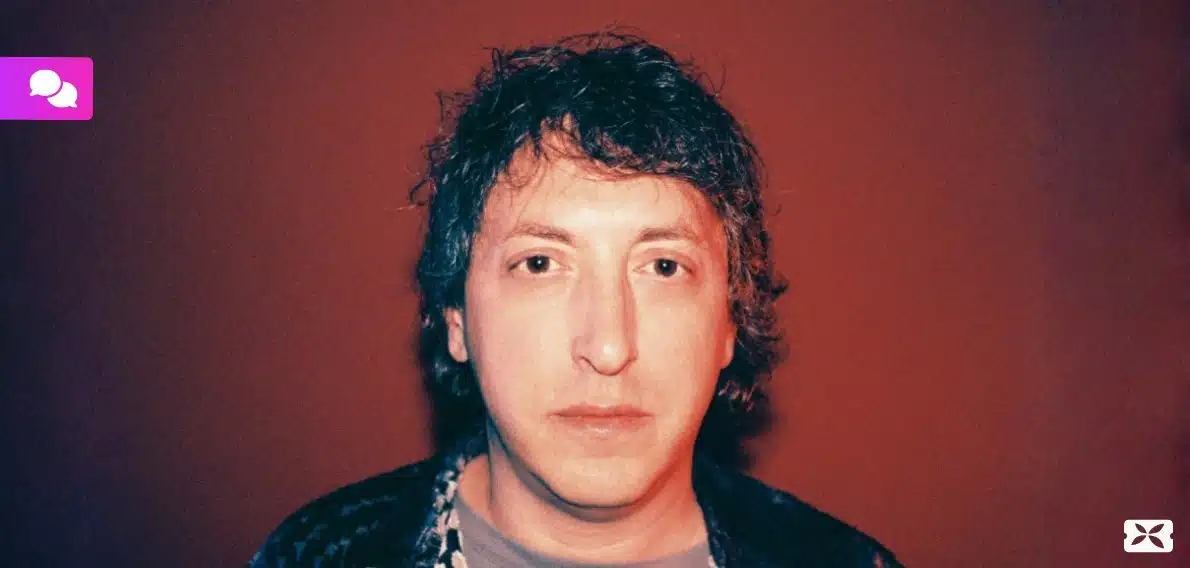
Following the release of his album late last year, we dive deep into how the Berlin-based producer weaves retro influences with cosmic textures in his music, what 2026 has in store for him, and more.
Born in Italy and based in Berlin for over a decade, Franz Scala’s music has always been shaped by a rich tapestry of influences that range from Italo disco, cosmic disco, psychedelic disco and proto house. It’s this deep understanding of the sound he champions that allows him to weave years of experience into his productions, and what he offers in return is the creation of music that possesses the ability to transform the dancefloor into a retro-tinged, nostalgia-soaked rave.
Prioritizing quality over quantity, Franz Scala has steadily built a refined catalog that features two stunning studio albums through his Slow Motion Records, a label renowned for shaping the modern Italo disco and cosmic sound revival. His debut album, ‘Mondo Della Notte,’ arrived five years ago in 2020, and it gave us a glimpse into the depths Franz Scala can dive into. Exactly five years later, he has now released his highly anticipated sophomore long player, ‘Cafe Futuro,’ in late 2025.
The album serves as a sonic tribute to the famous Neukölln bar in Berlin that united the city’s disco scene, capturing the emotions and euphoria of the night through a cinematic lens. Across the thirteen-track album, Franz Scala has shaped a cinematic journey that bridges Italian electronic heritage with Berlin’s underground energy, while evoking emotions like warm sunsets, late-night city drives, and the timeless allure of the retro discotheque.
Striking a near-perfect balance between retro aesthetics and forward-thinking sound design, a discussion with the man himself around ‘Cafe Futuro’ is something we simply had to bring about. As he kicks off the new year, it feels like the ideal moment to catch up with Franz Scala and dive into the making of the album, his creative process, how he channels such a wide range of influences into his music, and what 2026 has in store for him.
TFword: Your new album ‘Café Futuro’ feels like both a continuation and an evolution of your debut, Mondo Della Notte. How long has this record been in the works, and what was the spark that set it in motion?
FRANZ SCALA: Some of the earliest sketches date back in time, but the real momentum started in 2023. I found myself revisiting a couple of old demos I made around the time Café Futuro was still open and it pushed me to build a full narrative around it. Once I realized the bar itself had become a memory, the album became a way to archive that atmosphere in sound.
TF: The album pays homage to the famed Neukölln bar that became a hub for the Italo and cosmic disco scene. What did ‘Café Futuro’ represent to you personally, and how did its spirit shape the sonic and emotional direction of this record?
FRANZ SCALA: Café Futuro wasn’t just a bar, it was a microcosm for misfits, dancers, artists, music nerds of all kinds. It had a magical balance; you could walk in on a Tuesday and find a B-side record from 1983 and somehow it felt completely of the moment. That spirit and emotion I tried to embed in the album. I wanted every track to sound like people discovering something together.
TF: You’ve always had a knack for blending retro aesthetics with a forward-thinking sound. How did you approach finding that balance on ‘Café Futuro’? Were there any particular eras, artists, or sounds that influenced your vision this time around?
FRANZ SCALA: For this album, I leaned into early ‘80s Italian dance, proto-house, new beat and the more psychedelic edges of cosmic disco—but filtered through a contemporary club mindset. I wasn’t trying to recreate a specific record or era; it was more about channeling the emotional codes. Think of producers like Alexander Robotnick, Klein & MBO, or the early Italo wave like Gaz Nevada but with the low-end and structure of modern dance music. The balance comes from not being nostalgic for nostalgia’s sake but pushing that sound forward.
TF: How would you say ‘Café Futuro’ reflects your growth as a producer and DJ since ‘Mondo Della Notte’? What elements of your signature sound did you want to retain, and what new territories did you explore?
FRANZ SCALA: I think the storytelling is stronger now. Mondo Della Notte was more about exploring different moods of nighttime dancefloor culture. Café Futuro is more personal; there’s a clear emotional arc. I kept the melodic sensibility and the cosmic-Italo-wave backbone, but I pushed myself toward more hybrid arrangements, more vocal work, and a deeper psychedelic touch.
TF: You released the album through your own imprint, Slow Motion Records, which has been instrumental in reviving the modern Italo and cosmic sound. How did working within your own label ecosystem influence the creative freedom and final outcome of ‘Café Futuro’?
FRANZ SCALA: Working with my label partner Fabrizio Mammarella means zero compromises. I don’t have to explain why a track needs to be seven minutes long or why a melody sounds like it’s beamed from 1981. The label has always championed this corner between Italo, cosmic, acid, and proto-house and that gave me the confidence to dig as deep as I wanted. It also helped that the whole Slow Motion family was involved in giving feedback and building up the project, testing tracks in clubs, and helping refine the album aesthetic.
TF: Café Futuro features an impressive roster of collaborators—Local Suicide, Dina Summer, Furotica, Charlie, and Acid Gymnastics. How did these collaborations come about?
FRANZ SCALA: All very naturally. Most of them were born from late-night conversations or spontaneous studio sessions. Local Suicide and I have been friends forever; Furotica was my first chosen idea when thinking about vocals and Charlie are part of the Slow Motion family. She is my studio partner and we’re always exchanging ideas. Acid Gymnastics came in with this beautifully twisted touch that added a different flavor. Everyone contributed something essential to the world of the album.
TF: Your sets and productions often balance euphoria with introspection and movement. What kind of emotional experience do you hope ‘Café Futuro’ gives listeners, both on and off the dance floor?
FRANZ SCALA: I want people to feel like they’re entering a surreal time capsule. On the dance floor, I hope it brings that joyful rush, the feeling of losing yourself with strangers. At home or on headphones, I hope it triggers memories of places and moments that maybe don’t exist anymore or perhaps never existed.
TF: With ‘Café Futuro’ out now, what’s next? Are you thinking about live performances, new label projects, or perhaps another conceptual journey?
FRANZ SCALA: A bit of everything. No live performance planned for no,w but deejaying around as much as possible. Slow Motion also has a lot of releases lined up, new artists, new compilations and new parties. And yes, the next release of my own music are already in the making. I like to always have something cooking in the background.
TF: How do you see the next chapter of Italo and cosmic disco unfolding, and what part do you hope to play in it?
FRANZ SCALA: The new chapter is already happening; younger producers are absorbing the essence of Italo and cosmic but applying it in completely unexpected ways. I think the future is more eclectic, more open, more fun. My role is to keep the door open: to support new artists, release records that push boundaries, and continue evolving the sound in my own way. If Café Futuro contributes even a tiny piece to the ongoing story, I’m happy.
For more interviews, new music updates and reviews, keep up with TFword on Instagram | Facebook | X
You May Also Like:
‘Depeche Mode: M’ Is Now Available on Netflix
Harnessing the Controlled Sonic Chaos With Sikitzza
Italian Duo Moeaike Drop Hotly Anticipated New Single ‘Lift Me High’