Revisiting the Roots With DisasZt’s Legendary Mainframe Recordings
We took a trip through drum & bass history and its contemporary frontiers with Austrian legend DisasZt while discussing his Echoes series, which celebrates some of the standout releases from his label, Mainframe…


We took a trip through drum & bass history and its contemporary frontiers with Austrian legend DisasZt while discussing his Echoes series, which celebrates some of the standout releases from his label, Mainframe Recordings.
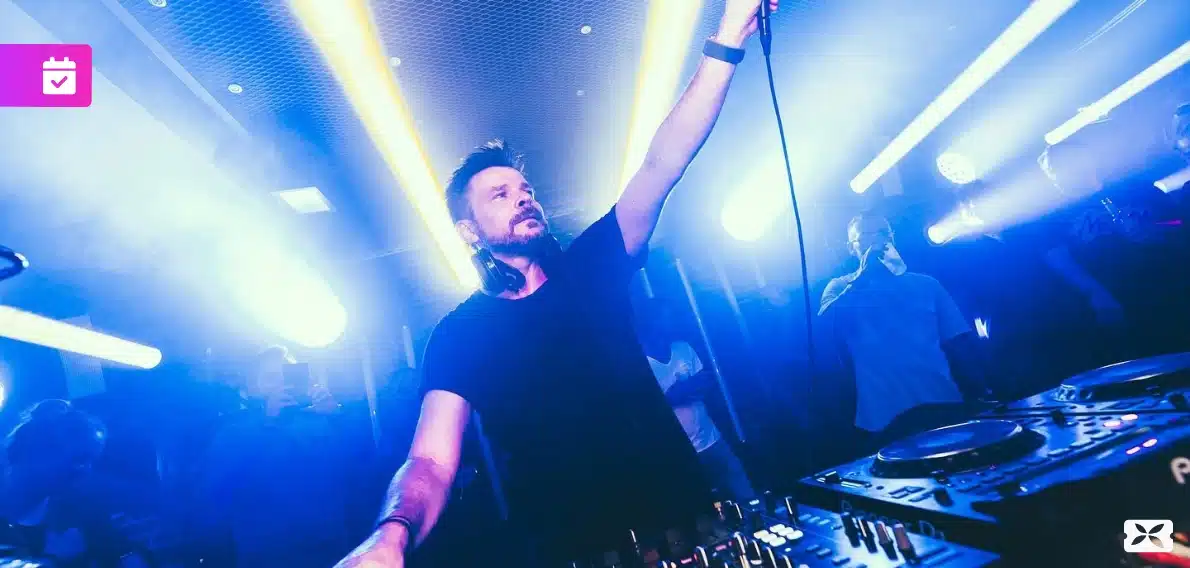
The word “legend” gets thrown around far too easily these days, and it’s diluted by the many ways we choose to interpret it. But here is someone who truly embodies the term. When you’ve been part of building a drum & bass scene in a country far smaller than the genre’s major markets, when you’ve spent years digging for talent, giving them a platform to release music, and watching them grow into global forces, that’s when you know you’re dealing with a true legend, someone driven by the passion to uplift others.
This has happened through DisasZt’s Mainframe Recordings, a label which has been one of the key platforms for the Austrian and wider European drum & bass scene. For the rest of the world, it was instrumental in launching or supporting early releases from several now-major artists. But for artists in his country, it was an entire regional drum & bass ecosystem. The imprint, launched in 2008, became a crucial launchpad for Central European talent and played a major role in bringing Austrian drum & bass to the global stage.
One of DisasZt’s biggest contributions was creating a professional platform for Austrian artists. Before Mainframe, most producers from the region struggled to get releases on major UK labels, and the direct result of it was names like Camo & Krooked, Fourward, Dossa & Locuzzed, Phentix, Akov, Alibi, Manta, and many other names finding a home to launch their careers worldwide. Mainframe helped establish Vienna as a serious drum & bass hub in Europe while giving local producers a credible international outlet to release their music.
But drum & bass has changed significantly over the years, and the modern interpretation of it is almost radically different from the sound prevalent in the late 2000s. Hence, it’s important to revisit some of the most important tunes of the time, tunes that shaped the future in many ways, and DisasZt’s is doing that with his ‘Echoes’ series. It is a carefully curated throwback compilation spotlighting some of the most impactful releases in the label’s history. ‘Echoes Volume 7’ revisits standout moments that helped shape Mainframe’s unmistakable sound across dancefloors worldwide.
This edition captures the diversity and depth of the imprint, from soulful rollers to high-energy festival anthems, featuring:
DisasZt – ‘Till the Sun Comes Up’
Wingz – ‘Mistrust’
DJ Marky – ‘Electrified’
Tapolsky & Vovking – ‘Regolith’
Envy – ‘Cruising’
Hybrid Minds – ‘Why (Fourward Remix)’
Alibi – ‘Who Am I’
The ‘Echoes’ series is designed for longtime supporters and new listeners discovering the catalog, and it’s a celebration of the label’s evolution, its international family of artists, and the tracks that continue to resonate with fans and DJs alike.
Following the release of the ‘Echoes Volume 7‘ compilation, we caught up with DisasZt himself to revisit the compilation, drum & bass back then vs now, balancing nostalgia with relevance via Mainframe Recordings, and what the next Mainframe chapter is all about.
TFword: ‘Echoes Volume 7’ feels less like a compilation and more like a historical document. At what point did you realise the Echoes series needed to exist as a formal retrospective?
DISASZT: I realised it the moment I noticed that a lot of newer ravers and even some younger producers knew the energy, but not always the lineage. They knew Mainframe as a brand, as nights, as a label name on flyers and line-ups; but not necessarily as a story with chapters, risks, and specific records that moved the needle for us.
The Echoes concept came from a very human place: I wanted to give those records a proper frame again. Not in a “remember the good old days” way, but in a “this is why we are here” way. There are tracks that shaped the identity of Mainframe sonically and culturally; records that felt like a statement at the time. Echoes is me putting those statements back into focus and saying: this mattered, and it still matters.
TF: What made this the right moment to revisit some of Mainframe’s most defining records?
DISASZT: Because drum & bass is cycling through an interesting phase: it’s louder in public than it’s been in a long time, but the core values, community, sound-system culture, and deep musical craft, are still what keep it alive.
At moments like this, it’s important to anchor the narrative. When a scene grows, it can get a bit “fast,” and people sometimes forget what the foundation is. Echoes Volume 7 is a reminder of taste, of direction, of the DNA that built trust with our crowd and artists over the years. It’s also the right moment because we now have the reach to re-present these tunes properly, context, curation, and intent, rather than them just existing as old files in a back catalogue.
TF: When you listen back to tracks like Wingz’s ‘Mistrust’ or DJ Marky’s ‘Electrified,’ what do they represent to you emotionally: memories, milestones, risks taken?
DISASZT: Honestly, all of that. Some tracks are like photographs; you don’t just hear the tune, you remember the room, the faces, the tension before the drop, the moment it worked.
Wingz – “Mistrust” represents belief in the darker, more minimal, more surgical side of drum & bass; music that doesn’t beg for attention but commands it. It reminds me of trusting instincts when the easy option would’ve been something more obvious.
DJ Marky – “Electrified” is a different emotion: warmth, momentum, and that unmistakable feeling of international connection. Marky is one of those artists where you don’t just hear production; you hear heritage, musicality, joy, and mastery. Having records like that tied to our history feels like a milestone because it shows that Mainframe didn’t grow in isolation; we earned real cross-border respect.
TF: How do you balance nostalgia with relevance when curating something like ‘Echoes’? Was there a temptation to lean too heavily into classics?
DISASZT: There’s always a temptation, because “classics” are safe. But Echoes isn’t supposed to be safe; it’s supposed to be accurate.
The balance comes from asking a simple question: Does this record still communicate something right now? Not “was it big,” but “does it still say Mainframe?” Some tracks are legendary but belong to a different storyline. For Echoes, I choose records that still feel like a blueprint: sound design, attitude, energy, identity.
Also, relevance isn’t only about tempo or current trends; it’s about emotional truth. If a tune still gives you that feeling; goosebumps, tension, release; then it’s relevant.
TF: Mainframe has grown from an event series into a full ecosystem as a label, events, and artist development. Did you always envision it that way, or did it evolve organically?
DISASZT: The honest answer: it evolved organically, but with intention.
In the beginning, it was about building nights that felt like home for drum & bass in Austria. Over time, you notice gaps: you need a label to document the sound, you need artist development to keep the pipeline alive, you need infrastructure so the culture doesn’t depend on one lucky year or one hype wave.
So no, I didn’t sit down in the early days with a “10-year ecosystem plan.” But I did have a mindset: build something that survives trends. Every new branch; label, development, broader programming; came from that mindset.
TF: You’ve worked across event strategy, programming, artist management, and club ownership. Which of these roles taught you the most about long-term scene building?
DISASZT: Club ownership and event programming taught me the harshest and most valuable lesson: a scene is built on consistency, not moments.
Big line-ups matter, sure, but long-term trust is built by doing the basics right every single time: sound quality, atmosphere, fair treatment of artists, respecting the crowd, and not compromising the identity for short-term wins.
Artist management taught me empathy; understanding that careers are fragile, mental health is real, and sustainable growth is more important than quick spikes.
Event strategy taught me patience: sometimes the best move is not the loudest one, but the one that strengthens the foundation.
TF: How important has international collaboration been to Mainframe’s growth?
DISASZT: Essential. Austria is not a giant market by default, so if you want to build something with gravity, you need to connect outward without losing your local soul.
International collaboration did two things:
1) It brought global excellence into our rooms; raising standards and inspiring local artists.
2) It pushed Austrian talent outward; showing that our scene isn’t a side note, it’s a real contributor.
But collaboration only works when it’s genuine. It’s not about “importing names.” It’s about building relationships where artists want to return because the culture is real.
TF: You’ve been active since the early 2000s. What did the Austrian scene look like when you first stepped into it?
DISASZT: It was smaller, more fragmented, and more “underground by necessity.” Information traveled differently. You didn’t have instant access to everything, so when you found a record or a community, it felt like a discovery.
There was hunger. People went hard because the scene felt like a secret with a mission. And because it wasn’t easy, the bonds were strong. That era shaped my values: if you’re building something, you can’t rely on hype; you rely on the people who show up even when it’s not trending.
TF: You’ve resisted chasing trends. In an era where DnB constantly shifts, how do you decide what to embrace and what to ignore?
DISASZT: I embrace what feels honest, and I ignore what feels like a shortcut.
Trends aren’t automatically bad; sometimes they’re just a new language for the same emotions. But I ask: does this sound have longevity, identity, and purpose? If it’s purely algorithm-friendly or built to peak for 12 seconds on a clip, I’m careful. Not because I’m against modern culture, but because I’m trying to protect the deeper experience.
Mainframe has always been about impact in the room. If it works on a big system and still has musical integrity, I’m open. If it’s just noise for attention, I’m not interested.
TF: Drum & bass is in a fascinating place right now; commercially visible yet deeply underground at its core. How do you view this duality?
DISASZT: I love the duality if we handle it responsibly.
Commercial visibility can bring new energy, more opportunities for artists, and better infrastructure. But the underground core is the reason the music is powerful in the first place. If we lose that, drum & bass becomes a product, not a culture.
So I see it like a balance: visibility should be a doorway, not a replacement. People can enter through bigger moments, but they should eventually discover the depth, the minimal, the experimental, the community, and the history.
TF: Austria is now firmly on the global drum & bass map. What makes the scene there unique?
DISASZT: Austria has a very particular mix: precision and passion.
There’s also a strong sense of craft. That makes our contributions feel solid, not random.
TF: When you think about Mainframe 10 or 15 years from now, what do you want it to represent?
DISASZT: I want it to represent legacy without stagnation.
A platform that stayed true to its values while continuously evolving. A place where new artists can realistically grow, where the community feels ownership, and where the brand still stands for quality – musically and culturally.
TF: If ‘Echoes’ is about reflection, what is the next chapter about?
DISASZT: The next chapter is about translation: taking everything we’ve learned and applying it to what’s coming.
Echoes is me looking back and saying, “This is our DNA.” The next chapter says, “Now let’s push forward with that DNA intact.” That means supporting new talent, curating future-proof sounds, and building spaces; literal and cultural; where drum & bass can thrive without losing itself.
Reflection is only valuable if it turns into direction.
TF: What advice would you give to young promoters or producers trying to build sustainable infrastructure?
DISASZT: Build slowly, build honestly, and build with people. Consistency beats hype. One strong year doesn’t mean you’ve built a scene. Sound and vibe are everything. If the room doesn’t feel right, nothing else matters. Treat artists properly. Your reputation travels faster than your marketing. Don’t copy-paste. Learn from others, but find your identity. Create community, not consumers. If people feel ownership, they stay.
And most importantly: do it because you love it. The scene will test you – financially, emotionally, and logistically. Love is the only fuel that lasts long enough to create something real.
For more interviews and new music updates, keep up with TFword on Instagram | Facebook | X
You May Also Like:
Drum & Bass Veteran Logistics Unveils 8th Studio Album
Melinki Talks Legacy, Longevity and the Ever-Changing Pulse of Drum & Bass
Beat-Herder Festival Returns to Its Spiritual Leeds Home With a Monstrous Line-up