The Rhythmic Breakdown of HASKELL’s Essential Party Groove
HASKELL’s latest release on the iconic Nervous Records led us to sit down with him to chat about his single, his creative process, and his fascinating transition from a career in sports to music production.

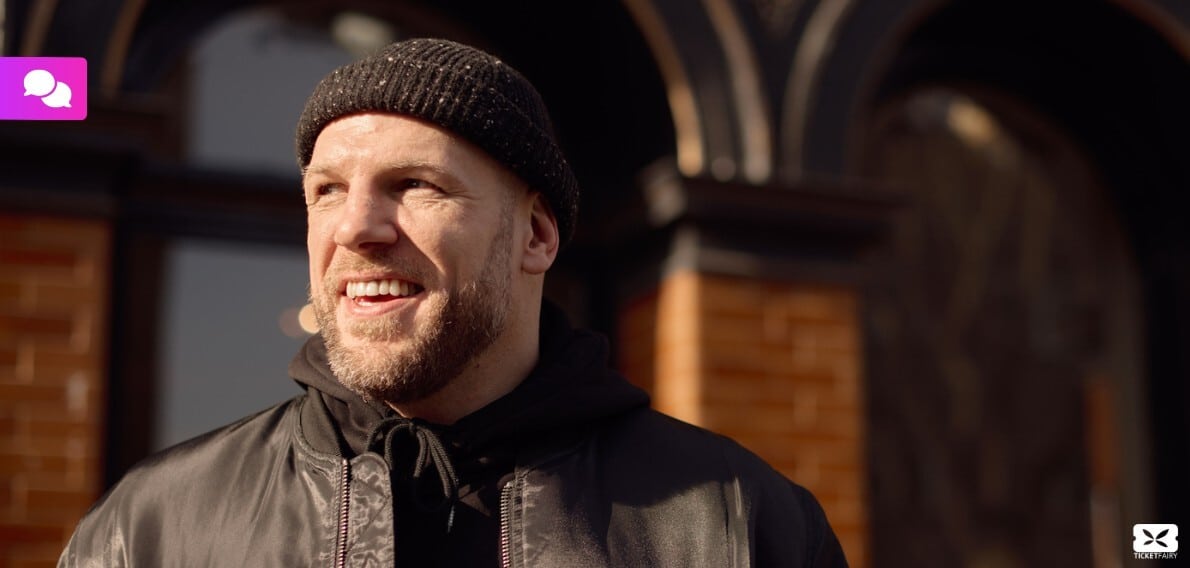
HASKELL’s latest release on the iconic Nervous Records led us to sit down with him to chat about his single, his creative process, and his fascinating transition from a career in sports to music production.
Music and sports have long been intertwined, each feeding off the other’s energy in distinct yet complementary ways. Just as these elements seamlessly enhance one another, DJ and producer HASKELL can attest to their powerful synergy, having transitioned from an international sports star to a successful artist in the electronic music scene.
HASKELL’s decade-long evolution in electronic music has been defined by his affinity for tech-house’s driving rhythms and groove-centric minimalism. A mainstay on the global circuit, he has electrified stages from Ibiza to Dubai, delivering high-energy sets that pulse with kinetic force while sharing the spotlight with legends like Carl Cox. His sets strike a balance between underground gems and peak-time anthems, anchored by the percussive weight of tech-house and occasionally veering into the raw, high-octane intensity of peak-time house.
His latest releases with renowned labels such as Toolroom and Insomniac’s In / Rotation have seen him explore darker, grittier shades of house music. With ‘Deeper,’ his new single on the iconic Nervous Records, HASKELL sharpens his focus. The track pares everything down to its most essential parts: a thick, rolling groove, sharp percussion, and a hypnotic vocal loop that feels at once modern and classically rooted. It’s a confident step forward, a track that reflects his evolution while nodding to house music’s foundations.
All of this made it the perfect moment to sit down with HASKELL and dive into the story behind ‘Deeper,’ the role that sport and music continue to play in shaping his identity, the sonic evolution that defines his journey so far, and where he’s heading next.
TFword: Your journey from international sports to music is incredibly unique. What sparked the shift into electronic music, and how did your athletic discipline influence your approach in the studio and behind the decks?
HASKELL: For me, I’ve wanted to DJ for the last 11 or 12 years. I was already doing it while I was still playing rugby. It felt like the perfect replacement for performing in sport at a high level. I got the same sense of adulation, the same intensity, the same energy, and the same crowd interaction. Only now it was a solo pursuit rather than being part of a team.
It ticked all the boxes, and obviously I wasn’t getting physically beaten up doing it. Discipline is what drives everything I do. What I learned from being a professional sportsman is that you have to put the work in when others aren’t prepared to. You have to seek feedback, get better advice, go away, work again, and keep developing your skills. You have to understand you’re never the finished article. In rugby, I learned to focus on what I could control and let go of the rest. That mindset carries over.
TF: Were there any parallels between the mindset of competitive sports and the grind of building a music career?
HASKELL: Definitely. There are a lot of parallels between the mindset of an athlete and the work it takes to build a music career. Sport is a bit more linear, whereas music relies more on external factors like taste, popularity, and timing. But consistency, dedication, the desire to keep evolving, resilience through setbacks — all of those things apply equally to both.
TF: ‘Deeper’ feels like a nod to classic Nervous Records’ raw, groove-heavy sound while keeping things fresh. What was the inspiration behind this track, and how did you land on Nervous for its home?
HASKELL: When I first started making music, I was sending tracks to loads of labels, often on a whim. Nervous was always right up there. It has history, heritage, iconic releases, and legendary artists. I built a track and shared it with Alex Jones from Denz and Pika. He worked on it, and I took that version, built on it, and — by chance — ended up sitting down with Will Clarke. We were just hanging out, I played it to him, and he loved it. He said he could do something with it.
What we ended up with was a track with no label in mind, just an idea that came out of wanting to make something tougher that would work in my sets. When I make music, I think about where in a set it will land. A lot of my stuff is peak-time, high energy, and this track reflected that.
TF: Your productions carry a lot of tension without relying on over-the-top drops. How do you approach the balance between groove and energy?
HASKELL: I think it comes down to knowing the music you’re trying to make. If you analyse your reference tracks and understand production, you can shape builds and drops to suit the vibe you’re aiming for. Some DJs won’t play certain styles, and going too hard can push you into a cheesy category. So much of the industry is about perception. What’s cool, what feels natural.
Sometimes the most effective thing is simplicity. Let the musical elements speak. Not everything needs big snare rolls or constant builds. Nervous is great at that. The vocals, the hypnotic quality — it doesn’t need dressing up. The music does the work.
TF: Your releases on Toolroom, In/Rotation, and now Nervous show a clear progression. How would you describe your sonic evolution over the past few years?
HASKELL: My taste has definitely evolved. I started with EDM, then moved into house, then tech house. Toolroom had a very distinct sound I loved and still love. I still have records signed there and it’s the kind of stuff I listen to the most.
These days I’m drawn to deeper stuff — deep house, deep tech, whatever you want to call it. There’s a nice blend happening in that space. Labels like Deeperfect sit somewhere in that mix too. I’m always trying to strike that balance between club functionality and personality. The DNA is still there — skippy drums, rhythmic synths, a chugginess to it — but it’s refined over time.
TF: When you say embracing the “grittier corners of house music.” What draws you to that tougher, percussion-driven sound?
HASKELL: That sound just feels natural to me. When I first started, my music was a bit fluffier. Now it represents who I am. I spend a lot of time listening to music and breaking down what captures my imagination. I like tougher stuff I can work to, stuff that fits into the club. When I go out, I’m drawn to the harder, more groove-based sounds.
I’ve got a particular ear for skippiness and swing. My brain is a bit chaotic so it enjoys the structure that kind of rhythm provides. I like music where the patterns follow a satisfying logic. Weird, off-beat structures can be cool, but they tend to throw me off. I prefer to keep things locked into a groove.
TF: Your sets span from deep, percussive rollers to peak-time bangers. What’s your mindset when you’re building a set for a big crowd?
HASKELL: It always depends on the context. Who’s on the lineup, who’s playing before and after me, what time of day I’m on, what kind of crowd it is. I’ll have tracks I want to play, but you’ve got to build to them. You learn quickly that you’re playing for the audience, not just for yourself.
Unless you’re someone really established, like Nic Fanciulli or Mark Knight, and people know what to expect from you, you’ve got to be flexible. I try to take people on a journey. If I’m headlining, I’ll go harder. If I’m supporting, I’ll notch things up and make space for the others on the bill. It’s not always easy, but I enjoy that challenge of shaping a set in real time.
TF: You’ve described your sound as groove-first and clean, what’s next creatively? Any experiments or collaborations on the horizon?
HASKELL: I’d love to make more crossover stuff in future. But the most important thing is to establish your lane before you start branching out. Jumping between genres too soon can alienate listeners and dilute what you’re about.
Collaborations are definitely something I want to do more of. There’s so much to learn from working with other people. I’d love to collaborate with Tony Romera — I think he’s brilliant. Crusy too. And Todd Terry is a legend. He’s actually the reason I got into DJing. I saw him play Glitterbox years ago and it just hit me.
TF: Favorite Nervous Records classic?
HASKELL: Sandy B – I Feel Like Singing. It’s an old-school banger from 1992. Who doesn’t love that track?
TF: Piece of studio/tour gear you can’t live without?
HASKELL: My laptop, without question. It goes everywhere with me. It’s a studio in itself. Analog gear is great, proper monitors are useful, but with a laptop, a pair of headphones, and a coffee, you can create magic.
For more artist interviews, keep up with TFword on Instagram | Facebook | X
You May Also Like:
Melon Bomb Dive Into Their Evolution From Dancefloor Icons to Label Founders
The Unbreakable Discipline Behind Calculon’s Musical Legend
How Electronic Dance Music Became 2025’s Biggest Cultural Force