Rouge on the Art of Balancing in the Indian Music Industry
The Mumbai-based artist sat down with us to discuss her participation in Welupt Collective’s Women’s Day Party, her approach to curating sets behind the decks, and her insights into navigating the Indian music industry as a professional while maintaining a delicate balance. The most challenging part of DJing isn’t just the technical skill of blending…

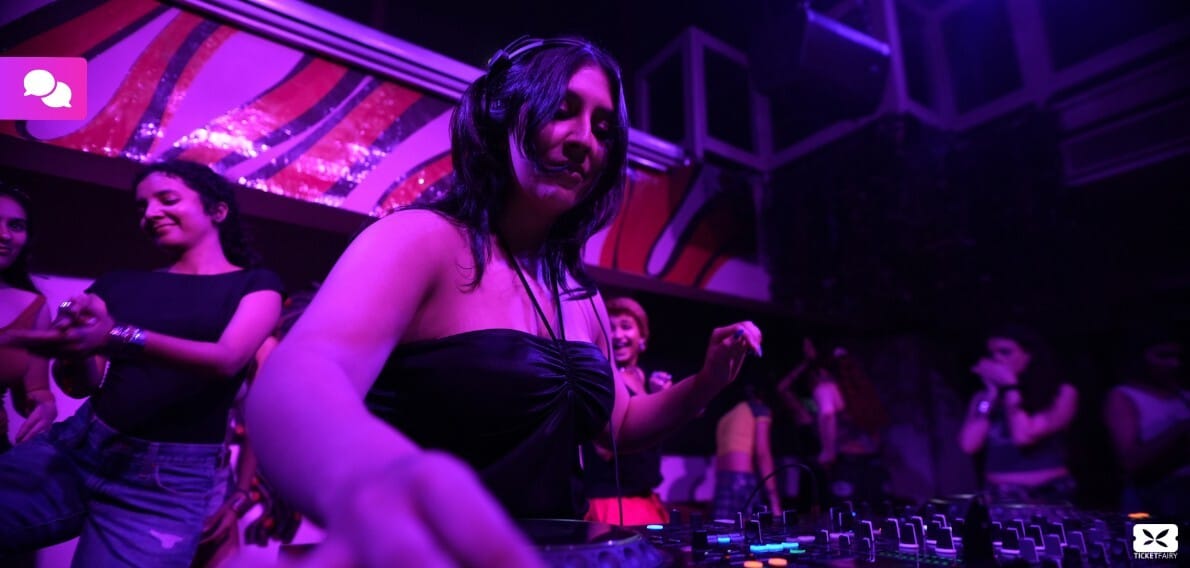
The Mumbai-based artist sat down with us to discuss her participation in Welupt Collective’s Women’s Day Party, her approach to curating sets behind the decks, and her insights into navigating the Indian music industry as a professional while maintaining a delicate balance.
The most challenging part of DJing isn’t just the technical skill of blending two tracks together, it’s the art of selection that truly sets a DJ apart. This is where Mumbai-based DJ Ayesha, better known as Rouge, shines. Gifted with an innate ability of a keen ear for music and an intuitive understanding of crowd dynamics that result in unforgettable sets, she is steadily establishing her name as a staple in Mumbai’s thriving electronic music scene ever since her debut last year.
Rouge’s ability to navigate diverse styles while maintaining a cohesive flow has earned her a reputation as a DJ who plays music while narrating a story through her sets. This unique talent caught the attention of Welupt, an electronic music collective, who invited her to bring this energy of her’s to their pre-Women’s Day party gig featuring an all-female line-up. True to form, Rouge delivered one of the standout sets of the night.
But there’s more to Rouge than just her skills behind the decks. By day, she operates as one of the key members of the Universal Music India team, where she plays a pivotal role in shaping the landscape of the Indian music industry. Balancing her professional career with her passion for DJing is no small feat, yet Rouge manages to do so with remarkable precision and grace. Her ability to juggle these two worlds speaks volumes about her dedication, discipline, and love for music in all its forms.
Given her rapid rise and multifaceted career, we thought it was the perfect time to sit down with Rouge for a deeper conversation. We delved into her creative process, exploring how she approaches her selections and crafts her sets. We also discussed her experience performing at Welupt Collective’s Women’s Day party, the significance of all-female lineups in the industry, and how she manages to strike a balance between her corporate role and life as a DJ.
TFword: Your set at Welupt Collective’s Pre-Women’s Day party fused multiple genres. How did the energy of an all-female line-up inspire your creative choices that night?
Rouge: I wanted to stay true to the integrity of a ‘Welupt Collective event’ so I knew that the songs had to have spunk and energy. As for the selection of songs, I took influences from all the artists on the lineup in regards to their sonic as well as what’s relevant in hip-hop right now, and balanced it out with a little girly pop. Additionally, the gig was a Women’s Day event and I felt the need to incorporate as many female anthems as I could.
TF: What did sharing a stage with other women mean to you personally and professionally?
Rouge: It was such a thrill! Feni did a wonderful job picking a group of women who each benefited in different ways from this event. Shoutout to the girls – Shruti, who played her first DJ set ever; the cypher highlighting women in hip-hop; Rayska, a Welupt veteran with unparalleled energy; and Smokey, the DnB queen.
Personally, I was just happy to be a part of it.
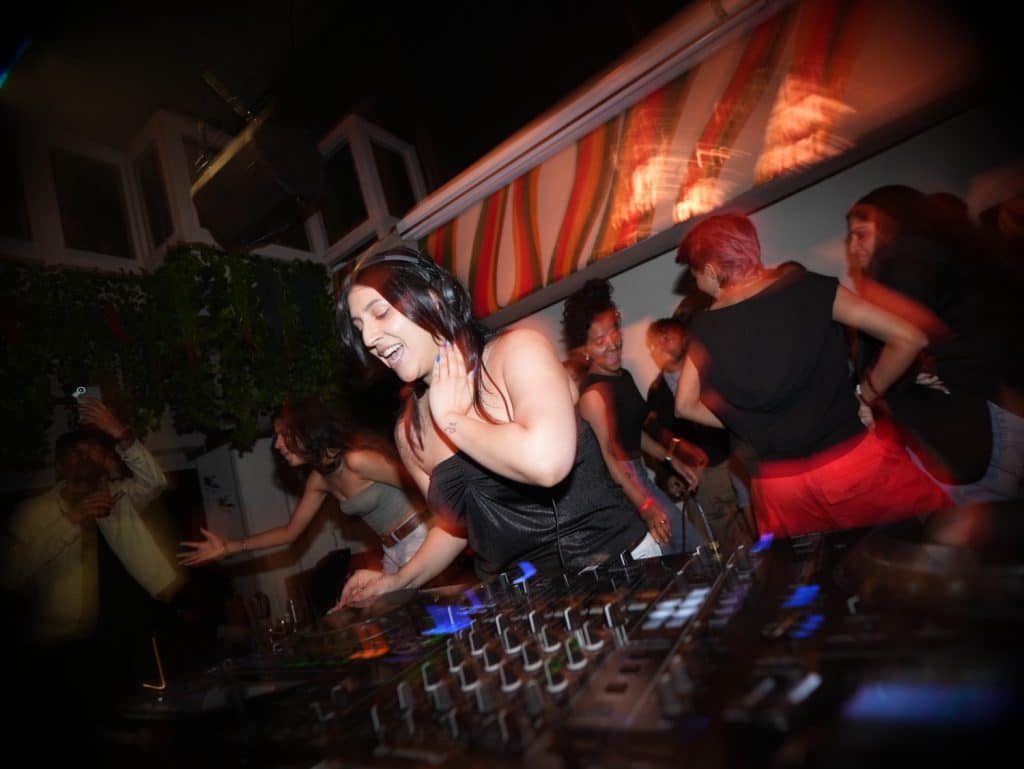
TF: Welupt’s event highlights women’s artistry in a male-dominated industry. Why do you think platforms like this are vital for systemic change in electronic music?
Rouge: Every platform enables change, no matter how small it is. Consistency and accessibility are key pillars to enable change at a constant rate. For Welupt, this was a large step towards fostering a community that creates space for women to make waves in a safe environment. Whenever I’ve been to a Welupt event, the audience demographic would inevitably be majority men. In comparison to the Women’s Day gig featuring an all female line-up, the audience changed too – half the room was filled with women.
TF: As a multi-genre artist, how have you seen women in India redefine boundaries across electronic subcultures, from techno to bass music?
Rouge: It’s my first gig in this genre so I don’t want to discredit any work that is or has been going on. As to my limited knowledge, when I spoke about the line-up everyone I spoke to highlighted ‘Smokey’ and what an amazing DJ she is, and it’s a privilege to play right before her.
TF: Mumbai’s soundscape is incredibly diverse. How has the city shaped your ability to navigate genres, and are there local cultural elements you intentionally weave into your sets?
Rouge: It’s only been a year in Mumbai for me so I am yet to experience every soundscape. However, through my job working in tandem with our hip-hop label, I listen to Marathi rappers such as Sambata, learn about the culture here and how it’s fostered and grown in our communities.
Mumbai itself has an array of artists working out of different subcultures and languages in the hip-hop space. As for implementing those in my sets, I like to add a Divine song, feature local rappers such as Dhanji, Rae Mulla, or play an edit by a prominent producer/DJ in the scene.
In addition, no ‘Rouge’ set is complete until you hear a Punjabi song… from AP to Tricksingh, I include them all! Bonus points if we released the song 😉
TF: Was there a turning point where you realized you didn’t want to be confined to a single genre?
Rouge: As per my profession, we’ve never been confined to one specific route, genre, region or language. Hence, I mirrored that in my DJ career as well. I’ve grown up in so many different cities and countries throughout my life that my preferences lie within a range of cultures and sounds which I love to incorporate in my set.
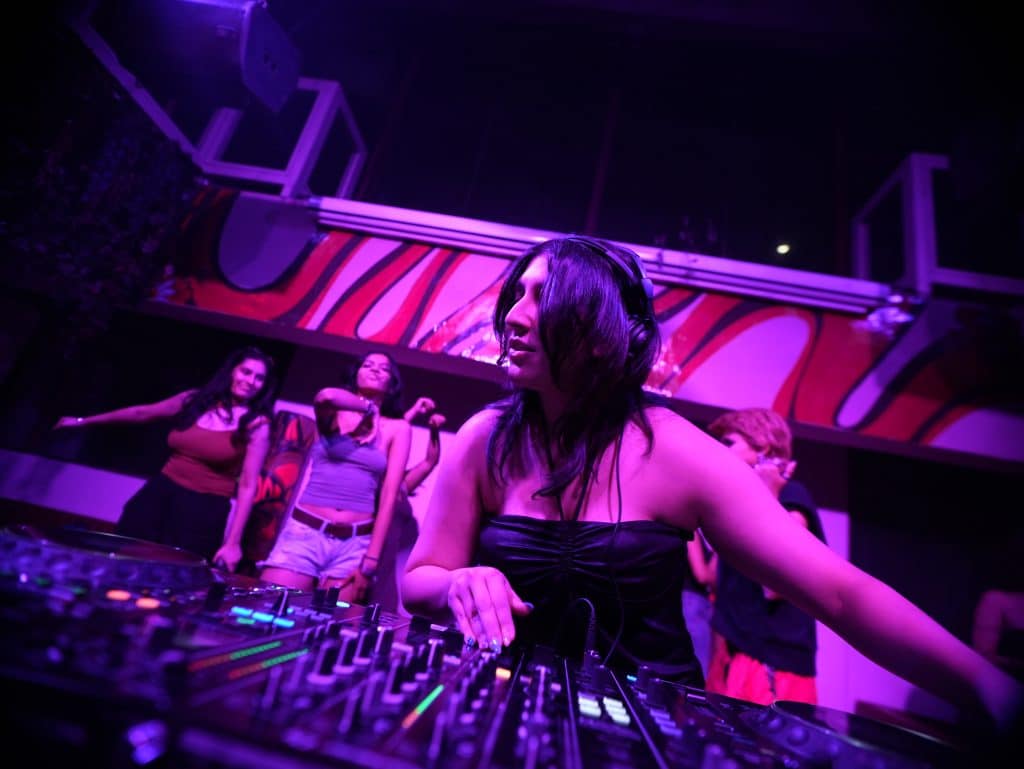
TF: What strategies do you use to manage time and creative energy between corporate responsibilities and your DJing career?
Rouge: To be completely honest, none at all. I’m probably the worst at time management in every aspect of my life. My corporate life keeps me in the office through the week, which gives me routine and time to get that aspect of my life on track. When I get home, I like to reset my day by going to the gym followed by dinner. After which, I sit and work on more creative aspects of my life.
On average, I’ve recently been playing one gig a week so the days leading up to the gig, I sit for 2-3 days downloading music and 2 to practice the set (no more than that otherwise it doesn’t feel exciting anymore).
TF: You’re balancing a dynamic role at Universal Music India alongside your career as an artist. How do these two worlds influence each other? Are there skills, insights, or connections from one role that have unexpectedly enriched the other?
Rouge: I believe any role in the music industry requires a degree of understanding when it comes to musicality, pop culture, etc. Individuals who lack that will never be able to succeed past a certain point in my eyes. I’m not an expert, nor am I a veteran in this industry but I have been tied to music my entire life. I’ve been singing since I learned how to talk, play guitar, studied Music Business in college, and have worked at 2 out of 3 of the major music companies in the world at a global and local level.
As I picked up DJing, my ‘musical ear’ has strengthened. This aids an A&R when we’re giving feedback on music to our artists. Similarly, as an A&R, we constantly keep ourselves informed on new music, what people are listening to, and culture. I apply this learning when I’m creating sets for my gigs since every event I’ve played is for an entirely different audience.
TF: Your sets blend everything from house to hip-hop. How do you curate a flow that resonates with diverse crowds without losing your signature edge?
Rouge: See, if you’re on aux at a party, you won’t play a song for a crowd unless you like it yourself, right? Likewise, why would a DJ play a song they don’t like just to fit an event or genre.
My mentor taught me how to segment my music. I create pockets and play music within those pockets. If I’m playing baile funk, the next few songs will either be in the same genre, stay within the same BPM, have a similar drum sequence, relative key, harmony or melody complementing the last song, etc.
As for my ‘signature edge’, I’m not sure I have one yet. Being an open-format DJ is a double-edged sword since you play so many genres, no one can categorize you into anything. You can’t think of ‘Rouge’ and point out one sound.
TF: What’s your dream project—an album, festival, or mentorship program—that encapsulates your mission?
Rouge: There is a project I’m working on that I would say is very close to my heart… looking forward to talking about it when the time comes.
For more interviews and new music releases, keep up with TFword on: Instagram | Facebook | X
You May Also Like:
How to Build a Thriving Drum & Bass Scene in India Feat. The Untitled One
Welupt Collective: A Crew With a Purpose
FeniFina on How She Curated Welupt Collective’s Pre Women’s Day Party