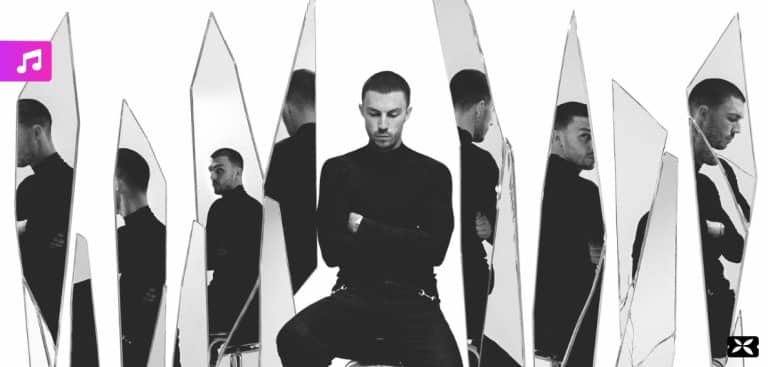
We spoke with the Mumbai-based DJ and producer about his latest releases, his record label, and the art of carving out a niche in India’s thriving techno scene.
About a decade ago, techno was still lingering on the fringes of India’s dance music landscape. But in what feels like no time at all, the genre has surged to unprecedented heights and reached a level of dominance unmatched by any other style of dance music in the country. At the forefront stands DNKLE, whose journey epitomizes the essential formula for success in this competitive space: unwavering authenticity, niche mastery, and constant innovation.
Among them, DNKLE stands out as a shining example of staying true to one’s artistic identity. From the outset, he has carved a distinct niche for himself, continuously evolving while holding firm to his core sound. It’s a challenge many artists struggle with, but DNKLE has managed to strike that rare balance between artistic consistency and innovation.
Since his breakout performance at Burj Bhenswara, where he captivated audiences with an exclusive set of unreleased, all-original material, DNKLE has carved his name into India’s techno landscape with his signature hypnotic, melodic sound.
His evolution continued with the introspective single ‘Love For Me’ before taking a deeper plunge into his sonic universe with ‘Obscurite‘ on his newly founded imprint, GITA Recordings. Launched in 2024, the label serves as both a creative playground and a platform for immersive, forward-thinking techno. ‘Obscurite’ perfectly encapsulates DNKLE’s artistry of brooding atmospheres, hypnotic rhythms, and meticulous sound design converging into something uniquely his own.
With his career accelerating at breakneck speed, we sat down with DNKLE for an in-depth conversation about his latest release, the vision behind GITA Recordings, India’s thriving techno movement, and what’s next on his rapidly unfolding journey.
TFword: Congratulations on ‘Obscurite’! How does this track build on the story you started with ‘Love For Me’?
DNKLE: ‘Obscurite’ takes the emotional introspection of Love For Me and ventures into a darker, more cinematic space. Where the former was about vulnerability, this one explores resilience and the beauty of chaos. It’s like going from heartbreak in a candle-lit room to dancing alone in the ruins of a city—still poetic, just with more reverb.It’s like Love For Me graduated, got a leather jacket, and now listens to Joy Division in the rain.
TF: ‘Obscurite’ has this beautiful tension between darkness and emotion. What was the creative inspiration behind the track?
DNKLE: The inspiration was imagining a post-apocalyptic realm where tension and beauty coexist—where you can hear the echo of both destruction and rebirth in the same chord progression. I wanted the listener to feel like they were standing still in a storm, overwhelmed but oddly at peace. Think of it as the musical equivalent of crying in the club, but make it couture.
TF: You’ve described your music as immersive and soul-stirring. How do you translate those abstract ideas into actual sounds?
DNKLE: It starts with texture—ambient layers, analog synths, evolving automations. I sculpt sounds that feel like they’re breathing, not just playing. I also let silence speak where it needs to. It’s like scoring a film that only exists in your head. Basically, I’m out here trying to make synthesizers cry—and some of them do, especially when my system is overheating.
TF: Melodic techno often walks the line between emotion and technicality. How do you ensure your tracks resonate on both levels?
DNKLE: I obsess over detail but always let feeling guide the framework. It’s about crafting a structure that’s technically sound but emotionally fluid. Melody, for me, is the bridge—and rhythm is the heartbeat that keeps the listener grounded in the moment. I aim for tracks that make you cry a little and still dance like no one’s watching.
TF: GITA Recordings clearly feels more like an extension of your artistic identity than just a label. What was the initial vision behind launching your own imprint?
DNKLE: GITA was born out of a desire to control the narrative—not just musically, but visually, emotionally, and conceptually. It’s a sanctuary for raw ideas and nuanced execution. I didn’t want to wait for validation; I wanted to build the platform that speaks my truth. A big part of the drive also comes from having spent years on the other side of the industry. When you’ve seen how things work behind the scenes—and you know you have the resources and vision to do it better—you shouldn’t wait. You should’ve started yesterday. With GITA, that’s exactly the ethos: to raise the standard and, in time, reflect the very best this industry has to offer.
TF: How does having your own label affect your creative freedom compared to releasing with other imprints?
DNKLE: It’s incredibly liberating. There are no deadlines unless I set them, no stylistic limitations, and total freedom to experiment, evolve, and release music when it truly feels ready—not because a schedule says so. It keeps the art honest and the vision sharp. Sure, the only A&R meeting I attend is just me arguing with myself in front of the monitor—but even then, I never compromise the standard I always wished to see in the industry. With that much freedom comes real power… and as a wise old man once said, with great power comes great responsibility.
TF: Your live performance at Burj Bhenswara was a breakout moment. What did it mean to you to see it go viral, and how did it shape your trajectory afterward?
DNKLE: It was surreal. That set was a deeply personal expression and to see it resonate globally reminded me that authenticity connects. It pushed me to trust my instincts more and commit to the kind of storytelling that’s both cinematic and club-ready. To be honest, I was just trying to give my best for the camels but I’m glad that the internet noticed as well.
TF: Performing a set of all-original unreleased material is a bold move. How do you prepare for a show like that, both technically and emotionally?
DNKLE: Technically, it’s a meticulous process—custom stems, restructured versions and testing transitions. Emotionally, it’s about confidence and vulnerability coexisting. You’re opening a window into your inner world and hoping people dance inside it.
TF: You’re emerging from Mumbai’s electronic scene. How has India’s growing appetite for dance music impacted your journey?
DNKLE: It’s exciting. Audiences are more curious, open, and emotionally present than ever. The shift from purely functional sets to immersive, story-driven performances has allowed artists like me to thrive. The hunger is real—and it’s cultural, not just recreational.
TF: What’s one thing you’d like to see change about India’s electronic music industry, be it infrastructure, audience culture, or artist opportunities?
DNKLE: I’d love to see more long-term investment in artist development and creative venues that prioritize storytelling over spectacle. Also, more collaborative spaces where different disciplines—visuals, tech, performance—can merge to create unforgettable experiences.
TF: With just two releases, you’ve already established a clear sonic identity. What’s next for DNKLE in 2025?
DNKLE: 2025 is about expanding the GITA ecosystem—more releases, more visual collaborations, more live shows in unexpected locations. I also want to push deeper into the intersection of music, architecture, and motion graphics. I’m basically building an audio-visual universe. Step one: figure out how to collab with a museum and a laser at the same time.
DNKLE: Facebook | Instagram | Soundcloud | Spotify | Website | YouTube
GITA Recordings: Facebook | Instagram | Soundcloud
For more artist interviews, keep up with TFword on Instagram | Facebook | X
You May Also Like:
DNKLE Offers Tantalizing Soundscape in ‘Obscurite’
TFword Spotlight: New Music Releases from Saroj Kashyap, Max Kate, Kairvina and more
Melon Bomb Dive Into Their Evolution From Dancefloor Icons to Label Founders