About Roxy
The Roxy was a once-renowned multi-level nightclub in Auckland’s CBD, located in the historic Imperial Building at 7 Fort Lane (44 Queen Street) . It took its name from the century-old Roxy Cinema that once occupied the site . Opened in 2009 when the old picture theatre was redeveloped, Roxy became known for its sleek, retro-Hollywood vibe, plush lounge areas and even a retractable-roof rooftop deck offering city views . For over a decade it was one of downtown Auckland’s most notable late-night venues, often praised as “one of Auckland’s classiest nightclubs with a New York feel and vibe” . Its interior preserved hints of the old cinema (some original decorative panels remain visible on a rear wall) . Roxy typically drew a young, cosmopolitan crowd for cutting-edge DJs and themed dance nights. However, in February 2024 the owners unexpectedly closed Roxy (along with the adjacent Everybody’s bar) permanently , marking the end of its run as a nightlife hub. (Current visitors should note the venue is now closed.)
Events and Programming
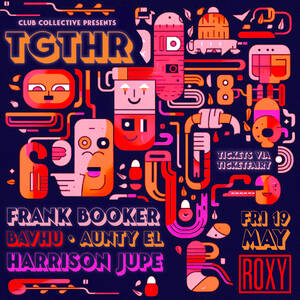
While it operated, Roxy focused on nightclub programming rather than concert tours. The venue hosted hip-hop, R&B and electronic dance music nights, with a mix of local and occasional international DJs. Weekly theme parties were popular – for instance, “BUMP BUMP” Friday nights (a hip-hop/R&B party) and “Mišchif” Wednesday nights (dance/electronic mixes). Promotional flyers often boasted “free entry and happy hour drinks from 10pm to midnight” , so early arrivals could get in free with drink specials. Special events did happen: for example, Roxy was part of the Elemental Festival in July 2023, where it hosted Australian electronic star Young Franco and other acts as part of the “Fort Lane Live” series www.ticketfairy.com . Other domestic artists – from indie pop to DJs – occasionally played. On many nights the club did not require advance tickets. Instead, guest lists or door cover charges (typically a modest fee after midnight) applied. Ticketed events (such as festival afterparties) were usually low-cost (around NZ$10–20) and sold via the venue’s official site or ticket platforms. Past attendees frequently mention unforgettable club nights with pumped music, light shows, and full dancing crowds – a regularly updated dancefloor scene more than seated concerts.
Tickets and Booking
For routine club nights at Roxy, there often wasn’t a formal ticket at all – many nights featured free or low-cost entry. As marketing materials confirm, promotions commonly emphasized “free entry” until late, followed by drink specials . When special events did require tickets, they were advertised on Roxy’s own website or social channels and sold through authorised ticket outlets. (For reference, Eventfinda lists the Roxy site as roxy.co.nz .) Box office sales were occasionally available at the door before shows. Pricing varied: typical club nights might be cover-free or a few dollars, while larger concert-style events ran between about NZ$15–25. A handy tip was to arrive early – hostesses often offered promotions like complimentary drinks before midnight . Presales (when available) usually went up a few weeks ahead. Since the venue closed in early 2024, no new tickets are on sale, but this was the general practice during Roxy’s operation.
Seating and Layout
Roxy was designed more as a spacious dance lounge than a seated theatre. Its interior had a split-level layout: a crowded ground-floor dance floor around a central DJ booth, plus an upper mezzanine mezzanine lounge and outdoor roof deck . Most patrons stood or milled around on the main level to dance. The upstairs mezzanine offered booths and tables (which could be reserved as VIP seating after about 10pm ) for diners or groups wanting a quieter perch. The rooftop terrace – equipped with a retractable roof – provided an opened-air spot with city skyline views . For sightlines: the best view of the action was from the front center of the main floor, just behind the DJ, or from the mezzanine rail overlooking the dance floor. (Vybeful notes Roxy’s balcony gave a more relaxed overlook compared to the energetic main floor .) Areas to avoid were only reputational “dead zones” – for instance, standing directly in front of speakers could be deafening, and corners could be cramped at peak hours. Acoustically, the club packed a powerful sound system: Vybeful specifically highlights Roxy’s “state-of-the-art sound system” and high-quality acoustics . Indeed, late-night DJs often drove heavy bass and club lighting, so ear plugs could be wise if you’re sensitive. The decor was intimate and moody (dark walls, low lighting and neon accents), enhancing the nightclub vibe. In short, Roxy offered no formal theatre seating – it was an open dance club with balcony seats and a view to match.
Getting There and Parking
Roxy’s address was 7 Fort Lane in downtown Auckland (Imperial Building, near Queen Street at the base of Fort Lane) . It was very central: a short walk from popular landmarks like Britomart Station, the ferry terminal and Aotea Square. For public transit, catch one of the many downtown buses or trains. Several bus routes (e.g. 11W, 18, 209, 27H, 72X, etc.) stop just steps away on Queen Street or Shortland Street. In fact, Moovit notes the nearest bus stops – Queens Arcade and Customs Street East – are only a minute or two’s walk from Fort Lane . The closest train hub was Waitematā (Britomart) Station, roughly a 10–12 minute walk away . Ferries (“Downtown” terminal) lie 8–10 minutes on foot. For late-night travel, rideshares (Uber/Ola) and taxis frequent the area; drop-offs are convenient right on Fort Lane.
Parking: On-street metered parking is available nearby (zone 1/blue zone), but be aware of Auckland’s pricing. Auckland Transport (AT) sets central zone 1 rates at about NZ$6.50 per hour (first two hours) Monday–Friday , and roughly $4/hour on weekends (first 2h) . After 6pm street meters may be off or cheaper in our area. Several commercial car parks are very close: for example, Wilson’s Shortland & Fort (65 Fort St) and 27 Fort St. The 27 Fort St carpark advertises about $9 for 30 min and $18 for 1 hour on a weekday , so prices climb fast during the day. However, the Shortland & Fort lot often runs discounted evening rates (about $12 flat if you enter after 5pm Mon–Fri, or $15 flat for overnight stays) , which works well for late shows. A few smaller parking buildings and off-street lots (e.g. 51 Shortland St) are within 3–5 minutes’ walk. In summary: there is paid parking, but expect to pay central-city rates or use pre-booked event parking. Most who live centrally preferred public transit or rideshares to avoid the hassle.
Inside the Venue
Upon arrival at Roxy, guests normally passed a standard nightclub entrance with ID check (18+ policy) and a quick security or bag check. The decor inside blended retro cinema elements with modern club flair. Concrete Playground described it as having an “inky” interior and classic Hollywood-style cocktails . Indeed, the drink menu was a highlight: patrons enjoyed craft beers (Emerson’s, Little Creatures, etc), top-shelf whiskeys and elaborate cocktails. Standouts were inventive house cocktails like the “Café Le Pêche” (an egg-foam espresso martini) and the gin-based “Romeo and Roxy” . The bar also offered multiple champagne brands (Bollinger, Veuve, Dom Pérignon) for special parties . Food was also available early in the evening – notably, when it opened, Roxy doubled as a restaurant with multi-course dishes. A Herald review noted its $27 entrees were “worth every cent” in a four-course menu, highlighting a sophisticated dining angle . Even later, the venue amenity list explicitly noted “Food Available” , so expect some bar snacks or tapas upstairs. For seating, check the mezzanine booths: they offered table service (reservable after 10pm) and a chance to sit while still watching the action below.
Inside, the atmosphere was energetic and social. Wanderlog praised Roxy as “a vibrant bar and lounge” with plush seating and a sophisticated ambiance . Music and dancing were the focus once the DJ spun up. Cell phone photography and social videos were informal (official rules typically allow personal phone use, but pro cameras/tripods are not permitted unless pre-arranged). Like most Auckland clubs, smoking was only allowed in the tiny outdoor areas or doorway, since indoor smoking is banned. Restrooms were tucked off the main dancefloor (event listings confirm “Toilets” on-site ). Roxy was wheelchair-accessible, featuring ramp or lift access to the lounge areas , though as an older building some tight spots might still challenge a mobility scooter. Coat check and cloakroom services were typically offered at the entrance for a small fee or included with VIP booth packages (common for city clubs, though specifics should be asked on arrival). Overall, visitors should expect a high-energy, friendly vibe with staff attentive to drink orders. The crowd was usually mixed and fashionably dressed – one could casually chat without yelling, but it often got packed and lively late. In summary: entry required photo ID (18+), cup-carry or modest bag checks, and standard club rules (no outside food/alcohol, no weapons, no re-entry stamps). Everything else – the mood, drinks, and dancing – was ready to go once inside.
Nearby Amenities
Roxy stood in a bustling nightlife pocket. For pre-show dining or post-club drinks, the attached venues Everybody’s (on Fort Lane) and Imperial Lane (in the same complex) were obvious choices, offering food and cocktails under the same ownership. (Everybody’s, for example, was noted for excellent tapas and late-night bites.) Beyond that, Queen Street and Shortland Street – just corners away – host dozens of restaurants and bars from budget cafés to upscale eateries. You’ll find popular spots like Mama Ramen, Honu for burgers, and Galbraith’s Alehouse just a short walk north on Queen. Nearby Karangahape Road (K Rd) is a 5–10 minute trek westward for alternative bars and Valhalla, Aloft Bar, etc. Hotels: many central hotels lie within easy reach. Novotel Auckland City and Adina Citylife (Queen St) are basically next door; SkyCity’s Conrad and Grand SkyCity hotels are a quick 8-minute walk north; Cordis (PARKROYAL) on Symonds St is 5 minutes south. If you’re traveling by train or ferry, Britomart connecting buses and Aotea busway runs are close, and Britomart’s Pacifica or SkyBus stops are ~10 min away. After closing time, taxis line up on Wellesley or Queen Street, and the free CityLINK bus circulates often through Aotea and Britomart. The area is well-lit late-night and usually busy on weekends. Just remember, on weeknights parking enforcement can run until late (see rates above). Overall, the neighborhood is one of central Auckland’s liveliest: plenty of food, drink and transit options mean you can easily turn a Roxy evening into a full night out on the town.
What Makes This Venue Special
Roxy’s blend of old and new gave it special character. It was housed in a restored heritage cinema space – visitors could literally see traces of its movie-theatre past in art deco motifs behind glass . That historic backdrop set it apart from generic clubs. Its multi-venue atmosphere (with nightclub below and a chic lounge/restaurant above) was also rare in the central city. Fans often recall its ‘‘Hollywood-esque’’ cocktail vibe and rooftop deck – a central-city oasis where the busy streets were a block below. Concrete Playground praised that Roxy maintained ‘‘its original label ‘Roxy’’’ connecting present to past . In local lore, Roxy was part of Auckland’s nightlife identity – one write-up even lamented that the city’s nightlife got ‘‘a bit dimmer’’ after Roxy announced closure . It saw celebrations (club nights, birthdays, afterparties for radio events) as well as friendly community moments; the owners thanked patrons for ‘‘amazing highs’’ of dance memories . In sum, both artists and audiences loved Roxy for its polished vibe and friendly service. Overseas DJs valued its top-notch sound and intimacy (a Vybeful travel guide lauded its ‘‘state-of-the-art sound system’’ and landmark heritage setting ). Kiwis remembering Roxy speak of it fondly – as ROVA quoted, its final toast was to ‘‘keep dancing” and bearing ‘‘life to this little city’’ . Such messages underline Roxy’s legacy as more than a club, but a cultural highlight of Auckland’s scene.
Visitor Tips and Information
Accessibility: Roxy was wheelchair accessible . The entrance ramp and lifts reach all areas, and gender-neutral bathrooms were nearby. However, the dancefloor and tight mezzanine edges could be crowded on busy nights. Staff were generally helpful – if you need assistance, don’t hesitate to ask security or bar staff (venues like Roxy often strive to accommodate mobility needs).
What to Bring: A valid photo ID (passport or NZ driver’s licence) is mandatory; no ID means no entry. Cash or card for drinks is needed (bars take both). Dress smart-casual – while there was no rigid dress code, upscale club style was the norm (avoid sports jerseys or hats). Bag policy is like other clubs: small bags are fine, but large backpacks might be searched or refused. Phones and small cameras for photos were generally allowed, but professional cameras or audio recording gear were not. Bringing your group together: if you booked a booth or table, plan to arrive by your reservation time. Always carry a business card or contact info if someone gets separated in the crowd.
Common Mistakes: Don’t turn up after midnight expecting easy entry – weekends especially could get crowded or reach capacity. It helped to arrive earlier (doors at 10pm) to avoid lines and get any free drink vouchers. On busy nights, some people found only standing space remained, so prepare to dance or stand most of the time. Also, remember New Zealand’s strict liquor laws – leaving with Roxy’s drinks outside is not allowed, and consuming drugs is illegal. Smoking was only permitted in the outdoor courtyard or doorway (never inside) due to NZ law. If you plan to enjoy cocktails, note that prices are on the premium side , so budget accordingly.
Age Restrictions: Roxy was distinctly an 18+ licensed venue . No one under 18 was allowed even with a parent or guardian (general rule for nightclubs in NZ). If you’re under 18, family-friendly pubs or early-evening venues on Queen St might be better options.
Transportation After Dark: The venue is well-served by late-night transport. CityLINK buses run until after midnight, and the central White-Line taxis queue on Queen/Hobson or Queen/Albert streets on weekend late nights. Uber/Ola operates 24/7 – given Fort Lane’s small size, drivers often drop off at Queen St/Customs (a 30-second walk back). If driving, consider turning left onto Fort Street (instead of Queen Street) to reach Shortland & Fort car park more easily. Always confirm pickup points with your driver, as Fort Lane itself can be tight. In emergencies, remember there is a police station nearby on Waterloo Quadrant and a public hospital less than a mile away (though hopefully you won’t need either on a night out).
Is The Roxy still open for events?
No – as of early 2024 Roxy permanently closed. Media and company announcements confirmed Roxy (and adjacent Everybody’s) shut in February 2024 after the parent company went into liquidation . There are no upcoming events at Roxy, and its doors remain closed.
Where exactly was The Roxy nightclub located?
Roxy was in central Auckland’s CBD, at 7 Fort Lane (the Imperial Building), which also has a Queen Street frontage at 44 Queen Street . Fort Lane is a narrow laneway connecting Queen St to Fort St, just south of Karangahape Road. It’s near SkyCity and a few minutes’ walk from Britomart Transport Centre.
How can I get tickets for events at The Roxy?
When it operated, typical club nights at Roxy didn’t require advance tickets – most nights offered free or walk-in entry (especially before midnight, often promoted with “free entry” deals ). If there was a special ticketed event, it would be sold via the venue’s official site or authorized ticket partners, and posted on Roxy’s social pages. When planning for any event here, one would check Roxy’s official channels (e.g. roxy.co.nz) or event listings well before the date. Since Roxy is closed now, ticket sales are no longer active.
What is the capacity and seating arrangement at Roxy?
Roxy was a medium-sized club (Soundvibe estimated its capacity in the 200–500 range ). It had no fixed theatre seating – instead an open dance floor on the ground level and lounge areas upstairs. Patrons mostly stood or danced downstairs around the DJ. The mezzanine balcony had booth seating and tables (often reserved as VIP areas after 10pm ), offering a view of the floor below. There was also a roof terrace. You’d pick your spot based on preference: up close on the dancefloor for a party vibe, or on the mezzanine/roof for a more relaxed vantage.
How do I travel to Roxy by public transport?
Roxy was easily accessible by public transit. The nearest train station was Auckland’s Waitematā (Britomart), a ~10–12 minute walk east . Many bus routes ran on nearby Queen Street and Shortland Street. For instance, Moovit notes stops at “Queens Arcade” and “Customs Street East” are just 1–2 minutes’ walk from Fort Lane . CityLink buses (free in the CBD) also circulated nearby. In short: take any train to Britomart and walk south to Fort Lane, or hops on a Queen Street bus and alight at Queens Arcade to reach Roxy in under 5 minutes.
Where can I park if I drive to The Roxy?
Parking around downtown Auckland is paid. Street parking (AT’s Zone 1) is on meter: roughly NZ$6.50/hour (first 2h on weekdays ) and about $4/hr on weekends . Nearby parking buildings include Wilson’s ‘Shortland & Fort’ (65 Fort St) and ‘27 Fort St’. For example, Wilson’s 27 Fort St had a rate of about $18 for 1 hour . The Shortland & Fort carpark often runs specials – around $12 after 5pm or $15 overnight . In practice, drivers often use the Shortland & Fort or Wilson 51 Shortland lot (off Chancery St) as they’re 3–5 min walk from Fort Lane.
What age do I need to be to enter Roxy?
Roxy was strictly an 18+ venue . You had to show valid photo ID (passport or driver’s licence) to get in. Proof of age was enforced at the door, and no minors were permitted even with an adult. This is standard for Auckland nightclubs. If you’re younger, you’d have to choose an alcohol-free venue or sit-down restaurant instead.
Is The Roxy wheelchair accessible?
Yes. The venue listing for Roxy confirms that wheelchair access was available . In practice that meant there was level access (or a ramp/elevator) to the main lounge areas. However, as with older buildings there may be tight corners or raised stages, so you may want to call ahead for details or assistance. All toilets were on accessible routes. Overall, it was designed to accommodate wheelchairs.
What kind of music and artists played at Roxy?
The Roxy primarily featured club music: electronic dance, house, hip-hop, R&B and mainstream hits. DJs played a mix of genres on any given night, catering to party crowds. Recurring theme nights were common (for example, dedicated hip-hop or clubbing nights). Occasionally they hosted well-known guest DJs – for instance, headliner Young Franco (Australia) performed at a 2023 event www.ticketfairy.com . However, it was not a live concert venue; there were no large band tours. Expect live DJ sets and dance parties rather than sitting down for a show.
How much do drinks cost at Roxy?
Roxy was considered an upscale club, and drink prices reflected that. Cocktails typically ranged from NZ$15–18 each (some specialty cocktails could be more). Domestic beers and ciders were around $9–12 per bottle. Premium whiskies and spirits were higher. The venue even carried high-end champagnes (Veuve Clicquot, Dom Pérignon) which cost accordingly. (One reviewer noted prices were “higher than other venues” .) Happy hour deals often ran early in the night (usually 10pm-midnight). In short, budgeting ~NZ$12–18 per drink was wise; cover charges (if any) were relatively modest by comparison.
What was the dress code for Roxy?
Roxy kept a smart-casual dress policy (no strict uniforms or high fashion club garb). Men generally needed a collared shirt (polo or dress shirt) and tidy shoes; sports jerseys, baggy shorts, or slippers would likely be turned away. Women could dress more freely (trendy tops, dresses, sneakers or heels). Basically, avoid athletic wear or anything too beachy. This is standard for Auckland city clubs: look neat and put-together. If in doubt, lean slightly upscale – that effort is appreciated.
Did Roxy have VIP areas or bottle service?
Yes. Roxy’s upper mezzanine had semi-private booth sections that could be booked as VIP areas. These booths came with table service (drinks/cheers delivered to your table) and more comfortable seating . Patrons could pay a premium to reserve a booth for the night or purchase large-format bottles (champagne or spirits) on ice. These areas offered a bit more space and concierge service. Note: general admission guests would dance downstairs, while booth customers had their own area upstairs.
Are outside beverages or food allowed inside?
No. Roxy, like all licensed venues in New Zealand, never allowed patrons to bring their own alcohol or food inside. Anything you wish to drink must be purchased on-site. Bringing alcohol could result in denial of entry. If you need a snack, you could purchase from the club’s food menu or get something outside before coming in – but eating your own food in the club would violate policy. In short: all drinks consumed inside must come from Roxy’s bar.
Is smoking allowed inside The Roxy?
No. Auckland law bans indoor smoking. Roxy had no smoking indoors; patrons could only smoke in designated outdoor spots (e.g. a small courtyard or at the entrance). Typically, a smoking area was near the back alley or open roof terrace. Smokers needed to head outside for cigarettes. Electronic cigarettes (vapes) were also restricted to the outdoors by law.
What should I do if I lose something at Roxy?
If you lost a personal item at Roxy, you’d generally need to contact the venue’s management or security directly. Nightclubs typically keep a lost-and-found at the main counter or with security staff. Take note when and where you lost it, and provide a description. Since Roxy is closed permanently, you unfortunately can’t retrieve anything now. But during operation, the advice would have been: immediately alert staff about lost wallets, phones or keys, as they could often be turned in at the bar or security desk.
Are there covid-19 restrictions for Roxy?
As of late 2023, New Zealand had removed most COVID-19 restrictions, so Roxy operated without mask or vaccine requirements (apart from normal ID checks). By the time Roxy closed in Feb 2024, attendees followed standard health advice (stay home if sick, etc.) but no specific covid policy was in force. If it were open now, you would simply follow general public health advice; there is no longer a dedicated vaccine or mask mandate in places like Roxy.