Events and Programming
Light House Arts Centre is one of Halifax’s most flexible mid-sized event venues. Its calendar covers touring concerts, local album launches, comedy, dance competitions, fashion, film, markets, cultural celebrations, nightlife, fundraisers and private events. Programming can be all ages, 19+, fully seated, standing-room only or a hybrid of reserved seating and general admission, so the event listing is the best guide to the format of any particular show.
As of September 16, 2026, the remaining 2026 calendar illustrates the venue’s range. Upcoming programming includes fully seated adult entertainment, a standing July Talk concert, Josh Thomas comedy, two Sheepdogs shows with both reserved and general-admission options, and seated concerts by Jimmy Rankin, Hawksley Workman and The East Pointers. Daniel James McFadyen is also booked in a mixed reserved-seating and standing configuration. The 2026 calendar has already included Halifax Comedy Festival, dance competitions, a cocktail event, Billy Bragg, Tim Hicks, Kathleen Edwards, Chasing Abbey, SWARA IGNITE, the Halifax Body Arts Convention and Halifax Fashion Week.
The venue has also announced programming beyond 2026, including tribute productions devoted to Pink Floyd, AC/DC, Billy Joel and Elton John, Neil Diamond and The Rolling Stones, alongside a 2027 Theory of a Deadman concert. That mix suggests Light House is used not only for contemporary touring acts but also for tribute shows, nostalgia-driven concerts and theatrical music productions.
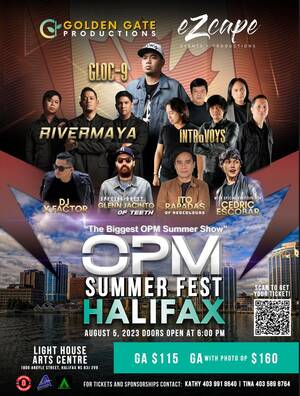
Its recent history shows a similar breadth. In 2022, the new venue hosted Halifax Celtic Fest programming, the Atlantic International Film Festival closing-night party, Serena Ryder and The Sheepdogs. In 2023, notable bookings included The Beaches, Tim Baker, Donovan Woods with Kellie Loder, dance events and Halifax Pride nightlife. In 2024, the program included Charlotte Cardin, Bahamas, comedy, Hopscotch-related events, fashion, Pride, film screenings and the multidisciplinary production ZORKA .
Programming in 2025 continued to alternate between touring music and community-led events. Examples include the multidisciplinary production AQUALO , Halifax Fashion Week, Mercy Dance Productions’ Maritime Nationals, NSCC’s Spark Creativity , Shawn Desman with Jamie Fine, Half Moon Run, Sloan, album-release events and New Year’s Eve programming. Spark Creativity combined live music, student exhibitions, film, digital art and interactive installations, while AQUALO brought together dance, singing, gymnastics, live music, acrobatics, projections, costumes and choreography.
Published recent ticket examples range from free community programming and free film screenings to approximately $25 for arts-education events, $29 to $45 for nightlife or Pride programming, $45 to $50 for larger productions and concerts, and $500 for a premium table of eight at one dance presentation. These are examples rather than a venue-wide price list; artist popularity, seating, age restrictions, presales, fees and production scale all affect the final price.
Tickets and Booking
For a public event, begin with the venue’s current event listing and use the purchase button attached to the specific show. The venue warns audiences to avoid unauthorized resale and says that official purchase routes are the safest way to obtain tickets. Some promoters manage their own sales, so the purchase process, delivery timing, age rules and accessibility arrangements can differ between events.
Light House Arts Centre does not operate a conventional public box office. For venue-managed events, telephone assistance may be available when customers have technical problems purchasing online, but this does not apply to every promoter’s show. Tickets may be delivered immediately or held until as late as 72 hours before the event as an anti-scalping measure. Keep the ticket on your phone or in your digital wallet and check the event’s door time rather than assuming the show starts when doors open.
The venue’s ticket policy is generally final sale. Refunds are not normally available for a change of mind, although a full refund may be issued when a venue-managed event is canceled without a rescheduled date. Weather cancellations are normally decided by the promoter or organizer, not the venue itself.
Popular shows reward early buying. Sold-out or high-demand examples have included Bahamas, Charlotte Cardin and Tim Baker. Check whether a show is reserved seating, standing room or hybrid before purchasing, because the same room can offer a very different experience depending on the floor plan.
About Light House Arts Centre
Light House Arts Centre is a multidisciplinary cultural hub at 1800 Argyle Street, across from Halifax City Hall and beside the Scotiabank Centre complex. It occupies the former World Trade and Convention Centre building, which ceased operating as Halifax’s convention venue when the newer convention center opened in 2017. The adaptive-reuse project was developed through Culture Link CIC and its arts-sector partners to create performance, production, rehearsal, office and collaboration space in the downtown core.
The public venue opened in 2022 after construction and programming plans were affected by the COVID-19 pandemic. During the delayed development period, the project expanded beyond a simple concert hall. Plans included a media production studio, support areas for television and film, flexible performance spaces, dance facilities and space for nonprofit cultural organizations and creative businesses. A 2021 provincial investment also supported Light House Go!, a streaming initiative intended to create work for Nova Scotian performers, technicians and production staff during pandemic restrictions.
The result is more production-oriented than a conventional theater. Light House includes a performance hall, lobby bar, media production center, flexible studios, rehearsal and workshop areas, a boardroom and office or support spaces. Its creative-hub function is reflected in Light House Link, which is intended to connect nonprofit cultural organizations, start-ups, artists and audiences within the same building.
Seating and Layout
The Performance Hall has three principal configurations. A fully seated setup provides 684 places: 346 raised, cushioned, retractable telescopic seats plus up to 338 additional cushioned floor seats. A seated-standing hybrid provides 840 places, with the retractable seats behind a general-admission floor area. The maximum general-admission standing capacity is listed as 1,150, with up to 120 floor seats possible in selected arrangements. A separate technical specification lists slightly different capacities when a 40-by-20-foot stage is installed, so the event-specific seating map should take precedence.
The room measures 7,712 square feet, approximately 91 feet 8 inches long by 85 feet 3 inches wide, with a 17-foot 4-inch ceiling. The adjacent lobby measures 3,374 square feet. A mobile stage and drape can be moved closer to the audience for a more intimate concert or performance, or positioned farther back to open the floor for a large standing event. The seating charts published by the venue show fully seated, seated-standing hybrid and all-standing arrangements, including an accessible viewing platform.
For seated concerts, central rows generally provide the most balanced view and sound, while raised retractable seating offers a clearer sightline over a standing crowd. For standing shows, arriving earlier usually matters more than choosing a ticket section. The hall has been praised by local reviewers for intimate, close-up singer-songwriter performances, while a city venue study noted that its scale can feel large and cavernous for some film screenings and that the gap between the usual stage position and the seating can matter for dance.
Sound, Lighting and Production Specifications
Light House is equipped as a working production venue rather than a bare rental hall. The 2024 technical specification lists a JBL VTX PA with flown V20 mid/high cabinets, ground-stacked S28 subwoofers, front fills and out fills. Front-of-house control includes a DiGiCo S31 console, Meyer Galileo processing and a digital effects package. Monitor facilities include a DiGiCo S21, multiple monitor mixes, Kling & Freitag monitors and QSC subwoofers. The inventory includes extensive Shure and Sennheiser microphones, wireless systems, direct boxes and communications equipment.
Lighting includes a GrandMA2 full-size console, Martin Mac 2000 profile and wash fixtures, Clay Paky Sharpie fixtures, ETC LED Source Four units, Color Dash battens, Martin Atomic strobes, a hazer and four 40-foot lighting trusses. Video facilities include two 12,000-lumen Barco projectors, projection screens, a Tricaster switcher, SDI routing, Sony cameras, robotic cameras and recording channels. The hall also offers a 40-by-20-foot standard stage, risers, loading-ramp access, a portable wheelchair elevator, dressing rooms and a green room.
The media production center adds a 4,512-square-foot black-box studio with a 17-foot 4-inch ceiling, seating for 148 plus up to 120 floor seats, and a total event capacity listed at 350. It includes audio and video control facilities, edit suites, voice-over space, production offices, green rooms, dressing rooms, hair and makeup areas, a crew kitchen and meeting spaces. The studio is used seasonally for television production, including This Hour Has 22 Minutes .
Getting There and Parking
The venue address is 1800 Argyle Street, Halifax, Nova Scotia. It sits in the downtown core, across from City Hall, within walking distance of the waterfront, hotels, restaurants, nightlife and shopping. The Halifax Waterfront Boardwalk is a practical pre- or post-show extension, although the walk includes downtown streets and may feel longer in winter weather.
There is no venue-published event-night parking rate. Visitors are directed toward downtown street parking, public parking lots and parkades. As of July 15, 2026, downtown Zone B on-street parking was listed at $3.25 per hour in the morning, $4.75 per hour late morning to early afternoon, $3.25 per hour through the afternoon and $1.50 per hour during the final paid hour, with a $35.25 daily maximum. Paid street parking is generally free after 6 p.m. and on Sundays and holidays, subject to posted signs and current municipal rules.
Nearby public options include the Nova Centre garage at 1650 Argyle Street, Casino Nova Scotia, Purdy’s Wharf, Metro Park, waterfront lots and other downtown facilities. Published rates vary considerably: examples include a $15 daytime maximum at Casino Nova Scotia, $20 at Purdy’s Wharf, $10 evening maximums at some downtown garages, and waterfront evening rates around $6. Rates, operating hours, height limits and event-night availability can change, so allow extra time and read the signs at the entrance.
Halifax Transit serves the downtown area with multiple nearby bus stops. Taxis are readily available downtown, and the venue is also practical for walking from the ferry terminal, waterfront hotels and central bus connections. Halifax Stanfield International Airport is approximately 30 minutes away by car in normal traffic, although event congestion, winter conditions and road construction can make the journey longer.
Inside the Venue
Guests enter through a lobby of approximately 3,374 square feet. The lobby is designed for event entry, merchandise tables, bar service and concessions. Coat check service is listed as available from September through May, although it can depend on the event. Restrooms are provided, including accessible stalls with support rails and roll-under sinks. Air conditioning is listed among the venue’s facilities.
Entry procedures vary by promoter. Common event information includes a door time, show time, age restriction, ticket limit, photo-identification requirement and warnings about flashing lights or other content. Professional DSLR and video cameras are prohibited during shows. Phones are allowed, while small point-and-shoot cameras may depend on the artist, tour or promoter.
Nearby Amenities
Light House is surrounded by downtown Halifax dining and nightlife, making it easy to build a full evening around a show. Argyle Street, Barrington Street, the waterfront and the streets around City Hall provide restaurants, bars, cafés and late-night options within a walkable area. Hotels in the downtown core are also close enough for visitors attending from outside Halifax. Because event nights can fill nearby restaurants and parking facilities, booking dinner early is sensible.
For a straightforward pre-show plan, arrive in the downtown area at least 60 to 90 minutes before a popular concert if you need to park, eat or collect tickets. For a small seated event with no meal or parking requirement, less time may be sufficient. The most important variable is the event format: standing shows can develop a line before doors, while reserved-seating events are usually less dependent on arrival position.
What Makes This Venue Special
Light House’s defining feature is flexibility. A single room can function as a concert hall, seated theater, dance floor, comedy venue, fashion runway, arts market, conference room, television soundstage or exhibition space. Retractable seating, a movable stage, production lighting, concert-grade audio and video infrastructure allow promoters to reshape the audience relationship rather than forcing every event into the same layout.
The venue also occupies an unusual place in Halifax’s cultural geography. It transformed a former convention facility into a production and performance hub directly across from City Hall, close to the Scotiabank Centre, Neptune Theatre, the waterfront and downtown nightlife. The building’s history is therefore less about traditional theater architecture and more about adaptive reuse: a large commercial event structure redirected toward artists, media makers, cultural organizations and public audiences.
Artists and audiences have experienced the room in markedly different ways depending on the setup. Local reviews describe sold-out concerts that felt close and emotionally direct, while larger shows have used the room’s open floor, large PA and theatrical lighting to create a more expansive atmosphere. Community productions such as ZORKA , AQUALO , Halifax Fashion Week and Spark Creativity demonstrate that the venue can support local talent and multidisciplinary work as well as touring musicians.
Its cultural impact is visible but not fully captured by a venue-specific economic study. Culture Link provides space for nonprofit arts organizations and creative businesses, while provincial support has helped sustain operations after pandemic-related construction cost pressures. Community events have funded charities, scholarships and youth access to arts education, and the venue has hosted work by local artists alongside national and international performers.
Visitor Tips and Accessibility
The venue publishes step-free access through a wheelchair ramp and automatic entrance doors. Its accessibility information states that the interior is on one level once inside, with elevators available from an alternate Duke Street and Argyle Street entrance during front-entrance construction. Because construction conditions and building access can change, visitors who need that route should confirm it before arrival.
For general-admission standing shows, a wheelchair-accessible platform with a lift provides elevated sightlines. The venue lists space for four accessible tickets on that platform and says ordered drinks can be brought to patrons there. Accessible seating or tickets for reserved events may need to be selected through the event’s purchase page or arranged with the promoter. Staff and ushers are available to assist once inside.
Check the event listing for age limits before purchasing. A 19+ designation is enforced even when a younger guest is accompanied by an adult. Bring government-issued photo ID when the event requires it, especially for 19+ shows. Do not assume that every concert is standing or that every performance uses the same stage position. Review the seating map, door time, warnings and ticket-delivery instructions before leaving home.
For the most comfortable experience, wear practical shoes for standing events, bring a charged phone for digital entry and avoid professional cameras or video equipment. If you are sensitive to loud sound, flashing lights or haze, read the event warnings and consider a seated performance where available. The venue’s technical equipment is substantial, so amplified shows can be powerful in the room.
Frequently Asked Questions
Where is Light House Arts Centre?
Light House Arts Centre is at 1800 Argyle Street in downtown Halifax, Nova Scotia, across from City Hall. It is close to the Scotiabank Centre, Argyle Street restaurants, downtown hotels and the Halifax waterfront. The venue is centrally located, so walking or public transit can be more convenient than driving on a busy event night.
Is Light House Arts Centre the same as Scotiabank Centre?
No. They are separate venues, although they are adjacent within the downtown event district. Light House is a flexible arts and performance center in the former World Trade and Convention Centre building. Scotiabank Centre is Halifax’s much larger arena. Always check the address and venue name carefully when buying tickets, especially for concerts promoted in the same area.
Does Light House Arts Centre have a box office?
The venue does not operate a conventional public box office. Ticket purchases are handled through the official event purchase route or by the promoter. Venue-managed events may offer phone assistance for technical purchasing problems, but that option does not necessarily apply to independently promoted shows. Buying through an unauthorized reseller can create entry problems or invalid-ticket risk.
Are Light House events seated or standing?
Both formats are used. The hall can be fully seated, fully standing or arranged as a hybrid with retractable seats behind a general-admission floor. Some shows offer reserved seating and standing tickets at the same event. Read the event details before purchasing because the room layout affects sightlines, arrival strategy, accessibility arrangements and how much time you may spend on your feet.
What is the capacity of the Performance Hall?
The venue publishes 684 seats for a fully seated configuration, 840 places for a seated-standing hybrid and 1,150 for general-admission standing. A separate technical sheet gives slightly different capacities when a 40-by-20-foot stage is installed. The precise capacity depends on stage placement, production equipment, seating plan, fire-code requirements and the event’s approved layout.
Can people under 19 attend?
Only when the event is advertised as all ages or otherwise permits younger guests. If a show is marked 19+, the venue states that nobody under 19 may attend, even with parental or adult supervision. Bring government-issued photo identification when requested. Age rules belong to the individual event, so do not assume the venue has one universal age policy.
Are tickets digital?
Many events use digital tickets, and some tickets may be delivered immediately while others are delayed until approximately 72 hours before the performance. Save the ticket to your phone wallet or keep a reliable screenshot if permitted by the event instructions. Check your account before traveling, and make sure your phone is charged when you arrive.
Can I take photographs or record a show?
Professional DSLR cameras and video cameras are prohibited during shows. Phones are generally allowed, while small point-and-shoot cameras depend on the artist, tour or promoter. Recording policies can be stricter for comedy, television tapings, film screenings and special productions. Follow the event’s instructions and avoid blocking the view of people behind you.
Is there a coat check?
The venue lists coat-check service as available from September through May. Availability can still depend on the event, staffing and operating arrangements. Winter visitors should not assume that every performance includes coat check, particularly for smaller or independently promoted events. Arriving early gives you more time to confirm the service and avoid carrying bulky outerwear into the hall.
Does the venue sell food and drinks?
The main lobby includes a bar and concessions area that can be staffed during events. What is available, when service opens and whether outside food is permitted can vary by promoter and event. Catering is treated separately for private bookings. For a public show, plan on lobby concessions rather than assuming a full restaurant or meal service inside the venue.
What accessibility features are available?
Published features include a wheelchair ramp, automatic doors, elevators from an alternate entrance during construction, level interior access and accessible restroom stalls with support rails and roll-under sinks. General-admission standing events can provide an elevated wheelchair platform with a lift and room for four accessible tickets. Accessible seating for reserved shows is event-specific and should be arranged before arrival.
Where should I park for a Light House event?
Use downtown street parking, public lots or nearby parkades rather than expecting a dedicated event lot. Options include facilities near Argyle Street, Casino Nova Scotia, Purdy’s Wharf, Metro Park and the waterfront. Rates and hours vary, and popular concerts can increase demand. Read signs carefully, allow extra time and consider public transit if you are attending a late or crowded show.
Is public transit convenient?
Yes. Several Halifax Transit stops serve the downtown area around Argyle Street, and the venue is within walking distance of central downtown connections and the ferry-side waterfront district. Exact routes and stop locations can change during construction or transit adjustments. Check the current trip plan before leaving, particularly if you need an accessible route or expect to travel home late.
How early should I arrive?
For a popular standing concert, arriving 60 to 90 minutes before show time is sensible if you want a favorable position or need to collect yourself after parking. Reserved-seating events usually require less advance time, but allow enough for downtown traffic, security, coat check and a lobby line. The event’s published door time is more useful than a general venue rule.
What happens if weather cancels a show?
The promoter or event organizer normally decides whether a performance will be canceled because of snow, hurricanes or other exceptional conditions. Refund procedures depend on who handled ticketing. For venue-managed events canceled without a rescheduled date, the venue states that refunds may be issued automatically, although the money can take several business days to appear on the original payment method.
Can the venue be rented for private events?
Yes. The Performance Hall, lobby, media production center and flexible studios are available for concerts, dance, comedy, film and television, conferences, workshops, corporate gatherings, markets, rehearsals and special events. Rental packages can include stage setup, seating changes, technical consultation, production support, bar service, coat check and loading access. Capacity and pricing depend on the requested configuration.
Does Light House Arts Centre host local artists?
Yes. The calendar includes Halifax and Nova Scotia performers, student showcases, local album releases, community dance, fashion and multidisciplinary productions alongside touring acts. The building’s creative-hub model also provides space for nonprofit arts organizations, start-ups, rehearsals and production work. Its programming is therefore broader than a standard concert schedule and includes both professional and community-led activity.
Does Light House support film and television production?
Yes. Its media production center includes a black-box studio, control facilities, cameras, edit suites, voice-over space, dressing rooms, green rooms, production offices and meeting areas. The studio is used seasonally for television production, including This Hour Has 22 Minutes . The Performance Hall can also be reconfigured as a soundstage or used for screenings and media installations.