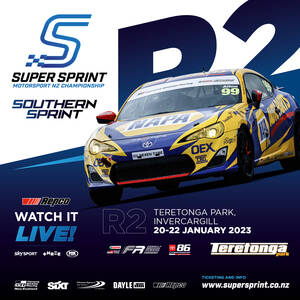
About Teretonga Park Raceway
Teretonga Park is an outdoor motor racing circuit located just west of central Invercargill (in the Otatara suburb) on Sandy Point Road. Opened in 1957, it was built by local car enthusiasts and volunteers for the Southland Sports Car Club . Stretching about 2.6 km (approximately 1.6 miles) around, the Grand Prix layout is run in an anti-clockwise direction with seven turns . The surface is hard bitumen, and because the track sits near Oreti Beach with open skies, it is famously exposed to strong southerly winds and showers. This earned it the nickname “Terrible Tonga” – drivers know conditions can suddenly shift from cold fog to bright sun or even sleet in a single afternoon .
Teretonga Park is notable for its history as New Zealand’s oldest permanent motor racing venue . In its early decades it hosted international drivers, including multiple Formula 1 world champions. Greats like Jack Brabham, Graham Hill, Jim Clark, John Surtees, Denny Hulme, Jackie Stewart and Keke Rosberg all raced here during the 1950s–70s . In fact, with Pukekohe Raceway’s recent closure, Teretonga is now the only surviving Southern Hemisphere circuit where 1960s-era F1 stars once competed . Even today it attracts up-and-coming racers: modern stars like Lando Norris, Lance Stroll and Nicholas Latifi all turned laps here in the Toyota Racing Series as they climbed toward F1 .
The club’s history is woven into the venue. After forming in 1948, the Southland Sports Car Club spent years moving sand and shaping the land on the Sandy Point site . The track’s name comes via Māori – “Teretonga” is said to mean “Swift South,” reflecting its southerly setting . Because the circuit is open and windswept, many locals simply call it the “Windy Place” of racing. Over time Teretonga’s layout has received periodic upgrades, but it still retains a simple, classic character: a sweeping design with long straight sections, high-speed corners and a broad main straight (perfect for overtaking) . Today, it’s owned and operated by the volunteer-run Southland Sports Car Club, which maintains the track, pits and paddock. Combined with its storied past, this gives Teretonga Park a unique character that many New Zealand racers and fans love – it’s fast, friendly, and full of history.
Events and Programming
Teretonga Park’s calendar is busy during the warmer months (spring through summer). On most weekends from around September to March the circuit hosts exciting motorsport events. The core of the program is club racing: the Southland Sports Car Club runs multi-car race meetings featuring clubman saloons, small formula cars, sports prototypes, production racers and motorbikes. Recurring local classes include OSCA Super Saloons, Historic Touring Cars, Formula Ford, 2K Cup tin-tops, Mini 7’s, South Island Formula Ford, Clubmans saloons and more. Many weekends include an “endurance race” or one-hour trophy for teams to run multiple drivers per car. In addition, national series come to Teretonga regularly – for example, national championships for muscle cars (like the Mainland Muscle Cars series), saloon cars, Formula Ford and Superbikes all visit in season.
Major annual events draw regional attention. In late January the track usually hosts the Southland round of the Oceania Formula Regional (formerly Toyota Racing) series, featuring single-seater formula cars from overseas. February’s big event is the Ascot Park Hotel Classic SpeedFest (mid-Feb) – a large historic motorsport festival with vintage race cars and Formula Junior. March brings the Southern Thunder weekend (mid-March), headlined by the NZ Super Truck Championship (identical in spirit to European European Edition trucks) and NZ Mainland Muscle Cars (V8 saloons), along with supporting classes. Motorcycle riders also love Teretonga: for instance the Burt Munro Challenge (for speedway and road bikes) usually runs a round here in late January or February, and the NZ Superbike Championship runs on the nearby Teretonga drag-strip or the main track. In non-summer months there might be special drag racing meets (like the George Begg Drag Festival around Easter) or drifting showcases (DriftNZ has held rounds here).
Because events are mostly outdoors, most are daylong or weekend programs with practice in the morning and races midday and afternoon. Occasionally the club also holds driver-training or track-day sessions for amateurs on quieter days. Ticket prices are generally modest – for example, a typical adult gate entry might range from about $15 to $30 for a full day’s racing (depending on the headline classes), while junior entry is often free . Many events also offer concession tickets or family passes. Kids under 14 are almost always free with an adult . Check the Southland Sports Car Club website or publicity for each event; big races often have advance tickets at local auto shops or online through the club. In short, Teretonga Park is all about motorsport – don’t expect concerts or carnivals here, but do expect a smart program of racing action nearly every fine-weather weekend in the season.
Tickets and Booking
Tickets for races at Teretonga Park are usually quite easy to buy, but sales are handled by the club or event organizers rather than big outlets. If advance tickets are offered, they are often sold through the Southland Sports Car Club (website or office) or local Invercargill merchants – commonly specialist automotive shops or tire dealerships. For example, club newsletters routinely mention discounted race-day tickets available from certain car accessory stores in Invercargill . In most cases you can also purchase at the gate on race day; the on-site “box office” at the track opens about an hour before racing starts. Ticket costs are generally low: many race meetings have day passes under $20 for adults, with children under 14 entering free . (Note: prices can vary for special events, so always check the event flyer or club notice.) Seniors and students sometimes get reduced prices as well. There is no membership requirement just to watch; non-club members buy regular public tickets.
Because Teretonga Park is a racing venue, the ticket mix is simple. There are usually general admission tickets with no reserved seating – everyone can stand or sit anywhere along the spectator areas. Occasionally special events may sell “season passes” or multi-day tickets at a discount. Keep in mind that large events can sell out early if limited, so for big races it’s wise to buy as soon as sales open (often a few weeks in advance). On race day, however, there is usually some unallocated seating/open grass space as a “walk-up” option. Children under 14 are almost always admitted free when accompanied by paying adults . There is typically no additional fee for parking, but some charity or club groups at events may take voluntary donations for parking or programs. Always carry cash for admission – some smaller meets may not offer EFTPOS or card machines, and roadside booths are often cash-only.
Seating and Layout
Teretonga Park has a very open layout – it’s not a stadium with fixed stands, but rather a broad track with ground-level viewing. The main spectator areas are on grassy berms and along flat outfield near the track. There is a small roofed pit complex and some fenced paddock areas, but after that no covered grandstands except possibly a low bleacher behind the pits. In practice, most spectators bring fold-out chairs or blankets and claim a spot along the track edges. The best viewing depends on your preference: former race fans say the main straight/start-finish line is thrilling because you can see the cars fly by at full power. Corner 1 (the hairpin at the end of the long straight) is also popular – drivers lift off hard there, so you see heavy braking and passing. Other turns (like the sweeping end-of-backstraight corner) are fun for different racing angles. People often stand by the fences (many of which are single wire or catch fencing) for close-up views.
For a more relaxed experience, some fans pick a quiet hill or field on the infield/outfield – there's plenty of space inside the track loop and outside it. A good spot is often in the outfield near Turn 4-7, where you can see three or four corners at once (though you’ll be farther from the action than at the pits). Because of the track’s layout, no seats have a bad view of the overall action. Acoustics are what you’d expect: roaring engines all around. There is no public-address system for “announcements” loud enough to explain everything, but announcers in the pit do share some info over speakers. Note that in big races the field can be wide and the action rapid – consider binoculars if you want to follow every car closely.
There is very little formal seating at Teretonga. No tickets correspond to numbered seats, and there are no safety cages or tiered stands like in city tracks. The crowd is mostly “general admission” standing or sitting inches from the fence. If you prefer a bit of structure, the only built stands are near the timing tower by the pits, but even those are limited space and often only used by race officials or team members. In short: think of Teretonga more like a field-day race than a modern arena – bring your own folding chair and a blanket (especially if grass is wet). VIP sections are generally not a thing here, although race teams park up close and will have lounge-styled transporters.
Getting There and Parking
Teretonga Park is about a 10–15 minute drive (roughly 8 km) west from central Invercargill. The address is 86 Sandy Point Road, Invercargill 9879 , near the outskirts suburb of Otatara . The normal route is to take Dunns Highway out of town, then turn onto Sandy Point Road shortly after the Otatara bush, and follow it along the Oreti Beach dunes. Look for motorsport signage and the large pit/paddock on your right. Travel time from city depends on traffic; on a race day leave extra time as race crowds often create congestion.
There is ample parking at the track itself. Large grass and gravel paddock areas are used for spectator and team vehicles. For big events, the infield and exterior field areas will be marked off for parking. Generally parking is free of charge, but be prepared to park on uneven ground and possibly walk a few hundred meters to the track entrance. Spaces close to the main gate or booth fill up first, so if you value proximity to the pits see if you can arrive early. Overflow parking can extend down Sandy Point Road. Organisers may direct overflow cars to a nearby field or domain if necessary. Note that the gravel roads and parking areas drain poorly if it’s been raining – wear good shoes if the ground looks wet.
Because the circuit is somewhat remote, public transportation is limited. There is no municipal bus that goes to Teretonga Park. Invercargill’s city buses stay in town or nearby suburbs; they do not reach the track. The best way to get there is by car. Taxis and rideshare services (like Zoomy) do operate in Invercargill but may not always pick up/drop off directly on Sandy Point Road, so you would probably arrange a meet-up in town or at the track entrance. If you plan to use a taxi after the event, it’s wise to book ahead that day.
Some visitors choose to cycle or even jog from Invercargill (there is a bike path for part of the way across the golf course), but this is only really practical on a quiet day or festival when racing isn’t running. In summer months, the street lighting on Sandy Point Road is minimal, so if you think you might head home after dark, have a flashlight or reflectors.
Inside the Venue
Once inside Teretonga Park’s gate (the main entrance by the pit lane), you’ll find a fairly informal atmosphere. There is an entry booth for tickets, but after that no turnstiles or assigned rows – it’s very welcome and low-key. Security is minimal; you won’t pass through metal detectors, but expect race marshals to be visible and to keep spectators in safe zones (behind barriers or at least 10 meters from the racecars). Keep children and pets close to you for safety around moving cars.
The central feature is the pit complex on the main straight. Here you’ll see the garages, timing tower, and a small covered area. On race days the pits themselves are closed off to the public, but just outside the pit fence is the engine-firefighting rig and sometimes a podium. Food and drink are limited but available. There is usually a club-owned canteen or catering truck in the paddock selling hot pies, sausages, burgers, coffee and cold drinks. Items like chips, ice-creams and soft drinks are often sold from portable carts or the tractor club marquee. However, don’t plan on a full-service restaurant – there’s no formal café or pub. Many fans bring their own picnic, especially for all-day events. (Tip: pack water and snacks – the nearest town shop is a drive away.)
Restrooms at Teretonga are basic. Expect outdoor “port-a-loos” or small single-occupant loo blocks near the pits. These facilities are functional but not modern – they can be rustic, and in older meetings fans have noted they are “somewhat dated.” It’s a good idea to use facilities in Invercargill before heading out. The track and paddock do not provide coat checks or childcare, so anything you carry in you keep on you. There is no official wifi or charging spots, so battery up your phone and bring any power banks you need. Mobile reception (cell phone signal) is generally fine around the Invercargill outskirts, but may be patchy right under the spectator fence in a downpour.
Merchandise stands are rare – occasionally race organizers or car clubs might sell branded caps, posters or raffle tickets at stall tables. If you’re looking for official Tees or memorabilia, your best bet is the club headquarters in Invercargill (or the Speedway club sale stands in town). On-site access to radios or scanners is common, but be considerate of others if using loud audio – racing is loud enough without more noise. Overall, the vibe is friendly and DIY: people mingle trackside, talk racing, and watch the mechanics work in the pits. Expect the smell of fuel and rubber in the air, plenty of engine noise, and a bustling paddock where your fellow spectators are often fellow petrol heads.
Nearby Amenities
Because Teretonga Park is out on the city’s edge, nearby amenities are a drive away. Invercargill’s city centre (about 10 min drive) has all the facilities you’d need before or after a race. Pre-event, many spectators stop in town for breakfast or lunch; Invercargill has a number of cafés, pubs and family restaurants close to the city centre and in the airport area. Look for well-known local chains and eateries along Tay Street or in the main shopping mall (DressSmart) – they are open by morning. If you want a sit-down dinner after the races, there are good options like steak houses and fish-and-chips shops back in town, or casual pubs that do meals. Keep in mind that after a big event you might share the road with many racegoers, so plan a little extra drive time.
As for lodging, travelers usually stay in central Invercargill hotels, motels or the Holiday Park. The Teretonga area itself has limited accommodation – one is at nearby Sandy Point Domain (the Beach Road Holiday Park) which is close to the beach and track, and occasionally used for camping by racing teams. However, official camping at the raceway is not permitted (since it’s private land). If you do want to camp, the holiday park or any free camping zones near Oreti Beach would be the legal options. Otherwise, Invercargill has motels and standard hotels (2–5 stars) from the city center to around the airport zone. Many drivers base themselves at a camp or motel in Invercargill since it’s only 10 min away.
Fuel-wise, note that Teretonga itself has no petrol station . If you need to refuel or service your vehicle, do this in Invercargill first. (There are service stations on Lascelles Street and near the airport, for example.) During large events you might see fuel trucks supplying racing fuel, but these are only for competitors. Park regulations: usually straightforward. Spectator parking is free, pit parking is for teams only, and vendor parking is clearly marked. As a courtesy, merge off the road to park to keep Sandy Point Road clear for others, and follow any one-way traffic flow marked by flags.
What Makes This Venue Special
Teretonga Park’s uniqueness comes from a mix of history, setting and community. First, the history: as New Zealand’s oldest purpose-built track (and the southernmost one in the world), it has a legacy unmatched in the region . Few venues can boast such a roll-call of legends – Kiwi greats like Bruce McLaren and Denny Hulme raced here before their international success, and visiting F1 champions of the 1960s made an appearance. To fans, this history is palpable: there’s a pride in watching new local racers (say, a teenage Southland prodigy) compete on the same tarmac where Clark and Stewart once did. In that sense, the place has a classic, almost nostalgic aura for motorsport.
The circuit’s character also stands out. Lined by low sand dunes and the distant tree-line of Oreti beach, it often has spectacular skies and weather dramas. On a sunny day the backdrop is ocean blue, but if the howling southerly blows, racing under gloomy clouds feels almost like an Arctic pass. Drivers talk about Teretonga as one of the fastest, most challenging tracks in NZ . Its layout – a long main straight into a tight corner, plus high-speed sweepers – really tests skill, and winds can make everything unpredictable. Many racers say it’s “rewarding” because you really have to master car balance. Spectators love it for the drama: overtakes happen at very high speed, and you witness genuine team tactics (pit strategy matters on long races).
Culturally, Teretonga is a cornerstone of Southland. It’s run by dedicated locals, and generations of families have volunteered there. The clubhouse walls are full of trophies and photos of past winners. Historically it even hosted community fairs and club days, becoming a gathering point beyond racing. For Invercargill residents, Teretonga is a point of pride – it represents the region’s sporting spirit even on a global stage. Its sheer longevity (turning 65 years old in 2022 ) means it has witnessed the evolution of motorsport from pre-F1 stars to electric generation Indy and beyond. In short, while to outsiders it might look like a simple country track, to New Zealanders it’s a living legend – a veteran venue where the roar of a powerful engine still sounds like old times.
Visitor Tips and Information
Bring layers and ear protection. Southland weather changes fast. Even in summer, mornings can be cold and windy (and grandstands are not heated!). Wear a jacket for later. Conversely, sunny afternoons call for sunscreen, hats and sunglasses. And always use ear plugs or muffs – racing motorcycles and cars here are loud at very close range.Eyewear and seating. The glare off the track can be bright. Polarized sunglasses help. Pack a fold-up chair or blanket – much of the viewing is on grass or concrete curbs — and a cushion if you plan to sit on hard ground. Food and drink. Snacks/food are available at pit-side canteens on race days , but choices are basic (think burgers, pies, BBQ sausages). Lines can be long, so either visit early or bring your own picnic. Never bring glass bottles (risk of breaking). If you have special dietary needs (kids’ food, health drinks, etc.), stock up in Invercargill beforehand. Remember to bring water – the track sells bottled drinks, but it helps to have extra on hand.Cash and cashless. Have cash for admission and snacks. Most people pay with cash at the gate and canteens. Credit/debit card payments are sometimes accepted but may fail (remote area). At least carry some coins and a small emergency fund.Arrive early. Gates often open by 8:30 or 9:00 am; racing can start as early as 9:30 am . Getting there early means better parking options and no rush to find a good spot. It also gives time to walk the paddock (some clubs allow spectator glimpses of pit/garage) or check out displays. Races run with few long breaks, so once you’re in, be prepared for non-stop action until mid/late afternoon.Know the rules. Follow instructions from officials. Never cross the track to get to a viewing spot – always use designated crossing gates. Trespassing in the pit or onto the track during a race is strictly prohibited. If children are present, keep them with you near grand barriers – there are no fences on entire field stretches except the main straight. Drones and model aircraft are usually banned (for safety and privacy). If in doubt about camping or bringing coolers, check with the race club ahead of time.Accessibility. Teretonga is essentially flat ground around the viewing areas, which is wheelchair-friendly in principle. However, there are no special ramps or paved boardwalks – just grass and gravel. Wheelchair users can move around the outside fence area with care, and the club office may help with parking closer to the gate if requested. Restrooms are single-occupant and not specifically adapted for wheelchairs (standard dimensions), so plan accordingly (notice that setuptools may be narrow). If you have special needs, contact the Southland Sports Car Club in advance; they are generally helpful. Clothing and gear. Wear sturdy shoes (no flip-flops) if you’ll walk around, as ground can be uneven or muddy. It’s not a fashion venue – casual, sporty attire is fine. A waterproof jacket or poncho is a good idea even on a maiden fine day (Teretonga rain showers often arrive suddenly). Since few trees offer shade, bring sunscreen and a hat if the sun is out. On dusty days, a bandana or light scarf can keep grit out of your face.Children and families. This is a child-friendly environment (there are often other families). Children under 14 usually enter free , but they must be supervised at all times. Keep them away from the pit entrance and track fencing, and watch them on the mud or gravel (kids often want to run, which can be slippery after rain). Consider small ear defenders for younger kids, as children’s ears are sensitive to engine noise. Follow the schedule. Check the event timetable in advance – websites like Motorsport NZ or the Southland car club calendar list heat times and breaks, so you know when your favorite class is on track. Note that some afternoons may be quieter if races end early; signage (or loudspeaker announcements) usually indicate if a program is running ahead or behind. In wet weather, delays are rare (racing usually continues in rain with caution), but heavy lightning would stop the meet. If the weather looks doubtful, keep an eye on official social media or radio announcements.Photography and drone policy. Personal cameras and phones are fine anywhere on the spectator side. Professional filming with large tripods or drones is typically not allowed without prior permission. Aerial drones are generally prohibited due to safety (and they ruin the surprise for drivers!). If you’re a photographer, be aware that anyone behind the barriers (like media or trackside fences) is usually club staff or drivers’ support team. Always get photo consent if you’re shooting people up close.Pets. Dogs and pets are generally discouraged at Teretonga due to the noise and dirt, and rules on domestic animals vary. If you do bring a secure, well-behaved dog, keep it on a leash away from the track and pits, and clean up after it. Many locals prefer to leave pets at home when coming to races.Local quarters/transport. If you plan to use transit after dark, note that Invercargill’s late-night public transport is sparse. Taxis can be called but may have a busy schedule after large events. Driving back is safe – just watch fatigue, as you may be tired after a long day of cheering cars. There are also shuttle services from some hotels during big races, but these must be booked in advance with the hotel or visitor centre. Respect the venue. Help keep the place clean: use the bins provided (they may be limited, so bring a small trash bag if you have a lot of recyclables). Note that alcohol is not sold by Teretonga; if you bring any, do so responsibly. Smoking is allowed in open areas, but please take all butts with you; never throw them on the grass or track. First aid and track marshals are on hand for any emergencies – if you spot something unsafe, find the nearest official or emergency crew.
Frequently Asked Questions
How do I buy tickets for an event at Teretonga Park?
Tickets can usually be purchased through the Southland Sports Car Club or the event organizer. Many events offer advance sales via the club’s website or at local Invercargill automotive shops. Otherwise, you can often pay at the gate on race day. Keep cash handy for box office sales, and check the event’s info for any online or local vendor sales.
How much do event tickets cost and are children free?
Admission is generally affordable. Adults often pay around NZ$15–$25 for a full day, and children under 14 are almost always free when accompanied by an adult . Exact pricing varies by event (special meets may run higher), so check ahead. If you have older kids or teens, they usually pay the same adult rate once over 14.
Is there a box office or online sales?
Most race meetings offer tickets at the track on race day (look for the ticket booth near the main entrance). Some larger events may also sell tickets online via the club website or an authorized platform. In smaller events, advance tickets might be sold through partner businesses in Invercargill (for example, auto shops, tire centers, etc.). Always search for the specific event’s ticket info early, as advance sales can close before race day.
How do I get to Teretonga Park by public transport?
Unfortunately, there is no direct public bus to Teretonga Park. Invercargill’s city bus routes stop in town and nearby suburbs, but not out at the track. The easiest way to get there is by car or taxi rideshare. You can take a local taxi/ride service from Invercargill; they will drop you at the Sandy Point Road entrance. If you don’t have a car, consider arranging a lift from a friend or check if any special event shuttles are running (sometimes hotels offer this).
What parking is available at the raceway?
Teretonga Park has ample on-site parking. There are large gravel and grass paddocks around the circuit used for spectator parking at race meets. Parking is generally free. Security volunteers may guide you so as not to block access lanes. There is plenty of space, but it can be a walk to the track if you park on the far side. Plan to arrive early for best spots (nearer gates), especially on high-attendance days.
Where is Teretonga Park located?
Teretonga Park is located 8 km west of Invercargill, in the Otatara area. The official address is 86 Sandy Point Road, Invercargill 9879 . From the city centre, head west on Dunns Highway toward the coast, then turn onto Sandy Point Road. Look for motorsport signs and the large open paddock – that’s the entrance to the raceway.
Is the circuit wheelchair accessible?
Teretonga Park does not have special wheelchair ramps, but much of the spectator area is flat and gravel/grass. Wheelchair users can maneuver around the paddocks and outer fence line, and the circuitside ground is level. However, there are no paved paths through the viewing areas. The pit gate and drink stalls may be gravel. Restroom facilities are standard single stalls, not necessarily wheelchair-equipped. If you need assistance, contact the club in advance; they can often help arrange parking near the gate or other accommodations.
Where are the best spots to watch the races?
Good viewing depends on what you like. Many fans choose the main straight (start/finish line) to see wide-open acceleration and pit-road activity. Watch from the grassy bank overlooking the start line to see cars at full throttle, or near the big hairpin turn just after the straight for close braking action. Some also like the final sweeping corner (turn 7) on the backstraight, as you can see cars cornering at high speed. Because there are no fixed stands, you can stand or sit almost anywhere. People often spread out along the top fences of each turn to pick their preferred angle. If you want a panoramic view, try the outfield near turns 4–6, where you can see multiple parts of the track at once (though some turns will be further away). Keep in mind heat and sun – most areas have no shade, so bring an umbrella or hat as needed.
Are there covered grandstands or VIP seating?
No, Teretonga Park does not have large grandstands. There is a small covered pit area and timing tower, but the spectator sections are mostly open earth. VIP or reserved seating is not available in the normal setup. Everyone essentially has general admission. On rare VIP occasions, tents or hospitality areas might be set up in the paddock for sponsors or team guests, but these are not for general sale. In practice, expect to stand or use portable chairs anywhere along the track heater areas.
Can I bring my own food and drinks into the track?
Yes, spectators frequently bring their own snacks, picnics and coolers. There is no rule against outside food or non-alcoholic drinks. In fact, since on-site catering is limited, many people pack lunch. However, for safety, do not bring glass containers and remember to pack out all your trash. Food trucks and a canteen usually sell hot food and drinks, but lines can be long, so a personal stash is wise. Alcoholic beverages are allowed if you bring them, but drink responsibly – no glass bottles near track, and obey the instructions of marshals if alcohol consumption becomes an issue.
Are there food stalls and restrooms on site?
Yes, basic amenities are provided. On race days a canteen or food truck in the paddock serves hot items (pies, sausages, burgers, coffee, etc.), and there are usually snack carts selling cold drinks and sweets . This service is usually only during events, so outside of race weekends don’t expect anything. Restrooms are available – expect portable toilets or small brick toilet blocks near the pits. These are functional but basic. If you’re concerned, you might use a restroom in Invercargill before leaving for the track. Water fountains are not common, so bring bottled water.
Is the circuit wheelchair accessible?
There are no special wheelchair ramps, but much of the spectator area at Teretonga is flat. The gravel and grass spaces can be uneven or soft, so mobility can be tricky in very heavy rain. For most able-wheelchair movement, watch where you park (paved areas near entrances are easier). The viewing front fence is ground-level. Driveways and pit areas are flat asphalt. Restrooms are single-stall; assistance may be needed for access. Contact the club beforehand if you have doubts – they have helped guests find suitable spots in the past.
Are dogs or pets allowed at Teretonga Park?
Pets are generally not encouraged at race meetings. The noise, dust and crowds can stress animals, and handlers may find it difficult to keep control. If you do bring a small dog, keep it on a short leash and stay well back from the track, and be prepared to remove it if it seems distressed. Some events may explicitly ban pets (check the event rules). Generally, leaving pets at home or with a sitter is best.
What should I wear and bring for a day at the track?
Dress comfortably and for the weather. Wear closed-toe shoes suitable for dirt and gravel. In summer, bring sunscreen, a hat and sunglasses for the often-intense sun (there’s no shade). If the weather is unpredictable, have a waterproof layer handy – evenings or sudden showers can be cool. Ear (or headphone) protection is crucial, especially for children – racing bikes and cars are very loud. As noted, chairs or blankets are smart for seating. Also bring cash or card, a fully charged phone, and perhaps binoculars if you want a closer view. A small first-aid kit and wet wipes can’t hurt, since facilities are basic.
When does the racing season run at Teretonga?
The main racing season in Invercargill is roughly from early spring (September/October) through to autumn (March/April). Most car and bike series hold their South Island rounds in that timeframe. Historically, the first race of the season can be around September and the last main events around Easter. In winter (May–August) the track may have occasional club track-days or off-season events, but the bulk of public meetings happen in the warmer months. Always check the current year’s calendar – promotions vary slightly each year, but summer is always the peak season.
What major events are held at Teretonga Park?
Major annual highlights include the early-summer national races and mid-summer festivals. For example, late January often sees the national Formula Regional (ex-Toyota) series and Superbike rounds. In February there is usually the Ascot Park Classic SpeedFest (with historic racing classes). In mid-March the big Southern Thunder weekend features the NZ SuperTruck series and Mainland Muscle Cars. Many national club championships also visit in summer (Saloon and Saloon Saloons, Formula Ford, etc.). Motorcycle fans note the Burt Munro Challenge bike event around late January or February. Club-based meets and one-hour endurance races are common every few weeks. For exact dates and titles, always refer to the official race calendar, but expect at least one major event almost every month of the New Zealand summer.
What does the nickname “Terrible Tonga” mean?
“Terrible Tonga” is an affectionate nickname used by locals. It refers to the track’s famously unpredictable and challenging weather and conditions. The open, windswept location by the sea means the circuit can be “terrible” (tough to handle) when strong southerly winds and sudden rain hit. In short, it highlights that no two race days are the same – sometimes it’s bright and calm, other times blustery or wet, so drivers say the track can be terrifically tricky .
What does “Teretonga” mean?
The name “Teretonga” comes from the Māori language. It is said to mean “Swift South” – a reference to its far-southern location and perhaps the rapid winds. This origin is a nod to New Zealand’s indigenous heritage, combined with the track’s honest sense of place in the deep south .
Why is Teretonga Park historically significant?
Teretonga’s significance comes from being New Zealand’s oldest permanent racetrack and for hosting many international stars. It’s one of only two NZ tracks to have seen real F1 stars compete in the past (the other was Pukekohe). Over 60+ years it has seen world champions (like Jackie Stewart, Jim Clark and Jochen Rindt) and local legends run wheel-to-wheel. That heritage makes it a mecca for Kiwi motorsport history. In addition, its continuous community support and vintage design give it a classic charm you won’t find at a modern stadium circuit.
Are events ever cancelled due to weather?
Racing at Teretonga usually goes on rain or shine (it’s well-draining asphalt). Events are rarely outright cancelled for light rain – drivers will simply switch to wet tyres. However, heavy lightning or extreme conditions would pause a race for safety. Spectators should be prepared for weather changes. Check the event’s social media on race day if a storm is forecast. In practice, cancellations are rare – most meetings adapt rather than call off.