Current Events and Tickets
Miranda is permanently closed and has no current event programme or tickets. The basement venue closed with Ace Hotel London Shoreditch during the COVID-19 pandemic, and the permanent closure was announced in September 2020. No verified Miranda-branded performances, club nights or announcements were found for 2021 to 2026, or for 2027 and beyond. Any listing that describes Miranda as a current London venue should therefore be treated as an outdated archive.
The building reopened as One Hundred Shoreditch in March 2022 after a major renovation. Miranda’s former basement is now Seed Library, a cocktail bar rather than a direct continuation of the live venue. It runs its own table bookings, private parties and weekend vinyl sessions, but these are not Miranda events and old Miranda tickets are not valid there.
Events and Programming
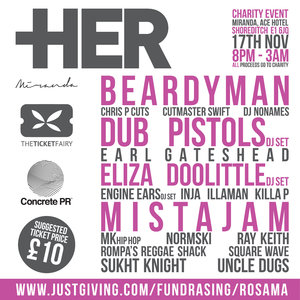
During its active years, Miranda mixed live music with late-night club culture rather than specialising in one genre. Its calendar included intimate headline concerts, emerging-artist showcases, album playbacks, DJ parties, film screenings, theatre, comedy, talks, drag, queer club nights, magazine launches, charity events and private functions. Tables and chairs could be removed, enabling the same room to operate as a standing gig venue, dancefloor, screening room or informal theatre.
The musical range was unusually broad. Programmes covered R&B, soul, hip-hop, grime, jungle, drum and bass, disco, Afrobeat, Afro house, dancehall, experimental electronics and alternative pop. Recurring and returning concepts included soul-focused Excursions sessions, R&B and 1980s soul parties, emerging UK talent showcases, disco nights and hotel-wide takeovers that moved audiences between the rooftop, lobby and basement. Historical admission was often deliberately accessible: free RSVP events were common, whilst standard club tickets generally ranged from about £4 to £15.
Notable appearances illustrate Miranda’s role as a small-room stepping stone. Aurora played her first London headline show there in 2015 before progressing to major London halls and arenas. The venue also hosted Suede, Shy FX, Two Another’s London live debut and showcases involving artists such as Joy Crookes, Naira Marley, Lava La Rue, Ashnikko, Cat Burns, Theon Cross, Poppy Ajudha, Genesis Owusu, Young T & Bugsey, NSG, Chip and Kida Kudz.
Experimental programming was equally important. A 2015 residency placed Moog Soundlab equipment in the hotel for artists including Keiji Haino, Blanck Mass, Steven Stapleton, Andy Blake, Dave Colohan, Iain Forsyth and Jane Pollard, with the resulting work performed in Miranda. Other events combined interviews, listening sessions and audience questions, including an evening with Peter Hook built around New Order’s Power, Corruption & Lies .
Tickets and Booking
Miranda did not operate like a conventional theatre with a permanent daytime box office. Tickets were normally released online by the event organiser, whilst some hotel-curated nights used a free advance RSVP or guest list. Popular showcases regularly reached capacity, and some listings warned that only a small allocation would remain at the door. Advance booking and early arrival were therefore the safest strategies.
Pricing depended more on the promoter than on a fixed venue structure. Free admission, £5 early tickets, £7–£10 standard tickets and door prices around £10–£15 all appeared in historical listings. Charity and special-format events could use different prices. There are no valid Miranda presales, door sales, memberships or VIP upgrades today.
About Miranda
Miranda was a flexible basement nightclub, bar and performance room beneath Ace Hotel London Shoreditch at 100 Shoreditch High Street, London E1 6JQ. The hotel opened in September 2013 following the extensive conversion of a former Crowne Plaza. Miranda’s fifth-anniversary event took place in October 2019, indicating that the named basement venue began operating in 2014.
The wider hotel was designed by Universal Design Studio, with architectural work by EPR. The redevelopment remodelled the façade and public areas while drawing on Shoreditch’s industrial materials, craft traditions and performing-arts history. Dark engineering brick, metalwork, Crittall-style glazing, bronze, steel and bespoke furniture established an East London identity rather than a generic international-hotel finish.
Miranda carried that approach underground. Accounts described a functional concrete staircase, a dark room, industrial surfaces and an oxide-red mark retained on the floor from the space’s earlier use. The result felt part basement club, part experimental art room: polished enough to sit beneath a design hotel, but deliberately rougher and more informal than the hotel spaces above.
Capacity, Seating and Layout
No definitive surviving licensing plan confirms one universal public capacity. A contemporary private-hire source quoted 200 standing , while one 2016 promoter advertised a 250-person limit. Differences may have reflected furniture, staging, production equipment or event-specific licensing. Two hundred is therefore a useful historical guide, not a current or legally guaranteed figure. Verified room dimensions, stage measurements and seated capacities have not been published.
The room was primarily suited to general admission. It had its own stage, a central standing floor and removable tables and chairs, with limited seating rather than fixed theatre rows. There was no permanent balcony, tiered auditorium or consistently advertised VIP section. For concerts, the front and central floor offered the most immediate artist connection; standing farther back gave easier bar and exit access but could mean a view through a tightly packed crowd.
The small scale helped audiences focus on performers. A review of an Ayelle show described a packed room that became noticeably quiet once the support act started, while another live review praised Miranda’s dark, cool atmosphere. The trade-off was that busy nights could feel crowded and queues sometimes extended along the street.
Sound, Lighting and Production
Miranda supported live bands, DJs, screenings, spoken-word events and theatre, so it had a stage, sound-control position and adaptable production setup. At least one 2018 club series advertised a Martin Audio system, but no evidence establishes that this was Miranda’s permanent house installation rather than equipment supplied for those events. The Moog equipment associated with the 2015 residency was a temporary creative installation, not the standard venue PA.
No reliable archived technical rider identifies the final mixing console, monitor package, lighting fixtures, rigging limits, stage power, projector specification or available backline. Promoters considering a recreation or historical comparison should not infer modern technical capabilities from old event photographs. Miranda no longer has an operating production department, and the renovated basement serves a different purpose.
Getting There and Parking
The former venue address is 100 Shoreditch High Street, London E1 6JQ . Shoreditch High Street station on the Windrush line is approximately a three-to-five-minute walk away. Liverpool Street, with National Rail, Elizabeth line and several Tube connections, is roughly 10–15 minutes on foot. Old Street station is also about a 15-minute walk.
Bus services around Shoreditch High Street include routes 8, 26, 35, 47, 78, 135, 149, 205, 242 and 388, with N8, N26, N205 and N242 among the overnight options. Services and stops can change, so late-night travellers should check their journey on the day. Rideshare and taxi passengers visiting the current hotel can use the main-entrance drop-off area, although Shoreditch High Street is often congested at night.
Driving was never the easiest option for Miranda. The current hotel has very limited first-come parking, quoted at £55 per night from 3pm until noon, but this is hotel parking rather than event parking. A public car park with electric-vehicle charging stands opposite. Availability and public parking charges vary, particularly when seasonal markets or local events occupy nearby space.
Inside the Former Venue
Miranda had a separate street entrance, allowing club audiences to enter without passing fully through the hotel lobby. Guests could expect an ID check, ticket or guest-list verification and security screening appropriate to the promoter. The internal experience centred on the bar, stage and open floor rather than elaborate hospitality areas.
Most advertised nights were strictly 18-plus and required valid photographic ID. Door times, last entry and dress rules varied: some independent club promoters imposed smart-casual policies and prohibited hats, hoods or sportswear, but that was not a universal rule for concerts, talks or experimental events. Photography was visible at some live shows, although permission depended on the artist and organiser. No dependable venue-wide bag, cloakroom, re-entry or camera policy survives.
Accessibility and Inclusive Facilities
“ADA compliance” is not the applicable term in England; London venues operate under UK equality and accessibility requirements. Unfortunately, a sufficiently detailed historical access statement for Miranda has not been located, so it would be unsafe to claim that every route, toilet or viewing area met a particular standard during the venue’s operating years.
The building’s current configuration is better documented. One Hundred Shoreditch has an entrance platform lift, internal lift access to the basement and an adapted toilet on the basement level. Independent access information records step-free routes and lift dimensions, but also notes that the current basement bar has no hearing-assistance system. These details describe the renovated hotel and Seed Library, not Miranda as it existed before 2020.
Nearby Food, Drinks and Hotels
Although there is no Miranda show to plan around, the former site remains surrounded by useful Shoreditch amenities. A Japanese-Danish restaurant operates next door at 100 Shoreditch High Street, while Smoking Goat is a short walk south at 64 Shoreditch High Street. Dishoom Shoreditch on Boundary Street offers breakfast through late evening and has step-free entry, accessible seating and an adapted toilet.
Accommodation options include One Hundred Shoreditch itself, The Hoxton, citizenM, Hart Shoreditch, art’otel London Hoxton and other hotels around Old Street and Liverpool Street. Late-night kitchens in London often close earlier than the bars, so diners should eat before a late event elsewhere or confirm the kitchen’s last-order time rather than relying on post-club food.
What Made Miranda Special
Miranda’s significance came from combining hotel resources with the risk-taking programme of a small independent room. It could present an artist’s first headline show, a bass-heavy club night, a queer performance, an experimental synthesiser residency and an industry conversation within the same week. Free and low-cost admission also made parts of the programme accessible to audiences who would not normally enter a design hotel.
The venue helped make the wider hotel a cultural meeting place rather than simply somewhere to sleep. Contemporary assessments described its programme as prolific and the building as a magnet for musicians, designers, freelancers, locals and visitors. At the same time, Miranda existed within debates about Shoreditch’s gentrification and the cumulative effect of late-night businesses. Licensing discussions included both hopes for new business and community space and concerns about a public basement bar adding to nightlife pressure.
No audited figures isolate Miranda’s employment, visitor spending or economic contribution, so claims about its financial impact would be speculative. Its cultural legacy is clearer: it offered emerging performers a credible small London stage and gave established artists a setting for unusually close, informal appearances.
Visitor Experiences and Practical Lessons
Positive accounts repeatedly emphasised intimacy, a packed but attentive audience, eclectic bookings and the contrast between the dark basement and stylish hotel above. Reviews of individual performances described artists holding the room’s attention and audiences dancing, filming and listening closely. Professional travel coverage highlighted Miranda as one of the hotel’s defining after-dark attractions.
Not every experience was positive. The small collection of public visitor reviews included complaints about security conduct and physical handling at closing time. Because only a handful of venue-specific reviews remain, they cannot establish how typical any single incident was, but they are part of the historical record. Miranda should now be remembered as a closed venue rather than approached as a place where these former conditions can still be experienced.
Frequently Asked Questions
Is Miranda in Shoreditch still open?
No. Miranda permanently closed with Ace Hotel London Shoreditch in 2020. The closure was announced in September after the hotel and its outlets had already shut during the pandemic. The building has since been renovated and reopened under a different hotel name, with a new cocktail bar occupying the former basement venue.
Are there any Miranda events or tickets for 2026?
There are no verified Miranda events, tickets, presales or door sales for 2026. There are also no announced Miranda shows for later years. Search results displaying a 2026 heading may simply be current archive pages containing old listings. Always check the event year and venue identity carefully before making travel or accommodation arrangements.
Is Seed Library the new name for Miranda?
No. Seed Library occupies the renovated basement at the same address, but it is a different business and concept. It operates primarily as a cocktail bar, with private gatherings and vinyl DJs on selected evenings. It did not inherit Miranda’s ticket history, event contracts or identity, so the two names should not be used interchangeably.
What happened at Miranda between 2021 and 2026?
No Miranda-branded public performances took place during that period. The former Ace Hotel was being prepared for its new identity during 2021, and One Hundred Shoreditch opened in March 2022. From then onward, the basement operated as Seed Library rather than Miranda. Its bar sessions and private parties belong to the replacement venue’s programme.
What was Miranda’s capacity?
A historical private-hire description gave Miranda a standing capacity of 200, while one promoter advertised a 250-person event limit. No definitive final licensing plan has been found, and capacity would have varied with stages, furniture and production equipment. It is safest to describe Miranda as an intimate, roughly 200-person standing venue rather than claim one absolute figure.
Did Miranda have seats?
Miranda did not have fixed auditorium seating. It used removable tables and chairs, allowing the floor to change between concerts, screenings, talks, theatre and club nights. Some informal seating was available around the room, but most music events were general admission and predominantly standing. There was no permanent balcony or tiered seating plan.
Where was the best place to stand?
For live music, the centre near the front offered the closest artist connection and clearest view of the low stage. The sides or rear were better for easier bar and exit access. Because the floor was level rather than raked, shorter guests benefited from arriving early; sightlines became less reliable once the room filled.
Was Miranda an 18-plus venue?
Most documented Miranda club nights, live showcases and talks were advertised as 18-plus, with valid photographic ID required. Age rules were set for each event, however, so an unusual private or daytime programme could differ. Historical listings should not be treated as permission to enter the current basement bar without meeting its own age and identification requirements.
Could tickets be purchased at the door?
Some events offered limited door admission, but advance purchase or free RSVP was usually safer. Promoters frequently warned that the room reached capacity quickly, and door prices could be higher than early tickets. There is no longer a Miranda door sale or box office, and old reservations, guest-list confirmations and unused tickets have no current admission value.
Did Miranda have a dress code?
There was no single dress code covering every Miranda event. Certain commercial hip-hop and R&B parties required smart-casual clothing and prohibited hoods, hats, sportswear or particular trainers. Concerts, talks, screenings and experimental nights tended to be less prescriptive. The organiser’s event conditions, rather than the room itself, determined what was accepted on a particular night.
What was Miranda’s bag and camera policy?
No dependable venue-wide bag-size policy survives in the available records. Security searches were possible, and large luggage would have been impractical in the compact standing room. Audience photography occurred at some concerts, but flash, professional cameras and filming could be restricted by the artist. Visitors should not apply these historical practices to the replacement bar or another venue.
Was Miranda wheelchair accessible?
A detailed historical access statement has not been found, so full step-free access during Miranda’s operating period cannot be guaranteed retrospectively. The renovated building now provides platform-lift access at the entrance, lifts to the basement and an adapted basement toilet. Those are current One Hundred Shoreditch facilities and should not be presented as verified features of the former venue.
What was the nearest station to Miranda?
Shoreditch High Street station, now served by the Windrush line, is the closest and is only a few minutes from 100 Shoreditch High Street. Liverpool Street is approximately 10–15 minutes away and offers considerably more rail and Tube connections. Old Street on the Northern line is also within walking distance.
Is there parking at the former Miranda site?
The current hotel has a very small number of first-come parking spaces, but these are intended for hotel use and cost substantially more than typical short-stay parking. A public car park stands opposite and includes electric-vehicle charging. Miranda itself has no event parking because it is closed; public transport remains the easiest way to reach this part of Shoreditch.
What sound system did Miranda use?
No surviving final technical rider confirms a permanent PA specification. A 2018 promoter advertised Martin Audio sound for its own series, but that may have been event-supplied equipment. Miranda also hosted a temporary Moog Soundlab residency, although those synthesis and studio tools were not its ordinary house PA. Claims naming a permanent console or speaker model should be treated cautiously.
Why did Miranda close?
Miranda closed as part of Ace Hotel London Shoreditch during the severe disruption caused by the COVID-19 pandemic. The operator subsequently confirmed that the property would not reopen under the Ace name and planned a significant renovation. The site later returned as One Hundred Shoreditch, but Miranda was not reinstated in the redesigned basement.
Why do people still search for Miranda?
Miranda remains memorable because it gave audiences unusually close access to emerging and established artists while booking far beyond a standard hotel-bar programme. Several performers who later moved into much larger London venues appeared there early in their careers. Old event pages also remain indexed, which can make the venue seem active unless the dates and closure status are checked carefully.