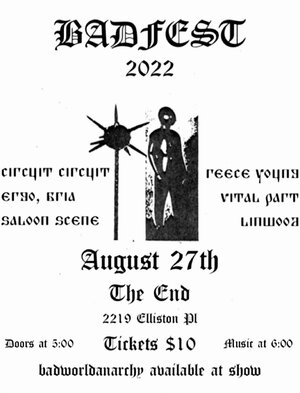
About The End
The End is a tiny, long-standing rock-and-roll dive bar at 2219 Elliston Place in Nashville’s Midtown. Opened as a music venue in 1999 by booking veteran Bruce Fitzpatrick, it sits on a storied spot formerly home to Amy’s pool hall and Elliston Square. The End bills itself as a “small-capacity Rock N Roll dive bar,” and with a capacity around 200 it delivers an intimate, one-of-a-kind concert experience. Locals fondly call Elliston Place the city’s “Rock Block,” and The End is a beloved fixture on it. Its no-frills décor — exposed brick walls plastered with posters and low lighting — and history of hosting breakout alternative/rock acts give The End a gritty charm all its own. Fans and artists alike note that performing here or attending a show feels personal and authentic, far from the polished mainstream venues. In fact, The End’s stage has seen now-famous bands early in their careers: names like Fugazi, The Flaming Lips, The White Stripes, R.E.M., Deerhoof, Mastodon and many more played here when they were on the rise . Today the club remains a true “staple of Nashville and of Rock and Roll,” continuing to champion loud, emerging talent .
Events and Programming
Live shows at The End happen almost nightly. The venue’s calendar is packed with independent and underground music — indie rock, punk, metal, post-rock, singer-songwriter nights, hip hop showcases, and even occasional DJ or comedy nights. Promoter announcements often list a local headliner supported by one or more up-and-coming bands. This place genuinely “does it all,” from beer-soaked punk rock blowouts to quiet acoustic sets . For example, recent lineups have ranged from thrash-metal acts like SANGUISUGABOGG to Americana singer-songwriters and experimental synth bands. Concerts at The End are typically 18+ (unless explicitly noted otherwise), drawing a younger crowd than the nearby honky-tonks on Broadway. The high-energy atmosphere and tight stage make each show feel intense and interactive. Because the room is small, ticket runs are modest. Typical advance sale prices are often in the teens or low twenties — for instance, upcoming concerts have been listed at about $15–$20 . Doors usually open roughly 90–120 minutes before show time , and most shows start around 7–8 p.m. The End also takes part in local music festivals; notably, it was one of 14 venues featured in Nashville’s 615 Indie Live festival in 2025, which included access to The End’s lineup on a single $15 festival ticket . In short, you can expect nearly nightly original music shows — often three or four acts per bill — at affordable prices, showcasing both local bands and touring artists who fit Nashville’s edgier side.
Tickets and Booking
Advance tickets for The End concerts are sold online through the venue’s official channels (typically on the venue’s website or a ticketing partner). If a show doesn’t sell out online, remaining tickets can usually be purchased at the door on the night of the event . There is no traditional box office open during the week — the venue only opens for scheduled events — so plan to buy in advance when possible for popular acts. Ticket prices vary by performer, but many local-band nights are as low as $10–$15, while bigger touring acts might push toward $20–$25. A real-world example: a November 2025 Sub Urban concert at The End had tickets listed from about $16 . The End rarely holds “presales” beyond general pre-sales, so it’s wise to join the mailing list or follow the venue on social media for announcements as soon as shows are announced. On busy nights, arriving early is smart — tickets sometimes line up at the door when doors open in case standing-room spots sell out. When purchasing, watch for the usual service fees added on top. In short, the best strategy is to monitor the official calendar, buy tickets as soon as they’re available, and double-check whether the event has sold out or not to know if you need a pre-bought ticket or can risk the door sale.
Seating and Layout
The End is a standing-room-only venue with a very simple layout. There are no reserved seats or balconies — just a flat, open floor that fills with concert-goers up to the 200-person capacity. The narrow stage at one end of the room is only slightly raised, meaning fans can stand right at the stage if they want a front-row view. This setup gives everyone excellent sightlines; reviews note that from almost anywhere on the floor you can see the band clearly . The main bar runs along one side of the room, with space for a handful of stools; you can sometimes grab a bar seat or lean on the railing near the sound console, but those spots are usually first-come. Since it’s a small space, the entire room can get loud and energetic — earplugs are a good idea if you’re sensitive to volume. In small venues like this, the acoustics tend to be raw, but The End’s sound system is tuned for rock shows, and fans often praise the room’s powerful, clear sound . There are no VIP or backstage viewing areas, so the best “seats” are really up against the stage, or just off to the sides if you want a bit more breathing room. Try to avoid standing immediately next to the large speaker stacks at stage-left, as the bass can be overwhelming there. Otherwise, every spot on the main floor is fairly decent for viewing — even from the bar area at the back, you can generally hear and see the performance without obstruction.
Getting There and Parking
The End’s address is 2219 Elliston Place, Nashville TN 37203 . That puts it in the Midtown neighborhood, just east of Vanderbilt University and a few blocks north of Broadway. If you’re heading by car, street parking is the main option. Meters and permit spaces line the surrounding streets. For example, you can often find spots on Elliston Place itself, on nearby Louise Avenue, or behind the venue on Hayes Street . The venue’s own FAQ notes that parking “is available on the streets surrounding Elliston Place (including behind us on Hayes St, beside us on Louise, and many other options)” . Metered on-street parking is usually $2–$3 per hour; note that Nashville’s meters enforce only until about midnight. There are a few small paid lots a block or two away (often bookable via apps like SpotHero or ParkWhiz) if street parking proves impossible, but these fill up on busy nights. For rideshare or taxi drop-off, consider using Elliston Place or Louise Avenue – there’s a small curb space in front of the club entrance to unload. Public transit options are sparse; Nashville’s WeGo bus system has a stop at Edgehill/Napier (Route 75) or 21st & West End (Route 4) within walking distance. Check the latest WeGo schedules and maps, but most gig-goers arrive by car or Uber/Lyft. If you do drive, give yourself extra time after shows to find a spot or wait for a ride — the area is active at night, and nearby attractions (like Broadway and campus) also draw crowds.
Inside the Venue
Inside, The End feels exactly like a classic gritty rock dive. You’ll enter to a dimly lit room with a low ceiling, cream-colored brick walls, and a nailed-down collection of band posters and stickers. Head straight back and you’ll see the small stage, usually adorned with some stage lighting rigs and microphone stands ready for the next act. Along the right wall (or left, depending on setup) runs the bar. The bar is not fancy – expect draft and canned beers, soft drinks, and some ready-to-drink cocktails (like spiked seltzers). In fact, reviewers note that The End only serves beer and canned drinks, no full cocktail menu . Beer prices are typically low for Nashville, and cans of local or domestic brews cost just a few dollars. The bartenders know the venue well and usually pour quickly, but be patient if there’s a crowd. A nice local tip: the crowd is usually friendly, and people often watch the show at the bar stools when not on the dance floor. The End doesn’t have any food kitchen, so don’t expect more than salty snacks (if anything) at the bar – consider grabbing a bite beforehand (see Nearby Amenities). ices. Restrooms are down a short hallway; as one reviewer warned, they are “not great” – very small and basic . There’s no coat check or cloakroom, so if you bring a jacket you might end up juggling it on a barstool or carrying it around. Merchandise tables for bands often set up near the stage or entry on show nights, where you can buy CDs and T-shirts. The venue staff enforce security at the door: they check IDs for age (most shows are 18+) and may scan bags. In fact, guidelines suggest bringing only small handbags or clutches, since large backpacks might be scrutinized . Don’t bring outside food or drink (this is generally not allowed), and don’t expect Wi-Fi – you’ll likely rely on cellular data for texts or ride hailing. Overall, the interior vibe is raw and communal. You will probably be shoulder to shoulder with fellow fans, dancing (or moshing) right in front of you, and sharing the excitement every time a favorite band starts up. It’s loud, it’s crowded, and it’s really alive. After the show, the crowd disperses back along Elliston and into Midtown – if you ventured to the bar or restrooms, grab your belongings quickly and stay alert for a ride.
Nearby Amenities
The End is located in a part of town where dining and late-night options are within easy walking distance. For food before the show, many visitors recommend Hattie B’s Hot Chicken (on 19th Avenue) – a Nashville classic (expect a line for spicy fried chicken). Another nearby favorite is The Pharmacy Burger Parlor & Beer Garden on 21st Ave, serving burgers and German wursts in a casual biergarten setting. For a quick bite, Elliston Place Soda Shop is a retro diner right across the street from the club (they serve sandwiches and milkshakes late into the night). If you want a sit-down dinner, there are plenty of options on nearby West End Avenue or Broadway – everything from barbecue to pizza to Southern cuisine. Two blocks north, the 21c Museum Hotel has a swanky restaurant (Gray & Dudley) and art exhibits in a converted warehouse building. For drinks after the show, Midtown has pubs and cocktail bars on every corner; a local pick is Lipstick Lounge, a quirky late-night bar just a block away for cheap cocktails and karaoke if you want to keep the party going. If you need to stay overnight, several hotels are just steps from The End. The Hampton Inn Nashville/Vanderbilt-Elliston Place (on 22nd Street) is a popular budget option nearby. The upscale 21c Museum Hotel, plus the Marriott/Broadway casinos (about a 10-minute walk) also offer rooms within a short stroll. For late-night transit, remember that most buses stop running around midnight – after that, rideshares or taxis are your main options. In general, plan to arrive at least 30–60 minutes before showtime: you may want to secure parking or get in line early for tickets and front-row spots, and there are plenty of neighborhood spots to explore while you wait. Also keep an eye on business hours – many restaurants and bars close fairly early just off Broadway (around 10pm to midnight), so if your show runs late be ready to hop in an Uber or step a few blocks towards the 24/7 diner for a post-show snack.
What Makes This Venue Special
The End’s specialness lies in its authenticity and legacy. Architecturally it’s nothing glamorous—just one rectangular room with concrete floors and fluorescent lights overhead—but that bare-bones feel is part of the appeal. There’s no polished veneer or fancy theater bells and whistles; everything you see is built around the music. More importantly, The End’s story ties directly into Nashville’s rock history. It was reopened by Bruce Fitzpatrick, a pioneering booker who had helped introduce R.E.M. and other legends to the area. Because of that early vision, and the club’s consistent focus on independent music, The End became a cultural touchstone for Nashville’s alternative community. It’s the kind of place where an unknown local band or an outsider touring act gets a genuine shot — one reviewer even noted that many local artists view The End as “the stepping stone into the future” for emerging talent . Regular attendees feel a proud ownership of the space; community fundraising efforts during COVID-19 raised over $15,000 to keep The End alive, showing how devoted fans are . In a city often associated with country and pop, The End stands out as a gritty refuge for rock, punk, metal and experimental music. Its unfiltered energy — described as a “sweaty and beer-fueled party” on some nights — and its history of hosting “some of the world’s finest and most raucous bands” give it a legendary reputation . For both artists and audiences, the reward of The End is an intensely immediate experience: the band’s guitar speakers buzz in your chest, you’re literally inches from the performers, and everyone’s singing along in unison. That electricity, combined with the venue’s scrappy, dive-bar character, is what keeps music fans returning night after night to The End.
Visitor Tips and Information
Getting the most out of a visit to The End means packing light and planning ahead. First, remember age: almost all shows are 18+ (and you must be 18 even to enter), so bring a valid photo ID or you won’t be admitted . Don’t bring large bags or backpacks — the venue has a strict no-large-bags policy for safety . Small clutch bags or clear drawstring bags are much easier to take through security. Also, wear comfortable shoes: you’ll be standing for hours, possibly dancing or jumping around, so avoid heels or slippery soles. Dress casually and expect to get hot under the stage lights, so layers are good. Ear protection (earplugs) is wise if you’re sensitive to loud volume or plan to stand near the speakers. The End doesn’t have public Wi-Fi, so if you need directions or want to queue an Uber, make sure your phone is charged. If you plan to purchase band merchandise, carry some cash — some small vendors might not take cards. Before heading to a show, check the door time and age policy online (door times vary, but are generally about 90 minutes before show time ). Arrive early if you want a good spot in front of the stage. One common tip: use the time before doors open to grab a drink or a quick dinner so you’re not rushing when the music starts, since the bar lines get long in a packed club. Finally, if you have mobility concerns, be aware that The End’s building is older and may not be fully wheelchair-accessible — there is a single entrance and a few steps inside, and seating is not provided. Consider contacting the venue in advance or choosing a spot near the bar or entrance. In summary, come ready for a crowded, standing-room show, with your ID, earplugs, and an open mind to enjoy the rowdy, rock-and-roll dive atmosphere.
Frequently Asked Questions
What is the capacity of The End and does it have reserved seating?
The End is a very small venue — its capacity is roughly 200 people . There are no reserved seats or assigned seating at The End. It’s a general admission / standing room-only club, so tickets (and entry) are first-come, first-served. Once inside, visitors stand at the open floor or along the walls and bar.
What kind of music and events are held at The End?
The End focuses on live alternative and rock music. You’ll see a wide mix of genres: indie rock, punk, metal, hardcore, singer-songwriter nights, and occasional hip-hop or experimental acts. Often the club hosts several opening bands supporting a headliner each night. Almost every week features concerts, and sometimes The End also participates in local music festivals (for example, it was one of the venues in the 615 Indie Live festival ). Shows here are almost always 18+.
How do I buy tickets for a show at The End?
Tickets can be purchased in advance through the venue’s official channels (typically the venue’s website ticket page or an authorized seller). If an event doesn’t sell out beforehand, you can usually buy tickets at the door on the night of the show . It’s best to buy early for popular acts, as tickets are limited and may sell out. Note that the venue itself only opens on event days, so there is no regular box office open during the week .
Is The End an all-ages venue, and what are the age restrictions?
Most shows at The End are restricted to ages 18 and up. There may be rare exceptions (for example, explicitly labeled “all ages” shows), but the vast majority of events require you to be 18 or older. Always check the event listing. On show nights, the staff will check a photo ID at the door to verify age .
What are the nearest public transit stops or stations?
Nashville’s public transit coverage around Midtown is limited. Nearby WeGo bus routes include Route 4 (Shelby Avenue) and Route 75 (Midtown), with stops on nearby West End Avenue or Edgehill/12th Avenue. The closest buses usually drop you on West End Avenue or 21st Ave, which is roughly a 5–10 minute walk from The End. The city’s free downtown buses or light rail do not serve Elliston Place. Expect most patrons to arrive by car or ride-share unless coming from campus via a walk or transfer.
What parking options are available around The End?
Street parking is the most common choice. Metered on-street parking runs along Elliston Place and nearby streets (Louise Ave, Hayes St, etc.) . According to the venue’s info, you can find parking “behind us on Hayes St, beside us on Louise, and many other options” . These spots use parking meters (typically $2 per hour) until about midnight. There are also small paid lots within a block, though they fill up fast. If street parking isn’t available, some people use parking apps (SpotHero, ParkWhiz) for garage spaces near campus, or just take an Uber/Lyft. Plan on arriving a bit early to hunt for a space.
What is the door policy (bags, cameras, etc.) at The End?
Security at The End is straightforward. Bags are checked on entry; it’s recommended to bring only small purses or clear bags, as large backpacks may be turned away . Generally, phone cameras (no flash) are allowed, but professional photography or video equipment usually is not. Outside food or drink is not permitted. Medical necessities should be fine but may be inspected. The venue enforces an ID check for alcohol and entry (18+), so have ID ready. The official guidance notes small clear bags are best, and any medical bags may be inspected .
Are there any seating or VIP sections inside The End?
No. The End is general admission only. There are no reserved seats, balconies or VIP areas. If a show includes a VIP package, it typically only grants early entry, not a special stage-side area. In practice, the floor fills up from the stage backward, so the only “best seats” are standing right in front of the stage or up near the soundboard by the bar. Once it’s full, latecomers will be near the back or sides of the room.
Does The End serve food or drinks?
The End has a full bar counter, but the menu is limited. It serves draft beer and canned beer/seltzers, plus non-alcoholic drinks. Notably, it doesn’t serve hard liquor cocktails or made-to-order drinks. One reviewer mentions “Beer only (no hard liquor) but spiked seltzer” was available . The prices are very reasonable by city standards. There is no kitchen or regular food service, so visitors often eat before the show. You’ll find no sit-down restaurant inside — just the bar where drinks are poured. Lastly, there’s no coat check, so keep your belongings with you.
Is The End wheelchair accessible?
Accessibility information is limited. The End is in an older building that may have steps or narrow doorways. It’s best to contact the venue directly if you require accessibility accommodations. There is no mention on their FAQ about ramps or elevators. Given the likely constraints, wheelchair users should verify in advance how access and seating would be handled. (Some small clubs have at most an ADA-compliant restroom, so check first if you have any doubts.)
What time do doors usually open, and when do the shows start?
Door times vary by show, but typically The End opens around 90 minutes to 2 hours before the scheduled music start . For example, a show listed at 8pm might have doors opening around 6:30–7:00pm. Check the specific event page when you buy tickets — that will list the door time. The place can get crowded quickly when doors open, so arriving early helps you get in and find a good spot on the floor.
How should I dress for a show at The End?
There is no formal dress code at The End. The vibe is extremely casual rock-dive. Most people wear jeans, band T-shirts, sneakers or boots. It can get hot and crowded during shows, so lightweight layers are smart. Comfortable, closed-toe shoes are recommended (especially if you plan to dance or mosh). Avoid bringing bulky jackets or backpacks, as space is tight. In general, dress for comfort and expect to sweat a bit in the packed crowd.
Is it okay to arrive late or stay after the show?
You can arrive late if you must, but be aware you might miss the headliner’s full set. Also, late entry may require waiting longer in line if the room reached capacity earlier. As for staying after, there’s no cover or admission fee to re-enter the bar area, but staff often want patrons to leave shortly after bands are done. Doors remain open until about 1am, so you shouldn’t be rushed out immediately. Just be mindful of neighbors: the East Nashville neighborhood is quiet late at night, so walk out quickly and avoid loud noise on the sidewalks. If you need the restroom after the show, try to use it before stepping outside, since re-entry is not usually allowed.