About Elijah Wheat Showroom
Elijah Wheat Showroom is an independent contemporary art gallery and event space in Newburgh, New York. Founded by artists Carolina Wheat and Liz Nielsen in 2015 (originally in Bushwick, Brooklyn), the gallery moved into its current 3,000-square-foot Hudson River–side location in 2022. It’s named in memory of the founders’ late son, Elijah Wheat, and carries a personal, mission-driven spirit. The venue occupies a historic industrial building (a former steam mill and leather tannery) on Front Street. The high ceilings, exposed brick and large river-facing windows give it a raw, airy feel, letting natural light shine on cutting-edge artwork. Elijah Wheat shows socially conscious contemporary art – from photography and painting to sculpture and immersive installations – often mixing the personal with the political. This upstate gallery has become a vital hub in the Hudson Valley art scene, alongside neighbors like Grit Gallery and Bank Arts Center. Visitors frequently note the building’s dramatic architecture (complete with a massive plaster curtain installation) and its sweeping views of the Hudson. It can welcome a few hundred guests comfortably during busy openings. The founders select artists who share Elijah’s adventurous, trendsetting sense of style, creating a unique platform that pushes creative boundaries and enriches the Newburgh community’s cultural life.
Events and Programming
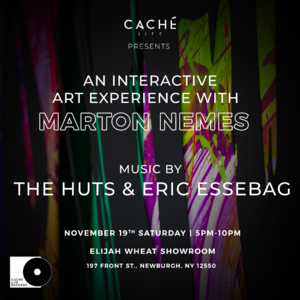
Elijah Wheat Showroom’s calendar is structured around rotating exhibitions rather than nightly performances. Its main events are curated art exhibitions and installations running for several weeks or months. New exhibits typically open with an artist reception or talk, and the gallery is open on weekends (often 12–6PM Saturdays and Sundays) and by appointment during shows. The space has featured a wide variety of contemporary art forms: large-scale sculpture, conceptual photography, experimental video, sculptural paintings and immersive multimedia pieces. Themes often deal with pressing social issues – climate change, political history, gender identity and social justice – presented in surprising, thought-provoking ways. For example, 2022 saw a dramatic inaugural summer exhibit where artist Ian McMahon cast and destroyed a 2,500-pound plaster curtain on-site. Later that year, Hungarian artist Marton Nemes held a mixed-media solo show (“AMPLIFIER”) that even kicked off with a techno dance-party reception. In 2023, the showroom hosted “Souvenirs of the Wasteland,” a dystopian installation by Caitlin McCormack and Katharine Ryals with dance events and artist talks during Upstate Art Weekend. Other recent highlights include Michael Hambouz’s politically charged relief paintings (“Loves Cats, Hates Catastrophes,” 2024) and an elaborate light-and-salvage installation by local artist Matthew Lusk (“Encyclopedia of Light,” Fall 2024) praised as a must-see. Many shows also include community events: panel talks, performances or book launches (one exhibition served as a venue for Alex Yudzon’s photo-book launch). While art exhibitions are its focus, the showroom sometimes partners in broader events like Future Fair or hosts gallery talks. Generally, audiences can enjoy new art each season; there isn’t a fixed schedule of performances like a theater, but the space stays active with fresh programming year-round. Because most exhibitions are gallery shows, admission is usually free; if a special event requires tickets (e.g. a performance piece or large fundraiser), announcements clearly note that.
Tickets and Booking
Admission to Elijah Wheat Showroom’s regular exhibitions is free of charge. Visitors can typically just show up during open hours on weekends. Booking is only needed for special limited-capacity events. For example, the gallery has occasionally mounted ticketed events (such as the July 2022 sculpture-destruction performance). Those tickets were arranged in advance through the gallery’s website or an event platform. However, 95% of visits to the showroom require no ticket or payment. There is no box office building – one checks in at the door. For popular special events (closing receptions, artist talks or private viewings), sign up early via the gallery’s mailing list or contact the gallery directly. Appointments can be made for private viewings or weekday visits. Generally, built-in shows are first-come, first-served. For high-profile exhibitions or openings, it’s smart to arrive early or RSVP if the gallery suggests. The gallery’s website and social media announce new shows ahead of time, so prospective visitors can plan. In short, most of Elijah Wheat Showroom’s programming is freely accessible. When there is any charge – say, a guest artist workshop or external art fair – that information is given in advance and separate from the regular gallery admission.
Seating and Layout
The showroom’s interior is a large loft-like gallery with an open floor plan; there are no fixed seats or bleachers. Guests wander the exhibits standing or walking. For casual viewing or gallery openings, people generally stand in clusters before art pieces. When the gallery hosts talks or film screenings, it might set up folding chairs along the back wall, but these are temporary. The best “view” is simply moving through the space: tall installations and wall-mounted works invite viewers to circle around or approach closely. Because of the tall ceilings and raw materials, sound carries, so audio elements of exhibited pieces can be quite immersive. The main area is on the building’s third floor and has large panoramic windows facing the river. Those windows often act as a living backdrop for artwork, so many visitors note that standing near the windows provides a great ambiance and soft daylight for certain exhibits. There are no formal VIP sections – in effect, every visitor has equal access to the art. The gallery can accommodate a few hundred people at once in its 3,000-square-foot space; at large openings it gets crowded, but there are wide walkways. One caveat: the floor is open and multi-level in places, so be aware of any platforms or ramps (they will be part of an installation). In most shows the lighting is professionally designed – spotlight on individual works or ambient color washes – so viewing is usually optimized. The only spots to avoid might be directly under dark video projections (it can be hard to see) or very close to speakers in sound installations if one is noise-sensitive. Overall, the open industrial layout makes this more like a museum/gallery visit than a seated theater experience.
Getting There and Parking
Elijah Wheat Showroom is located at 195 Front Street in Newburgh, NY, on the city’s historic waterfront. By car, it’s easiest to reach from Interstate 84: take Exit 9 (Route 9W) and head into downtown Newburgh on Broadway (Route 9W/NY-300) southward, then turn right onto Front Street near the river. From the south, cross the Mid-Hudson Bridge (I-84) and take Exit 9 into Newburgh. The gallery is one block east of the Hudson, not far from the Newburgh Ferry Dock or Liberty Street. GPS will direct you to Front St easily. Parking on Front Street is mostly metered (bring coins or card). There are also side streets with free curb parking, though spots can fill up on weekends. A public parking lot near the Newburgh Free Library (Broadway and City Hall Plaza, a few blocks uphill) is free on evenings and weekends and about a 5-minute walk. On-street spots along Liberty Street or Canal Street (east of Broadway) can also work with a modest stroll. For commuters, the Coastal Commuter Park & Ride lots (I-84 East Exit 9) are nearby – check posted rules (some lots allow all-day parking on weekends when the lot isn’t used for buses). If driving, remember Front Street is a one-way southbound road; drop-offs can be made directly in front, and rideshares often drop at the curb.
Public transit access is limited. The nearest train station is Beacon (Metro-North Hudson Line) about 8 miles north. On weekends when the NY Waterway ferry doesn’t run, a bus or taxi from Beacon to Newburgh (often via Route 17K) is required; a short local bus (Orange County Transit’s NB5) connects Beacon’s ferry dock to Newburgh’s downtown ferry slip when the ferry operates. Buses: Orange County Transit (operated by Leprechaun) runs local routes through Newburgh. The “NB3” Crosstown bus stops on Broadway near Liberty (a 5-min walk uphill to the gallery). Transit Orange also has a “Park & Ride” route from spring through fall that runs from Beacon’s ferry to New Windsor Mall. There is no subway or commuter rail directly in Newburgh. Intercity buses (Greyhound/Adirondack Trailways) serve Newburgh; they usually stop near the Mall or in New Windsor, so a taxi/Uber from there is needed to reach downtown.
Inside the Venue
Upon arrival, you’ll enter a spacious loft-like gallery. A friendly host or gallery assistant typically welcomes visitors. Coat racks or hangers may be provided in winter. Entry is usually casual – there’s no cloakroom or formal check-in desk. During exhibitions, staff don’t frisk bags, but large backpacks might be asked to be left behind the desk out of respect for the art. Restrooms: one unisex bathroom is located past the reception area on the main gallery floor (ask staff to point the way). It’s basic but clean. There is no café or food service inside the showroom. You’re welcome to carry water, but eating or drinking isn’t allowed in the exhibit space (food and drink are kept to event catering tables during openings). The atmosphere inside is quiet and contemplative unless a guided tour or reception is going on. The space is well-lit with a mix of downlighting on the art and natural light. Sometimes contemporary music or ambient sound will be part of a show – for example, one exhibition might have layered film audio playing. If an event is happening, you might see a small table with programs or a signup sheet. Gallery merchandise is minimal; occasionally prints, artist books or small catalogues are offered for sale, but don’t expect a gift shop. It’s fine to take notes or use a phone for reference, but camera flash is usually prohibited to protect the artworks. Free Wi-Fi is not advertised (cell service can be spotty). If you need an internet connection, stepping outside for signal is easy.
Accessibility: The main gallery is on the third floor of the building. There is an elevator, but visitors may need to ask staff to use it. The venue is not fully ADA-compliant due to its historic nature. If you have mobility concerns, consider contacting the gallery before visiting; staff can sometimes make arrangements to ensure you see the exhibits. There are no special facilities beyond the one restroom. If a show includes performance art with loud sounds or strobe lights, the gallery will usually post a content warning. In general, the venue is informal and the hosts are very accommodating—don’t hesitate to ask the staff any logistical questions on arrival.
Nearby Amenities
Dining and Drinks: Newburgh’s waterfront district has a vibrant casual dining scene. Within walking distance, you’ll find several options. On Front Street, restaurants like The Anchor (American gastropub fare) and Waterfront Wine Merchants (small plates and local wine bar) are popular. A few blocks inland on Broadway, grab American/Asian fusion at Tin Barn Brewing (brewpub with burgers and tacos), or the historic Liberty Street Bistro (European-inspired menu) on the corner of Liberty and James. For tacos and tequila cocktails, check out OTTO’s Pizza & Taco. Coffee and light bites are available at Big Creek Coffee (downtown, not too far away). If you’re open to a short drive, spots like the Newburgh Brewing Co. (brewpub, 5 min south by car) and The River Grill (casual seafood on Liberty St.) are local favorites. Many places accept cash/card, and Happy Hour specials are common in early evening.
Hotels: There are no large hotels right downtown, so most visitors stay a few miles out. The closest clusters of accommodation are near Stewart International Airport (about 4 miles south) or along Route 300. Notable nearby chains include Courtyard by Marriott (Stewart Airport), Candlewood Suites, and Hampton Inn (which may be labeled as Newburgh/West Point area). These all have plenty of parking and are a quick drive from Front Street. Closer in, some boutique things like the Hudson Studios are across the river in Beacon (if you don’t mind a short commute). In Newburgh proper, there are bed-and-breakfasts and small inns, but book early – the summer arts weekends can fill rooms. Two blocks north of the showroom is the old Footprints Gap (a former factory turned small hotel/gallery). If you want river views while you sleep, consider lodging on the New Jersey (pointed across the MidHudson) or downtown Beacon (where Dia:Beacon has some guest rooms).
Transportation Tips: If you arrive early for an exhibition, use the extra time to wander nearby. A flat 5-minute walk north leads to the historic Newburgh Ferry Terminal (where you can look across the Hudson or catch the seasonal ferry to Beacon). Further north, Taylor Hall (at 101 Front St) has public art installations outside. If you have time before a show, it’s worth strolling Broadway’s antique shops and cafes. For late-night travel home, be aware that Orange County busses end service by 10PM on weeknights and 8PM on weekends; plan an Uber or taxi if you’re stuck after 10PM. Streetlights and sidewalks are good but remember that Front Street’s nightlife is mellow after dark. Some restaurants and bars stay open till 11PM or later on Fridays/Saturdays. The Newburgh-Beacon commuter ferry operates on weekdays only, so don’t rely on it for a show night return unless it’s Thursday/Friday and you check the schedule in advance. Ride-sharing apps work here (though wait times can be long), and there are a handful of local taxi services. For those driving, remember that if you park in a metered spot and dinner runs late, afternoon kitchen parking fines do apply.
What Makes This Venue Special
Elijah Wheat Showroom is unique because of its blend of personal history, raw industrial character and innovative art. Unlike a sterile museum, this space feels like an art-centric home that commemorates the founders’ son, giving it emotional depth. The co-founders themselves are artists with a global outlook, so exhibitions feel like living projects – as if you’re stepping into someone’s creative atelier. Architecturally, the showroom is dramatic: one wall might be an immense window overlooking the Hudson River, another framed by exposed beams and brick. Artwork often incorporates the surroundings, such as a giant sculpture that takes up the whole floor or videos playing on the wall so you feel surrounded by the art. A memorable feature is Marton Nemes’s “Waves” sculpture, installed permanently on the riverbank outside – not many galleries let guests see a huge abstract wave shimmering in the actual river! The space has a high-contrast vibe (natural light meets painted wood and concrete floors), and that tension energizes events. Culturally, EWS stands out in upstate New York by regularly getting national press. It’s been named a “must-see” by Hyperallergic writers and called a “magnetic force” in the Hudson Valley art world by Chronogram. Its exhibitions have put Newburgh on the map — for example, Dallas Museum covered a EWS show, and Hyperallergic recommended its 2025 exhibitions in the Hudson Valley. The gallery ties into community traditions too: its grand opening coincided with the Newburgh Illuminated festival, and it plays a key role in Upstate Art Weekend celebrations. In short, visitors love it because it feels like an exciting hidden gem where the outside world melts away and only bold, thought-provoking art remains. For artists, it’s special because Cornell-like risk-taking is encouraged (they do many first shows for emerging voices), and guests often speak of the showroom as feeling intimate and inspiring all at once.
Visitor Tips and Information
Accessibility: The gallery is on the third floor, accessible by a standard freight elevator. If you have mobility needs, call ahead – staff can meet you at the ground floor and escort you. The restroom is on the same level as the main gallery. The floors are open plan, but do watch for any temporary ramps or steps that exhibitions may include. If an exhibit has video or audio components, note that some areas can be dark or loud. The space is somewhat narrow at the entrance, so give way to others if it’s busy. Families with strollers should be prepared to fold or hold the stroller when moving through the crowd. Service animals are usually allowed when visiting respectfully.
What to Bring/Not Bring: A small bag is fine; large backpacks may be discouraged. Cameras or phones are allowed for personal use unless an exhibition specifically prohibits photography. (No flash.) Bring layers – the old brick interior can feel cool even on warm days. On cold days, you’ll hang your coat in the lobby. If you plan to take notes, pens and sketchpads are okay – many visitors jot down reactions to shows. No food or drink inside the gallery area, beyond a water bottle. If you need a coffee or bite, do that before or after strolling through (there’s a break room/kitchen for staff, but it’s not for the public). Tickets: for most events, none needed; if an event has a fee, that will have been known in advance. You may be asked to register on arrival for explainers or mailing lists.
Typical Mistakes: Don’t assume the doors are open all day. With changing exhibitions, check the current show’s hours on the website before going. Weekdays are strictly by-appointment (often closed otherwise). Another tip: since this isn’t a heavily traveled tour destination yet, don’t underestimate travel time. If coming by train to Beacon, allow 30 minutes plus for bus/taxi. People often forget that evening parking fees end at 6PM – if you park on the street after that time, it becomes free. If going on a weekend, arrive at least 10 minutes early to browse a brochure or chat with the curator at the door.
Age and Etiquette: All ages are welcome. It’s fine to bring teens or children, but there are no special children’s programs. Some art can be complex or intense, so keep an eye on younger kids. It’s polite to speak quietly and avoid touching artworks (even if they look easy-to-touch – always ask if it’s interactive). Dress is casual: gallerygoers often wear neat street clothes (jeans/jacket or a nice sweater). For evening events, a smart-casual style is common.
Insider Advice: The founders love hearing visitor questions – if a gallery slide (pre-show video) is playing, stay and watch it. The back gallery often feels like a private studio; if someone is working there, don’t feel shy about chatting. If an exhibition notes something about Elijah or the gallery story, that’s a good conversation opener. Also, don’t rush – because the space is smaller than city museums, a complete visit can be brief (20–30 minutes), so it’s easy to hit multiple places the same day in Newburgh. Finally, consider riding in early spring or fall, when the Hudson Valley light is gorgeous and the front windows can be foggy or framing fall colors – it adds to the atmosphere.
Frequently Asked Questions
Do I need to buy tickets to visit Elijah Wheat Showroom?
No, general admission to the gallery’s exhibitions is free. You can simply walk in during open hours. Tickets are only required for a few special events or performances (for example a large installation or dance event), and those are announced in advance via the gallery’s website or mailing list. For most visits, there is no charge.
What are the hours and how do I make a booking or appointment?
The showroom is typically open to the public on weekends (often Saturday and Sunday from noon to 6pm) and by appointment during exhibition runs. Check the current exhibition’s page on the gallery website for exact hours. If you need to visit on a weekday or outside posted times, email or call the gallery in advance to schedule a private viewing.
Where exactly is Elijah Wheat Showroom located?
It’s at 195 Front Street, Newburgh, NY 12550. That’s in the city’s riverfront area, near the old Ferry Landing and opposite the Hudson River. It’s easily accessed from Broadway (Route 9W) by turning onto Front Street. GPS navigation to “Elijah Wheat Showroom” or the address will get you there.
How do I get there by public transportation?
Public transit in Newburgh is limited. The nearest train station is Beacon (Metro-North Hudson Line). From Beacon, you can take the seasonal NY Waterway ferry to Newburgh (but the ferry does not run weekends), or take an Orange County Transit bus (route NB5) to the Newburgh ferry dock. Locally, Leprechaun bus routes run through downtown Newburgh; catch the NB3 or NB1 routes and get off at Broadway & Liberty Street, then walk south and downhill to Front Street. For many visitors, driving or rideshare (Uber/Lyft) from the Beacon station is the most straightforward option.
Is there parking available at or near the gallery?
There is street parking on Front Street (mostly metered) and nearby side streets. Meters are usually enforced during the day, but on evenings/weekends parking may become free (check signs). You’ll also find free municipal lots within a 5–10 minute walk, such as the lot by Newburgh City Hall or the Newburgh Free Library. The gallery is just off the main downtown area, so don’t hesitate to park and walk a bit if needed. Always watch for “no parking” signs during events.
Are there restrooms inside the showroom?
Yes, there is a restroom inside. It’s down the hall near the entrance of the gallery. Ask the staff or host on duty, and they will direct you to it. It’s a single unisex restroom. Otherwise, public restrooms (like at City Hall) are just a few blocks away if needed.
Is Elijah Wheat Showroom wheelchair accessible?
The main exhibition space is on the third floor of an old building. There is an elevator for guest use, but you may need to notify staff if you arrive and it’s not already in service. The gallery is not fully ADA compliant (due to its historic structure), so if you have special needs, contact the gallery ahead of time and they can arrange assistance. The restroom is on the same level as the elevator.
Are cameras or filming allowed inside?
Generally, non-flash photography for personal use is permitted during normal gallery hours, but always double-check signs at the entrance. Some exhibitions or events may request no photography (for example, if the artwork is copyrighted or very fragile). Video recording is usually discouraged. If you plan to film or take many photos (say for press or a blog), ask the gallery staff first.
Can I bring children or pets?
Children of all ages are welcome, though some art can be intense. Exhibitions are generally family-friendly, but please supervise young kids so they don’t touch the artwork. There is no formal programming for kids, but well-behaved children should come with adults. Service pets are permitted; other pets should not be brought inside unless it’s a special event that explicitly invites them (which is rare).
Is there a dress code?
The showroom is informal and stylish, but there’s no strict dress code. Visitors typically wear casual or smart-casual attire. Some guests like to dress “arty” for a gallery opening. Just avoid very dirty or beachwear-style clothing. If you are attending a special evening event or performance, the event listing will mention if a certain attire is suggested (e.g. club clothing for a dance party). In general, comfortable clothes and shoes are recommended for walking around.
Can I eat or drink inside the gallery?
No food or drink, except water in a closed bottle, is allowed inside the exhibition area. The gallery is not a restaurant or lounge. During special receptions, there may be hors d’oeuvres or a cash bar, but that is strictly by the entrance or in a designated corner. Otherwise, plan to dine before or after your visit at one of the nearby restaurants. The hosts will ask visitors to leave any food or beverages at the entrance.
Are cell phones or Wi-Fi available?
The gallery does not offer public Wi-Fi, and service can be patchy due to thick walls. Feel free to use your phone for notes or photos, but please keep it on silent/vibrate. Because it’s a quiet space, use of phones is limited to stepping outside or digital note-taking. If you need internet access, step outside where cell reception is stronger.
Is there a gift shop or merchandise?
No, Elijah Wheat Showroom does not have a souvenir shop. It is a pure exhibition space. Occasionally, during special events, there may be limited artist prints, catalogs, or books available for purchase (especially if the exhibition features a publication). But don’t expect branded T-shirts or magnets — this is a gallery, not a gift store.
Does the gallery host weddings or private parties?
No, Elijah Wheat Showroom is dedicated to art exhibitions and public programming. It does not operate as an event rental space for weddings or commercial parties. However, the founders occasionally invite educational groups or corporate art workshops by arrangement. For anything beyond standard gallery visits (e.g. a school tour), you should arrange it in advance through their contact info.
Why is the gallery named Elijah Wheat Showroom?
The gallery is named after the founders’ son, Elijah Wheat, who passed away in 2014 at the age of 16. Carolina Wheat and Liz Nielsen named it in his memory, saying that continuing to say his name keeps his spirit alive. His creative interests and unique style influence the gallery’s mission of showcasing bold, vivid art. They often describe Elijah as an “invisible curator” guiding their choices.
Who are the owners, and are they artists too?
Elijah Wheat Showroom is owned and curated by artist-partners Liz Nielsen (a photographer) and Carolina Wheat (an artist and curator). Both founded the gallery and continue to run it. They are active in the art community: Liz is known for her experimental photography, and Carolina is a Polish-American painter/curator. Between them, they have exhibited globally. The gallery reflects their aesthetic – artistic, experimental, and socially engaged.
What is the capacity of the venue?
The main space is about 3,000 square feet and can comfortably hold around 100-150 people at a time. There’s no fixed seating, so capacity refers to overall occupancy. For popular openings or performances, they might limit entry to ensure safety (for example, a ticketed event might only allow around 50 people). But in normal use, you can expect to freely wander even when dozens of visitors are inside.
What types of events does the showroom host?
Primarily it hosts art exhibitions – solo shows, two-person shows and group shows – featuring contemporary visual art. Occasionally it also hosts performance art events (like the plaster-curtain performance) and talks or book launches by artists. They do not have regularly scheduled live music or theater, but special art-related events (that blend performance and installation) do happen. For example, they might host a dance party during a gallery opening or an artist reading. Keep an eye on their events page for exact programming.