About Sierra Nevada
Sierra Nevada (Pradollano) is a world-class ski and mountain resort in the Andalusian Sierra Nevada range near Granada. It is the southernmost large ski resort in Europe and hosts some of the highest slopes in Spain – the nearby Mulhacén peak tops 3,482m . Founded in the mid 20th century, the resort is managed by CETURSA (created in 1964) and later backed by the Andalusian government. Major developments since the 1980s and hosting the 1996 Alpine World Championships (and 2017 Freestyle/Snowboard worlds) have made it one of Europe’s premier winter venues . Today it offers over 110 km of pistes on 131 marked trails (from gentle beginner slopes to expert descents) with about 21 lifts . Pradollano (at ~2,100m altitude) is the main village center, feeding the lifts up to Borreguiles (2,700m) and the high Veleta area. Surrounded by a UNESCO Biosphere Reserve (1986) and National Park (1999) , Sierra Nevada is famed for its long ski season (often Nov–May thanks to extensive snowmaking) and unusually high number of sunny days. It draws over a million visitors per season – more than 1.14 million in 2021/22 – supporting a vibrant mountain sports and tourism scene.
Events and Programming
Sierra Nevada is active year-round. In winter, almost daily ski and snowboard activities are offered, and the resort hosts competitive races and trophies on its slopes. Notably, it staged the FIS Alpine World Championships in 1996 and the World Freestyle/Snowboard Championships in 2017 . Weekly events include ski technique sessions and night-time skiing (extra floodlit runs on weekends). Family-friendly events like treasure hunts on the snow are common, and seasonal festivities (e.g. Christmas light parades) add local charm.
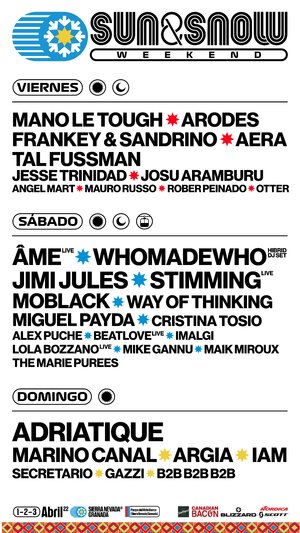
Summer brings warmer-weather programming. The resort runs a full activity calendar including guided high-mountain hikes (up to the 3,000m zone), mountain biking races, and well-publicized astronomical evenings (star-gazing tours and observatory visits). For example, each summer Sierra Nevada organizes multiple astronomy events around the Perseid meteor shower, with special nocturnal gondola rides for public viewing . Cultural events are a highlight: free live concerts are held most weekends. In 2022, Sierra Nevada kicked off its summer music program with a free pop-rock cover-band show featuring Apache , and in 2025 the annual rock festival “Sierra Nevada por Todo lo Alto” (the highest-altitude music fest in Spain) returned for its 15th edition on 22–23 August . This open-air festival (in the Plaza de Andalucía at 2,100m) showcases Spanish pop/rock acts with three bands each evening, plus children’s workshops in the daytime . Similarly, the spring “Sun & Snow” festival combines late-season skiing and live music (held in early April each year) . Every Saturday of July and August, local artists perform live at 22:00 on the terrace of La Bodega restaurant in Borreguiles, giving guests casual evening concerts as part of the resort’s summer lineup . In addition, Sierra Nevada hosts the traditional “Romería Virgen de las Nieves” pilgrimage in early August – a white-robed procession and high-altitude mass dedicated to the Virgin of the Snows (patron saint of the ski area) – which is a unique cultural event drawing passionate participants each year.
Tickets and Booking
Sierra Nevada entry itself is free (the mountain and town have no access fee), but skiing and attractions require passes. Lift and ski lift tickets (for downhill skiing, snowboarding or gondola rides) must be purchased. The easiest way is via the official Sierra Nevada website or on-site ticket offices in Pradollano (Plaza Andalucía). Full-day adult lift passes typically range on the order of €40–€50 (season dependent), with reduced rates for youth, seniors and children; half-day and multi-day discounts are also available. Early-season or package deals (combining lift passes with lodging) can often be found, so it pays to book ahead in autumn for the best prices. Holiday-season passes (e.g. Christmas/New Year) should be arranged early as they sell out.
Special events vary. Most of the summer concerts in Pradollano are free to the public – for example, the rock festival and weekly gigs have no admission fee. No tickets or advance booking are needed for these; you simply arrive at the Plaza de Andalucía or La Bodega at performance time. (Some paid events do occur, such as occasional mountain sports shows or special evening sled rides, in which case booking information would be highlighted on Sierra Nevada’s agenda pages.) Box-office windows for shows are generally at Plaza Andalucía on the day of the event, but in practice all major music events are open admission. In short, for skiing get your lift ticket via official channels; for concerts just show up early to claim your spot, as these are crowd-friendly community events rather than ticketed stadium shows.
Seating and Layout
Sierra Nevada is an open-air mountain venue rather than a traditional concert hall, so there is no fixed seating plan. The main concert stage is erected on one side of the Plaza de Andalucía in Pradollano; audiences stand in the flat plaza area to watch the show. (Some visitors perch on the low steps or planters that border the plaza for a better view.) All spots in the plaza are general admission – there are no reserved seats or VIP stands. The largest crowds gather near the stage, but even the back of the plaza has excellent sightlines and sound. Note that sound towers are typically set either side of the stage, so standing too close to them can be very loud. There is no “direct seating,” so most attendees enjoy the festival in a casual standing mode; comfortable shoes are recommended since the plaza is paved but standing durations can be long. The entire layout is wheelchair-accessible (flat plaza with ramps) and handicapped viewing spots can be taken up front by request.
For skiers, the “layout” of Sierra Nevada refers to its village and slope configuration. Pradollano is the bottom of the area (2,100m), with all shops, lift tickets, the snowpark and street parking. A fast gondola (Telecabina Borreguiles) or chairlift takes skiers up ~600m vertically to Borreguiles (2,700m), which is the resort’s central hub. Most daytime runs originate from Borreguiles – beginner areas and ski schools are located here, as are several restaurants. From Borreguiles you can access the higher Veleta sector (up to ~3,300m) via additional chairlifts for advanced runs. If you are looking for an easy scenic lap, the blue slopes near Borreguiles back towards Pradollano are gentle and sunlit. Experts often head to the Veleta summit area for steep red/black runs. Acoustically, outdoor slope areas have minimal echo, but crowded plaza concerts do. In summary: standing vigorously near stage for events; on slopes, use trail map to pick appropriate runs and know that Borreguiles is the “center” of skiing activity .
Getting There and Parking
Location: The resort is on the south side of the Sierra Nevada massif, about 27 km (17 miles) southeast of Granada city . It sits at km 31 of the A-395 highway (the road up to Alto del Chorrillo pass). By car, take the A-395 south from Granada and follow signs for “Pradollano / Sierra Nevada” – it’s a scenic 40–50-minute drive. The coordinates 36.90°N, 3.39°W are useful for GPS. In Granada, local guides often call this the “Sierra Nevada road.” There is no train; the nearest major transport hub is Granada (renfe/train and bus station).
Parking: Sierra Nevada has several public car parks. The main one is the Plaza de Andalucía parking garage in Pradollano (just under the ski station). This is a four-level covered lot with 2,644 spaces – in fact, the largest underground car park in Spain. The Plaza Andalucía garage has direct elevator access to the resort plaza and ticket offices and even 43 EV charging ports on level -3 . It is guarded 24/7 and open all year. Parking rates here (high season) are around €2.35–€2.40 per hour (roughly €24/day) . If this is full or too pricy, other options include the Les Peñones open lot (km 36 on the road, 750 spaces at about €13/day ) and Las Sabinas (near the CAR sports center, 513 spaces including motorhome access, €13/day ). Note Les Peñones lot is about 5 minutes’ drive from Pradollano and has a shuttle at times; Sabinas has a bus stop for the internal resort bus. Street parking in Pradollano is also available at €1/hour (max 12 hours) – look for marked spots along the village streets. Car parks are free at night if you stay in the village. Rideshare or taxi drop-off is normally at the Plaza Andalucía entrance.
Public Transit: Regular bus service runs from Granada to Sierra Nevada during ski season (and reduced off-season). Buses depart from Granada’s main bus station (and a stop at the Palacio de Congresos) to Pradollano, with about 3–4 runs per day in winter and 2–3 runs off-peak . The one-way fare is roughly €7–€10 (round-trip about €9 as noted) , and the journey takes ~1 hour. The carrier is Autocares Tocina. Within Sierra Nevada, the resort operates shuttle buses linking Pradollano to the Borreguiles mid-station and nearby hotels – these are usually marked as free or subsidised for hotel guests. There is no train to the resort; visitors coming by air typically fly into Granada (Federico García Lorca Airport, 35 km away) or Málaga (120 km away) and then take either a rental car or bus to Granada and onward to the slopes. In summary, driving via A-395 is fastest; otherwise the regular Granada–Sierra Nevada bus (coach) line provides easy connections.
Inside the Venue
Entry Procedures: There is no formal ticket scan for concerts (they’re free), but if you have a lift pass you’ll check it with an attendant at any gondola/chair lift turnstile. Standard security is in force at large events: expect bag checks on concert nights and a friendly information table at the plaza. For winter skiing, ski-pass scanning at lift gates is electronic (RFID cards) so just tap and go. If you have group needs (e.g. booking ski school), visit the Sierra Nevada ski school offices in Pradollano upon arrival.
Atmosphere: The mountain village has a distinctly alpine-Spanish feel: modest chalets and hotels share space with practical ski shops, cafes and bars. You’ll see skiers in full gear day and night, while in summer you’ll find hikers and tourists in hiking boots and hoodies. In winter, after-ski is lively with folk music or DJs spinning at venues within walking distance (look for crowds around Calle Mont Blanc). In summer event season, families bring camping strollers and picnic blankets to concerts, creating a relaxed festival vibe on the snow-covered plaza. Locals and tourists mingle – at times you may hear Andalusian Spainsh or even English at the lifts (many U.K. and Irish visitors ski here).
Food & Drink: Sierra Nevada has a surprisingly diverse gastro scene given its remote location. In Pradollano (the base), there are several restaurants, tapas bars and cafeterias within 5–10 minutes’ walk of the Plaza. Notable picks include Restaurante Pradillo (classic Spanish fare), Refugio Tito (mountain cabin food), and Pizzeria Verona (Italian menu). For quick apres-ski, many head to Bar Albaicín or The Roof (pubs popular with snow-sports crowds). On the slopes at Borreguiles, establishments like La Bodega or Bar Pico Veleta offer warming meals and drinks with panoramic views. The Telecabina Borreguiles station itself hosts a cafeteria where skiers queue for pasta, soup or hot chocolate. Almost every hotel (especially the large ones like Meliá and Telecabina) has a restaurant/bar open to all guests from afternoon until late. In concert evenings, some local bars stay open late (till midnight or 1am), but note public transport stops around 18:30, so taxi or hotel lodging is recommended afterward.
Amenities: Visitors will find ample ski-rental shops (with English-speaking staff) and small convenience stores for essentials (snacks, sunscreen). The Plaza de Andalucía area has ticket offices, an information desk, and a modest gift shop selling Sierra Nevada-branded souvenirs and ski gear. Restrooms are plentiful: public WC blocks can be found near the lifts and restaurants (e.g. behind the ticket office, and adjacent to bars in Borreguiles). For those carrying extra gear, there are self-service lockers and a guarded “Consigna” left-luggage facility in Pradollano (next to the Al-Andalus gondola base ) where you can stow clothes, boots and backpacks before skiing. Wi-Fi is sporadically available in hotels and at the commercial center, but mobile phone coverage (4G/5G) is generally good even up to the high-altitude lifts. Be aware that cell signals may be weaker at 3,000m elevation, so plan accordingly if you rely on maps.
Nearby Amenities
Pradollano itself is more like a small alpine village than a town, so most amenities cater to skiers and hikers. Still, you’ll find essentials nearby: a mountain supermarket (for water, snacks, and basic supplies) is within walking distance of the Plaza. There are a few pharmacies and a medical clinic on call (for skiing injuries or altitude issues). Banks and cash machines are limited; it’s wise to bring enough cash or use your card at the large banks in Granada if possible.
Dining and nightlife outside the ski hours are focused largely on hotel bars and a handful of casual restaurants. If you want a broader late-night scene, Granada city is 30–40 minutes away by car (millions of lights at night below) and offers many tapas bars and clubs. Within Pradollano, bars like The Roof or B-52 are hotspots for skiers after dark. During the day of a big concert or ski event, it’s common to pre-dine at one of the resort’s on-site restaurants. For example, if you’re heading to an evening free concert, you might enjoy an afternoon meal at the Telecabina Hotel’s restaurant or La Bodega – both allow walk-ins without reservations. Note that hours can vary by season (many restaurants close early between afternoon and dinner), so plan at least an hour before sunset.
Hotels and Lodging: Several hotels and apartment complexes sit within meters of the lifts. The most prominent are the Meliá Sierra Nevada (4-star, directly opposite the gondola) and Hotel Telecabina (4-star, with its own cuisine), both offering ski-in/ski-out comfort. For midrange options, Hotel Mont Blanc and Las Sabinas (apart-hotel) are well-known. Many visitors also rent private ski apartments in Pradollano’s block-style hotels or in nearby Mountain villages like Montebajo. If needed, day trips from Granada (25 minutes away) or even farther Alpujarras villages are common – but most concertgoers prefer to stay overnight in resort lodgings or drive up for the day. On concert nights especially, arriving early (or staying nearby) is advised since the last buses leave late afternoon. Taxis and hotel shuttles continue operating in the evenings for guests, but services are limited by 23:00.
What Makes This Venue Special
Sierra Nevada stands out for both its natural setting and its unique cultural fusion. As a high-mountain resort in sun-drenched Andalusia, it offers an unusual blend of beach and alpine feeling – one day you might ski under bright blue skies and the next relax on the Costa Tropical below. Its placement in a protected National Park and UNESCO Biosphere Reserve means the scenery is pristine: snow-capped peaks and stark alpine lakes dominate the view . Yet the infrastructure (modern lifts, snowmaking and the huge Plaza Andalucia complex) is state-of-the-art. The result is a ski area that feels grand and spacious, with red cliffs of the Sierra and even views of Granada’s Sierra Nevada foothills on clear days.
Culturally, Sierra Nevada carries unique traditions. It has earned nicknames like “the California of Europe” for its sunny slopes and après-ski lifestyle. Its rock festival is known as “the highest in Spain” , and many Spanish artists eagerly perform here for the novelty of mountain altitude. The local feast of Virgen de las Nieves is a storied romería that turns the alpine meadows white with pilgrim costumes – it’s one of the highest altitude religious festivals in Europe . Sportingly, the resort’s legacy of “championship history” gives it prestige: ski racer nations flock here every spring for dry-slope training. Even its parking is noteworthy: at 2,644 slots the Plaza Andalucía garage is reportedly the largest underground parking structure in Spain , a trivia point visitors enjoy.
Beyond facts and figures, people love Sierra Nevada for its atmosphere. Locals recall learning to ski on the gentle borreguil slopes by 1980s, and returning years later to find a buzzing international crowd enjoying beer on sunny restaurant terraces. The resort’s mix of Granada culture (Andalusian cuisine, flamenco nights in town) with French/Swiss-style ski hospitality is one-of-a-kind. Whether you’re an artist playing a set at 2,100m elevation or a family building a snowman at the base, there’s a sense that Sierra Nevada is equal parts adventure playground and friendly mountain community. Indeed, this blend of history (the old ski clubs of 1890s), geography (highest in Spain), and ongoing innovation (new lifts and festivals) makes Sierra Nevada a truly special venue in the snow world.
Visitor Tips and Information
Accessibility: Sierra Nevada strives to be inclusive. The resort’s commitment to accessibility means ramps and elevators are used where needed, and dedicated disabled parking spaces are available on every floor of Plaza Andalucía garage . Signage for wheelchair-accessible routes is present, and staff at ticket offices can advise visitors with mobility needs. However, note that some snow areas may still be uneven or slushy, so advanced notice to staff is helpful if you need assistance. Most restaurants and the central Info Office at P-3 have basic accessible facilities. If you require special services (e.g. adaptive ski lessons), it’s best to inquire with Cetursa in advance.
What to Bring: Weather in Sierra Nevada can change quickly, even in summer evenings, so always dress in layers. High altitude sun can burn fast – bring sunglasses and high-SPF sunscreen even in winter. Snow conditions (especially early or late season) may be icy or wet, so proper ski gloves and goggles are a must. For concerts, pack a light jacket or blanket as mountain nights can drop to near freezing, even when daytime was mild. Sturdy shoes are recommended for walking around the resort (it can be uneven between buildings). Common items: a refillable water bottle (tap water is safe, several water fountains are in the village), lip balm, and any necessary medication (altitude headaches affect some people above 2,500m). Also ensure your phone is charged – the resort has a few power outlets but charging on the go can be limited.
What Not to Bring/Rules: There are no formal dress codes, but standard winter sports etiquette applies: children and beginners are strongly encouraged to wear helmets on the slopes. Drones are generally not allowed, as the resort lies within the national park airspace. For concerts and indoor areas, outside alcohol is prohibited (bars serve beverages on site). Tow trucks can clamp illegally parked cars, so avoid roadside parking except in marked spots. Security may search large bags at any concert gate, and photography is allowed except backstage. Smoking is allowed in designated outdoor areas only (mostly outside restaurants); it is banned inside public buildings. Above all, stick to marked trails and event zones – off-limits areas (closed slopes, maintenance roads) are fenced off for safety.
Common Pitfalls: Underestimating altitude is frequent: many visitors feel short of breath on the first day. Take it easy initially to acclimatize, and drink plenty of water. Also, crowds can be heavier than expected on peak weekends or holidays; buying lift passes online or arriving early (especially for popular sale dates) saves queuing time. In summer festival season, Montebajo pool and Mirlo Blanco amusement park are wonderful for families – include them in your plan if traveling with children. Finally, remember that Sierra Nevada’s mountain weather can force occasional lift closures (high winds or storms). Before heading up, check Sierra Nevada’s live snow reports online. If caught in a lift shutdown, return times are usually posted at mid-stations and staff will escort guests down if needed.
Insider Tip: On sunny days, head up one lift on foot even if you have skied down: the views from 3,000m are spectacular (on a clear day you can see all the way to the Mediterranean). Also, lift tickets include free night-skiing on weekends – skiing under the stars on a floodlit run is an unforgettable experience if available. Lastly, in summer don’t miss the free outdoor stargazing evenings at Fuente Alta (via night gondola) – Sierra Nevada’s clear sky and altitude make it ideal for astronomy.
Frequently Asked Questions
How do I buy lift tickets or ski passes for Sierra Nevada?
Lift tickets (day passes, multi-day passes) are sold by the resort. You can purchase them in advance online on the official Sierra Nevada website or at the ticket offices in Pradollano (Plaza Andalucía). Day passes for high season are roughly €40–50 for adults (less for children/ seniors). Multi-day packs offer discounts. It’s recommended to buy early (especially for peak dates) to secure passes. Tickets are scanned at each lift gate via RFID card.
Are the summer concerts at Sierra Nevada free?
Yes. Sierra Nevada’s summer music events (including the Sierra Nevada por Todo lo Alto rock festival and other open-air shows) are free to attend. Just arrive at the Plaza de Andalucía or the concert venue on the scheduled evening and enjoy – no ticket or advance reservation is needed . Because entry is free and space is first-come, it’s wise to get there early for popular acts. The resort publishes event times on its website; all concerts are open to the public.
What’s the best way to get to Sierra Nevada from Granada?
By car, take the A-395 highway from Granada towards Monachil and follow signs for Sierra Nevada (Costa del Sol exit). The drive is ~30–40 minutes. If you don’t have a car, the Sierra Nevada coach runs several times daily from Granada’s main bus station (plus a stop at Palacio de Congresos); travel time is ~60 minutes. One-way bus tickets cost around €7–€9. Taxi or rideshares (Uber/Cabify) are also available from Granada city. The resort’s official address is Pradollano, 18196 Monachil (Granada), and it’s 27 km southeast of central Granada .
Where can I park, and how much does it cost?
The main parking is the Plaza de Andalucía garage in Pradollano – a covered lot with 2,644 spaces . Entrance is just after kilometer 31 on the A-395. From there, elevators take you directly to the resort plaza. Rates in high season are about €2.40 per hour (around €20–24 per day). Other lots: Les Peñones (outdoor, up the road at km 36, 750 spaces) is €1.30/hour or €13/day . Las Sabinas (at the CAR center, 513 spaces, camper vans allowed) is €13/day . Limited free street parking exists at €1/hour (max 12h) in Pradollano. All lots close to resort center; none are far-walk from lifts.
What is the Plaza de Andalucía venue set up like?
Plaza de Andalucía is the large town square at Pradollano’s base. For concerts, a stage is erected on one end of the plaza. The audience area is a flat, open-paved space – all standing room, no fixed seating. Attendees simply gather in front of the stage or along the edges. There are low walls and steps on the sides where people may sit. The sound system towers on either side of the stage. In short, it’s a classic festival “mosh pit” style setup: open, outdoor, general admission.
Are there any age or dress restrictions for attending events?
No formal dress code is enforced – guests typically dress casually (in jackets or coats for cooler mountain nights). Because concerts are free and family-friendly, children of all ages are welcome; minors are usually accompanied by parents. On the ski side, helmets are strongly recommended for all skiers (and legally required for young children in some European resorts, though Sierra Nevada relies on recommendation and good practice, not law). For formal fairness: no one may wear gang-related clothing or costumes that might offend, as per normal public event policy. Tobacco and vaporizing devices can only be used in designated outdoor areas, and no outside liquor or illicit substances are allowed at concert venues.
What food and drink options are available at the resort?
The resort has several restaurants, bars and cafes. In the village, Pradollano has tapas bars and casual eateries (tapas, pizza, traditional Andalusian cuisine). Upslope, Borreguiles has a mid-mountain cafeteria (Telecabina station) and Bar La Bota with hot meals, plus a small coffee/snack station at the Parador lift. The large hotels (e.g. Meliá, Telecabina Hotel) also have public dining rooms and bars. During summer concerts, some food trucks or stands often set up near the Plaza. Wine, beer and soft drinks are sold at all bars. If you prefer, the on-site supermarket (in Pradollano) carries basic groceries. Most places accept credit cards. Tip: The mountain spring water is drinkable, so fill a reusable bottle if you brought one.
Is Sierra Nevada wheelchair accessible?
Yes, Sierra Nevada has made significant accessibility improvements. The Plaza Andalucía car park and village have parking spots for people with disabilities . Elevators and ramps connect key areas (the Plaza to the street level, and within the main commercial zone). Many elevators and chairlifts have spaces for wheelchairs (ski instructors can help with adaptive seating). The resort notes it “eliminates architectural barriers” to improve access. Public restrooms in Pradollano and major restaurants have adapted toilets. Shop and restaurant staff can assist visitors with special needs. If you have mobility concerns, contact the resort before arrival to ensure any particular arrangements (like priority lift boarding) are in place.
Are lockers or coat check available?
Yes. There is a self-service luggage locker facility (“Consigna”) in Pradollano, located by the Al-Andalus gondola station . You can store coats, bags, boots or equipment there while skiing. Operating hours are roughly 09:00–16:45, and payment is via a machine on-site. Additionally, ski rental shops offer “guarda-esquís” lockers: after your ski day you can leave skis/snowboards there overnight (by arrangement), from 8:30 opening until the next day. These services make it easy to leave bulky items and enjoy activities hands-free.
Is Wi-Fi or cell coverage available in Sierra Nevada?
Cellular reception is generally good throughout most of the resort (4G/5G phones work to well above Borreguiles). However, coverage can be spotty at very high elevations (Veleta peak) or in certain buildings. Some hotels and restaurants offer free Wi-Fi to guests; check with your accommodation. There is no comprehensive free Wi-Fi network across the mountain, so plan on using mobile data. Tip: if you rely on online maps, be aware that once above Borreguiles some apps may load slowly. Many restaurants do have one-time login Wi-Fi for customers, so it’s possible to get brief internet access when dining.
What are the opening hours for the ski lifts and cable cars?
In winter, the cable cars and chairlifts typically run from around 09:00 to 16:30 or 17:30 each day (exact hours can vary by season). Most high lifts close by 16:45. There is also lighted night skiing on Fridays and Saturdays: the gondola to Borreguiles and the Parador chair run stay open from 19:00–21:30 on those evenings (check the current season notice). For concerts (which start ~21:00), the lifts are of course closed – these are accessed on foot in Pradollano. The resort posts daily opening hours on its website; if heavy weather hits, lifts may close temporarily for safety.
Where are the best seats or viewing spots at a Sierra Nevada concert?
Since the Plaza audience area is general admission, there are no “bad seats” – but preferences vary. If you like to dance and be close to the action, stand a few rows from the stage. If you want a broader view and maybe space to sit, step back to the middle of the plaza or sit on the low wall edges. (Some people bring small folding stools legally for comfort, though most stand.) Avoid being too close to the giant speakers on stage - it can be painfully loud. Also consider that the best spot for an acoustic balance is usually centered between the speakers, a moderate distance back. Look for ponds of light and follow the crowd: the densest gathering will be at stage center. For children and lots of gear, staying near the back by the fountain or restaurant side allows easier exit if needed. In short: arrive early and snag front-of-stage for the full experience, or grab a peripheral spot if you prefer more viewing room.
Can I use public transportation late at night?
Public buses from Granada to Sierra Nevada typically end early evening (last arrivals before 18:00), and buses down from the resort stop by 18:00 or 19:00. There is no late-night bus service. After dark, the only way back to Granada is by taxi or private transfer. Local taxis operate in Pradollano; you can also ask your hotel reception for an arrangement. If you attend evening events, it’s safest to book hotel lodging at Sierra Nevada (either at Pradollano or nearby) rather than plan to return to Granada by public transport that night.
Is it possible to ski or climb year-round in Sierra Nevada?
The official ski season runs roughly November through April/May. In the summer, regular winter sports are closed. However, the resort does operate the Borreguiles gondola and Veleta chairlift during summer for hiking and sightseeing. Some adventurous visitors ski on remaining snowfields in June-July if conditions allow, but this is unpisted backcountry skiing (done at your own risk). There are also two via ferrata climbing routes on Veleta that operate in summer under safe conditions. Note that daytime temperatures in summer can melt snow rapidly, so no guaranteed ski runs past spring. The nearest glacier-like snow is found only with mountain guides beyond lift zones. For year-round adventure, stick to hiking and biking in the summer months, and leave skiing to the designated winter season.
Are service animals or pets allowed in the resort?
Pets (even on leash) are generally not allowed inside resort buildings or ski lifts (for safety and liability reasons). Service animals for the disabled are permitted according to Spanish law, but you should inform Cetursa in advance if you plan to bring one, so arrangements can be made. Outside, you can walk pets in the village early in the morning or late evening (using the car park areas or designated paths). Remember it’s a protected park area, so please clean up after any animal and keep them on a short leash. The cold mountain climate and crowds can be stressful for pets, so carefully consider their comfort if skiing is the main purpose of your visit.
What weather should I expect when visiting?
Sierra Nevada’s climate is alpine. In winter (Dec–Mar) daytime highs typically range from 0–10°C, with much colder nights. Snowfall is common, and winter storms can temporarily close lifts for safety. In spring (March–May) and autumn, temperatures are milder (5–15°C on sunny days) but evening and early mornings are chilly. Summers (June–Sept) are surprisingly cool on the peaks – you may still see patches of snow above 3,000m even in July. Afternoon thunderstorms can form in high summer, so always carry a rain layer. The key tip: mountain weather changes fast – check the daily forecast and carry warm/waterproof layers even if mornings start sunny. Also bring sun protection; the UV exposure is higher at altitude than on the plain.
Where can I find restrooms at Sierra Nevada?
Public toilets are located at convenient points. In Pradollano, a restroom block is adjacent to the Plaza Andalucía and ticket offices. Inside Borreguiles, the bars and restaurants (e.g. La Bodega, the cafeteria) have restrooms for customers. The Meliá and Telecabina hotels also have WC facilities (ask at reception or in the lobby). Hard-to-miss signs for “Aseos” appear near each major facility. During concerts, organizers usually open portable toilet units by the plaza. In short, you should never be far from a restroom in the main resort areas – look for the standard blue “WC” symbols.
How far is Sierra Nevada from the nearest beach?
The Mediterranean coast is surprisingly close: Motril on the Tropical Coast is about 100 km south of Sierra Nevada (roughly a 90-minute drive). On a very clear day from the high summit lifts, you can actually glimpse the sea on the horizon. This means you can ski in the morning and reach a warm sea beach by afternoon – a unique advantage of this southern location.