About TreasureFest
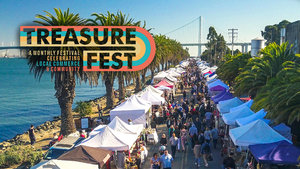
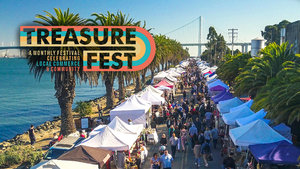
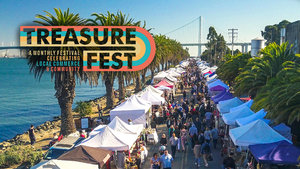
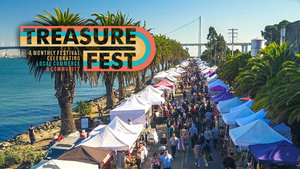
TreasureFest is an outdoor monthly festival held on Treasure Island, San Francisco. It operates on the island’s Great Lawn (near 500 Avenue N) and combines a flea market with live music and food. Launched in May 2011 by entrepreneurs Angie and Charles Ansanelli as the *Treasure Island Flea*, it was rebranded as TreasureFest in 2016 (www.treasurefest.com ) (www.fleamapket.com ). Over the years it has grown into the Bay Area’s largest monthly craft-and-food fair (www.fleamapket.com ), attracting thousands of locals and visitors. The official site even calls it “the Bay Area’s monthly festival that celebrates all things local” (www.treasurefest.com ). In recent years, well over 10,000 people often attend each two-day weekend (sf.funcheap.com ). The festival is explicitly family-friendly (open to all ages (www.treasurefest.com )) and even welcomes dogs (www.treasurefest.com ). In fact, it’s common to see families, friends and pets picnicking on the lawn while browsing vintage booths or listening to local bands.
TreasureFest’s setting is a signature feature. The Great Lawn offers sweeping 360° views – the San Francisco skyline, Bay Bridge and even the old 1939 World’s Fair pavilion ruins are visible from the grounds (www.fleamapket.com ). Vendors set up in distinct themed zones (vintage/antiques, arts/crafts, bazaar goods, plus a large “TreasureFeast” food zone) (www.fleamapket.com ). Over 300 local artisans and small businesses typically sell there each weekend (www.fleamapket.com ) (www.treasurefest.com ), so it feels like an entire neighborhood market. This mix of community makers, small-batch food and a waterfront backdrop makes TreasureFest unique. As one listing notes, its “scenic island setting” and vendor structure make it a beloved local favorite (www.fleamapket.com ).
Historically, TreasureFest has been a grassroots fixture in Bay Area culture. By 2014 it was already hosting monthly events (then under the “flea market” name) for a small admission (e.g. $3 entry (sf.funcheap.com )). It temporarily grew even larger – a planned 2020 expansion to San Rafael’s Marin Center was billed as a 3-day event with 400+ vendors (sf.funcheap.com ) (though that was canceled due to COVID). After a pandemic hiatus, the festival relaunched on Treasure Island in 2024 with a full year of events (sf.funcheap.com ). Even now, TreasureFest’s legacy is strong: organizers noted how the 2024 comeback showed “good vibes” and brought the community back together (sf.funcheap.com ). (They did announce a break for 2025 (www.treasurefest.com ), with hopes to return later.)
Events and Programming
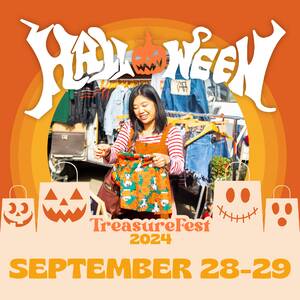
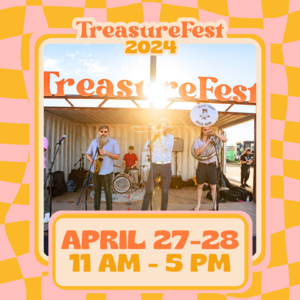
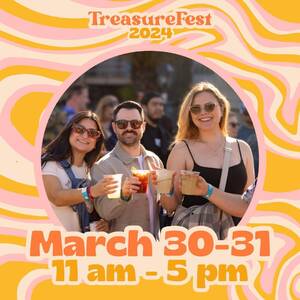
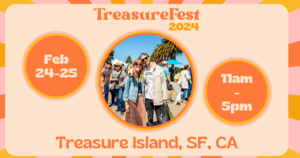
TreasureFest runs as a recurring two-day event, typically on the last full weekend of each month (sf.funcheap.com ). In the 2024 season it ran on Feb 24–25, Mar 30–31, April 27–28, etc., through Sept 28–29 (sf.funcheap.com ). (Exact dates are announced each winter.) On festival days the grounds open at 11:00 AM and close by 5:00 PM (www.treasurefest.com ). The festival is free-form: once inside, visitors roam the open lawn from tent to tent enjoying entertainment. There isn’t a formal program booklet like at a theater — instead, the highlights are everywhere you walk.
Music is an essential part of TreasureFest. Each day features a lineup of local bands on an outdoor stage, with roughly three sets per day. For example, a recent weekend (March 30–31, 2024) included bands like The Bonafides, Nina Durango and Red Voodoo on Saturday, and St. Francis & The Wolf, Michelle Lambert Trio and Silk Road Truckers on Sunday (www.treasurefest.com ) (www.treasurefest.com ). These are Bay Area indie and roots artists (“groovy up-and-coming bands” in the festival’s own words (www.treasurefest.com )), spanning blues, rock, folk and world music. Typically around **6 bands play per weekend** (sf.funcheap.com ), roughly two to three per day between the early afternoon and late afternoon. Stage audio spills across the lawn, so most places in the crowd have a good view of the band. Attendees often watch music while snacking – the official site even suggests enjoying bands while drinking craft beer and taking in “stunning views of the bay” (www.treasurefest.com ).
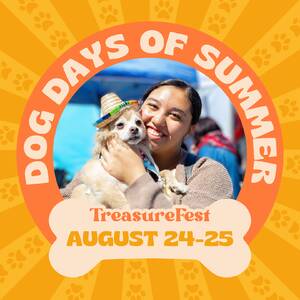
Beyond music, programming includes art, games and themed activities. Common offerings are interactive art installations and family games (face-painting, giant games, day camps for kids, etc.) on site (sf.funcheap.com ). TreasureFest often integrates holiday-themed mini-events too: for example, in late August 2024 they ran a special “Dog Days of Summer” weekend celebrating pet-friendly fun (sf.funcheap.com ). Past festivals have also noted special weekends for things like Oktoberfest or Mardi Gras vibes. In short, the fair is about “everything that makes the Bay Area unique”: live music, local art, diverse food, and fun for kids (www.treasurefest.com ). Ticket prices vary by event. Generally an adult weekend pass is around **$20–$25** at the gate (advance tickets are cheaper). For example, one 2024 listing showed adult general admission $20–$25 (sf.funcheap.com ), with early-bird tickets at $15 and presales at $10 (sf.funcheap.com ). Children’s tickets are half-price or less (often around $5–$10) and kids under ~4 usually enter free (www.treasurefest.com ). Treasure Island residents, meanwhile, get free entry with proof of address (www.onetreasureisland.org ). Advance tickets go on sale a few weeks before each date via the TreasureFest website; it’s recommended to buy early since popular weekends can sell out, and the site warns that gate tickets rise to $25 (www.treasurefest.com ).
Tickets and Booking
Tickets for TreasureFest are general admission and can be purchased online via the official TreasureFest website (or selected partners). Advance tickets are usually discounted – early-bird or presale tickets often start around $10 (adult general tickets run $15–20 in advance). As the event nears, prices go up; according to the site, “tickets at the gate will be $25” (www.treasurefest.com ). For example, a May 2024 event listed adult prices of $10 presale, $15 early-bird, and $20 at the gate (sf.funcheap.com ). A corresponding children’s ticket was $10 general, $5 early, with kids under 4 free (www.treasurefest.com ). Treasure Island residents who show local ID enter for free (www.onetreasureisland.org ).
Online tickets can be printed or scanned from your phone at the gate. There is no permanent box office onsite — if you wait, you buy at the festival’s entrance on arrival (for the higher price). The best strategy is to subscribe to the TreasureFest mailing list or monitor their social media, as they occasionally release limited presale deals via those channels. Once tickets are sold out or if you miss presale, door tickets are your only option (cash and card are accepted). Refunds are typically not offered, so double-check the date. (Owners of little ones note that it’s “open to all ages” (www.treasurefest.com ), so you can bring children and infants freely.) When planning, remember the festival usually runs 11am–5pm (www.treasurefest.com ), so plan travel accordingly.
Seating and Layout
TreasureFest has an open-air, general admission layout. There are no reserved seats or fixed rows. The main stage is at one side of the Great Lawn facing the water, and the vendor tents are arranged in adjacent quadrants. As one guide notes, each edition is “arranged into distinct zones: vintage & antiques; artisan foods; indie arts; bazaar goods; and the TreasureFeast food district” (www.fleamapket.com ). In practice, this means you can wander freely through hundreds of booths. To catch a performance, simply stand or spread a blanket near the stage (people sometimes bring fold-up chairs or mats). Since the lawn is flat, all spots are fairly open, though getting closer to the stage will give you the best sound. Many attendees prefer to camp out near the center stage early in the day, but others like to nap or picnic on the grass in the back while still hearing the music.
Because it’s outdoors, there are no indoor balconies or fixed seating charts to worry about. Sightlines are pretty good from most places – the stage is raised and sound and announcements are clear across the field. There is some sun exposure, so if you need shade, a good move is to sit near any tents or under the stage canopy. Some simple benches or picnic tables may be available around the food truck area, but don’t expect theater-style chairs. As one review advises, wear comfortable shoes (the ground is grass and pavement) and maybe bring sunglasses or a hat for sun protection. In short, think “summer fair layout” – stroll among the stalls or dance in front of the band, rather than hunting for the best seat. This self-seating style is part of the festival’s charm, letting you get close to vendors or music on your own terms.
Getting There and Parking
TreasureFest takes place on Treasure Island, which lies in the Bay between San Francisco and Oakland. The exact address is 500 Avenue N, San Francisco, CA 94130 (www.treasurefest.com ). If you’re driving, the island’s access roads can get busy. From San Francisco use I-80 East (toward Oakland) and take the Treasure Island exit. From the East Bay, take I-80 West over the Bay Bridge and exit at Treasure Island. Note that there is a toll to cross the bridge. Once on the island, follow the signs to the Great Lawn event parking (usually near Avenue of the Palms). Parking is **free** on a first-come, first-served basis (www.treasurefest.com ), but spaces fill up fast on festival days. Try to arrive early on the first day (Saturday) to secure a spot.
Public transit is a convenient alternative. San Francisco’s Muni Bus **#25** runs from downtown (near Montgomery Street BART) directly to Treasure Island (www.treasurefest.com ). The trip takes about 30–40 minutes. (There is no subway/tube on the island – only bus service.) On weekends, you can also take the Treasure Island ferry from the Ferry Building at the Embarcadero. Ferries run regularly and drop you a short walk from the festival lawn (www.treasurefest.com ). The Treasure Island-A-405 bus also connects from nearby stations on event weekends. If you bike, there is a bike path across the Bay Bridge leading to Treasure Island, though secure bike parking at the event is limited.
Rideshare and taxis are allowed – the recommended drop-off is at the main Great Lawn entrance on Avenue N. After the event, be patient: as the festival notes, “large crowds and significant traffic delays” are expected when everyone leaves (www.onetreasureisland.org ). It’s often faster to leave by bus or ferry than fighting Bay Bridge rush. If you do drive, allow extra time (the Bay Bridge toll plaza can back up, and island roads are narrow). In summary: whether you come by car, bus or ferry, plan to arrive well before showtime (11am) to avoid traffic. Once inside, parking is free; to leave you may find yourself queuing at the bridge exit back into SF or Oakland.
Inside the Venue
Once you’re inside TreasureFest, expect a lively festival atmosphere. Ticket-takers and security staff there will scan your ticket and may do a quick bag check (common rules are no outside alcohol, weapons or large coolers). Past organizers have encouraged green practices (for example, the event page even jokes about “bonus points for bringing your own reusable bags” (www.onetreasureisland.org )). The lawn is flat and fully open, so strollers and wheelchairs can get around the main paths. Attendees wander freely among dozens of white tents and shipping-container booths. There is no “main lobby” – vendors stretch in rows across the field, each selling unique items. Expect vintage clothing racks, vinyl records, mid-century furniture pieces, handmade jewelry and art prints alongside quirky antique curios. In many ways it feels like exploring several indoor markets at once, but under the sky. The vendor setup encourages browsing: you can drift from the retro clothing zone into the artisan craft aisle without losing your way (www.fleamapket.com ).
Food and drink are a highlight. TreasureFest is known for its “food court” – a cluster of 30+ food trucks and booths populating the TreasureFeast area (www.fleamapket.com ). Expect a Bay Area mix: Korean tacos, bao buns, BBQ, Mediterranean platters, gourmet grilled cheese, vegan fair, exotic coffee concoctions, ice cream and more. A dozen distinctly colored booths often surround picnic tables, allowing music to be enjoyed with meals. Alcoholic refreshments are widely available: there are beer/wine/cocktail bars and booths interspersed with the trucks. In fact, promotional material brags of “specialty cocktails, mocktails, brews and wine” at TreasureFest (sf.funcheap.com ). (In practice you’ll see stall cafés pouring local craft beers, wine or cider flights in plastic cups.) The festival’s “What’s Your Flavor?” blurb invites you to sample “unique flavors of the bay” from top-rated local eateries (www.treasurefest.com ). Dozens of local beverage companies (brewers, distillers, cafe proprietors) often have their own branded tents. Between acts, it’s common to grab a bite or sit on the grass sipping a craft beer while listening to the next band.
Facilities are basic but adequate. Portable restrooms (including ADA-accessible units) are placed around the perimeter of the grounds. There are simple hand-wash and sanitizer stations nearby. There is no indoor shelter, so if it rains the event would still continue (dress accordingly) – most walks are asphalt or grass, so rain can make surfaces muddy. You won’t find on-site Wi-Fi (cell service on Treasure Island is decent but can slow when crowded). Many vendors take credit cards, but it’s wise to have some cash for smaller sellers or tipping. Personal belongings should stay with you, as there is no formal coat check. The mood inside is casual and festive – by midday the music fills the air, kids run around games or play areas, and people socialize over picnic lunches. You’ll also see a few informational booths (e.g. local non-profits or community groups) and some official TreasureFest merchandise stands selling logo T-shirts and prints. In short, the interior of TreasureFest feels like a roaming street fair: eat-and-shop at will, watch art demos, dance a little, and enjoy the communal vibe (www.fleamapket.com ).
Nearby Amenities
Treasure Island is relatively undeveloped, so don’t expect many amenities right on site. Aside from the festival’s own vendors, there are almost no other restaurants or bars on Island. A small convenience store at the 76 gas station (on the west end) has snack basics, but no hot meals or sit-down dining. Therefore, if you need a meal before or after TreasureFest, plan to go off-island. Many visitors dine in downtown San Francisco (for example, near the Embarcadero before taking the ferry or bus), or across the Bay in Oakland (Jack London Square has restaurants). If you arrive early, consider grabbing brunch or coffee on the way – there’s an Equator Coffee kiosk at the ferry terminal, and the SF Ferry Building has dozens of eateries (15–20 minutes by ferry). After the festival (which ends at 5pm), you’ll likely head back to the city or pick up dinner en route. There is no late-night club or bar on Treasure Island; the Island’s nightlife consists mainly of TreasureFest itself. For overnight accommodation, Treasure Island has no hotels (yet!). The closest lodging is back in San Francisco – neighborhoods like SoMa, the Financial District, or Mission Bay are convenient (all within a 10–20 minute drive to the ferry/bus). If driving, you could also stay in downtown Oakland or Emeryville for an easy Bay Bridge exit.
For planning purposes, arrive at least 30 minutes before showtime to find parking or transit and walk in. Festival websites and flyers often remind attendees of transit options and schedules. When the show ends, the last ferries and buses may leave by early evening, so plan to catch them in time or call a rideshare. In short: treat the neighborhood around TreasureFest as a backwater. The festival itself is the main attraction, and most amenities (food, drinks, shopping, rest) are provided inside. The phrase “bonus points for bringing reusable bags” is literally printed on their event page (www.onetreasureisland.org ) – it shows that most things you need are right there, and green habits are encouraged!
What Makes This Venue Special
TreasureFest stands out as a truly one-of-a-kind Bay Area experience. First, its **location**: Treasure Island itself is steeped in history (site of the 1939 Golden Gate International Exposition) and offers drama. You are essentially shopping and listening to live music on a grassy island in the middle of the Bay, with the city skyline as a backdrop (www.fleamapket.com ). Few venues can brag about a view like that. The juxtaposition of retro flea-market stalls and the modern cityscape – plus the eerie remnants of the old fairgrounds – gives the event a cinematic aura (www.fleamapket.com ) (www.mapquest.com ). Second, the **focus on local community**. The founders intentionally curated TreasureFest as “a platform for local creators and brands” (www.treasurefest.com ). Hundreds of Bay Area artisans show their homemade goods every month, effectively turning the festival into a startup incubator and cultural showcase (www.treasurefest.com ) (www.fleamapket.com ). This local emphasis is rare for a festival of its size, and it resonates with both creators and consumers. Third, the vibe. Even media outlets have praised it: one local guide dubbed it “Northern California’s largest gathering of everything local” (sf.funcheap.com ), and visitors often call it a highlight of San Francisco’s cultural scene. Its repeat attendees treat the last weekend of each month as a tradition – some city dwellers remember driving out here monthly for years to find treasures and hang out with neighbors. That kind of grass-roots, everybody-knows-everybody feel is special.
From the performer’s side, TreasureFest is beloved for its supportive atmosphere. Bands love that they get a real audience outdoors with a view, rather than a dark bar. Vendors appreciate the exposure – some famous local designers and eateries got their start selling here. For example, local press pointed out that TreasureFest quickly became “a beloved event in the Bay Area” as soon as it started (www.treasurefest.com ). Unlike big corporate festivals, there’s a friendly, family-run energy here. Even the Ansanelli family (who run the show) often mingle with guests. Visitors often share stories of finding serendipitous deals or gifts that felt like island “treasures,” hence the name. The patronage of the community (often over 10,000 each month (sf.funcheap.com )) shows its impact on local culture and economy. It has won traveler awards and glowing reviews for giving people “everything they love about the Bay Area” in one place (www.treasurefest.com ). In short, TreasureFest is special because it turns a barren lawn into a monthly street party and bazaar, with Bay Area history and community spirit woven through every performance and vendor stall (www.fleamapket.com ) (www.treasurefest.com ).
Visitor Tips and Information
Accessibility: The Great Lawn venue is generally accessible – the ground is flat and wide, and portable ADA restrooms are provided. Strollers and wheelchairs can navigate the main paths. There are no elevator or stair barriers since it’s all outdoors. Check the event website or contact the organizers ahead of time if you need special accommodations; they have been responsive in the past.
What to Bring: Dress for an outdoor fair. Comfortable walking shoes are a must (you’ll be on grass and possibly gravel). Sunscreen, hats and sunglasses are wise – the midday sun can be strong. Layers can help, as bay breezes may bring a chill. If you have a folding lawn chair or blanket, it can make sitting more pleasant, but it’s not required. Pets are welcome on a leash (www.treasurefest.com ), so bring water and poop bags if you bring your dog. The festival encourages reusable bags (for all the shopping you’ll do (www.onetreasureisland.org )), and suggests bringing your own thermoses or refillable bottles where possible. Finally, carry your ID: you’ll need it for aged 21+ if you buy alcohol with proof of age, and (if you live on Treasure Island) for free entry (www.onetreasureisland.org ). Also be prepared for crowds: visiting early (right at 11am) helps avoid long lines at the entrance and lets you browse the vendors when energy is high.
Don't Bring: Standard festival rules apply. No outside food or alcohol (the festival wants you to buy from vendors). No professional cameras or tripods (cell phones and personal cameras are fine for snapshots). Firearms, drones, and other dangerous items are prohibited. Avoid large backpacks – bags may be searched, and the event wants to keep lines moving. If you bring valuables (phones, wallets), either keep them on you or inside your vehicle. There’s no official coat check, so it’s best to carry what you need.
Common Mistakes: A frequent visitor tip is not underestimating travel time. Many people arrive late hurriedly, only to find parking lots full or missing the first band. Plan to get there at least 15–30 minutes early on busy days. Another mistake is wearing heels or ill-suited shoes; stick to sneakers or flats for cobbled paths. Since the event is family-friendly, noisy families or couples with strollers are normal – if you were hoping for a quiet shopping experience, maybe come on the Sunday and sit closer to the band. Sunday afternoons tend to be slightly calmer than Saturday mornings in terms of shopper volume.
Child Safety: There are no rides or dangerous areas at TreasureFest. Kids should be supervised around the stage (sound can be loud) and near the vendor tents. Lost child or first-aid stations have been staffed at past events, but it’s wise to agree on a meetup spot in case you get separated. Nothing beyond typical public-fair risks here.
COVID & Health: As of the latest events, masks and vaccine checks are not enforced (it’s all outdoors), but always check current SF health rules before attending. Bring hand sanitizer as booths allow. In hot weather, stay hydrated – there are water refilling stations, but it’s smart to carry a bottle (Festival promotes sustainability by providing free water services).
Age & Dress Code: There is no age minimum – all are welcome (www.treasurefest.com ). Dress is totally casual (whatever you’d wear to a park picnic). Some visitors treat it as a brunch event and wear summer day outfits; others come in themed vintage attire. There is no official dress code. You may see a few festival hats or crazy jackets, but you’ll fit right in with jeans and tees, especially if you plan to shop and roam the vendor aisles.
Insider Tips: Arrive with an agenda. If there are specific artists or vendors you want to see, check their names on the event map (if provided). Try to circle the grounds twice (first pass to get the big picture, second pass to revisit favorites). Grab a beer/taco and then listen to a band – mixing food and music is a big part of the fun. On hot days, seek shade by the music stage in the afternoon – the “Bay breeze” often helps there. Follow TreasureFest on social media on event day for any special announcements (they sometimes raffle items or have surprise flash sales). Finally, plan to stay until the end if you can – vendors often discount stocks in the last hour, and sometimes there are giveaways or a grand prize raffle at closing time.
Frequently Asked Questions
How much do TreasureFest tickets cost?
Ticket prices vary by event but generally are around $20–$25 for adults. Advance tickets are cheaper (often $10 presale or $15 early-bird) and get pricier at the gate (the official site warns gate price may hit $25 (www.treasurefest.com )). Children under ~4 usually enter free (www.treasurefest.com ), and kids above that get a discount (roughly $5–$10). Always check the specific event page for exact prices and purchase early to save.
Where can I buy tickets for TreasureFest?
Tickets can be bought online through the official TreasureFest website or its ticketing partners. The site often links to an Eventbrite or Ticketfairy page. You can also buy tickets at the entrance on the day of the festival (for a higher price) (www.treasurefest.com ). Advance purchase is recommended, as many events sell out. There is no physical box office other than the festival gate, so plan accordingly.
Is there a box office or will-call?
TreasureFest does not have a permanent box office building. Tickets purchased online are either emailed or show up on your mobile device, which you scan at the gate. If you forget your tickets, you can purchase at the gate (line permitting). In short, the festival entrance gate is the point of sale and pickup; there is no separate will-call desk or advance collection point.
Do Treasure Island residents get free entry?
Yes. Treasure Island residents who show proof of residency (such as a driver’s license with a Treasure Island address) are typically admitted for free (www.onetreasureisland.org ). This resident free-admission policy is often noted on the festival’s announcements, as a thank-you for the local community. Be sure to bring acceptable ID when you arrive.
How do I get to TreasureFest by public transit?
Take San Francisco’s Muni Bus #25 from downtown SF (the Montgomery or Ferry Building area) directly to Treasure Island (www.treasurefest.com ). This is the most direct subway-to-bus route. You can also board the Treasure Island ferry at the SF Ferry Building (Embarcadero) and get off near the Great Lawn (www.treasurefest.com ). From the East Bay, you’d typically take BART to Richmond/Oakland and then transfer to a bus or drive across the Bay Bridge. No BART station is on Treasure Island itself. For up-to-date schedules, check SFMTA (Muni) or the Treasure Island Ferry website.
Is parking available at TreasureFest?
Yes. There is a free parking lot provided by Treasure Island Development Authority (TIDA) for event attendees (www.treasurefest.com ). It operates on a first-come, first-served basis, so arriving early is smart. If the main lot fills, organizers may open an overflow lot. Parking is free, but remember you still pay the Bay Bridge toll when entering or leaving. Rideshares and taxis typically use the main Festival entrance on Avenue N for drop-off.
Can I bring my own food or alcohol?
No. Standard festival rules apply. Outside alcohol and large coolers are not allowed. The event encourages you to purchase food and drinks from the on-site vendors. (In fact, TreasureFest has a huge food court – over 30 trucks and booths (www.fleamapket.com ) – plus beer and wine gardens (sf.funcheap.com ).) You can bring water bottles though, and refill stations are usually provided. Alcoholic beverages must be purchased at the festival’s bars and are served only to those 21+ with valid ID.
Are bags or backpacks allowed?
Small bags and purses are generally fine. However, all bags are subject to a quick inspection at entry for prohibited items. Large backpacks, hard coolers, and luggage are discouraged (they slow down entry and may be refused). If you have a backpack with you, expect security to check it. The site encourages reusable shopping bags for purchases (www.onetreasureisland.org ), but keep them lightweight so the bag check process is smooth.
Are cameras or recording devices allowed?
Personal cameras and smartphones are allowed for casual photography. Many attendees take photos of the scenic backdrop and wares. Professional video cameras or flash photography are typically not allowed without permission. If you plan to do serious filming or commercial photography, contact the organizers beforehand. In general, feel free to snap personal photos, but be courteous of vendors and performers who may request no photos of certain artworks or stages.
Is TreasureFest wheelchair accessible?
Yes. The festival layout on the Great Lawn is completely on level ground with paved and grassy surfaces. Wheelchairs and strollers can navigate the main aisles. Accessible restrooms are provided. The entry gate has a wide opening. Because TreasureFest is all outdoors, there are no crowds outside the pathways, and the sound system allows hearing the music from most spots. If you have specific questions, the festival’s info booth or support staff can assist on site.
What food and drink are available inside TreasureFest?
A vast array! TreasureFest features over 30 local food trucks and stands (www.fleamapket.com ). You’ll find tacos, BBQ, pizza, pretzels, vegan eats, dessert treats and more – basically an outdoor food court of San Francisco favorites. A large “TreasureFeast” section is dedicated to these foods. There are also several bars or beverage tents selling local craft beer, wine, and specialty cocktails (sf.funcheap.com ) (www.treasurefest.com ). Non-alcoholic drinks (sodas, coffee, juice) are also sold. Because TreasureFest promotes local businesses, the food lineup changes from month to month. Expect unique flavors from top-rated Bay Area vendors (www.treasurefest.com ).
Is TreasureFest stroller friendly?
Yes. Families with strollers are common at TreasureFest. The festival grounds are flat and open, and aisles between booths are wide enough for strollers. There are no stairs or steep areas within the Fair. Note that it can be crowded around 11am–1pm, so care should be taken. Attendees often bring carriers or strollers for very young children, as the day can be long (11am–5pm) and the venue is large. Child-friendly activities and open sightlines make it easy to keep an eye on kids.
Are dogs allowed at TreasureFest?
Yes. TreasureFest is explicitly dog-friendly. You can bring well-behaved dogs on leash (www.treasurefest.com ). In fact, one special weekend (“Dog Days of Summer”) is entirely pet-themed (sf.funcheap.com ). Just be sure to keep your dog leashed, pick up after them, and don’t bring a pet if it’s aggressive or uncomfortable in crowds. Visitors often bring small blankets or pet-friendly carriers for their pups. The open lawn and presence of many other pet-owners make it a welcoming environment for dogs.
What if the weather is bad?
TreasureFest is an outdoor event. It rarely cancels for weather – rain or shine, the show goes on. There is no indoor cover for the entire festival, so check the forecast. If rain is expected, wear waterproof clothing and prepare for muddy grass. The Great Lawn has no leaky roofs over pedestrian areas. Umbrellas may be allowed (though they can obstruct view), or pack a light rain jacket. On very hot days, hats and hydration are essential (some water fountains are on site). Organizers will post alerts on social media if any unusual weather policy changes arise, but typically they proceed in all normal seasonal weather.