About The Midnight Gospel
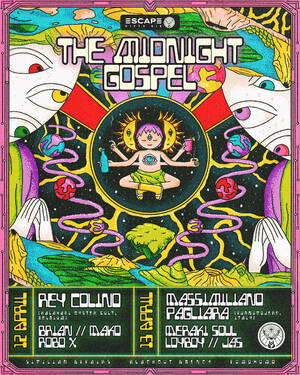
The Midnight Gospel is not a conventional shopfront or mall space, but an immersive pop-up dance club experience created by Singapore’s underground party collective. Unlike a fixed nightclub, it is a roaming warehouse rave concept launched in 2024 by Escape 56 (a long-running event series co-founded by producer Zig Zach) with support from partners like Blackout Agency and FomoHomo. For its debut, organizers “transform a hidden industrial sanctuary into a playground for the soul” (ra.co ) – literally converting a 4,500 sq ft warehouse into a mock church setting (www.lifeinarpeggio.com ). In other words, The Midnight Gospel is an evolving secret venue, designed with street-style art and club lighting instead of permanent fixtures. It carries Escape 56’s signature of finding raw, offbeat spaces and turning them into temporary clubs (www.lifeinarpeggio.com ) (www.lifeinarpeggio.com ). The name and theme reference the trippy Netflix animation series “The Midnight Gospel,” and indeed the event features psychedelic visuals and augmented-reality art, but it functions purely as an electronic music party. In its first outing it celebrated Escape 56’s 7th anniversary, blending live DJs, interactive digital art, and a one-of-a-kind atmosphere that highlights Singapore’s creative nightlife scene.
With no fixed address and no seated dining, The Midnight Gospel feels very different from typical bars. There are few permanent “signature” amenities – often just bare concrete floors, high ceilings and industrial lighting. Instead, every detail (audio system, stage design, backdrops) is installed anew for each event. This pop-up format means capacity and dimensions vary; the church-conversion space was on the order of a few thousand square feet, enough for a few hundred standing patrons on a crowded dance floor. Mobile platforms allow stage setups, video projections on driftwood pillars, and even digital art installations (an on-site AR exhibition by artist Thiscover (ra.co )). The vibe is gritty and raw rather than hi-fi club – a bit like warehouse parties in history, but polished by club-grade sound and lighting. Despite its underground feel, The Midnight Gospel also benefits from professional production: expect a high-powered DJ console, large PA speakers and subwoofers, plus dynamic light shows and video mapping. All of these create a cinematic, immersive backdrop – in one release it was literally meant to look like a sermon hall with a dance beat.
The venue’s origin story is brief but notable. The Midnight Gospel concept grew out of Escape 56’s tradition of anniversary specials and secret-location parties. (Escape 56 has done annual rave nights in places like Haw Par Villa and urban rooftops.) In 2024 it introduced this new themed series for its 7th year, promising punters “fresh party experiences in unexpected locations” (www.lifeinarpeggio.com ). Because Singapore is so land-scarce, organizers say finding any new unorthodox site is a challenge (www.lifeinarpeggio.com ). They went through the usual hurdles – zoning approvals, owners’ consent – to secure one more unusual place, and then built The Midnight Gospel around it. So the “venue” is essentially a blank-walls warehouse that has been furnished on the fly for these night events. This gives it unique character: each outing can feel like discovering a hidden club or secret rave. In short, The Midnight Gospel matters as an example of Singapore’s underground club culture pushing creative boundaries. It reflects the city’s DIY spirit – turning odd spaces into party hubs – and gives local DJs and international artists an unusual stage. In local nightlife lore it’s talked about as one of the rare parties where the environment itself is part of the performance, and where “even the location is a secret” – a draw for adventurous clubgoers.
Events and Programming
The Midnight Gospel events are all about electronic music – predominantly house, techno, disco and related genres – spun by a mix of international guests and local talent. These are one-off nights (or a couple of nights back-to-back) rather than weekly club residencies. In its inaugural 2024 edition there were two big nights: Day 1 featured Belgium’s Rey Colino (a noted house/techno label boss) with support from local DJs Robo X, Mako and Brian; Day 2 brought Italy’s Massimiliano Pagliara (a long-time Berghain/Panorama Bar resident) alongside homegrown names Meraki Soul, Loyboy and Jas (ra.co ). The organizers (Blackout Agency / Sivilian Affairs and FomoHomo) have said they often team up for these so that each night has its own international headliner plus an all-star local lineup. Past Escape 56 events have hosted the likes of John Talabot, Timo Maas, Tama Sumo and other breakout house/techno acts, and they tend to feature similar names of that style. Expect dynamic DJ sets with few breaks, and an “immersive voyage for the senses” approach beyond just sound (ra.co ). In other words, the music is the centrepiece – usually driving from about 10 pm until the early morning – but extras like animated visuals, quirky set design and thematic elements (eg. church pews, neon altars) complement the show.
Because The Midnight Gospel is a pop-up series, its exact events are irregular. The debut 2024 party was fronted as a 2-night 7th-anniversary special (April 12-14) with a tight lineup as above. Its press and listings showed the dates and headliners, but even the location was kept secret until the day before (ra.co ). In principle, future editions could return (for example, an anniversary in 2025) – but as of now there are no standing weekly nights. So “programming” is essentially a few stand-out events per year, heavily promoted by word-of-mouth and on social media. When a new Midnight Gospel party is announced, tickets typically go on sale in phases (early bird, first release, etc.). All come bundled with a small freebie (for example, every ticket in 2024 included a Jägermeister shot and Red Bull (www.ticketfairy.com )). Reviews say the community loves the variety – one promoter quoted punters saying “We never expected this kind of party in Singapore” and appreciating “a different side of Singapore’s party scene” (www.lifeinarpeggio.com ). In short, programming is less like “who shows up next Tuesday” and more like “here’s a secret rave with handpicked DJs and an art show on these nights.”
Tickets and Booking
All Midnight Gospel events are ticketed, 18+ only (ID required at entry) (www.ticketfairy.com ). There is no walk-up box office on the night – tickets sell out online well in advance. Purchasing is done through official event channels (usually via the promoters’ announcements or a trusted event platform). Organizers sometimes release tickets in tiers: an early-bird quantity at a discount, then subsequent releases at higher prices. For example, a student discount tier (with student ID) was offered and included full DJ access (though noted “entry before 23:00” on the ticket) (www.ticketfairy.com ). In 2024 all tiers sold out quickly (www.ticketfairy.com ). Generally, similar Escape 56 events have ranged roughly in the tens of Singapore dollars for entry – for reference, one 2023 Escape 56 party offered tickets from S$28 up to S$68 depending on tier (www.klook.com ). In the Midnight Gospel’s case, a student ticket was listed at about S$30.80 including fee (www.ticketfairy.com ), and other releases likely cost a bit more. (Exact prices vary by event and release. Keep note: every ticket came with a free Jäger shot as part of the package (www.ticketfairy.com ).)
It pays to book early for popular shows. Often an email list or Instagram announcement will specify when each tier goes live. Presales and giveaways are rare – the main strategy is to catch the early-bird release. Once an event is announced, expect most tickets to disappear, as these parties purposely cap attendance. If you buy, you typically get a smartphone-accessible e-ticket or voucher one–two days before the event, when they finally reveal the address. Always double-check the official info: an email or text will confirm the time and final location (the last-minute nature is part of the draw!). There is usually no on-site box office for door sales, so no tickets are sold at the venue itself for these secret parties. Refunds or exchanges are generally not offered: treat your ticket like a concert pass that cannot be reprinted. If you have questions about seating/standing, the tickets will say “no seats selected” – meaning the events are general-admission standing.
Seating and Layout
Because The Midnight Gospel operates in a repurposed warehouse, you will find a very open layout with no fixed rows of seats. The space is essentially a large dance floor area with an elevated DJ booth at one end and possibly a bar or chill-out corner at the side or back. Think “standing room only” except for any impromptu lounge furniture that event staff might bring in (in the church theme they might add some benches, but these are usually decorative cutouts rather than real pews). In practice, everyone stands or dances. The best spot for sound is typically near the central part of the room facing the DJ (where the speakers are aimed). Some attendees like to stay at the very front near the DJ booth for the full sound and view; others prefer to stand a bit back where the music is balanced and they can see both stage and visuals. Because the ceilings are high, acoustic feedback is well-managed – there’s no fixed booth monitor seating. Instead, the philosophy is immersion: people flow in circles or halfway to the middle. There is no official VIP section; unless there’s a physically partitioned area (rare for a pop-up), it’s all equal footing on the floor. One tip: see if organizers allow re-entry (this is rare) because leaving for fresh air means you may have to queue again. And note that such industrial venues often have good height for a vantage but poor sightlines near pillars – so if there are support columns, try not to stand directly behind one when the lasers start. Overall though, the design is very club-like: a powerful PA and lighting kit, smoke machines and visuals, encouraging you to move through the space rather than sit.
Getting There and Parking
The exact address of The Midnight Gospel party is revealed only shortly before the event, but it is typically in an industrial or hidden zone around central Singapore. For planning: assume it’s reachable by public transit. Once announced, the venue often ends up near an MRT station and bus connections for convenience. Singapore’s MRT network (City Hall, Bugis, or EW Line stations like Kallang or Tanah Merah) often serve industrial party sites, and buses run until late even if the MRT may close by 1 am. Since events end around dawn, many people rely on late-night taxis or Grab rides for the last leg. Organizers often specify a drop-off point for ride-hailing services once they announce the venue. As for parking, do not expect official onsite parking for a pop-up rave: most attendees do not drive and instead park in public lots or use transit. If you do drive, allow extra time (city garages may be nearby) and check the permit situation – chances are none is provided. A common tip is to car-pool or drop friends off at a nearby MRT, because private parking tends to be scarce in secret venues. The parties usually start around 10:30–11:00 pm, so rush hour is over, but roads like the AYE or KPE are commonly used to access fringe industrial estates. The safest route is to wait for the official mapping info. For those on foot, the area is typically not pedestrian-only; you may be walking through quiet roads by taxi. Overall, we recommend planning for taxi/Grab from a well-known landmark (like City Hall or Dhoby Ghaut MRT), or using the red or green MRT lines if they align. In any case, check with the party’s latest brief: often the email/directions will mention the closest MRT station or bus stop to use.
Inside the Venue
When the doors open, expect a nightclub screening. There will be security checks – all bags will be scanned, and metal detectors might be used. You’ll need to show valid ID (18+). Selfie-sticks or professional camera gear (large DSLRs, tripods, GoPros with chest mounts, etc.) are typically not allowed to avoid obstructing others. Most phone photography is tolerated, but flashes are likely disallowed so as not to interfere with lighting or strobe effects. The scene is usually dark and atmospheric — red spotlights, strobes and lasers overhead, blacklight posters, projection-mapped visuals on the walls. Keep in mind visual-intense effects (if you’re prone to seizures, stay hydrated and take breaks outside if needed). On the floor, there will be small clusters of people around the perimeter or near the bar, but the central area is carved out for dancing. If it’s busy, you might have to squeeze through crowds to get a drink or sneak to the bathroom.
Food options are limited. As a party, they usually provide a bar selling beer, cocktails (often featuring a partner liquor brand, e.g. Jägermeister specials), and soft drinks or water. You should bring cash or your EZ-Link card – bars might not take credit. There generally will not be a full kitchen or restaurant service; no outside food allowed. Some parties leave one corner with packets of chips or candies, but don’t count on it. If you think you’ll get hungry, eat beforehand or plan for a post-party snack from a 24-hour stall nearby (Singapore has many hawker centres or fast-food places open late). As for storage, there is likely no cloakroom or locker (the pop-up might offer a coat check service in a corner, but space is limited). If you have extra layers, keep them on the dance floor or leave them in your car/taxi. Most people wear just what they’re in, since overcrowding can make coats and bags a nuisance.
Restrooms in such venues are usually basic. A warehouse-party setup often means portable toilets (porta-loos) are installed outside, or a small bathroom block with metal sinks. There will not be luxury facilities like spa showers or private stalls; it’s functional at best. Prepare for all-day long lines near peak hours. Hygiene facilities for women and men are separate but typically unisex locks – nothing fancy. In summary: The Midnight Gospel isn’t about comfort or dining; it’s about sensory overload on the dance floor. So come dressed to dance, prepared for dark lights, and assume the essentials (water bottle if allowed, earplugs if you want them) need to be taken care of yourself. Connectivity-wise, there is rarely official Wi-Fi. Cell phone signal in industrial areas is often fine (4G works in Singapore almost everywhere). If you need a charge, you might ask around the chill-out corner if someone has a portable battery – or carry your own power bank.
Nearby Amenities
Because The Midnight Gospel’s location changes, there is no fixed set of nearby amenities, but generally it will be in or near an industrial or mixed-use zone of central Singapore (for example, past Escape 56 parties have been at Haw Par Villa or hidden city warehouses). These areas usually have some basic late-night options. For pre-show meals, consider neighbourhood food courts or 24-hour coffee shops that might be a short ride away. In many warehouse districts there are hawker centres or kopitiams open late until 11 pm. If the event is near a station, there will also be chain cafes (like Ya Kun Kopitiam) or fast-food. Bars are generally not near industrial sites, but areas like Kallang or Jalan Besar are just around the corner and have pubs and casual dining. Some people plan a dinner in the nearby downtown or Chinatown before heading over.
Hotels: If you’re an out-of-towner or just want to rest before early flights, note the nearest MRT or bus hub to judge lodging. Luxury and budget hotels line Orchard Road and the Civic District (5–10 km away), or the Quays/Clarke area (reachable by Circle Line/MRT). If event finishes at 6 am, you might want a hotel with a late checkout. Grab and taxis run through the night, though with surge pricing at post-party hours. Singapore’s buses slow down around 11:30 pm, so beyond that point, MRT and cabs are your options. Planning your car home or hotel pickup in advance is wise. Ride-hailing pick-up points might be busier, so allow extra waiting time for cars/thee-hail service after 3 am. Another tip: GrabFood and Deliveroo often operate late, so if you miss dinner you could try ordering food to the venue (the delivery person can meet you at the gate). Otherwise, many rave-goers simply exit onto a main road and flag a cab there, or walk to the nearest highway and wait at a taxi stand.
What Makes This Venue Special
The Midnight Gospel isn’t special for having a fancy building or a storied history (it’s brand-new), but for the experience it offers. Its uniqueness lies in the mystery and creativity: the address is a mystery, the decor is ephemeral, and the concept is novel. The architecture is whatever unused space the organizers found – often an old factory or lock-up – which would otherwise go unnoticed. Then the night before the event, all the production gear and “church” set pieces are installed to create a dramatic scene. According to the designers, the space literally becomes a club-cum-cathedral, with lasers acting like stained-glass windows and the DJ booth as the altar (www.lifeinarpeggio.com ). This deliberate contrast of gritty and divine imagery stands out in Singapore’s clubbing landscape. Culturally, it marks Singapore’s growing appetite for avant-garde nightlife – parties that feel more like underground festivals. It has even become something of a legend among local ravers: attendees talk about “worshipping the bass” on the dance floor and tell friends, “You have to see it to believe it.” Also, because Escape 56 has been doing wild events for years, there’s a built-in hype. People know the brand delivers the unexpected, so Midnight Gospel feels like the private finale of a sought-after subculture.
History highlights include its first run: it packed in fans from all over (with student tickets selling out) and left a buzz on social media. Local critics noted how it combined high-profile DJs with art installations – unheard-of scale for a niche Singapore event (ra.co ) (www.lifeinarpeggio.com ). Fans often refer to past Escape 56 bashes (like the “666” anniversary at Haw Par Villa) with wow, and see The Midnight Gospel as the natural evolution of those legendary nights. Another famous moment: the use of augmented reality exhibits on the dance floor, tying in the Netflix homage, which got visitors raving about on Instagram. The signature feel – a raw building turned into a surreal church rave – really resonates with artists and audiences alike. DJs appreciate the full creative license (no club readicures), and partygoers praise the inclusive vibe (LGBTQ events are a focus of one night’s promoter, making it a proud Pride-affirming affair.) All in all, The Midnight Gospel stands out because it’s not just a place to hear music, but a performance itself. It runs on word-of-mouth, secrets, and crowd energy rather than neon marquees, so to its followers it’s a kind of insider treasure in Singapore’s electronic music calendar.
Visitor Tips and Information
Accessibility: The Midnight Gospel events are in ad-hoc venues which may not be fully wheelchair accessible. If you need special access, contact the organizers in advance (they sometimes arrange ground-floor entry and temporary ramps). Note that restrooms may not have disabled facilities, and moving around a dark, crowded space can be difficult. By all indications, the shows aim to be inclusive (one night is explicitly promoted as LGBT-friendly (fomohomo.sg )). However, if you have specific needs (sign-language interpretation, etc.) it’s best to inquire early.
Age & ID: All shows are strictly 18 and over (www.ticketfairy.com ). Bring a valid photo ID (NRIC, passport, driving licence, or student card if applicable) because entry staff will check it. Student tickets required you to show a student card at the door (www.ticketfairy.com ). Without ID, they will turn you away even if you have a ticket.
What to Bring: Dress for an energetic rave – comfortable shoes (dancing or standing for hours!), breathable clothing (Singapore is hot and humid, and clubs can feel even warmer with all the bodies). Lots of people wear sneakers or trainers. If you like, dress in theme – some punters might go for a semi-clerical costume to play along (sacramental accessories or wine-red accents are popular), but it’s totally optional. Bring cash for drinks; bars may not take all cards. Also carry earplugs if you’re sensitive to loud sound. Phones and small cameras are fine, but better not pack valuables (lampshade hats and big backpacks are a hassle in tight crowds). Hand sanitiser is a good idea since restrooms may have queues. If you get overwhelmed, there’s usually an exit to a calmer air-conditioned area – feel free to step outside momentarily to cool down (though you might have to queue again to re-enter). Lastly, reserve some battery on your phone for navigation or QR scanning (the AR exhibit might require an app or scanning codes (ra.co )).
Common Rules: Security enforces no drugs or illegal substances, no weapons or sharp objects. Photography for selfies is OK, but do not film the visuals with flash or large cameras. You will be frisked for large bags – consider a small, clear fanny pack if you must bring things. No outside alcohol or drinks are allowed; you’ll have to use the there’s bar (and the tickets usually already include a promotional Jäger shot (www.ticketfairy.com )). The venue likely closes off its perimeter, so once you enter, re-entry might not be permitted. So if you need something from your car or to take a phone call, try to do it before showing your ticket. Finally, it’s Singapore – be polite in line, respect personal space as best as you can in a rave, and follow any directions from staff. Many attendees treat these parties like a mini-festival: leave nothing but footprints (and lots of happy memories).
Avoiding Mistakes: Don’t arrive super late expecting to buy tickets at the door. These are usually sold out, so plan to be there for the start. If you don’t RSVP or sign up for updates, you might miss ticket announcements – follow the organizers on social media or email lists so you know exactly when tickets drop. Also, don’t trust random rumor about the location – wait for the official reveal (organized parties like these rarely give away addresses early to avoid gatecrashers). Finally, some visitors comment that often the lines are longer than at normal clubs because everyone tries to get in at once. To avoid the rush, consider arriving a bit earlier than the opening time; that way you get inside quickly and have first pick at floor space. Remember: once inside, casual attire and open-mindedness go a long way to enjoying the night. There is no dress code, but people do expect a club-style or rave outfit – so sneakers, jeans or a fun outfit are fine. Business attire or heavy formalwear would look out of place (and be uncomfortable).
Frequently Asked Questions
What kind of venue is The Midnight Gospel?
The Midnight Gospel is an immersive pop-up party, not a permanent club. Organizers convert a secret warehouse or similar space into a temporary nightclub/gallery. Each event is its own one-off venue with industrial-church decor. So when someone says “Midnight Gospel,” they mean the themed party experience, rather than a fixed address.
How do I buy tickets and what are the prices?
Tickets go on sale online via the event promoters. Watch Escape 56/Blackout Agency announcements. In past events they had tiers (early-bird, student, etc.); for the 2024 Midnight Gospel a student ticket cost about S$30.80 (www.ticketfairy.com ), and other tickets were higher. By analogy, similar Escape 56 parties had prices ranging roughly S$28–68 (www.klook.com ). All tickets included a free liquor shot as a perk (www.ticketfairy.com ). There is no physical box office; buy early to avoid sell-out. Prices usually include fees, and there are no additional taxes.
Do they offer student or early-bird discounts?
Yes, student tickets have been offered at Midnight Gospel (you must present a valid student ID at the door) (www.ticketfairy.com ). Early-bird releases (cheaper tickets for early buyers) and multiple “release” tiers were also used. In the 2024 event all such tickets sold out. If you qualify (student/young adult), look for a student tier note on the official ticket page or contact the organizers for confirmation.
Where is the venue located and how do I get there?
The exact venue is a secret until shortly before showtime. Organizers usually reveal the address only about a day before the event (ra.co ). Once announced, you’ll typically find directions via email or Instagram. Expect it to be in an industrial/warehouse district within Singapore. Travel plans should assume no immediate parking. Instead, use public transit to the closest MRT station or bus interchange listed, and then taxi/Grab for the remaining distance. Many attendees plan a taxi drop-off: organizers sometimes specify an e-hail pick-up point. In short, wait for the official address and plan on car-share or cab from the nearest point; there’s usually no large free parking lot at these events.
Is there parking available at the venue?
No dedicated parking is provided. The Midnight Gospel uses temporary spaces, often in industrial areas, where public parking is limited. Organizers generally recommend arriving by train or taxi. If you drive, you may have to use nearby public car parks or street parking (paid meter) and walk a bit. Rideshare drop-off is usually the easiest. Be prepared for scarce parking and follow any instructions given when the location is announced.
What is the seating layout? Are there seats or tables?
There is virtually no fixed seating. The venue is arranged for standing and dancing. You might see a few decorative benches or lounge chairs, but mainly it’s standing-room only. There is a dance floor facing the DJ booth (often set up like an altar). Expect a general admission layout: best views of the DJ are from the open floor area in front. No tickets reserve a seat, so as soon as doors open, many guests dance, others hang back near the periphery. If you need a break, you can lean against a wall or make your way to side areas, but essentially everyone stands.
What are the age restrictions and entry policies?
The Midnight Gospel is strictly 18+ (no minors) (www.ticketfairy.com ). You must show valid identification at the door (e.g. Malaysian/SG NRIC, passport, driving licence). Student tickets require a student ID. Gender check is not typically required, but dress in line with club norms. Security will scan your bag, so stick to small bags or pockets. No outside alcohol, no drugs, and prohibited items (knives, etc.) are banned. Dress code is casual club attire – anything too formal or business-like would stand out. Costumes in theme (e.g. subtle church/goth) are fine, but nothing mandatory. The key is to be respectful: queue politely, follow the event’s no-photo/flash rules, and keep personal space in mind on the packed dance floor.
Are there food and drink options on site?
Inside, you’ll find a bar selling beer, spirits (often featuring a sponsored shot, as noted for Jägermeister), and soft drinks. Usually no full kitchen. You can expect at least bottled water and energy drinks. Bring cash or a stored-value card for purchases. Outside food is typically not allowed, so eat beforehand or plan a post-party snack. Some events may allow light snacks in a lounge area, but not a proper meal. If you have dietary needs (e.g. sugar-free, gluten-free), consider bringing suitable bars beforehand as emergency snacks. Otherwise, assume only a simple drink menu and maybe chips/candy from the concession.
What accessibility features are available?
Since the venue is a converted warehouse, full ADA (ADA is US law; Singapore has similar guidelines) compliance may not be guaranteed. Wheelchair access depends on the specific location. If you need barrier-free access, contact organizers in advance – they may provide ramped entry if possible. Inside, paths are generally open but dancing crowds can be dense. Restrooms are basic; accessible toilets may or may not be available. The event itself positions itself as inclusive (with an LGBTQ-friendly night in the lineup) (fomohomo.sg ), so you should feel welcome, but those with specific mobility needs should double-check with staff.
Is photography or videography allowed?
Casual phone photos and videos are usually permitted (no flash please), but professional cameras/daylight photography are generally not. Do not use flash because it can ruin the lighting design. If you’re unsure, ask security on entry. Many events encourage posting on social media (often with hashtags) as part of the vibe, but respect any “no media” signs. Also be mindful of other guests’ privacy. Drone or selfie sticks are not allowed. In any case, the focus is the live experience – many attendees prefer to dance rather than record.
Will the event have Wi-Fi or charging stations?
Probably not. These pop-up parties rarely set up public Wi-Fi. Cell signal is usually good in Singapore, so your phone should work. If you need a charge, bring a full battery (or a power bank). Some people re-use space corners for impromptu phone charging if they find an outlet, but do not count on official charging stations. The recommended approach is to be fully charged before arriving or share power with friends.
What time does the event start and end?
Typically the doors open around 10:00–10:30 pm and the music kicks off soon after. The Midnight Gospel parties are late-night affairs: the 2024 run went until around 6 am (fomohomo.sg ). Note that Singapore law allows dance venues to operate until about 6 am if licensed, so expect an all-nighter. Once technical soundchecks are done, DJs will play continuously until closing time. Plan to arrive early (20–30 minutes before start) to skip lines and make the most of the night, because after midnight it’s usually very crowded. Also plan your onward travel: around 6 am taxis surge in price, and MRT trains may not run immediately (MRTs often resume around 6 am from nearest stations, but confirm on the day).
Is The Midnight Gospel related to the Netflix show?
Not officially. The event borrows its name and trippy theme from the Netflix animated series The Midnight Gospel, but it is an independent club event by local promoters. The cosmic visuals and AR installations are inspired by the show’s style (ra.co ), but in no way is it a screening or promotion of the actual series. It may appeal to fans of the show, but its core is live electronic music and performance art. If you love the show’s vibe, you’ll likely enjoy the party’s surreal atmosphere, but otherwise treat it as a separate artistic concept that just shares a name.
Why is it called The Midnight Gospel?
The name is a creative nod to the Netflix show of the same name (which itself has a spiritual-psychedelic theme) (www.lifeinarpeggio.com ). The party uses “Midnight Gospel” as a metaphor: midnight for the late-night dance setting, and “gospel” in a tongue-in-cheek way, suggesting the DJs are preachers of music. The decor even mimics a church/congregation, as joked by the promoters. In practice, the name signals a surreal, “divine” party experience rather than anything clerical. Remember, though, it’s all for fun – not a religious service.
What if I have more questions?
Your best sources are the official event announcements and reputable local guides. Follow the Escape 56 or Blackout Agency social media for timely updates. Avoid random hearsay about the details – stick to official statements. You can also reach out to the promoters via their official pages or email (if listed) for specific queries. Finally, community forums or clubbing groups might share tips, but verify anything from others’ comments with an official source.