About Cenote Mayan Blue
Cenote Mayan Blue is a natural open-air sinkhole (cenote) hidden in the jungle near Tulum. Also known historically as Cenote Escondido, it features crystal-clear turquoise water and lush vegetation all around (www.weseektravel.com ). Its name “Mayan Blue” reflects the vivid color of the water (www.weseektravel.com ). This secluded sinkhole is on Highway 307 about 6 km (3.8 miles) southwest of Tulum’s town center (www.weseektravel.com ). In essence, it is one pocket of water among the two twin cenotes (Escondido and Cristal) in that sector. Unlike developed parks, Cenote Mayan Blue is mostly raw nature: a deep pool roughly 20×150 feet in size, surrounded by jungle, with a small cliff where adventurous visitors can jump in (www.weseektravel.com ). It has gained note locally mainly as a tranquil swim spot and, in recent years, a niche event venue – for example attracting underground electronic music gatherings – rather than for ancient Maya history (no ruins have been found at this cenote site).
In the regional scene, Cenote Mayan Blue stands out because its waters offer outstanding clarity and intense blue color, while the immediate surroundings feel untouched. It provides a quiet escape amid the forest just outside Tulum’s bustle (www.weseektravel.com ). The lack of infrastructure gives it a rustic, bohemian vibe often cited by travel writers: one guide calls it “a beautiful open-air sinkhole” with jungle all around (www.weseektravel.com ). Although not an archaeological site itself, cenotes like this one were sacred to the ancient Maya, and visitors today often feel a spiritual, natural ambiance. The combination of daylight sunrays in the water (best at midday) and a private setting makes it a unique experience in the Tulum area (www.weseektravel.com ).
Events and Programming
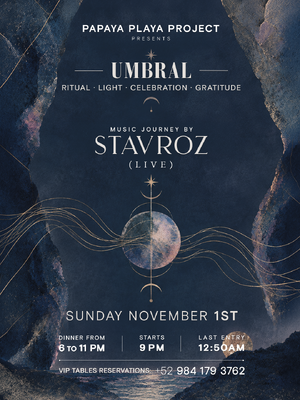
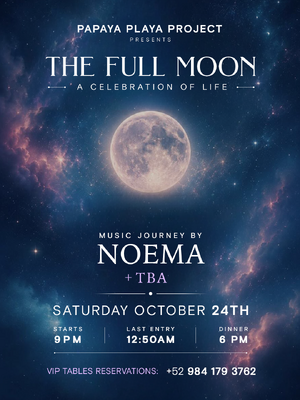
Cenote Mayan Blue does not have a fixed schedule of events like a city amphitheater, but it has become a spot for occasional special gatherings. In the early 2020s it developed a reputation in Tulum’s party scene. For example, news outlets report that authorities shut down an illegal nighttime rave at this cenote in May 2021, detaining several attendees (www.jornada.com.mx ). Similarly, a local mother’s announcement of a children’s “mega party” there went viral in 2023 (turquesanews.mx ). These instances show it’s been used for impromptu festivals and parties in the jungle (often drawing electronic or experimental acts), usually by independent promoters or word-of-mouth.
A few organized events have also been promoted. For example, a community production called “Cenote Mayan Experience 2023” was held at this venue, featuring a lineup of national and international DJs blending electronic music with traditional Mayan sounds in the natural setting (www.tulum.party ). However, such events are relatively rare and are not part of any official concert season. Visitors should keep an eye on local event listings or social media for occasional DJ sets or wellness gatherings (yoga, sound-healing circles, etc.) at this cenote. Ticket prices for these private parties can vary, but one public announcement advertised adult entry at 150 MXN (roughly $7–8) (turquesanews.mx ), similar to the standard admission fee. Overall, programming here is ad hoc: the venue is used for occasional nightlife parties (sometimes informal and by invite), as well as daytime cultural or ceremonies, rather than regular tour activities.
Tickets and Booking
There is no official online ticket vendor for Cenote Mayan Blue; admission is handled on site. For day visitors, the usual procedure is to pay an admission fee of about **150 MXN per adult** (children are often free, as noted in local reports (turquesanews.mx )). Notably, the entrance is linked with neighboring Cenote Cristal: you first buy your ticket at the Cenote Cristal booth on Highway 307. Once you have paid and received a wristband, you cross the road into the jungle path leading to Mayan Blue (www.weseektravel.com ). Be sure to have cash on hand, as smaller cenotes do not accept credit cards. There are no official discount clubs or online presales – you simply show up with payment.
For the occasional private party or event, tickets (or cover charges) are usually handled by the event promoter. These tickets might be distributed through private channels or at nearby gathering points, but such events tend to be small-scale and not sold through major platforms. Popular parties can sell out quickly, so if you hear of a planned event (for example, on local social media or word of mouth), it’s wise to reserve your spot well ahead and arrive early. Otherwise, expect to pay casually at the gate. In summary: for solo travelers, there is no advance booking needed – just pay at the entrance of Cenote Cristal (150 MXN adults) and proceed to the cenote (www.weseektravel.com ) (turquesanews.mx ).
Seating and Layout
Cenote Mayan Blue has a natural layout without formal seating. There are no bleachers or assigned seats – most of the space is the water itself. Visitors typically enter the water via a ladder or sloped concrete platform at the edge of the pool. From there, swimmers can float or stand in the shallow areas. On dry land, people may sit on stone ledges or bring towels to the grassy edges of the cenote. During events, organizers sometimes place rugs or temporary benches around the perimeter, but these are minimal.
The best “vantage point” may simply be the rock ledge or dock nearest the water, especially under the midday sun when light penetrates the water most dramatically. Some visitors prefer standing zones near the entrance where they can easily hop back to land. Strong swimmers often head toward the center or deeper end (note: life jackets are optional here (www.weseektravel.com ), but good for weaker swimmers). In general, this cenote encourages an informal, barefoot vibe: people stand, lean, or float rather than sit. There are no “VIP” ropes or seats. For event nights (if any), the DJs or performers are usually set up at one side of the cenote with speakers and lighting, and attendees gather in the water or on the bank. Sightlines are wide open, but if the cenote fills up, areas near the entrance path may become congested. As a tip, the midday sun is right overhead; those sensitive to glare might position themselves under any overhanging foliage or benefit from arriving a bit earlier in the morning or later afternoon.
Getting There and Parking
Cenote Mayan Blue is located on the main Tulum-Cobá highway (Mexican Highway 307), west of Tulum town. A travel guide notes it sits about 6 km (3.8 miles) southwest of Tulum’s center (www.weseektravel.com ). If driving, head west out of Tulum on Hwy 307. You will pass the signs for Cenote Cristal; park in the paved lot at Cenote Cristal’s entrance. (Visitors on foot can park there too. One travel report advises parking at Cristal and walking across the highway to Mayan Blue (www.weseektravel.com ).) From the Cristal parking area, there is a short jungle path – roughly a 10-minute walk – leading to the hidden cenote (www.weseektravel.com ). Follow the marked trail through a gravel road; it is away from the highway and can be uneven (wear sturdy shoes). In sum: park at Cenote Cristal (some sources mention a nominal parking fee or the usual entry charge), then pay at the Cristal booth and proceed to Mayan Blue (www.weseektravel.com ).
Public transport options are more limited. Local colectivos (shared vans) run along Highway 307 between Tulum and Cobá. Ask the driver to drop you at “Cenote Cristal” (the known landmark). From that point it’s a short walk through the woods to Mayan Blue. Alternatively, from downtown Tulum you can catch an ADO bus or colectivos to the highway and then a taxi for the last few kilometers. Rideshare services (like Uber or a taxi) can drop you directly at the Cenote Cristal entrance. Keep in mind that nighttime transit is sparse – plan to arrive by late afternoon, as the cenote typically closes by around 4–5 PM (www.weseektravel.com ).
For drivers, note that parking space is limited. The car park lies off the main road (near Cenote Cristal); watch for the entry gate. Motorbikes and bicycles are often the easiest to park right by the trailhead. Street parking on the highway itself is discouraged for safety. In summary: **drive** to Hwy 307 and look for Cenote Cristal signage, park there, then follow the park trail to Mayan Blue. **Public transit** requires walking from the main road stop. **Parking cost** is generally included in the 150 MXN admission or a small extra fee; confirm locally when you arrive.
Inside the Venue
Upon arrival, visitors show their paid wristband at the chain-gate entrance to the cenote (www.weseektravel.com ). Security consists of a simple gatekeeper; there are typically no bag checks, but valuables should be kept secure or left behind. The atmosphere inside is purely natural and serene. The cenote is essentially one large pool, so expect to be wading or swimming immediately. You’ll want to bring your own towel, swimsuit, and possibly a lockable dry bag for belongings. Lifeguards are not usually on duty, so swim at your own risk and stay close to friends if you’re not a confident swimmer. The water is generally calm with no current; you may float or snorkel to explore.
Facilities are minimal. There are **no full-service restaurants or bars** at the cenote – if events are happening, occasional snack stands may appear but often there is nothing for sale. Plan to bring drinking water and snacks if you will be on site for a while. On-site restrooms may not exist directly at Cenote Mayan Blue; the nearest toilets are by Cenote Cristal’s parking area. (It’s wise to use those facilities before starting the walk.) There is no coat check or luggage storage, so leave non-essential bulky items in your car if driving. If you plan water activities, life jackets and snorkel gear are usually available for rent or included; however, a travel guide notes life jackets are provided but not mandatory (www.weseektravel.com ). Scuba diving is allowed with an additional fee (around 300 MXN for a dive entry permit) (www.weseektravel.com ), so divers can explore deeper parts with gear if qualified.
In terms of electricity or Wi-Fi, expect none. This hidden cenote is off-grid: phones may work if there is cell tower range, but don’t rely on connectivity. If you need to charge devices or use social media, do so beforehand. In fact, many visitors hold electronic devices under water to capture photos, but be cautious of reflections and keep gadgets waterproof. For lighting, the cenote is well-lit by sunlight during the day, but after dusk it gets pitch-dark—parties would need their own lighting rigs. Finally, preserve the wilderness vibe: this is a nature spot first and a party spot second. Immerse yourself in the environment – listen to the jungle sounds and the subtle echo of the water – rather than expecting a club-like infrastructure.
Nearby Amenities
Surrounding Cenote Mayan Blue, amenities are mostly found back in Tulum’s town or hotel district, not at the cenote itself. Within a short drive west (about 5–10 minutes), you’ll reach downtown Tulum (Pueblo), where you’ll find dozens of restaurants, cafes, and bars. Options range from local taco stands and affordable Mexican eateries to international cafes and fine dining. If you have time before an event or between sights, consider the Tulum town center for meals: places like taquerias, pizza shops, or jungle-themed bistros are common.
If you go east instead, the beachside hotel zone (around 5–6 km from town) has its own trendy restaurants and clubs – however, that’s 10–15 minutes away by car. For a quick bite nearer to the cenote, there is no food vendor at the site, so one strategy is to pack sandwiches or order takeout from Tulum on your way. Bars and nightlife are likewise in town or along the beach, not adjacent to this cenote.
As for accommodations, the immediate area has no lodging – it’s all jungle or farm roads. Visitors typically stay in Tulum. In downtown Tulum, you’ll find hostels and budget hotels, plus some mid-range boutique inns. In the popular areas near the beach (Aldea Zama, Tulum Pueblo, Tulum Hotel Zone), there are upscale eco-resorts and jungle lodging options, usually 5–15 minutes away. If you want to be closer to the cenote’s action, staying in town is convenient.
For timing, it’s best to arrive well before your planned exit time. Since buses generally stop running by evening, make sure you have a way back if you stay late. Taxis and ride-shares (e.g. Uber or local floatas) can pick up along Highway 307, but cell service may be spotty. If arriving early, note that Cenote Cristal’s small shop sells snacks and drinks (at extra cost) right by the parking lot. Once you’re inside Cenote Mayan Blue, no food is sold. In brief: **Dining and accommodations:** in Tulum village or beach district (not onsite). **Fuel and supplies:** the nearest gas station is in Tulum Pueblo. **Arrival time:** plan to be back on paved road/transport by sunset, since no public transit runs at night here.
What Makes This Venue Special
Cenote Mayan Blue’s charm lies in its raw, secluded character and cultural quirks. Architecturally it is purely natural: a deep freshwater pool carved by millions of years of dissolution, with vertical limestone walls and a ring of rainforest canopy above. In high sun it glows turquoise, creating a magical lagoon feel. This raw splendor is part of what draws adventurous travelers and DJs alike. Unlike crowded theme-park cenotes, Mayan Blue has no tourist shop or cement-carf care: it feels authentically wild. That authenticity – a jungle swimming hole that doubles as a dance floor on occasion – is its signature.
The cenote has been the backdrop for memorable contrasts: children’s birthdays and impromptu raves alike. News stories about a secret rave being busted in 2021 highlighted how it became a focal point of Tulum’s freewheeling party image (www.jornada.com.mx ). Conversely, local families find it a picturesque spot for gatherings (as one mother demonstrated with her “mega-party” invite (turquesanews.mx )). This dual reputation – enchanting oasis in daylight and hidden jungle nightclub at night – is unique among Tulum cenotes.
Its connection to the region’s Maya heritage is also special. Although not a ruin, visiting a cenote touches a historical pulse: cenotes were sacred wells for the ancient Maya. In that sense, swimming here is almost a ritual of its own. Every visitor benefits from this sense of the sacred water. A-partygoers have even integrated traditional elements: event listings mention blending electronic beats with Mayan drumming or ceremonies in the cenote setting (an example is the “Cenote Mayan Experience” event blending Mayan sounds into a DJ set) (www.tulum.party ).
Finally, many consider this spot a meaningful discovery just for feeling off the grid. If the nearby Cenote Cristal is busy, Mayan Blue can feel like a secret find. Even among long-time visitors, there’s local lore about its names. Weseektravel notes that “Mayan Blue” was the original name of what is now often called Cenote Escondido, a hint at its layered identity (www.weseektravel.com ). In short, both artists and explorers love this venue because it offers a raw, pristine getaway with a hint of underground culture – a rare combo in Tulum’s bustling cenote circuit.
Visitor Tips and Information
If you plan to visit, a few tips can enhance your experience. **Bring cash** (pesos) since the admission (about 150 MXN) must be paid on site (www.weseektravel.com ). Have enough for any incidental expenses (snacks or rentals), as card readers are not guaranteed. **Remember to buy the ticket at Cenote Cristal’s entrance** before trekking to Mayan Blue – guides stress that you show your wristband at the gate (www.weseektravel.com ). Otherwise, you won’t be admitted. **Wear swimwear and water shoes**. The path to the cenote is over uneven gravel, and the entrance platform can be slippery with algae. A towel, reef-safe sunscreen, and insect repellent are wise, too. (Do rinse off lotions before entering the water to protect the ecosystem.)
**Time your visit** for daylight. The cenote opens at 9 AM and typically closes by late afternoon (www.weseektravel.com ). The sun reaches full brightness at midday, giving the best underwater visibility (www.weseektravel.com ). Many travelers recommend arriving mid-morning to mid-afternoon. If you can, visit by 3 PM at the latest – the setting sun will cut off after-5 PM access. This cenote is also unroofed, so you’ll get sun exposure; bring a hat or rash guard if sensitive.
**Safety and regulations:** Life jackets are available on site but not strictly required (www.weseektravel.com ). Snorkel gear rentals exist (and the water is calm, making it great for snorkeling (www.weseektravel.com )). There is no lifeguard on duty, so supervise swimmers and children closely. You’re allowed to swim, snorkel, or free dive here – scuba divers can explore with a permit (300 MXN extra) (www.weseektravel.com ) – but boats, fires, or chemical pollutants are prohibited. **Respect the cenote:** no glass containers, and do not litter. If you see any posted rules at the entrance, follow them.
**Accessibility:** There are no ramps or lifts. The trek to the water involves a downwards trail of about 10 minutes through jungle (www.weseektravel.com ). Steps or ropes (if present) are often mud- or rock-made. It is not wheelchair-accessible and is difficult for those with limited mobility. Also, limited cell reception means you should handle arrangements ahead of time. **What to bring:** swimsuit, towel, cash, water, and perhaps a floatation device if desired. **What to avoid:** Drugs, excess alcohol, or loud speakers unless in an organized event – remember, this is a natural site.
If attending a party, book safe transportation home in advance. Late-night rides in Tulum can be scarce. Keep an eye on local weather too – although open, heavy rain could make the trail muddy. Ultimately, approach the visit with flexible expectations: the venue is more about atmosphere than comfort. Adventurers often recommend spending at least a couple of hours here – enjoying a swim, soaking in the jungle silence, and watching shifting light on the water. With these preparations, your trip to Cenote Mayan Blue should be smooth and memorable.
Frequently Asked Questions
How much does it cost to visit Cenote Mayan Blue, and where do I buy tickets?
As of recent reports, adult admission is about 150 MXN (around $7–8), with children often granted free entry (turquesanews.mx ) (www.weseektravel.com ). There is no online booking; tickets are purchased in person. In practice, you pay at the nearby Cenote Cristal entrance booth, where you’ll receive a wristband, and then walk across the highway to the Cenote Mayan Blue trail (www.weseektravel.com ) (www.weseektravel.com ).
What is the exact location of Cenote Mayan Blue?
Cenote Mayan Blue is on Mexican Highway 307, about 6 km (3.8 miles) west-southwest of Tulum town (www.weseektravel.com ). Look for the Cenote Cristal signs; the Mayan Blue entrance is just across the road through a jungle path. It’s not in Tulum Pueblo itself, but along the Tulum-Cobá road. Using a GPS, search for “Cenote Cristal” and then follow the trail signs to the hidden cenote. (www.weseektravel.com ) (www.weseektravel.com )
Is parking available at Cenote Mayan Blue, and is there a fee?
There is no separate parking lot for Mayan Blue itself; visitors usually park at the Cenote Cristal parking area just outside. Parking there is generally small-scale (part of the cenote’s entrance fee). Once parked, you walk down a gravel trail to reach Mayan Blue (www.weseektravel.com ). No additional parking fee beyond the entrance ticket is usually charged, but check for signage. Motorcycle and bicycle parking is often available closer to the gate.
How do I get to Cenote Mayan Blue by public transport?
Public transit is limited. You can take a colectivo (shared van) from Tulum toward Cobá and ask to be dropped at Cenote Cristal, which is the familiar landmark. From there, you walk across the road to the trailhead. Alternatively, take a taxi or rideshare (if available) to the same spot. Buses or shuttles only run along Hwy 307, so plan your timing – there may be no vehicles back late at night.
What should I wear and bring to Cenote Mayan Blue?
Visitors typically wear a swimsuit as they will be swimming. A pair of reef-proof water shoes or non-slip sandals is recommended for the rocky path and pool edges. Bring towels, biodegradable sunscreen, and insect repellent (but shower off lotions before swimming). Cash is important for admission and any rental gear. Snorkel gear and life jackets are often available to borrow on site. Avoid heavy backpacks – bring only what you’ll need in the cenote.
Are there life jackets, and is swimming safe?
Yes, life jackets are available (often included with rental or admission) but are not mandatory (www.weseektravel.com ). The cenote has very clear, calm fresh water with no currents. Overall it’s safe to swim, but note that depths in the center can be significant. There is no lifeguard on duty, so stay cautious. Children should be supervised and weak swimmers should use a life vest. The water temperature is pleasantly cool (mid-20s °C) year-round.
Are there any restrictions or venue policies I should know?
General cenote rules apply. For example, glass containers, soaps, or sunscreen that is not eco-friendly are usually prohibited. Drinking alcohol or drugs is not allowed at this natural site. Bag checks are minimal, but steward staff enforce rules. Smoking may be restricted near the water. It’s best to travel light: expensive electronics or jewelry should be left at home or in your car. Follow any posted instructions and respect the environment.
Are there restroom or food facilities at Cenote Mayan Blue?
Cenote Mayan Blue itself has no on-site food or restroom facilities. The only amenities are at Cenote Cristal’s entrance: there may be simple restrooms (and a snack stand) back by the parking area. Once inside Mayan Blue, it’s wilderness. Plan ahead: use the facilities before entering and bring water/snacks if needed. For meals, you must return to Tulum or the hotel zone (a 10–15 min drive) as no restaurants are nearby (www.weseektravel.com ).
Is Cenote Mayan Blue accessible for wheelchairs or mobility-impaired visitors?
No. The path in is a rough gravel trail and involves a walk of about 10 minutes through uneven, jungle ground (www.weseektravel.com ). There are stairs and steep drops without ramps. The cenote area itself has no wheelchair accommodations. Visitors with limited mobility would find this inaccessible.
What’s the difference between Cenote Mayan Blue and Cenote Escondido?
They are the same place. Cenote Escondido (meaning “hidden cenote” in Spanish) was once known by the name Mayan Blue. The original signage has disappeared, but older guides and locals will tell you it’s the same sinkhole (www.weseektravel.com ). In short, “Cenote Mayan Blue” and “Cenote Escondido” refer to the identical cenote – just different names used over time.
When is the best time of day to visit Cenote Mayan Blue?
The pool is open to the sky, so mid-day (around 11 AM–2 PM) brings the strongest sunlight into the water. Guides note “midday” as the best time when the sun is directly overhead (www.weseektravel.com ). For photography and water clarity, that bright lighting is ideal. However, arriving a bit earlier or later can mean fewer people and cooler shade. Remember, the site opens at 9 AM and typically closes by 4 PM (www.weseektravel.com ), so plan within that window.
Are children allowed inside, and are there any age restrictions?
Children of all ages are allowed, and entry is often free or reduced for youngsters (many reports indicate kids do not pay while adults do (turquesanews.mx )). There is no explicit age limit, but adult supervision is a must, as the water can be deep. Families often visit for swimming and teaching kids to snorkel in the calm water. As always, children should wear life vests and stay within reach.
Can I swim or dive at Cenote Mayan Blue?
Yes. The cenote is firmed for swimming, snorkeling, and freediving. It’s described as “great for snorkeling, free diving, scuba diving, and just relaxing” (www.weseektravel.com ). The water is calm and clear. Recreational scuba divers just need to pay the additional dive fee (~300 MXN) and follow any local safety protocols. Non-divers can simply swim or snorkel. There are no boats or currents, so it’s safe to swim across the pool.
What amenities are available on-site?
As mentioned, facilities are very limited. You’ll find a ladder to enter the water and possibly a small diving platform. There are no chairs, so bring anything you want to sit on. Basic storage is usually not provided. Gear rentals like life jackets and snorkels may be offered for a small fee. No gift shop or food stall exists at Mayan Blue itself. The focus here is purely swimming and nature; don’t expect amenities beyond the basics of water access and maybe a rope or wood steps.
Can I bring my pet or drone to Cenote Mayan Blue?
Pets (dogs, etc.) are generally not allowed at cenotes, as these are protected natural sites (and wildlife or water contamination is a concern). Drones have limited space for safe takeoff/landing and could disturb the serenity, so it’s best to avoid them here. (There may be legal restrictions on drones at archaeological areas, and the catchment is small.) In short: focus on the experience without extra equipment that could trouble the environment or other guests.