We caught up with Nepal’s dynamic cross-genre collective to explore their humble beginnings, their growing impact on the local music landscape, and their ambitious vision for the future.
Those big international club nights, with their massive production setups, laser-filled arenas, and heavyweight line-ups, always look spectacular. The scale is undeniably impressive, but often, what feels missing there is the cohesion and intimacy that can only be found in smaller, more personal settings; the kind of spaces where community forms naturally and where the underground truly flourishes. It’s the kind of authentic experience that can only be cultivated when people gather not just to be entertained, but to participate in something genuinely transformative.
This is where the underground scene reveals its true power. We’re truly blessed and grateful for these intimate spaces because they serve as the fertile soil where genuine talent takes root and thrives. It’s in these environments that artists can take risks, experiment with their sound, and develop their craft without the pressure of satisfying massive crowds or commercial expectations. These connections form the foundation of thriving communities that genuinely look out for each other, supporting emerging artists, sharing resources, and creating networks of mutual aid that sustain the culture through both good times and challenging periods.
This little community emerging from Jhamsikhel, Lalitpur, in Nepal, represents the absolute pinnacle of what the underground can achieve. In a neighborhood known primarily to tourists as a gateway to Himalayan adventures, something remarkable has been quietly brewing. With an ethos of no genres barred, The Sunflower Collective has been championing local talent while also bridging the gap between Nepal’s homegrown artists and the wider global scene. Their nights have steadily grown in scale and ambition, with each edition reflecting not just stronger production but also a deeper sense of identity. By making full use of Nepal’s breathtaking landscapes, the collective has hosted their signature parties in diverse settings from intimate clubs in Kathmandu to open-air gatherings against the backdrop of the Himalayas.
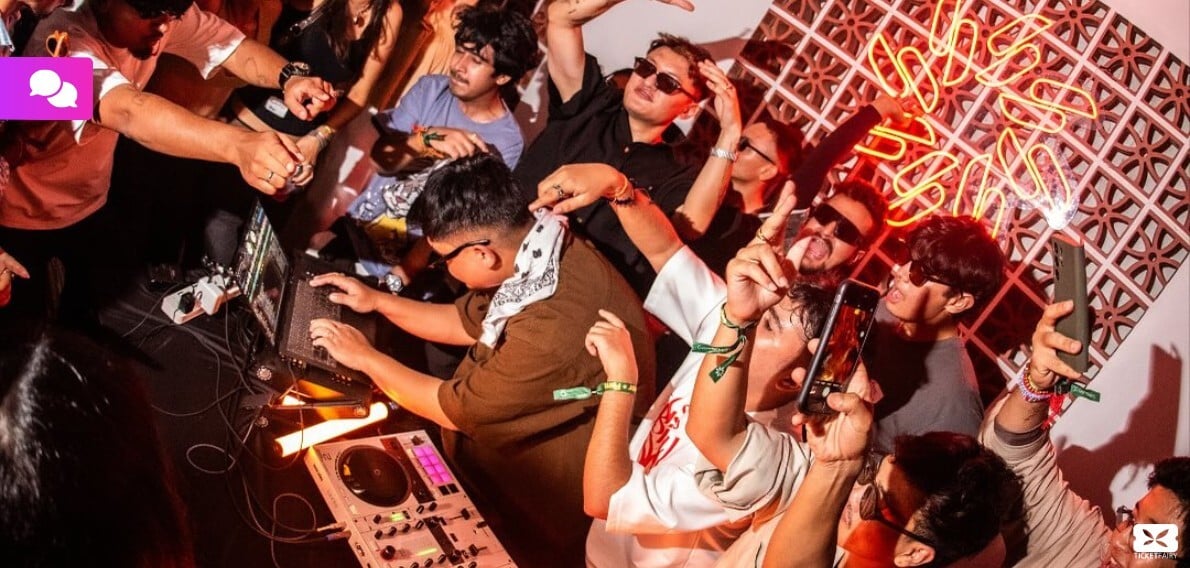
Their recent Sunflower Afterhours festival is a testament to that vision. A carefully curated mix of local and international acts came together in a club setting that managed to feel both futuristic and intimate. There were no distractions, no endless rows of people recording sets on their phones, just a dancefloor where everyone was fully present, locked into the music, and connected to each other. It’s this kind of environment that reminds us of the power of music to create collective energy, where the boundaries between performer and audience dissolve into one singular vibe.
Nepal’s musical prowess has been solid for quite some time, with a rich tradition that encompasses everything from classical ragas to folk melodies to contemporary fusion. The country has produced musicians who’ve achieved international recognition across multiple genres, and there’s been a quietly growing electronic music scene that’s been developing its own unique voice. The Sunflower Collective are fully harnessing this deep musical heritage, creating bridges between traditional Nepali musical concepts and contemporary electronic production techniques.
As the collective continues to expand its footprint, we caught up with the collective to dive deeper into how the Sunflower Story began, what makes their signature nights so special, and how they plan to push this blossoming movement even further.
TFword: When Sunflower Collective first started, what gaps or opportunities did you see in Nepal’s music and arts scene? How did the local creative community inspire or challenge your vision?
Sunflower Collective: Sunflower Collective come into existence long after we started doing out first event series which was Sunflower Sessions. It was supposed to be a one time event to raise fund for a dear friend and an amazing musician for his new album. After the first event we realised that there was a clear gap between new and promising talents not having a space to showcase their talents and a discovery platform for audience to find new artists. The local community has been truly inspiring cause we get to meet so many different artists forms from a wide spectrum of genres and walks of life and their stories drives us to keep moving forward.
TF: How has that vision evolved over time? Have audience preferences or Nepal’s broader creative trends shaped this evolution?
Sunflower Collective: The core vision as always been the same to showcase and promote local art and culture but from 2025 it’s become more broad and we’ve been fortune enough to be about to work with creatives from around south Asia.
I think we’ve always stuck to our guns and just promote music and artist that we truly admire and enjoy, a lot of our audience find and develop new music and tastes through our events so we are very careful when it comes to curation and bookings.
TF: Your events celebrate diverse genres. Which styles of music or art do you prioritize showcasing, and why? Are there underrepresented genres you’re passionate about introducing to Nepalese audiences?
Sunflower Collective: We have different spaces for different genres but we always try to prioritize original music above all. We do have a soft spot for Bass music and we want to promote south asian bass music in the scene and across the world.
TF: Your gatherings have grown significantly. What factors do you attribute to this growth? How do you balance maintaining an intimate community vibe while scaling up?
Sunflower Collective: We’ve come a long way from where we first started and it’s been a really exciting journey but it still feels like we’re just starting out. I think the main factor that has helped us grow is the community we’ve managed to build around us, staying true to our roots and celebrating what’s around us. Recently we have been dwelling on this question about the balance between having intimate community spaces while scaling up and the best thing that has worked for us is to do events more option in various location while keeping the numbers low.
TF: Have there been challenges in pushing boundaries (e.g., late-night events, experimental art) in Nepal’s social context?
Sunflower Collective: I think the main challenge has always been in the outlook towards electronic music. The scene around the world, at least in the mainstream media has always been filled with substance and crime; however, what we do is far from it. We’ve managed to create a safe space to truly feel yourself and be yourself without being under the influence of any substance. And with the slow word of mouth and out social media presence people are starting to get it and appreciate it.
TF: The most recent ‘Afterhours’ showcase was a proper milestone. What made this edition unique? Could you share highlights – the energy, turnout, or unexpected moments that stood out?
Sunflower Collective: The last Afterhours at XO Club was a milestone for us, unlike anything we’d ever attempted. We turned an under-construction site into a full-blown rave. The wild part? No one even knew the club existed. The venue was completely off the map, so for everyone who came, it felt like a treasure hunt. Against all odds, we sold out. The place was packed wall-to-wall, and the atmosphere was electric. Some of the best moments? When the flags went up, the haze machines kicked in, and the dance floor erupted, it looked and felt like a perfect riot. Pure chaos, raw energy, and that untamed vibe that makes Afterhours so exhilarating.
TF: How do you design the experience (venue, visuals, sound) to align with Sunflower Collective’s ethos of connection and exploration?
Sunflower Collective: For us, designing the perfect experience always starts with community. Sunflower Collective has always been a niche space, and we like to keep it that way intimate, intentional, and centered on people who truly get it. When we choose a venue, we look for more than just the location, we look for the right people behind it, people who share our values. For visuals and sound, we keep things clean and consistent. Nothing too flashy or distracting. we want the setup to amplify the room’s energy, not steal the spotlight. The focus should always be on the artist and the music itself.
Above all, every space we design has to feel safe and welcoming. That’s non-negotiable. We want people to walk in and instantly feel like they belong, ready to connect and explore together.
TF: What role does Sunflower Collective want to play in shaping the scene going forward?
Sunflower Collective: To be honest, we’ve always seen ourselves as curious kids just eager to learn, explore, and share what excites us. That curiosity still drives everything we do. We get just as hyped about discovering a new genre or artist as you would about finding an amazing TV series you can’t wait to tell your friends about. Sunflower has always been that: “Here’s someone incredible we’re listening to, come listen too.”
Shaping the scene is a tricky question, because we’ve never really set out to control or define it. We’ve always walked our own path, pushing the music we genuinely love, whether it’s Garage, DNB, or anything in between. If we’re shaping the scene in any way, we hope it’s by encouraging others to do the same, follow their own tastes, trust what feels real, and build communities around what they truly believe in.
TF: What’s next for Sunflower Collective? Are there new formats, collaborations, or long-term goals you’re excited about?
Sunflower Collective: The past few months for Sunflower Collective have been wild in the best way. One new format we’re eager to experiment with is hosting true house parties: raw, intimate spaces that push new DJs, new artists, and fresh sounds forward. We’ve been talking about it for ages, and now we’re finally figuring out how to do it safely and authentically. Collaboration is another big focus. The world has really opened up to us recently, and we’re excited to start building bridges with other creative communities not just across South Asia, but even with South Asia communities around the world. We want to push South Asian music, and specifically Nepali music, onto a global stage.
That’s been our long-term dream from day one: to give homegrown artists the platform they deserve. If people can dance to K-pop, Latin, Afro tracks worldwide, why not Nepali music? We know it belongs out there and we’re working to make that happen sooner rather than later.
TF: Do you plan to expand your influence beyond Nepal, or focus on deepening roots locally?
Sunflower Collective: We’ve always imagined Sunflower as globally local. What we mean by that is, while we want Sunflower to grow into a global community, it should always feel rooted in the place it touches. If we host Afterhours in Bangladesh, it should highlight and represent the local community there. If we do it in Australia, it should champion the artists and sounds from that scene. The vision has always been to build a worldwide network while uplifting local talent wherever we go.
For more artist interviews and updates, keep up with TFword on Instagram | Facebook | X
You May Also Like:
Beyond The Valley 2025 Unveils Line-up: Dom Dolla, Ben Böhmer and More
The Warehouse Project To Make India Debut In October 2025
Upcoming Music Festivals in India You Need to Know About (2025-2026)