In the world of live music events, premium table service has become a hallmark of luxury and exclusivity. From cutting-edge arenas to remote festival stages, offering VIP tables and hospitality is now a standard strategy for venues and promoters looking to attract high-end guests. This trend has only accelerated in recent years as live events rebound: the top 100 tours’ global ticket revenue surged 46%, reaching $9.17 billion in 2023, according to AP News reports on in-person entertainment trends. High-income concertgoers are driving demand for ultra-premium experiences, and younger audiences increasingly value memorable experiences over possessions. In fact, industry observers dubbed 2024 the “VIP summer season” due to the explosion of upscale concert packages – with Live Nation reporting VIP club revenues up 19% at its amphitheaters and premium ticket upgrades up over 20% at major festivals, as noted in Chisto’s analysis of music business upselling.
Offering VIP tables isn’t just about opulence; it’s a savvy business move. For venues and organizers, a relatively small number of elite patrons can contribute a significant share of event income. In some cases, VIP packages have price tags nearly double those of general admission – for example, passes for Primavera Sound 2026 in Barcelona cost around €545 for VIP vs. €295 GA, based on Primavera Sound 2026 pricing details. And at marquee festivals like EDC Las Vegas, a single main-stage table can run well into five figures for one weekend. The math is clear: a handful of premium tables with bottle service can generate revenue equivalent to dozens of regular tickets.
Pro Tip: Don’t treat VIP service as an afterthought; make it a core part of your event plan. Assign a dedicated VIP manager or host to oversee high-end guests’ needs, coordinate with security and catering, and handle any issues instantly. This concierge-style oversight ensures your premium patrons get white-glove treatment from entry to exit.
In this article, we’ll explore what VIP and premium table service entails, how it elevates the live music experience for affluent guests, and best practices for executing these offerings successfully. Whether you manage a nightclub, concert hall, or festival, understanding the art of premium table service is key to creating unforgettable nights (and lucrative revenue streams) for years to come.
Boost Revenue With Smart Upsells
Sell merchandise, VIP upgrades, parking passes, and add-ons during checkout and via post-purchase emails. Increase average order value by up to 220%.
What is VIP and Premium Table Service?
VIP and premium table service refers to a high-end guest experience at live music venues where patrons enjoy exclusive access, luxury amenities, and personalized attention. Instead of standing in the crowd or lining up at the bar, VIP guests have a reserved space – often a private table, lounge, or suite – with dedicated staff catering to them. This model, which first gained fame through nightclub bottle service, has now been adopted by concert venues and festivals to offer a club-like hospitality experience in the live music context.
At its core, premium table service is about combining live entertainment with elements of luxury hospitality. VIP ticket holders typically receive perks such as priority entry (no waiting in long lines), comfortable seating in prime locations, and access to top-shelf drinks and gourmet food without ever leaving their seat. A personal server or host is assigned to each table or group, taking care of orders and special requests. It’s not uncommon for these areas to feature exclusive menus of craft cocktails or champagne, and even table-side mixology for added flair.
Ready to Sell Tickets?
Create professional event pages with built-in payment processing, marketing tools, and real-time analytics.
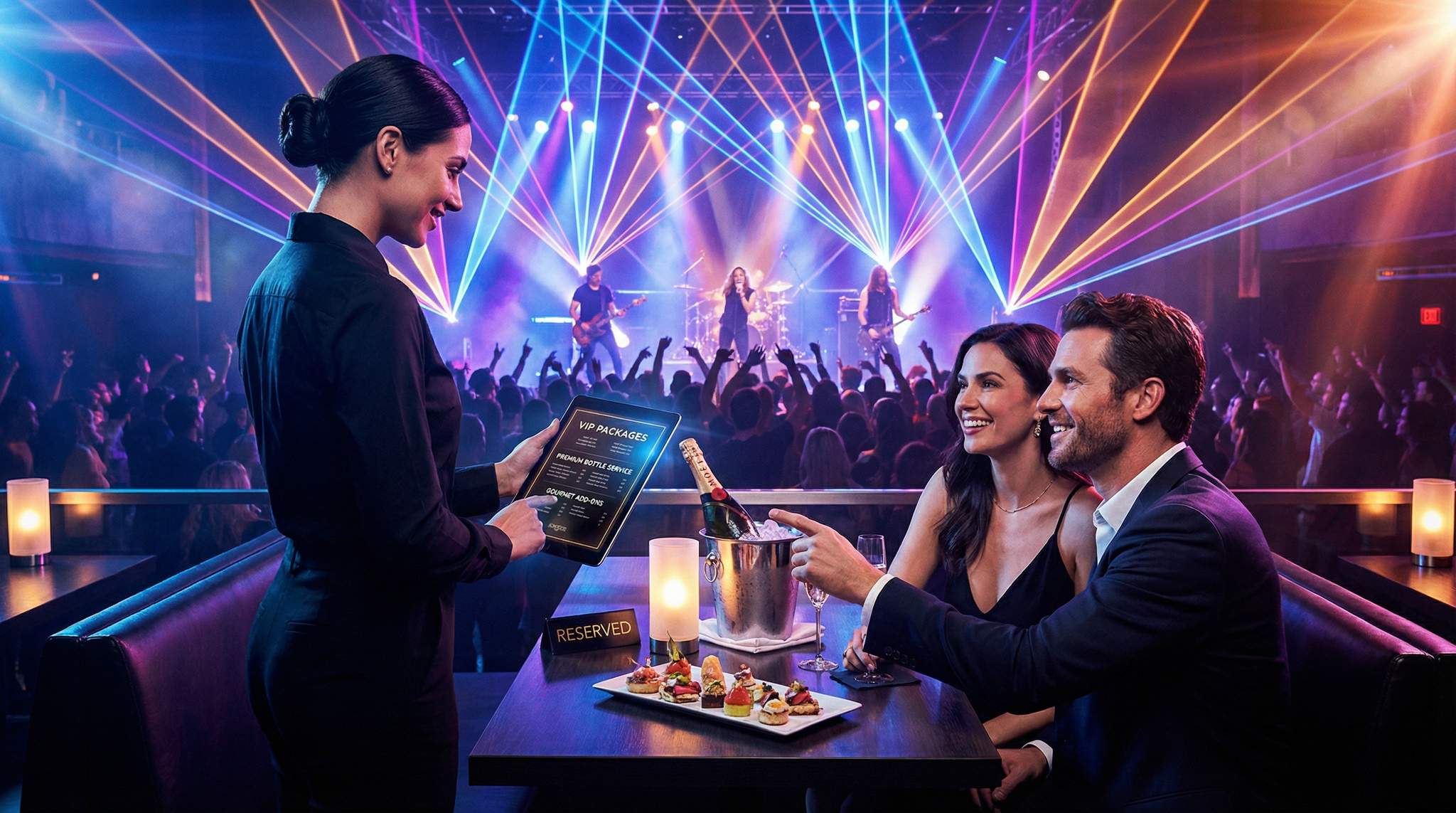
For example, a VIP concert package might include a reserved cocktail table on an elevated platform with a clear view of the stage, a bottle of premium liquor delivered upon arrival, and a platter of chef-curated appetizers. Guests could also get wristbands granting access to a backstage lounge or artist meet-and-greet. In essence, they’re buying a turnkey night of luxury – showing up to find everything arranged, from seating to drinks, so they can focus on the music and company. As one Ticket Fairy venue management guide notes, offering these kinds of VIP lounges, dedicated entrances, and backstage access enhances the guest experience and drives additional revenue for the venue.
Critically, VIP and table service experiences are kept separate from the general admissions crowd. High-end guests often have their own segregated sections – think roped-off areas on a mezzanine, private boxes, or cordoned suites – ensuring they can enjoy the show in peace and comfort. This exclusivity is part of the appeal. Guests paying a premium expect not only tangible perks but also a feeling of privacy and status. We’ll discuss that psychology more in a moment. First, let’s look at the role VIP table service plays in the live music ecosystem and why it has become so prevalent.
The Role of VIP and Premium Table Service in Live Music
VIP and premium table services are about more than just providing a reserved seat – they are about creating an entirely elevated atmosphere within a live music event. By layering in comfort, exclusivity, and personalized service, VIP offerings turn a concert into a luxury experience that standard GA tickets simply cannot match. This adds a new dimension to concerts and club nights, contributing to a vibrant, upscale vibe in the venue’s overall atmosphere.
From luxurious seating options to fast-track entry, access to exclusive areas, and premium add-ons like bottle service and gourmet dining, VIP tables make guests feel like true insiders. These services are typically offered in a venue’s best real estate – whether that’s a private mezzanine suite with sightlines dead-center to the stage, a cluster of cocktail tables right by the DJ booth, or a fenced-off platform in front of house at a festival. VIP guests, in other words, get the best seat in the house in more ways than one.
Smooth Entry With Mobile Check-In
Scan tickets and manage entry with our mobile check-in app. Supports photo ID verification, real-time capacity tracking, and multi-gate coordination.
Key Benefits for Guests:
- Exclusive Access: High-end guests skip the hassles the general public endures. VIPs often have a separate entrance (or early access window), meaning no waiting in long lines and a smoother security check. Once inside, they enjoy private sections that are far from crowded – whether a balcony lounge or a side-stage viewing area – so they can absorb the performance without being jostled by the masses.
- Luxury and Comfort: Premium seating goes well beyond a typical folding chair. VIP areas might feature plush couches, cocktail tables, and bar stools with plenty of elbow room. Many venues design these sections to feel like a chic lounge or living room, complete with mood lighting, décor, and sometimes even climate control. After all, if someone is spending thousands on a table, they expect to relax in style instead of standing shoulder-to-shoulder on a sticky floor.
- Personalized Service: Perhaps the defining feature of table service is the dedicated staff. VIP guests have waiters or hosts assigned specifically to their area. These staff are trained to anticipate needs – refilling drinks, taking custom orders, arranging surprises like a birthday cake – often before being asked. The personalized attention makes VIPs feel truly catered to. (As a best practice, servers should quickly learn guests’ names and preferences – the goal is to deliver a white-glove service experience.)
- Privacy: For celebrities, influencers, or corporate clients who frequent live music events, privacy is a major draw. A VIP table or suite acts as a haven away from the smartphone-wielding crowds. Security or staff often guard these sections to ensure only authorized guests enter. This allows high-profile attendees to let loose and enjoy the show without worrying about unwanted approaches or camera flashes. It’s also ideal for those who simply prefer a more intimate setting to share with friends or colleagues, rather than being in the thick of a huge crowd.
- VIP Seating & Sightlines: The phrase “best seat in the house” is often literal for VIP packages. Organizers reserve prime viewing locations for their high-end ticket holders – whether it’s a center balcony with perfect acoustics, a side-stage platform mere yards from the performers, or even a table on the stage itself (some ultra-VIP experiences offer this!). Along with the view, these seats typically come with extra perks like bottle service, personal attendants, and other touches that blend the excitement of the concert with the comfort of a private club.
For venues and event organizers, offering VIP and premium table services creates a considerable additional revenue stream. Many affluent concertgoers are willing to pay a premium several times the base ticket price for these perks, especially for sold-out tours or one-time events. This not only boosts profits on ticket sales but also encourages high spending on site – VIP guests order champagne bottles, top-shelf liquor, and gourmet food in volumes that can dwarf the average GA patron’s spend on a couple of beers. According to Ticket Fairy’s concert industry analysis, implementing offerings like VIP lounges and hospitality services can significantly increase an event’s overall take without increasing attendance. In essence, premium tables add revenue “density” – more dollars per guest – which is a powerful lever for event profitability.
What Makes VIP and Premium Table Service Special?
Not all VIP upgrades are created equal. The most successful premium table service programs go beyond a nice view and some pricey drinks – they craft an immersive experience with multiple layers of exclusivity and comfort. Here are some of the key elements that make VIP table services truly stand out:
Grow Your Events
Leverage referral marketing, social sharing incentives, and audience insights to sell more tickets.
1. Exclusive Seating and Viewing Areas
One of the main draws of VIP table service is the guarantee of prime seating. Instead of arriving early to claim a spot or jockeying for a view in a standing-room crowd, VIP guests know they have a designated space with an excellent sightline to the performance. Venues achieve this in several ways:
- Private Boxes or Lounges: Many concert halls and arenas feature opera-style boxes or side lounges that can be reserved for VIP groups. These semi-private pods often come with unobstructed views and can even be glassed-in suites with their own balconies. For example, London’s O2 Arena recently launched The Residence, a 300-person members-only club built into the venue that offers some of the best views in the house along with luxury amenities.
- Elevated Platforms: In venues without permanent boxes, event organizers may construct elevated VIP platforms or risers for special events. These put VIP guests above the general crowd (literally). At festivals, it’s common to see raised viewing decks near the sound booth or stage wings exclusively for VIP ticket holders. This height advantage ensures a clear view over thousands of heads. Dedicated viewing platforms are a win-win – VIP guests get comfort and superb sightlines, while organizers gain a new premium amenity to sell.
- Comfortable Seating: Instead of the hard plastic or metal seats in general admission, VIP sections feature upgraded seating furniture. Think cushioned sofas, high-top tables with bar stools, or lounge chairs. Some clubs even provide VIP sections with daybed-style seating or bespoke furniture to fit a theme. The goal is to create a space where guests want to hang out all evening. A well-appointed VIP area can feel more like a hip cocktail bar nestled within the concert venue, allowing guests to enjoy the show without sacrificing comfort.
2. Premium Bottle Service
Bottle service is a staple of VIP experiences, originating in upscale nightclubs and now common in concerts and even festivals. Rather than waiting 20 minutes at a crowded bar for a drink, VIP patrons have the bar come to them. Here’s what premium bottle service entails:
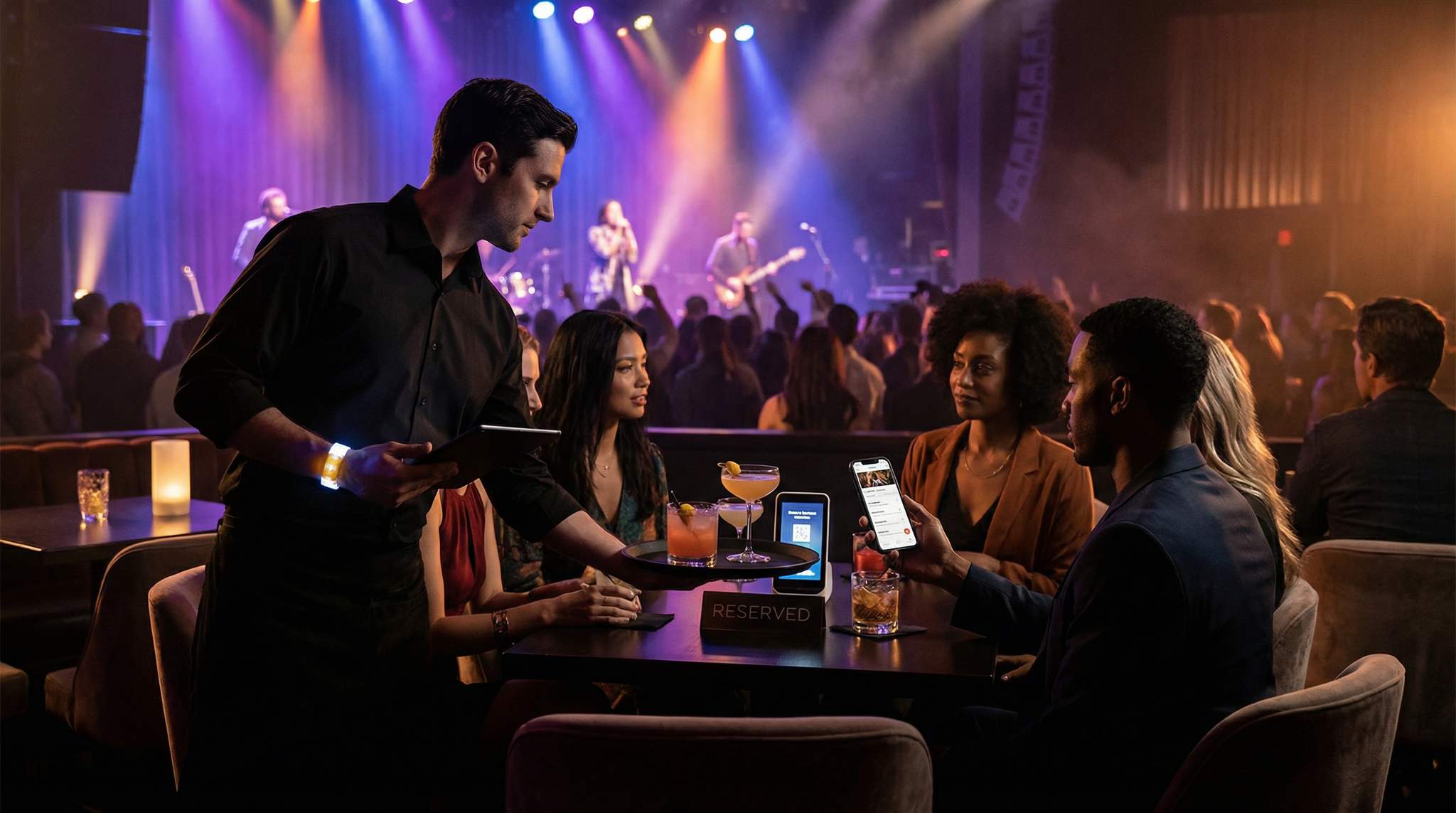
- Personalized Drink Orders: Each VIP table has a server (or a team of servers) who takes care of all beverages. Guests can order spirits by the bottle – typically high-end brands of vodka, whiskey, tequila, etc. – which are delivered to their table with glassware and mixers. The presentation is often theatrical: expect sparklers on champagne bottles, elaborate garnish trays, or cocktails poured into specialty glassware. For high spenders, venues will stock rare and top-shelf liquors that aren’t available at regular bars.
- Signature Cocktails and Custom Mixes: Many VIP programs include an exclusive VIP menu of craft cocktails or upgraded drinks. These might be curated by a resident mixologist or in partnership with a luxury liquor brand. For instance, a VIP guest might have access to a handcrafted smoked old fashioned made with a 18-year single malt, or a selection of reserve wines and champagnes by the bottle. Offering unique drinks (and even off-menu requests) reinforces the sense of exclusivity – you’re getting something the general crowd isn’t.
- No Wait, No Fuss: The biggest advantage is efficiency. With dedicated staff, VIP guests never worry about jostling through a crowd to get a drink. No waiting in line; their next round is always just a signal to the server away. This level of attentive, rapid service keeps the focus on enjoying the music and socializing. It also tends to boost spending: guests who never have to experience friction in ordering often order more frequently. (From the organizer’s perspective, this is exactly the goal – high satisfaction and high spend go hand in hand.)
It’s worth noting that bottle service can be extremely lucrative. A standard bottle of vodka that might retail for $40 can be priced at $300–$500 in a VIP setting due to the added service and exclusivity. That markup is part of how venues offset the costs of extra staff and the space allocation, and it underscores why upselling through table service is such an effective revenue booster. (For more tactics on maximizing VIP revenue, check out our guide on how to boost revenue through table service.)
3. Gourmet Dining Options
Gone are the days when a VIP ticket only meant a free drink. Today’s high-end guests often expect culinary experiences as part of the package. Live music venues have responded by elevating their food game for VIPs:
- Exclusive Menus by Top Chefs: It’s increasingly common for venues to bring in restaurant partners or notable chefs to design VIP menus. Instead of queueing at a burger stand, VIP guests might have access to sushi platters, artisan cheese boards, or a carving station right in their suite. Some festivals have even hosted pop-up fine dining; for example, Coachella’s VIP section has featured Outstanding in the Field farm-to-table dinners for the past decade, where renowned chefs serve multi-course meals to VIP ticket holders.
- Buffet Stations and Passed Hors d’oeuvres: Depending on the event format, VIP areas may offer gourmet buffets or roaming servers with trays of appetizers. At a luxury music gala, one might find a sushi and sashimi bar, an oyster shucking station, or made-to-order pasta in the VIP lounge. Even in more typical concerts, VIP guests could enjoy elevated concession menus – think truffle fries, slider trios, or vegan tapas – that are unavailable to general attendees. The key is high quality and presentation; the food should feel on par with a trendy upscale restaurant rather than stadium fare.
- Private Catering & Dietary Considerations: Premium service means accommodating guests’ preferences. VIP patrons often can request options like gluten-free or vegan dishes in advance, which the venue will prepare separately. In some arrangements, private catering can even be arranged for a table – essentially having a chef on-call to cook a custom meal for the group (this is more common in private box suites or corporate-sponsored tables). The message to VIPs is clear: your palate will be as pleased as your ears. Providing memorable food and drink is a major part of delivering a fully sensory experience that justifies the VIP price tag.
4. Exclusive Lounge Access and VIP Areas
Another aspect that sets premium ticket holders apart is access to exclusive spaces within the event. These areas are often completely off-limits to general attendees and can transform the overall experience for VIPs:
- Private VIP Lounges: Many events create a special VIP lounge – a retreat where high-end guests can relax, socialize, or refresh away from the crowds. These lounges might be located backstage, on a mezzanine, or in a separate structure (like a luxury tent at a festival). Outfitted with comfortable seating, their own bars, and sometimes extras like phone charging stations or even massage therapists, VIP lounges extend the event experience. They often have a quieter ambiance, allowing guests to chat or take a break from the noise. For example, a festival VIP lounge might offer a chilled-out tent with ambient music, craft cocktail bar, and live video feed of the main stage. As one guide puts it, the VIP area shouldn’t just be roped-off – it must provide real comfort and value to justify its existence.
- Backstage Access & Meet-and-Greets: The most sought-after VIP packages go beyond physical comforts and offer exclusive interactions. It’s not unheard of for VIP guests at certain concerts to get a guided backstage tour, or even a brief meet-and-greet with the artist, if such a package is offered. While not every event can promise a celebrity handshake, offering a peek behind the scenes – say, access to watch the show from the side of the stage or to visit the green room after the concert – can be a priceless experience for superfans. Organizers have to manage these carefully (for example, scheduling the meet-and-greet before the artist goes on stage, with security and logistics in place), but when done right, they create literally unforgettable moments. Promoters and artists alike have recognized that fans are willing to pay handsomely for this level of access, which is why meet-and-greet passes, private soundcheck access, and similar perks are now common in top-tier VIP bundles.
Beyond the fan-thrill aspect, these exclusive areas and access points also enhance networking and social cachet among VIP guests themselves. In a backstage lounge, a VIP might bump into a music industry executive or even a celebrity who’s attending – conversations spark, business cards exchange, Instagram photos get snapped. There’s a whole scene within the scene, and the element of “being part of an elite crowd” is a big part of the draw. (It’s not by accident that many VIP sections are highly visible: being seen in VIP is a status symbol in itself.)
5. Priority Entry and Parking
The VIP experience begins before the music even starts – arrival and entry are smoother when you’ve got a premium ticket. Venues know that nothing sours an upscale guest’s mood faster than being stuck in a long line or circling a parking lot. Here’s how VIP services remove those pain points:
- Exclusive Entry Points: Most venues arrange a separate entrance or check-in for VIPs, away from the main gates. This could be a side door at a club or a tented VIP portal at a festival. Staff at these points expedite credential checks and wristband distribution, often escorting VIP guests directly to their tables or lounge. For example, at large EDM festivals, VIP ticket holders might have a dedicated festival entrance that bypasses the general admission gridlock, getting them inside in minutes. Likewise, arenas often open a special door where VIPs are greeted by hosts as soon as they arrive. Bypassing the throngs at the front gate immediately sets a positive tone for the VIP experience.
- Priority Parking & Transit: High-end guests frequently get premium parking options as part of their package. Venues may reserve a section of the closest parking lot for VIP permit holders or offer valet parking services to these guests. At an outdoor amphitheater, a VIP parking pass might allow access to a back entrance road and a lot right by the VIP gate. In dense city venues with no dedicated lot, organizers sometimes partner with nearby garages for reserved spots, or even include a rideshare credit or car service for VIPs to arrive conveniently. In some extreme cases, events offer helicopter or luxury shuttle arrivals – for instance, during the EDC festival in Las Vegas, certain VIP packages have included helicopter transport to the venue. While not every event goes that far, the principle is to make arrival and departure hassle-free for top-tier guests.
Overall, these special touches ensure that premium ticket holders feel like honored guests from the moment they arrive until the moment they depart. Skipping lines, having a spot for your car, and walking straight into the venue without delay aren’t just conveniences – they reinforce the message that VIPs are valued and every detail has been arranged for their comfort. This kind of seamless experience is what transforms a night out into something truly memorable.
How VIP and Premium Table Service Elevates the Experience
Each of the features above contributes to making a VIP night special. But beyond the tangible perks, there are broader ways in which premium table service elevates live music events for attendees. It’s about psychology, social dynamics, and value perception as much as it is about plush couches or fancy cocktails. Let’s examine a few key dimensions:
1. Creating a Sense of Exclusivity
The number one allure of any VIP offering is exclusivity. High-end guests want to feel that they are part of something special, set apart from the ordinary experience. This sense of exclusivity isn’t just ego – it’s rooted in human psychology. People naturally covet access to things that are scarce or limited, as it confers a sense of status. Business analysts note that exclusivity taps into deep human desires for prestige and uniqueness. When a guest walks into an exclusive lounge or flashes a VIP wristband, it signals that they are in an elite group. That feeling can significantly enhance their enjoyment of the event.
VIP table service cultivates this in subtle and overt ways. The physical separation from the crowd, the presence of security at the velvet rope, the special lanyards or badges – all these cues reinforce that you’re not like everyone else here. Some VIP packages even come with commemorative laminates or credentials that guests keep as trophies. It’s not just about bragging rights (though many will share their VIP exploits on social media); it’s also about the comfort of being in a semi-private bubble within a huge event. Guests can revel in the show knowing they have access to a side of the event others don’t.
From an organizer’s perspective, fostering exclusivity is a balancing act. You want VIPs to feel above the fray, but you also must deliver real value so it’s not exclusivity for its own sake. A good rule of thumb: make VIP areas visible enough to entice GA patrons (so they might upgrade next time), but secure enough that VIPs still feel they’re in a world of their own. Done right, exclusivity creates what marketers call a “velvet rope allure” that can boost demand for your premium offerings in the long run.
2. Increased Comfort and Convenience
Anyone who’s been to a packed concert or festival knows that comfort and convenience can be in short supply for general admission. VIP table service directly tackles those pain points, turning an environment that might be chaotic for a GA attendee into something far more civilized for a VIP guest. This dramatic contrast greatly elevates the experience.
Instead of fighting for a view or standing for hours, VIP guests can sit, relax, and actually have personal space. This comfort means they’re likely to stay longer and enjoy the entirety of the event. They won’t be ducking out early because their feet hurt or they’re tired of the crowds. In fact, many VIP sections become lively social hubs through the end of the night – guests often linger even after the performance, finishing drinks or chatting in their comfortable zone while the crowds file out. More time on site often translates to greater spend (a win for organizers) and deeper engagement with the event.
Convenience is another huge factor. VIPs don’t worry about logistics like “Where can I get a drink or use a restroom without missing half the show?” Being able to order food and drinks on-demand from your seat, or having an attendant escort you to an immaculate VIP restroom, removes the small frictions that can distract from the music. All attention can be on the performance and the people they’re with. One VIP festival producer summed it up well: Nothing sours a VIP experience faster than overcrowding or under-delivering on promised perks – real comfort and ease must be provided alongside the exclusivity. In other words, a fancy roped-off area means little if it’s not actually comfortable and convenient for those inside.
By heavily investing in VIP guest comfort, events also signal trustworthiness and care. It shows that the organizers respect the VIP guests’ time and well-being. High-end attendees notice these details – a sturdy umbrella provided in case of rain, a heater in the outdoor lounge on a chilly night, a personal concierge number to text if they have an issue. All these thoughtful touches add up to an experience where the guest feels exceptionally taken care of. That emotional takeaway often matters as much as the tangible perks.
3. Enhanced Social Status and Networking Opportunities
For many VIP guests, the appeal isn’t only what they get but who they get to be with. Premium table areas naturally become gathering spots for celebrities, influencers, industry bigwigs, and local VIPs. By curating an exclusive crowd, events create an environment ripe for networking and social capital building.
At high-profile concerts and festivals, you might see VIP sections doubling as a who’s who of the scene – artists’ families, sponsors, fashion icons, tech entrepreneurs, etc., all rubbing shoulders. For an attendee, being in this mix can bolster their own social status. They can entertain clients or friends in a prestigious setting, potentially meet important contacts, or simply enjoy the people-watching of partying next to famous faces. There’s a reason luxury suites at sports arenas are as much about business as pleasure; the same holds true in live music, where deals might be discussed over champagne as a pop star performs in the background.
Event organizers can encourage this networking vibe by designing VIP spaces that are conducive to conversation (slightly away from the loudest speaker stacks, for instance) and by sometimes capping VIP capacity to avoid overcrowding. Some festivals even have multiple tiers of VIP (and an inner “VVIP” area) to further stratify and cater to ultra-exclusive clientele such as big-name celebrities or top sponsors. When done right, VIP guests leave not just with concert memories but also new connections – whether personal or professional.
From the standpoint of Experience, this element adds a layer of intangible value. It transforms a concert from just a entertainment event into a social event of importance. High-end guests often talk about the VIP lounge conversations, the people they met, or the fact that they were partying next to a certain celebrity – sometimes even more than they talk about the performance itself! That social excitement is a big part of the draw.
4. Increased Revenue for Event Organizers
We’ve touched on this throughout, but it bears emphasizing: a robust VIP/table service program can be a financial game-changer for events. By offering premium experiences, organizers tap into price-insensitive demand – meaning patrons who are willing to spend disproportionately more for added luxury. This can dramatically raise the ceiling for event revenue.
Consider a simplified example: a venue of 5,000 capacity might allocate 5% of its space (250 seats) to VIP packages. If general admission tickets are $100, a VIP package might be $300–$500 (or more) per person. That already triples the revenue on those seats. Now factor in on-site spending: perhaps the average GA attendee spends $30 on concessions, while a VIP table of 4 might spend $600 on bottles, food, and merch (which is not uncommon when a single premium champagne can cost $250+). It becomes evident that those 5% of attendees could easily contribute 20% or more of the night’s total gross. This aligns with trends seen by major promoters – in 2024, VIP and premium ticket options comprised around 9% of Live Nation’s attendance but a significantly higher share of revenue, according to reports on the new era of upselling.
Moreover, VIP offerings often sell out faster and more reliably than general tickets for big events. Affluent fans are eager to secure their spot, especially for high-demand shows like reunion tours or festival headliners. This upfront commitment can improve an event’s cash flow and reduce reliance on last-minute sales. It’s no wonder that promoters have been expanding VIP capacity where possible and inventing new tiers (e.g. “Platinum” tickets with dynamic pricing, meet-and-greet add-ons, etc.) to capture additional income. According to one industry report, promoters crafting exclusive VIP packages with perks like meet-and-greets and backstage access are catering to an increasing group of customers willing to pay an indulgent premium for a unique concert experience.
That said, maximizing revenue through VIP services requires maintaining high standards. If guests feel short-changed, you risk damaging your brand and losing these big spenders. We’ve seen cautionary tales – for instance, the official hospitality provider for the 2024 Paris Olympics struggled to sell its ultra-expensive VIP packages, likely because those buyers felt the offerings (and their price tags approaching €20,000+) weren’t justified. The lesson: premium customers will pay a lot, but only if they perceive real value. A successful VIP program must continually evaluate feedback, match pricing to the experience, and innovate to keep the experience worth the expense.
Warning: Overpromising and under-delivering on VIP perks can backfire badly. Elite guests have high expectations – if a package is billed as luxury but results in long waits, mediocre service, or perks that don’t feel special, you’ll not only refund tickets but also tarnish your event’s reputation. Always ensure the reality of your VIP experience matches the marketing, and price it so that guests walk away feeling it was “worth every penny.”
Best Practices for Offering VIP and Premium Table Service
Implementing a VIP table service program requires careful planning and execution. Here are some best practices gleaned from experienced venues and promoters to help ensure your premium guests stay happy and your operations run smoothly:
- Personalized Service at Every Touchpoint: Train your VIP staff to be ultra-attentive and proactive. From the moment guests book a table, the service should feel personal. Consider reaching out ahead of the event to introduce the VIP host and confirm any special requests (favorite drinks, birthdays, etc.). On the night of the show, staff should address VIP guests by name and remember their preferences. Anticipating needs is key – for example, having a fresh drink ready as one is finished, or offering a jacket when the night gets cool. This anticipatory service, common in five-star hotels, will wow music VIPs and justify the premium price. (Maintaining a high staff-to-guest ratio in VIP sections is important for this reason – you want plenty of boots on the ground to cater to everyone.)
- Exclusive Packages & Customization: One size does not fit all in VIP land. Consider offering tiered VIP packages or add-ons so guests can tailor their experience. For instance, you might have a Gold, Platinum, and Diamond table package with escalating perks – the top tier could include a meet-and-greet or unlimited champagne. Allow corporate clients to brand their VIP box or select a special menu for their group. Use data insights (from past purchases or loyalty programs) to customize offers for repeat VIP customers – perhaps sending them first access to new VIP packages or bundling merchandise and VIP entry in special deals, a strategy for navigating the future of live events. The more guests can shape their night, the more personal and valuable it will feel. Flexibility also lets you capture a broader segment of high spenders: maybe one guest cares most about proximity to stage, while another values a premium open bar – design your packages so they can choose what matters to them.
- Focus on Privacy and Comfort: Never oversell your VIP area. Scarcity and space are what make it VIP. Ensure that VIP sections have ample room for the number of guests – no one should struggle to find a seat or feel cramped. Set a comfortable capacity limit and enforce it. Use physical dividers, planters, or security staff to keep the area truly private and secure. If VIPs are constantly bothered by non-VIPs trying to slip in, it diminishes the experience. Pay attention to the little comforts: provide places to store coats and bags, phone charging docks, and pristine restroom facilities for VIP use only. Many upscale events also include a “VIP concierge” desk where guests can ask questions, upgrade tickets, or get help – this kind of attentive support throughout the venue shows that you care about their comfort in all aspects of the event.
- Clear Communication of Perks: VIP guests should never be confused about what they are entitled to or how to take advantage of a service. Before the event, send a VIP information packet or email: detailing their entrance location and time, parking instructions, included amenities, and a point of contact for questions. At the event, use signage – e.g., “VIP Entrance” banners, or a welcome board inside the lounge listing the night’s special offerings (like the timing of a backstage tour or the availability of a specialty cocktail). Train all staff, including security and front gate, on VIP policies so they can smoothly direct VIP guests. If your package includes post-event follow-ups (like a recording of the concert or a swag bag to be mailed), make that timeline clear too. Good communication prevents misunderstandings and ensures VIPs actually utilize all the perks they paid for.
- Post-Event Engagement and Loyalty: The VIP experience shouldn’t end when the music stops. Follow up with your high-end guests to show appreciation and build a relationship. For example, send a personalized thank-you email or even a handwritten note from the VIP manager. Offer an exclusive discount or first access for the next event (“As a VIP guest, you get first pick of tables for our New Year’s show”). Some venues create VIP membership programs or “frequent VIP” incentives, awarding points or extras to guests who book tables regularly. This encourages repeat business and helps foster a community of loyal VIP clients. Don’t shy away from soliciting feedback either – ask VIPs how their experience was and if anything could be improved. High spenders, especially corporate clients, will appreciate that you value their input. Over time, these gestures build trust and can turn one-time VIP buyers into long-term patrons who plan their social calendars around your events.
By following these best practices, you not only execute VIP services well on a single night, but also set your event brand up as a trusted provider of luxury experiences. The goal is to have people hear your venue or festival’s name and immediately recall the top-notch VIP treatment they received – that kind of reputation is marketing gold.
Conclusion
VIP and premium table service play a pivotal role in elevating the live music experience for high-end guests. By offering exclusive seating, personalized service, luxury amenities, and behind-the-scenes access, event organizers transform a standard night out into something transcendent. The allure of being a VIP – of having every need met and enjoying the show in comfort and style – touches the emotional core of why people seek special experiences. It makes a concert not just entertainment, but a indulgence of the senses and a memory to treasure.
For event organizers, investing in top-tier VIP services is a true win-win. Yes, it demands extra effort, staffing, and attention to detail, but the returns are significant. Financially, it boosts revenue and per-guest spend in an era when monetizing live events is more important than ever. Strategically, it helps events stand out in a crowded market – offering an unmatched level of hospitality can be a differentiator that draws artists, sponsors, and media buzz, not to mention affluent fans. And in terms of branding, consistently delivering great VIP experiences builds loyalty among a key demographic and enhances your event’s prestige. Patrons of premium tables often become ambassadors – when they rave about how incredible their night was, it elevates the perceived quality of your event for all attendees.
However, success in this arena comes down to three core pillars: execution, empathy, and trust. You must execute details flawlessly (from chilled glasses to quick entry), empathize with VIP guests’ expectations (seeing things from their lofty perspective), and build trust by delivering on promises. Do this, and your VIP clients will not only come back, but bring their friends and colleagues next time. The ripple effect of positive VIP word-of-mouth can amplify your event’s reputation in high-end circles.
In summary, premium table service is far more than a “velvet rope” add-on – it’s an art and science of experience design that, when done right, elevates live music events into the stratosphere of luxury. It combines the thrill of a concert with the indulgence of a private club, catering to guests’ desires for exclusivity, comfort, and personalized treatment. As the live events industry heads into 2026 and beyond, one thing is certain: VIP experiences are here to stay, and they will continue to set the standard for what it means to truly spoil your audience at a show.
You May Also Like:
- The Art of Upselling: How to Boost Revenue Through Table Service at Live Music Venues
- Concert Venue Management: Maximizing Efficiency and Best Practices for Large-Scale Events
- Attendee Management for Concert Venues in 2025: Navigating the Future of Live Events
Frequently Asked Questions
What is premium table service at live music venues?
Premium table service creates a high-end guest experience offering exclusive access, luxury amenities, and personalized attention at live music venues. Instead of standing in crowds, VIP guests enjoy reserved spaces like private tables or suites with dedicated staff, priority entry, and club-like hospitality including bottle service and gourmet dining.
What are the benefits of VIP table service for concert guests?
VIP table service provides guests with exclusive perks like priority entry to bypass long lines, plush seating in prime viewing locations, and dedicated servers for on-demand food and drinks. These packages ensure privacy through segregated sections and enhance comfort with amenities like private restrooms and luxury lounges, separating guests from general crowds.
How does offering VIP table service increase venue revenue?
Offering VIP table service boosts revenue by capturing price-insensitive demand, where a small number of elite patrons contribute a large share of income. VIP packages often cost double general admission prices and encourage high on-site spending on premium bottle service and gourmet food, significantly increasing the revenue density per guest.
What is included in a VIP concert bottle service package?
VIP bottle service packages typically include expedited entry, a reserved table with premium views, and a dedicated server who delivers spirits and mixers directly to the seat. Guests often receive exclusive access to craft cocktail menus, gourmet appetizers or chef-curated dining options, and private lounge areas, eliminating the need to wait at crowded bars.
How can venues successfully implement premium table service?
Venues can successfully implement premium table service by assigning dedicated VIP managers to oversee guest needs and ensuring seamless coordination with security and catering. Best practices include offering tiered packages with customizable perks, maintaining strict privacy in exclusive sections, and providing concierge-style oversight from entry to exit to ensure white-glove treatment.
Why do music festivals offer VIP viewing platforms?
Music festivals offer VIP viewing platforms to provide high-end guests with unobstructed sightlines above the general crowd. These elevated decks or risers, often located near the sound booth or stage wings, ensure a clear view of the performance while offering a comfortable, less crowded environment that justifies the premium ticket price.