The concert industry has been transformed in recent years by a wave of technological innovation. From AI-driven crowd management systems to immersive virtual reality experiences, technology is reshaping how venues operate and how events are planned. This digital evolution is not just a novelty – it’s becoming essential for handling the modern scale of live events. The live music business is in a boom period; for example, 2023 saw global concert tour revenues jump 46% year-over-year to a record $9.17 billion, according to Music Ally’s 2023 tour revenue report. With unprecedented demand comes higher expectations from both fans and artists. Venue managers are turning to cutting-edge solutions to meet these expectations and ensure every show runs smoothly, safely, and memorably.
Pro Tip: Embrace technology as an ally rather than a threat. As Disney CEO Bob Iger noted, no generation “has ever been able to stand in the way of technological advancement. What we try to do is embrace the change … and use it as the wind behind our backs,” as highlighted in IQ Magazine’s feature on AI in touring. In other words, those who leverage new tech wisely will set the pace for the future of live entertainment.
While innovation is accelerating, it’s not without challenges. Adopting new tools requires investment, training, and a strategic mindset. The following sections explore how various technologies – from event management software and smart venue systems to cashless payments and augmented reality – are transforming concert venue management as of 2026. We’ll also highlight real-world examples, industry data, and best practices to navigate this tech-driven future with confidence and caution.
1. Event Management and Planning
Effective planning is the backbone of any successful concert or festival. Modern event management software has become a game-changer for planners, enabling them to oversee every detail from a single platform. These robust systems handle tasks like scheduling, task assignment, vendor coordination, and real-time progress tracking, which once required juggling countless spreadsheets and calls. By centralizing these functions, an event management platform ensures nothing falls through the cracks during the lead-up to show day.
Go Cashless With RFID Technology
Enable contactless payments, faster entry, and real-time spending analytics with RFID wristbands and NFC-enabled ticketing for your events.
Today’s all-in-one event management platforms go far beyond basic calendar tools. They include features for venue layout design (to map out stages, seating, and crowd flow), resource management (booking spaces and equipment), and even staff coordination (scheduling crew shifts, training sessions, and internal communications). For instance, a venue manager can use the software to visually plan a seating arrangement, then assign specific setup tasks to team members with deadlines and automatic reminders. Everyone stays on the same page, which is crucial when coordinating complex productions.
Beyond internal staff coordination, modern platforms also streamline external communications with touring parties. Dedicated concert band web management portals allow artist teams to upload technical riders, update stage plots, and sync their touring schedules directly into the venue’s master calendar. This seamless web-based collaboration ensures that the promoter, the venue production manager, and the band’s crew are all working from the exact same real-time data, eliminating the friction of outdated email attachments.
Ready to Sell Tickets?
Create professional event pages with built-in payment processing, marketing tools, and real-time analytics.
These dedicated portals also simplify the financial and logistical advancing of a show. By centralizing document sharing, a concert band web management system allows tour managers to securely submit tax forms, catering requirements, and guest lists well before load-in. For the venue operator, having all artist-facing logistics locked into a single, trackable dashboard drastically reduces the risk of miscommunication and ensures the production team is fully prepared for the act’s specific technical needs.
Expanding on this, effective concert management increasingly relies on dedicated concert band website management tools that integrate directly with the venue’s primary CRM. Rather than forcing touring acts to navigate generic file-sharing links, providing a branded, secure portal for a concert advance ensures that stage plots, input lists, and hospitality riders are updated in real time. This specialized digital infrastructure bridges the gap between the artist’s web presence and the venue’s back-office operations, streamlining the entire pre-production workflow.
The impact on efficiency and cost savings is significant. By automating routine tasks and providing real-time updates, these platforms free up planners to focus on creative and strategic decisions rather than paperwork. Data-driven insights from the software (such as past attendance trends or budget reports) also help in making informed choices. In an industry where margins can be thin and timing is everything, leveraging the best venue management software can make the difference between a chaotic event and a seamless one. It’s no surprise the global event management software market is surging – it’s projected to double from about $7 billion in 2021 to over $14.1 billion by 2026, based on MarketsandMarkets industry analysis as venues invest in these tools.
Real-world experience backs this up. Seasoned promoters recall the days of juggling binders and phone calls to manage events – a far cry from today’s one-click dashboards. Now, if a headline artist’s soundcheck runs long, the delay can be instantly communicated through the system to adjust doors-open times and notify staff and ticket holders via integrated messaging. The software essentially acts like the central nervous system of an event. By adopting these platforms, venue operators have reported smoother operations, fewer last-minute surprises, and better teamwork across all departments.
Smooth Entry With Mobile Check-In
Scan tickets and manage entry with our mobile check-in app. Supports photo ID verification, real-time capacity tracking, and multi-gate coordination.
Of course, technology doesn’t replace the fundamentals. High-quality production planning around sound, lighting, and stage design remains crucial to event success. (For a deep dive into technical production essentials, see our guide on technical event planning from sound to lighting.) But when it comes to the logistics and coordination, a capable event management system provides the backbone so that those technical elements and creative ideas can shine.
2. The Role of Smart Venues and Venue Booking Software in Concert Management
The rise of smart venues is a defining trend in concert management. A “smart” concert venue is outfitted with interconnected systems and sensors (often referred to as the Internet of Things, or IoT) that help automate and optimize many aspects of operations. Think of venues where lighting, climate control, security cameras, audio systems, and even concessions are all linked and adjustable from a central command center. In 2026, many new or renovated arenas are being built with this smart infrastructure in mind – and significant investment is flowing into the space. The global smart stadium market was valued around $8 billion in 2024 and is projected to reach a staggering $38 billion by 2033, as reported by Prism.fm’s intelligent venue infrastructure analysis, reflecting how venues worldwide are prioritizing high-tech upgrades.
One major component is advanced venue booking and scheduling software. For multi-purpose venues that host concerts one night and sports or conferences the next, digital booking systems are essential. They allow venue managers to manage a packed calendar without double-booking and to coordinate the complex turnovers between events. All stakeholders – from promoters to caterers – can be kept in the loop about when each event is loading in, when soundcheck happens, and when doors open for the audience. This reduces conflicts and downtime. For example, if an arena has a basketball game ending at 10 PM and a concert load-in at 6 AM next day, a smart booking system ensures all crews know their precise windows for teardown and setup, with automated notifications to prompt each step.
When industry professionals ask how do large venues manage concerts, games and events in one system, the answer lies in unified digital ecosystems. Rather than siloing ticketing, facility operations, and scheduling, modern arenas use centralized platforms with robust API integrations. This allows a single dashboard to handle the rapid changeover protocols required when transitioning from a hockey game’s ice rink to a concert’s general admission floor within hours, automatically adjusting HVAC presets, lighting grids, and staff deployments for each specific event type.
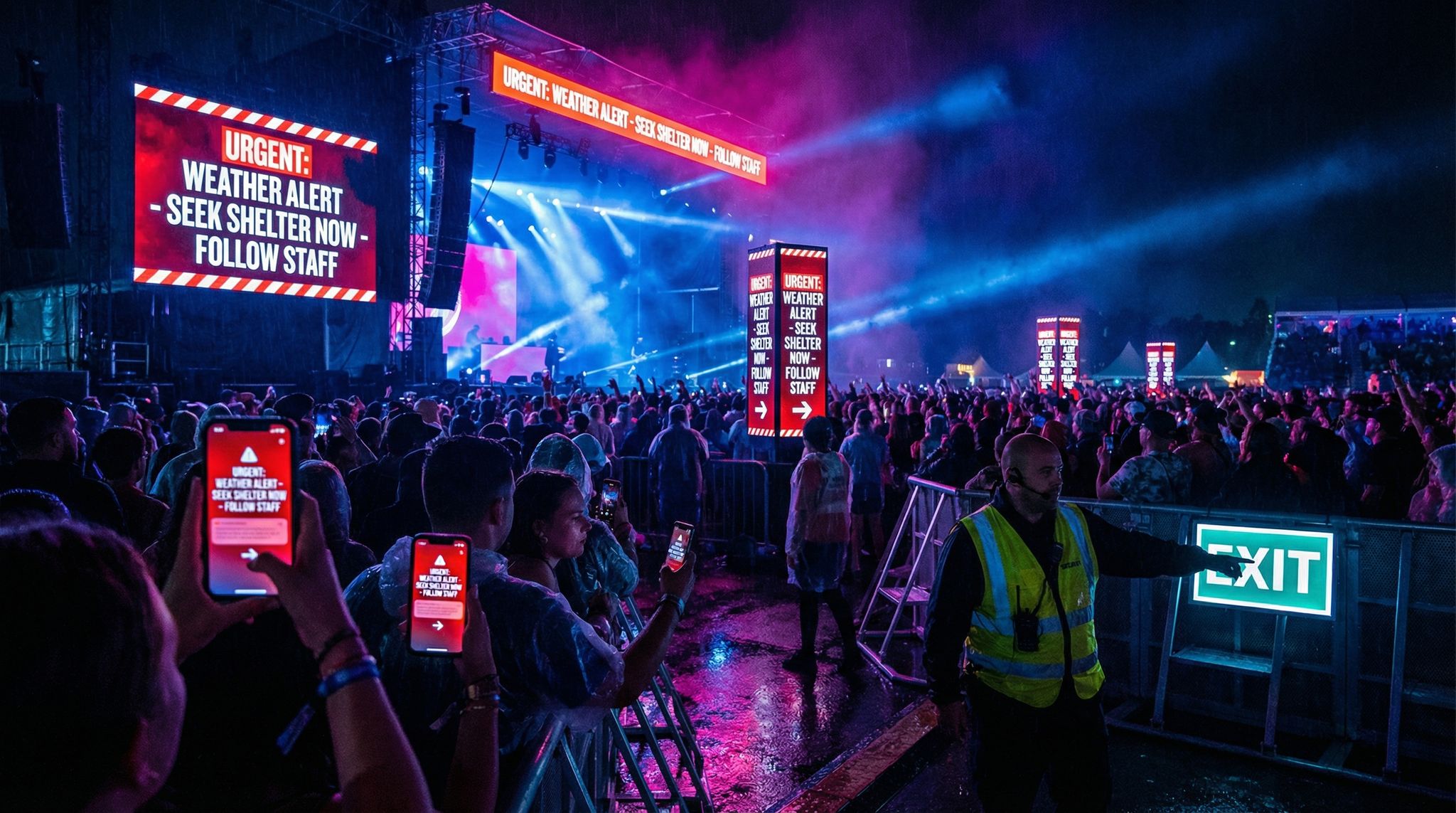
Smart venues also leverage a network of sensors and AI-driven analytics to monitor conditions in real time. Environmental sensors track temperature, air quality, and crowd density, allowing the system to adjust HVAC and avoid stuffy sections of a venue. Smart lighting systems can automatically dim or brighten areas based on occupancy, saving energy when parts of the venue (like concourses or bathrooms) are empty, a trend noted in Zipdo’s concert statistics. These systems can even respond dynamically – for instance, increasing lighting and digital signage directions to guide crowds when an event ends and everyone is exiting at once.
Implementing event venue smart technology isn’t just about flashy features; it’s a core component of holistic smart venue management. By networking these environmental sensors, automated lighting, and access control systems into a single centralized grid, operators gain unprecedented control over their facility’s operational expenditure (OpEx). This interconnected approach means that a smart venue can proactively identify maintenance issues, optimize energy consumption during load-in, and dynamically respond to crowd flow without requiring manual intervention from the control room.
At the core of these automated capabilities is a robust venue management infrastructure. Upgrading this foundational tech stack—which encompasses high-capacity fiber networks, centralized data servers, and unified API gateways—is what allows disparate hardware and software to communicate seamlessly. Without a modernized facility framework, operators often find themselves wrestling with siloed applications that cannot share critical data during high-pressure event changeovers or emergency situations.
Another benefit is enhanced guest services. Many modern venues offer a mobile app for attendees that connects to the venue’s smart systems. Attendees might use the app to find the least busy parking lot (based on sensors), order concessions from their seat, or receive real-time updates if a show is delayed. All of this is enabled by the venue’s digital infrastructure. For example, some stadiums have implemented “smart seating” where each seat has a beacon – if a VIP ticket holder walks in, the venue app might welcome them by name and direct them to their seat with AR overlays.
Grow Your Events
Leverage referral marketing, social sharing incentives, and audience insights to sell more tickets.
Crucially, smart venue technology improves the experience for event organizers as well. Venue managers get a bird’s-eye view of everything happening in their facility. Crowd movement can be tracked via cameras or even heat-map sensors, so they can see if one entrance is getting too congested and redirect fans to other gates in real time, improving the overall guest experience. If a concession stand runs low on inventory, staff are alerted to restock before fans encounter an outage. This level of responsiveness simply wasn’t possible a decade ago.
Event management companies specializing in high-tech productions are increasingly involved to help venues implement these systems. Their expertise spans different event types – concerts, conferences, sports – so they configure the tech to suit each use case. The result is a more seamless experience for organizers and attendees alike. When everything from the stage lights to the bathroom faucets is part of a connected system, the venue can practically “think” for itself, allowing staff to focus on delivering a great show.
When operators ask exactly how do event technology companies handle complex venues, the answer usually involves phased digital mapping and modular API integrations. Rather than ripping out legacy infrastructure all at once, tech partners deploy middleware that bridges older hardware with modern cloud dashboards. This allows a sprawling, multi-stage festival site or a historic theater to adopt smart venue management capabilities incrementally—starting with high-impact areas like access control or Wi-Fi overlays before moving to fully automated HVAC and lighting grids.
It’s worth noting that becoming a smart venue is a journey, not an overnight switch. Many venues start by upgrading one system at a time (for instance, adding smart ticket scanning gates or revamping the Wi-Fi network for better connectivity) and then build on that. But the direction is clear: venues that invest in smart technologies now are positioning themselves to host the next generation of tech-enhanced concerts and live events. Those that don’t risk falling behind on both efficiency and fan satisfaction.
3. AI and Data-Driven Insights for Event Management
Artificial intelligence (AI) and data analytics have emerged as powerful tools in concert venue management and event planning. Gone are the days when decisions were based purely on gut instinct or tradition – now venues have access to a wealth of data to guide their choices. By analyzing information from ticket sales, social media, concession purchases, and past events, AI-driven software can uncover patterns that humans might miss and provide actionable insights.
One of the most impactful uses of AI is in predictive analytics. For example, machine learning algorithms can examine historical ticket sales curves, artist popularity metrics, local weather forecasts, and even social media buzz to predict how many people will attend and when they’ll arrive. This helps in optimizing staffing and resources. Venues are already seeing results: at some large events in 2025, AI models accurately forecasted hourly entry surges with over 90% accuracy, allowing managers to deploy extra gate staff exactly when needed. Instead of overstaffing “just in case” or scrambling when a sudden crowd rushes in, venues used data to get it just right – cutting wait times and labor costs simultaneously.
AI can also assist in booking decisions and programming. By crunching data on streaming trends, local demographics, and past attendance, an AI system might suggest which artists would likely sell out a venue or what type of event fits an open date on the calendar. Some concert promoters are experimenting with AI recommendations to craft festival lineups or tour pairings that maximize audience interest. Similarly, AI can help optimize seating arrangements and pricing. Dynamic pricing algorithms (similar to those used in airlines and hotels) adjust ticket prices in real time based on demand, helping venues maximize revenue while still filling the house. If demand for floor seats is surging, the system might nudge prices up slightly; if a section is selling slowly, a targeted discount can be deployed automatically to boost uptake.
Another area is fraud detection and security. Ticket fraud and scalping are perennial issues in live events. AI is helping here by detecting suspicious purchasing patterns or fake tickets. According to industry data, the use of AI for ticketing fraud detection increased by 35% in 2022, improving security measures for venues. These intelligent systems can flag bots trying to buy up tickets or identify duplicate QR codes at entry, allowing staff to intervene before a problem escalates. This not only protects the venue’s revenue but also builds trust with fans that their tickets are legitimate.
The integration of AI extends to marketing and customer engagement as well. Venues use AI-driven analytics to segment their audience and tailor promotions. For example, data might reveal that a segment of fans tends to attend rock shows and also buys a lot of merchandise. The marketing team can then target that group with a special VIP merch bundle offer for an upcoming rock concert. AI can even inform content strategies – analyzing which social media posts get the most engagement or what time of day emails are most likely to be opened by recipients, and adjusting outreach accordingly.
Importantly, the adoption of AI in the events industry is becoming widespread. Roughly half of event planners globally said they plan to incorporate AI technology into their processes by 2025, and about 45% of event organizers are already using AI tools to enhance operations and personalize attendee experiences. This shows that AI is moving from experimental to essential. However, a balanced approach remains key: human expertise and intuition are still vital, especially in a creative field like live entertainment. The consensus emerging among veteran venue managers is to use AI as an augmenting tool – it provides recommendations and identifies trends, but human decision-makers set the final strategy, blending data with real-world experience.
Pro Tip: Start with small AI projects to build confidence. For instance, use an AI tool to automate survey analysis after an event. This can quickly summarize attendee feedback (what they loved, what could improve) and even gauge sentiment from open-ended responses regarding concession sales to security concerns. These AI-driven summaries can reveal actionable insights in minutes, something that might take staff days to analyze manually. By piloting AI in one area (like post-event feedback or simple attendance forecasting) and measuring the results, you can make a case for broader adoption to stakeholders.
In short, AI and data analytics are empowering venue managers to operate more efficiently and make smarter decisions. In a business where a single oversight can mar the audience experience or dent profits, having that “extra brain” crunching numbers in the background is becoming indispensable.
4. Cashless Payments and Enhanced Customer Experience
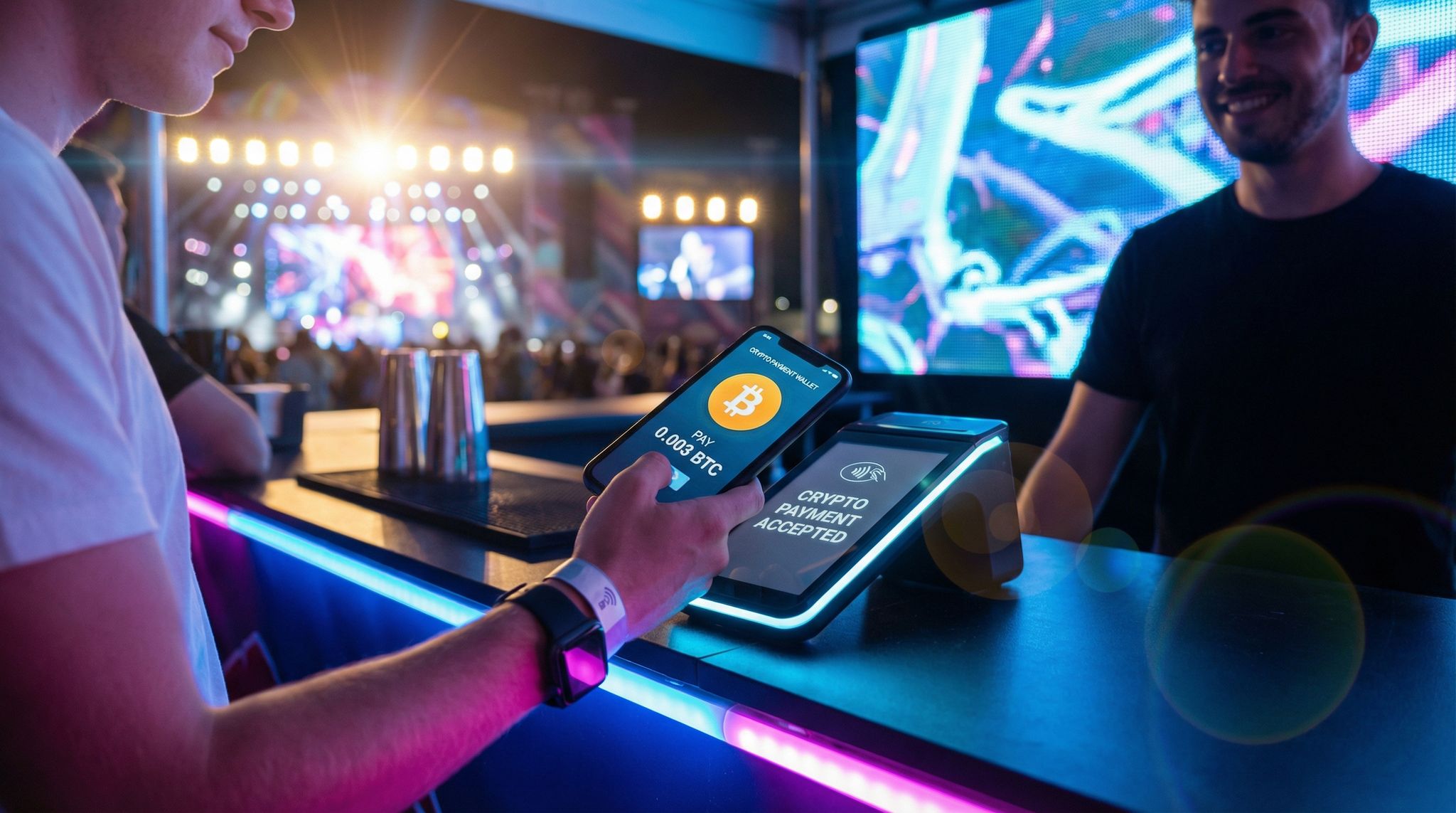
Handling transactions smoothly is a critical part of the concert-goer’s experience – nobody enjoys standing in long lines for drinks or merchandise. That’s why the industry has been rapidly shifting toward cashless payment systems. Mobile wallets, contactless credit cards, and RFID wristbands have largely replaced cash at many concerts and festivals, and the benefits are clear. Transactions are faster, lines move quicker, and fans spend more freely when they can tap or scan instead of fumbling for bills or coins.
In fact, fully cash-free events are becoming the norm. By 2025, roughly half of all concerts in the U.S. were operating cashless, according to Payments Dive’s analysis of event payment trends, and that percentage has only grown since. Many major festivals and venues – from Tomorrowland in Belgium to NFL stadiums in the US – have eliminated cash sales entirely. Attendees use either pre-loaded RFID wristbands or simply tap their phone’s mobile wallet at vendors. According to one survey, 4 in 5 concertgoers now use digital wallets to make purchases at live events, driven by consumer adoption of contactless tech, showing how quickly fans have adapted to and even prefer cashless systems.
The impact on sales and revenue can be significant. Going cashless often results in higher spending per head because of the convenience factor – people are more likely to make that extra impulse purchase when it’s just a tap away. Venues benefit from rich data collection as well. Every transaction can be recorded and analyzed: what products are selling out by 9 PM, which bar locations have the highest volume, how weather might affect beverage sales, etc. With this data, venues can make smarter decisions like repositioning food stands, optimizing inventory (no more beer stand running dry by 8 PM), or dynamically opening additional points of sale when a surge is detected. It’s all about using information to enhance the guest experience and boost efficiency.
Cashless payment technology also enables loyalty and promotional programs. For example, if a venue’s system notices a particular attendee has been to three shows in the past year and consistently buys merchandise, it could automatically offer a discount on their next merch purchase through the event app. Some venues have introduced digital loyalty points or perks that accumulate when fans use the venue’s cashless payment system, redeemable for upgrades like seat upgrades or meet-and-greet passes. This not only incentivizes spending but also encourages fans to opt into using the venue’s official app or payment system (instead of, say, cash or an outside card), which in turn provides more data and opportunities to personalize service.
Implementing cashless systems requires reliable tech infrastructure. Venues need robust Wi-Fi or cellular coverage so that payment terminals can communicate quickly with banks. They often partner with specialized event payment providers to set up an integrated system across all vendors and concessionaires. Training is important too – staff and vendors must be comfortable with the point-of-sale devices and troubleshooting common issues (like a customer’s card not scanning). Fortunately, the technology has matured a lot in recent years, and outages are rare.
That said, it’s not without pitfalls. Reliance on tech means contingency planning is critical. If the network crashes or power goes out, a cashless venue could be unable to process any sales – a nightmare scenario mid-event that could lead to significant lost sales. To mitigate this, venues often have backup generators and offline transaction modes (devices that can store transactions and process them once back online) as safeguards. There’s also the consideration of inclusivity: not everyone in the audience may have a credit card or digital payment method. Some cities and countries have begun requiring venues to accommodate cash customers to avoid excluding those without bank access. The typical solution is a “cash-to-card” kiosk on-site where fans can load cash onto a prepaid card to use at the event.
Warning: Never rely on a single internet connection for your payment systems. Always have a backup network or offline mode. A network outage can grind sales to a halt and frustrate attendees, highlighting the risks of technology reliance. Savvy venues use redundant connections (e.g. a primary broadband plus a secondary 5G hotspot) and keep small amounts of cash on hand at key points just in case. It’s better to be over-prepared than to have thirsty concertgoers who can’t buy a drink because the Wi-Fi went down.
Overall, the move to cashless has been a win-win: fans get faster service and shorter waits, and venues see increased sales and smoother operations. At the legendary Red Rocks Amphitheatre in Colorado, for example, the switch to cashless in 2022 significantly cut down queue times, and vendors reported higher average spend per patron afterwards. It’s easy to see why streamlining attendee management for concert venues in the modern era often starts with streamlining how people pay and move about the venue.
Beyond payments, embracing on-site tech upgrades can further amplify the customer experience. From digital ticket scanning at the gate to in-app concession ordering and pickup, on-ground event technology is making concerts more convenient and engaging, including advanced ticket scanning at large scale venues and crowd control tools that identify potential issues. For instance, some venues let you preorder intermission drinks on the venue app and receive a notification when your order is ready to collect, avoiding the need to miss part of the show standing in line. The bottom line is that technology, particularly cashless payment and integrated apps, has become central to removing friction from the live event experience. In 2026 and beyond, fans will increasingly expect concerts to be as seamless as ordering an Uber – and it’s up to venues to deliver on that expectation.
5. Virtual and Augmented Reality for Immersive Experiences
A few years ago, the idea of using virtual reality (VR) or augmented reality (AR) at concerts might have sounded like science fiction. Today, it’s an exciting (and rapidly evolving) reality. Venues and artists are experimenting with these technologies to create immersive experiences that go beyond the physical stage. The goal is to engage audiences in new dimensions – literally.
Augmented reality refers to overlaying digital content onto the real world (typically through a smartphone camera or AR glasses). At concerts, AR can be used to deliver special effects or information when fans point their phone at the stage or around the venue. For example, an AR app could make a band’s logo or mascot appear as a 3D animation floating above the crowd, or reveal set times and song lyrics in real time when viewing through the camera. There have been trials where a festival encouraged attendees to use an AR filter in a certain stage tent – though interestingly, uptake can be modest if the tech isn’t intuitive, as seen when fans are dancing in a field. The key is to ensure AR features truly add to the experience rather than distract. When done right, AR can make attendees feel like they have a personalized backstage pass or a gaming-like interactive layer to the show.
Virtual reality, on the other hand, typically involves wearing VR headsets to enter a fully virtual concert environment. VR gained major momentum during the pandemic when physical shows were shut down – artists like Travis Scott and Marshmello held massive virtual concerts inside video games, attracting millions of viewers. Even as live shows returned, VR has found a niche as a way to reach global audiences. A fan in a country where an artist isn’t touring can don a VR headset and “attend” a concert happening thousands of miles away, with a front-row view. Some platforms are now offering pay-per-view VR concert experiences that promise the next best thing to being there in person.
One groundbreaking example blending virtual and real is ABBA Voyage in London. This concert residency features the legendary pop group ABBA as digital avatars “performing” on stage with a live band. Fans in the arena witness a stunning holographic-style show where it feels like the real ABBA of the 1970s are right there, thanks to motion-capture technology and giant LED screens. The response has been incredible – ABBA Voyage has drawn over 1 million attendees per year, generating more than $100 million in annual revenue, according to Digital Music News reports on ABBA Voyage. It proves that audiences will embrace virtual performers if the quality is high and the nostalgia or novelty factor is strong. The success of ABBA’s virtual concert (extended due to popular demand) suggests we may see more legacy artists “tour” via digital avatars, and venues equipped to host such high-tech shows could tap into entirely new content streams.
Holographic and mixed reality elements are also popping up in tours by current artists. In 2023, superstar DJ Eric Prydz wowed festival crowds with a Holosphere – a gigantic transparent LED orb that encased him and displayed 3D visuals visible to thousands without any headsets. Meanwhile, pop artists have used AR effects in televised performances (e.g., overlaying wildlife animations on stage). As AR glasses become more mainstream in the next few years, we might see concert venues offering AR viewing modes where fans wearing glasses get captions, translations, or special effects in their field of vision live at the show.
For promoters seeking innovative live band concert experience ideas, immersive technology offers a wealth of opportunities for interactive audience engagement. Beyond simple visual overlays, modern productions are integrating real-time crowd participation into the show’s digital architecture. For instance, wearable LED wristbands can now sync with a venue’s spatial audio system, allowing the audience’s movement to trigger specific lighting cues or localized sound effects. This transforms passive spectators into active participants, creating a deeply memorable, multi-sensory environment that elevates a standard gig into a truly interactive spectacle.
For fans who can’t attend in person, hybrid concerts are emerging. These are live events that also cater to a virtual audience simultaneously. A concert might sell 20,000 tickets for the arena and also sell virtual tickets for an online live stream or VR experience. This was rare pre-2020, but by 2025 it’s far more common. K-pop group BTS famously hosted online concerts during the pandemic that drew nearly 1 million paid viewers from around the world in a single event, breaking virtual show records and showcasing the enormous demand for remote access to live shows. Now, even with in-person concerts back in full swing, many artists continue to offer live-stream tickets or VR encores as an additional revenue stream and fan service. It’s not unreasonable to imagine future tours where every tour stop has a virtual component – for instance, a Metaverse meetup before the show where the artist’s avatar greets fans, or a 360° VR camera rig set up by the soundboard so virtual ticket holders can “look around” during the performance.
The evolution of these digital extensions is paving the way for fully immersive 3D concerts. By utilizing volumetric video capture and spatial audio, promoters can broadcast a live performance into virtual environments where remote attendees experience the show with six degrees of freedom. For venue operators, equipping a facility to host and stream these three-dimensional performances opens up lucrative licensing opportunities and allows a single physical event to generate limitless digital ticket sales.
From the venue’s perspective, implementing VR/AR requires investment and creativity. Not every concert will warrant these high-tech features, and there is a risk of gimmickry if done without thinking of the fan’s enjoyment. The best applications of VR/AR so far have been those that enhance the storytelling or the music. For example, an AR experience that lets fans see a dragon flying over the stage during a fantasy-themed rock opera can amplify the theatricality of the show. A VR concert film that lets super-fans experience their favorite band in an intimate virtual club can create a deeper connection than just watching a 2D video replay.
Pro Tip: If you’re adding AR or VR elements to a concert, test them extensively in a real show environment first. A tech demo in a lab is very different from a live concert where connectivity, lighting, and user behavior can vary. Perhaps roll out a small AR feature (like an AR photo booth or scavenger hunt in the venue) at a minor show, gather feedback, and refine it before deploying something at scale. Fans appreciate when these features work seamlessly, but if they’re glitchy or hard to use, they’ll be quickly ignored. Pilot programs help ensure that by the time you promote a “mixed reality concert experience,” it actually delivers value to the audience.
The future possibilities are thrilling: imagine attending a concert where through AR glasses you see visual narratives unfolding around the performers, or where staying home and wearing a haptic suit lets you feel the bass as if you were in the front row. We’re not quite there for mass adoption, but we’re seeing the first steps. For now, VR and AR in concert settings are all about providing extra layers of engagement. When used thoughtfully, they can turn a standard show into something truly unforgettable, giving audiences stories to tell and share on social media long after the encore.
6. Crowd Management and Safety Through Technology
Large concerts are exhilarating but they also present significant safety challenges – managing tens of thousands of excited fans in a confined space requires meticulous planning and real-time control. In the wake of high-profile crowd accidents in recent years, venue managers are doubling down on technology to monitor and manage crowds more effectively than ever before.
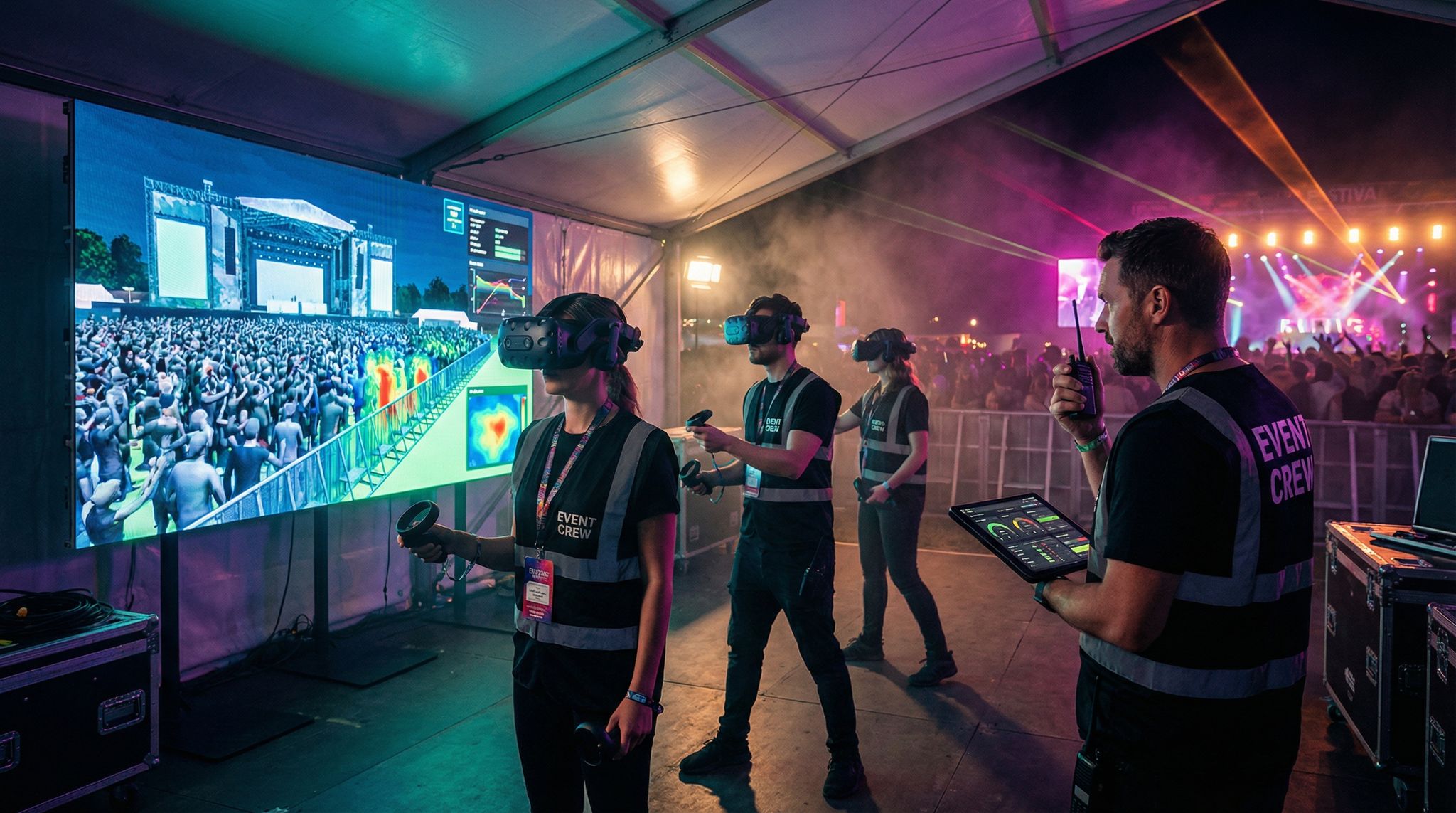
A primary focus is on crowd density monitoring. Traditional methods like staff visually scanning from perches or using clickers at entrances are limited and prone to human error. Now, AI-powered video analytics and sensors are taking over. These systems can automatically detect crowding and movement patterns from surveillance cameras, giving security teams live heat maps of where people are packed too tightly. If one section of the floor is reaching an unsafe density, the system sends an alert so staff can temporarily redirect newcomers elsewhere or adjust the music and lighting to calm the crowd if needed. One analysis found that over 78% of venue operators lacked real-time visibility into crowd density as of a couple years ago, according to Miloriano’s analysis of venue analytics – a gap that new tech is rapidly trying to fill. Modern crowd analytics platforms can identify developing bottlenecks within seconds, far faster than a human observer monitoring traffic that impacts operational efficiency. This shift from reactive to proactive crowd management is a potential life-saver.
Venues are also implementing smarter access control to keep entry smooth and secure. Automated turnstiles with QR code scanners or RFID readers have sped up the process of getting people inside while maintaining security. Some venues have experimented with facial recognition technology in place of tickets – scanning attendees’ faces to verify entry. This can theoretically eliminate ticket fraud and further quicken the pace, as people don’t even need to pull out their phones, reducing the risk of fraud. However, it’s a controversial topic. While facial recognition offers convenience, it raises privacy concerns. A prominent case occurred at New York’s Madison Square Garden, which admitted to using facial recognition to identify and ban certain individuals (specifically, lawyers from firms in litigation against the venue) – a move that sparked public outcry and even legal scrutiny, as reported by CBS News on facial recognition and the investigation by the Department of Consumer and Worker Protection. This example shows the double-edged sword of such technology: it can enhance security, but if misused, it can violate trust and rights. As a result, some jurisdictions are considering regulations on facial recognition at events. For now, many concert venues are treading carefully – using biometrics for security back-of-house (like staff access areas) rather than for general fan entry, or opting for “anonymous” analytics that track crowd numbers and motion without identifying individuals.
Another area of innovation is electronic surveillance and communication. Security teams now have tools like AI-assisted CCTV which can automatically flag unusual behavior – for example, if a fight breaks out or if someone enters a restricted area, the system spots it and alerts operators to the exact camera feed. Drones have also been tested to patrol large festival grounds from the air, though they come with their own concerns (privacy and the risk of drones falling into crowds). In fact, unauthorized hobbyist drones have become such a nuisance that festivals and stadiums are deploying anti-drone technology – radar and RF jammers to detect and counter rogue drones before they can hover over a crowd, using innovation to protect the event soul. (Nobody wants a drone crashing into the stage or dropping contraband into the crowd.) Countering unauthorized drones at festivals has become part of the modern venue safety playbook, especially for outdoor events.
Beyond surveillance, modern security operations rely heavily on dedicated incident tracking tools for concerts and sports arenas. These specialized software platforms allow venue staff, medical teams, and security personnel to log and monitor issues in real time—from a minor slip-and-fall in the concourse to a major medical emergency on the floor. By digitizing incident reports, operators can dispatch the closest available response team instantly, track resolution times, and maintain a secure, time-stamped audit trail for liability purposes. This centralized approach to incident management ensures that multi-purpose facilities can maintain rigorous safety standards across diverse event types.
Ensuring safe crowd flow isn’t just about tech, either – it’s also about design and psychology. On the design front, venues are using simulation software to test their layouts. By simulating thousands of virtual “people” entering, moving through merch tables, going to restrooms, and exiting during an evacuation, planners can spot choke points in a computer model and redesign queue areas or add more exits before the venue ever opens. On the psychology side, training staff in basic crowd psychology principles (like not triggering panic with wrong wording, or using music and announcements strategically to guide crowd behavior) is crucial. (For deeper insights on designing safer events through understanding crowd psychology, check out our article on crowd psychology 101 for designing safer events.) The human element – empathetic, observant staff – combined with high-tech sensors and analytics makes for the most robust safety net.
Communication tech also plays a role. Many venues issue staff handheld devices or earpieces connected to a central system, so a security guard in one section can instantly report an issue and summon help. Attendees are sometimes brought into the communication loop as well: venues have text alert systems where attendees can report hazards or suspicious behavior by sending a quick text to a short code. Meanwhile, public safety agencies are integrating with venue systems more than before – local police might have a direct feed of the venue’s crowd analytics dashboard during a major concert, for instance, to coordinate emergency responses.
Thanks to these advancements, we’re seeing improvements. Lines are moving faster at entry, despite airport-style screening in many cases. Crowds inside venues are managed with more finesse – security might temporarily pause admission to the floor when AI indicates it’s near capacity, or open extra gates at the end of the show to prevent congestion. Importantly, fans are being kept safer. Knowing that there are systems actively watching out for crush risk or for anyone in distress (some venues deploy thermal imaging to spot if someone has collapsed in a dense crowd, for instance) provides peace of mind.
Of course, technology is not a panacea. It must be paired with solid emergency protocols and trained personnel who know how to act on the data. But as concerts in 2026 draw some of the largest crowds ever, these tech tools have become indispensable allies in the mission to protect fans. The best venues maintain a balance – high-tech monitoring operating in the background, and a friendly, human security presence in the foreground engaging with the crowd. This balance helps ensure that safety measures enhance the show without dampening the fun, keeping the vibe secure but celebratory.
7. Sustainability and Eco-Friendly Solutions in Concert Venues
As live events become ever more spectacular, there’s a growing realization: the environmental footprint of concerts and tours needs to shrink. Fans, artists, and promoters alike are calling for more sustainable practices, and concert venues are central to this effort. Technology and innovation are providing new ways for venues to go green without sacrificing the quality of the experience.
One major shift has been towards energy-efficient infrastructure. Many venues have started upgrading to LED lighting rigs, smart climate control systems, and even renewable energy sources. For instance, climate control in a modern arena can be tied to smart systems that only cool or heat sections that are occupied, and adjust ventilation based on air quality sensors and crowd density. Smart lighting not only creates dazzling visuals during shows but can significantly cut power usage by adapting to real-time needs and using low-energy fixtures, promoting health safety and convenience while catering to diverse audience preferences. Some venues have invested in on-site solar panels or wind turbines that provide a portion of their electricity. A shining example is Seattle’s Climate Pledge Arena, which in 2023 became the first arena in the world to earn a net zero carbon certification – it’s powered by 100% renewable energy and uses no fossil fuels on site, as detailed in Forbes’ coverage of Climate Pledge Arena. It even has all-electric Zambonis for hockey games and evens out energy demand with a large battery system. This demonstrates that even large venues can significantly reduce carbon emissions with the right design and tech.
Digital technology is also slashing paper and plastic waste. The move to digital ticketing has all but eliminated the millions of printed paper tickets that used to be the norm. Now, fans enter with a QR code on their phone – a convenience and a waste reducer. Mobile tickets, aside from being convenient and secure, prevented untold amounts of paper from ending up in the trash. Many venues have expanded this to other areas: digital signage replaces paper posters, and e-receipts replace printed receipts at concessions. Some festivals have even created full-featured mobile apps that include maps and schedules, avoiding the need to print thousands of paper programs.
Waste management is another target. Venues are using tech to optimize recycling and composting. “Smart” trash bins can alert staff when they’re full, so bins get emptied on time and overflows (which lead to litter) are prevented. Attendees are encouraged to refill water bottles at free hydration stations, often tracked by sensors that report usage levels – reducing single-use plastic bottle sales. In fact, some arenas have outright banned single-use plastics, switching to compostable or reusable cups. The logistics of such programs are aided by inventory tech: vendors track cup and keg usage in real time to manage stock and ensure sustainable alternatives don’t run out mid-event.
One particularly innovative approach has been seen on some recent tours: making the audience a part of the energy solution. Coldplay’s 2022–2023 world tour is a prime example. They partnered with a tech company to install kinetic dance floors and power-generating bicycles at their stadium shows. Fans literally helped power the concert by dancing on special floor tiles and pedaling bikes that charged batteries for the stage lighting. Over the tour, Coldplay reported these and other measures (like traveling by sustainable aviation fuel and using electric transport for gear when possible) cut their direct emissions by 59% compared to their previous tour, according to The Guardian’s report on Coldplay’s eco-friendly tour which noted the band travelling by train. They also gave incentives – for example, fans who took public transit to the show or participated in sustainability activities could get a discount on merch. The success was notable: millions of fans enthusiastically embraced the eco-initiatives, and it didn’t hurt enjoyment at all. In fact, it became a talking point that likely strengthened fan loyalty – they felt they were contributing to something positive while having fun.
Venues are increasingly measuring and reporting their sustainability metrics. Using IoT devices and software, a venue can calculate exactly how much water was used, how much waste was recycled vs. landfilled, and how much energy was consumed for a given event. These stats are crucial for identifying improvement areas and also for transparency. Promoters and artists might choose a venue because it aligns with their sustainability values – some bands now ask venues about their green practices in contract riders. A venue that can say, “We achieved a 75% waste diversion rate and 100% renewable energy for last year’s events” has a competitive marketing edge and contributes to industry-wide benchmarks (as outlined in initiatives like the Live Nation Green Nation or IFMA’s sustainability guidelines).
It’s also worth noting the concept of “circular” event design. This means planning events so that resources circulate rather than go to waste. For example, staging and set materials are reused or rented locally instead of built new for each tour. Venues might have modular staging systems that touring acts can plug into, reducing the need to ship massive sets around the world. Some venues donate leftover concession food to local shelters nightly, facilitated by apps that coordinate pickups quickly. Even merchandise has a sustainability angle: venues can provide on-demand t-shirt printing to eliminate overstock and drive home the message of mindful consumption.
Fan expectations are driving much of this. Studies have shown that over 50% of concert promoters prioritized sustainability by 2023, aiming to reduce waste and carbon footprints, suggesting environmental concerns are mainstream – a sign that the industry knows audiences care. Seeing recycling bins at every corner, getting a reusable cup for your beer with a small deposit, or reading that the venue is planting a tree for every ticket sold (another tactic some promoters use) can enhance the concert experience for eco-conscious fans. It makes them feel part of a community that cares about more than just music – it cares about the planet.
In summary, technology is empowering venues to be greener through better energy management, reduction of single-use materials, and innovative engagement with fans on sustainability. There is still a long way to go industry-wide to reach truly low-impact or carbon-neutral concerts, but the progress between 2019 and 2026 has been significant. As one sustainability report phrased it, the live events sector in 2026 is moving “beyond greenwashing” towards concrete green benchmarks and accountability. Venues that lead on this front aren’t just helping the planet – they’re often cutting costs (energy efficiency saves money) and earning goodwill from artists and fans. In a way, sustainability has become another aspect of the venue’s brand and appeal.
8. Staff Training and Development
Even with all the cutting-edge technology we’ve discussed, a concert venue is only as effective as the people running it. Staff training and development remains a cornerstone of successful events. In fact, the introduction of new technologies makes ongoing training even more critical – your team needs to know how to use that new event management software, operate the upgraded soundboard, or respond to data from a crowd analytics dashboard. Venues that invest in their people ensure that those people can get the most out of the venue’s technology and also handle the human side of live events with finesse.
Modern event staff training has itself gotten a tech boost. Many venues now use e-learning platforms for employee training modules on topics like safety protocols, customer service, and technical skills. Rather than a one-time orientation, training becomes an ongoing, trackable process. Staff might watch interactive videos on how to handle an unruly guest, take quizzes about emergency evacuation routes, or use a virtual simulator to practice point-of-sale transactions. A good event management system can integrate training records, so managers can see who has completed what courses and identify if, say, all security personnel are up-to-date on the latest bag-check procedures.
One of the most exciting developments is the use of virtual reality for staff safety drills. As mentioned earlier, VR can immerse users in realistic scenarios. Forward-thinking festival and venue organizers have begun using VR simulations to train their security and operations teams for worst-case scenarios – from crowd rushes to severe weather evacuations. Instead of a standard PowerPoint or walk-through, staff put on VR headsets and enter a lifelike concert environment where things unfold dynamically. They might experience a virtual crowd surge and have to make quick decisions on whom to call and where to open escape routes, all in simulation. Studies have shown this kind of training can dramatically improve confidence and retention of knowledge. One trial outside the concert world found learners were up to 275% more confident in applying skills after VR training compared to traditional training, creating more confident crews for festivals. In a stadium pilot program, initially only 56% of staffers believed VR training could beat traditional drills, but after trying it, 83% agreed VR was more effective after completing the training. Those are compelling numbers that suggest VR isn’t just a gimmick for training – it can genuinely better prepare crews for real emergencies.
Continuous professional development is also key for more specialized roles. Audio engineers, lighting technicians, and IT managers at venues have to keep up with fast-evolving gear and software. Savvy venues set aside budget and time for these team members to attend workshops, certification courses (like getting certified in the latest digital mixing console or rigging safety standard), and industry conferences. It pays off when your technical crew knows the newest features of the equipment – they can troubleshoot faster and even impress artists with what the venue is capable of. Some venues form partnerships with equipment manufacturers or local colleges to create a pipeline of trained personnel, given the labor shortages the industry has faced.
Speaking of labor shortages: the pandemic saw many experienced event workers leave the industry, and 2022–2023 were marked by staffing challenges as concerts roared back. This made training new hires quickly a high priority. Technology helped here too. For instance, mobile training apps allowed new staff to learn on the go, and mentorship programs (pairing a newcomer with a veteran via chat and scheduled check-ins) were facilitated by communication platforms. But equally important was creating a positive environment to retain personnel. A well-trained staff member is more likely to feel confident and stay on the team. Training isn’t just about imparting knowledge – it’s a form of engagement and investment in employees’ careers.
Event staff training also extends to less glamorous but critical areas like compliance and risk management. Venue operators must ensure everyone is aware of laws and policies – from alcohol service regulations to anti-harassment policies. Digital systems can track these compliances. For example, every bar staff might be required to complete a digital module on responsible alcohol service and get certified, with the system logging their certification. In 2026, many venues require staff to undergo crowd safety and first-aid training given the increased awareness of these issues. It’s common to have annual refreshers, and technology makes scheduling and delivering these refreshers easier (no more figuring out one date everyone can attend – people can complete on their own time within a window).
The benefits of all this are evident during events. Well-trained staff react faster and more appropriately to both routine tasks and surprises. If an entrance scanner malfunctions, a trained crew member knows how to swap it out or switch to manual mode without causing a huge delay. If a pyrotechnics effect starts a small fire, trained fire marshals on the crew can put it out in seconds. If an upset VIP is demanding special treatment, staff who’ve undergone customer service scenarios will handle it with calm professionalism.
Additionally, investing in staff development boosts morale and loyalty. People are more motivated when they feel competent and supported. A backstage coordinator who has been given the chance to learn conflict resolution skills or a parking attendant who trained in guest hospitality will feel more ownership of their role. This translates to concert-goers having a better experience – the staff’s positive attitude and know-how directly affect the fan experience in countless small ways.
It’s often said that technology is only as good as the people behind it. In concert venue management, this is absolutely true. You can have the fanciest crowd analytics or the most advanced sound equipment, but if your team isn’t trained to interpret the data or use the mixer, the advantage is lost. The best venues in 2026 are those that blend high-tech systems with high-skill staff.
9. Enhanced Marketing and Social Media Integration
In the digital age, a concert experience isn’t confined to the venue walls – it often begins online and echoes on social media long after the final encore. For venue managers and event promoters, mastering marketing and social media integration is essential to fill seats and build a loyal audience. Technology has made it easier to promote shows, engage with fans, and even extend the live experience to those who aren’t physically present.
First, consider how fans discover concerts in 2026. The majority are finding out about upcoming events through social media and online channels rather than traditional print ads or even dedicated ticket sites. Approximately 90% of concert fans use social media to discover new artists and events, according to Zipdo’s concert discovery statistics, which means venues and promoters must have a strong presence on platforms like Instagram, TikTok, Facebook, and Twitter (X). Advanced analytics tools let you target ads to exactly the right demographics – for instance, showing a promo video of an upcoming EDM show to 18–30 year-olds in your city who follow electronic music pages. The data available (age, location, music preferences inferred from follows and likes) makes marketing more efficient and measurable than the old days of plastering posters around town and hoping for the best.
Engagement is key. Successful venues don’t just broadcast messages; they interact with fans. This might mean creating event pages where attendees can discuss the show beforehand, running contests for ticket upgrades by encouraging user-generated content (e.g., “share your favorite album by the headliner with our hashtag for a chance to win a meet-and-greet”), or using polls to gauge what songs fans most want to hear. Such interactive campaigns not only generate buzz, but also provide user data and content that can be reused in promotion. Fans essentially become mini-ambassadors, spreading excitement to their networks – a potent form of word-of-mouth marketing supercharged by social networks.
During the event, social media integration can amplify the live experience. Many venues set up Instagrammable spots or backdrops in the concourse, knowing that attendees will take photos and tag the venue and event. Those tags are free advertising to all their friends (“look, I’m at this awesome venue!”). Some concerts encourage live-tweeting or have a branded hashtag displayed on screens, pulling in live posts from the crowd. We’ve seen events where a curated social media feed is shown on the main screen between acts, featuring fans’ posts – which just encourages more people to post in hopes of seeing themselves up there. It’s engagement feeding engagement.
Live-streaming and hybrid experiences also play a huge role in marketing now. When a show is live-streamed (whether on a platform like YouTube, a dedicated streaming ticket platform, or even a social media live), it vastly extends the audience. Take Coachella for example – their free YouTube live stream of performances has attracted tens of millions of viewers worldwide, rivaling YouTube’s broadcast of the Saturday show, turning the festival into a global online event in addition to the 100,000 on-site attendees. Those online viewers often contribute to the social media conversation, generating trending topics and essentially marketing the event in real time. Even though not every concert is Coachella, the principle scales down: a local venue might stream a song or two on Facebook Live, enticing online fans to attend in person next time. Or a touring artist might do a TikTok live from backstage that reaches fans who couldn’t attend. These digital touchpoints can translate into physical ticket sales down the line by broadening the fanbase and keeping remote audiences engaged.
Social media is also a rich source of feedback and insight for venues. By monitoring mentions and comments, promoters can quickly gauge audience sentiment. Did people complain about long lines or sound quality? Did they rave about the new cocktail bar in the lobby? Mining these conversations (with the help of analytics tools or even AI sentiment analysis) gives venues pointers on what to improve or highlight. If you notice a trend of comments like “Band was great but the venue parking was a nightmare,” that’s a signal to address that operationally and possibly respond online (“We hear you – we’re working with the city to improve traffic flow for next time!”). Engaging directly with constructive criticism shows fans that the venue is listening and trustworthy.
Furthermore, ticketing and marketing systems have become intertwined. Many ticketing platforms allow integration with Facebook events, tracking conversions from social ads straight to ticket purchases. Pixel tracking and conversion APIs mean you can attribute sales to specific campaigns and continually optimize your ad spend for maximum ROI. For instance, you might find Instagram Story ads yield cheaper ticket sale conversions than Twitter ads for a certain genre, and allocate budget accordingly. This kind of data-driven marketing ensures promotional dollars aren’t wasted – which is ever-important given rising costs to produce shows.
Another aspect is building community. Successful venues often use content marketing like blogs (hello!) or behind-the-scenes videos to keep fans engaged between shows. Highlighting your venue’s story, staff, or past legendary concerts can create a narrative fans want to follow. Venues have started their own podcasts or video series interviewing artists who will be performing, further blending promotion with genuinely interesting content. When you consistently put out valuable or entertaining content, fans follow your channels not just for announcements but because they see you as a cultural hub. Then, when a new show is announced, you have a ready-made captive audience.
Pro Tip: Encourage your attendees to become your marketers. One effective strategy is setting up a referral or ambassador program – for example, give fans a unique code to share with friends for a small ticket discount, and reward them with perks (like free upgrades or merch) if X number of their friends buy tickets using their code. Turning attendees into ambassadors can dramatically increase word-of-mouth sales and social buzz. (Check out our guide on building a festival referral program that boosts ticket sales for ideas that also apply to concert venues.) People are more likely to attend a show if they hear about it from a friend, and referral tech makes tracking and incentivizing this easy.
In summary, marketing a concert in 2026 is a high-tech, multidimensional effort that blends advertising savvy with community engagement. The venues and events that thrive are usually the ones that can create FOMO (fear of missing out) on social media, leveraging fans’ own excitement as a marketing tool. By integrating social media strategy with event operations – even designing events with “shareability” in mind – concert organizers amplify their reach tremendously. And when technology helps deliver a great experience (short lines, amazing visuals, high-quality live stream, etc.), it essentially markets itself: happy fans will do a lot of the promotion for you by sharing their joy online. In the digital era, every attendee is a potential broadcaster – so the smarter your social integration, the louder and farther the echo of your concert will go.
10. The Future: Automation and Virtual Events
Looking ahead, the next few years of concert venue management promise to be as dynamic as the last. Automation and the blending of physical and virtual experiences are set to play even bigger roles. Venue professionals are imagining a future where many logistical aspects of events run themselves thanks to smart machines and software – all under human supervision – and where the “venue” isn’t just a physical space but also a virtual one that can be accessed from anywhere.
On the automation front, we’ve already touched on some developments: automated ticket scanning gates, AI scheduling, and cashless systems. But this is likely just the beginning. Concert venues may soon employ more robots and autonomous systems to handle labor-intensive tasks. Picture robot custodians that clean the venue floors overnight, or drones zipping over outdoor crowds delivering merchandise orders (drone delivery was tested at some festivals for fun; it could become functional for getting that t-shirt to the back of a crowd). We’re also seeing self-service kiosks not just at entry but for things like merch and food. In 2026, a few pioneering venues have rolled out automated beer taps and cocktail-mixing machines where fans verify their age with an ID scan, then pour their own drink. These systems, supervised by one staff member for every few machines, can serve far more people in less time. Early trials at festivals showed entry could be processed with roughly one-third of the staff by using self-scan turnstiles and kiosks, and similar gains were observed with automated bartending setups – significantly increasing throughput per staff member and showing how automation can fill labor gaps without compromising speed, where self-service kiosks are stepping up to fill roles and handling transactions in automated bars.
However, automation isn’t about eliminating humans – it’s about reallocating them to where they add the most value. If mundane tasks like scanning tickets or counting inventory are automated, staff can focus more on safety, customer service, and creating a welcoming atmosphere. One could envision a near-future venue where an AI platform monitors all systems (ticketing, crowd flow, weather, social media chatter for threats, etc.) and suggests actions to the control room team: “Gate 4 is becoming congested, redirect arrivals to Gate 5” or “Storm approaching – delay show start by 15 minutes and send push notification to attendees.” The humans in the loop make the final call, but their situational awareness is vastly expanded by the AI copilots.
The virtual event component is another exciting frontier. The pandemic forced the industry to experiment with virtual concerts, and while live, in-person shows have proven irreplaceable (2022 and 2023 shattered attendance records, confirming people’s desire to gather, as noted in Pollstar’s top tours revenue analysis), virtual events have not disappeared. Instead, they’re evolving into complementary experiences. We foresee more hybrid concerts – where a show has a live audience but also various virtual layers. Some possibilities:
- Live multi-cam streams for a paid remote audience, potentially with interactive features (choose your camera angle, join a virtual meet-and-greet, etc.).
- Virtual reality concerts in the metaverse that accompany a tour. For example, an artist might do an extra VR-only show for a global audience at the end of their physical tour, or during the tour, virtual attendance tickets are sold for each city’s show.
- Holographic tours where part of a band is live on stage and another member is a hologram “beaming in” from elsewhere (this could reduce travel emissions or allow deceased/retired members to appear virtually).
- Augmented reality at home: Perhaps fans at home can hold up their phone and see AR effects or holograms of the band in their living room synced with the live broadcast.
Furthermore, the high-end broadcasting and streaming infrastructure installed for these hybrid concerts opens up lucrative alternative revenue streams. Venues can easily pivot their spaces to host global virtual meetings and events during off-peak days. A stadium club room equipped with broadcast-quality cameras and high-bandwidth internet can serve as a premium hub for corporate conferences, allowing venue operators to maximize their real estate utilization far beyond traditional weekend concert dates.
By marketing these capabilities to corporate clients, operators transform their facilities into versatile broadcast studios. Hosting virtual meetings and events requires robust, redundant internet connections and professional-grade audio-visual routing—infrastructure that modern concert venues already possess. This cross-pollination of live music tech with corporate event needs creates a highly profitable, year-round business model that insulates venues from the seasonal fluctuations of the touring industry.
Technology companies are actively working on platforms to support these kinds of experiences. It’s plausible that venues will start having a “virtual operations” manager role – someone who coordinates the streaming production and online fan engagement parallel to the physical show. The lines between concert promoter and content producer are blurring; some concerts are essentially big budget live broadcasts as much as they are in-person events.
One interesting trend is artists monetizing content from live shows in new ways. Taylor Swift’s 2023 Eras Tour, for instance, not only sold out stadiums worldwide but also resulted in a concert film that fans flocked to theaters to see – extending the life and revenue of the tour. Venues might partner in such ventures. Imagine a future where a venue offers a package to artists: perform here and we’ll handle live filming in cinematic quality, offering you an additional virtual ticket revenue stream or documentary footage. The famed Hollywood Bowl has already dabbled in this, working with artists to stream select shows globally with a premium virtual ticket.
Another area approaching quickly is biometric and seamless transactions. Earlier we mentioned the prospect of biometric payments – using your fingerprint or face to buy that beer or t-shirt. It’s already being tested in theme parks and some events for age verification and payments, where consumers expect seamless transactions. By 2030, it may be commonplace to walk into a venue through an AI-based security scanner (no pat-downs, just a millimeter wave scan and facial recognition verifying you have a ticket and aren’t on a banned list), then buy a drink with a smile to a camera that’s tied to your ticket account. The technology is mostly here; its adoption will depend on public acceptance and regulatory frameworks.
With all these changes, a guiding principle remains: technology should serve to enhance the fan experience and operational efficiency, not become a gimmick or an obstacle. Yes, automation and virtualization are exciting, but they must be implemented thoughtfully. A fully automated venue with no human touch would likely feel cold and alienating – few people want a completely robotic concert experience. Conversely, ignoring these trends could leave a venue lagging in convenience and reach.
The likely scenario is a balanced integration: highly automated back-of-house processes (think inventory management where sensors track stock levels of drinks and automatically reorder when low, or maintenance where IoT devices flag a fault in a speaker before it fails) and rich virtual add-ons to physical shows, all while humans remain front-and-center in hospitality roles and creative decision-making.
Venues will also need to remain adaptable. The next big thing might be something we can barely conceive now – much like how few predicted TikTok’s influence on music promotion. Authoritativeness in this field will come from staying informed and agile. The venues known for innovation often pilot new tech on a smaller scale, measure impact, and iterate. They might partner with tech startups to test something like AR glasses for VIP guests or an AI noise-cancellation system to reduce sound bleed in neighborhoods.
To maintain this competitive edge, operators must actively follow the latest venue technology news. Subscribing to industry publications, attending B2B trade shows, and monitoring daily updates on event tech innovations ensures that your team is never caught off guard by a sudden shift in consumer expectations. Whether it is a breakthrough in biometric ticketing or a new standard for sustainable energy grids, staying plugged into venue tech developments in 2026 is a non-negotiable part of strategic facility management.
Beyond facility management, keeping a pulse on event production technology news is equally critical for promoters and technical directors. Innovations in spatial audio, automated rigging systems, and modular LED staging move at a breakneck pace. By regularly reviewing production-focused trade journals and attending specialized expos, technical teams can discover new ways to reduce load-in times and elevate the audiovisual experience. Staying informed on these production-side advancements ensures that when a touring act requests the latest mixed-reality broadcast integration, your venue is already prepared to support it.
In conclusion of this forward-looking section, the message to concert venue professionals is clear: keep an eye on technological developments and be ready to adopt the ones that genuinely solve problems or open up opportunities. The concert experience in 2030 might look different in certain ways – more personalized, more interactive, more global – but the core magic of live music will remain. The roar of the crowd when the lights go down and the first note plays? No automation or virtual simulation can truly replace that feeling. Technology’s role is to support and amplify those moments, not to overshadow them. Those who understand this balance will navigate the future of concert venue management with both innovation and integrity.
Conclusion
The world of concert venue management is undergoing a profound evolution, with technology at the heart of nearly every improvement. From advanced planning software ensuring no detail is overlooked, to smart venue systems that make operations more efficient, to AI and data insights that drive smarter decisions – venue managers today have an unprecedented toolbox at their disposal. These innovations are enabling more efficient, safe, and engaging events than ever before. A decade ago, who would have imagined managing a live show with real-time crowd heat maps on a tablet, or extending a concert to a million online fans via live stream?
Yet, as we embrace these advances, the fundamentals remain just as important. Live music is an inherently human experience. The technology we implement is most successful when it fades into the background and allows the magic between artists and audience to flourish. The best venues leverage tech to handle the logistics – the ticket scans, the climate control, the schedule tweaks – so that the staff and performers can focus on creating those electric moments that give fans goosebumps. It’s encouraging to see that many in the industry recognize this. As one industry report noted, the goal is achieving a “high-tech, human touch” balance, prioritizing safety and sustainability – innovating without losing the soul of what makes live concerts special. (For an in-depth discussion on preserving the human element amid tech innovations, see our piece on how festivals can innovate without losing their soul. The principles apply to concert venues as well.)
Trustworthiness and fan comfort have grown through these changes. Fans now expect smooth digital ticketing, quick entries, plentiful information, and robust safety measures – and by and large, that’s what they’re getting as venues upgrade their systems. Artists, too, take note of venues that run a tight, tech-assisted ship; it means their shows will likely go off without a hitch, and their fans will have a great time. That reputation is invaluable.
Looking to the future, concert venue managers and event planners will need to keep learning and adapting. New technologies will emerge (whether it’s more AI, Web3 and blockchain ticketing, holographic performers, or something unexpected) and fan behaviors will evolve (Gen Z and Gen Alpha have different expectations and digital habits). The key will be to stay ahead of the curve – or at least not far behind it. Continuing to implement upgrades, share best practices with industry peers, and pilot new ideas will ensure venues remain vibrant and competitive.
The exciting takeaway is that the core mission – bringing people together to enjoy unforgettable live music experiences – is being supported in ever more creative ways by technology. Concerts in 2026 are, on average, safer, more accessible, and more spectacular than those a generation ago. And we’re really just at the start of this transformation. By embracing these advancements while holding onto the human-centric ethos of live entertainment, the future of concert venue management looks brighter than ever. Fans will get better shows, artists will reach wider audiences, and venue professionals will orchestrate it all with increasing precision and flair.
By staying innovative, data-informed, and fan-focused, concert venues are not just adapting to the future – they are actively shaping it. The beat goes on, and it’s powered by both tradition and technology, experience and innovation. For everyone in the industry and every fan in the crowd, that’s music to the ears.
You May Also Like:
- Attendee Management for Concert Venues in 2025: Navigating the Future of Live Events
- Technical Event Planning Guide for Concert Venues: From Sound to Lighting
- OnGround Event Technology For Music Concerts to Know About in 2025
Frequently Asked Questions
How does event management software help concert planners?
Modern event management software centralizes planning by handling scheduling, task assignment, vendor coordination, and real-time tracking on a single platform. These all-in-one systems allow venue managers to design layouts, manage resources, and coordinate staff shifts efficiently. By automating routine tasks, planners can focus on strategy, contributing to a market projected to reach $14.1 billion by 2026.
What are the benefits of smart venue technology for concerts?
Smart venue technology utilizes IoT sensors and AI analytics to automate operations like lighting, climate control, and crowd flow in real time. These interconnected systems enhance guest experiences through mobile apps while optimizing energy usage and security. The global smart stadium market is expected to reach $38 billion by 2033 as venues prioritize these high-tech infrastructure upgrades.
How is AI used in concert venue management?
Artificial intelligence enhances venue management through predictive analytics that forecast attendance and entry surges with over 90% accuracy, allowing for optimized staffing. AI algorithms also assist in dynamic pricing, fraud detection, and personalized marketing by analyzing ticket sales and social media data. This technology helps managers make data-driven decisions rather than relying on intuition.
Why are concert venues switching to cashless payment systems?
Venues adopt cashless payment systems to speed up transaction times, reduce lines, and increase revenue through impulse purchases. Digital wallets and RFID wristbands allow for rich data collection, enabling managers to track sales trends in real time and optimize inventory. This shift improves the overall fan experience, with 4 in 5 concertgoers now using digital wallets.
How are virtual and augmented reality changing live concerts?
Virtual and augmented reality transform live concerts by creating immersive experiences, such as holographic performances and interactive AR overlays viewed through smartphones. VR enables global audiences to attend shows remotely via headsets, while hybrid events blend physical and digital elements. Successful implementations like ABBA Voyage demonstrate how digital avatars can generate significant revenue and fan engagement.
What sustainable practices are concert venues implementing in 2026?
Concert venues are implementing sustainable practices by adopting energy-efficient infrastructure like LED lighting and smart climate control systems powered by renewable energy. Venues are reducing waste through digital ticketing, compostable cups, and smart recycling bins. Major arenas now aim for net-zero carbon certifications, while tours utilize innovations like kinetic dance floors to lower emissions significantly.
How do large venues manage concerts, games, and events in one system?
Large multi-purpose venues utilize unified digital ecosystems and centralized booking platforms with robust API integrations. These systems consolidate scheduling, facility operations, and ticketing into a single dashboard, enabling operators to automate the complex changeover protocols required to transition seamlessly between different event types.
How do event technology companies handle complex venues?
Event technology companies handle complex venues by utilizing modular API integrations and phased digital mapping. Instead of replacing all legacy systems simultaneously, they deploy middleware that connects existing hardware to modern cloud-based dashboards. This approach allows operators to incrementally adopt smart venue management tools, ensuring seamless operations across multi-purpose arenas or sprawling festival grounds without disrupting ongoing event schedules.
What are some innovative live band concert experience ideas using immersive technology?
Promoters can drive interactive audience engagement by integrating tools like augmented reality (AR) stage overlays, spatial audio systems, and synchronized wearable tech. These immersive technologies allow fans to influence lighting or visual effects in real time, transforming a traditional performance into a highly interactive, multi-sensory event.
How can event professionals stay updated on the latest venue technology news?
To keep pace with rapid industry changes, venue operators and promoters should regularly follow specialized B2B publications, attend global event tech conferences, and subscribe to newsletters focused on live entertainment infrastructure. Monitoring daily venue technology news helps teams spot emerging trends—like AI crowd analytics or biometric entry systems—before they become mandatory industry standards, ensuring facilities remain competitive and efficient.
Why is tracking event production technology news important for venue operators?
Following event production technology news allows technical directors and promoters to stay ahead of advancements in audiovisual gear, automated rigging, and staging solutions. By keeping up with these specific production trends, venues can proactively upgrade their infrastructure to meet the complex technical riders of modern touring acts, ultimately reducing load-in times and enabling higher-quality shows.
How does concert band website management software improve venue operations?
Concert band website management tools and dedicated artist portals streamline the advancing process by centralizing technical riders, stage plots, and hospitality requests. This specialized concert management software ensures that venue operators, promoters, and touring crews all have access to the same real-time data, reducing miscommunication and accelerating load-in procedures for a concert.
What infrastructure is required to host 3D concerts?
To successfully broadcast 3D concerts, venues must invest in high-bandwidth internet, volumetric video capture rigs, and spatial audio routing. This advanced digital infrastructure allows operators to capture a live performance in three dimensions and stream it to virtual reality platforms, creating a new revenue stream through immersive digital ticket sales.
What are the benefits of using incident tracking tools for concerts and sports arenas?
Incident tracking tools allow venue operators and security teams to log, monitor, and resolve issues in real time. By digitizing reports for everything from medical emergencies to maintenance requests, these platforms enable faster dispatching, track resolution metrics, and create secure audit trails that help mitigate liability and improve overall facility safety.
What components make up a modern venue management infrastructure?
A modern venue management infrastructure consists of the foundational hardware and software systems that keep a facility running efficiently. This includes high-bandwidth networking, centralized data servers, unified API gateways, and integrated platforms for ticketing, climate control, security, and scheduling. Upgrading this core tech stack is essential for enabling smart venue features and ensuring seamless communication across all operational departments.