

The Social Media Balancing Act: Instagram vs Immersion
Social Media as a Festival Amplifier
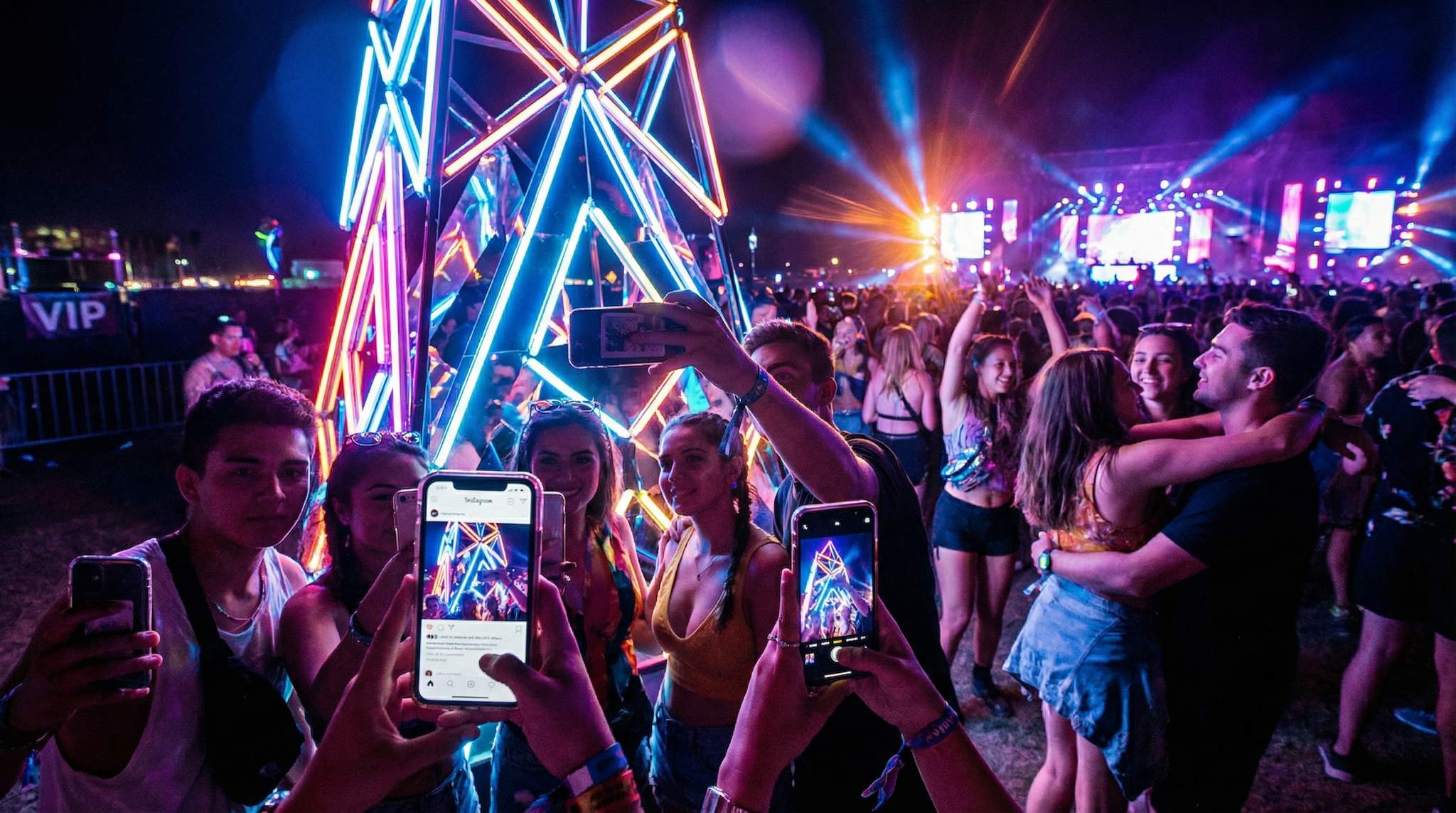
Social media, especially Instagram, has become a powerful amplifier for festivals worldwide. Attendees today arrive with smartphones in hand, eager to capture moments and broadcast them to friends and followers. In fact, recent research shows younger festival-goers actively consider an event’s shareability when deciding whether to attend. When fans post scenic stages or smiling crowd selfies, they create free marketing for the event – authentic peer endorsements that carry far more trust than any ad. A single striking photo shared by an attendee can spark dozens of ticket inquiries as FOMO (fear of missing out) kicks in among their peers. Modern festival producers recognize that a well-designed, photogenic event can turn attendees into brand ambassadors, generating organic buzz that money can’t buy.
Yet the goal isn’t just to flood social feeds with pretty pictures – it’s to use social media as an extension of the festival experience. Savvy organizers focus on creating genuine moments worth sharing, rather than manufactured hype. When done right, social media sharing becomes a virtuous cycle: a great experience leads to great posts, which attract new attendees, whose presence and enthusiasm further enriches the festival’s atmosphere. In a crowded festival market, this kind of word-of-mouth amplification is invaluable for standing out in an oversaturated season. The key is to harness Instagram and TikTok as allies in storytelling and community-building, without letting them hijack the event’s soul.
When Shareability Threatens Authenticity
The pursuit of Instagrammable content has a darker side if taken too far. Some events have been criticized for feeling like “photo ops first, festival second.” Critics point to Coachella, which over the years evolved into what some call the “Influencer Olympics,” where fashion photoshoots and branded parties at times upstage the music. In extreme cases, people attend festivals (or even pretend to attend) purely for the online clout. This phenomenon highlights the risk: when a festival becomes more about staged images than authentic enjoyment, its cultural ethos can erode. Longtime fans may lament that the event “used to be about the music (or art or community)” before the social media circus took over.
Over-engineering an event for social media can also backfire with audiences. Festival-goers – especially seasoned ones – have keen radar for inauthentic “Instagram bait.” If attendees encounter a beautiful backdrop that has nothing to do with the festival’s theme or a sponsor activation that feels overly commercial, they’ll notice. Rather than being impressed, they might roll their eyes or even voice backlash online. A cautionary tale is the infamous Fyre Festival, which sold a dream on Instagram with picturesque models and promises of luxury, only to deliver a disastrous experience. The gap between curated image and on-ground reality led to a PR meltdown, proving that misleading marketing and lack of substance can destroy trust. While Fyre is an extreme case, it underscores a core lesson: a festival’s online image must be backed by an honest, quality experience on site.
Striving for a Symbiosis
Finding the balance between Instagram and immersion is now a central design challenge for producers. The good news is, these goals aren’t mutually exclusive – they can complement each other when approached thoughtfully. The guiding principle is authenticity: shareable moments should spring naturally from a festival’s setting, music, art, and community rather than feeling forced. Industry veterans advise that technology and visual spectacle must serve the experience, not eclipse it, ensuring that tech trends actually deliver value. Furthermore, producers must learn how festivals can innovate without losing their soul. In practical terms, this means before adding any “Instagrammable” element, organizers ask: Does it enhance our festival’s story? Will it delight the crowd who are here, in addition to looking cool in photos? If the answer is yes, it’s likely a worthwhile addition.
Experienced festival producers emphasize that the most shareable moments are often the most genuinely moving or fun moments. A breathtaking sunset performance, a surprise guest appearance, a beautiful art piece that makes attendees say “wow” – these will get phones in the air and create lasting memories. The ultimate aim is a symbiosis between social media and immersion: attendees so engaged in a great time that they naturally want to capture and share it, and those shares in turn celebrate the festival’s authentic vibe. In the sections below, we’ll explore concrete strategies – from art installations to local culture – that achieve this harmony, ensuring your festival is camera-ready yet true to its soul.
Visual Centerpieces That Tell a Story
Iconic Landmarks and Art Installations
One of the most effective ways to encourage sharing without saying a word is by building visual centerpieces into your festival design. Think of landmarks or artworks on-site that become must-visit photo spots – because they’re awe-inspiring in person. Many top festivals invest in large-scale art installations and stage designs that serve as both signature visuals and authentic expressions of the festival’s character. A classic example is Coachella (USA), where each year giant art pieces dot the polo grounds, from a seven-story psychedelic rainbow “Spectra” tower to towering abstract sculptures. These installations aren’t random – they’re curated by Coachella’s art program to reflect creativity and diversity, aligning with the festival’s identity as a trendsetting cultural hub. The result? Attendees wander the grounds in search of the latest art piece, delighted by the discovery. Photos of Coachella’s art spread across Instagram every year, but crucially, the art itself is now part of the festival’s DNA. As one case study notes, Coachella’s Spectra tower not only looked stunning but was interactive (attendees could climb inside for panoramic views) – it became a “headline act” in its own right that generated countless organic shares, effectively acting as UGC engines for festival photo moments.
In Europe, Tomorrowland (Belgium) takes this to another level with its storybook-themed stages. The main stage at Tomorrowland is redesigned annually with elaborate fantasy motifs – from castles and dragons to surreal colorful forests – creating an otherworldly atmosphere. These stages aren’t just backdrops for DJs; they immerse the crowd in a narrative, reinforcing Tomorrowland’s ethos of unity and escape into a magical realm. The payoff is twofold: attendees feel like characters in a living fairy tale, and they have jaw-dropping photos and videos to show for it. It’s no surprise that Tomorrowland’s stage images flood social media each summer, yet fans rarely accuse it of being “just for show” because the design is deeply tied to the festival’s story. As an industry guide on unforgettable on-site design notes, strong visual theming – from stage backdrops to site decor – helps reinforce a festival’s personality, showing how festivals are blending art, tech, and culture. In other words, make it look amazing, but make sure it’s meaningful**.
Other festivals have their own twists on iconic visuals. Glastonbury (UK), for instance, has the famous “Glastonbury” sign perched on a hill overlooking the site – much like the Hollywood sign – which has become a pilgrimage for selfies. It’s simple but effective: those colorful letters instantly tell you where you are, celebrating the festival’s legacy (and yes, flooding Instagram with proud fan photos). Glastonbury also features art fields and areas like Arcadia, where a giant fire-breathing spider structure hosts performances – an art piece born from the UK underground art scene that feels perfectly at home at a legendary festival. Meanwhile, smaller events can also punch above their weight visually. At a regional art and music festival in New Zealand, organizers built a mural wall with indigenous M?ori patterns, created in collaboration with local artists, as a focal point where authenticity shines in photos. Attendees loved it – not just as a photo backdrop, but as a piece of the local story. The lesson across these examples is clear: a striking visual centerpiece can become the unofficial “logo” of your festival on social media – so design it to represent your festival’s spirit, not just to look pretty.
Thematic Decor That Feels Organic
Great festival visuals aren’t only about the big, showy installations. It’s also the small touches and overall decor that set the scene (and the Instagrammability) of an event. The goal is to create a cohesive atmosphere where every decorative element feels like part of a larger story or theme. This way, when attendees snap pictures, even candid shots will exude a unique sense of place. Every banner, sign, and sculpture should “fit” like it belongs. For example, Boomtown Fair (UK) famously converts its site into an immersive make-believe city with districts, street facades, and hidden venues, making the event feel like a storybook land. Walking through Boomtown feels like walking through a surreal movie set – one minute you’re in a Wild West town, the next in a futuristic cyber-punk alley. This all-encompassing theming means any photo taken is instantly recognizable as “Boomtown” because no two areas look alike and nowhere else on earth looks like Boomtown. Attendees share these photos enthusiastically because they want to show off the crazy world they’ve stepped into. Here, elaborate decor isn’t a gimmick – it’s the entire premise of the festival experience.
Even if your budget isn’t Boomtown-level, thematic consistency is achievable. Regional folk festivals might decorate with handmade buntings, traditional textiles, and local crafts that reflect their cultural theme. Beach festivals can incorporate nautical or tropical decor – think surfboards as signage or stages built from driftwood – to amplify that laid-back vibe. What matters is authenticity: if it’s a folk festival, those textiles might be woven by local artisans; if it’s a beach fest, maybe a local surf shop sponsors the decor with genuine gear. A consistent palette of colors, materials, and symbols will make the whole venue feel intentionally designed. Festival producers often say that details make the difference – things like artistic signage, creative stage names, and even staff costuming add to immersion. And when fans notice these thoughtful details, they photograph them and share the sense of discovery. A pro tip is to design some decor elements at human scale (not just huge stages), where people can directly interact or pose. For instance, hanging decorative lanterns and flags at eye level can frame a beautiful crowd photo, or a small art piece in a cozy corner might become a hidden gem people boast about finding. These design nuances ensure that visual allure never feels generic; instead it’s tied to your festival’s narrative, prompting attendees to share your story rather than just “some cool random venue.”
Art with Purpose and Perspective
To truly preserve authenticity, the art and visuals at a festival should have purpose and perspective – essentially, they should mean something. Festivals have long been cultural gatherings, and integrating art that carries a message or reflects the festival’s values can deepen the impact on attendees. The bonus: meaningful art often resonates strongly on social media, as people love to share and discuss things that moved them or made them think. For example, Burning Man (USA) is renowned not just for spectacular visuals (massive sculptures on the desert playa) but for the intent behind them. Many Burning Man installations are interactive or symbolic, often created around themes like community, reflection, or social commentary. The annual Burning Man Temple, a beautiful structure where attendees leave messages to lost loved ones and then ceremonially burn the whole temple at the end, generates images that are breathtaking and poignant. Those images circulate widely online, but not because they were designed for Instagram – instead, they’re powerful because they carry emotional weight. Anyone seeing a photo of the Temple burn can sense the significance, even if they don’t fully know the context. That’s an extreme example of art as ritual, but it illustrates how authentic emotional moments become inherently share-worthy.
Festival art can also promote values like sustainability or social inclusion in a visual way. Consider a festival that prioritizes eco-friendliness: it might commission a large art piece made from reclaimed plastic waste, simultaneously providing a conversation-starting photo op and underscoring the festival’s green mission. In Australia, the small Townsville Cultural Fest once featured a “world peace” mural wall where attendees could paint messages of unity – a living artwork that was both participatory and meaningful to its multicultural ethos. Photos of that wall carried a powerful narrative of community spirit. When incorporating purpose-driven art, be sure to collaborate closely with artists so the execution stays authentic and not preachy. Let the artist’s voice shine through; audiences can tell when something is just marketing gloss versus genuine artistic expression. Also, provide context on-site if needed (through signage or in the program) so attendees grasp the story or cause behind an art piece – they might then share that story in their captions or comments, amplifying the message. Ultimately, art with perspective reflects that your festival stands for more than “just a party,” and those deeper layers of authenticity give people more reason to love and share what they experience.
Interactive Experiences Over Static Poses
From Passive Photos to Active Participation
It’s one thing to set up a beautiful scene for attendees to photograph; it’s another to design experiences that pull attendees in and make them part of the picture. Festivals that prioritize immersion and interaction find that fans not only have more fun, but they also produce better, more enthusiastic content about the event. Instead of attendees just walking up to a backdrop and snapping a posed photo, consider how they can actively engage with an installation or activity. For example, imagine a field of giant see-saws that light up and play musical notes as people ride them in tandem – that’s far more engaging (and photogenic in action) than a static sculpture. In recent years, many festivals have added such interactive art: from climbable structures and motion-responsive LED displays to collaborative murals where everyone can grab a paintbrush. At Electric Forest (USA), the Sherwood Forest area is legendary for this – it’s filled with interactive installations, secret pathways, and puzzles. Attendees spend hours exploring and playing, essentially becoming performers in the experience. They share triumphant selfies when they find a hidden speakeasy or when a group of strangers joined them to solve a riddle. By giving people something to do rather than just see, you create deeper memories. And those candid shots of fans actively participating – laughing on a see-saw, painting a wall, or gathered around a quirky art piece – radiate genuine joy when posted online. It’s evidence that “we didn’t just see cool things; we did cool things!”
The data backs this up: festivals reported that interactive features can dramatically boost word-of-mouth because attendees feel a personal connection to those moments. Furthermore, creating wonder at every turn makes the event more memorable than a passive concert. Participation also often means attendees stick around longer in a given area (versus snapping a pic and moving on), which can help with event flow and even vendor sales (engaged, happy people are more likely to grab a snack or drink nearby). When designing these elements, consider your audience demographics and interests. A younger, adventure-seeking crowd might love physical challenges or techie AR games; a cultural festival audience might prefer hands-on craft workshops or dance circles. The key is making sure it’s on-theme and accessible: an interactive element should complement the festival’s vibe and be easy to join without intimidation. Keep safety in mind, too – if it involves climbing, spinning, or any physical activity, ensure it’s supervised or built with precautions (nobody wants a viral video of an ambulance). But don’t let that scare you off; even something as simple as a giant community chalkboard (“Write your festival highlight!”) or a prop box with fun costumes can spur active engagement. The result will be festival-goers who feel like participants, not just spectators – and their social media posts will capture that energy.
Gamification and the Thrill of Discovery
One way to gently nudge attendees into exploring and interacting is through gamification of the festival experience. Scavenger hunts, challenge quests, or Easter egg secrets planted around the venue can turn the whole festival into a playful adventure. This not only keeps attendees busy (in a good way) but also leads them to corners of your event they might otherwise miss – spreading out the crowd and revealing hidden gems you’ve set up. For instance, some festivals create a scavenger hunt with clues that encourage people to visit certain art installations, stages, or historical spots on the grounds. Those who complete the hunt might earn a small prize or a stamp on a “festival passport,” but even those who don’t finish still enjoy the journey. From a shareability standpoint, gamification yields great content: people will often document their “treasure hunt” progress on Instagram Stories or form teams and post group photos at checkpoints.
Technology can amplify this, but it doesn’t have to be high-tech. A festival app can provide a digital checklist or map for a treasure hunt, or simpler, a printed map can do the job with riddles. Lightning in a Bottle (USA), a transformational festival in California, once featured a day-time quest where attendees solved mythic-themed puzzles across the venue (from the lakeside to the art installations) – it became a talking point and a flood of social posts, all while tying into the festival’s mystical ethos. Another gamification approach is to hide “Easter eggs” – secret features that aren’t on the official schedule. Maybe there’s an unannounced pop-up performance on a campground stage at midnight, or a tiny “speakeasy” tent behind the main stage that you can only enter with a special coin found in a scavenger chest. When attendees stumble upon these surprises, they feel like they earned a backstage pass. Naturally, they’ll brag about it on social media (“We found the hidden DJ set in the forest and it was unreal!”) which intrigues others without giving everything away. It’s crucial, however, to keep such games opt-in and low-pressure – they should add fun, not FOMO stress. Only a subset of your audience might partake, and that’s fine. The broader win is that the existence of these interactive layers signals that your festival has depth and mystery. You’re not just running a linear schedule of acts; you’re cultivating a little world where curiosity is rewarded. That feeds both immersion (for those present) and online buzz (as a festival with secrets tends to generate online chatter among fans trying to piece together the full story of what happened on-site).
Crafting Communal Moments Instead of Posed Portraits
Ironically, one of the most “viral” festival experiences is something you can’t quite capture perfectly on a phone – those transcendent communal moments that give people goosebumps. We’re talking about the entire crowd singing together, or a breathtaking moment of silence, or a sudden mass dance-off. These are immersive experiences first, yet they inevitably get recorded and shared because they’re so powerful. Festival organizers can’t force these moments, but you can certainly design the conditions for them to happen. And when they do, they strike a beautiful balance: they enrich the immersion for those there, and the recordings convey authenticity and emotion to those who see them online.
Classic example: Glastonbury’s tradition of crowd sing-alongs. During certain headliner sets or the finale, tens of thousands might sing “Hey Jude” or another anthem in unison. It’s completely organic and spine-tingling. Videos of these massive sing-alongs rack up views on social media not because of flashy staging (often it’s just a night shot of a big crowd), but because you feel the togetherness through the screen. As a producer, you can facilitate this by thinking about festival rituals or peak moments in your programming. Perhaps it’s a countdown and launch of fireworks at the end of the festival, or a moment where all the stage lights go dark and the audience lights up the sky with their phone flashlights and lighters. Some festivals hand out props to enable crowd-wide participation – for instance, Tomorrowland’s LED wristbands that sync to the music turned the entire audience into part of the light show, creating a stunning visual of communal unity that shows how festivals can innovate without losing soul. This technology helped facilitate connection aligned with festival traditions. Everyone was thrilled to be in the show, and of course they also filmed the sea of glowing wristbands to show the world. The key is these moments make the attendee feel part of something larger than themselves – a core draw of festivals since the beginning of time.
When planning your festival, think about where a touchpoint of unity or surprise could fit. It could be as simple as a designated “group photo” time where a photographer gets a huge crowd shot and everyone cheers (like many schools do at graduations – it’s cheesy, but people actually love spotting themselves later). Or perhaps organize a flash mob or coordinated stunt: at one Comic-Con-style festival, organizers distributed thousands of cosplay props (masks of a beloved character) and on cue, the entire crowd put them on for a group video – a playful prank that blew up on socials. Ensure these communal moments align with your audience’s vibe (a zen wellness festival probably won’t want confetti cannons and sing-alongs, but maybe a group meditation at sunset is their shared moment). Finally, don’t schedule too many “big moments” – one or two well-executed ones will feel special; any more and it might come off contrived. When attendees feel genuinely connected, they’ll snap a photo or hit record after they’ve soaked it in, and that content will scream authentic festival magic more than any posed selfie could.
Showcasing Local Culture and Community
Commissioning Local Art with Soul
One of the richest sources of authenticity a festival can draw from is its local culture and community. Incorporating local art, crafts, and design elements not only creates one-of-a-kind visuals, but also grounds the event in a sense of place that attendees (and their social networks) find compelling and genuine. A growing best practice is to commission installations or decor from local artists who can bring regional flavour to the festival’s look. For example, Shambhala Music Festival in Canada built interactive art pieces from locally sourced wood, blending so seamlessly into its forest setting that it felt like the woods themselves came alive, effectively designing the destination as a character. Attendees took countless photos of these whimsical wood sculptures, often captioning how cool it was that the art was made from the very forest they were dancing in. Similarly, at Wonderfruit (Thailand), the festival’s design team collaborated with Thai architects and artisans to create monumental bamboo structures – including entire stages made of bamboo – and a “Molam Bus” stage celebrating a regional folk music style, further emphasizing how destination design impacts character. These designs were stunning on camera and deeply rooted in local tradition. The message was clear: this festival couldn’t just be picked up and plopped anywhere else; it was a product of Thai art and culture. Attendees and press eagerly shared images of Wonderfruit’s bamboo stages, often highlighting the authenticity and sustainability angle (bamboo being a local, renewable material). By commissioning local art, festivals feed two birds with one seed: they get distinctive, Instagrammable content and they support the local creative community, which in turn often engages with the festival and promotes it.
When pursuing local art, it helps to reach out early and build relationships. Some festivals issue open calls for art proposals to local studios, hold community art contests for a spot on the lineup, or partner with city art programs to fund installations. Ensure the artists are credited and celebrated – maybe include plaques on-site, do social media spotlights on the artists, or even let them host workshops during the event. This adds story depth to the pieces, which press and attendees love to talk about (“This mural was painted by students from the neighborhood!” or “The stage design was a collab with local indigenous artists.”). One boutique festival in New Zealand found that transforming the grounds with art painted by local children (lanterns and flags made in school workshops) gave the venue a whimsical, hometown charm that attendees adored, proving how blending art and culture stands out. The photos of those hand-painted lanterns at night were heartwarming – not because the art was grand, but because it felt personal. In short, weaving local artistry into your festival’s fabric is a win-win: it differentiates your visuals from the cookie-cutter look of corporate events and earns you authenticity points that no faux-“local” theme decor from a catalog can match.
Celebrating Regional Traditions and Performances
Beyond physical art, consider showcasing local traditions, music, or performances as part of the festival experience. These cultural elements can become surprise highlights that attendees share widely, precisely because they’re not found at every other festival. Many destination festivals do this well. For instance, at Magnetic Fields Festival in India, which takes place in a 17th-century Rajasthani palace, the organizers don’t only rely on the global electronic music acts – they also incorporate Rajasthani folk musicians and dancers into the lineup, capturing the destination’s unique character. Imagine a scene where modern festival-goers are dancing to a DJ, and then as dusk falls, a troupe of traditional dancers and drummers process through the grounds, with the lit-up palace as a backdrop. Attendees are astonished and delighted, cameras come out, and suddenly you’ve got a viral video of a beautiful culture clash that only happens at this festival. The presence of local culture doesn’t detract from the contemporary music; it enhances it, giving everyone a sense of place and history. Importantly, it’s done with respect – these aren’t gimmicky add-ons, but rather carefully curated showcases (Magnetic Fields, for example, partners with local cultural promoters to ensure authenticity). The result is an attendee experience often described as “magical” and undeniably unique – exactly the kind of thing people rave about online and to their friends.
Even in non-“exotic” locales, there are local traditions to uplift. A festival in Mexico might include a brief Mayan or Aztec heritage ceremony to bless the event. A festival in New Orleans could feature a second-line parade through the venue, giving a taste of the city’s jazz funeral culture to everyone present (many will join the parade and post that lively scene). In Bali, a music festival might invite local Hindu priests to do a blessing ritual on the first day – something attendees may find profound to witness, and which they share respectfully on social media because it was a special part of the experience. When integrating such elements, consult cultural experts or community leaders so it’s done in a respectful, non-tokenizing way. The performers or practitioners should be willing participants who are proud to share their heritage. Make sure to schedule and stage these in a way that attendees know it’s a highlight, not just background noise. For example, put the cultural performance on the program and perhaps give a little context (“4:30pm at the Garden Stage: Traditional M?ori haka performance – come experience a powerful welcome ceremony from our host community”). This signals it’s something important and not to be missed. By celebrating regional traditions, you’re effectively saying “Our festival honors its home”. That authenticity will shine through in attendees’ stories and posts; they’re not just at any festival, they’re at one that embraces its community, which is a story worth sharing.
Engaging the Local Community and Fans
A festival truly ingrains itself in authenticity when it isn’t an isolated bubble but part of the community year-round. Engaging local residents, fans, and even attendees in the creation of the event can produce shareable moments that feel organic and earned. One approach is to involve the community in co-creating festival content. For example, some festivals run pre-event workshops (open to local volunteers or fan club members) to create decor elements – painting flags, building installations, or rehearsing for a flash mob. Those participants naturally become ambassadors, sharing their behind-the-scenes contributions online: “Spent today painting a 20-foot mural for XYZ Festival, can’t wait for you all to see it this weekend!” This not only builds hype, but it makes those elements on-site deeply authentic – they weren’t outsourced to a faceless vendor; they were made by the community. Attendees who weren’t part of creation will still appreciate the story (“these lanterns were painted by local kids” etc.), and those who did help will have immense pride in showing them off.
Another angle is to highlight local vendors, food, and makers as part of the festival experience – essentially turning your festival into a showcase for the region’s talents. A food & music festival might give booth preference to beloved local eateries and farms, rather than generic concession vendors. When festival-goers bite into a locally sourced treat or buy a craft from a nearby artisan, they often snap a photo and tag that local brand, spreading the love in a genuine way. It’s content for them (“I found this amazing taco at the fest!”) and promotion for your ethos of supporting the local scene. Community engagement can also mean working with local schools or nonprofits – for instance, having a portion of ticket proceeds benefit a local cause, or inviting a youth choir or marching band to perform an opening number. These kinds of collaborations can lead to heartwarming moments that media outlets love to cover and attendees love to share (imagine a headline like “Festival crowd joins local kids choir in impromptu performance” – instant feel-good virality!).
Finally, don’t overlook engaging your core fan community in content creation. User-generated content campaigns before, during, and after the festival can spotlight real attendees and their perspectives. For example, run a contest for fans to submit designs for the official festival poster or merch – when the winning design (by a fan) is used, that story resonates. During the event, having roaming “fan cams” or social media screens that display attendees’ posts (with a specific hashtag) can encourage more sharing because people love seeing themselves featured. Just be sure to moderate it for appropriate content and obtain consent (many festivals now include a simple rights waiver in the ticket terms or use an opt-in system for displaying posts on-site – more on consent later). By treating attendees and locals not just as consumers but as contributors, you foster a community vibe. People feel ownership of the festival’s success and vibe, which is perhaps the strongest form of authenticity. After all, if the people who make up the festival are celebrated and involved, the experience will reflect their genuine passion – and that is the image that will spread far and wide.
Leveraging Unique Venues and Natural Beauty
Location as a Headliner
Often, one of a festival’s most distinctive assets is the location itself – the natural landscape or unique venue in which it takes place. When the setting is spectacular, it can become a star attraction, and festivals are increasingly leaning into this by designing programming and layouts that showcase their surroundings. A breathtaking location offers built-in Instagram gold that also enhances immersion, because attendees feel like they’re in a special place beyond the everyday. For instance, Rhythm and Vines in New Zealand is timed and positioned so that on New Year’s Day, the main stage faces the first sunrise of the year rising over rolling vineyards, leveraging the destination as a festival character. Imagine the scene: thousands of festival-goers dancing as dawn breaks over lush hills – no filter needed, that image is pure and authentic and jaw-dropping. It’s no wonder attendees have their phones out to capture it, but importantly, it doesn’t detract from the moment – the design of the festival actually heightens the experience of that sunrise for everyone. The social posts that follow (“watching the first sunrise of the year with live music – unforgettable!”) basically write themselves, and they position Rhythm and Vines as a festival that offers something truly unique.
To leverage your location, identify what’s special about your site: Is it a picturesque natural setting (mountains, desert, forest, beach)? An urban festival with a skyline or iconic architecture? A historic venue like a castle, fort, or park with heritage? Once identified, plan at least one marquee moment or focal point around that feature. At a beach festival, that could mean scheduling a popular act at sunset by the ocean and encouraging everyone to watch the sun dip while the music plays – an experience people will record and cherish. At a mountain or forest venue, perhaps a quiet late-night ambient set under the stars, inviting attendees to lie down and gaze upward (cue many starry sky Instagram shots accompanied by “this festival is pure magic” captions). If your site includes a notable landmark (say, a castle wall or a skyline view), design sightlines and photo spots to interact with it. A stage could be oriented such that the landmark is in the background of performer shots. You could set up a viewing deck or ferris wheel that gives attendees a panoramic photo-op. Lean into seasonal and daily rhythms too – as with Rhythm and Vines using the sunrise, think how daylight, nightfall, or weather phenomena (like mist rolling in, etc.) could be embraced rather than battled. A festival in a rainy region might even make a fun thing out of rain (handing out colourful rain ponchos and encouraging a rain dance if a shower passes through, turning a would-be downer into a memorable scene).
In all cases, make sure to communicate what’s special about the location in your marketing and on-site materials, so attendees anticipate it. If you have a dramatic vista, mention it in the program (“Don’t miss the view from the hilltop at sunset”). Some destination festivals even host guided walks or yoga sessions at scenic spots on the grounds to get people out experiencing the locale. By treating the destination as a character in your festival’s story, you automatically foster authenticity – because you’re showcasing what’s inherently there, rather than concocting artificial scenery. And when thousands of attendees each capture the real beauty around them, you end up with a social media footprint that highlights your festival’s one-of-a-kind setting. It’s hard for a competitor to copy that.
Low-Impact Design that Respects the Setting
An authentic use of a venue also means being a good steward of it. Festivals have sometimes faced criticism for trampling natural sites or disrespecting historic venues for the sake of a cool shot. The modern producer must balance photogenic design with low-impact, sustainable practices, ensuring that the festival doesn’t “love a place to death.” Interestingly, sustainability and aesthetics can go hand in hand – using the natural environment as decor often means less need for fabricated sets, and choosing eco-friendly materials can lend an earthy, authentic look that polished plastic installations lack. For example, Wonderfruit (Thailand), as mentioned, opts for bamboo and other renewable materials for stages and structures, which not only pays homage to local building traditions but leaves minimal trace, similar to how Shambhala built structures to leave no trace. Similarly, Envision Festival in Costa Rica integrates stages into the jungle landscape and emphasizes leave-no-trace principles; stages are built without permanent hardware (using rope joins, etc.) and taken down after the event with virtually no scarring on the land. Photos of Envision’s treetop stages and lush jungles are utterly shareable, all while the festival proudly maintains credibility as an eco-conscious gathering.
To design photogenic moments sustainably, work closely with environmental experts or venue managers. Identify safe vantage points where people can view and photograph scenery without damaging sensitive areas (and maybe put a platform or protective mat there if needed). If you’re highlighting a natural feature like a waterfall or ancient tree, use lighting creatively but harmlessly – e.g., LED uplights that make it visible and enchanting at night, but ensure they are battery or solar-powered to avoid noisy generators, and they’re removed post-event. Keep any installations freestanding (no nails in trees, no digging in protected ground) unless you have explicit permission and mitigation plans. Besides being the right thing to do, this earns trust from attendees, many of whom are increasingly eco-aware. They’re more likely to share that gorgeous waterfall picture with a caption praising the festival for keeping the site pristine rather than complaining about trash or damage.
Historic and urban venues come with their own responsibilities. At a centuries-old fortress hosting a festival, for instance, organizers might use projection mapping to cast visuals onto the walls rather than physically altering or decorating the stone – a reversible, stunning effect that many shared online during events like Serbia’s Exit Festival at Petrovaradin Fortress. In city parks or streets, coordinate with local authorities on how to manage crowds so that the community isn’t disturbed (nothing kills authenticity like angry neighbors or encroachment issues). Sometimes, organizers even incorporate community cleanup or give-back initiatives, which in itself can become a positive story shared on social media (e.g., volunteers and attendees doing a beach clean-up post-festival, demonstrating love for the locale). In essence, treating the venue with respect is part of being authentic – it shows your festival isn’t just using a place as a prop, but valuing it. Attendees will pick up on that ethos. And practically, a well-cared-for venue often looks better too: lush grass rather than mud, intact nature rather than fenced-off damage. It’s a virtuous cycle where respecting the space results in a more beautiful event, which results in prettier pictures and happier people. Authenticity and aesthetics flourish together when a festival and its venue are in harmony.
Turning Logistics into Scenic Experiences
A clever way to marry immersion with Instagrammability is to take necessary logistical elements of your event and give them a scenic or thematic twist. This means things like entrances, pathways, bridges, and even utilities can be designed to be part of the charm rather than eyesores. Often, these are the spots every attendee will pass through – so why not make those journeys memorable (and photo-worthy)? For example, the festival entrance gate: Instead of a plain security checkpoint, some festivals create grand entry arches or tunnels that act as a “wow moment” right when people arrive. Bonnaroo (USA) was famous for its giant psychedelic archway entrance (until it was retired for safety reasons in 2019) – virtually every attendee took a selfie under the arch upon arrival, it was that iconic. When they rebuilt the structure, organizers made sure to maintain its visual impact but with improved safety, ensuring UGC engines and photo moments work safely, showing you can have spectacle and sensibility together. As another example, Desert Daze Festival (USA), set by a lakeside, ferries attendees from parking to the site on boats across the lake – turning transport into a beautiful sunset boat ride that everyone Instagrams, effectively making the shuttle a part of the show.
Consider pathways and signposting too. If your site requires people to walk through woods or fields, make that walk interesting. Secret Garden Party (UK) used to hide art and whimsical signs along the trails between stages, so a trek to the campground might reveal a quirky gnome village art installation out of nowhere – a delightful surprise people would film. Lighting these paths at night not only aids safety but can create enchanting scenes: a string-light canopy over a walkway or motion-activated fairy lights on a forest path add both function and flair. Think about vantage points where people might naturally stop to rest or queue (like water stations, viewing decks, food courts) – can you position picnic tables to face a pretty view, or decorate the area with a mural or hanging garden? Even the mundane can be spruced up: rather than generic fencing around the site, some festivals involve artists to paint fence panels or use printed scrims with beautiful graphics. The more integrated the logistics are with the look and feel, the less anything sticks out as “ugly but necessary.” Attendees won’t be pulled out of the immersive experience, and they may actually choose those spots to take photos (a painted fence or colorful hydration station sponsored by a caring brand is much more likely to appear on Instagram than a plain chain-link fence or typical branded banner).
One crucial note: never let scenic design compromise crowd flow or safety. Beauty should support function. For instance, if you create a picturesque bridge over a pond as a shortcut between stages, ensure it’s wide and sturdy enough for heavy foot traffic, and maybe have a second route to prevent bottlenecks. The goal is to have people saying “Even walking from stage to stage was an experience!” not “I almost got trampled on a tiny bridge just because it looked cool.” Always test these elements (as simple as having staff do a walk-through) for capacity and sturdiness. Done right, logistical features can become beloved parts of your festival’s character. People might remember “that lantern-lit path by the river” as much as the headliner’s set. When they reminisce or share photos of it, it underscores how every aspect of your event was thoughtfully curated — a hallmark of authenticity that will earn admiration both on-site and online.
Smart Tech and Social Media Integration (Without the Gimmicks)
Enhancing Sharing Through Technology
In the digital age, there’s a host of technologies that can facilitate sharing and add a modern sparkle to the festival experience – the trick is using them judiciously and in tune with your crowd. One straightforward tool is the official festival app or mobile site. By 2026, most festivals have an app, and beyond schedules and maps, this can be leveraged for social engagement. For example, enabling a feature where attendees can upload photos or short clips within the app to appear on a live festival collage or jumbotron screen can motivate people to capture fun moments. Some festivals create an in-app photo filter or AR lens (much like Instagram filters, but custom to the event) – attendees can frame their selfies with the festival logo and artwork or add AR effects like virtual flower crowns or stage props. Coachella tried an AR experience in its Sahara Tent (space-themed visuals on your phone screen) that sounded cool, but uptake was low because people had their attention on the live show, a lesson in festival tech trends that deliver value. The lesson: integrate tech that complements fan behavior rather than competes with it. A filter that makes a photo pop or auto-adds the event hashtag might get used widely because it enhances what fans are already doing (snapping pics). On the other hand, a high-concept VR booth might sit empty if your crowd prefers dancing to fiddling with headsets.
Another useful tech integration is on-site photo booths or roaming photographers that deliver pics instantly. Instead of the old model where a photographer takes a photo and “you’ll find it on Facebook next week,” festivals now use QR codes and apps to get images to attendees in real time. For instance, a festival could have a few staffed “photo spots” at prime backdrops (say in front of the main stage during downtime or at the entrance arch). Attendees or groups stop by, a photographer snaps a well-composed shot, and then they hand the attendee a card with a QR code or use their wristband RFID to link the photo to them. The attendee scans and boom – up comes their photo on their phone, ready to download or share with one tap. ZoukOut festival in Singapore did something similar, providing guests a QR code after posing so they could instantly retrieve and post their pictures. Crucially, this system can include a gentle prompt like, “Share your photo and tag @FestivalName to be featured!” making it seamless for fans to post high-quality images with your branding already in place. It’s a win-win: attendees get cool keepsakes (much nicer than a selfie), and the festival gets more polished UGC circulating online. If implementing this, ensure it’s efficient – train staff or volunteers, test the tech, and don’t make people wait more than a minute or two for a snap (no one likes a long line just for a photo). Also, consider the consent aspect: within the digital delivery, ask politely if the festival can use the photo too, as part of broader marketing, ensuring photo moments happen with consent. Many will gladly opt in for the chance to be featured on official pages, and you’ll build a library of authentic fan content with all the proper permissions.
Hashtags, Challenges and Influencers – Finding the Right Mix
Effective social media integration often boils down to how you frame the sharing conversation around your event. Start with a strong, memorable festival hashtag – something short, unique, and relevant (and not used by another event). Promote it early and everywhere: on tickets, websites, signage, and stage screens (“Use #OurFest2026 when you post!”). A good hashtag aggregates your online content and can even build community as attendees start using it to find each other’s posts. At the festival, you can encourage usage by displaying a social media wall – a big screen that shows a feed of posts with the hashtag (with a slight delay/filter to vet content). People love seeing their post pop up and will use the tag to get that little moment of fame. This also subtly tells everyone “hey, lots of folks are sharing – join in!”
Beyond hashtags, consider running social media challenges or contests that align with your festival’s character. For example, a costume-heavy festival could have an Instagram costume contest: “Post a photo of your festival outfit with #OurFestCostume – the most creative look wins VIP tickets for next year.” This drives user content that shows off the festival’s colorful side. A music festival might do a short video challenge: “Show us your best 15-second dance at the festival – winner gets a meet & greet with a headliner.” The key is to keep it fun and uncomplicated, so lots of people participate. Always frame contests in a positive, inclusive way (e.g., “best dance” isn’t about skill, it’s about enthusiasm or originality, so anyone can win). Make sure to actually follow through and announce winners on your social channels – that follow-up coverage (“Congrats to @soandso for their amazing submission!”) both rewards the individual and showcases the best entries, doubling as content for you. It’s also wise to be clear about rules and rights: if you plan to reuse submissions in marketing, state that upfront in contest terms. Most fans are fine with it, especially for a chance at a prize, but transparency builds trust.
What about influencers? Many festivals grapple with whether to formally involve influencer marketing or “invite Instagrammers” to the event. The strategy can amplify reach – a few posts by a popular creator can expose your festival to tens or hundreds of thousands of potential attendees. However, this must be handled carefully to avoid authenticity issues. The best practice is to partner with influencers who genuinely align with your festival’s vibe or values. For example, if you run an indie folk festival, a travel vlogger known for exploring offbeat cultural events might be a great fit; but a fashion influencer who only cares about posing in outfits might stick out like a sore thumb (and their audience might not translate into ticket-buyers). Some festivals have “creator programs” where they give a handful of passionate content creators (could be micro-influencers with 5-10k followers or more established ones) free passes or special access in exchange for covering the event. If you do this, brief them on the ethos of the festival – encourage them to experience it fully, not just the polished VIP veneer. Perhaps even arrange a meeting with festival organizers or artists so they connect on a deeper level they can talk about. The goal is for their coverage to feel like an insider sharing a cool experience, not an ad. Also, be mindful of not giving influencers so much special treatment that regular attendees feel second-class. The community’s experience comes first, always. One way to integrate influencers without hierarchy is to host a public meetup or live stream with an artist that all attendees can join, moderated by the influencer – they add value for everyone, rather than being tucked away in an exclusive lounge 100% of the time.
Ultimately, the social media mix should feel like a natural extension of the festival. An insightful way to gauge this is to ask: if there were no Instagram, would this still be cool? If the answer is yes (e.g., a dance contest at a stage is fun whether or not it’s filmed), you’re on solid, authentic ground. If the answer is no (e.g., a prop that only exists to be photographed and serves no other purpose), then tread carefully. Fans can tell when something exists “just for the ‘Gram.” It’s not that you should never do those things (sometimes a pure photo backdrop is fine, like a pair of angel wings mural for people to pose in front of). But if you do, try to give it context or added value: maybe those angel wings were painted by a beloved local street artist (so it’s art in its own right), or it’s placed in a chill-out zone so people can rest and chat while waiting to take a photo. By combining a strong hashtag culture, playful social challenges, and mindful influencer collaborations, you generate online buzz that mirrors the real spirit of your festival – not a manufactured one.
Tech Gimmicks vs. Genuine Innovation
With new tech trends emerging every season (AR! VR! AI! NFTs! holograms!), festival producers are often tempted to adopt the latest flashy tools to seem cutting-edge. But as we touched on earlier, it’s vital to discern gimmicks from value-adding innovations. Attendees can be wowed by technology, but they can also be turned off if it feels like a distracting demo that doesn’t fit the vibe. A guiding rule from veteran organizers: any tech on site should either solve a problem, provide useful information, or create joy — ideally, it does at least two of those. If it’s not hitting those marks, skip it or save it for an off-season experiment.
For example, drones and robotics are hot topics. Some festivals have experimented with drone light shows in lieu of fireworks – when well executed, these can be magical and eco-friendly (silent, no pollution). Attendees at a festival in Sydney watched a fleet of drones form shifting patterns and words in the sky, leading to hundreds of posts and comments about how innovative and thoughtful it was (particularly appreciating the lack of frightening noise for animals and more inclusive approach for folks sensitive to loud bangs). Here, tech delivered awe and aligned with a forward-thinking ethos – a win. On the flip side, a different event rolled out a fleet of roving security robots patrolling the grounds, which many attendees found creepy and intrusive; it became a meme on Reddit rather than a selling point. The difference lies in intent and audience expectation: a music festival crowd might embrace drones as art, but not as robo-cops. Another case: cashless payment wristbands were high-tech a decade ago but are now almost standard – they clearly solve a problem (speeding up lines, reducing theft) and most attendees, after initial adjustment, appreciate the convenience. It’s an example of tech that became accepted because it served the experience. Contrast that with something like festival NFTs – a few years back, some festivals minted NFT tickets or collectibles; while a niche group loved it, many fans either didn’t care or saw it as a cash grab, especially when some NFT plans fell apart, proving that hype often outpaces a technology’s practical value. Without a clear fan benefit, those fell into the gimmick bin.
So, as you integrate tech, always circle back to authenticity: does it amplify the festival’s core experience or story? If your festival is all about analog, retro charm (say a renaissance fair or a bluegrass jamboree), introducing an AI chatbot concierge might feel out of place and actually detract from immersion. However, a digital scavenger hunt via an app could still work even there if framed playfully (“find the AR dragon eggs hidden around the fairground!”). It’s about presentation and fit. When in doubt, you can test new tech in a small way. Maybe run a pilot of an AR art installation in one corner rather than banking the whole festival on it. See how people react; gather feedback. There’s no harm in telling your audience, “We’re trying something new this year – let us know what you think!” In fact, involving them in the process builds trust. Many festivals solicit feedback via post-event surveys that include questions on which new features or tech people noticed and enjoyed (or not). Use that data. If only 5% used the fancy AR filter, maybe skip it next year and focus efforts elsewhere.
At the end of the day, innovation should serve the festival, not the other way around. A very insightful quote from an industry report summarizes it: Focusing on fans and fundamentals. Basics first, bells and whistles second. Keep that human-centric perspective, and any tech you add will more likely enhance the real, authentic fun rather than feeling like an awkward sponsored demo that everyone ignores.
Sponsorships and Branding: Keeping It Real
Branded Moments That Add Value
Sponsorship is a double-edged sword in the festival world: it can provide much-needed funding and extra perks for attendees, but done wrong it can undermine authenticity faster than you can say “logo overload.” The key to sponsor activations that succeed (both for the brand and the audience experience) is to design them as value-adds, not just advertisements. In other words, sponsors should enhance the festival either through useful services, interactive experiences, or creative content – ideally so cool or helpful that fans would line up even if they didn’t know a brand was behind it. A great example is the trend of micro-sponsorships at boutique festivals: instead of plastering banners everywhere, festivals partner with brands to provide amenities like free water refill stations, shaded lounges, phone charging zones, or a quiet cooling tent. Festival-goers love these amenities because they meet real needs (thirst, rest, battery life). The branding is usually subtle – a logo on the station or the tent – and fans often feel grateful to the sponsor (“Thank you XYZ Drink Co. for this free hydration bar!”) rather than annoyed. They may even give the sponsor a shout-out on social media because that service improved their day. This approach turns a sponsorship into a win-win: the brand gets positive exposure and goodwill, and the attendees get a better experience without plastering logos everywhere. Such sponsorships are especially popular where utility comes first.
Another example comes from bigger festivals and lifestyle brands. At Coachella, rather than a standard billboard, Yves Saint Laurent Beauté famously created a “beauty station” pop-up that looked like an old-fashioned gas station (complete with vintage cars and a giant lipstick sculpture), creating UGC engines for festival photo moments. It was an absurd, whimsical scene completely in line with Coachella’s creative atmosphere. Hundreds of attendees (not just influencers) flocked to take pictures there because it was genuinely fun and different – who expects a pastel gas station in the middle of a festival? YSL smartly offered product samples and makeup refreshes inside, tying it back to their brand in a way festival-goers appreciated (free makeup touch-ups in that desert heat are a godsend). The result was social media flooded with photos of the installation, with YSL’s brand inherently in every shot but via that playful context – much stronger than a forced ad. The lesson here: when integrating a brand, think of an activation rather than an ad. Could a car company sponsor an installation of funky art cars roaming the venue giving people rides? Could a tech company set up a cool virtual reality dome where fans can chill and play a music game during downtime? The litmus test is to ask, “If I were an attendee, would I choose to spend time here even if I wasn’t consciously noticing the sponsor’s name?”. If yes, you’re on the right track.
Avoiding Logo Overload and Tone-Deaf Promotions
On the flip side, it’s crucial to avoid the common sponsorship pitfalls that make festivals feel inauthentic or overly commodified. One big no-no is plastering logos everywhere without context. When a festival stage is renamed to “Brand™ Main Stage” and every banner, screen, and cup has that logo, attendees can feel like the event is just one big advertisement. This is especially risky if the brand has no organic connection to the festival culture. Attendees come for a music or cultural experience, not to be marketed to at every turn. It’s okay to give sponsors visibility, but moderation and integration are key. For instance, instead of looping the same 15-second sponsor ad on the video screens between every act (which can irritate fans), some festivals have sponsors underwrite content. A travel sponsor might present a beautiful montage of past festival moments or local scenery on the screens – with a small tagline at the end. It’s more palatable than “BUY THIS NOW!” messages. As an internal guide on sponsorship mistakes notes, throwing a forest of logos on every surface is a short-sighted approach that can cheapen the event’s look and feel, as noted in guides on what most festivals get wrong about sponsorship.
Tone-deaf activations are another danger. We’ve all heard stories of brand activations that totally missed the mark – like a fast-food company offering meat samples at a largely vegetarian festival, or a luxury brand VIP-exclusive party at a festival known for egalitarian, communal values. These missteps can generate backlash. Social media will quickly circulate images of an out-of-place promotion with snarky comments (“Why on earth is [Brand] here?”). To avoid this, festival organizers should vet sponsors for fit as much as sponsors vet festivals for audience. If you run an eco-conscious festival, align with eco-friendly brands or at least ensure any sponsor meets certain sustainability criteria while on site (e.g., they won’t hand out a bunch of plastic swag that becomes litter). If your crowd is primarily counterculture or alternative, be cautious introducing a very mainstream corporate presence unless that company is committed to doing something authentically cool at the event. Some festivals even turn down money if the sponsor’s demands would compromise the vibe – that may not always be financially feasible, but it’s worth considering the long-term brand integrity of your festival. One bad sponsor stunt can alienate loyal attendees (who will vent online, hurting your reputation).
A practical tip is to work closely with sponsors on creative. Rather than just giving them a space and hoping for the best, collaborate on how they will activate on site. You might have guidelines like: no loudspeaker promos, any signage must match the festival’s aesthetic (some events enforce wooden signage or artistic signage only), and encourage experiential giveaways instead of flyers (perhaps a merch item that’s useful on site like bandanas, fans, or reusable cups with subtle branding). By steering them towards doing something festival-friendly, you maintain authenticity and they still get their marketing value. Also, always have a contingency to quickly tweak or pull an activation if it’s not working as intended. Better to adjust mid-festival (e.g., if a sponsor’s booth is blasting music and annoying people, ask them to turn it down) than let it detract all weekend and suffer social media slams.
Partnerships That Elevate the Experience
The best sponsor partnerships feel like a natural extension of the festival, to the point attendees might say, “That was cool that [Brand] did that” rather than “ugh, ads.” To achieve this, it can help to involve sponsors in solving festival challenges or enhancing beloved aspects. For instance, at a camping festival that struggled with long hikes from parking, a sponsor teamed up to provide free pedicab rides with funny branding on the cabs – attendees got a lift (literally), the sponsor got recognition for “saving our feet.” Another example: some festivals have music equipment sponsors set up “jam tents” where musicians and fans can try instruments or have open mic sessions. The sponsor (say a guitar or DJ gear company) gets to showcase their product in action, while fans get a bonus interactive music experience. At one festival, a solar energy company sponsored phone charging lockers powered by solar panels – perfectly in line with the festival’s green initiatives and extremely useful for attendees; people shared images of the solar station and talked about how the festival was walking the talk on sustainability (with thanks to the sponsor, of course).
Thoughtful sponsor integrations can also tap into creativity. For example, Red Bull (with its music academy background) often sponsors festival stages or afterparties but does so by curating interesting lineups or installations, not just slapping a logo. At some events they’ve brought a quirky DJ truck or a physical “drinkable art” installation – it’s marketing, but also an attraction. These become highlight mentions in reviews: “Did you see that treehouse bar that XYZ brand built in the woods? It was awesome!” which sure beats “there was a booth handing out brochures.” A well-known beer sponsor once created a “secret bar” hidden behind a porta-potty facade – you had to know the trick to get in, where you’d find a cozy pub with acoustic sessions. It was all branded, but the experience was novel and fun, so festival-goers told their friends (and social followers) about it fondly.
From the sponsor side, brands are increasingly aware that authenticity and engagement are what matter for them too. According to industry insiders, modern sponsors prefer activations that fans actually care about, and they measure success in terms of social media mentions and positive sentiment, not just eyeballs on a banner. As a festival organizer, you can pitch this to potential sponsors: instead of offering the typical stage-naming rights and logo plaster, propose a creative idea that fits your event’s ethos. Use examples of festivals that got it right – for instance, show how boutique events create sponsor-funded amenities that fans love and explain that an appreciated sponsor is a remembered sponsor. By structuring deals that include these win-win elements, you set the stage (pun intended) for sponsors to genuinely elevate the festival. And when they do, attendees will incorporate those experiences into their storytelling. They’ll post “Chilling in the X Lounge getting a free massage – thank you [Brand]!” or “Can’t believe [Brand] gave us free ice cream during that super hot set – lifesaver!” That kind of organic endorsement is marketing gold for the sponsor and doesn’t cost you authenticity – if anything, it builds goodwill that the festival cares about its fans enough to provide freebies or cool extras.
In summary, sponsorship in the context of shareable moments is about collaboration and curation. Treat brands as another element to be thoughtfully curated so they serve the festival narrative. When done right, sponsored moments can be every bit as Instagram-worthy and authentic as the music, art, and venues we’ve discussed – because they’ll be part of the holistic festival design, not an awkward insert. And if done really well, your community might even look forward to what creative surprise a sponsor brings each year, which is a far cry from the old days of dreaded ad tents.
Encouraging Sharing While Preserving Presence
Fostering an On-Site Social Media Culture
The way you communicate with attendees about social media use can influence how they engage both online and offline. Many festivals now include gentle messaging about striking a balance: essentially encouraging attendees to capture memories but also “be present.” You might consider incorporating this ethos in your pre-event emails, MC announcements, or signage. For example, some events hand out festival guides or maps with a friendly note like: “We hope you make amazing memories! Snap some pics, tag us at #OurFest2026 – but also remember to soak in the moment, eyes up and hearts open.” This kind of messaging sets a tone that the festival values the experience more than just the clout. It can take a bit of pressure off attendees who sometimes feel they must get that perfect shot. When they do post, it often comes with a narrative: “Normally I’d be on my phone, but this festival was so immersive I hardly checked it – and it was incredible.” Ironically, that itself is a powerful endorsement on social media these days: a festival so good you forgot your phone!
Another approach is to create designated photo zones or times, which can alleviate the impulse to film everything. For instance, if there’s a particularly stunning stage production or pyrotechnic moment, you might announce, “For the first 30 seconds of the next song, light up the sky with your phones if you want – get your shot – then let’s all put them down and go crazy together!” Some artists do this in their sets too, acknowledging fans’ desire to record but then requesting they live the moment. A famous example: Adele once implored a crowd member to stop filming with a camcorder and just enjoy the show – that clip went viral and most fans applauded her stance. While you can’t police thousands of people, these gentle prompts can actually be effective peer pressure. If a festival’s culture leans toward presence, newcomers pick up on it. For example, Burning Man has a norm (even a written policy) that participants should ask consent before photographing others, and many moments – like the temple ritual – are respected as camera-free by the community. Consequently, you don’t see a sea of phones in the air at every turn, which many find refreshing (of course, plenty of content still comes out of Burning Man, but it’s more curated).
At a less extreme level, you might designate certain sacred moments or spaces as phone-free to protect immersion. This could be a small meditation area, an art piece that’s meant for quiet reflection, or the front row of a stage during an acoustic song. Ushers or signs can politely remind people. You’d be surprised – a lot of attendees appreciate having permission to put the phone away. It’s like creating a relief valve from the social media pressure. Afterwards, they may even post about how nice it was (“The festival had a no-phone zone in the ambient forest and it was my favorite part”). Those kinds of testimonials actually attract some audiences who are fatigued by hyper-documented events.
Finally, lead by example with your own social media team on site. If the festival’s official accounts are posting not just polished marketing shots but also candid, in-the-moment snaps or short live streams that feel real, it reinforces authenticity. It shows that you’re in it with the audience, not just broadcasting at them. Some festivals do daily recap videos that include fan perspectives, asking attendees what their highlight was and editing it in. That both creates shareable content and signals that the people are the story, not just the festival itself. In turn, fans often mimic this, posting their own mini-reviews and highlights rather than just glamour shots. The more you can cultivate a culture of “share the joy, not just the look,” the more your event’s online presence will reflect genuine experiences. And crucially, those at the festival will feel less like unpaid camera operators and more like a community that happens to be sharing bits of its life together online.
Accessibility and Inclusivity in Sharing
When designing shareable moments, it’s important to consider all your attendees – including those with disabilities or those who might experience the event differently. Authenticity rings hollow if a portion of your audience feels left out of the fun (or worse, can’t participate in an installation or photo op because of physical barriers). On the flip side, making sure every fan can partake in the Instagrammable activities can become a point of pride for your festival, earning trust and positive buzz. One basic step is ensuring that photo areas and interactive installations are ADA-accessible. If you have a raised platform for a photo, build a ramp or provide a stable pathway for wheelchair users. Keep popular photo spots on solid ground or provide mats if on grass to help those with mobility aids. In any crowds around installations, have staff on hand to assist anyone who might need a hand navigating or who has a question.
Think about visual and sensory accessibility as well. If you create a beautiful backdrop with text (say a neon sign of the festival name or a slogan), ensure the font is large and high-contrast so it’s easily readable in photos and by those with visual impairments on site. For interactive tech like AR filters or QR code systems, provide alternative methods (if someone can’t use the app, can they get the photo emailed?). Some festivals include closed captioning on their livestreams or screens during key moments, which not only helps deaf attendees but also is useful in noisy environments or for people watching videos later with sound off (a common social media behavior). In the context of shareable moments, imagine an attendee who is deaf capturing a video of a surprise guest appearance – if the festival had an interpreter on stage signing, that video becomes accessible and meaningful to a whole community online who might otherwise miss out on the context. It’s a small detail, but these things add up.
Inclusivity also means content. Encourage a variety of shareable moments that appeal to different groups. Not everyone wants a selfie; some might prefer a group photo, others a video of them hula-hooping in the crowd, others a quiet snap of a picturesque view. By offering diverse experiences – from high-energy interactive games to calm art installations – you cater to different personalities and comfort levels, which in turn yields a rich diversity of social media content about your event. And be mindful of privacy for those who want it: consent in sharing is a topic gaining traction. For example, a festival might allow attendees to pick up a special wristband at customer service if they don’t want to be photographed by official media. Honor that. It shows respect and maturity as an event. Even though most will never opt out, the gesture is noticed. People might post, “Really impressed that XYZ Festival had a no-photo wristband option for those who needed it.” That’s a shareable moment in its own right – praising the culture of the festival.
In summary, designing shareable moments isn’t just about the “Instagram crowd” – it’s about every segment of your audience. When everyone can partake in the fun on their own terms, the authenticity of those shared moments skyrockets. You won’t just see the same type of posed photo over and over; you’ll see families, disabled fans, older attendees, all showcasing what they loved about the festival in their own way. That mosaic of content not only broadens your reach, but it advertises an inclusive, caring vibe that money can’t buy. It tells future attendees: you belong here, and you’ll have something to smile about and share too.
Measuring Buzz Without Killing the Buzz
Finally, a word on how to gauge success in this whole “Instagram vs immersion” balancing act. It’s tempting to judge your festival’s performance by social media metrics alone – the number of posts, likes, shares, trending hashtags, etc. While these are useful indicators (and certainly your sponsors and marketing team will be counting them), they don’t tell the full story and chasing numbers can ironically lead you astray. An event could be trending for the wrong reasons (e.g., an on-site issue going viral – not the kind of buzz you want). Alternatively, a super authentic, immersive festival might not generate astronomical post volume simply because people were so in-the-moment. So how do you measure if you hit the sweet spot?
One approach is qualitative listening. After the event (and during, via your community managers), pay attention to what people are actually saying in captions, comments, Reddit threads, and feedback forms. Are the themes positive? Are people mentioning both how fun/shareable and how genuine it felt? For example, you might see comments like, “Every corner of this festival was photo-worthy, but it never felt fake – they really thought of everything,” or “I normally go for the pics but ended up loving the vibe first and foremost.” These anecdotes are gold. If there were complaints about gimmicks or missing the mark, note those too. Maybe some said the art looked great but lines to interact were too long (meaning next time, add more installations or capacity). Or perhaps someone felt the festival cared more about influencers than fans – a big red flag that needs addressing in strategy.
You can also look at engagement diversity. Did your hashtag get used by a broad range of people or just a small clique of influencers? Did your official posts featuring real attendee moments get better reception than slick ads? The answers can validate whether authenticity shone through. Also measure things like how quickly tickets sell for next year or how word-of-mouth is spreading in the aftermath – these are the ultimate signs of positive buzz, beyond just online vanity metrics. A festival that nails immersive shareability often sees a spike in post-event interest – people see the posts and go, “I have to be there next time.” Ticket Fairy’s own data from events shows that after a festival ends and attendees flood their socials with great content, website visits and waitlist sign-ups for the next edition jump significantly (even if lineups aren’t announced). That’s a metric of success rooted in both Instagram (the content) and immersion (the genuine good time behind the content).
Internally, set balanced goals. Sure, aim to trend regionally on your event days or hit X million impressions, but set experience goals too: e.g., a target of 90% positive sentiment in post-festival surveys on “festival atmosphere”, or an observation-based goal like “reduce phones-up during headliner by improving live visuals/interaction”. These keep you centered on what matters on the ground. And share these priorities with your team and partners. If everyone knows that “authentic fan experience” is king, the decisions they make – from security handling to artist stage prompts to sponsor activations – will reflect that. When authenticity is baked in at every level, the social media buzz comes organically and meaningfully.
In essence, treat social media as a mirror of your festival, not the object itself. A well-crafted, immersive event will reflect beautifully on Instagram and TikTok through the eyes of its attendees. If the reflection shows people genuinely smiling, unique scenes, and comments about how it felt, not just how it looked, you’ve succeeded. And ironically, by not single-mindedly chasing clout, you build a festival brand with far more longevity and loyal advocacy – online and offline.
Key Takeaways
- Experience First, Posts Second: Design your festival to be immersive and meaningful for those on-site; shareable moments will flow naturally. A great experience creates great social media content, not the other way around.
- Authenticity is Your North Star: Integrate art, decor, and activities that reflect your festival’s identity or local culture. Attendees (and their followers) can sense when something is genuine versus a hollow prop.
- Unique Visuals with Purpose: Wow-factor installations, stages, and venues drive massive buzz when they tell a story. Iconic landmarks (like Tomorrowland’s stage or a scenic sunset set) become enduring symbols of your festival on social media and on the ground.
- Interaction Beats Passive Posing: Give people something to do – whether it’s climbing an art piece, joining a ritual, or hunting Easter eggs around the site. Interactive experiences generate more enthusiastic sharing and fonder memories than static photo booths.
- Community and Local Collaboration: Commission local artists, showcase regional traditions, and involve the community in creation. This adds exclusive content you can’t buy and earns love from attendees for being culturally rich and respectful.
- Leverage Location & Layout: Highlight natural beauty or unique venues in your programming. Design vistas and pathways to be both practical and picturesque. Even necessary infrastructure can be turned into a photogenic part of the journey.
- Tech & Social Tools – Use Wisely: Embrace tech that truly enhances fan enjoyment (photo delivery QR codes, fun AR filters, festival apps) but avoid overhyped gimmicks that distract. Encourage a healthy sharing culture with strong hashtags and creative contests, yet remind fans it’s okay to put the phone down.
- Sponsorships that Enhance, Not Detract: Work with sponsors to provide amenities or creative activations that add real value (shade lounges, free water, interactive art), rather than plastering logos everywhere. Fans reward thoughtful brand contributions with goodwill and shout-outs.
- Inclusivity = More Moments for All: Ensure photo ops and activities are accessible to everyone. An inclusive approach means a wider variety of attendees will create and share content, amplifying a positive image of your festival community.
- Monitor the Mood: Don’t just count posts – listen to attendee feedback and online sentiment. Look for comments about how your event felt. Aim for that sweet spot where people say “It was stunning and it felt real.” That’s when you know you’ve balanced Instagram appeal with true immersion.
 3rd January 2026