Introduction
Festival organizers operate under intense timelines and high stakes – but no deadline or headline act justifies breaking labor laws. Understanding employment regulations is as crucial to a festival’s success as securing permits or insurance. Just as producers must navigate the maze of event permits and licenses to keep a festival legal and running, they also need to diligently comply with labor laws in every jurisdiction of operation. Non-compliance isn’t an option: aside from hefty fines and possible shutdowns, ignoring crew welfare can lead to burnout, accidents, or public backlash. In fact, a UK union report found some festival staff were pushed to 18-hour days, with workers suffering heatstroke and sleeping on floors due to brutal conditions – a scenario no responsible producer wants repeated at their event. This article demystifies key labor laws for festivals, from overtime rules and mandatory breaks to contractor vs employee classifications and youth labor regulations across regions. By planning crew schedules and policies around these requirements, festival producers can avoid legal traps, keep their teams healthy, and protect their event’s reputation.
Why It Matters: Regulators are increasingly vigilant. In one U.S. case, 15 festival bartenders sued after working 10–14 hour days for just \$5/hour, alleging significant overtime and wage violations. And in Europe, governments enforce strict limits on working hours to prevent exploitation. Veteran producers know that caring for crews isn’t just ethical – it’s legally required and essential for a safe, smooth show. Let’s break down the must-know areas of festival labor compliance and how to plan accordingly.
Understanding Overtime Laws and Work Hour Limits
Scheduling festival staff is a puzzle of long days and overnight turnarounds. Overtime laws add another layer of complexity – but adhering to them is non-negotiable. Different regions define standard work hours and overtime thresholds in varying ways, so a savvy festival producer must understand the rules wherever their event takes place. These laws exist to prevent excessive work hours that lead to fatigue, errors, and exploitation. By designing crew schedules with overtime limits in mind, you’ll protect both your team and your budget from unwelcome surprises.
Overtime Rules Across Different Regions
Overtime regulations differ widely around the world, and festival producers must account for these differences, especially when operating internationally or hiring foreign staff. In the United States, the Fair Labor Standards Act (FLSA) mandates that most employees receive overtime pay (at least 1.5x their normal rate) for any hours over 40 in a standard workweek. There’s no federal cap on total hours for adults 16 and up, but overtime must be paid if they exceed 40 hours. Notably, some U.S. states impose extra rules – for example, California requires overtime after 8 hours in a single day and double-time pay after 12 hours in a day or after 7 consecutive work days. Meanwhile, across the European Union (including countries like France, Germany, and Spain), employee working time is generally limited to 48 hours per week on average (usually measured over a multi-month reference period). EU laws emphasize rest over extra pay – workers should not exceed the 48-hour weekly limit (including overtime), and must receive at least 11 hours of daily rest. The UK, which inherited the EU Working Time Directive in its own law, similarly limits most workers to a 48-hour average workweek, though individuals can opt-out in writing to work longer. Other regions have their own nuances: Australia’s Fair Work system typically sets a 38-hour week for full-time employees, with overtime pay applying after that (often 1.5x for the first few hours, then 2x) under industry awards, and many countries in Asia have overtime laws (e.g. China generally limits overtime to 36 hours per month, while India and others cap daily hours and mandate overtime pay) though enforcement may vary.
To illustrate these differences, here’s a snapshot of overtime and work-hour rules in key festival markets:
Planning a Festival?
Ticket Fairy's festival ticketing platform handles multi-day passes, RFID wristbands, and complex festival operations.
| Region/Country | Standard Workweek / Limit | Overtime Trigger | Overtime Pay Rate |
|---|---|---|---|
| United States (Fed) | 40 hours per week (no daily limit) | >40 hours in a workweek | ?1.5× regular rate for overtime |
| U.S. – California | 40 hours/week, 8 hours/day | >8 hours/day, >40/week; >12 hours/day (double-time) | 1.5× (>8h/day, 1st 8 on 7th day); 2× (>12h/day) |
| United Kingdom | 48 hours/week average (17-week period) | >48 hours/week (average, unless opted-out) | No statutory OT pay rate; must not exceed max hours (opt-out allows longer) |
| European Union | 48 hours/week average (4+ month ref) | >48 hours/week (average) | Varies by country (EU law focuses on hour limits & rest, not uniform OT pay) |
| Australia | ~38 hours/week (full-time) | >38 hours/week (or per industry award) | ~1.5× for first 2-3 extra hours, then 2× (general guidelines; specifics vary by award) |
| Japan | 40 hours/week, 8 hours/day | >8 hours/day (with agreement), >40/week | Typically 1.25× for OT (higher for night, weekends or excessive OT) |
(Sources: U.S. Department of Labor; EU Working Time Directive; UK Working Time Regulations; Fair Work Ombudsman Australia; Japan Labour Standards Act.)
The table above highlights how critical it is to know local laws. For example, an American festival producer who is used to paying a flat day-rate might be shocked to learn that in California their 12-hour production day legally incurs 4 hours of overtime (and 2 of those at double pay). In the UK/EU, instead of extra pay, you might simply be prohibited from scheduling crews beyond a certain length of time without special exceptions. Ignorance is not a defense – authorities can audit time sheets and impose penalties for unpaid overtime or excessive hours. To avoid inadvertently breaking the law, always verify the specific labor regulations in your festival’s locale during the initial planning phase. This might involve consulting a local labor lawyer or using guidelines from industry groups (for instance, the Event Safety Alliance in the U.S. or the Association of Independent Festivals (AIF) in the UK) that summarize relevant rules for events.
Avoiding Overtime Pitfalls in Festival Scheduling
Overtime pay can quickly inflate your staffing costs – and chronic overtime can burn out your crew. The best approach is to avoid excessive overtime in the first place through smart scheduling. Experienced festival production managers plan staffing in shifts, rather than expecting one small team to work from dawn setup to the last act at midnight. A common strategy is to stagger crew start times: for example, at a large downtown festival in Mexico City, the production team scheduled half the stagehands to begin early in the morning for stage build, and brought in a second wave later in the day for show operations. The first crew left when their 8-hour shift was done, and the second crew continued through the evening show – ensuring no one exceeded the standard workday. This kind of staggering keeps everyone under overtime limits and fresh for their specific duties.
Another tactic is using split teams for load-in and load-out. If your festival ends late Sunday, don’t have the same skeleton crew that worked the whole weekend start tearing down at 2 AM. Instead, hold a separate load-out crew in reserve, or give crew a rest and resume teardown in the morning. Many veteran producers also build buffer time into schedules to account for delays. If soundcheck runs long or a headliner’s set goes past curfew, a pre-planned buffer can absorb the overrun without immediately pushing crew into overtime. Buffers also allow handing off tasks between shifts smoothly – for instance, scheduling a 30-minute overlap between the day shift and night shift so they can brief each other, rather than forcing one person to stay extra hours.
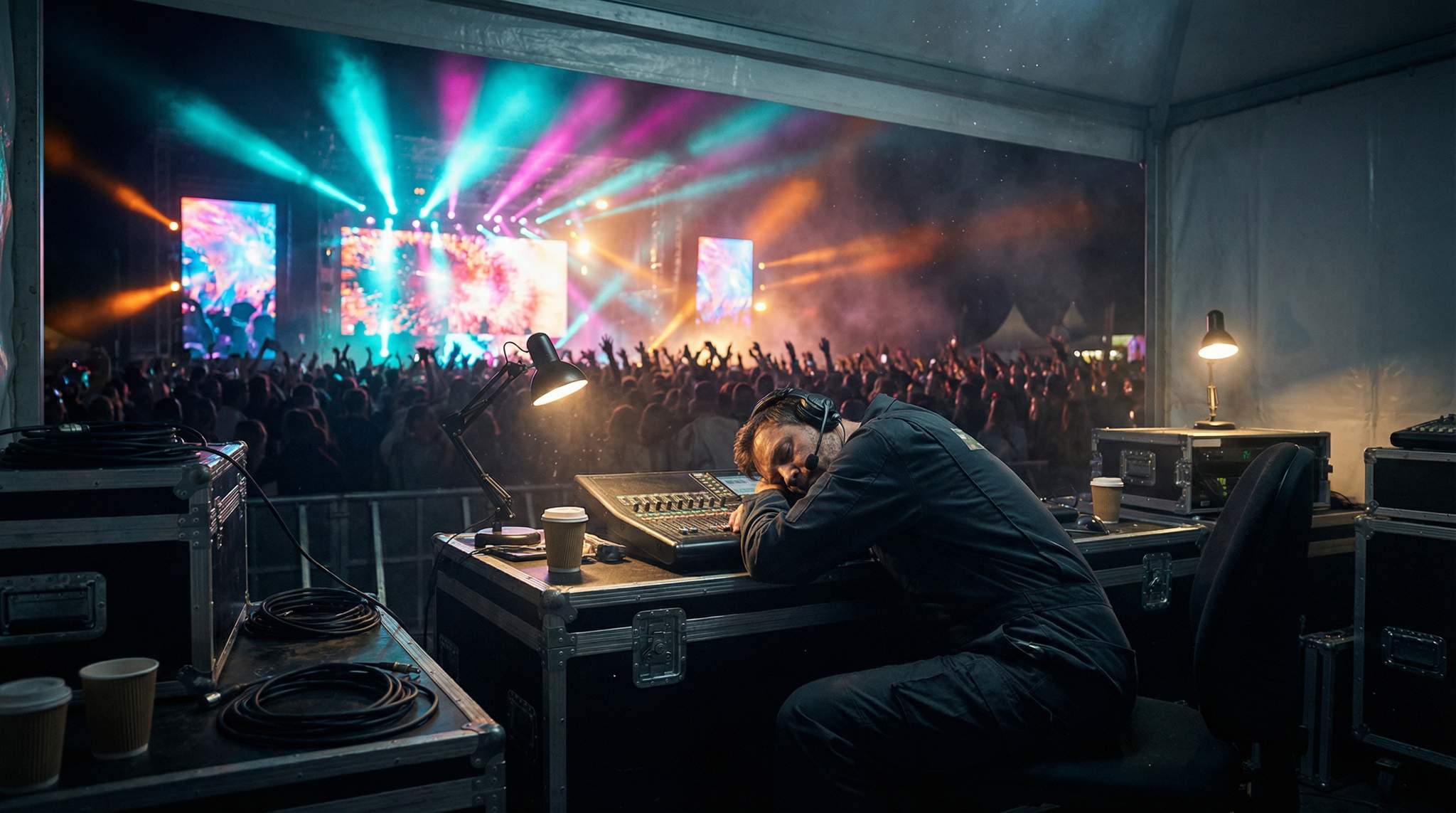
Careful rotation of roles is another key. No single crew member (whether a lighting tech, rigger, security guard, or volunteer coordinator) should be indispensable such that they end up working every hour. If one production manager must oversee it all, arrange for them to have an assistant who can take over during meal breaks or overnight. A culture of “no one leaves until it’s done” often leads to 16-18 hour days – which is exactly what regulators and unions aim to prevent. As a rule of thumb, no shift should routinely exceed 10-12 hours, and certainly not multiple days in a row. In practice, many festivals aim for 8-hour shifts and treat anything beyond 12 hours as an emergency exception. One UK stage manager noted that well-run festivals will schedule two overlapping teams for crucial departments (e.g. one crew handles 8am-4pm, another 2pm-10pm) specifically to avoid “everyone pulling a double” and making dangerous mistakes at hour 15. When you rotate shifts and limit long stretches, you protect your team from extreme fatigue during long festival days and also reduce overtime liabilities.
Need Festival Funding?
Get the capital you need to book headliners, secure venues, and scale your festival production.
Budgeting and Accounting for Overtime Costs
Sometimes, paying overtime is unavoidable – especially for multi-day festivals where certain specialized crew (like riggers or audio engineers) might hit weekly hour limits by the final show. The key is to budget for overtime proactively so it doesn’t become a nasty surprise. In the planning stage, identify roles likely to incur overtime (e.g. overnight security, stage crew during load-out) and calculate the potential extra cost if they work over 8 hours a day or 40 hours a week. Seasoned producers advise creating a specific overtime fund within the budget. This might be rolled into your production contingency. For example, allocate perhaps 10% extra on top of base wages for crew to cover any overtime or meal break penalty pay. If you don’t end up needing it, great – but if you do, it’s already accounted for and won’t sink your finances unexpectedly.
It’s also wise to communicate openly with your crew and vendors about working hour expectations ahead of time. If you’re hiring a local staging company or lighting vendor, ask if their quote assumes a certain number of hours. Many vendors’ crews will charge overtime rates after 8 or 10 hours – know those terms upfront to avoid disputes. In union environments, request the union’s rate sheet or crew contract which will spell out overtime, double-time, and other premiums (such as higher rates for working overnight or on weekends/holidays) as outlined in standard union agreements. This lets you schedule around premium time where possible. For instance, if Sunday crew rates are 1.5× normal, you might decide to do more load-in on Thursday at regular rates and lighten work on Sunday. Or if breaking down on a holiday Monday would incur overtime by default, you may extend the load-out over two slower-paced weekdays instead. The bottom line is transparency and planning – know the overtime rules, inform your team, and incorporate it into your cost plan. Surprises here can be extremely costly. One festival finance director recalls seeing overtime and missed-break penalties drive labor costs 20-30% over budget because the production schedule was too optimistic. That’s a scenario to avoid through careful scheduling and realistic budgeting.
Mandatory Breaks and Rest Periods
Even amid the chaos of a festival, labor laws require that workers get their meal and rest breaks on time. These requirements aren’t just red tape – they exist to keep people safe and functional. Fatigue and hunger can degrade performance as much as a technical failure. Many jurisdictions mandate meal breaks (typically 30 minutes) after a certain number of hours, and shorter rest breaks to recuperate. Failing to provide these isn’t only dangerous; it can lead to financial penalties or lawsuits. For festival producers, the challenge is to ensure breaks happen without derailing the show schedule. The good news is that with planning and the right staffing, you can comply with break laws and keep the show running smoothly.
Legal Requirements for Breaks and Rest
Break laws vary, but virtually all regions have some provision for employee breaks. In the U.S., there’s no broad federal law guaranteeing breaks (except for nursing mothers), but state laws fill the gap. For example, California’s labor code famously requires a 30-minute unpaid meal break by the 5th hour of work (and a second meal break by the 10th hour), plus paid 10-minute rest breaks roughly every 4 hours. If an employer doesn’t allow these, they owe an extra hour’s pay as a “meal break penalty.” Many other states – New York, Illinois, Washington, and more – have their own break mandates (often at least a 30-minute meal period for shifts over 6 hours). Meanwhile, in the EU and UK, break rights are enshrined in law: workers must receive at least a 20-minute rest break during any workday longer than 6 hours (the UK calls this an “uninterrupted 20-minute rest” for >6 hour shifts). Furthermore, the EU Working Time Directive ensures at least 11 consecutive hours of rest per 24-hour period – essentially, if someone finishes a late shift, they shouldn’t start the next shift until 11 hours later. Employers can face legal action if they systematically deny these rest periods. Even where exceptions exist (like emergency work or certain live events that might get short-term waivers), there’s usually a requirement to give compensatory rest later. In unionized festival environments, break rules are often even more explicit: crew contracts might stipulate a 15-minute break every 3-4 hours and a meal break by a set time, with financial penalties (on top of overtime) if breaks are missed.
Critically, these rules apply to festivals and events even though the work is temporary. It’s a common misconception that because a festival job is “just one weekend,” normal labor rules somehow don’t apply. In reality, if a stagehand or a catering worker is categorized as an employee for that weekend, they are entitled to the same break protections as if they worked in a shop or office. In one alleged case, a volunteer at a music festival worked a 14-hour shift on her feet with only a short meal break – a situation that, if applied to paid staff, would clearly violate working time laws regarding breaks. Regulators and courts have little patience for “the show must go on” as an excuse for denying breaks. The onus is on the festival organizer to schedule and enforce these rest periods. Keep in mind that breaks also apply to overtime hours – e.g. if someone does a 16-hour shift (not recommended), they’d legally need multiple break periods within that, not just one at hour 5. And after such a long shift, many jurisdictions would require they receive an extended rest before the next shift (or be paid hefty premiums for coming back early).
Scheduling Breaks Without Disrupting the Show
How do you give your crew their legally-mandated (and well-deserved) breaks when “the show must go on”? The answer lies in staffing depth and advance planning. Firstly, build breaks directly into the production schedule. Just as you block out time for an artist’s set or a stage changeover, block out crew meal times. Communicate these clearly during pre-event briefings: e.g. “The lighting team will take lunch from 1:00–1:30 PM in two groups” or “Front gate staff rotate breaks so everyone gets 15 minutes off every 2 hours.” By formalizing it, you make it part of the event workflow rather than an ad-hoc luxury. Many experienced producers treat break slots as untouchable, moving other tasks around them – this prevents the common issue of perpetually delaying breaks until it’s way past legal limits. If an urgent issue arises (say one entry gate is overwhelmed), have floater staff or supervisors who can cover so that scheduled breaks still happen. It’s better to momentarily slow one operation than to have an overtaxed staffer collapse or to incur a labor claim later because someone missed multiple breaks.
Secondly, consider a buddy system or overlap for critical roles. For example, if you must have a sound engineer at the stage at all times, schedule two engineers to cover the set in shifts, or have an assistant who can take over for 30 minutes. Similarly, assign slightly staggered meal break times for team members so that not everyone is gone at once. At large festivals, department heads often create a break rota (rotation) listing who goes when. The “floaters” approach is also valuable: have a few extra staff who roam and plug gaps, allowing one-by-one relief of people on break. Some festivals even employ dedicated relief staff in roles like security – their job is to cycle through posts, giving each guard a chance to step away while coverage remains constant.
Logistically, providing a convenient way for crew to take breaks is part of the solution. Create a crew break area near the work zones (e.g. backstage crew catering tent, or staff lounge by the gate) so people can go have a meal or rest without trekking across the entire site (which could eat up half their break time). Ensure water, snacks, and first aid are easily accessible in these areas – no one should have to choose between hydrating and missing cues. Some events distribute meal vouchers or have runners deliver sandwiches and water to busy crew, so they can at least eat even if they can’t entirely leave a position. But be cautious: simply handing someone a sandwich while they keep working is not a legal break. If real breaks absolutely cannot happen at a certain time, you may have to pay the applicable penalties – but plan to give that person time to rest as soon as possible thereafter. As a festival organizer, you should foster a culture where breaks are taken seriously. Ensure your stage managers and area supervisors know they are empowered (and expected) to pause work for breaks. It often helps to schedule non-critical entertainment or ambient music during meal periods so operational staff can step away without feeling like attendees will notice a lapse.
Consequences of Ignoring Rest Periods
Skipping breaks might seem harmless in the moment (“We’ll take lunch after we fix this issue”), but it’s a fast track to serious problems. From a legal standpoint, violations can lead to government penalties or lawsuits. In California, for example, if an employer is found to have not provided required meal/rest breaks, they owe an additional hour of pay per missed break per day to the employee – and employees can claim those penalties going back several years. Multiply that by a crew of 100 people over a 3-day festival and you’re facing a huge bill or legal settlement. There’s also the risk of triggering an inspection: multiple complaints about grueling conditions could lead the labor department or health and safety authorities to investigate your event, which is the last thing you want mid-festival.
Beyond fines, the human costs are high. Tired, hungry crew members are far more likely to injure themselves or others. Fatigue has been a contributing factor in event accidents – for instance, crew who haven’t rested are less alert when rigging heavy equipment or driving forklifts in the night. Mistakes that happen at 2 AM after an 18-hour shift can be costly or even deadly. Even if nothing dramatic happens on-site, word spreads in the industry. You don’t want the reputation of being the festival that works crews to the bone without relief; it will make good staff and vendors hesitate to work with you next year. Case in point: the performing arts union Bectu in the UK went public with complaints in 2025, noting some festival workers had no access to breaks or even drinking water during marathon shifts. This kind of press not only embarrasses festival organizers but also can catch sponsors’ and local authorities’ attention, putting future editions at risk.
On the flip side, prioritizing rest can actually boost productivity. A well-timed 30-minute break can reset a crew member’s energy, meaning the next few hours they work will be safer and more efficient. As one festival operations veteran put it, “It’s better to have a stage changeover take 5 minutes longer because we swapped out a tired tech for a fresh one, than to save those 5 minutes and have something go wrong.” In sum: give your team the breaks the law (and common sense) says they need. You’ll get a happier, healthier crew and a smoother festival as a result.
Preventing Crew Fatigue and Burnout
Legal compliance sets the minimum standard – but great festival leaders go further to actively prevent crew fatigue and burnout. Festivals are high-pressure, physically demanding endeavors: long hours, overnight load-outs, loud environments, and constant problem-solving. Without safeguards, even a legally compliant schedule (say 12-hour shifts with breaks) can wear people down day after day. Crew fatigue isn’t just a human resources issue; it’s a safety risk and a threat to your event’s success. This is why industry veterans stress holistic crew welfare practices. By keeping your team healthy and motivated, you’ll get better performance and far less staff turnover. Let’s explore how to keep your crew burning bright and not burning out.
Health and Safety Risks of Overworked Crew
Fatigue can hit festival workers like a ton of bricks. Studies in occupational safety compare extreme fatigue to intoxication in terms of slowed reaction times and impaired decision-making. For a festival context, that means a sleep-deprived site rigger or a stage operator running on fumes could miss a critical safety cue or connect something incorrectly. There have been real tragedies in the events world partly attributed to overwork – from stage collapses to vehicular accidents during overnight tear-downs. Even short of an accident, overworked crew make more mistakes: mispatched cables, forgotten checklist items, incorrectly secured gear. These errors can cascade into show delays or technical failures that affect the fan experience and your bottom line.
Burnout also has a mental health dimension. After days of stress and little rest, even the most passionate staff can hit a wall. Irritability and lapses in judgment increase, which can strain team dynamics or lead to conflicts on-site. Festivals thrive on positive energy backstage as well as out front – when crew morale tanks, it becomes harder to solve problems creatively or go the extra mile for the show. According to research highlighted by industry professionals, chronic exhaustion contributes to higher staff turnover and absenteeism. If your core techs and managers decide they won’t return next year because the job nearly killed them, you’re losing valuable experience. Moreover, word spreads fast in the gig workforce; festivals that neglect crew wellbeing may struggle to hire top talent in the future.
There’s also the reputational risk: in the age of social media, crew members have not been shy to share their “war stories” of brutal festival conditions. All it takes is one Twitter thread or an exposé in the press to tarnish an event’s image by revealing what happens behind the scenes. Proactive festival organizers are keenly aware of this – they aim to make their event known as a gig that cares for its crew. It’s both the right thing to do and a smart business strategy, yielding what one might call a competitive advantage in staffing. Healthy, rested crew members are simply more effective and engaged, which ultimately leads to better run festivals.
Implementing Shift Rotations and Rest Areas
Preventing fatigue starts with the schedule, as we discussed in the overtime and break sections. Shift rotations are your first line of defense against burnout. No one – from volunteer to production manager – should be working open to close every single day. If your festival runs noon to midnight, have at least two teams to cover that span, if not three. Some large festivals run on a three-shift system even for production: morning crew (e.g. 7am-3pm) handles opening preparations, day crew (3pm-11pm) runs the main event, and an overnight crew (11pm-7am) deals with after-hours site tasks and resets. This 24-hour rotation ensures everyone gets adequate sleep in between. For smaller festivals that can’t hire triple staff, the solution might be shorter operating hours or strategically scaling back activity late at night so that a partial crew can manage it. Veteran stage managers often say “Plan for 16 hours of work, but no one person should do more than 12.” That implies handing off between people – which requires having skilled backups for key roles. Cross-training can help here: if two lighting techs can both run the board, they can spell each other off.
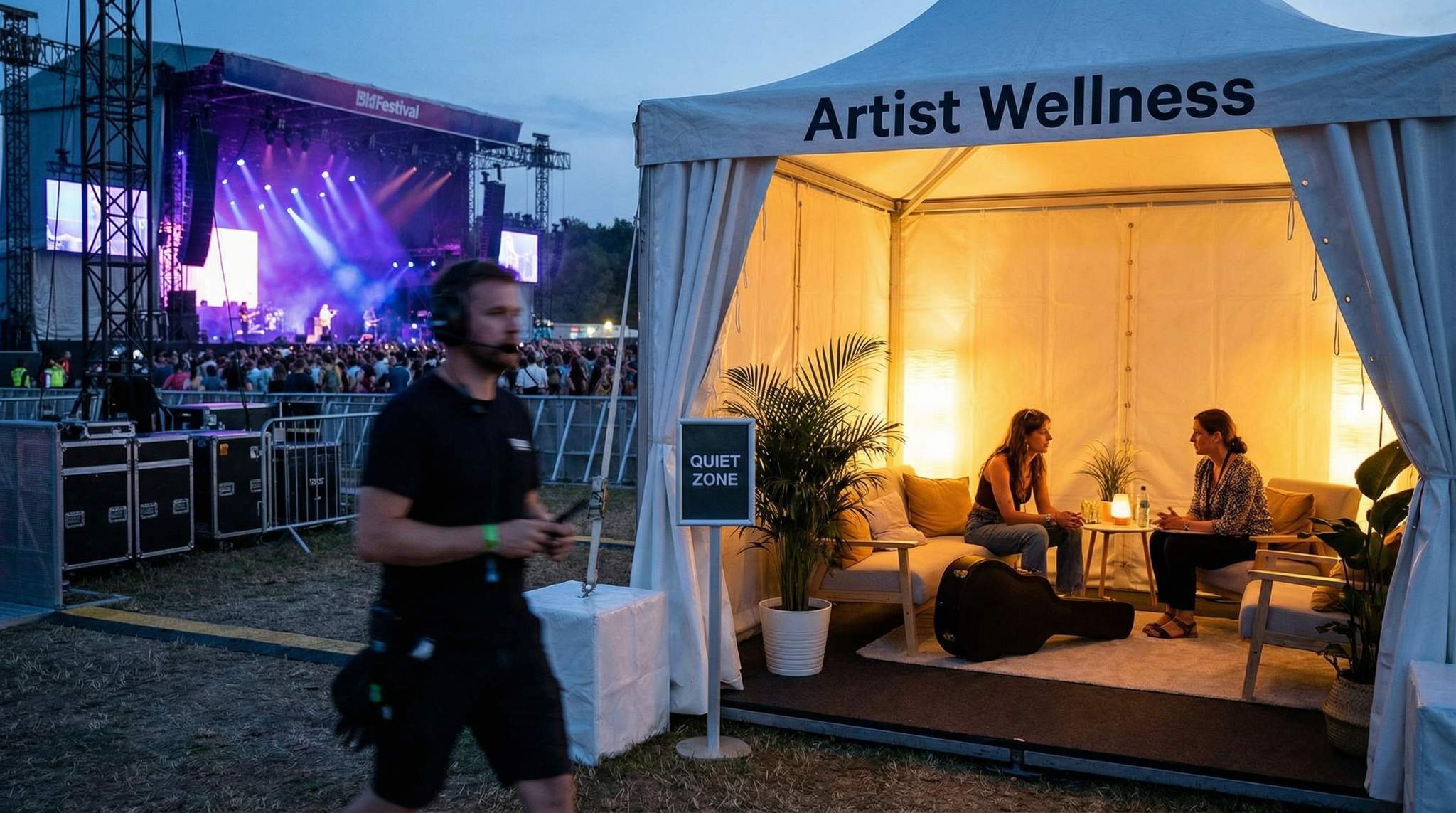
Beyond scheduling, design the event’s infrastructure to support rest. Crew rest areas and amenities are not luxuries – they’re necessities. At minimum, provide a staff-only space where crew can sit, hydrate, and recharge. This could be a tent or trailer with chairs, water, sports drinks, maybe a coffee station and some earplugs. Some top-tier festivals even set up quiet lounges or nap areas backstage for crew. For instance, the Glastonbury Festival (UK) is known to have a dedicated crew camping and welfare area with late-night food and medical staff on hand – acknowledging that the crew are pulling long days and need care just like attendees do. Similarly, the touring production for multi-day EDM festivals often brings masseuses or yoga instructors for the crew during morning meetings to work out the knots of the previous night’s labor. These practices, while not common at every event, underscore a culture of safety and care. Even simpler, make sure crew can take advantage of the rest opportunities: schedule buffer time after intense periods (e.g. after the headliner set, give the core stage crew a 30 min cool-down before they tackle teardown). Ensure they have transportation to lodging if off-site – a crew shuttle at 3 AM so no one is driving dangerously tired.
Hydration and nutrition are another pillar. Dehydration exacerbates fatigue, yet crew often forget to drink water when rushing around. Make free water readily available in all work areas (put those water stations where staff naturally pass by). If the festival is in hot weather, consider offering electrolyte drinks and set up misting fans in work zones. Experienced event organizers emphasize that rotating staff and enforcing hydration breaks not only prevents heat illness but keeps everyone sharper and safer. Likewise, arrange for regular meals – whether catered or via food vouchers. Hungry workers hit an energy crash that no amount of coffee can fix. Providing decent food at sensible times (including accommodating overnight crews with a midnight “lunch”) goes a long way to maintaining energy and goodwill. One festival in California noted that after they started bringing in hot meals for the graveyard shift doing overnight stage builds, the crew were noticeably more alert and appreciative, and they got more done versus previous years surviving on snacks alone.
Another effective strategy is to incorporate mental health support for the crew. This might mean having a HR person or volunteer counselor available for anyone feeling overwhelmed, or simply encouraging a buddy system where team members watch out for each other’s stress levels. Some festivals now include a brief mindfulness or stretch session in the daily crew meeting to get everyone centered. Remember that an event is a marathon, not a sprint – especially a multi-day festival. Encouraging a sustainable work pace and attentive rest can be the difference between a crew that powers through successfully and one that falls apart on day 2.
Monitoring Crew Wellbeing On-Site
Once the festival is live, organizers should actively monitor crew wellbeing just as closely as attendee experience. Make it a point for supervisors to do “welfare checks”: walk around and observe the crew at work. Are people showing signs of exhaustion – glassy eyes, slurred speech, excessive yawning, or difficulty concentrating? Those are red flags that someone needs a rest ASAP. If a particular team has been dealing with nonstop issues (say the tech crew has been fighting a power outage for two hours), consider sending in replacements or giving them an extended break once the crisis is over. Empower team leads to pull someone out if they seem dangerously fatigued. It’s better to rotate in a late substitute (even if they’re less experienced) than to push someone past their limit.
Keep communication lines open. Encourage crew to speak up if they are feeling unsafe or too tired to continue – without fear of judgment. Cultivating this kind of culture means framing it in safety terms. Event Safety trainers often tell crews, “It’s okay to shout out if you need a break – we’d rather slow down for 5 minutes than have an incident.” Reinforce this in daily briefings. Some events use anonymous check-in forms or apps where crew can rate their fatigue level at the end of each day, helping management adjust staffing if multiple people report high fatigue.
Another consideration is length of engagement. If your festival involves a week of setup, three show days, and two days of breakdown, that’s potentially 10+ days straight. Don’t have the same people on-site every single day without time off. For longer production runs, schedule at least a day off for individuals in the middle if possible, or bring in fresh crew for later phases. Planning load-in and load-out far enough apart can ensure the core show crew doesn’t immediately transition into tear-down after running on adrenaline all weekend. A trick some producers use: hold a short, informal debrief the morning after the festival ends (before breakdown starts) with key crew, both to capture issues and to check everyone’s state of mind. Often, people will admit they’re spent; you might then decide to hire extra local labor for breakdown or extend the teardown schedule to avoid pushing an exhausted crew.
Finally, celebrate and incentivize healthy behavior. Make it known that you appreciate crew taking care of themselves. Small gestures – free massages backstage, crew-only chill-out events after the festival, public thank-yous for the hard work – all contribute to a sense that management values the crew’s well-being. When crews feel valued, they are more likely to pace themselves responsibly versus feeling like they must martyr themselves for the event. A festival that champions fair working conditions and crew care not only avoids labor law failures, it earns loyalty. As one production director put it: “Take care of your people, and they’ll take care of your festival.”
Employee vs. Independent Contractor: Getting Classification Right
One of the thorniest legal questions festival organizers face is how to classify their workers: employee or independent contractor? This distinction affects overtime eligibility, tax obligations, insurance, and more. Festivals often involve a patchwork of staffing – some folks on payroll, many hired as freelancers or through agencies. It might be tempting to label everyone a “contractor” to simplify things, but misclassification can lead to severe penalties. Getting it right means understanding the criteria that authorities use to differentiate true independent contractors from employees in disguise. It’s not just a paperwork issue; it’s about treating your crew fairly and protecting your event legally.
Knowing the Difference Between Contractors and Employees
The fundamental difference comes down to the level of control and integration. An employee is someone you direct in terms of what work to do, when and where to do it, and how to do it. They typically rely on your organization for tools/equipment and are part of your ongoing business. An independent contractor, by contrast, is in business for themselves – they may offer a specific service to your festival, but they decide how to execute it, often use their own tools, and can contract with other clients. In many countries, there are multi-factor tests. For example, the U.S. IRS and Department of Labor look at factors like: who sets the work hours and location; whether the worker can make a profit or loss on the job; whether the relationship is ongoing or project-based; and who provides instruments and supplies. If you tell a person “Show up at 10am and work under my stage manager doing these tasks with our gear,” that sounds like an employee. If you instead say “Deliver a completed stage installation by Friday and you’ll invoice us a flat fee, use your own team/equipment as you see fit,” that leans toward a contractor arrangement.
For festivals, typical employees might include your core operations staff, administrative personnel, or temporary hires that you manage directly (like hourly ticketing staff or runners). Typical contractors could be specialized roles like a pyrotechnics expert you hire just for a show, a staging company, or a freelance designer who’s creating your site map – they handle their own methods and you get the end result. However, the waters get muddy with roles like stagehands, technicians, and even stage managers. In some jurisdictions (like parts of Europe), labor law assumes most workers are employees by default and only certain professions can be contractors. Other places (like the gig-heavy U.S. event scene) have more contractors, but still apply tests: for instance, California’s “ABC test” under AB5 legislation makes it harder to classify workers as contractors in the entertainment sector. The “B” prong of that test requires the worker perform work outside the usual course of your business – tricky when your business is putting on a festival and the workers are helping do exactly that.
To make it clearer, here’s a quick comparison of key traits:
| Factor | Employee (on Payroll) | Independent Contractor (Freelancer) | Volunteer (Unpaid, for-profit event) |
|---|---|---|---|
| Payment | Wages or salary (hourly/day rate); employer withholds taxes and often provides benefits if long-term. | Invoice or one-time fee; contractor handles own taxes, no benefits from hiring entity. | No monetary payment (may receive perks like a ticket or merch); not on payroll. |
| Control & Schedule | Employer controls schedule, location, and how work is done. Worker is part of the event’s staff hierarchy. | Contractor controls how to achieve the agreed task; sets own schedule (within deadline) and often supplies own tools. | Organizer should have minimal control; volunteers choose their tasks/hours (within agreed shifts) and can leave without penalty. |
| Labor Law Coverage | Covered by labor laws: entitled to minimum wage, overtime, breaks, etc. Employer must provide workers’ comp and follow all employment regulations. | Generally not protected by labor laws as an employee (though some laws apply to all workers). No overtime or break guarantee from client; expected to manage their own work. | Not considered an employee if truly volunteering. Labor laws often still apply if a volunteer is effectively working like an employee (risk of misclassification). |
| Example Roles | Ticketing staff, stage crew hired directly, site managers on payroll, temp admin assistants. | Staging company crew contracted for build, sound engineer who brings own kit for a set fee, freelance graphic designer for festival map. | Event helpers through a fan volunteer program, street team handing out flyers in exchange for entry, charity partner volunteers. |
Understanding these distinctions helps you decide how to hire. If you need to dictate a worker’s entire process, integrate them into your team, or keep them on for repeated events, you’re likely better off hiring them as an employee (even a short-term one). On the other hand, if you need a highly specialized service and the person/company has their own business doing that, a contractor model makes sense. Always check local laws – the definitions can vary. For example, some countries recognize a middle status of “worker” or “casual worker” with limited rights. And unions can play a role too: in some cities, stagehands might be union members dispatched as contractors in practice, but you still must treat them per union rules (which mimic employment benefits like overtime, breaks, etc.).
Risks of Misclassification
Why not just call everyone a contractor and avoid overtime, payroll taxes, and paperwork? Because if you do that wrongly, the blowback can be fierce. Misclassifying employees as independent contractors is a common violation that labor departments and tax authorities actively pursue. If an investigation (or lawsuit) finds that your “contractor” should have been an employee, you could be liable for back wages (including overtime), unpaid payroll taxes, penalties for missing social contributions, and fines for labor law violations like lack of workers’ compensation coverage. For instance, imagine you paid a crew member a flat \$1,000 for a festival weekend as a “contractor,” but during that time they actually worked 60 hours under your direct supervision. If later they file a claim or audit occurs, you might have to retroactively pay them overtime for those hours (which could be an additional \$500+), plus taxes and perhaps penalties for not adhering to break laws or minimum wage (if that flat fee averaged out below the hourly minimum when you calculate it).
Legal risks aside, there’s reputational and operational risk. A disgruntled crew member who feels they were exploited as a “contractor” can tarnish your festival’s rep or rally others to challenge you. In 2023, a group of festival bartenders in Virginia alleged they were misclassified and underpaid (that \$5/hour case) and took the matter to court, alleging wage theft and misclassification. These situations become public record, and can scare away other workers or sponsors. Moreover, incorrectly classifying workers might void your insurance in some cases – for example, if your event insurance or workers’ comp policy only covers employees and an accident happens to someone you’ve misclassified, you could find yourself personally on the hook.
To avoid all this, it’s best to err on the side of caution. If someone doesn’t clearly meet the contractor criteria, bring them on as a temporary employee (or hire through a staffing agency that puts them on that agency’s payroll, which is a common solution). Yes, it might cost a bit more upfront (with payroll taxes, overtime, etc.), but it is far cheaper than a misclassification lawsuit or government enforcement action. Keep in mind that many regulators also do sweeping checks across events. There have been efforts in some places – for example, parts of Europe – to scrutinize music festivals for use of unpaid interns or “volunteers” doing what should be paid jobs. The safest course is transparency: document why you are classifying someone as contractor or employee. If contractors, have a written agreement specifying the scope of work and some independence (while that alone doesn’t immunize you, it helps demonstrate the intended relationship). If employees, be diligent in following wage and hour laws for them.
Choosing the Right Hiring Approach
A successful festival often uses a mix of staff models. For core roles that require loyalty, consistency, and full integration into the festival operation, you’ll lean towards employees. This could include your production leads, department managers, site operations teams, etc. You might hire them on a fixed-term employment contract covering the festival season or event duration. For roles that are more ad-hoc or specialized, contracting can make sense: e.g. hiring a renowned pyrotechnics crew for a one-off display, or bringing in a freelance video streaming technician for a live broadcast, where they operate fairly independently. Vendors are typically contractors too – if you contract a security company or cleaning service, their people are the vendor’s employees, not yours (just be sure to check the vendor is compliant with laws for their staff!).
One common scenario is using local crew companies or labor brokers in each city on a tour – they provide “contractors” for your dates, but ensure that behind the scenes those folks are properly employed. For instance, in the UK you might use a crewing company that sends workers who are technically zero-hour employees of that company (so all their tax and overtime is sorted out), and you just pay the agency. This can reduce your admin burden while keeping things legal.
Also consider volunteer vs paid carefully (we’ll delve into volunteers next). Don’t rely on volunteer status to fill roles that might legally be considered employment. If you find you need someone to work under close direction for long hours performing critical tasks, do the right thing and budget to pay them. Not only is it legally safer, it’s also likely to get you a more reliable workforce. Many seasoned festival producers recommend a “pay for what you need” philosophy: use volunteers for supplemental, community-facing roles, but pay your technical and operational crew fairly so you can demand the performance you need under lawful conditions. In summary, choosing how to hire is about balancing cost, expertise, and compliance. Use contractors strategically, employees where necessary, and always double-check that each person’s classification passes the legal tests in your region. It’s a bit of extra homework, but it could save your festival from major legal headaches down the road.
Volunteers and Interns: Free Help or Legal Liability?
Festivals often rely on armies of volunteers – smiling folks scanning tickets, picking up trash, or staffing info booths in exchange for a free pass and a cool experience. Volunteers can be a wonderful addition and foster community spirit, but mismanaging volunteer programs can land you in legal hot water. Simply calling someone a “volunteer” doesn’t automatically exempt you from labor laws regarding fair pay. There are rules about when unpaid labor is truly voluntary and when it’s actually employment in disguise. Similarly, bringing on interns or students for “experience” comes with regulations. This section will guide you through using volunteers and interns legally and ethically, so you get the help you need without crossing the line.
Volunteer vs Employee: Defining Roles Legally
The first thing to understand is that labor laws in many countries draw a line between for-profit and non-profit contexts. Generally, true volunteering (unpaid work) is legally allowed for non-profit organizations, charities, or public service events. If your festival is run by a non-profit or is a charitable event, you have more leeway to use volunteers (though you must still treat them well and not subject them to unsafe conditions). However, if your festival is a for-profit enterprise, using unpaid volunteers gets tricky. For-profit companies in the U.S., UK, and many other countries usually cannot legally benefit from unpaid labor for tasks that are essential to the business. The rationale is to prevent businesses from evading minimum wage laws by calling workers “volunteers.” In the events world, a grey area has emerged: volunteers at for-profit festivals typically receive non-cash compensation (like free tickets, merch, or exclusive access) in exchange for their work. Regulators are increasingly scrutinizing this practice of volunteer compensation. If a volunteer’s arrangement looks too much like a job – set hours, specific duties, and especially if the “perk” is basically wages in kind – there’s a risk they could be deemed an employee entitled to wages.
Several well-known festivals partner with charities to structure their volunteer programs. For example, major UK festivals like Glastonbury and Reading/Leeds partner with Oxfam and other charities. Oxfam recruits and manages the volunteers, who work at the festival (often as stewards) and in return, Oxfam gets a donation and the volunteers get entry and meal vouchers. This creates a buffer, since the volunteers are doing it under a charity’s umbrella. Oxfam’s standard is typically 3 shifts of 8 hours (24 hours total) with proper breaks, in exchange for a ticket and camping, a standard set by Oxfam’s volunteer guidelines. By keeping volunteer shifts reasonable and framing it as a fundraising/charitable activity, these festivals stay on the right side of the law and ethics. If you’re organizing a festival and want a large volunteer force, consider a similar approach: work with a local non-profit that can supply and supervise volunteers, or set up your own volunteer program in a way that emphasizes the voluntary, fun nature (and doesn’t resemble a full-time job).
Key things that distinguish a volunteer role from an employee role include:
– Volition: The individual should be offering their time freely, without coercion or expectation of a guaranteed benefit. They can walk away without consequence (aside from not getting the perk).
– Limited Scope: Tasks should be limited in time and responsibility. Asking volunteers to work 10-hour days across the whole festival crosses a line. A few hours per day or a set number of shorter shifts is more appropriate.
– No Economic Pressure: If someone depends on the role for income or significant value (e.g. “20 hours of work for a \$300 ticket” starts looking like a barter of labor for pay equivalents), it leans toward employment. Perks should be modest tokens of appreciation, not calculated wages.
– Different from Employees: Volunteers ideally should complement, not replace, paid staff. If all your front-of-house staff are “volunteers” doing the same job as a paid usher at another venue, that’s suspect.
Misclassification here can lead to scandals and legal challenges. There have been instances where volunteers have claimed they were actually doing a job and deserved pay – especially if they felt overworked or misled. To avoid issues, clearly document the terms in a volunteer agreement outlining services and ensuring no one is overstaying their planned shifts: outline the hours expected, the training provided, the perks given, and note that it’s not an employment contract. Always give volunteers an out – e.g. they can resign if they want (maybe forfeiting their ticket, but no further penalty).
Structuring a Compliant Volunteer Program
Running a volunteer program that is both compliant and rewarding requires thoughtful structure. Here are best practices drawn from festival veterans and guidance on fair volunteer use and ensuring they are not obligated to work:
– Set Reasonable Hours: Limit volunteer shifts to a manageable length – commonly 4-6 hours, and rarely more than 8 hours in one go. If your volunteers work multiple days, cap the total hours (e.g. 12-16 hours total over a weekend). Ensure they get meal breaks and rest like any worker should. Never schedule volunteers for overnight graveyard shifts or extremely hazardous tasks reserved for professionals.
– Provide Proper Training and Supervision: Volunteers should be well briefed on their duties and safety protocols. Even though they’re not paid, you must ensure a safe working environment for them. Assign volunteer coordinators or team leaders to supervise and be a point of contact for any issues. This not only keeps volunteers safe and happy, it also reflects that you treat them with respect – which can protect against later claims of exploitation.
– Offer Appropriate Perks, Don’t “Pay” Under the Table: It’s fine to reward volunteers with a festival t-shirt, free meals during shifts, or a ticket to enjoy the event when off-duty. Just don’t offer something that equates to an excessive wage substitute. For example, instead of saying “Volunteers work 20 hours for a free VIP pass worth \$300” (which, as noted, starts sounding like a job based on value exchange), frame it as “Volunteers get free entry and a behind-the-scenes experience” and keep the required hours reasonable for that. Some events take a deposit from volunteers (like charging the ticket cost up front and refunding it after they complete shifts) to ensure they show up – this can work, but make sure to refund promptly to avoid disputes.
– Youth Volunteers: If you allow under-18 volunteers, be extra cautious. Many places still require parental consent and limit the tasks minors can do (no alcohol service, no heavy equipment, no late hours) under child labor laws. Ensure they’re supervised by an adult. It might be wise to set a minimum age (e.g. volunteers must be 16+). We’ll cover more on youth labor in the next section, but it applies equally to volunteers.
– Partner with Nonprofits: As mentioned, one of the safest ways to do for-profit event volunteering is via a nonprofit. For example, have a charity “sponsor” the volunteer program, where volunteers technically sign up with the charity (which then receives a donation or fundraising credit). This puts a clear public service spin on their work and often comes with established guidelines (Oxfam, for one, has a very clear code of conduct and limits for its festival volunteers). Just ensure any third-party volunteer provider is reputable and compliant themselves.
– Show Genuine Appreciation: Treat volunteers as part of the team, not free labor to be used and forgotten. Provide them with behind-the-scenes benefits like an appreciation party after the festival, a thank-you note from organizers, or first dibs to volunteer next year. Happy volunteers are your best ambassadors – and they’re more likely to stick to their agreed hours and not complain if they feel valued. If things go wrong (say a volunteer feels they were mistreated by a supervisor), address it earnestly. Ignored volunteers might seek external remedies (like blasting on social media or complaining to labor authorities) whereas heard and appreciated volunteers will remain allies.
By structuring your volunteer program with these principles, you reduce legal risks and create a positive environment. Remember, compliance here is not just about avoiding lawsuits – it’s about upholding your festival’s values. Festivals often celebrate community and art; mistreating volunteers would betray that spirit. If you get this right, volunteers can be a huge asset: they bring passion and often become loyal fans who champion your festival for years.
Interns and Work Experience: Play by the Rules
What about interns or students who want to learn event production? Many festivals offer internships or “street team” opportunities, which can be mutually beneficial. However, internships at festivals (especially unpaid ones) must be handled carefully to comply with labor laws. In the U.S., the Department of Labor uses a seven-factor test (the “primary beneficiary” test) to determine if an unpaid intern at a for-profit company is lawful. Essentially, the internship must be educational in nature and benefit the intern more than the company. If an intern is doing real work that you would otherwise pay someone to do, and not receiving academic credit or significant training, they probably should be paid at least minimum wage. For example, having an “intern” who actually acts as your full-time artist liaison or social media manager is likely misclassification. On the other hand, a student who shadows your technical director for a few days, learning and only occasionally assisting, could be legitimately unpaid as an educational experience.
In the UK, similar rules apply: most interns who are contributing to a business must be paid the National Minimum Wage. Only those doing an official student placement, or volunteering for a charity, or doing only observational work (no real duties) can be unpaid. Festivals have gotten in trouble before for calling staff “interns” and not paying them. It’s far better to either limit unpaid internships to short-term, education-focused placements or just pay your interns. A modest stipend or expense coverage can also show goodwill (even if not strictly required, it helps morale and fairness). If you do unpaid internships, make sure there’s a strong training component: perhaps assign a mentor, set learning goals, and ensure the intern isn’t displacing a paid worker.
Some large festivals collaborate with universities or vocational programs, offering credit or practicum hours for work at the festival. This is a great approach because it frames the experience in an academic context and usually comes with oversight (the school might require certain conditions be met). If you go this route, coordinate with the institution on what the student needs to get out of it, and document that you provided mentorship and a structured learning experience.
Lastly, whether volunteers or interns, it’s wise to carry proper insurance that covers them and to brief them on safety. Even if they’re not “employees,” if they get hurt or cause damage, you could be liable. Many insurance policies have clauses covering volunteers – double-check this with your insurer. And have all volunteers/interns sign waivers if appropriate (though note a waiver doesn’t excuse you from gross negligence, it just shows they acknowledged certain risks). Treat them as part of the team in safety trainings and briefings. They should know they have the right to a safe environment and the ability to say no to tasks that seem dangerous or unethical.
In summary, free labor isn’t really free – it comes with strings attached. By respecting those strings and planning well, you can harness volunteer enthusiasm and intern curiosity in a way that enhances your festival rather than becoming a liability. Many festivals thrive thanks to dedicated volunteers, and by following the guidelines above, your volunteer program can be a win-win for everyone.
Youth Labor Laws: What Festival Teams Must Know
Hiring energetic young staff can seem like a great idea – high school or college students often jump at the chance to work at a music festival. But when workers are under 18 (minors), there’s an additional web of child labor laws to navigate. These laws are very protective, limiting the type of work and hours minors can do, even if they’re eager and capable. Festivals need to be extremely careful when employing anyone under the legal adult age. Failing to follow youth labor regulations can lead to severe penalties and public scandal (nobody wants their festival on the news for exploiting kids). Here we’ll cover the basic restrictions and good practices to ensure any under-18 crew or volunteers have a safe, legal experience.
Minimum Ages and Hour Limits for Minor Staff
How young is too young to work at a festival? In most places, anyone under 14 is generally prohibited from employment (with some exceptions like child performers with permits). Ages 14-15 are usually allowed only in very limited roles and hours, while 16-17 year olds have fewer restrictions but still aren’t treated as fully adult workers. Let’s break down a few jurisdictions:
– United States: Federal law (FLSA) sets 14 as the minimum age for most non-agricultural work, and even then tightly restricts 14-15 year olds: during the school year they can work a maximum of 3 hours on a school day (8 on non-school days) and only between 7am and 7pm (extended to 9pm in summer). They also can’t exceed 18 hours/week during school weeks (40 in summer). For 16-17 year olds, there are no federal hour limits – they can work the same hours as adults – but there’s a long list of hazardous jobs they cannot do (no operating heavy machinery, no driving vehicles on public roads, no handling explosives, etc.). Many U.S. states add extra rules: e.g. some require work permits from the school for under-18, or limit late-night work even for 16-17 (like not past 10 or 11pm on school nights). Always check your state’s specific youth employment laws in addition to federal.
– United Kingdom: The minimum school leaving age is 16, but under 16s can work part-time with local authority permission. Generally, 14 is the minimum for “light work” (like a weekend job). They cannot work during school hours, not more than 2 hours on a school day or Sunday, and no more than 8 hours on a Saturday (for 15-16-year-olds) with weekly maximums (12 hours/week during term, 35 hours/week on break). For 16-17 (“young workers”) who have finished school, the law limits them to 8 hours a day and 40 hours a week (can’t usually opt-out of this like adults can), and they cannot work between 10pm and 6am in most jobs (with some exceptions in entertainment if supervised). They also must have a 30-minute break after 4.5 hours work, slightly more generous than the 20 min for adults.
– EU (General): Similar to the UK since those rules came from the EU directive: under 18, generally max 8 hours/day, 40/week, and no night work. Many countries require special permission for 16-17 year olds to work at night even in entertainment. And all prohibit truly hazardous roles for anyone under 18.
– Australia & NZ: These vary by region, but typically 15 is a common minimum age for most part-time work (with parental consent), and restrictions on hours especially on school nights. For example, in New South Wales, under 18s can’t work more than 10 hours in one day or 50 hours in a week, and under 15s have stricter limits.
The upshot: if you’re considering hiring minors, you must plan their schedules to fit within these constraints. That likely means they can only be scheduled for relatively short shifts and likely not late at night. A festival that runs into the late evening is inherently challenging for minor employees unless you have roles that wrap up early (like morning setup, afternoon shifts in family areas, etc.). Keep good records of their birthdates and any required work permits or parental consent forms. If inspectors show up (some areas do spot-checks on youth employment especially), you need to be able to demonstrate compliance.
Tasks Minors Should (and Shouldn’t) Do
Youth labor laws also enumerate prohibited tasks for minors, focused on safety. As a festival organizer, you must keep anyone under 18 away from dangers like:
– Alcohol service: Many places forbid minors from serving or selling alcohol. If you have under-18 volunteers or staff, they can help in other areas (like scanning tickets, customer service, etc.), but don’t stick them on the bar staff. Even where 16-17 year olds can legally serve alcohol (with a permit or if supervised, like in the UK), it might not be wise – it poses legal risks and potential backlash.
– Hazardous equipment: No under-18 should be operating forklifts, heavy vehicles, pyrotechnics, or certain power tools. In the U.S., the Department of Labor lists jobs like operating powered saws, using hoisting apparatus, or working at heights above certain feet as off-limits for those under 18. For festivals, that means no minor should be climbing truss, driving trucks, operating generators, etc. They also shouldn’t be doing electrical work or other skilled trades tasks reserved for qualified adults.
– Excessive manual labor: While a fit teenager might carry boxes just fine, there are often guidelines to not employ minors in extremely strenuous labor or in environmental extremes. So don’t assign a 16-year-old volunteer to spend 8 hours in direct sun lugging fencing (you shouldn’t assign anyone to that without rotation, frankly!). Also, avoid putting minors in crowd control or security roles where there could be physical altercations.
– Late-night security or overnight shifts: As noted, many laws bar night work for minors. Beyond legality, it’s common sense that having a minor roaming a festival site at 2 AM is not appropriate. They lack the experience to handle emergencies and it could be unsafe for them.
– Anything they’re not trained for: Even tasks allowed by law should only be done if the young person is properly trained and supervised. If you have, say, a 17-year-old interning with the stage crew, let them observe and maybe assist with simple tasks – don’t have them solo responsible for critical things.
So what can younger workers or volunteers do at a festival? Plenty of lighter-duty, supervised, daytime activities. Think along the lines of hospitality and support roles: staffing an information booth, acting as artist hospitality runners (if they have a chaperone or are mature), helping with ticket scanning or wristbanding during daylight, assisting in the merch tent, or working in kid-friendly activity areas (if it’s a family festival). They can also help with cleanup crews (daytime trash pick-up, etc., though provide gloves and safe gear). In volunteer contexts, minors often team up in groups for things like handing out programs, collecting recyclables, or guiding attendees – always with adult oversight nearby.
Always do a safety briefing specifically for younger team members. Make sure they know their limits (“If a task seems dangerous or you’re asked to do something you’re not comfortable with, you have the right to say no or get an adult.”). Provide extra supervision and maybe an on-site “guardian” or supervisor who is responsible for the under-18 staff’s welfare. Also ensure their parents or guardians are fully in the loop and have signed any required consent forms regarding child labor that specify the hours and nature of their duties. For example, if you have 17-year-olds volunteering, have a signed form from guardians that lists what they’ll be doing and the hours, and an emergency contact.
Ensuring a Safe, Fair Experience for Young Crew
When you do involve minors in your festival workforce, go above and beyond to make it a positive, learning experience for them. Young workers can bring great enthusiasm and fresh perspective, but they also need guidance. Pair them with experienced mentors. For instance, if you have an intern in the production office, have them shadow the production coordinator. If you have a teen helping backstage, assign them to assist an artist liaison or stage manager who can teach as they go. This not only helps the minor learn, it also keeps them out of trouble because someone is watching out for them.
Make sure the basics are covered: appropriate breaks (minors often require more frequent breaks by law), plenty of water and food, and stricter hour limits than even the law might state. Even if a 17-year-old legally could work a 10-hour day, consider whether that’s wise – they might not have the stamina or judgement yet. Perhaps limit them to 6-8 hours and certainly no back-to-back long days. Don’t rely on them for critical path tasks; consider their contributions a bonus to support the team, not a linchpin.
From a community standpoint, bringing in youth can be a great way to engage the next generation of event professionals. But treat it like a mentorship or educational program, not simply cheap labor. Some festivals have formal youth volunteer programs with built-in workshops (e.g., an orientation where they learn about event management, or meet a festival director for Q&A). Not only does this approach avoid running afoul of labor laws (because it’s truly leaning into the educational aspect), it also fosters goodwill and word-of-mouth that your festival invests in young people.
Finally, always abide by any reporting or permit requirements. Many jurisdictions require that if you employ a minor, you have to file something with the local labor office or keep a special record on file. For instance, in parts of the U.S., you might need to have the minor’s work permit on-site and available for inspection. In the UK, under-16s often need a work permit from the local council. Don’t skip these steps. They’re usually simple paperwork but failing to have them is an easy way to get in trouble if someone checks.
In conclusion, involving under-18s in your festival can be rewarding but it’s laden with legal obligations to protect them. Make it a mantra: safety and learning for any young staff or volunteers. If there’s any doubt about a role being appropriate for a minor, err on the side of caution and use only adults. It’s just not worth the risk – morally or legally – to push the boundaries with child labor laws.
Conclusion
Labor law compliance might not be the most glamorous part of festival production, but it’s absolutely foundational for a sustainable event. By mastering overtime rules, scheduling breaks, classifying staff correctly, and respecting the limits for volunteers and youth, festival organizers protect their people and their projects. The most successful festivals in the world didn’t reach the top by grinding their crew into the ground or skirting laws – they did it by building teams who are treated fairly, stay healthy, and want to come back year after year. Compliance is not just about avoiding fines; it’s about fostering a culture of safety and respect. When your crew knows you have their backs (and their legal rights covered), they can focus on doing their best work to create an unforgettable experience for attendees.
In practice, this means planning ahead. A year before your festival, you should be mapping out staffing needs in detail, consulting local labor regulations, and perhaps hiring an HR or legal advisor for tricky areas (like international artist visas or complex union jurisdictions) – much like you’d consult experts for navigating visas and work permits for overseas talent or other compliance hurdles. It also means training your department leads on these principles: make sure your volunteer coordinator knows the volunteer program dos and don’ts, your stage manager understands why crew swap out after 8 hours, and your vendors commit to legal standards too.
By weaving legal compliance into the fabric of your festival’s operations, you ensure that the incredible show you’re putting on isn’t built on a weak foundation. Instead, it will stand solid – with a motivated crew – through whatever challenges come. The payoff is a festival that not only delights fans but also earns the trust and loyalty of staff, crew, and the wider community. That’s the kind of success that lasts.
Key Takeaways
- Plan for Overtime and Limits: Design your crew schedule to minimize excessive hours. Use shift rotations and set an hours cap so no one regularly exceeds 8–12 hours a day or 40 hours a week. If overtime is unavoidable, budget for it and inform everyone of the rules upfront to avoid nasty surprises.
- Enforce Breaks and Rest: Treat breaks as essential. Schedule meal and rest breaks into the day, and ensure crews actually take them. Provide a relief system or overlapping staff to cover critical roles during breaks. Sufficient rest periods (e.g. 10-11 hours off) between shifts are vital – they’re often legally required and prevent dangerous fatigue.
- Monitor Crew Fatigue: Keeping your crew healthy is both a legal and safety mandate. Watch for signs of burnout or exhaustion, especially during multi-day festivals. Provide amenities like water, food, and a quiet rest area. A well-rested crew makes fewer mistakes and is less likely to suffer or cause injuries.
- Classify Staff Correctly: Know who is an employee vs. contractor. If you control how and when someone works, they likely should be on payroll (even if just as a temp) so they get proper overtime, insurance, etc. Use independent contractors only for true outside vendors or specialists. Misclassifying to save costs can lead to legal action and back pay obligations.
- Handle Volunteers with Care: For-profit festivals must be cautious with volunteers. Ensure volunteer roles are truly voluntary – limited hours, primarily for experience or charity, and not replacing paid jobs. Offer reasonable perks (like a ticket or merch) rather than anything that looks like wages. Always follow labor guidelines so volunteers aren’t effectively unpaid employees.
- Youth Workers Restrictions: If engaging staff or volunteers under 18, strictly adhere to child labor laws. Limit their work hours (no late nights or ultra-long shifts) and assign only non-hazardous tasks (no alcohol service, heavy equipment, or unsafe conditions). Obtain any required parental consents and permits, and supervise minors closely for safety.
- Document and Train: Keep clear records of hours, breaks, and crew classifications. Use sign-in/out sheets or digital time tracking to monitor compliance in real time. Train your management team about these policies – everyone from stage leads to vendor managers should understand the importance of giving breaks and not overworking staff.
- Foster a Fair Culture: Make legal compliance part of your festival’s ethos. Show the crew you value them by abiding by wage laws and prioritizing their well-being. A fair, safe working environment not only avoids fines and lawsuits, it boosts morale and productivity – leading to a better festival all around.