Introduction
When thousands of fans pour into a convention center, anything can happen – and seasoned organizers know to expect the unexpected. From surprise fire alarms to sudden guest no-shows, being prepared can make the difference between a minor hiccup and a headline-making disaster. In recent years, conventions have faced everything from security scares to extreme weather. In one case, an armed attendee at a Phoenix comic convention in 2017 slipped past security with multiple weapons, prompting an immediate weapons ban and tighter screening protocols. According to reports from Phoenix Police officers, the situation required swift coordination between event staff and law enforcement. Another year, a false fire alarm forced Phoenix Comicon to evacuate 55,000 attendees on opening day – all over a damaged heat sensor. And of course, the global pandemic upended events everywhere, teaching us hard lessons about health safety.
The message is clear: every fan event needs a robust crisis management plan. In 2026, attendee expectations for safety are higher than ever. Organizers must be ready to protect fans, guests, and staff no matter what happens – and keep the show going if at all possible. This guide will walk through building a comprehensive emergency action plan catered to fan conventions. We’ll cover identifying risks, assembling a response team, crowd control, medical preparedness, communication strategies, and even handling the curveball of a last-minute celebrity cancellation. Real-world examples (both successes and failures) illustrate best practices at every step. By the end, you’ll have actionable checklists and global insights to ensure your convention is ready for anything.
(Note: While we focus on fan conventions – comic cons, anime expos, gaming events, etc. – many of these crisis planning principles apply to conferences, trade shows, and festivals as well.)
Identifying Potential Emergencies and Risks
Mapping Out Worst-Case Scenarios
The first step in emergency planning is to identify the spectrum of threats that could disrupt your convention. Start with a brainstorming exercise: what are all the things that could go wrong? Consider natural disasters, technical failures, security threats, health crises, and anything in between. For example:
Smart Promo Codes & Presale Access
Create percentage or flat-rate discount codes with usage limits, date ranges, and ticket type restrictions. Plus unlock codes for private presales.
- Weather and Natural Disasters: Are you in a region prone to earthquakes, hurricanes, or floods? An earthquake during a Tokyo gaming expo or a hurricane threatening a Florida comic-con weekend could force evacuations or cancellations. Even less catastrophic weather can wreak havoc – a sudden winter storm might strand guests or knock out power.
- Facility Issues: Think fire alarms, power outages, or structural problems. A small electrical fire can trigger a full building evacuation, as happened at a 2021 trade expo in Miami when a rooftop AC unit caught fire and forced the convention center to be cleared. Water leaks, burst pipes, or escalator failures could also pose dangers to attendees.
- Crowd Control Failures: Overcrowding itself is a risk if not managed. Many organizers still recall the tragic Astroworld 2021 festival crowd crush that killed 10 people, reinforcing how deadly crowd surges can be when capacity limits and controlled entry aren’t enforced. Conventions have large crowds too, especially at celebrity panels or exclusive merch drops, so the risk of stampedes or crushing exists if lines aren’t handled correctly.
- Security Threats: Sadly, large public events can be targets for individuals wishing to cause harm. This ranges from bomb threats to an active shooter scenario. In 2017, Phoenix Comicon’s team had to act swiftly when a gunman was discovered on-site with intentions to harm police and a celebrity guest, as detailed in local news reports. Harassment or assaults between attendees also fall under security incidents that require immediate response.
- Medical Emergencies: With thousands of people in attendance, medical incidents are inevitable – anything from heat exhaustion and dehydration to allergic reactions or cardiac events. There might also be broader health crises (as we saw with COVID-19) where an illness outbreak or virus exposure becomes a concern. A recent example: Anime NYC 2021 drew about 53,000 attendees and later learned one attendee had the Omicron variant of COVID-19, prompting health officials to urge all attendees to get tested. Thankfully, because the event required masks and proof of vaccination, it did not become a superspreader – only 2.6% of attendees later tested positive, with no significant spread outside one friend group.
- Technology and Infrastructure Failures: Imagine the lights go out, the Wi-Fi crashes, or your badge scanning system goes down with a line of 5,000 anxious fans outside. If your ticketing or registration platform fails at a critical moment, it can create a chaotic, unsafe backlog at entry. (We’ve all heard horror stories of on-sale systems crashing or registration tech snafus – preparation and backup plans are key to avoid frustrated crowds.)
- Guest and Schedule Disruptions: A major celebrity cancels the morning of the event, a featured panelist misses their flight, or an esports tournament’s servers go down – these aren’t life-and-death emergencies, but they can incite mass disappointment (and anger) if not handled well. Fans might start crowding the info desk or rushing to a surprise alternative event if they feel left in the lurch. These scenarios can become safety concerns too – e.g., a mob of attendees rushing to a stand-in signing session.
- Reputation Crises: While not a physical threat, it’s worth noting that some “crises” are about perception. For instance, a harassment incident that goes viral on social media or a controversial remark by a guest can become a PR nightmare if you’re unprepared. These scenarios demand crisis communication plans to manage fallout and keep attendee trust (more on that later).
By mapping everything from mundane problems (a projector failing) to nightmare scenarios (active shooter, building evacuations), you give yourself the opportunity to craft responses in advance. Don’t shy away from unlikely scenarios – 2020 taught event organizers that even 100-year pandemics can happen in our lifetime. It’s better to have a plan on the shelf for “extreme but possible” events than to be caught off guard. In fact, one industry analysis found that events without a documented emergency plan suffer 300% higher financial losses and take 250% longer to recover compared to those with a structured plan. The time you invest in contingency planning now can literally save your convention – and its finances – in the future.
Learning from Past Convention Crises
A smart way to identify risks is to study real incidents from other conventions. Every seasoned con organizer has a few war stories, and the wider events industry provides plenty of case studies that double as cautionary tales:
Ready to Sell Tickets?
Create professional event pages with built-in payment processing, marketing tools, and real-time analytics.
- Fire Alarms and Evacuations: Conventions have been disrupted by everything from pulled fire alarms to genuine fires. In addition to the Phoenix false alarm mentioned earlier, San Diego Comic-Con experienced a moment of confusion in 2025 when a fire alarm announcement interrupted a panel. Security calmly asked attendees to remain seated as they investigated, and within minutes announced it was a false alarm and all was clear. The Hall H crowd even managed to joke and stay relatively calm. Lesson: Clear communication and a practiced protocol can turn a potentially chaotic evacuation into a minor blip.
- Overcrowding Close Calls: At some anime and gaming expos, poor crowd flow planning has led to scary over-capacity halls. Attendees at Anime Expo 2022 reported dangerously packed corridors on Day 1, with some people feeling panicky – a sign that crowd control plans needed revision. (The organizers responded by adjusting door controls and improving line management the next day.) Lesson: If you get lucky and avoid disaster once, treat it as a wake-up call to improve before the next event. Fans will forgive a jam-packed day if they see you actively fix the issue.
- Harassment and Safety Incidents: Unfortunately, there have been instances of harassment or assaults at fan conventions that sparked community outrage. The positive side is the “Cosplay Is Not Consent” movement, which led many conventions to adopt strict anti-harassment policies and safety teams. New York Comic Con, for example, introduced a formal harassment policy in 2014; that year, reported harassment incidents at NYCC dropped to 8 from 20 the year prior. Lesson: Acknowledging and preparing for personal safety issues (and training staff to handle them) creates a safer environment and shows attendees you prioritize their well-being.
- Guest No-Shows: It’s almost a rite of passage that eventually a big-name guest will cancel last-minute – sometimes for understandable reasons (health, filming schedule changes) and sometimes without much explanation. One infamous example was DashCon 2014, where multiple featured guests pulled out due to the organizers’ mismanagement, leaving attendees furious and the event’s reputation in tatters. On the flip side, Fan Expo New Orleans 2022 had a wave of celebrity cancellations due to a COVID-19 variant surge – including headliners like Ming-Na Wen and Kevin Smith – but the organizers handled it deftly. They immediately alerted fans via social media and email about the situation, were transparent that the event will be a little different than planned, and assured that anyone who pre-purchased photo ops or autographs with canceled guests would be contacted with refund/exchange options. Organizers stated they shared the fans’ disappointment regarding guests they were looking forward to seeing. As a result, while there was disappointment, there wasn’t chaos. Lesson: Have a communications and refund plan ready for guest cancellations; fans will understand if you’re honest and proactive.
- Global Events and Travel Shocks: Events can be blindsided by things happening outside the venue. A sudden transit strike, an overseas political event, or a visa issue might prevent large numbers of attendees or exhibitors from arriving. Gamescom 2010 in Germany famously saw massive delays when a transit issue left thousands of attendees stuck outside longer than expected. More recently, conventions have had to consider the possibility of another pandemic wave or travel bans. Lesson: Stay informed on external factors (have someone on your team monitor news leading up to the event) and consider “if/then” plans. If a key group of people can’t travel, can you pivot to virtual content for them? If city authorities impose new restrictions, how will you adjust?
By compiling these lessons from past events, you can refine your own list of potential emergencies. This process isn’t about scaring yourself – it’s about illumination. Once you see the range of what might happen, you can start building preparedness into every facet of your convention. The next sections will dive into how to do just that, turning this list of scary “what-ifs” into a concrete action plan.
Building a Convention Crisis Response Plan & Team
Assembling an Emergency Planning Team
Crisis management is a team sport. Long before your event doors open, gather a dedicated emergency planning team to develop and eventually execute your crisis response plan. Include representatives from key departments: operations, security, guest relations, medical/first aid providers, communications/PR, and venue management. Each brings a unique perspective on potential issues and resources available. Experienced con runners recommend scheduling regular planning meetings in the months before the show specifically to talk about safety scenarios and contingency plans – separate from your usual programming or logistics meetings that might gloss over these details.
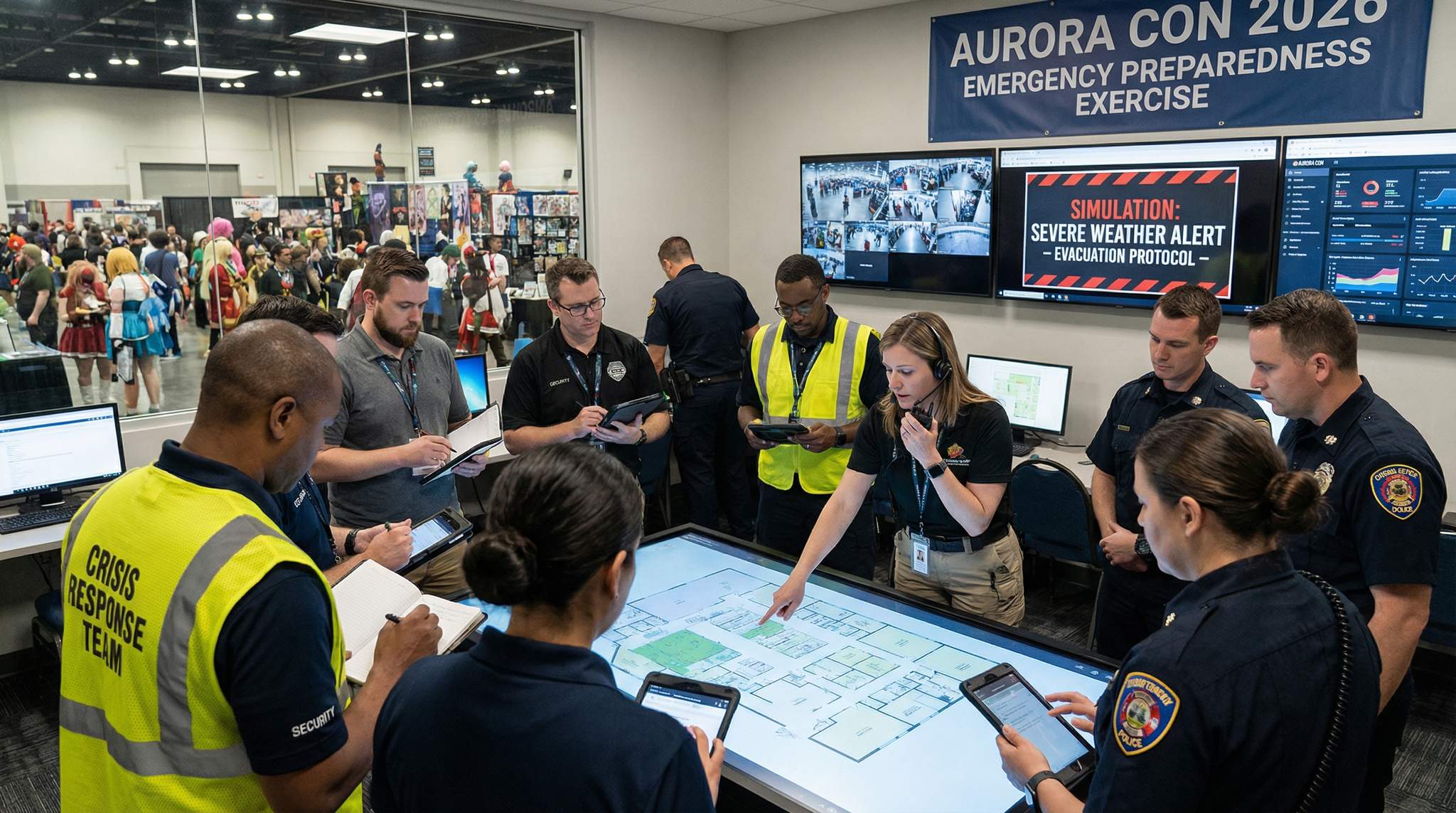
Within this team, identify clear roles and responsibilities for when an emergency hits. Many large events borrow concepts from the Incident Command System (ICS), which is a framework used by professional emergency responders. In convention terms, that means designating an overall Incident Commander (often the event director or head of operations) who will take charge during a crisis, as well as leads for specific areas like Operations, Safety/Security, Medical, and Communications. The table below shows an example of key crisis response roles:
| Role | Primary Responsibilities During a Crisis |
|---|---|
| Incident Commander | Overall decision-maker; coordinates response efforts across teams; liaises with authorities and venue management. |
| Security/Safety Lead | Assesses security threats, manages security staff and evacuation procedures, communicates with law enforcement on-site. |
| Medical/First Aid Lead | Coordinates on-site medical teams and first responders; triages injuries or health incidents; decides if outside ambulances/hospitals are needed. |
| Operations/Facilities Lead | Manages venue infrastructure issues (power, utilities, structural concerns); directs facility staff or contractors to resolve problems; secures critical areas. |
| Communications Lead | Crafts and delivers emergency messages to attendees, staff, media, and on social channels; prevents misinformation; designated spokesperson if needed. |
| Guest/Program Liaison | Manages needs and communication for celebrity guests, panelists, and exhibitors during the crisis (e.g., relocating them, adjusting schedules, keeping them informed). |
| Volunteer Coordinator | Redirects volunteer staff to assist where needed (crowd control, handing out info, calming attendees); relays instructions to the broader volunteer team. |
Depending on your event’s size, one person might wear multiple hats – but the responsibilities should be defined so nothing falls through the cracks. Everyone on this core team should know who is in charge of what when an incident occurs. For example, if a life-threatening injury happens, the Medical Lead might take point on responding while the Incident Commander and Communications Lead coordinate to pause programming and alert attendees with minimal panic. If a disruptive attendee issue arises, the Security Lead and Guest Liaison might work together to quietly handle it without alarming the crowd.
Smooth Entry With Mobile Check-In
Scan tickets and manage entry with our mobile check-in app. Supports photo ID verification, real-time capacity tracking, and multi-gate coordination.
It’s also wise to establish a clear chain of command. If the primary Incident Commander is unreachable (or themselves involved in the incident), who is second in command? All staff should know this hierarchy. One convention playbook we’ve seen uses color-coded badges or vests for the crisis team so they’re easily identifiable in a crowd – something to consider for your event as well.
Documenting the Emergency Action Plan (EAP)
Once your planning team is in place, they should collaboratively write an Emergency Action Plan (EAP) for the convention. This is a formally written document – essentially the master playbook for handling crises. It should cover all the key scenarios you identified (from fire evacuations to missing child protocols to data security breaches) and spell out step-by-step what the response will be in each case. Key elements to include are:
Grow Your Events
Leverage referral marketing, social sharing incentives, and audience insights to sell more tickets.
- Roles & Contact Info: List your crisis team roles (like in the table above) with names and 24/7 contact details (cell, radio channel). Include key venue contacts and local emergency contacts (police, fire, EMT) as well.
- Emergency Communication Plan: We’ll dive deeper into communications next section, but your EAP should outline how info will flow internally (e.g., “notify Incident Commander via radio channel 1, who then alerts Security Lead and venue security office”) and externally (e.g., “Communications Lead drafts announcement for PA and push notification within 5 minutes of incident”).
- Evacuation Routes & Meeting Points: Detailed floor plans showing all exits, evacuation pathways, and safe assembly areas outside. Mark primary and secondary routes for each major room/hall. Note how staff will assist any attendees with disabilities or special needs during an evacuation (for instance, assigning volunteers to the elevators or refuge areas for wheelchair users). As highlighted in designing safe, inclusive, and accessible conventions in 2026, your safety plan must account for attendees of all abilities – from ensuring ASL interpreters know emergency terms to making evacuation chairs available for multi-story venues.
- Specific Scenario Procedures: Break it down by type: fire, severe weather, bomb threat, medical emergency, active shooter, lost child, power outage, etc. For each, write the immediate actions (e.g., pull fire alarm, call 911, etc.), who does what (e.g., “Hall manager directs attendees to nearest exit, Security Lead meets fire department at gate,” etc.), and any special considerations (like “if small contained fire and alarm hasn’t triggered yet, use extinguisher A and have ops kill power in area”). Checklists or flowcharts can be helpful for clarity.
- Resource List: Inventory of all emergency equipment and resources on-site: first aid kits (and what they contain), AED defibrillators, fire extinguishers, emergency generators, flashlights, two-way radios, etc. Know where everything is located. Also list who is certified in CPR, first aid, fire warden training, etc., among your staff and volunteers.
- Key Policies: Include relevant policies like your attendee code of conduct (for harassment or violence issues), your prop weapons policy (to prevent security scares), and any health safety policy (e.g., mask or vaccine requirements, if applicable). These policies can mitigate crises in the first place by setting rules, but they should also note what happens when rules are violated (e.g., “anyone brandishing a weapon-like object will be removed by security and reported to police”). Make sure your EAP aligns with these policies so staff enforcement is consistent.
- Contingency Plans: Outline backup plans for critical convention operations. For example, if your ticket scanning system fails, what is the backup method to check people in (emergency printed attendee list? offline mode on devices?) – and who will deploy that fix? If a keynote panel is aborted, is there a filler program or Q&A session ready to keep people occupied? Having contingency programming or entertainment ready to go can prevent restlessness or crowd surges if an announced event is delayed or canceled.
- Emergency Contacts & Info: A list of local emergency service contacts, nearest hospital or urgent care locations, and the event’s address (you’d be surprised how many staff won’t recall the exact address under duress – put it in writing for when they call 911!). If you have private security or medical contractors, include their on-site leads’ contacts too.
Keep the EAP document clear and accessible. Many conventions print pocket guides or quick-reference sheets for staff and volunteers summarizing the most critical procedures (like evacuation or first aid steps). You might also use a shared drive or an event management app to let staff quickly pull up the full plan on their phones. One tip: don’t bury the EAP in a binder no one reads – make it a living, easily-referenced guide. Some organizers even require staff to pass a quick quiz on the emergency plan basics to ensure it’s been read and understood.
Coordinating with Venue and Authorities Early
Your convention venue is a crucial partner in emergency planning. As soon as you have a draft plan, loop in the venue’s event manager and safety officers. They can provide valuable input: venues often have their own emergency protocols, PA announcement scripts, and rendezvous points for evacuations. Coordinate your plans so that if something happens, your team and the venue’s team act as one unit, not at cross purposes. For example, if the convention center’s policy is that their security always makes the evacuation announcements over the PA, you need to know that in advance and incorporate it (maybe your Communications Lead should feed them the specific message you want announced).
It’s also wise to inform local public safety agencies about your event ahead of time. Many big conventions work with the city police and fire departments in planning stages. You might invite a fire marshal to walk the exhibit hall during setup to ensure aisles are clear and exit routes meet regulations (and avoid last-minute rework). Police may want to know event timings and high-profile guests; in some cases you might arrange off-duty officers for extra security. Some cities require an emergency services plan for large events as part of the permit – including ambulance on standby or a first aid room. Even if not required, having an open channel with authorities means faster help when you need it. As an example, Dragon Con in Atlanta coordinates annually with city police for its big cosplay parade, ensuring street closures and crowd barriers are managed for safety. Likewise, San Diego Comic-Con works closely with local law enforcement and even the Department of Homeland Security for security sweeps, given its size.
Don’t forget to review insurance and legal considerations as part of planning. Ensure your event insurance covers various crisis scenarios (injuries, event cancellation, etc.). If you’re in a hurricane zone, do you have coverage if the event is shut down by city order? Understand the procedure for filing a claim in case you do have to cancel or cut an event short – that can at least cushion the financial blow while you manage the on-site issues. Additionally, make sure your vendor contracts, guest contracts, and venue contracts have appropriate force majeure and cancellation clauses so all parties know their obligations if emergencies occur. It’s not the most exciting part of crisis planning, but it’s critical for the long-term health of your convention business.
In summary, building your crisis plan and team is about being proactive and thorough. You’re effectively scripting your response to chaos, so that if the worst happens, you won’t be scrambling to improvise – you’ll already know who should do what, and how to mobilize help. As the next sections show, a good plan covers not just what the staff does, but also how you will guide and protect your attendees during the storm.
Communication Strategies for Emergencies
Internal Communication and Chain of Command
When an emergency strikes at a convention, clear and immediate internal communication is essential. Your staff and volunteers can’t effectively manage a crisis if they themselves are in the dark or confused. Establish a defined chain for how information flows from the people who first detect a problem up to leadership and back down to all staff. Typically, this means training staff that “if you see something, say something” – report issues to your area supervisor or directly to the operations room. The operations control (your Incident Commander or designee) should have a central communication hub, often via two-way radio and a messenger app or SMS backup.
Use technology to your advantage. Equip key personnel with radios (with assigned channels for different teams: security on one channel, medical on another, etc., and a primary emergency channel for leads). Radio drills are useful – practice concise reporting like “Code RED at Hall C – repeat, fire alarm Hall C” so everyone knows what and where, without ambiguity. Avoid radio clutter and ensure someone is actively monitoring at all times. For broader staff not on radios, consider an emergency text alert system. For example, some events create a staff WhatsApp or SMS group just for urgent alerts (“Lockdown now” or “All-clear issued”) in case radios fail or not everyone has one.
The internal comms plan should also clarify who is authorized to make decisions and initiate key actions. For instance, who has the authority to call an evacuation? Is it the venue manager, your Incident Commander, or jointly decided? If a celebrity’s security team is concerned about something, to whom do they relay it? By removing ambiguity, you prevent delays. During a crisis, seconds matter – your staff should not be debating who calls 911 or whether they’re “allowed” to pull a fire alarm when needed. Empower them via training: if certain triggers happen, do it and inform the chain immediately.
A vital piece is ensuring all staff know the plan and their part in it. Make emergency roles and contacts readily available – e.g., a wallet card or phone lock-screen image listing key numbers and codes. New volunteers or crew should get a short briefing at the start of their shift about what to do if X happens (even if it’s just “find the nearest radio and report to staff”). The quicker your internal network picks up on an issue and coordinates a response, the more smoothly you can also communicate to attendees and mitigate the situation.
Notifying Attendees Without Causing Panic
How you inform attendees of an emergency can greatly influence the outcome. The goal is to alert people to danger or changes clearly and quickly, but without sparking undue panic or confusion. To achieve this, use multiple communication channels and craft messages that are calm, instructive, and credible.
Primary on-site alert methods include:
- Public Address (PA) Announcements: Most large venues have a PA system. Prepare a set of pre-written announcement scripts for likely scenarios (fire, severe weather approaching, etc.) to avoid fumbling for words in the moment. Keep messages short: state what the situation is in general (“an emergency in the building” or “severe weather outside”), and tell attendees exactly what to do (“please evacuate by the nearest exit and move away from the building” or “please remain inside the venue and seek shelter on the lower level”). Reassure them that staff are guiding the response. It helps to designate who will speak on the PA – it might be a venue representative or your Communications Lead. Make sure the first announcement comes fast. Even if you don’t know all details yet, an immediate “attention: we have a possible emergency, stay where you are for now and await instructions” is better than radio silence, which breeds rumors.
- Mobile App Push Notifications: If your convention has a mobile app or uses an attendee SMS system, this can be invaluable for real-time updates. A push notification can reach thousands of attendees simultaneously, even if they are in a loud expo hall or not near a speaker. Use push alerts to reinforce any PA announcement (“Update: The fire alarm is being investigated. Please remain calm and head to the nearest exit as staff direct you.”). It’s also great for granular updates (“Hall B events will resume at 3 PM” or “The south entrance is now clear and open for re-entry”). Be mindful of tone – text messages from the official app add a sense of authority, so double-check wording to avoid alarming people more than necessary.
- Digital Signage and Screens: Leverage any projectors, info screens, or even your main stage screens to flash emergency notices. For instance, if an evacuation happens, having clear arrows or text like “EXIT ?” on electronic signage around the venue helps guide people (especially those at the back of a crowd who might not hear the announcement). Modern venues or event apps can even push a banner to all digital displays with a warning. According to smart wayfinding best practices for events, digital signage can greatly enhance attendee navigation – in emergencies, it’s a crucial supplement to staff shouting directions.
- In-Person Staff Communication: Don’t underestimate the power of a staff member with a loudspeaker or just a loud voice. Train your volunteers and staff that if they see confused attendees during a crisis, they should proactively relay instructions: “The main exit is this way, folks,” “Please stay calm and walk, don’t run,” etc. Deploy staff (wearing identifiable shirts or vests) to act as human signposts along evacuation routes or at decision points (“Stairs to your left, do not use elevators”). Attendees will look for guidance – seeing confident staff giving directions both reassures them and keeps them moving the right way.
A delicate aspect of attendee communication is striking the right tone. You want to sound authoritative and calm. Keep instructions simple and in positive language (“use staircase A” instead of “don’t go to staircase B”). If the situation is under control or minor, reassure people of that (“medical emergency is being handled, please clear the area”). If it’s serious, you still want to avoid words that spark panic – for example, rather than “active shooter”, initial instructions might be “security incident – shelter in place now” with straightforward steps to follow. (Once people are secured, you can share more details as needed.)
Another tip: incorporate emergency info into your opening announcements or program so attendees are primed. Some cons show a short safety video at opening ceremonies or have the emcee give a brief rundown – e.g., “Folks, in the event of an emergency, follow the instructions of staff and security, and listen for PA announcements. Our exits are located here, here, and here.” This is similar to the safety spiel on an airplane – most people will tune out, but some will remember, and it sets a tone that you’re prepared.
At the end of the day, transparency is part of trust. Attendees will handle disruptions far better if you communicate early and often. A good model is how veteran festival organizers handle weather emergencies – when lightning is detected nearby, they’ll typically pause the show and clearly tell the crowd what’s going on (“storm approaching, we are temporarily halting events for your safety, please move indoors”). Fans might grumble, but they appreciate being kept in the loop, and it prevents dangerous situations. Adopt the same mindset for conventions: don’t leave people guessing.
Using Social Media and PR for Crisis Management
Beyond the convention center walls, word of any incident will spread fast on social media. You should assume that within minutes of an evacuation or notable emergency, attendees (or even exhibitors) are tweeting, posting photos, maybe exaggerating or speculating. Getting ahead of the narrative is crucial to managing public perception and preventing misinformation.
Have a member of your communications team (or a dedicated social media manager) whose job in a crisis is to push official updates on Twitter, Facebook, Instagram – wherever your event has an account. Their first post should come as soon as you’ve issued instructions on-site, even if details are sparse: “Announcement: We are managing an emergency situation at [Convention Name]. Please follow staff instructions and stay tuned for official updates. Safety of our guests is our top priority.” This does a few things: it gives people not at the con (like media or worried family members) a reliable source to watch, it signals that you’re aware and handling it, and it helps dispel rumors before they go wild.
As you gather more facts, continue to post updates every 10-15 minutes or as needed. Even a brief “Update: The situation is all clear now. Stand by for information on resuming activities.” helps set the record straight. If you had to cancel a portion of the event (say a day’s programming) due to the crisis, address that and outline next steps (refund info, etc.) in your posts as soon as it’s confirmed. Being proactively transparent will earn goodwill – silence or delay, on the other hand, leaves a vacuum that gets filled by speculation.
For significant incidents, prepare a press release or official statement once the dust settles (or as part of the resolution). Distribute this to any media attending the con and post it on your website. Depending on severity, you might also hold a short press briefing on-site. For example, if there was a serious injury or a security threat that made the local news, have your convention spokesperson or director give a calm summary of what happened, what actions were taken, and that an investigation or follow-up is underway. Emphasize positives like the efficient evacuation or the cooperation of attendees, and always center the message on safety. This not only aids in accurate reporting, but also shows accountability – which can be huge for trust if you plan to run the event in the future.
Remember to communicate with exhibitors, vendors, and guests as well through appropriate channels. If the show floor is shut down for an afternoon, send a quick update to all exhibitors via text or email so they know what’s going on (they can also help relay info to attendees in their area if needed). Likewise, keep your celebrity guests or their handlers informed – you don’t want your VIPs panicking or tweeting misinformation either. Ideally, your Guest Liaison on the crisis team manages this: letting guests know “we have a delay due to XYZ, please standby in the green room, here’s what we’re telling attendees.” Many celebrities have huge followings; if they see you managing things well, they might even reassure fans on their own social media that everything’s under control – bonus!
One more component of crisis comms: post-crisis communication to attendees. After the event (or after the day that was disrupted), send an email to all attendees explaining what happened in clear but careful terms. Thank them for their cooperation if applicable (“We want to thank all our attendees for calmly evacuating Hall A today when the fire alarm sounded. Thankfully it was a false alarm, but your safety was our priority…”). If any make-good is appropriate (like honoring Saturday tickets on Sunday, or providing a small discount for next year if a headline event was canceled), this message is the place to mention it. A sincere, transparent follow-up not only closes the information loop, it can turn a negative experience into a point of community solidarity. People remember how you handle the bad times more than the good, and many will give you credit for being honest and prioritizing safety.
Finally, monitor the chatter. Assign someone to social listening during and after the incident – see what questions or rumors are popping up, and address them if necessary through official channels or an FAQ. Kill false rumors with facts (“No, there was no second fire – please see our official update for details”) and show empathy to any upset posts (“We understand the evacuation was frustrating, but we’re grateful everyone is safe. Thank you for your patience.”). Building that trust and demonstrating competent crisis management will bolster your convention’s reputation in the long run. In fact, turning a crisis into a story of effective response can earn you loyal fans and even impress sponsors who are watching how you handle adversity.
Crowd Control and Evacuation Procedures
As events scale, adopting updated crowd management safety protocols 2026 is no longer optional—it is a baseline requirement for securing venue approvals and insurance. Modern protocols emphasize predictive modeling, real-time density tracking, and proactive hazard mitigation before a bottleneck ever forms.
Preventive Crowd Management by Design
The best way to handle crowd emergencies is to prevent them from happening in the first place through smart planning. Crowd control starts with your event layout, schedule, and policies – long before any crowd actually forms. Key strategies include:
- Manage Capacities Proactively: Know the safe occupancy limits of every room and hall, and respect them. Work with the venue and fire marshal to get official numbers. If you expect a hugely popular panel in a room that fits 1,000, don’t let 1,500 line up hoping to squeeze in. Implement a ticket or wristband system for high-demand panels to cap the crowd and avoid dangerous stampedes. For instance, San Diego Comic-Con’s Hall H wristband system has become a model – distributing colour-coded wristbands the night before for the first several thousand people in line has cut down on overnight line chaos and last-minute rushing, making the experience safer and more orderly for fans.
- Design Floor Plans for Flow: When laying out your exhibitor hall or artist alley, ensure there are wide aisles and multiple exit points. Avoid creating dead-ends or narrow choke points that could become crush zones if people panic or push. Use stanchions and barriers to organize queues for popular booths in ways that keep lines from spilling into walkways. It’s also wise to create some open “breathing spaces” on the floor – perhaps a small stage area or seating area that stays mostly free – so that if a crowd surge starts, people have somewhere to dissipate to. Veteran organizers and fire marshals often do a walkthrough to identify any layout risks; as covered in the guide to strategies outlined in The Convention Organizer’s Guide to Exhibitor and Artist Alley Management, balancing maximizing booth space with safety is an art. Don’t pack every square foot with a booth or banner – keep those emergency exit paths clear and obvious.
- Stagger and Space Out Major Draws: If you schedule your two biggest celebrity signings at the same time in adjacent areas, you’re asking for a mega-crowd in one spot. It might be better to stagger their schedules or locate them far apart to distribute foot traffic. Similarly, don’t schedule the most anticipated panel to end at the exact time the exhibitor hall closes – or you’ll have a tidal wave of people all moving at once. Stagger venue closing times or panel end times so waves of attendees flow gradually. At large anime conventions, for example, organizers will often end dealer hall sales 30 minutes before the biggest cosplay contest finishes, allowing those not interested in the contest to leave earlier and reduce the post-event crush.
- Queue Management Systems: Long lines are a fact of life at conventions, but they can be managed safely. Create clearly marked queue areas with barriers or taping on the floor to guide snake lines rather than amorphous crowds. Use line stewards (volunteers specifically assigned to monitor lines) who can keep attendees informed (“45 minutes until your turn”, “this line is now closed for capacity”) and ensure lines don’t block fire exits or spill into aisles. For registration and badge pickup, consider the latest tactics from guides like streamlining convention badge and registration processes – such as timed entry windows, self-serve kiosks, or even mailing badges in advance – all to avoid massive Day 1 crowds at the front doors. Every person who skips the on-site reg line is one less body potentially crowding the lobby.
- Enforce an Effective Prop Policy: Many fan cons have cosplay and thus prop weapons, large costume pieces, etc. A lax policy can create both safety hazards (giant prop swords in tight aisles) and security risks (mistaking a real weapon for a prop, or vice versa). Develop a prop weapons check system – e.g., checking props at entry, tagging them as safe, and having size/material restrictions. Phoenix Comicon’s 2017 incident drove home this need: they banned all prop weapons mid-event after the armed person was arrested. You don’t want to figure out a policy on the fly. A clear policy communicated beforehand and at entry (“peace-bonding” all props, metal detectors for anything that looks like a firearm, etc.) will help both prevent panics and make any necessary security response easier (if security knows everyone with a gun-looking prop has been verified as fake, then a real one will stand out).
The underlying principle is crowd science – people move in predictable ways, and small choices in layout or scheduling can exponentially affect crowding. Partner with experts if you can (some large events hire crowd management consultants to model worst-case scenarios for surges or evac). Even without that, put yourself in the shoes of an attendee: walk the floor plan in your mind and identify where you’d expect congestion or confusion, then adjust those aspects now. Every ounce of prevention in crowd control truly is worth a pound of cure.
Evacuation Planning and Route Management
Despite all preventive measures, you must be ready to evacuate your attendees swiftly and safely if an emergency demands it (fire, bomb threat, structural issue, gas leak, etc.). A chaotic evacuation can be as dangerous as the emergency itself, so plan the process in detail:
- Clear Evac Routes: By law, venues have marked emergency exits – but in a convention setting, those exits might be behind curtains, through back hallways, or partially obscured by decor. Make sure all exits are unobstructed and known to your staff. It’s wise to print a simple diagram of each area highlighting the exits and give that to area managers and security teams. If you have more than a few thousand people, identify primary routes (big main doors) and secondary routes (smaller side exits or back-of-house corridors) in case the primary is inaccessible. Confirm with venue staff where each exit leads (some might empty into a loading dock or fenced area – if so, have a plan to guide people further to a safe assembly point). Communicate any off-limits routes to your team (e.g., “Do not use the elevators” should be part of training and announcements). We saw the importance of alternate exits in a case like the Love Parade 2010 tragedy, where a bottlenecked tunnel exit contributed to the crowd crush – conventions typically have better egress options, but only if you use them smartly.
- Assignment of Duties: Determine who will do what when an evacuation is called. For example: security staff and volunteers in each hall should immediately switch to “evac mode” – stopping whatever they were doing, turning on house lights, directing people to nearest exits calmly. The Communications Lead should be ready to give the evacuation announcement (or cue venue PA). Someone (Operations Lead or venue facility team) should be prepared to override whatever programming is happening – e.g., kill the AV on stages, halt activities – so that people realize something different is happening and pay attention to instructions.
- Assist Those Who Need Help: Plan for attendees with disabilities or mobility issues. If elevators shut down, have staff assigned to areas where wheelchair users might congregate (top of escalators, etc.) to direct them to Areas of Rescue Assistance or to manually assist them down if feasible. If you have attendees who are deaf or don’t speak the announcement language, ensure that your visual signage or staff with written signs are available. An inclusive safety plan might involve having some staff or volunteers learn basic emergency phrases in sign language, as noted in designing safe, inclusive, and accessible conventions. Remember, everyone needs to get out safely, not just the fastest and fittest.
- Avoiding Gridlock and Panic: Crowd psychology shows that people tend to exit where they entered or follow the crowd. Use announcements and staff to prevent herd mentality from causing jams (e.g., “Those in Panel Room A, exit through the rear doors by 7th Ave, not the main lobby”). If you have the luxury of time (say, a slow-burning issue), you can do a phased evacuation – first clearing one section of the venue, then another – to reduce hallway congestion. However, if it’s an urgent danger (fire alarm blaring), get everyone out as quickly as possible through all available exits. To keep folks orderly, instruct them to walk, not run; even consider having some upbeat-but-calm music or pre-recorded voice playing as they exit to maintain a sense of order. It sounds odd, but some venues have pleasant evacuation voiceovers that research shows keeps people calmer than a siren alone.
- Rendezvous and Headcounts: Identify safe assembly areas outside where people should gather once out. This could be a parking lot across the street, or simply instruct attendees to move a certain distance away from the building. Your staff should regroup at a designated command post outside (perhaps marked by a flag or banner) so the Incident Commander knows where to find them for updates. If feasible, do a quick headcount of staff/volunteers to ensure your team is safe. You likely can’t account for every attendee, but you should account for any VIP guests or minors under your supervision (like if you have a kids’ program, ensure the supervisors have all their kids). Communicate with authorities if anyone is unaccounted for and possibly in danger inside. Convention staff at Phoenix Comic Con’s evacuation in 2014, for instance, did well in allowing re-entry only after confirming with fire department that all was clear – they didn’t rush it.
- All-Clear and Re-Entry: Decide in advance who gives the “all-clear” to return, and how. Usually the fire department or police will have to OK re-entry if they were involved. Once that happens, make an announcement (and push notification) that the event can resume and guide people back in an orderly way. It might be wise to stagger re-entry if tens of thousands are outside; use multiple entrances so everyone isn’t bottlenecking one door. Thank the attendees for their cooperation as they come back – people will be anxious to get back to fun, so a little positivity helps.
Document these procedures in your EAP, and if possible, walk through them with your team during training. You can even incorporate a mini evacuation drill (perhaps just with staff, before doors open) to practice. The more familiar everyone is with the plan, the smoother it will go. Real events that have handled evacuations successfully (with no injuries) almost always cite preparedness and practice as the reason. One convention center security chief put it this way: “When you hear the alarm, you don’t think, you act – the plan kicks in like muscle memory.” That’s what we’re aiming for.
Handling Crowd Surges and “Line Panic”
Not every crowd control issue is an evacuation; sometimes the crisis is a sudden influx or misbehavior of attendees that leads to dangerous conditions. Two common scenarios at fan events are unexpected crowd surges and line panic (when people fear missing out on something and start pushing or ignoring rules). Here’s how to tackle those:
- Surges for Exclusive Items/Offers: Say an artist at Artist Alley suddenly gets a viral buzz and hundreds rush their table, or a surprise merch drop is announced on the expo floor. If a mob forms, act quickly to contain and organize it. Immediately deploy staff to form an impromptu line and to redirect overflow people elsewhere. Use a bullhorn if needed: “Folks, we know you’re excited, but you must line up along the wall, not crowd the booth. We will make sure everyone gets a chance in order.” Sometimes just the presence of authority and a clear promise of order will quell the frenzy. If demand vastly outstrips supply, have staff or the vendor announce when it’s sold out or cut off to stop people from continuing to crowd up in hope. It’s better to disappoint some than to have a crush risk. Afterward, analyze why it happened – do you need a lottery or ticket system next time for that kind of item? Big shows like Comic-Con often distribute wristbands or tickets for popular signings in the morning, specifically to avoid midday surges.
- “Storming” Behavior: In rare cases, attendees might get unruly – for example, if a line has been held a long time and suddenly doors open, there’s a risk people all surge forward. Your line staff should be trained to keep things fair and calm: entertain the line with updates, even trivial ones (“just 10 more minutes, thanks for being patient!”). If people know they haven’t been forgotten, they’re less likely to boil over. Use physical barriers (stanchions) to slow any rush. And always have some emergency buffer: for instance, if you have room for 300 in a panel, only queue 280 and hold 20 spots – that way if some extras slip in during a rush, you’re still at safe capacity and can smooth it out after. In worst-case scenarios where a crowd is getting dangerously pushy, don’t hesitate to pause the thing they want. It sounds counterintuitive (won’t that make them angrier?) but saying “We will not start this event or sell this item until everyone steps back and forms a safe line” can assert control. Use security personnel to reinforce this if needed. Most fans will comply when it’s framed as a safety issue – peer pressure will often get the rest in line.
- Utilize Crowd Monitoring Tech: At large scale, consider using technology like people counters or even AI crowd density cameras to monitor crowd levels in real time. If you see Hall 1 is getting way more packed than expected, you can intervene (perhaps by opening an adjacent hall to spread out, or dispatching more staff there). Some events use heat maps to identify where attendees cluster – maybe a particular cosplay photo spot is causing a jam, so you assign a volunteer to manage that area. The earlier you catch a potential crowd issue, the easier it is to solve. A great example is how some theme parks manage popular rides: if a queue extends beyond safe limits, they’ll cut it off and give the waiting people timed return tickets instead of letting the line grow. Conventions can adopt similar thinking for expo hall queues or panel rooms on the fly.
- Crowd Control Training: Ensure that your security staff (and volunteer line managers) have basic crowd management training. They should know techniques like metering (letting waves of people in slowly rather than all at once), using their bodies or signage to block areas that are full, and how to kindly but firmly tell people to cooperate. If you have the budget, hire professional crowd managers for key choke points – many event security firms specialize in this. As shared in many event ops case studies, a single well-trained crowd manager at a bottleneck can prevent dozens of potential injuries by spotting hazard signs (like people getting squeezed) and relieving pressure.
Crowd issues are some of the most visible challenges at conventions – they’re what attendees will complain about on forums or social media if handled poorly (“It was a madhouse, I feared for my safety!”). But when handled well, they become a point of pride for your event (“Even though it was packed, the lines were super well organized!”). The bottom line: never underestimate the importance of crowd control to your overall emergency readiness. Sometimes your “emergency” is just the surge of fandom itself – which, while a good problem to have, must be managed with care.
Medical and Health Emergency Preparedness
On-Site Medical Staffing and First Aid
A fan convention is like a small city – and any city of tens of thousands of people will have its share of medical incidents. From fainting cosplayers (those costumes get hot!) to allergic reactions, heart attacks, or even someone accidentally tripping and breaking a bone, you need to be ready to provide or summon medical help within minutes. That means having proper medical resources on-site:
- Hire Professional Medical Services: For larger conventions, partner with a medical services provider or the venue’s in-house first aid team. This could involve having EMTs (Emergency Medical Technicians) or paramedics stationed at key locations. For example, New York Comic Con and Anime Expo routinely have first aid stations staffed by EMTs in the main hall. Ensure these med staff have the equipment they need – stretchers, oxygen, defibrillators (AEDs), etc. For smaller cons, at minimum have a dedicated first aid room with a couple of certified first-aiders (maybe hired nurses or vetted volunteers with medical training). It’s not enough to assume that calling 911 is your plan; by the time outside EMTs navigate through a crowded venue, precious minutes are lost. Immediate response can save lives in crises like cardiac arrest or severe allergic shock.
- Locate and Stock First Aid Stations: Clearly mark first aid areas on maps and with signage (use the universal red cross symbol or similar). Stock them not just with band-aids, but with supplies for likely issues: electrolyte drinks for dehydration, ice packs, EpiPens for anaphylaxis (if allowed by law/your staff capability), splints for injuries, etc. Have AEDs available and staff trained to use them – sudden cardiac arrest can happen to anyone, even a seemingly healthy attendee. Many venues already have AEDs installed; map their locations and include that info in staff training (e.g., “there’s an AED by Elevator 3 on Level 2”). According to medical convention guidelines, an event of 10,000+ should have multiple AEDs spread out for quick access (3-minute retrieval goal). Consider doing a demonstration for staff on how to perform CPR and use an AED during pre-con prep.
- Roving Medics and Spotters: It’s useful to have some medics or first-aid team members roving the event floor, especially during peak times. At comic cons, you sometimes see EMTs on bicycles or on foot with backpacks of gear. They can often reach an incident in a dense crowd faster than someone from a fixed station who has to push through. Equip them with radio for quick communication of any emergency. Also, train your general staff and volunteers to be spotters – if they see someone in distress (e.g., sitting on the floor looking unwell), they should approach and offer help or call a medic over. Attendees often hesitate to ask for help until it’s dire, so proactive customer service can catch issues early (“Hey there, you look a bit pale – do you need water or medical attention?”).
- Plan for Common Ailments: Look at the specifics of your event and attendees. Anime and cosplay cons often see dehydration, heat exhaustion, and costume-related mishaps (props causing cuts, etc.). Gaming expos might have people with sensory overload or seizures (flashing lights can trigger epileptic seizures – ensure you have a protocol for that, like dimming lights and clearing space). At any large event, anxiety or panic attacks can occur – consider having a quiet room or aid station where someone overwhelmed can calm down (staff with basic mental health first aid training is a plus). By anticipating these, you can stock the right supplies – e.g., lots of water stations, disposable masks for nosebleeds, glucose snacks for diabetics, etc.
- Medical Incident Protocol: Your EAP should detail what to do for medical emergencies big and small. For serious cases (not breathing, severe injury), instruct staff to call 911 immediately and alert on-site medics via radio. Do both; one brings external help, the other gets your nearest internal help there fast. For minor cases (like a sprained ankle), maybe the protocol is to escort the person to first aid or call for a first-aider to come to them. Emphasize privacy and compassion – if someone is ill or hurt, try to avoid a gawking crowd. Have security help create a perimeter if needed. In the unfortunate event of a death or truly critical situation, that’s when you involve law enforcement and follow their guidance, but still handle communications thoughtfully (never announce a death over the PA; that would be coordinated with authorities and next-of-kin first – you’d use euphemisms like “medical incident” to attendees meanwhile).
Document any medical incidents that occur – have forms to log what happened, what treatment was given, etc. This not only helps with any liability issues later, but also lets you analyze patterns (e.g., “we had 50 heat exhaustion cases on Day 1 – maybe we need to provide more water and rest areas next year”). Some cons even publish a brief post-event report including number of medical incidents handled, as a transparency measure and to illustrate how well-prepared they were.
Public Health Measures and Pandemic Lessons
In 2026, we can’t talk about convention safety without mentioning public health. The COVID-19 pandemic forced drastic changes in how events operate – and even as the situation evolves, its lessons remain valuable for handling any infectious disease threats (flu outbreaks, norovirus, etc.). Key considerations:
- Vaccination and Health Policies: Depending on the current public health guidelines and your attendee community’s expectations, you might require or recommend vaccinations for attendees (not just COVID, but even measles if there’s an outbreak in your region). If you recall, there were cases pre-2020 where a measles exposure at an anime convention sparked a health department warning. Coordinate with local health officials on what’s prudent. Some 2021-2022 events instituted mask mandates, vaccine proof, or negative test requirements and saw success. For example, Anime NYC 2021’s mask-and-vaccine rules likely contributed to it avoiding a major outbreak when an Omicron case was discovered and subsequent studies showed limited transmission. While these measures can be politically heated topics, from a pure safety view they are tools in your toolkit. Clearly communicate any health requirements well in advance, and enforce them politely but firmly on-site (e.g., have extra masks available, signage about mask zones, etc.).
- Sanitation and Hygiene: Enhanced cleaning protocols are now standard. Make sure high-touch surfaces (door handles, handrails, gaming equipment) are regularly disinfected. Provide ample hand sanitizer stations throughout the venue – especially at entrances, food areas, and panel room doors. This not only helps reduce germ spread, but reassures attendees that you take health seriously. If there’s a concern about a specific illness, increase signage about handwashing and maybe avoid open self-serve snacks or communal water jugs (opt for individual bottles). Ventilation is another factor – work with the venue to maximize fresh air flow; some venues installed better filters or UV air purifiers post-COVID. If your event historically packed people into a cramped space, consider enlarging aisles or seating to give a bit more breathing room. It both feels more comfortable and can reduce transmission of airborne nasties.
- Isolation and Triage Plans: Prepare for the scenario of an attendee (or staff) displaying symptoms of a contagious disease on-site. For instance, if someone walks in with a high fever and rash (possible measles, etc.), what do you do? Ideally, have a quarantine protocol: a room where they can be taken that’s away from others, while medical personnel assess. If you had on-site rapid tests (as some events did for COVID), you might use those. Coordinate with local public health on any reportable illnesses. Also, if an outbreak is identified post-event, have a way to contact attendees (email blast to attendees saying “we’ve been informed that an attendee tested positive for X, here’s what to do…” – similar to how Anime NYC’s organizer cooperated with the health department for contact tracing). This kind of responsiveness is part of crisis management, too – it shows you’re on top of protecting your community even beyond the event itself.
- Mental Health and Emotional Safety: Health isn’t just physical. Large events can be overwhelming, and as we mentioned, crises can cause anxiety or trauma. Consider having some mental health first aid resources: train staff to handle panic attacks (calm breathing techniques, etc.), maybe partner with a local organization that can provide counseling if something really bad happened on-site. In the aftermath of a crisis (like an evacuation or security scare), some attendees might be shaken – it’s thoughtful to have a quiet room or an info desk where they can talk to someone who’s trained to de-escalate stress. During the pandemic, many learned to be more open about mental health needs; applying that empathy to convention operations can foster a supportive environment, even under duress.
Handling Extreme Weather and Environmental Hazards
While many conventions are indoors, attendees often line up or gather outside as well – and some cons have outdoor festival elements (food trucks, concerts). Plus, the venue itself could be affected by weather (roof leaks from rain, heat straining the AC). So be ready to for environmental emergencies:
- Heat Waves: Summer events especially need to watch for heat advisories. If your registration line or venue entrance is outdoors in the sun, you could have attendees fainting before they even get inside. Provide water stations and shaded areas for any outdoor queues (hand out water bottles to folks in long lines on hot days – a small cost that can prevent heat stroke). Have fans or misting tents if possible. Communicate a heat plan: for instance, adjust dress code recommendations (“cosplayers, consider lightweight versions of your costume and take breaks”) and schedule more frequent breaks in programming for people to rest. If climate change continues to make summers brutal, some events might even shift dates – as discussed in how veteran festival organizers handle weather emergencies, there’s a trend of moving events earlier or later to avoid peak heat. While convention centers have AC, the impact on travel and city infrastructure can still hit you (power outages from high demand, etc.). So have backup cooling areas and monitor indoor temps.
- Severe Storms and Tornadoes: If you’re in a region where tornadoes, thunderstorms, or even hurricanes are possible during your event, have a plan. Know the difference between a storm watch and warning. If a tornado warning occurs, you should be ready to move attendees to safer interior areas away from glass (often the basement or designated shelter areas of the convention center – coordinate this with the venue). Like a fire evac, use PA and staff to direct people. Have a shelter-in-place protocol: “Attention, due to severe weather, for your safety we need everyone to remain inside the convention center until further notice. Please move away from doors and windows and gather in the center of the exhibit hall on the ground floor.” This is essentially the opposite of an evacuation – you’re keeping people in. Make sure your team knows how to do this and has access to weather alerts (use a reliable weather app or alert service). Some events have on-site weather monitoring as part of their operations center – for outdoor festivals it’s common, but even for an indoor con, being able to track that a big storm is inbound at 3pm allows you to adjust schedules or advise attendees accordingly (perhaps delay that outdoor cosplay parade).
- Air Quality Issues: Particularly relevant in recent years with wildfires and such – if you have a con in a place where smoke or pollution could spike (West Coast during wildfire season, for example), be mindful of air quality alerts. Poor air outside may mean you encourage people to stay indoors and perhaps provide masks if needed. If the venue’s ventilation isn’t filtering it well, consider having some areas with portable air purifiers. Communicate with attendees if unusual hazards occur (“Due to the smoke outside, we recommend limiting time outdoors. We’ve closed the outdoor patio events and will move those panels inside.”). Safety often means adapting on the fly to Mother Nature.
- Earthquakes: In seismic zones, the approach is different since quakes strike without warning. Train your staff in basic earthquake response: drop, cover, hold on during the shaking, then calmly evacuate once it stops if necessary. Venues in quake-prone areas (like California, Japan) are usually built to standards to withstand moderate quakes, but you still should prepare for minor injuries from falls or panic. Include earthquake scenarios in your plan if relevant: “If shaking occurs: attendees should take cover under tables or against interior walls. After shaking stops: announce for everyone to slowly evacuate (since aftershocks may follow). Avoid using elevators. Assemble in open area parking lot.” It might never happen – but if it does, you’ll be glad you considered it.
Conventions that have endured natural threats provide instructive stories. For example, when Hurricane Sandy hit the US East Coast in 2012, New York Comic Con was over by then – but the Javits Center became a crisis command post for the city. The lesson there was how flexible venues (and staff) can be: your team might suddenly be working to help authorities rather than run a show if something major like that occurs. Always prioritize life safety over the event. You can reschedule a convention, but you can’t replace lives. Knowing when to cancel or delay is also part of crisis management – if a Category 4 hurricane is forecast to land on Day 2 of your con, you should be having serious talks with city officials and likely shutting it down preemptively. It’s a heartbreaking call, but safety comes first.
In all these health and medical dimensions, the recurring theme is be prepared and respond with care. Attendees generally understand that emergencies happen. What they won’t forgive is if it feels like the organizers were unprepared or indifferent. On the flip side, if someone has a health scare at your event and your team handles it swiftly, compassionately, and effectively, that person (and everyone who witnesses it) will come away impressed by the professionalism. It turns into a positive story: “Can you believe I passed out and the staff were amazing, got me water and medical help immediately?!” That’s the kind of word-of-mouth you want.
Handling Last-Minute Guest Cancellations and Schedule Shocks
Navigating Celebrity No-Shows and Cancellations
One of the unique challenges in fan conventions is dealing with special guests – actors, artists, industry speakers – who sometimes have unpredictable schedules and lives. A headliner canceling at the last minute can feel like a crisis, especially if many attendees bought tickets mainly to see that person. However, with the right approach, you can mitigate the disappointment and avoid chaos.
Preparation starts in the booking phase. When negotiating appearance agreements, include clauses about what happens if the guest cancels or is a no-show. Many contracts stipulate whether the guest (or their agent) must help announce it, or if a suitable replacement guest might be sent. Some events have a “backup” list – maybe a local celebrity or an up-and-coming actor who can fill an empty panel slot on short notice if a big name drops out. Obviously no one fully replaces a marquee star, but fans appreciate when you try to fill the void. In any case, have contingency plans for your guest lineup – this might mean keeping one programming slot unannounced that you can flexibly deploy a backup plan into if needed.
When a cancellation happens (let’s say the night before or morning of the guest’s scheduled day), speed and honesty of communication are paramount. Immediately coordinate between your talent relations team, your communications team, and any vendors involved (photo op ticketing, etc.). Craft a message to attendees that acknowledges their excitement for the guest, regretfully announces the cancellation, and crucially, tells them what you’re doing about it. For example: “We’re very sorry to share that [Actor Name] will be unable to attend due to [reason]. We know many of you were looking forward to their panel and signings. Here’s how we’re addressing this: [Actor Name]’s Q&A panel on Saturday at 2 PM will now feature [Other Guest] in a special session, and all autograph/photo op tickets for [Actor Name] will be automatically refunded within 5-7 business days. We share your disappointment but hope you’ll enjoy the other great programming we have lined up today.” If possible, get the news out before people line up or travel specifically for that guest.
Use every channel to distribute this info: social media, push notification, signage at the venue (a notice at the info booth or the panel room door), and announcements in opening remarks. The Fan Expo New Orleans case from early 2022 is an excellent template – they warned ticket holders a couple days ahead that a growing list of celebs had to cancel because of Omicron, communicated the changes transparently, and offered options to those affected (www.fox8live.com). Organizers were clear about the celebrity cancellations mounting amid Omicron concerns. Many attendees, while sad, praised the organizers for being upfront which prevented anger on-site. Contrast that with some infamous convention blunders where a major guest quietly didn’t show and organizers said nothing until fans had waited hours in line – the backlash was far worse than if they had been honest from the start.
Manage the logistics for affected fans: If people purchased separate autograph or photo op tickets for the canceled guest, you need a clear process to refund or credit those. Ideally, automate it so attendees don’t have to do anything. If you used a ticketing platform, issue automatic refunds to their original payment method and state that clearly (“You will receive a full refund for your photo op in 5-7 days”). If passes or VIP packages included a meet-and-greet with that guest, decide how to compensate – maybe allow them to swap for another guest’s session or partially refund that portion of a VIP package. Have staff at the ticketing/help desk briefed and empowered to handle walk-up questions or upset fans (“I only came for X!”). Train them to be empathetic: acknowledge the fan’s disappointment, assure them you’re a fan too and understand, and then explain the options (“While we can’t replace X, we do have Y and Z still coming – and here’s a refund plus a small merch voucher as a gesture of goodwill”). Small tokens like a coupon for the merch stand or a free autographed poster from another guest can turn a fan’s mood around.
It’s also important to consider crowd flow implications. If a huge draw cancels, suddenly that massive Hall H-sized crowd has free time – which means they might flood the show floor or other panels instead. Be ready to redistribute content or crowd control accordingly. Perhaps you announce an impromptu replacement panel or screening in that big room to keep people occupied (even if it’s something like an exclusive preview of content or a fan trivia contest – give them something). One creative solution: at a past anime convention, when a Japanese band’s flight got canceled last-minute, the organizers quickly set up a free autograph session with several other voice actor guests who were available, right at the time the concert would have been. Many disappointed music fans appreciated the alternate activity and it prevented a big sulking crowd.
Finally, maintain good relations with the guest who canceled. Publicly, you gave the reason (ideally truthfully – e.g., “filming schedule change,” “illness,” “travel issues”). Avoid throwing blame even if internally you’re upset with them. Who knows, you may want to invite them next year to make it up to fans. Focus on a forward message: “We’ll work with [Actor] to be part of a future event of ours if possible.” In some cases we’ve seen, the guest themselves offered a consolation – like a personalized video message played at the con apologizing to fans, or signing some memorabilia that gets sent to VIPs later. These gestures can leave a positive impression even in a bad situation.
The big takeaway is be fan-centric in your response. Think about how you’d want to hear the news and what would make you feel better if the guest you were dying to see isn’t there. Quick info, refunds without hassle, and maybe a surprise or two to soften the blow – do that, and you’ll avoid turning disappointment into anger.
Backup Plans for Panels and Performances
Guest cancellation is one thing, but there are other programming disruptions that can occur: a tech failure that stops a screening, a power outage in one panel room, a moderator or speaker stuck in traffic, etc. A robust convention has some backup programming and flexibility to keep the content flowing.
- Have Filler Content Ready: Load some evergreen content onto your AV systems that you can use as a time-filler. For example, a montage of past con highlights, winner reels from last year’s cosplay contest, funny fan-made videos (screened and approved ahead of time of course), or even just geeky music playlists and trivia slides. If a panel is delayed 15 minutes waiting for a speaker, you could play this content to keep the audience engaged rather than letting them get antsy. Some events even employ an “emcee” or staffer who can hop on stage impromptu to do Q&A with the audience or run a quick giveaway if there’s a schedule gap. It turns an inconvenience into a bonus experience.
- Flexible Scheduling: Design your schedule with a little cushion where feasible. Perhaps have 15-minute gaps between major panels to allow turnover and also provide wiggle room if one runs long or starts late. If something gets canceled, you can move another session up or extend the next one. Working closely with your programming team, identify which sessions could expand or contract in duration if needed. For instance, a fan meetup could run longer to fill a gap, or a short panel can be extended by taking more audience questions. Communicate with panel moderators that they might be called upon to adjust – most will roll with it if asked politely (“Hey, the next panelist is late, can you take a few extra questions to stretch 10 more minutes? Thanks!”).
- Extra Panelists or Moderators: Similar to backup guests, have a list of community guests, local professionals, or even your own staff who are knowledgeable on relevant topics and could step into a panel if needed. There have been cases where a scheduled speaker didn’t show, so the con’s programming director jumped in to lead a roundtable discussion on the topic with attendees. It wasn’t what was planned, but it was still valuable and better than an empty stage. Your community of attendees often includes experts who would be thrilled to help rather than see a panel slot wasted. You can even crowdsource: “Mr. Smith couldn’t make it – but we have the room, so who wants to have an open Marvel vs DC debate for the next 30 minutes?” It sounds informal, but fans often appreciate the spontaneity.
- Tech Redundancies: If your big stage relies on a complex A/V setup (projectors, streaming, etc.), have a tech backup plan. A second projector ready, spare cables, maybe even a generator for critical power. For online elements (if some guests are beaming in virtually), ensure you have a moderator who can fill if the connection drops (“While we re-connect with our guest in London, let’s hear from the audience – any questions about her work that I can pass on once she’s back?”). The article real disaster stories and recovery tips shares some hair-raising tales of tech fails and emphasizes practicing recovery drills. The lesson for conventions: rehearse what you’d do if your microphones die or the lights go out. It might be as simple as “have a megaphone handy” or as elaborate as a full backup control system, depending on scale.
- Communication to Attendees: Whenever a schedule change happens, update your attendees fast. Use your event app to push out notifications (“3 PM Celebrity Panel moved to Main Stage at 4 PM due to delay”), announce changes on PA or at relevant rooms, and stick paper signs as a last resort. Your schedule should be dynamic – maybe even display on digital screens that can update. Attendees are fairly forgiving if they know what’s going on. They get most upset when they’re kept waiting with no info or find out too late that they missed something because of a reschedule. So as soon as your team decides a change, blast it out.
Conventions by nature have tons of moving parts, and a hiccup in one shouldn’t cascade into a convention-wide crisis. Compartmentalize issues and cover holes quickly. In the military they say “improvise, adapt, overcome” – that definitely applies to con programming. Some of the most memorable convention moments have actually come from spontaneous adjustments when Plan A failed. Fans love feeling like they’re part of a unique experience, and rolling with changes can create that feeling. If you handle it smoothly, many folks might not even realize something went wrong – they’ll just think it was a cool planned surprise.
Dealing with Fan Reactions and Expectations
It’s worth discussing the human element of these disruptions: fan expectations. People attend conventions with huge excitement; when something goes awry, emotions can run high. Part of crisis management is managing emotions – preventing anger from escalating and keeping trust intact.
- Set Expectations Early: You can lay the groundwork in your pre-event communications and program guides by subtly reminding attendees that schedules and guests are subject to change (most con programs have a small print line to this effect). More importantly, foster a community understanding that safety comes first and flexibility is sometimes needed. Some cons include a note from the organizers in the booklet or opening ceremony along the lines of, “We’re committed to giving you an amazing experience. If we hit any bumps along the way, we appreciate your understanding as we sort it out!” This kind of messaging can prime attendees to be a bit more patient if something does go wrong.
- Front-Line Customer Service: Train your staff and volunteers in basic customer service de-escalation techniques. If a fan is yelling that they want a refund because a guest canceled or a line was cut off, the worst thing is an unempowered volunteer shrugging or being dismissive. Instead, teach them to actively listen: “I completely understand why you’re upset. I would be too – you spent a lot to be here. Let’s see how I can help…” Often just feeling heard will calm a person. Then the staff should know what they can offer – maybe they can’t give a full refund on the spot (that might be a manager’s decision), but they could offer a complimentary merch item or a discount code for next year, as allowed. Have a clear escalation path – e.g., empower floor supervisors to issue resolution vouchers up to a certain value, so not every complaint needs to reach the event director.
- Leverage Fan Communities: If you have fan groups or an online community (Reddit, Discord, etc.), stay plugged in to the conversation. These can actually help diffuse tensions if you’re present and responsive. For instance, if rumors fly that “Guest X is here but the con isn’t letting them appear” (fans sometimes create theories), you can jump in with official posts clarifying the situation (“Actually, Guest X had a flight issue and we’re as sad as you are that they can’t join – we hope to host them in the future!”). Fans appreciate that transparency and stop blaming the convention. Your most loyal attendees might even help champion your messaging and correct others, which takes some load off you.
- Post-Event Follow-up: After the event, if there were major hiccups, address them openly in your post-con wrap-up or survey. For example, if an evacuation interrupted Day 2, write a forum post or email thanking attendees for their cooperation and explaining what was learned and will be improved (if anything). Similarly, if a high-profile schedule change angered people, acknowledge it: “We apologize again for the inconvenience when Panel ABC was canceled. We know many of you were disappointed. We’re already working to bring that content to next year’s con in a bigger way.” Owning up to issues and showing a commitment to do better goes a long way to maintaining goodwill. The worst approach is to pretend nothing happened – attendees will fill that void with their own narrative, often negative.
- Celebrate the Positives: In your crisis review, don’t forget to highlight what did go well despite problems. “Even though we had to clear the building for an hour, everyone remained calm and the re-entry was smooth – huge thanks to our attendee community for that!” This not only reinforces good behavior (so they’ll do it again if needed), but also leaves people feeling like they were part of a collective win. Con-goers love to feel like they and the organizers overcame something together; it can even increase loyalty. Think of it like a band of adventurers surviving a quest – a little adversity fought side by side can bond your community tighter.
Handling guest and schedule crises is as much about psychology as logistics. Fans invest their time, money, and hopes in your event, and abruptly changing that experience can be emotional. But clear communication, fairness, and empathy will carry you through. Many attendees are remarkably understanding when treated with respect – after all, the vast majority are fans of the content and presumably of the event itself, and they want it to succeed. By showing that you care as much as they do, you turn those potential crises into mere footnotes in an otherwise great convention story.
Working with Venue, Security, and Authorities
Integrating Venue Safety Systems
Your venue (be it a convention center, hotel, or expo hall) isn’t just a backdrop – it’s an active partner in safety. At big facilities, there are already layers of security and emergency infrastructure you should plug into. Early in planning, coordinate a meeting with the venue’s head of security and event operations to integrate your plans.
Find out what safety features the venue offers: Do they have metal detectors or bag checks at entrances? Security cameras monitoring all halls? How is their fire alarm system set up – will it automatically signal attendees to evacuate with strobes and alarms, or does it go to a control room first? Are there sprinkler systems and where? Understanding these helps you avoid duplicating efforts or contradicting them. For example, if the convention center’s protocol is that any fire alarm triggers a full evacuation, you know that even if someone pulls an alarm falsely, the building will start evacuating – so you can prep for that scenario and not waste time debating if it’s false or not (you’ll have to treat it as real until fire dept gives all-clear).
Many large venues have their own Emergency Response Team (ERT) or security staff trained for first response. Build a relationship with them. Share your EAP with the venue and get their input – they might point out a better evacuation route or mention, “By the way, Hall C’s exit signs aren’t obvious, we’ll put extra floor staff there to direct people if needed.” During the event, consider embedding a venue security manager in your command center or at least on your radio network. That way, if something happens, they’re immediately in the loop. Venue staff can also help liaise with first responders since they know the building intimately (“We’ll unlock service gate X for the fire trucks” etc.).
Leverage any venue communication systems. Some convention centers can override all digital signage or have a text alert system for everyone in the building (especially in places with multiple events at once). Determine who has authority to trigger those – you may need to coordinate messaging if, say, your con is one of several events in the complex but only your hall is affected by something. A classic example: if a fire alarm goes off at Comic-Con, it could affect the whole San Diego Convention Center, not just the comic con areas. You’d want to be working hand-in-hand with venue officials on what to announce building-wide versus just to your attendees.
Additionally, clarify roles: what will venue security handle vs. your convention security/volunteers? Perhaps the venue handles all building perimeter security and life safety systems, while your team manages internal crowd control and panel room order. But overlap areas should be discussed – e.g., if there’s a fight or harassment incident, do your people intervene first or call venue security? Often the answer is both in tandem: your staff manage the immediate situation and then hand off to venue security for official incident reports or ejection of a person. Document these protocols so everyone knows who to call.
Collaborating with Law Enforcement and Emergency Services
For larger conventions, having an open line with local law enforcement, fire department, and EMS isn’t just smart – it’s often required by permit. But even if not mandated, inviting these agencies into your planning pays dividends. Many police departments have officers assigned to liaise with big events. Before the con, share your expected attendance, any high-profile guests (especially if they have personal security details or controversial status that could attract trouble), and the layout of your event. Police might do a walkthrough to assess any vulnerabilities. They may also provide off-duty officers for hire to bolster security – armed presence or K9 units for explosives if warranted. For instance, New York Comic Con typically hires a complement of NYPD officers to work the Javits Center alongside private security, given the size and importance of that event.
Ensure the local fire marshal is happy with your setup. They will check that you’re not over capacity, that aisles are sufficient (minimum aisle widths per code), that your cosplay props aren’t real weapons or fire hazards (some cities have regulations on prop firearms, etc.). It’s better to have them as an ally early – get their guidance and maybe have them on-site or on-call during the event. If you do have to make sudden changes (like closing a hall due to too many people), having the fire marshal back you up officially can lend authority to the decision.
For emergency medical services, see if the local EMS or a private ambulance company can station an ambulance on standby nearby during peak hours. When you call 911 for a medical emergency, having an ambulance already at the venue saves crucial minutes. Some cities do this for big sporting events and cons – you often see an ambulance quietly parked out back “just in case.” Negotiate who pays for that (sometimes it’s part of the venue’s package, or you might hire them). If you have a volunteer or private medic team, introduce them to the city EMS supervisors so they know who they’ll interface with if something big occurs.
Another authority to consider is traffic and transportation agencies. If your event draws tens of thousands, coordinate with city traffic management for arrival and departure surges (police directing traffic at key intersections, temporary road closures for pedestrian safety, etc.). This is part of safety too – preventing accidents outside the venue. For example, Dragon Con works closely with Atlanta city officials for its famous parade that shuts down streets. Even if you don’t have a parade, if your attendees line up on sidewalks, police might need to keep them orderly and not spilling into roads, especially if excitement runs high.
Discuss worst-case scenarios candidly with authorities: “If we suspect an active shooter, what is the police response and how do we best cooperate? If there’s a bomb threat call, how do we evacuate and have you sweep the building?” It’s not fun to imagine, but having those protocols pre-arranged is invaluable. Some police departments will even do training walkthroughs in your venue pre-event to familiarize officers with the layout (which could save time if they ever had to do a tactical entry). While fan conventions are generally peaceful gatherings, today’s reality is we prepare for extremes. Authorities will appreciate your thoroughness and likely prioritize your event’s safety even more.
One thing to clarify: jurisdiction and decision authority during a crisis. If police are on-site, at what point do they take command? (Usually once a criminal act or major public safety threat is identified, they’ll lead, and your team supports.) For medical crises that become mass-casualty incidents, the city emergency management might take over. Know these thresholds so you can smoothly transition – your Incident Commander should be ready to defer to the fire captain or police chief when they arrive, and then take direction and assist as needed. It’s a humbling thought that control might leave your hands in a dire scenario, but that’s exactly why building trust and demonstrating competence to officials is key: they’ll still loop you in and value your event-specific knowledge if you’ve established credibility.
Legal and Compliance Considerations
Safety planning also has a legal dimension. Make sure you’re in compliance with all relevant laws – this is part of trustworthiness and due diligence. Some points to cover:
- Permits and Codes: Double-check if your event needs any special permits related to safety: assembly permits, tent permits (if outdoor structures), street closure permits, etc. Ensure your operations align with local fire code (e.g., don’t block those extinguishers or exits with an artist alley table – the fire marshal will shut you down in a heartbeat if they see that). Also consider ADA (Americans with Disabilities Act) or equivalent disability access laws – your emergency plans must accommodate disabled attendees, not just as a courtesy but by law in many places. That means things like not locking wheelchair-accessible exits or providing evac chairs if needed from upper floors.
- Insurance and Risk Management: As touched on earlier, have robust event insurance that covers general liability, cancellation, and specific riders if needed (like terrorism insurance if you deem it necessary). From a crisis perspective, know what your policy requires – for instance, do you need to notify the insurer within a certain time if an incident with potential claims occurs? Also, document incidents thoroughly (incident reports with witness statements, photos if appropriate) because that will protect you later if any legal claims arise. It might be wise to have your legal counsel review your emergency plan for any glaring omissions or things that could expose you to liability.
- Contracts with Vendors and Partners: Ensure that your contracts with third-party vendors (AV company, decorators, security firms, etc.) clearly outline safety responsibilities and requirements. For example, your decorator should agree to use flame-retardant materials for drapes and have cables taped down to avoid trip hazards. Your security vendor should carry their own insurance and provide adequately trained staff (and maybe indemnify you if they mess up). Clarity in contracts can prevent finger-pointing later. A great resource on avoiding contractual pitfalls is the article what most festivals get wrong about contracts and licensing – while that focuses on festivals, the core idea is the same: get everything in writing and cover your bases.
- Exhibitor Compliance and Display Standards: A frequent blind spot in safety planning is the expo floor itself. Organizers should strictly enforce the IAEE guidelines for display rules and regulations (International Association of Exhibitions and Events). These industry-standard guidelines dictate safe line-of-sight rules, structural integrity for multi-story booths, and fire-safe materials. Ignoring these standards can quickly turn a minor issue into a major hazard—for instance, an improperly rigged banner or oversized convention hero decorative supplies collapsing onto an aisle can trigger a localized promotional crisis and immediate medical emergency. Ensure your exhibitor contracts mandate adherence to these display regulations and schedule a dedicated safety walk-through before doors open.
- Data Security Crises: An often overlooked area – what if your registration system or online ticketing platform is hacked or crashes, causing chaos? Part of “crisis” could be a cyber issue too. Ensure your ticketing provider has contingency (most like Ticket Fairy do have robust safeguards and support for high-demand on-sales, as seen in coverage of major ticketing events). But also have a plan if you must revert to offline check-in due to a system outage. Additionally, if personal data breach occurs (say, someone hacks your attendee list), you should have a communication plan per privacy laws (some jurisdictions require notifying affected individuals). While this is less about physical safety, it’s definitely about protecting your attendees and your event’s reputation.
- Post-Incident Investigations: In the unlucky event something serious happens (like a major injury or security incident), be prepared to work with investigators (police, insurance, even OSHA if staff were hurt). Cooperate fully and provide any information requested. This is where having good incident logs and video footage helps. It’s also wise to designate a point person for liaising with investigators and to handle any legal or media inquiries to ensure consistent and accurate info. If you have legal counsel, loop them in early to guide this process.
It’s a lot to think about, but being detail-oriented and compliant not only keeps people safe – it shields your organization from legal trouble. You want your convention to be known for the awesome experiences, not a lawsuit or fines. By crossing your t’s and dotting your i’s with authorities and regulations, you demonstrate professionalism and build trust with all stakeholders, from city officials to attendees.
Training Staff and Volunteers for Emergency Response
Educating and Empowering Your Team
Even the best-written emergency plan is only as effective as the people executing it. That’s why staff and volunteer training is a cornerstone of convention crisis readiness. The goal is to turn your team into confident first responders for minor issues and reliable assistants to professionals for major issues. Here’s how to get there:
- In-Depth Staff Training Sessions: In the lead-up to the convention, hold dedicated training workshops for your staff (both paid and key volunteer leads). Walk them through the Emergency Action Plan in detail. Use scenarios to test their understanding – “What would you do if…?” For instance, ask your registration team lead: “If a huge line starts getting unruly because badges are printing slowly, how will you handle it?” or ask your floor manager: “If someone radios in a medical emergency, what steps do you take?” These exercises help identify any confusion in the plan and solidify the response steps in memory. Make it interactive and encourage questions. One effective approach is to create an Emergency Quiz at the end of training – maybe even gamified. Staff should score 100% ideally; if not, review those areas again. As noted in building and managing a dedicated volunteer team, volunteers are most effective when they’re well-trained and feel a sense of responsibility. Show them that safety is something you’re entrusting them with.
- On-Site Briefings and Refreshers: A few hours before opening each day, conduct a quick all-hands safety briefing. Reiterate the most likely issues of that day (“Today is going to be very hot, so remember to watch for anyone dizzy in cosplay and send them to first aid”). Update everyone on any changes (“By the way, the exit behind Hall B is blocked by construction – use Exit C in emergencies instead”). Getting everyone on the same page each morning ensures that even those with short memories or who missed pre-con training are up to speed. Also, if anything happened the day before, use that as a learning moment: “We had a small issue yesterday with crowding at the merch booth – today we’ve added barriers. If you’re assigned near there, keep an eye and direct people to the queue.”
- Empower Decision-Making at All Levels: Let your team know that safety trumps all other concerns. Volunteers especially might be shy to act, worrying they’ll overstep. Emphasize that if they see an unsafe situation, they not only have permission but an obligation to do something – whether that’s hitting an emergency stop on an escalator if someone fell, or yelling for people to back up if a crush is forming. They should then inform their supervisor, but not wait for permission to act in obvious emergencies. Create a culture where good judgment is praised. One way is to highlight past instances of volunteers saving the day (“Last year, a quick-thinking volunteer diverted a crowd away from a slippery spill – be like them!”). Conversely, ensure they know their limits – for anything beyond minor issues, they should alert professional staff or authorities. For example, volunteers shouldn’t play hero in a violent situation; their role is to get security or police there and keep others away.
- Role-Specific Drills: If possible, do mini drills with sub-teams: practice a fire drill with just the exhibit hall staff – have them walk the exit route they’d guide attendees through. Practice a medical response: simulate a person fainting and have nearby staff go through the motions (one stays with the “patient”, one calls it in, others clear the area). Run a communication drill: everyone goes silent for a moment, then the comms lead gives a test “Emergency message” over the radio or PA, and see that all know how to respond. These don’t have to disrupt other prep; they can be done in 5-10 minutes each, perhaps spread over the days of setup or early mornings. Muscle memory and familiarity are the goals. As the event organizer, you might even consider a full tabletop exercise with your core crisis team a few weeks out: gather around a table, pick a scenario (“major earthquake” or “celebrity meltdown on stage causing riot”), and verbally walk through how you’d handle it step by step. It’s a safe space to find gaps and build confidence.
- Cross-Training: In a crisis, someone may need to step into another’s role. So cross-train some staff on basics of others’ duties. For instance, train a couple of your operations folks on how to handle communications if the Comms Lead is unavailable, and vice versa. Train non-medical staff on simple first aid and how to use an AED (many Red Cross organizations offer a 1-2 hour crash course that could be worth arranging for your team). If you have multilingual staff or volunteers, highlight them – they might become vital if you have to convey instructions to attendees who don’t speak the main language well. Crew that can adapt and wear multiple hats in an emergency is a tremendous asset.
Simulations and Drills Involving Attendees
While full-scale evacuation drills with attendees are typically not practical (you can’t just set off an alarm and empty Comic-Con for a practice run), there are other ways to involve or at least inform attendees about emergency procedures without causing alarm or inconvenience.
- Pre-Event Attendee Communication: As part of your attendee guides or opening remarks, educate them on what to do. For example, your program booklet could have a “Safety First” page with tips: “If you hear an evacuation alarm, calmly proceed to the nearest exit – see map on page X. If you need medical help, here’s where to go… If you see something concerning, report it to staff (identifiable by volunteer t-shirts).” Keep it friendly and not overly dire, but clear. Some cons even produce a short whimsical safety video (especially anime cons with creative folks) that they play on lobby screens or before big panels, showing mascots acting out what to do in various emergencies. It can become part of the con culture.
- Small-Scale Drills: You might do a partial drill when attendee impact would be minimal. For instance, maybe early morning before the halls open, you invite a small group of attendees (like volunteers or early-bird VIPs) to participate in a test evacuation of one room, just to show how it would go. Or after the show one day, you could run a test of a shelter-in-place announcement to see if people can hear and understand it. Be sure to clearly communicate it’s a test so no one panics. Again, large-scale drills with full attendees aren’t common (they interrupt the fun too much), but if you have attendees around during setup or tear-down who are game to help, you can simulate with them.
- Live Scenario Roleplay (Optional): In some training programs, they use actors to simulate being distressed attendees or troublemakers to test staff. You could anonymously plant a couple of staff to act out situations during internal training or early hours – like someone pretending to have a medical issue and see how fast the team responds. Or someone trying to bypass security to test if volunteers catch it. Do this carefully and ethically (don’t put anyone in real danger or mislead attendees publicly), but it can be a powerful learning tool for staff if done right. Debrief after to discuss what went well and what didn’t.
- Feedback Loops: Encourage staff to give feedback after drills or even after real incidents during the con. Maybe hold a short meetup at the end of each day where anyone can share observations: “Hey, when we did that evacuation, my section couldn’t hear the PA well – we need a bullhorn next time.” Or “People were confused where to go because the exit sign in Hall D is tiny; we should station someone there.” These ground-level insights are gold for tweaking the plan on the fly and for future events. Show appreciation for those who speak up – it reinforces that continuous improvement mindset.
Remember, the confidence of your staff directly affects attendee confidence. If an attendee asks a volunteer, “What do we do, where do we go?” and the volunteer knows exactly how to answer, it calms the attendee significantly. Training transforms your team from bystanders into leaders during crises. As noted in many professional circles, well-trained teams make emergencies manageable. They might even prevent some emergencies from happening altogether by catching hazards early (like noticing that electrical cord everyone is tripping on and taping it down before someone gets hurt). In essence, every dollar or hour you spend on training is an investment in a safer, smoother convention.
Continuous Improvement and Post-Mortems
The final step in preparedness is actually after the event: learn and improve. No matter how well (or poorly) things went, there are lessons to capture.
- Post-Event Debriefing: Within a week after the convention (while memories are fresh), convene your staff, or at least the core crisis team, for a debrief. Go through each incident or near-miss. What happened? What was the response? What went right? What could be improved? For example, if there was a minor electrical fire that was handled, discuss if the fire extinguisher was easily accessible and if staff knew how to use it, or did security and venue staff coordinate smoothly. This meeting should be open and blameless – focus on process, not individual fault. Encourage candor: if a volunteer says “Honestly I didn’t know what to do when that alarm rang,” that’s valuable feedback pointing to a training gap.
- Attendee Feedback: Look at attendee feedback from surveys or social media concerning safety or crowd management issues. Often attendees will be vocal about things like “The halls felt overcrowded” or “I never saw a single security guard when that fight broke out.” While subjective, these perceptions matter. If multiple attendees mention a particular pain point, treat it with weight. Sometimes, attendees also praise good practices (“Shout-out to the staff who handled the evacuation so calmly!”); pass that along to your team to reinforce those behaviors.
- Update the Emergency Plan: Use all that data to revise your Emergency Action Plan and standard operating procedures for next time. Maybe you realize you need an extra first aid station, or a better backup communication method. Implement those changes. Continuously updating your plan keeps it relevant – conventions evolve, new risks emerge (who was talking about cybersecurity or pandemics 10 years ago at cons? Now they’re front and center). View your EAP as a living document that grows each year.
- Benchmark and Learn from Others: Stay connected with the wider events community. Read case studies or articles on crisis management (like you’re doing now!). There might be new technologies or strategies by 2026 that you can adopt – for example, improved mass notification systems or crowd simulation software to test your layouts. Industry associations like IAEE or the Event Safety Alliance often publish guidance and host workshops on emergency planning. Even outside your fan niche, look at how trade shows or music festivals are handling safety; there may be cross-applicable ideas. Networking with other convention organizers to share war stories can be incredibly useful – a mistake or triumph at one event can teach many others.
- Celebrate Success and Acknowledge Challenges: When you do your internal report, give kudos to the team for what went well. If your con had zero major incidents, that’s a victory – don’t frame it as “nothing happened so we wasted effort”; instead, it’s “nothing happened because we were ready.” If something did happen and was handled, highlight the heroes and the outcome (e.g., “We had a medical emergency but thanks to quick action, the attendee was in the hospital within 20 minutes and is recovering well”). Conversely, if something exposed a flaw, own it and fix it. Perhaps lines were a mess – commit to redesigning that system. Show everyone that improvement is continuous. Many veteran con staff appreciate when leadership is transparent: “We dropped the ball on X, here’s how we’ll make sure that doesn’t happen again.” It builds trust internally too.
As conventions grow in size and complexity, the crisis management plan can’t remain static. What worked for a 5,000-person event might be inadequate at 20,000. New venues have different layouts and rules. Even attendee demographics can change (maybe now you have an older crowd that requires more medical readiness, or a younger one that needs more security monitoring for mischief). So the cycle of plan -> train -> execute -> evaluate -> plan (again) keeps turning.
In the end, fostering a culture of safety and preparedness is the ultimate goal. It’s something you weave into the fabric of your convention operations year-round. When your staff, volunteers, venue partners, and even attendees all recognize that you take emergency planning seriously, it becomes a collective effort. And that is truly the mark of a resilient event – one that can face whatever 2026 (and beyond) throws at it and come out stronger.
Conclusion
A fan convention is an amazing, dynamic world – a temporary city of passionate people coming together to celebrate what they love. But, just like a real city, that world can face threats and disruptions at any moment. The difference between a convention that falls apart under crisis and one that sails through it often comes down to preparation, poise, and practice.
We’ve journeyed through the full landscape of convention crisis management: identifying the wide array of risks, crafting a solid emergency action plan, training a responsive team, coordinating with venues and authorities, and communicating clearly with attendees. It’s a lot of work – certainly not the most glamorous part of organizing a comic con or gaming expo. Yet, as any veteran organizer will tell you, this is where your event’s fate is truly decided. The hours you put into safety drills or rewriting evacuation procedures may not be obvious to the cosplay contest winner or the comic artist selling out prints in Artist Alley – and that’s exactly the point. If you do this job right, the attendees will barely notice… because the show will go on with minimal interruptions, even when something goes wrong behind the scenes.
Think back to the examples we discussed. When Phoenix Comicon swiftly implemented new security measures overnight after a gun scare, as reported by Phoenix New Times, attendees still enjoyed the rest of the con safely. Police reports confirmed the cooperation between officials and officers was key. When San Diego Comic-Con had a confusing alarm, staff humor and calm instructions meant the event continued with only a brief hiccup, with no alarm actually audible in the hall and the crowd laughing in response to the false alarm. And when a medical crisis or weather alert has struck at various events, the ones with strong plans have handled them with professionalism and care, often earning praise from attendees for putting safety first.
No convention organizer ever wishes for these problems. We all hope every event will be 100% smooth. But hope is not a strategy. Preparation is the strategy. It’s our armor against chaos and our assurance to every fan who walks through those doors that we value their well-being above all else. In a time when safety concerns are ever-present in public gatherings, having a robust crisis management approach isn’t just prudent – it’s essential for the survival and reputation of your event.
Being “ready for anything” doesn’t mean you can predict every twist of fate. It means building a framework that’s agile and comprehensive enough to handle surprises. It means cultivating a team mindset that, no matter what happens, we know what to do. And it means communicating to your fan community that you are not complacent – you are actively looking out for them.
As you develop and refine your convention’s emergency plans for 2026 and beyond, remember that every bit of effort contributes to the resilience of the event. You’re not just preventing disaster; you’re also creating an environment where attendees feel taken care of, which ironically allows them to let loose and have more fun. Peace of mind is an invisible, but invaluable, part of the attendee experience.
So, take these guidelines, checklists, and examples to heart. Customize them to your event’s needs and scale. Drill them until they’re second nature. Share them with your fellow organizers and make safety planning a standard topic in convention circles. By doing so, you’re not just protecting your own event – you’re elevating the standards for fan conventions everywhere. And that means more amazing events that can weather any storm, figurative or literal, ensuring that the celebration of fandom continues no matter what challenges come our way.
When the lights go down on the final day and happy fans head home, you’ll not only bask in the success of a great convention – you’ll also carry the quiet satisfaction that comes from knowing: We were ready, and we kept everyone safe. That is the hallmark of a truly great event organizer.
Frequently Asked Questions About Convention Safety
What are the essential crowd management safety protocols for 2026?
Modern crowd control relies on predictive density tracking, digital queue management, and dynamic spatial design. Organizers must move beyond static stanchions to real-time monitoring, ensuring compliance with updated fire codes and venue capacity limits to prevent bottlenecks before they form.
How do IAEE guidelines for display rules and regulations impact emergency planning?
The International Association of Exhibitions and Events (IAEE) sets the baseline for safe expo floor layouts. Adhering to these standards ensures that multi-story booths, hanging signs, and large promotional displays do not obstruct sightlines, block fire exits, or pose structural hazards during an evacuation.
How can organizers prevent a promotional crisis caused by exhibitor displays?
A localized promotional crisis—such as a massive decorative supply collapse or an unsafe booth activation—can be avoided by mandating strict structural sign-offs in exhibitor contracts. Require all large-scale installations to be vetted by your safety team and the venue’s fire marshal before the show floor opens.