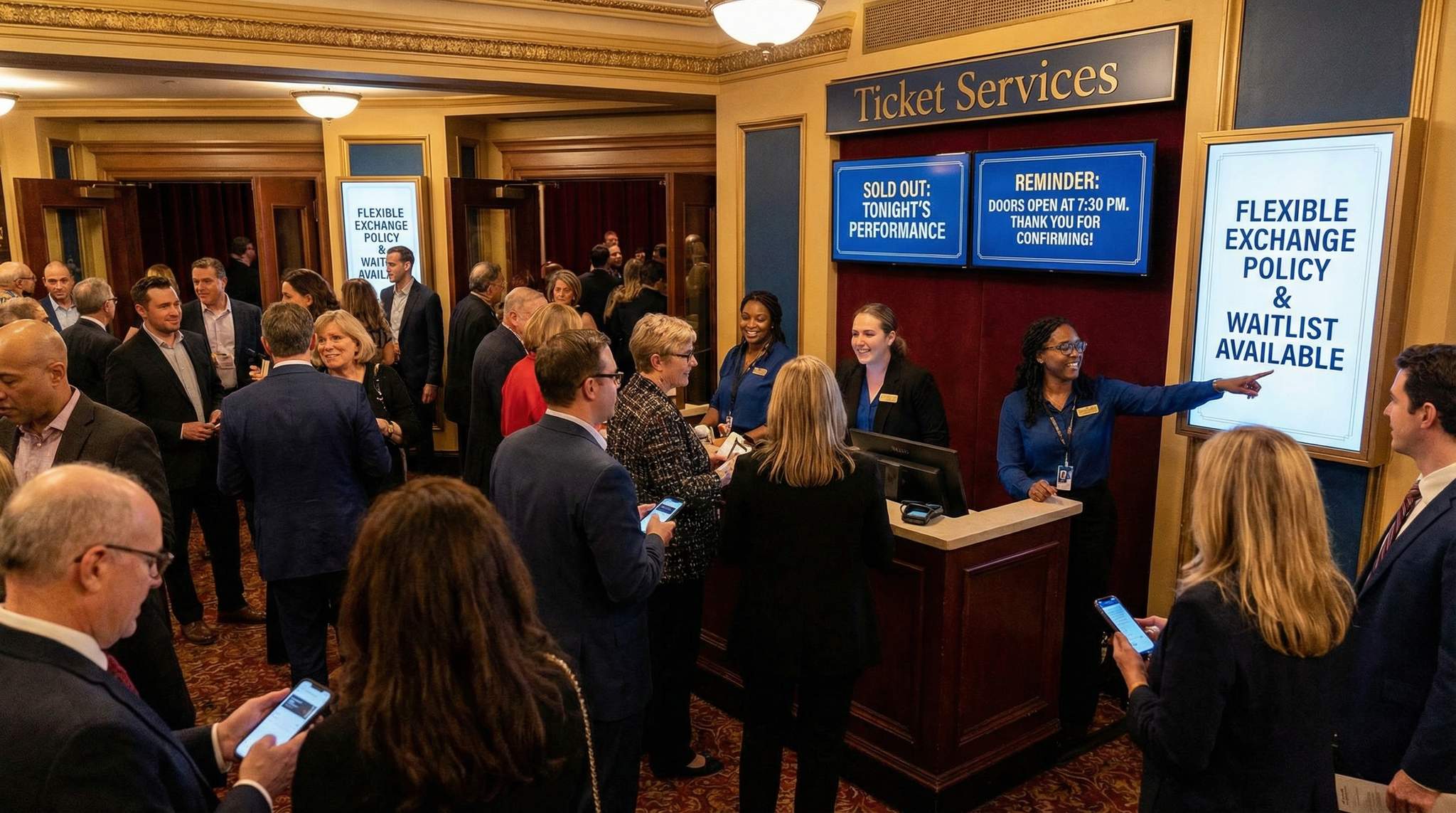
In the world of theatre events, creating an exceptional experience for attendees goes far beyond a stellar performance – it’s about seamless attendee management from the moment a ticket is purchased to the final curtain call. Managing large crowds efficiently, keeping communication clear, and optimizing every operational detail are paramount for modern venues. Today, technology is an indispensable tool helping theatre organizers achieve these goals smoothly and safely. Effective management of in-person events is crucial to ensure safety and confidence among attendees, especially as expectations for speed, convenience, and personalization reach all-time highs.
Technology can transform your attendee management process by adding speed and intelligence at every stage. From robust online ticketing systems to crowd management apps and data-driven decision tools, digitization is paving the way for more efficient events that leave both patrons and staff satisfied. Even hybrid events – which integrate in-person and virtual experiences – benefit from these tools, allowing remote audiences to engage with the live atmosphere. By keeping up with the latest tech trends in the theatre industry and learning from real-world examples, you can ensure your operations remain seamless and your audience leaves with rave reviews.
Pro Tip: Before adopting a new event technology, involve your front-line staff in testing and training. Their firsthand experience can uncover potential issues (like a slow scanner app or confusing interface) before you go live. This collaborative approach boosts staff confidence and ensures a smoother show night.
To set the stage, let’s explore how you can use attendee management technology to elevate operations at your next theatre event. Each section below delves into key areas – from ticketing and entry to engagement and analytics – with practical tips, current examples, and data-driven insights to guide your strategy.
Go Cashless With RFID Technology
Enable contactless payments, faster entry, and real-time spending analytics with cashless RFID wristbands for your events.
Introduction to Event Management Software
Modern event management software is a game-changer for streamlining theatre operations. These platforms consolidate essential planning tasks into a single, unified dashboard – automating repetitive chores and freeing up your team to focus on creative and strategic work. In practice, this means ticketing, registration, attendee databases, scheduling, and even marketing communications can all live within one system. The result is far less juggling between spreadsheets and apps, and far more cohesive event coordination. In fact, 89% of companies using event technology save around 200 hours per year thanks to automation and integration. By reducing manual workload, you can channel energy into crafting memorable experiences rather than fighting administrative fires.
At the core of these platforms is a robust event attendee management system. This specialized module acts as the central nervous system for your front-of-house and back-office teams, tracking every touchpoint a guest has with your venue. Effective event attendee management goes beyond simply scanning a ticket; it encompasses capturing dietary requirements for gala dinners, logging accessibility needs, and monitoring real-time engagement metrics. By centralizing this data, organizers can deliver a highly personalized patron experience while maintaining strict control over venue capacity and crowd flow.
Ready to Sell Tickets?
Create professional event pages with built-in payment processing, marketing tools, and real-time analytics.
Integrated capabilities are a hallmark of good event management software. For example, a single platform might handle online ticket sales, on-site check-ins, badge printing, volunteer scheduling, and post-event surveys all in one. This not only streamlines the planning process but also creates a unified data flow. When your ticketing system talks to your email marketing tool and your attendee mobile app, you gain real-time insights and eliminate data silos. Many theatres and venues have embraced these all-in-one solutions in recent years, especially to manage the fluctuating needs of hybrid and socially distanced events. The software provides real-time tracking of registrations and attendance, so planners can make informed decisions on the fly (like opening an extra entry gate if queues build up). According to industry research, 92% of event marketers believe event software makes it easier to achieve business goals – underscoring the trust professionals place in these tools to deliver success.
Another benefit of specialized theatre event software is experience design. Theatre-goers expect a seamless journey from door to seat, and technology can help choreograph this journey behind the scenes. With the right platform, you can create custom seating maps for reserved seating, automate waitlists for sold-out shows, and send personalized reminders to attendees about showtimes or parking. Some advanced systems even offer AI chatbots to handle common attendee questions (e.g. “What time do doors open?”) through your website or app, adding a layer of responsive customer service without extra staffing. By adopting an event management platform tailored to your needs, you build a strong foundation for all the stages of attendee management to come.
Beyond basic logistics, deploying comprehensive attendee management technology empowers venue operators to build detailed patron profiles over time. When your theatre event management software captures data across multiple touchpoints—from initial ticket purchase to at-door scans and in-app engagement—it creates a unified view of audience behavior. This holistic approach allows producers to identify loyal season-ticket holders, track VIP attendance patterns, and tailor future programming to match audience preferences, ultimately driving higher retention rates.
Data-Driven Event Marketing
Track ticket sales, demographics, marketing ROI, and social reach in real time. Exportable reports give you the insights to make smarter decisions.
Choosing the Best Event Management Software
Selecting the best software solution can feel daunting given the vast and diverse market. From enterprise-level conference suites to lightweight ticketing apps, event management software comes in many flavors. Start with a clear list of requirements. Determine the size and type of your events, the must-have features, and your budget. For a theatre venue, you might need robust reserved seating functionality, integration with your membership or donor database, and perhaps a CRM module to track loyal patrons. If you host international tours or festivals, multi-currency payment support and multilingual interfaces could be important. By mapping out your specific needs, you can narrow the field and find a platform that aligns with your goals.
Key factors to consider include:
Grow Your Events
Leverage referral marketing, social sharing incentives, and audience insights to sell more tickets.
- Feature Set: Does it cover ticketing, check-in, badge printing, attendee communication, and post-event analytics? Make sure it can handle core box office tasks as well as any extras you plan (like workshops or VIP add-ons).
- Customization: Can you brand the ticketing page or mobile app with your theatre’s identity? Flexible customization is important for maintaining a professional image.
- Integrations: Check that the software can integrate with tools you already use (CRM, email marketing, accounting software). For example, if you use Mailchimp for newsletters, can the event software sync attendee emails to your mailing list? Seamless data flow between systems prevents manual data entry errors and saves time.
- Ease of Use: A user-friendly interface is crucial. Both your staff and your attendees will interact with this technology, so it should be intuitive. Complex software that requires weeks of training might hurt adoption – in fact, engagement, cost, and integration issues are often cited as the top challenges with event tech adoption. Opt for something your team can grasp quickly.
- Support and Security: Look for platforms with strong customer support and robust security measures. Handling ticket purchases means dealing with personal and payment data – ensure the provider is compliant with standards like PCI (for payments) and GDPR (for attendee privacy if relevant). Reading reviews or case studies can give insight into how reliable the software is during high-stakes moments like on-sale day.
When evaluating options, prioritizing the best cloud-based theater venue management software for mobile and tablet for box office staff can drastically improve on-the-ground agility. Cloud-native theatre event management software allows your team to step out from behind the traditional glass window. Armed with iPads or smartphones, personnel can process walk-up sales, handle seat exchanges, and resolve ticketing issues directly in the lobby or even at off-site promotional activations. This mobility is especially useful if your organization occasionally hosts immersive shows or needs to coordinate how to join pop-up events happening around the city as a participating venue. A flexible, tablet-friendly theatre event software ensures your staff remains connected to the central database no matter where they are stationed.
Beyond basic mobility, equipping your team with specialized theatre event management software on portable devices transforms how you handle peak rush hours. When a sudden influx of walk-ups threatens to delay curtain time, line-busting becomes effortless. Staff can deploy into the queue with handheld card readers synced to your theatre event software, processing transactions and issuing digital tickets on the spot. This decentralized approach to the box office not only accelerates entry but also provides a highly personalized, concierge-level greeting for patrons arriving at your venue.
Furthermore, evaluating how a platform handles non-traditional venues is critical for modern producers. If your organization is exploring how to join pop-up events or co-produce immersive shows in unconventional spaces, your theatre event software must be adaptable. Look for attendee management technology that supports offline scanning, flexible seating manifests, and rapid deployment, ensuring your box office staff can operate seamlessly whether they are in a historic auditorium or a temporary outdoor amphitheater.
By clearly defining your needs and researching options, you position yourself to choose an event management solution that truly elevates your operations. Remember that sometimes less is more – it’s better to have a tool that excels at the features you use most, rather than a bloated system full of features you don’t need. Avoiding tech overload is key to a smooth workflow. As one expert notes, it’s important to focus on the right tools rather than every new gadget, to prevent overwhelm and ensure your team can maximize the platform’s benefits. In short, choose a solution that fits your organization’s scale and skillset. Once implemented, it will become the digital backbone of your events, supporting everything from ticket sales to the final curtain call.
Smooth Entry With Mobile Check-In
Scan tickets and manage entry with our mobile check-in app. Supports photo ID verification, real-time capacity tracking, and multi-gate coordination.
Beyond basic mobility, equipping your team with specialized theatre event management software on portable devices transforms how you handle peak rush hours. When a sudden influx of walk-ups threatens to delay curtain time, line-busting becomes effortless. Staff can deploy into the queue with handheld card readers synced to your theatre event software, processing transactions and issuing digital tickets on the spot. This decentralized approach to the box office not only accelerates entry but also provides a highly personalized, concierge-level greeting for patrons arriving at your venue.
Furthermore, evaluating how a platform handles non-traditional venues is critical for modern producers. If your organization is exploring how to join pop-up events or co-produce immersive shows in unconventional spaces, your theatre event software must be adaptable. Look for attendee management technology that supports offline scanning, flexible seating manifests, and rapid deployment, ensuring your box office staff can operate seamlessly whether they are in a historic auditorium or a temporary outdoor amphitheater.
By clearly defining your needs and researching options, you position yourself to choose an event management solution that truly elevates your operations. Remember that sometimes less is more – it’s better to have a tool that excels at the features you use most, rather than a bloated system full of features you don’t need. Avoiding tech overload is key to a smooth workflow. As one expert notes, it’s important to focus on the right tools rather than every new gadget, to prevent overwhelm and ensure your team can maximize the platform’s benefits. In short, choose a solution that fits your organization’s scale and skillset. Once implemented, it will become the digital backbone of your events, supporting everything from ticket sales to the final curtain call.
Streamlining the Ticketing Process
The first interaction an attendee has with your event is often through the ticketing process, and the smoother this experience is, the better the first impression. Event management technology helps manage the entire event lifecycle from planning to post-event analysis, but it all begins with ticketing. A modern, user-friendly ticket purchase system sets the tone for a hassle-free night at the theatre. Here are some ways technology can streamline ticketing:
For a venue director or operations lead, selecting the right theatre manager ticketing software is the foundational step in modernizing the box office. The ideal platform doesn’t just process transactions; it acts as a comprehensive solution that handles complex seating manifests, season subscriptions, and dynamic pricing rules. When a theatre manager utilizes dedicated ticketing software, they gain granular control over inventory and can easily train front-of-house staff on a unified system, drastically reducing errors during high-pressure on-sale periods.
Online and Mobile Ticketing
Gone are the days of patrons standing in long lines at the box office to buy tickets. Offering online ticketing through your website or a reputable platform provides 24/7 convenience and broad accessibility. With a few clicks, theatergoers can select their show, choose seats (via interactive seat maps), and complete payment from the comfort of home. This not only widens your potential audience (reaching those who might decide to attend on a whim at 10 PM) but also reduces on-site workload for your staff.
Smart Promo Codes & Presale Access
Create percentage or flat-rate discount codes with usage limits, date ranges, and ticket type restrictions. Plus unlock codes for private presales.
Mobile tickets have become especially popular. Attendees can receive their tickets instantly via email or an app, and store a scannable QR code or barcode on their smartphone. According to industry data, mobile ticketing has surged – 60% of concert tickets were sold digitally in 2023, an 80% increase over five years. Theatres have followed suit as audiences across age groups grow comfortable with digital wallets. By embracing e-tickets, you eliminate the need for will-call lines and physical ticket stock. Attendees appreciate the eco-friendly, paperless approach and the peace of mind of not worrying about losing a paper ticket. Moreover, digital tickets are harder to counterfeit – unique QR codes can be invalidated after one scan, and any duplicates are flagged immediately, thwarting would-be scammers. (This kind of vigilance is crucial, as ticket scams via fake or duplicated tickets remain a nuisance in the live events industry.)
When implementing mobile ticketing, ensure your scanning hardware or app at the venue doors is fast and reliable. No one likes a bottleneck at the entrance because a scanner can’t read a phone screen. Many theatres are investing in high-quality scanners or even turnstiles with integrated QR readers for instant validation. If your venue uses Ticket Fairy’s system, for example, their mobile scanning app can authenticate tickets in a split-second even offline, which is a lifesaver if the Wi-Fi drops. The bottom line: digital ticketing technology makes purchasing and entering more convenient for attendees and more efficient for your staff.
Dynamic Pricing
Modern ticketing systems allow for dynamic pricing, meaning ticket prices can adjust in real-time based on demand, inventory, or timing. Airlines and hotels have used this strategy for years, and now theatres are leveraging it to optimize revenue while expanding access. For instance, you can entice early sales with lower “early bird” prices, then gradually increase prices as show dates near and seats fill up. If a particular performance of a play is selling out fast, the system might automatically bump up the price for the remaining seats by a small percentage. Conversely, for a slower night, you might drop prices or offer a flash discount to spur last-minute sales.
The benefit is two-fold: attendees get a range of price options (encouraging budget-conscious fans to attend on off-peak nights, for example), and organizers maximize income by charging more when demand is hot. Broadway producers have famously used dynamic pricing for hits like Hamilton, where premium seats prices rose significantly due to immense demand, yet cheaper lottery and same-day rush tickets kept the show accessible. A study by Northwestern University found that such pricing strategies can increase overall revenue by 5–10% for live events without reducing attendance, as long as pricing changes are gradual and transparent. In practice, this means setting reasonable floor and ceiling prices in your system so you don’t inadvertently price-gouge loyal patrons.
Pro Tip: Implement dynamic pricing thoughtfully to maintain trust. Communicate early-bird deadlines and any price increase schedules upfront (“Tickets will go up after January 1”). Many theaters use subtle dynamic pricing – raising or lowering certain seat sections by a few dollars based on sales pace – rather than drastic day-to-day swings. This way, you optimize revenue and keep attendees feeling treated fairly.
Integrated Payment Solutions
Smooth payment processing is another critical part of ticketing that technology has improved. Integrated payment solutions within your ticketing platform allow attendees to pay with their preferred method – credit/debit cards, mobile wallets like Apple Pay or Google Pay, or even installment payment options for high-price tickets like season passes. Offering multiple secure payment options can reduce cart abandonment during online checkout. As of 2026, audiences have come to expect one-click payments and saved card features; anything less might feel antiquated.
Grow Your Social Following With Every Sale
Require social media follows, shares, or playlist adds to unlock presale access or special pricing. Turn every ticket purchase into audience growth.
Make sure your platform uses encrypted payments and complies with the latest security standards (look for PCI DSS compliance) to give buyers peace of mind. Many event ticketing platforms now also support international currencies and languages, which is important if your theatre draws tourists or if you’re selling a show that will tour globally. A seamless transaction process – with instant email confirmations and digital receipts – projects professionalism and builds trust with your audience. Plus, having all transactions processed through one system simplifies your financial tracking. Your box office manager can easily pull reports on total sales, revenue by ticket type, etc., without reconciling data from multiple sources.
Another innovation is integrating payment plans or “Buy Now, Pay Later” services for big-ticket events. Some theatres have had success offering installment payments for season subscriptions or high-end packages, via partnerships with fintech services. This can make theatre more accessible to a broader audience without hurting your cash flow, as you get paid upfront by the payment service. The bottom line: integrated payment tech ensures that from the moment a customer decides to buy a ticket to the moment they have confirmation in hand, the experience is fast, secure, and user-friendly – setting the stage for a great overall event experience.
Enhancing Attendee Check-in and Entry
When attendees arrive at your theatre, a smooth check-in and entry process is critical. Long waits at the door can dampen the excitement before a show even begins. By leveraging technology at this stage, you can reduce bottlenecks, maintain security, and make that first face-to-face interaction welcoming rather than stressful. Customized, branded registration systems also capture essential attendee information that can be useful later (for instance, knowing which VIPs have arrived). Here are key tech tools to optimize entry:
Self-Service Check-In Kiosks
One way to speed up entry and take pressure off your staff is by deploying self-check-in kiosks in your lobby or entryway. These touch-screen stations allow guests to lookup their reservation or scan their e-ticket QR code on their own. The kiosk can then print out physical tickets or receipts if needed, or direct the attendee to their seat info. For theatres with will-call, kiosks can replace the traditional window for many guests – no more spelling out names to a busy attendant. Instead, attendees can quickly retrieve their booking with a confirmation number or name search, while staff supervise several kiosks at once.
At a large performing arts center in California, we observed that adding four check-in kiosks cut lobby wait times by 30% on average during a sold-out run. The staff, freed from constantly looking up orders, could roam the lobby answering questions and providing a personal welcome. This illustrates how kiosks don’t replace the human touch but rather augment it – computers handle the tedious lookup tasks, while staff focus on higher-value interactions. Modern kiosks are quite versatile: they can scan digital tickets from phones, accept credit cards for any at-door sales or upgrades, and even dispense RFID-enabled wristbands or access cards for special events. By letting tech handle check-in logistics, you also gain more accurate data (the system records exactly when each person arrived) without manual tallying.
Warning: Even with automated kiosks and scanners, always have a manual backup plan. In one theatre’s experience, an unexpected network outage temporarily took down the digital ticket scanners – but because they had a printed guest list and a backup handheld scanner, they switched to offline mode and kept the lines moving. Technology can fail, so train your team on contingency procedures (like checking IDs against a printed will-call list or having paper tickets on standby for VIPs) to avoid show delays.
Contactless Entry Systems
In recent years – accelerated by public health concerns – contactless entry has become the gold standard for events. Instead of tearing stubs or handing over tickets, attendees simply scan their phone or tap an RFID card to gain entry, with minimal physical contact. This not only speeds up the line but also addresses hygiene and safety. An RFID solution might involve wristbands or smart cards pre-loaded with the attendee’s access credentials. Many music festivals pioneered this, but theatres and sports arenas have adopted it too: for instance, major Broadway theatres enabled NFC tap-and-go ticket entry via smartphones in 2022, eliminating the need to even open a barcode – the turnstile simply detects the ticket in your Apple Wallet when you hold the phone near.
Contactless tech greatly improves the flow of people into the venue. Each scan or tap takes only a second. There’s less fumbling with papers or delay from patrons unfamiliar with scanning. These systems also reduce the staffing needed at each door – one attendant can oversee multiple automated lanes, intervening only if a scan triggers an alert (like a duplicate ticket). The safety benefits are notable too: during the pandemic, venues that used contactless entry were able to reassure guests and comply with guidelines by minimizing touchpoints. Even now, patrons appreciate the modern convenience: no one misses having their ticket torn or waiting while someone hand-stamps their wrist.
Contactless entry often goes hand-in-hand with RFID or NFC-enabled wearables for certain events. For example, a theatre hosting a multi-day festival or an immersive event might issue RFID wristbands to attendees. These can serve multiple purposes – beyond access, they could be linked to payment methods for buying refreshments (creating a cashless environment) or function as a VIP credential granting backstage access. This adds a layer of convenience and exclusivity, especially for premium guests, who might enjoy not having to pull out a wallet for every intermission snack. From a security standpoint, RFID systems are hard to forge, and they allow real-time tracking of capacity. If your theatre holds 1,000 people, you’ll know exactly how many have entered at any given moment via the scans – crucial in an emergency to account for everyone.
Industry trend reports underline how contactless ticketing has become a defining norm, driven by both safety and efficiency. Event organizers are now integrating mobile apps and wearables to create fully touch-free experiences. As we look to the future, innovations like biometric entry (using facial recognition or fingerprint scanning) are on the horizon, though widespread adoption in theatres will hinge on privacy considerations. For now, QR codes and RFID provide a powerful balance of speed, security, and user-friendliness that can significantly elevate your front-of-house operations.
Real-Time Attendance Tracking
Real-time data isn’t just for post-event analysis; it can dramatically improve during-event management too. By using real-time attendance tracking tools, your staff can monitor how many attendees have entered the venue, which doors are busiest, and even which seating sections are filling up fastest. Most digital ticketing and entry systems will display a live count of scanned tickets vs. total tickets sold. If you see that 95% of the audience is already inside five minutes before showtime, you know you can likely start on time. If instead a large portion is still outside (perhaps due to a traffic jam in the city), you might decide to hold the curtain a few extra minutes – a far better outcome for late arrivals than missing the opening number.
These tracking tools are essentially giving you an operational dashboard during the event. Large venues often have an Event Control Room where staff watch various data feeds: security CCTV, weather alerts, and yes, attendance numbers. But even a mid-sized regional theatre can benefit from a smaller-scale dashboard on a tablet. It might show, for example, that Gate A has admitted 300 people in the last 10 minutes while Gate B only 100 – indicating you might redirect a few volunteers or open another door at Gate B to balance the flow. If you’re using RFID wristbands, some systems can even display a heat map of crowd distribution (by sensing where wristbands are concentrated), which can be useful for managing lobby crowding during intermission.
Collect Any Attendee Data at Checkout
Add custom registration fields to your checkout — dietary needs, t-shirt sizes, company names, and more. Conditional logic and per-ticket-type fields.
Real-time attendance data also ties into safety and emergency planning. In the unlikely event of an evacuation, having an accurate count of how many people are on-site is invaluable for first responders. It can guide decisions like how many exits to direct people toward or whether additional assistance is needed for any individuals (for instance, knowing that you have a group of attendees requiring accessibility assistance inside). After the event, you can review these attendance patterns to improve future operations – perhaps you’ll discover most people arrive within a 15-minute window, prompting you to open doors earlier or add pre-show entertainment to disperse arrivals. All of this is possible when you treat attendance data not just as a record-keeping artifact but as a real-time tool for decision-making.
(For more on maintaining safe and comfortable crowd flow in live events, check out our related guide on theatre event crowd control strategies. It offers deeper insights into managing audience movement and safety protocols.)
Improving Communication and Engagement
Effective communication is the backbone of a smooth theatre experience – it ensures both attendees and staff are informed, engaged, and ready for each moment of the event. Technology offers powerful channels to keep everyone in the loop, from mobile apps that put the program in attendees’ hands to instant alerts that update your crew about schedule tweaks. By proactively communicating and even entertaining your audience through tech, you enhance their enjoyment and reduce confusion. Let’s explore a few avenues:
Mobile Event Apps for Attendees
Developing or utilizing a dedicated event app can significantly boost attendee engagement at theatre events. Through an app, your patrons can access all the crucial information in one convenient place on their phone. This often includes:
- Show schedules and curtain times: Especially useful if you’re running a theatre festival or season with multiple performances or stages.
- Interactive venue maps: Helping guests navigate a large venue or find amenities (restrooms, concession stands, exit routes). This is great for first-timers in your theatre.
- Artist or cast bios and behind-the-scenes content: Many people love to read about the actors, playwright, or production history while waiting for the show to start.
- Personalized notifications: The app can send push notifications about important updates (e.g. “Tonight’s performance will begin in 10 minutes; please take your seats”) or special offers (“Show your app at the bar for a 10% intermission discount on drinks”).
These mobile apps effectively serve as a digital program and concierge. They’ve become common for larger events like arts festivals and Broadway shows, where an app may include interactive features like polls, quizzes, or trivia to engage the audience before the show and during intermission. For instance, a West End theatre might include a poll in the app asking the audience to vote on which character’s costume is their favorite, displaying results in real time. Some apps enable a live chat or forum for attendees – useful for long-running productions or festivals where fans might attend different nights but still want to discuss the show.
Critically, event apps also facilitate direct communication from organizers to attendees. If there’s a last-minute change (say an understudy is on for a lead role, or the start time is delayed 5 minutes due to weather), a push notification ensures everyone gets the message. This is far more efficient than hoping people see a sign at the door or an announcement over the PA. It’s no surprise that nearly 90% of event planners intend to use a mobile app for their events, and 83% of organizers use apps to collect attendee interactions and analytics. Theatre is catching up to this trend – many venues now have their own apps or participate in city-wide theatre apps that consolidate multiple shows. When rolling out an app, promote it heavily: encourage downloads at the point of ticket purchase (“Download our free app for the best event experience!”) and possibly offer an incentive, like a free digital playbill or entry into a prize drawing, to boost adoption.
SMS and Email Alerts
Not everyone will download an app, and some communications are urgent enough to warrant direct messaging. That’s where SMS (text messages) and email alerts come in. These channels, while old-school, are incredibly effective for reaching attendees with timely information. It’s wise to collect mobile numbers and email addresses during ticket purchase (with proper consent) specifically for event communication. Then, use automated messaging tools to keep your audience informed.
For example, on the day of the show, you might send an email in the morning with helpful reminders: “We look forward to seeing you tonight at 7 PM. Remember, traffic is heavy around the venue, so plan to arrive 30 minutes early. The lobby bar opens at 6 PM for pre-show drinks.” This sets expectations and reduces the chance of late arrivals. An hour before the show, a quick SMS alert could remind ticket-holders: “Doors open in 15 minutes for Les Misérables. Tap here for parking info [link]. See you soon!” People are far more likely to see a text notification than to read an email or social post in time.
Besides reminders, you can use SMS for on-site communication too. Some theatres allow attendees to text a question or request help (for instance, if an audience member with mobility issues needs assistance getting to their seat). The text goes to the event control center or an usher’s device for a quick response. Post-show, an email thank-you with a survey link demonstrates you value feedback and may increase post-event engagement. Just be sure not to overdo it – personalization and timing are key. Automated systems let you schedule messages and segment your list. For instance, you might have one version of a thank-you email for first-time attendees (with a “Welcome, here are other shows you might like” tone) and another for season ticket holders (with a “Thank you for your loyalty, see you next time” message). Using these communication tools thoughtfully keeps attendees informed and appreciated, without flooding their inbox.
(For more in-depth strategies on marketing communications to boost theatre attendance, see our article on marketing and audience engagement strategies for theatre venues. It explores how targeted messaging before, during, and after events can maximize attendance and satisfaction.)
Social Media Integration and Live Engagement
The show doesn’t only live on stage – it often lives on social media too. Social media integration is a powerful way to engage attendees in real time and amplify the event’s reach through peer-to-peer sharing. Encourage your audience to post about their experience: create a unique event hashtag (e.g., #HamletOpeningNight) and display it on screens or in the program. You can even incorporate live social media feeds in your lobby – for instance, a monitor showing a live Twitter wall of all tweets with your hashtag. When people see their own posts pop up, it delights them and prompts others to join the conversation.
Platforms like Instagram and TikTok are particularly popular for theatre audiences to share pre-show selfies, stage views, or their reactions during intermission. Consider setting up an “Instagrammable” photo spot in your venue – perhaps a backdrop themed to the show with the title and hashtag. This not only entertains guests while they wait but also generates organic publicity as those photos get shared. Some innovative theatres even use augmented reality (AR) filters on Instagram/Snapchat that overlay show-themed effects on attendee selfies. For example, a production of The Lion King might offer a filter that gives users a lion’s mane or warthog tusks, tying into the fun. It’s a tech-forward way to get audiences to interact with the show’s brand and spread it to friends.
Social media is also an effective channel for real-time customer service and engagement. Attendees might tweet at the venue with a question or comment (“The line at concession is long ?”). Dedicating a staff member to monitor and respond to these on show nights can turn a complaint into a win (“We hear you – more staff are heading there now. Thanks for your patience and enjoy Act II!”). This public responsiveness builds your theatre’s reputation for attentiveness. During the pandemic, many venues used social media to communicate entry requirements and live stream portions of performances; now in-person events can continue leveraging those digital community-building skills. The key is to create a two-way conversation: encourage guests to share their excitement and feedback, and make sure your social team engages right back. An engaged attendee is likely to become a repeat attendee.
Event Marketing and Promotion Strategies
Long before show night, effective event marketing and promotion are needed to ensure you have an audience in those seats. Event management software often comes with built-in marketing tools that can significantly boost your promotional efforts. For instance, you can create targeted email campaigns directly from your event platform, using your attendee database to segment messages. If you’re promoting a family-friendly matinee versus a black-tie gala premiere, you’ll likely target different demographics. Your software can help here: filter past attendees by the type of events they attended or their stated interests, and then send tailored invites (“Bring the kids to our Saturday afternoon puppet show!” versus “Exclusive opening night package with champagne reception”).
Social media integration within event software means you can often schedule posts or ads and track engagement right from your dashboard. Some platforms generate unique tracking links for each channel, so when someone buys a ticket, you know if they came from your Facebook post, Twitter link, or email newsletter. These analytics are vital – they let you double down on what’s working. For example, if you see that 70% of your early ticket sales are coming from email campaigns and only 5% from social ads, you might reallocate budget accordingly. (Notably, email remains one of the most effective channels – roughly 76% of marketers say email is the single most effective way to drive event registrations.) Use that to your advantage by crafting compelling email content and automating schedules for announcements, “last chance” reminders, and post-event follow-ups.
Another strategy tech enables is referral and influencer marketing. Your ticketing platform might support referral codes or tracking links for partners. A theatre could team up with local influencers – say a popular arts blogger or an Instagram personality in the city – and give them a special promo code for their followers. The software then tracks how many sales came through that code, and you can reward the influencer or just learn which partnerships are most fruitful. Similarly, consider integrating promotions with local businesses. A trend in 2025 has been theatres partnering with nearby restaurants (e.g., “Show your same-day show ticket at X Cafe for a 10% discount”). Your ticket confirmation emails or app notifications can carry these cross-promotions, adding value for attendees and forging community alliances.
Finally, leverage FOMO (Fear of Missing Out) by showcasing live metrics if your platform allows. Some ticketing sites let you display “Only 20 seats left at this price!” or “500 people are interested in this event” based on traffic. This kind of social proof can nudge fence-sitters to commit. During the campaign, keep an eye on the data. If a particular marketing message or channel isn’t performing, tweak or pivot quickly – one of the advantages of digital marketing is agility. Modern event software will provide real-time or near real-time dashboards of ticket sales by source, so your team can have agile marketing meetings (even daily in the last week before an event) to adjust tactics. By integrating marketing tightly with your attendee management tech, you create a feedback loop: marketing brings people to the event, and the event data then informs better marketing for next time.
Additionally, modern platforms make it easier to expand your venue’s footprint beyond its physical walls. If you are wondering how to join pop-up events or community festivals as a vendor or partner, having a portable, cloud-connected ticketing system is your golden ticket. By setting up a mobile box office at a local street fair or farmers market, you can sell advance tickets to upcoming theatre productions directly to a new demographic. The right theatre event software seamlessly syncs these off-site sales with your main database, ensuring inventory remains accurate and double-bookings are impossible.
Managing VIPs and Special-Needs Attendees
Every theatre event has unique guests with unique needs – from VIP patrons expecting red-carpet treatment to attendees with disabilities who require accommodations. In both cases, technology can help deliver a personalized, seamless experience that leaves no one feeling left out. In fact, the mark of a truly well-managed event is how effortlessly it handles these special cases alongside the general crowd. Let’s break down two key areas:
VIP Access Management
For VIP attendees or special guests, the goal is to provide a white-glove experience without hiccups. Technology, particularly customer relationship management (CRM) tools integrated with your event software, is invaluable here. Long before the event, you can tag certain attendees as VIPs in your system and attach notes about their preferences: Does a prominent donor always request aisle seats? Does the visiting dignitary require a private reception area and security escort? With a robust CRM or guest list manager, all these details can be logged and then automatically communicated to the relevant teams.
On event day, VIP check-in apps or dedicated devices can speed up elite guest entry. Some venues use a tablet with a special VIP check-in screen – when a VIP arrives, staff instantly see their profile (“John Smith – VIP Lounge Access, Meet-and-Greet pass”) and can personally escort them or hand over any special credentials. No VIP wants to stand in the general line; technology lets you recognize them at the door and whisk them through. You might issue digital VIP passes that are separate from regular tickets, perhaps a QR code that unlocks a door to the VIP lounge or a section of premium seats. This kind of access control ensures exclusivity. For instance, at the Royal Albert Hall’s gala events, VIP guests now receive scannable cards that grant entry to private lounges and their box seats – a process that is seamless and makes them feel like royalty.
Tech also helps with concierge services. A lot of VIP management is about information and communication. Using your event app or even simple scheduled texts, you can send VIPs bespoke information: “Dear Jane, your reserved parking spot is in Lot B. Present this QR code to the attendant on arrival.” or “Meet-and-greet with the cast starts in the Green Room at 10 PM – show this message for entry.” This level of personalization is made feasible by merging your attendee data with automated messaging. It impresses clients and special guests because it shows you anticipated their needs. As a bonus, it reduces confusion – everyone (the VIP and your staff) has clarity on what the VIP access entails, thanks to the digital trail.
Ultimately, managing VIPs well not only boosts their satisfaction but also elevates your event’s prestige and potential revenue (VIP packages often contribute significant income). Many theatres are expanding their premium offerings – from meet-and-greets with performers to post-show Q&As exclusively for top-tier ticket holders. By using technology to organize these perks (ticket scans, scheduled notifications, VIP-only webpages or apps), you ensure the experience feels effortless and exclusive. Our deep-dive guide on creating VIP experiences at theatre events explores how venues are evolving premium services, with examples like on-site concierge teams and digital memberships for loyal patrons.
Accessibility and Inclusivity Tech
An often under-appreciated aspect of attendee management is accommodating guests with special needs. Making your theatre accessible isn’t just a legal obligation in many places (e.g., under the ADA in the U.S. or the Equality Act in the U.K.), it’s also a moral imperative and smart business – it widens your potential audience. Technology can greatly enhance accessibility when used thoughtfully.
Start with the basics: ensure your ticketing system allows people to indicate if they need ADA seating, wheelchair spaces, or companion seats. Modern seating chart modules will block out the necessary companion seat when a wheelchair spot is selected, to prevent it being accidentally sold. They also let you label certain seats as accessible (no stairs, extra legroom for service animals, etc.). This level of detail in the digital purchase path sets the stage for accommodations later on. Internally, your event management software should flag these attendees so that staff are prepared and any required equipment (like a wheelchair ramp or aisle seat removal) is arranged in advance.
During the event, assistive technologies can make a huge difference. Many theatres now offer assistive listening devices (ALDs) – essentially headsets that amplify and clarify sound for those with hearing difficulties. Traditionally these were radio-frequency or infrared devices that you’d pick up on arrival. Now, some venues have apps that perform the same function through a guest’s own smartphone, streaming the audio feed with adjustable volumes. This way, a guest can use their personal earbuds and phone to access audio description or listening assistance. It’s a more discreet and user-friendly approach.
For attendees who are deaf or hard of hearing, real-time captioning technology is a remarkable innovation. Instead of only certain performances being captioned (which used to be the case – only about 4% of productions might offer a captioned performance historically), new solutions provide on-demand captions at any show. One example is the National Theatre in London, which teamed up with a tech company to introduce smart caption glasses. These AR glasses display synchronized subtitles in the wearer’s field of view, so they can watch any performance any time with captions. This “always on” captioning means greater freedom and choice for deaf audience members, who no longer have to wait for a special captioned night. Similarly, Broadway has seen apps like GalaPro that allow attendees to read captions or get translations on their smartphones in real time, with minimal disturbance to others. For the visually impaired, some of these apps also offer audio description – a narrated description of stage actions – delivered through personal devices.
When implementing technology for accessibility, involve the communities who will use them. Get feedback from patrons with disabilities on whether an app or device truly improves their experience. And always have low-tech backups: not everyone is comfortable with AR glasses or smartphone apps. Keeping a few traditional caption screens or having an ASL interpreter for key performances can be important. Nonetheless, tech is expanding what’s possible. From wheelchair-accessible ticket scanners (placed at an appropriate height and distance) to accessible websites for booking (ensuring screen-reader compatibility), every step you take to make the experience seamless for those with special needs is a step toward a truly inclusive theatre. The payoff is an enhanced reputation for your venue and the joy of seeing all patrons immersed in the magic of a show.
Data-Driven Insights for Improved Event Planning
One of the most powerful aspects of modern event tech is the data it generates. Every ticket purchase, every entry scan, every mobile app interaction is a piece of a puzzle that, once assembled, reveals the full picture of your event’s performance. Savvy theatre managers are increasingly turning to data analytics to inform their decisions – both in real-time during events (as discussed with attendance tracking) and in post-event analysis to improve future shows.
Attendee Data Collection and Analysis
The information you collect from your attendee management systems can be harnessed to refine everything from marketing strategy to operational logistics. Here’s a snapshot of what data can do for you:
- Identify peak attendance times: By analyzing entry scan timestamps, you might discover that for an 8 PM show, 70% of the audience tends to arrive in the last 20 minutes. With that insight, you could plan pre-show lobby entertainment or adjust door opening times to smooth the rush. If you notice matinee crowds arrive earlier on average (perhaps to enjoy a leisurely afternoon), you can staff your lobby coffee cart accordingly. Patterns in arrival and intermission lengths help with staffing and concessions planning.
- Understand purchasing behavior: Look at when tickets are bought – is there a surge right after a pay-day or when a great review comes out? Do last-minute sales spike on the day of the show (common for events that attract tourists or locals looking for spontaneous plans)? By correlating sales data with marketing actions, you can see what drives your audience. For instance, push notifications about low ticket warnings might consistently trigger a sales bump – proving their effectiveness. If dynamic pricing is in use, you can analyze how price changes affected sales velocity and revenue.
- Guest demographics and preferences: Many ticketing systems allow you to gather demographic info (age, location, etc.) or at least infer it from postcode data. Knowing your audience makeup can guide future programming and marketing – e.g., if you drew a younger crowd than usual for a specific show due to its topic or a TikTok campaign, that’s valuable to know. Additionally, tracking which add-ons or packages are popular (dinner + show deals, merch pre-orders) can inform what offerings to include next time.
- Engagement metrics: If you used an event app or interactive features, check the engagement data. Which app sections were accessed the most – was it the cast bios, the in-app trivia game, or perhaps the selfie filter? How many responded to your live poll during intermission? These metrics tell you what the audience cared about. Social media mentions and hashtag usage can also be scraped to gauge sentiment and reach (some event platforms integrate social listening tools or you can manually review the feeds). High engagement suggests strong audience connection, whereas low uptake might indicate a feature that wasn’t worth the effort or needs better promotion.
By organizing and visualizing this event data in intuitive dashboards, you can glean insights at a glance. Many event management platforms offer analytics dashboards with charts for sales over time, heat maps of seat occupancy, and more. For instance, you might see that Friday nights consistently sell out faster than Thursdays – maybe indicating you should focus your advertising spend on boosting mid-week shows, or plan more Friday inventory. Or data might reveal that a large portion of attendees came through a discount code partnership, leading you to either renegotiate that partnership (if it cut into revenue too much) or expand it (if it brought valuable new patrons).
Importantly, share the relevant data with your team. A post-event debrief meeting with marketing, operations, and artistic staff can be illuminated by actual numbers: “We had 10% more walk-ups at the door after local TV coverage, or our student ticket initiative resulted in 150 new attendees under 25.” Data can replace hunches with evidence. Over time, as you accumulate data across many events, you can benchmark what “normal” looks like and quickly spot anomalies. Maybe you’ll learn that whenever you do plays by Shakespeare, you draw from a wider geographic radius than contemporary plays – so you might expand your ad radius on Google for the classics. Or you could find that the customer satisfaction scores (via post-event surveys) are highest for events where the check-in time was under 5 minutes, reinforcing investment in entry tech.
All these insights feed a cycle of continuous improvement. Experience combined with data is a potent mix – you gain a kind of sixth sense validated by facts. Theatres that embrace a data-driven mindset often see improvements in attendance and financial performance over time. They catch issues earlier (e.g., flagging sales for a show can prompt a mid-campaign marketing push) and learn concretely what makes their audience tick. In a world where entertainment options are abundant, this analytical edge can help live theatre remain competitive and deeply tuned to its audience’s desires.
Event Financials and Analytics
At the end of the day, even artistic events have to mind the numbers. Keeping a close eye on event financials is easier when your systems handle the heavy lifting of tracking income and expenses. Robust event management software will include finance and analytics modules that allow planners to set budgets, log expenses, and reconcile them against revenues in real time. This is a significant upgrade from manually managing spreadsheets and receipts. With automated financial tracking, you might get alerts if you’re nearing an expense limit or if ticket sales revenue has hit a milestone. Such transparency ensures there are no nasty surprises when you close the books on an event.
Budgeting and expense tracking: Before an event, you can input expected costs for venue, talent fees, staffing, marketing, equipment rentals, etc., into your system. As you pay invoices or incur expenses, logging them (or even integrating with accounting software like QuickBooks) lets you see how you’re tracking against the budget. For example, if your lighting equipment rental came in 15% over budget, you’d see that variance immediately and could decide to save elsewhere. Some platforms visualise this with progress bars or red/green indicators. This encourages fiscally responsible decisions in the heat of planning when it’s easy to overspend in excitement. It’s notable that many events historically go over budget due to poor tracking – one industry report found over half of event planners cited budget management as a top stress factor. Automation alleviates this by keeping all financial data organized and visible.
Revenue analytics: On the income side, analytics can break down your revenue streams. A theatre event’s revenue isn’t just tickets – it might include merchandise sales, concession sales, VIP package premiums, sponsorship contributions, and more. If your attendee management tech is integrated enough, you can compile these in one view. For instance, if you used RFID wristbands or a cashless payment system at your event, you can see total concession sales and even what items sold best. Or your online merch pre-orders via the ticketing site can be tallied. Seeing the full picture of revenue helps evaluate the event’s success. Perhaps you sold out the house (great!) but had disappointing merch sales – data might show most merch was bought by VIPs, indicating the general audience didn’t stop at the merch table. That’s a clue to re-think merch placement or offerings next time.
Many modern systems provide an ROI report post-event. This might measure inputs like marketing spend against outputs like tickets sold to derive cost per acquisition. If you spent $5,000 on marketing and sold 2,000 tickets, that’s $2.50 marketing cost per ticket – is that good for you? Comparing such metrics across shows can highlight efficiency. Maybe you’ll find children’s shows require less marketing spend per attendee (because parents seek them out) versus avant-garde theatre which needs more outreach. These insights let you allocate budget smarter in the future.
Additionally, analytics can tie back to attendee satisfaction and retention, which ultimately relate to financial health. Did those who spend more (VIPs, for example) report higher satisfaction? If not, you risk losing high-value customers, so improvements are needed. Do repeat attendees have a higher lifetime value (considering they might also donate to the theatre or bring others along)? If yes, investing in loyalty programs or membership schemes could be justified. Your data might show patterns like first-time attendees who came via a promo code were 20% likely to return for another show, whereas those who came full-price on their own were 40% likely to return. That kind of info is gold – it guides whether discount promotions are truly worth it or if you should focus more on nurturing those already inclined to attend.
In summary, by leveraging event financial and performance analytics, you turn raw numbers into actionable intelligence. This enables data-driven decision-making that can improve profitability and growth. Successful theatre companies big and small are adopting this mindset, regularly reviewing dashboards and reports as part of their event debriefs and annual strategy. It’s not about reducing the art to numbers – it’s about using numbers to support the art, ensuring the financial sustainability that allows the show to go on, again and again.
Final Thoughts
In today’s fast-paced, tech-savvy world, delivering a seamless attendee management experience is essential to keeping theatre relevant and thriving. Attendee management technology – from ticketing platforms to mobile apps to advanced analytics – plays a pivotal role in achieving this. These tools don’t replace the magic of live theatre or the hospitality of front-of-house staff; rather, they enhance and support those human elements. By integrating the right technologies into your theatre operations, you reduce friction at every step: patrons breeze through ticket purchase and entry, stay engaged and informed throughout the show, and remain connected with your venue long after the final bow.
Crucially, adopting technology is also about meeting modern audience expectations. Just as people expect easy smartphone ticketing and instant information in other aspects of life, they now expect it at events. The theatres that have embraced innovations – like contactless entry, personalized communication, and data-driven planning – are setting new standards for patron satisfaction. They’re also more agile in responding to challenges. For example, if a disruption occurs, tech tools help quickly alert attendees and guide them calmly (a lesson many learned during the pandemic). And as we look ahead, we see even more exciting possibilities on the horizon: virtual reality experiences augmenting set designs, blockchain ticketing to eliminate scalping, or AI-driven event personalization where every patron might receive slightly different content tailored to their interests. While not all new tech will be right for every venue, staying informed and open-minded ensures you can adopt the innovations that truly add value.
That said, technology should always be implemented thoughtfully. Attendee trust is paramount – so protect their data, communicate changes clearly, and have a backup plan for when things go analog. It’s a balancing act of high-tech and human touch (as we explore in our piece on balancing high-tech with the human touch). The most successful theatre events are those where techniques from high-end festivals and venues are applied with a deep understanding of what theatre audiences cherish: feeling welcome, safe, and immersed in the story.
In conclusion, embrace the power of technology and you’ll not only keep pace with industry trends – you’ll set the stage for exceptional guest experiences. By blending experience (your team’s know-how and intuition) with data and digital tools, you build an operation that is both innovative and resilient. The future of theatre event management is undoubtedly data-driven and tech-enabled, but it’s also one where creativity and personal connection shine. With the right attendee management technology supporting your seamless operations, you can ensure every performance is remembered for the drama on stage, and never for any drama in the lobby.
You May Also Like:
- Theatre Event Crowd Control: Ensuring Safety and Comfort for All Attendees
- Marketing and Audience Engagement Strategies for Theatre Venues: Maximizing Attendance at Events
- Guide to Managing Box Office Ticket Sales: Streamlining Operations and Attendee Entry Efficiently
Frequently Asked Questions
Why use event management software for theatre operations?
Event management software consolidates planning tasks like ticketing, registration, and scheduling into a unified dashboard, automating repetitive chores. This integration helps 89% of companies save around 200 hours annually while eliminating data silos. By syncing ticketing systems with marketing tools, venues gain real-time insights and streamline coordination.
How does dynamic pricing increase theatre revenue?
Dynamic pricing adjusts ticket costs in real-time based on demand, inventory, and timing to optimize income. Theatres can offer lower early-bird rates to drive initial sales and gradually increase prices as seats fill up. This strategy can boost overall revenue by 5–10% for live events without reducing attendance.
What are the advantages of using self-service check-in kiosks?
Self-service kiosks significantly speed up entry by allowing guests to look up reservations or scan digital tickets independently. These stations can cut lobby wait times by an average of 30% during sold-out runs. Kiosks also free up staff to handle complex inquiries and provide a more personal welcome to attendees.
How do mobile apps enhance the theatre attendee experience?
Mobile event apps act as digital concierges, providing interactive venue maps, show schedules, and cast bios directly on attendees’ phones. They enable direct communication through push notifications for urgent updates or delays. Apps also foster engagement via live polls and trivia, keeping audiences connected before and during the show.
What technologies assist with theatre accessibility?
Technology improves inclusivity through tools like smart caption glasses and smartphone apps that provide real-time captions or audio descriptions for visually and hearing-impaired guests. Online ticketing systems also allow users to easily select wheelchair-accessible seating and companion seats, ensuring specific accommodation needs are flagged for staff in advance.
How does real-time attendance tracking help event staff?
Real-time attendance tracking provides a live count of scanned tickets versus total sales, allowing staff to monitor crowd flow and entry gates. This data enables immediate operational decisions, such as opening additional doors if queues build up or determining if the curtain needs to be held for late arrivals.
What makes cloud-based theatre event management software ideal for box office staff?
The best cloud-based theater venue management software for mobile and tablet empowers box office staff to operate from anywhere in the venue. By using iPads or smartphones, personnel can process ticket sales, manage seat exchanges, and resolve customer issues directly in the lobby or at off-site pop-up events, rather than being tethered to a traditional desk. This mobility enhances customer service and speeds up queue management.
How can theatres use mobile box office technology for off-site promotions?
By utilizing tablet-friendly theatre event software, venues can easily set up mobile box offices at community gatherings or street fairs. This allows staff to sell tickets, process secure payments, and capture attendee data off-site, seamlessly syncing all transactions with the central venue database in real time.
What are the core features of an event attendee management system?
A comprehensive event attendee management system typically includes real-time ticket scanning, CRM integration for tracking patron preferences, automated communication tools (like SMS and email), and dynamic reporting dashboards. These features allow venue operators to oversee the entire guest journey, from initial registration and VIP access control to post-show feedback collection, ensuring a secure and highly personalized experience.
What features should a theatre manager look for in ticketing software?
When evaluating theatre manager ticketing software, prioritize platforms that offer interactive reserved seating maps, season ticket subscription management, and seamless CRM integration. A robust system should also provide real-time sales reporting and mobile-friendly box office capabilities, allowing your front-of-house team to process walk-up sales and exchanges efficiently.
How does attendee management technology integrate with existing theatre operations?
Modern attendee management technology seamlessly connects front-of-house activities, like ticket scanning and VIP check-ins, with back-office systems such as CRMs and accounting software. This integration ensures that box office staff, marketing teams, and venue managers all have access to synchronized, real-time data.
Can theatre event management software handle non-traditional or pop-up performances?
Yes, versatile theatre event software is designed to support both fixed-seat venues and flexible, general-admission spaces. Cloud-based platforms with offline mobile scanning capabilities allow organizers to easily manage ticketing and entry for pop-up events, community festivals, and immersive off-site productions.