The High Stakes of Event Tech Contract Negotiations
Financial and Operational Consequences of a Bad Deal
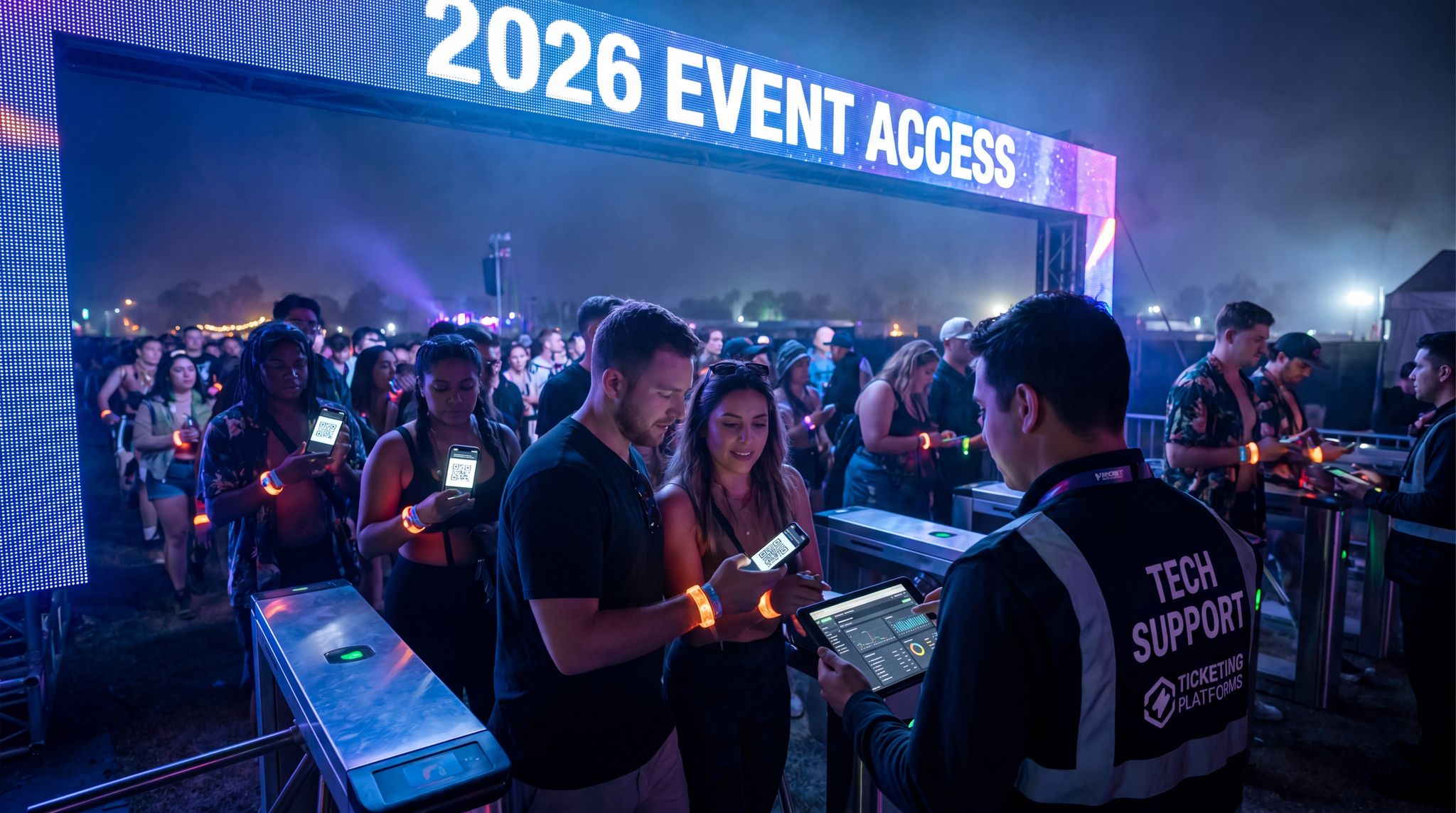
Even in 2026’s tech-driven event landscape, a single contract can make or break an event’s success. A poorly negotiated deal with a ticketing or streaming vendor isn’t just a budget issue – it can derail your whole event. For example, a ticketing system outage during a high-demand on-sale can tank revenue and reputation overnight. One infamous 2022 ticketing meltdown saw thousands of angry fans locked out of buying tickets due to system failure, underscoring how contract terms ensuring reliability are mission-critical. Studies show that ineffective contract management can erode revenue by up to 9.2% annually, so the stakes are high. In short, negotiating favorable terms isn’t just about saving money – it’s about protecting your event operations and brand.
Why 2026 Raises the Bar on Vendor Agreements
Event organizers in 2026 are dealing with more complex technology stacks and higher attendee expectations than ever. Hybrid events, RFID access control, cashless payments, and AI-powered apps all mean more vendor contracts with more at stake. Attendees expect seamless integration across platforms – a siloed or underperforming tech vendor stands out immediately. At the same time, vendors often push boilerplate contracts that favor them. The pace of tech innovation also means what you agree to now must hold up for future needs. A multi-year contract signed today must accommodate tomorrow’s innovations and disruptions (think sudden pivots to virtual or new data laws). Seasoned organizers know that 2020’s pandemic chaos taught hard lessons about flexibility – those who had rigid vendor contracts suffered from inflexible terms during postponements. Thus, in 2026, there’s a greater emphasis on negotiating adaptability, performance guarantees, and risk-sharing in every tech vendor agreement.
Learning from Real-World Contract Pitfalls
Experienced event technologists have seen it all – from contracts that saved a festival to ones that led to disaster. The ill-fated Fyre Festival is a legendary example outside pure tech: organizers tried to cut costs and stiff vendors, resulting in unfinished infrastructure and a PR catastrophe. On the tech front, many festivals learned the hard way about opaque contracts. In one case, an organizer discovered a five-figure invoice for venue Wi-Fi that wasn’t in the AV vendor’s proposal. Another festival signed a deal for an RFID cashless payment system, only to realize later they needed to rent hundreds of payment terminals and beef up on-site networks at extra cost. Such stories highlight common pitfalls – hidden fees, missing services, one-sided clauses – that come back to bite if not caught upfront. The veterans who avoided these traps all share one trait: they negotiate contracts line-by-line, anticipating what could go wrong and ensuring the agreement accounts for it.
Pricing and Hidden Costs: Unmasking the True Total Price
Understanding Pricing Models and Fee Structures
When negotiating pricing with event tech vendors, know exactly how they charge. Some software platforms are flat-fee or subscription-based, while others take a per-ticket or revenue share commission. In ticketing, for example, a vendor might quote a modest “$1 per ticket” fee – but if they also take 3% of your ticket value and add per-order charges, your costs can skyrocket. Always break down the components: are there setup fees, per-user licenses, transaction fees, or support costs? Check if fees vary by volume (e.g. a bulk discount after X tickets sold) or if the vendor uses tiered pricing packages. Insist on transparency in how formulas work. For instance, if a streaming provider charges based on viewer-hours, clarify the rate and any thresholds. The goal is to turn every ambiguous fee into a clearly defined line item. Seasoned negotiators often use a simple table during talks to ensure nothing is overlooked:
| Cost Component | How It’s Measured | Negotiation Tip |
|---|---|---|
| Software license/subscription | Per event, per month, or annual | Get multi-event or annual packages at a discount if you’ll use it often. |
| Ticketing service fee | Per ticket (flat or %) | Compare industry averages and push below the standard 5–10% for large volumes. |
| Payment processing | % of transaction (e.g. 2.9%) | Clarify who covers this – negotiate lower rates or have vendor absorb part if your volume is high. |
| Hardware rental (scanners, etc) | Per device per day | Ask if these can be included or capped in cost; or consider purchasing if long-term. |
| Support and onboarding | Flat fee or hourly | Often waived or discounted for new clients – request at least one free training and some included support hours. |
| Integration/API use | Flat fee or per call volume | Negotiate free API access for essential integrations and ensure no surprise usage fees (more on this below). |
This breakdown helps expose how each vendor makes money from you. It also lets you benchmark offers between vendors. If one ticketing platform’s quote has higher service fees but includes on-site staffing and hardware, that might actually be a better deal than a “cheaper” competitor that leaves those as extra costs. By mapping it out, you’re in a strong position to push back on specific items (“Can we eliminate the $500 ‘setup fee’?”) or to ask for price matching (“Your competitor only takes 5% of ticket price, you’re asking 8% – can you match them?”). In 2026’s competitive event tech market, many vendors are willing to negotiate on price structure if you come prepared with data.
Uncovering Hidden Fees and Surprises
Never assume the quote you see is the total you’ll pay. Event tech contracts often hide indirect costs that aren’t obvious until later. Vendors sometimes omit things like required hardware, mandatory add-ons, or usage surcharges from the sales proposal. Ask every vendor point-blank: what specific items are not included in this quote? By signaling that you know hidden fees are common, you pressure them to be upfront. Some common surprises to watch for:
Ready to Sell Tickets?
Create professional event pages with built-in payment processing, marketing tools, and real-time analytics.
- Support charges: Basic email support might be free, but 24/7 phone support or having a technician on-site during your event could cost extra. Clarify support levels included (more in SLA section) and negotiate premium support into the base price if your event needs it.
- Hardware and connectivity: As noted, you might need scanners, tablets, servers, or dedicated internet lines. Will the vendor provide these? At what cost? A cashless payment system isn’t much use if you later find out you must independently rent 50 RFID readers. Always budget for the full infrastructure, not just the software.
- Overage fees: Check for limits. Registration platforms might limit number of entries; mobile apps might charge if downloads exceed a cap; streaming services often have viewer or bandwidth limits. Negotiate for generous limits or at least capped overage fees so you don’t face a budget blowout if your event exceeds expectations.
- Mandatory services: Some venues or jurisdictions force you to use certain vendors (e.g., in-house internet at convention centers). These might not be part of your primary tech contract but still hit your budget. Try to find out these requirements early and include them in your cost projections or negotiations. For example, if you know a venue will charge for dedicated Wi-Fi, perhaps the streaming provider can lower their fee to offset that external cost since you’re bringing them the business.
Real-world examples abound of planners caught off guard. A corporate conference was blindsided by a five-figure internet bill after the event because the contract with their production vendor didn’t include venue Wi-Fi. And festival organizers have signed “all-inclusive” cashless payment contracts only to learn later that renting payment terminals and providing on-site network infrastructure were their responsibility, as detailed in lessons on hidden event tech costs. These lessons from the field teach one thing: scrutinize every line and ask what each term means for your wallet. If a clause says “additional services may incur fees,” get specifics or strike it out. The best negotiators approach contracts with a magnifying glass, ensuring the deal on paper truly reflects the deal in practice.
Negotiating Discounts, Caps and Favourable Payment Terms
Everything is negotiable – including how and when you pay. Once you’ve identified the costs, look for ways to reduce or restructure them to your advantage:
- Volume & loyalty discounts: If you anticipate selling a high volume of tickets or plan to run multiple events, use that as leverage. Negotiate sliding scale fees based on volume (e.g. service fee drops from 7% to 5% after 10,000 tickets) or multi-event discounts. Vendors love guaranteed future business – an EDM festival in Australia secured a lower per-ticket fee by committing to a 3-year deal. Just be cautious with long commitments (more on that in Contract Length section).
- Fee caps or guarantees: Try to cap certain costs. For example, if a ticketing vendor usually takes 3% of sales, see if they’ll cap their fee once they’ve collected a certain amount of revenue. Some large events negotiate a maximum fee payout – after, say, $100,000 in fees, everything beyond is fee-free or significantly reduced. This ensures mega-successful events aren’t penalized with runaway fees.
- Absorbing vs. passing fees: Decide how fees are handled and put it in the contract. Many ticketing systems allow either the attendee or organizer to pay the service fee. Negotiate flexibility here: some organizers pass fees to attendees to protect their margins, while others absorb fees to keep ticket prices attractive. The key is making sure the contract doesn’t prohibit your preferred approach. Also, clarify credit card processing fees – if the vendor’s quote doesn’t include ~3% bank fees, you need to know who absorbs credit card processing costs.
- Payment timing: Cash flow matters. Standard terms might have you paying a big chunk upfront or the vendor holding all your ticket revenue until after the event. You can negotiate this! Perhaps split an implementation fee into milestone-based payments, or ask for rolling payouts. For instance, renegotiating to get monthly payouts of ticket sales before the event can help you pay suppliers on time. The vendor may hold back a small contingency until after the event, but getting most funds early can save you from taking high-interest loans.
- Penalties and credits: Turn contract terms into two-way streets. If you’re agreeing to pay promptly and stick to volume commitments, ask what happens if the vendor fails to deliver a promised savings or service level. For example, you could negotiate a clause that if scanning throughput is below a certain rate, you get a fee credit. Vendors likely won’t volunteer these, but raising the ask shows you expect accountability.
For organizers operating on razor-thin margins, the holy grail is often finding a ticket platform with no fees charged directly to the event budget. In reality, software development and payment processing always cost money, but many modern systems allow you to pass 100% of these service charges and credit card fees onto the ticket buyer. By negotiating a fully passed-on fee structure, the platform effectively becomes free for your organization to use. Additionally, if you are hosting community gatherings or complimentary RSVP events, ensure your contract explicitly waives all per-ticket charges, as most reputable vendors offer their software at zero cost for free events.
Finally, consider total cost of ownership. A slightly pricier vendor that includes more (hardware, dedicated support, marketing perks) might actually be more cost-effective than a bare-bones cheaper quote that leaves you outsourcing half the pieces. Bring a TCO mindset to negotiations; vendors respect clients who look at the big picture and will often adjust terms to win a smart customer. Remember, the ideal outcome is a clear, fixed (or at least predictable) cost structure, so you can budget with confidence and not worry about nasty surprises mid-event.
Go Cashless With RFID Technology
Enable contactless payments, faster entry, and real-time spending analytics with RFID wristbands and NFC-enabled ticketing for your events.
When structuring these financial commitments, smart organizers align their tech vendor payment schedules with their broader revenue cycle. For instance, mapping your software installments against the timeline for top corporations’ sponsorship marketing budgets, contract signing, and payment in 2026 can prevent severe cash flow bottlenecks. If you know major sponsor checks typically clear in Q2, negotiate your heaviest tech platform payments for Q3. This strategic pacing ensures you aren’t cash-strapped while waiting for corporate funds to arrive.
Service Level Agreements (SLAs) and Support: Demanding Reliability
Setting Uptime and Performance Guarantees
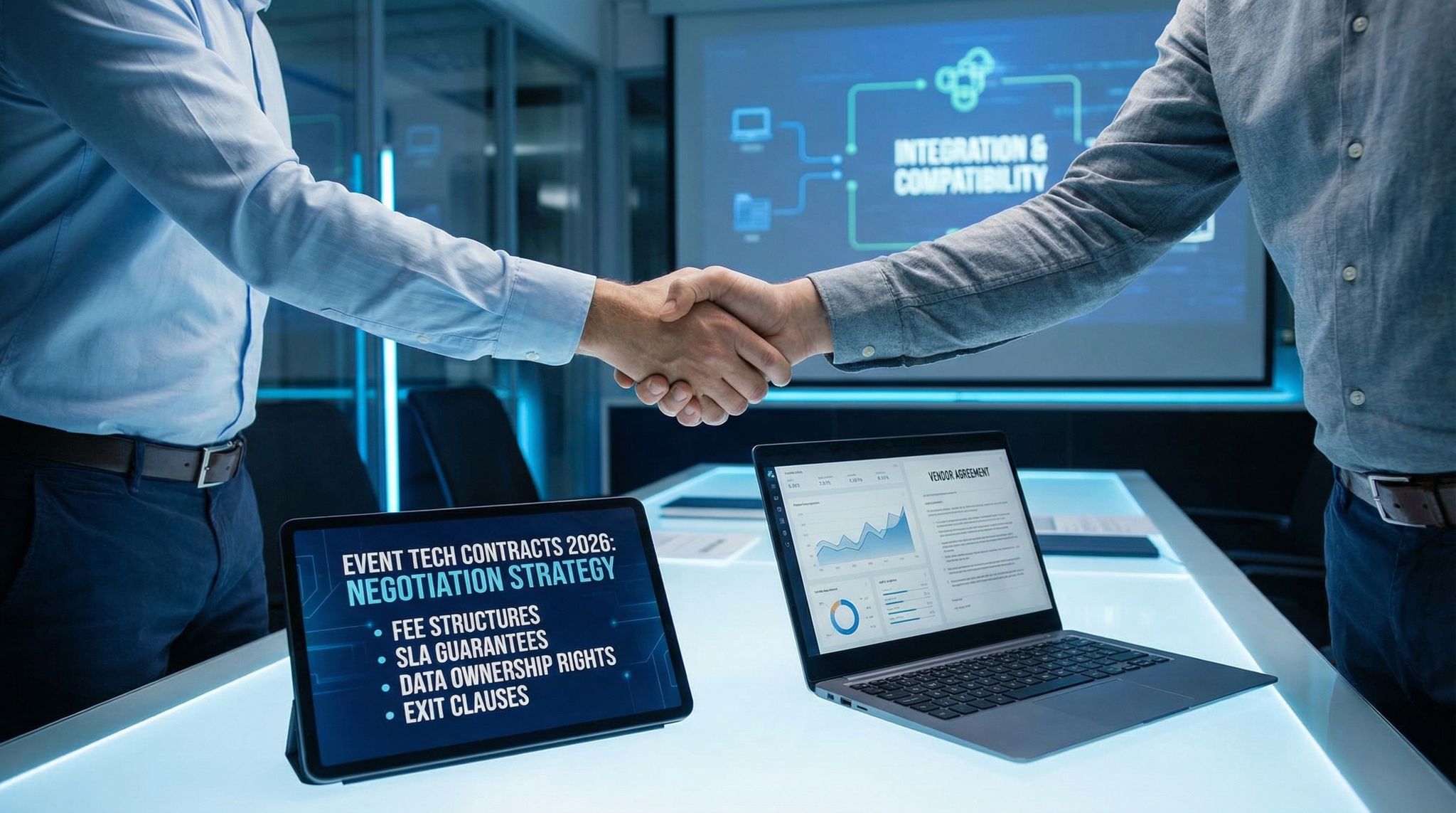
Your event technology is only as good as its performance under pressure. That’s why a strong Service Level Agreement (SLA) in the contract is vital for critical systems. An SLA formally commits the vendor to specific performance metrics – and it’s something you must negotiate, not take as-is. Key SLA elements include:
Grow Your Events
Leverage referral marketing, social sharing incentives, and audience insights to sell more tickets.
- Uptime percentage: Define expected uptime (e.g. 99.9% during event hours or key sales periods). If you’re selling concert tickets, you might require “99.9% uptime during all on-sale periods” from the ticketing platform. For virtual event platforms or live streams, consider an uptime guarantee across the event dates. Push for high availability, and discuss what redundancy the vendor has (multiple servers, cloud failovers, etc.) to meet it.
- Peak capacity and response: If applicable, specify performance under load. For instance, “system must handle 5,000 concurrent ticket purchases” or “scan 50 attendees per minute per gate without queue overflow.” One festival even set an SLA that no attendee should wait more than 15 minutes to enter at peak times, forcing the ticketing provider to deploy extra scanners and staff to meet this goal. This kind of clause turns nebulous promises into concrete requirements.
- Data delivery and accuracy: In data-centric services, an SLA might cover things like “registration reports updated in real-time” or “analytics dashboards will not lag more than 5 minutes behind live data.” Think through any service aspect where a delay or error could hurt your operations.
- Security and compliance uptime: If relevant, include standards like maintaining PCI compliance throughout, or 100% of transactions processed securely. While security is often covered elsewhere, it doesn’t hurt to assert it in SLA terms – especially if a breach or compliance lapse could shut down your ticket sales (which is effectively downtime).
Once you outline needs, negotiate remedies for failures. A common approach is service credits – e.g. if uptime drops below 99.9%, you get a certain credit or refund. Be sure any SLA penalties are meaningful: a credit equal to a week’s worth of fees for any major outage, for example. Also, don’t settle for toothless SLAs. If the vendor’s initial contract says nothing about uptime, bring it up. Conversely, if it says “we strive for 99% uptime but offer no compensation,” push for a real guarantee. The vendor might counter with things like scheduled maintenance windows – that’s fine, as long as they’re reasonable (e.g. maintenance only between 2AM-5AM on off-peak days) and preferably announced in advance.
Beyond software uptime, don’t overlook the physical and data infrastructure that powers your event. If your tech vendor supplies physical goods—like RFID wristbands, smart badges, or on-site server racks—you need strict SLA benchmarks for these raw materials in 2026. A contract should specify delivery dates, maximum failure rates (e.g., less than 0.1% defective RFID chips), and rapid replacement guarantees. Similarly, if your event relies on massive data capture, such as 4K video streaming archives or multi-year attendee analytics, understanding the key considerations for enterprise storage contract negotiations is vital. Ensure your agreements guarantee fast data retrieval times, redundant backups, and zero data loss, protecting both your operational continuity and your historical event data.
Ensuring Responsive Support and Coverage
When tech breaks at an event, minutes matter. Your contract should specify what support the vendor provides, and you may need to negotiate for the level of responsiveness and coverage your event demands. Key support terms to iron out:
- Support hours and channels: Basic contracts might limit you to email support during business hours. That won’t help if your festival gates fail on a Saturday at 9pm. If your event runs weekends or late nights, negotiate 24/7 emergency support during critical periods. Ideally, get a direct line to a support engineer or an account manager on call. Many vendors offer premium support packages – try to get premium support packages included or at least discounted if your event truly needs it.
- Response and resolution times: The SLA can include support response metrics: e.g. “critical issues will receive a response within 15 minutes and resolution or workaround within 1 hour.” Get clarity on escalation paths – if the first rep can’t fix it, how quickly does it go to a senior engineer? For on-site critical systems, some organizers even negotiate that a technician will be physically present or on standby at the venue. This on-site support might incur a fee, but one quick fix by an expert on-site could save your entire event from disaster. Weigh that cost against risk.
- Proactive monitoring: It’s worth asking if the vendor will monitor your usage in real-time during the event. For instance, some ticketing companies will have ops staff keeping an eye on your on-sale traffic or entry scans so they can react before you even call. If they offer this, get it in writing (even if not as formal SLA, as a part of their service commitments).
- Backup plans: Discuss contingency options. If the primary system fails, do they have an offline mode or backup system you can use? For example, if the internet drops, can the ticket scanners switch to an offline list? These might be more technical requirements than contract terms, but any verbal promise (“yes, our app works offline”) should be documented in the contract or an addendum. That way, if they didn’t deliver on that promise, you have recourse.
Negotiating support often comes down to how critical the tech is to your event. If it’s absolutely mission-critical (like ticketing, entry control, etc.), don’t shy away from insisting on top-tier support terms. It might raise the price, but that’s money well spent for peace of mind. One tip: negotiate an initial period with heightened support for free. For example, if you’re a new client, ask for the first event to include premium support at no extra charge, so you can have a smooth onboarding. Vendors often agree knowing that a successful first outing means you’ll likely stay a client. And if you have multiple vendors for different tech, try to align them – there’s no use having your app vendor on 24/7 standby if the payment vendor only offers 9-5 support. Identify any gaps and address them (either by negotiating or by having internal backup plans to bridge less-supported times).
No Hidden Fees, Just Honest Pricing
One all-inclusive fee covers the platform, payment processing, support, and every feature. Free events are always free. No setup costs, no surprises.
Finally, one subtle but critical negotiation point: make any service credits automatic. Many contracts say you’re entitled to a credit if X or Y fails – but only if you apply for it. Push for language that the vendor will proactively credit you or that failures are tracked automatically. As one negotiation expert warns, manual SLA tracking usually means you’ll never collect. You don’t want to be fighting over a refund when you’re busy running an event. The contract should bake in those remedies clearly and auto-trigger them when possible.
Negotiating Training, Onboarding and Ongoing Help
Beyond uptime, think about the human side of adopting new tech. Contract negotiations should cover training and onboarding support to ensure you can actually use the tools you’re buying effectively. Important aspects include:
- Initial training and setup: Many vendors will offer a free onboarding session or two – but ensure it’s in the contract. If your team needs multiple sessions (for larger staff or volunteers), ask for them. For instance, if you’re deploying 100 handheld scanners to staff, request the vendor provide a live training webinar or an on-site trainer before the event. If they balk, see if they’ll at least supply training materials or a train-the-trainer session for your managers. Well-trained staff prevent costly mistakes on show day.
- Documentation and resources: Negotiate access to the vendor’s knowledge base, and confirm they will provide all necessary documentation ahead of time. If you sign months before your event, the contract can obligate the vendor to deliver, say, an integration guide or user manual within 2 weeks of signing so your team isn’t scrambling last-minute.
- On-site staff or remote standby: As noted earlier, having an expert present can be invaluable. If it’s a complex system, ask, “Will you have someone at the event, and is that included?” Often it’s not included by default, but you can negotiate a couple of vendor staff badges in exchange for them sending a rep. If that fails, ensure at least a senior support engineer is on call virtually to walk your team through any issues.
- Post-event debrief and next event prep: This is forward-looking, but great to include if you plan to continue the relationship. For example, write in that after the event the vendor will spend an hour with you reviewing what went well and what didn’t at no cost. This signals partnership and helps set improvements for next time. It might also be where you discuss any SLA breach compensation (if something failed) in a constructive way.
A true technology partner will understand that their job isn’t done at contract signature – it’s done when your team is successfully using the product live. By negotiating robust support and training clauses, you transform the vendor from a mere service provider to a stakeholder in your event’s success. And if a vendor pushes back too hard against reasonable support terms, that’s a red flag: it might mean they’re not confident in their service or simply not customer-centric. Since support quality can be a make-or-break factor, weigh that heavily in deciding who to contract with. After all, experienced event technologists know support is like a safety net – you only realize its true value when you desperately need it.
Data Access and Ownership: Whose Data Is It, Anyway?
Ensuring You Own and Control Your Attendee Data
In 2026, data is gold for event organizers. The personal information attendees provide – names, emails, purchase history, preferences – fuels marketing, sponsorship deals, and personalized experiences. Yet not all vendors treat that data as yours. Some large ticketing platforms notoriously consider ticket buyers “their” customers and limit what info you can access. This is why one of the non-negotiable clauses in any event tech contract should be data ownership and rights.
Insist that the contract explicitly states that all attendee data collected through the system is owned by your event/organization, or at minimum that you have perpetual, royalty-free rights to use it. Avoid any wording that frames the vendor as the owner or “data controller” of your attendees. For example, rather than “Vendor may share attendee contact info with Organizer as needed,” it should say “Organizer retains full ownership of and access to all attendee data.” If a vendor resists or claims it’s “their policy” to withhold data, that’s a big red flag – many organizers have regretted signing deals where they couldn’t even get a full attendee email list to promote their next event. Don’t let that happen to you.
Equally important is how you can access the data. Negotiate for on-demand, full exports of your data in a usable format. The contract should guarantee that you can download or request all attendee data (ideally via self-service CSV export or API) at any time, including during and after the event. Some platforms otherwise only give periodic reports or partial data, which won’t cut it. As one guideline puts it: vendors love proprietary formats – specify the format and timing for data exports so you’re not stuck. In other words, spell out that data will be provided in a standard format (CSV, JSON, etc.) and, if relevant, within say 5 days of a request or within 10 days after event end. This prevents a potential hostage situation where you leave a vendor and then discover they’ll charge an arm and a leg to hand over your attendee list. Indeed, enterprise tech buyers have found out too late that retrieving data can incur astronomical fees if not agreed upfront. To avoid this pitfall, negotiate a data portability clause: you can extract your data at no additional cost upon contract termination or at defined intervals.
Data-Driven Event Marketing
Track ticket sales, demographics, marketing ROI, and social reach in real time. Exportable reports give you the insights to make smarter decisions.
Privacy and permission also come into play. Ensure the contract doesn’t restrict your right to use the data for legitimate event purposes. For example, you should be able to import those emails into your CRM or send a post-event survey. Some contracts of older ticketing companies forbade the event from contacting attendees outside the platform – try to eliminate or soften such clauses. Instead, include that the organizer may use attendee contact information in accordance with applicable privacy laws and the vendor’s privacy policy. Which brings us to compliance: have language that both parties will comply with data protection laws (GDPR, CCPA, etc.). Usually vendors have standard GDPR addendums if you ask. Make sure it’s clear who is the data controller vs processor for legal purposes – typically you (the organizer) are the controller and the vendor is a processor acting on your behalf. This ensures if attendees ask for data deletion or regulators come knocking, roles are defined.
Finally, consider data usage by the vendor. Many contracts allow the vendor to use aggregated or anonymized data. That can be okay (e.g. “20% of our platform’s festival tickets sell to out-of-state buyers” type statistics), but ensure they cannot exploit your attendee list for their own marketing. You might add a clause that the vendor cannot market other events to your ticket buyers without consent, or that they can’t sell your data to third parties. Maintaining attendee trust is crucial – news that your ticketing provider blasted your attendees with unrelated offers will not sit well. One positive example: a wine festival explicitly negotiated that their ticketing partner not contact their attendees for anything except operational emails (tickets, receipts) without festival approval. They paired that with gaining full data access, which allowed the festival to run its own highly targeted marketing (like special offers to top spenders), resulting in a 15% boost in return attendees the next year. The takeaway: you should control the communication with your fans, and that starts with controlling the data.
Negotiating Data Security and Compliance Clauses
Ownership is one side of the coin; security is the other. When you’re entrusted with tens of thousands of personal records (and often credit card details via tech vendors), a data breach or leakage can be devastating. Thus, part of your contract negotiation should cover how the vendor protects that data and what happens if things go wrong. Key points to address:
- Security standards: Ask the vendor about their security certifications or practices and get commitments in writing. If a ticketing system, are they PCI-DSS Level 1 compliant for payment security? Do they follow ISO 27001 or SOC 2 standards for data management? If yes, have it noted in the contract (even if just in a security exhibit or rider). If no, at least ensure the contract requires them to adhere to industry-standard security measures and maybe even yearly security audits. Remember, major breaches have hit ticketing providers – e.g. Ticketmaster UK was fined £1.25M for a 2018 payment data breach. You want confidence that your vendor isn’t the weak link.
- Breach notification and liability: Negotiate how quickly the vendor must inform you of any security incident involving your data. Often laws like GDPR already mandate 72-hour notification, but put it in the contract too. Also clarify responsibilities: the vendor should be obligated to investigate and remediate the breach, and ideally to indemnify you for costs (within reason) if their negligence caused it. Many vendor contracts try to limit liability for data breaches – you may not get them to accept unlimited liability, but push for some sharing of risk especially if their actions (or inaction) lead to a breach. Your own insurance (cyber liability insurance) is a backstop here, but it’s fair to expect the vendor to stand behind their security.
- Data retention and deletion: Include terms about what happens to the data when the contract ends. Best practice is that the vendor will export all your data to you (again, in specified format) and then delete it from their systems (unless legally required to keep, etc.). This prevents lingering risks. Also, if you suspect the vendor might use old data for their gain, this clause helps prevent that. As a real-world caution, a European festival’s old attendee database, forgotten on a vendor’s server, was hacked years later and exposed thousands of records. So, ensure old data doesn’t hang around indefinitely after you’re done.
- Compliance and regional considerations: If you have EU attendees, the vendor should sign a GDPR Data Processing Agreement – ask for it. Similarly for California (CCPA) or other applicable laws. Some events also negotiate onshore data storage (e.g. “all EU attendee data will be stored on EU servers”) for legal compliance. Big vendors often have this covered, but it’s worth confirming if it matters for your attendee base or certain regulators/sponsors.
In negotiations, not all vendors will readily add a lot of security language to their contract (they might refer to their Trust/Security policy). However, raising these issues accomplishes two things: (1) it signals to the vendor that you are a conscientious client who expects high standards (they may then treat your account with extra care), and (2) it gives you leverage to walk away if a vendor seems lax on security. No discount or feature is worth the fallout of a data disaster. Use public examples as leverage too: “We cannot afford a breach – just look at what happened with Ticketek – so we need to know what steps you take and get them in writing.” That reference to Ticketek’s 2024 breach (millions of names and emails exposed) will resonate; reputable vendors will respond with transparency and contractual assurances rather than risk losing the deal. In summary, treat data and security clauses with the same gravity as financial ones. Own your data, protect your data, and demand the vendor does the same.
Leveraging Your Data – and Keeping It Accessible
As you negotiate data terms, keep an eye on the opportunities your data provides, not just the risks. In other words, ensure the contract lets you fully leverage data to enhance your event’s success. Some points to consider:
- Real-time data access: If the platform has real-time dashboards or APIs, make sure you have rights to use them during the event. For instance, can you plug the registration data into your own live analytics dashboard? If yes, confirm the API access is included (and not an add-on fee) and that there are no arbitrary limits. Some contracts might restrict API call volume – negotiate those limits up if you need or get a clause that allows bursting during the event. You don’t want to suddenly be throttled when you’re pulling live attendance numbers into a command center.
- Post-event usage: Ensure there’s no time limit on accessing your data. You might want to keep the attendee list for next year’s marketing – the contract should allow data to be retained by you. If the vendor provides an event app or platform that attendees use, clarify whether you can continue to message those users post-event or if the app’s data disappears after a cutoff. If something like an event app will be used year-round (e.g. a community feature), negotiate terms for ongoing data access or ownership of content generated there.
- Analytics and insights: Some vendors offer analysis of your data (like demographic insights, spending patterns, etc.). If those are part of the package, great – confirm you can export those reports. If not, consider if you want raw data for your own analysis. For example, you might ask a registration vendor to include a one-time export of all response data in a spreadsheet so your data team can dig into it. Often, they’ll oblige if it helps close the deal.
- Sponsor access (if relevant): If you have sponsors entitled to certain data (e.g. scan data for exhibitors, or aggregate attendance numbers), make sure the contract allows you to share data with those stakeholders. This might be as simple as “Organizer may share appropriate data with third parties such as event sponsors or partners, in compliance with the privacy policy.” Without this, you don’t want to be in breach of contract for fulfilling a sponsor agreement.
On the flip side, beware of any clause where you waive rights to data or allow the vendor excessive rights. Some boilerplates have language like “Vendor may use data collected in connection with the services to improve its services or for any lawful purpose.” Try to trim that down. It’s reasonable they use aggregate data to improve (machine learning, etc.), but ensure it’s anonymized and they can’t, say, remarket competitors using your attendee list. Many organizers also insert language to the effect that the vendor can’t use the fact that you collected certain data as an excuse to solicit those individuals for other events. Essentially, wall off your community.
Smooth Entry With Mobile Check-In
Scan tickets and manage entry with our mobile check-in app. Supports photo ID verification, real-time capacity tracking, and multi-gate coordination.
In sum, treat data negotiation as seriously as dollars. In a sense, it’s negotiating the lifeblood of your future event marketing and strategy. If you do it right, you’ll walk away with not only a great tech solution but also a trove of actionable insights wholly under your control. Done wrong, you might find yourself paying for a platform that keeps you in the dark about your own attendees. The difference is in those fine-print clauses – so shine a light on them during negotiations and don’t proceed until the data ownership and access terms are just as favourable as the pricing.
Integration and Compatibility: Future-Proofing Your Tech Stack
Demanding Open APIs and Integration Support
A frequent deal-breaker in event tech partnerships is whether the new system will play nicely with your existing tools. Integration capability is king) in 2026’s ecosystem, so bake integration promises into the contract. You should evaluate and negotiate on a few fronts:
- API availability: Ensure the vendor provides a well-documented, robust API) (Application Programming Interface) or other method to connect with external systems. The contract can include a clause like, “Vendor will provide API access and documentation to enable integration with Client’s other systems.” If the API is only in a higher pricing tier or costs extra, negotiate for it to be included. Some platforms have even tried to charge extra for API calls or limit them (e.g. 1000 calls per day) – if you find such restrictions, push back hard. An event tech tool that can’t freely share data is almost useless in the modern data-driven event. Ideally, get unlimited or a very high quota of API usage included in your fee.
- Pre-built integrations: Ask what existing integrations or connectors the vendor offers (like Zapier support, or native integrations with common CRMs, email tools, etc.). If they tout a bunch on their website, list the ones you need in the contract or at least in an exhibit. For instance, “Vendor will enable integration with Salesforce CRM and MailChimp as part of the implementation.” That way, if those integrations don’t work as advertised, you have grounds to claim non-fulfillment. A vendor’s promise in marketing that “we integrate with XYZ” should translate into a contractual commitment that you’ll be able to connect to XYZ without additional development cost (unless specifically noted).
- Technical support for integration: If you don’t have a developer on your side, you might need the vendor’s help to integrate. Negotiate how much help they’ll provide. They might have a standard “professional services” rate – see if you can get a few hours of integration support bundled in. Or have them agree to coordinate with your other vendors’ tech teams. The contract could state “Vendor will provide reasonable assistance to Client’s technical team or third-party providers to achieve integration between systems X and Y.” This ensures they can’t say “not our problem” when you’re trying to link their system to your mobile app or registration database.
- Timeline and testing: If integration is critical (for example, ticketing data flowing into a festival’s wristband system), set an implementation timeline in the contract. E.g., “Vendor will deliver a working integration with ABC system at least 2 weeks before event.” Also think about a backup: if integration fails, what is Plan B and is the vendor accountable? While it may be hard to get a refund solely for integration issues, you can at least not pay the final installment until integration is verified, or include it as a deliverable in the SOW (Statement of Work).
Remember, a modern event generates a lot of data across various platforms – silos are the enemy. When negotiating, emphasize that seamless data flow is a top requirement. You might even share your tech stack diagram and insist that the vendor acknowledges and supports that ecosystem. As one integration guide noted, no tool should live in total isolation) in 2026. If a vendor seems hesitant on integration or says “we have an API but we won’t help with it,” factor that into your decision (and maybe consider a different vendor who sees themselves as part of a larger ecosystem, not an island). And definitely avoid any contract that forbids integration or charges exorbitantly for it – that’s a sign the vendor wants lock-in (discussed later) more than your success.
Compatibility, Customization, and Future Tech
Beyond basic integration, consider future compatibility. Events evolve, and your tech needs might expand next year. Your contract negotiation should address how the vendor’s solution will adapt or cooperate with new technology you might introduce. Key considerations:
- Hardware compatibility: If it’s a software platform, are you locked into using their hardware or can it work with standard gear? For example, some access control systems only work with the vendor’s proprietary scanners. That’s fine if they’re the best, but what if next year you want to use commercially available tablets or a different brand of RFID gates? Try to negotiate flexibility: maybe a clause that says “Vendor’s solution will support standard NFC tags” or “be compatible with commonly used devices X and Y.” If they can’t promise that, at least clarify what is required so you know the long-term commitments. You don’t want to discover a year later that switching hardware is impossible without breaking contract.
- No exclusivity on features: If the contract is multi-year, avoid blanket exclusivity on all related tech. For instance, if you sign with a ticketing company, they might want to be your exclusive ticketing provider for X years. That can be okay, but ensure it doesn’t preclude you from trying new related tech. If next year you want to pilot facial recognition for VIP entry, can you do that alongside the ticketing system? Or if you want a separate VR platform for a virtual component, is that allowed? Make sure the contract’s exclusivity (if any) is narrowly defined (e.g. “exclusive for primary ticketing services”) so you retain freedom to innovate elsewhere.
- Upgrades and new features: Negotiate how you’ll benefit from the vendor’s innovation. The tech world changes fast – you want to know that if the vendor develops a great new feature, you’ll have access under your current deal. Try to include wording that you’ll receive any new standard features or modules released during your contract term at no additional cost (assuming you’re paying a subscription or service fee already). If they have a roadmap of upcoming features relevant to you, get commitments on delivery timelines or at least a promise to roll them into your package. For instance, maybe a streaming platform is planning an AI-based captioning feature next year – ask that your event will have access once ready, without needing a contract renegotiation.
- Testing with other systems: If you foresee adding another system (say, a new CRM or a new mobile app), mention it during negotiation. Some contracts allow you one integration but charge for more. If you know you might add more down the line, negotiate a bit of an umbrella: “The client may integrate the platform with up to 3 third-party systems of their choosing over the contract term, with vendor support.” It’s easier to get that in up front than to renegotiate later when you’re locked in.
A forward-thinking vendor will appreciate these conversations – it signals you’re a progressive client who is likely to stick with them if they keep delivering cutting-edge solutions. In fact, good vendors might highlight how their platform supports new tech like AR, IoT, or advanced analytics integration as a selling point. Capture those selling points in writing. For example, if they say “we’re compatible with all major AR headset data” and that’s important to you, put it in the contract or an appendix that lists “Vendor representations.” It might save your bacon if something doesn’t work as promised in the future.
In summary, negotiate with the next 5 years in mind, not just the present. Event technology is evolving quickly; the contract needs to be less about the static features of 2026 and more about a framework for partnership that can accommodate 2027, 2028 and beyond. By emphasizing openness, standards, and adaptability, you avoid being stuck with a rigid system while the world changes around it. Integration and compatibility are your insurance that as you add more tech to your event, the pieces will snap together rather than clash.
Let Fans Pay Over Time
Offer flexible payment plans that split ticket costs into manageable installments, making higher-priced events accessible and boosting conversions.
Avoiding Vendor Lock-In and Walled Gardens
Event tech vendors, like any business, love recurring revenue and long relationships – nothing wrong with that. But as an organizer, you need to protect yourself from vendor lock-in where switching becomes painfully costly. Some lock-in is contractual, some is technical. Address both in negotiations:
- Data and migration rights: We discussed data portability in the data section, but it bears repeating here: ensure you can leave with your data and that the format is usable. If possible, also negotiate that the vendor will assist with data migration at termination (even if for a reasonable fee). That way if you switch providers later, they can’t stonewall you. Watch out for any clause that charges exorbitant “exit fees” or service termination fees beyond maybe repayment of any given discounts. One LinkedIn tech lawyer famously noted short auto-renewal windows and proprietary data formats are designed to trap you – negotiation is your chance to disable those traps.
- No automatic renewals without notice: Many contracts auto-renew for a new term unless you cancel within a very specific window (e.g. 30 days before term ends). Negotiate more lenient terms: ideally opt-in renewal or at least a 60-90 day notice period. You want ample time after your event to evaluate the vendor before being on the hook for another year. Also, if there is auto-renewal, negotiate the right to terminate before the next event even if it’s mid-term (with notice). Some vendors will allow a penalty-free out if you give, say, 90 days notice even mid-contract – try for that if multi-year.
- Minimal exclusivity: If a vendor contract says you “shall not use any similar services” or “they are exclusive provider,” be cautious. Sometimes ticketing companies do this to ensure they get all your sales. If you agree, carve exceptions: e.g., allow up to X% of tickets for special promotions on another platform, or allow use of a different system for a particular new project. The more niche the tech, the less exclusivity you should give (why lock yourself if it’s not core?). If a vendor insists on exclusivity, consider asking for a corresponding performance guarantee or most-favoured pricing. Say, “Okay, we won’t use anyone else, but in return you guarantee to match any competitor’s lower fees and to maintain service levels, or we can terminate.” That way if they underperform or overcharge, you’re not stuck.
- Own what you pay for (when possible): In some cases, if you pay for custom development or a special feature, negotiate rights to it. For example, if you pay a mobile app vendor to build a custom module for your event, see if you can own the code or at least have a license to reuse it elsewhere. Vendors often resist transferring IP, but they might grant you a perpetual license. This prevents a scenario where you paid for something but then could lose it if you switch providers later. At minimum, ensure any custom work’s functionality can be exported or handed over in a standard format.
- Trial and exit provisions: If you are unsure about a vendor (maybe new to the market or unproven at your scale), consider negotiating a trial period or pilot. For instance, a 6-month contract or a single-event contract with the option to extend. Or put in an exit clause that after the first event, you can exit without penalty if they didn’t meet certain expectations. Also, include general escape clauses for major issues: if the vendor is acquired by a competitor you dislike, if they discontinue a critical feature, etc., you should have the right to break the contract. Common “escape hatches” include vendor bankruptcy or insolvency (which should let you out automatically), and force majeure impacts (more on that soon).
Speaking of force majeure: one lesson from the pandemic was to ensure that if your event is canceled due to force majeure (or government order), you aren’t additionally punished by your tech vendors. Negotiate a clause that if you have to cancel or postpone the event for reasons beyond control (pandemic, natural disaster, etc.), you can cancel the tech contract or push it out to the new date without financial penalty. Many 2020 festival organizers wished they had that – some got stuck in multi-year ticketing deals and had to pay fees even for the canceled year. Now, post-COVID, many vendors are more understanding of this, but get it in writing. You might frame it as “If Event is canceled, vendor will refund any fees for services not rendered, except for non-recoverable costs, or will apply them to a rescheduled date.” This shares risk more fairly.
Overall, your aim is to have all the benefits of a long-term partnership without being handcuffed. Negotiation is the time to align incentives: the vendor keeps your business by performing well and staying competitive, not because the contract traps you. If you ever feel a contract is trying to make it painfully expensive or complex to leave, speak up – often just removing or softening a clause or two can fix that. And paradoxically, vendors who agree to fair exit terms tend to be the ones you stick with, because they’re confident you’ll want to stay by choice. In the end, a well-negotiated contract builds a relationship of trust, where both sides know they have to continuously earn each other’s business.
Common Pitfalls and How to Avoid Them
Fine-Print “Gotchas” to Watch For
Contract language can be dense, but hidden in the legalese can be clauses that bite hard later. As you negotiate (and later, before signing), comb through the fine print for these common “gotcha” areas:
- Automatic price escalators: Some agreements include a built-in price increase each year (often tied to inflation or a fixed %). If you see something like “fees shall increase 5% each year” – try to strike it or lower it. Unless you’re getting comparable growth in value, that’s just a future cost with no negotiation leverage. Ideally, lock pricing for the term or negotiate any increases to be mutual agreement only.
- Definition of users or usage: Vendors often define what counts as a “user,” “active attendee,” or other unit in ways that favor them. For example, an event app might charge per download – but if one person downloads on two devices, is that two units? Nail down these definitions to prevent arguments. As one procurement expert warns, even “What’s a user?” can be tricky – define it clearly or face surprise overages. If you don’t, the vendor’s interpretation will always be in their favor.
- “Reasonable” and “Fair use” clauses: Beware vague wording like “reasonable support” or “fair usage policy applies.” What’s reasonable to them might not be to you. If you spot these, ask for specifics. If they say “fair use of API calls,” insist on a number or remove it. Vague terms are unenforceable for you but can be used to deny service. Either get them defined, or remove them for clarity.
- Third-party dependencies: Sometimes a vendor’s service relies on another provider (like a ticketing system using a third-party scanning app). Check if the contract disclaims responsibility for those. You want one throat to choke – the vendor should be your single point of contact and responsibility. Try to get wording that the vendor remains responsible for delivering the service even if they subcontract parts of it. Otherwise you might find them pointing fingers if something breaks.
- Jurisdiction and venue (for legal disputes): While hopefully never needed, note where the contract says disputes will be handled. If you’re in the UK and the contract says California law and courts, that’s impractical. Negotiate a neutral or your local jurisdiction if possible. And check for arbitration clauses – they’re common and can be fine, but ensure the rules are fair and the location is reasonable.
In negotiations, it’s perfectly acceptable to call out these items and request changes. Often the person you negotiate with (sales or account manager) isn’t the legal drafter, so they might need to go to legal to change them – but ask. You’d be surprised how many “standard” contract clauses are quickly removed or edited when a deal is on the line. The key is you must read everything and not assume any clause is untouchable.
Hidden Costs of “Included” Services
We’ve covered obvious hidden fees, but there’s a sneakier pitfall: thinking something is included when it’s actually not fully covered. This often happens when a vendor’s offer implies they handle something, but later you find limitations. A few examples and how to pre-empt them:
Run Your Events From Your AI Assistant
Ticket Fairy exposes a Model Context Protocol server, so the assistant you already work in can read your events, orders and check-in numbers and act on them. By default a refund or a deletion stops and asks you to approve it first.
- “Full-Service” misnomers: A contract might state the vendor provides a “full-service platform” for, say, badge printing or cashless payments. But does that include the physical badge printers or RFID cards? It might not. Always list out the tangibles: “Vendor will supply X badge printers and Y RFID cards” or clarify what “full-service” actually entails. Otherwise you might end up rushing to source hardware that you assumed would come in the package.
- Support scope: Perhaps your contract says “24/7 support included,” but fine print shows that means access to an online FAQ and guaranteed email response in 24 hours – not truly someone on the phone anytime. During negotiation, pose hypotheticals: “If our system goes down at 8pm on a Friday, who do we call and how fast will they respond?” Insist that the contract reflect the answers (e.g. adding “phone support 24/7 for critical issues” if that’s what you need). Don’t accept fuzzy support promises – nail them down.
- Integration “availability” vs implementation: We touched on this – a vendor can claim “we integrate with XYZ software” but that could mean you have to do all the work. Avoid being caught out by asking, “Will you help connect to XYZ as part of this deal? What exactly do you provide to make it happen?” If they respond with a professional services project (and fee), you know to negotiate that in or out. The contract should reflect whether integration setup is included or billable, so you’re not surprised by a services invoice.
- Upgrades and updates: If you’re signing a multi-year SaaS deal, clarify that software updates and new versions are included in your subscription. Most cloud software does this by default, but if the vendor has multiple “editions” or modules, ensure you’re getting what you expect long term. Also, check if major version upgrades cost extra (some legacy software still does that). Lock in that you receive all patches and upgrades that other customers of your tier get.
A great strategy is to include a Schedule of Services/Deliverables in the contract. Essentially a checklist of what the vendor will provide (and sometimes what you will provide). This leaves less room for disagreement later. For instance, a schedule might say: “Vendor will deliver: (a) Ticketing software license for up to 50,000 tickets, (b) 30 handheld scanners delivered to venue, (c) 2 staff on-site for support, (d) integration with CRM and email system, (e) post-event data report,” etc., along with dates or timeframes for each. It might feel like overkill, but clarity is king. And checking off deliverables item by item in negotiation shows you’re thorough, which vendors often respect – it marks you as a pro.
Case Studies: Contract Missteps and Lessons Learned
Nothing drives home the importance of solid contracts like real examples. Here are a couple of anonymized (but based on true) scenarios and what you can learn from them:
- The Auto-Renew Ambush: A mid-size conference signed a two-year contract for an event app. Buried in the terms was an auto-renew for another year unless notice was given 30 days prior to the end of year two. The organizer, busy with the event, missed that window. Come year three, they wanted to switch to a new app with better features, only to find they were locked in – or they’d owe 50% of the year’s fee to terminate. Lesson: Always calendar your cancellation window and negotiate at least a 90-day notice period. In this case, the organizer ended up using the old app one more year (begrudgingly). Now they insist on mutual renewal or generous opt-out clauses in every vendor deal.
- The “Our Terms” Ticketing Deal: An independent festival partnered with a big-name ticketing company via that company’s standard contract. That contract allowed the vendor to hold all ticket funds until after the event and had no escape clause for poor performance. When the vendor’s ticketing site struggled under demand, the festival had little leverage – they were locked in and the user experience suffered. Worse, when the festival flirted with switching the next year, they discovered the contract auto-renewed and they’d missed the narrow exit window. Lesson: Negotiate flexibility and performance outs before signing. If they had included an SLA (e.g. “if uptime < 99%, we can exit”), as suggested in guides on ticketing contract flexibility, they could have walked away without penalty. Also, splitting financial risk (getting some payouts before the event) could have been negotiated if caught early. The festival now uses a more flexible ticketing platform and made sure to escape the vendor lock-in trap.
- The Hidden Integration Fee: A convention organizer chose a new registration platform that boasted integration with their CRM. All demos looked good. Only after signing did they learn that using the integration required a premium plan or a one-time fee (it was in the fine print “integration setup not included in base package”). They had to cough up several thousand extra or resort to manual data exports. Lesson: If a specific feature or integration is a deciding factor, get confirmation in writing that it is included in the agreed price. During negotiation, explicitly ask “Does this quote include [X integration] and are there any extra fees associated?” The organizer in this case managed to negotiate a discount on the integration fee after complaining, but it delayed their CRM sync by months. Now they include a clause in contracts that all core features demoed or discussed are included in the agreed price.
- The Data Tug-of-War: A large expo signed with a registration vendor that provided lead capture for exhibitors. The contract didn’t clearly specify who owned the lead data collected – the vendor later argued they had the right to reuse those leads for their marketing. This was obviously not the organizer’s intent nor the attendees’. A dispute ensued. Lesson: Clearly delineate data ownership and usage rights for any data collected. After mediation, the vendor agreed to destroy or hand over all attendee data post-event. The expo now insists on clauses that vendor will not use attendee or exhibitor data for any purpose other than servicing our event.
Each misstep above could have been prevented with sharper negotiation and explicit contract language. It underscores a mantra every event professional should adopt: If it matters to you, get it in writing. Verbal assurances and assumptions are the enemy of a good deal. By learning from these tales, you can approach your next contract discussion with antennae up for hidden traps and the confidence to address them head-on.
Negotiation Strategies for Success
Do Your Homework: Research and Comparison
Knowledge is power in any negotiation. Before you even sit down with a vendor, research the market and prepare benchmarks. Savvy organizers gather intelligence from multiple sources:
- Compare multiple vendors: Even if you have a favourite, solicit at least two to three quotes for each major tech service. Not only does this give you pricing leverage, it educates you on different offerings. One platform might highlight a feature or term you hadn’t considered. Armed with that, you can ask another vendor to match or explain why they don’t. Competitive quotes are your bargaining chips – use them to say “Vendor X is offering a higher support tier in their base price, can you do the same?” Vendors know you have options, and nothing drives a better deal than a credible threat to go elsewhere.
- Know typical terms: Tap into industry contacts or case studies to learn what’s standard in 2026. For example, find out if it’s common for ticketing companies to offer a revenue share to big events, or what average commission rates are in your region. If you know that “most providers charge ~5% fee”, and one is quoting 8%, you can confidently challenge that. Industry reports, trade publications, or even guides on evaluating tech vendors often publish benchmarks and tough questions to ask. Use those resources to form your negotiation checklist.
- Background on vendor: Research the specific vendor’s reputation and financials. Are they a startup hungry for business (more likely to deal) or an established giant (might be less flexible on some points)? Check reviews or ask other event organizers about their experiences. If you hear that a vendor has a habit of sneaky overage charges or had a big outage last year, you can address that: “We heard about the downtime during XYZ event – how can we be sure that won’t happen to us, and can we put a clause in for it?” This shows you’re informed and puts them on notice that you expect better.
- Prepare your requirements: Before negotiations, document your must-haves, nice-to-haves, and deal-breakers. That way you don’t forget something in the heat of discussion. Whether it’s “must have integration with Shopify” or “cannot accept less than 24-hour support response,” know your stance. This helps avoid being swayed by discounts on things you don’t need or promises of shiny extras. It also lets you prioritize – you might trade a less critical item to get a crucial one.
By doing your homework, you enter negotiations as a professional equal to the vendor, not as an uninformed client at their mercy. Vendors are used to a range of clients – some don’t read the contract at all, others come with a spreadsheet of issues. Aim to be the latter (albeit collaborative in tone). For instance, an experienced festival promoter might approach a ticketing contract negotiation with a scorecard of 10 criteria (fees, data access, payout schedule, support, etc.) and notes on what each of three potential vendors offers on each point. This preparation often impresses vendors and leads them to improve their offer proactively (“We see you care a lot about data; we’ll throw in a custom analytics report at no cost.”). In short, be the most prepared person in the room – it sets the stage for a negotiation on your terms.
As you evaluate and compare the top platforms for venue proposals, ticketing, and event management, remember that the most effective vendor contract negotiation strategies in 2026 rely on this kind of holistic benchmarking. Don’t just look at the sticker price; evaluate how each platform handles data portability, API integrations, and emergency support. Building a comprehensive matrix of these features gives you the ultimate leverage when sitting down at the negotiating table, allowing you to secure enterprise-grade terms regardless of your event’s size.
Special Considerations for Venue Sourcing and Proposal Software
When evaluating the top platforms for venue proposals and negotiations, organizers and venue managers face a unique set of contracting challenges. These systems—which handle everything from initial RFPs and floor plan mapping to final digital signatures—often price based on total square footage managed, number of active RFPs, or total contract value processed. To secure the best deal, avoid tiered pricing that penalizes your growth. Instead, negotiate a flat annual licensing fee with unlimited user seats, ensuring your entire sales and operations team can collaborate on venue contracting without triggering hidden per-user costs. Furthermore, because these platforms house highly sensitive commercial data (like your baseline rental rates and historical concessions), your agreement must include strict confidentiality clauses and guarantee that your proprietary negotiation data won’t be aggregated and shared.
Leverage and Timing: Use Your Clout and the Clock
Negotiation isn’t just about what you ask for, but when and how you ask for it. Two often underused tactics are leveraging your event’s clout and making smart use of timing:
- Highlight your event’s value: Make the vendor want your business. Is your event high-profile or a potential case study for them? Do you serve a demographic they want to break into, or could lead to referrals? subtly mention these angles. For example, “We get half a million attendees across our events; we’re looking for a long-term partner” or “Our festival was profiled in industry press and we’re open to collaborating on a success story.” This isn’t to stroke egos; it’s to position your ask as a mutually beneficial opportunity. Vendors are more likely to bend on terms if they view you as a marquee client or a gateway to more clients. Use any leverage – even say, “We’re also connected with other organizers in our network and they often ask who we use for tech.” Implication: treat us well, and you might get more business.
- Mind the vendor’s calendar: Vendors have sales targets and cycles. The end of quarter or end of year can be prime negotiation time when sales teams are eager to close deals to hit quotas. If you have the luxury, time your negotiation towards an end-of-quarter – you might get that extra discount or concession more easily. Also, consider the vendor’s business cycle. For instance, if you’re talking to a ticketing company in August and your event is next summer, they know you have time to shop around – so they might be inclined to lock you in now with favourable terms before a competitor swoops in. Conversely, don’t wait until the last minute from your side; if the event is looming and you appear desperate, your leverage drops.
- Create (polite) urgency: While you don’t want to rush a decision you’re not ready for, you can use timing to push the vendor. If you have one proposal in hand, you can say to Vendor B, “We need to make a decision by end of month – if we can resolve terms by then, we’re ready to sign.” This puts a gentle deadline that can concentrate their attention and prevent endless back-and-forth. It can also smoke out how serious they are: if they drag feet, maybe they’re not that hungry for your business, which is useful to know.
- Leverage alternatives (BATNA): In negotiation theory, your BATNA is your Best Alternative To a Negotiated Agreement – basically, your plan B if this deal doesn’t happen. Know yours and subtly let the vendor know you have one. “Of course, we have an existing solution we could continue with if needed,” or “We are also in discussion with two other providers.” You don’t need to be overbearing about it – simply make it clear that walking away is an option for you. This is your ultimate leverage. If the vendor realizes you’re willing and able to walk to a competitor (and especially if that competitor is a thorn in their side), they’ll come towards your terms. Just be truthful – bluffing that “we’ll build it ourselves” or “competitor offered half price” can backfire if it’s not real. Instead, make sure you actually have something else lined up or are prepared to go without. Ironically, the more prepared you are to not do the deal, the better deal you usually get.
A strategic use of leverage and timing helped one venue operator we know save 15% on a new ticketing system contract: they timed negotiations for late December (vendor’s fiscal year-end, when every deal mattered), and let slip that another provider had offered more favourable terms. The original vendor matched those terms and even added a year-end promotional discount to secure the signed contract by Dec 31. The venue was happy to commit then, because they got what they wanted. This kind of win-win came from understanding the vendor’s motivations and the broader context, not just haggling over line items.
Collaborative Approach vs. Hardball Tactics
Negotiation style can greatly influence the outcome and the working relationship you’ll have going forward. There’s a spectrum: on one end, a collaborative, partnership approach; on the other, a hardball, zero-sum stance. For event tech contracts, generally a collaborative approach yields better long-term results, but with a firm stand on critical points.
Position as Partners: From the get-go, frame the discussion as a partnership you’re trying to build. Phrases like “we’re in this together” or “we want a win-win outcome” set a positive tone. As discussed in a festival context, treating vendors like part of the team – even “family” – can yield intangible benefits. Vendors who feel valued are more likely to throw in extras or go the extra mile on event day. For example, simply by maintaining a respectful tone and emphasizing future mutual success, you might encourage the vendor to include an add-on feature at no cost or volunteer extra training.
Don’t Burn Bridges on Price: Of course you want the best deal, but purely squeezing for the lowest price can backfire. Vendors might agree just to win you, but then quietly cut corners to recoup margin (assigning a junior support rep instead of senior, or not mentioning an upcoming price change). If you’ve done your homework on fair pricing, push for that, but also acknowledge the value. If a vendor says, “We can’t go lower than $X,” consider asking for other concessions instead of hammering further – e.g., “Okay, if $X is the price, can we get an extra user license or priority support included?” This way, they save face on price, yet you still gain value.
Address issues, don’t attack people: In negotiating contract terms, focus on the term, not the salesperson or company as a whole. For instance, say “Our policy is we need an exit clause in case of cancellation – how can we work that in?” rather than “Your contract is unacceptable on this point.” It sounds subtle, but keeping language neutral and problem-solving-oriented prevents defensiveness. Many sales reps actually appreciate when clients are clear about needs; it gives them ammunition to argue internally on your behalf. They can go to their legal team and say, “The client needs this clause changed or we lose the deal.” If you instead antagonize or demand in absolutes, you risk the vendor digging in heels.
Pick your battles: Not every clause is worth maximal effort. Know your priorities (from your prep list) and be willing to concede minor points in exchange for major wins. This give-and-take shows goodwill. For example, you might not love a mutual indemnification clause wording, but if it’s standard and low-risk, maybe let it go if the vendor budges on the data ownership language you really want. When you do concede something, you can also use it as a bargaining chip: “We’re OK to accept your standard liability cap if you can agree to our termination clause language.” This trade-off method often moves things along faster.
Document and confirm: As negotiations wrap up, ensure all agreed changes are reflected in the contract draft. It’s good practice to recap in an email: “Thanks for agreeing on the call that you’ll include on-site support at no extra charge and a 60-day opt-out. Looking forward to the updated contract reflecting these.” That way you have a paper trail. It’s not about trust – it’s just that people can forget or misinterpret, and once the contract is signed, what’s in it is what counts. Collaboration means both sides work to get it right in writing.
Finally, remember that you will likely work with this vendor’s team on-site or throughout the event. The tone you set in negotiation can carry over. If you were fair and congenial, they’ll show up eager to knock it out of the park (and maybe repay the fairness with extra effort). If negotiations were hostile or begrudging, you might get a more apathetic team. One veteran organizer put it this way: “We negotiate hard on the issues, but we’re friendly in how we do it. By the time we sign, we want the vendor team feeling excited, not resentful.” That sums it up: fight for every term that matters, but leave everyone’s dignity intact. You’ll thank yourself when the event is live and you have a true partner rather than just a contracted vendor.
When to Involve Legal or Outside Experts
Event organizers wear many hats, but when it comes to contracts, knowing when to get specialized help can save your neck. Large events likely have legal counsel on tap, but smaller ones often don’t. Here’s how to gauge when to bring in reinforcements during negotiations:
- Complex or high-value deals: If the contract value or potential liability is high (say a multi-million-dollar ticketing deal or a streaming contract that carries serious penalties for failure), it’s wise to have a lawyer review it. Even better if they specialize in event or tech contracts. They can spot hidden liabilities or draft language to protect you that you might not think of. Yes, it costs money, but it can be a fraction of what a bad clause might cost later. You can negotiate most of the business terms yourself, then send the near-final draft to a lawyer for a once-over focusing on indemnities, insurance, liability caps, and any regulatory compliance.
- Sticky legal clauses: If in negotiation you hit a wall on a certain legal clause (e.g., the vendor’s liability cap is very low, or they won’t budge on an indemnity that worries you), that’s a good time to pause and consult counsel. They might suggest alternate wording or a workaround. Sometimes just saying “my legal team advises against this clause” can push a vendor to compromise, because it implies a more formal impasse. It also prevents any misunderstandings – lawyers speak the same language, and if needed, let them lawyer it out with the vendor’s attorneys for a round.
- Templates and checklists: If hiring a lawyer per contract is too costly, consider at least getting a one-time consultation to develop a checklist or template clauses for you. For instance, an attorney could give you 5 key clauses to ensure or a template addendum of your own that you attempt to attach to every vendor contract (covering things like data, cancellation, etc.). This upfront investment can empower you to negotiate expertly going forward. Many experienced promoters effectively have their “playbook” of terms – some of which might have been crafted or vetted by lawyers initially.
- Escalating issues: If negotiations become very drawn out or contentious over a legal point, having an external voice may break the deadlock. It signals you are serious. However, use this judiciously – you don’t want to turn every small deal into a lawyer-fest, as it can slow things and create adversarial vibes. Use legal backup like a spice: just enough when needed.
- Other experts: Aside from lawyers, sometimes a technical consultant is useful for reviewing tech specs in the contract (e.g., an IT network specialist to verify SLA feasibility, or a data consultant to advise on GDPR clauses). If you are not well-versed in something that’s central to the deal’s success, an hour of an expert’s time can validate whether the contract addresses it properly.
One more ally: peer review. Other event professionals who have dealt with similar vendors can be a goldmine. Don’t shy away from asking colleagues, “Hey, have you worked with Vendor X? Anything to watch out for in their contract?” The events industry may be competitive, but when it comes to technology and operations, folks often help each other out. They might warn you, for example, that Vendor X always includes a clause claiming ownership of all footage recorded on their streaming platform (true story!). Armed with that intel, you can strike it out before it becomes an issue.
In sum, know your limits. There’s zero shame in saying, “I’m going to have our legal advisor review this and get back to you” – it’s standard practice, especially for significant contracts. Vendors won’t be surprised; in fact, they likely have their lawyer draft half the terms they put forth. By involving the right professionals at the right time, you not only protect yourself but also demonstrate professionalism. It shows you are running your event like a business with proper oversight. If a vendor ever balks at you wanting legal review, that’s a giant red flag. Reputable vendors understand it. And after the contract is signed, you’ll sleep easier knowing both you and your legal team gave it the green light.
Frequently Asked Questions
What are common hidden fees in event tech contracts?
Event tech contracts often hide indirect costs like support charges for 24/7 assistance, hardware rentals for scanners or terminals, and overage fees for exceeding registration or bandwidth limits. Additionally, mandatory venue services like dedicated internet can add unexpected expenses. Negotiators should scrutinize proposals to identify items not included in the base quote.
Why is a Service Level Agreement important for event technology?
A strong Service Level Agreement (SLA) formally commits vendors to specific performance metrics, such as 99.9% uptime during ticket on-sales. It ensures reliability by defining penalties or service credits for failures. Without an SLA, organizers risk revenue loss from system outages without any guaranteed recourse or compensation from the provider.
How can event organizers ensure they own their attendee data?
Organizers must negotiate contract clauses explicitly stating they retain full ownership of all attendee data collected. The agreement should guarantee on-demand access to full data exports in standard formats like CSV or JSON. Crucially, contracts should restrict vendors from using attendee lists for their own marketing or selling data to third parties.
What should I look for regarding integration in event tech contracts?
Contracts should mandate open API availability and documentation to ensure the new system connects with existing tools like CRMs. Negotiate for included API access without extra transaction fees or call limits. It is also vital to define support levels for integration setup to prevent data silos and ensure seamless data flow between platforms.
How do I avoid vendor lock-in with event technology providers?
Avoid lock-in by negotiating opt-in renewals or requiring a 60-90 day notice period for auto-renewals. Ensure data portability clauses allow for easy migration at contract termination without exorbitant exit fees. Additionally, limit exclusivity clauses to specific services and include performance-based exit options to maintain the freedom to switch providers if service levels drop.
What are effective strategies for negotiating event tech contracts?
Successful negotiation involves researching market rates to benchmark fees and soliciting quotes from multiple vendors to create leverage. Timing negotiations near the end of a vendor’s fiscal quarter can yield better terms. Adopting a collaborative partnership approach while standing firm on critical requirements like data ownership often results in better long-term service and value.
What are the top vendor contract negotiation strategies for 2026?
In 2026, the most effective vendor contract negotiation strategies involve benchmarking SLA standards for both software and physical tech components, demanding transparent data ownership, and aligning payment terms with your event’s cash flow. Organizers should leverage competitive quotes from top platforms to negotiate better support tiers, ensure open API access, and avoid long-term lock-in without strict performance guarantees.
What should I prioritize when contracting software for venue proposals and negotiations?
When evaluating the top platforms for venue proposals and negotiations, prioritize flat-fee pricing models over commission-based or per-RFP structures. Ensure the contract includes unlimited user seats so your entire sales team can collaborate, and demand strict data privacy clauses to protect your proprietary pricing and historical concession data from being aggregated.
Is it possible to find a ticket platform with no fees for organizers?
Yes, while payment processing and software maintenance always incur costs, many modern ticketing providers allow organizers to pass 100% of the service and credit card fees to the attendee. By structuring your contract this way, you effectively utilize a ticket platform with no fees hitting your event’s bottom line. Furthermore, most major vendors waive all fees entirely for free or RSVP-only events.