Introduction: The Revenue Opportunity Beyond the Event
The Show Is Over – Now the Profit Begins
Even after the last attendee exits and the stage lights dim, a modern event’s earning potential is far from finished. In 2026, post-event content monetization has become a mainstream strategy for savvy organizers. Conferences, festivals, and venues worldwide are discovering that recorded session videos, concert footage, and live stream archives can evolve into lucrative on-demand products. Veteran event producers know that every hour of footage can be repackaged into revenue – from pay-per-view replays and highlight reels to full-blown subscription content libraries. Organizers monetize post-event content effectively because replay access creates sustainable revenue. Embracing this opportunity not only generates new income streams, it also maximizes the ROI of all the effort put into producing the event in the first place.
Why 2026 Is the Year of Content Monetization
Several trends have converged to make 2026 a tipping point for post-event content revenue. First, hybrid events and live streaming are now standard, meaning events are routinely recorded at broadcast quality. This means organizers often have a wealth of high-quality video content ready to repurpose. Second, audience demand is huge – virtual attendance no longer feels novel; it’s expected. For example, Coachella’s free YouTube stream drew 82 million live views in 2019, and YouTube says that its livestream generated massive views, and when Belgium’s Tomorrowland festival went fully virtual in 2020, over one million fans worldwide paid to attend online – 2.5× the usual in-person crowd. This shift to fully virtual in 2020 proved that hybrid events translate into serious business opportunities. These eye-popping online audiences prove there’s a global market willing to pay for event content beyond those who can attend in person. Finally, technology has caught up: from robust streaming platforms to secure paywalls, it’s easier than ever to distribute video content on-demand without needing a TV network or a tech giant’s budget.
Experience Speaks: Content as a Long-Term Asset
Experienced event technologists emphasize treating recorded content as a long-term asset, not an afterthought. Forward-thinking organizers build content monetization into their strategy from the start. This guide draws on decades of hard-won lessons – from the festivals that turned archived performances into documentaries that recouped losses, to conferences that made 20–30% of their revenue by selling session videos after the event. Organizers monetize post-event assets because replay access creates sustainable revenue. We’ll share what works (and what doesn’t), with real-world examples and technical insights. By the end, you’ll know how to turn your event recordings into revenue streams that can keep earning for months or even years after the curtain falls.
As you build your strategy, consider this article a comprehensive guide to event monetization in 2026, detailing the strategies and tools needed to succeed. From leveraging advanced streaming platforms to monetizing event technology through integrated paywalls and sponsor overlays, the modern organizer has more options than ever to drive revenue.
Smooth Entry With Mobile Check-In
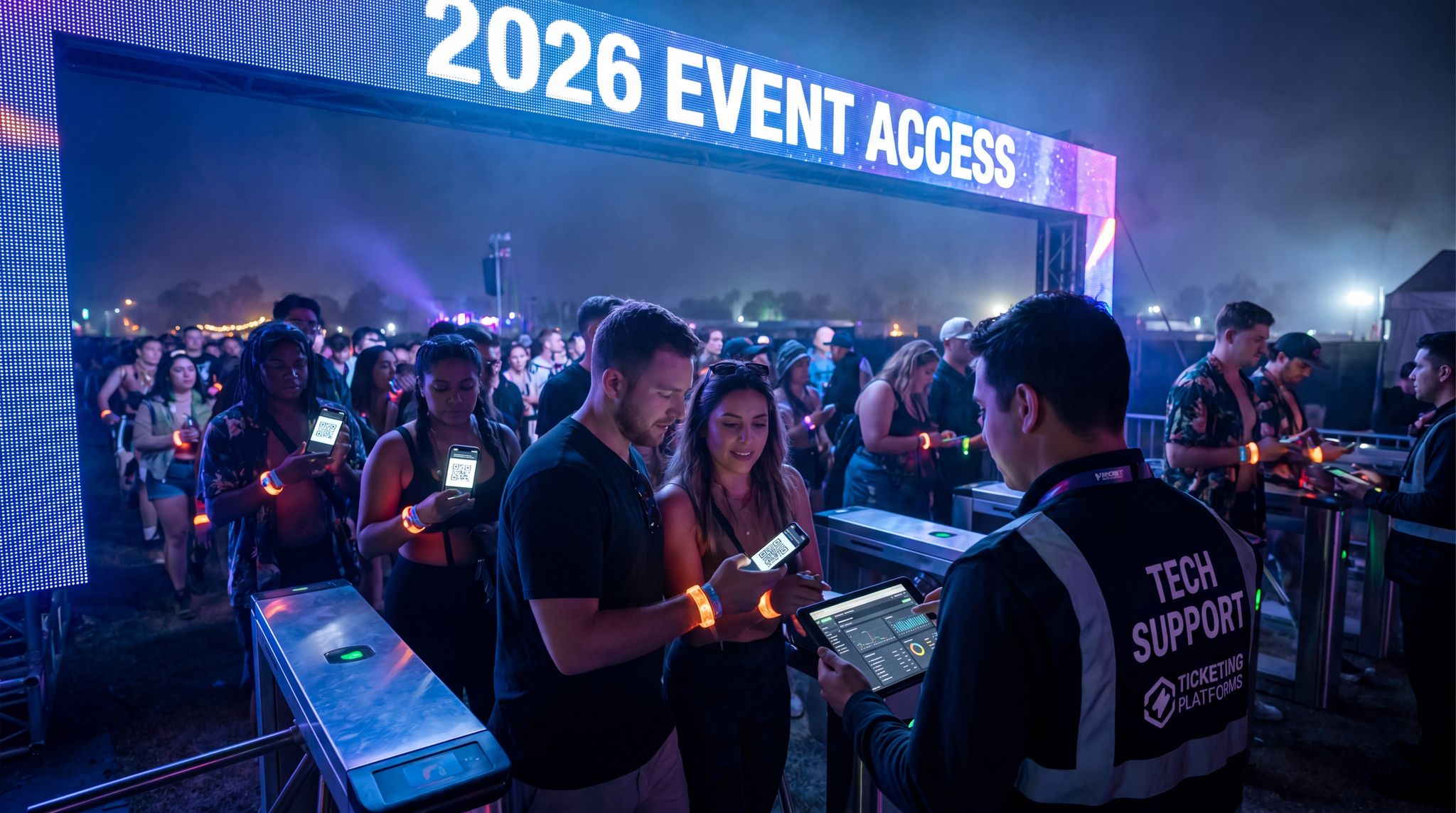
Scan tickets and manage entry with our mobile check-in app. Supports photo ID verification, real-time capacity tracking, and multi-gate coordination.
Capturing Content with Monetization in Mind
Invest in Quality Recording and Production
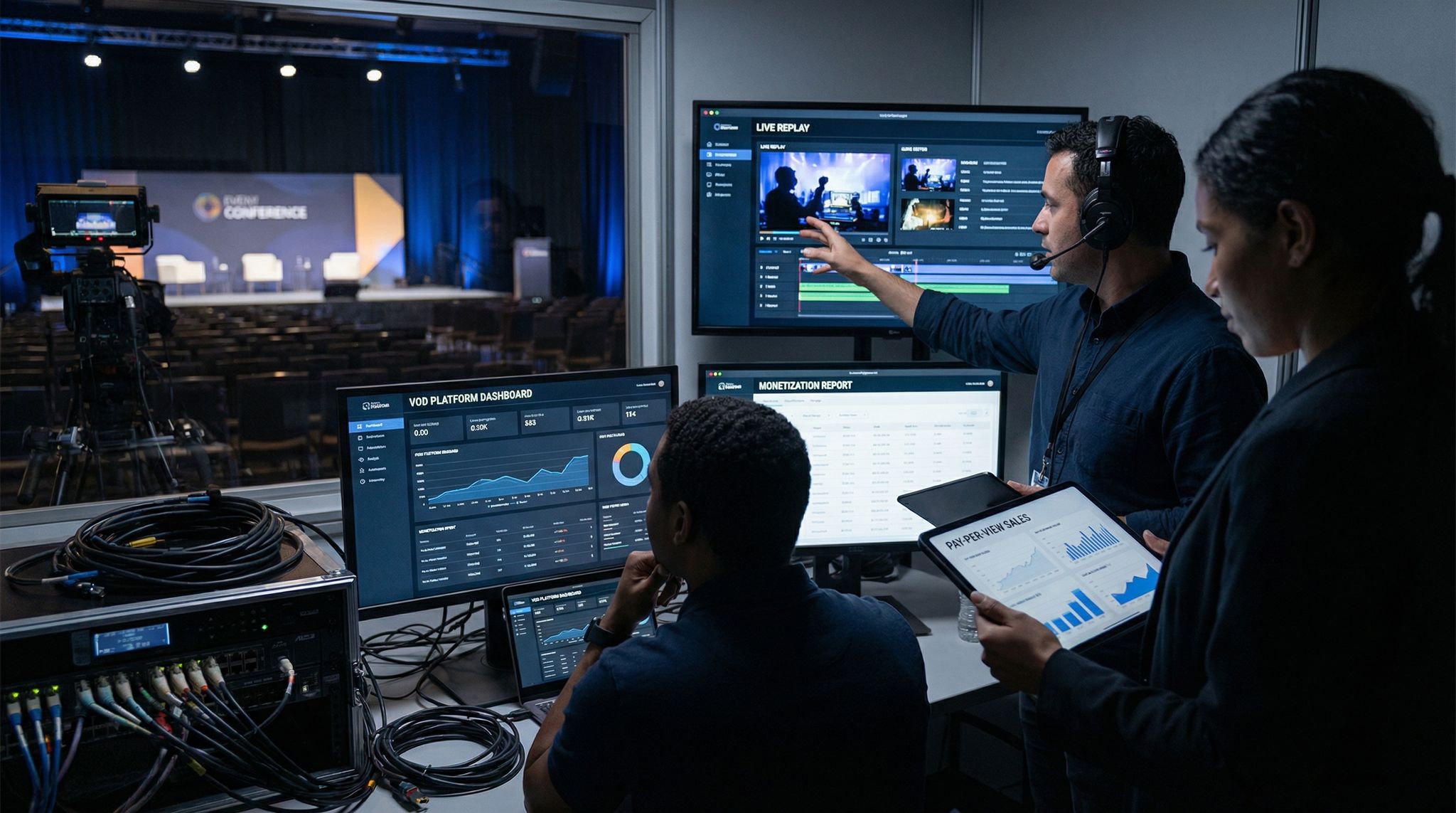
To monetize event content, you first need content worth paying for. That means capturing high-quality recordings of your event. Skimping on audio/video production is a false economy – attendees might forgive a muffled mic on-site, but online viewers won’t pay for poor-quality video or sound. In practice, this involves hiring a skilled AV crew or equipping your team with the right gear: multi-camera setups for dynamic angles, direct feeds from the soundboard for clear audio, and possibly a dedicated control room to live-mix or at least ensure recordings are clean and well-framed. For large concerts or festivals, 4K cameras and crane or drone shots can provide the spectacle remote fans expect. Smaller events like B2B conferences might get by with two-camera shoots (one wide, one on the presenter) and direct screen capture for slides. The key is to plan the recording as part of your event production – don’t treat it as incidental. An upfront investment of a few thousand dollars in production can yield tens of thousands in content sales later. When budgeting, consider this as a vital expense and income item that can be offset by sponsorship from brand partners.
Archive and Edit for Maximum Value
Raw footage alone isn’t a product – it needs post-production polish. Successful content monetization starts with a well-organized archive of all recorded materials. Immediately after the event, archive all video files, audio tracks, and related assets (e.g. presentation decks or setlists). Back them up securely – this content is now a revenue asset that you can’t afford to lose. Next, consider editing and packaging. You may want to edit full-length sessions or concerts to remove dead air, fix any glitches, and add intro/outro graphics. Also, identify highlight moments that can be extracted. Many events create a short “best of” highlight reel within days of the event – both as a promotional tool and as content to monetize (more on that later). For example, a conference might compile the top five insightful moments from various talks into one video, or a festival might edit a multi-artist montage of the most electrifying performances. These curated products can often be easier to market than dozens of separate raw videos. Efficiency is crucial: the sooner you can curate and polish your recordings, the sooner you can start charging for access while audience excitement is still high.
Ready to Sell Tickets?
Create professional event pages with built-in payment processing, marketing tools, and real-time analytics.
Rights Clearances and Agreements
Before you hit the record button, make sure you have the rights to monetize what you film. Seasoned organizers have learned the hard way that not all performers or speakers automatically grant permission to sell recordings of their work. Incorporate content rights into your performer and speaker contracts. For artists at concerts and festivals, this might mean negotiating the right to live-stream and sell recordings – sometimes offering a revenue share or a flat fee to the artist or their label. At conferences, include a release form for presenters that explicitly allows the event to distribute and monetize session videos. It’s far easier to handle this upfront than to chase permissions after the fact. Also consider intellectual property: if a speaker’s slides or a panel discussion contain proprietary data, ensure there are no confidentiality issues in putting that content online for sale. Privacy concerns should be acknowledged too – avoid overly intrusive crowd shots or any attendee data on screen without consent, especially in regions with strict privacy laws (GDPR in Europe, for example). By securing the necessary rights and releases in advance, you’ll have free rein to turn your footage into funds once the event is over.
Pay-Per-View and On-Demand Video Sales
Selling Virtual Tickets to Event Replays
One of the most straightforward ways to monetize post-event video is through pay-per-view access – essentially selling “virtual tickets” to the event’s recordings. This model treats your content like a digital concert or online conference: viewers purchase a pass to watch on-demand. Typically, you’d host the videos behind a secure paywall and charge either per session or for an all-access bundle. Many events find success by pricing these virtual access passes significantly lower than in-person attendance to drive volume while still preserving in-person value. For instance, when Tomorrowland staged a full virtual festival, it charged around €20 for a full-access online pass (as compared to hundreds for physical attendance), and even offered a separate “Relive” ticket for about €12.50 that let fans watch recorded sets after the live broadcast. This demonstrates how festivals set virtual ticket prices to balance revenue while providing access for friends at home. For a business conference, you might price an all-session VOD package at say 30–50% of the in-person ticket cost – enough to convey value, but accessible to a wider audience. Real-world examples abound: MozCon (an annual marketing conference) sells a video bundle of its sessions for $299 post-event, and Content Marketing World offers a “Post-Show Access Pass” for $599 that delivers all session recordings and slide decks for a year. These strategies align with Content Marketing World’s pricing model and their Post-Show Access Pass which has been going successfully on Facebook. These events successfully tap into a global audience of professionals who couldn’t attend or want to revisit the content.
Beyond standard session replays, organizers can also package exclusive networking or off-stage moments. For example, offering VOD access to exclusive evening events—similar to a “MozCon after hours” mixer or VIP Q&A—creates a premium tier for digital attendees. Furthermore, these digital packages can be integrated into your pitch materials, much like a MozCon sponsorship deck, allowing brand partners to underwrite the cost of virtual access in exchange for high-visibility branding on the video player.
Pricing Strategies and Access Windows
Getting the pricing right for on-demand content can make or break sales. A common approach is tiered access windows. For example, you might sell a replay pass that allows unlimited viewing for a limited time – say, 72 hours or 1 week – at a certain price, and then offer a higher-priced option for lifetime access to the downloads. Some organizers include on-demand access as an add-on for those who bought a live stream ticket: if someone paid to watch the event live online, they get, for instance, 7 days of VOD access free, after which they must pay an additional fee to keep the content. Offering on-demand access as an add-on is huge because fans might miss the live show. This encourages early purchase and upsells later. Bundle deals are effective too: one can bundle physical attendance with a discounted add-on for the recordings (e.g. “Attend the conference for $1,000, or $1,100 including all session videos afterward”). This pre-sale of content access to attendees can lock in revenue before you even start editing videos. As a baseline, look at industry benchmarks for guidance. During the pandemic when demand for virtual content peaked, some events charged as much as 60–70% of the in-person price for virtual access. One increasingly popular tactic is selling the VOD separately. Now, with hybrid models maturing, many settle around 20–50%. The sweet spot depends on your content’s perceived value and audience. It’s wise to survey your audience – hardcore fans might pay a premium for a one-time historic concert video, whereas casual viewers of a trade webinar expect a bargain. Audiences have shown they are willing to pay for valuable content.
Boost Revenue With Smart Upsells
Sell merchandise, VIP upgrades, parking passes, and add-ons during checkout and via post-purchase emails. Increase average order value by up to 220%.
Case Example: Converting FOMO into Purchases
To illustrate the potency of pay-per-view monetization, consider the Integrative Healthcare Symposium. This medical conference found that roughly half of the buyers of its video recordings each year were people who had actually attended in person – they wanted to re-watch sessions or catch ones they missed – and the other half were professionals who couldn’t attend. This mirrors the success of the IHS Symposium sales strategy. They price current year videos at around $295 (and slightly less for the prior year’s content), selling 200–250 packages annually. This example shows two important things: even attendees are a market for content (especially if your event had multiple tracks or simultaneous sessions), and there’s enduring interest beyond the live audience. The Integrative Healthcare Symposium sells access to the research and findings of integrative healthcare. Another example comes from the music world: after the 2021 Glastonbury Festival had to cancel its in-person edition, the organizers filmed an exclusive five-hour production dubbed “Live at Worthy Farm.” They charged roughly £20 (about $25 USD) for online access to this one-off virtual concert, and thousands of fans worldwide bought tickets for the experience. This works alongside on-demand sales from fans craving the experience. Despite being essentially an after-the-fact offering (the festival couldn’t happen as normal, so they monetized a special recording), it demonstrated that fans would pay for unique content even if they couldn’t be there. This is especially true for special one-off virtual concerts. The lesson is clear: when FOMO (fear of missing out) meets quality content, there’s revenue to be made. Promote the fact that “if you missed it live, here’s your chance” and many will gladly pay for the next-best thing to being there.
Strategies for Monetizing Live Streams in 2026
For organizers mapping out their digital strategy, understanding how to monetize live streams in 2026 requires a hybrid approach. Rather than relying solely on post-event VOD sales, forward-thinking producers are integrating real-time revenue features directly into their broadcasts. This includes interactive tipping, exclusive mid-stream VIP Q&A sessions, and dynamic sponsor overlays that activate during peak viewership. By capturing revenue while the broadcast is happening, you create a lucrative foundation that seamlessly transitions into your on-demand replay strategy.
Grow Your Events
Leverage referral marketing, social sharing incentives, and audience insights to sell more tickets.
When looking at niche sectors, many organizers ask how do creators monetize live tournament broadcasts? In the esports and competitive gaming space, online event monetisation relies heavily on a mix of micro-transactions, exclusive digital badges, and dynamic ad insertions. By adopting these broadcast-specific tactics, traditional event producers can unlock new revenue layers during their live streams, ensuring that every digital viewer contributes to the overall profitability of the broadcast.
Mastering Virtual Conference Monetization
When dealing specifically with B2B audiences, virtual conference monetization requires a tailored approach. Unlike entertainment festivals where FOMO drives impulse buys, professional summits rely on the enduring educational value of their sessions. Organizers can maximize revenue by offering tiered digital passes—such as a basic track-specific replay or an all-access premium tier that includes downloadable slide decks, continuing education (CE) credits, and private speaker Q&A forums. By positioning these digital assets as essential career development tools, producers can justify higher price points and secure corporate group sales long after the live broadcast concludes.
Subscription Libraries and Membership Access
Building a Content Library for Recurring Revenue
Rather than selling content one video or event at a time, some organizers are turning their trove of recordings into a subscription-based library. This model can transform an event brand into a year-round content platform. For example, the Growth Marketing Conference created a “Startup Video Library” online – granting pass holders on-demand access not only to the latest conference videos but an archive of past years’ talks. They’ve priced this virtual pass at about 30–40% of the in-person ticket cost (around $385) and consistently sell hundreds of these each year. Let’s talk about the Growth Marketing Conference and how they aren’t just thinking about one single event. Likewise, smaller niche events like MicroConf (for startup founders) have amassed a huge repository of session videos over a decade and monetized it by offering subscriptions – recently reporting about 500 active subscribers paying ~$99 each for on-demand access, alongside thousands of one-off video purchases at $25 apiece. This is effective for B2B growth marketers where the best way to build an audience is to provide value. MicroConf has been hosting online content for businesses and comprehensive archives. These examples showcase that if your event produces valuable content regularly (annually or even more often), you can nurture a global community that pays to tap into that knowledge or entertainment on an ongoing basis.
“Festival as a Service”: Fan Memberships
Entertainment events are also embracing subscription-style monetization through fan membership programs. Instead of (or in addition to) charging per video, a festival might launch a digital fan club or “all-access pass” that includes every live stream and on-demand archive for a fixed period. Imagine a festival offering a 12-month digital membership that gives fans live stream admission to this year’s festival, plus on-demand replays of past performances, and maybe some exclusive behind-the-scenes videos in between events. This not only yields recurring revenue but also keeps fans engaged year-round. As discussed in a guide to monetizing festival brands year-round, major European festivals have introduced paid “friends of the festival” memberships that bundle perks like exclusive content, early lineup announcements, and discounts. This creates fan memberships for recurring revenue and establishes a loyal Friends of the Festival community. Even venues are doing this – for instance, the iconic Village Vanguard jazz club in New York started streaming live shows during lockdown and then maintained a paid online subscription for remote jazz lovers, essentially creating a digital venue with a steady subscriber base. They succeeded by streaming for on-demand access and continuing to broadcast shows during the pandemic and beyond. By treating your archive as the foundation of a community membership, you shift from one-off transactions to predictable recurring income.
Smart Promo Codes & Presale Access
Create percentage or flat-rate discount codes with usage limits, date ranges, and ticket type restrictions. Plus unlock codes for private presales.
This recurring revenue model isn’t limited to music festivals. Fan monetization for associations and professional trade groups is rapidly expanding. By offering members year-round access to a gated library of industry keynotes, training seminars, and exclusive interviews, associations can transform a one-off annual conference into a continuous, value-driven subscription that boosts member retention and generates steady online event monetization.
Balancing Free vs. Paid in Your Library
When building a content library, you’ll face the question of how much to put behind the paywall versus in front of it. Seasoned content marketers often recommend a freemium approach: offer some content free to attract and hook viewers, while the full riches reside in the paid section. For example, you might release 2–3 marquee session videos from your conference for free on YouTube or your website as a promotional tool, while keeping dozens more in the paid vault. This demonstrates the value and quality of your content, acting as a teaser. Some events rotate a few free “videos of the week” to give non-members a taste, then prompt them to subscribe for full access. Another tactic is offering a free trial period for the subscription – say a 7-day free look at the library – which can drive sign-ups if the content is compelling. One thing to watch out for is content fatigue: ensure your archive is well-organized and curated, not just a dumping ground of every raw video. Subscribers will stick around if new content is added regularly or if you provide ways to navigate to the most interesting material. Remember, the goal is to create an experience where fans or professionals feel they’re getting ongoing value, rather than just paying for last year’s recordings. With thoughtful strategy, a subscription library can become a cornerstone of your event’s revenue model – and a reason your audience stays connected with you long after each event.
For professional groups, implementing fan monetization for associations requires a slightly different approach than entertainment festivals. Instead of backstage passes, trade organizations can offer premium tiers that include exclusive Q&A sessions with keynote speakers, downloadable resource toolkits, and private networking forums. By treating their membership base as a dedicated audience, these organizations can effectively turn their annual symposiums into a continuous, year-round digital revenue stream.
Sponsor-Branded Content and Ad-Supported Streams
Turning Free Views into Sponsor Dollars
Not every piece of content needs to generate revenue directly from viewers’ pockets. There’s a parallel monetization path where sponsors and advertisers foot the bill in exchange for eyeballs. If you have a large potential online audience but sense resistance to paid tickets, a sponsor-supported broadcast might be the answer. Many big festivals take this route: Coachella, for instance, has long streamed its festival live for free on YouTube, backed by major brand sponsors and platform deals. The result is millions of viewers worldwide seeing “brought to you by…” branding on the stream, while Coachella and its partners reap significant sponsor fees. This is a prime example of sponsored free streams. Another popular route is offering content that includes set commercials or product placement. In 2026, sponsors are eager to extend their event partnerships into the digital realm – instead of just banners on-site, they want their logo and message on streamed content that reaches far beyond the venue. As an organizer, you can package your live stream or on-demand video highlights as a valuable inventory for sponsors: pre-roll video ads, watermarks or corner logos on the video, “this replay is presented by (Sponsor)” messages, or even product placements within exclusive content (like a behind-the-scenes interview segment at a festival’s live stream host booth, sponsored by a brand). The key is to integrate these without ruining the viewer experience. A well-executed example was Red Bull TV’s festival coverage: they partnered with events worldwide to broadcast shows for free, effectively acting as digital stage sponsors while delivering high-quality streams to audiences. The festival didn’t charge viewers, but Red Bull’s sponsorship covered production costs (and then some). Sponsor dollars can be substantial, often scaling with viewership – so if your free stream draws 100,000+ viewers, you have a compelling case to charge a premium to sponsors for that exposure. This exposure can be monetized in several ways including enhanced on-site presence.
Sponsor-Branded On-Demand Content
Post-event content offers additional creative sponsorship inventory. Think about sponsor-branded highlight reels: you can produce a slick 5-minute recap of the event’s greatest moments, and have a sponsor’s branding on the intro/outro or even subtly watermarked throughout. For instance, a tech conference might create a “Top 10 Innovations from X Conference” video, presented by an industry sponsor who gains thought leadership by association. This video could be distributed free on social media and YouTube for maximum reach, benefiting the sponsor and drawing viewers into your event’s orbit (some of whom may purchase full session access or tickets to next year’s event). Another approach is offering sponsors exclusive content rights: perhaps a fitness expo partners with a nutrition brand to sponsor a series of on-demand workout session videos from the event, which the brand then distributes to its customers (with revenue to you for the rights). Essentially, your content can be an asset you license or co-create with sponsors. Just as sponsors pay for naming rights to stages or venues, they might pay to be the exclusive sponsor of your event’s video library or on-demand platform for a season. Make sure to track and report metrics back to sponsors – views, engagement, click-through rates, etc. – to prove the ROI. In the same way you’d show attendance numbers and branding impressions on-site, demonstrate how your digital content gave them extended reach, helping sponsors win swag and memorable activations. In fact, integrating tech tools (like unique tracking links or in-video QR codes for sponsor offers) can directly tie content to leads or sales, massively boosting your sponsorship ROI narrative.
Advertising and Platform Monetization
Aside from direct event sponsors, you can also tap into standard online advertising models if you distribute content on popular platforms. YouTube is an obvious one – by uploading select content to YouTube and enabling ads, you earn a share of the ad revenue. The catch is you need a lot of views to make serious money this way; however, some festivals have done well by building YouTube subscriber bases. For example, Wacken Open Air (a major heavy metal festival) runs an official channel “WackenTV” that regularly posts archived performances; a single viral video from their archive (like a legendary band’s full set) can garner millions of views, translating to notable ad dollars over time. This shows what a festival can produce in terms of content. Some of these channels even share ad monetization with artists and labels to get buy-in for posting the content, which is a smart way to expand the archive while keeping it monetized. Beyond YouTube, consider other platforms’ monetization schemes: for instance, Facebook offers Ad Breaks for longer videos, and Vimeo’s OTT service allows you to set up a paid channel. There’s also the route of channel memberships or Patreon – where super-fans pay a small monthly amount to get exclusive content on an ongoing basis. A comedian might post weekly clips from their shows to Patreon for paying supporters, or a club venue could offer a “digital season ticket” via a membership platform. These models blur the line between subscription and sponsorship; the fans become micro-sponsors of your content. Keep in mind, though, if you go with public ad-supported platforms, control over data and user experience is lower – you won’t know who your viewers are in as much detail, and you can’t directly upsell them other products as easily. Many events therefore use a hybrid approach: some content on open platforms for broad reach (monetized by ads or sponsorships) and premium content on their own controlled platform for direct revenue.
Data-Driven Event Marketing
Track ticket sales, demographics, marketing ROI, and social reach in real time. Exportable reports give you the insights to make smarter decisions.
Highlight Reels, Compilations and Creative Repackages
Best-Of Compilations and Replays
Not all fans want to watch an entire 3-hour show or multi-day conference after the fact. A lucrative strategy can be creating condensed content packages that cater to shorter attention spans while still generating revenue. Highlight reels are a prime example – these are typically 10–30 minute videos distilling the most exciting or important parts of your event. You can monetize highlight compilations in several ways. One is selling them as downloadable or DVD products (yes, physical media still exists for super-fans and collectors!). For example, some festivals have produced official live compilation albums or concert film DVDs featuring the best performances – Glastonbury and Tomorrowland at times released albums of standout live tracks, which fans purchase as memorabilia. For instance, Wacken Open Air runs a successful channel that complements their physical sales, a topic we will discuss more on memberships later. In the digital realm, you might offer a highlight reel as a low-cost VOD rental or purchase – say a fan who doesn’t want to buy the full 10-hour archive might pay $4.99 to stream a “festival highlights” video. This also works for conferences: e.g., “Key Takeaways of X Summit” video could be sold to those who only care for the high-level insights. Such products are cheaper to produce (you’re mostly editing existing footage) and can have broad appeal, especially if marketed well (“Relive the greatest moments of UltraFest 2026!”). Another benefit: highlight compilations can double as marketing content. You might release an early version for free to entice people, then offer an extended or bonus-laden version for sale. The goal is to create multiple tiers of content offerings – free teaser, paid highlights, paid full content – capturing every segment of interest.
Bundling Content with Merchandise or Experiences
One inventive way to boost post-event sales is by bundling digital content with physical merchandise or exclusive experiences. For instance, a festival could sell a deluxe merch bundle – a limited-edition poster or t-shirt that comes with a USB drive loaded with video highlights, or a QR code granting access to the full concert archive. This plays on fans’ desire for tangible souvenirs while also delivering digital content value. Some organizers have done limited runs of photo books or commemorative tickets that include a download code for the event video; these become collectible items, adding perceived value to the content beyond its standalone price. Even without full films, festival content can be licensed to create unique products, or capture moments like bringing out a surprise guest. You can also bundle content access as a perk in VIP packages or loyalty programs. Consider a venue membership where one benefit is that members get free access to all last season’s concert recordings, or a VIP ticket that automatically includes the event’s video replay afterward. Bundling can significantly increase uptake – a fan might not pay $20 just for a video, but they might pay $30 for a cool poster that happens to come with the video access. It’s a form of price anchoring and value-add. From the organizer’s perspective, the revenue is the same (or better), and you’ve also moved some merchandise. Just be sure your e-commerce or fulfillment can handle delivering both items (physical shipping and digital links). Platforms like Ticket Fairy (with its integrated add-on sales and fulfillment) can facilitate selling such combos in one transaction. Ticket Fairy’s festival ticketing platform handles wristbands and complex festival operations alongside these digital bundles.
Licensing and Media Partnerships
Beyond selling directly to fans, don’t overlook B2B opportunities for your content. If you captured something truly unique – say a once-in-a-lifetime tribute performance, a world-record stunt at your event, or a keynote by a high-profile figure – there may be media outlets or streaming services interested in licensing that content. Festivals with rich archives have done this masterfully. A standout example is the Montreux Jazz Festival in Switzerland. With over 50 years of performances recorded, Montreux created a dedicated media venture to monetize its archive: they’ve licensed concert footage to platforms like Stingray Qello (a concert streaming service) and even produced documentaries from the archives. Since every festival has such a video archive, Montreux’s example of leveraging over 50 years of performances shows how to attract fans if made accessible. The festival earns licensing fees and distribution deals by opening up its vault under controlled terms. While not every event has such legacy, even a smaller event could pitch notable session videos to industry websites or content platforms. For instance, a tech conference might partner with an educational site or YouTube channel to host some of its talks (sharing ad or subscription revenue), or a sports event might sell highlights to a TV network’s digital arm. The upside of licensing is wider exposure with little effort on your part once the deal is in place – the partner handles distribution. Just approach it carefully: ensure you’re not giving away content you could monetize better on your own, and clarify exclusivity (you generally don’t want to surrender the right to also sell the content yourself unless it’s a very lucrative deal). Also, maintain credit – having your event’s name on content that goes out on big media channels can boost your brand and drive future ticket sales. In short, sometimes the biggest payout for your footage might come from a company check rather than individual fans – so be open to creative partnerships.
Choosing Platforms and Distribution Channels
Own Platform vs. Third-Party Services
Deciding where and how to host your on-demand content is a crucial piece of the monetization puzzle. Broadly, you have two options: use a third-party platform or build/host it on your own controlled platform. Third-party services (like Vimeo OTT, Uscreen, or specialized event content platforms) offer turnkey solutions – they handle video streaming infrastructure, paywalls, user accounts, and often support subscriptions or PPV. The benefit is speed and reliability: you can quickly launch a branded site or app for your content without deep technical know-how. For instance, Vimeo OTT has been used by film festivals to create a Netflix-like subscription service for their films, and conference platforms like ConferenceCast.tv or Cvent Video Hub allow easy upload and sale of session videos. However, these typically charge setup fees or take a cut of revenue, and you’ll likely have less flexibility in features. On the other hand, hosting content on your own website or ticketing platform gives you more control. Many event ticketing systems – such as Ticket Fairy – now support secure video streaming integrations, letting you sell access on your event page and then provide the content via a private link or embedded player to ticket holders. This way, you maintain full branding on your domain and own the customer data (who watched, their emails, etc.), which is valuable for remarketing. The trade-off is that you’ll need to manage more of the tech: ensuring you have a video player that can handle the load (often via a Content Delivery Network as discussed in streaming checklists). Remember that live content is just one part of the equation; other events create an immersive experience, implementing login or code-based access for buyers, and providing user support if viewers have issues.
Key Features to Look For
Whether you go with a third-party or self-hosted approach, there are certain must-have features for a smooth monetized content experience. Payment security and ease is first – ensure the platform supports international payment methods and currencies if you have a global audience, and that transactions for digital content are seamless (mobile-friendly checkout, etc.). Next, content security: look for features like DRM (Digital Rights Management) or at least password-protection and watermarking to deter piracy (more on content security in the next section). If using a platform, see if it supports different pricing models (one-off purchases, rentals with 48-hour access, promo codes, bundle pricing, subscriptions, etc.) so you have flexibility. Another important factor is analytics – you’ll want data on how many people viewed each video, how long they watched, etc., both for your own insight and potentially to report to sponsors. Good platforms provide a dashboard for these metrics. User experience is also paramount: the on-demand interface should be easy to navigate, searchable, and reliable (nothing will kill your monetization faster than videos that buffer endlessly or a site that crashes during a live replay release). In 2026, viewers expect a Netflix-caliber experience even for niche event content, so aim for the best you can within budget. A well-chosen platform can make your content look professional and premium, reinforcing to customers that it was worth the price.
Global Reach and Accessibility
One often overlooked aspect of platform choice is the geographical reach and access. If your event has international fans, ensure your chosen solution can deliver high-quality streams globally, preferably via a CDN with nodes worldwide for low latency. Check for any regional restrictions – some platforms might have limitations in certain countries or face firewall issues (for example, YouTube is blocked in some countries, and certain services might not be compliant with EU data laws if not configured properly). Also, consider localization features: can you offer subtitles or audio translations for your content to broaden the audience? Some conference platforms now let you upload caption files or even use AI to auto-transcribe and translate, which can be a huge value-add if you want to sell content in non-English-speaking markets. Accessibility is key too: adhere to basic accessibility standards (captions for the hearing impaired, avoid text in images, ensure the video player is screen-reader friendly) so you’re not turning away potential customers with disabilities. Lastly, think about platform adoption by your audience. For a tech-savvy crowd, asking them to create an account on your site is no big deal; but for a more general audience, leveraging platforms they already use (like hosting behind an unlisted YouTube paywall or a Facebook private group for members) might reduce friction. Whichever route you choose, test it thoroughly before launch – ideally with a beta group of users – to catch any technical or UX issues. A reliable, accessible platform is the foundation of monetizing content successfully; it’s worth taking the time to pick the right one and configure it well.
Go Cashless With RFID Technology
Enable contactless payments, faster entry, and real-time spending analytics with RFID wristbands and NFC-enabled ticketing for your events.
Evaluating the Best Platform for Video Archives
When evaluating the best platform for event organizers to monetize their event video archives, the answer largely depends on your specific business model and audience scale. For massive, multi-day festivals with thousands of hours of footage, enterprise-grade OTT (Over-The-Top) solutions that support custom branding and robust DRM are often the top choice. Conversely, independent promoters and niche B2B conferences might find that an all-in-one ticketing and streaming integration provides the most seamless path to event monetization. The ideal solution should bridge the gap between secure hosting and frictionless e-commerce, allowing you to effortlessly convert past attendees and new fans into paying subscribers without requiring a dedicated IT team.
Monetizing Event Technology Stacks
Beyond simply selling video access, modern organizers are actively monetizing event technology itself. This means turning your digital infrastructure—such as mobile event apps, virtual networking lounges, and interactive streaming overlays—into premium inventory. For instance, a B2B conference might charge sponsors for branded push notifications or featured placements within the event’s matchmaking algorithm. By integrating e-commerce directly into the viewing experience, producers can offer seamless in-stream purchases, allowing fans to buy exclusive merchandise or VIP upgrades without leaving the video player. Ultimately, treating your software stack as a revenue-generating asset ensures that every digital touchpoint contributes to the bottom line.
For smaller organizers or niche B2B producers, leveraging native social media tools can reduce overhead. Facebook ticketed events monetization in 2026 has matured, allowing creators to host paid live streams directly on the platform where their audience already interacts. Similarly, for highly specialized sessions—like an AI income workshop—VIP recordings can be securely hosted via YouTube private or unlisted links integrated with a ticketing paywall. These virtual event monetization methods provide a low-barrier entry point for monetising digital content without investing in custom streaming infrastructure.
When exploring social commerce, mastering Facebook ticketed live events monetization in 2026 offers a streamlined path for both niche creators and established brands. By utilizing native social broadcasting tools, organizers can bypass complex third-party paywalls and sell virtual admission directly where their community already gathers. This frictionless checkout process is particularly effective for pop-up workshops, behind-the-scenes venue tours, or supplementary association webinars.
Rights Management and Content Security
Protecting Your Content from Piracy
Any time you put valuable video content online, there’s a risk someone will copy or share it without permission. While you can’t eliminate piracy entirely (determined pirates can always point a camera at a screen…), you should take sensible steps to protect your content – both to deter casual infringement and to honor your agreements with performers. One basic measure is to use platforms that support encrypted streaming and DRM. DRM (like Google Widevine or Apple FairPlay) encrypts the stream such that only authorized users (e.g. those logged in with a valid account or ticket) can decrypt and view it. This prevents simple downloading of the video file. Another tactic is visible or invisible watermarking: you might display a subtle watermark with the viewer’s email or a unique code on the video, which discourages people from screen-recording and sharing (they won’t want their identity on a pirated copy). Some systems even do this invisibly – embedding an ID in the pixels that can be traced. At the very least, gate the content behind user logins or unique access links; never send out raw video files or open links if you intend to charge for the content. It’s also wise to monitor the web for leaks: check popular video sites or torrents after your content goes live, and issue DMCA takedown notices if you find any unauthorized copies. This sounds tedious, but actually there are services and even YouTube’s Content ID that can help automate detection of your footage elsewhere. Remember, your paying customers expect that they’re getting exclusive access – if the content is easily found for free it will undermine your sales.
Navigating Music and Performance Rights
If your event content includes musical performances, be aware of the extra layer of rights involved. Beyond the performers’ consent to be recorded, you may need to handle music licensing for on-demand distribution. When you live-stream or sell recordings of a concert, it’s not just the artist’s permission you need – the compositions (songs) are often under copyright by songwriters/publishers, and the recordings might implicate record label rights. Large festivals typically work this out via blanket agreements or licenses with performing rights organizations for live streams, but for on-demand video-on-demand (VOD) sales, it can get more complex. As a rule of thumb, if you plan to sell full concert videos or even individual song performances, consider reaching out to music licensing bodies (ASCAP, BMI, PRS, etc. depending on country) or consulting a music licensing expert to ensure you’re covered. Alternatively, some events avoid the issue by limiting paid on-demand access to a streaming-only format (no downloads) and within a limited timeframe, but strictly speaking, even a stream is a public performance that might need clearance. For conference content, this is usually easier – unless a speaker used copyrighted videos or music in their presentation (in which case edit that part out or get permission to include it), you mainly have to worry about their personal release. Always refer to the contracts you have with talent: if an artist’s rider forbids recording their set, don’t risk it; negotiate that before the show or exclude that piece from your package. In short, make rights management an integral part of your monetization plan, so you don’t hit legal roadblocks after you’ve done all the work to film and package your content.
Respecting Attendees and Privacy
While speakers and artists are the primary rights holders to consider, don’t forget about the rights and expectations of your attendees whose faces or voices might appear in your content. In many jurisdictions, people have a right to privacy in settings where they expect it. An event is generally considered a public setting, and your ticket terms likely include that attendees may be filmed – but it’s good practice to notify your audience if you are recording (signage at entrances, announcements, etc.). In 2026, attendees are quite used to events being live-streamed, but they appreciate transparency. Also, be mindful of sensitive content: if any Q&A session included a participant sharing personal information, or if there were minors in the crowd for a show, you may need to edit or obtain consent for those portions before selling the footage. Some conferences explicitly allow attendees to opt out (like a reserved seating area off-camera for those who don’t want to be filmed). As for data privacy, if you’re collecting user data through content platform sign-ups, ensure you comply with laws like GDPR for how you store and use that data – especially if you’ll monetize further by marketing to those users. It all boils down to maintaining trust with your community: you want them to feel comfortable that monetizing content isn’t coming at the expense of their privacy or rights. This trust, once established, can even become a selling point – fans will be more willing to buy digital content if they feel it’s handled respectfully and professionally.
Marketing and Selling Your On-Demand Content
Timing Is Everything: Post-Event Promotion
To successfully turn event recordings into revenue, you can’t simply upload them and hope people will find it. A proactive marketing plan is essential. The first crucial factor is timing. Leverage the post-event excitement: in the days immediately after your event, social media will be abuzz with attendees sharing memories and those who missed out feeling a bit of FOMO. This is prime time to announce that content is available. Many organizers send a targeted email campaign within a week post-event – one version to attendees (e.g. “Re-watch your favorite moments”) and another to those who showed interest or were on the waitlist but didn’t attend (“Experience what you missed on-demand”). It’s wise to include a limited-time offer to create urgency, like an early-bird price for the VOD pass if purchased within two weeks of the event. Additionally, make use of the event’s communication channels: the event app or online platform (if you had one for a hybrid event) can push notifications to users about on-demand content. Announce the content release on all your social platforms, ideally with enticing clips or screenshots. For example, share a 30-second jaw-dropping moment from a concert or a snippet of a keynote’s most quotable line – with a call-to-action to watch the full video by purchasing access. The sooner you launch this promotional blitz after the event, the better. Interest drops exponentially as time passes, so strike while the memory is hot.
Leveraging Speakers, Artists, and Partners
Your event content features people – speakers, performers, hosts – who often have their own followings. Tap into those networks to multiply your marketing reach. Coordinate with your headline speakers or artists to promote the recordings to their fans. For instance, if a famous DJ’s set is now available on-demand from your festival, provide them with a custom promo code or affiliate link and encourage them to post on their socials (“Missed my set at X Festival? You can watch it now!”). Many will be happy to push it if you present it as a win-win (perhaps offering them a revenue share or at least highlighting that it’s a professionally produced video of their performance – great for their portfolio too). The same goes for panelists and presenters at conferences; often they’d like as many people as possible to hear their message, so they’ll share links to the session video, indirectly driving sales for you. Don’t forget sponsors and media partners either. If a sponsor’s logo or segment is featured in the content, they have a vested interest in more people seeing it – provide them a nice shout-out in the content and they may promote the on-demand links in their post-event wrap-ups. Community or industry partners (like trade associations, local tourism boards, etc. that were involved) might also help spread the word. Essentially, turn content marketing into a team sport: the more stakeholders amplifying your message, the more potential buyers you reach. Provide ready-made assets (short teaser videos, banners, suggested copy) to these partners to make sharing effortless.
Sales Channels and Pricing Promotions
Selling event content should be approached with the same savvy as selling tickets. Use multiple sales channels and tactics. If you have a ticketing or registration site (like Ticket Fairy or similar) where people originally bought tickets, list your on-demand product there as soon as the event ends – many ticketing platforms allow you to email past buyers or display add-on products in the confirmation pages. This comprehensive guide breaks down how to engage fans in the off-season to turn a once-a-year spectacle into a year-round brand. This way, an attendee buying a ticket for next year might see an upsell: “Add last year’s video package for 50% off”. For those who didn’t attend, digital marketing is key: run retargeting ads aimed at people who visited your event page but didn’t buy a ticket, now offering them the content instead (“See what you missed for just $X”). Social media ads can work well if you have compelling footage to use in the ad. Also consider flash sales or bundle deals during off-peak times – for example, a holiday discount on your content library, or a “bundle up for winter” deal where buying access to three past concerts gives a special price. If your event content is evergreen (educational sessions that remain valuable), you can market them year-round, tying into relevant industry news or seasons (“Gear up for Q4 planning with these top marketing strategy sessions from our summit – now 30% off”). Keep an eye on pricing psychology: some events find success with “name your price” experiments for older content – letting the most eager fans pay a premium while bargain hunters pay less – though use this sparingly and gauge if it fits your brand. Lastly, encourage word-of-mouth: enable ratings or reviews on your content platform, or simply collect testimonials (“This workshop replay was worth every penny!”) and showcase them. Positive social proof can convince fence-sitters that your videos are worth buying. For more technical details, discover the updated 2026 checklist for online events to ensure a seamless experience. In summary, apply creativity in selling content just as you do in selling tickets – it’s an extension of your event’s lifecycle that can keep cash flowing.
Frequently Asked Questions
Why is post-event content monetization important in 2026?
Post-event monetization turns recorded footage into sustainable revenue streams, maximizing ROI after the event ends. With hybrid events now standard, organizers leverage high-quality video for global audiences willing to pay, evidenced by Tomorrowland’s one million paid virtual attendees. It transforms one-time events into long-term assets.
How can event organizers monetize recorded content?
Organizers monetize recordings through pay-per-view replays, subscription libraries, and sponsor-branded content. Strategies include selling virtual access passes at 20–50% of in-person ticket costs, creating “best of” highlight reels for purchase, or offering membership programs that bundle live stream admission with on-demand archives for recurring revenue.
What is the best pricing strategy for on-demand event video?
Effective pricing strategies involve tiered access windows or bundling content with physical tickets. Virtual access passes often sell for 20–50% of the in-person ticket price, though premium B2B conferences may charge up to $599. Offering limited-time discounts or bundling digital content with merchandise also drives sales volume.
How do event subscription libraries generate revenue?
Subscription libraries generate recurring revenue by offering on-demand access to current and past event archives for a fee. This model transforms events into year-round content platforms, similar to how the Growth Marketing Conference sells access to its “Startup Video Library” or festivals create paid “friends of the festival” memberships.
What rights are needed to sell event recordings?
Selling event recordings requires securing rights clearances from performers, speakers, and music rightsholders upfront. Contracts must explicitly allow for distribution and monetization of the footage. For concerts, this includes negotiating live stream and VOD rights with artists and potentially licensing music through organizations like ASCAP or BMI.
How can sponsors monetize free event live streams?
Sponsors monetize free streams by covering production costs in exchange for branding exposure to global audiences. Organizers package live streams and on-demand highlights as valuable inventory for pre-roll ads, watermarks, or “presented by” segments, allowing brands to reach viewers beyond the physical venue while keeping content free for fans.
What are the top virtual event monetization methods in 2026?
The most effective virtual event monetization methods include pay-per-view access, subscription-based video libraries, and sponsor-supported free streams. Organizers are also leveraging native social tools, such as Facebook ticketed live events, to drive direct revenue from digital attendees.
How can associations monetize their event content?
Fan monetization for associations involves turning annual conference recordings into a year-round, gated content library. By offering members exclusive access to keynotes and training seminars via a subscription model, associations can increase member retention while generating continuous online event monetization.
How can organizers go about monetizing event technology?
Producers can monetize their event technology by transforming digital touchpoints into premium inventory. This includes selling sponsored placements within mobile apps, offering branded virtual networking lounges, and integrating in-stream e-commerce for seamless merchandise sales during live broadcasts. By leveraging these tech stack features, organizers create new digital revenue streams beyond standard ticket sales.
How does Facebook ticketed live events monetization work in 2026?
In 2026, Facebook ticketed live events monetization allows organizers to host paid broadcasts directly on the social platform. This native integration reduces friction by letting attendees purchase virtual admission and watch the stream without leaving the app, making it an ideal solution for pop-up workshops, association webinars, and exclusive behind-the-scenes content.
How can organizers effectively monetize live streams in 2026?
To successfully generate revenue from live broadcasts, event producers should adopt a multi-tiered approach. This includes selling premium virtual access passes, integrating real-time e-commerce for exclusive merchandise, and utilizing dynamic sponsor overlays during the broadcast. Additionally, leveraging native social commerce tools allows organizers to capture revenue directly from engaged audiences before transitioning the footage into a paid on-demand archive.
How do creators monetize live tournament broadcasts?
Creators and esports organizers monetize live tournament broadcasts through a combination of dynamic ad insertions, viewer micro-transactions, and exclusive digital badges. This approach to online event monetisation allows producers to generate real-time revenue while keeping the core stream accessible to a massive global audience.
What are the best practices for virtual conference monetization?
Successful virtual conference monetization relies on packaging educational content as premium professional development. Best practices include offering tiered digital passes, bundling session replays with downloadable resources or continuing education credits, and selling corporate group access. This B2B approach ensures that the digital archive remains a valuable, revenue-generating asset long after the live event concludes.
What is the best platform for event organizers to monetize their event video archives?
The ideal platform depends on your specific needs, but top choices typically combine secure video hosting with integrated e-commerce. Solutions range from dedicated OTT services like Vimeo OTT and Uscreen for subscription libraries, to all-in-one event management systems that allow you to sell VOD access directly alongside future ticket sales. The best choice will offer robust DRM, flexible pricing models, and seamless global delivery.