Events and Programming
Metro Ciudad Deportiva is a Mexico City Metro station, not a concert venue. It does not book performances, sell event tickets, operate seating areas or publish an entertainment calendar. Its importance comes from its location beside the Ciudad Deportiva Magdalena Mixhuca complex, which contains several major sports and live-event venues.
For event discovery, treat “Metro Ciudad Deportiva” as a transport destination and check the exact venue printed on your ticket. The surrounding area includes Estadio GNP Seguros, formerly Foro Sol; the Autódromo Hermanos Rodríguez; Palacio de los Deportes; Sala de Armas Fernando Montes de Oca; the Agustín Melgar Olympic Velodrome; Estadio Jesús Martínez “Palillo”; and Estadio Alfredo Harp Helú. Each has separate entrances, layouts, rules and ticketing arrangements.
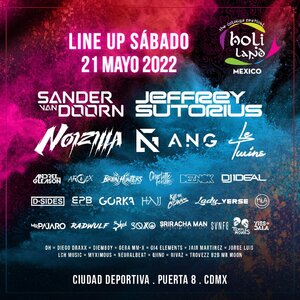
The area’s recent programming has been unusually broad. From 2021 through 2026, the surrounding complex has hosted stadium concerts, Latin and alternative-rock festivals, electronic-music weekends, baseball, Formula 1, Formula E, wrestling, family entertainment, football and other large-format events. Corona Capital, EDC México, Vive Latino, Tecate Emblema, Flow Fest, ARRE and the Mexico City Grand Prix are recurring examples of the district’s event profile.
Representative recent programming includes Corona Capital at the Autódromo in 2021 and 2022, the 2024 return of Vive Latino to the Autódromo area, the 2025 Vive Latino edition at the renamed Estadio GNP Seguros, the 2025 Formula 1 Grand Prix, and large concert runs by international and Mexican artists at the stadium and Palacio de los Deportes. The neighboring venues have also presented artists such as Coldplay, RBD, Paul McCartney, Kendrick Lamar, The Killers, Metallica, Bruno Mars and many others, but these performances took place at individual venues rather than inside the Metro station.
As of September 1, 2026, the announced programming cycle around the station includes major concerts at Estadio GNP Seguros and Palacio de los Deportes, together with festival dates at the Autódromo. The published 2026 festival calendar includes EDC México in February, Vive Latino in March, Tecate Emblema in May, ARRE and Vans Warped Tour in September, Corona Capital and Coca-Cola Flow Fest in November, plus EDC México in February 2027.
Recent announced stadium programming includes Harry Styles, Stray Kids, Alejandro Sanz, Karol G, Bruno Mars and Los Auténticos Caligaris. Palacio de los Deportes programming includes concerts and comedy, including El Tri, Carlos Ballarta and Rosalía’s five-date 2026 run. These examples show that the zone favors established international tours, major Mexican acts, multi-day festivals and high-capacity sports events rather than small club shows.
There is no single “Metro Ciudad Deportiva” ticket price. Verified 2026 examples from venues in the surrounding complex range from approximately MX$171 for a baseball-related listing and MX$744 for Formula E to about MX$1,266 for a large stadium concert, MX$4,191 for a three-day electronic festival pass and roughly MX$4,300 for Formula 1 entry-level listings. Prices change by event, section, day, presale, fees and availability.
Tickets and Booking
Buy tickets according to the named venue, not according to the Metro station. Concerts at Estadio GNP Seguros and Palacio de los Deportes normally use reserved seating, general-admission floor areas or a mixture of both. Festival tickets are generally sold as single-day entries, multi-day passes and upgraded hospitality categories. Racing events use assigned grandstands, hospitality areas and other event-specific zones.
Ticket releases commonly move through an announcement, a presale or priority period, and then a general sale. Popular concerts and festivals can sell the best sections quickly, so create an account with the authorized seller named in the official event announcement, confirm your identity and payment requirements in advance, and review the venue map before the sale begins. Do not assume that a ticket for one venue gives access to another nearby building.
For festivals, compare the ticket type carefully. Corona Capital’s published 2026 information distinguishes general admission, a premium option, Comfort Pass and a higher hospitality category. Alcohol service requires proof of age, and the festival recommends attendance by people aged 16 or older. Such conditions apply to that festival, not automatically to every event near the station.
Same-day ticket availability, box-office hours and door sales vary by production. The Metro station itself has no event box office, will-call counter or official ticket desk listed in its passenger information. If a show is sold out, avoid unofficial resale offers around the station and confirm any transfer or identification rules in the event’s own terms.
About Metro Ciudad Deportiva
Metro Ciudad Deportiva is an elevated station on Line 9, which runs between Tacubaya and Pantitlán. The station opened on August 26, 1987, when the Pantitlán–Centro Médico section of Line 9 entered service. It has two platforms and sits over the Viaducto Río de la Piedad, serving the boundary between Venustiano Carranza and Iztacalco.
The station’s icon represents a player of the ancient Mesoamerican ballgame. Its name refers to the nearby Ciudad Deportiva Magdalena Mixhuca, a large public sports complex whose origins are connected with a 1956 project to create broad recreational and athletic facilities. The complex was inaugurated in 1958 and expanded substantially in preparation for the 1968 Olympic Games.
The surrounding sports city was planned on a very large scale. Official descriptions identify football fields, swimming pools, an automobile circuit, tennis and baseball facilities, basketball and volleyball courts, a stadium, gymnasiums, a skating area and driver-education facilities. Some facilities remain oriented toward public and amateur sport, while others now support professional competitions, festivals and international entertainment.
The station is therefore notable less for its own architecture than for the way it connects ordinary public transport with one of Mexico City’s most concentrated sports and entertainment districts. On a normal day it serves commuters and local residents; on a concert, festival or racing weekend, it becomes one of the principal arrival points for a much larger temporary crowd.
Seating and Layout
Metro Ciudad Deportiva has no audience seating, standing floor, VIP section or concert sightline. Passengers use two elevated side platforms, stairways and station circulation areas. Stay behind the yellow safety line, follow directional signs and do not attempt to cross tracks or enter restricted areas.
For the nearby venues, the best location depends on the event. Estadio GNP Seguros can use reserved grandstands, floor or standing areas, boxes and hospitality spaces. The official venue information describes capacity of up to 65,000 people, but the usable capacity changes with stage position, production equipment, floor configuration and safety requirements. Grandstand seats provide a more predictable view, while field admission is usually chosen for proximity and atmosphere.
Palacio de los Deportes is a very different experience. The indoor arena has a circular plan, a copper-covered dome and a published capacity of 17,800 seats. Depending on the event, the floor may hold a stage, sports court, temporary seating or standing general admission. Seats closer to the floor usually feel more immediate, while upper sections can offer a clearer view of the full stage design.
The Autódromo is an outdoor site rather than a fixed concert bowl. Festival layouts can place several stages, food areas, sponsor activations and restrooms across the circuit and its open areas. The nearest Metro station may be convenient for the correct gate but not necessarily for the stage where your ticket is valid. Expect considerable walking on concrete, grass, gravel or temporary flooring.
Architecture, Design and Technical Capabilities
The station is an elevated, functional transport structure positioned in the median of Viaducto Río de la Piedad. Public information identifies its ballgame-player symbol but does not publish a detailed architectural brief, auditorium dimensions, concert rigging information, acoustic treatment, sound-system specifications or theatrical lighting inventory for the station.
Those technical questions belong to the neighboring event venues. Palacio de los Deportes is the district’s most architecturally distinctive building: Félix Candela, Antonio Peyri and Enrique Castañeda designed its hyperbolic-paraboloid structure for the 1968 Olympics. Its copper roof creates a large column-free interior, and the dome spans about 380 feet across a site of approximately 6.7 hectares.
Estadio GNP Seguros reopened in August 2024 after a major renovation. Published improvements include more comfortable seating, hospitality areas, updated food-and-beverage spaces, panoramic elevators, more than 280 screens, improved internal and perimeter lighting, and modernization of water, electricity, data and telecommunications infrastructure. The venue also added a large rainwater-capture roof and storage system.
No verified public source located for this guide publishes a permanent loudspeaker brand, exact sound-pressure design, fixture schedule or production inventory for Estadio GNP Seguros, the Autódromo or Metro Ciudad Deportiva. Large shows use event-specific production packages, temporary stages, screens, lighting towers and touring audio systems, so technical details can change from one performance to the next.
Getting There and Parking
The station’s published exits are on both sides of Viaducto Río de la Piedad. The north exit is at Viaducto Río de la Piedad and Calle 45, in Colonia Ignacio Zaragoza. The south exit leads toward Viaducto Río de la Piedad and Colonia Granjas México. Check your event’s gate map before choosing an exit, because the most convenient side changes by venue and production layout.
Line 9 is the simplest public-transport option. From central areas, passengers can transfer to Line 9 at Chabacano; from the west, Line 9 reaches Ciudad Deportiva from Centro Médico, Chilpancingo, Patriotismo and Tacubaya; from the east, it connects through Puebla and Pantitlán. The station’s published fare is MX$5, and regular hours are 5:00 a.m. to midnight on weekdays, 6:00 a.m. to midnight on Saturdays, and 7:00 a.m. to midnight on Sundays and holidays.
Metro Velódromo and Metro Puebla may be better for some gates. The Autódromo identifies Velódromo, Ciudad Deportiva and Puebla as useful Line 9 stations, while Metrobús Line 2 stops at UPIICSA and El Rodeo near Gates 14 and 15. The Palacio de los Deportes can also be reached from Ciudad Deportiva or Velódromo.
The station’s official listing does not publish a station parking lot or a fixed parking price. Parking around the event complex is handled by individual venues and productions. For example, the 2026 Corona Capital information identifies event parking at the Autódromo entrance near Gate 15, but does not provide a universal price that can be applied to other events.
Driving is least predictable during Formula 1, festivals and sold-out stadium concerts because road closures, pedestrian controls and temporary traffic plans can change access to Viaducto, Río Churubusco and Añil. Rideshare and taxi drop-off points should be taken from the event’s instructions rather than assumed from the station name. After a large show, walking away from the immediate crowd before requesting a car can be more practical, but allow extra time and keep valuables secure.
Inside the Station and Event Areas
Inside Metro Ciudad Deportiva, expect ticket gates, platforms, station staff, passenger circulation areas and security presence. The station does not have concert merchandise, assigned event seating, a coat check, a venue bar or a permanent show concession program listed in its official information.
Metro rules prohibit smoking or lighting matches and lighters inside stations, entering restricted areas, crossing the safety line, obstructing doors or circulation routes, carrying large bags that interfere with other passengers, bringing animals except assistance or service animals, and travelling while intoxicated. Objects that could damage trains or facilities are also prohibited. Children under seven must be accompanied by a responsible adult.
Event areas are governed separately. Outdoor festivals generally have airport-style searches, restrictions on professional recording equipment, age rules, identity checks for alcohol service and event-specific bag policies. Do not bring an item merely because it was allowed at a previous concert; production rules can change between artists and venues.
Accessibility and Inclusive Facilities
The current Metro accessibility inventory lists functioning elevators at Ciudad Deportiva, including one serving the access area and another associated with the platform in the Tacubaya direction. The station’s individual information also lists escalators. Because elevators can be temporarily taken out of service, passengers who require step-free access should verify conditions before travelling and ask station staff for assistance.
Station accessibility does not guarantee identical conditions inside an event venue. Estadio GNP Seguros reports panoramic elevators and improved accessibility spaces as part of its 2024 renovation, while festivals such as Corona Capital publish information about designated ramps and accessible parking. Confirm accessible seating, companion policies, toilets, routes across outdoor flooring and entry gates for the specific event before buying.
No ADA certification is published for Metro Ciudad Deportiva. Visitors from the United States should understand that “accessible” information in Mexico is usually presented through local transport and event policies rather than an American ADA venue-rating system.
Nearby Amenities
The district’s notable nearby attractions include Museo Diablos at Estadio Alfredo Harp Helú, Utopía Mixiuhca, Mercado Tlacotal and Mercado Agrícola Oriental. The Museo Diablos presents the history of the Diablos Rojos baseball club and includes permanent and temporary exhibition spaces, multimedia displays and a merchandise shop.
For a concert or festival, arrive early enough to locate the correct gate, pass security, use the restroom and walk to your seating or stage area. The station may be close to a venue perimeter while the actual entrance is several blocks away. Outdoor events can involve long routes between stages, so comfortable shoes, sun protection and a light layer for the evening are more useful than formal clothing.
After a late event, do not rely on the Metro without checking the closing time and any special operating notice. Large crowds can be held outside a station temporarily for crowd control, and festivals may finish after regular Metro service. Plan a backup taxi, rideshare or pre-arranged pickup, and agree on a meeting point away from the main exit.
What Makes This Area Special
Metro Ciudad Deportiva is a practical gateway to a rare concentration of Olympic heritage, public sport and commercial entertainment. The surrounding complex grew from a mid-century effort to provide ordinary residents with large-scale athletic facilities, then gained international importance through the 1968 Olympic preparations. The station’s ballgame icon links modern mass transit with a much older sporting tradition in Mexico.
The area also demonstrates how one sports district can serve very different audiences. A weekday may bring local athletes and commuters; a baseball night brings families and supporters of the Diablos Rojos; a Formula 1 weekend brings international visitors; and a stadium concert can draw tens of thousands of fans from across Mexico and abroad.
The economic effect is significant, although published figures usually measure the surrounding venues or events rather than the Metro station alone. The 2025 Mexico City Grand Prix reported 401,326 attendees, MX$19.84 billion in estimated economic contribution and 10,649 supported regional jobs. Estadio GNP Seguros reported more than seven million attendees and 121 concerts and events during its first two years after the 2024 renovation.
These events support hotels, restaurants, transport providers, temporary workers, security teams, production crews and neighborhood commerce. They also create pressure on traffic, waste management, public safety and late-night mobility, making advance planning important for both visitors and residents.
Visitor Tips and Information
Check whether your ticket is for Estadio GNP Seguros, Palacio de los Deportes, the Autódromo, the Velódromo or another facility before leaving the station.
Use the gate number on the event instructions, not simply the closest Metro exit.
Keep your ticket and identification accessible but secure, particularly at festival searches and alcohol-service points.
Wear shoes suitable for long walks and outdoor surfaces.
Carry only what the event permits; venue bag rules are separate from Metro rules.
Allow extra time for security, crowd-control holds and long walks between the station, venue gate and seating area.
For late finishes, arrange a backup journey before entering the event.
Keep phones and wallets in closed front pockets in dense crowds, especially while leaving through a busy gate.
People requiring step-free access should identify the station elevator and the event’s accessible gate before travel.
Frequently Asked Questions
Is Metro Ciudad Deportiva an event venue?
No. Metro Ciudad Deportiva is an elevated Line 9 passenger station. It does not host concerts, operate an arena, sell event tickets or have a published performance calendar. People usually search for it because it is close to Estadio GNP Seguros, the Autódromo Hermanos Rodríguez and other venues within Ciudad Deportiva Magdalena Mixhuca.
What events are near Metro Ciudad Deportiva?
Nearby programming includes major concerts, Formula 1, Formula E, baseball, electronic-music festivals, Latin-music festivals, alternative-rock events and family entertainment. Recurring festivals include Corona Capital, EDC México, Vive Latino, Tecate Emblema, ARRE and Flow Fest. The exact event location matters because the complex contains several separate venues and gates.
Which venue is closest to Metro Ciudad Deportiva?
Sala de Armas Fernando Montes de Oca is immediately beside the station area, with the city’s venue guide placing it roughly 0.07 kilometers away. Other destinations, including Estadio GNP Seguros and the Autódromo, may be farther depending on the gate. Always follow the entrance printed on your ticket rather than choosing only by venue name.
How do I reach Estadio GNP Seguros from the station?
Exit toward the event-side access and follow the temporary signs or staff directions to your assigned gate. Estadio GNP Seguros occupies part of the larger Autódromo complex, so the station can be close while the correct entrance is still a substantial walk. Gate numbers change by production, and some events use different perimeter approaches.
Can I take the Metro home after a concert?
Sometimes, but do not assume service will continue after the show. Ciudad Deportiva’s published regular closing time is midnight, with later opening on weekends and holidays but not generally later closing. Festivals can finish after regular service, and crowd-control measures may delay station entry. Plan a backup ride before the event starts.
What is the Metro fare at Ciudad Deportiva?
The published fare is MX$5 per trip. Free access is listed for older adults, people with disabilities, children under five, INJUVE youth participants and uniformed police. Event tickets do not include Metro fare, and a concert or festival wristband should not be treated as a transport pass unless the organizer specifically says so.
Does Metro Ciudad Deportiva have parking?
The station’s official information does not publish a station parking facility or fixed parking tariff. Parking is handled separately by nearby venues and event organizers. Some festivals provide event parking near designated gates, but availability and pricing vary. Public transportation is usually easier during sold-out concerts and racing weekends because road controls can change quickly.
Which other Metro stations serve the event complex?
Metro Velódromo and Metro Puebla are also useful Line 9 options. Velódromo can be more convenient for the Olympic Velodrome and some Palacio de los Deportes approaches, while Puebla may suit eastern Autódromo or baseball-stadium access. The best station depends on your ticketed gate, so compare the venue map with the Line 9 exits.
Can I use Metrobús to reach the area?
Yes. Metrobús Line 2 stops including UPIICSA and El Rodeo provide access toward Autódromo Gates 14 and 15. Other nearby stops serve different sides of the sports complex. Routes and pedestrian approaches can be modified during major events, so check the organizer’s arrival instructions before choosing Metrobús over Line 9.
Is Metro Ciudad Deportiva accessible for wheelchair users?
The current Metro accessibility inventory lists functioning elevators at the station, including access and platform locations. That information can change temporarily if equipment is under maintenance. Accessible transport access does not automatically confirm accessible seating, toilets or routes inside the event venue, so visitors should verify the specific concert or festival’s accommodation policy.
Does the station have elevators or escalators?
Both are identified in official information. The station page lists escalators, while the current accessibility inventory records elevators at the access area and a platform serving the Tacubaya direction. Ask station staff if you need a particular elevator, a safer crossing route or assistance with luggage, a wheelchair or mobility equipment.
What can I bring into the Metro station?
Bring only ordinary personal items that do not obstruct other passengers or create a safety risk. Metro rules prohibit large obstructive bags, dangerous objects, smoking materials in use, intoxication, animals except assistance or service animals and entry into restricted areas. Event venues impose additional rules, including separate bag and recording-equipment restrictions.
Are children allowed at Metro Ciudad Deportiva?
Yes. The station is marked for all audiences, and children under five are listed for free Metro access. Children under seven must travel with a responsible adult under the Metro regulations. Concert and festival age limits are controlled by the individual event; some allow children with an adult, while others establish minimum ages.
Where should I meet friends after an event?
Choose a meeting point away from the station entrance and the main venue gate. Immediately after a concert or festival, crowds can make phone service, walking and rideshare pickup difficult. A nearby landmark or agreed street corner is more practical than saying “meet at Ciudad Deportiva,” because the station has entrances on both sides of Viaducto.
What is the best footwear for events near the station?
Wear supportive shoes with good grip. Autódromo festivals use large outdoor areas that may include concrete, grass, gravel, dirt and temporary flooring. Stadium events can also require long walks from the Metro exit to the correct gate and from the gate to your seat. Fashion footwear is less comfortable when delays or crowd holds extend the journey.
Does the Metro station sell concert merchandise?
No station merchandise operation is listed in the official passenger information. Event merchandise is normally sold inside or immediately around the individual venue and may be available only after passing security. Sales points, payment methods, stock and queues vary by production, so do not expect the station to function as a pre-entry merchandise location.
Does Palacio de los Deportes use the same entrance as Estadio GNP Seguros?
No. They are separate venues with different layouts, operators and entry procedures, even though both are inside or beside the Ciudad Deportiva district. Palacio de los Deportes is an indoor arena with its own access points. Estadio GNP Seguros uses stadium gates and event-specific sections. Follow the exact venue and gate printed on your ticket.
What makes the area historically important?
Ciudad Deportiva Magdalena Mixhuca began as a large public sports project in the 1950s and was expanded for the 1968 Olympic Games. Its surviving and later venues connect community recreation, Olympic history, professional baseball, motorsport and mass entertainment. Metro Ciudad Deportiva, opened in 1987, made that district more accessible through Line 9.
How early should I arrive for a festival?
Arrive well before the first act you want to see. A festival day may involve a walk from the station, a security search, ticket validation, restroom stops and another long walk to the correct stage. For assigned stadium seating, the required margin may be smaller, but arriving early still helps with merchandise, food, accessibility arrangements and unexpected traffic controls.
Are there restaurants and hotels immediately beside the station?
The surrounding area includes neighborhood markets, food businesses and event concessions, but the station is not a dedicated hotel or restaurant district. Major festivals usually add temporary food and beverage modules, while stadium concessions vary by event. Visitors staying elsewhere in Mexico City should plan their meal and late-night journey rather than relying on finding open services after a show.