Introduction
In the ever-evolving world of event planning, organizers are always looking for ways to maximize revenue, enhance attendee experiences, and boost brand presence. While social media buzz and sponsorship deals are well-known avenues, an often underestimated strategy is selling merchandise onsite at your event. Whether it’s a music festival, conference, concert tour, or sporting event, offering exclusive branded gear on the ground can unlock significant financial and marketing benefits.
Why merchandise? Simply put, fans love it. Attendees get a tangible memento of their experience, and you get an extra income stream. In recent years, on-site merchandise has become a core part of many events’ business models. For example, one leading platform processes about $1.6 billion in on-site food, beverage, and merch sales each year, according to recent private equity investment data – underscoring how significant merchandise can be for live events. Industry data from mid-2025 showed festival merchandise spending up 8% year-over-year, as noted in AtVenu’s analysis of fan spending, with fans eager to splurge on premium and genre-branded items. Ignoring this opportunity is like leaving money on the table.
But it’s not just about money. High-quality, unique merchandise creates memorable moments and fosters loyalty. Think of the concert-goer proudly wearing a tour T-shirt the next day, or a conference attendee using a branded notebook long after the event – these are experiences and impressions that extend beyond the venue. Done right, on-site merch turns attendees into ambassadors, builds community, and keeps your event alive in hearts and conversations well after the lights go down.
In this guide, we’ll break down the key reasons to sell merchandise onsite at your event and how to do it in a way that enriches the attendee experience and enhances your brand. From boosting revenue to strengthening partnerships, every section provides insights – backed by current data, real examples, and professional tips – to help you get the most out of event merchandise sales.
Boost Revenue With Smart Upsells
Sell merchandise, VIP upgrades, parking passes, and add-ons during checkout and via post-purchase emails. Increase average order value by up to 220%.
What is Onsite Merchandise Sales?
Onsite merchandise sales refer to the practice of selling branded items (t-shirts, hats, hoodies, posters, souvenirs, etc.) directly to attendees during an event. Instead of limiting merch to online stores or pre-orders, this strategy brings the shop to the venue when excitement is at its peak. Fans can see, touch, and immediately purchase memorabilia while their enthusiasm is highest.
Definition and Benefits of Selling Merchandise Onsite
For event organizers, selling merchandise onsite is a win-win. It creates an additional revenue stream and also serves as a powerful tool for promoting your event brand. Attendees, on the other hand, gain a unique way to commemorate their experience. These tangible items often hold significant sentimental value – a way to “take home” a piece of the event.
Ready to Sell Tickets?
Create professional event pages with built-in payment processing, marketing tools, and real-time analytics.
If you are wondering exactly why event merchandise is important to your overall business strategy, the answer lies in its dual ability to drive immediate on-site profitability while securing long-term brand equity. For promoters and venue operators, a robust retail program transforms passive attendees into active brand ambassadors, diversifying income away from a strict reliance on ticket sales and food and beverage margins.
From a financial perspective, on-site merch can be substantial. Depending on your event’s size and audience passion, merch sales can reach tens or even hundreds of thousands of dollars in one night. In fact, merch revenue has, in some cases, made up the entire profit margin for an event, a phenomenon explored in our masterclass on selling out festival merchandise. Conversely, treating merch as an afterthought can mean missed opportunities. Attendees come ready to spend – if you aren’t prepared to sell them something exciting, you’re essentially giving up revenue, as highlighted in discussions regarding how festivals maximize merchandise sales.
When analyzing the financial facts, live events and entertainment company merchandise programs consistently show that retail is no longer a secondary afterthought but a primary driver of profitability. Major promoters and venue operators now report that per-head retail spending often rivals food and beverage revenue, proving that a well-executed physical storefront is essential for modern event monetization.
Beyond revenue, on-site merch supercharges your marketing and engagement efforts. Every attendee who buys a t-shirt or cap effectively becomes a walking billboard for your event. When they wear that item in their everyday life, it spreads awareness to countless others. A single festival t-shirt, for example, can generate over 5,000 impressions as it’s worn over its lifetime, according to statistics on promotional product impressions. That’s thousands of people seeing your event name for free. Research also shows branded apparel has very high recall – 85% of consumers remember a brand after receiving a logoed shirt or hat, based on key statistics regarding promotional products. In other words, merchandise keeps your brand in people’s minds long after the event.
Turn Fans Into Your Marketing Team
Ticket Fairy's built-in referral rewards system incentivizes attendees to share your event, delivering 15-25% sales boosts and 30x ROI vs paid ads.
There’s also a psychological aspect: buying a souvenir helps attendees cement the positive memories of the day. A well-crafted item – say a beautiful poster or a limited-edition hoodie – can transport someone back to the excitement of the event every time they see it. This emotional resonance not only delights fans but can increase the likelihood they’ll attend again or recommend the experience to friends.
Finally, onsite merchandise contributes to the overall atmosphere of the event. A bustling merch booth with exclusive goodies adds to the sense that “something special is happening here.” It can spark conversations among attendees in line, foster a shared sense of community (“Did you get the new shirt? Which design did you pick?”), and even provide entertainment value of its own if done creatively (more on that later).
Grow Your Events
Leverage referral marketing, social sharing incentives, and audience insights to sell more tickets.
In summary, onsite merchandise sales allow you to capitalize on attendees’ enthusiasm in the moment, while boosting revenue, marketing reach, and attendee satisfaction. Now, let’s dive into the key benefits and how to maximize each one.
1. Boosts Revenue Through Event Marketing
Selling event merchandise is a surefire way to increase your event’s revenue. When you have the right mix of products – from classic attire like t-shirts and caps to collectible posters, accessories, and more – fans are eager to buy. They want to enhance their experience and take home a piece of it, and they’re willing to spend for that privilege. This can translate into a significant income stream for your event.
To gauge the impact: fans at music festivals and concerts often budget specifically for merch. In 2025, for instance, average per-fan spending on merchandise went up about 8% as live events roared back, according to AtVenu’s data on fan spending habits. If an attendee typically spends $25 on food and drink, they might spend a similar amount (or more) on a t-shirt or souvenir if the option is available. Multiply that by thousands of attendees, and the totals are impressive. It’s not unheard of for popular events to clear six or seven figures in merch sales over a weekend. Many top festivals treat merch sales as a strategic revenue pillar, planning it with the same attention as ticketing or sponsorship.
Importantly, merchandise revenue often comes with healthy profit margins. Once you’ve covered production costs (which can be kept reasonable with bulk orders or local suppliers), each additional sale is gravy. By pricing strategically – say $30 for a tee that cost $10 to produce – you create ample margin while still delivering value to fans. Limited-edition or premium items can fetch even higher prices. At Coachella 2022, a limited-run upcycled hoodie co-designed by a headliner sold for $100 and still flew off the shelves in minutes, demonstrating how limited edition collectibles drive hype and revenue and how major brands are taking over Coachella merchandise, showing that fans will pay top dollar for special merch.
Of course, boosting revenue isn’t just about setting up a merch table and hoping for the best. It requires planning and marketing savvy. Promoting your merchandise offerings before and during the event can drive sales; use your event’s social channels to tease exclusive items or bundle deals. On site, ensure your merch booths are highly visible and well-staffed to handle rushes (many events see spikes in sales right after gates open and right after headline acts). Some large-scale festivals now deploy multiple merch superstores and satellite carts across the grounds to maximize sales opportunities and reduce lines, a tactic detailed in our guide on festival merch strategies that move inventory. For example, Serbia’s EXIT Festival sells official merch at three separate locations, avoiding one congested tent and capturing more impulse buys across the venue, as noted in strategies for efficient festival merchandising. Simply put, smart operations lead to more sales.
Pro Tip: Embrace cashless payments and modern point-of-sale (POS) systems at your merch stands. Not only do mobile POS tablets and RFID wristbands speed up transactions, they also encourage higher spending. Research shows attendees using contactless payments tend to spend 25–40% more on merchandise (it feels easier than using cash), a trend discussed in optimizing festival merch operations. Faster lines + painless payments = more revenue.
Warning: Don’t overstock blindly in hopes of massive sales – unsold inventory can eat into your profits. Use pre-event surveys, historical data, or similar events’ figures to project demand for each item. It’s better to sell out of a popular item (creating buzz and urgency) than to be stuck with boxes of shirts nobody wanted. If you do have leftovers, plan a post-event online sale or pop-up to recoup costs (loyal fans who couldn’t attend might jump at the chance to buy merch after the fact).
2. Enhances the Event Experience
A great event isn’t just about what attendees see and hear – it’s also about what they do. And browsing a lively merchandise stall, trying on a cool event jacket, or debating which poster design to get can become a fun part of the event experience itself. People love taking home something tangible to remember an event by, and the process of obtaining that memento can be exciting and enriching during the event.
Think about the buzz of a merch tent at a festival or the merch table after a conference keynote. Attendees gather, chat, and share in the excitement of grabbing exclusive items. This adds an extra layer of activity and engagement at your event. It’s not just “buying a t-shirt” – it’s fans hunting for limited-edition drops, or collectors finding that one pin or patch to complete their set. In some cases, the merch booth almost becomes an attraction of its own. For example, when a festival announces a daily limited merch drop, you’ll see attendees lining up in anticipation, which energizes the atmosphere. At Coachella, the main merch tent famously had a continuous line of 1,000+ people in 2022, as reported in coverage of major brands and exclusive merchandise at Coachella, turning merch shopping into a communal experience (and a talking point for those watching on social media).
To truly enhance the experience, the key is quality and creativity. If your merchandise offerings are unique and well-designed, attendees feel a deeper connection to the event by owning them. Whether it’s a beautifully designed poster that doubles as art, a commemorative tour book, or a quirky souvenir specific to your event’s theme, these items deepen immersion. For instance, some festivals commission local artists to create special merch designs each day of the event – encouraging fans to return to the booth to see the new artwork and perhaps purchase again. Others have offered on-site customization (like live screen printing where you can watch your shirt being printed with a design you choose) which turns the act of buying into an interactive show, a concept highlighted in innovative festival merch strategies. When attendees can participate in creating or selecting their merch, it’s an experience they won’t forget.
At its best, on-site merch blurs the line between commerce and entertainment. It gives attendees another engaging touchpoint with your event content. They’re not just spectators; they become part of the story, clad in the event’s colors and logos. Many will wear their new shirts or accessories during the event itself, adding to the overall vibe and visual unity of the crowd. That in turn can amplify the energy – think of a sports game where everyone waves the team scarf they just bought, or a concert where the crowd all dons the band’s merch.
All of this contributes to attendees feeling they got more than just a show – they got an immersive, memorable experience. Instead of leaving with only a ticket stub, they leave with something in hand that they’re excited about. This positive association can boost their overall satisfaction, making them more likely to attend your future events.
Furthermore, integrating your retail footprint with the top fan experiences beyond merchandise can elevate the entire venue atmosphere. When organizers position merch pop-ups adjacent to interactive art installations, artist meet-and-greets, or immersive sponsor activations, the shopping process becomes part of a larger, cohesive entertainment journey rather than a purely transactional pitstop.
Warning: To keep merchandise shopping a positive part of the experience, manage it well. Long waits or chaotic booths can frustrate fans and detract from their enjoyment. Make sure to staff up adequately during peak sales times, display prices clearly (so people aren’t surprised at checkout), and consider the comfort of those in line. For outdoor events, provide shade or water for people queuing on hot days, as suggested in best practices for festival merch logistics. Use large signage or “merch menu” boards visible from the line so attendees can decide what they want before reaching the front, a tip for improving merch line flow. A well-organized, customer-friendly merch operation will enhance the vibe, whereas a poorly run one can become a sore point.
3. Increases Brand Visibility with Branded Merchandise
Every piece of merchandise sold at your event is a piece of marketing that walks out the door. Branded t-shirts, hoodies, hats, bags – when attendees wear or use these items in everyday life, they effectively become ambassadors for your brand. This kind of organic, post-event promotion spreads the reach of your event far beyond the venue and long after the event is over. It’s arguably one of the easiest (and cheapest) advertising methods you can have – because your fans are doing it for you.
Consider what happens after the event: Attendees go back to work or school, and they might wear your event’s hoodie on casual Friday or sip coffee from the branded mug they bought. Each time, people around them notice. “Oh, you attended that festival? How was it?” – that simple question, prompted by merchandise, can lead to new people hearing about your event. If 5,000 attendees each have a shirt that they wear in public, that’s potentially tens of thousands of impressions for your brand over the coming months, based on industry insights on promotional product reach. According to advertising research, a logoed t-shirt generates more impressions on average than a primetime TV ad spot – and certainly far more targeted impressions, since friends, family, or like-minded strangers are the ones seeing it.
Merchandise also tends to stick around. Quality items can remain in someone’s wardrobe or daily routine for years, continually reinforcing your brand. A study by the Advertising Specialty Institute found that 85% of consumers remember the advertiser (in this case, your event) when given a piece of branded apparel, as noted in key statistics on promotional products. This is incredibly high retention compared to many forms of advertising. Essentially, good merch keeps your event top-of-mind for attendees and even keeps informing new potential attendees who see the merch secondhand.
Social media amplifies this effect. These days, attendees love sharing their experiences online. When they post photos from the event, if they’re wearing your merch or showing off the cool poster they bought, that image is broadcasting your branding to all their followers. It’s not uncommon to see post-event photo dumps on Instagram or TikTok haul videos where fans show off all the goodies they got at a festival. Each of those posts introduces your event to hundreds or thousands of people in an authentic, enthusiastic way. This kind of viral promotion builds buzz and can even drive future ticket sales (“Those festival shirts look awesome, maybe I’ll go next year!”). It’s akin to word-of-mouth marketing, turbocharged by visuals.
From a branding perspective, merchandise also allows you to solidify your event’s identity. The designs, slogans, and logos you put on merch help establish what your event stands for visually. Iconic merch designs can become cultural symbols in their own right (think of the classic Woodstock logo tee or a Coachella hat). If your event has a distinctive logo or tagline, seeing it proliferate out in the world via merch will strengthen its recognition value. Fans often wear these items proudly, effectively saying “this event is part of who I am.” That’s the kind of brand loyalty marketers dream about.
In short, selling branded merchandise creates a win-win: attendees get something stylish or useful, and you get free advertising that can continue indefinitely. As one festival producer put it, distinctive merch turns attendees into walking advertisements for your event, a concept explored in our guide to selling out festival merchandise, deepening their emotional connection while spreading the word. If extending your event’s reach and legacy is a goal, merch is an essential tool in your marketing arsenal.
This principle extends to permanent venues and touring properties alike. Just as the sale of logoed goods for attractions serves as publicity after an event is over, your festival or concert apparel acts as a decentralized, long-term billboard campaign. Every time a fan wears your branded gear in a new city, they are endorsing your production to a fresh audience, effectively lowering your future customer acquisition costs.
4. Fosters a Sense of Community
There’s something powerful about looking around and seeing many people wearing the same event T-shirt or wristband – it creates an instant sense of unity. Selling event merchandise can strengthen the feeling of community among attendees by giving them a way to visibly identify as part of the group. It signals, “We were all part of this experience together.”
This phenomenon is especially pronounced in fan-driven events like music festivals, comic conventions, or sports games. Fans feel an emotional connection to the event and to each other. When they put on the event jersey or festival-branded hat, it’s like donning team colors – it reinforces that they belong to the tribe of people who were there. Strangers might strike up a friendly conversation simply because they notice each other wearing the festival’s merch (“Hey, you went to that show too? What did you think of the final set?!”). These interactions can spark new friendships and networks, all rooted in a shared event experience. In the days or years after, spotting someone in public with merch from “your” event brings back instant camaraderie.
Even at corporate events or industry conferences, branded merchandise can foster community and loyalty. For example, at an annual user conference, attendees often wear the conference t-shirt or carry the branded tote bag year to year. It becomes a badge of membership in that professional community. Company off-sites and alumni events use merch (like custom shirts or pins) to help participants feel like part of an exclusive club. People love to be part of something special, and merch is a tangible token of that membership.
Offering limited-edition or dated merchandise can heighten this effect. If you produce a shirt that’s specific to “Event 2026 – Founding Attendee” or a special design only sold at this year’s event, those who get it feel like they have a keepsake of a moment in time. They’ll hold onto it, and when they wear it, it’s a conversation starter with others who might have attended the same year or aspire to in the future. It fosters an ongoing sense of belonging: I was there. In fact, some fans become collectors of yearly merch – for instance, many festival-goers proudly collect each year’s unique poster or badge, and display the whole series on their wall as a testament to their enduring community involvement.
Merchandise can also create a feeling of exclusivity that bonds attendees. If only the people at the event could get that particular item, owning it sets one apart as a true fan or member of the in-group. This is one reason you’ll see fans rushing to buy merch before it sells out – they don’t want to miss the chance to own something only fellow attendees have. When everyone at a concert is wearing the tour tee that isn’t available anywhere else, it reinforces a shared identity and experience.
From an organizer perspective, nurturing this community vibe pays off. Attendees who feel connected to the event and each other are more likely to come back again (higher retention) and to promote the event to friends (organic growth). By selling merch that people cherish and wear with pride, you’re fueling a sense of community that can sustain your event brand for the long term.
5. Offers More Opportunities for Customization
Onsite merchandise sales also present the chance to offer customized or personalized items that attendees can’t get elsewhere. In an age where consumers love personalization, this can set your event apart and create a premium experience (and revenue boost) for those who opt in.
For example, you might let attendees add their name, nickname, or a custom number to the back of an event jersey or t-shirt (much like sports fans get jerseys with their name). Some conferences offer on-demand embroidery on bags or jackets with the attendee’s initials. At festivals, we’ve seen live screen-printing booths where fans choose a base shirt color and then pick from several exclusive designs or logos to be printed on the spot, a trend noted in strategies for interactive festival merch. They walk away with a one-of-a-kind item that literally no one else has exactly because they chose the elements. The allure of getting something uniquely “mine” often justifies an extra charge – and fans are happy to pay it for the experience and the result.
Trade shows and expos have long understood the power of customized merch. It draws people in. Think of the classic example of a booth printing custom slogan t-shirts or engraving pens on demand – there’s usually a line of curious people, which also means more foot traffic to that area. You can apply the same concept at any event: a customization station can become an interactive draw. It might be customizing merchandise (like engraving a souvenir), or even customizing experiences (like a photo booth that prints on merchandise). These offerings not only allow attendees to get a very personal keepsake, but the act of customization is a memorable experience in itself.
From a revenue perspective, customization typically allows you to charge a premium. Attendees perceive a higher value in something made just for them. For instance, a standard festival hat might be $25, but if you have a station to add embroidered patches or pins of the attendee’s choosing, they might spend $40+ creating a decked-out personalized version. The costs of offering some customization can be modest – e.g., having a few sewing machines or heat-transfer press on site – but the perceived value is high.
Customization also helps manage inventory in a clever way. Instead of pre-printing every possible variation of a design, you can stock blank or base items and customize on demand based on what people choose. This reduces the risk of guessing wrong on how many of each variant to produce. Veteran organizers use this tactic to avoid “dead stock.” Some smaller festivals even take pre-orders online for personalized merch (like a hoodie with your name and the event logo) and then produce them during the event for pickup, a method that reduces the financial risk of overstocking – ensuring zero leftover inventory since each piece is made for a specific person.
Finally, offering customization sends a message about your event brand: it shows you’re attendee-centric. You’re willing to go the extra mile to give each fan something special. That can enhance how your event is perceived (premium, thoughtful, cutting-edge) and generate positive buzz. People love sharing photos of their custom creations (“Check out the awesome poster I got – it has my name printed in the artwork!”). It’s another way merch can double as both a product and an experience.
6. Improves Post-Event Engagement with Attendees
The event might end, but the relationship with your attendees shouldn’t. Merchandise can play a key role in keeping the connection alive after everyone goes home. Essentially, merch extends the life of the event in the minds of attendees, serving as a bridge to post-event engagement and even future events.
When someone continues to wear or use an item from your event, they are continually reminded of the experience they had. That nostalgia can lead them to engage with your brand again – maybe they’ll follow your social media to see when the next event is, or join a fan community online, or simply talk to friends about “that great event last summer” whenever they throw on the t-shirt. In marketing terms, merchandise helps maintain brand engagement beyond the immediate event timeline.
From the attendee’s perspective, a good piece of merch will spark joy or pride each time they see it, prompting them to perhaps share feedback or interact with your online content. For example, a month after the event, you might run a social media contest asking attendees to post a photo in their event merch for a chance to win tickets to next year. You’ll often get an enthusiastic response because people already have the merch and feel fondly about it. In this way, the merchandise becomes a touchpoint for continued communication. It reminds them “remember how great that was?” and builds anticipation for what’s next.
There’s also an aspect of turning attendees into ongoing promoters. When they wear your merch around their peers, not only does it advertise your event, it often triggers storytelling. “Oh this badge? I got it at XYZ Expo – it was amazing, let me tell you about it.” Those personal stories and recommendations are gold for your event’s reputation. Essentially, your attendees remain engaged as enthusiastic evangelists without even realizing it, and merchandise is the prompt for those conversations.
Moreover, consider offering post-event exclusive merch or deals to keep engagement up. For instance, after the event, you could email attendees a link to a “limited post-event merch drop” – maybe a commemorative item with highlights from the event or a discount on any merch they missed on-site. People still riding high on the event experience may jump at the chance to grab more. It’s an opportunity to drive additional engagement (and revenue) in the weeks following. If you have an online community or forum for attendees, sharing photos of merch or swapping items (some fans trade shirts or collectible pins) can keep the community active and talking about your event well after it’s over.
In summary, merchandise keeps the dialogue between you and your attendees going. Every time they put on that branded item, it’s like a gentle tap on the shoulder saying “hey, remember us?” – in a positive way. This sustained engagement makes it more likely they’ll respond to future marketing, participate in surveys, and show up again next time. It turns one-time attendees into long-term fans.
A robust approach to event online merchandising is critical for capturing this lingering enthusiasm. By launching a digital storefront immediately following the festival, promoters can capture revenue from attendees who didn’t want to carry bags around the venue, as well as fans who couldn’t attend in person. This seamless transition from physical booths to e-commerce ensures your brand remains active and profitable year-round.
7. Strengthens Sponsorship and Partnership Opportunities
Selling merchandise doesn’t just benefit your event and attendees – it can also open doors for sponsors and partners to get involved in new, creative ways. In the ecosystem of event revenue streams, merch can be a compelling value-add in sponsorship packages, or even a product of collaboration between your event and another brand.
For example, sponsors may be interested in providing co-branded merchandise for your event. If you have a beer sponsor or a tech sponsor, they might fund or subsidize a give-away item (like a reusable water bottle or a tote bag) that features both your event branding and their logo. While these could be free to attendees, you can also sell upgraded versions. A classic case is a credit card company sponsoring an exclusive merch item: at Coachella, American Express partnered with a headlining artist to release a limited-edition hoodie available only to Amex cardholders at the festival, as detailed in reports on Coachella’s exclusive merchandise partnerships. The sponsor got a unique way to engage cardholders (and plaster their brand on a coveted item), the artist got the promotion, and the festival benefited from the halo effect (and presumably some cost coverage by the sponsor). Those hoodies sold out within minutes – a win-win-win scenario, as highlighted in case studies of limited edition festival merch and brand takeovers at major festivals.
Incorporating merchandise into sponsorship deals can increase the sponsorship’s value. You are creating additional branding opportunities for the sponsor that go beyond static banners. Every time an attendee wears that co-branded shirt or uses that sponsor-branded item at home, it’s extended exposure for the sponsor. This can justify higher sponsorship fees or attract sponsors who want more creative, lasting impressions. As sponsors’ expectations evolve, many are looking beyond just logo placement toward deeper engagement, a shift discussed in our article on adapting festival pitches to brands’ new expectations. Offering a tangible branded take-home can be very appealing, as seen with festival sponsors that add utility beyond banners. For instance, if a sustainability-focused sponsor comes on board, you might collaborate with them to sell eco-friendly merch (like organic cotton tees or recycled material bags) that carry a message aligning both your event’s and the sponsor’s values. This shows the sponsor in action and gives them a narrative (“We care about sustainability so we partnered with X Festival on this eco-merch initiative”), rather than just a logo on a stage.
Local businesses are another partnership avenue. If you’re hosting a community event or festival, teaming up with local artists, designers, or retailers to produce merchandise can boost authenticity and share costs. A local graphic artist might design a unique poster or t-shirt for your event – you get a standout design, and they get exposure (and possibly a cut of sales). Local print shops or clothing brands might sponsor or handle production in exchange for acknowledgment. This not only strengthens community ties but can also expand your marketing reach (as those partners will promote the merch and event to their own followers). We’ve seen pop-up events collaborate with nearby boutiques to host merch pre-sales or launch events, creating buzz in the neighborhood and benefiting both parties, a strategy noted in creative sponsorship activations.
One more angle: if your event has multiple partners or non-profit alliances, merch can help incorporate them as well. For example, a portion of merch proceeds could go to a charity partner (and the charity’s logo might appear on certain items). This can attract cause-driven sponsors and also appeals to attendees who appreciate that their purchase has a philanthropic aspect. Some events have successfully done limited merchandise runs where a sponsor covers production costs and 100% of sales go to a charity – the sponsor gets goodwill and brand exposure, the charity gets funds, attendees get a cool item and a good feeling, and the event facilitates it all.
Overall, thinking creatively about merchandise partnerships can lead to new funding sources and marketing boosts. It’s not just about slapping a sponsor logo on a t-shirt; it’s about crafting collaborations that add value for everyone. Done thoughtfully, selling merch onsite can therefore strengthen your event’s network of sponsors and partners, as they become eager to join in on an initiative that fans visibly love.
8. Increases the Perceived Value of the Event
Offering well-designed, high-quality merchandise on-site can elevate how people perceive your event. It sends a message that your event is professional, memorable, and worth the price of admission. In essence, great merch can make an event feel more premium and “complete,” enhancing its overall value in the eyes of attendees.
Think about it from the attendee’s perspective: When they arrive and see a beautifully set-up merch booth with exclusive gear, it creates the impression that the event organizers have thought of everything. It’s a hallmark of a well-planned event. Conversely, if someone goes looking for a souvenir and finds nothing, they may subconsciously feel the event was smaller or less significant. Even a simple offering of merch can impart a sense of scale and legitimacy (“Wow, they even have custom merch – this event is a big deal!”).
The quality of merchandise plays a big role here. High-quality, durable items (soft fabrics, good prints, useful accessories) reflect well on your brand. Attendees equate the quality of merch with the quality of the event. A sturdy, well-made hoodie or a nicely bound commemorative program book suggests an event that doesn’t cut corners. On the other hand, cheaply made merch that falls apart can lead to disappointment and a hit to your reputation (“the festival was great, but that $25 bag tore in a day – what a bummer”). So investing in quality merch – even if it means slightly higher costs or prices – can pay off by leaving attendees feeling they got something worth every penny.
Exclusive or limited-edition items also boost perceived value. If attendees know that a certain poster is only available at this show, or only 200 numbered vinyl records were pressed for the event, it adds a sense of prestige. Owning it feels special. This exclusivity can even allow you to position your event as more upscale or collector-oriented, depending on the demographic. For instance, Montreux Jazz Festival commissions famous artists to create its official posters each year, turning them into art collectibles that fans scramble to obtain, as described in how limited edition collectibles drive revenue. That kind of tradition elevates the event’s cultural cachet – people don’t just go for the music, but also look forward to the art and merchandise as part of the experience.
Merch can also be tied into your ticketing strategy to enhance value. Offering a ticket + merch bundle (e.g., “VIP package includes an exclusive t-shirt and laminate”) makes attendees feel they’re getting more for their money. The cost to you might be modest, but the perceived value to the attendee is high. Some events even include a free piece of merch with higher tier tickets – essentially baking the cost into a premium ticket price. Fans often jump at these bundles because it simplifies their decision (“I know I’ll want a shirt anyway, and here it’s included with a better ticket spot”). Plus, when they walk away wearing the included merch, others see it and might feel a bit of FOMO for not getting one – subtly encouraging them to purchase merch as well.
All these factors contribute to an overall impression that your event offers a lot. Instead of just a show or a conference, it’s a full-featured experience that caters to attendees’ desire for souvenirs and added value. This can improve satisfaction ratings and word-of-mouth. People might say, “It was absolutely worth the ticket price – I got to see amazing performances and I scored some awesome merch.” When attendees feel they received high value, they’re more likely to return and to justify spending on your event in the future despite rising costs in the entertainment market.
Ultimately, selling merchandise (and doing it well) signals that your event is on par with the best. Major festivals, top-tier concerts, and world-class sporting events all have robust merch operations; by having one too, you put your event in that league in the eyes of attendees. It’s one more dimension in which you can impress your audience and differentiate from other events that might not offer the same.
Organizers should also pay close attention to the profit margins on VIP merch bundles. Because premium ticket buyers are less price-sensitive and highly value exclusivity, packaging a high-end item—like a limited-run bomber jacket or a signed lithograph—directly into the VIP tier allows you to command a significantly higher overall ticket price. The margins on these bundled packages often far exceed those of standalone retail transactions, driving substantial bottom-line growth.
Identifying Your Target Audience in Event Planning
Successful event marketing – including merchandise strategy – starts with knowing your audience. Identifying your target audience is crucial for tailoring everything from your promotions to the products you sell. Merchandise that resonates with your attendees will sell far better (and satisfy customers more) than generic items. So before you design or order anything, it’s important to understand who your attendees are and what they value.
Here are some tips for identifying and understanding your target audience:
- Conduct Market Research: Use surveys, polls, and focus groups to gather data about your potential attendees. Ask about their demographics, interests, spending habits, and what type of merch or souvenirs they generally like. For example, a survey might reveal your music festival audience is largely 18-24 and loves streetwear-style apparel – guiding you to stock trendy oversized tees or hoodies. Platforms like Instagram polls or email questionnaires can provide quick insights.
- Analyze Past Events: If you’ve held similar events before, dig into the data. What were the attendance numbers and demographics? Which merch items sold out and which languished? Perhaps you discover that at last year’s conference, the coffee mugs sold out but the USB gadgets didn’t move – indicating your audience of professionals preferred practical office items over tech gimmicks. Past feedback and sales patterns are goldmines for learning what to repeat or do differently.
- Create Attendee Personas: Develop detailed profiles of your ideal attendees. For instance, you might have “Festival Fan Chloe: 22 years old, college student, follows indie rock, budget-conscious but will splurge on a cool band tee” or “Conference Attendee Alex: 35, marketing manager, values quality and will buy a high-end souvenir like a leather notebook if it looks professional.” These personas help you visualize who you’re catering to. Give them names, jobs, likes/dislikes – it makes it easier to decide, Would Persona X want this item?
- Leverage Social Media Analytics: Check your social media followers’ data. Platforms like Facebook, Instagram, and TikTok offer insights into the age, location, and engagement of your audience. See what posts or promos get the most likes or comments – do photos of merch prototypes get them excited? Are they tagging friends about your event line-up? Social listening can also help; monitor what your audience posts about events in your niche. If you run a gaming convention, maybe your followers are raving about collectible pins – a hint that you should offer those.
- Observe Industry Trends: What’s popular broadly in your event’s genre? In 2026, for example, many music festivals noticed a trend toward sustainable merch (audiences wanting eco-friendly apparel) and tech-integrated merch (like NFC-enabled tour posters that play a highlight video when scanned). Understanding generational trends or cultural shifts can align your offerings with attendee expectations. If you know your crowd skews Gen Z, you might anticipate interest in ethically made, inclusive-size clothing lines, for instance.
When you actively curate merchandise for your fans, you transition from simply selling generic souvenirs to offering wearable identity markers. Promoters who analyze ticket buyer demographics—such as age, geographic location, and past purchasing behavior—can tailor their retail inventory to match specific subcultures. This data-driven approach ensures that the apparel and accessories you stock will genuinely resonate with your crowd, reducing leftover inventory and maximizing per-head spend.
By thoroughly understanding your target audience, you can design and market your merchandise far more effectively. You’ll choose items that your attendees actually want to buy, set price points they’re willing to pay, and craft marketing messages that speak their language. For example, if your research shows your event draws a lot of families, you might offer family-friendly merchandise (kids’ t-shirts, affordable bundles) and advertise them as “memories the whole family can wear.” Or if your audience is a high-spending crowd (say, a luxury food and wine festival), you can confidently stock higher-end merch like embossed wine tote bags or premium apparel, knowing attendees appreciate quality.
In turn, merch sales will likely increase because you’re meeting your customers’ desires. Plus, customers will feel that you “get them,” which builds trust. They’ll remember that your event had just the kind of gear they love. Ultimately, targeted audience insight is a cornerstone of not just merchandise success, but your overall event marketing and strategy. It ensures every effort is aligned with the people who matter most – your attendees.
Effective Event Marketing Strategies for Merchandise Sales
Having great merchandise is one thing; selling it effectively is another. To maximize merchandise sales and increase brand visibility, it pays to be strategic in your event marketing. Here are some proven strategies to consider:
- Offer Exclusive Merchandise Onsite: Create limited-edition items that are only available at the event (or even on specific days of the event). This taps into attendees’ fear-of-missing-out (FOMO) and creates urgency. For instance, you might announce that a special poster or a variant t-shirt design is only for sale to on-site attendees and won’t be sold online. Attendees will rush to buy knowing they can’t get it later. Scarcity is a powerful driver – when Montreux Jazz Festival releases its limited posters each year, fans line up at dawn to snag one, a phenomenon detailed in how limited edition collectibles drive hype. Similarly, at Comic-Con, exclusive figurines and merch drops generate huge hype and often sell out within hours. Highlighting the exclusivity in your marketing (“Only 200 available at the merch tent!”) will boost on-site sales during peak periods, as noted in strategies for boosting on-site revenue.
- Leverage Social Media Promotion: Use your social media channels before and during the event to drum up excitement for merch. Post sneak peeks of the designs – maybe a close-up of a unique graphic or a poll (“Which T-shirt color do you like best?”) to engage your audience. Leading up to the event, showcase a “Merch of the Day” to reveal different items and get people planning their shopping. During the event, real-time posts of popular items (“These hats are almost gone!” or photos of happy fans with their purchases) can spur others to head to the merch booth. Modern festivals even integrate shoppable posts or online merch previews where fans can reserve items for pickup, a technique explored in turning festival content into revenue. Also, encourage attendees to share pics of their merch on social with your event hashtag – it turns your attendees into marketers for you.
- Run Onsite Specials and Bundles: A little sales promotion can go a long way. Consider offering limited-time discounts or bundle deals during the event. For example, a “Happy Hour” sale where merch is 10% off for an hour in the afternoon (when foot traffic might be slower) can drive a surge of buyers. Or bundle items to increase average spend: “Buy any two shirts, get $5 off” or “Festival Pack: tote bag + water bottle + sticker for one set price (saves 20% vs buying separately).” Attendees perceive these as getting more value, and it encourages them to pick up an extra item they might have skipped. Another idea is a loyalty punch card – if someone buys merch at multiple stands or multiple days, they get a free small item. Gamifying the purchase experience can boost engagement and sales.
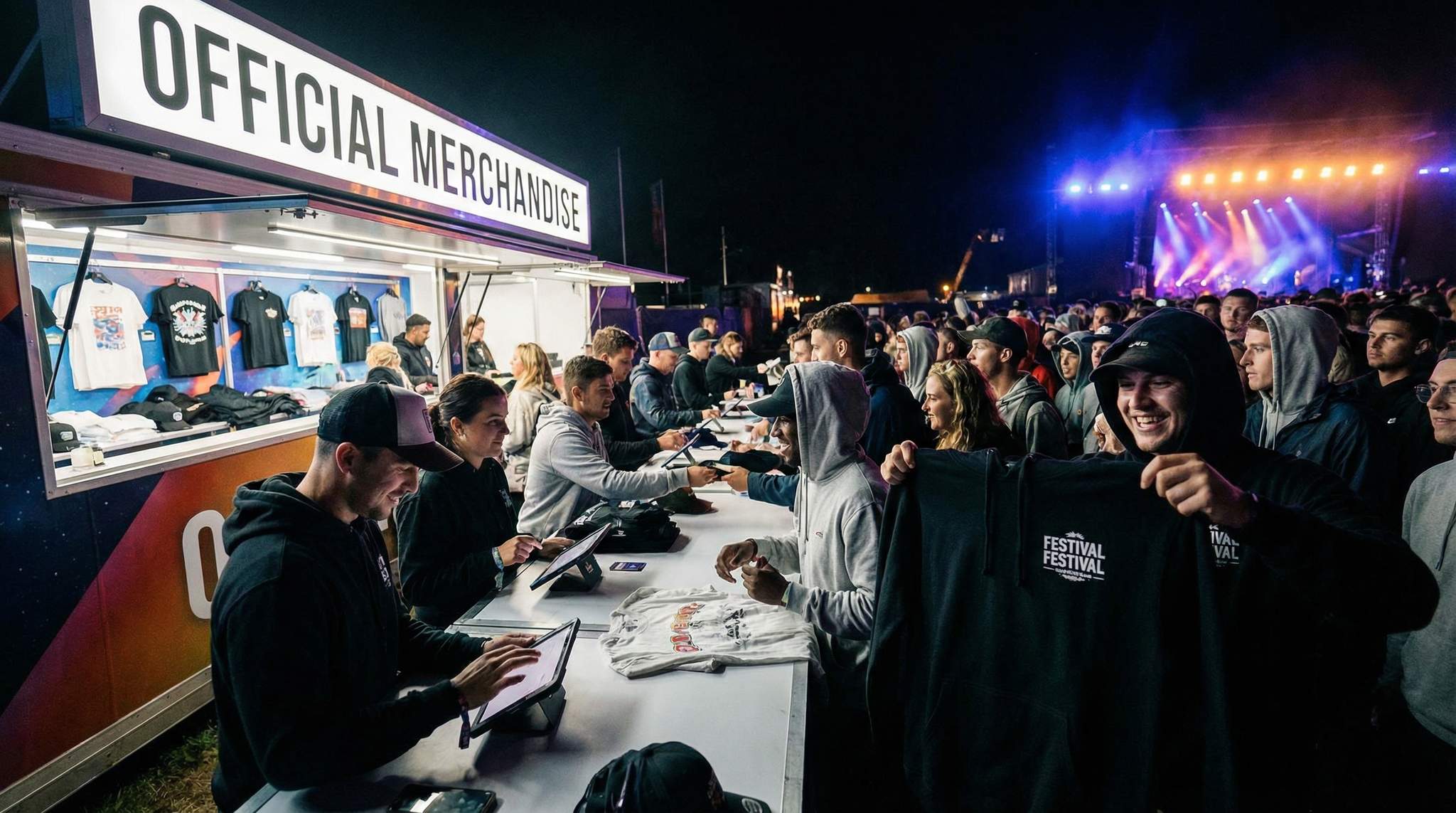
- Create a Merchandise Showcase Area: Don’t hide your merch in a dark corner. Make it eye-catching and experiential. A well-designed merchandise booth with attractive displays (mannequins wearing the new hoodie, a wall of colorful shirts, LED lighting) will draw people in. It can be worth allocating a prime location for merch, even near the entrance or main concourse, so every attendee passes by. Some events set up a mini “pop-up store” environment, complete with decor that matches the event theme, music, and even a dedicated staff member to talk about the merch line (like a mini retail experience). The longer people browse in a comfortable setting, the more they tend to buy. Showcase your best or newest items prominently. Also, clearly advertise payment options (cash, card, mobile pay) and any special items (“Limited edition – today only!”) to entice impulse buys.
- Utilize Pop-Up Stores and Offsite Opportunities: While onsite is your main focus, consider pop-up merchandising before and after the event to extend sales. For example, major concert tours like Taylor Swift’s in 2024 opened pop-up merch shops in city centers a day or two before the show, allowing fans (even those without tickets) to buy tour merchandise, as reported by Axios on the Eras Tour merch logistics. This not only earned additional revenue but also created buzz – hundreds of fans lined up early just for the merch experience. If your event draws local excitement, a short-term store or booth in a popular area (or partnering with a local retailer to host your merch) can capture people who can’t attend or who want to snag items without the event-day rush. After the event, having an online store where leftover or made-to-order merch is available can catch late interest (just ensure to promote it while the memory is fresh). Pop-ups and online follow-ups also help avoid wasting inventory and keep fans engaged beyond the event itself, as discussed in e-commerce strategies for festivals.
- Incorporate Branded Giveaways and Freebies: Not everything has to be sold – some items can be given as part of promotions to boost overall sales and goodwill. For instance, maybe the first 50 people to arrive at the event get a free branded lanyard or patch. This can encourage early attendance (reducing last-minute entry rush) and gets your branding on people instantly. Or, run small contests during the event (“tweet a photo of you at the venue, win a free hat!”). When people carry a freebie tote bag you gave out, they’re advertising your brand to others on-site, some of whom might then come to the merch booth asking if they can buy that bag (we’ve all seen freebies so nice that others want one!). Another strategy is a merch raffle – each purchase gives an entry to win a high-value item (like a signed poster or VIP upgrade). This can encourage more purchases as attendees try to better their odds.
- Master the Timing of Your Drops: To give an example of how timing is essential to selling related merchandise for a popular sporting event, consider a championship game. Venue operators who immediately unveil “Champions” apparel the second the final whistle blows capture fans at their absolute peak of emotional euphoria, driving massive impulse buys. You can replicate this at any live event. For instance, dropping a surprise artist collaboration tee right as the headliner takes the stage, or pushing a flash sale notification through your festival app during a set break, capitalizes on the crowd’s immediate energy to boost event merchandise sales.
To truly scale your retail revenue, organizers must continuously test new merchandising strategies to boost fan purchases throughout the event lifecycle. This might involve A/B testing digital storefront layouts for pre-orders, utilizing dynamic digital signage at the physical booth to highlight trending items, or training staff in subtle upselling techniques. By treating your retail footprint as an active, adaptable environment rather than a static stall, you can capture more impulse buys and significantly increase the average transaction value per attendee.
By implementing these strategies, you create multiple touchpoints and incentives for attendees to engage with your merchandise. The key is to integrate merch sales into your overall event marketing plan. It’s not an isolated retail operation, but rather a complementary part of the event experience and branding. Promote your merch like you promote your headline acts or key features – with enthusiasm and creativity. When done right, effective merchandising not only boosts revenue on the day, but also heightens attendee satisfaction (they love getting cool stuff) and spreads your brand far and wide via those items. It’s a virtuous cycle: marketing drives merch sales, and merch in turn drives more marketing for your event.
Choosing the Right Merchandise for Your Event
When establishing your retail strategy, adhering to the best practices for choosing branded merchandise for events ensures your inventory aligns with both fan expectations and your bottom line. The most successful branded event merchandise programs balance trendy, high-margin apparel with functional, everyday items that attendees will actually use long after the festival gates close.
Selecting the right merchandise is crucial – it can make the difference between items flying off the shelves or collecting dust. The “right” merch will depend on your audience, event type, and brand, but some general principles apply across the board. Here are key considerations for choosing winning merchandise:
- Consider Your Target Audience: Always start with who you’re selling to. Choose merchandise that resonates with your attendees’ interests and lifestyles. If you’re organizing a EDM music festival with a young, fashion-forward crowd, trendy apparel like bucket hats, neon crop tops, or bandanas might outsell keychains or stationery. For a corporate tech conference, your attendees might prefer practical, professional items – think sleek laptop sleeves, quality notebooks, or tech gadgets with the event logo. If families are a big part of your audience (say a family-friendly fair or expo), consider youth sizes for t-shirts, fun items like stickers or temporary tattoos for kids, and maybe bundled deals that encourage buying souvenirs for the whole family. The better you align with attendees’ tastes, the more they’ll want the merch.
- Keep It Simple and Desirable: It’s often wise to focus on a core selection of popular merch types rather than an overly expansive catalog. Through experience, apparel (t-shirts and hoodies) almost always ranks as a top seller at events – they’re wearable and immediately useful. Other perennially popular items include hats/beanies, posters or art prints (for music/art events), lanyards or enamel pins (especially for conventions and festivals with collectible cultures), and functional items like water bottles or tote bags. Simplicity also applies to design: a strong, attractive logo or graphic that represents the event will appeal broadly. Overly complicated or obscure designs might only attract a few. It’s usually better to have 5-10 great items than 30 mediocre ones. Too much variety can confuse buyers and split your inventory budgets. Quality over quantity is a good mantra – an insight echoed by experts in festival merchandising masterclasses.
- Match Merchandise to Event Type: Different events call for different merch. If it’s a niche themed event, incorporate that theme. A marathon or sports event might sell performance gear (like moisture-wicking shirts, headbands, or collectible finisher medals replicas), whereas a film festival could offer stylish tote bags (everyone has programs or goodies to carry) and perhaps director’s chair-style seating with logos as a high-end item. For trade shows or B2B events, think about items attendees could use in a business context – quality pens, portfolios, USB chargers – but with a creative twist that reflects your event branding. At gaming or fan conventions, collectibles (figurines, limited-run comics), cosplay accessories, or soundtrack vinyl records might be coveted. Aligning merch with the spirit of the event makes it feel natural for attendees to want it.
- Use High-Quality Materials: The merchandise is a reflection of your event’s brand, so invest in good materials and printing. A soft cotton or tri-blend t-shirt with a durable screen print will be worn for years; a cheaply made tee that shrinks or fades after one wash will be relegated to the bottom of the drawer (or worse, the trash). The same goes for other items – sturdy canvas for tote bags, metal or BPA-free plastic for drinkware, etc. High-quality merch creates a positive impression (“this festival gives us nice stuff!”) and as noted earlier, lasts longer in circulation, giving you more branding mileage. With sustainability on many minds in 2026, quality also ties to eco-consciousness – a well-made item that won’t need to be replaced is inherently less wasteful. Plus, fans are often willing to pay a few dollars more for the premium version. One tip: get samples from vendors before ordering bulk, so you can feel the fabric or test the item. If you wouldn’t personally use or wear it, chances are your attendees won’t be impressed either.
- Offer Variety (But Not Overkill): While focusing on core items is wise, having some variety ensures there’s “something for everyone.” Variety can mean offering a range of product categories (e.g., clothing, accessories, paper goods) or range of styles within a category. For clothing, consider a unisex tee, a women’s cut tee or tank, and perhaps a long-sleeve or hoodie for cooler weather – covering different preferences and climates. Provide a spectrum of price points: a few lower-cost souvenirs (like stickers, patches under $5) so everyone can buy something, mid-range staples (tees, caps in the $20-30 range), and one or two higher-end specialty items (a premium jacket, a deluxe art print, etc.) for collectors or big spenders. If your event spans multiple days, you might introduce a new item halfway through to refresh interest (and advertise it on Day 2 as “new arrival” to draw previous buyers back in). Also consider sizing and inclusivity: carry a range of sizes (including plus sizes) for apparel, have designs that appeal to all genders, and maybe even a kids’ option if appropriate. A diverse lineup signals that you welcome all fans.
Pro Tip: Curate your merch line like a product line – don’t fall into the trap of slapping your logo on every object imaginable. It’s better to have a few standout pieces that truly capture the event’s ethos than a dozen generic items. Focus on unique designs or phrases that tie into highlights of your event (like a key slogan or theme). If you’re unsure what will resonate, use social media or email lists beforehand to gather input – for example, show two possible t-shirt designs and let fans vote. Not only do you then get data on what they want, but fans will be more likely to buy the winning design since they feel involved in its creation.
Finally, don’t forget practical logistics when choosing merchandise: consider production timelines (custom items might need longer lead times), shipping costs if your venue is remote, ease of storage at the event, and price-to-weight ratio (bulky or heavy items are harder to stock in large quantities). Sometimes the “sexiest” item (like a large poster tube or ceramic item) may be impractical if attendees can’t easily get it home. Balance creativity with pragmatism.
By thoughtfully selecting merchandise aligned with your audience and event, you set the stage for strong sales and happy customers. Remember, every item is not just a product but a mini representation of your event – choose ones that make that representation count.
One more tip: plan for leftover management. Despite best efforts, you might have unsold stock – choose items that won’t lose relevance (undated designs can be sold next year, or generic event branding can be reused). And set up an online store for post-event sales of remaining inventory or to offer merch to those who missed out in person, a strategy detailed in our guide on launching an online festival merch store. That way, nothing goes to waste and you continue to profit even after the physical event ends.
Measuring Success and ROI
Integrating merchandise into your event isn’t just about setting up shop and hoping for the best – you should actively measure its performance to understand the impact on your event’s bottom line and identify areas to improve. By tracking sales data and analyzing customer behavior, you can gauge the return on investment (ROI) of your merch strategy and make data-driven decisions for future events.
Measure the Success of Onsite Merchandise Sales
To effectively evaluate how well your on-site merchandise sales did, consider tracking the following key metrics:
| Metric | What It Tells You & Why It’s Important |
|---|---|
| Total Sales Revenue | The total gross income from merchandise sales. This is the most straightforward number – it tells you how much money merch brought in. Comparing this against your costs (cost of goods, staffing, booth setup) lets you see if you made a profit from merch and how big. It’s also useful to compare total merch revenue year-over-year or against other revenue streams (e.g., merch vs. food sales). |
| Average Transaction Value (ATV) | The average amount each customer spends per transaction. Calculate this by dividing total sales revenue by the number of transactions (receipts). ATV is a great indicator of customer purchasing behavior – a higher ATV means people are buying more items or higher-priced items each time they visit the booth. If you want to boost this, you could introduce bundling deals or upsell techniques. |
| Number of Items Sold (Volume) | The total count of merchandise units sold (e.g., 500 t-shirts, 300 hats, etc.). Volume helps you identify what the most popular items were and how successful you were in moving inventory. It’s especially important for inventory planning: if you sold 90% of your hats but only 40% of your jackets, you know what to stock more or less of next time. |
| Top-Selling Items | Which specific products sold the most. Rank your items by units sold or revenue generated. This tells you what really resonated with attendees. Your flagship items might emerge here (perhaps that black logo tee was the star). It also highlights any duds – something that sold poorly might need better design or to be cut from future lineups. |
| Customer Demographics & Behavior | Data about who bought merch and when (if available). If you have the capability (through POS systems or surveys), note trends: e.g., did VIP ticket holders spend more on merch on average? Did most sales happen post-headliner each day, or steadily throughout? Understanding when and by whom purchases are made can help with staffing decisions (ensure coverage during peaks), targeted marketing (maybe offer a VIP-only merch item if they’re big spenders), and tailoring future merch to the core buyers. |
In addition to these, pay attention to sell-through rate (what percentage of each item’s stock was sold). If you sold 95% of an item’s inventory, that’s great (maybe even indicates you could have stocked a bit more). If you only sold 20%, you either overstocked or the item wasn’t appealing. Take note of any stockouts (items that fully sold out) – while sellouts indicate popularity, stockouts too early could mean missed revenue, so next time consider ordering more of those.
Collecting this data can be as simple as exporting a report from your point-of-sale system at the end of the event, or manually noting figures each day. If your event runs multiple days, it can be insightful to measure per day to see if, for example, Day 2 had higher sales because people scoped merch on Day 1 and bought later, etc. Also compare against attendance numbers: you might find, say, 25% of attendees made a merch purchase. If that seems low for your type of event, you might set a goal to increase the attach rate (percentage of attendees who buy merch) next time.
Analyze Data to Boost Event Revenue and Monetization
Gathering data is only step one – step two is analyzing it and acting on the insights. Here’s how leveraging your merch sales data can boost overall event monetization:
- Identify High-Demand Items (and Expand on Them): Your top-sellers are a clear signal of what your audience wants. Consider featuring those more prominently next time, producing new variations (if the black logo t-shirt was a hit, maybe introduce a hoodie or a different color version as an additional option). Conversely, discontinue or redesign the low performers. If a particular design or item type didn’t do well, replace it with something new that aligns more with the hits. Essentially, double-down on what works. Real-world example: If you found out hats sold out entirely but tote bags didn’t move, you might allocate more budget to hats next event (maybe more styles of hats) and scale back on totes.
- Optimize Pricing and Promotions: Analyze your pricing strategy. Did discounted bundles noticeably increase ATV? If so, they’re worth continuing. If an item barely sold and you suspect price was an issue (e.g., perhaps a $100 deluxe item was too steep for most of your crowd), consider adjusting the price point or adding a cheaper alternative. Also review the timing of promotions: if a timed discount boosted sales volume in that hour without cannibalizing full-price sales, you might incorporate that as a standard tactic. The goal is to find the sweet spot where price maximizes both sales volume and per-item profit. Sometimes raising the price on a very popular item can increase total revenue without hurting units sold (fans value it that much), whereas other times a slight price drop on a slow mover can entice more buyers and yield more profit overall. Use the data to experiment and evolve your approach.
- Enhance Inventory Planning: Data on what sold and in what quantity directly informs how you stock next time. If medium-sized t-shirts sold out but you had lots of 2XL left, adjust your size ratios for the next order. If day-by-day sales show a spike on the final day of a festival (common as people make last-minute purchases or finally give in to that item they’ve been eyeing), ensure you don’t run out of popular items before that spike. Some festivals implement daily inventory releases (holding some stock to put out each day) to avoid full sellouts early and keep latecomers happy, a tactic mentioned in strategies for managing festival merch inventory. Another insight: if on-site printing or restocking is feasible and you notice a trend (say your new tie-dye design is outselling the others 3:1 on Day 1), you might produce more overnight for Day 2 to meet demand, as some events have done with on-demand printing solutions. Your sales data, even in real-time, can guide these decisions and reduce lost sales opportunities.
- Target Marketing and Engagement: Knowing who bought what can shape marketing for future events. If certain ticket tiers or attendee segments showed more enthusiasm for merch, you can target them with sneak peeks or pre-event merch offers. For example, if data shows your VIP attendees spent 2x more on merch on average, you might create a VIP merch bundle pre-sale for next year or give them an exclusive shopping window. Additionally, understanding popular designs or themes can guide your event branding in promotions – if a design featuring the event mascot was a top seller, maybe that mascot should feature more prominently in your ads or social media content as a beloved symbol. Data might also reveal interesting correlations: did attendees who participate in certain activities (like those who visited a particular sponsor zone) end up buying more merch? These insights can help you create cross-promotions (e.g., “visit our sponsor’s booth for a merch discount code” if you see that driving engagement overall).
- Calculate ROI and Allocate Budget Smartly: Ultimately, analyze profit by subtracting costs from revenue. If merch sales generated $50,000 and your total cost of goods and operations was $20,000, you netted $30,000 – a healthy ROI. If the ROI is lower than expected, examine why: Was it leftover stock waste? Overstaffing? Perhaps try a consignment model with vendors or optimize staffing schedule next time. Knowing the ROI justifies decisions on how much budget and effort to invest in merch for future events. A great ROI might even encourage you to expand the merch program (larger booth, more items, or even year-round online sales), whereas a mediocre ROI might push you to streamline it or rethink the strategy. Also, if you introduced a new initiative like an expensive on-site customization booth, evaluate specifically if the revenue uptick (and brand value) it provided was worth the cost, using the data.
By treating merch sales with the same analytical rigor as ticket sales or other revenues, you’ll unlock ways to increase profitability and improve the attendee experience (through better offerings) simultaneously. Many seasoned event organizers run a post-event analysis solely on merch – essentially a “merch postmortem” – to document what sold, what didn’t, and ideas for next time. Over years, building this data library paints a very clear picture of trends and growth. For instance, you might see merch per capita spend rising year over year – a sign your strategies are working and your brand loyalty is growing. Or you might notice one genre of item trending up (e.g., more demand for digital or collectible merch like NFTs in recent times, which some events have monetized as explored in our guide to modern festival merchandising and trends in digital collectibles).
Data doesn’t lie. Use it to iterate and innovate. Maybe you’ll discover that shifting your merch tent location could boost sales (if data showed a lot of unused capacity in a less-trafficked area). Or that engaging fans in merch design (like a fan-voted design contest) might be worth trying because your data shows designs with fan input sold unusually well (if you ever tried multiple designs).
In summary, measuring and analyzing merch sales is essential for refining your approach and maximizing the benefit merchandise brings to your event. It turns a fun sideline into a serious component of your event’s strategy – one that can significantly boost your overall success when optimized.
When you evaluate the facts surrounding live events and entertainment company merchandise, a clear pattern emerges: data-driven retail strategies consistently outperform guesswork. Industry statistics show that entertainment companies utilizing real-time inventory tracking and demographic analysis see significant increases in per-head spending. By benchmarking your own sales metrics against these broader live event merchandise facts, you can identify whether your profit margins align with top-tier industry standards or if there is room to optimize your supply chain and pricing models.
Conclusion
Incorporating merchandise sales into your event planning isn’t just about eking out extra dollars – it’s about creating a more complete, memorable, and engaging experience for your attendees while strengthening your event’s financial footing. By now, it should be clear that selling merch on-site offers a cascade of benefits: it drives revenue, deepens the attendee experience, expands your brand’s reach, builds community, opens the door to creative partnerships, and adds tangible value to your event’s offering.
A successful on-site merchandise program does require effort and planning. It means understanding your audience and what they want, designing or sourcing quality items that excite them, pricing and marketing those items smartly, and handling the logistics so that buying merch is a seamless pleasure rather than a hassle. But when you execute these steps, the payoff is more than worth it. Attendees walk away happier – they literally carry their happiness out in a bag. Your event lives on in their daily life and in their stories to others. And your budget gets a healthy boost that can help sustain and grow the event in the future (maybe those merch profits will fund an even better stage or a new attraction next time!).
Merchandise has become a cornerstone of live events big and small. Think of how many times you’ve seen fans at a concert rushing to the merch table, or professionals at a conference comparing the swag they got. People crave these physical tokens of experience. By meeting that demand, you’re not exploiting them – you’re serving them something they value. In return, they reward you with both revenue and free advocacy for your brand. It’s a powerful exchange.
So whether you’re hosting a boutique art festival, a massive multi-stage music extravaganza, a community sports tournament, or a high-profile industry expo, don’t overlook the power of onsite merchandise. Start early – integrate merch planning right from the initial event plan. Brainstorm unique ideas that fit your theme. Get creative with how you sell and promote it. And always keep the focus on quality and what enhances the attendee’s journey.
One final piece of advice: learn and adapt. The world of events and consumer tastes is always evolving. What was a hit item this year might need a refresh next year. Keep an ear to the ground (ask for attendee feedback on merch too!) and be willing to innovate – like introducing sustainable merch lines, experiential merch booths, or online pre-orders as the situation fits. By showing experience and expertise in your approach – treating merch not as an afterthought but as an integral part of event design – you signal professionalism and care, which in turn builds trust with your audience.
In the end, selling merchandise onsite truly is a win-win. Your event profits, your sponsors or partners can gain extra exposure, and your attendees go home happy with souvenirs that will keep them smiling (and talking about your event) long after the final curtain call. So embrace the opportunity – plan that merch lineup, invest in a good team to run it, and watch as it enriches both your event experience and your post-event success.
Frequently Asked Questions
Why should event organizers consider selling merchandise onsite?
Selling merchandise onsite offers multiple benefits for event organizers. First and foremost, it creates a significant additional revenue stream. Fans and attendees are often ready and willing to spend on souvenirs – everything from t-shirts and hoodies to posters and pins – as a way to capture the memory of the event. With strategic product selection and pricing, these sales can be highly profitable. In some cases, strong merch sales have even covered an event’s entire profit margin, meaning they made the difference between breaking even and turning a healthy profit, a point emphasized in our masterclass on festival merchandise profitability. Simply put, if you’re not selling merch, you may be leaving money on the table.
Beyond the direct financial gains, on-site merch also enhances the attendee experience. It gives your audience tangible keepsakes of the event, which increases their satisfaction and emotional connection. Attendees love the opportunity to take home something exclusive that they can’t get anywhere else. This boosts the overall perceived value of their ticket – they didn’t just attend, they came away with a cool shirt or collectible. Those items then act as walking advertisements for your event whenever they’re worn or used, as discussed in how merchandise extends brand visibility, extending your brand visibility. One person wearing your event’s hoodie at a cafe is essentially broadcasting your event to everyone who sees it, potentially piquing interest in future attendees.
Additionally, merchandise sales can open up sponsorship opportunities. Sponsors might want to get involved by co-branding items (e.g., a water bottle with both your event logo and the sponsor’s logo) or offering promotional freebies. These partnerships can offset production costs and even add new revenue (a sponsor might pay for the right to be on your merch). For example, credit card companies or beverage brands often love on-site merch collaborations because it puts their brand directly in fans’ hands in a positive way. It’s advertising that attendees actually pay for and cherish, which is quite powerful.
In summary, organizers should consider selling merchandise onsite because it boosts revenue, enhances the fan experience, increases brand exposure, and can strengthen sponsor relationships. It’s a multifaceted win that can significantly contribute to an event’s overall success.
How does merchandise contribute to community building and brand engagement?
Merchandise plays a crucial role in fostering community and brand engagement by creating a shared identity among attendees. When people wear the same branded items, it instantly signals that they have something in common – “we were part of the same event, the same story.” This can spark conversations and camaraderie. For example, festival-goers might high-five or strike up a chat with a stranger wearing the festival’s tee in an airport, because they recognize a fellow fan. That sense of belonging and tribe is incredibly valuable; it keeps your community connected even when the event is over.
At fan-centric events (like music festivals, comic-cons, sports games), limited-edition merch can intensify this effect. If only a select number of people have a special edition tour jacket or a convention-exclusive pin, those who have it feel part of an “exclusive club.” It strengthens their emotional connection to the event and to others who share that experience. Wearing a piece of merch can be a proud badge of “I was there”. Over time, as attendees collect different years’ merchandise, it becomes a personal tradition and point of pride (“I’ve gone five years in a row, see my collection of festival posters”). This tradition-building is golden for community loyalty.
Merch also keeps the community engaged with your brand long after the event. Every time an attendee puts on that hoodie or sips from that branded mug, they’re reminded of the good times and they’re essentially re-engaging with your brand mentally. Many will follow your social media or subscribe to newsletters partly because those reminders keep the event on their mind, and they don’t want to miss out on the next one. Some even create user-generated content around merch – like posting photos of their merch haul, or tagging your event when they wear the shirt – which further spreads the word and creates online community interaction. It’s not uncommon to see social media groups or forum threads where fans trade merch or discuss favorite designs, effectively keeping the brand conversation going year-round.
From a brand engagement perspective, quality merchandise improves trust and affinity. If your merch is well-designed and durable, fans associate that quality with your event’s quality. They’ll proudly incorporate your brand into their daily life (via clothing or accessories), essentially becoming brand ambassadors. That kind of genuine advocacy is worth far more than any ad spend. And there’s data to back this up: promotional product studies show high retention and positive feelings toward brands that provide apparel or useful items. For instance, 85% of people remember the brand on a promotional shirt, according to statistics on brand recall from promotional products, and a huge majority are more likely to do business with that brand in the future, as noted in consumer behavior studies regarding promotional items. In the context of events, this means they’re more likely to attend again or recommend the event to friends.
In essence, merchandise fuels a cycle of engagement and community: it brings people together during the event, keeps them engaged afterward, and continually reinforces the bond between the attendee and the event brand. Over years, a strong merch culture can turn casual attendees into a tight-knit community of loyal supporters.
What strategies should be used to maximize merchandise sales at events?
Maximizing merchandise sales requires a combination of smart marketing, strategic offerings, and smooth operations. Here are some top strategies used by successful events:
1. Generate Hype and Urgency: Create limited-edition or exclusive items that drive urgency. As mentioned, offering merch that’s only available at the event (or even items unique to each day or a specific performance) prompts fans to buy now rather than later. Announce these in advance to build hype. For example, you might tease on social media, “We’ll have a special edition poster – only 100 made – available Saturday at noon.” Fans who really want it will plan to be there. This strategy has been proven: at major festivals, limited drops can result in long lines and rapid sell-outs, a phenomenon analyzed in how scarcity drives festival merch revenue. The fear of missing out (FOMO) is real – leveraging it can spike your sales.
2. Leverage Social Media and Digital Channels: Use every platform to promote merch before and during the event. Show sneak peeks of designs, reveal prices (so people can budget), and highlight any bundle deals or new items. During the event, continue the push – post real-time updates (“only 20 left of the 2026 tour hoodie!”) to create a sense of action. Many events also encourage attendees to share pics with their merch using an event hashtag, which not only creates buzz but also acts as peer-to-peer promotion. Another advanced tactic is enabling online sales during the event for on-site pickup – attendees could scan a QR code around the venue to order merch and then just swing by a pickup booth, which can alleviate lines and encourage impulse buys from those who don’t want to stand in queues. We’re also seeing more festival apps integrating merch browsing, so keep an eye on tech solutions that make buying easier for fans, such as integrating ticketing and RFID for seamless operations and leveraging e-commerce partnerships.
3. Optimize Booth Location and Experience: To maximize sales, your merch booth should be in a high-traffic, highly visible area. If people have to go hunt for it, you’ll lose casual shoppers. Place signage around the venue (“Merch this way ->”) to funnel people to the right spot. Once they’re there, make sure the experience is positive: have enough staff to handle transactions quickly (using mobile POS for peak times where staff can walk the line to take orders is a great idea, as suggested in tips for reducing merch line congestion), and display products clearly (merch menu boards, samples of each size if possible, etc.). Keep the area neat and inviting. Playing some music or having a themed decor can even make it feel like an extension of the event fun rather than just a store. The quicker and more enjoyable the process, the more likely people will jump in line and make purchases rather than walk by.
4. Offer Deals and Bundles: Strategic pricing promotions can boost total sales. Bundling items (e.g., “Buy a tee + cap together and save $5”) can increase the average transaction value as people often think “well, I did want both anyway, nice to save a bit.” Time-limited deals can also light a fire: for instance, a morning “early bird” discount for the first hour after gates open to encourage early purchases (and shorten the evening rush). Some events implement a loyalty system, like if you buy a certain amount, you get a small freebie or a future discount – incentivizing the big spenders to spend just a little more. However, be careful not to heavily discount too early or too much, as you don’t want to devalue the merch or upset those who bought earlier at full price. It’s a balance, and often limited, small perks (like a free sticker with every purchase over $50) can work wonders without undermining your pricing.
5. Stock the Right Items (and Enough of Them): This sounds basic, but it’s crucial to maximizing sales – you can’t sell what you don’t have. Through past data or educated guesses, ensure you stock up on the most in-demand products and sizes. Nothing’s worse than running out of the most popular t-shirt on Day 1 when there was demand for twice as many – that’s money lost. If you have multiple designs or product types, try to gauge interest and allocate inventory accordingly (and as the event goes on, don’t be afraid to reallocate space to top sellers and pull back slow sellers). Also, consider a variety of price points: have some affordable items (so everyone can buy something, even if it’s just a $5 sticker pack) and some premium items (for die-hards who want the best you offer). By casting a wide net, you maximize the number of transactions. Just avoid overstocking the really niche items that might not sell; it’s better to reorder a surprise hit (if possible) than to over-order a risky item and be stuck with it. If on-demand printing or daily staggered releases are possible, use them to your advantage to meet demand without overcommitting inventory, a strategy detailed in managing festival merch inventory flow.
6. Skilled and Personable Staff: A final often-overlooked factor: the people selling the merch. They should be well-trained, friendly, and ideally fans of the event too. A staffer who can excitedly say “This poster design was done by so-and-so, isn’t it awesome? It’s been really popular!” can create a personal connection and upsell more effectively than someone who’s just processing payments. Encourage staff to engage with customers (“Having a good time? What act are you most excited for? Oh, you like them – you might love this shirt with the lineup on the back.”). Good vibes at the booth can tip a maybe into a sale.
In essence, to maximize merchandise sales, integrate your merch plan into the wider event plan. Promote it like part of the show, not an afterthought. Make it easy and exciting for attendees to buy, give them compelling reasons to do so (exclusivity, deals, cool designs), and ensure you’re prepared operationally for the demand you create. When done right, you’ll not only see higher sales – you’ll also see happier fans proudly wearing your brand, which in turn markets your event for the next cycle.
Ultimately, deploying dynamic retail tactics to increase attendee spending relies on adapting to crowd behavior in real time. Venue operators who monitor live inventory data can quickly pivot their displays, run flash promotions on slow-moving items, and capitalize on peak foot traffic, ensuring that every physical and digital storefront is optimized for maximum conversion.
What types of merchandise should events offer, and how should they be selected?
The types of merchandise an event should offer depend on the event’s nature and audience, but there are some staples and best practices for selecting them:
Common Merchandise Categories:
Most events will do well to cover a few key categories:
– Apparel: T-shirts are the #1 classic – almost every event should have at least one event tee because they consistently sell well. Beyond tees, consider hoodies or sweatshirts (great for cooler weather or evening outdoor events), hats or beanies, and maybe tank tops or long-sleeves depending on your crowd’s style. If it’s a multi-day festival or a sporting event, jerseys or performers’ band shirts could also fall here (though band/artist merch is often separate, collaborative planning can ensure you don’t overlap too much with artists – see our guide to managing artist merchandise sales for managing that process effectively, as detailed in Band Merch 101).
– Accessories and Practical Items: Think of things people use in everyday life or during the event: tote bags or drawstring bags (people love something to carry swag in), lanyards (especially if badges are involved, a branded lanyard is both useful and souvenir-worthy), enamel pins or patches (small and collectible, these have a dedicated fan base and are cheap to produce), water bottles or drinkware (for festivals, sustainable cups or bottles with the logo encourage refilling and double as merch). Keychains, magnets, or stickers are also small impulse items that can round out a purchase.
– Paper Goods & Art: Posters are huge sellers if the artwork is good – a poster with the event artwork or lineup (for music fests) is a keepsake many fans will frame on their wall. Programs or photo books (for significant events or tours) can also be popular, serving both as a guide and a memory book. Don’t underestimate the “collectible” factor: numbered fine-art prints, for example, can create a high-end piece of merch that die-hard fans will covet.
– Unique Themed Items: Depending on your event, you might have something unique. A beer festival could sell branded pint glasses or bottle openers. A gaming convention might sell dice sets or game accessories. A beach event could have branded sunglasses or flip-flops. Think about what objects tie into your event’s theme or setting. These can be the fun, standout items that people talk about (“They even had branded umbrellas at the festival since it always rains – how cool!”).
Selection Criteria:
When deciding which specific items to offer, consider these factors:
– Relevance: The merch should reflect the event’s identity. For example, if your event is all about sustainability and eco-friendliness, offering organic cotton shirts, reusable tote bags, or bamboo fiber water bottles reinforces that message (whereas plastic trinkets might contradict it). If it’s a high-end VIP experience, maybe focus on fewer but more premium items (like a classy embroidered polo or leather notebook) rather than a plethora of cheap knick-knacks.
– Appeal: Ask, “Would our attendees want this?” This is where knowing your audience is key. Younger crowds might love trendy designs, playful accessories, and Instagrammable items (like tie-dye shirts or bucket hats which have made comebacks). Family audiences might appreciate practical items like picnic blankets with the event logo, or kid-friendly merch (like coloring books featuring event characters, if applicable). Use your audience research: if 80% said they usually buy a t-shirt at events, t-shirts are a must; if many said they like collectible pins, add those. Also, design matters – a well-designed item will outsell a poorly designed one even if it’s the same type of product. If you don’t have an in-house designer with experience in merch, consider hiring a graphic artist, because visuals are everything for appeal.
– Quality and Durability: Always choose the highest quality your budget allows for the important items. There’s a trust element – if someone buys a shirt and it falls apart, they won’t be as keen to buy from you next time. Conversely, a comfy, long-lasting shirt becomes a favorite, and they’ll be first in line for new designs next year. Weigh cost vs. quality; sometimes spending an extra dollar or two per item for better fabric or print method pays off in customer satisfaction and brand image. Request samples from manufacturers, and even do a wash test on apparel prints, for instance.
– Cost and Price Point: Ensure you can price the item appropriately for your audience. Small, inexpensive souvenirs (stickers, buttons) can be priced at pocket-change levels and serve as add-ons to larger purchases. Mid-range items like tees and caps should hit that sweet spot where they’re affordable enough for most attendees (commonly $20-$40 depending on the event and local economy). Higher-end items (hoodies, jackets, limited prints) might be $50-$100+. The key is to offer a range. Also consider your margins – factor in not just production cost but shipping, any taxes, and a bit of buffer for unsold stock when setting prices. One method is keystone pricing (double the cost), but for merch at events, often margins are higher on apparel (it’s not uncommon to price a $10 cost tee at $25 or $30 if that’s standard for your crowd). Just be mindful of perceived value; if you charge too much above typical market value, sales could suffer unless the item is truly special or exclusive.
– Logistics: Choose items that you can logistically manage. If your venue is overseas or you have tight transport, maybe those bulky foam fingers aren’t feasible, whereas flat packable posters are. If you have to pre-order sizes, be thoughtful on distribution (usually more M and L in shirts, fewer XS and XXL, etc., though this can vary). If something requires trying on (like fitted hats or wearables), do you have space for that? Simpler sizes (S-XL) are easier than carrying lots of shoe sizes or ring sizes, for example, which is why apparel and one-size accessories are common.
When in doubt, stick to proven winners and sprinkle in a couple of creative choices. For instance, you know shirts, hats, and posters will sell. Do those well. Then maybe add one novelty item that could be a surprise hit (say, a glow-in-the-dark version of your shirt for a night event, or a special festival bandana if dust/wind is an issue on-site – functional and branded). Over time, track what works and evolve the lineup. Solicit feedback: you can even ask your social media followers pre-event, “What merch would you love to see this year?” – sometimes you’ll get great suggestions (and it creates engagement, and hype if you turn a popular suggestion into reality).
Ultimately, offer merchandise that you feel proud of representing your event. If each piece in your merch booth feels like it’s part of the story and aesthetic of your event, you’ve curated it right. Attendees will notice that coherence and authenticity, and sales will follow.
What are the best practices for choosing branded merchandise for events?
The most effective approach to selecting branded event merchandise involves analyzing your specific attendee demographic, prioritizing high-quality materials, and offering a strategic mix of price points. Venue operators and promoters should focus on core staples like premium apparel while introducing limited-edition collectibles to drive urgency. Additionally, ensuring your designs reflect the unique identity of the festival or conference—rather than just slapping a logo on generic goods—will significantly boost both immediate sales and long-term brand visibility.
How do you design the best merchandise for your fans?
Creating the most appealing merchandise for your fans requires a deep understanding of your event’s core demographic and cultural aesthetic. Rather than relying on generic templates, successful promoters analyze past purchasing data, run pre-event social media polls, and collaborate with niche artists who resonate with their specific audience. By treating your retail lineup as an extension of the event’s identity, you ensure that the apparel and accessories offered are items attendees will genuinely want to wear year-round, thereby driving higher on-site sales and long-term brand loyalty.
How should organizers evaluate live events and entertainment company merchandise facts?
To properly evaluate the facts on live events and entertainment company merchandise, promoters must look beyond surface-level revenue and analyze per-head spending, sell-through rates, and profit margins. Industry data reveals that successful entertainment companies treat their retail operations as primary revenue drivers rather than secondary afterthoughts. By comparing your event’s metrics against established live event merchandise statistics—such as average transaction values and VIP bundle conversion rates—you can identify operational gaps, optimize your inventory forecasting, and ultimately scale your retail profitability to match top-tier industry benchmarks.
Why is event merchandise important for promoters and organizers?
Event merchandise is important because it serves as a critical secondary revenue stream that significantly boosts overall profit margins, reducing reliance on ticket sales alone. Beyond the immediate financial impact, branded apparel and accessories act as long-term marketing tools. When attendees wear your gear post-event, they provide free, decentralized advertising that increases brand visibility and helps lower future customer acquisition costs. Furthermore, a well-executed retail strategy elevates the perceived value of the event, fostering deeper community engagement and loyalty among your core audience.
You May Also Like: