In 2026, successful event promotion means looking far beyond your local market. A boutique festival or niche conference can transform into a global must-visit experience when you team up with airlines, hotels, and tourism boards to draw a wider audience. Travel and tourism partnerships empower event organizers to tap into new pools of attendees, turning what might have been a regional gathering into an international attraction. The result? More ticket sales, vibrant fan experiences, and a significant boost to the host destination’s economy. This comprehensive guide explores how to leverage the travel and hospitality industry – from airline deals and hotel packages to tourism board co-marketing – to fill your venue with out-of-town guests eager to join the adventure.
The Travel & Tourism Partnership Advantage
Events as Powerful Tourism Drivers
Every major event is also a tourism opportunity. When festivals, concerts, or conferences draw travelers from afar, they inject money into local hotels, restaurants, and transportation. Tourism agencies know this well. For example, Edinburgh’s world-famous festivals generated an estimated £407 million for the local economy in 2022, with nearly 31% of attendees coming from outside Scotland. This aligns with data from Edinburgh Festival City confirming the festivals are important drivers in the national economy. Likewise, California’s Coachella and Stagecoach festivals were projected to drive over $700 million in regional spending – a figure reported by the Los Angeles Times that underscores how mega-events become tourism engines. Even for smaller events, out-of-town guests mean additional nights in hotels, full tables at local eateries, and extra patronage for shops and services.
This tourism impact makes events highly attractive to destination marketing organizations. City and regional tourism boards, convention bureaus, and national travel authorities are eager to support happenings that entice visitors. As the CEO of Kenya’s Tourism Board noted, festivals can lead to hotels and local businesses seeing “full bookings” and widespread economic benefits, as savvy festival organizers leverage that demand. In short, a well-promoted event doesn’t just delight attendees – it puts a place on the map. Every event marketer should recognize this mutual value: your event can boost a city’s tourism, and in return the tourism sector can help amplify your event.
Reaching Beyond the Local Market
Smart Promo Codes & Presale Access
Create percentage or flat-rate discount codes with usage limits, date ranges, and ticket type restrictions. Plus unlock codes for private presales.
This tourism impact makes events highly attractive to destination marketing organizations. City and regional tourism boards, convention bureaus, and national travel authorities are eager to support happenings that entice visitors. As the CEO of Kenya’s Tourism Board noted, festivals can lead to hotels and local businesses seeing “full bookings” and widespread economic benefits, as savvy festival organizers leverage that demand. In short, a well-promoted event doesn’t just delight attendees – it puts a place on the map. Every event marketer should recognize this mutual value: your event can boost a city’s tourism, and in return the tourism sector can help amplify your event.
Reaching Beyond the Local Market
Most events have a natural local fan base, but true growth often lies in attracting people who normally wouldn’t be there, which requires effective strategies to sell event tickets online. A remote mountain music festival can double its attendance if fans from other states or countries decide it’s worth the trip. A niche industry conference can become the annual pilgrimage for professionals worldwide if positioned right. Studies show that today’s audiences are willing to travel for unique experiences – 64% of young festival-goers say they’d fly to see their favorite artist. In China, a growing share of music fans regularly journeys to other cities for big concerts and festivals, underlining a global trend: people are ready to roam for the right event.
Ready to Sell Tickets?
Create professional event pages with built-in payment processing, marketing tools, and real-time analytics.
Effective travel partnerships make it easier for these potential attendees to say “yes” to the journey. By teaming up with airlines to offer discounted fares or extra flights, and working with hotels on special rates or packages, event promoters remove friction for travelers. What might have been a hard sell (“Do I really want to drive six hours or pay for a flight and hotel?”) turns into a convenient adventure (“Look, the festival has a package and a flight discount – let’s go!”). For the event, this means access to vastly larger audiences than the local radius. And for fans, it means an event experience that’s both exciting and hassle-free, often bundled like a vacation.
Crafting Must-Visit Experiences
Travel partnerships not only expand your audience – they can also enhance the event’s allure. An event marketed as a vacation-like package becomes more than just a show or conference; it’s an experience. Think of destination festivals where attendees spend days exploring a new city or enjoying curated adventures around the main event. When an event is framed as a travel experience, it gains a special cachet. Fans start including it on their bucket lists alongside vacations. This dynamic has turned once-obscure events into global phenomena, from remote desert gatherings to small-town cultural festivals.
For example, a boutique electronic music festival in Jordan called Medaina recently transformed into a tourism showcase – offering festival-goers scenic locales like Petra and Wadi Rum by day and music by night. Attendees traveled from around the world, guided by an itinerary that included local tours, immersive cultural experiences, and opportunities to recharge and relax at unique hotels. By partnering with local tour operators and luxury hotels, the organizers made the journey as memorable as the festival. The result was an event that didn’t just sell tickets online, but sold an entire trip. This illustrates how integrating tourism can elevate an event’s appeal. Even on a smaller scale, bundling a fun location or exclusive local activity with your event ticket can turn a “maybe” into a “must-go” for travelers.
Below is a snapshot of how different events leverage travel and tourism partnerships to boost their success:
Turn Fans Into Your Marketing Team
Ticket Fairy's built-in referral rewards system incentivizes attendees to share your event, delivering 15-25% sales boosts and 30x ROI vs paid ads.
| Event | Travel Partnership | Results |
|---|---|---|
| Tomorrowland (Belgium) | Global Journey packages (flights + lodging + ticket) utilizing charter flights and travel packaging | Attracts fans from 200+ countries; thousands use official travel packages every year, streamlining their trip. |
| Glastonbury Festival (UK) | Official coach + ticket bundles using bus convoys from multiple airports | 20,000+ attendees arrive by official coaches, reducing car traffic and guaranteeing entry only to coach riders. |
| SXSW Conference (USA) | Hotel block partnerships via tourism bureau | Tens of thousands of out-of-town attendees secure rooms at discounted rates; Austin’s hotels see ~100% occupancy during event week. |
| Niche Fan Convention (Example) | Airline promo code (10% off) + host hotel discount | Boosted non-local attendance by 30%; attendees appreciated saved costs, citing the travel deals as a deciding factor. |
| Regional Sports Tournament (Example) | Tourism board co-promotion in neighboring cities | Sold 5,000 extra tickets to out-of-town fans after a joint ad campaign with the tourism board of the host city’s state. |
Table: Real and illustrative examples of events using travel partnerships. From massive festivals to niche gatherings, offering travel packages or collaborating with tourism entities can significantly increase out-of-town attendance.
Below is a snapshot of how different events leverage travel and tourism partnerships to boost their success:
Grow Your Events
Leverage referral marketing, social sharing incentives, and audience insights to sell more tickets.
| Event | Travel Partnership | Results |
|---|---|---|
| Tomorrowland (Belgium) | Global Journey packages (flights + lodging + ticket) utilizing charter flights and travel packaging | Attracts fans from 200+ countries; thousands use official travel packages every year, streamlining their trip. |
| Glastonbury Festival (UK) | Official coach + ticket bundles using bus convoys from multiple airports | 20,000+ attendees arrive by official coaches, reducing car traffic and guaranteeing entry only to coach riders. |
| SXSW Conference (USA) | Hotel block partnerships via tourism bureau | Tens of thousands of out-of-town attendees secure rooms at discounted rates; Austin’s hotels see ~100% occupancy during event week. |
| Niche Fan Convention (Example) | Airline promo code (10% off) + host hotel discount | Boosted non-local attendance by 30%; attendees appreciated saved costs, citing the travel deals as a deciding factor. |
| Regional Sports Tournament (Example) | Tourism board co-promotion in neighboring cities | Sold 5,000 extra tickets to out-of-town fans after a joint ad campaign with the tourism board of the host city’s state. |
Table: Real and illustrative examples of events using travel partnerships. From massive festivals to niche gatherings, offering travel packages or collaborating with tourism entities can significantly increase out-of-town attendance.
When reviewing these tourism partnerships examples, a clear pattern emerges: successful collaborations always solve a logistical problem while simultaneously elevating the destination’s profile. Whether it is a regional food and wine gathering teaming up with a local heritage foundation, or a massive electronic music event coordinating with national airlines, these case studies prove that integrating travel logistics directly into your event marketing strategy yields higher conversions and stronger attendee loyalty.
Partnering with Tourism Boards
Aligning Event Goals with Destination Goals
Tourism boards (and their related agencies, like convention & visitor bureaus) are natural allies for event organizers – but only if you speak their language. A tourism board’s mission is to increase visitation and enhance the destination’s image. When approaching them, be prepared to show how your event will do exactly that. Start discussions early – 12+ months before your event – so you can potentially be written into their annual marketing plans. Research their strategic priorities: Are they trying to drive off-season tourism? Attract a younger demographic? Emphasize cultural experiences? If, for instance, a city’s tourism authority wants to boost travel in the winter lull, and you run a December event that fills hotels in an otherwise slow month, play that up. Many tourism agencies explicitly seek events that drive off-peak visits; the Croatian National Tourist Board even launched a program to support events outside the typical tourist season, noting that events drive off-peak visits.
Present a clear value proposition: come armed with data and projections. Outline what percentage of your attendees are likely to come from out of town, and how that translates into economic impact. For example:
– Attendee Origins: If last year 25% of your attendees traveled in (tracked via postal codes or ticket buyer surveys), highlight that. If you’re launching a first-time event, use comparable events’ data or online interest from other regions.
– Nights & Spend: Estimate how many hotel room-nights your visitors might generate and their spending on food, transport, etc. Even conservative figures (e.g., “500 visitors x 2 nights x $150 per day on hotels and dining = $150,000”) help paint the picture.
– Intangible Benefits: Emphasize media exposure and branding for the destination. Perhaps your music festival gets international press or Instagram posts showcasing the host city’s scenery – effectively free advertising for the locale. This is highly attractive to tourism boards who invest heavily in destination branding.
Also be clear about what you want from the tourism board. It might be marketing support (promotion through their channels), in-kind help (like city permits, use of public spaces), or direct sponsorship funds. Many tourism boards have grant programs or co-op marketing budgets for events – make it easy for them to slot you in by providing all needed info upfront (attendance profiles, marketing plan, media reach, etc.). When you align your event’s outcomes with the destination’s goals, you set the stage for a true partnership rather than a one-off transaction.
Co-Marketing with Destination Marketers
Once priorities are aligned, work on co-marketing tactics that leverage the tourism board’s reach. One of the simplest, most effective techniques is a media swap: exchanging promotional real estate on each other’s channels. For instance, the tourism board can feature your event on their official “What’s Happening” website section, in email newsletters, or in social media posts targeting potential visitors. In return, your event can spotlight the tourism board (with a “Visit [City]” logo and link) on your ticket page or promotional materials. This mutual shout-out costs nothing but expands visibility for both parties.
Tourism boards also often maintain large email databases of prior visitors and travel enthusiasts. If appropriate, negotiate access or content inclusion. A tourism board might not hand over their email list (privacy concerns), but they could agree to send a dedicated blast or include your event in their next outbound newsletter. For a more data-driven approach, consider coordinated digital campaigns. Pooling resources for co-funded advertising can be a win-win: you both chip in to run online ads or social media campaigns in target markets, promoting travel to the event. Using tools like geotargeting and interest targeting (e.g. showing ads to people interested in music festivals in specific countries) ensures the message hits the right audience. In recent cases, some tourism boards have even helped employ advanced tech like footfall attribution – measuring how many people exposed to an event ad actually traveled to the destination. While advanced, it demonstrates how far co-marketing can go when both sides are invested.
Crucially, maintain brand consistency and appeal to the traveler mindset in these promotions. The tourism board will want to showcase the destination’s charm, and your event promotion should tap into that same desire. So co-branded content might say, “Experience the Electric Zoo Festival in beautiful Cancun – sun, sand, and world-class music await!” coupled with gorgeous imagery of the locale and festival excitement. The messaging should invite people not just to an event, but to an adventure in a new place.
Funding, Sponsorships & Support
Tourism boards vary in what support they offer. Some provide in-kind help, others can become formal sponsors of your event with financial contributions. If your event clearly promises a substantial influx of tourists, don’t shy away from discussing a sponsorship or subsidy to offset your marketing costs. For example, VisitScotland (the national tourism body) has funded marketing for major cultural events that draw international visitors, and many city bureaus have event grant programs. These might require an application demonstrating projected economic impact, so use the data you gathered. Show expected out-of-town attendance, media impressions, and any past success as evidence.
Additionally, tourism agencies can assist with logistical support that indirectly saves you money. They might offer concierge help, like guiding you on hotel block negotiations or connecting you with local transport providers. Some have “one-stop” services for events, helping coordinate with city departments on permits, security, and even volunteer recruitment. These forms of help can be as valuable as cash sponsorship because they smooth the path to execution.
Grow Your Social Following With Every Sale
Require social media follows, shares, or playlist adds to unlock presale access or special pricing. Turn every ticket purchase into audience growth.
Don’t overlook local allies either – city councils, chambers of commerce, and economic development groups often overlap with tourism goals. A downtown merchants’ association, for example, might sponsor an evening reception during your conference to welcome visitors (knowing it brings business to their restaurants). All these partnerships amplify the sense that the whole community welcomes your attendees – a powerful message that can be echoed in marketing.
Tracking Impact and Proving ROI
To keep a tourism partnership strong, you must prove it’s working. From the outset, set up methods to track how your collaboration translates into results. Utilize unique tracking links or promo codes in tourism board campaigns to measure ticket sales generated. Some festivals use custom landing pages for tourism board referrals (e.g., a special URL given only to the board for their promotions) to see how many page views and conversions come through. You can also share data like the number of hotel nights booked through your event’s official links or packages sold.
It’s also wise to look beyond direct ticket sales. Work with local hotels to see hotel booking upticks during your event window (the tourism board might collect this anyway). If you distributed surveys or used zip code collection at checkout, calculate the post-event breakdown: What percent actually came from out of town? How much did that grow versus last year? Tourism boards love these stats. For qualitative proof, gather testimonials: maybe a quote from a hotel about being “sold out with festival guests” or from attendees saying “we traveled from abroad and felt so welcomed by the city’s campaign.” These narratives, alongside hard numbers, create a compelling report.
By providing clear attribution and ROI data, you not only justify the current partnership but pave the way for bigger support next time. As one guide on proving sponsor ROI through technology notes, sponsors (and similarly, tourism boards) invest where they see measurable returns. Showcasing results – increased visitation, media reach, economic impact – can turn a one-year deal into a long-term alliance with the destination, complete with larger budgets and earlier planning involvement and turning impact into ongoing support.
Collaborations with Airlines
Landing an Official Airline Partner
Securing an official airline partner for your event can be a game-changer. It elevates your event’s profile and directly tackles one of the biggest cost hurdles for far-flung attendees: airfare. But an airline partnership should be more than a logo on your poster. When done right, it’s a practical tool that makes attending your event easier and cheaper, which is why airline partnerships matter. To attract an airline, underscore what you can offer each other. Airlines care about filling seats and reaching valuable demographics. If your event pulls thousands of travelers, that’s a mini-travel surge an airline can capitalize on. Start by identifying airlines that serve your region or target audience well (a carrier with a hub in your host city, or popular budget airlines if many attendees are cost-conscious, etc.). For global events, you might even consider airline alliances (like Star Alliance, OneWorld) to cover multiple regions.
Approach airlines with solid data. Use ticketing insights to bolster your pitch – for example, using ticketing insights to bolster your pitch by showing that “Last year, 1,500 attendees flew from Los Angeles and 1,000 from London” if you have that info. Ticketing platforms such as Ticket Fairy let organizers see where buyers are coming from; that data can literally map out an airline’s opportunity. If you can say, “We expect to generate at least 300–400 round-trip bookings from New York to the event,” you’ll speak the airline’s language. Emphasize growth potential too: maybe your event is expanding from 5,000 to 8,000 capacity, or you’re targeting new markets with your marketing – meaning even more fliers in the future.
Free Tool: Split Tickets for Max Gross
Given capacity and a target price, the optimizer proposes Early Bird / GA / VIP allocations and prices — with projected gross at 100%, 80% and 60% sell-through.
When negotiating, aim for tangible benefits that directly help attendees. A typical airline partnership might include a promo code (e.g., 10–20% off fares for event travelers), group fare deals (discounted rates if a certain number of seats are booked), or even the airline adding extra flights on peak travel days for your event. Some festivals have scored special nonstop charter flights from major cities, branded as the “Official Festival Flight.” At minimum, a custom discount code for attendees is a likely ask – easy for the airline to implement and easy for you to promote. Also discuss perks like waived change fees or extra baggage allowance (festival-goers with camping gear would love that!). All these perks turn the airline into a true event partner that fans perceive as adding value.
Discounted Fares, Charters & Group Deals
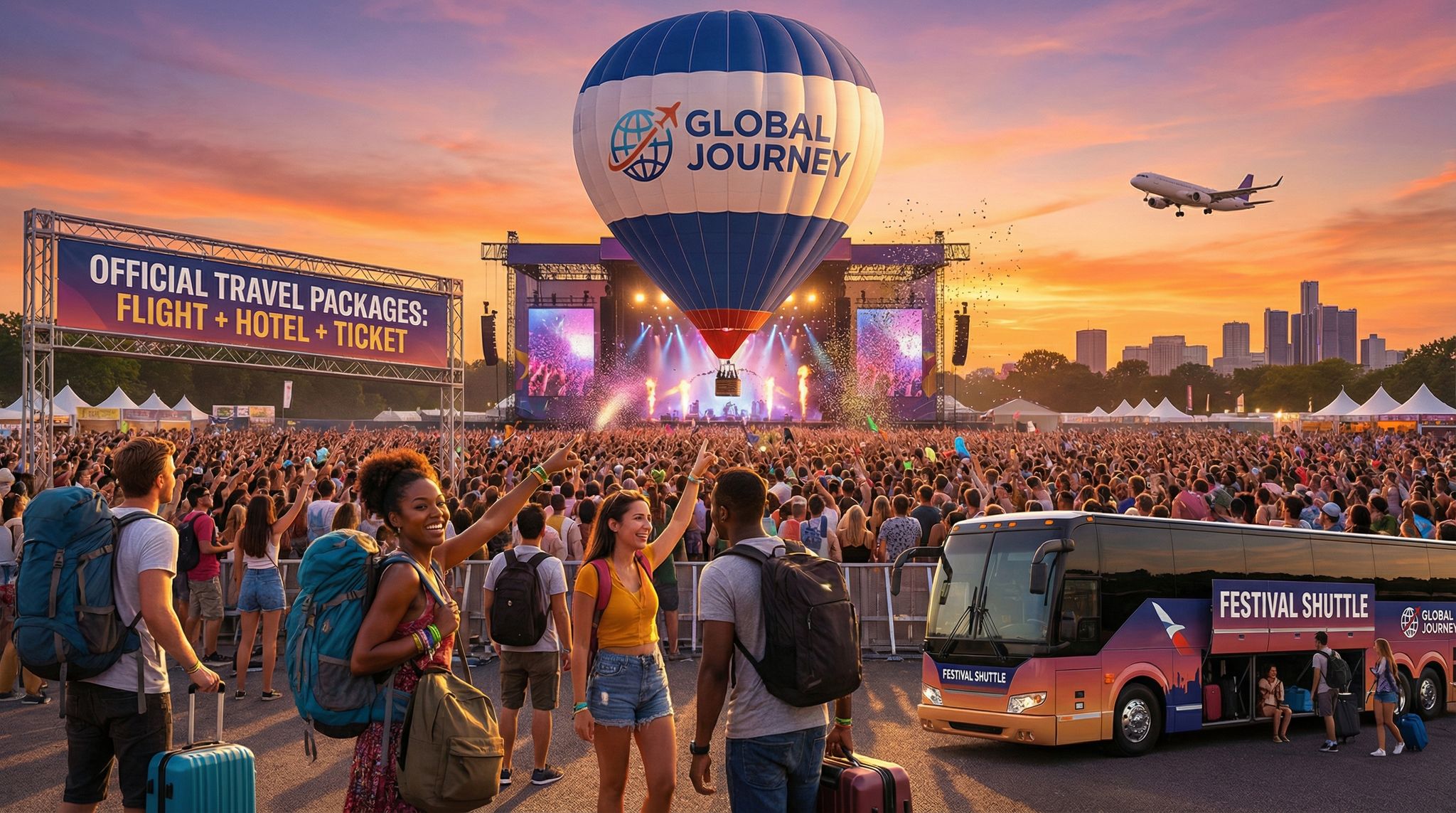
One successful model is what many destination festivals do: arrange exclusive charter flights or group rates. For example, Tomorrowland in Belgium offers “Global Journey” travel packages where attendees can book an entire trip – including a seat on a Tomorrowland-coded flight full of fellow fans, utilizing charter flights and travel packaging. These charter flights depart from major cities worldwide, often with themed onboard experiences (DJs on the plane, anyone?). Even if your event isn’t quite at Tomorrowland scale, you might negotiate with an airline to block a number of seats on key routes or set up a special fare class. Some airlines provide a unique booking link that automatically applies the event discount and tracks bookings.
For domestic events, group booking codes can help attendees self-organize cheaper travel. For instance, you secure a deal where if ten or more people from one city fly to the event, they each get 15% off. This encourages friends to coordinate travel (boosting word-of-mouth in the process). If your attendees skew younger or budget-conscious, explore partnerships with low-cost carriers – a small discount on a budget airline could make a big difference in convincing students or young professionals to take the trip.
Facilitating group travel booking for event attendees is another powerful lever. When organizers partner with specialized travel agencies or use group-booking platforms, they empower large parties—like corporate teams, university clubs, or extended friend groups—to secure flights and lodging together seamlessly. By offering a dedicated portal for group reservations, you reduce the administrative headache for the “lead booker” of the group, ensuring that larger cohorts commit to your event rather than abandoning their carts due to logistical friction.
Also, consider multi-airline solutions if your audience is truly global. Maybe you have pockets of fans in both Europe and Asia – no single airline covers all routes. In that case, an airline alliance partnership or simply multiple airline partners might be viable. Large event series sometimes partner with travel agencies or online travel platforms to offer broad flight options while still highlighting an “official airline” first, often integrated with the festival promo code. The easier you make it to find a good flight deal, the more likely distant fans will attend.
Co-Promotions and On-Board Marketing
Airline collaborations aren’t just about cost savings – they’re also great co-marketing opportunities. Work with the airline’s marketing team to integrate the partnership into both of your campaigns. For example, the airline can feature your event on their website’s promotions page or in their frequent-flyer newsletter (“Fly with [Airline] to [Event] and get X% off”). Some airlines highlight upcoming festivals and events in in-flight magazines or entertainment systems, effectively giving your event a mini-ad to captive travelers. If the partnership is deep, consider having a presence at airports during the travel period – welcome desks, signage, or even special airport shuttles for festival attendees.
Data-Driven Event Marketing
Track ticket sales, demographics, marketing ROI, and social reach in real time. Exportable reports give you the insights to make smarter decisions.
On your side, give the airline visibility to your audience. Announce them as the official airline partner in press releases and social media. You could host a giveaway with the airline (e.g., “Win free flights to the festival courtesy of [Airline]”). Content collaborations are popular: maybe produce a blog or video series about “traveling to the festival,” with tips presented by the airline, subtly promoting the routes. The key is to present the airline as a contributor to the event experience, not just a sponsor. For instance, co-branded content could be a fun video of artists boarding the branded festival flight, or a travel guide to your host city co-written with the tourism board and airline. These efforts amplify reach – your event gets in front of the airline’s customer base, and the airline strengthens its image among a young, engaged demographic.
In some cases, tourism boards join this mix, forming a three-way partnership: festival + airline + tourism board. For example, a tourism authority in Spain might coordinate with an EDM festival in Ibiza and an airline like Iberia to create a package or promotion for travelers, and listing alternate airlines on your website. Such triangular partnerships can unlock co-funded advertising in target markets (the tourism board promotes the festival and airline together in say, Germany, to lure German visitors). They can also sweeten the deal – perhaps the tourism board chips in budget to allow a bigger flight discount or adds a free local tour for anyone who books via the official airline deal. Don’t hesitate to play matchmaker; if you’ve got one partner onboard, they might introduce you to the other.
Logistics and Customer Support Coordination
An often overlooked element of airline partnerships is handling the logistics and customer service aspects. Make sure to coordinate with the airline on how attendees will use the flight benefits. Will they need a special code at booking? Will the airline set up a dedicated landing page (ideal)? Get clarity so you can communicate clearly to your audience: provide a step-by-step on your website for “How to book your discounted flight.” Also discuss contingency plans. For example, if an attendee runs into trouble using the promo code, who do they contact? Ideally, the airline’s customer support is briefed about the festival deal. Provide the airline with a list of common questions you expect from fans, so their call center or Twitter support isn’t caught off guard.
Plan for potential travel disruptions as well. Weather delays or last-minute flight cancellations can strand dozens of your attendees. While you can’t control airlines, having a direct liaison at the airline can help resolve crises faster. Agree on communication protocols: if there’s a major delay affecting festival-goers, can the airline quickly notify you so you in turn update your attendees (maybe via your app or social media)? In some partnerships, airlines set up flexible policies for event travelers – e.g., waiving change fees or allowing easy date changes if the festival dates shift or if someone’s flight is canceled due to weather. These gestures go a long way in building goodwill. Remember, the goal is to make the travel part of the positive event experience, not a stressful journey. So work together to smooth out the bumps.
Finally, start partnerships early. Airlines plan schedules and promotions far in advance. Initiating discussions 8–12 months out is not too soon, as airlines plan schedules far in advance. If you hope for something like a charter flight, you’ll need that time to arrange it. Early planning also gives both marketing teams time to integrate the collaboration into their calendars. By the time tickets go on sale, you ideally want your travel deals in place so you can capture excited buyers immediately (“Got your ticket? Here’s how to book your flight!”). This timing synergy can boost conversions – fans secure travel right as they secure tickets, locking in their commitment.
Hospitality & Accommodation Partnerships
Block Booking Hotels & Negotiating Rates
For out-of-town guests, accommodation is often the second biggest expense after travel. Partnering with hotels and other lodging providers can significantly lower this barrier. Start by approaching hotels near your venue, or those that match your audience’s taste (boutique hotels for a chic arts fest, budget inns for a student-heavy event, etc.). Propose a block booking: the hotel sets aside a number of rooms for your attendees at a special rate, typically lower than their standard rate for those dates. In exchange, you’ll actively promote that hotel as an “Official Accommodation Partner” and drive bookings their way. Many hotels are happy to do this, especially if your event falls on a weekend or period they can anticipate increased demand.
Negotiating group rates is similar. If you can estimate needing, say, 100 room nights in total, a hotel might offer 10–20% off or throw in perks (free breakfast, Wi-Fi, late checkout for festival-goers, etc.). Try to secure a range of options: perhaps a luxury hotel for VIP guests and a mid-range or budget option for general attendees. This way you cater to different budgets. Some events even strike deals with an entire chain – for example, a festival might partner with a national hotel brand to provide discounts at all the brand’s properties in the region. That can be useful if the event will overflow the nearest hotels into neighboring towns.
Make sure to sort out how attendees will book these rooms. Usually, the hotel will create a booking link or code for your event (e.g., “Use code FEST2026 on our website for the special rate”). Sometimes they set up a dedicated booking page listing all partner hotels and rates, which is ideal for user experience. On your event site, have a prominent “Travel/Accommodation” page listing these deals. Include distance to venue and any transport info (like “5-minute walk to venue” or “Free shuttle provided”). The easier it is for an attendee to go from ticket purchase to lodging booking, the more likely they’ll finalize the trip.
Bundling Tickets with Lodging Packages
Beyond just discounts, you can fully bundle accommodation with tickets to create seamless travel packages. This can be done in a few ways:
– Package Deals: Sell a combined “Ticket + Hotel” package at a set price (often at a slight package discount). For example, a 3-day festival pass plus 3 hotel nights for two people, sold as one SKU. You would coordinate with the hotel on pricing; sometimes the event holds an allotment of rooms and resells them bundled with tickets.
– Add-Ons at Checkout: Using an advanced ticketing platform, you can offer hotel bookings as an add-on when people buy tickets. The Ticket Fairy platform, for instance, allows you to include add-ons like accommodation or transportation in the checkout flow to integrate travel add-ons seamlessly. A buyer can select their ticket and then also select from available lodging options (with descriptions and costs) before finalizing payment. This one-stop shop approach is convenient and boosts uptake of these offers.
– Promo Codes for Attendees: If direct bundling isn’t feasible, another softer approach is giving every ticket-buyer a promo code for a hotel discount. For example, after purchase, they receive “Show your ticket email to Hotel X for 15% off your stay” or a unique code to use on a booking site.
Packaging can dramatically increase out-of-town attendance because it removes the headache of trip planning. Someone in another state might be on the fence about your two-day event, unsure about where to stay or how to get around. But if they see a package that handles it all – ticket, a quality hotel, maybe even airport transfer – it becomes an enticing mini-vacation. Festivals in remote areas often sell packages that include camping gear or glamping tents on-site, offering a package that includes a reserved spot, essentially taking care of lodging in a turnkey way. Conferences might partner with a housing bureau to bundle registration and a hotel in one invoice, which companies appreciate for employee travel.
One notable example: South by Southwest (SXSW) in Austin offers an official hotel booking system for badge-holders. Attendees booking through SXSW’s portal get guaranteed lowest rates at partner hotels, and the closer hotels typically sell out via this system. This ensures the conference captures the lodging demand and can report the economic impact, while attendees get convenience and a price break. It’s a model worth emulating for events of various sizes.
Unique Stays and Local Experiences
Hotels are just one piece of the accommodation puzzle. Depending on your event and location, you might partner with non-traditional lodging as well. For instance, if your festival allows camping, coordinate with a reputable camping or glamping provider. Many festivals now offer pre-set tents or luxury glamping packages where an outside company actually provides and manages the tents, offering a package that includes a reserved spot. You as the organizer can bundle these as part of VIP packages or add-ons. It’s a win-win: attendees traveling long distances don’t need to haul camping gear, and you earn extra revenue on the accommodation upsell.
Let Fans Pay Over Time
Offer flexible payment plans that split ticket costs into manageable installments, making higher-priced events accessible and boosting conversions.
Vacation rentals (like Airbnb homes, local B&Bs, etc.) can be another avenue. While those are usually booked by individuals, you might engage the local association of rental owners or an agency to encourage listings for the event dates. In some cases, event organizers have worked with home-share platforms to create an “Open your homes for X Event” campaign in the community, effectively expanding capacity. Home-stay programs (where locals host attendees) can also be facilitated if hotels are scarce – though these are usually informal, it can be done in partnership with local tourism offices or via platforms designed for event housing.
Interestingly, big accommodation platforms have entered event partnerships too. In 2025, Airbnb partnered with the Lollapalooza festivals worldwide to offer exclusive fan experiences and promote stays near the festival sites, as Airbnb announces global live music partnerships. The message from Airbnb’s CEO: more and more travelers choose Airbnb when attending events, noting that more guests choose Airbnb for events. This signals that the lodging industry sees events as a driver of bookings. So whether it’s traditional hotels or innovative lodging, event marketers should embrace these partnerships. They expand capacity and often add flavor to the attendee experience (staying in a cool local villa can be as memorable as the event itself!).
While arranging these deals, think through transportation for attendees between lodging and venue. If your official hotels aren’t walking distance, consider working with a shuttle bus company or rideshare partner. Some events include free shuttle service from partner hotels as part of the package – a major perk that ensures folks aren’t stranded without a car. Even simply negotiating a discount with a rideshare service (e.g., a Lyft/Uber promo code for event rides) adds value to your out-of-town guests. The more you can package the entire journey – flight, hotel, ground transport – the more turnkey and appealing your event becomes.
Hospitality Sponsorship and On-Site Presence
Hotels and hospitality brands can go beyond providing rooms – they can become event sponsors and activators. For example, a hotel chain might sponsor your VIP lounge in exchange for visibility and the chance to showcase their properties. Local boutique hotels might host an official after-party or artist meet-and-greet. These partnerships deepen the relationship: the hotel isn’t just where attendees sleep, it’s now part of the event’s story. A tourism board or hotel association might set up a welcome booth on-site at your event, greeting attendees with info about the city or offering concierge services (restaurant recommendations, sightseeing deals for their free time). This kind of hospitality integration makes travelers feel cared for and cements the link between your event and the destination.
For instance, during the Sundance Film Festival, Airbnb created lounges and events for festival-goers and talent to mingle, tying the brand into the festival experience. At some large music festivals, you’ll find branded hotel pop-ups or experiences – perhaps Marriott Bonvoy or Hilton Honors hosting a viewing deck for members. While these are big brand examples, even a smaller event can have, say, the city’s visitor bureau set up a cool Instagrammable display with local art or info about next year’s attractions. It all contributes to a richer experience for those who traveled to be there, and it encourages them (and others) to come back.
Crafting Irresistible Travel Packages
All-in-One Convenience for Attendees
Travel packages tie all the pieces (travel, lodging, extras) into one tidy bundle. The convenience factor cannot be overstated. For attendees, buying a package that handles the “big three” – how to get there, where to stay, and the event access – simplifies decision-making. It’s one transaction instead of three or four. This convenience often converts fence-sitters into ticket buyers. As veteran promoters say, bundle for convenience: by removing travel hurdles, you significantly boost attendance for far-flung events by using travel packages to cover all bases.
When designing packages, consider the varying needs of your audience:
– Basic Bundles: e.g., shuttle transportation + general admission ticket. Good for budget travelers who can arrange major travel themselves but appreciate last-mile help.
– Standard Bundles: e.g., round-trip flight or charter bus + 2 nights in a partner hotel + event ticket. This appeals to most out-of-town attendees looking for simplicity and value.
– Premium Bundles: e.g., charter flight + luxury hotel or villa + VIP event pass + maybe extras like a backstage tour. These target affluent guests, corporate groups, or super-fans willing to spend for a white-glove experience.
You can also create packages for specific segments, like group packages (discounted 4-pack of tickets with a hotel suite), or themed experiences (e.g., a “Culinary Weekend Package” that includes event tickets plus a food tour or special dinner if the event is a food & wine festival). The idea is to present options that feel curated and special – turning the trip into a cohesive experience. As events increasingly compete for attention, offering such curated travel experiences can set yours apart. In 2026, fans don’t just want to attend an event; they want an adventure. If you can deliver that in one click, you remove a ton of friction.
Pricing Strategies & Covering Your Costs
Creating travel packages means you, the organizer, might be taking on costs up front – like chartering buses or reserving hotel blocks. Pricing these packages smartly is crucial to avoid losses. Start by tallying every cost component per person: transportation, lodging, ticket, any included meals or merch, plus taxes/fees. Then factor in a cushion for unpredictables. A rule of thumb is adding perhaps 5–15% contingency on top of your calculated breakeven, ensuring you budget for surprise guest costs. This covers, say, a few unsold seats on a charter bus or fluctuations in fuel costs. The goal is that if you only sell 80% of the package capacity, you’re not underwater.
It’s often better to slightly overprice and be able to provide a surprise perk or partial refund later, than underprice and lose money, especially if seats go unsold on charters. Transparency is key: buyers should know what they’re paying for. Clearly list what’s included (number of hotel nights, type of room, which flights or transport, any addons like breakfast) and what’s not (e.g., “airfare not included in this package” or “meals not included except hotel breakfast”). Managing expectations avoids angry customers and refund requests later.
Leverage early-bird pricing to encourage advance purchase of packages, where tiered and early bird pricing helps manage risk. Early commitments help you gauge demand and secure the right amount of transport and rooms. For example, offer a 10% discount on packages for the first month of ticket sales. This not only rewards your keen travelers but gives you funds and numbers to lock in deals with airlines and hotels on better terms. However, avoid too much complexity with pricing tiers; people are used to static prices for packages. Unlike airline tickets, dynamic pricing on travel packages can backfire – travelers expect fairness, not surge pricing during excitement peaks. In fact, some ticketing platforms like Ticket Fairy purposely avoid dynamic pricing in favor of transparent, fixed pricing, which helps maintain attendee goodwill. Honoring that principle in your packages will make buyers more comfortable plunking down a large sum.
Another aspect is making the package purchase financially accessible. The total price might be high (since it’s essentially a mini-vacation). Consider integrating payment plans or “Buy Now, Pay Later” options at checkout. What is BNPL? It allows attendees to pay over time, and offering it as a digestible payment option captures sales. By allowing attendees to pay a deposit and installments, you reduce sticker shock. In fact, offering installment plans has been shown to significantly cut cart abandonment for big-ticket purchases). Many younger travelers, or those wary of credit card debt, appreciate the ability to budget out the trip cost over a few paychecks, as fans are more likely to opt for payment plans. Fortunately, modern event platforms support this: you can enable Buy Now, Pay Later services (like Klarna, Afterpay, Affirm) seamlessly during purchase, implementing local payments and BNPL. For example, if a package costs $1,000, the buyer might pay $250 now and the rest over three months, while you still get paid upfront by the BNPL provider, ensuring the festival receives full payment upfront. This strategy has become so effective that in recent years some major festivals saw well over half of attendees use payment plans for high-priced tickets and packages. It’s a trend worth embracing to maximize sales.
Handling Risk: Refunds, Insurance & Contingencies
When you bundle travel with your event, you inevitably shoulder more responsibility for things beyond the event itself. What if a storm cancels flights? What if the event is postponed? You need clear policies and backup plans. Offer (and strongly encourage) travel insurance for attendees purchasing big packages. You can partner with an insurance provider to present an add-on insurance option during checkout (many ticketing systems let you do this easily, implementing local payments and insurance). This way, if a fan has to cancel their trip last-minute or if a covered disruption occurs, they can recoup costs through insurance. It protects them and reduces the pressure on you to make exceptions.
Set a transparent refund policy for the travel components. For instance, “Full refund on the package minus ticket price if the festival is canceled or postponed.” Coordinate with vendors (airlines, hotels) on their cancellation terms and incorporate those. Communicate by when a package can be canceled for a partial refund and what is non-refundable (often the case after a certain date when you have to commit to the providers). Also prepare a plan if the event is postponed: Will travel bookings shift to new dates? Will you offer credit for the next edition? Address these scenarios in FAQs to give buyers peace of mind.
It’s also prudent to budget for contingency transport or lodging. Imagine you’ve organized a ferry to an island festival and it breaks down, or a charter flight is delayed to next morning – do you have to house people for an extra night? Having a reserve fund for emergency buses, crucial if you are stranded in the middle of a crisis, is wise. We’ve seen festivals that didn’t plan for heavy rain turning parking lots to mud, suddenly needing to hire tractors and shuttles to ferry attendees – those who had contingency funds weathered it; those who didn’t took a financial hit. Learn from such tales: allocate a portion of package revenue to an “uh-oh fund.” If unused, it’s extra profit or can be used to delight attendees (maybe a free drink or merch item if all goes smoothly).
Communication & Support for Travelers
When fans buy a travel package or use your partners, they’re putting a lot of trust in you. Exceptional communication is vital to keep that trust and ensure they have a great experience from doorstep to venue. Provide detailed itineraries and instructions well in advance, and some festivals create a dedicated guide. For example, if someone bought a charter bus package: email them a PDF a few weeks out with the exact pickup location, time, bus captain contact info, expected travel time, and what to do if they’re late. If it’s a flight package, include info on airport transfers (“Our team will meet you at baggage claim in Terminal 1 at 3 PM with a sign – here’s a photo of what our staff shirts look like”). These details prevent confusion and anxiety for travelers, many of whom might be visiting the area for the first time.
Establish clear channels for updates. Travelers should know how you will reach them if plans change on the fly. Collect their mobile numbers and consider setting up an SMS alert system for critical updates (“Shuttle delayed 30 min due to traffic”). Apps or messaging groups (WhatsApp, Telegram) can work too for real-time comms, but ensure you have permission and aren’t spamming. The day before and day of travel, email might be too slow – texts or app notifications are better, as email can be useless on travel day. Also, have a staffed hotline or at least a dedicated customer support contact for travel package holders. It could be an email like [email protected] monitored frequently in the lead-up and during the event. Knowing they can reach a human if something goes wrong (missed connection, can’t find the shuttle, etc.) is hugely reassuring to attendees.
Furthermore, consider creating an online Travel FAQ or forum. Sometimes attendees help each other – a Facebook group or Discord channel for travelers to your event can let them coordinate rideshares, ask past attendees for tips, etc. Your team can monitor and chime in with official answers when needed. This builds community and offloads some individual queries.
By walking travelers through every step and having support at the ready, you turn potentially stressful travel into part of the fun. Many events that do this well find that attendees rave not just about the event, but about how smooth their journey was (“they thought of everything!”). That kind of word-of-mouth is gold – it means more people will be confident traveling to your next event, knowing they’ll be in good hands.
Cross-Promotion in Travel Channels
Co-Branded Campaigns & Media Swaps
We touched earlier on co-marketing with tourism boards, but broader cross-promotion with travel industry brands can take many forms. Essentially, identify where your target travelers get their information or book their trips, and make sure your event is visible there – ideally via partnerships. For instance, collaborating with an online travel agency (OTA) like Expedia or Booking.com to highlight your event in their destination pages could reach people actively planning travel. Some savvy event marketers work with OTAs to create a special landing page: when someone searches the city and dates of your event, they see a banner or note: “Did you know [Event] is happening during your stay? Click here for tickets.” These placements often stem from partnerships where you agree to promote the OTA or provide content in exchange.
Another tactic is partnering with travel content sites or magazines (think Travel + Leisure, Lonely Planet, or popular travel blogs). You might pitch a story or sponsor an article like “Top 5 Music Festivals Worth Traveling for in 2026” featuring your event, which the travel outlet publishes to inspire its audience. In return, maybe you give them some exclusive info or a contest giveaway trip to the event. Aligning with travel media helps position your event as a destination experience in the minds of readers, not just an event for locals.
Of course, continue co-branding with your direct travel partners. If you have an airline partner, do a joint press release and social media announcement about the partnership (“[Airline] and [Event] team up to bring fans to [City]”). If a hotel group is sponsoring, create co-branded digital ads showing the hotel and event together (“Stay with Hilton and experience [Event] – special rates available”). These co-branded assets lend credibility to your event (big travel brands involved) and expand reach when the partners share them.
Cross-promotions can also be as simple as local media swaps. Example: your event posters or flyers could be displayed in partner hotels’ lobbies or airline lounges, while you allow the hotel/airline to have a presence in your event newsletter or on-site. These low-cost exchanges ensure travelers encounter your event messaging at multiple touchpoints on their journey.
Tapping Tourism Marketing Channels
Tourism boards aren’t the only tourism channel. Many regions have destination marketing campaigns ongoing – find ways to insert your event. If a country’s tourism bureau is doing a “Visit in 2026!” campaign and your event fits a theme, see if they’ll include it. City visitor websites often have events calendars; make sure you’re listed and highlighted, possibly as a “featured event” if you partner with the city. Also leverage sites like TripAdvisor or local city guide sites. While you can’t easily partner with TripAdvisor, you can encourage attendees to mention your event in reviews or list your event in the “Things to Do” section if applicable. Some progressive event promoters actually treat the destination as part of the marketing – for example, creating blogs or videos like “48 Hours in [Host City] During [Event]” which tourism sites love to share.
Another valuable channel: travel agents and tour operators. This is especially relevant if your event has international appeal or is in a niche destination. There are travel companies that specialize in festival tours or event travel packages (some even bundle multiple events into a tour). Reach out to these operators and offer group rates or affiliate commissions for selling trips to your event. For example, a tour operator in Brazil might be interested in bringing a group of 50 people to your U.K. festival as part of a European tour – if you provide an easy package or at least group ticket discount, they handle selling and logistics in their market. It’s essentially outsourced marketing in a specific region.
Organizers often ask exactly what companies offer partnerships to boost tourism by highlighting local attractions and cultural experiences. Beyond traditional tourism boards, you should look to regional destination management companies (DMCs), heritage foundations, local culinary associations, and specialized tour operators. Partnering with these entities allows you to weave authentic local flavor into your event programming—such as a regional food pavilion sponsored by a local restaurant coalition or guided historical tours bundled with VIP tickets—which enriches the attendee experience while fulfilling the partner’s mandate to drive regional economic impact.
Consider how different platforms can target different traveler demographics. If you want to attract tech-savvy young travelers, ensure your social media ads target interests in travel, adventure, and live events. Platforms like Instagram and TikTok are full of travel inspiration content; collaborate with travel influencers to feature your event (more on influencers next). For business-oriented events, LinkedIn or industry forums can be channels to highlight, in partnership with travel providers, the ease of attending (e.g., “Special conference travel rates via Delta Airlines”). The underlying principle is to be present wherever your potential out-of-town attendees are looking for travel ideas.
Engaging Travel Influencers & Media
In the travel community, influencers and bloggers wield considerable influence (pun intended). Partnering with travel influencers can expose your event to entirely new audiences who follow these personalities for vacation inspiration. Identify a few influencers whose brand aligns with your event – maybe a YouTuber who vlogs music festival trips, or a blogger known for “city-hopping for cultural experiences.” Invite them to attend your event with travel expenses covered (and perhaps a fee if in budget) in exchange for coverage. Many will happily create content like “Come with me to X Festival in Bali!” or “I traveled to the world’s biggest esports event – here’s what happened.” Their followers see the journey from packing bags to exploring the venue, which plants the seed that they too could make that trip.
Beyond individuals, work with travel-focused media outlets. Propose a feature story or a photo essay on your event as a travel destination. For instance, an adventure travel magazine might be keen to cover a desert festival where attendees camp under the stars. Or a culinary travel blog could cover your city’s food festival by highlighting both the event and the locale’s cuisine. When negotiating with media, emphasize the unique aspects: location, culture, any interesting travel angles (eco-friendly travel options, off-the-beaten-path location, etc.). Often, tourism boards will assist in media partnerships by providing press trip support – that means they might co-host travel writers at your event, covering their hotel or tours of the region. This three-way collaboration gets your event editorial exposure framed as a travel experience.
Don’t forget local influencers or ambassadors. Sometimes the best advocates are passionate locals or past attendees who have a following. A well-known foodie in your city promoting an upcoming food & wine event to their fans in other cities can be effective, especially if they hype the great restaurants and hospitality in town. Encourage the creation of shareable content like “5 Reasons to Travel to [City] for [Event]”. These can be blogs, Instagram carousels, or short videos – all showcasing the event plus destination highlights. Essentially, turn influencers into unofficial tourism ambassadors for your event.
Targeted Advertising to Travelers
Apart from organic influencer reach, leverage paid advertising with a traveler twist. Most digital ad platforms (Facebook, Google, etc.) allow you to target by location and interests. Create campaigns specifically aimed at audiences in drive or flight markets who have shown interest in relevant topics. For example, run Facebook ads in neighboring states or countries highlighting a “Road Trip to [Festival] – Don’t Miss the Adventure.” Use striking imagery of both the event and the destination to catch attention of those who might not know either. On Google, you can target search keywords like “events in [destination]” or “[City] travel October” to capture people planning trips who might convert to event-goers if they learn about it.
For international audiences, tailor the channels and content. If you want to lure attendees from Asia to a U.S. event, you might need to use platforms like WeChat or LINE for ads, targeting locals who can guide visitors. Advertising on travel forums or using programmatic ads on travel booking sites can also reach active travelers. Some promoters invest in retargeting campaigns where anyone who visits the event website from an outside region gets followed by ads like “Still thinking about coming to [Event]? Early bird travel packages available!”. This can gently push interested travelers down the funnel.
Another clever strategy: use geo-targeting during the event for next year’s marketing. For instance, while your current event is happening, run ads on Instagram Stories or Snapchat targeted to everyone at the venue (via GPS targeting) encouraging them to share and invite friends next year. Those posts often reach friends back home, sowing FOMO. Additionally, you could target the origin cities of this year’s attendees in the weeks after the event, with testimonials or user-generated content like “[City] showed up big at [Event] this year – join the adventure in 2027!” Using real attendee stories or numbers (“500 travelers from New York came to our festival”) can nudge others in those areas to consider going next time.
In summary, meet potential attendees where they already engage in travel behavior – be it travel websites, social media wanderlust content, or the platforms and apps popular in their region. By marketing your event as a journey and not just an event, you’ll tap directly into the motivations that get people packing their bags.
Real-World Successes & Lessons
Festivals that Became Travel Destinations
Several events have transcended their local roots to become international pilgrimage sites, largely thanks to smart travel partnerships and marketing. One shining example is Tomorrowland in Belgium. What started as a local EDM festival is now a global brand partly because they made it easy for global fans to attend. Tomorrowland’s organizers created the aforementioned Global Journey program, bundling flights from major cities, festival tickets, and accommodations, offering charter flights and themed experiences. They collaborate with airlines (Brussels Airlines even runs party flights for Tomorrowland) and Belgian tourism to welcome tens of thousands of foreigners each year. As a result, Tomorrowland sees attendees from nearly every corner of the globe, fostering a unique vibe with flags from dozens of countries waving in the crowd.
Another case is Glastonbury Festival in the UK. Glastonbury takes place in a small rural area without massive infrastructure, yet it draws over 200,000 people. Their strategy has included tightly orchestrated coach travel packages, which are useful if the route is complex. By selling coach + ticket bundles (with an incentive: those tickets go on sale before regular ones and guarantee entry only if you arrive by the official coach), they drastically reduced logistical challenges and made it feasible for car-less Brits and Europeans to attend easily. This not only cut down on traffic and environmental impact, but it also integrated into national travel networks – special festival buses run from many cities and even from London airports, essentially funneling travelers straight to the farm.
On a different note, consider SXSW (South by Southwest) in Austin, Texas. It grew from a small music showcase into a mega festival and conference drawing 75,000+ registrants globally. SXSW works hand-in-hand with Austin’s convention bureau and hotels. The event’s expansion was supported by the city embracing it, promoting it worldwide as part of “Visit Austin” campaigns. Hotels offer special rates through SXSW, airlines boost capacity into Austin around March, and the city’s entire downtown frames the festival as an attraction. This tight integration of event and place turned SXSW into a hallmark of Austin’s identity and a must-attend event in tech, film, and music industries. The lesson: strong city partnership can elevate an event to be synonymous with the destination (think “Edinburgh Fringe” or “Oktoberfest Munich” – the city and event are intertwined brands).
Looking ahead, destination marketing continues to evolve. For instance, organizers planning major country music or corporate trips to Nashville in 2026 are already collaborating with local hospitality groups to bundle honky-tonk VIP passes and distillery tours with their core event tickets. By transforming a standard conference or concert into a comprehensive “Music City” itinerary, promoters lock in higher attendance rates from out-of-state visitors who view the trip as a dual-purpose vacation.
Similarly, for regional promoters wondering, “how can I collaborate with travel promotion companies to highlight California festivals?”, the approach requires pitching your event as a core driver of state-wide tourism. Organizations like Visit California or regional bodies such as the Greater Palm Springs Convention & Visitors Bureau frequently partner with event producers. By providing these travel promotion companies with attendee demographic data and projected local spending, organizers can unlock co-op marketing funds, featured placements in state travel guides, and dedicated social media campaigns that position their festivals as premier West Coast cultural destinations.
Conferences and Expos Drawing Global Crowds
It’s not just entertainment events – trade shows, expos, and conferences also leverage travel partnerships. CES (Consumer Electronics Show) in Las Vegas is a prime example. CES attracts over 170,000 attendees from around the world annually. Las Vegas’s tourism infrastructure is a big enabler: the Las Vegas Convention and Visitors Authority (LVCVA) actively partners with CES organizers to ensure adequate hotel capacity (nearly every hotel in town is involved), streamlined transportation (including everything from extra monorail cars to rideshare staging areas), and promotions in foreign markets. There are “CES travel packages” promoted in tech circles in Asia and Europe, often supported by airlines like Delta or Emirates which fly direct to Vegas. This coordinated effort keeps CES as the undisputed international tech show, even as competition arises – because it’s not just an expo, it’s an experience in Vegas, a city that sells itself.
Smaller scale: specialized industry conferences often partner with global travel programs too. For instance, the Web Summit (originally in Dublin, now in Lisbon) became huge partly by marketing itself globally and offering an array of support for international attendees. They partner with national airlines (like TAP Air Portugal giving discounts to Web Summit attendees), and the city of Lisbon actively promotes the event as part of its startup and innovation tourism push. Another example is Art Basel – in Miami, Hong Kong, and Basel – each edition works with airlines, luxury hotels, and local tourism boards to draw the jet-setting art crowd. The Miami edition is co-promoted by Visit Florida and luxury travel agencies as a winter must-do trip for art aficionados, which helps it sell out VIP passes and fill high-end hotels.
When examining exactly how do tourism boards partner with global expos, the collaboration usually extends far beyond basic marketing. Destination marketing organizations (DMOs) often provide dedicated city liaisons to help expo organizers navigate local permitting, fast-track international visas for exhibitors, and coordinate city-wide hospitality blocks. In many cases, tourism authorities will subsidize convention center costs or host familiarization (FAM) trips for key international buyers. By integrating the trade show into their broader economic development campaigns, these agencies ensure that large-scale B2B events become a seamless extension of the city’s brand, attracting high-value business travelers who drive significant mid-week revenue.
The key insight from these is the ecosystem approach: the event, the city, airlines, hotels, etc., all coordinate to create a compelling proposition. Attending the event feels like being part of something big and well-supported. These events not only fill seats, they fill cities, benefiting everyone involved. As an event marketer, even if your event is much smaller, you can adopt the same mindset. Think about how to make your event weekend the one everyone in your niche or community will travel for – then build the travel and hospitality network to support that vision.
Cautionary Tales: Learning from Missed Connections
Of course, not every travel partnership story is rosy. It’s worth noting some pitfalls and failures to avoid repeating them. One infamous cautionary tale is the Fyre Festival (2017). Billed as a luxury Bahamas music festival, it heavily promoted travel – private flights, yacht packages, glamorous beach villas. However, organizers promised far more than they delivered. The transportation and housing logistics were grossly mismanaged: charter flights were chaotic, and the “luxury villas” turned out to be disaster relief tents with no proper bedding or security. The result was a PR nightmare and stranded, angry attendees. The lesson? Never oversell or under-deliver on travel and accommodation. Grand promises mean nothing if you can’t execute basics like clean beds and reliable transport. Always plan within realistic limits and have contingency for everything you promise.
Another scenario to heed: events that failed to communicate travel changes and left attendees confused. For instance, a large conference once arranged shuttle buses from various hotels but didn’t clearly tell attendees where to find them or what times they ran. Many guests ended up missing sessions or paying for taxis, souring their experience. The event got backlash in post-event surveys for poor organization. The take-away: even if you have great partnerships, you must nail the communication and coordination. A well-negotiated deal can backfire if attendees aren’t guided on how to use it.
Also, be careful with assumptions and data. Some events arranged huge room blocks or chartered too many buses on an optimistic hunch that “if we build it, they will come,” only to have far fewer out-of-town attendees than expected, and thus ate the cost. Use actual data and conservative uptake rates to scale your travel offerings. It’s better to sell out a smaller number of packages and then try to add more, than to be stuck with half-empty charter vehicles or unsold hotel rooms (which might have attrition fees). Partner contracts often have clauses that you’re responsible for unsold inventory – negotiate those carefully and don’t let enthusiasm trump realistic forecasting.
In summary, integrity and planning are everything. Successful travel partnerships rely on trust – attendees trust you to handle these critical parts of their journey, and partners trust you to deliver the promised audience. When done right, you get glowing reviews of “amazing organization and trip of a lifetime.” When done wrong, it’s a social media firestorm. So plan meticulously, be transparent, and always have a Plan B for when Murphy’s Law strikes.
Metrics to Gauge Out-of-Town Success
Knowing if your travel partnership strategies are truly paying off requires looking at a variety of metrics. Here are some key ones and how to use them:
– Out-of-Town Ticket Sales: Track the percentage of ticket buyers from outside your local area (define what “local” means – maybe a 50-mile radius). If that percentage grows year over year after implementing partnerships, it’s a clear win. For example, you went from 10% to 25% out-of-town attendees after introducing travel packages – that’s significant.
– Geographic Reach: Count how many cities/states/countries attendees came from. A broader scatter of origin points can indicate your marketing is reaching wider. Perhaps last year you had people from 3 countries, this year from 15 countries – a sign your event brand is traveling.
– Package Uptake Rate: Of the travel packages or deals offered, what percent were used? If you blocked 100 hotel rooms and 90 got booked by attendees, that’s 90% uptake – quite good. If only 20 were used, maybe the package pricing was off or not well advertised. Similarly, track how many airline promo codes were redeemed, how many tickets were sold via tourism board campaigns, etc.
– Surveys & NPS: Survey attendees, specifically those who traveled. Ask about their satisfaction with the travel aspects (e.g., “How would you rate your experience getting to and from the event?”). A high Net Promoter Score (NPS) from travelers means they’ll recommend the trip to others. Open-ended feedback might reveal pain points you missed.
– Economic Impact: For your discussions with tourism stakeholders, measure estimated economic impact – total room nights, average spend per visitor, etc. Tools like calculators from Destination International can help, or local university studies. Even if informal, being able to say “our attendees booked 500 hotel nights and spent approximately $200,000 in the city” strengthens those partnerships.
– Social Media & PR Reach: Did your travel-focused efforts generate buzz beyond your region? Track press coverage in other cities/countries, or social posts from attendees mentioning traveling. If #RoadTripToYourEvent or similar tags pop up, that’s a qualitative sign that people embraced the travel storyline.
By analyzing these metrics, you can refine your partnership strategies. Maybe you find that lots of people from one region came after a campaign – double down there next time. Or if a package type had zero uptake, scrap or rework it. Continuous improvement is the name of the game. Over a few event cycles, you’ll hone in on the partnerships that consistently drive ticket sales and satisfaction, and you can drop the experiments that didn’t move the needle.
Finally, share successes with all partners involved. Let the airline know how many seats they filled, tell the hotel how many additional nights were booked, show the tourism board the increase in visitors. When partners see tangible results, they’ll be eager to work with you again – and likely invest even more into future collaborations.
Frequently Asked Questions
How do tourism partnerships benefit event organizers?
Tourism partnerships allow events to tap into new international audiences and boost ticket sales by leveraging the reach of airlines and tourism boards. Collaborations provide marketing support, funding, and logistical help, turning regional gatherings into global attractions. For example, Edinburgh’s festivals generated £407 million in 2022 by drawing 31% of attendees from outside Scotland.
How can event organizers secure official airline partnerships?
Organizers should approach airlines 8–12 months in advance with data on attendee origins and projected travel volume. Negotiate for promo codes, group fare deals, or charter flights to fill seats on specific routes. Successful pitches highlight the mutual value of filling flights, similar to Tomorrowland’s strategy of using branded “Global Journey” packages.
What are the best travel package options for festival attendees?
Effective travel packages bundle event tickets with transportation and lodging to remove planning friction for out-of-town guests. Options range from basic shuttle and ticket bundles to premium packages including charter flights and luxury hotels. Offering tiered packages and “Buy Now, Pay Later” payment plans significantly increases conversion rates for remote attendees.
Can events get funding or grants from tourism boards?
Many tourism boards offer grants, sponsorships, or co-op marketing budgets to events that drive off-peak tourism or enhance destination branding. Organizers must present data on projected out-of-town attendance and economic impact to qualify for financial support or in-kind services like permit assistance, venue access, and marketing on official city channels.
How do hotel block bookings work for large events?
Hotel block bookings involve negotiating a set number of rooms at discounted rates for event attendees to ensure availability and lower costs. Organizers secure these blocks to guarantee accommodation for out-of-town guests, often providing a dedicated booking link. This strategy drives revenue for partner hotels while offering convenience to attendees.
Which metrics track the success of event tourism partnerships?
Key metrics include the percentage of out-of-town ticket sales, hotel room block uptake rates, and the redemption volume of airline promo codes. Organizers should also track the geographic reach of attendees and estimated economic impact, such as total room nights generated, to prove ROI and secure future support from tourism stakeholders.
How far in advance should event travel partnerships be negotiated?
Travel partnerships with airlines and tourism boards should be initiated at least 12 months before the event. Early planning allows for inclusion in annual marketing budgets, arrangement of complex logistics like charter flights, and integration of travel deals before tickets go on sale, ensuring maximum uptake and smooth coordination.
What are effective cross-promotion strategies for events and travel brands?
Cross-promotion involves media swaps, such as featuring the event in airline newsletters or on hotel lobby screens in exchange for logo placement. Co-funded digital advertising campaigns targeting specific traveler demographics and collaborating with travel influencers to create content like “Come with me to the festival” vlogs expand reach to new international audiences.
How can event organizers manage risks when selling travel packages?
Organizers must budget for contingencies like unsold charter seats or fuel cost fluctuations by adding a 5–15% financial cushion to package prices. Offering travel insurance at checkout and establishing clear refund policies for cancellations or postponements protects both the event and the attendee from financial loss and logistical failures.
How do major events impact the local tourism economy?
Major events act as powerful tourism engines by injecting money into local hotels, restaurants, and transportation services. Events drive off-peak visitation and enhance destination branding, making them highly attractive investments for city tourism boards. For instance, California’s Coachella and Stagecoach festivals were projected to drive over $700 million in regional spending.
How do tourism boards partner with global expos?
Tourism boards collaborate with global expos by offering financial subsidies, fast-tracking international visas, providing dedicated city liaisons, and coordinating city-wide hospitality blocks. They often integrate the trade show into their international destination marketing campaigns to attract high-value business travelers and exhibitors, ensuring the event drives significant economic impact.
What types of companies offer partnerships to boost tourism through local cultural experiences?
Beyond traditional tourism boards, event organizers can partner with destination management companies (DMCs), local culinary associations, heritage foundations, and specialized tour operators. These organizations collaborate with promoters to highlight regional attractions, often sponsoring on-site cultural pavilions or bundling guided local tours with event tickets to drive broader economic impact.
How can organizers streamline group travel booking for event attendees?
Promoters can facilitate group travel booking for event attendees by partnering with specialized travel agencies or integrating group-booking portals directly into their ticketing flow. This allows large parties, such as corporate teams or university groups, to secure flights and lodging together, reducing logistical friction and increasing bulk ticket conversions.
How can I collaborate with travel promotion companies to highlight California festivals?
To collaborate with travel promotion companies for California festivals, organizers should approach regional entities like Visit California or local convention bureaus with concrete data on projected out-of-state attendance and economic impact. Pitching your event as a key driver of regional tourism can unlock co-op marketing funds, inclusion in official state travel itineraries, and joint digital campaigns.
What are some effective tourism partnerships examples for event organizers?
Effective tourism partnerships examples include music festivals collaborating with national airlines for branded charter flights, tech conferences securing city-wide hotel block discounts through local convention bureaus, and regional food events teaming up with heritage foundations to offer bundled cultural tours. These collaborations streamline travel logistics while boosting the host destination’s profile.