Live music venues offer a vibrant atmosphere where patrons enjoy incredible performances while socializing. However, the key to an exceptional experience often lies in behind-the-scenes service — especially table service. By optimizing table service, a venue can drastically enhance the overall guest experience, attract more customers, boost satisfaction, and ensure guests leave with a positive impression.
In this guide, we explore updated strategies (as of 2026) to improve table service at live music venues for a seamless, unforgettable guest experience. From understanding your audience to leveraging technology and personalizing service, each section below offers practical tips backed by industry insights.
1. Understanding Your Target Audience
Knowing your audience is the first step to tailoring your table service and venue experience. Understanding who your guests are, what they enjoy, and what they expect from a live music night allows you to align your service with their needs. Consider factors such as:
- Age Group & Lifestyle: A college-town venue may cater to students seeking a lively, budget-friendly night, whereas an upscale city venue might serve professionals expecting craft cocktails and a refined atmosphere. Generational preferences matter – for example, Gen Z concert-goers might value interactive, shareable experiences and seamless mobile ordering, while older audiences might prioritize comfort and personal attention.
- Musical Preferences: The genre of music and scene you host often defines your crowd. A hip-hop or rock venue might attract a high-energy, drinks-focused crowd, whereas a jazz or singer-songwriter lounge could draw guests who appreciate quieter service and sophisticated menus. Match your table service style (and menu – more on that later) to the vibe of the music. For instance, a blues club might emphasize a relaxed pace and classic soul food specials, enhancing authenticity.
- Spending Habits & Expectations: Do your guests splurge on VIP tables and bottle service, or are they looking for affordable fun? Market research and data analysis help here. Surveys, social media polls, and analyzing ticket purchase data can reveal insights. You may notice, for example, that weekend attendees have a higher spend per head than weekday crowds, or that a significant portion of your guests are out-of-town travelers. In fact, 2025 saw concert travel surge – independent venues drove 38 million ticket clicks on Bandsintown, meaning many fans are exploring new venues. If you draw tourists or visitors, consider their needs too, such as clear information and local flavor in your offerings.
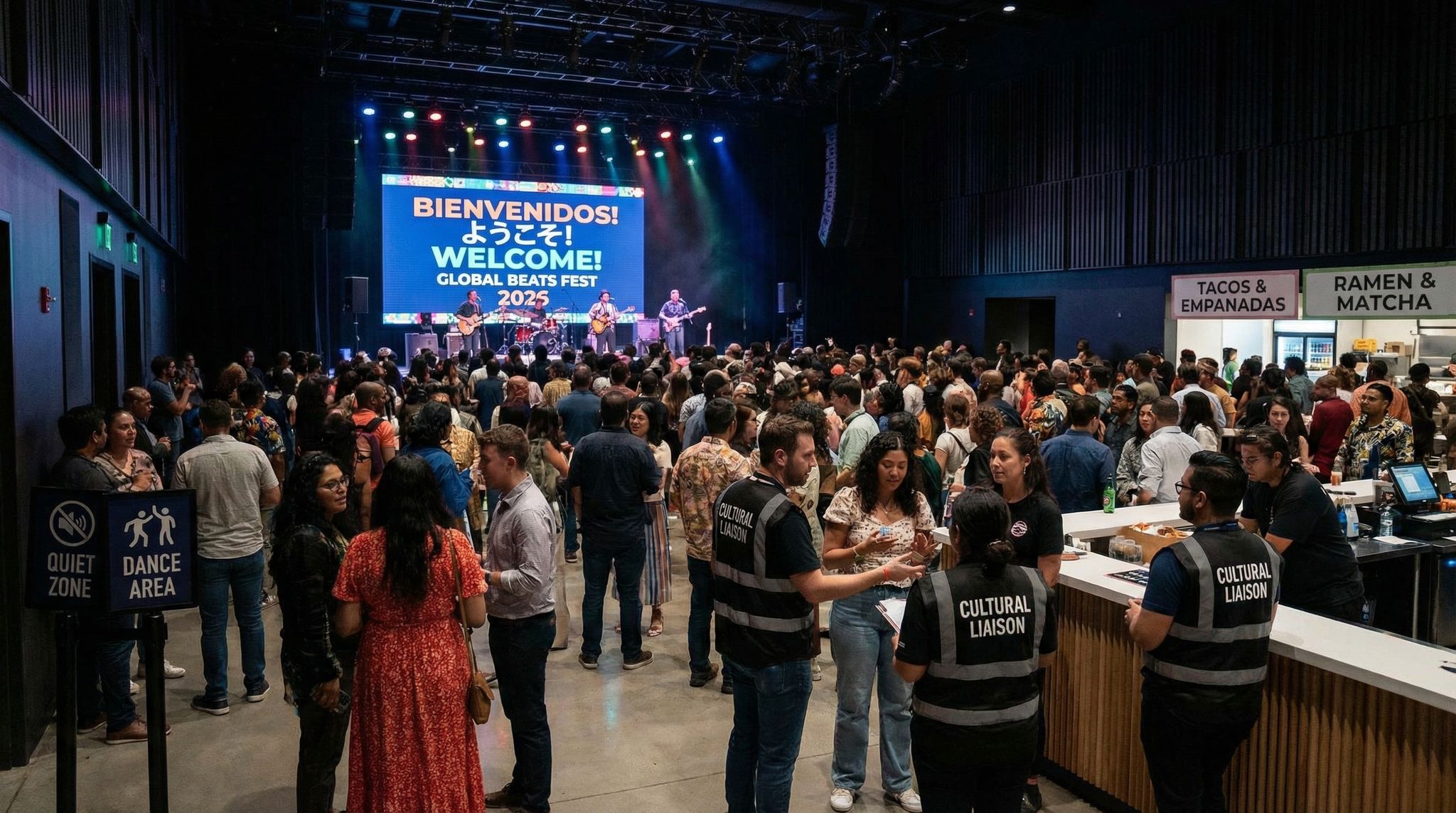
- Local Community Influence: Align your service with local culture. If your city has a big craft beer scene, featuring local brews at the table can delight guests. In an international tourist hotspot, a multilingual staff or multi-language menus could significantly improve the experience for foreign visitors.
Furthermore, analyzing the specific types of music in clubs and venues within your local market can reveal untapped programming opportunities. If competing spaces primarily book heavy bass or EDM, introducing a dedicated indie-pop or retro-soul night might attract an entirely new demographic. The genre you program dictates the pacing of the evening—and consequently, how your bar and floor staff should operate.
Boost Revenue With Smart Upsells
Sell merchandise, VIP upgrades, parking passes, and add-ons during checkout and via post-purchase emails. Increase average order value by up to 220%.
When you actively seek to enhance venue atmosphere with live entertainment, every operational detail must align with the performance on stage. Whether you are hosting a high-energy indie band or figuring out how to book comedians for a seated mid-week special, the ambiance is dictated by how seamlessly your service complements the talent.
By building a clear profile of your target audience, you can create a table service experience that feels tailor-made. For example, an intimate acoustic venue might train servers to be unobtrusive and whisper-quiet during performances, while a dance club venue might encourage staff to engage enthusiastically with the crowd. In an oversaturated live music market, delivering an experience closely aligned with your audience’s tastes helps you stand out. Remember, your service approach for a high-energy EDM night should differ from a stand-up comedy night or a folk music evening – one size does not fit all.
Ready to Sell Tickets?
Create professional event pages with built-in payment processing, marketing tools, and real-time analytics.
2. Obtaining Necessary Licenses and Permits
Operating a live music venue requires navigating a web of licenses, permits, and regulatory compliance. Staying on top of these legal requirements is not just bureaucracy – it’s essential for keeping your venue open and building trust with guests (who expect a safe, law-abiding environment).
Common licenses and permits for music venues include:
- Liquor License: Allows you to legally serve alcohol. This is often vital for revenue, as beverage sales can be a major income stream. Know your local laws – some jurisdictions cap alcohol service at certain hours or require food sales alongside drinks.
- Food Service Permit: Required if you’re serving food. Health inspections ensure you meet hygiene standards. Tip: build a good relationship with your local health inspector and stay ahead of any changes in food safety regulations.
- Building Permit/Certificate of Occupancy: If you renovated or built your venue, you’ll have permits from that process. Equally important is ensuring your space is zoned for live entertainment and has the proper occupancy certificate. Overcrowding beyond your legal capacity can lead to shutdowns.
- Sound/Music Permit: Many cities require special permits or entertainment licenses to host live amplified music or use a DJ. These often include adhering to noise ordinances (e.g. maximum decibel levels, cutoff times at night). Stay aware of local noise laws – neighborhoods can and do push enforcement. For example, in late 2025, one city enacted fines up to €3,400 for venues repeatedly breaching noise limits, amid resident complaints about unlicensed loud music.
- Fire Safety Permit: Fire and safety inspections are crucial. Exits, sprinkler systems, capacity limits, and electrical setups must comply with fire codes. Tragedies in the past (from nightclub fires to crowd crush incidents) underscore how non-negotiable this is. Invest in required safety equipment and training for your staff on emergency egress and fire extinguisher use.
- Performing Rights Licenses: Don’t overlook music licensing for the content you play. To host live performances or even play recorded music (background tunes, DJs, etc.), you likely need licenses from Performing Rights Organizations (PROs) like ASCAP, BMI, or SESAC (in the US) or PRS and PPL (in the UK). These ensure songwriters get paid. Keep in mind, licensing fees have been rising – some venues saw their music licensing costs jump 200–400% from 2021 to 2025. Budget accordingly so you’re not caught off guard by a hefty invoice for the rights to play music. If these fees are not paid, venues have faced legal action or forced silence.
Staying compliant isn’t a one-and-done task. Many licenses require renewals, fees, or ongoing reporting. Mark your calendar for renewal dates (for example, liquor licenses might renew annually or biannually, with required refresher training for staff in responsible alcohol service). It’s wise to designate a manager to oversee compliance – they should maintain a checklist of all needed permits and track any law changes.
Warning: Skipping permits or letting them lapse can have dire consequences. Authorities can issue fines, or worse, shut down your event mid-show. There have been cases of popular venues temporarily closed due to expired licenses or noise violations. It’s far cheaper (and better for your reputation) to invest time in legal compliance upfront than to scramble after a violation. Stay proactive: for instance, if your city updates fire codes or crowd management rules in 2026, implement the changes immediately. Demonstrating a safety-first attitude can also help with insurance and community relations.
By securing all necessary licenses and permits and keeping them up-to-date, you create a solid foundation to operate smoothly and legally. Guests may not see this work directly, but they will absolutely feel it in the form of a safe, well-organized, and uninterrupted night out.
3. Conducting a Financial Analysis
Running a live music venue isn’t just about music and hospitality – it’s also about managing a business. A thorough financial analysis gives you a clear roadmap of the costs, revenue streams, and capital needs so you can make informed decisions and stay profitable.
Grow Your Events
Leverage referral marketing, social sharing incentives, and audience insights to sell more tickets.
Key components of a financial analysis for a music venue:
- Operating Expenses: List out all recurring costs – rent or mortgage, utilities (which can spike during events due to high power sound systems and lighting), staff wages, security, marketing, insurance, and maintenance. Don’t forget less obvious expenses like cleaning supplies, glassware breakage, or permit fees. In 2026, many venues are facing higher costs across the board due to inflation and industry-specific challenges. For example, liability insurance premiums have soared, with some events reporting 50–300% premium increases in recent years, and energy costs in some regions are higher than pre-2020. Being detailed here helps prevent nasty surprises; if your cooler breaks or you need an urgent sound equipment repair, have you budgeted a cushion for that?
- Revenue Projections: Identify your income streams and project realistically. Main revenue sources typically include ticket sales (if you sell tickets for shows or charge cover at the door) and food & beverage sales (for many venues, the bar is the primary profit center). Also consider merchandise commissions (if bands or artists give the house a cut of their merch sales), venue rentals for private events, and sponsorship deals. Use historical data if available – e.g., if previous shows of a certain genre bring 200 people at a $20 ticket, you can project similarly for future events of that genre. Be mindful of seasonality – many venues see dips in attendance in certain months (cold winter or exam season in a college town) and peaks during holidays or festival seasons. Plan your cash flow to navigate the slow periods. It’s also wise to project different scenarios (best case, average, worst case) especially post-pandemic, where demand can be unpredictable.
- Break-Even Analysis: Calculate the break-even point – how many tickets or how much bar revenue do you need to cover costs for a night? For example, if a concert’s costs (artist fee, staffing, etc.) are $5,000 and on average each attendee contributes $50 in combined ticket and F&B revenue, you need 100 attendees to break even. Knowing this threshold helps in decision-making like setting ticket prices and controlling costs. Importantly, it prevents you from consistently hosting events that lose money. It can also guide you on venue capacity decisions – if your break-even attendance is 300 but your venue only fits 250, you either need to reduce expenses or increase per-head spending (through pricing or upsells) to survive.
- Capital Investment & ROI: Consider one-time investments (sound system, stage, kitchen equipment, furniture) and how they depreciate or yield returns. For instance, upgrading to a high-quality sound system might be expensive upfront but could attract bigger acts (driving ticket sales) and reduce maintenance costs long-term. Run ROI calculations on such investments. If you plan to introduce a VIP mezzanine section with table service, calculate the costs to renovate and the premium pricing you can charge, to estimate how many shows it takes to pay off.
Financial planning should include contingencies. The live events industry can be volatile – a sudden performer cancellation, a new competitor venue opening nearby, or economic shifts can impact you. As an experienced venue manager would advise: always keep an emergency fund. Pro Tip: Set aside at least 10% of your budget as a contingency reserve. This cushion can cover unplanned expenses like a last-minute replacement DJ, repairing a burst pipe at the bar, or simply absorbing a slow ticket month without cutting staff hours. It’s this kind of foresight that separates venues that thrive from those that close doors early.
Finally, regularly review and update your financial analysis. Track your actual numbers against projections monthly or quarterly. If costs are creeping up (e.g., your security expenses increased due to new safety protocols) or if a revenue stream is outperforming expectations (maybe your new “open mic Wednesdays” are bringing in great bar sales), adjust your plans and strategy accordingly. This continuous attention to the financial health ensures that you can keep delivering great music experiences for the long run – because a venue that’s in the red can’t serve anyone for long.
4. Streamline the Reservation Process
A smooth guest experience often begins before the show even starts – during the reservation or booking process. In 2026, audience expectations for convenience are higher than ever. Many people decide on outings spontaneously, and nearly everyone has a smartphone in hand. Optimizing how guests reserve tables (if your venue offers table reservations for shows) can set a positive tone and prevent frustration.
Data-Driven Event Marketing
Track ticket sales, demographics, marketing ROI, and social reach in real time. Exportable reports give you the insights to make smarter decisions.
Here’s how to refine your reservation system:
- Offer Multiple Booking Channels: Make it as easy as possible for guests to reserve a table. An online booking system is essential – whether via your own website or an integration with popular reservation platforms. (If your venue operates more like a bar/club with live music, consider an events ticketing platform with table add-ons.) Phone reservations are useful for some older patrons, but many younger customers prefer a few clicks online over making a call. In fact, a recent analysis found that 59% of diners prefer to make reservations online, and almost half of all bookings now come via mobile devices. The takeaway? Ensure your website’s reservation page is mobile-friendly, quick to load, and simple to use. Don’t forget to keep your Google listing and social media updated with a “Reserve” button if available.
- Instant Confirmations & Reminders: Once someone books, immediately confirm their reservation via email or SMS. Include key details in the confirmation: the event date and time, your venue address (with a map link), table policy (e.g., “please arrive by 9 PM or your table may be released”), and perhaps a teaser of the menu or the lineup. Then, send a friendly reminder a day before the event. In our experience, these reminders significantly reduce no-shows. People appreciate the heads-up, and it prompts them to cancel if their plans changed, freeing the table for someone else. Automated reminder texts or emails are easy to set up and show your professionalism.
- Manage Wait Times for Walk-Ins: Even with reservations, live music spots often have walk-in traffic, especially if you allow some first-come-first-served seating. Nothing sours a guest’s mood faster than being told “it’ll be 15 minutes” and still waiting 45. Avoid that by using digital waitlist apps that give guests a realistic wait time and even send a notification when their table is ready. Apps like these allow guests to wander nearby or grab a drink at the bar without fear of losing their turn. Clearly communicate your seating process at the entrance – have a host explain if there’s a waitlist or where to stand. If the wait becomes longer than expected due to an earlier party lingering, consider offering something to those waiting (maybe a free soda or a small discount) – it shows you value their time.
- Keep Some Flexibility: A fully booked venue is great, but make sure your reservation system has some flexibility. For popular nights, you might slightly stagger reservation times (e.g., some tables at 7:00, some at 7:15) to avoid everyone arriving at once and bottlenecking the door or kitchen. Also, factor in how to handle late arrivals – e.g., hold tables for 10-15 minutes past reservation time, then politely offer it to waiting guests if needed. Being transparent about this policy when they book is key to avoiding conflict.
Key Tip: Using a robust ticketing platform like Ticket Fairy equips venue managers with tools to integrate Timed Entry Ticketing for slot-based admissions. With efficient slot management and real-time data at hand, crowd flow and check-ins become much smoother. If your live music venue has multiple showtimes or distinct seatings, timed entry can prevent overcrowding at the door and ensure each guest has a seamless arrival experience.
Also Read: For more insights, read our guide on attendee management for concert venues in 2025.
5. Train Staff on Event-Specific Needs
Live music venues present a dynamic environment – a quiet Tuesday jazz trio is a completely different beast than a sold-out Saturday rock gig. Your staff must be able to adapt service style to the event. Well-trained, event-savvy staff are the backbone of excellent table service because they ensure consistency and quality under varying conditions.
Ways to equip and train your team:
- Event-Specific Training Modules: Don’t have a one-size-fits-all training manual. Develop guidelines for different types of events. For instance, train staff that during an acoustic singer-songwriter performance, they should move quietly, crouch when passing in front of seated guests, and maybe hold orders until between songs to avoid clanking noises during a ballad. Conversely, for a high-energy band or DJ night, staff can be a bit more visible and timely with clearing empties and taking orders (since noise isn’t an issue). Some venues even hold pre-shift briefings where the night’s entertainment is explained: “Tonight is a comedy show – please minimize walking the floor while the comedians are performing, and encourage food/drink orders before the acts begin or during intermissions.” By understanding the vibe of each event, staff can calibrate their service level appropriately.
- Effective Communication Tools: In a packed, loud venue, yelling orders to the bartender or trying to find the manager in a sea of people can be chaotic. Equip your team with communication devices like radios or headsets with earpieces. Ensure there’s a clear protocol (e.g., use codes for common situations – “Code 1 at Table 5” could mean a spilled drink cleanup is needed, etc.). Quick communication means issues are addressed before they escalate. For example, if the kitchen is running 10 minutes behind on orders, the floor manager can alert all servers via headset, so they can proactively inform guests at tables about the delay with a smile and perhaps an apology appetizer. This kind of coordination is only possible if everyone can communicate instantly, despite the noise of a live concert in the background.
- Agility and Time Management: When the venue is near capacity, even experienced staff can get overwhelmed. Incorporate time management drills into training. Teach servers how to “cluster tasks” – e.g., if a staff member is making a round through the tables, they should clear empty glasses, take any orders from multiple tables, and drop off checks as needed in one trip rather than bouncing back and forth. Show newcomers how to use lulls in activity (like when the band is in full swing and fewer people are ordering) to catch up on side work or check on back-of-house coordination. Also, emphasize prioritization: a drink request for a thirsty guest might take priority over a routine table clearing. Role-play scenarios can help – ask staff, “If you have three tables signaling at once, how do you handle it?” Coaches can then give feedback.
- Cross-Training and Empowerment: A great tactic, especially as staffing remains challenging in 2026, is to cross-train your team. Bartenders should understand basic table service etiquette; servers should know how to make a few basic cocktails in a pinch or how to troubleshoot the card payment system if the cashier is busy. When everyone can pinch-hit in another role, the whole operation becomes more resilient. Empower staff with knowledge about the whole venue operation: security protocols, what to do if a fight breaks out, how to handle a power outage. The more they know, the more confidently and calmly they can act under pressure – and guests pick up on that confidence.
- Staff Retention Efforts: This isn’t directly “training,” but it’s worth noting: venues with a stable, experienced staff generally deliver superior service. The events industry globally has faced staffing shortages and high turnover, with the broader hospitality sector seeing turnover rates above 80% in recent years. If you find great staff, invest in them. Provide growth opportunities (like lead server or floor captain roles), acknowledge hard work (an “employee of the month” with a bonus or public shout-out), and listen to their feedback. Experienced staff who feel valued will naturally go the extra mile for your guests. Their experience – like knowing regular patrons by name or remembering that “the drummer of the local band likes a Guinness at room temp at set break” – creates an authentic, welcoming atmosphere that training alone cannot replicate.
Ultimately, well-trained staff can intuitively balance speed and quality, keeping guests happy even when the bar is three-deep or the kitchen is slammed. They are able to read the room: lowering their profile when the house lights dim, and being attentive and fun when the moment is right. Moreover, a team adept at event-specific service means fewer mistakes, quicker recovery when hiccups occur, and a more polished impression of your venue. Patrons often remember the personal interactions as much as the performance they came for – so invest in making those interactions top-notch.
6. Design an Intuitive Seating Arrangement
The layout of your venue directly impacts both the guest’s line of sight to the stage and your servers’ ability to do their jobs efficiently. An intuitive seating arrangement strikes a balance between maximizing capacity, ensuring good views of the show, and allowing smooth circulation for staff and attendees alike.
Consider these tips when planning your seating and table setup:
- Strategic Table Placement: Arrange tables so that as many seats as possible face the stage or have unobstructed sightlines. Nothing frustrates a live music fan more than having their view blocked by a column or another party. If your venue has sections (e.g., floor, mezzanine, balcony), be mindful of railing heights and angles. For table service venues, often cabaret-style seating (angled toward the stage) works well. Use different table shapes and heights if needed: for example, place a few high-top tables at the back or sides where viewing might be partially obstructed if sitting – high-tops keep those guests standing and give them a better view over people in front. Also, avoid placing tables too close to large speakers or subwoofers – guests sitting there might be uncomfortable with the sound, and it could lead to more drink spills from the vibrations!
- Optimize Table Sizes and Grouping: Aim for a mix of table sizes to accommodate various group types: couples, small groups of 4, and larger parties. Flexible seating is a plus – for instance, have a couple of two-top tables that can be easily pushed together for a group of four if needed. Avoid the temptation to cram in extra tables beyond your staff’s capacity to service them. An overcrowded table layout might fit more people, but if your waitstaff can’t physically reach a table without squeezing through a maze, service speed and safety (think tripping hazards) will suffer. A good rule of thumb is to leave at least 36-42 inches of pathway between tables or between table and wall – enough for two people to pass comfortably. If your venue doubles as a dance floor or has standing GA areas, consider movable cocktail tables that can be cleared away or repositioned easily.
- Clear Pathways and Zone Layout: Map out the paths your servers will take from the bar and kitchen to all tables. These should be as direct as possible. You don’t want servers doing a slalom course around dancing patrons with trays of drinks. Creating “zones” can help: divide the venue floor into sections assigned to specific servers, with logical boundaries (like by row or by area). Ensure each zone has a clear route to the bar/kitchen and to exits. Mark emergency exit paths clearly and keep them free of seating. Additionally, plan for accessibility – have some tables that are wheelchair-accessible with appropriate companion seating spaces, and keep ramps or wide aisles as required by law (and basic hospitality!). Guests with disabilities will appreciate seating that accommodates them with good sightlines too.
- Sightlines vs. Capacity – Find the Balance: Many venue owners grapple with maximizing capacity versus providing an excellent viewing experience. One strategy: slightly elevated seating tiers or a subtle slope on the floor (if structural changes are possible) can allow more rows of tables without blocking views. If you can’t alter the architecture, get creative with seating types: bar stools in back, standard chairs in front. Test it out – sit in various seats of your venue (or better yet, invite some friends of different heights) to ensure people can see the stage. If there are “dead-zone” tables that consistently get complaints about view, consider removing or repositioning them. It’s better to have 5 fewer seats that you can sell again next time because guests were happy, than to sell them once to guests who vow not to return. Leverage your floor plan to create an immersive environment too – decorate tables in a way that matches the music theme of the night, for instance – but never at the expense of functionality.
Remember that you can always tweak the layout based on feedback. Don’t be afraid to reconfigure after a trial run – maybe you discover that moving a particular table 2 feet left prevents server bottlenecks, or that a slightly different stage position allows you to fit another table without blocking views. Periodic walkthroughs during events to observe how guests move and how staff circulate can reveal pain points. Does a crowd form somewhere awkwardly? Is a certain aisle getting congested? Use that data to refine the setup. Combining a great layout with a well-trained staff (as above) is the recipe for efficient, friendly, and unobtrusive table service.
Also Read: Learn more about creating the perfect music event floor plan.
7. Leverage Technology for Seamless Service
In today’s digital age, incorporating the right technology into your venue’s operations can significantly elevate the guest experience and streamline service. Modern event-goers are tech-savvy; they appreciate speed and convenience, which the latest tools can provide. Here’s how you can leverage tech for better table service:
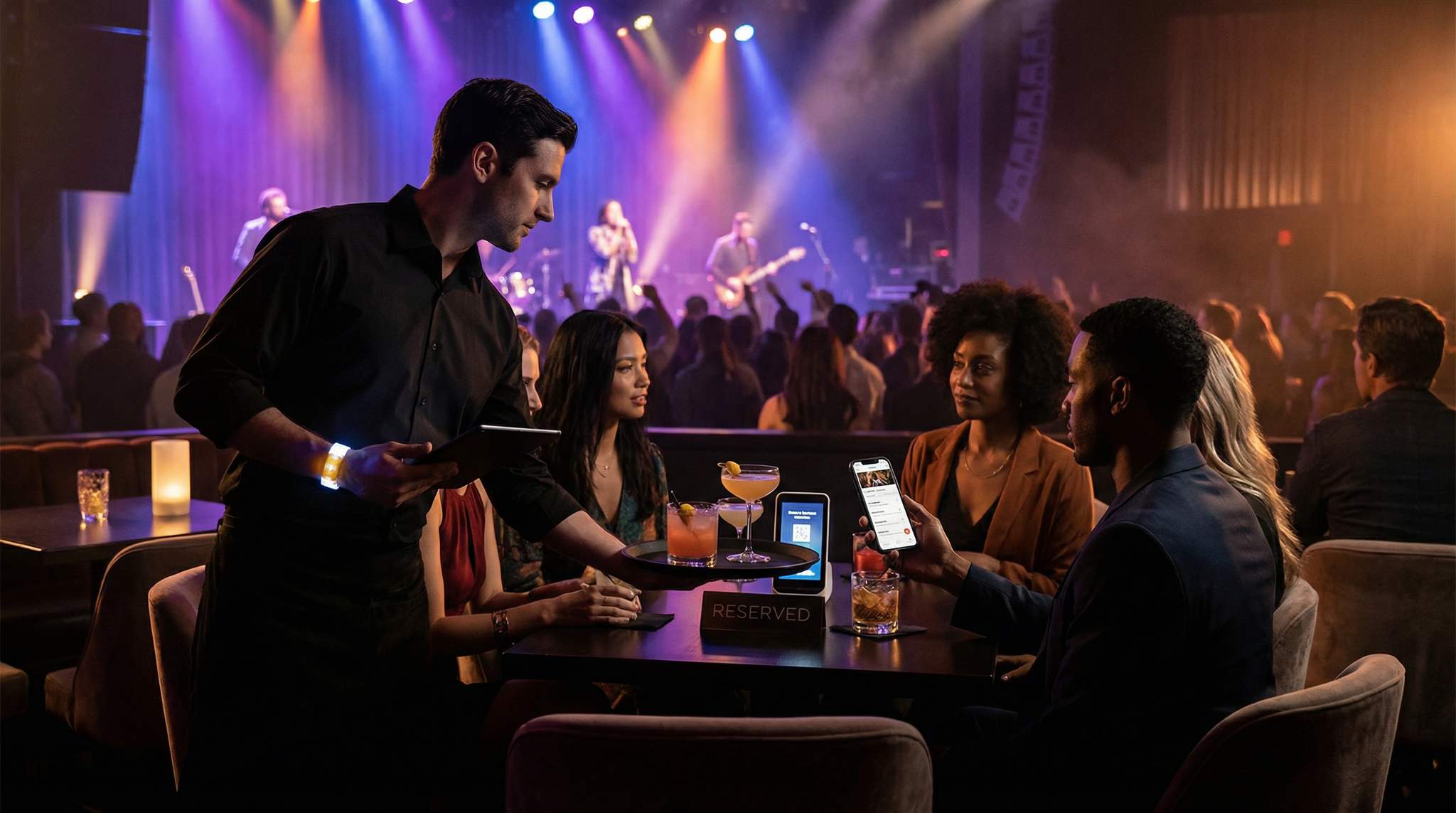
- Mobile Ordering and Payments: More venues (from festivals to clubs) are adopting mobile order-and-pay systems. Allowing guests to order from their phones at their table means they don’t have to flag down a busy server for every drink. It’s as simple as scanning a QR code at the table, browsing a menu, and tapping to order. This can reduce wait times and ordering errors (since the order goes straight into the system or to the bar). Customers love it – studies show as many as 73% of customers prefer mobile ordering specifically because it cuts down waiting in line. Plus, when not rushed to order, people tend to add extra items; one industry study found 60% of fans would spend more if they never had to stand in line for service. That’s a win-win: guests enjoy convenience, and you boost your per-head revenue. Mobile payments also mean the night doesn’t end with everyone queuing to pay their bill – they can settle up seamlessly in-app, which is great for post-show crowd flow.
- Integrated POS Systems: If you haven’t updated your point-of-sale system in a few years, take a look at the new generation of cloud-based, integrated POS platforms. These can tie together table orders, bar orders, kitchen tickets, and even online reservations into one system. For example, when a guest orders a round of drinks via the mobile app or at the table, the order pops up on the bar POS with the table number. When the same table orders food, the kitchen sees it and the bar can coordinate drink timing. Modern POS systems also maintain guest tabs across multiple bar locations (handy if you have more than one bar in the venue or both floor service and bar service). Integration reduces errors like duplicate orders or lost checks. It also gathers valuable data: you can see that “Table 8 ordered 3 bottles of champagne last night” – useful insight if that guest becomes a regular VIP.
- Table Management Software: For venues that juggle reservations, walk-ins, and maybe multiple daily shows, a table management app is a lifesaver. These digital seating charts show which tables are occupied, which are reserved for the next show, and which are open. Hosts can drag-and-drop to assign tables, merge tables for a bigger party, or mark a table as needing cleaning. Many systems will also track guest preferences (e.g., “Table 5 – John Doe – likes whisky sour, prefers front row”) which helps personalize service. Some can even flag first-time vs returning guests if linked with an email or phone number from the reservation – golden information for training your staff to give an extra warm welcome to newcomers or special treatment to loyal patrons (“Welcome back! We have your favorite IPA on tap again tonight.”). Table management tools reduce the chaos on packed nights by giving an overview of seating in real time.
- Automation and Self-Service Touches: Beyond mobile ordering, consider other tech-forward enhancements. Self-serve kiosks or tablets at the table can work for certain venue types (maybe for ordering merch or another round of drinks). Some venues in 2026 have even experimented with robotic runners or drink delivery drones, but those tend to be gimmicks at this stage. The human touch is still crucial – a robot can’t engage with a guest about the show they’re seeing. However, automated bartenders are a real thing now: machines that mix cocktails or pour beers. Large venues and festivals have trialed them as a way to speed up service when human staff are in short supply. Results have been mixed – while they can reliably pour a standard drink, they’re currently best used as a novelty or to support staff during peak rushes, not replace them entirely. If you have the resources, deploying a fun tech feature like this in a controlled way (say, a self-serve beer wall or a cocktail-making robot arm in a VIP lounge) can generate buzz and take pressure off the bartenders, but always keep human staff nearby to handle customization and any tech hiccups.
- Data Analytics and Feedback: This is more back-of-house, but worth mentioning. Use the data from your digital systems to analyze and improve. If mobile ordering data shows that 80% of table orders happen in the 20 minutes before the headliner goes on, you can schedule an extra barback during that window. If certain menu items hardly sell, maybe swap them out. Also, think about collecting guest feedback digitally – a quick post-event survey or a tablet at the exit asking “How was your experience?” with star ratings. These give you direct insight into what’s working or what may need tweaking. It also shows guests that you care about improving.
- High-Volume Pour Technology: For larger spaces or outdoor annexes, speed is everything. Implementing bottom-up draft systems or QuickTap fast beer taps for music festivals and high-capacity arenas can drastically cut down line times. These rapid-pour systems allow a single bartender to serve multiple pints in seconds, minimizing foam waste and keeping the crowd moving during a 15-minute intermission rush.
- Upgrading Your Music Venue Bar System: A standard restaurant POS often falls short during a 15-minute set break rush. Investing in a specialized music venue bar system ensures your bartenders can process transactions in seconds. These setups typically feature offline mode capabilities (crucial when the venue’s Wi-Fi gets bogged down by a sold-out crowd), rapid tab-preauthorization, and hardware built to withstand spills and heavy use. When the bar music is pumping and the crowd is three-deep, a streamlined dispensing and payment network prevents bottlenecks and keeps revenue flowing.
Embracing these technologies not only makes operations more efficient; it meets guests where they are in 2026. People are used to having options at their fingertips, and venues that facilitate that will be viewed as cutting-edge and customer-centric. Of course, technology should complement, not replace, the human element of service. A warm smile and prompt attention from a server will always matter. But technology can handle the tedious transactions so your staff can focus on those personal interactions that make an evening special.
8. Efficient Inventory Management
Behind every smooth table service operation is a well-oiled inventory management system. Running out of your signature IPA or the mix for your best-selling cocktail in the middle of a show is a surefire way to disappoint guests (and leave money on the table). Conversely, overstocking perishable food or keg beer that goes stale is just burning money. Here’s how to keep your inventory in harmony with your venue’s needs:
- Regular Inventory Counts: It sounds basic, but the foundation of inventory management is knowing what you have and what you’ve used. Implement weekly (or even daily, during busy stretches) counts for key items. For bars, measure liquor levels (there are tools and apps that help by comparing pore amounts to sales logged in the POS). For kitchens, count critical ingredients and prepared items. Regular counts help catch discrepancies – if you’re going through vodka twice as fast as sales indicate, that could signal overpouring or freebies not being tracked. Catching issues early helps adjust processes or curb any unauthorized “shrinkage.”
- First-In, First-Out (FIFO): This classic system ensures you use older stock before newer stock to minimize waste. In practice: when new shipments of beer kegs or food supplies come in, rotate them behind the older stock in the cooler or pantry. Train your bar and kitchen staff to always use the oldest stock first. This reduces the chance of discovering a case of beer that expired or lettuce that has gone bad in the back of the fridge. Clearly label delivery dates on perishable items. For bottled inventory like wine or spirits, FIFO is less about spoilage and more about stock awareness (though wines and craft beers can have freshness windows too).
- Smart Inventory Software: Consider using an inventory management software or app, especially one that integrates with your POS. These systems automatically deduct items from inventory as they are sold (based on recipes or BOM – bill of materials – you input). They can alert you when stock reaches a reorder threshold. For example, you might set a par level of 10 bottles for a top-selling whiskey – once you dip below that, the system flags it. This tech can save time and reduce human error in ordering. It can also generate usage reports – maybe you’ll discover that IPA outsells lager 3:1, so you adjust your purchasing or negotiate a better volume deal with your supplier for IPA. If full software is too much, even a shared spreadsheet with formulas can work for a smaller venue, as long as someone diligently updates it.
- Align Orders with Sales Patterns: Use your sales data to identify trends and align your ordering. If you notice that stout beer barely sells in summer but your craft cider flies off the shelf, tweak your stock levels seasonally. Or if certain mixers or snack foods spike when you host EDM nights versus country nights, plan accordingly. Many venues see predictable patterns (e.g., more red wine sales in winter, more tequila cocktails during summer shows). Forecasting – even informally – can optimize inventory. Also, factor upcoming events: if you have a big St. Patrick’s Day rock show, you know that Guinness and Irish whiskey will be in high demand – stock up extra (and maybe hold back on other slower items that week). Having just enough inventory on hand means you meet demand without excessive overstock.
- Supplier Communication: Efficient inventory management isn’t just internal – it’s also about your supply chain. Maintain strong relationships with suppliers (more on that in the next section) so you can get quick turnarounds or emergency deliveries if needed. If a particular craft brewer’s beer is suddenly trending due to a hit song or a viral moment, your distributor might warn you of a run on that product so you can adjust your order. During the global supply hiccups of recent years, venues that kept open lines of communication with suppliers often got priority on scarce items like CO2 for draft systems or certain liquor brands. Know your backup options too: if item A is out of stock, what’s a comparable B you can sub in so guests aren’t disappointed? For instance, if your kitchen runs out of a specific IPA, can you offer another local pale ale and train servers to market it as an alternate?
- Monitor Waste and Shrinkage: Encourage staff to note if there’s any spillage or waste (e.g., a bartender drops a bottle, a batch of cut fruit goes bad, a keg is disconnected improperly and loses beer, etc.). Track these incidents. If waste is high, find the cause – is it sloppy bar techniques? Wrong temperature storage? Overordering perishable garnishes? Reducing waste directly improves your bottom line. It also intersects with sustainability goals – many venues in 2026 aim to reduce waste, and managing inventory tightly helps minimize throwing out expired goods.
- Holistic Beverage Tracking: When evaluating music venue bar solutions, look for platforms that bridge the gap between front-of-house pouring and back-of-house inventory. Advanced beverage management systems use smart spouts and flow meters on draft lines to measure exact ounces poured against POS sales in real time. These integrated bar operations tools are invaluable for high-capacity rooms, allowing managers to pinpoint shrinkage, adjust par levels on the fly, and ensure that every drop of inventory translates to revenue.
Efficient inventory management ensures you always have what guests want (the right cold beer, the best-selling bourbon, fresh ingredients for the kitchen) without tying up capital in excess stock. It’s a balancing act that, when mastered, means your menu items are consistently available and high quality. There’s nothing worse from a guest’s perspective than hearing “Sorry, we’re out of that” – especially if it’s something featured or advertised. By staying on top of inventory, you can avoid those disappointments and keep the good times (and drinks) flowing.
9. Create an Engaging and Dynamic Menu
The menu – both food and beverage – at a live music venue plays a pivotal role in the overall guest experience. A thoughtfully curated menu can amplify the theme of the night and keep guests satisfied without pulling them away from the music for too long. When optimizing table service, consider how your menu offerings, speed of service, and presentation can match the energy of your events:
- Event-Themed Specials: One way to create a memorable night is by aligning some menu items with the music. Theme your food and drink specials to the genre or artist performing. Got a ’80s rock tribute band? Maybe a “Purple Rain Punch” cocktail or a burger named after a famous song. Hosting a reggae night? How about a tropical Caribbean-inspired appetizer special. These touches are fun, they give your staff something to upsell (“Can I interest you in our special cocktail for the show?”), and they reinforce the immersive experience. Just ensure these specials are quick to prepare so they don’t bog down the kitchen or bar. Often a themed twist on a simple item works best – e.g., your normal margarita but with blue curacao and a catchy name for an EDM DJ, rather than inventing a complex new drink that could slow the bar.
- Quick, Shareable Bites: People at concerts often prefer to graze rather than have a formal meal (unless your venue doubles as a dinner theater or supper club). Design your menu with shareables and finger foods that suit the setting. Think nachos, sliders, fries loaded with toppings, spring rolls, mini pizzas, charcuterie cups – items easy to pick at without full focus. These keep patrons satisfied but not so occupied with a fork and knife that they miss the show. Importantly, these items can often be prepped in advance or assembled quickly, meaning less wait time. For example, a shareable platter of chicken wings or a basket of samosas allows a group to nibble intermittently while enjoying the performance. Avoid very messy or difficult-to-eat items in a dark venue – no one wants to deal with crabs in the shell or spaghetti in a crowded club!
- Signature Cocktails and Local Flavor: Create a menu of a few house-specialty cocktails or drinks that are unique to your venue. Not only does this give guests something distinct to remember you by, but it also speeds up the bar (since your bartenders can batch premix signature drinks in part). You might have, for instance, a “Backstage Mojito” that uses a local distillery’s rum or a “Soundcheck Spritz” with a particular herb from a local farm. Featuring local craft beers, spirits, or even locally roasted coffee for non-alcoholic options adds a touch of community and authenticity. Guests increasingly appreciate venues that support local producers (and it can be a talking point the server can mention, adding to the experience). Also consider drink pairings or suggested combos: if someone orders the cheese board, perhaps suggest a specific wine or craft ale that complements it.
- Catering to Dietary Trends: By 2026, dietary preferences are diverse and venues that accommodate them earn goodwill (and more business). Incorporate a few vegetarian or vegan options that are just as enticing as the rest (e.g., crispy cauliflower “wings” with a tangy sauce can be a hit with everyone, or a plant-based burger that rivals any beef burger). Similarly, have at least one or two gluten-free snacks (corn tortilla chips with salsa and guac, or rice paper rolls). Non-alcoholic drinks (“zero-proof” cocktails, craft mocktails, or even CBD-infused sodas where legal) are a big trend too – not everyone in the crowd is drinking alcohol, especially if they are designated drivers or health-conscious. A dynamic menu also means refreshing it periodically: keep the staples that sell well, but rotate seasonal items or introduce new creations quarterly to give regulars something new. During a summer music series, maybe highlight light, refreshing items; in winter, maybe add a warm spiked cider or hot chocolate cocktail for the holiday shows.
- Menu Presentation and Visibility: How you present your menu matters for table service. Large-print, easy-to-read menus in a dim concert light are appreciated – or go digital and allow guests to view the menu on their phones (QR code at the table linking to an online menu). If your venue often gets loud, design the menu to be self-explanatory with clear item descriptions, so guests can confidently order without needing to ask the server to shout explanations. Also, train your servers to do a quick “highlights of the menu” when first greeting the table: e.g., “Just so you know, our most popular item is the loaded nachos, and tonight we’re featuring a locally brewed pale ale that pairs great with it.” This not only guides indecisive guests but also showcases your expertise and curation of the experience.
- Guest Mixologists and Boutique Partnerships: To truly stand out, consider bringing in specialized pop-up talent for specific events. Partnering with a boutique agency—such as The Little Rocktail Co. bartending service or a renowned local speakeasy team—for a weekend takeover can inject fresh energy into your menu. These collaborations offer guests a premium, craft-cocktail experience without requiring you to permanently overhaul your in-house beverage program.
- Scaling for Show Size: When planning food and beverage for a music concert, your strategy must scale with the expected attendance and demographic. A sold-out, 2,000-capacity indie rock show requires a vastly different F&B approach than an intimate 200-cap jazz trio performance. For larger concerts, prioritize high-margin, rapid-serve items—like canned craft cocktails, draft beer, and pre-packaged artisan snacks—to keep lines moving and maximize revenue during the short 15-to-30-minute intermission windows. For smaller, seated shows, you can lean into a more extensive culinary menu with plated appetizers and complex mixed drinks, as guests have the time to savor the experience without feeling rushed.
An engaging menu keeps guests happy throughout the show – they’re not left hungry or thinking about leaving early to grab food elsewhere. It also opens additional revenue streams: a fan who came just for music might be enticed to have a dessert or specialty latte during the encore because it sounds too good to pass up. By aligning your menu with the experience (quick service items when the show is on, thematic flairs, quality offerings), you transform your venue from just a place to hear music into a place to make a night of it. And that means more satisfaction, more word-of-mouth, and more return visits.
10. Building Strong Relationships with Suppliers
A successful table service operation at a music venue relies on the behind-the-scenes supply chain as much as on front-of-house staff. From the craft beer on tap to the fresh ingredients in your kitchen and even merchandise stock, having reliable suppliers ensures you can deliver the experience you promise to guests. Building and maintaining strong relationships with those suppliers pays off in consistency, cost savings, and sometimes even exclusive perks.
Strategies for strong supplier relationships:
- Clear and Regular Communication: Treat your suppliers as partners. Share your event calendar or expected busy nights with them, so they can anticipate larger orders. For example, if you have a major concert or festival weekend coming up, give your beer distributor a heads-up that you’ll need extra kegs, or let your food supplier know you’ll double the usual order of chicken wings. Conversely, if you’re heading into a slow month or a seasonal closure, communicate that too. Regular check-ins (a quick email or call) with key vendors ensures everyone is on the same page. If you change a menu item and no longer need a particular ingredient weekly, tell them rather than silently stopping orders – they’ll appreciate the notice and it keeps goodwill.
- Timely and Accurate Ordering: Suppliers value clients who are organized. Place orders by the agreed deadlines, in the format they prefer, and double-check your numbers. Nothing strains a relationship more than last-minute urgent orders that could have been placed on time or frequent order errors on your end. Of course, emergencies happen (like suddenly running low on something mid-week), but try to keep those as exceptions. When you do have an urgent need, a supplier is far more likely to bend over backwards to help a venue that’s been a dependable, considerate client than one that’s always disorganized. Also, pay your invoices on time – it’s a fundamental part of the relationship trust.
- Negotiate and Build Win-Wins: Once you’ve established a history with a supplier, don’t be shy to negotiate for better terms – but do it in a collaborative way. For instance, if a brewery’s beer is selling exceptionally well at your venue, talk to them about a volume discount or sponsorship: “We’d love to keep featuring your IPA as our house beer; in exchange, could we get a favorable rate, or maybe some branded glassware we can use?” Many beverage suppliers have promotional budgets and might offer things like umbrellas for your patio, signage, or merchandise if you’re pushing their product. Similarly, a food supplier might cut you a deal if you’re buying a high volume of a particular item regularly. Building trust often leads to priority treatment – you might find your deliveries arrive first on the route on busy days, or you get access to limited-release products because the supplier values your partnership.
- Backup and Diversify (Smartly): While loyalty is great, it’s also smart to diversify your supplier base enough to have backups. Develop at least a friendly connection with alternate vendors in case your main one has an issue (supply shortages, price hikes, etc.). For example, have a secondary beverage distributor you could call if needed, or keep the contact of a local bakery as a fallback if your usual bread supplier can’t meet a sudden demand. Let your primary suppliers know you value them but that you may occasionally source specialty items elsewhere – honesty is better than secrecy in maintaining trust. If you do alternate sources, be transparent about quality expectations and consistency, so you can swap without guests noticing a downgrade. Some venues foster competition (bids) between suppliers to get better prices – while that might save money short-term, be careful: a slightly higher price from a very reliable supplier who supports you might be worth more in the long run than a rock-bottom price from someone who won’t go the extra mile.
- Personal Relationships and Appreciation: At the end of the day, these are people you’re dealing with – drivers, sales reps, small business owners. Get to know them. A little kindness goes a long way: offer the delivery crew water or a soda when they unload at your venue; maybe comp them tickets to a show once in a while if appropriate. If a supplier rep comes by to talk business, show them around – let them see how their product is showcased at your venue (“Here’s our bar – see, we gave your brewery a dedicated tap handle and your logo’s on our menu”). That makes them feel part of your success. During the holidays, a small thank-you gift or card to your key suppliers can really solidify the relationship. When suppliers feel valued, they often reciprocate with better service, maybe quicker turnaround on a special order, or a tip about an upcoming deal or trend.
By building robust supplier partnerships, you create a reliable supply chain that keeps your venue running smoothly. This reliability directly translates into the guest experience: consistent drink quality, never running out of popular menu items, and even unique offerings (thanks to those special collaborations). Moreover, it can positively affect your bottom line, whether through negotiated savings or simply avoiding costly stock-outs. In short, being a good customer to your suppliers helps you be a better host to your guests.
11. Prioritize Customer Satisfaction and Personalization
At the heart of table service – and indeed any hospitality endeavor – is customer satisfaction. In a live music venue, where you’re selling an experience as much as a product, the little personal touches can turn a fun night into an unforgettable one. It’s about making each guest feel valued, heard, and special. Here’s how to infuse personalization and care into your table service:
- Greet Regulars and Newcomers Thoughtfully: Train your staff to recognize repeat guests. If your point-of-sale or reservation system allows notes, have hosts or servers jot down names and preferences (“James – on his last visit loved our stout” or “Loves seat near the stage”). When that guest returns, greeting them with “Welcome back, James! We have that stout you enjoyed last time – would you like me to pour you one to start?” leaves a lasting positive impression. For newcomers, a warm welcome and a brief orientation (“Is it your first time here? Let me quickly tell you about our menu and how the show timings work tonight…”) can make them feel comfortable and cared for. It’s about reading the guest – some appreciate more interaction, some less, and a skilled server picks up on those cues.
- Solicit Feedback and Listen: Don’t wait for guests to post an online review – actively ask for feedback while they’re with you and right after. A manager making rounds to check “How is everything? Enjoying the show?” shows attentiveness. For more formal feedback, you might provide a short comment card with the bill or send a follow-up email survey for those who booked online. The key is to actually act on the feedback. If multiple guests mention that the music volume in the table area is too loud to converse, maybe it’s time to adjust your sound setup or offer earplugs. If someone had a birthday at your venue and mentioned it was a great experience, maybe you can implement a simple birthday perk (like a free dessert) to encourage celebrants to choose your venue. Showing that you listen and improve builds trust – and trust builds loyalty.
- VIP and Loyalty Programs: Consider creating a VIP table service package or loyalty program. This could be as simple as a “Frequent Fan” card that gets regulars a discount after a certain number of visits, or as elaborate as a membership that includes line-skipping, a reserved table, or early access to big show tickets. Even without a formal program, you can extend VIP-like courtesies: for example, your consistent high spenders or patrons who bring big groups could occasionally be sent a thank-you (like a voucher for a free appetizer on their next visit). Some venues establish a VIP seating section with dedicated servers for an upscale experience. If you go this route, ensure the service truly is a cut above – think welcome champagne, the best view, maybe a meet-and-greet with the artist if possible. Those VIPs not only bring in more revenue, but their presence and word-of-mouth can elevate your venue’s reputation.
- Handling Issues with Grace: A huge part of customer satisfaction is how you recover when things go wrong. Mistakes will happen – perhaps an order gets missed, or a drink spills, or there’s a delay in seating due to a mix-up. Train your staff in the art of the apology and quick remedy. Often, a sincere “I’m sorry” and a prompt fix (like comping a round of drinks after a long wait, or providing a free dessert to make up for a kitchen delay) will turn a frustrated guest into a loyal one. Encourage staff to take ownership of issues and empower them to resolve small problems on the spot without always needing manager approval (set guidelines, like “you can comp up to $X if necessary to fix an issue”). Patrons appreciate when venues take their concerns seriously and act fast. It’s the difference between a one-star review and a five-star comeback story (“They initially messed up our order, but our server handled it so well that we ended up having a great night!”).
- Personalize the Experience: Small touches can go a long way. If you know a table is celebrating something (anniversary, graduation, etc.), consider bringing out a congratulatory dessert or having the band give them a shout-out if appropriate. Use guests’ names when you can (without overdoing it). If a guest expresses particular enthusiasm – say they’re huge fans of the band playing – maybe tip off the merch table to give them a little signed poster, or simply ensure they get a primo spot to watch. Creating moments of delight is what personalization is about. Even something as simple as remembering a guest’s usual drink on their second visit (“The usual gin and tonic for you?”) can make them feel like honored regulars.
- Balanced Service – Attentive but Not Intrusive: Personalization also means adapting to the individual. Some guests might want to chat with staff about the setlist or ask for band trivia (some training on music knowledge helps here), while others might clearly be all about the music and not want interruptions. Train your team to read body language and mood. This is part of satisfying customers: meeting them at their level. The best service feels personal — like the server is almost a friend taking care of you — without ever being pushy or overbearing.
When guests feel personally attended to, they’re more likely to become repeat customers and to spread the word. Live music events are emotional and communal experiences; if your table service can tap into that by making each person in the crowd feel like they matter, you create a powerful connection. It turns a night out into a cherished memory, and that’s the kind of goodwill and reputation that money can’t buy.
12. Manage Crowd Flow During Live Music Performances
Live performances come with surges of energy and activity. A venue might be calm one moment and then collectively on its feet the next. To maintain seamless table service during these ebbs and flows, it’s critical to manage crowd movement and service timing in harmony with the show. Here’s how to keep things running smoothly when the music is blasting and the crowds are moving:
- Anticipate Peak Service Times: In most concerts, there are natural lulls and peaks for service. For example, many guests make a last drink or food run just before the headliner comes on, or during a set break/intermission. Plan ahead for these moments. Staff up appropriately: if you know intermission will be a 15-minute frenzy at the bar, have extra bartenders or runners jump in. Maybe prepare quick-serve items in advance (e.g., pour a dozen beers and have them ready to grab, or have pre-made snack boxes) to speed up service during the rush. Communicate with the production crew or artists to know the show schedule – if the band tends to play a 90-minute set without breaks, you’ll have quieter service periods where staff can do light service or focus on clearing tables.
- Encourage Pre-Orders and Tabs: One effective strategy is to offer guests the chance to pre-order drinks for the show or keep a tab open throughout the night. For instance, let table guests order a bucket of beers or a bottle of wine before the show starts, so they’re set for a while and servers aren’t weaving through during the first few songs. You can also offer to take an “intermission order” ahead of time – “Would you like me to bring another round out to your table during the break, so you don’t have to flag me down then?” Many guests will appreciate the foresight. Keeping a credit card tab open means they can order in waves without settling up each time, making transactions quicker when your staff are in a hurry. (Just ensure you have a system to close out tabs for anyone who forgets to settle – maybe take an imprint or use a digital system that can auto-close with a preset limit and tip if needed.)
- Facilitate Movement & Safety: During high-energy shows, people may be dancing, crowding near the stage, or making frequent trips between their seats and restrooms/bars. Arrange your table service in a way that complements security and crowd control. Servers should be trained to carry small trays and stay alert, so they can navigate around dancing audience members without accidents. Use plastic cups instead of glass on very rowdy nights to prevent breakage hazards on the floor. If your venue allows table guests to stand up and join the crowd for a bit, have a way to identify their spot (maybe a card on the table saying “Occupied – dancing!”) so others or staff don’t clear it mistakenly. Security staff and servers should be in sync – if a mosh pit or a big crowd surge forms, servers should temporarily hold off going deep into that area until it’s safe. Conversely, after a crush of people rushes forward for the encore, they’ll all flood out or back to tables afterward; be ready to jump in and serve waters, etc., as they wind down.
- Post-Show Game Plan: Don’t underestimate the importance of service right after the performance ends. Many guests stick around to soak up the atmosphere, meet up with friends, or let traffic die down. This can actually be another big sales opportunity if you play it right – think of it as the “afterglow” period. Keep the bar open for a little while with a limited menu of nightcap drinks or snacks. However, also be prepared for a fast exit by some – maybe offer “drinks to go” if that’s legal in your area (some places allow sealed plastic cups or cans to-go if within a district). From a service perspective, make sure to settle all tabs efficiently now – have enough staff at POS to handle checks so people aren’t left waiting 20 minutes just to pay (that can sour an otherwise great night). A good tactic: start closing out tabs of those who you notice have stopped ordering well before the last song, so you can discreetly return their card and bill just as the show ends, rather than all at once.
- Coordination with Performance Schedule: Work closely with the production team or performers to coordinate critical moments. For example, if the band has an encore planned, you might wait to turn up house lights or kick in background music (signals that the night is ending) until after that. Use those cues to your advantage: once lights up, that’s when servers can more clearly bus tables and gently remind folks the bar will close soon. If the event is general admission with some tables, consider announcing last call over the PA at a sensible time (not during a song, obviously, but perhaps just before the last song or immediately after the show ends). Communication is key – equip servers with the timeline of the event so they are never caught off guard by a sudden rush or a sudden quiet period.
To visualize some of these strategies, consider how a typical concert progresses and what guests and staff are doing at each phase:
| Concert Phase | Guest Behavior & Needs | Service Strategy |
|---|---|---|
| Pre-Show (Doors Open) | Trickling in, finding seats, ordering first drinks/food. Energy building. Some early-birds dine. | Staff fully ready when doors open. Encourage orders now (drinks & quick bites) with specials. Get tabs started. |
| Opening Act | Many guests arrive during this time; moderate ordering as people settle in. Some distractions as latecomers find spots. | Servers focus on newcomers: greet and take initial orders quickly. Quietly serve without blocking views of those watching opener. |
| Just Before Headliner | Big rush: restroom, bar visits, last-minute orders before main show. Everyone wants to be set when lights dim. | Max staff on floor and bar. Expedite service – use runners to deliver pre-ordered items. Announce last chance to order before show (discreetly by servers). |
| Main Performance (Peak) | Audience mostly seated or standing engrossed in show. Minimal ordering – maybe just occasional drink refresh at tables. Movement mostly at song breaks. | Limit table service to urgent needs. Staff focus on observation (empty glass pickup, quiet service). Use quieter moments (between songs or loud sections) to check on tables if needed without disruption. |
| Intermission/Set Break | if applicable (e.g., two-set shows): Surge in orders, everyone chats, refills drinks, buys merch. | All hands on deck. Pre-prepared drinks/snacks speed things up. Mobilize extra staff. Possibly roam with a drink cart or tray of ready beers for quick sales. |
| Encore & End of Show | Audience energy high then show ends. Some leave immediately, many linger excitedly, possibly ordering one last item, settling bills, or finishing drinks. | Momentarily pause service during encore (focus on safety with excited crowd). Once lights up, prompt gently for last orders: “Encore’s done – one for the road?”. Accelerate bill settling – bring handheld card machines to tables to close out quickly. |
| Post-Show (Afterglow) | Guests slowly filtering out, chatting, some still at tables finishing up or buying merch. House lights on, music low. | Keep a skeleton crew to serve coffee, water, late-night bites for 15-30 minutes. Clear tables, but don’t rush people out rudely. Staff begins reset for closing or next show while still accommodating stragglers. |
Throughout the performance, safety and courtesy are paramount. Work with security to ensure that servers aren’t carrying large trays through mosh pits, and that crowd surges are managed (e.g., perhaps pausing glass service and switching to plastic when the crowd gets very dense, to avoid broken glass incidents). Also think about the performers’ perspective – minimize visible movements during quiet numbers, and never allow service to upstage the stage.
When crowd flow is well-managed, guests hardly notice the logistics – they’re simply able to enjoy the show, get their drinks or snacks when they want, and never feel either neglected or interrupted. It’s a delicate dance, but when done right, both the performance and hospitality sides of your venue work in concert (no pun intended) to deliver a truly seamless experience.
Conclusion
Optimizing table service at live music venues requires a blend of strategic planning, the latest tools, and old-fashioned hospitality savvy. We’ve covered how everything – from the way you take reservations to how you train your crew, from the layout of tables to the integration of technology, and from menu creativity to crowd control – plays a role in crafting a seamless guest experience.
A few themes emerge: preparation (through knowing your audience, planning financially, and training), personalization (treating guests as individuals with unique needs and preferences), and adaptability (being ready to adjust on the fly, whether it’s changing a floor plan or jumping on a new tech trend). In 2026, live music attendees have high expectations; they don’t just want a show – they want a full experience where everything clicks into place.
By focusing on operational excellence, deep industry knowledge, and reliability in your operations (without ever having to spell those out to the customer), you inherently boost your venue’s reputation. When a guest walks away saying, “Wow, not only was that concert amazing, but the service was top-notch – we never had to wait, and they really took care of us,” you’ve won. That guest will be back, probably with friends.
Remember, too, the power of community and local connection. Sourcing beverages from local craft brewers or foods from nearby artisans can enhance your offerings and foster goodwill with patrons who value community support. It can give your venue a unique identity in a crowded market of entertainment options. (For example, a venue known for its awesome selection of local microbrews or its partnership with a famous local food truck gains an edge.)
In the end, great table service at a live music venue amplifies the magic of the performance itself. It removes friction points, keeps people comfortable and delighted, and allows the music to shine. When executed well, your table service becomes almost invisible – guests are simply enjoying themselves without ever having to worry about flagging someone down or missing part of the show. They’ll leave with lasting memories of not just the band they saw, but of how welcomed and taken care of they felt at your venue. That’s the kind of impression that turns one-time attendees into loyal fans of your establishment.
Keep fine-tuning, stay current with trends, and never lose that genuine passion for throwing a great night out – it will show in your service. Here’s to many more seamless, music-filled nights where the drinks are flowing, the food is delicious, and every guest feels like a VIP at your venue!
Frequently Asked Questions
What are the first steps in understanding your audience and ensuring legal compliance?
Understanding your target audience starts with research and observation. Consider demographics (age, local vs. tourists, students vs. professionals), musical tastes, and spending habits. Conduct surveys or simply chat with guests to learn what they value – for example, do they prioritize cheap drink specials, or are they looking for craft cocktails and an upscale vibe? Analyze data from ticket sales or social media: if you notice a lot of out-of-town ticket buyers, that tells you to emphasize things like easy parking or nearby hotel info. If your crowd skews younger, maybe they’ll engage with you more on TikTok/Instagram and expect tech-driven conveniences. Tailor your venue’s atmosphere and service to these insights. For instance, a college-age crowd might love shareable snack baskets and energetic service, whereas an older jazz night audience might appreciate a calmer, more attentive service with staff recommending wine pairings.
On legal compliance, the first step is a checklist of all permits and licenses you need to operate. This includes liquor licensing, food handling permits, live entertainment or cabaret licenses (in some cities), fire occupancy certificates, and sound/noise permits. Research your local and national regulations – many city governments publish guides for new bar/venue owners. Engage with a lawyer or consultant if needed to ensure you’re covering all bases; they can help navigate tricky areas like ADA requirements or music copyright licensing. Once you’ve obtained the necessary licenses, set up a system (like a calendar with alert reminders) for keeping them up to date. As part of compliance, also train your staff on relevant laws – for example, responsible alcohol service (don’t serve minors or overserve intoxicated people) and crowd safety rules. Both understanding your crowd and operating legally form the foundation for a venue that is both popular and safe. It’s like building a house: know who you’re building it for, and make sure it’s up to code!
How can venue owners improve the reservation process for guests?
To improve the reservation process, make it easy, transparent, and reassuring for guests. Start by offering an online reservation option – many people prefer the convenience of booking a table on their phone without having to call. Use a reliable reservation system that sends instant confirmation messages so guests feel secure that their spot is saved. It’s helpful to include details in that confirmation (like, “Your table will be held until 9:30 PM” or “Feel free to arrive early for happy hour deals before the show”). A day before the event, send a polite reminder with any updates – this can reduce no-shows and also gets guests excited. If possible, allow guests to make notes or requests when reserving (like “It’s my friend’s birthday” or “prefer a quieter corner”), and try to accommodate those – it shows personal care right from the first interaction.
For walk-ups and first-come seating, technology can help manage waits. Implement a digital waitlist where guests can check in and then roam until they get a text that a table is ready. Keep wait times as accurate as you can; if there’s a delay, a brief apology and maybe a small freebie (like chips & salsa at the table) smooths things over. Another tip: have a few tables or bar seats open for walk-ins even on “sold-out” nights – this can be a lifesaver for accommodating last-minute attendees or VIPs and shows you welcome spontaneous guests too. Overall, communicating clearly (“Yes, we got your reservation!” and “Now seating…”) and being respectful of guests’ time is the key. A streamlined reservation process sets a positive tone, indicating that your venue is organized and values its patrons even before they step through the door.
What role does staff training and venue layout play in providing excellent table service?
Staff training and venue layout are like the twin engines of great table service – one is about people, the other about the physical space, and you need both running well. Staff training ensures your team knows what to do, and venue layout can either help or hinder them in doing it.
On the staff side, training shapes how servers and bartenders interact with guests and how they handle the unpredictable nature of live events. Event-specific training (as we discussed) prepares them for the different vibes – quiet attentiveness during an acoustic set versus fun, high-energy engagement during a rock show. Training also covers practical skills: carrying multiple drinks safely through a crowd, reading when a guest might be ready for another order (eye contact, an empty glass), or diplomatically handling a guest who is being disruptive. Well-trained staff communicate internally too – they know how to alert security of an issue discreetly or inform the kitchen of a sudden rush. Essentially, training creates a team that’s proactive and confident, rather than just reactive. That translates to guests feeling well cared for because the staff seems to always be there when needed and nearly invisible when not – a hard balance to strike without good training.
Now, even the best-trained staff can struggle if the venue layout works against them. Imagine cramped aisles that make it impossible to carry a tray without bumping into people, or tables jammed in a corner that servers constantly forget. A smart layout positions tables for clear views and easy access. Wide pathways mean servers aren’t constantly saying “excuse me” as they squeeze by, and they can deliver orders faster. Strategic layout also considers service stations – maybe a small satellite bar or service well near a busy section so servers can quickly grab drinks, or a POS terminal tucked in an accessible spot so they can enter orders without a long trek. Even the stage positioning and speaker placement matter: you wouldn’t want a table directly in front of a speaker stack (too loud for comfort and for taking orders). A good layout complements the flow of the night – for instance, if there’s a dance floor, have a plan for what tables convert to standing space or how people move around it.
In summary, trained staff + great layout = seamless service. Staff know what to do and the layout allows them to do it efficiently. Guests may not consciously notice either when they’re done well, but they’ll definitely notice if they’re done poorly (like a server awkwardly reaching over people because the table is oddly placed, or a confused staff during a show). Investing in both pays off in smoother operations and happier customers.
How can technology enhance table service at live music venues?
Technology, when used thoughtfully, can be a game-changer for table service in live music venues, making the experience faster and more convenient for guests (and more profitable and efficient for you). Here are a few ways tech can step in:
- Mobile ordering: By letting guests order food or drinks from their phone without waiting for a server, you empower them to get service on their terms. Especially during a loud concert, a quick tap is easier than trying to flag someone down. As mentioned earlier, a huge chunk of customers love this because it cuts down on waiting. For the venue, it can increase order frequency – someone might hesitate to wave over a busy server for a second drink, but if they can do it quietly via an app, they will. It’s discreet, so it doesn’t disrupt the show either. Importantly, this tech also reduces order errors (since the order goes straight into your system typed by the customer) and frees up your staff to do more value-added work like speedier delivery and guest interaction.
- Cashless payments and quick checkouts: In a busy venue, handling cash can be slow and even a security risk. Adopting tech like mobile pay, contactless card readers at the table, or pre-authorized tabs (where a guest’s card is swiped once and kept on file for the night) speeds up transactions. Come end of the show, you can settle dozens of tables in minutes because you’re not running cards one by one or making change. Many modern POS systems even allow splitting bills with a few taps, which is great for groups. And guests appreciate not having to linger forever to pay – they can settle up and get back to enjoying encores or chatting with friends. It also reflects on trust; digital receipts via text/email are convenient, and guests know their payment info is handled securely.
- Service coordination and analytics: Tech isn’t just guest-facing; it helps behind the scenes. For example, a table management app can show a host exactly which tables are open or how long each has been occupied, which helps quote accurate wait times. Some advanced systems use data analytics to help with staffing – e.g., tracking that “every Friday around 10 PM we get slammed with orders” so you should schedule an extra staffer or have a barback come in at that time. Another tech angle is inventory (as we touched on): a POS that deducts each order from inventory counts means you won’t 86 an item mid-show without knowing it early. Additionally, technology like sound level monitoring can ensure your music volume stays in an optimal range where service staff can still communicate (some venues have decibel meters that alert if levels are too high, prompting adjustments that incidentally help your servers hear orders better). This is more of an indirect help, but it shows how various tech pieces tie together to improve the overall service ecosystem.
- Enhancing the ambiance and engagement: Don’t forget, tech can also be part of the show – think digital menus that change theme with the event, or AR (augmented reality) filters on your venue’s app that guests can use to commemorate the night. These might not be explicitly table service tools, but they contribute to an interactive experience that can loop back to service (e.g., a QR code on the table could trigger a mini app experience about the band’s history or a loyalty sign-up that rewards them with a free drink). Some venues use display screens at tables or on walls showing when the next set starts or highlighting menu specials, which can gently upsell without a waiter interrupting conversation.
In essence, technology enhances table service by simplifying and accelerating the boring bits (ordering, paying, queuing) so both the guest and the staff can focus on the fun part – the music and the vibe. The key is to implement tech that truly adds value and not just tech for tech’s sake. Ideally, the technology is intuitive enough that even non-techy guests find it easy, and it always has a manual fallback (like, yes you can still flag a server and pay cash if you want). When balanced right, tech integration can be a signature of your venue’s modern and fan-friendly approach.
What menu considerations are important for live music venues?
Designing a menu for a live music venue is a balancing act between delivering on taste and fitting the concert environment. Some key things to consider:
- Speed of Service: In a live music context, people don’t want to wait 30 minutes for an entree or fuss with elaborate dishes. So, prioritize menu items that your kitchen and bar can produce quickly and consistently. For food, this often means appetizers, finger foods, and items that can be batch-prepared during lull periods. For example, skewers, tacos, pizza slices, or paninis can be prepped or par-cooked ahead, then finished quickly when ordered. For drinks, have a few “build” cocktails that are straightforward to make under pressure, and consider batching a cocktail special in pitchers for rapid pouring. The classic trick of a short menu during peak hours works too: you could have a full menu earlier in the evening, but as showtime nears, trim to a limited “concert menu” focusing on the fast stuff.
- Eating Ease: Think about how people will eat or drink while also clapping, dancing, or in semi-darkness. Dishes that are less messy and easy to handle are winners. Burgers might be fine (wrap them in half paper wraps to keep hands clean), but a saucy spaghetti or soup is probably not ideal. Similarly, avoid things with strong lingering smells that could bother neighboring guests (maybe skip the extra-pungent garlic fries or at least warn people!). Consider serving formats: using baskets, cups, or skewers that people can hold while standing if needed. If your venue has seating, maybe it’s less of an issue, but many will still appreciate shareables that bring a group together without much formality.
- Themed and Signature Items: As we covered earlier, tailoring some menu items to the music or local culture can enhance the experience. People love novelty at concerts – a special drink named after the headlining band, or a dish that’s only available during certain themed nights, can become part of the tradition. Also, having a signature house cocktail or dish gives your venue an identity (“You gotta try their ‘Rocktail’ when you go there”). Just make sure any themed item is still practical – if it’s a cocktail, ensure the ingredients are accessible and the bartenders can make it easily even during a rush.
- Dietary Inclusivity: A modern menu should acknowledge that not everyone in the crowd drinks alcohol or eats everything. Having quality non-alcoholic options (mocktails, craft sodas, non-alcoholic beer) means designated drivers or non-drinkers still feel catered to – and they’ll spend money too if you offer something more interesting than plain water or cola. On the food side, include at least one vegetarian or vegan item that isn’t an afterthought, and something gluten-free (even if it’s just clearly marked items like “corn tortilla chips with dip” or a salad sans croutons). If someone in a group has a restriction, the whole group will be happier and more likely to stay longer (ordering more) if that person has good choices on the menu.
- Pricing and Value: In a venue setting, people expect to pay a bit more for the convenience and the entertainment factor, but you should still aim to provide good value to avoid any resentment (“$15 for a tiny cup of popcorn?!” is not what you want people saying). One strategy is bundling – like a bucket of beers deal, or a combo platter for a group – which can feel like a better deal and also encourages higher spend. Another is portioning well; if you charge premium, make sure the portion or presentation wows them. And don’t forget to consider speed vs. premium: some venues successfully offer both quick cheap bites (like $5 pretzel or $4 small popcorn) AND higher-end bites (like a $15 artisanal cheese plate) to cater to different spending levels in the same crowd.
Overall, the menu at a music venue should complement the experience, not complicate it. When done right, it hits the spot – figuratively for their cravings and literally in terms of timing. The goal is a menu that guests will remember (“those nachos were actually awesome!”) but that never overshadows why they came – the music. It should enhance their night, keep them satiated and happy so they can focus on having fun. If they leave humming the melody and also saying “Man, that late-night burger hit the spot,” you’ve succeeded.
How can venues personalize service and manage crowd flow during performances?
Personalizing service in a venue setting is about making guests feel seen and appreciated, while managing crowd flow is about keeping the experience smooth and safe as energy and movement ebb and flow with the music. Both are crucial and can be achieved with some planning and staff savvy.
For personalization, one of the simplest tactics is what we touched on: learn and use guests’ names when possible. If someone has booked a VIP table under a name, ensure the host and server use it: “Welcome, Alex! Your table is right this way.” Training staff to remember regulars’ favorite orders (“Shall I get you your usual IPA to start?”) also stands out. Venues can invite a level of community – for instance, some have a wall of photos of famous acts or loyal patrons, or they highlight a “regular of the week” on social media (with permission). These touches make guests feel like they’re part of the family, not just a ticket number. During quieter moments or at the end of the night, staff can engage in genuine small talk – ask if they enjoyed the show, who their favorite band member was, etc. These human connections deepen loyalty. Importantly, encourage staff to share their own love of music – if a server is a big fan of the genre being played, their enthusiasm can be infectious and create rapport (“I’ve been looking forward to this show all week too!”).
On crowd flow during performances, preparation is everything. We described in detail the timing of typical show phases and how to be ready for each. One key point is that preventative measures beat reactive ones. For example, if you foresee a wall of people rushing the bar at intermission, you set up a pop-up beer station on the opposite side of the room to disperse the traffic, or have staff roaming to take orders from folks at tables just before break hits. Another aspect is clear signage and communication – when people know where to go for what (restrooms this way, bar line forms here, etc.), it reduces chaos. Some venues even project reminders like “Intermission in 5 minutes – last chance to order snacks before second set!” to nudge behavior in a controlled way. Lighting also cues crowd behavior; slightly raising lights at intermission gently encourages people to move around and take care of needs, then dimming them flashes the signal to settle back for act two.
From a service perspective, managing crowd flow also means prioritizing tasks for staff at critical moments. For instance, during a guitar solo when many are raptly watching, a server might pause table service (no one wants to be the person blocking someone’s view at that moment) and instead quietly pick up empties or tend to something low-key. When a song ends and applause starts (loud moment), that’s a server’s chance to zip out and quickly ask “Everything good here?” or deliver that round without drawing attention. Training staff to be almost choreographed with the music helps – seasoned waitstaff in music venues often instinctively know when to be invisible and when to swoop in.
Lastly, safety in crowd management: always have a plan for the unexpected. If a performer suddenly invites everyone to rush the stage or a surprise guest appears and half the crowd moves, your team should be ready – security to guide, servers to stay alert for any issues like spills or people in distress, etc. The best venues hold staff debriefings after shows: “Did we notice any snarls in movement? How can we improve next time?” Constant learning will refine how you handle flows. When crowd flow is handled well, even a sold-out, shoulder-to-shoulder show feels comfortable, and each guest can focus on the performance and good company rather than worrying about bumping into others or missing out on drinks.
In essence, personalization makes each guest in the crowd feel like a VIP, and solid crowd flow management ensures everyone in that crowd has the best possible time without incident. Both are cornerstones of an excellent venue reputation – you become known as not just a place with great acts, but a place that cares about its audience every step of the way.
What are the best practices for managing food and beverage for a music concert?
Successfully managing food and beverage for a music concert hinges on speed, strategic menu design, and understanding the event’s unique rhythm. First, tailor your offerings to the crowd and the genre; high-energy electronic or rock shows benefit from quick-serve, easy-to-hold items (like canned beverages and handheld snacks) that don’t pull fans away from the stage for long. Conversely, seated acoustic or jazz performances allow for a more relaxed dining pace with complex cocktails and shareable plates. Second, optimize your point-of-sale locations and staffing to handle massive surges during intermissions or right before the headliner takes the stage. Utilizing mobile ordering, pre-batched signature drinks, and strategically placed satellite bars can drastically reduce wait times, ensuring fans spend more time enjoying the live entertainment and less time standing in line. Ultimately, a well-executed F&B program not only elevates the guest experience but also serves as a primary revenue driver for the venue.
What are the core best practice guidelines for live music venues?
Establishing best practice guidelines for live music venues involves standardizing your operations across safety, guest experience, and staff management. First, prioritize rigorous compliance and safety protocols, ensuring all local noise ordinances, fire codes, and licensing requirements are strictly met. Second, implement standardized staff training that covers both routine service and emergency crowd management. Third, adopt a data-driven approach to inventory and financial planning, utilizing modern POS systems to track per-head spending and minimize waste. Finally, maintain a flexible but structured approach to booking and event logistics—whether you are hosting a local battle of the bands or learning how to book comedians for a seated cabaret night, having a clear run-of-show template ensures your front-of-house and back-of-house teams are always aligned. By documenting these standard operating procedures, venue operators can deliver a consistently exceptional experience regardless of the act on stage.
What are the most effective music venue bar solutions for high-volume events?
Implementing robust music venue bar solutions is critical for maximizing beverage revenue and minimizing wait times during peak rushes. The most effective setups combine high-speed hardware—such as bottom-up draft systems or multi-valve pour stations—with intelligent software. Venue operators should look into integrated beverage management platforms that utilize smart pour spouts and draft flow meters. These tools sync directly with your POS to track every ounce poured versus sold, drastically reducing shrinkage. Additionally, deploying mobile order-ahead apps and dedicated express pickup lanes can alleviate congestion at the main bar, ensuring fans get their drinks quickly and return to the show without missing a beat.
What features define a top-tier music venue bar system?
A high-performing music venue bar system goes beyond a basic cash register or standard restaurant POS. For operators, the best setups include rapid tab pre-authorization, offline transaction capabilities (essential when a packed house overwhelms local cell towers or Wi-Fi), and spill-resistant hardware designed for chaotic, high-volume environments. Additionally, these systems should integrate seamlessly with your inventory management software and draft flow meters. This ensures that even when the bar music is loud and the bartenders are moving at top speed during a set break, every pour is tracked, and transactions are processed in seconds, maximizing your beverage revenue window.
You May Also Like:
* Onground music event management guide
* Ticketing platforms for anti-scalping
* Live music event trends in 2025