Introduction
In 2026, merchandise sales at live venues have evolved from a modest side hustle into a cornerstone of venue revenue and fan experience. Industry data shows that roughly one in five concert attendees now buys merch at shows – a dramatic rise highlighted in recent trends in concert merchandise activity. At major concerts, fans are spending on average $40–$60 each on tour t-shirts, hoodies, and collectibles, driving record-breaking per-capita spending at venues and fueling record per-show revenues. This surge isn’t just boosting bottom lines; it reflects how passionately fans crave tangible mementos of the live music experience.
Seasoned venue operators recognize that merchandise is more than a cash register – it’s an opportunity to deepen fan engagement and extend an event’s impact beyond the final encore. A well-curated merch lineup (from limited-edition posters to wearable tour art) becomes a physical extension of the show’s magic that fans carry into their lives. When a guest proudly wears a venue’s hoodie or an artist’s tee the next day, it’s free advertising for the venue and a badge of loyalty for the fan. In an era when digital streaming dominates music consumption, physical merchandise offers something unique: a sense of connection and lasting memory that can’t be downloaded.
Merchandising has also become critical to artist relations. With touring costs high and streaming royalties minimal, artists rely on merch sales as a vital income stream, especially given current merch cuts and artist revenue challenges. How a venue supports (or hinders) those sales can directly impact an artist’s financial success and their willingness to return. The best venues treat merch operations as a win-win-win: an additional revenue stream for the venue, a financial lifeline for artists, and a way to delight fans with coveted goodies. Getting it right requires going beyond the old “table in the corner” approach. It means applying the same level of strategy and professionalism to merchandise as venues do to ticketing, food & beverage, and production – in fact, many venues are diversifying every income source from creative sponsorship partnerships to boost venue income to modern venue food and beverage operations.
This comprehensive guide draws on decades of venue management experience across clubs, theaters, arenas and festivals worldwide. We’ll explore practical strategies to maximize merchandise sales in 2026 – from optimizing your merch booth setup and staffing, to leveraging cashless payment tech that speeds up lines, to collaborating with artists on exclusive items that fans have to have. You’ll see how tactics can be adapted for intimate 200-capacity clubs versus 20,000-seat arenas, with real-world examples of what works (and what doesn’t) in each setting. Most importantly, you’ll learn how a smart merch operation not only boosts revenue but also elevates the fan experience and strengthens your venue’s relationship with artists.
Boost Revenue With Smart Upsells
Sell merchandise, VIP upgrades, parking passes, and add-ons during checkout and via post-purchase emails. Increase average order value by up to 220%.
Optimizing Merch Booth Setup and Layout
Strategic Placement and Visibility
Where you locate the merch booth can dramatically affect sales. The golden rule is high visibility without causing congestion. Position merchandise stands at places every attendee will naturally pass – for instance, in the main lobby or along the exit route – rather than tucked in a far corner. Many savvy venues place merch near the venue exits, capturing last-minute impulse buys as fans head out on a post-show high. (At one major festival, situating the mega-merch tent by the main gate led to tens of thousands of extra sales – including over 10,000 vinyl records sold in a single weekend – simply because every attendee walked past it, proving that strategic placement drives massive retail sales.) The takeaway is universal: if fans can’t miss your merch booth, you’ll sell more. Just be sure the spot doesn’t create a safety issue – keep pathways clear and never block an emergency egress with a crowd. If your venue has multiple levels or sections, consider multiple merch points (e.g. one on each concourse in an arena) to disperse crowds. Seasoned venue managers often aim for roughly one merch location per 1,000–2,000 attendees as a planning guideline, adjusting based on the audience – an arena full of superfans will need more sales points than a sedate theater crowd. The goal is for merch to be omnipresent but never obstructive.
Display and Product Presentation
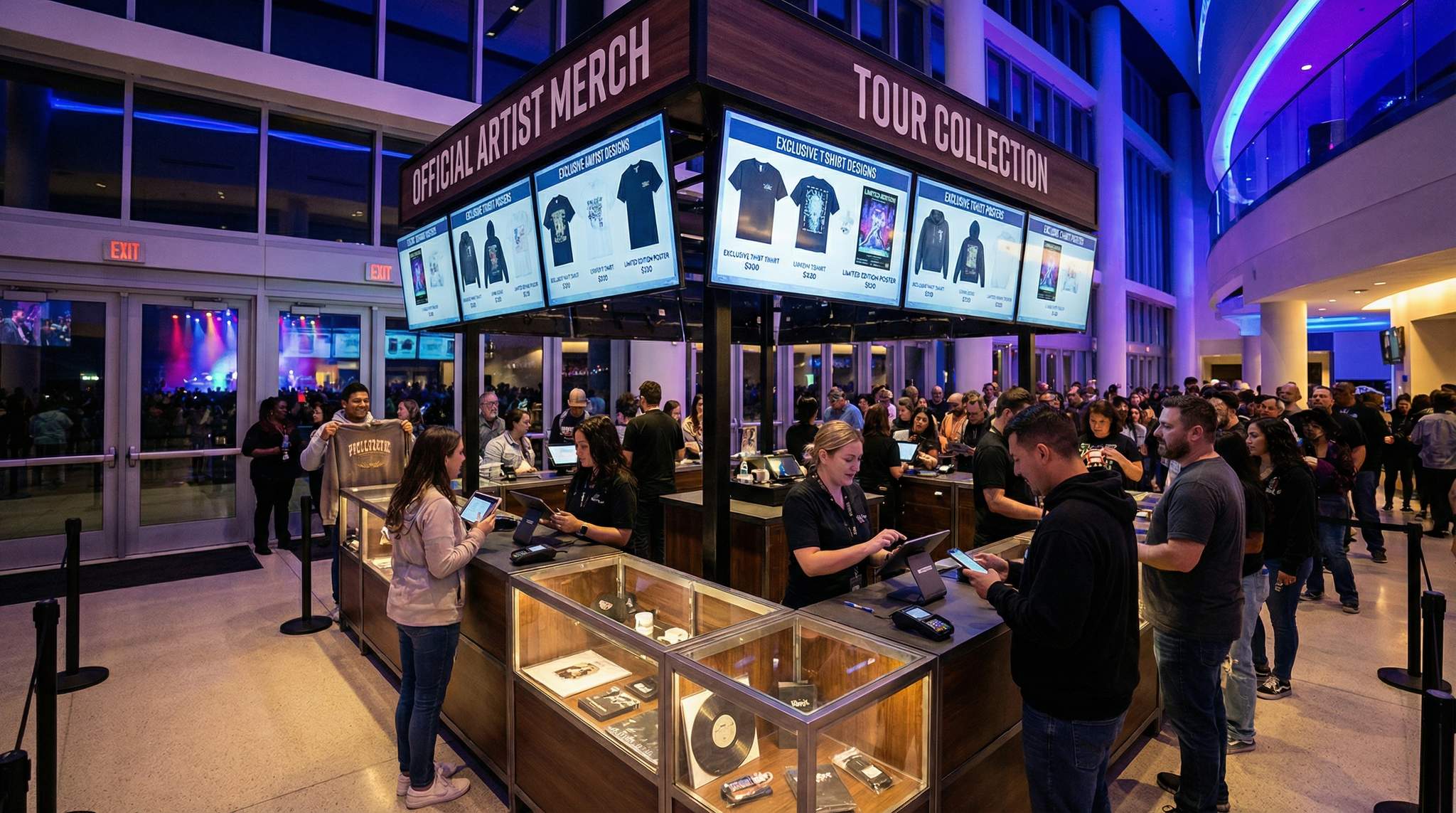
Presentation matters – a lot. Transform your merch area from a fold-out table into a mini pop-up store that draws people in. This means investing in professional display fixtures and a clean layout. Hang up sample t-shirts, jerseys or jackets vertically on grid walls or racks so fans can see designs from afar (and in their size). Use mannequins or bust forms to show off premium items like hoodies or hats as they’d actually be worn – this turns merchandise into aspirational apparel rather than just folded fabric. Good lighting is essential: spotlight your products and use backlighting or illuminated display cases for eye-catching items like albums or art prints. Additionally, clear signage is your friend – every item should have a visible price tag and product name so customers don’t have to ask and wait. Venues with big crowds sometimes set up large printed banners or screens above the booth showcasing each merch item (with photos, sizes, and prices); this way, fans can browse the “menu” from the line and be ready to purchase by the time they arrive at the counter. An organized, well-lit display not only attracts more buyers but also makes it easier for staff to quickly retrieve stock. Aim for a setup that invites attendees to browse and touch items (when feasible), just like they would in a retail shop. Remember, a visually appealing merch booth can turn a passerby into a buyer – whereas a messy or hard-to-navigate setup will cost you sales.
Ready to Sell Tickets?
Create professional event pages with built-in payment processing, marketing tools, and real-time analytics.
Managing Traffic Flow and Queues
A successful merch operation finds the balance between visibility and crowd control. You want a steady stream of shoppers – not an unruly mob blocking venue traffic. Plan in advance how you’ll manage lines at peak times (before the show, during intermission, and immediately after the show). If possible, use stanchions or queue barriers to organize the line into a defined area out of main walkways. This keeps merchandise lines from devolving into a chaotic scrum that frustrates fans or spills into fire exits. Train staff or deploy signage to gently direct people (“Merch line starts here”) so that even large queues remain orderly. It’s wise to station your most experienced sellers during the busiest periods to keep the queue moving efficiently (more on transaction speed in the next section). Also consider opening merch sales early to spread out demand – for instance, when doors open, have the stand fully staffed and ready so early arrivals can buy before the show starts. At some big events, venues even open merch booths hours before doors (or the day before for superstar tours) to accommodate hardcore fans and manage high-demand merchandise queues. The faster you can serve each customer, the shorter your lines stay. Monitor crowd flow in real time and be ready to temporarily pause sales if a line grows too long and poses a hazard – it’s better to take a short break (or call in extra help) than to let a massive queue ruin the experience for everyone. Large venues increasingly employ smart crowd management technologies that detect crowd density, helping staff respond to bottlenecks – if your merch area is swamped, you want to know before it becomes a safety issue and act quickly. During sold-out shows, every aspect of front-of-house needs to run like clockwork, so integrate your merch plan into the overall event operations. Veteran operators know that optimizing every aspect of operations for peak crowds – including merch lines – is critical to keeping guests happy and safe on big nights. By putting as much thought into crowd management at the merch table as you do at the entry gates or concession stands, you ensure buying a t-shirt is convenient, not chaotic.
Staffing and Training for Merch Success
Hiring and Training Dedicated Sellers
Your merchandise operation is only as strong as the people running it. Selling merch requires a blend of retail savvy, speed, and rock-solid reliability – so you’ll want staff who are both trustworthy with cash and great with fans. Start by hiring individuals who have prior experience in retail or food & beverage service, as they tend to be comfortable handling transactions quickly and dealing with long lines. Then, invest time in training them on the specifics of concert merch sales. Every merch seller should know the product line inside-out (sizes, styles, prices, any limited quantities) and be able to answer common questions (“Do you have this tour shirt in medium?”) without hesitation. They also need to master your point-of-sale system for fast, error-free checkout. Conduct role-playing drills before big shows: practice processing a mock rush of buyers to iron out any kinks. Emphasize customer service in training – merch staff should be friendly and welcoming, just like front-of-house ambassadors. Remember, these employees aren’t just pushing t-shirts; they’re representing your venue’s brand to fans. A seller who can chat enthusiastically about how awesome the show was while efficiently bagging a customer’s purchase creates a memorable experience that reflects well on the venue.
Equally important is training for honesty and accuracy. Implement clear procedures for cash handling, inventory counts, and settlement at the end of the night (many venues require two people to count cash and cross-verify sales totals). With large sums and valuable stock at stake, even veteran crew members need refreshers on preventing theft or mistakes. Some venues have a policy that artists’ own road merchandisers must pair with a house staffer at the booth – ensuring both parties keep an eye on the money and inventory count. Whatever your approach, set expectations early: the merch team needs to treat inventory like gold and fans like VIPs. By hiring the right personalities and giving them thorough training, you lay the groundwork for smooth, high-integrity sales when the crowds arrive.
Scheduling for Peak Times and Tours
Staffing the merch table isn’t a one-size-fits-all endeavor – it should scale with your event’s size and schedule. Examine your show timeline and allocate staff strategically. For example, if doors open at 7pm and the headliner starts at 9pm, you might assign extra sellers from 7–9 (when many fans are milling about buying shirts), then give a couple staff a break during the headliner’s set, and bring everyone back for the post-show rush. Staggering shifts like this keeps employees fresh and ready to hustle when it matters most. Always have reinforcements on call for sell-out nights or tours with hot merch; if you expect demand to be very high (e.g. a legendary band’s farewell tour or a K-pop act with fanatic fans), schedule more staff than usual – you can always scale down if it’s quieter than expected, but it’s hard to pull in extra help last-minute. Many venue managers maintain a roster of on-call or freelance merch sellers (often former employees or trusted volunteers) who can be tapped when an event’s merch needs exceed the usual capacity. In the current labor climate, creative scheduling and backup plans are essential – post-pandemic staffing shortages have hit the live events industry hard. As many venues grapple with a labor crunch, veteran operators are adopting inventive tactics to overcome staffing shortages and retain talent – including cross-training, flexible scheduling, and employee incentives – so their merch stands never go understaffed.
Turn Fans Into Your Marketing Team
Ticket Fairy's built-in referral rewards system incentivizes attendees to share your event, delivering 15-25% sales boosts and 30x ROI vs paid ads.
Keep in mind that some artists travel with their own merch seller or require using union labor at certain venues. Coordinate in advance with tour managers to clarify who is staffing the booth. If it’s the artist’s team, provide an extra house staffer as a runner or security if lines get long – it’s still your venue’s responsibility to ensure things run smoothly. And if your venue is unionized for merchandise sales, make sure your scheduling complies with those rules (e.g. minimum call times, required breaks) to avoid any day-of-show disputes. Above all, don’t leave the merch booth understaffed during peak moments. It not only throttles your revenue but also frustrates fans if they have to abandon purchases because the line was too slow.
Motivating and Retaining Merch Personnel
Merch selling is hard work – it’s essentially a fast-paced retail job with concert-level crowds. Keeping your team motivated and happy is key to reducing turnover and boosting sales. One effective approach is to implement incentives linked to sales performance. For example, some venues give a small commission or bonus to merch sellers if revenue targets are surpassed (“if we sell over $10k in merch tonight, everyone on the merch crew gets a $50 bonus”). Even friendly competition can help: posting sales numbers and challenging the team to beat the “record” for merch sales in a night can add some fun motivation. Just be sure any competition stays light-hearted and team-based – the goal is to pump up enthusiasm, not encourage hard-sell tactics that turn off customers.
Grow Your Events
Leverage referral marketing, social sharing incentives, and audience insights to sell more tickets.
Beyond financial incentives, recognize that working the merch stand often means long hours on your feet and dealing with excited (sometimes drunk) fans late at night. Take steps to show appreciation: provide water and the occasional snack for your merch staff during the show, rotate them out for short breaks on marathon shifts, and publicly acknowledge big achievements (like a shout-out in the staff newsletter for handling three sell-out shows in a row with zero errors and stellar customer feedback). Investing in staff retention pays off – experienced sellers who know your venue and crowd well will consistently outperform a revolving door of newbies. In 2026’s tight labor market, venue operators are having to get creative to hold onto talent as evolving fan spending and staffing dynamics reshape the landscape, and that applies to merch teams too. Treat your sellers with respect and trust, and many will stick around out of loyalty to the venue and camaraderie with the team.
Finally, keep communication lines open. Solicit feedback from your merch staff after major events: Did they feel overwhelmed at any point? Were any tools or supplies lacking? Perhaps they’ll tell you a second barcode scanner would have helped, or that fans kept asking for a product that wasn’t stocked. Front-line employees often have the best insight into operational tweaks – empower them to share ideas. By continually improving working conditions and processes, you create an environment where merch staff take pride in their work. A happy, confident merch crew directly translates to more sales and happier customers. As one venue merchandise manager put it, “Our team’s energy is contagious – if we’re pumped about the merch, the fans get pumped to buy it.” In short: build a merch squad that loves the job, and they’ll reward you with smoother operations and higher revenues show after show.
Faster Transactions: Cashless Payments and Line-Busting Tech
Embracing Cashless, Contactless Payments
If your venue hasn’t upgraded to cashless payments yet, 2026 is the time – both for speed and for safety. Modern audiences are accustomed to whipping out a phone or credit card to pay with a quick tap. By equipping your merch stands with contactless payment systems (chip & PIN, NFC tap, mobile wallets like Apple Pay/Google Pay), you can complete most transactions in seconds, no fumbling with change or signatures required. The result? Shorter lines and more sales. Data from major events shows that going fully cashless can significantly increase per-head spending, because the easier it is to pay, the more customers buy, a trend showing how cashless systems boost festival retail revenue. In fact, when one giant European festival switched exclusively to RFID wristbands for all purchases, they found fans spent more freely and lines at merch and bar tents moved notably faster, demonstrating how RFID technology streamlines transaction speeds. For venues, the lesson is clear: convenience drives revenue. And beyond speed, digital payments reduce the risk of cash theft and make it simpler to track sales precisely.
To implement this, invest in a robust POS system that supports multiple cashless options simultaneously. You’ll want at least two payment terminals per merch stand during peak times, so one seller isn’t the bottleneck handling every card swipe. Many venues use tablet-based POS apps with Bluetooth card readers – lightweight setups that can be multiplied as needed. Train your staff thoroughly on the devices ahead of time; a tech glitch or user error at the register quickly nullifies any time saved by going cashless. It’s also wise to have a backup plan (like a hotspot and offline card imprinter or a spare tablet) in case of Wi-Fi outages or system crashes. Overall, the goal is to make each transaction as frictionless as possible. When a fan can buy that tour hoodie with a 2-second tap of their wristband or phone, they’re less likely to reconsider due to a long wait. And if you do still accept cash at some shows, streamline that too – for example, have a “Cards & Mobile Pay Only” line and a separate “Cash Accepted” line to keep digital-pay customers moving rapidly. Speed is money in the merch game: shaving seconds off each sale adds up to dozens more sales by the end of the night.
Line-Busting Tech Innovations
Beyond traditional POS, forward-thinking venues are adopting new tech solutions to literally bust the line. One popular approach is deploying mobile ordering for merchandise. This can take a few forms: for instance, displaying a QR code around the venue that fans can scan to order and pay for merch from their smartphone, then pick up their pre-packed order at a dedicated window or express line. This essentially turns the queue into a virtual one – fans can buy from their seat during intermission and simply grab the goods when it’s ready, skipping the main line entirely. Even if only a fraction of attendees use it, mobile ordering lightens the load on the physical merch booth and appeals to tech-savvy concertgoers. Some venues have reported impressive results with these systems, seeing higher average order sizes and total sales when they give fans more ways to buy on their own terms, with mobile ordering driving higher fan spend. (It makes sense – if someone can order a shirt during the opening act via an app, they’re not abandoning the purchase because they don’t want to miss the headliner in a long line.)
Another line-busting tactic is to employ roving “merch reps” in the venue. Equip staff with tablet POS devices and small inventories of high-demand items (like the tour program or a single best-selling t-shirt design) and have them roam concourses or visit VIP suites. They can take instant sales from folks who might never stop at the merch table. This technique, borrowed from sports stadium vendors, can work in seated concerts too – for example, selling LED glow batons or earplugs directly to patrons in their seats. It won’t replace the main merch stand for bigger items or full selection, but it can capture incremental sales and reduce crowding. Even a single extra staffer with a mobile card reader walking the entry line outside, selling popular items as people wait to enter, can snag revenue that might otherwise be lost.
Venues with large capacities are also exploring self-service kiosks and merch vending machines. A touchscreen kiosk could allow fans to browse the catalog and place an order, then receive a text when it’s ready for pickup. Meanwhile, vending machines stocked with small, standardized merch (think logo guitar picks, keychains, or rolled-up t-shirts in common sizes) can do steady business in the lobby without any staff required. While these innovations are still emerging, they hint at a future where buying concert swag is as easy as buying a soda. The key is to integrate any new tech smoothly into your operations. Ensure your inventory system updates in real time no matter where a sale happens, to avoid selling the last medium tee twice. It’s wise to integrate your merch POS with your wider venue tech ecosystem – linking ticketing data, inventory management, and sales analytics – so that all these purchase channels work in harmony. With the right tech mix, you can eliminate most friction points in the merch buying process. Fans will remember how easy it was to snag that awesome tour hoodie at your venue… and your finance team will remember that merch revenue boost on the bottom line.
Pre-Orders and Bundles: Selling Merchandise Before Fans Arrive
Bundling Merch with Ticket Sales
Why wait until showtime to sell merch when you can start at the moment of ticket purchase? Offering merchandise as an add-on during the ticket checkout process is a powerful revenue booster. Many fans will gladly toss a t-shirt or poster into their online cart if it’s easy – especially if you entice them with a small bundle discount or an exclusive design only available pre-show. Savvy venues and promoters have begun partnering with their ticketing platforms to enable these one-click merch upsells. For example, Ticket Fairy’s ticketing system can automatically suggest relevant merchandise to fans during checkout based on the event – a feature that has delivered upsell rates up to 65% and raised average order value by roughly 45% when implemented through merchandise integration with ticketing platforms. Those are staggering gains that come essentially from a few lines of code and planning. The key is to make the offer contextual and limited: “Pre-order your official tour shirt now for 10% off and pick it up at the show!” feels like a no-brainer to an excited fan buying tickets. By contrast, a generic “Want merch?” add-on with no incentive might get ignored.
When designing ticket+merch bundles, keep logistics in mind. You’ll need a system at the venue to distribute pre-sold items – like a dedicated pickup booth or a will-call window that doubles as merch pickup. Clearly communicate to buyers how and where to retrieve their items (e.g. “Pick up your pre-order at the merch stand by showing this QR code”). Aim to make the pickup process as quick as possible so that pre-order customers truly get the VIP treatment of skipping the merch line. Another benefit of pre-sale merch is inventory planning. If 200 people pre-bought the poster, you know to set aside at least that many and won’t accidentally sell out early. Some venues even offer merch by mail for pre-orders – fans pay in advance and get the item shipped to their home, which can be great for customers who don’t want to carry stuff on show night. Whether for pickup or delivery, selling merch in advance locks in revenue (often weeks or months before the event) and can help fund the upfront production costs. It’s essentially early cash flow with zero risk of unsold stock, since you know those items are spoken for.
Early Bird Merch and VIP Exclusives
Pre-show merch strategy isn’t limited to online ticket bundles. You can also create on-site early bird opportunities and VIP packages that drive merch sales. For instance, consider opening the merch booth an hour early, just for VIP ticket holders or fan club members, allowing them to shop calmly before general doors. This adds value to VIP experiences (early merch access is a perk superfans love) and also generates sales before the main rush. Some venues have had success with “merch preview” events – small gatherings in the afternoon where a limited number of fans can purchase new tour merch as it’s being unboxed, sometimes even with the artist present for autographs. This not only spreads out demand but turns merch shopping into its own mini-event.
Exclusive merchandise can also be a selling point for premium tickets. If your venue offers VIP packages or concierge suites, include a limited-edition item as part of the package. It could be a poster variant with special artwork, a tour laminate and lanyard, or a unique piece of apparel that only VIPs receive. Artists often collaborate on these exclusives: a band might agree to produce 100 gold-foil posters just for your VIP guests, bundled into a higher ticket tier. From the venue’s perspective, you’ve essentially pre-sold those 100 posters at a premium (built into the ticket price), guaranteeing merch revenue. Fans, meanwhile, feel like rockstars getting a rare item not available to the masses. Everyone wins – and you haven’t even opened the doors yet. The important thing is to actually deliver on the exclusivity promise: if VIPs are told they get a limited shirt design, it should never be found at the public merch booth later. Protect the specialness of pre-order and VIP items to build trust and hype for future shows.
On-Demand Printing and Inventory Agility
One of the perennial challenges in merch is guessing how much to stock without printing way too much. Order too little and you’ll have angry fans when popular sizes sell out; order too much and you’re stuck with boxes of unsold shirts (and razor-thin profit margins). In 2026, venues are adopting more agile approaches to inventory. On-demand printing is one innovation changing the game. Instead of printing 500 shirts in advance, a venue might print 200 and then produce more during or after the event as needed. Some forward-thinking events set up on-site printing stations – for example, a large concert in Singapore offered on-demand t-shirt printing where fans could choose from a few designs and have their shirt made in about 5 minutes via heat press, an example of innovative on-site festival retail solutions. This approach wowed attendees (who enjoyed seeing their shirt “hot off the press”) and completely eliminated leftover stock, since nothing got printed beyond actual demand.
Even if you can’t go so far as live printing at the venue, you can leverage local print shops and short-run production to stay flexible. Let’s say you have two shows of a tour back-to-back and the first night sells out of hoodies by intermission – you might work overnight with a local printer to rush out another batch for night two. Or use your pre-sale data: if an unusually high number of fans pre-ordered the black logo cap, you can bet it’ll be a hot seller on site and increase the order quantity. Many venues now coordinate closely with merch suppliers to do quick re-orders or print-on-demand in the days following a show to fulfill any online orders from fans who missed out at the gig. The goal is zero waste and zero missed sales: make just enough to satisfy demand, and not so much that you’re left holding unsold merchandise.
Smarter inventory management is not only good for profits, it’s good for the planet. Every unsold shirt or junked poster is wasted energy and materials. By tightening your merch supply to actual demand, you inherently cut down on waste – a win for sustainability. (Not to mention, it saves storage space and avoids having last year’s tour merch gathering dust in a stockroom.) Consider aligning with the artist’s team on a sustainable approach: for instance, printing tour shirts on organic cotton or using a local supplier to reduce shipping emissions. Fans increasingly appreciate eco-conscious efforts, and some will gravitate to buying merch that they know was produced responsibly. In short, being nimble with inventory and prints can delight fans (through custom or always-available items), protect your margins, and support your venue’s sustainability goals. It’s hard to find a downside there.
By selling merchandise before the show and adopting an on-demand mindset, you turn merch into a proactive part of your event strategy rather than a reactive afterthought. You’ll have cash in hand, clearer production numbers, and a solid plan to ensure every fan who wants a souvenir can get one. And as any venue operator knows, a fan who leaves happy with merch in hand is more likely to become a repeat customer down the line.
Tailoring Your Merch Strategy to Venue Size
Small Clubs and Grassroots Venues
In a 200-capacity club, merchandise runs on a completely different scale than at an arena – but it can be no less important to the bottom line. In fact, for many independent grassroots venues, merch revenue (and the goodwill it creates with artists) can be a lifeline. Smaller venues often have no full-time merch staff; it might be the band’s tour manager or even the musicians themselves selling CDs and t-shirts after the show. As a venue operator, your role is to enable and support those sales. That starts with providing a good location – even if your space is tiny, carve out a safe, well-lit corner near the exit or bar where the artist can set up a table. A single uncluttered table, a couple of clip-on lights, and a cash box or mobile card reader may be all that’s needed, but those basics make a huge difference compared to an impromptu dark corner. Encourage your bartenders or door staff to direct fans to the merch table (“The band’s selling merch by the front door, check it out!”) with friendly plugs. In intimate venues, personal interaction is part of the charm – artists might come out to sign merch and chat with fans – so facilitate that by keeping the area clear and providing a chair or two if needed.
Crucially, many small venues choose not to take any percentage of merch sales from artists. Waiving merch fees is increasingly seen as a best practice at the grassroots level, both to support emerging acts and to avoid backlash from fans. (As one UK campaign noted, when fans discover a venue is taxing the band’s merch, “they hate it”, fueling campaigns against venue merchandise commissions.) Instead, these venues focus on income from tickets and bar sales to pay the bills – and view merch as the artists’ money to keep. In fact, hundreds of indie venues have publicly pledged to charge 0% commission on merchandise, joining initiatives like the Music Venue Trust’s “100% Venues” directory in the UK, a list of venues pledging zero commission on artist merch. Even in the U.S., clubs such as Washington D.C.’s Black Cat and Denver’s Cervantes’ Masterpiece Ballroom proudly advertise that bands keep all their merch earnings. The goodwill generated by this policy can be far more valuable in the long run, attracting artists who know your venue “has their back.” If you do need to take a small cut (say 10-15%) to cover costs, make sure you earn it – help the artist sell by staffing the table or providing your in-house card terminals, and consider throwing in perks like free water or a meal for the touring merch seller. The bottom line for small venues: keep it simple, keep it fair, and make merch a positive experience for artists and fans. A thriving merch night at a tiny club might only be a few hundred dollars in sales, but it can mean gas money for the band and a lasting connection with fans who take home a piece of the show. Ultimately, merch is one crucial income stream among many – pairing these efforts with other creative survival strategies for independent venues will improve your odds of keeping the doors open for years to come.
Mid-Size Theaters and Concert Halls
At venues in the 500 to 3,000 capacity range – say an ornate Art Deco theater or a busy city ballroom – merchandise operations start to formalize. You’ll likely have a dedicated merchandise manager or capable front-of-house staff assigned to coordinate with touring crews. Many artists at this level travel with their own merch seller, so the venue’s job is to provide adequate facilities and integrate them into venue procedures (credentialing, settlement, etc.). Ensure your lobby or foyer has a spacious merch area that can handle a crowd during peak times like intermission. Permanent merch counters or roll-out display cases are ideal, but even a portable setup should include professional touches (racks, lighting, and clearly marked prices) as discussed earlier in this guide. Expect to handle more product variety – a mid-size venue show might have 10-20 different items for sale (multiple shirt designs, hats, vinyl, etc.), so space planning and display become important to avoid a cluttered mess.
Merch commission is a norm at many mid-size venues, often ranging from 10% to 25% of gross sales (venues operated by big promoters tend toward the higher end). Be aware that these percentages can be a pain point for artists, so communicate openly and apply them consistently. Some venues in this tier are opting to reduce or eliminate merch fees to stay competitive and artist-friendly, especially if they can make up the revenue through bar sales or higher guarantees. For example, an independent theater might settle on a modest 10% fee in exchange for providing all the sales staff and equipment, whereas a corporate-run venue might stick to 20% but offer robust sales infrastructure. If your venue does take a cut, make sure the artist knows what value they’re receiving – e.g. your staff will handle all cash/credit transactions and post-show accounting, allowing the tour manager to relax a bit. Also, handle the logistics professionally: have a secure storage room for merch boxes, provide access to a handcart or dolly for load-in, and coordinate with venue security if overnight storage or early load-in is needed.
Mid-size venues should also adjust their strategy based on the type of show. A seated comedy show might do brisk merch sales of one book or DVD per fan, mostly after the performance when the comedian does a meet-and-greet signing. In that case, be prepared for one big surge and have a system to line up fans orderly. A rock concert with no opener might see a huge rush when doors open and another at the end – so have sellers ready at those times. Use what you know about the act: if past data or the tour’s merch manager suggests that “XXL hoodies are selling out every night,” stock extra if possible. This is where mid-size venues can shine by being agile – unlike an arena, you might be able to run down to a local print shop if you truly needed to restock something for a second night. Coordination and communication are key at this scale: stay in close touch with the tour’s merch rep and tour manager throughout the night to share sales trends and feedback (“fans are asking if you have any kids sizes” or “we’re running low on the red shirts – do you want to raise the price for the last few?”). By being a collaborative host, you’ll leave a great impression on touring crews, which can lead to repeat business and positive word of mouth in the industry.
Arenas and Large-Scale Venues
In the 10,000 to 20,000-seat arenas (and stadiums) of the world, merchandise is virtually an industry of its own. At this level, tours often carry entire merchandising teams and infrastructure: tractor-trailers filled with product, a traveling crew that sets up a mini-store in each city, and sophisticated inventory tracking. As the venue, you become a partner in a well-oiled machine. It’s common for arena deals to stipulate a merch fee in the 20-30% range, which the artist’s team accounts for in their pricing. (Some superstar artists have enough leverage to negotiate lower percentages or flat buyouts, but they are the exception.) If you’re a venue manager here, focus on logistics and compliance: ensure the designated merch locations on the concourse are cleared and ready for load-in per the tour’s advance specs. You may have multiple merch stands – main ones near the biggest entrances and smaller satellite kiosks by secondary doors or club levels. Each needs tables, shelving, plenty of lighting, and access to power/internet for POS systems. Often the tour brings their own displays and even their own wireless payment devices (many use atVenu or similar systems to report sales). Coordinate with them on using the venue’s network or a dedicated hotspot; nothing is worse than 50 fans waiting to pay while a card reader tries to find a signal in a concrete stadium.
For large shows, crowd management becomes the crux of merch operations. You might have thousands of people trying to buy at once. Work with tour personnel to staff appropriately – it’s not unusual to have 10-20 sellers spread across an arena. If the tour is short on personnel, supplement with your trained concession staff or even temp workers who have worked merch for you before. Keep lines orderly with stanchions and clearly mark each line’s start. Consider printing big overhead signs or using digital screens to show where merch stands are and what they carry (e.g. “Section 101 – Shirts & Programs; Section 120 – All Merchandise”). This can distribute the traffic. Also, be ready for the merch mania that accompanies top-tier tours. We’ve seen scenarios where pop-up merch trailers are set up outside the venue a day early, and fans line up overnight to snag tour-exclusive items, a tactic for maximizing merchandise revenue. While not every show will warrant that, be prepared to extend your merch hours – if doors open at 6pm, you might quietly open the main lobby stand at 4 or 5pm for early arrivers (it’s extra revenue and can relieve pressure later).
Security is another consideration here. High volume sales mean large amounts of cash (though cashless is increasingly common) and valuable inventory changing hands. Instruct your security team to keep an eye on merch areas – both for shoplifting and for any scuffles if lines get tense. It’s rare, but there have been cases of merch theft or counterfeiters selling bootleg shirts in the parking lot. Some major venues coordinate with local authorities to crack down on bootleg vendors outside, to protect the official sales (and the artist’s revenue). During settlement at the end of the night, ensure all parties (venue and tour) count inventory and cash together in a secure area. It’s a detailed process at arenas, often using inventory management software and reconciling credit card reports, etc. Accuracy matters because at 30% of hundreds of thousands of dollars in merch, any mistake can be costly.
One strategic tip for arenas: leverage data from past similar shows. If you hosted a K-pop group last month and they sold X per head in merch, use that to anticipate what the next K-pop tour might do. Industry data in recent years shows arena merch attach rates in the 20-25% range and per-head spending that can exceed $30-40 for blockbuster tours, according to data on per-capita merchandise spending. That means potentially hundreds of thousands in gross merch sales on a single night – so treat it with the gravity of another major concession operation. Ensure your peak crowd operations plan covers the merch side (adequate staffing, extended hours, and contingency plans for extreme demand). When you execute smoothly, the artist’s team leaves happy with record sales, fans leave thrilled sporting their new gear, and your venue earns its commission while enhancing its reputation as a top-tier tour stop.
Beyond Profits: Merchandise as Fan Engagement and Marketing
Great venue merch doesn’t just pad the revenue numbers – it amplifies fan engagement and extends your event’s footprint in the world. Think about it: when a fan buys a t-shirt, poster, or hat, they’re purchasing a tangible piece of the experience. That item becomes a cherished memory token and part of their identity. Weeks or years later, they’ll throw on that 2026 Tour tee and instantly recall the thrill of the show. In this way, merchandise keeps the emotional high of an event alive long after the lights go down. It’s hard to put a dollar value on that kind of connection, but its impact is very real. Fans who feel a personal connection to a venue or artist are more likely to become repeat customers, spread positive word-of-mouth, and engage with your content online. In fact, a unique merch item can turn a casual attendee into a passionate ambassador. Every time someone asks, “Cool shirt, where’d you get it?” it sparks a conversation about your venue or the amazing gig they saw there. Your merch-wearing fans essentially become walking advertisements, broadcasting their love for your venue’s shows to everyone they meet.
Merchandise can also be a powerful tool for artist-fan engagement. Limited-run items or creative collaborations often get fans buzzing in ways that a standard tour tee might not. Savvy venues collaborate with artists on exclusive merch tied to shows – for example, commissioning a local poster artist to create an art print just for the hometown stop of a tour. Fans go crazy for these one-of-a-kind collectibles, often lining up early to snag them, and artists appreciate the extra buzz (and revenue). Some bands even make a point to mention special merch from the stage – “We’ve got a poster tonight only for [Your City]!” – which not only drives sales but makes the audience feel like they’re part of a unique moment. Behind the scenes, offering to facilitate these special projects (like sourcing a local printer or artist) can deepen your relationship with the artist’s team. You’re showing that you care about creating a memorable experience, not just squeezing dollars. When artists walk away feeling the venue was a true partner in delighting fans, they’re more likely to return on the next tour.
Don’t overlook the marketing potential of merch in the digital age. Fans love to share cool merchandise on social media. A striking piece of merch – say a stylish hoodie with your venue’s logo or a funny tour-themed graphic – will likely pop up in Instagram stories and TikTok videos as fans show off their haul. This user-generated content is gold: it’s authentic promotion that reaches far beyond the venue’s own followers. Consider encouraging it by creating an eye-catching “Merch Wall” or backdrop at the booth where fans can pose with their new gear. Some venues have gotten creative by offering a small discount or freebie to fans who post a photo with the venue merch hashtag. The more people proudly broadcasting that they attended an event (and bought the t-shirt to prove it), the more your brand name circulates among potential future customers.
Finally, a successful merch program contributes to the overall fan experience, which is the ultimate goal. A concert isn’t just about the music; it’s about the memories and the sense of belonging it creates. Merchandise taps into that by giving fans something physical to take home – it’s the last touchpoint of their night. If you ensure that touchpoint is positive (exciting products, friendly service, quick transactions, and maybe a chance to meet the artist at the table), you are ending the event on a high note. Fans leave not only talking about the encore, but also about the awesome t-shirt they scored or the brief chat they had with the singer while getting their vinyl signed. In an era where live events compete with at-home entertainment, these “extras” can differentiate your venue. It’s telling that many of 2026’s most successful venues and festivals view merch as part of the experience design, not just a retail operation. When done right, merchandise enriches the narrative of the night – fans go home with stories and souvenirs, the artist cashes in and feels the love, and your venue strengthens its reputation as a place where unforgettable moments happen at every touchpoint.