Introduction: The ROI-Driven Marketing Playbook for 2026
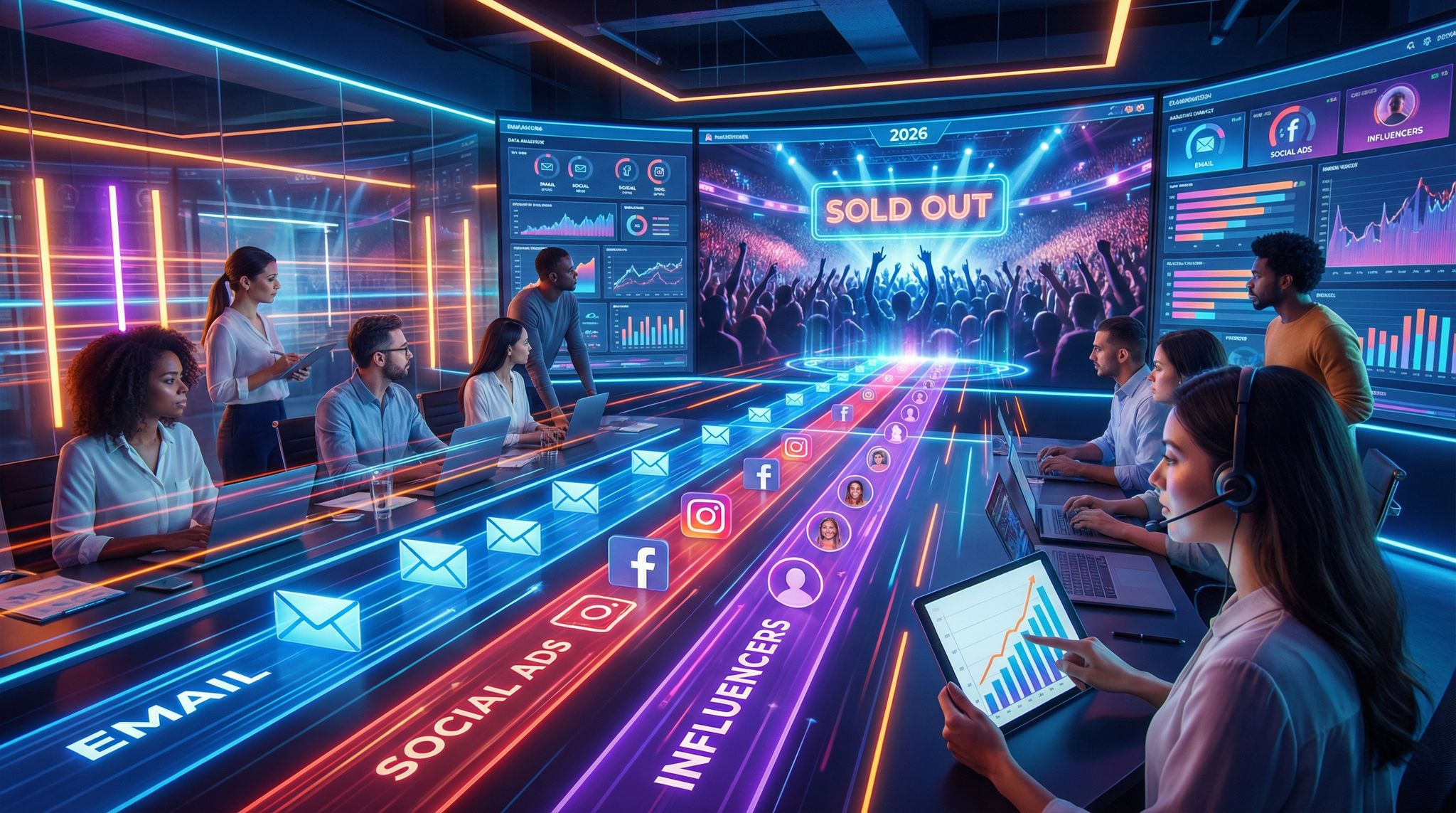
In 2026’s high-stakes event landscape, every marketing dollar must pull its weight. Rising ad costs and privacy changes have made it tougher to cheaply reach audiences, a trend highlighted in Neil Patel’s analysis of 2026 marketing budget trends, so event promoters are focusing on channels that directly drive ticket sales. Instead of spreading budgets thin, savvy organizers double down on the marketing tactics that deliver the best return on investment (ROI). This showdown ranks the leading event promotion channels by ROI, backed by real campaign data and hard-won experience. From email’s unmatched returns to TikTok’s surprise performance, you’ll learn which channels pack the biggest punch and how to allocate your budget accordingly.
If you are searching for the highest ROI online marketing tactics in 2026, the answer lies in strategies that leverage warm audiences and performance-based spending. While top-of-funnel awareness is necessary, the tactics that actually maximize your return on ad spend (ROAS) are those that capture existing intent—like search engine marketing, automated email sequences, and affiliate ambassador programs.
Recent industry surveys confirm the pecking order of ROI. In one 2026 poll, 24% of marketing professionals named email as the highest-ROI channel, making it the top performer, with paid social ads (20%), search advertising (20%), and organic social media (19%) not far behind, according to Clutch’s data on marketing channel ROI and organic social media performance. Those statistics mirror what veteran event marketers see on the ground: some channels consistently convert interest into ticket buyers at far lower cost than others. But maximizing ROI isn’t as simple as pouring money into one channel – it’s about understanding why each works, how to optimize each tactic, and how to create a balanced, data-driven marketing mix.
To set the stage, let’s compare how major channels stack up on key metrics like conversion rates, cost per ticket, and typical ROAS (Return on Ad Spend). The table below provides a 2026 snapshot of event marketing channel performance, based on industry benchmarks and campaign averages:
Turn Fans Into Your Marketing Team
Ticket Fairy's built-in referral rewards system incentivizes attendees to share your event, delivering 15-25% sales boosts and 30x ROI vs paid ads.
| Marketing Channel | Typical ROAS (Revenue per $1) | Conversion Rate (to ticket sale) | Avg. Cost Per Ticket | Notes on ROI Performance |
|---|---|---|---|---|
| Email Marketing | $36–$42 revenue per $1 (AOK Marketing ROI analysis) | ~5–10% (highly engaged lists) (Ticket Fairy email automation insights) | Very Low (often <$1) | Highest ROI channel overall; low cost, direct access to fans. |
| Paid Social Ads (Meta) | $3–$5 per $1 (varies widely) | ~2–4% (after click) (UpROAS Facebook ads statistics) | ~$10–$30 | Strong targeting can yield 3:1+ ROAS; broad reach but rising costs. |
| TikTok/Video Ads | $2–$4 per $1 (est.) | ~1–3% (after click) | ~$15–$30 | Large impressions, younger audience; can drive buzz but lower conversion without retargeting. |
| Search Ads (Google) | $3–$6 per $1 (on intent keywords) | ~5–15% (high intent searches) | ~$10–$20 | Captures active intent; fewer clicks but higher buyer intent boosts ROI. |
| Content Marketing (SEO) | $5–$10 per $1 (long-term) | 1–5% (web visitors to buyers) | Low (organic traffic) | High long-term ROI from “free” organic traffic after upfront content investment. |
| Influencer Partnerships | $4–$8 per $1 (with micro-influencers) | Varies (2–5% of audience) | ~$5–$15 (with performance deals) | ROI depends on deal structure; commission-based deals can achieve strong returns. |
| Affiliate/Referral Program | $10+ per $1 (commission-based) | Varies (referrals ~2–5%) | Low (pay per sale) | Exceptional ROI by paying only for results; essentially self-funding sales. |
| Organic Social Media | N/A (no direct ad spend) | ~1–3% (followers to buyers) | Negligible | Free posting yields high percentage ROI, but reach is limited without ads. |
| PR & Media Coverage | Hard to quantify (indirect) | N/A (awareness channel) | Varies | Can spark ticket rush if a story goes viral; ROI seen in big awareness boosts more than direct sales. |
| Experiential Stunts | N/A (one-time cost) | N/A (indirect to sales) | Varies | High buzz potential; one successful stunt can trigger a social media wave and surge in sales. |
Table: Typical ROI and conversion benchmarks for event marketing channels in 2026. ROAS figures are illustrative averages – actual results vary by event, audience, and execution.
The rest of this guide dives deeper into each channel, explaining why it performs as it does and how to maximize its impact. Read on for real examples (both successes and failures), actionable tips, and data-driven insights to help you prioritize the tactics that sell the most tickets.
Ready to Sell Tickets?
Create professional event pages with built-in payment processing, marketing tools, and real-time analytics.
Email Marketing: ROI Champion in 2026
Why Email Delivers Unmatched ROI
Email marketing remains the undisputed king of ROI for event promotion. Experienced event marketers know that time and again, email drives more ticket sales for the cost than any other channel, a fact supported by Ticket Fairy’s guide to email marketing automation. How powerful is it? One industry benchmark found email campaigns convert roughly 8% of recipients into ticket buyers, according to data on personalized campaigns driving sales. In practical terms, if you email 10,000 fans, you might sell ~800 tickets – whereas a social media post to 10,000 followers might yield only ~300 sales, as noted in comparisons of email versus social conversion rates. This tremendous conversion power, combined with email’s low cost, leads to stellar ROI. Surveys estimate a median return of about $36–$42 for every $1 spent on email marketing, based on AOK Marketing’s ROI analysis – an astounding 3600%+ ROI that tops the charts. In Ticket Fairy’s own experience, promoters often credit email for 25–40% of total ticket sales on well-marketed events, as detailed in our insights on mastering email automation.
Several factors explain why email is such an ROI powerhouse:
– Direct Access & Ownership: Your email list is an audience you own. There are no algorithm gatekeepers throttling your reach, a significant advantage noted in Clutch’s marketing channel ROI report. When you send an email, it lands in every subscriber’s inbox (barring bounces or spam). This reliable reach means a high percentage of your message gets seen, especially compared to social posts that maybe 5–10% of followers see organically.
– High Intent Audience: People who join your mailing list or register for updates have already shown interest in your events. They’re warm leads. So naturally their propensity to buy tickets is higher than a cold audience. An engaged segment (e.g. past attendees) might open your email and click “Buy Tickets Now!” immediately if the offer is right.
– Low Cost per Contact: Email tools do cost money, but ultimately you might pay only a few cents (or fractions of a cent) per recipient. Reaching 1,000 people via email might cost a few dollars of your email service subscription, versus potentially hundreds of dollars in advertising to get 1,000 targeted impressions. When a channel costs so little and brings in substantial sales, the ROI soars by definition.
– Multi-Purpose Utility: Email works across the entire customer journey – announcement, on-sale reminders, upsells, last-chance urgency, even post-event follow-ups. You can keep selling tickets (and adding value) at every stage without incremental ad spend. This keeps customer acquisition cost (CAC) low and lifetime value high.
Maximizing Email Conversion & Revenue
Just because email has great potential ROI doesn’t mean every email automatically succeeds. To reap the rewards, experienced promoters apply best practices:
– Segmentation & Personalization: Gone are the days of blasting one generic message to your whole list. ROI is highest when you segment your audience and tailor content. For example, send a “Tickets now on sale!” email to interested sign-ups, a “We miss you – come back!” note to past attendees who haven’t bought yet, and a VIP upsell offer to your loyal superfans. Targeted emails see much higher open and conversion rates than one-size-fits-all blasts, as confirmed by Ticket Fairy’s research on personalized campaigns.
– Automation & Timing: Set up automated email sequences to nudge buyers at critical moments. Common examples include abandoned cart emails (when someone starts a ticket purchase but doesn’t complete it), early-bird deadline reminders, and “last chance” alerts as the event nears. These automated pings often recover sales you might have lost – boosting overall ROI with very little manual effort. In one campaign, automated reminder emails lifted conversion by 20% for procrastinating buyers, essentially adding 20% more revenue at almost no cost.
– Compelling Content & Offers: Even with a great list, your email has to motivate action. Use attention-grabbing subject lines to boost open rates (e.g. “[Event Name] Tickets 80% Sold – Don’t Miss Out!”). Within the email, highlight why the event is unmissable (artist lineup, limited capacity, a special discount expiring soon). Strong creative and clear calls-to-action (“Buy Tickets”) will drive more clicks and purchases. Always include a prominent link or button straight to the ticket purchase page. A/B testing different subject lines or content can further refine what resonates best with your audience.
– Mobile Optimization: Over 60% of emails are opened on mobile devices, according to Coalition Technologies’ email marketing statistics, so ensure your design looks great on a phone screen. Single-column layouts, big tappable buttons, and concise text help mobile readers act. If the ticket buying process is smooth on mobile (which it should be with a modern platform), you’ll convert those on-the-go opens into instant sales.
The beauty of email is that improvements here directly translate to more revenue without a big budget increase. Lifting your open rate from 20% to 30% or your click-through rate from 2% to 4% can mean hundreds of extra tickets – all from the list you already have. The ROI math only gets better. As one 2024 study by Litmus found, email ROI averages 36:1, a figure cited in AOK Marketing’s digital channel analysis, but campaign veterans often achieve even higher returns by fine-tuning segmentation and creative. In short, if you’re not making email a cornerstone of your 2026 event marketing, you’re leaving easy money on the table.
Smart Promo Codes & Presale Access
Create percentage or flat-rate discount codes with usage limits, date ranges, and ticket type restrictions. Plus unlock codes for private presales.
For an in-depth guide to email strategies, check out our resource on personalized email campaigns that drive ticket sales. It covers advanced tactics like automated sequences, VIP offers, and real case studies of events boosted by email.
Paid Social Advertising: Big Reach, Careful Optimization
Cost vs. Reward: How Social Ads Stack Up
Social media advertising – primarily on Meta’s Facebook and Instagram, and increasingly on TikTok – is a major line item in most event budgets. Does it deliver ROI? It can, absolutely – but it requires skillful execution. The appeal of social ads is the unmatched reach and targeting. You can serve event promos to millions of potential attendees, zeroing in on those most likely to be interested (by location, music taste, demographics, behaviors, etc.). This breadth and precision come at a price, though: costs per click (CPC) and CPM (cost per thousand impressions) have crept up year after year, as observed in Neil Patel’s marketing budget trends. In 2026, global Facebook ad CPMs often range from $10–15, according to UpROAS’s Facebook ads statistics), and highly competitive markets or interests can be higher. In short, you pay to play.
Grow Your Events
Leverage referral marketing, social sharing incentives, and audience insights to sell more tickets.
ROI on social ads varies widely. On the low end, a poorly targeted campaign can burn money fast – imagine spending $1000 and getting only a handful of ticket sales (we’ve all heard horror stories). But well-optimized campaigns routinely achieve solid returns like 3:1 or 5:1 ROAS, and exceptional cases can go much higher. For example, one event promotion campaign that struggled initially (only 1 ticket sold from $4.5k spend!) was overhauled with better targeting and creative; it went on to generate $212,000 in ticket revenue from an $11,357 ad spend – a stunning 18.66:1 ROAS, as detailed in Sarah Sal’s case study on Facebook ad ROI. Such extremes are rare but illustrate that with the right approach, social ads can be extremely lucrative.
On average, conversion rates for social ads are modest – roughly 2.5% of ad clicks lead to a purchase, according to advertising benchmarks from UpROAS, with top-performing campaigns hitting 4%+ conversion. That means out of 100 people who click your event ad, perhaps 2–4 will actually buy tickets. It sounds small, but given the massive scale of social media, it’s meaningful. The key is improving that percentage and lowering your cost per click so that cost per acquisition (CPA) stays manageable. If you pay $1.00 per click and convert 3%, you’re paying ~$33 per ticket buyer. If your average ticket is $75, that’s about a 2.3:1 ROAS – not bad. If you can optimize to $0.50 per click or a 5% conversion (via better targeting or retargeting), the economics improve dramatically.
When dealing with premium pricing, expectations shift. For instance, if you are looking at Facebook ads cost per signup benchmarks in 2026 for a $200 event registration, a $10 CPA is likely unrealistic. Industry averages for higher-ticket conferences, VIP festival passes, or premium workshops suggest a healthy cost per acquisition typically lands between $25 and $50. While the upfront cost per signup is higher than a $20 club night, securing a $200 registration for $40 still yields a stellar 5:1 ROAS. The secret to maintaining profitability on these higher-priced tickets is heavy investment in retargeting and building strong trust signals in your ad creative.
Targeting, Creative & Platform – Getting It Right
To boost ROI, experienced digital marketers focus on two main levers in social ads: targeting and creative. The right targeting ensures you show your ads to people likely to attend; compelling creative ensures those people actually click and buy.
– Smart Targeting: Platforms like Meta have powerful targeting options – but the 2026 trend is leaning into AI-driven broad targeting augmented by your data. Rather than slicing audiences too narrow, many promoters let Meta’s algorithms find likely buyers, using tools like Advantage+ campaigns, which Ticket Fairy’s guide to Facebook ads notes does the heavy lifting in finding audiences. First-party data is gold – uploading your attendee email list or past purchasers as a Custom Audience often yields fantastic ROI, especially when leveraging an advanced ticketing partner like Ticket Fairy. These are people who already know your brand; an ad reminding last year’s attendees about the lineup drop for this year’s festival can convert at a very high rate. Lookalike audiences (finding new people similar to your buyers) also remain effective in 2026, though iOS privacy changes have made them a bit less precise. The bottom line: use all the data at your disposal – retarget website visitors, target fans of similar artists or events, and re-engage your own past ticket buyers. Precision targeting prevents wasting spend on totally uninterested eyeballs.
– Thumb-Stopping Creative: In the endless scroll, your ad must grab attention. Invest in high-quality images or videos that showcase the essence of your event – the crowd energy, the artists, the unique experience. For music events, video clips of past performances or aftermovies work wonders. For a conference, a testimonial from a big-name speaker or highlights of last year’s crowd can legitimize the event. Clear, bold text (in the video or image) calling out the event name and date can help – e.g. “UK’s Wildest New Year’s Festival – Tickets On Sale Now.” Also, tailor the format to the platform: vertical videos for TikTok/Reels, vivid photos or short clips for Facebook feed, etc. Test multiple creatives to see which resonates; often, one ad will outperform the rest 3-to-1. By continuously optimizing your creative (pausing the duds, scaling the winners), you’ll improve overall ROAS.
– Compelling Offer & Copy: Beyond visuals, the text and offer matter. Specific calls to action like “Limited Early-Bird Tickets £99 – Buy Now” can drive urgency. Highlight what makes your event special: “#1 DJ Lineup of 2026” or “500+ craft beers, 3 stages, 1 epic night”. If you have media quotes or awards (“Voted Best Boutique Festival”), those can build trust. On the flip side, keep it concise – ads that feel like ads often get skipped. Sometimes a short, exciting caption plus a great video yields better results than a long-winded post. Always include a clear link or button (e.g. “Buy Tickets”) in the ad unit so it’s easy for interested folks to click through.
– A/B Testing & Learning: Allocate a portion of your budget to testing different audiences and messages early in the campaign. For instance, try two audience approaches: one targeting interest in your music genre, another retargeting website visitors. Or test two value propositions in the copy: “Save 20% with Early Bird” vs “Lineup just announced!” Watch the performance – if one is generating a much lower cost per purchase, shift more budget there. Continual testing is how you find the best ROI pockets. Seasoned promoters often treat the first 10–20% of their ad budget as an experiment phase to optimize the remaining 80% for maximum return.
Another pro tip: don’t neglect emerging platforms. By 2026, TikTok isn’t just for teens – it’s a serious ad channel for events, especially music and pop culture events. Half of marketers in one survey even said TikTok offers the best ROI of any social platform, according to SociallyIn’s influencer marketing statistics. The ad costs on TikTok can be lower (CPMs often cheaper than Facebook’s, as noted in UpROAS’s ad statistics), and its algorithm can explode your event’s visibility with the right content. If your target demo is under 35, dedicating a slice of budget to TikTok (and crafting fun, native-looking TikTok-style ads) could yield a great boost in ticket sales. Just be mindful: TikTok’s conversion rates can be lower since users are in “browse mode”. We often see TikTok ads filling the top of the funnel (lots of video views, clicks, and general buzz), while Facebook and Google ads seal the deal for those who showed interest. That’s where retargeting comes in – a user might discover your event on TikTok, then later see a reminder ad on Instagram that convinces them to buy. By integrating these channels (and tracking with pixels or UTM links), you create a cohesive journey that maximizes overall ROI.
Learn more about refining your social ad strategy in our guide on advanced Facebook & Instagram ad targeting for maximum ROI. It explores new Meta features, conversion tracking in a privacy-first era, and how to balance AI automation with hands-on control.
Retargeting: Low-Hanging Fruit for Higher ROAS
One of the best ways to improve ROI on social media advertising is retargeting – showing ads to people who have already engaged with your event or shown interest. For instance, you can run ads specifically to:
– Website visitors who checked out your event page or added tickets to cart but didn’t purchase. These folks are close to converting; a reminder or a limited-time offer can tip them over. Promoters often see the lowest CPAs on retargeting campaigns – sometimes 2-3× better than cold audience ads.
– Video viewers or social engagers. If someone watched your promo video 50% through or liked your event announcement post, they’re demonstrating interest. Target them with a “Don’t miss the event of the year!” ad. They already know your event, so the ad serves as a timely nudge.
– Past attendees or email subscribers by uploading your lists. As mentioned, showing ads to last year’s attendees about this year’s event is incredibly effective. It’s a gentle push that complements your email marketing. Likewise, if you have a list of people who RSVP’d “Interested” on a Facebook Event, you can often target those users with ads.
Retargeting ensures no potential attendee slips through the cracks. The investment is typically small (these are smaller audiences than broad targeting) but the payoff is high. It’s not unheard of for retargeting click-through rates and conversion rates to be double or triple your cold audience campaigns. By the time your event is near, your retargeting ads – “Few tickets left!”, “Last chance to join us!” – will be seen by a pool of warmed-up prospects, driving late ticket sales at a very efficient cost. This boosts your overall marketing ROI significantly. Think of retargeting as capturing the in-market buyers that you’ve already spent money to acquire in the funnel.
Case in Point: Social Ads ROI in Action
To illustrate the above in a real scenario, consider a mid-size music festival’s 8-week ad campaign in 2025 (data anonymized but reflective of actual performance):
– Awareness phase (Weeks 1–4): Spent $5,000 on broad Facebook/Instagram targeting (music fans 18-34 in region) and TikTok ads highlighting the lineup teaser. Results: ~250,000 impressions, 5,000 link clicks at $1.00 CPC, and about 200 initial ticket sales (~4% post-click conversion). ROAS here was roughly 2.4:1 (about $12k revenue from $5k spend). Not amazing, but the goal was also to build retargeting pools.
– Retargeting phase (Weeks 5–8): Spent another $3,000 specifically on retargeting: ads to those 5,000 clickers plus another 8,000 people who engaged with socials or signed up for reminders. These ads pushed urgency (“80% sold out!”). Results: 800 additional ticket sales at a low $3.75 cost per sale (very high conversion ~10% on clicks). That’s ~$40k in revenue from $3k spend – a ROAS of 13:1. By focusing budget on interested folks, they dramatically drove up ROI late in the game.
– Total campaign: $8,000 ad spend, 1,000 tickets sold directly attributable (and likely more influenced indirectly), ~$52k revenue = overall ROAS ~6.5:1. Early broad ads planted seeds, and retargeting harvested them efficiently. This is a textbook example of how blending broad reach and retargeting yields strong ROI for social advertising.
The takeaway for 2026: social ads can and should earn their keep in your marketing mix, but you must actively optimize and complement them with other tactics. Don’t “fire and forget” money into social platforms; instead, continually refine targeting, creative, and timing. When done right, paid social will drive a steady stream of ticket buyers and a healthy ROAS. When done poorly, it can be an expensive lesson. Use the tools (pixels, analytics, A/B tests) to make sure your social spend falls in the former category.
Search Advertising (SEM): Capturing Intent at High ROI
When Search Shines: High-Intent Audiences
While social media tries to interest people in your event, search advertising lets you capture those already interested. When someone actively searches “New York food festival tickets” or “London techno concert this weekend,” they are likely farther along the decision process. This intent-driven nature is why Google Search Ads (and Bing, etc.) often deliver excellent ROI for events – especially for conversion-focused campaigns near the on-sale or event date. You’re meeting the customer at the moment they’re looking to take action.
There are two main types of search ads for event marketing:
– Branded keywords: These are searches including your event name or brand (e.g., “SummerFest 2026 tickets”). If your event has any kind of following, people will search for it. Bidding on your own event name is usually cheap and ensures the official ticket page is the top result. ROI is typically very high (often $10+$ revenue per $1 spend) because anyone searching your event name is likely ready to buy; you’re just helping them find the right place. It also prevents scalpers or competitors from stealing those clicks if they bid on your name.
– Category and local keywords: These are more general searches like “jazz concert in LA” or “marketing conference London June”. Here you’re capturing people who want to attend something in your category or city but may not know about your event yet. These clicks are less primed than branded searches, but still show interest. If you have a relevant ad (“Experience the Top Jazz Festival in LA – Tickets Available”), you can hook them. The ROI on these varies – popular queries can be pricy, and conversion depends on how appealing your event is versus others. However, if you match the right keywords, it can drive new customers efficiently. For instance, a niche tech conference might bid on “tech networking event 2026” and get highly qualified attendees at a great CPA, since those searchers are actively seeking exactly that.
Search ads tend to have higher conversion rates than social because of this intent. It’s not uncommon to see conversion rates of 5–15% on event search campaigns (out of those who click the ad, many end up buying). In the post-event analysis of one concert series, the organizers found the Google Ads targeting “[City] [Genre] concert tickets” had a conversion rate nearly 3× higher than their Facebook ads, as revealed in Ticket Fairy’s guide to post-event marketing analysis. The volume of clicks was lower, but those clicks were gold. Essentially, search might not create as much initial awareness, but it powerfully harvests demand – and does so efficiently when optimized.
Optimizing SEM: Keywords, Ad Copy & Landing Pages
To maximize ROI from search marketing, keep these tips in mind:
– Smart Keyword Selection: Focus on keywords that indicate intent and fit your event. Obvious ones include your event name, key artists/speakers on your lineup (some fans search “[Artist] live tickets”), and genre + location combos (“EDM festival Texas”). Also consider problem/solution searches for conference or expo events (e.g., for a digital marketing conference, keywords like “digital marketing training event”). Use keyword match types strategically – exact match for specific terms, phrase/broad match for discovery but add negative keywords to filter out irrelevant traffic (e.g., if you’re not free, negative out “free tickets”). Effective keyword targeting ensures you pay only for relevant clicks that have a high chance of converting.
– Compelling Ad Copy: Search ads are small text snippets, but they need to work hard. Include your USP and a call-to-action in the ad. For example: “SummerFest 2026 – Get Tickets Now – 50+ Bands, 3 Days of Music. Prices Rising Soon, Don’t Miss Out!”. This hits several notes: it says what the event is (music festival), creates urgency (prices rising), and invites action (get tickets now). Also, use ad extensions – site links to different ticket categories (VIP, camping, etc.), callouts like “Family Friendly” or “Sold Out 5 Years Straight” to build credibility. These not only provide more info but also make your ad larger on the screen, which boosts click-through rate (CTR). Higher CTR can improve your Quality Score and actually lower your cost per click, improving ROI.
– Landing Page Relevance: Ensure the click from your ad goes to a high-converting landing page – typically your ticketing page or event website with the purchase link in clear view. If someone searched “XYZ Event tickets”, don’t dump them on your homepage with no ticket link; send them straight to the ticket purchase page or a dedicated landing page that matches the ad’s promise. Make sure the page loads fast and works well on mobile (a slow or clunky page will hemorrhage conversions). Any friction here harms ROI – so streamline the path: search ad ? relevant page ? ticket selection ? checkout. Using a robust ticketing platform like Ticket Fairy helps here, as our event pages are optimized for conversions and can handle surges of traffic. (Nothing kills ROI like a site outage when interest is peaking!).
– Geo-Targeting & Timing: For local events, set your search ads to show primarily to people in the region. If your concert is in Sydney, clicks from London might be wasted (unless it’s a travel-worthy festival). Use geo-targeting to concentrate budget where the buyers are. Also, consider timing of day/week. If your data shows people buy tickets mostly on weekends or evenings, you can bid higher in those windows and lower during off-times to maximize efficient spend.
– Track Conversions: This may sound basic, but ensure you have conversion tracking set up (via Google Ads or Google Analytics) so you know exactly which keywords and ads are driving ticket purchases. This allows you to prune underperformers and allocate more budget to winners, continuously improving ROI. With multi-touch attribution, you might find search often plays a last-click role (closing the sale), even if social or email initiated interest. Knowing this helps you justify spend on search as a crucial part of the funnel.
ROI Benchmarks and Example
Search marketing for events often has a very favorable cost-to-revenue ratio. As a benchmark, many promoters see $3–$5 revenue per $1 on search ads, and for branded keywords it can shoot much higher (10:1 or more) since those clicks almost always convert. The cost per click on generic event terms can range from cheap ($0.50) to pricey ($5+) depending on competition. But even at $2 a click, if 1 in 10 converts to a $100 ticket sale, that’s $20 spent for $100 earned (5:1 ROAS) – a great trade-off.
Consider a real-world example: a regional comic-con convention in 2025 allocated $2,000 to Google Search over 3 months. They bid on terms like “comic con tickets Florida”, “anime convention Orlando”, and their own event name. They got ~1,500 clicks at an average $1.20 CPC. Out of those, 180 tickets were sold directly from the clicks (a 12% conversion, mostly driven by the branded searches and highly relevant terms). The revenue from those sales was about $9,000. That’s a solid 4.5:1 ROAS on the ad spend. Moreover, the search ads aided many other sales – attendees later reported they first heard of the event via Google. The search channel captured both direct purchases and contributed indirectly by putting the event on people’s radar (who then perhaps bought after seeing more on social or email). When factoring in those assists, the organizers estimated the search ads influenced around $15,000 of sales, pushing the effective ROI to 7.5:1.
The main caution with search is volume: not everyone is actively searching for an event like yours, especially if it’s new or niche. So search ads might not scale as high as social ads in absolute ticket numbers. However, the efficiency of search means it’s usually worth maxing out the relevant queries. You might find $500 on search brings in a quick batch of buyers at great ROI – but after you’ve tapped those, there’s nowhere to spend another $5,000 on search, so you then turn to social, influencer, etc. In summary, capture the low-hanging fruit of intent via search – it’s often the highest converting paid channel – and then use other tactics to generate additional demand.
Content Marketing & SEO: Long-Term Tickets on “Autopilot”
Organic Content = “Free” Traffic (After Upfront Investment)
Content marketing and SEO (search engine optimization) might not be the flashiest tactic, but they can quietly become secret weapons for ticket sales. The idea is to create content (blog posts, videos, guides, etc.) that attracts your target audience organically – via Google search results, social shares, or word of mouth – and then nurtures them toward buying a ticket. Unlike paid ads, organic content’s traffic is essentially free once it’s up and running. That means the ROI on content can be enormous over time, even if it takes effort to create.
For example, imagine you organize a wine festival. You could write a high-quality blog post like “Top 10 Wine Tasting Events in California this Summer” or a guide to “How to Prepare for Your First Wine Festival”. If that content ranks well on Google or gets shared, wine enthusiasts will find it when searching for wine events. Within that article, you naturally mention and link your festival (“…including our very own Napa Wine Experience, which offers 100+ wineries – check it out here”). Readers click through and some buy tickets. That single blog post might cost a few hundred dollars of time to produce, but if it brings in say 50 ticket sales worth $5,000, the ROI is tremendous. And unlike an ad which stops when you stop paying, a good piece of content can keep driving traffic (and sales) for months or years.
SEO-driven content is especially powerful for recurring events. Let’s say you run an annual conference – investing in content that ranks for relevant keywords (e.g. “[Industry] conference 2026” or educational topics related to your event) can feed your ticket funnel every year. Many smart festival promoters maintain year-round blogs or YouTube channels with content that appeals to their fan base (artist interviews, behind-the-scenes, local city guides for travel). They not only keep their audience engaged (which boosts loyalty and upsells), but also cast a wider net to pull in new attendees who stumble on the content.
ROI of Content: Measured in Engagement and Organic Sales
Quantifying content marketing ROI can be tricky – it’s not as cut-and-dry as “spent X dollars, got Y tickets immediately”. However, there are a few metrics and data points that illustrate its value:
– Cost per organic acquisition: Calculate how many ticket buyers came from organic search or content and divide your content creation costs by that number. Often, once content is established, this cost per acquisition is very low. For instance, a festival blog that costs $500/month to maintain might directly drive 100 ticket sales – $5 cost per sale, which is far cheaper than the $20–30 per sale you might pay on ads.
– Traffic and Conversion Rates: Watch your website analytics. If your content pages are bringing in thousands of visitors, that’s like free prospects. Even if a small percentage convert now, you can also retarget those visitors with ads or capture their emails for later – turning content into a feeder for your higher ROI channels like email. One event saw that visitors who first came via an SEO blog post ended up converting via retargeting ads at a 2x higher rate than cold audiences – meaning content helped “warm them up” cheaply, then another channel closed the sale.
– Engagement & Trust: Content has indirect ROI by building your brand’s credibility. Authoritative content builds trust, and trust leads to conversions. A reader who finds your well-researched conference guide might think, “This organizer really knows their stuff – their event must be worthwhile.” That makes them more likely to buy a ticket than if they only saw a banner ad. While hard to put a number on it, seasoned marketers value this greatly. (One could argue this contributes to higher email open rates and social engagement too – all boosting overall marketing efficiency.)
– Lifetime Value Boost: People who engage with your content might become long-term followers. Maybe they don’t buy the first event they see, but they subscribe to your newsletter or follow your socials after reading a helpful article. Down the line, they could convert to a ticket buyer or even repeat attendee. Content marketing often has this long tail of ROI – planting seeds that yield fruit in the future. In ROI terms, it increases the lifetime value (LTV) of your audience by keeping them connected between events.
Industry data frequently shows that inbound leads (like those from SEO/content) have a higher close rate than outbound leads (like cold advertising). One classic statistic notes that SEO-generated leads convert at ~14.6%, compared to ~1.7% for outbound efforts, according to Lead Prospecting’s comparison of content marketing vs paid advertising ROI – a broad stat across industries, but it conveys the idea that someone who found you is more easily converted. For events, a fan reading your festival’s travel tips or watching last year’s aftermovie is likely much more interested than a random person seeing a billboard. The conversion to ticket buyer, therefore, tends to be more efficient, boosting ROI on any follow-up marketing to them.
Making Content Work for Ticket Sales
To ensure your content efforts translate into revenue, use a strategic approach:
– Target Topics with Intent: Not all content needs to be overtly about your event, but identify topics that attract potential attendees. For B2B events, it could be industry how-tos or trend reports (with calls-to-action for your conference). For consumer festivals or concerts, lifestyle content around the event’s theme works (e.g., music festival fashion tips, artist spotlights, city guides for traveling attendees). These topics pull in the right crowd. Also create content that directly addresses the event: “What to Expect at [Your Event] 2026”, “Highlights from Last Year’s [Event]”. These naturally rank for people Googling your event and serve to excite and convince them to attend.
– SEO Basics: Optimize content for search engines. This includes using relevant keywords in titles and headings, writing meta descriptions that entice clicks from Google, and earning backlinks if possible (maybe local press or partners will link to your event guides). High Google rankings = steady stream of traffic. If you’re not familiar with SEO best practices, it’s worth a quick study or bringing in an expert, because a well-ranked piece can drive tens of thousands of views. For example, a “Ultimate Guide to New Year’s Eve Parties in NYC” that your club publishes could become a top Google result and funnel a huge audience to your New Year’s event page, year after year.
– Include CTAs and Funnels: Every piece of content should subtly guide readers towards your event. This doesn’t mean hard selling in every paragraph, but include a call-to-action: banner ads for your event in the sidebar, or inline text like “Interested in an even bigger adventure? Don’t miss our upcoming Event…” with a link. Also, use lead capture where appropriate – maybe a “subscribe for updates” at the end of a blog post – so you can pull these readers into your email list (where we know ROI is king). One tactic is offering a free download (like a travel checklist PDF for festival-goers) in exchange for an email; now you’ve turned a content viewer into a contact that you can market to directly with high ROI channels.
– Leverage Multimedia: Content isn’t only written blog posts. Videos, podcasts, interactive infographics – these can all grab attention and convey your event’s value. Importantly, video content can significantly influence purchases – for instance, aftermovies or recap videos can generate FOMO and usually see heavy sharing. According to data, 85% of people are more likely to purchase after attending or seeing a live experience related to the event. That implies if you can get someone to watch a compelling video of your event experience, you’re warming them into a buyer. A strategy here is to invest in a great highlight reel and promote that via YouTube (SEO optimize the title/description) and social channels. Many events see their aftermovie videos rack up millions of organic views – essentially free advertising that drives ticket demand the next year.
– Consistency and Timing: Content marketing is a longer play; it works best when done consistently. Plan an editorial calendar that might start 6-12 months before your event. Early on, focus on broad engaging content (e.g., a festival might blog about the music scene, travel, etc.). Closer to the event, publish more conversion-oriented content (lineup announcement details, interviews with performers, attendee guides). Keep posting during and after the event (recap, photos, “thank you” messages) to carry momentum and start the cycle again for next year. Consistency also signals to Google and to readers that your brand is active and authoritative, improving SEO over time and audience loyalty.
When content hits its stride, the ROI can be game-changing. Some well-known festivals get 20-30% of their ticket sales through organic web traffic thanks to the rich ecosystem of content and community they’ve built. Consider it compound interest on your marketing – the earlier you start, the more it grows. While content marketing might not yield a flood of ticket revenue overnight, its long-term cost-effectiveness in driving sales makes it a critical piece of the ROI puzzle, especially for annual events aiming to grow year on year.
For further reading, see our guide on amplifying your content to drive ticket sales. It covers how to get more eyes on your content – from SEO to social distribution – ensuring the effort you put into content translates into maximum ticket-moving power.
Influencer & Creator Campaigns: Hype with Measurable Payoff?
The Promise and Perils of Influencer Marketing
Influencer marketing has boomed in recent years, and 2026 is no exception – it seems like every festival or club night has some partnership with creators, from local micro-influencers to celebrity hosts. The appeal is clear: influencers offer authentic promotion to a built-in fanbase of potential attendees. A popular DJ posting about a rave, or a travel vlogger hyping a festival, can lend credibility and spark FOMO in a way traditional ads sometimes can’t. From an ROI perspective, though, influencer campaigns have historically been a bit murky. How do you measure the tickets sold because a YouTuber shouted out your event? The good news is brands are getting far more data-driven with influencer efforts, treating them like a performance channel rather than just awareness.
Let’s talk potential ROI: Studies across industries have shown as high as $5–$6 in earned media value per $1 spent on influencers, according to SociallyIn’s 2025 influencer marketing statistics. And 86% of brands now allocate budgets to influencers because they see returns beating many traditional channels, as noted in SociallyIn’s report on influencer budget allocation. For events, if done right, influencer partnerships can indeed drive ticket sales fairly directly. For example, a festival gave local micro-influencers (5k–20k followers) each a unique promo code for a 10% ticket discount to share. Dozens of fans used each code, resulting in hundreds of sales – and because the influencers were only given small perks or commission, the ROI was easily 5:1 or more in terms of revenue vs. cost of those comps. On the larger scale, major events have influencer programs reaching millions: Coachella’s 2023 influencer campaign reportedly generated over 500 million social impressions and a torrent of ticket inquiries (though Coachella sells out regardless, that buzz fuels its premium brand). The key is aligning the influencer’s audience with your target audience. An EDM festival partnering with a fitness influencer might flop (audience mismatch), but partnering with popular EDM TikTok dancers or music review channels can explode reach among actual prospects.
However, influencer marketing for events also has pitfalls that can hurt ROI if not managed:
– Cost Control: Top-tier influencers (celebrities or famous creators) charge hefty fees – sometimes tens of thousands for a single post. If you blow $50k on a celebrity DJ’s Instagram promo and only move 50 extra tickets, that’s a terrible ROI (you essentially paid $1,000 per sale!). So it’s crucial to pick influencers that fit your budget and expected return. Often, micro-influencers and niche content creators provide better ROI – their fees are lower or they may even collaborate for free tickets/experiences, and their engagement rates with a relevant community can be higher. One marketing veteran notes that engagement tends to inversely correlate with follower count; smaller influencers may get 10% of followers to act, whereas mega-influencers might see well under 1% engagement, a trend highlighted in SociallyIn’s analysis of influencer reach vs engagement.
– Tracking and Attribution: You must track influencer-driven sales to gauge ROI. This means using unique discount codes, tracking links, or affiliate systems for each influencer. Platforms like Ticket Fairy allow you to generate custom referral codes for ambassadors, so you can see exactly who sold what. By tracking, you can cut ineffective partnerships and double down on those that actually convert. For instance, if Influencer A’s posts yield 100 ticket redemptions and Influencer B’s yield 5, you know where to invest in the future. Attribution data turns influencer marketing from guesswork into a measurable channel. Make sure to brief influencers to use their code/link in every mention.
– Authenticity Matters: ROI from influencers doesn’t only mean immediate ticket sales; it’s also about brand value and trust. If an influencer’s promotion feels fake or forced, their followers might ignore or even mock it (we’ve seen cringey examples). But when it’s genuine – say a well-known skater who truly loves a certain music festival sharing their excitement – the impact on their followers is strong. They’re more likely to check it out, and even if they don’t all buy tickets now, you’ve seeded interest. Ensuring the influencer is a real fan or at least a good fit for your event makes the promotion more credible and effective. In ROI terms, that can mean more conversions per impression delivered.
– Campaign Design: You’ll maximize return by treating influencers as part of a broader strategy, not one-off posts. Consider giving them a storyline or exclusive angle: e.g., an influencer does a “journey to the festival” vlog series, behind-the-scenes peeks, live takeovers during the event, etc. This sustained engagement creates multiple touchpoints to move fans from awareness to purchase. Also, combine influencer pushes with timed on-sales or promo periods. For example, have a cluster of influencers post on the same “ticket drop day” – the combined buzz can cause a spike that leads directly to a ticket rush. We saw this with a gaming convention that got several Twitch streamers to announce a limited discount code simultaneously; the FOMO and urgency led to thousands in sales within 48 hours.
Ambassador Programs & Affiliate Influencers
One of the highest-ROI approaches in this realm is to turn passionate fans and micro-influencers into affiliates or ambassadors. Instead of paying a large flat fee, you reward them per ticket sold (commission or perks). This model essentially guarantees ROI because you’re only paying for actual results. Major dance festivals often recruit superfans as affiliates to promote tickets to their circles, offering small perks in exchange, a strategy detailed in our article on lessons from sell-out event campaigns. For example, you might give a 10% commission or $10 per ticket sold via their code, or offer them free entry/merch once they refer 5 friends. This creates a win-win: the ambassadors are motivated to evangelize your event (often enthusiastically and authentically), and you get incremental sales at a known cost of acquisition. If your commission is 10% and your ticket is $50, you effectively pay $5 per sale – fantastic compared to most advertising CACs.
Some real results: a New Year’s Eve event in Melbourne ran an ambassador program with local university student reps. 30 student ambassadors each had a referral link; collectively, they drove 400 ticket sales in a month. The cost to the organizer was just free tickets for those ambassadors and some merch – maybe a $3k value. The ticket revenue was ~$20k. That’s roughly 6.7:1 ROI, not even counting that those 400 attendees then brought along other full-paying friends, boosting on-site revenue, etc. Similarly, a conference used a referral platform (integrated with Ticket Fairy’s tools) to let speakers and community influencers earn 15% kickback on any attendee they sign up. Several top referrers brought in 20+ registrations each, and the organizers happily paid out commissions knowing those were sales they wouldn’t have gotten otherwise. In many cases, affiliate marketing for events can deliver some of the lowest CAC because it taps into genuine word-of-mouth amplified by minor incentives.
For a step-by-step blueprint on setting up these programs, read our guide on commission-based affiliate partnerships to scale ticket sales. It details how to recruit and motivate ambassadors, and which tools to use to track performance.
Influencer ROI: Key Takeaways
- Micro > Mega (for ROI): If you have to choose, a group of micro-influencers (say 10 local music bloggers each reaching 5k fans) often yields higher combined sales than a single macro influencer with 500k fans who aren’t all aligned to your niche. Micros can be more cost-effective, targeted, and seen as more authentic.
- Track Everything: Use unique links/codes to attribute sales. Analyze which influencers or content types generated the most conversions or traffic. This data is gold for refining future campaigns – you’ll learn which audiences resonate (maybe Instagram fashion influencers drive more of your festival’s female attendees, while YouTube podcasters drive more VIP package sales – whatever the pattern, you can then tailor outreach accordingly).
- Integrate Influencers in Campaign Timeline: Plan influencer activations in sync with your marketing calendar. For instance, during early buzz phase have them tease the event, during ticket launch have them demonstrate buying or encourage followers to snag passes, and as the event nears have them stoke last-minute excitement (“Just got my outfit ready for XYZ Fest! Who’s going? Last few tickets on sale!”). This multi-phase involvement keeps their audience engaged through the funnel.
- Measure Beyond Sales: While direct sales are the clearest ROI, also observe engagement metrics – referral traffic to your site, social mentions, promo code redemptions – and even qualitative buzz. Sometimes an influencer can help elevate your brand perception (making other marketing more effective). If an influencer partnership gets your event trending locally, the PR value and subsequent organic interest can be huge (effectively free exposure that leads to sales). Include those factors when judging ROI, not just the immediate sales from a link.
Influencer marketing, when grounded in data and aligned with your event’s brand, can definitely be a ticket-selling engine in 2026. It moves the needle not only in sales but in social proof – seeing real people (especially ones fans admire) raving about your event builds trust that translates to higher conversion across all channels. Treat influencers like partners invested in your event’s success, and you’ll both win. By crafting an influencer strategy that is performance-oriented (and fair and fun for the influencers themselves), you can turn what used to be a fuzzy “awareness spend” into a concrete ROI-positive pillar of your marketing mix.
Leveraging Organic Social & Community: Engagement at Minimal Cost
The Role of Organic Social Media in ROI
We’ve covered paid social, but what about organic social media – the posts you publish on your own Facebook, Instagram, Twitter (X), TikTok accounts without advertising spend? In 2026, organic reach on major platforms is notoriously limited (thanks to algorithm changes), as highlighted by Clutch’s report on marketing channel ROI, but it’s still a vital piece of your marketing strategy. While you might not attribute a ton of direct ticket sales purely to organic posts, this channel’s ROI comes from its low cost and its ability to amplify other efforts. Essentially, organic social is free aside from your time, so any sales it drives have an infinite ROI. The challenge is getting meaningful visibility and engagement.
Smart event marketers use organic social primarily to engage their existing fan base and spark word-of-mouth. For example, creating sharable content (like a lineup announcement graphic, artist Q&As, or behind-the-scenes live streams) can get your core followers excited – they then tag friends or share to stories, extending your reach for free. A well-timed viral post can do the work of a paid campaign at zero cost. However, virality is not guaranteed; more often, think of organic social as the maintenance of your community’s excitement. It keeps past attendees and followers warm, so they’re primed to respond to your emails or ads when they see them. Anecdotally, many promoters notice that whenever they post organically about low ticket warnings or a price increase, they see a spike in sales on their ticket dashboard within hours – evidence that a portion of your audience is quietly watching and ready to act on those social updates.
Maximizing Organic Engagement (and Indirect ROI)
- Diversify Platforms & Content: Each social platform has its own dynamics. Instagram might be great for visual hype (artist announcements, venue photos); TikTok might allow fun behind-the-scenes or attendee reaction videos; Twitter/X can spread quick news bites or humor. In some markets, other platforms like WhatsApp, Telegram, or local social networks might be key. Experienced promoters tailor their content to each platform for maximum impact, and focus on where their target demo hangs out. For Gen Z events, heavy up on TikTok and Instagram Reels. For professional conferences, LinkedIn and Twitter are more fruitful. The ROI here is hard numbers like engagement rate and follower growth, which correlate to how many people you can reach for free.
- Encourage UGC and Shares: User-generated content (UGC) is the holy grail because it’s basically free promotion by your attendees/fans. Run contests or campaigns to encourage followers to post their own content – e.g., “Share your best memory from last year’s festival for a chance to win merch” or create a hashtag challenge on TikTok. When fans post about your event, it’s authentic and reaches their circles. This kind of peer endorsement can directly convert new attendees (friend sees friend’s post and decides to join this year). Also, interact with and repost the best UGC on your channels. Not only does this provide you content, it makes those fans feel heard and valued, strengthening loyalty and repeat attendance (lifetime value impact!).
- Consistent Interaction: Don’t use social as a one-way broadcast. Reply to comments, answer DMs promptly (many potential customers will ask questions via social – quick, friendly answers can be the difference between a sale or not). Host occasional live Q&As or AMAs about the event. This humanizes your brand. While the ROI of “spending time chatting on social” may not have an immediate dollar sign, it builds a relationship with your audience. Over time, that relationship means more trust and willingness to buy. Think of an engaged community as fertile soil – all your paid marketing seeds will sprout more easily in it.
- Leverage Groups & Communities: Beyond your pages, tap into community spaces like Facebook Groups, Reddit, Discord servers, etc. For instance, if you run a gaming expo, participating genuinely in gaming forums and sharing updates (without spamming) can drive interest. Or create your own community group for your event series where fans can mingle; these become self-sustaining promotion hubs where excited attendees hype each other up. When someone posts “Who else is excited for XYZ fest?!” and dozens chime in, that enthusiasm is contagious for newcomers. Word-of-mouth remains one of the highest converting channels (people trust recommendations from peers). A vibrant community essentially generates word-of-mouth at scale. It’s hard to track ROI in a spreadsheet, but if you ask your attendees “How did you hear about us?”, a significant number often say “friend or social media”. That’s the community effect in action.
- Keep Algorithms in Mind: While reach is down, you can still play the game to improve it. Post content that sparks engagement (the more comments/shares a post gets quickly, the more the platform shows it to others). Use features the platforms are pushing – e.g. right now Instagram might boost Reels, TikTok might boost usage of a new filter – riding those trends can improve visibility. Additionally, frequency and timing matter: find when your followers are online and schedule posts then. If you optimize your organic strategy, you might double or triple the number of people you reach without paying, which in turn can double the ticket sales coming from this channel. Given the cost is mostly your effort, that’s a worthwhile ROI tradeoff.
One metric to watch is your referral traffic in analytics – how many ticket purchases or website hits are coming from social (non-paid). If you notice social driving 10% of your site traffic and some conversions, you can assign a rough value. For example, if 5,000 people came from organic social and 50 bought tickets averaging $60, that’s $3,000 in sales directly from free social postings. That might not rival email or ads in absolute numbers, but it’s $3k revenue for essentially $0 spend, which is infinite ROI in isolation. And again, social likely influenced other purchases indirectly by maintaining awareness.
Case Example: Grassroots Social ROI
A small live music venue in London faced a thin ad budget, so they leaned heavily on organic social and community. They created a Facebook Group called “London Indie Gig Fam” around their genre and invited anyone who attended shows to join. They regularly posted upcoming show announcements there, along with fun content like polls (“Which band do you want us to book next?”) and throwback photos. The group grew to 1,500 locals. Whenever a show was announced, the group’s word-of-mouth would ensure the first 100 tickets sold out in days, purely from fans sharing excitement. The venue estimated that in a year, the Facebook Group contributed to a 20% increase in ticket sales, without any direct marketing spend – ROI off the charts. They still used some ads and emails, but the engaged community gave every campaign a head start. This example shows even without big budgets, a passionate organic following can materially drive sales.
The key with organic and community marketing is patience and authenticity – you’re cultivating relationships, not quick wins. But over time, this builds an army of advocates for your event. Their cumulative effect – through sharing, inviting friends, and repeat attendance – can become one of your highest-ROI assets. And as algorithms continue to change, a challenge noted in Clutch’s 2026 marketing trends, having a loyal audience ready to seek out your content (or join your owned communities) insulates you from the whims of Facebook or Instagram reach declines. In essence, investing in your community is investing in an appreciating asset that pays dividends in long-term ticket demand.
For strategies on thriving despite social algorithm shifts, see our article on adaptive social media promotion in the face of algorithm changes. It offers tips to diversify your social presence and keep engagement high even as platforms evolve.
Traditional Media & PR: Boosters for Broad Awareness
Do Old-School Channels Yield ROI in 2026?
With all the focus on digital, it’s easy to dismiss traditional marketing (TV, radio, print, outdoor billboards, etc.) as anachronistic. However, depending on your event and audience, these channels can still play a role – especially for reaching audiences that digital might miss or lending credibility through media coverage. The ROI of traditional media is generally harder to track but can manifest in big spikes of awareness and ancillary sales.
For local events, radio ads or local TV spots can indeed move the needle. For example, a county fair might find that a $2,000 spend on local radio ads brings out thousands of attendees from nearby towns. You might not attribute each ticket, but you’ll notice higher turnout from areas where the radio signal carries. The cost per attendee could be just a couple dollars – not bad ROI if that audience isn’t active online. Outdoor advertising (billboards, posters) similarly serve as city-wide reminders that can reinforce your other marketing (“Oh yeah, I’ve been seeing ads for that festival everywhere!” which nudges people to buy). The key is buying smart and targeting: a few well-placed billboards near university campuses for a college music festival might yield far better ROI than a blanket of random locations.
Public Relations (PR) is another traditional avenue. Getting your event featured in press articles, local news, or popular blogs can be like gold. It provides social proof and reaches audiences who trust those media sources. An earned media article that goes viral may cause a surge in ticket sales with zero direct cost. The ROI from one good PR hit could be massive – some events have literally sold out the same day a major press story dropped highlighting them. The trick is that PR often requires employing a PR agency or spending staff time on outreach, which is a cost. But landing even a couple of solid media features can easily justify that expense.
How to Harness Traditional Channels Effectively
- Strategic Ad Buys: If you use traditional ads, negotiate packages and added value. Local radio stations might throw in extra mentions or a contest promotion (e.g., ticket giveaways on air) which magnify impact. Print outlets might give a favorable rate if you advertise in an event guide. Always ask for audience data – ensure the station/magazine’s listeners/readers match your target demo. Also, time the ads with your sales cycle (e.g., start radio ads 2-3 weeks before event when urgency can be created). Traditional ads work best as part of an integrated plan: listeners hear the radio ad, then go online to find out more – so make sure your digital presence (site, SEO) is ready to capture that interest. In terms of ROI, treat traditional spend like awareness support and gauge it by overall sales lifts, not direct attribution.
- Local Partnerships: A clever way to get quasi-traditional exposure at low cost is partnering with local businesses or sponsors. For instance, a sports apparel store might let you put event flyers at their checkout (free mini-billboard), or a sponsor might include your event in their customer newsletter. Community bulletin boards, local meetups, school campuses, etc., all can carry your message. These grassroots tactics often cost very little and can directly reach niche groups (ROI is high because expense is low). A promoter might spend $100 on printing posters and have volunteers (or Street Team members) put them up around town, resulting in hundreds of ticket sales from folks who saw them at cafes or record shops. Old-school, but effective and trackable via unique promo codes or URLs on the posters.
- PR Stunts & Hooks: Give the media something interesting to cover. Simply sending a press release “Event X is happening” may not get their attention. But frame a story: maybe your festival is the first eco-powered event in the region, or a charity angle, or a human-interest story (“90-year-old DJ to perform at festival”). Journalists love novel angles. Some events do publicity stunts – like a flash mob or a giant art installation in the city – which in themselves draw eyeballs and are newsworthy, a tactic explored in our article on experiential event marketing stunts. For example, a creative pre-event stunt (like a surprise pop-up performance downtown) can get local TV coverage for free, essentially free advertising with a huge reach. The ROI of a stunt can be astronomic if it catches on: a few thousand dollars on an activation that yields national media coverage valued at tens of thousands. Even smaller scale, a unique story can land you on community blogs or event calendars that many people read when deciding their weekend plans.
- Leverage FOMO & Scarcity in PR: Media are especially drawn to sold-out or nearly sold-out stories (“This event’s tickets are almost gone in record time”). When your event is doing well, don’t shy from touting it – a quick media alert like “Only 100 tickets left for XYZ, expected to sell out by Friday” might get a mention in local news, which ironically can push those last 100 tickets faster. It’s a virtuous cycle: success begets coverage, which begets more success. We saw earlier how Tomorrowland’s rapid sell-outs became headlines themselves, further enhancing the festival’s must-go appeal (though Tomorrowland hardly needs extra help!), as discussed in our analysis of sell-out event campaigns. On a smaller scale, local papers love covering popular events (“Huge turnout expected at this weekend’s festival…”). That coverage both validates fence-sitters (“wow, everyone’s going, I should too”) and reaches new people.
- Measure What You Can: Use tools like unique URLs in print (e.g., eventsite.com/newspaper) or ask attendees at purchase “How did you hear about us?” to get a sense of traditional channel impact. If 50 people say “I saw a flyer at the cafe,” that’s good to know. If no one mentions the radio ads but you spent heavily there, maybe reallocate next time. While not as exact as digital tracking, these clues can help compute a rough ROI for each offline effort.
The role of traditional media will vary. A cutting-edge digital conference might do 100% of sales online with zero traditional. A county fair or theater show with an older audience might still rely on newspaper ads and direct mail as primary drivers. Know your audience’s media consumption – ROI is highest where the audience actually is. One interesting trend: as more brands go all-digital, some traditional channels have gotten more affordable and stand out more. For instance, receiving a well-designed postcard about a local event in the mail is now a novelty (less junk mail these days), and some event marketers report surprisingly good conversion from targeted direct mail campaigns. Again, these are case-by-case, but the overarching advice is not to ignore any channel that could yield returns.
Finally, ensure all channels work together. A potential attendee might first hear about your event on the news, then see a poster, then get targeted by your Facebook ad, then finally buy from your email. Each touch contributed. Traditional media often serves as that broad top-of-funnel spark or credibility layer. When layered with strong digital follow-through, it can boost the overall ROI of your marketing mix by making every other channel more effective (people are more responsive to your ad if they just heard about you on the radio – the familiarity effect). Approached strategically, traditional tactics can still sell tickets and often at a reasonable cost relative to the audiences they reach.
Want some inspiration for creative offline tactics? Read our guide on experiential event marketing stunts that ignite buzz. It showcases how real-world activations and PR stunts in 2026 are breaking through the digital noise and translating into ticket demand, with examples of their ROI impact.
Different Events, Different Channel ROI Realities
Not all events are created equal – and neither are their marketing mixes. A tactic that generates fantastic ROI for one type of event might underperform for another. The most effective promoters adapt their channel priorities based on the nature of the event (and audience). Here we break down considerations for a few common event types and sizes, highlighting which channels often deliver the best bang for buck in each scenario:
| Event Type | Top High-ROI Channels | Why & How |
|---|---|---|
| Major Festivals & Concert Tours (20,000+ attendees, national/international audience) | 1. Social Media Ads (Meta, TikTok) – broad reach at scale 2. Influencer Campaigns – leverage artist & celebrity reach 3. Email & SMS to fan databases (pre-sale, loyalty offers) |
These large events need mass awareness. Social ads can reach millions of fans across regions, and influencer buzz (artists posting to their followers, etc.) creates global FOMO. Email/SMS to past attendees drives a huge chunk of sales with near-zero cost. ROI is maximized by retargeting engaged fans and using viral content (after movies, lineup releases) to fuel organic sharing. |
| Niche Conferences & B2B Events (1,000–5,000 attendees, industry-focused) | 1. Email Marketing & LinkedIn – high-conversion direct outreach 2. Content Marketing/SEO – thought leadership attracts registrants 3. Affiliate Partnerships (referral from industry associations or speakers) |
Professional audiences respond well to informational content and personal outreach. Email has superb ROI here as lists are targeted; LinkedIn ads or posts can pinpoint industry professionals by title. In-depth blog posts, whitepapers, or webinars build credibility (often converting readers to attendees over time). Partnering with industry bodies or having speakers promote to their circles yields strong referral turnout (often through tracked links for good ROI accounting). |
| Local Club Nights & Small Events (200–1000 attendees, city/local audience) | 1. Organic Social & Community – local Instagram, Facebook groups, word-of-mouth 2. Postering & Flyers – cheap traditional marketing in key hangouts 3. Street Team/Ambassadors – friends bring friends (often via promo codes) |
With tiny budgets, grassroots wins. Organic social (event pages, local influencers tagging your club) is essentially free and authentic – ROI is huge if you can spark local hype. Posters in cafes, campuses, and record stores cost little and repeatedly expose locals to your event. Recruiting a street team of enthusiasts who earn free entry for bringing 5-10 friends is highly effective – their personal invites convert at a high rate. Paid ads can be used sparingly (e.g., a small geo-targeted Facebook campaign) but must be hyper-local to avoid waste. |
| Expos & Trade Shows (exhibitor-focused events, revenue from booth sales + attendees) | 1. Email & CRM – nurturing leads (exhibitors & attendees) directly 2. LinkedIn Ads & Search Ads – target businesses looking for events 3. PR & Industry Press – builds credibility, attracts corporate interest |
For these, ROI might be measured in both ticket sales and exhibitor sign-ups. Emailing past exhibitors/attendees yields a high renewal rate (low cost to retain them). LinkedIn is great for reaching new industry participants (e.g., “Showcase your product at XYZ Expo”). Google Search ads capture companies seeking trade show opportunities. PR in trade magazines or local business journals can lend legitimacy and draw in companies who equate press coverage with event quality. Many trade show marketers find a small number of high-value leads (exhibitors buying booths) pay back the entire marketing spend, so targeting quality over quantity is key. |
Table: Recommended high-ROI channel focus for different event types (your mileage may vary, but these reflect common results).
It’s important to note these are generalizations – each event will have its unique nuances. Always consider audience demographics too: if you’re after Gen Z, TikTok and Snapchat might be mandatory; if you cater to retirees, print mailers or community bulletin boards could outperform any digital channel. Market differences apply as well – what works in the U.S. might differ in Europe or Asia due to platform popularity or cultural norms. For instance, WeChat or WhatsApp marketing might be crucial in some communities, whereas email might suffice elsewhere.
The key lesson: know your event and allocate budget where your specific audience lives and responds. Test and learn which channels yield the best ROI for you, and don’t be afraid to diverge from general trends if your data says otherwise. A family festival might find unexpected ROI in local mommy bloggers (influencer strategy), whereas a summer rave might see 90% of sales come from Instagram alone. Tailor your mix accordingly, as that’s how you’ll maximize returns.
Maximizing ROI: Optimizing Your Marketing Mix & Budget
After reviewing all these channels, you might wonder: how do I put it together? The optimal marketing mix will vary, but there are a few guiding principles to ensure you’re prioritizing high-ROI tactics and not wasting spend on low performers. Here’s how to approach budget allocation and ongoing optimization with ROI front and center:
Data-Driven Budget Allocation
Start by allocating budget to channels proportionate to expected ROI and scale. High ROI channels like email and retargeting might only need a modest budget (or are essentially low-cost) – but make sure they are fully funded (e.g., invest in a good email tool or CRM, maybe allocate design resources for great email content). For paid channels, a common approach is:
– 40-50% of budget to your top performing paid channel (e.g., if historically Facebook Ads drive the most sales at a good CPA, funnel significant budget there to capitalize on that strength).
– 20-30% to the second-best channel, and 10-15% to the third. These could be search ads, or TikTok, or something else depending on your case.
– 10-20% reserved for experimentation and emerging tactics. This is crucial: set aside a test budget to try new channels or a different strategy (maybe Connected TV ads, or a new referral app). This way you might discover a new high-ROI lever. If a test flops, you lose only a small portion; if it works, you can scale it.
– Don’t forget near-zero cost channels (email, organic social, PR) – they may not need “budget” per se, but allocate time and resources to them accordingly. For example, plan internal hours or hire a copywriter for content marketing if that’s big for you, or bring on a part-time community manager if your audience engages heavily on Discord. These investments pay off in ROI even if they aren’t media dollars.
Consider an example breakdown for a $10,000 budget for a mid-sized event, based on maximizing ROI:
| Channel | Budget Allocation | Expected Tickets Sold | Expected Revenue (avg $50/ticket) | Estimated ROAS (Return on Ad Spend) |
|---|---|---|---|---|
| Email & SMS (software, creative) | $500 (5%) | 150 (from engaged list) | $7,500 | 15:1 (very high, low cost) |
| Facebook/Instagram Ads | $4,000 (40%) | 300 (prospecting + retargeting) | $15,000 | ~3.75:1 (main acquisition driver) |
| Google Search Ads | $1,500 (15%) | 90 (high-intent buyers) | $4,500 | ~3:1 (targeting event keywords) |
| TikTok Ads | $1,000 (10%) | 60 (younger demo) | $3,000 | 3:1 (decent, plus awareness spillover) |
| Influencer/Affiliate Programs | $1,000 (10%) | 80 (via codes & partnerships) | $4,000 | 4:1 (performance-based payouts) |
| Content & SEO (blog, video) | $1,000 (10%) | 40 (organic conversions) | $2,000 | 2:1 (in short term; grows over time) |
| Organic Social & PR (events pages, minor promo) | $500 (5%) | 20 (direct from free socials) | $1,000 | N/A (infinite ROI on free posts) |
| Contingency / Experiment | $500 (5%) | 20 (e.g., test CTV ads) | $1,000 | 2:1 (if test yields average results) |
| Total | $10,000 | 760 tickets | $38,000 revenue | 3.8:1 overall ROAS |
Table: Sample budget allocation for a $10k marketing budget and projected returns. (For illustration only – actual results will vary.)
In the above scenario, the overall campaign would net roughly a 3.8:1 ROAS (spend $10k, get $38k back). Notice how email and low-cost channels contribute a lot of sales with minimal spend, lifting the average ROI. Paid social gets the lion’s share due to reach, but it’s also important to allocate those funds wisely within social (a good portion for retargeting, not just broad ads). The influencer and affiliate spend is performance-tied, making it efficient. Content’s return might seem lower initially, but its value often accrues beyond the immediate event (and it’s also supporting those 300 sales via Facebook by warming the audience, even if attribution doesn’t show it directly). The contingency lets you try something like a small local radio ad or a new ad platform; if it doesn’t pan out, you haven’t crippled your budget.
Continuous Optimization: The “Measure, Learn, Adjust” Cycle
Maximizing ROI is not a set-and-forget deal – it’s an ongoing process:
1. Track Everything: We’ve emphasized tracking for each channel, and it bears repeating. Use UTM parameters for links, unique promo codes, and robust analytics. Post-event, dive into the data: cost per acquisition per channel, conversion rates, ROI per channel, etc. If you’re using Ticket Fairy, leverage its analytics and conversion tracking to see sources of sales. The more granular the data, the better decisions you can make.
2. Identify Top Performers & Underperformers: Maybe you discover your Google Ads are bringing a 5:1 ROAS while Twitter ads (X) were only 1:1. That’s a clear sign to reallocate spend from the underperformer to the star. Similarly, if one influencer drove 50 sales and another drove zero, you know who to drop next time. Cut the waste and fuel what works. Many promoters have saved thousands by cutting a channel that “everyone else was doing” once they saw it wasn’t actually converting for them.
3. Optimize Within Channels: It’s not just about which channels, but also how you use them. For example, if email overall had great ROI but you notice your “last chance” email had double the conversion of your initial announcement email, you might adjust messaging or send times next event to boost the early emails. Or within Facebook Ads, maybe ads targeting 25-34 year-olds performed 3x better than 45+ (common for some events, as noted in Ticket Fairy’s post-event analysis guide)) – so next campaign, refine your targeting or spend weighting accordingly.
4. In-Flight Adjustments: During your campaign, monitor pacing. If ticket sales are lagging and ROI is dipping, don’t be afraid to pivot. Shift budget to a better channel mid-campaign, or add an extra email blast with a new angle, or deploy a promo code to stoke urgency. Agility can salvage ROI if early strategies aren’t hitting as expected. Conversely, if you’re ahead, you might pull back on ads to save budget (no need to overspend if you’re already at sell-out – that’s pure ROI gain by reducing cost). Teams that reallocate quickly based on performance signals enjoy better overall returns, a key finding in Neil Patel’s 2026 marketing trends.
5. Post-Event Analysis & Next Event Planning: After the event, do a thorough post-mortem. Calculate the ROI of each channel/tactic as best as possible. Perhaps fill in an ROI scorecard. This learning feeds the strategy for your next event. Over time, you’ll build a knowledge base specific to your brand and audience. For example, you might learn “Our fan contests on social usually drive 100 extra sales” or “YouTube ads were a bust, don’t bother”. Document these and apply them. Many top promoters maintain a playbook of what marketing actions to do at each timeline stage (e.g., T-minus 8 weeks: launch ads on Channel X because it historically yields the best early ROI, T-minus 2 weeks: push SMS because that gets last-minute buyers, etc.).
For structured guidance on measuring and proving ROI, our guide on proving event marketing ROI in 2026 is a must-read. It dives into attribution models, key metrics like CAC and LTV, and how to tell the story of your ROI to stakeholders – ensuring you keep getting the budget you need.
Balancing ROI with Other Goals
A final note: ROI is a crucial metric, but remember it’s not the only consideration. Sometimes a channel with lower immediate ROI is still worth investing in for strategic reasons (brand building, new audience expansion, etc.). For instance, content marketing might not pay off in the first year, but by year two it could be a huge organic driver. Or you might sponsor a community event or do a big PR stunt that doesn’t directly sell tickets, but greatly boosts your brand’s profile, leading to downstream ROI in ways that are hard to measure. These are like marketing “investments” whose returns come later.
The best approach is to cover your bases with high-ROI fundamentals (email, retargeting, search – the things that reliably convert dollars to tickets), and then strategically layer on broader plays that may have softer ROI but higher long-term payoff, allocating a reasonable portion of budget to them. This ensures you hit your sales targets (via the sure bets) while still growing the future potential of your event (via experimental or awareness tactics).
In essence, manage your marketing mix like a portfolio: a core of proven return-drivers, and some high-risk/high-reward bets. Continuously prune and refine that portfolio based on results. By doing so, you’ll not only maximize ROI for this year’s event, but also learn and lay groundwork to make the next one even more efficient and successful.
Frequently Asked Questions
Which marketing channel has the highest ROI for events?
Email marketing generates the highest ROI for events, typically returning $36 to $42 for every $1 spent. It offers direct audience access without algorithm restrictions and achieves conversion rates around 8% on engaged lists. This efficiency makes it the top performer for driving ticket sales compared to paid social or search advertising.
What is a good ROAS for event social media ads?
A typical Return on Ad Spend (ROAS) for event social media ads falls between $3 and $5 for every dollar invested. While average conversion rates sit around 2.5%, campaigns can achieve much higher returns by using retargeting strategies to reach people who have already engaged with the event or visited the website.
Why are search ads effective for selling event tickets?
Search ads are effective because they capture high-intent buyers actively looking for specific events or activities. These ads often see conversion rates of 5% to 15%, which is significantly higher than social media benchmarks. By bidding on branded or category keywords, organizers reach customers exactly when they are ready to purchase tickets.
How do affiliate programs increase event ticket sales?
Affiliate programs increase sales by turning fans and micro-influencers into motivated promoters who earn commissions on tickets sold. This performance-based model guarantees a high ROI since organizers only pay for actual results. Using unique tracking links or codes ensures accurate attribution, effectively lowering customer acquisition costs while leveraging authentic word-of-mouth.
Does organic social media still work for event promotion?
Organic social media remains vital for engaging existing communities and driving word-of-mouth, even with limited reach. While direct sales may be lower than paid channels, it amplifies other marketing efforts at zero cost. Strategies like encouraging user-generated content and fostering community groups can significantly boost awareness and influence ticket purchases indirectly.
How should I split my event marketing budget?
Allocating an event marketing budget involves dedicating 40-50% to your top-performing paid channel, such as Facebook ads, to maximize reach. Reserve 20-30% for secondary channels like search ads, and keep 10-20% for testing new tactics. High-ROI channels like email marketing require minimal ad spend but should be prioritized with time and resources.
What are the Facebook ads cost per signup benchmarks for a $200 event registration in 2026?
For a $200 event ticket or registration, a healthy Facebook ads cost per signup typically ranges from $25 to $50. Because higher-priced events require more consideration from buyers, organizers should expect a higher initial cost per acquisition (CPA) compared to cheaper events. However, acquiring a $200 signup for $40 still delivers a highly profitable 5:1 ROAS, provided the campaign utilizes strong retargeting and trust-building creative.
What are the highest ROI online marketing tactics for events in 2026?
The highest ROI online marketing tactics for 2026 include segmented email marketing automation, retargeting campaigns on Meta and TikTok, search engine marketing for high-intent keywords, and commission-based affiliate or ambassador programs. These strategies focus on converting warm audiences and utilizing performance-based payouts, consistently delivering the best return on investment.