The New Era of Interactive Venue Experiences in 2026
From Passive Spectators to Active Participants
Audiences in 2026 don’t want to just watch – they want to play with the experience. A decade ago, fans were content to attend a concert or game and passively observe. Now, fueled by video game culture and always-on smartphones, attendees arrive expecting interactive layers to every event. Venues worldwide have noticed this shift and are transforming into high-tech playgrounds. From music clubs to sports arenas, operators are adding games, challenges, and digital experiences that turn spectators into participants. It’s a seismic change in audience expectations – one that savvy venue managers are embracing to stay relevant.
Why AR and Gamification Are Taking Off Now
Several trends have converged to make 2026 the breakout year for augmented reality (AR) and gamification in live venues. First, the technology has matured – nearly every fan carries a powerful AR-capable smartphone, and robust 5G/Wi-Fi networks are becoming standard in venues. Second, the pandemic accelerated digital engagement; fans grew accustomed to interactive second-screen content and now expect it in person. Third, competition for leisure time is fierce. Venues are battling streaming services and home entertainment, so they’re adding wow-factor experiences you can’t get on the couch. Augmented reality overlays and in-venue mobile games are moving from novelty to must-have. Industry experts note that what was gimmicky in 2020 is now a strategic staple for fan engagement (www.avnetwork.com). In short, technology and fan appetite have aligned – making interactive venue experiences not just possible, but increasingly expected.
Real Results, Not Just Hype
Far from being just tech buzzwords, AR and gamification are delivering concrete benefits for venues. Early adopters report significant boosts in fan engagement and spending. For example, live events that introduced gamified elements saw attendee participation jump by 30–60% in some cases (www.ticketfairy.com). Fans who might have zoned out during intermission or wandered off early are sticking around to play along. Even more exciting for venue operators, on-site spending can rise when games are tied to purchases – some events have seen 20–25% higher food and merchandise sales after adding challenges with bonus incentives (www.ticketfairy.com). The data makes it clear: turning events into interactive experiences isn’t just about fun and games, it’s about driving real-world results. In the sections that follow, we’ll explore exactly how venues of all sizes are using AR and gamification to captivate audiences – and how you can do the same.
Augmented Reality: Blending Digital & Physical Worlds at Venues
AR Overlays Enrich Live Performances
Imagine pointing your phone at a stage and seeing virtual dragons swoop around the band, or aiming it at a field to view player stats hovering above athletes in real time. Augmented reality overlays are bringing these kinds of magical enhancements to live events. In concerts, artists have started using AR effects that fans can view through a festival app or social media filter – turning a standard set into an immersive visual spectacle. At sports games, some arenas offer AR views that layer real-time stats, graphics, and instant replays onto the live action (nextartech.com) (nextartech.com). For instance, the NFL’s Los Angeles Rams and MLB’s Minnesota Twins have rolled out an AR platform called ARound that lets fans at the stadium unlock 3D player info and animations on their phones during the game (www.axios.com). By enriching what fans see (and when they see it), AR overlays add a thrill that keeps audiences glued to the action. Even those in the nosebleeds can enjoy a premium experience, as AR makes every seat more engaging.
Turning Smartphones into Interactive AR Consoles
Crucially, modern AR experiences don’t require special headsets – venues are leveraging the devices already in fans’ pockets. Smartphone-based AR apps and web tools are the go-to medium for most venues because they’re accessible and easy to deploy. For example, the Minnesota Twins’ Target Field introduced the ARound web-based app, allowing thousands of baseball fans to simply aim their phones and play interactive AR mini-games or redeem AR-delivered coupons (www.axios.com). In the UK, football (soccer) clubs have experimented with AR fan apps that overlay player commentary or let supporters vote in live man-of-the-match polls via AR graphics on their screen. At music festivals, Snapchat’s AR Compass feature guiding festival-goers with floating 3D signs is a hit – fans lift their phones and see arrows pointing to stages, food stalls, and restrooms over the real festival grounds (remo.co). By turning phones into AR consoles, venues meet audiences where they already are: glued to their mobile devices. The key is designing these apps so they complement the live show instead of distracting from it.
Practical AR Applications: Navigation, Tours, and More
Some of the most useful AR integrations solve age-old venue frustrations. Wayfinding is a prime example. Major festivals and theme parks have begun integrating AR navigation that places directional cues in a user’s camera view, eliminating the confusion of paper maps. The AR Compass mentioned above at Live Nation festivals is one such solution, reducing stress and keeping fans happy as they navigate sprawling grounds (remo.co). Historic theaters and museums are also experimenting with AR tours: point your phone at a balcony or artwork and instantly see historical photos or behind-the-scenes stories appear. This kind of AR content enriches the experience, especially for those interested in context and history. There’s also AR for venue safety and accessibility – imagine arrows on your phone guiding you to the nearest exit or wheelchair-accessible route during an evacuation. We’re even seeing AR used for concessions, with some arenas testing apps that let you point your camera at a food stand to see menus and wait times. These practical AR tools don’t make headlines like flashy holograms, but they significantly improve the fan experience. When attendees can find what they need faster and discover extra content easily, they’re more likely to enjoy their time and less likely to leave early.
Ready to Sell Tickets?
Create professional event pages with built-in payment processing, marketing tools, and real-time analytics.
A Peek at the Future: AR Glasses & Beyond
While smartphones lead the AR charge today, venues are preparing for a hands-free future. Lightweight AR glasses and wearable devices are on the horizon and promise to elevate live events further. In early trials, sports fans wearing prototype AR glasses have been able to see player stats and replays appear in their field of view, no phone required. Major tech firms are racing to make AR eyewear mainstream, and some analysts predict that by the late 2020s, a notable segment of concert and game attendees could be sporting smart glasses. Venue operators are watching these developments closely – the prospect of delivering immersive content without asking fans to hold up a phone is exciting. Imagine theater-goers seeing multilingual subtitles or set animations through unobtrusive glasses, or festival VIPs getting special AR effects visible only to them. We’re not quite there yet, but the groundwork is being laid. Forward-thinking venues are already investing in the infrastructure (like robust wireless networks and AR-ready content) so they can support wearables as they emerge. It’s a natural extension of today’s trends, as covered in our deep dive on smart wristbands, AR glasses and other wearable tech elevating events. The takeaway: keep an eye on wearables, but in the meantime, leveraging smartphones for AR is the winning play.
Gamification Techniques: Turning Events into Playgrounds
Challenges, Quests, and Scavenger Hunts
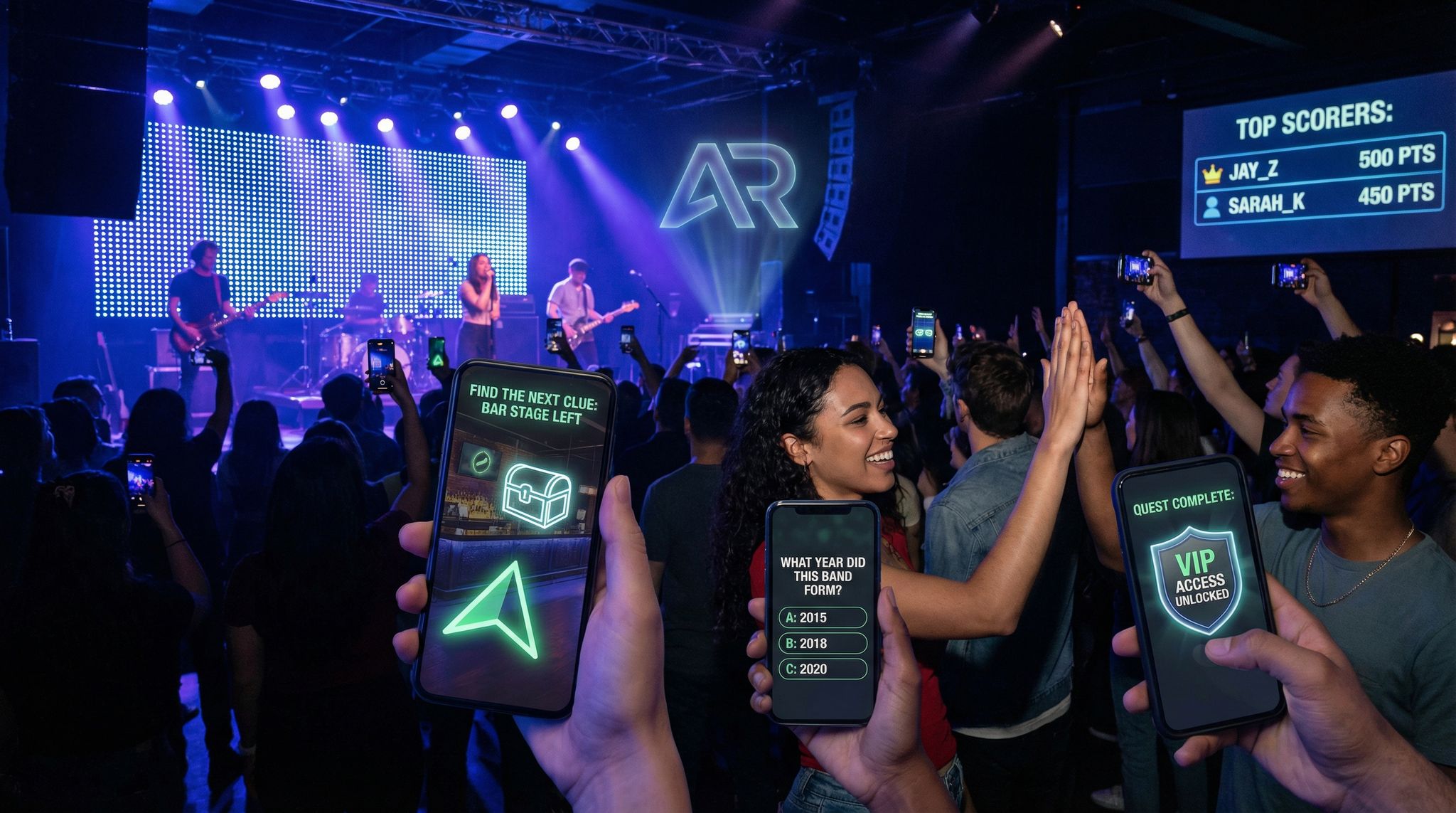
One of the most popular ways to gamify a venue experience is the classic scavenger hunt – supercharged with technology. Venue-wide quests get attendees exploring every corner of the space in search of clues or hidden digital “treasures.” For example, a cutting-edge arts festival in Singapore created an interactive quest called “i Quest” that spread 19 colorful QR codes across its installations (www.ticketfairy.com). Scanning each code transported visitors into a virtual mangrove forest on their phone, illuminating one section at a time, and entered them in prize drawings. Attendees loved the adventure of uncovering every clue. Similarly, music festivals have embraced scavenger hunts where fans collect digital badges at different stages or sponsor booths, earning rewards when they “catch ’em all.” Some events are now layering AR treasure hunts on top of the physical space – when a fan points their camera at various locations, a hidden AR mascot or object pops up for them to collect (www.ticketfairy.com). These challenges tap into our innate desire to explore and compete. The result? Fans actively roam the venue rather than staying static, discovering new attractions (and often spending more along the way). The best hunts tie into the event theme or sponsor activations – for instance, a comic-con might have attendees hunt for AR superheroes, while a food festival’s quest could reveal AR ingredients that form a recipe at the end. By aligning the game with the event’s identity, you ensure the experience feels like an organic extension of the fun.
Creative operators are constantly finding new ways to theme these activities. For instance, a surprise “pardon the interruption” quest can be triggered on venue screens during an unexpected delay or planned intermission, sending fans on a sudden 10-minute mission to unlock a digital reward. Similarly, branded trivia mechanics—such as a pop-culture or “Pokémon concierge” trivia quiz hosted in a family-friendly concourse—can keep highly engaged fans entertained while they wait for the main act. These hyper-targeted, themed micro-games prove that you don’t need a massive budget to create memorable, interactive moments.
Live Polls, Trivia, and On-Screen Contests
Not every game has to be a physical scavenger hunt; sometimes the competition happens right from attendees’ seats. Live trivia and polls are becoming commonplace at concerts and sports matches, usually during intermissions or time-outs. Many venues now use their big screens or dedicated event apps to pose questions to the crowd: “Which album was this next song on?” or “Vote for the MVP of the game.” Fans submit answers on their phones and see live results or leaderboards instantaneously. This kind of real-time participation transforms passive downtime into an engaging group activity. Some arenas take it up a notch with second-screen games that coincide with the action – think predictive contests where fans earn points for guessing the next play in a match, or voting on which song the band should play for the encore. Modern event tech platforms make these interactions seamless, often integrating live polls and Q&A tools that capture audience input instantly for display. Trivia contests can even be themed to sponsors (“How many cans has this beer brand recycled this year? Answer to win a free drink!”), blending promotion with play. And for an extra dose of excitement, venues typically offer prizes for top participants – maybe a shout-out from the stage, a merch bundle, or an upgrade to VIP seating. The prize is less important than the bragging rights and communal energy these contests create. When thousands of people cheer or groan together at a trivia answer reveal, you’ve successfully turned a dull break into a memorable moment.
Turn Fans Into Your Marketing Team
Ticket Fairy's built-in referral rewards system incentivizes attendees to share your event, delivering 15-25% sales boosts and 30x ROI vs paid ads.
Points, Badges, and Digital Rewards Programs
Points, badges, leaderboards – these classic game mechanics are being deployed by venues to keep fans engaged and coming back for more. Many venues now have loyalty apps or digital reward programs that essentially turn attendance and participation into a game. For example, a club might give 10 points each time a guest comes to a show, plus bonus points for checking in early or scanning a QR code at the bar. Fans can redeem points for perks like free coat check, a drink, or exclusive access to a meet-and-greet. It’s the same idea as frequent flyer miles, applied to nightlife. Badges work similarly: attendees earn digital badges for completing certain actions (attending 5 shows in a month, visiting all areas of a festival, answering 10 trivia questions correctly, etc.), and those badges unlock rewards or status. The psychology of collecting can be powerful – fans will strive to earn that “VIP Superfan” badge if it’s tied to recognition or goodies. Some venues even publicly display top point-earners on leaderboards (with consent), tapping into friendly competition. The key is to make these programs easy to use and valuable. A good digital rewards system is typically integrated into the venue’s mobile app or ticketing platform so it tracks actions seamlessly. It should also offer rewards people care about: discounts, access, merch, or unique experiences rather than trivial prizes. By framing engagement as a game – “level up for attending more shows” – venues not only incentivize repeat attendance but also collect useful data on their most loyal patrons. It’s a win-win approach that’s becoming a staple of venue marketing, complementing other audience engagement strategies that build community year-round.
Leaderboards and Friendly Competition
A little competition can supercharge any gamified experience. That’s why you’ll find live leaderboards popping up on screens at events to showcase top participants. Whether it’s the fastest scavenger hunt completion times, highest trivia scores, or most steps danced during a DJ set, people love seeing their name rankings. Public leaderboards at a venue serve two big purposes: they reward the leaders with their 15 seconds of fame, and they nudge everyone else to keep playing (“Look, only 50 points behind – we can catch up!”). For instance, a conference that ran a venue-wide QR scavenger hunt displayed a rolling top 10 list on a lobby monitor; attendees would cluster around to see who was winning and it spurred thousands of extra booth visits as teams vied for first place (www.ticketfairy.com). In sports stadiums, some teams have experimented with section vs. section contests – the scoreboard might show which seating section is leading a trivia game or which has cheered the loudest (measured via smartphone mics or sound meters). This collective gamification gets entire blocks of fans cooperating and competing at once. The best part is you don’t need expensive hardware – many event apps include a leaderboard feature, or you can update a simple web page and show it on screens. Just be sure to reset or conclude the competition at a logical point (end of intermission or post-show) and celebrate the winners. A short recognition from the stage (“Let’s hear it for our top trivia champion in Section 104!”) or a small prize can cap off the friendly contest and give everyone something to strive for next time.
Grow Your Events
Leverage referral marketing, social sharing incentives, and audience insights to sell more tickets.
Stadiums & Arenas: Massive-Scale Engagement Case Studies
AR and Gamified Experiences in Pro Sports
Large stadiums have become hotbeds of AR innovation as teams seek to keep tens of thousands of fans engaged. One standout example is the use of AR games during breaks in play. The Minnesota Twins were one of the first MLB teams to pilot a shared augmented reality experience at Target Field (www.mlb.com). Using the ARound platform, fans across the stadium could join the same AR game – for instance, a virtual “duck hunt” on the field where everyone scores points by aiming their phones at flying digital targets. This mass multiplayer AR turns a lull (like pitching changeovers) into a fun competition visible through your phone. NBA and NFL teams have followed suit with similar concepts. The Los Angeles Rams’ app offers AR mini-games that come alive in the stadium – think virtual footballs to catch in your seat or an AR t-shirt cannon where you tap your screen to “grab” swag. Shared AR is powerful in venues because it creates a collective wow-moment; entire sections are laughing and competing simultaneously, which amplifies the energy. According to the ARound platform’s founder, the goal is tapping into young fans’ desire to “gamify the world” around them (www.axios.com). With franchises from the Kansas City Royals to the Cleveland Cavaliers adopting AR games, it’s clear that major sports see this as the next frontier in fan engagement. And the benefit isn’t just fun – it keeps fans in their seats longer and more attentively, which is exactly what teams (and their concession partners) want.
Deepening Engagement with Live Data and AR Stats
Stadiums are also using augmented reality to deliver information in more engaging ways than a static program or scoreboard. AR stat overlays allow fans to point a device at the field or court and see contextual details pop up. At some NASCAR races, for example, aiming your phone at the track can display driver stats, current speeds, and AR arrows tracking cars – giving the feel of a video game HUD in real life. In baseball and cricket, one can imagine pointing your phone at the pitcher and seeing their throwing speed and pitch type in real time. This isn’t fantasy – trials of these features have been underway. The idea is to cater to the modern fan’s appetite for data and second-screen content. Rather than distracting from the game, AR can enhance understanding and immersion. When fans have more insight (like knowing a player’s shooting percentage as they line up a free throw), it can deepen emotional investment in each moment. One case study from a major sports franchise showed that by deploying real-time AR data overlays and immersive replays, they increased fan participation and emotional connection significantly (nextartech.com) (nextartech.com). Fans felt closer to the game, almost like co-analysts rather than passive observers. This approach also appeals strongly to younger, tech-native fans who are used to interactive media. It’s worth noting that implementing live AR data requires tight integration with stats providers and broadcast systems, but leagues are moving fast in this direction. The tech consultancy Deloitte helped launch an AR app for the U.S. Golf Open that let viewers explore 3D maps of each hole and track players shot-by-shot – it generated millions of fan interactions and became a landmark sponsor activation (remo.co). As AR stat features become more common, expect stadium experiences to blend sports and e-sports style elements, giving fans new ways to engage with every play.
Second-Screen Games Keep Fans Off Their Phones (Ironically!)
During any game’s downtime – halftime, quarter breaks, pitching changes – fans often instinctively reach for their phones. Rather than fight that behavior, venues are embracing it by providing second-screen games and contests that keep fans focused on the event. Many pro arenas have integrated quiz games, predictive challenges, or even AR scavenger hunts accessible via the team’s mobile app. For example, a basketball arena might run a “Guess the Next Play” game where fans predict whether the next possession will result in a 2-pointer, 3-pointer, turnover, etc., accumulating points for correct answers. Others do virtual treasure hunts inside the stadium: the jumbotron displays a clue, and fans use an app to find a virtual prize hidden somewhere in the seating bowl (e.g. an AR basketball that “appears” when you aim your phone at center court from your section). These mini-games take a behavioral reality – phone usage – and turn it into part of the event, rather than a distraction. They’re particularly useful for engaging younger spectators who may not have the patience for a 3-hour game without interactive elements (www.axios.com). Early adopters have found that when interactive content is offered, fans spend less time aimlessly scrolling social media and more time interacting with the venue’s own app or screens. In essence, the second screen becomes an extension of the first. The key is to synchronize these games with the live action and keep them simple. A game that can be joined in 10 seconds and understood at a glance works best in the live context. As a bonus, these platforms often capture valuable data (emails, answers, preferences) that the team or venue can use later for marketing. It’s a strategy that keeps fans entertained and connected, even when the players are catching a breather.
Boosting Dwell Time and Revenue in Arenas
Engagement isn’t just an intangible win – for large venues, it directly ties to the bottom line. AR and gamification initiatives in stadiums have a clear impact on dwell time (how long fans stay) and spending per head. The formula is simple: entertained fans linger longer, and the longer they stay, the more likely they are to buy another beer, snack, or souvenir. Stadium operators have observed this effect anecdotally for years, but now data is starting to back it up. One industry analysis found that immersive fan engagement tools – from giant in-venue video games to AR activations – ensure spectators remain active contributors rather than passive viewers, improving dwell time and generating incremental revenue (www.avnetwork.com). Think about a fan’s journey: if a post-game AR challenge encourages people to stick around 20 minutes after the final whistle to win a prize, that’s 20 more minutes of concessions being open and parking lots still full. Some teams have even introduced gamified incentives like points for those who stay until the very end of a match (redeemable for discounts on future tickets), specifically to combat early departures. On the sponsorship side, more time on site and higher engagement means more exposure for partner brands. A sponsored AR photo booth or an interactive halftime contest presented by a sponsor can significantly increase the impressions and fan interactions that sponsor receives. In fact, venues are starting to sell gamified experiences as part of their sponsorship packages – offering a brand the chance to be “the game” that everyone plays. This new inventory can command high value because it’s an interactive touchpoint, not just a banner. All told, AR and gamification turn engagement into extended time and money spent at the venue, making it a compelling strategy not just for fan experience but for financial performance as well.
Data-Driven Event Marketing
Track ticket sales, demographics, marketing ROI, and social reach in real time. Exportable reports give you the insights to make smarter decisions.
Music Festivals & Concerts: Adventures Beyond the Stage
Festival-Wide Quests and Interactive Missions
Outdoor music festivals and multi-stage events are a perfect canvas for gamification – after all, these events already encourage wandering exploration. Many festivals in 2026 are rolling out event-wide missions to guide attendees through all the attractions. For instance, at a major EDM festival in Europe, organizers hid QR codes at each stage and art installation; if fans scanned them all, they unlocked a secret lineup announcement for next year (plus a badge and prize entry). The game drove attendees to visit stages they might have otherwise skipped. AR scavenger hunts are also making waves at festivals. Coachella, always an innovator, has used AR in its mobile app to overlay virtual art on the festival grounds – one year, fans could hunt for AR butterflies fluttering around the venue through their phone cameras, a digital Easter egg that had people talking. Another example is Boomtown Fair in the UK, known for turning its entire site into an immersive story game. Attendees receive clues and solve challenges embedded in the environment (some high-tech, some old-school) to influence a live narrative. This is gamification taken to the next level, mixing immersive theatre with treasure hunt mechanics. The takeaway for venue operators is that festivals thrive when you give people reasons to explore. A well-crafted quest can disperse crowds more evenly (easing pressure on main stages), highlight sponsor zones, and give festival-goers a deeper sense of discovery. Just remember to align the quest with the festival vibe – a eco-themed festival might have a sustainability quiz trail, whereas a comic convention could have fans find AR superheroes around the venue. With the right theme, these quests become a memorable part of the event lore that keeps fans coming back annually.
Augmented Reality on the Concert Stage
Musicians and concert producers are also leveraging AR to enhance performances in real time. If you attended a cutting-edge arena show in 2025, you might have seen fans holding up phones during specific songs – not just to record video, but to view special AR effects. Coachella famously partnered with AR tech to create an immersive stage experience in its Sahara Tent, where at designated moments attendees could use the festival app to see 3D visuals and creatures synchronized to the music (www.engadget.com). These effects, visible only through the phone camera, ranged from planets orbiting the DJ to virtual spray-paint tagging the stage. Similarly, some artists have begun including AR moments in their tours; pop star Billie Eilish experimented with an app that let fans see animated avatars on stage with her when viewed through their screens. The rock band Muse has used AR graphics in live shows viewable via an app, adding a digital layer of storytelling to their set. While some purists worry that this encourages more screen time, the trick is to use AR sparingly at the most epic points of a show – it can elevate a climax or transition in ways that pyrotechnics or lighting might not. Also, because it’s optional (only those who want to look through their phone will see it), it doesn’t detract for everyone else. As AR production becomes easier, we can expect more tours to incorporate it for wow-factor moments. Venues should collaborate with artists on these efforts, since the infrastructure (like strong Wi-Fi and maybe triggers tied into video screens) often requires venue support. It’s a differentiator that can make a concert truly unforgettable, blending the physical and digital spectacle. And from the venue’s perspective, having the reputation as an “innovative, tech-friendly” site can attract more forward-thinking artists and productions.
Social Media Challenges and Digital Rewards
Festivals and concerts are inherently social experiences – and gamification can amplify the social buzz if done right. One strategy venues use is launching social media challenges tied to the event. For example, a club might encourage attendees to post a creative photo from the night with a specific hashtag, effectively turning it into a contest. The post with the most likes by the next day wins free tickets to the next show, or VIP upgrades. This game not only engages the people at the event, but also broadcasts the experience to their friends online (free marketing!). AR can play a role here too: festivals have been creating custom AR face filters and lenses for Instagram/Snapchat that fans can use when posting from the event. In 2026, it’s common to see attendees using an event-branded AR filter – maybe it paints their face in the festival colours or adds a virtual mascot dancing on their shoulder in the video. These fun addons encourage more sharing. Consider the viral potential: a unique AR lens could turn your venue into the next social media sensation, much like how cleverly designed installations do, as noted in our guide to Instagrammable venue moments. Beyond social media, digital rewards can be distributed as part of games. Some festivals partner with sponsors to give out digital coupon codes or virtual tokens when fans complete a challenge (e.g. “collect all 5 stage stamps and get a code for 20% off festival merch”). These rewards cost little to provide but have a high perceived value. They also tie the gamified activity back to tangible benefits, which motivates more participation. The goal is to generate a feedback loop: fans play the game, share their progress or victory on social media, which entices others to join in and amplifies the event’s visibility online. In essence, everyone wins – fans have more fun and score perks, and the event gets organic promotion and goodwill.
Sponsor-Fueled Activations and Prizes
Festival gamification opens up a world of creative sponsorship opportunities that go far beyond banners and logos. Brands are eager to be part of these interactive experiences because they offer deeper engagement with attendees. Venues can collaborate with sponsors to create branded games or AR content that offer mutual benefits. For example, a beer sponsor might support an AR mini-game where players “catch” virtual beer cans around the festival (ala Pokémon Go style); every participant could get a discount on that beer at the bar, and top scorers win branded swag. This drives people to the sponsor’s product in a fun way. We’ve seen tech sponsors underwrite AR photo booths or scavenger hunts that tie into their brand story – a tech company could have an AR challenge where finding codes around the site reveals sustainability tips, aligning with a CSR message, and by completion you earn a chance at a big prize from the company. The key is that sponsors can provide desirable rewards (from free samples to VIP upgrades or even cash prizes) that turbocharge participation. In one case, a sponsorship-driven AR app for a golf tournament (the US Open) became one of Deloitte’s most successful campaigns, generating millions of fan engagements and massive exposure for the firm (remo.co). The sponsor’s content wasn’t an interruption, it was the experience – and fans embraced it because it was genuinely entertaining. Venue operators should pitch these kinds of activations as premium sponsorship inventory: they deliver measurable interactions (scans, game plays, sign-ups) and great brand recall. Just ensure the game still prioritizes attendee enjoyment; if it feels too much like a pure advertisement, people won’t engage. When done right, though, sponsors essentially subsidize the fun, and everyone leaves happy.
Clubs, Theaters & Smaller Venues: Intimate Gamification
Low-Tech Games to Energize the Crowd
You don’t need an app or an arena-sized budget to gamify the experience at a small venue. Neighborhood clubs and theaters have long engaged patrons with simpler interactive traditions – and those can be given a modern twist. Think of the classic “dance-off” contest in a nightclub: it’s essentially gamification on the dance floor, with a winner decided by crowd applause. In 2026, venues are formalizing some of these low-tech games. A comedy club might do a live vote via SMS or a show-of-hands decibel meter to pick which improv sketch to perform next, turning the show order into an interactive choice. A small music venue could run a between-sets trivia question (“Name the year this venue opened”) and have people shout answers or submit via a quick poll URL, giving the first correct responder a free drink. Even something as simple as a themed bingo or scavenger hunt card can work: for instance, a theater hosting a long movie marathon handed out bingo cards with squares like “famous catchphrase said” or “explosion happens,” and attendees checked them off during the show for a prize. The common thread is encouraging guests to pay closer attention and have fun with what’s happening in real time. These approaches don’t require advanced tech – often just an emcee with a mic, or basic tools like QR codes leading to a Google Form. The point for smaller venues is to foster a sense of community and playfulness. When your audience feels in on something together, it elevates the whole night. And as an added benefit, it can prompt folks to stay through an entire event (no one wants to leave early and miss out on the conclusion of a contest they’ve been part of all evening).
Smartphone Apps for On-Site Interaction
Many intimate venues are starting to leverage event apps and web tools tailored for smaller crowds. You might think apps are only for big concerts, but even a 200-person club night can use simple mobile interactions to great effect. Second-screen services like Kahoot! (for live quizzes) or Poll Everywhere (for live polls) are affordable or free and allow anyone with a phone to join in. A jazz club, for example, could run a live quiz during intermission asking questions about the artists’ backstories, with results and winners shown on a small screen or just announced. The barrier to entry is low – attendees just go to a web link on their phone. Some forward-thinking theaters have their own mini-app or use the ticketing platform’s app to engage audiences. They might include a “live feedback” feature where viewers can, say, rate their favorite song from Act I or answer a prediction (“Which character will win the final duel? Vote now!”). One off-Broadway theater even experimented with a choose-your-ending format via app voting – at a pivotal moment the audience picked which of two endings to perform, making each night unique. For venues that don’t want to build an app, QR codes posted around the space can do the trick: scan here to play a quick game or answer trivia. A pub venue could scatter codes that each trigger a fun AR animation or tell a piece of a story when scanned, turning the whole bar into an interactive gallery. As we saw in the gamified attendee engagement tech toolkit, there are many plug-and-play solutions for real-time interaction. The bottom line is that even smaller venues can punch above their weight with digital engagement – it’s often the novelty at that scale that makes it memorable, since most people don’t expect a tiny club to have its own “interactive app-driven game night.”
Loyalty and Repeat Attendance Games
For local venues that rely on core regulars, turning loyalty into a game can keep the crowd coming back week after week. Gamified loyalty programs go beyond the old paper punch-card approach. Many 2026 venues use their ticketing or CRM system to track attendance and incentivize repeat visits. For instance, a theater might establish a program where seeing each new play in a season earns you a puzzle piece (digital, of course); collect all pieces and you unlock an invitation to an exclusive cast party. Small music venues have tried “tourist vs. local” challenges – if you visit all venues in a city’s indie circuit (a fun way to partner with other clubs) you win a “VIP city music pass” or bragging rights. The data from these programs also feeds into how venues plan future events and marketing. A great example is an Australian bar that created a digital scavenger hunt across its weekly shows: attendees got a QR stamp each time they came to a show, which gave them points, and a live leaderboard in the bar showed the top attendees of the month. It became a friendly competition among regulars to see who was the biggest live music fan, and winners earned a free tab at month’s end. Not only did attendance on weeknights increase, but the venue built a tight-knit community since people recognized each other as they chased points. This illustrates a key benefit for smaller venues: gamification can foster a tribe mentality among your audience. When patrons feel like they’re part of a fun ongoing challenge or club, they’re more likely to choose your venue over others. Plus, the word-of-mouth practically markets itself (“I’m only two shows away from Platinum status at The Jazz Den – come with me Thursday!”). Implementing these programs can be as simple as using unique QR codes on tickets or a Google Sheet tally, though more polished solutions exist via event platforms that can integrate loyalty tracking. The effort pays off in stronger patron loyalty and steadier attendance figures.
Partnering with Performers for Interactive Shows
An often underutilized strategy at smaller venues is collaborating with the artists themselves to add interactive flair. Performers are usually game (pardon the pun) for creative ideas that engage the audience, as it makes their show more memorable too. For example, a touring band might agree to a setlist voting game: before the show, ticket holders vote on one or two songs they want to hear in the encore via an online poll. The results stay secret until the encore when the band announces “you voted for this one!” – it gives the crowd a sense of ownership in the performance. Comedians sometimes do live Q&A via text or app where audience members submit jokes or topics and the comic riffs on the best ones – effectively a gamified suggestion box. In theater, some productions (particularly improv troupes or experimental plays) hand minor decision power to the audience, like choosing a character’s name or picking a volunteer to cameo on stage, all of which can be structured as a game or random draw. The key is that the venue and artist work together so the gamified element fits the artist’s comfort level and the show’s tone. When it clicks, it’s a win-win: the artist gets deeper engagement and likely a more enthusiastic crowd, and the venue differentiates itself as a place for unique interactive shows. Don’t be afraid to propose an idea to performers – many will have their own creative twist if you open the door. Even something as small as a secret phrase challenge (e.g., the singer hides a specific lyric in one of their songs and offers a prize to anyone who catches it and tweets the correct timestamp) can turn a regular gig into an interactive experience. As an operator, be sure to highlight these special elements in your marketing – it’s a great hook to draw audiences when they know they won’t just see a show, they’ll play a part in it too.
Implementing AR & Gamification: A Roadmap for Venue Operators
Set Clear Goals for Engagement
Before diving into any new technology or game concept, a venue operator should start by defining what success looks like. Is your primary goal to increase fan engagement during specific downtime (like intermission)? To boost dwell time after the show so people stay for another drink? To collect more fan data and emails? Or perhaps to drive repeat attendance through a loyalty game? Clarifying the objectives will guide every other decision. For example, if your goal is to increase merchandise sales, your gamification might revolve around a digital scavenger hunt that leads fans into the merch area (and perhaps offers a discount code as a prize). If the goal is to make a venue more approachable to families, maybe create an AR treasure hunt designed for kids. Setting 2-3 key Key Performance Indicators (KPIs) – such as participation rate, increase in concession sales, or social media shares – will help you measure if the strategy works. Be realistic and specific: “We aim to have at least 30% of attendees actively use the new AR feature,” or “Our target is a 15-minute increase in average time on premises post-event.” Having these targets in place not only focuses your approach, it also helps in conversations with potential sponsors or stakeholders (“Here’s what we’re trying to achieve and how we’ll measure it”). It transforms gamification from a vague cool-factor project into a business-driven initiative. And remember, engagement itself can be a goal – many venues simply recognize that a more engaged fan is likely to spend more and return more, even if it’s trickier to quantify. Still, try to attach numbers wherever possible so you can evaluate later on.
Choose the Right Platforms and Tools
Once goals are set, the next step is figuring out how to execute the experience technically. This means choosing the platform, app, or tool that fits your needs and budget. There’s a wide spectrum here: from leveraging existing social media (like doing an Instagram hashtag challenge or Snapchat AR lens) which is low-cost, to fully custom venue apps with embedded AR games. If you’re a smaller venue or new to this, start simple. Plenty of third-party event engagement apps offer scavenger hunts, live polls, and AR without any coding – you can basically subscribe to a service and get a customizable game to deploy. For instance, some conference apps have scavenger hunt modules where you just input the clues and locations. There are also web-based options (no app download required) where attendees scan a QR code and instantly join a game or AR experience in their browser. This is great to reduce friction in participation. On the AR side, consider whether you piggyback on popular platforms: creating a custom Snapchat or Instagram AR filter for your event can be remarkably effective because fans use an app they already know. The Snap/Live Nation festival partnership shows that using social AR platforms can yield huge engagement without needing everyone to download a separate app (remo.co). If you do want an event-specific app for deeper integration (maybe you already have one for tickets/entry), check if it can integrate games – many modern event tech vendors can collaborate or integrate via SDKs. Some ticketing platforms (like Ticket Fairy and others focused on independent venues) have open APIs or built-in marketing features that you might repurpose for gamification. Budget and complexity are factors too: a custom AR game built from scratch will be pricier and riskier, so weigh that against using an off-the-shelf solution where the heavy lifting is done by someone else. Read case studies of what similar venues have used; there’s no need to reinvent the wheel if a tool out there already does what you need. In summary – match the tool to the task and your audience. If your crowd is not very techy, a simple web quiz might outperform a fancy AR app that they won’t bother to download. Ease of use is king.
What to Expect During an AR Demonstration for Venues
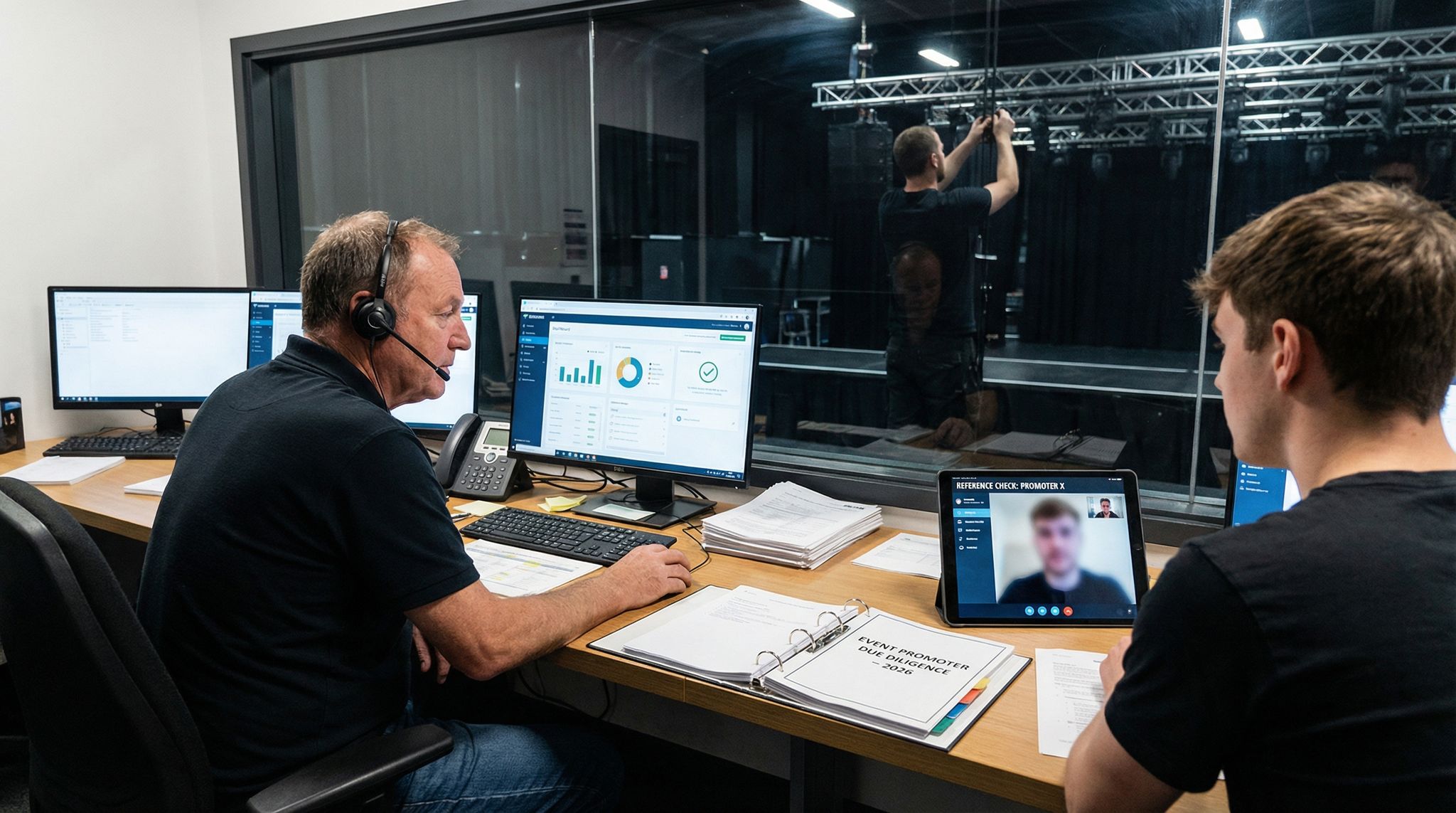
Once you’ve narrowed down your software choices, you will likely schedule a walkthrough with a vendor. If you are asking yourself, “what should I expect during an AR demonstration for venues?” the process is usually highly interactive and tailored to your specific floor plan. Typically, an augmented reality demonstration for public venues begins with a review of the platform’s documentation, features, and capabilities. Vendors will show you the backend dashboard where you manage 3D assets, set GPS or visual triggers, and track user analytics. Next, expect a live or simulated front-end demo. The rep might have you download a test app or scan a QR code to experience the overlays exactly as a fan would—whether that is seeing virtual wayfinding arrows in your lobby or a digital mascot hovering over your stage. They should also cover critical infrastructure requirements, such as the Wi-Fi bandwidth needed to support thousands of simultaneous users and how their SDK integrates with your existing ticketing or venue app. Come prepared with a map of your space and questions about battery drain, offline caching, and onboarding friction.
When evaluating these platforms, you might wonder exactly what features should I look for in an AR demo for venues? Prioritize tools that offer a user-friendly content management system (CMS) so your marketing team can update 3D assets without writing code. You should also check for robust spatial mapping capabilities, which ensure digital objects anchor correctly to physical structures like stages or concourses, even in low-light conditions. Finally, insist on seeing the platform’s real-time analytics dashboard during the demonstration. Understanding how the software tracks user engagement, dwell time, and interaction hotspots is crucial for proving ROI to your stakeholders and sponsors.
Promote Participation and Onboard Your Audience
Even the coolest AR game or contest will flop if fans don’t know about it or understand how to join. Promotion and onboarding are therefore critical to success. Start building excitement for your gamified elements before the event if possible – tease it on social media (“Download our app before the show for a special AR surprise!”) or include a mention in the pre-show email reminder (“Arrive early to participate in our venue-wide treasure hunt and win prizes.”). At the event itself, use every channel available: signage at entry, announcements from the stage or MC, push notifications on the app (if they have it), and staff word-of-mouth. Clear instructions are key: if it’s an AR photo op, maybe have a poster with “Step 1: Open Instagram, Step 2: try our AR filter by searching [filter name]” and so on. Some venues literally have a short demo video looping on screens in the lobby that shows people how to play the scavenger hunt. Another effective tactic is to do a soft launch of the game with staff or insiders before doors open, to make sure everything is working and also to seed some initial activity. You could have staff already on the leaderboard or a few “plants” in the audience who start playing energetically, which can spur others to follow. Social proof helps too – if people see others scanning QR codes or waving their phones around at AR targets, curiosity will drive them to join. During the event, gentle reminders help sustain engagement (“Don’t forget to keep hunting those QR codes – 15 minutes left to find them all!”). Our guide on training event staff on new tech underscores that staff should be well-versed in the experience so they can assist anyone confused about how to participate. Basically, assume zero knowledge on the part of attendees and hand-hold them into the fun – once they’re in, the intrinsic enjoyment will take over.
Test, Safety-Check, and Scale Up Gradually
When introducing AR or gamified components, it’s wise to start small and test thoroughly. Technical issues or poor design can sour the experience, so do a dry run whenever possible. If it’s an app or AR feature, test it on different phone models and in real-world conditions at your venue – what looks great in the office might falter when 500 people all try to use the Wi-Fi at once. Have a backup plan (or an offline mode) if connectivity fails; many games allow caching or delayed sync to handle patchy internet, which is a useful feature to seek out (www.ticketfairy.com). From a safety perspective, consider how the game might influence crowd movement and behavior. The last thing you want is people tripping or bottlenecking because they’re glued to a scavenger hunt on their phones. If your game involves moving around the venue, make sure clues are placed in safe, accessible areas and maybe avoid during peak crowding moments. You can coordinate with your security team to monitor if any areas get unexpectedly congested due to the game and adjust on the fly. Starting with a pilot program – maybe trial the gamification on a single night or a small section of the venue – is a smart way to work out kinks. Gather feedback: ask a sample of attendees if they enjoyed it, found it easy, etc., or look at the participation data to see where drop-offs occurred. Then refine the experience before rolling it out broadly. Once you have a well-oiled concept that fans like, scaling up is the next step. That could mean expanding the game to all events, adding more features (perhaps going from a basic QR hunt to an AR hunt after seeing good uptake), or incorporating bigger prizes and sponsors now that you can prove the engagement metrics. The idea is iterative improvement. One event might teach you that the trivia quiz was too hard (so you adjust difficulty), or that the AR feature crashed on older Android phones (so you’ll update the app). Treat it as an ongoing project, not a one-and-done stunt. By constantly polishing the gamified elements, you’ll ensure they continue to delight audiences rather than fizzle out after the novelty wears off.
Train Your Team and Communicate
Bringing interactive tech into your venue isn’t a “set it and forget it” situation – it requires a team that’s prepared to support it. Start by getting buy-in from staff and crew. Explain the why: how this will enhance the fan experience and benefit the venue (happier guests, more revenue, etc.). Then delve into the how: run training sessions on the tools being used. If it’s an AR app, have staff install it on their own devices and play with it so they understand exactly what guests will see. For gamification like scavenger hunts, ensure front-of-house staff know the locations of clues and what to say if someone is stuck. Nothing’s more frustrating for an attendee than asking a staff member about the game and getting a blank stare. Designate a point person (or team) for the interactive elements – a sort of “gamification concierge” – especially during the first few runs. This could be a tech-savvy staffer or even a volunteer whose job is to roam around helping people join the game or troubleshooting issues (“Here, let me show you how to access the AR filter on your phone”). Also plan for the operational side: if your contest has prizes, who is handling the prize distribution? If there’s a live leaderboard, who’s updating it or ensuring it displays correctly? These roles should be clearly assigned. Communication across departments (security, operations, marketing) is also key, so everyone knows the schedule of interactive moments. For example, security should know if a sudden crowd rush might happen when you announce “first 50 people to the merch stand get a prize as part of the game.” Marketing should be looping back any data or user-generated content from the game for post-event follow-up. Essentially, treat the AR/gamified component with the same professionalism as any production element of your show. It should be in the run-of-show plan. And after the event, debrief with the team: gather their observations on what went well or what questions attendees had. Continuous training and communication will turn your staff into champions of the new tech rather than reluctant participants. When the whole team is on board, the execution of these experiences becomes seamless to the audience.
Monetization and Sponsorship Opportunities
Sponsored Games and Branded Rewards
Integrating sponsors into AR and gamification initiatives can open up new revenue streams for venues. Brands are constantly seeking engaging ways to connect with live audiences, and your interactive experiences are prime real estate. Consider offering a sponsorship package where a company presents the game or AR feature – for example, a local brewery sponsors your venue’s scavenger hunt, so every clue found might display the brewery’s logo and maybe a fun fact about their beers. In return, perhaps the final prize is a VIP brewery tour for the winners, courtesy of the sponsor. This kind of value-added sponsorship goes beyond a static banner ad; the brand becomes part of the attendee’s fun. We’ve seen beverage companies, tech firms, and even universities sponsor venue games. One successful approach is branded digital rewards: a coffee chain could sponsor a challenge that gives all finishers a coupon for a free latte in their app. The fans appreciate the reward, and the sponsor drives foot traffic to their business. It’s important, however, to maintain authenticity – the game should stand on its own merits and not feel like a pure advertisement. The sponsor’s presence should be integrated, not intrusive. If done well, the result is powerful. A study of fan activations showed that branded interactive experiences significantly boost sponsor recall and favorability, since attendees associate the brand with a fun memory rather than a sales pitch (www.ticketfairy.com). When pitching to potential sponsors, highlight those engagement numbers: e.g., “70% of concert-goers participated in our last photo challenge, scanning sponsor logos 5,000+ times in the process.” This demonstrates clear ROI for the sponsor. In fact, forward-thinking venues are increasingly leveraging such innovative sponsor activations to differentiate themselves in the market. If your venue can offer an AR game that engages thousands, that’s a compelling case for a premium sponsorship deal.
Boosting Concession and Merchandise Sales
Gamification strategies can be tailored to directly drive food, beverage, and merchandise revenue – a lifeblood for many venues. One way is to make spending itself part of the game. For example, you might implement a “Fan Quest” where buying certain items earns you points or clues. A stadium in Asia tried a game where each different food stall had a unique QR code; fans who sampled from at least five stalls got entered into a draw for a signed team jersey. This kind of game increased cross-concession spending and encouraged people to explore more of the venue’s offerings. Another tactic: tie challenges to new products you want to promote (“Try our special themed cocktail and scan the code on the coaster to instantly win merch discounts”). By doing so, venues saw on-site spending jump by over 20% as attendees had fun trying new products in pursuit of points and prizes (www.ticketfairy.com) (www.ticketfairy.com). Merchandise sales can also get a boost. A concert hall might hide an AR marker near the merch table that gives those who scan it a limited-time discount code – effectively gamifying the act of shopping. And once people are at the merch booth, they often buy something even without the discount. It’s a gentle push to get fans to engage with revenue centers on site. The data from a gamified approach can also inform F&B operations. If your app shows 500 people completed a task at the beer garden, you know that activation drove traffic there, justifying maybe continued promotions or improved service in that area. Some venues even report that the novelty of interactive promos generates social media buzz (“I just won a free poster for buying popcorn, how cool is this place?!”), which can indirectly draw more patrons in the future. In sum, by creatively linking games with spending opportunities, you not only entertain your guests but also encourage them to open their wallets – and they’ll be happier doing so because it feels like part of the fun rather than a sales push.
Data Goldmine: Insights and Marketing Follow-Up
Every tap, scan, or click that a fan makes in a gamified experience can translate into valuable data for the venue. Unlike passive attendance, interactive participation often lets you learn who your audience is and what they care about. For instance, requiring fans to register in the event app or game with an email or social login (in a frictionless way) gives you a direct line to them for future marketing – always ensure you’re transparent and compliant with privacy laws, of course. Beyond contacts, the patterns of game play yield insights: which clues were most found, what trivia questions stumped everyone, how many people completed the quest versus dropped off halfway. These behaviors tell you about fan preferences and engagement points. Perhaps you discover that 80% of participants gravitated to one particular AR photo-op; that might inform you that the subject of that AR (say a virtual dragon) is hugely popular, and maybe you should incorporate that theme more broadly in your venue decor or future events. Survey data can be baked in too – a quick poll within the game (“Which act are you most excited for tonight?”) not only engages the fan in the moment but also gives you intel on lineup popularity. Post-event, you have a trove of metrics and identifiers to work with. You can feed these into your CRM or marketing tools to send tailored follow-ups: e.g., an email saying “Congrats on conquering the scavenger hunt! Here’s 10% off a ticket to our next event.” Because the message references what they did, it feels personal and rewarding, likely yielding better conversion. Additionally, you can segment the audience for future outreach – those who participated vs. those who didn’t might get different messaging (“We noticed you didn’t try our AR game – here’s what you missed and how to join next time”). These kinds of approaches are part of building an ongoing community, similar to year-round attendee engagement strategies that keep the excitement alive between shows. In essence, gamification tools double as research tools. By analyzing the data and feedback, you continuously refine not just the games, but your overall programming and marketing to better fit what your audience wants.
Building Loyalty and Community
When fans engage more deeply at your venue through games and AR, they often form a stronger emotional connection – not just to the event, but to the venue itself. This sense of community and loyalty can translate into long-term benefits like word-of-mouth promotion and repeat attendance. Gamified experiences frequently encourage teamwork or friendly competition, which means strangers in the venue might actually talk to each other (“Have you found the third clue yet? Any idea what it is?”). These micro-interactions foster a camaraderie that people then associate with your venue. Some venues lean into this by creating social spaces (online or on-site) for participants – for example, a private Facebook group or Discord channel for the “Venue Superfan Club” where those who frequently play and win games get to interact. It’s an extension of the gamification that builds a community around your space. Loyalty programs with game elements, as discussed earlier, give fans a sense of progression and status (“I’ve reached Gold level at this club because I attend so often”). Publicly recognizing these achievements – say, an annual leaderboard of top attendees or a small wall-of-fame – can make your most dedicated patrons feel like local celebrities. The Music Venue Trust in the UK often notes that it’s the personal touches and sense of belonging that keep grassroots venue audiences loyal in the face of competition. Gamification, oddly enough, can provide those personal touches at scale. Even a digital badge saying “Charter Member – 5 Year Patron” has meaning. All of this contributes to a virtuous cycle: a loyal fan base is more likely to give you honest feedback, help market your shows, and even weather occasional disappointments (like a long line or a show running late) because they care about the venue. In business terms, high customer loyalty means steadier revenue and lower marketing costs. And in human terms, you’re turning your venue from just a place that hosts events into a community hub where experiences – both real and virtual – bind people together. That’s a tough advantage for any competitor to replicate.
Navigating Challenges and Best Practices
Balancing Technology with the Live Experience
As exciting as AR and gamified activities are, it’s important to strike a balance so that technology enhances rather than detracts from the live event. One concern is the “heads-down syndrome” – people glued to phones when they should be watching the stage. We’ve all seen the critique of too many screens at concerts. To address this, design your interactive elements to be additive and optional. For instance, trigger AR moments only during appropriate times (like intermission or specific songs/scenes designated for AR), and clearly communicate that fans can put phones away at other times. Some venues go as far as having phone-free sections or song moments, an ethos explored in the trend of phone-free concerts for deeper immersion. You can learn from that movement by encouraging respect for the live performance – perhaps encourage AR use in the lobby or concourse rather than mid-show, or use gentle reminders like “Now, let’s put our devices down and enjoy this next acoustic song together – no tech, just vibes.” Another balancing act is sensory overload. With giant LED screens, loud audio, and now AR, an event can become too stimulating. So, integrate tech with intentional pacing. Just as a setlist has ebbs and flows, your interactive features should have a cadence – maybe one big game at the start to energize, something mellow in the middle, and a finale interaction at the end. Ensuring the core event (music, sports, performance) remains the star of the show is crucial. Gamification should never confuse or frustrate those who opt out; design it so non-participants still enjoy the event unhindered. Essentially, think of AR and games as spices, not the main course. Used in the right measure, they bring out the flavor of the live experience; too much, and the original dish gets lost.
Accessibility and Inclusivity Considerations
When introducing high-tech experiences, venues must be mindful that not everyone in the audience has equal access or ability to participate. Inclusivity should be a guiding principle. This means offering alternative ways to join the fun for those without smartphones, or those with disabilities that might make using a phone or traversing the venue difficult. For example, if you run a scavenger hunt via QR codes, consider also having a paper game card version or a trivia alternative so people without phones (or with older devices) can still play along. If an AR experience involves visual elements on a phone, remember attendees who are visually impaired – perhaps an audio component or a descriptive aspect could be added. Some venues have found success with simple analog participation like handing out glow sticks that correspond to app interactions (e.g., “if you completed the challenge, wave your glow stick”) so everyone can see and feel part of the moment. Also be aware of economic disparity: not everyone has unlimited data or the latest smartphone model. Providing free venue Wi-Fi is almost a must if you expect patrons to use their devices heavily for games. For older audience segments or those unfamiliar with AR, ensure staff can gently coach them (as covered, training staff is key) or provide an introductory demo on screens so no one feels intimidated. Another consideration is language – if you have a diverse audience, maybe translate key instructions of the game into a few common languages on the signage or app. The goal is to avoid a scenario where a portion of your crowd feels alienated by the newfangled tech feature. In fact, done right, AR and gamification can enhance accessibility – for example, AR captions for the hearing impaired at a theater, or games that encourage people of different backgrounds to collaborate. The bottom line: design with empathy. Test your experience with a variety of users in mind, including those who might be less tech-savvy, and adjust to make it as welcoming as possible for all.
Avoiding Technical Glitches and Downtime
Nothing kills a high-tech interactive experience faster than technical failures at showtime. A glitchy app or laggy AR filter can frustrate fans and discourage participation. To avoid this, robust testing and contingency planning are your best friends. We mentioned testing in the implementation section, but it bears repeating: simulate the worst-case scenarios in advance. What if 2,000 people all open the AR app at once – can your network handle it? What if the QR code stickers peel off or a clue gets hidden behind a crowds line – do you have spares or alternative clues? Work closely with your IT team or the platform provider to do load testing if possible. If you’re using a popular third-party app (like a Kahoot or similar) it’s usually reliable, but if it’s a custom solution, maybe limit the first run to a smaller audience to see how it holds up. Also, keep everything updated – ensure apps are on the latest version and devices like iPads or kiosks have no expired security certificates or such that could act up mid-event. Now, despite best efforts, things sometimes go wrong. That’s where contingency comes in. If the AR feature won’t load for some users, can you quickly push a text-based message to the app as a workaround clue so they can continue playing? If the whole system crashes, do you have an analog backup (like revert to a manual trivia on the PA system)? Plan out a few “plan B” moves. Additionally, communicate transparently with the audience if something fails. People are surprisingly forgiving when you acknowledge an issue with a bit of humor (“Looks like our trivia game has stage fright! We’re rebooting it now – talk amongst yourselves for one minute.”). Finally, consider scheduling your interactive segments such that a failure won’t ruin the main event timing. For example, don’t plan an essential AR reveal right at the show’s climax – do it slightly before so if it hiccups, it doesn’t step on the headliner moment. By being prepared and nimble, you can turn a potential tech hiccup into just another part of the live experience (and maybe only you and your team will know the difference).
Measuring Success and Iterating
After rolling out AR and gamification initiatives, the work isn’t over – now it’s time to measure impact and learn. Start by reviewing the KPIs you set earlier. Did you hit that target of 30% of attendees engaging with the experience? How many completed it vs. started it? Look at dwell time changes: if you have data from Wi-Fi or even anecdotal bar sales reports, did people stick around longer on average? If you offered a code or coupon in the game, how many redeemed it (a great measure of both engagement and revenue impact)? These hard numbers will give you a sense of the success, but qualitative feedback is just as valuable. Scan social media and post-event surveys for mentions of the AR/gamified elements. Did fans mention it as a highlight? Any recurring complaints or confusion? Sometimes you’ll find a small tweak is needed – maybe clue #5 was too hard or the app instructions weren’t clear to some. It’s important to iterate on what you learn. That might mean adjusting the mechanics (e.g., shorten the scavenger hunt if completion rate was low), improving communication (maybe more signage needed if many didn’t realize a game was happening), or in some cases, rethinking the approach entirely if it didn’t resonate. Don’t be discouraged if the first attempt isn’t perfect. One venue manager shared that their first AR photo booth was barely used – they discovered it was tucked in a corner and not clearly marked, so few knew it was there. Next time, they moved it to a high-traffic spot with a giant “Snap a Selfie with Our AR Mascot!” sign, and engagement skyrocketed. Another valuable practice is comparing different events if you try variations: perhaps Game A at the rock concert got twice the uptake of Game B at the theater show – analyze what factors (audience, promotion, type of game) might explain that. Over time, you’ll build a playbook of what works best for your crowd. And share successes with your marketing and booking teams – if gamification consistently boosts early arrivals or late departures, that could inform how you schedule opening acts or post-show DJ sets (maybe you can confidently program a short bonus performance after the headliner, knowing people will stick around to finish the game). In essence, treat AR and gamification as evolving parts of your venue strategy, with continuous improvement cycles. The audience’s tastes and technologies will keep changing, and by measuring and iterating, you’ll stay ahead of the curve in delivering engaging experiences.
Frequently Asked Questions About Venue AR and Gamification
What should I expect in an augmented reality demonstration for public venues?
When vetting new interactive tech, an augmented reality demonstration for public venues usually entails a comprehensive walkthrough of both the user experience and the operator dashboard. You can expect the vendor to simulate how digital overlays will look in your specific space, test visual or GPS triggers, and thoroughly review the software’s documentation, features, and capabilities. A solid demo will also address backend concerns like SDK integration, Wi-Fi load balancing, and real-time analytics tracking.
How important is reviewing an AR platform’s documentation, features, and capabilities?
It is absolutely critical. Whether you are looking at a specialized tool like GameOn.AR or a broader event app, diving into the documentation, features, and capabilities tells you how easily the tech will integrate with your current systems. Venue operators should look for clear API guidelines, offline-mode support, and robust data capture tools to ensure the platform can handle the demands of a live, high-capacity crowd.
Can simple trivia games work for niche or family-friendly events?
Yes, hyper-targeted micro-games are incredibly effective. For instance, running a niche pop-culture challenge or a “Pokémon concierge” trivia quiz on lobby screens provides immediate, low-barrier entertainment for families waiting in line or relaxing in the concourse. These lightweight gamification tactics keep guests engaged and happy without requiring expensive custom app development.
What features should I look for in an AR demo for venues?
When sitting through a vendor demonstration, focus on three core capabilities: a no-code content management system for easy updates, reliable spatial anchoring that works in crowded or dimly lit environments, and comprehensive backend analytics. These elements ensure the technology is not only impressive to fans but also manageable and measurable for your operations team.