In 2026, the hottest new acts selling out venues aren’t bands or DJs – they’re podcasters, YouTubers, TikTokers, and other social media stars. These content creators are turning their online fame into real-world ticket sales, packing clubs and theaters with devoted fans. In fact, ticket sales for live shows by influencers and podcasters surged nearly 500% from 2024 to 2025. What began as niche fan meet-ups and live podcast tapings has exploded into a mainstream touring segment. For venue operators, “URL to IRL” shows present an exciting opportunity to diversify programming, fill more dates, and connect with new audiences who might never come to a traditional concert.
So how can your venue ride this wave? This comprehensive guide draws on veteran venue operators’ hard-won experience to help you successfully host live podcast recordings and social media star performances. From booking these non-traditional acts and meeting their unique technical needs to marketing shows directly to online fan communities, we cover every aspect. By embracing creator-led events, independent venues and major halls alike can boost their calendars – and their bottom line – in 2026’s evolving live entertainment landscape.
The Rise of Creator-Led Live Shows
From Online Fame to On-Stage Phenomenon
The past few years have seen content creators translate internet fame into in-person success. Podcasters with millions of listeners are taking their shows on tour, and YouTube personalities are staging live versions of their online content. This trend is no longer a novelty – it’s a booming business. Major promoters have taken notice, with top creator tours like Alexandra Cooper’s “Unwell” podcast tour and the Crime Junkie live podcast selling out theaters. Even motivational influencer Mel Robbins drew crowds with her “Let Them” book tour. These examples show that virtually any genre – from true crime and comedy to self-help – can find a live audience.
What’s driving this phenomenon? On one hand, fans crave deeper connection with the creators they follow online. Attending a live show is a chance to see their favourite YouTuber or podcast host up close, share inside jokes, and be part of an exclusive experience. At the same time, creators are seizing the opportunity to expand their brands and revenue. A live tour turns a digital audience into ticket buyers, and often merchandise and VIP package buyers too. Industry reports also indicate that creator tour ticket prices tend to be lower – about 40% less on average than concerts, making these shows accessible to younger fans. This combination of high fan demand and affordable pricing has cemented creator-led shows as a powerful new segment of live entertainment.
Why Venues Should Pay Attention in 2026
For venue operators, the rise of live podcasts and influencer shows is more than just a trend – it’s a chance to stand out in a crowded market. Traditional concerts aren’t the only game in town anymore. As one industry executive put it, content creators have opened “a new lane of mainstream entertainment”. Venues that adapt quickly can capture this momentum. Hosting creator events, especially on weeknights or other slower periods, helps keep your calendar full and introduces your space to entirely new crowds. Many of these fans might be first-timers at your venue, drawn by a specific podcast or YouTube idol. Impress them, and they could return for other events.
Crucially, embracing these non-traditional acts can differentiate your venue amidst rising competition. Instead of competing solely over the same pool of touring bands or DJs, you can carve out a niche by being known as the spot that hosts popular podcasts, streamer meet-and-greets, or comedy YouTuber nights. In a saturated live music market, veteran operators stress that creative programming is key to standing out. By adding creator-led shows, venues from indie clubs to large theaters are defining a unique identity and capturing untapped audiences – all while generating extra income on dates that might otherwise go dark.
Ready to Sell Tickets?
Create professional event pages with built-in payment processing, marketing tools, and real-time analytics.
The Fan Community Advantage
One unique aspect of creator-led shows is the built-in community that comes with each act. Popular podcasters and YouTubers cultivate highly engaged followings through years of online interaction. When they announce a live event, their fans mobilize. These audiences often feel a personal connection to the host – after all, podcast listeners might spend hours a week hearing that person’s voice. That intimacy can translate into intense loyalty and word-of-mouth buzz that most bands would envy. Surveys show nearly half of avid podcast listeners are interested in attending live shows of their favorite podcasts, indicating strong potential demand.
For venues, this means marketing creator events is often easier than you’d expect – the fan community does a lot of the work for you. If you tap into the right online networks (more on that in Marketing), a single announcement by the creator can trigger a cascade of shares, fan forum threads, and group ticket purchases. The passion of these fan communities can lead to fast sellouts and a bustling atmosphere on show day. Additionally, because many creators interact directly with fans via social media, they can gather feedback and tailor their live content to what the community wants to see. This feedback loop helps ensure that the live show meets audience expectations, creating a positive experience for attendees and reflecting well on your venue.
Booking Podcasters and Social Media Stars
Identifying the Right Acts for Your Venue
Successful bookings start with choosing creators that fit your venue’s size, vibe, and local audience. Begin by researching which podcasts or internet personalities have strong followings in your region. Streaming data, social media insights, and even informal polls on local fan groups can signal who might draw a crowd. Experienced venue managers often monitor fan conversations online to gauge demand (for example, tuning into subreddit discussions or Twitter mentions of live show ideas). If you see a particular YouTuber’s name coming up frequently or local fans begging a popular podcaster to visit, that’s a promising lead. Tools like social listening analytics (which many marketing teams use) can help pinpoint which creators have momentum in your market.
Next, consider the scale of the creator’s popularity relative to your capacity. A club that fits 200 people might focus on up-and-coming regional podcasters or niche YouTubers, while a 1,500-seat theater could target top-tier podcast shows or international YouTube stars with millions of subscribers. Make sure to match the act to a room they can realistically fill – it’s better to sell out a small show and build hype than to overbook an internet celebrity who can’t quite draw in your city. Many creators are new to touring and may not have a track record in hard ticket sales, so be prepared to do a bit of educated guesswork. Look at their online subscriber counts, but also engagement levels (comments, likes, Patreon supporters, etc.) to judge how active their fanbase is. A podcast with 50,000 passionate listeners might sell more tickets than one with 500,000 casual listeners. Don’t hesitate to ask agents or the creators themselves for info on where their fan hotspots are – they often have data on their top cities for downloads or merch sales.
Grow Your Social Following With Every Sale
Require social media follows, shares, or playlist adds to unlock presale access or special pricing. Turn every ticket purchase into audience growth.
Working with Agents and Managers
As the creator touring sector has matured, many podcasters and YouTubers have signed with agents or managers who specialize in live appearances. Reaching out through traditional industry channels is increasingly common. If you have relationships with talent agents for comedy or speaking tours, they may also handle popular podcast hosts. Otherwise, a bit of detective work may be needed: check the creator’s website or social media bios for contact info labeled “Booking” or for the name of a management company. Professional creators will usually have an agent or manager listed. Approach these representatives just as you would for a band or comedian booking – be ready with information about your venue, the market, potential dates, and an offer (or request for their quote).
Negotiating fees and logistics for creator shows can differ from typical concerts. Many mid-level podcasters might accept a flat guarantee that’s more modest than a music act of equivalent draw, especially if they are new to touring. However, top-tier creators can command high fees comparable to well-known comedians or musicians. Be prepared to discuss format details as part of the deal: Will the show be a straightforward live podcast recording? Will there be an audience Q&A or a post-show meet-and-greet? Clarify these elements early, since they affect your setup and staffing (and sometimes the deal structure – e.g. a creator might charge extra or require a revenue share for VIP meet-and-greet packages). If the artist plans to record the show for later release or live-stream it, that may also factor into the agreement (with considerations for recording rights or streaming revenue splits). Make sure any such arrangements are written into the contract.
Grow Your Events
Leverage referral marketing, social sharing incentives, and audience insights to sell more tickets.
One negotiating tip from veteran promoters: be flexible with scheduling. Many creator tours hit major cities on weekends, but the routing might leave weekday gaps in secondary markets. If you operate in a smaller city or have open Monday–Thursday slots, inquire if the tour can add your venue on an off-night. StubHub’s data noted that some creator shows succeed by visiting markets mainstream artists often skip – fans in those areas might be hungry for attention. You might snag a popular act simply by offering a Tuesday or Wednesday date that fits their travel plan. This benefits the creator (more tour stops, more revenue) and fills your venue on a night that might otherwise be dark. It’s a win-win that savvy venue operators use to attract major acts to smaller markets and host successful comedy and spoken word nights.
Contracts, Content, and Expectations
When finalizing the booking, ensure the contract covers any special requirements unique to creator shows. Content considerations are important – some podcasts deal with sensitive or explicit material. Verify that it aligns with your venue’s policies and local regulations (for instance, an 18+ YouTube star with edgy content might necessitate age restrictions or extra notices to attendees). If the creator intends to film or record the performance for their own content, include clear terms on what access they need (e.g. will their crew be bringing extra cameras, can they tap directly into your soundboard feed, etc.). Most venues treat this like any other recording – allow it as long as it doesn’t disrupt the live audience experience, and perhaps request a copy or credit if appropriate.
Don’t forget to manage expectations on show format and timing. Unlike a concert with opening bands, a live podcast show might run 60–90 minutes straight through, or a YouTube duo might prefer a single set instead of an opener and headliner structure. Confirm the planned runtime and whether intermissions are needed. Also clarify the meet-and-greet plan if sold: when and where it will happen, how many people, and who provides staffing (usually the venue provides security and crowd control, while the artist team handles the interactions). Nail down merchandising arrangements too – many creators do brisk merch sales (books, shirts, photo ops) and often handle their own merch table, but your standard venue merch deal (percentage or fee) should apply unless negotiated otherwise.
Overall, treat creator shows professionally but tailor your approach to their world. These aren’t traditional rock tours, but they can be just as rewarding. A bit of due diligence and flexibility in the booking phase will set the stage for a smooth event down the line.
Turn Fans Into Your Marketing Team
Ticket Fairy's built-in referral rewards system incentivizes attendees to share your event, delivering 15-25% sales boosts and 30x ROI vs paid ads.
Preparing Your Venue for Live Podcasts & Streams
Stage Setup: From Mosh Pit to Fireside Chat
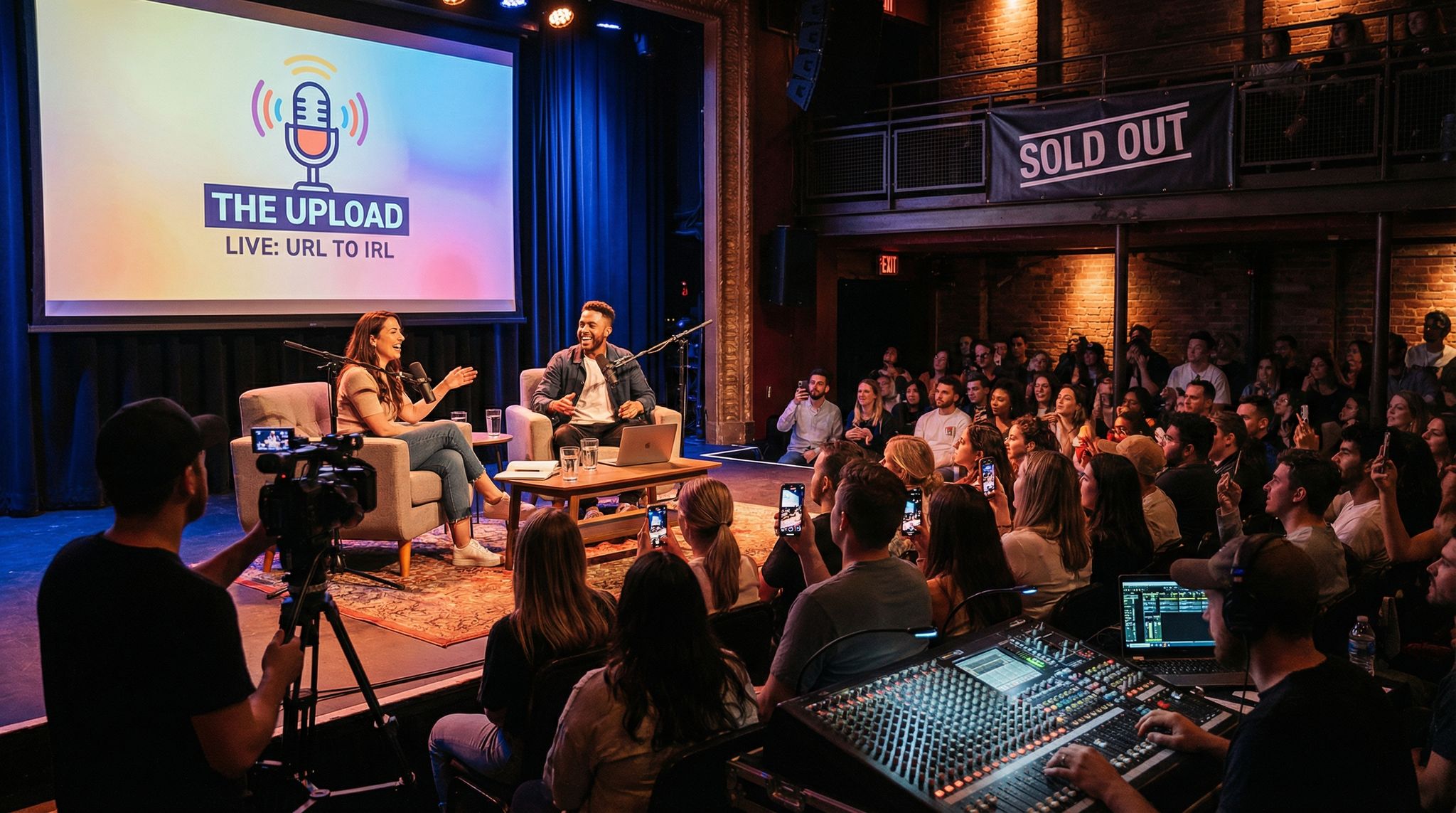
Hosting a podcast or YouTuber on stage calls for a different stage setup than a concert. Instead of drum kits and amps, you’ll likely need sofas, armchairs, or a table with microphones to create an intimate, talk-show vibe. Think of it like transforming your stage into a live studio: the goal is to make the hosts comfortable and visible, and to encourage a close connection with the audience. Many venues put out a high-top table and a couple of stools, or a couch and coffee table arrangement, depending on the style of show. If visuals or slides are part of the act (some YouTubers might play videos or display memes), ensure you have a screen or projector in place. A portable projector and screen on stage or a large LED wall (if your venue has one) can be invaluable for creators who want to show clips or images to the crowd.
Seating is another crucial consideration. Most live podcast events are fully seated or at least partially seated, even in venues that are normally general admission standing. It’s hard for audiences to stand for an hour listening to spoken word without getting restless. If your venue is a standing-room club, plan to bring in chairs or arrange cabaret-style tables for the night. Experienced venue operators often reconfigure their floor plan for these shows – for example, a rock club might set up 200 chairs on the dance floor or use removable risers to create temporary tiered seating. This not only makes the audience more comfortable but also creates the right atmosphere: a focused listening environment rather than a rowdy pit. Be sure to communicate the seating plan in advance (in event listings and on tickets) so attendees know what to expect.
Also, consider sightlines and staging for intimacy. You may want to place the stage a bit closer to the audience or even on the floor level for very intimate creator events, especially in small rooms. Podcasters often thrive on a cozy, inclusive feel – the closer the connection, the better. Check that nothing obstructs views of the hosts (remove tall mic stands or extraneous gear). Good lighting is important too (more on that below). Finally, don’t overlook decor: some venues add a rug, a backdrop with the podcast’s logo, or other simple set pieces to make the stage feel on-brand for the show. These little touches can make a live podcast recording look great in photos and on video, which reflects well on both the artist and your venue.
Audio and Recording Equipment
When the show is all about talking, audio quality is paramount. Your sound team should be prepared to deliver crystal-clear speech reinforcement and, often, a multitrack recording feed. Start with the microphones: high-quality vocal mics are a must (the Shure SM58 or a wireless equivalent is a common choice, but some podcasters might bring their own preferred mics). If multiple hosts or guests will be on stage, ensure you have enough mics and stands or mic clips on the table. A live podcast might use anywhere from 2 to 5 microphones for a panel discussion format. Wireless handheld mics are popular for freedom of movement (and to pass to audience members during Q&A), but do a frequency coordination check – manage your wireless spectrum to avoid interference with Wi-Fi, in-house radios, or nearby venues . It’s wise to test all wireless mics ahead of time and have fresh batteries and backups ready.
Tuning the PA for spoken word is a different art than for music. You’ll want to EQ the system for clarity in the vocal range, reducing boomy bass and harsh highs. Since there’s no wall of sound from a band, any hum or hiss in the system will be noticeable – eliminate buzzes and ensure a low noise floor. Aim for even coverage so that someone whispering into the mic at a joke’s punchline can still be heard at the back. If the creator’s show includes music or sound effects (some podcasts play intro music or jingles between segments), be ready to handle those audio cues, either played from the stage (they might plug in a phone/laptop) or from the tech booth.
Recording the show is often a key part of the event. Many podcasters will release the live show as an episode for those who couldn’t attend, and YouTube creators might film the performance for their channel. Coordinate with the artist on their recording needs. The simplest approach is to provide a clean audio feed from your mixing board – either a stereo mix or individual mic channels. If they’re recording video, good synced audio is a huge help in post-production. Some venues even set up ambiance mics to capture audience laughter and reactions, which can greatly enhance the recording of a live podcast (laughter is to a comedy podcast what crowd noise is to a live album). Make sure your tech rider with the artist specifies whether you are recording as well. If you want to capture the show for security or archive, let them know. Most are fine with venues recording for internal use, but any distribution needs the creator’s permission since it’s their content.
Boost Revenue With Smart Upsells
Sell merchandise, VIP upgrades, parking passes, and add-ons during checkout and via post-purchase emails. Increase average order value by up to 220%.
On the video front, check if the creator is bringing a camera crew or if they expect the venue to assist in filming or streaming. Larger podcast tours sometimes travel with a videographer. They may request an elevated camera platform or a dedicated feed from the lighting desk. Ensure your internet connectivity is robust if live streaming is planned – a hard-wired ethernet line with high upload bandwidth is ideal. Nothing’s worse than a stream dropping mid-show due to Wi-Fi issues, as a poor connection will tank your virtual stream. If streaming is part of the ticket (e.g. some fans bought virtual access), treat it with the same importance as the in-venue experience by testing everything thoroughly beforehand.
Technical Setup Comparison: Concert vs Live Podcast
| Aspect | Typical Band Concert | Live Podcast/Creator Show |
|---|---|---|
| Stage Layout | Instruments, amps, drum riser, open stage for movement. | Chairs/stools or couch, table for mics, cozy backdrop. |
| Audio Mix | Full band mix (vocals, instruments, loud volumes). | Vocals-focused mix, lower volume, clarity is key. |
| Lighting | Dynamic concert lights, color effects, fast cues. | Steady, even lighting on stage; soft spots on hosts. |
| Audience Setup | Standing GA floor or mix of seating and standing. | Primarily seated audience for listening comfort. |
| Show Length | Often 2+ hours with openers, encore. | 60–90 minutes, usually no opening act, maybe Q&A. |
| Audience Interaction | Limited (cheering, singing along). | High (audience Q&A, live feedback, interactive bits). |
| Recording Needs | Usually none beyond FOH mix for sound. | Multitrack audio recording; possibly video capture. |
As the table above shows, a live podcast or YouTuber event is more akin to a talk show than a rock show. By adjusting your venue’s setup accordingly, you’ll create a better experience for both the talent and the fans.
Lights, Cameras, Atmosphere
Lighting for creator events should highlight the on-stage personalities without overpowering the mood. Keep it simple and professional. Unlike a concert, where lighting builds excitement through constant movement and color changes, a live podcast generally benefits from steady, warm lighting that keeps hosts well-lit throughout. A common setup is a soft white spotlight or wash on each chair where a person will sit, plus some ambient stage wash for balance. Dimmers are your friend – you can subtly fade lights up or down at moments (such as transitioning into an audience Q&A or marking the end of a segment) but avoid busy lighting effects or strobing that could distract both the audience and the performers.
If the show is being filmed, coordinate lighting with the camera team. They may request brighter lighting than a typical stage show to get clear footage. Aim for an even lighting level across the stage to prevent hot spots or harsh shadows on faces. It’s also wise to slightly raise house lights during audience Q&A segments so the hosts can see the crowd and the cameras can capture audience shots. The key is to create a welcoming, intimate ambiance – think more along the lines of a TED Talk or stand-up comedy set than a rave. Some venues even decorate slightly (e.g. string lights around the stage or branded signage) to enhance atmosphere, but make sure anything you add doesn’t interfere with sightlines or audio.
Sound and lighting aside, ensure your front-of-house and hospitality are tuned to this format. If you normally blast music over the PA before a show or during intermission, consider playing something aligned with the event – perhaps the creator’s intro theme music or a related playlist – but keep volume moderate so fans can chat (many will be meeting internet friends in person for the first time at these shows!). In terms of timing, these events often start a bit earlier than concerts (some live podcasts might kick off at 7 PM instead of 9 PM) to accommodate meet-and-greets or younger attendees. Adjust your door times and staff scheduling accordingly so that the audience isn’t left waiting.
Backstage & Hospitality for Creators
Hosting a social media star backstage might feel different from hosting a rock band, but the fundamentals of good hospitality remain. Check the rider for any special requests – some podcasters keep it simple with just water, tea, or snacks, while a touring YouTube act might have production crew and need a full spread of food. One thing to note is many creators document everything; don’t be surprised if they’re filming backstage vlogs or taking selfies with your staff. It’s all part of their brand. Ensure your crew is briefed to be friendly but professional. The artists will appreciate a green room that’s comfortable and private where they can prepare for a show (especially if they have to review notes or slides). If they are recording audio, they might request a quiet space to test equipment or do a quick soundcheck/conversation before going live.
In terms of security, treat high-profile creators similar to high-profile musicians. Some YouTubers and Twitch streamers have massive followings and may attract fans trying to sneak backstage or catch them at the stage door. Coordinate discreet security for load-in and load-out if needed, and ensure the meet-and-greet (if any) is well-managed so the talent isn’t mobbed unexpectedly. Many of these personalities are used to mingling with fans, but it should always be on their terms (i.e., during the official VIP session, not when they’re heading to the tour van). Also, clarify your photo/recording policy: some podcasters are fine with fans taking pictures during the show, while others (especially comedians doing a podcast) might request no phones or recordings so they can reuse material. If the artist has a no-phone policy, you may need to enforce Yondr pouches or simple usher reminders, similar to how venues implement phone-free comedy shows.
Lastly, extend the same community touch you would for any artist. Many internet creators won’t have a big tour entourage – it might just be two hosts and a producer. Little gestures, like printing a welcome sign with their show logo or having a few local snacks ready, can make them feel at home. Remember, this might be the first time they’ve headlined a venue like yours, so your team’s hospitality can leave a lasting impression. A happy creator is more likely to mention your venue positively on their platforms (potentially reaching thousands of fans) and to want to return on their next tour.
Marketing to Online Fan Communities
Partnering with the Creator’s Digital Reach
When it comes to promoting a creator-led event, the creator’s own online presence is your greatest asset. These individuals rose to fame through direct engagement with fans on platforms like YouTube, Instagram, TikTok, and podcast apps. As a venue operator, you should coordinate closely with the act on announcements and marketing. Typically, it’s most effective if the creator breaks the news of the live show first to their followers – this could be on an episode of their podcast (“We’re going on tour – tickets go on sale Friday!”) or via a YouTube video and social media posts. Work with their team to provide all the needed info (dates, ticket links, on-sale times) ahead of the announcement. Many creators will have specific preferences, like a nicely designed graphic or a particular hashtag to use. Support them by sharing those on your own channels simultaneously.
Using the creator’s reach doesn’t mean you sit back and relax, though. Augment their efforts with your venue’s marketing muscle. For instance, if a podcaster announces the show on their Instagram, make sure your venue’s Instagram account comments, reposts, and runs targeted ads in your local area to capture fans who might not follow the creator’s every post. Leverage email lists segmented by genre – if you have data on customers who attend spoken word, comedy, or similar events, email them about this unique show coming up. Stress the special nature of the event (“One night only live podcast recording!”) to create urgency. It also helps to list the event in as many relevant places as possible: beyond standard event listings, look for online communities or calendars specifically for podcast fans or the content genre (for example, a Reddit forum for the podcast, or a local Facebook group for digital creator fans). Collaborative event marketing between venues and artists is crucial here – coordinate promotional schedules and share each other’s content to maximize reach .
Don’t overlook traditional press and media for these new media stars. While their core audience is online, many podcasters and YouTubers crossing into live events have compelling stories that local media might pick up. A popular true-crime podcast doing a live taping in town, or a local YouTuber returning home for a show, can be pitched to newspapers, radio, or TV news as an arts and culture piece. This can help reach potential attendees who aren’t already fans – for instance, someone who isn’t a regular listener might attend after reading a human-interest article about “the YouTube star from our city coming back to perform at XYZ Theater.” Coverage like that effectively broadens the event’s appeal beyond the existing fanbase.
Reaching the Right Audience Online
Marketing creator shows is a highly digital exercise, which makes sense given these acts built their following on the internet. Focus your advertising spend and energy on online channels where the fans spend time. That could mean:
– Social Media Ads: Run geo-targeted ads on Instagram, Facebook, TikTok, or YouTube, using the creator’s name, catchphrases, and imagery. Aim the ads at fans of the creator (if the platform allows that targeting) or related interests. Short video clips of the creator inviting fans to the show can be gold for promotions.
– Content Platforms: If it’s a podcast, consider ads on podcast apps or even sponsoring a short ad on other similar podcasts that locals might listen to. For video creators, YouTube pre-roll ads might be effective – e.g. a 10-second spot before videos in the same genre saying “Meet [Creator] live in person – coming to [Venue] on [Date].” Our own guide on mastering YouTube ads for event promotion offers tips on targeting these precisely.
– Fan Communities: Identify where the super-fans talk. This might be a Discord server, a subreddit, or a fandom forum. Engage authentically – for example, the creator might allow a post about the live show on their subreddit, or you could drop the event link in a Discord announcements channel if the community rules permit. Be transparent about who you are (“Hi, we’re the venue hosting the show – just here to share details and answer questions!”). The fan moderators will appreciate the openness, and fans will feel taken care of.
– Influencer and Referral Marketing: Turn the fans into your marketers. Encourage attendees to spread the word by implementing a referral program or social sharing incentive. For instance, using a platform with built-in referral tracking (such as Ticket Fairy’s ticketing system) you can reward fans with a small refund or merch discount if they get X friends to buy via their referral link. This taps into the tight-knit nature of creator fanbases – friends will recruit friends to come make a meetup out of the event. Many venues report referral marketing boosts sales by 15–25% by leveraging word-of-mouth, which is exactly how online communities operate.
Additionally, consider timing your marketing pushes to the content cycle of the creator. If the podcast comes out every Monday, perhaps run ads Monday-Wednesday when listeners are hyped about the latest episode. If the YouTuber releases a big video, try to have your promotion in market right after, when their fans are most active online. Aligning with these cycles shows you understand the audience’s behavior. It’s a nuanced touch that seasoned event marketers use to capture attention at the right moment.
Converting Followers to Ticket Buyers
One challenge in this domain is converting a fan who’s used to free online content into a paying event attendee. It helps to sweeten the deal and reduce friction in the purchase process. One tactic is offering early-bird pricing or fan club presales. For example, you might give the creator a special presale code to share with their followers for a 10% discount or early access window. This makes the online followers feel valued and creates urgency to buy now rather than “maybe I’ll go, maybe not.” Many creators also use Patreon or supporter platforms – you could collaborate by giving those premium subscribers a special perk like a meet-and-greet upgrade or first dibs on tickets.
Ensure your online ticketing page is user-friendly for a global, often younger audience. That means mobile-optimized purchase flow, multiple payment options (including digital wallets, Apple/Google Pay, etc.), and transparency about pricing. These fans are digitally savvy and sensitive to opaque fees. In 2026 there’s a big industry push for up-front pricing in comedy and creator events – adopt that. Avoid tacking on “junk fees” that might cause a social media backlash; nothing spreads faster on fan Twitter than outrage over feeling nickel-and-dimed. By embracing transparent ticket pricing to build trust with fans, you not only do right by the ticket buyers, you also earn goodwill within these tight-knit communities that talk to each other.
Finally, make the event shareable. Once tickets launch, encourage buyers to post about it (“Got my ticket to see XYZ live!”). Perhaps create a custom hashtag for the event or an Instagram sticker. On platforms like TikTok, even a simple challenge or trend related to the tour can amplify awareness (e.g. fans making videos about “How far I’m traveling to see my favorite podcaster live”). The more people see their peers going, the more FOMO builds among those on the fence. By turning promotion into a two-way conversation with the fan community, you’ll convert online followers into excited ticket holders and, soon enough, a packed house.
Showtime: Nailing the Live Experience
Smooth Doors and Fan Welcome
On the day of the show, be prepared for an audience that might behave a bit differently than your usual concert crowd. Many will arrive early – some superfans might line up in the afternoon to snag front-row seats or to be first in line for a meet-and-greet. Make sure your front-of-house staff is ready for early arrivals and has a plan for orderly queuing. If your venue is general admission seating for the event, consider handing out sequential numbers or color-coded wristbands as fans line up, then allowing them entry in that order; this prevents an unsafe rush at door time and rewards those who came early without incident. Given the young demographic often involved, you’ll also want to enforce clear policies on things like re-entry (if someone under 21 can’t hang at the bar, will you let them step out and back in? Probably best to allow it with a hand stamp) and parental attendance (some venues require under-16s to be accompanied by an adult – if so, communicate that clearly beforehand).
When doors open, welcome these fans warmly – for many it might be their first-ever event at your venue. Set the tone for a friendly, safe, and fun experience. Front-of-house staff should be knowledgeable about the show’s format to answer questions (e.g. “Yes, there will be a Q&A mic later – it’ll be over here” or “The meet-and-greet will happen after the show in this area”). Little touches go a long way: perhaps play a playlist of music related to the creator as the audience finds seats, or show a slideshow of fan art (if the creator provides one) on screen. Some venues have even coordinated with creators to have a special welcome message – for instance, a funny pre-show audio announcement in the podcaster’s voice, reminding people to silence phones and enjoy the show. These kinds of Easter eggs delight fans and immediately tie the venue experience into the creator’s world.
Free Tool: Split Tickets for Max Gross
Given capacity and a target price, the optimizer proposes Early Bird / GA / VIP allocations and prices — with projected gross at 100%, 80% and 60% sell-through.
Audience Interaction & Live Q&A
One hallmark of many creator-led shows is a segment of direct interaction with the audience. This could be a Q&A portion where fans get to ask questions, a live feedback bit (like polling the audience on something), or even games that bring people on stage. As a venue, facilitating these interactions smoothly and safely is key. If there’s a Q&A, set up at least one aisle microphone on a stand or have staff ready with a wireless mic to run to audience members. Communicate to the audience how to participate (“Line up by the mic in the aisle if you have a question” or “Raise your hand and we’ll come to you”). You might need a staffer to help manage the queue or cut it off after a certain number of questions so the segment doesn’t run too long.
Safety and moderation are important here: vet the questions briefly if possible. Some creators will have a moderator or co-host on stage whose job is to manage Q&A (choosing fans, etc.), but if not, your staff can assist by holding the mic and intervening if someone asks anything inappropriate. Generally, these audiences are well-behaved and just super excited to interact. Still, be ready for emotional moments – it’s not uncommon in these settings for a fan to get nervous or overly enthusiastic when finally facing their idol. Train your crew to be patient and encouraging (maybe have the mic runner say a quick “take a deep breath, we got you” if someone freezes up) while also keeping the line moving politely.
Beyond Q&A, some interactive bits might involve technology – e.g. a live poll or trivia quiz displayed on screen. If the creator is using an app for audience engagement (like letting fans submit questions via a platform or vote on something in real time), ensure your venue Wi-Fi can handle a surge of hundreds of phones connecting at once. In conferences, tools like Slido and Poll Everywhere are common, and a few progressive podcast shows have begun to leverage similar tech. You might need to provide a dedicated screen or integrate their laptop into your AV system so the results display. Rehearse this briefly during soundcheck so everyone knows the cues.
The goal is to make the audience feel like participants rather than passive viewers. Judging by industry trends, today’s audiences crave interactive, immersive experiences, and creator shows are perfectly positioned to deliver that. It’s the venue’s job to supply the tools and environment for those interactions to flourish. When done right, an interactive segment becomes the highlight of the night – the thing attendees gush about on social media afterward (“I can’t believe I got to ask a question on the mic, it was amazing!”). That kind of organic excitement is priceless promotion for your venue’s reputation.
Meet-and-Greets and VIP Experiences
Many creator events offer VIP tickets that include a meet-and-greet, photo op, or signing session with the star. These can be significant revenue boosters (often fans will pay a premium, sometimes as much as 2-3x the base ticket price, for a few moments of face time and a selfie with their idol). Handling VIP sessions efficiently ensures those fans leave happy – and keeps your show schedule on track. Here’s how to manage it:
- Timing: Decide with the artist whether the meet-and-greet will be pre-show or post-show. Pre-show can be logistically easier (you get it done before the main event, and the talent can conserve less energy, as opposed to doing it when they’re tired after performing). However, some creators prefer post-show so they can chat about how it went. In either case, build in buffer time. If doors are at 7 PM for general audience and show at 8 PM, you might have VIPs arrive at 6 PM for an hour-long session. Or post-show, expect it to run 30-60 minutes after the event.
- Location: Choose a suitable spot. Ideally a private area like a side room, the lobby after it’s cleared, or on stage with a backdrop. Small venues might use the green room or a roped-off corner of the main floor. Ensure there’s a clear queue line and that non-VIP attendees can’t simply join in. Security or staff should check VIP passes or wristbands. A simple sign like “VIP Meet & Greet Start Here” can prevent confusion.
- Process: Speed and personalization need balancing. You want each fan to have a special moment but also can’t let one person monopolize five minutes if 100 people are waiting. A common system is a quick hello, autograph, and photo per person or small group. Assign a staff member to serve as the photographer (using the fan’s phone or a pro camera). This keeps it moving – the staff snaps the pic so the fan isn’t fumbling with their camera and the idol isn’t stuck playing photographer. Another staffer can gently cue the next fan to step up once one is done. If autographs are included, have a table ready and the item to be signed prepared (some VIP packages include a poster or book; have them pre-laid out). Keep some Sharpies handy!
- Atmosphere: Make it pleasant. Offer water or refreshments for those waiting if it’s a long line. Play some background music. And crucially, have security nearby but not intrusive – they may need to enforce a no-hug policy or help politely wrap up a conversation if someone gets overly emotional or handsy. Most of these fans are extremely respectful, but emotions run high meeting a hero, so be ready to kindly move things along.
After the last VIP is through, debrief with the artist to ensure they felt it was well-run. If you can provide that smooth, safe, memorable VIP experience, not only will fans rave about it, but the creator’s team will remember your professionalism, making them more likely to include your venue on future tours.
Merchandising and Autograph Stations
Merchandise is often a major component of revenue for creator events – sometimes even more so than at concerts. These fans love to wear and display their support (think t-shirts with inside jokes from the podcast, orexclusive signed copies of a YouTuber’s new book). Prepare for higher demand at the merch table than you might expect for an artist of similar draw. It’s not unheard of for a popular podcast to sell $10-$20 of merch per head in attendance, especially if they have unique tour items. To capitalize on this, work with the creator on the setup:
- Placement: Put the merch booth in a high traffic, visible spot. Many venues use the lobby or an area near the entrance/exit. Make sure you have enough space for a line that doesn’t block exits or concessions.
- Staffing: The creator may have their own merch seller, but if not, provide a trustworthy staff member (or even hire a merch temp) to handle sales. Train them on any unique items and prices pre-show. Given the tech-savvy crowd, equip the booth with a mobile POS system (e.g., an iPad with a card swiper or tap reader) for credit cards and phone payments – few people carry much cash, especially younger attendees.
- Efficiency: To avoid huge lines at intermission or after the show, consider selling before the show as well when VIPs or early entrants are milling about. Have multiple pay points if volume will be high (two cashiers instead of one). Clearly display pricing with big signs to speed up decisions. Bundles work great too (e.g., “Podcast Tour Pack: Tee + Poster for $40”) to increase basket size and streamline the process.
- Signings: Occasionally, creators will do a merch signing either as part of VIP or informally after the show for all. If a post-show signing for all attendees is planned (say the creator will sit and sign their new book for anyone who buys it), treat that similarly to a meet-and-greet queue. Use stanchions to form a line, announce where to line up, and have a cutoff time if needed. Provide a table and chair for the signer and ensure they aren’t swarmed.
From a venue revenue perspective, ensure you have your merchandise deal in writing as part of the booking. Many venues take a percentage of merch sales (often 10–20%) or a flat fee. Some independent venues waive this for artist-owned merch to be competitive, but with these shows having high merch potential, you’ll have to judge what’s fair to both parties. Regardless, have the settlement process ready – count in and out with the seller and keep it transparent. A happy merch seller (and by extension the artist) will remember that your venue was easy to work with, which is important for your reputation in this circuit.
One more consideration unique to this space: photo opportunities. Aside from official merch, fans often want a photo to remember the event. Not everyone can pay for VIP, so some venues set up a free photo backdrop in the lobby with the show’s logo or a step-and-repeat wall. Fans can snap selfies in front of it to commemorate the night. It’s a nice touch that doesn’t cost much (if the creator has a banner or you have a generic backdrop) and adds to the overall fan satisfaction. Plus, those photos will likely end up on social media, indirectly promoting your venue and the event.
Revenue Streams and Results
Ticket Pricing Strategies
Pricing a live podcast or creator show is a bit of a balancing act. On one hand, these are unique experiences often in high demand; on the other, a large portion of the fanbase might be younger or not used to paying high ticket prices. Industry data has shown creator event tickets trending cheaper than traditional concerts, but that’s an average – the top shows can still command premium prices, especially with VIP options. As a venue, do your homework on what similar acts have charged in other markets. If it’s the first time ever the creator is performing live, you may have to estimate based on their engagement levels and what you think the market will bear.
A common approach is to keep the base ticket price moderate to fill the house, then upsell via VIP tiers. For instance, a general admission ticket might be $25–$30, while a VIP meet-and-greet ticket could be $80, and a “VIP+” that includes merch might go for $120. This tiered approach maximizes revenue from super-fans without pricing out the broader audience. Make sure the value of each tier is clear: list out “what you get” with VIP so fans understand the higher price. Also, be mindful of fees – since many of these fans are first-time buyers, hitting them with a big add-on fee at checkout can cause abandoned carts. It’s wise to use transparent pricing and reasonable service fees (or bake fees into the listed price) to avoid frustration among a digitally outspoken customer base.
Dynamic pricing (i.e., raising prices as tickets sell) has been a hot topic in ticketing, but note that many creator fans perceive that practice negatively. They often talk on fan forums about hating “surge pricing” on tickets. If you use a platform like Ticketmaster that auto-adjusts prices, consider disabling it for these shows to maintain goodwill. If you use more fan-friendly systems (for example, Ticket Fairy explicitly does not use surge pricing), highlight that the price fans see is the price they pay – it builds trust with an audience that values authenticity and fairness.
No Hidden Fees, Just Honest Pricing
One all-inclusive fee covers the platform, payment processing, customer service for your ticket buyers, support for you, and every feature. Free events are always free. No setup costs, no surprises.
One more tip: consider payment plan options if you have higher-priced packages. While a $25 ticket likely doesn’t need it, a $120 VIP package might be more palatable if fans can pay in installments (especially younger buyers or those without credit cards). Offering a “buy now, pay later” option at checkout could boost conversions for those premium sales. Just make sure to clearly communicate the terms.
Upsells, Add-Ons and New Revenue
Beyond the ticket itself, creator events present several opportunities for additional revenue per attendee. We’ve discussed VIP packages, but think about other add-ons that can be sold in advance or at the event:
– Merch Bundles at Checkout: Using modern ticketing platforms, you can offer merchandise during the online checkout process. For example, right as someone buys a ticket, give the option to pre-purchase the podcast’s exclusive tour t-shirt or a signed book to pick up at the show. This not only guarantees you sales (and helps you gauge demand to stock appropriately), but fans love the convenience. Ticket Fairy’s platform, as an example, enables unlimited add-ons in the purchase flow – venues have used it to sell everything from T-shirts to drink vouchers in advance. Pre-selling merch locks in revenue and can reduce lines on-site.
– Food & Beverage: Creator shows can bring folks who don’t usually go to bars or venues, so it’s interesting to see how F&B performs. Often, if the crowd is younger (teens or college age, many under legal drinking age), alcohol sales might be lower than a typical concert. However, non-alcoholic and snack sales could be higher – especially if the show has an intermission or if people arrive early. Adapt your offerings: maybe a specialty mocktail named after the podcast, or quick-grab snacks themed to the creator (“Yoshi’s Popcorn” if the YouTuber’s nickname is Yoshi, for example). Family-friendly options are key if the demographic skews young; stock extra soft drinks, coffee, and maybe some affordable finger foods. On the flip side, if the podcast content is more adult (say a popular comedy podcast with a 21+ crowd), you might actually see higher bar sales because the seated format lets people drink casually throughout. Some venue managers note that a seated, quieter show means people have more opportunity to sip drinks (versus a mosh pit where they can’t hold a beer). Track your sales and adjust staffing – you might need fewer bartenders if it’s light drinking, or a coffee station if it’s an afternoon podcast taping.
– Sponsorships: Don’t underestimate local sponsorship for these events. A business aligned with the creator’s theme might pay to be part of the night. For example, a travel podcast could have a local travel agency or airline sponsor the show; a gaming YouTuber event might attract a gaming café or electronics store. Sponsorship could be as simple as a booth in the lobby, branded signage, or a mention by the host on stage (“Tonight’s show brought to you by…!”). Creators are often open to this since they’re used to brand deals on their platforms – just ensure any sponsorship integration feels authentic and is approved by the creator. If done tastefully, it’s extra cash for minimal effort. Use your venue’s proposal skills to pitch how a sponsor can get value (a captive audience of X hundred young tech-savvy consumers, etc.). Just avoid conflicts – e.g. don’t bring in a competing sponsor if the creator already has an endorsed brand in that category.
– Hybrid Tickets: In 2026, some venues offer virtual tickets for live events – essentially paid live-stream access. While the whole premise of “URL to IRL” is to get people offline, there may be a segment of far-flung international fans who’d pay to watch remotely. If the creator is up for streaming the show (not all will be, as it could discourage in-person sales if overdone), you could sell live-stream tickets via a secure platform. This can reach those who physically can’t attend while adding incremental revenue. Just take care of the technical side and any rights/recording issues as discussed earlier. Hybrid events can grow your audience worldwide, but they should complement, not cannibalize, the live experience.
If you do venture into hybrid ticketing, ensure your technical infrastructure is prepared for digital attendees. Venue operators must proactively manage virtual access rights, which often involves configuring geo-restrictions for the live stream to protect regional exclusivity agreements or routing contracts. Additionally, setting up a dedicated streaming help center—or partnering with a digital ticketing provider that offers robust viewer support—is essential. Fans tuning in from home expect seamless access, and having a clear help center reduces the burden on your venue’s box office staff if login issues or geo-blocking errors occur during the broadcast.
Post-Event Content and Continuing Engagement
One interesting benefit of hosting a creator show is what happens after the event. Often, the content recorded at your venue will live on. The podcaster might release the live show as an episode, or the YouTuber might upload a vlog that includes scenes from your venue. This is essentially free promotion for you – your venue’s name or stage will reach all the people consuming that content online. To maximize this, ensure you get a shoutout if possible (some hosts naturally thank the venue and city in their recording – those few seconds in the podcast episode can be heard by tens of thousands of listeners later). Even if not, the visual of your venue in a YouTube video can build your brand recognition. Embrace this and be supportive: if the creator’s team needs B-roll footage of the marquee or wants to fly a drone for an exterior shot (within safety limits), cooperate to help them present your venue in the best light.
From a monetization standpoint, think about future opportunities. You’ve now gathered a list of attendees who possibly had never been to your venue before. Capture those leads! Use your ticketing system’s data capture to prompt attendees to opt into your mailing list or follow your socials for future events. Since these fans might not be on your typical marketing radar, treat them as a new segment. Maybe you’ll host similar events (more podcasts, YouTube stars, or even tangential content like eSports tournaments or film screenings which often appeal to the same crowd). Retarget these attendees with those event announcements. Essentially, you’re cross-pollinating your audience pools, which is a huge plus for long-term ticket sales. It is also a strategic play for retention marketing. (The comedy-night guide found that many new comedy attendees later returned for concerts – the same can happen here with good retention marketing.)
Another critical post-event strategy is monitoring digital fan communities to evaluate your IRL hosting success. Savvy venue operators and promoters actively read through fan forums to gauge sentiment once the event concludes. For instance, tracking what subreddit people are saying after the end of an AEG show or a major creator tour provides unfiltered feedback on everything from line management to audio clarity. By paying attention to these dedicated subreddits, organizers can identify operational friction points, refine their approach to in-real-life hosting, and ensure the next digital-to-physical crossover event runs even smoother.
Free Tool: When Should You Announce?
Pick your event date and genre — the free planner outputs a recommended announce, presale, on-sale and reminder schedule anchored to how your audience actually buys.
There’s also potential to monetize recordings if you partner with the artist. For instance, if you professionally film a multi-camera feed of the show (with permission), perhaps you and the creator could offer it as an on-demand video for a price afterward and share the revenue. This isn’t common yet, but as the post-event content monetization trend grows, venues are exploring new models. A simpler angle: invite the creator to consider doing another night if demand was high. Some podcasts have added second showings or extra live dates when the first sells out. Doubling up means more revenue with minimal extra marketing cost.
At the end of the day, the true measure of success – besides the balance sheet – is the relationships you build. A successfully executed creator show can lead to annual tour stops as that personality grows, plus word-of-mouth among other creators that your venue is creator-friendly. As this niche expands, being known as a great host for “URL to IRL” experiences can attract more business. In an industry where venues often fight to win over booking agents, having a new stream of talent seeking you out is a refreshing change.
Adapting to Different Venue Types
Intimate Clubs and Smaller Spaces
In a small club or bar (say 50 to 300 capacity), hosting a live podcast or YouTuber event can be electric – it feels more like friends hanging out than a formal show. However, these spaces may need extra adaptation. First, pay attention to acoustics: small venues sometimes have less ideal sound isolation, so do everything you can to minimize ambient noise (e.g. turn off or quiet the bar fridges during recording, put a sign on the door to prevent it slamming). If your bar area is in the same room, consider pausing bar service during the main recording portion to eliminate blender or register noise – many such venues do a last call right before the show starts, then hold any loud service until an intermission or the end.
Seating is typically limited in these spaces, so get creative. You might use bar stools, cushions on the floor down front, or even invite a standing audience but in a relaxed coffeehouse style. Communication with fans is key here: if it’s an informal setup, let them know it’s first-come, first-served seating or mostly standing, so there are no surprises. Interestingly, small venues can leverage their intimacy by doing VIP experiences that are even more unique – like a post-show hangout at the bar with the creator. For example, a 100-capacity show could offer a VIP ticket that literally lets 10 fans stick around for a casual drink with the host (if the creator is comfortable). These kinds of up-close experiences are only feasible in small settings and can justify a higher ticket price while creating unforgettable memories.
Finally, note that smaller venues in regions with less frequent tours have an edge: as StubHub observed, creator tours hitting cities that big artists skip can draw big interest. If you’re in a secondary market with a smaller room, don’t assume you can’t host notable names. Some podcasts or creators would rather pack a small venue and create buzz than not come at all. Emphasize the authenticity of your space – many creators will appreciate the indie vibe and personal touch of an intimate venue, especially if they usually operate solo or in small teams. Just be prepared to potentially turn away lots of demand; have a plan for handling a waitlist or doing a second show later if feasible.
Mid-Size Theaters and Concert Halls
Theaters, arts centers, and mid-size concert halls (500 to 2,000 capacity) are often the perfect setting for these shows. They offer comfortable seating, good sightlines, and quality AV – all aligning with a live podcast’s needs. That said, these venues come with their own considerations. Many are municipally owned or union houses, which means you need to navigate rules that a touring band might not trigger. For example, a theater might require union stagehands or IATSE crew for even a simple talk setup. This can impact costs and scheduling (you might have minimum call times to pay even if you only need a few hours of work). Plan accordingly – maybe tack the creator’s soundcheck onto the same call as show time to avoid a second call.
The seating arrangement in theaters is fixed, so unlike clubs you can’t add capacity easily. It becomes crucial to price appropriately since you can’t just squeeze in more people. However, the upside of theaters is that they attract a broader demographic – older audiences or those not into sweaty clubs will gladly attend a refined theater for a podcast they love. Leverage the amenities: highlight that your venue has plush seating, great acoustics, and perhaps a beautiful historic ambiance. It elevates the event to something special. Some theater-style venues also have multiple spaces (like a main hall and a smaller lounge). In such cases, you could host the main show in the auditorium and perhaps a VIP meet-and-greet or after-party in the secondary space. For instance, a 1,000-seat theatre might use its 100-seat upstairs salon for a “VIP Q&A with the host over dessert” after the show – a nice upsell.
One thing to watch out for is perception of empty seats. If you book a 1,200-seat hall and sell 400 tickets, the sparse crowd could dampen the energy. To mitigate this, consider flexible seating plans – for example, close the balcony and seat everyone on the main floor, or use drapery to mask empty sections (some theaters have curtain systems to make a large venue feel more intimate when under capacity). Communicate with the creator’s team too; they might adjust their performance style knowing they’re in a grand theater versus a casual club. Some podcasts consciously “play to the room” – a theater might inspire a slightly more structured show format, whereas a club might be loose. As the venue manager, you can give them a heads-up about the venue’s character (“Our stage is 1.5m high and quite wide, so feel free to move around” or “The audience will be very close in this setup”). This helps them mentally prepare and deliver the best show for your space.
Arenas and Large Venues
It might surprise some, but a select few social media stars are drawing arena-sized crowds. Arenas and large concert halls (5,000+ capacity) have hosted YouTuber tours like Dude Perfect’s stunt show and live podcast spectaculars attached to major events or festivals. If you operate a large venue, you’ll need to approach these shows almost like a hybrid of a concert and a speaking event. Key considerations:
– Big Screens: In an arena, the intimacy of a podcast is hard to maintain, so rely on IMAG (image magnification). Ensure you have your cameras and jumbo screens set so every fan can see facial expressions and not just a tiny figure on stage. High-definition screens and a good camera director are crucial – effectively you’re producing a live TV show in tandem with the event. For example, when the UK’s The Sidemen (a famous YouTube group) did live shows, they used huge LED backdrops and live camera feeds to keep the audience engaged even from the rafters.
– Enhanced Production: Big venues often warrant adding some production flair. While a creator’s content is the main draw, don’t be afraid to sprinkle in concert-like elements: entrance music, dynamic lighting cues for segment changes, confetti cannon for a finale, etc., if it fits the show’s vibe. The creators might have ideas too – some plan skits, stunts or special guest appearances to make a large show extra memorable. Be ready to support these technically (flying in a surprise guest via live hologram? It’s been done, as seen at The Podcast Show LIVE events!). Of course, always align with the creator’s brand; the spectacle should complement, not overshadow, their content.
– Crowd Management: Even though the format is a spoken event, the audience behavior in an arena can still be as enthusiastic as at a concert. Younger fans might rush toward a small B-stage if one is set up, or crowd the barricade if the creator walks off the main stage. Have security briefed as if for a concert: keep aisles clear, watch for anyone trying to sneak into closer sections, and be mindful of the different energy. For instance, if an internet star is known for a very passionate teen following, you may encounter more screaming and emotional reactions (think along the lines of K-pop or boy-band level fervor). Earplugs for staff might be wise!
– Merch & VIP: The scale here means potentially massive merch numbers. Anecdotally, some YouTuber arena shows have rivaled rock concerts in merch sales, because thousands of attendees each buy multiple items. Ensure enough merch booths and inventory. Similarly, VIP meet-and-greets might be huge in number; in an arena, it’s not unusual to have 200-300 VIP meet-and-greet ticket holders. You might need to split that into multiple sessions or multiple photo lines to get through everyone timely.
It’s worth noting that arena-level creator shows are still relatively rare – only the top 1% of influencers can fill such venues regularly. But we’re likely to see more as the biggest online stars grow their fame. If you manage a large venue, keep an open mind to these bookings; just as arenas now host eSports and gaming events, live creator shows could be the next big programming frontier. They might not have the production rider of a Taylor Swift tour, but treat them with equal seriousness, and you can cultivate a whole new revenue stream. Plus, the PR value – imagine the headlines when a local YouTuber sells out your 10,000-seat arena – it signals a generational shift and positions your venue as forward-thinking.
Outdoor and Unconventional Spaces
What about hosting a live podcast at a festival, fair, or outdoor space? This is becoming more common, with festivals adding podcast stages and conventions featuring live recordings. Outdoor venues introduce challenges in sound and atmosphere. If you’re putting a creator on an outdoor stage, ensure sound containment and clarity. Competing noise (like other stages, or just the open air swallowing sound) can ruin a podcast recording. A smaller tented stage or a well-projecting line-array system focused on the seated area will help. Consider offering FM headsets or a silent-disco style system for intimate shows outdoors – it may sound odd, but imagine a live podcast in a busy festival where attendees wear headphones tuned to the stage’s frequency to hear every word clearly. Some festivals have done this to great effect.
Weather is another factor – have a rain plan. Electronics and rain don’t mix, and neither do delicate audio recordings and wind. Wind screens on mics are a must outdoors, and if it’s a daytime show, stage shade is crucial (both for performer comfort and to prevent glare if screens are used). If the event is at night, check your lighting as outdoor lighting can be tricky without the benefit of dark walls and ceilings – you might need extra follow spots or LED fixtures to properly light faces against a dusky sky.
Content-wise, if the creator show is part of a larger event (say a Comic-Con or a city fair), remember that the audience might be more mixed. Some will be die-hard fans who came specifically, others might just wander in out of curiosity. The creator should be aware they may need to provide more context for newcomers. As the venue host, you can help by doing a nice intro over the PA (“Welcome! If you haven’t heard The Science Hour podcast before, you’re in for a treat – they’re about to record live with a special guest,” etc.). This sets expectations for casual listeners.
Finally, don’t ignore non-traditional venues: libraries, co-working spaces, or retail environments have hosted live podcast tours for smaller crowds. If you operate an unconventional space or are partnering with one (for example, a museum theatre for an educational podcast, or a bookstore for a YouTuber-author talk), apply the same principles: get the tech right, accommodate the audience comfortably, and respect the content’s needs. Some of these spaces may lack pro AV, so consider bringing in a portable PA or renting recording gear. The effort can be worthwhile – a unique venue can actually enhance the experience (“Live from the historic courthouse, it’s our legal drama podcast!”). Just be mindful of any venue-specific red tape (permits for public parks, union regulations in government buildings, etc.) and plan ahead.
No matter the venue size or type, the underlying message is to adapt the experience to the space while keeping the creator and audience front and center. When the environment and format align, that’s where the magic happens – whether it’s 50 people in a café hanging on every word, or 5,000 in an amphitheater cheering their favorite vlogger’s entrance.
Real-World Success Stories
Independent Venues Embracing the Trend
Across the globe, many independent venues have already struck gold by bringing creators from URL to IRL. For example, The Bell House in Brooklyn (capacity ~350) became known for hosting popular podcast tapings – from science show “StarTalk Live” with Neil deGrasse Tyson to comedy podcast “My Brother, My Brother and Me”. By adjusting their setup (adding theater-style seating and fine-tuned audio), The Bell House built a reputation in podcast circles and consistently sold out these events on weeknights. Their management noted that podcast fans often travel from other cities for a favorite show, making these nights a boost not just to ticket sales but bar sales and merch, as fans made an outing of it. The key to their success was word-of-mouth in fan communities and delivering a listener-friendly experience (they even put out extra cushions on seats knowing fans would be sitting longer than usual).
This strong demand for educational and niche content is further validated by secondary market trends. Ticketing analytics from platforms like StubHub show that tours featuring intellectual or scientific creators, such as Neil deGrasse Tyson, consistently maintain high resale value and rapid sell-out rates, proving that IRL hosting for non-traditional acts is a highly lucrative model for venues of all sizes.
In the UK, some mid-sized theaters began collaborating on a live podcast circuit. One example is the historic London Palladium (normally known for concerts and West End shows) hosting the “Welcome to Night Vale” live podcast tour. That show, an innovative fiction podcast with a cult following, sold out multiple UK theaters because venues leaned into the show’s unique ambiance – the Palladium went so far as to light the theatre in eerie purple hues and allow the creators to bring in a custom set piece to mimic their fictional town’s radio booth. The venue staff treated it like a theater production more than a concert, which paid off in flawless execution. Fans left not only raving about the show, but also about the venue’s grandeur and how perfectly it fit the vibe – likely gaining the Palladium some new patrons for future events.
Another story comes from Australia: The Enmore Theatre in Sydney (1,600 cap) experimented by booking YouTube gaming comedy duo Game Grumps for a live show. Management wasn’t sure if a gaming talk show would fill the room, but the event ended up selling out quickly, surprising even the organizers. Attendees showed up in cosplay and treated it almost like a mini-convention. The Enmore adapted by opening their doors early and setting up a few consoles in the lobby for fans to play retro games together before the show – a community-building touch that came from understanding the gaming fan culture. The result was a highly engaged crowd that not only had a great time at the show, but also praised the venue for “getting it.” That good will has translated into strong social media chatter and repeat attendance when Enmore books similar acts.
Major Players and New Opportunities
It’s not just indie venues – major promoters and corporate venue operators are also riding the creator wave. Live Nation and AEG have started divisions focusing on what they call “digital stars” or “creator tours.” In 2025, AEG Presents even partnered on a week-long Podcast Festival in London, featuring live shows from different podcasts each night across multiple venues, including a city-owned hall and a Live Nation-operated club. This kind of industry buy-in shows the potential scale: we’re talking multi-night, multi-venue events built entirely around podcast and online content.
One notable example is the rise of creator conventions – events that combine performances, panels, and fan experiences. For instance, VidCon (the massive online video conference) spawned VidCon Nights, where top YouTubers do evening shows at nearby theatres. Venues in Anaheim and Baltimore have hosted these, benefiting from the spillover of a convention by putting on ticketed entertainment at night. Similarly, Podcast Movement (a podcast industry confab) has started featuring live podcast tapings in local venues as part of their schedule. The opportunity here is for venues to collaborate with conferences or festivals to integrate creator content – essentially bringing in a guaranteed audience (conference attendees and locals) to your space under the banner of a larger event.
Sports venues have even seen a slice of this trend through the phenomenon of influencer boxing and esports. While not the focus of our discussion, it’s worth mentioning because it’s adjacent to the “social media star show” idea. For example, the Staples Center (Crypto.com Arena) in Los Angeles sold out for a YouTuber vs. TikToker boxing match in 2021, showing that given the right format, huge crowds will pay to watch internet figures in person. The crossover of sports, games, and creator culture suggests more possibilities – e.g., a venue could host an evening with an esports streamer doing live gaming, or a live cooking demo by a TikTok-famous chef. Some of these formats are still experimental, but the common thread is taking online-native content and staging it as live entertainment.
One heartening story comes from a small-town venue in the Midwest United States. They were struggling to book big tours, so the owner boldly reached out to a few educational podcasters (the kind with loyal followings but not big mainstream profiles) and offered a revenue-share deal to minimize risk. One host of a history podcast agreed, and to everyone’s surprise, fans drove from three states away for the show – filling the 500-seat auditorium. It turned into a quarterly series, with different podcasts each time, keeping that venue alive and culturally relevant despite being off the beaten path for major concerts. This shows that even if you’re not in LA or London, the internet’s reach is global – find the creators who resonate with your region and give them a stage.
Lessons Learned for the Next Generation of Shows
Drawing from these cases, a few common lessons emerge. First, know your audience and meet them where they are. Venues that took time to understand the fandom – be it playing games in the lobby or decorating to match a podcast theme – reaped the rewards of fan delight. Those fans then become ambassadors for your venue, not just the show, telling others “you have to see an event there, they do it right.”
Second, collaboration with creators is key. The most successful events had the venue and artist working hand-in-hand, sharing promotion duties, coordinating the show flow, and combining their strengths. As venue managers, being flexible and open to new ideas (like the Enmore Theatre letting fans cosplay and game on-site) can elevate the event from good to unforgettable. It’s a departure from the “standard” concert routine, but that’s exactly why it can shine. In many ways, hosting these shows takes venues back to their roots of entertainment variety – much like vaudeville theaters a century ago that would host singers one night and magicians the next. Versatility is a virtue.
Another lesson: don’t underestimate demand. Time and again, venues were surprised by how well these shows sold. It’s safer to start with modest expectations, but be ready to scale up if needed – whether that means adding a second show, moving to a bigger room if you have multiple spaces, or simply being mentally prepared for an onslaught of interest. Have an action plan for if something goes viral. For instance, if your 300-cap room gets 5,000 people in an online waiting room for tickets, could you add an extra late show that night? Or partner with a local theater to host a bigger one-off? Having those conversations in advance (with the artist’s agent, for example) can turn an overwhelming scenario into an opportunity to double dip on success.
Finally, community and authenticity win. Venues that actively engage with the fan community – whether online or at the event – build a lasting name for themselves. If you host a live podcast and it goes great, interact with the social media posts after. Thank the fans and the creators publicly. Show that you’re not just renting out space, but genuinely excited to be part of this new entertainment movement. This boosts your credibility with both the fans (who will follow your venue for future announcements) and with other creators (who talk amongst themselves about which venues were awesome to work with). In the ecosystem of live events, positive word-of-mouth is currency.
The convergence of URL and IRL experiences is still a new frontier, but as these stories illustrate, it holds tremendous promise for venues willing to innovate. From grassroots clubs to grand arenas, anyone can get in on the action with the right approach and mindset.
Frequently Asked Questions
Why should venues host live podcast events?
Hosting live podcast events diversifies programming and fills calendar gaps, particularly on weeknights, as ticket sales for creator tours surged nearly 500% recently. These events attract loyal, built-in digital communities who often purchase merchandise and VIP packages, boosting revenue beyond standard ticket sales while introducing new audiences to the venue.
How do you set up a stage for a live podcast recording?
A live podcast stage setup requires an intimate, studio-like atmosphere using sofas, armchairs, or high-top tables rather than open performance space. Essential technical elements include steady, even lighting for video capture, high-quality vocal microphones, and a projector or LED wall to display visual content or memes to the seated audience.
How can venues book social media stars and podcasters?
Venues can book social media stars by analyzing streaming data and social listening tools to identify creators with strong local engagement. Operators should approach agents or management listed on creator profiles and offer flexible scheduling, such as weekday slots, to accommodate tours that often seek to fill gaps between major markets.
What is the best way to market creator-led live events?
The most effective marketing strategy involves leveraging the creator’s own digital reach to announce shows directly to followers on platforms like Instagram and TikTok. Venues should supplement this by targeting niche fan communities on Discord or Reddit and implementing referral programs that reward fans for spreading the word to friends.
How does merchandise revenue for creator shows compare to concerts?
Merchandise revenue for creator shows often exceeds that of traditional concerts, with some events generating $10-$20 per head in sales. Fans of podcasters and YouTubers are highly eager to purchase exclusive tour items, signed books, and branded apparel, making efficient, high-volume merch stations essential for maximizing venue profits.
How should venues manage VIP meet-and-greets for influencers?
Venues should manage VIP meet-and-greets by establishing clear pre-show or post-show schedules and designating a private, secure area for interactions. Staff must facilitate an orderly queue, assist with taking photos to keep the line moving, and ensure a safe, professional environment that balances fan enthusiasm with the creator’s comfort.
What audio equipment is best for live podcast events?
Live podcast events require high-quality vocal microphones, such as the Shure SM58, and a sound system EQ’d specifically for speech clarity rather than music. Audio engineers must provide a low noise floor to eliminate buzz and be prepared to supply a clean multitrack recording feed for the creator’s future content distribution.
How should venues price tickets for live influencer shows?
Venues should price tickets using a tiered strategy that keeps general admission affordable—often roughly 40% less than concerts—while maximizing revenue through premium VIP packages. Transparent pricing without hidden fees is crucial for maintaining trust with younger, digitally savvy audiences who value authenticity and may reject dynamic pricing models.
How should venues handle geo-restrictions for live streamed creator events?
When offering hybrid tickets, venue operators must configure geo-restrictions for the live stream to comply with the creator’s regional exclusivity contracts. It is also highly recommended to establish a streaming help center to assist virtual attendees with access issues, ensuring your box office isn’t overwhelmed with technical support requests during the show.
Why is monitoring subreddits important after a creator-led event?
Tracking fan sentiment on platforms like Reddit after a show concludes provides venue operators with unfiltered operational feedback. By observing what subreddit people discuss following the end of a major promoter or AEG show, organizers can pinpoint areas for improvement in their IRL hosting strategies, from VIP line management to audio clarity.