The Gentrification Threat in 2026
Rising Rents and Redevelopment Pressures
Live music venues around the world are facing an unprecedented squeeze in 2026. Property values in trendy urban areas have skyrocketed, and landlords are eager to cash in – often at the expense of beloved clubs and theaters. Many venues that helped “put a neighborhood on the map” later find themselves fighting huge rent hikes or eviction as developers move in with luxury apartments and offices. In the UK, grassroots venue rents jumped over 37% recently while profit margins collapsed, contributing to an alarming wave of closures. In fact, 16% of small UK music venues shut their doors in one year amid these cost and development pressures. Across the Atlantic, 64% of independent U.S. venues reported being unprofitable in 2024, underscoring how thin the margins are even before a rent hike lands. Simply put, many venues are one lease away from the brink if gentrification forces their costs up or their building out.
Urban redevelopment doesn’t just threaten a venue’s finances – it threatens its very existence. Iconic spaces have been sold off and demolished to make way for condos or retail, erasing decades of cultural history overnight. For example, London lost roughly 50% of its nightclubs in an eight-year span, often due to property conversions and stricter regulations. Each closure is a blow to the local music ecosystem, since venues aren’t just businesses – they’re cultural landmarks, incubators for talent, and community hubs. When one disappears, it leaves a void that’s hard to fill. This is why gentrification is an existential threat to venue operators: it can price them out of their homes and silence their stages for good.
New Neighbors, New Challenges
Gentrification doesn’t always kick venues out directly – sometimes it surrounds them with new, affluent neighbors who aren’t as enthusiastic about late-night shows. It’s common: a music club survives rising rents, only to face noise complaints and legal battles once luxury flats spring up next door. People moving into revitalized districts may love the idea of a trendy arts scene until their windows start rattling from a midnight encore. Veteran venue managers note that one determined neighbor can make life miserable by flooding the city with complaints or lobbying for stricter enforcement. In city after city, we’ve seen new residents push councils to impose earlier curfews or tougher noise ordinances on venues that predated the apartments by decades.
This clash of lifestyles means even a financially stable venue can get caught in regulatory trouble due to noise or nuisance allegations. A single Noise Abatement Notice or threat to revoke a liquor license can be as devastating as a rent doubling. For instance, a popular venue in Des Moines almost lost its liquor license after being labeled a “nuisance” from neighbor noise complaints – it took a major community outcry to save it. The takeaway is clear: cultural venues and new urban development often have a fraught relationship. Gentrification brings in residents with higher expectations of quiet and order, and venues must adapt or risk getting zoned or regulated out of viability. In 2026’s hyper-sensitive environment (where many got used to quiet during pandemic lockdowns), the tolerance for noise is lower, and the onus is on venues to proactively manage their impact or face the consequences.
Turn Fans Into Your Marketing Team
Ticket Fairy's built-in referral rewards system incentivizes attendees to share your event, delivering 15-25% sales boosts and 30x ROI vs paid ads.
What’s at Stake for Communities
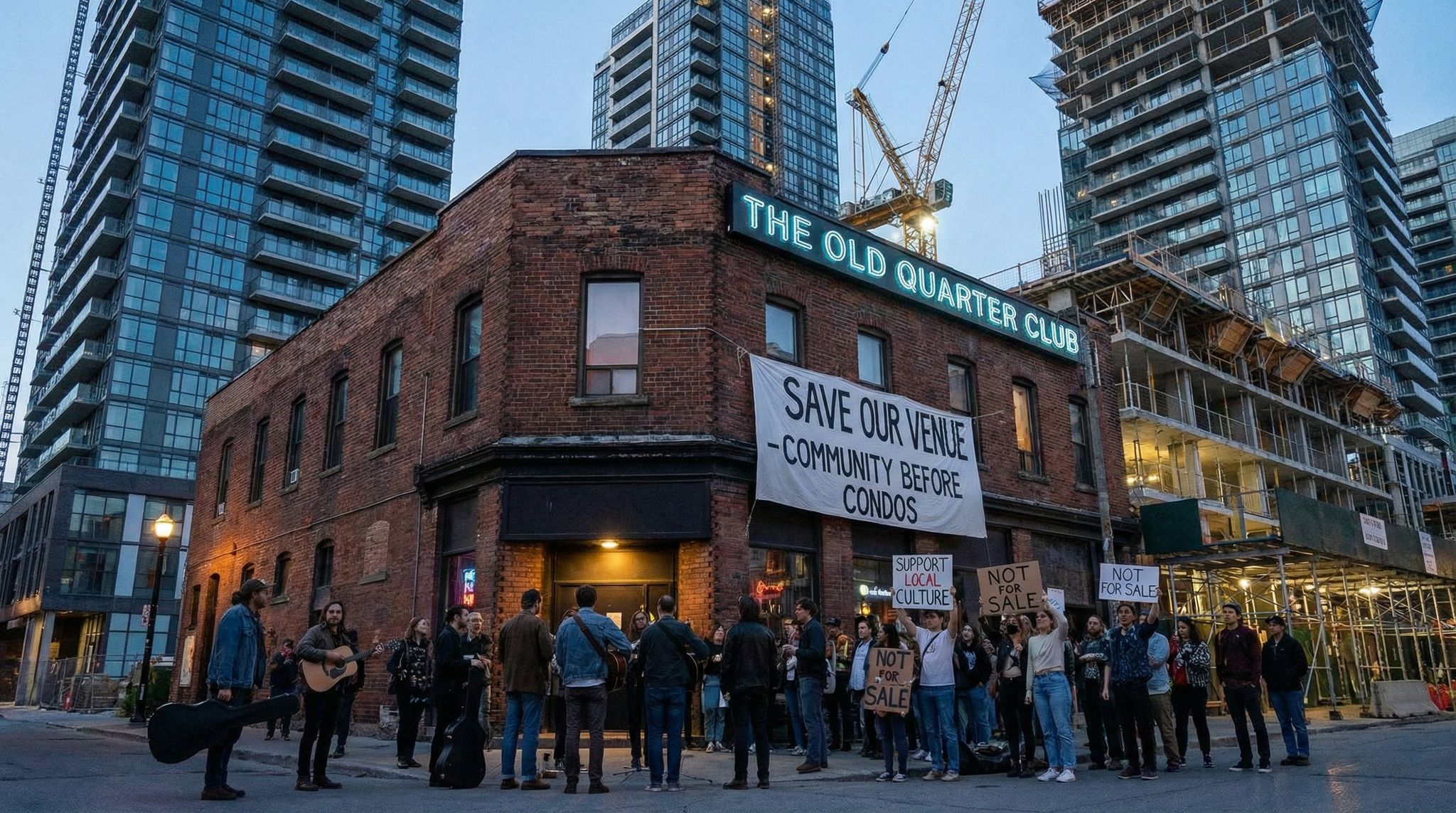
When a venue is threatened by redevelopment or closure, it’s not just a business problem – it’s a community crisis. These stages hold immeasurable cultural value. They’re where local bands cut their teeth, where memories are made, and where diverse groups of people come together. Shuttering or relocating a long-standing venue severs a piece of the community’s identity. That’s why threats to venues often spark public outcry and headlines. From London to Los Angeles, we’ve seen loyal patrons, artists, and even city officials rally to “Save Our Venue” when the bulldozers loom. Communities feel a sense of ownership and pride in their local venues, so losing one is more than losing a night out – it’s losing a cultural landmark.
The stakes are not abstract. Economic impact studies routinely show that small venues punch above their weight in contributing to local economies through late-night jobs and tourism. Yet these contributions are often overlooked until a closure looms. Only then do cities realize the cost of losing these spaces – not just culturally, but financially and socially. Acknowledging what’s at stake has prompted some governments and industry groups to seek solutions, such as the UK’s recent push for tax relief and an arena ticket levy to fund grassroots venues. For venue operators, articulating your venue’s community value is a powerful tool when fighting gentrification. You want everyone – from fans to councilors – to understand that if your venue goes, something irreplaceable goes with it.
Ready to Sell Tickets?
Create professional event pages with built-in payment processing, marketing tools, and real-time analytics.
| Threatening Challenge | Strategies to Fight Back | Real-World Example |
|---|---|---|
| Skyrocketing rent or lease expiration | – Negotiate long-term lease extensions with caps – Fundraise or find investors to buy the property – Seek historic designation to limit redevelopment |
Tote (Melbourne): Landlord selling, so fans raised A$3M to purchase the venue and secure its future. |
| Property sale & planned demolition | – Mobilize public & media campaign to delay permits – Apply for landmark or cultural asset status – Propose win-win to developer (venue included in new project) |
Showbox (Seattle): Developer wanted a 44-story tower; 180,000 people signed a petition and the city applied landmark status, stalling the project in court. |
| Noise complaints from new neighbors | – Install professional soundproofing & bass isolation – Implement strict curfews/volume limits – Build relationships: address issues directly with neighbors |
Night & Day Cafe (Manchester): Faced a noise abatement order from one new neighbor – after 98,000+ signed a petition, a court let the venue stay open with new volume limiter conditions. |
| Cultural shifts as area gentrifies | – Adapt programming to include diverse genres or earlier showtimes – Host community events to welcome new locals – Partner with local businesses for cross-promotion |
Various: Venues that added weekend daytime shows and all-ages events attracted new residents as customers instead of adversaries, turning gentrification into an opportunity. |
| High operating costs & slim margins | – Diversify revenue (merch, rentals, daytime use) – Seek sponsorships or grants to subsidize costs – Aggressively budget and reduce wasteful expenses |
100 Club (London): Iconic club was unprofitable due to high rent until a sponsorship deal with a major brand injected funds and stabilized finances. |
As the table above shows, every threat can be met with a strategy – or several in combination. Gentrification is formidable, but venue operators are not helpless. In the sections below, we break down these tactics in detail, with actionable advice on how to negotiate with landlords, leverage legal protections, quiet the noise disputes, rally your community, and shore up your finances. The message to venue owners in 2026 is clear: you can hold the line and keep your venue thriving, but it requires proactivity, creativity, and drawing on every tool and ally at your disposal.
Securing Your Venue’s Tenure: Leases & Ownership
Pursuing Long-Term Lease Security
The first line of defense against redevelopment is locking in your right to occupy the space. If you’re leasing your venue, one of the most powerful moves is to negotiate the longest lease term possible, with renewal options that put you in control. A multi-year lease (5, 10, even 15+ years) with pre-agreed renewal terms gives you stability and deters speculative buyers – developers are less tempted if they know the venue isn’t going anywhere soon. Savvy venue operators engage landlords in lease extension talks early, long before the current term is up. Don’t wait until you’re a few months from expiry to start the conversation. By then, a developer may already be circling.
Approach your landlord highlighting the positives of having your venue as a tenant. Emphasize your track record: on-time payments, property improvements you’ve made, the prestige or foot traffic your venue brings to the area. Many landlords would rather keep a reliable tenant than gamble on a new one, even in a hot market. Use that as leverage to ask for an extended lease or an option to renew at set intervals. You can also negotiate rent escalation caps (e.g., rent can only increase 3% a year) to protect against sudden spikes. While not all landlords will agree, it’s often in their interest to avoid vacancy or community backlash. Remember that replacing a tenant has costs and risks for them, too.
If your landlord is considering selling the property, try to get a Right of First Refusal clause – the right to match any purchase offer. This way, if a developer does bid for the building, you legally get a shot at buying it under the same terms. It’s a long shot for many independent venues to afford a property purchase, but just having that clause can dissuade quick sales and buy you time. Similarly, explore if your city has an Asset of Community Value (ACV) program (common in the UK and elsewhere) that lets community groups nominate your venue property for protection. An ACV designation can force a pause on the sale process and give you (or community investors) a window to bid before a developer can swoop in.
Boost Revenue With Smart Upsells
Sell merchandise, VIP upgrades, parking passes, and add-ons during checkout and via post-purchase emails. Increase average order value by up to 220%.
Negotiating with Landlords Proactively
Not every landlord is an adversary. Especially if your venue is in a building owned by an individual or family (rather than a big corporation), they might be open to solutions that keep you in place. The key is open communication and finding a win-win. Schedule a face-to-face meeting well before lease expiry or any breaking point. Explain your situation candidly: rising costs, the challenges you face, and your commitment to the property. Then present creative proposals. For example:
– Gradual rent increases instead of a sudden hike – show a business forecast to demonstrate what you can afford yearly while staying viable.
– Shared improvement costs – offer to invest in property upgrades (e.g., soundproofing, façade improvements) if the landlord extends the lease or gives a rent break. They get a better property value; you get a longer tenure.
– Revenue-based rent – during tough periods, propose a temporary percentage rent (a cut of ticket or bar sales) instead of a fixed rent. This aligns the landlord with your success and provides immediate relief in slow months.
Many landlords prefer a compromise like a temporary rent reduction or partial deferral over having their space go empty. Venues can also secure relief by presenting a solid business plan that demonstrates long-term viability. If you can show that your plan offers them more stability or profit in the long run, they may bite. Also, don’t underestimate the power of the personal appeal: invite the landlord out to a show at your venue. Let them see the crowds and feel the energy of what they’d be shutting down. Some might not care, but others do value the cultural significance (especially if they’re local). Case in point: a New York City venue operator once turned a tense lease negotiation around by giving the building owner a behind-the-scenes tour during a sold-out concert. The owner saw firsthand the community impact and ended up agreeing to a modest rent increase spread over several years, instead of an immediate doubling – simply because the emotional case was made, not just the financial one. In short, make it about more than numbers when negotiating; make it about partnership.
Grow Your Events
Leverage referral marketing, social sharing incentives, and audience insights to sell more tickets.
If negotiations stall or head south, have a backup plan. Scouting alternative locations is wise (even though moving is a last resort). Sometimes knowing you could relocate gives you confidence in talks. And if worst comes to worst, having an identified potential new venue space means you won’t be scrambling if you do lose the lease. However, moving can kill momentum and destroy the unique atmosphere you’ve built – so fight hard to stay put if you can. An experienced operator will exhaust every option to stay in their established location, because they know four walls and a roof can hold decades of goodwill that doesn’t easily transfer to a new address.
Exploring Ownership and Collective Investment
The ultimate security is owning your venue’s building. If you hold the deed (or have a favorable long-term leasehold), you’re far less vulnerable to eviction or rent shocks. Of course, buying property in a gentrifying city is easier said than done – prices may be astronomical. But it’s not impossible, and creative approaches have worked. Some independent venues have successfully transitioned to ownership through community-driven efforts or partnerships. A famous example is The Tote in Melbourne, a legendary rock ’n’ roll pub. When the Tote’s building went up for sale in 2023, there was a very real fear a developer would snatch it and end its run as a music venue. Instead, the local music community rose up. A group of music lovers and regulars launched a crowd-investment campaign, letting fans purchase small equity stakes. In an astonishing show of support, they raised around A$3 million – enough for the community-led group to buy the building outright and keep the Tote’s doors open. Now hundreds of people are part-owners of that venue, and its future is far more secure.
While not every venue can raise millions from supporters, the principle stands: if your community is passionate and affluent enough, they might literally invest in keeping the venue alive. Equity crowdfunding (where contributors actually get a share of ownership) or soliciting a group of friendly investors can turn a dream of ownership into reality. Some owners also find a white knight investor – for instance, a successful artist who got their start at the venue or a local entrepreneur who loves the scene – willing to buy the building (or help you buy it) as a labor of love. If you go this route, ensure any new ownership structure keeps the venue’s mission central. The best scenario is when investors are music people or community stakeholders who value the venue’s cultural role as much as any return on investment.
Another route is partnering with a non-profit or city. In Amsterdam, the collective running OT301 – once a squatted artists’ space – managed to purchase their building with help from the local government, turning it into a legit cultural center. They operate as a not-for-profit collective now, which opened doors to grants and public funding. Similarly, some cities have funding programs or grants to help “save” venues (often in exchange for certain community programming or nonprofit status). Owning your venue through a non-profit or cooperative can make you eligible for cultural preservation grants, tax exemptions, or low-interest loans that for-profit venues can’t access. The Red Rattler Theatre in Sydney provides another inspiring model: five artists pooled resources to buy a warehouse and convert it into a community-run venue. By owning the space, they removed the landlord variable entirely. Over a decade later, the Red Rattler is still thriving as an all-ages arts hub, showing that ownership can be the difference between a short-lived DIY space and a sustainable institution that won’t be shut down by developers.
Grow Your Social Following With Every Sale
Require social media follows, shares, or playlist adds to unlock presale access or special pricing. Turn every ticket purchase into audience growth.
Of course, ownership comes with new responsibilities – property taxes, maintenance, mortgage payments – but every veteran operator will tell you the independence and stability are game-changers. You can invest in long-term improvements (soundproofing, renovations) without fear, and no one can sell the ground out from under you. Even if buying seems out of reach now, keep it as a long-term goal. Monitor property values, build a war chest (every profitable year, set aside a “venue purchase fund”), and network with potential allies who could help when the opportunity arises. The venues that survive gentrification often do so because at a critical moment, they or their supporters bought the building – planting a flag that culture will remain amid the coffee shops and condos.
Harnessing Laws and Policy Protections
Historic Status and Cultural Landmark Designation
When market forces threaten your venue, sometimes the law can be your shield. Many countries and cities have mechanisms to protect sites of significant cultural or historical value – and music venues are increasingly recognized as exactly that. By securing a historic or cultural designation for your venue, you may be able to delay or prevent redevelopment even if you don’t own the building. For instance, in the United States, a venue can be nominated for local or national historic landmark status if it’s old enough or significant enough (e.g. it hosted historically important performances, or is an architectural gem). Once designated, demolition or major alterations become much harder as there are legal hurdles and preservation reviews. This tactic was famously used in Seattle for The Showbox. The 1,100-capacity theater dating to 1939, beloved for hosting jazz and rock legends, was slated for teardown to build luxury apartments. In 2018, after an outcry, the Seattle City Council temporarily extended a historical district to cover the Showbox, effectively pausing the development. Later, preservationists campaigned to landmark the venue. While court battles ensued, years later the Showbox still stands – the legal protections created enough friction to stave off the wrecking ball, buying time for a more permanent solution.
If your venue has been around a long time, or has unique architectural or cultural significance, research the criteria for historic designation in your area. Often, you’ll need to gather supporting evidence (old photos, press clippings, testimonials of its cultural impact) and apply to a preservation board. Engaging local historical societies or a Historic Preservation Trust can bolster your case – they often have expertise in navigating these processes. Keep in mind, landmark status can come with strings (you might face restrictions on renovations, for example). But those constraints are usually worth the trade-off of ensuring a developer can’t just bulldoze the place. Even if you’re not ultimately granted landmark status, the process itself rallies public support and forces city officials to acknowledge the venue’s importance. That political pressure alone can sometimes deter a sale or lead to alternative solutions (like requiring the developer to incorporate the venue space into the new building).
Beyond formal historic landmarks, some cities have “cultural asset” registers or special zoning for music and arts venues. For example, London’s City Hall maintains a “Cultural At Risk” register where threatened venues can be listed and receive support from a Night Czar’s office. Being officially labeled as a protected cultural asset can sway planning decisions. In cities like San Francisco and Melbourne, grassroots campaigns have led to legislation that specifically recognizes music venues as part of the city’s heritage, which can trigger grants or relief. It’s worth connecting with your local arts council or music venue trust (such as the UK’s Music Venue Trust or the National Independent Venue Association in the U.S.) – they might help you navigate these protections or even lobby on your behalf. The key is to claim the narrative: your venue isn’t just a tenant in a building, it’s a public good with cultural value. Laws are starting to catch up to this idea in 2026, and you should use them to your advantage.
The “Agent of Change” Principle – Making Developers Responsible
One of the biggest legal wins for venues in recent years has been the adoption of “Agent of Change” principles in planning laws. Agent of Change essentially says: if you build or move next to an existing live music venue, you (the newcomer) are responsible for mitigating noise, not the venue. This flips the old script where venues bore the brunt of complaints. In practical terms, if a developer wants to put a residential building beside a long-standing club, the developer must pay for soundproofing the apartments or otherwise protect its residents from the pre-existing noise. They can’t demand the venue turn down the volume or close earlier – the onus is on the new development to adapt or accept the noise.
The UK led the way in enshrining Agent of Change into national planning policy in 2018. By 2026, it’s become a cornerstone of venue protection in England, Wales, and parts of Australia (cities like Melbourne and Sydney have adopted similar rules at the state level). If your city or country has Agent of Change laws, know them inside out and cite them whenever a noise issue arises with new neighbors. For example, if a condo resident who moved in last year complains to authorities, politely remind the regulators (in writing) that under Agent of Change, the responsibility lies with the building to insulate against your venue’s noise, not for you to mute your business. It’s not a get-out-of-jail-free card – you still must comply with reasonable noise limits – but it can stop unfair demands that you drastically alter operations due to newcomers. In London, this principle has helped venues survive intense development; it was a factor in reopening the famed Fabric nightclub after a license fight, and it’s now standard that new high-rises near clubs invest in heavy acoustic treatments.
Free Tool: What Should Sponsors Pay?
Price sponsor tiers and exhibitor booths from your audience size and what each package includes, and see what is left after delivery costs.
Not everywhere has Agent of Change yet, especially in the U.S. where such policies might exist in only a few cities. If you’re in a place that hasn’t adopted it, consider advocacy. Team up with other venue owners and industry groups to lobby your city council or state legislators. Point to the success stories abroad: places with Agent of Change have seen fewer venue closures due to noise conflicts, because it builds coexistence into the law. Even without a formal law, you can negotiate with developers using the concept. For instance, if a new apartment block is proposed nearby, attend the planning hearings and insist on noise mitigations in the design (double glazing, sound baffles, setback distance, etc.). Sometimes city planners will make these measures conditions for approval if the issue is raised early and firmly. The bottom line is that venues should not be punished for the growth they helped spark. If a neighborhood becomes attractive because of its nightlife, fairness says the newcomers must coexist with that nightlife. Agent of Change puts that fairness into writing.
Tapping Government Support and Relief Programs
Fighting gentrification isn’t only about playing defense; there are ways to go on offense by leveraging government support. In recent years, recognizing the threat to cultural infrastructure, various governments have rolled out grants, tax relief, and funds to help live venues survive. As a venue operator, staying informed about these programs – and advocating for them – can provide critical lifelines.
One major example was the U.S. federal Shuttered Venue Operators Grant (SVOG) program (born from the 2020 Save Our Stages Act) which delivered over $16 billion to independent venues and promoters in 2021-2022. That was emergency pandemic aid, but some cities have since created ongoing venue support funds. For instance, Austin, Texas launched a Music Venue Preservation Fund that continues to give grants to at-risk venues for rent and renovations. In Europe, Germany’s government increased funding through programs like Initiative Musik, which offers subsidies for venue upgrades and artist costs. In the UK, local governments have experimented with rate relief (property tax breaks) for music venues – London and other councils provided 50% business rate reductions for grassroots venues after lobbying efforts. These kinds of measures directly ease the financial burden of gentrification by cutting your costs.
The catch is that many programs aren’t widely advertised, and application processes can be tedious. Dedicate time to research grants or relief available in your region. Look at arts council websites, economic development offices, and venue association newsletters. Some opportunities to watch for:
– Cultural grants for capital improvements – e.g. funds to soundproof, upgrade HVAC, install accessibility features. Cities want venues to be safer and more community-friendly, and may pay part of the bill (Berlin even created a €1 million fund specifically to help clubs add soundproofing).
– Facade or building improvement grants – If gentrification has aesthetic demands (maybe the neighborhood wants everything to look nice), there are often “façade improvement” matching grants. You get a nicer venue exterior or renovations, and in return you often agree to stick around and contribute to the area’s character.
– Arts and culture funding – National endowments or lotteries (e.g., Britain’s Arts Council or Canada’s FACTOR) sometimes have venue-specific programs. They might help cover operating costs in exchange for community programming, or fund equipment that improves the venue’s viability.
– Tax incentives – Some jurisdictions allow sales tax or ticket tax retention for venues, or special exemptions if you run as a nonprofit. For example, a few U.S. venues in historic buildings got property tax increases waived because the city wanted to encourage preservation. Investigate if such policies exist or can be proposed.
If nothing exists, join together and ask. Many recent supports (like Austin’s fund or the UK’s ongoing relief) came because venue owners spoke up collectively about their challenges. Showing data like how many venues have closed and the economic loss can push officials to act. By participating in venue associations (or even informal coalitions), you can lobby for things like rent stabilization for cultural spaces, dedicated “nightlife economy” offices at city hall, or ordinances that make it harder to convert venue properties into condos. This type of activism is part of “holding the line” too – it’s shaping the environment so venues are valued and protected by law, not just by goodwill.
One more tip: stay compliant and in good standing with authorities. If you’re angling for government help or fighting a redevelopment, don’t give ammo to the other side. Keep your licenses up to date, follow safety codes diligently, and document your community contributions. A venue operator who is known to the local police and fire marshal only for positive reasons (like proactively cooperating on safety plans) is far more likely to win sympathy from city officials when pushing for support. When you’re seen as a responsible cultural institution, not a trouble spot, you strengthen your case in every arena from the courthouse to the court of public opinion.
Free Tool: Split Tickets for Max Gross
Given capacity and a target price, the optimizer proposes Early Bird / GA / VIP allocations and prices — with projected gross at 100%, 80% and 60% sell-through.
Noise Mitigation and Sound Management
Investing in Professional Soundproofing
If gentrification has a nemesis, it’s noise complaints. As new developments bring sensitive ears closer to your speakers, investing in sound mitigation can literally be what keeps your venue open. Experienced venue managers treat soundproofing not just as acoustic improvement, but as insurance against neighbors. In 2026, technology and materials for noise control have advanced, and many venues are taking advantage of this even preemptively. Key upgrades include:
– Double-glazed windows and acoustical curtains: If your venue has windows or thin walls, these are prime paths for sound leakage. Modern double or triple-pane windows with air gaps dramatically cut down transmitted sound. Thick, theater-style curtains can further dampen any escaping noise at night.
– Door vestibules and seals: Building a second set of doors (a sound lock or vestibule) at your entrance is highly effective – it ensures that when people enter or exit, there’s never a direct open path for sound to blast outside. All exterior doors should also have proper acoustic seals to stop sound “bleeding” through cracks.
– Structural isolation for bass: Low frequencies (that chest-thumping bass) are the hardest to contain, because they can vibrate through structures. Venues that have survived in mixed-use areas often install spring isolation mounts for subwoofers, float their stages or floors on neoprene pads, or reinforce walls with damping compounds. These measures prevent bass vibrations from turning the whole building into a subwoofer. It’s a technical area where consulting an acoustic engineer is worth every penny.
– Enhanced insulation and paneling: Filling wall cavities with high-density rockwool or fiberglass insulation, adding extra drywall layers (with green glue damping in between), and mounting acoustic panels can greatly reduce the sound that makes it through your walls. Even applying acoustic plaster or specialty paint on ceilings has an effect. Think of it as creating a “box within a box” – the goal is to contain the noise to your space.
Yes, significant soundproofing can be expensive – easily a five- or six-figure investment for a whole venue retrofit. But consider the alternatives: struggling with constant noise violations, legal fees, or a forced shutdown. Many venues have found grants or city programs to assist with these costs (as mentioned, cities like Berlin offered funding specifically for club soundproofing). Even without help, spreading the investment in phases can work: address the most egregious leaks first (e.g., a thin roof or those old single-pane windows) and plan for incremental upgrades. Keep documentation of every noise reduction measure you add. Not only will that help if you ever need to demonstrate to authorities all the steps you’ve taken, but it can also support an argument for extended hours or usage because you’ve mitigated impact.
One tip from veteran operators: bring in a professional acoustic consultant to do a noise assessment. They’ll identify exactly how sound travels out of your venue (maybe it’s through the air ducts, or a particular wall that acts like a speaker). This targeted approach can save money by fixing specific weak points rather than overhauling everything. Moreover, having an official acoustic report showing you comply with local noise laws at your boundary can be a powerful defense. The Red Rattler in Sydney, for instance, proactively conducted acoustic studies and shared them with the city to prove they manage noise responsibly – this kind of diligence builds trust with regulators and neighbors alike.
| Sound Mitigation Upgrade | Noise Reduction Benefit | Typical Cost Level |
|---|---|---|
| Double-door vestibule at entry | Prevents direct sound escape during door openings; dramatically lowers dB leaks into street. | High (construction of new doorway & soundlock) |
| Acoustic insulation in walls/ceiling | Absorbs and blocks sound transmission (mid/high frequencies); reduces next-door noise bleed. | Medium (materials + install) |
| Bass traps & subwoofer isolation | Damps low-frequency vibrations by decoupling speakers from structure; minimizes those “bass thumps” heard blocks away. | Medium (specialized equipment) |
| Sound-rated windows & seals | Contains indoor noise by up to ~50% vs. single-pane; keeps high-frequency noise like vocals/cymbals inside. | High (custom glass + frame) |
| Acoustic panels & diffusers on interior walls | Reduces reverberation and echo, indirectly cutting how much sound “builds up” to leak out; also improves in-venue sound quality. | Low to Medium (scalable by area covered) |
| Limiter system on sound board | Caps the maximum volume output to stay under a set decibel threshold; ensures you don’t accidentally exceed noise limits. | Low (technological solution) |
Friendly Practices to Keep Neighbors Happy
Physical upgrades aside, sometimes operational tweaks can significantly reduce neighborhood friction. How you run your venue day-to-day can either appease new neighbors or aggravate them. Smart venue managers in gentrifying areas adopt a mindset of “being the friendly neighbor” without sacrificing the core of their business. Some effective practices include:
– Clear, posted exit policies: At the end of the night, have MCs or signs remind patrons to “please leave quietly and respect our neighbors.” It sounds simple, but a polite crowd exiting (and not loitering outside yelling) cuts noise on the street. Train security to gently usher people away from the front after shows to keep post-show chatter from echoing through apartment windows at midnight.
– Staged closing routines: Don’t suddenly blast on the house lights and push everyone out at once at 2 A.M. if you can help it. Instead, wind the night down gradually – lower the music volume, perhaps switch to mellow tunes at closing, and let people trickle out. A sudden dump of hundreds of loud, stimulated people onto a quiet street is what draws irritation (and police attention). A gradual, managed departure can go unnoticed.
– Dedicated smoking area management: Often, it’s not even the live music that irritates neighbors – it’s the smokers and chatters outside. If you have smokers, create a designated area as far from residences as possible, and post a staff member or sign there to keep voices down. Use barriers or even an outdoor speaker quietly playing music; oddly enough, soft music outside can discourage loud conversations because people subconsciously lower their voices to hear it.
– Off-peak load-ins and soundchecks: With more people working from home in 2026, a noon soundcheck on a weekday might disrupt someone’s Zoom meeting next door. Consider adjusting band load-in and soundcheck times to be mindful of the 9–5 work-at-home crowd. Or at least communicate schedules to neighbors (e.g., “We have a sound test at 3 PM that will last 10 minutes”). Knowing what a noise is and when it will end makes it more tolerable than random unknown bursts.
– Neighbor hotlines and outreach: Provide a dedicated community contact number or email that neighbors can reach during events if there’s an issue. Promote this in local newsletters or door-to-door flyers. Many times, if neighbors can call you rather than the cops, you can resolve a noise issue in minutes (by turning down a subwoofer a notch, for example) without official incident. This direct line shows good faith. Some venues even appoint a “community liaison” on staff who visits immediate neighbors quarterly to check in. A little personal connection goes a long way to converting complainers into allies.
Think of these efforts as human soundproofing. They reduce not just decibels, but ill-will. A neighborhood will put up with a lot more noise if they know the people running the venue and trust that you’re doing what you can. As one venue owner put it, “We treat every new condo resident like a potential friend, not a foe.” They welcome them with a letter and free show tickets, acknowledging, “Yeah, it can get loud here, but come enjoy it rather than fight it.” This approach turned several would-be complainers into regular customers! Even if that’s not always the result, the broader community will notice your good-faith efforts. Then if a noise dispute does go before the council or courts, you can point to all these measures as evidence that you operate responsibly and respectfully – which can sway decisions in your favor.
Working Within Noise Ordinances and Curfews
No matter how much you soundproof or schmooze the neighbors, you still must obey the law. Every venue should be intimately familiar with local noise ordinances and permit conditions – and have a plan to meet them. Many cities have specific decibel limits measured at the property line or the nearest residence. For example, New York City prohibits music above 42 dBA inside a neighbor’s apartment after 10 PM. Los Angeles has a 50 dBA nighttime limit at the property line. Your city might enforce “quiet hours” like 11 PM to 7 AM during which amplified sound is heavily restricted. Know these rules cold, and if you’re unclear, consult the local environmental noise office or hire an acoustician to interpret them for your venue’s context.
Smart Promo Codes & Presale Access
Create percentage or flat-rate discount codes with usage limits, date ranges, and ticket type restrictions. Plus unlock codes for private presales.
Once you know the magic numbers (decibel limits, time curfews), operationalize them. Train your sound engineers and DJs on the limits – modern mixing boards and controllers can display live dB levels, so use that. Set a policy that after, say, 11 PM, the subwoofers are dialed back or certain “loud” frequencies are EQ’d down. Many venues install a sound limiter device inline that will automatically cap the volume if thresholds are exceeded (or even gradually reduce volume if approaching the limit, to avoid jarring cut-offs). While artists may not love the idea of being limited, it’s easier to explain that “we legally can’t go louder” than to constantly deal with fines or shutdowns. In fact, some councils will require limiters as part of your license if there have been complaints – so doing it voluntarily shows goodwill.
Adapt your booking and scheduling to comply with noise laws too. If your license says outdoor events must end by 10 PM, don’t push it – end at 9:55 and show you’re a responsible player. You might even gain brownie points to occasionally get special exceptions (like a permit for a one-off late show) if you demonstrate regular compliance. Additionally, consider shifting noisiest programming to weekends and earlier slots. A thumping EDM night might fly on a Saturday until midnight, but could provoke problems on a Wednesday at 1 AM. Meanwhile, an acoustic singer-songwriter night is unlikely to trigger complaints even on a weeknight. Matching event types to nights considering the neighborhood’s tolerance is just smart scheduling for community harmony.
If despite all efforts you get hit with a noise citation, address it head-on and fast. Don’t ignore it or get defensive. Show regulators the measures you’ve taken since (extra insulation, lowered volume, etc.) and, if feasible, work with them to test your venue after changes. The goal is to turn an adversarial dynamic into a collaborative one: “We want to comply – help us understand what more we can do.” Sometimes authorities will appreciate the attitude and give you time to fix issues rather than drop the hammer. And if a neighbor is abusing the system (filing exaggerated or false complaints), having a documented history of compliance and improvements will help expose that. A venue in one city was able to get a chronic complainer declared a “vexatious complainant” (meaning their complaints were given less weight) because the venue showed logs of staying under dB limits and even the police noted the calls were unfounded. Know the law, follow it, and you significantly neutralize gentrification’s favorite weapon – the noise war.
Rallying Community and Fan Support
Turning Neighbors into Allies
One of the most powerful assets in fighting off threats is a supportive local community. We’ve touched on keeping neighbors happy – beyond that, you want them emotionally invested in your venue’s survival. Venue operators with decades of experience will tell you that neighbors can “make or break” a venue’s fate. If the people living around you see your venue as a nuisance, they’ll cheer a developer that wants to replace you; if they see it as an essential part of the neighborhood, they’ll fight tooth and nail to keep you. So how do you get neighbors on your side? By being a good neighbor yourself and integrating into the community fabric.
Start by embracing a mindset of openness. Introduce your venue to the community not just as a nightclub, but as a willing community space. Host a quarterly “open house” where residents can tour the venue during the daytime, see backstage, and ask questions. This demystifies the space (some folks have never set foot in the club that’s next door to their apartment) and humanizes you as operators. Offer your venue for local events: a neighborhood association meeting, a charity fundraiser, a holiday craft market on a dark night. When a venue becomes the place where the school down the street holds its annual fundraiser or where a community theaters group stages a kids’ recital on a Sunday afternoon, it’s no longer “that noisy club” – it’s a community center. As a bonus, these daytime or off-night uses can bring in a little extra revenue or at least cover costs.
Consider instituting neighbor perks. Some venues give out a “local resident pass” that offers free entry to shows on a first-come basis or a permanent discount on tickets/drinks for those living within a certain radius. It’s a gesture that says, we appreciate sharing the neighborhood with you. Even if the neighbors seldom use it, the goodwill it generates is real. Partnering with local businesses can further embed you: sponsor a team in the local soccer league, or collaborate with the café down the street to do a co-hosted open mic. These ties weave a narrative that the venue is part of the neighborhood’s identity and daily life, not an alien encroachment.
Communication is also critical. Keep a channel open with community boards or civic groups. Attend local council precinct meetings periodically; don’t just show up when you’re in trouble. Share positive news – e.g., if you raise money for charity at a show, let the community newsletter know. By building a reputation as a venue that contributes and cares (not just profits off the neighborhood), you’ll cultivate local champions. It’s remarkable how a few vocal supportive neighbors can overshadow many casual complainers. When someone at a town meeting stands up and says, “This venue hosted our PTA fundraiser and employs local kids – we want it here,” it carries weight.
Finally, listen and adjust when reasonable. If multiple neighbors express the same concern (say, litter on the street after shows), show you’re responsive: maybe you hire an extra cleanup crew or adjust an outdoor lighting angle that was bothering someone’s window. You can’t appease every complaint, but addressing the easy fixes builds capital for when there are disagreements on bigger issues. The goal is to foster a genuine relationship where neighbors see the venue as theirs too. In one case, a venue facing a license review had dozens of nearby residents send letters of support and even speak in favor of the venue at the hearing. The officials were swayed by this outpouring, and the venue survived with its license intact. That kind of community solidarity is only possible if you’ve done the groundwork ahead of time.
Mobilizing Fans and Artists as Advocates
Your audience isn’t just your revenue source – they can be your army in times of need. True music fans form emotional attachments to venues just like to bands. If your venue is under threat (be it eviction, noise closure, or bankruptcy), activate your fan base. In the age of social media and digital connectivity, this is easier than ever. Share your situation transparently with your patrons: via email newsletters, Facebook, Instagram, Twitter – wherever you have a following. Be honest about the challenges (“we’re facing a 300% rent increase and need help”) without sounding like you’ve given up hope. Often, fans just need to know there is a threat, and they will ask “What can we do?” Be ready with answers: sign this petition, write to this council member, come to our benefit show, donate to our survival fund, etc.
Petitions can be incredibly effective in showing public support. A compelling example comes from Manchester’s Night & Day Café. When a new resident’s noise complaint put the venue’s license at risk in 2021, the owners didn’t stay quiet – they spread the word online and in the press. The result? Over 90,000 people signed a petition urging authorities to drop the noise enforcement. That astounding number included signatures from famous musicians and regular fans worldwide. The public pressure was impossible to ignore. Ultimately, in 2024 a court ruled in favor of the venue, allowing it to continue operating with some volume conditions – a huge victory that many credit to the massive show of support that made regulators think twice. When mobilizing fans, make it easy: online petition links, form letters they can email to officials, hashtags to spread awareness (e.g., #SaveTheShowbox or #SaveOurVenues, which have trended during various campaigns). Numbers matter – 500 letters to a city council or 100,000 petition signatures get politicians’ attention, guaranteed.
Don’t forget the artists and promoters who use your venue. They often have their own loyal followings and media reach. If you have good relationships with bands, ask them to speak up. It could be as simple as a tweet saying “This venue gave us our start, please help save it” or even coming out to play a benefit concert. Benefit shows serve a dual purpose: they can raise critical funds and also galvanize public sentiment. Fans love the chance to see big artists returning to help the “little venue that could.” In London, when the 100 Club was in dire straits from high rents, iconic musicians like Paul McCartney and others rallied in support (McCartney even played there, and a campaign to reduce the club’s business rates took off). The noise made by prominent voices can spur corporate or government action, as it did when a major brand (Converse) stepped in to sponsor the 100 Club after seeing its cultural importance plastered all over the media.
It’s important to maintain authenticity – you can’t manufacture grassroots support, and attempting to do so may backfire. But if you’ve built a genuine community around your venue, don’t be shy to call on that community in tough times. Whether it’s crowdfunding money or showing up en masse to a city hall meeting wearing venue t-shirts, these displays can literally save your business. One indie venue in Oregon held an in-person “town hall” for fans when on the brink, which not only generated volunteer help (accountants offering free services, etc.) but also caught local media attention, amplifying their plight. That public meeting moved officials who realized how cherished the space was. The venue managed to negotiate relief (including a temporary rent freeze) partly because the landlord felt the community pressure too.
In summary, your patrons and the artists who grace your stage are not passive participants – they can be your loudest cheerleaders and strategic assets. Cultivate goodwill with them during good times, and when crisis comes, they’ll rise to the occasion. Nothing shows the importance of a venue more clearly than thousands of voices saying, “This place matters to us.”
Shaping Public Narrative and Media Support
In any fight for survival, controlling the narrative is crucial. Don’t let your venue’s fate be decided in backrooms or by default – take the story public on your own terms. Use local media and even national press if possible to highlight what’s happening. Journalists love a “venue vs. developer” story, especially if there’s a human angle (historic club that hosted famous acts is under threat, community rallying behind it, etc.). Reach out to music journalists, cultural reporters, even urban development bloggers. Prepare a press release and some compelling quotes about why the venue matters, and specifically call out the threat: e.g., “The Clocktower Theater may go dark next year due to proposed rezoning – here’s why that must not happen.” Media coverage can put officials and landlords on the defensive because nobody likes looking like the villain who killed the city’s culture.
When engaging the media or public, frame the issue larger than just your venue. Link it to the broader trend: “We’ve lost X venues in this city in the last 5 years. We refuse to be the next casualty of an unchecked development spree that’s hollowing out our cultural core.” Providing data or citing other cases gives your fight legitimacy and urgency. For example, mentioning that 125 UK venues closed in the last 12 months as part of a full-blown crisis in the nightlife sector shows it’s a systemic issue, not just your management failing. If you have access to economic impact figures (like how many jobs you provide, how many local businesses benefit from your crowd), share those. Show that closing the venue would harm the community economically and culturally. Public opinion can then align that saving the venue = protecting the community’s interest, whereas shutting it down only profits a developer.
It’s also powerful to share personal stories in your narrative. Perhaps a now-famous band got their start on your stage, or a couple met at your venue and later married, or local kids found their confidence performing there. These anecdotes make people realize a venue is more than bricks and mortar – it’s life experiences. During the campaign to save the Showbox in Seattle, supporters flooded city council meetings with testimony about the venue’s importance, from first concerts to lifelong friendships formed there. This outpouring was widely reported, painting the developer as someone trying to uproot a piece of Seattle’s soul. Negative PR can make developers reconsider or at least engage with the venue on better terms. No company relishes being the target of petitions, bad press, or celebrity criticism for destroying a cultural icon.
Finally, leverage social media creatively. Create a unique hashtag for your cause and encourage users to post their favorite memory or photo at the venue. This creates a groundswell of positive content. During the #SaveOurStages movement in 2020, thousands of posts from artists and fans helped push through legislation. If your fight is local, still use these tactics on a city scale (e.g., #SaveTheLexington or whatever suits). Tag city council members or use city-specific forums like local subreddits. The more visibility, the more likely decision-makers will feel that closing the venue would be a notable loss and a public relations mistake.
Remember: you’re not only a venue operator, you’re a cultural advocate. By championing your venue, you’re also speaking up for the wider live music and arts scene. Carry that mantle with pride – it can transform a lonely fight into a larger movement that draws in allies from all corners.
Strengthening Finances and Revenue Streams
Diversifying Revenue to Withstand Gentrification
Economic resilience is a key part of fighting gentrification pressure. If your venue can earn more money from new sources, you’re better equipped to handle rising costs or a rent surge. Smart venues in 2026 are exploring every angle to monetize their space and brand beyond just ticket sales on show nights. One strategy is to extend your operating hours in creative ways. Could your venue double as a café or co-working space during daytime? Some mid-sized venues now open their lobby bars in the afternoon to local remote workers or as a community coffee shop, generating a steady daytime income stream. Others host weekend brunch concerts or vinyl record fairs during the day – attracting a different crowd (and their wallets) into the venue when it would otherwise be empty.
Think also about private rentals and events. If weeknights are often dark, consider marketing the venue for corporate events, product launches, film shoots, or private parties. Gentrifying areas often have businesses or new residents looking for unique event spaces. A tech startup might pay handsomely for a “cool” venue to hold their launch party, and that one rental could equal a night’s worth of concert revenue. You do have to balance this with your core programming (you don’t want to displace too many cultural events for corporate gigs), but used strategically it can subsidize the shows you love. Some venues have designated one night a week as “rent-out night” and make enough to support more adventurous bookings on the weekends.
Merchandise and brand partnerships can also bolster your bottom line. Many venues have had success selling branded merch – not just t-shirts and hoodies, but more gentrification-tailored items like branded coffee beans, hot sauce, or art prints of the venue. If your neighborhood is getting upscale, lean into it: limited edition letterpress posters of your venue or a coffee table book of its history could sell well. It not only brings income, but reinforces the venue’s iconic status. Additionally, explore sponsorship deals carefully. As we’ll discuss below, a well-chosen sponsor can infuse cash that helps you weather economic storms – the key is finding a partner that aligns with your image.
Lastly, make sure you’re squeezing the most out of traditional revenue streams. Use data-driven techniques to analyze your bar sales, ticket pricing, and promotions. If rents and costs are up, you might need to adjust ticket prices modestly. Dynamic pricing is controversial (and Ticket Fairy proudly does not use surge pricing that alienates fans), but you can still implement sensible tiered pricing – like charging a bit more for premium viewing areas or peak Saturday shows, while keeping other nights affordable. Look at your F&B offerings: gentrification often brings a taste for higher-end options. Could you introduce a craft cocktail menu or a small selection of local artisanal snacks that you can charge a premium on? Many 2026 venues are revamping their concessions – offering craft non-alcoholic cocktails, vegan and organic bites, etc., which both serve the wellness trend and carry higher margins than standard beer. Upselling a $10 mocktail instead of a $5 beer can add up over thousands of transactions.
The goal is to build a financial buffer. The more revenue streams (and cash reserves) you have, the more you can absorb rent increases, invest in improvements, or survive a forced closure period. A diversified venue that makes money from concerts, community events, merch, and rentals is far less at risk than one relying 100% on ticket sales. By creatively maximizing your venue’s earning potential, you are effectively armoring your business against the economic strain gentrification brings.
Strategic Sponsorships and Partnerships
Once a dirty word in the independent scene, corporate sponsorships have become more accepted—when done on your terms. The right partnership can provide a significant financial cushion or investment that helps you stay in your location and improve it, without compromising your identity. The quintessential example is London’s 100 Club: facing ruinous rent in 2010, it struck a deal with Converse (the shoe brand) that gave the venue a substantial annual subsidy to cover expenses. In exchange, the sponsor got to put some branding on-site and host a few events. Crucially, the 100 Club kept control of its programming and character – it didn’t turn into a sneaker store or start booking only mainstream acts. The sponsorship was a lifeline that allowed that storied venue to survive and even renovate, and over a decade later it’s still rocking thanks to that stability.
If your venue has a strong brand or cultural cachet, consider who might value that association. It could be a beverage company, a tech firm trying to gain cultural cred, a local business that caters to your demographic, or even a university (some venues partner with colleges for music business programs or “live lab” internships and get funding in return). The key is a carefully chosen sponsor that won’t alienate your core audience. Authenticity matters: a craft beer brand sponsoring an indie rock club makes more sense than a luxury car brand doing so (unless your venue’s vibe aligns with that). When pitching to potential sponsors, highlight your venue’s community role and dedicated patron base. Sponsors love the idea of “saving” a beloved venue – it’s great PR for them. In return, be open about what you need (e.g., “We’re seeking $50k/year to underwrite artist fees and upkeep”) and what you can offer (branding on tickets, mention in press, maybe rename the green room after them, etc.). Get creative – but also protect your integrity with clear terms that you maintain booking control and that the partnership is reviewed regularly.
Beyond cash sponsorships, partnerships with other organizations can also strengthen your position. For example, partnering with a non-profit arts group might allow you to apply jointly for grants or share resources. Some venues co-present shows with local cultural institutes or festivals, which can come with funding or marketing support. If the neighborhood is changing, maybe partner with a community development organization to run a quarterly “Neighborhood Night” – the org might underwrite free admission for locals, you get prospective new regulars in the door, and it ingratiates you with community leaders. These relationship-building partnerships can indirectly help if trouble brews, because you won’t just be a lone for-profit club; you’ll be seen as an integral collaborator in the local cultural ecosystem.
Of course, always weigh the pros and cons. A poorly matched sponsor could drive away patrons or demand changes you’re not comfortable with. But done right, sponsorships and partnerships are a win-win that inject new resources. As one veteran put it: “Better to have a logo on my wall than a ‘For Lease’ sign on my door.” In 2026, creative collaborations are keeping venues alive – and audiences have shown they’ll accept a bit of branding or co-promotion if it means their favorite venue stays open.
Smart Budgeting and Cost Control
Financial savvy is a less glamorous but absolutely vital aspect of surviving gentrification. With costs rising, venues must run lean and smart without killing the experience. Taking a hard look at your budget and operations for efficiencies can free up funds to cover higher rent or to reinvest in audience growth. Start by doing a thorough audit of all expenses: Which costs are fixed and which can you optimize? Many venues have found savings in places that were previously on autopilot. For example, analyze your staffing schedules – are you sometimes overstaffed on slower nights? Techniques like dynamic staff scheduling can cut labor costs significantly with no impact on service. Perhaps you can consolidate bar menus to reduce inventory waste, invest in energy-efficient lighting to cut utility bills, or renegotiate vendor contracts for cleaning or equipment.
A great approach is scenario planning, as explained in guides to data-driven venue budgeting. Model out best, moderate, and worst-case scenarios for your finances. What if rent increases 5% next year? What if you lose two events a month due to new noise curfews? By forecasting these impacts, you can prepare mitigations in advance (perhaps that means needing to schedule extra events or finding $X in cuts if Y happens). This kind of planning turns surprises into manageable challenges. As 2026 has shown, venues with just “gut-feel” budgets struggle, whereas those that embraced detailed financial modeling are navigating turbulent times with more confidence.
It’s also wise to build an emergency reserve fund whenever possible. We know margins are razor thin (an average small UK venue had only a 0.2% profit margin by 2022, basically break-even), but any profitable night, skim a bit into savings. Many venues that survived during the pandemic or a sudden closure had a small cushion or access to a line of credit. That can be the difference between reopening after a setback or not. If you find it hard to save cash, consider setting up a membership program or “friends of the venue” scheme where superfans can donate or subscribe for perks – essentially crowd-sourcing a cushion. Some venues do yearly crowdfunding not just in crisis, but as a planned supplement to income (selling annual supporter passes, etc.). This can create a steady trickle of funds that aren’t tied to events.
Finally, don’t cut corners that degrade the experience. There’s a saying: don’t penny-pinch your way to bankruptcy. If you slash things like sound quality, cleanliness, or safety to save money, you’ll drive away the very customers who sustain you. The aim is to cut waste, not value. Many cost optimizations (like better scheduling, energy savings, co-promotion deals, etc.) actually happen behind the scenes, invisible to patrons. Those are ideal. On the revenue side, focus on value-added tactics (what more can we offer that people will pay for?) rather than just raising prices blindly. Audiences are cost-sensitive, especially in a gentrifying area where they have other options for a night out. They’ll pay a bit more if they see more value, but if the experience declines while prices rise, they’ll bail – and then the venue’s fate is sealed. So walk that line shrewdly.
By running a tight financial ship, you not only survive day-to-day, you also impress potential allies. Landlords, investors, or city grant committees are much more likely to extend help if you can show you’re maximizing efficiency and not just bleeding cash. Demonstrating that you have a plan to stay solvent even under pressure builds confidence that any support given to you (be it a lease extension or a grant) will be put to good use. In short, good financial management is both your safety harness and your negotiation trump card in the journey to keep your venue alive and well.
Lessons from Venues That Fought Back
Real-world stories of venues that stared down gentrification and redevelopment can provide both inspiration and practical insight. Here are a few case studies from around the globe demonstrating the tactics we’ve discussed – and how they panned out for these beloved venues:
London’s 100 Club – Saved by Sponsorship
The 100 Club on Oxford Street in London is one of the world’s oldest indie music clubs (operating since 1942). By 2010, it was on the brink – central London rents had soared so high that the owner announced the venue would likely have to close. This club was a cultural institution (hosting legends from Louis Armstrong to The Sex Pistols), and the public outcry was immense. Yet nostalgia alone couldn’t pay the bills. In a move that was groundbreaking at the time, the 100 Club’s owner entertained a corporate sponsorship offer. Sportswear brand Converse saw a chance to align with the club’s rich heritage and stepped in with a partnership deal. The partnership provided a substantial cash infusion (reports suggested a six-figure sum per year) that subsidized the venue’s rent and allowed it to continue operating. In exchange, Converse got to place some branding in the club and host a few events, but notably the venue retained control of its identity – it didn’t become “Converse Club.” This lifeline worked: the 100 Club not only stayed open but was able to upgrade its facilities, and years later, it remains a thriving venue. The initial sponsorship period eventually ended, but by then the 100 Club had regained its footing and even secured other, smaller partnerships. The key lesson here is that thinking outside the box (or outside the industry) for support can rescue a venue, as long as you maintain your brand integrity. What might have seemed like selling out to purists was ultimately a salvation that kept an iconic space alive for new generations of fans.
Melbourne’s The Tote – Community Buys the Venue
Melbourne’s The Tote is a famous rock music pub that has symbolized the city’s alternative music scene for decades. It’s also no stranger to fights: it previously battled restrictive liquor licensing in 2010 (almost closing then), and in 2023 faced a new challenge when the owners announced they had to sell the building due to financial strain. Fans feared a developer would purchase the site and end its run as a music venue. Instead of letting that happen, the community launched an ambitious crowdfunding and investment campaign to literally buy The Tote. Spearheaded by a local entrepreneur and music scene figures, they offered fans and ethical investors a chance to buy shares in a new company set up to acquire the property. The target was huge – around A$3 million – but the outpouring of support was as huge. By late 2023, they hit the goal and hundreds of music lovers became part-owners of The Tote. With the purchase completed, the venue’s future is secured under a cooperative model. The new owners (really, the community) formed a board including local music experts, and they’ve even unlocked government grants now that the venue is community-owned. The Tote continues to host its gritty rock shows, but also has expanded to more all-ages gigs and diverse lineups, reflecting its broader base of support. The triumphant rescue of The Tote proves that if a venue has deep enough roots in its community, those roots can literally become financial support. It’s a showcase of the power of crowdfunding and collective action – turning passionate pleas into concrete ownership. Not every venue will be able to raise millions, but The Tote’s story might inspire you to explore community investment on any scale. Even $50,000 raised from loyal regulars for a specific need (say, to install that new soundproofing) can be game-changing. The motto could be: If you love it, buy in and save it.
Seattle’s Showbox – Legal Battles and Landmark Status
The Showbox in Seattle, a 1930s-era art deco venue near Pike Place Market, found itself at ground zero of the city’s tech boom redevelopment. In 2018, a developer announced plans to demolish the Showbox and build a high-rise apartment tower on the site. What followed is a masterclass in multi-front advocacy. Fans started a “Save the Showbox” petition that garnered around 180,000 signatures, an extraordinary number that included musicians like Pearl Jam and Death Cab for Cutie speaking out. Seattle’s city council, pushed by this public outcry, took emergency action by extending the local historic district to cover the Showbox building, temporarily preventing issuing demolition permits. Then, preservation groups submitted a landmark designation for the venue, citing its cultural significance. The legal fight got complex – the developer sued the city, and the battle moved through the courts. But crucially, all these maneuvers bought time. As of 2026, the Showbox still stands and continues to host concerts. It has not been an easy road: the case prompted debates about how far a city can go to save a privately-owned cultural space. Yet, the combination of massive community support, creative use of planning laws, and relentless media attention has at least (so far) stopped the wrecking ball. The Showbox example underscores that delay is a valid strategy against redevelopment – every year you can delay gives a chance for plans to change, economic conditions to shift, or new solutions to emerge. The fight also showed the value of invoking heritage: even if ultimately the venue isn’t permanently landmarked, framing it as a historic treasure changed the conversation. The Showbox’s fate is not fully sealed, but its story already demonstrates that a venue isn’t gone until it’s gone – and determined advocacy can keep hope alive.
Night & Day Café – Fighting a Noise Complaint with People Power
Manchester’s Night & Day Café is a small venue with a big impact, known for nurturing Britpop and indie acts. In 2021, this 30-year-old venue was hit with a Noise Abatement Notice due to one new neighbor who had moved into a redeveloped building nearby. It’s the classic gentrification scenario: new resident, long-existing venue, clash. Night & Day suddenly faced the possibility of forced closure if it couldn’t comply with strict noise limits, which essentially threatened its ability to host loud gigs. The owners decided to rally public support rather than quietly fold. They launched a petition and a social media campaign. The response was massive – over 90,000 people signed in support of the venue. The music community – including members of bands like The Smiths (Johnny Marr) and New Order – publicly backed Night & Day. The city council was put in an awkward spot by the bad PR, but initially the legal process had to play out in court. Finally, in March 2024, a Manchester court ruled that Night & Day could continue operating as a music venue, with the judge amending the noise notice to allow reasonable volume levels on weekends. Essentially, the venue agreed to install a volume limiter and keep sound within specified levels at certain times, which was the compromise needed to satisfy the law and neighbor.
This outcome – the venue stays open with some technical adjustments – is a win for common sense and demonstrates the impact of public advocacy. If Night & Day hadn’t made such a noise (pun intended) in the press and with fans, it’s possible the authorities might have forced them out or strangled their business with harsh limits. Instead, the huge support bought sympathy and negotiating room for a solution. The case also reinforced why Agent of Change laws are necessary, as many pointed out that a single complainant nearly cost the city a cultural gem. For venue operators, the moral is: don’t underestimate a noise issue, and don’t underestimate your ability to drum up loud support in return. Engage the public early, show that you’ve tried to address the problem (Night & Day did things like additional soundproofing and had complied with earlier requirements), and create a narrative that it’s about protecting culture from unfair encroachment. When you do, you might find not only a community behind you, but also a judge or council willing to seek a middle ground rather than an extreme punitive outcome.
The Red Rattler – DIY Ownership and Diligent Compliance
In addition to the high-profile crises, it’s worth noting the quieter success story of The Red Rattler in Sydney. This 300-cap venue was started in 2008 by a collective of five artists specifically as a response to gentrification and lack of independent spaces. They fundraised and bought a warehouse in an industrial-zoned area, taking control of their destiny from day one. They navigated arduous permitting and licensing processes (which in Sydney can be notoriously strict) to make the venue fully legal. Over the years, the Red Rattler maintained meticulous compliance – from fire safety to acoustic reports to community engagement – which has helped it avoid many of the pitfalls that typically threaten venues. It operates as a not-for-profit and has won grants for improvements like solar panels and accessibility features, underscoring how values-driven management can attract official support. By being proactive and community-run, the Rattler created a model of sustainability that insulated it from the whims of landlords or neighbor complaints. It stands as proof that the best fight is sometimes not having to fight at all – because you set yourself up with a solid foundation. For existing venue operators, it’s a reminder that adopting some of those DIY ethos (community ownership, proactive compliance, diversified use) can fortify your venue against future threats, even if you started in a different scenario.
Each of these cases – and many others around the world – shows that while the pressures of gentrification are real, defeat is not a foregone conclusion. Venues have allies in their fans, artists, and neighborhoods. They have legal tools and creative options to deploy. And they have an ever-more connected global community of venue operators who share strategies (what worked, what didn’t) in the fight to preserve live music spaces. By learning from those who’ve been through it, you can craft your own playbook to hold the line and maybe join the ranks of those venues that lived to tell the tale.
Frequently Asked Questions
How can music venues fight rising rents and eviction threats?
Venues can negotiate long-term leases with rent escalation caps or secure a Right of First Refusal to match purchase offers. Strategies include proposing revenue-based rent during slow periods or shared improvement costs. In extreme cases, communities have successfully raised funds to buy the property, such as fans raising A$3 million for The Tote in Melbourne.
What is the Agent of Change principle for music venues?
The Agent of Change principle dictates that if a developer builds near an existing venue, the newcomer is responsible for mitigating noise, not the venue. This legal protection requires new developments to pay for soundproofing residents against pre-existing noise, preventing unfair complaints and allowing established cultural venues to coexist with new residential neighbors.
How do soundproofing upgrades help venues avoid closure?
Investing in soundproofing like double-glazed windows, acoustic vestibules, and bass isolation mounts prevents noise from leaking into nearby homes. These upgrades reduce the risk of noise abatement notices and license revocations. Additionally, using sound limiters and managing crowd dispersal at closing time demonstrates responsible operations to authorities, strengthening a venue’s defense against complaints.
Can historic landmark status stop venue redevelopment?
Historic landmark status creates significant legal hurdles that delay or prevent redevelopment by requiring strict preservation reviews. While not always a permanent ban, designation forces developers to acknowledge a venue’s cultural value. In Seattle, landmarking efforts for The Showbox successfully paused a 44-story tower project, buying time for legal battles and community advocacy.
How can communities help save local music venues?
Communities can mobilize through petitions, fundraising, and lobbying city officials to protect cultural assets. Public pressure campaigns, like the 90,000 signatures supporting Manchester’s Night & Day Café, can influence court rulings and licensing decisions. Fans can also participate in equity crowdfunding to purchase venue properties or attend benefit shows to raise critical survival funds.
Do corporate sponsorships help independent venues survive?
Corporate sponsorships provide critical financial subsidies to cover high rents and operating costs without necessarily compromising a venue’s identity. For example, London’s 100 Club survived a rent crisis through a partnership with Converse that injected funds while leaving booking control with the venue. These deals often involve branding rights in exchange for long-term financial stability.