Introduction: Why Account-Based Marketing for Events?
The Value of Landing VIP Attendees
For B2B conferences and high-end events, a handful of high-value attendees can elevate the entire experience. These are the senior executives, decision-makers, and influential industry players whose presence can spark sponsorship deals, big purchases, or media buzz. In fact, trade show data shows over 80% of attendees typically have purchase authority, and mastering exhibitor acquisition strategies reinforces that each VIP you attract could lead to significant business for your exhibitors or partners. Landing these heavy hitters isn’t just vanity; it directly boosts your event ROI. Sponsors will pay more to meet them, and other attendees get more value networking with them. This is why experienced event marketers focus on quality over quantity: 50 right people in the room can be worth more than 500 random ones.
From Mass Marketing to Targeted Outreach
Traditional event promotion casts a wide net – blast emails, broad social ads, general press releases – hoping to catch interested folks. Account-Based Marketing (ABM) flips that approach on its head. Instead of marketing to thousands and seeing who bites, you hand-pick a list of top prospects and tailor efforts to convert them. It’s a shift from fishing with a net to spearfishing the exact “big fish” you want. This approach has proven its value; studies show 76% of marketers report higher ROI with ABM compared to broader campaigns, according to Saffron Edge’s account-based marketing statistics. For events, that ROI might mean a higher rate of big-ticket registrations or more high-impact deals made on-site. ABM does require more upfront research and personalization, but it pays off by capturing attendees that generic campaigns often miss – the CEO who ignores mass emails might respond to a personal invite for a VIP experience. As a result, 2026 is seeing more event organizers embrace ABM outreach alongside their general marketing, especially for conferences and trade shows targeting professionals.
ABM’s Rise in 2026 Event Marketing
ABM isn’t a new concept in B2B sales, but in the event world it’s becoming a must-have strategy for high-end attendee acquisition. Experienced promoters note a paradigm shift: rather than relying solely on ads and hope, they’re actively curating who’s in the audience. According to industry surveys on ABM adoption, over 90% of B2B marketers say ABM is important to their overall efforts. That trend is spilling into event promotion. If your 2026 event targets corporate audiences, you can bet your competitors are compiling target attendee lists and reaching out individually. General ads and communications still have their place for brand awareness and volume, but ABM is the secret weapon for filling front rows with VIP clients. It’s particularly crucial as the cost of attendance (tickets, travel) needs stronger justification these days – a personalized approach provides that extra push. Case in point: one tech summit identified 50 “dream” companies and personally invited their executives; over 30 accepted, leading to new sponsor deals on-site. The bottom line: ABM is no longer just a sales buzzword, it’s mission-critical for event marketing when big-name attendees are on the line.
As organizers look to refine their approach, adopting account based marketing best practices for 2026 means moving beyond simple mail merges. Today’s account based event marketing relies on deep behavioral insights, predictive analytics, and hyper-personalized touchpoints. Whether you are hosting an intimate corporate retreat or a massive industry summit, integrating these modern ABM frameworks ensures your VIP acquisition strategy remains competitive and highly effective.
Turn Fans Into Your Marketing Team
Ticket Fairy's built-in referral rewards system incentivizes attendees to share your event, delivering 15-25% sales boosts and 30x ROI vs paid ads.
Identifying Target Accounts and VIP Attendees
Defining Your Ideal Attendee Profile
Start by crystalizing who you want to attract. This means defining an Ideal Attendee Profile (IAP), analogous to the Ideal Customer Profile concept in sales. Consider which companies or client types would make your event a smashing success. For a B2B conference, this might be attendees from Fortune 1000 firms, or perhaps a certain job title (e.g. CTOs in fintech, Chief Marketing Officers in e-commerce). Use your event’s value proposition to guide this: who stands to gain the most from your event’s content and networking? Those who do are likeliest to attend if invited. For example, a renewable energy expo might decide that “Director/VP level at top 50 energy companies in Europe” is their target persona. Be as specific as possible – industry, seniority, region, company size – so you can actually build a list of real names later. Experienced event marketers also align this IAP with sponsor interests; if your sponsors really want to meet, say, auto industry execs, target those accounts. Having a clear profile prevents wasted effort. As the saying goes, if you’re targeting everyone, you’re targeting no one. Instead, define the 20-50 accounts or segments that matter most and concentrate firepower on those key prospects.
Building a Target Account List
Once you know the profile, it’s list-building time. This is where marketing and sales research skills come in. Leverage all available data to compile your list of target companies and individuals. Start internally: who has attended or shown interest in the past? Your CRM or ticketing data could reveal that, for example, you already had attendees from 5 of the top 20 companies you care about – those accounts are warm leads to re-target. Next, look outward: identify companies active in your industry or who attend competitor events. As a guide, many savvy event promoters scan competitor conference brochures or websites to see “Companies in Attendance” and take note to build a hit list for event invites. If a rival fintech event had BigBank, FinCo, and MoneyCorp present, you’ll want them on your list too. Industry rankings (Fortune lists, trade publication awards) can also surface big names to include. Don’t forget to consult your sales or partnerships team if you have one – they often maintain lists of key prospects or clients and can nominate accounts that would be valuable attendees. Aim to gather a focused list – perhaps 20, 50, or 100 accounts depending on your resources. At each target account, pinpoint 1-3 specific people to reach (e.g. the Head of Marketing, the CTO, etc., relevant to your event). LinkedIn Sales Navigator or similar tools are extremely helpful here; you can filter by company and job title to find the likely decision-makers for event attendance. By the end of this process, you should have a spreadsheet or CRM campaign with, say, “Target Account: Company X – contact: Jane Doe, CMO – [email protected] – LinkedIn: /in/janedoe”. These names are your ABM goldmine.
Ready to Sell Tickets?
Create professional event pages with built-in payment processing, marketing tools, and real-time analytics.
Researching and Profiling Prospects
Identifying the names is just step one – to truly personalize outreach, dig deeper into each target. Before you ever send an invite, do a bit of homework on what that company and person care about. Check news sources for any recent press releases or achievements (did they just raise funding, launch a product, win an award?). Scan the individual’s LinkedIn profile for insights: posts they’ve written, groups they’re in, topics they engage with. This intel can be woven into your invite (“I saw your team just won a sustainability award – congrats! We have a panel on greener tech innovation that aligns with that focus.”). Moreover, find out if they’ve attended similar events. If your registration system or LinkedIn show that “John attended our 2019 event,” you’ll tailor messaging differently (“we’d love to welcome you back”) than for someone unfamiliar. Also note any existing relationships: maybe your CEO knows them, or they spoke at an industry webinar with one of your advisors. Identifying a warm connection can dramatically increase the chance of a response (consider leveraging that connection to make an introduction or co-sign the invite, which we’ll discuss in the sales alignment section). Essentially, you’re creating a mini dossier for each high-value prospect. It might feel like overkill to do so much for one invite, but campaign veterans will tell you this prep is the reason ABM invites succeed where generic ones fail. By understanding an account’s needs and a person’s interests, you can craft an outreach that hits home. Compare that to generic invites that often get ignored – personalization is key. As one Ticket Fairy guide on segmenting your event marketing strategy notes, experienced marketers avoid one-size-fits-all messages because a first-timer and a VIP veteran expect different things. The ABM process takes that ethos to the extreme: every invite feels hand-picked (because it is).
Crafting Personalized Outreach Tactics
Custom VIP Invitations that Stand Out
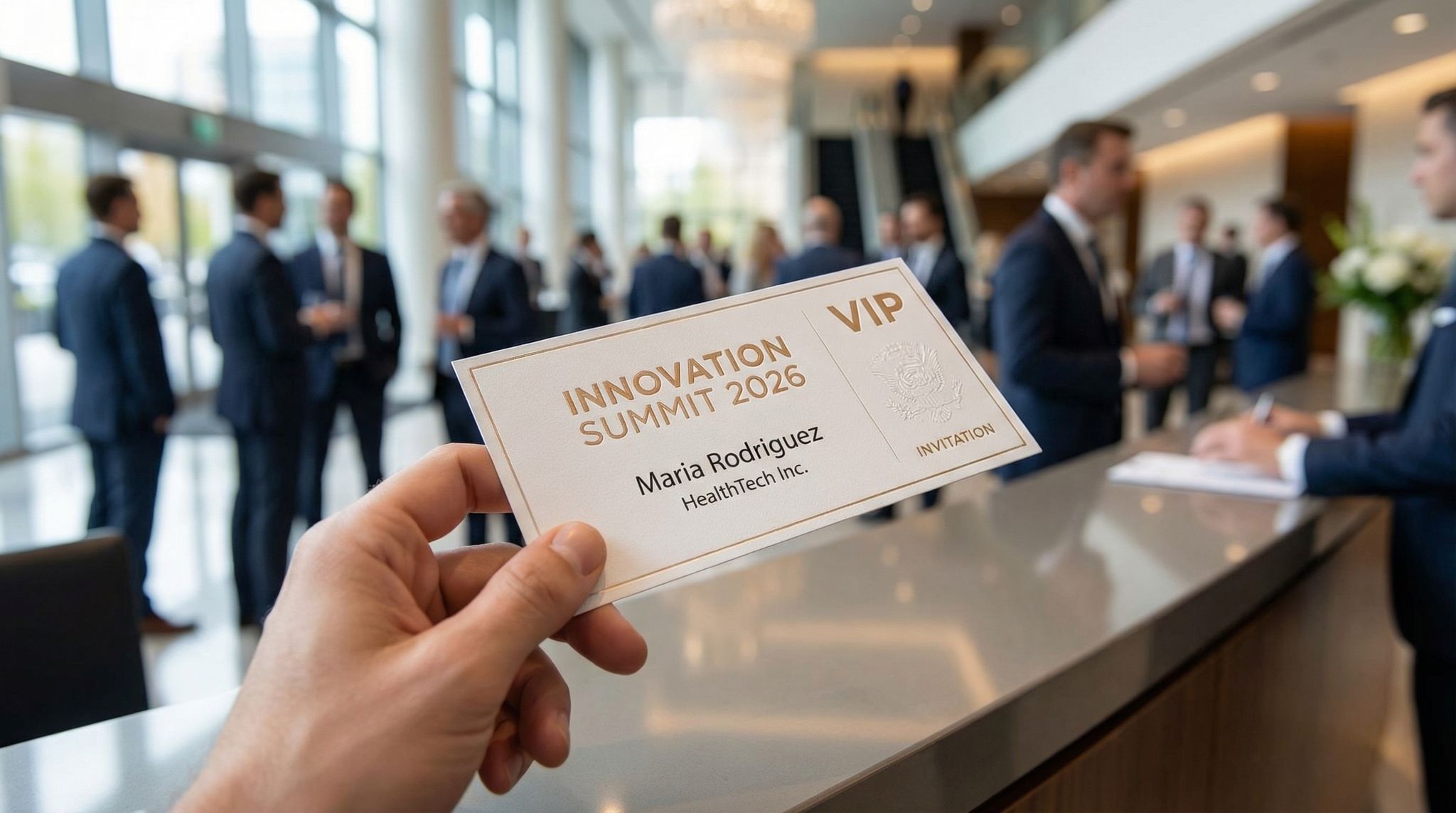
With your target list and research in hand, now it’s time to make the pitch, one account at a time. The cornerstone of ABM outreach is a highly personalized invitation. This can be an email, a LinkedIn message, a physical mailer, or often a combination of these. The content should make the recipient feel singled out in a good way. Lead with why they would benefit from attending and show that it’s not a mass invite. For example: “Hi Maria, as CTO of HealthTech Inc., you’re exactly the kind of visionary leader we’re gathering at the Healthcare Innovation Summit. We’ve curated a session on AI in healthcare specifically for discussions like the ones you sparked on your recent panel.” Notice how this hypothetical invite references her role, company, and something specific she’s done (a panel) – this level of detail grabs attention. It also clearly states the relevance (AI in healthcare session) to entice her. Many top promoters even include a line explicitly noting the exclusive nature: “We are extending this VIP invitation to only 50 industry leaders, including you.” This taps a bit of FOMO and prestige. If possible, offer something special: a complimentary VIP pass, a reserved seat at a networking dinner, or an opportunity to meet a keynote speaker one-on-one. These perks can tip the scales, effectively creating a VIP experience that includes coffee on us. Remember to time your invites well too. Send them far enough out (e.g. 2-3 months before the event) that the exec still has an open calendar, but perhaps near when budgets are decided or the new quarter is starting (many companies plan travel at certain times). And don’t be afraid to be creative – old-school direct mail can work wonders in the digital age. Some organizers send eye-catching packages: e.g. a printed invitation on high-quality card, or a small gift with a note ensuring the invite is more than just pixels in an inbox. These tangible touches often cut through the noise of crowded email inboxes. Whether digital or physical, the goal is an invite that doesn’t feel like marketing, but rather a personal VIP opportunity.
When designing your ABM event invites, the anatomy of the message matters just as much as the medium. The most effective invitations immediately answer the “why you, why now” question for the prospect. Rather than a generic overview of the conference, these tailored messages highlight specific sessions, networking opportunities, or peer attendees that directly align with the target account’s current business objectives. By treating the invitation as a curated business proposal rather than a standard ticketing blast, organizers significantly boost their conversion rates among C-suite executives.
Engaging on LinkedIn and Social Media
For reaching corporate prospects, LinkedIn is the de facto platform. It offers multiple avenues to support your ABM campaign. First, consider sending a connection request (if you aren’t connected already) before or around the time you send the invite. A short note like, “Hi Tom, as the CFO of [TargetCo], thought you might be interested in connecting – we’re hosting a summit on corporate finance trends and I’d love to keep you in the loop,” introduces you without a hard sell. Even if they don’t accept immediately, your name might become familiar. Next, leverage LinkedIn’s direct messaging or InMail for the invite itself. Many executives respond better on LinkedIn than to unsolicited emails. In fact, LinkedIn’s own data shows InMails can get a 10–25% response rate – about 3× higher than cold email, according to guides on improving InMail response rates. Why? LinkedIn messages arrive in a professional context and often feel more curated (plus they show you share an industry space). Craft your InMail similar to an email invite: personalized, concise, and value-focused, but keep the tone conversational and not overly formal. Beyond direct messaging, engage with your targets’ content on social media in the lead-up. If a target post on LinkedIn celebrating their company’s milestone, drop a like or a thoughtful comment (“Congratulations on the product launch – exciting to see such innovation in the field!”). This isn’t a place to plug your event yet – it’s about warming the relationship and showing genuine interest. When they later see your invite, they may recognize your name from that positive interaction. You can also create subtle social touches: for example, mention or tag target companies in a public post if it makes sense (“We’re crafting the agenda for [Event Name] – what fintech topics do leaders at @BigBank and @FinCo want to hear about?”). Use this sparingly and carefully – you don’t want to come off as calling them out, but a little social visibility can signal that key players are on your mind. Lastly, consider running targeted social media ads specifically aimed at the companies or roles on your list. Platforms like LinkedIn allow ads filtered by company name, job title, etc. So while you’re sending personal invites, those same people might also see a sponsored post about your event (“Join top CTOs at FinTech Summit 2026”) in their feed. It reinforces your outreach through multiple channels and keeps your event on their radar (the classic “surround sound” effect in ABM). The ads should have a similarly exclusive tone, and you can even create custom landing pages for clicks from certain accounts – e.g. a page that greets “Innovate Financial (for FinCo execs) – welcome, here’s what we have for you.” Tying these social touches together with your direct invites creates a cohesive, personalized campaign that feels ubiquitous to the target (without them quite realizing it’s by design!).
Smart Promo Codes & Presale Access
Create percentage or flat-rate discount codes with usage limits, date ranges, and ticket type restrictions. Plus unlock codes for private presales.
As digital channels become increasingly crowded, the most effective targeted outreach engagement strategies in 2026 rely on multi-touch orchestration. This means your LinkedIn efforts shouldn’t exist in a vacuum. By syncing your social media engagement with your email sequences and direct mail drops, you create a surround-sound effect. When a VIP prospect sees a thoughtful comment from your team on their recent post, followed by a highly relevant InMail, and later receives a physical invitation on their desk, the cohesive strategy builds unparalleled brand trust and dramatically increases the likelihood of securing their attendance.
Old-School Touch: Direct Mail & Gifts
In the digital era, receiving a physical invitation or gift can be delightfully unexpected – and that novelty is exactly why it’s effective. ABM for events sometimes calls for thinking beyond the screen. Consider identifying your top-tier targets (perhaps the top 10 or 20 VIPs on your list, those “dream” attendees) and sending them a bespoke mailer. This could be as simple as a nicely designed invitation card delivered to their office, or as elaborate as a curated gift box. For example, a conference organizer might send a mini gift: a box with a leather notebook or a gourmet treat, and a note like “We hope to welcome you at the Summit – here’s a taste of the VIP treatment you can expect.” One successful case was a marketing conference that mailed out custom event-branded phone chargers with a note: “Charge up for [Event Name]! We’ve reserved a VIP spot for you, [Name].” The personal touch and useful swag made a memorable impression. Handwritten notes can work wonders too – a short personal letter from the event director or industry figurehead inviting them by name. People can tell it’s not mass-produced, and that exclusivity can pique their interest and sense of importance. Yes, these tactics have a higher cost per contact (postage, materials, etc.), so reserve them for those highest-value prospects that justify the expense. The good news is, converting even a few of them can easily cover the cost if their attendance yields new business or they become repeat attendees. Direct mail also stands out because fewer people do it now. Where an exec might get 100 emails a day, they probably receive far fewer personal letters. Seeing an elegant envelope in the pile of bills, or a small package addressed to them, virtually guarantees a look. One pro tip: tie the theme of the mailer to your event if possible. If your event is about innovation, maybe the invitation is a creative design or packaged with a small gadget. If it’s a culinary festival, send a spice kit or recipe card with the invite. This creates a tangible connection to your event’s content. Finally, make it easy for them to respond – include a unique RSVP URL or a contact email/QR code in the mailer so they can quickly take action (don’t assume they’ll go find your website). The combination of digital and physical outreach in ABM can significantly increase your response rates; you’d be leveraging both modern and old-school channels to ensure your message resonates.
Grow Your Events
Leverage referral marketing, social sharing incentives, and audience insights to sell more tickets.
Hosting Micro-Events to Support Your ABM Strategy
Beyond just inviting VIPs to your main flagship gathering, savvy organizers are increasingly deploying smaller, highly targeted account based marketing events to warm up key prospects. These micro-events—such as exclusive executive dinners, localized roadshows, or invite-only virtual roundtables—serve as stepping stones. By hosting an intimate gathering tailored to the specific challenges of a few target accounts, you build trust and demonstrate value before asking them to commit to your larger summit. One of the leading account based marketing best practices for 2026 is integrating these smaller touchpoints into your broader campaign. This tiered approach to account based event marketing ensures that when the time comes to send invitations for your main conference, the prospects already have a strong, positive relationship with your brand.
Aligning Marketing and Sales Efforts
Getting Your Team on the Same Page
Successful ABM outreach is a team sport. It blurs the line between marketing and sales roles, requiring tight coordination. In practical terms, this means marketing folks (who craft campaigns and messaging) and sales or business development folks (who have relationships and a more personal touch) should collaborate on the ABM plan. Start with a kickoff meeting about your target accounts: share the list of VIPs and why they’re important, and decide who is the best person to approach each. For some accounts, it might be a friendly invite from the marketing side; for others, if you have a dedicated salesperson managing that account or a sponsor manager who knows them, they should lead. Leverage existing relationships wherever possible, as ABM for events is most effective when built on warm connections. If someone on your team has a connection (“Oh, I went to college with that VP” or “Our CEO met their CEO last year”), use it. A peer-to-peer invitation from a known contact carries a lot of weight. Often for top-tier targets, having an executive or high-level representative from your organization reach out is effective. For example, your event’s director or founder can send a personal note saying “We would be honored to have you join us”. That isn’t marketing copy; it’s one leader to another, which can cut through skepticism. Be sure these internal folks are briefed with the research you gathered. Provide talking points or cheat sheets about each target: their interests, any mutual connections, what you’re offering them. This way, if a salesperson calls them or a board member chats with them at an industry mixer, the message stays consistent and relevant. It’s also wise to set up an internal tracker or spreadsheet of the outreach sequence: who has contacted whom, via what channel, and the outcome. This prevents overlap or, worse, neglect (you don’t want your CEO reaching out to someone the sales director already spoke to yesterday, or nobody following up because each thought the other was doing it). A shared CRM or even a Google Sheet can do the trick – list each account and assign an owner. That person is accountable for ensuring invites and follow-ups happen. Regular check-ins (weekly or biweekly) among the team are helpful to update on progress: “We’ve gotten positive replies from A, B; still radio silence from C – maybe we should try a different angle or have our advisor reach out.” This tight feedback loop means you can adjust tactics quickly. Remember, marketing might provide the materials and strategy, but sales/BD might execute the one-to-one outreach – both need to be in sync, speaking with one voice about why attending your event is valuable for the prospect.
Executive and Peer Outreach
When it comes to wooing high-level attendees, sometimes it takes one to know one. Senior executives often respond best to outreach from someone of comparable stature. If your event has high-profile speakers, advisory board members, or even other attendees who are well-known, consider enlisting their help. For example, if you have a respected industry CEO speaking at your conference, you could ask if they’d be willing to co-sign an invitation letter to other CEOs on your target list (“Join me and other industry leaders at XYZ Event…”). This isn’t as unusual as it might sound – industry leaders are frequently happy to be associated with convening their peers (it adds to their own credibility and network). Another method is setting up peer referrals: maybe one of your confirmed VIP attendees knows a colleague at a target account and can encourage them to come (“We’d love to see you there; I go every year and it’s worth it”). Much like referral marketing for attendees in general, but at the executive level it’s more a personal nudge. You can facilitate this by politely asking confirmed VIPs, “Is there anyone in your network you think should not miss this event? We’d be happy to extend them a VIP invite on your recommendation.” It’s a flattering ask that also helps you recruit more VIPs. Internally, don’t shy from using your own C-suite or founders to reach out to top targets, as these conversations can yield valuable insights. A short, genuine email from your CEO to another CEO can outperform dozens of marketing emails. It might say something like: “Dear [Name], as the founder of [Your Event], I wanted to personally invite you. We have admired [Target’s Company]’s work, and I believe our event would greatly benefit from your perspective. I’d love to host you as our guest.” Such personal outreach conveys respect and importance. If you’re uncomfortable involving your execs heavily, at least have them ready to step in for the “tough gets” or any follow-up if a target is unresponsive to initial contacts – a second touch from a higher-up can sometimes do the trick. On a related note, consider your sponsors and partners as part of the ABM team too, perhaps by arming sponsors with invites for lounges. They have a vested interest in key attendees showing up (especially if those attendees are potential clients for them). Some events coordinate with sponsors to invite their top clients or prospects with special passes, as a perk. For instance, a software vendor sponsoring a summit might invite the CIOs of three big customer prospects to attend free – the event gains VIPs, the sponsor gets face time with them in a non-sales setting. Provide sponsors with a small allotment of VIP invitations or discount codes they can use for this purpose. It’s ABM by proxy: your sponsors do targeted outreach, benefiting everyone. Overall, aligning all these players – your marketing team, sales reps, executives, sponsors, and industry peers – creates a powerful united front. It sends a message to targets that “the industry” genuinely wants them at this event. And often, that peer affirmation (“others like me will be there” or “respected people want me there”) is what finally convinces a busy VIP to commit.
Using CRM and Tracking Tools
Coordinating personalized outreach across a team can get messy without good tools. This is where your CRM and marketing tech become vital. If you have a CRM (like Salesforce, HubSpot, etc.), create a campaign or tag for your target accounts and update their status as you go (Invited, RSVP’d, Declined, Follow-up needed, etc.). This not only keeps everyone on the same page, but it also lets you attribute eventual ticket purchases or check-ins back to the ABM campaign for analysis. Many event marketers also integrate their ticketing platform with their CRM so that when a VIP actually registers, it triggers an update in the CRM. For example, Ticket Fairy’s platform supports integrations via Zapier and direct APIs, meaning when a target account VIP redeems their invite, you could automatically mark that lead as “Attending” in your system. That helps you stop outreach to those who are confirmed (no need to nag someone who already said yes) and focus on those still on the fence. It also helps the hand-off to your event concierge or customer support – they’ll see that this attendee came through the VIP ABM program and may have special arrangements (like a free pass or guestlist status). Utilizing email automation carefully is also a good idea: you might set up a specific email sequence in your marketing automation tool to support the ABM effort. For example, once you send the personal invite email, your system could schedule a polite follow-up a week later if no response (perhaps coming from the same sender, with a “Re: Checking in” type note). These should still feel personal, but automation ensures none slip through cracks. Just avoid over-automating – every touch still needs to feel one-on-one.
Grow Your Social Following With Every Sale
Require social media follows, shares, or playlist adds to unlock presale access or special pricing. Turn every ticket purchase into audience growth.
Another tracking consideration is to log every touchpoint. If you call a prospect and leave a voicemail, note it. If they clicked the RSVP link but didn’t complete, note that too (some advanced ticketing systems and CRMs will surface this kind of engagement data). This can inform your next move. For instance, if you see a target clicked your event info page yesterday, that might be a great time to have your team call them today (“Hi, wanted to follow up and see if you had any questions about the event”). When tools are set up to give you these insights, you can act on behavioral signals in near-real time, which is the essence of ABM – being responsive to each account’s journey.
Lastly, keep a close eye on ABM metrics (more on measurement later). Track how many of your target accounts have responded, how many registered, and how many you ultimately convert into attendees. Treat it like its own funnel separate from general attendee marketing. This not only helps prove the value of your efforts (e.g., “Our ABM campaign converted 30% of targets vs 5% conversion of general leads”) but also identifies where you might improve (if response rates are good but conversion is low, maybe the invite offer needs tweaking; if responses are low, maybe the targets need a different approach or better list). By using your CRM and tools effectively, you turn ABM from a one-off hustle into a repeatable, trackable process you can refine every event cycle.
For teams lacking the internal bandwidth to manage these complex workflows, partnering with specialized account-based marketing event services can bridge the gap. These agencies and software providers offer dedicated tools for lead scoring, personalized landing page creation, and automated VIP concierge communications. By leveraging external expertise or advanced ticketing platforms that support ABM integrations, organizers can scale their high-touch outreach without overwhelming their internal sales and marketing staff.
Offering Exclusive Incentives to Secure Attendance
VIP Perks and Tailored Experiences
To convince a high-value prospect to spend time (and possibly money) on your event, sometimes you need to sweeten the deal. One way to do this is by offering VIP perks that make their attendance feel both special and convenient. Think about what barriers might keep an executive away and what perks would tip their decision. Common incentives include: complimentary VIP passes (waiving the ticket fee for a select attendee and maybe a guest), travel accommodations (for very high-value guests, some events offer to cover a night or two in the host hotel, or at least arrange a special rate and concierge booking), and exclusive experiences during the event. For instance, invite VIP targets to a C-suite networking breakfast or a private dinner with the keynote speaker. If a prospect knows they’ll get to shake hands with a famous industry guru or mingle with peers in a relaxed setting, the event suddenly looks far more appealing. Many “hosted buyer” programs at trade shows do exactly this – they give top buyers free entry, sometimes travel stipends, plus special networking tours, because it draws in the people vendors most want to meet. Evaluate what level of perk is appropriate for your budget and the target’s value. Comping a ~$1,000 ticket and a $300 hotel room might be well worth it to get a major account in the door who could potentially spend six figures with your sponsors. Be clear in your invite about these perks but position them gracefully: “We’d be happy to welcome you as our VIP guest, with a full-access pass on the house” sounds better than “free ticket for you”. It underscores that they are valued. Also highlight any event features that busy executives appreciate, such as a VIP lounge (quiet space with Wi-Fi to catch up on work), reserved seating in sessions, or personal concierge services (“Our team can arrange your airport transfers or any special requests – just let us know”). While these might seem like small conveniences, they address the unspoken concern many execs have: “Will attending this event be a hassle or a pleasure?”. You want to firmly plant it in the “pleasure” category by removing friction.
Another incentive angle is to align attendance with thought leadership opportunities. For example, you might invite a target to participate in the event program, such as joining an exclusive roundtable or an invite-only panel discussion. Many high-level professionals are attracted by chances to share their expertise (and gain visibility). You could say, “We’d value your insight on XYZ topic – if you attend, we have a closed-door roundtable of experts and would love for you to contribute.” This makes the invite not just about listening, but also about having a voice. It’s flattering and positions them as a leader. It also nullifies the common excuse of “I’m too busy to just attend” – instead they’re attending and speaking (albeit informally), which often is easier to justify to themselves or their higher-ups. In summary, think of perks that provide comfort, access, and status. The psychology here is to make the prospect feel that by not attending, they’d miss out on special treatment and important interactions that others won’t get. When done right (and genuinely delivered on-site), these VIP incentives not only secure the registration but also result in a delighted attendee who will sing the event’s praises and likely return next year on their own dime.
Group Packages and Team Incentives
Sometimes the key to landing a VIP attendee is to not make them come alone. High-value prospects often prefer to bring colleagues or need a business case to bring back to their team. You can capitalize on this by offering group incentives or corporate packages tailored to your target accounts. For example, in your outreach you might include a line: “If there are others from your company who would benefit, we’d be happy to extend a group rate or arrange a team package.” This does two things: it shows you’re flexible to accommodate their team, and it subtly encourages them to loop in coworkers (which increases your chances of someone saying yes—peer pressure in a positive form). You could formalize this with an ABM-specific offer like “Bring 2 colleagues at 50% off” or “Corporate VIP table: admit 5 team members for the price of 4”. Many conferences do have published group discounts (like 20% off 3 or more), but for ABM targets you can be even more generous or creative since the outreach is private. For instance, “We have a few VIP Team Passes reserved – if you’d like to send a team of up to 5, we’ll waive the ticket fees for two of them.” This kind of offer implies exclusivity (not everyone gets this deal) and lowers the cost barrier. Plus, from the attendee perspective, going with colleagues can make attending more attractive (they can justify it as a team development activity, and they have familiar faces to travel with).
Data-Driven Event Marketing
Track ticket sales, demographics, marketing ROI, and social reach in real time. Exportable reports give you the insights to make smarter decisions.
Beyond pricing, think of team-specific experiences you can offer. If you know a target might want to bring their department leads, perhaps offer to organize a small breakout session for their team on-site (“If your team from CompanyX attends, we can host a private coffee roundtable for you to debrief with one of our speakers”). This level of customization is rare and would likely impress them that you’re willing to tailor the event to their group’s interests. Another tactic is to highlight learning or training credits if relevant – e.g. “Attend with your team and earn 10 CPE credits each; it’s a great off-site training opportunity.” Many companies have budgets for professional development, so positioning the event as training can unlock those funds. Some event organizers effectively do ABM by striking deals with big companies to send dozens of employees (common in large trade shows or expos – they’ll create a special corporate partnership for attendees). While your scope might be smaller, the idea is the same: make it easy for a VIP to say “Yes” by also saying “and I can bring my team.”
It’s also worth mentioning referral incentives in a more subtle form. Suppose your target can’t attend – maybe they’re double-booked – but they might have a direct report or colleague who could. Encourage that: “If you personally can’t make it, we’d be happy to extend this invitation to a member of your team whom you recommend – just let us know and we’ll take care of them as a VIP.” This way, you might still get someone from the account (which sponsors will love), and you’ve built goodwill with the decision-maker for next time. All these group-oriented approaches align with a core ABM principle: think about the account holistically, not just the individual. Maybe the CXO is unavailable, but 3 managers from the company could come – that’s still a win. Or the CXO will only come if their two VPs also get value – so make it valuable for the trio. By being flexible and account-centric in this manner, you increase your odds of converting target accounts into actual attendees, even if the headliner person you wanted isn’t the one who shows up in the end (though often, making it a team affair will encourage the headliner to show up, since their whole crew is going).
Leveraging Social Proof and FOMO
Influencing high-value prospects often comes down to confidence and FOMO (Fear of Missing Out). These individuals want to know that if they invest time in your event, it will be worth it. That’s where social proof is powerful. Showcasing who’s already attending or involved can tip a prospect from “hmm, not sure” to “I should be there too.” In your invitations and conversations, name-drop selectively (and truthfully) the other notable attendees or companies committed. For instance, you might mention, “We’ve confirmed innovation leaders from Tesla, IBM, and Oracle will be in the room” or “80% of last year’s attendees were VP-level and above from Fortune 500 firms.” If a target sees that their peers or even competitors are attending, a psychological trigger fires: we should be there as well, or we’ll miss what others are gaining. One caution: be sure you’re allowed to mention names (some VIPs might appreciate discretion). It’s often safe to reference companies or anonymized titles like “one of the top 5 banks” instead of a specific person’s name in initial outreach. Once they show interest, you can get more specific, even offering to connect them with a past attendee for a reference. Anecdotes from similar attendees serve as testimonials: e.g., “Last year, the CFO of XYZ Co. told us he made 3 valuable supplier connections at the event – that’s the kind of outcome we strive for.” This kind of social proof builds credibility and trust, helping you leverage influencer voices to generate real buzz.
Another aspect is creating a bit of urgency and exclusivity around the invitation. People inherently value what is scarce. If your event is likely to sell out or if certain experiences have limited capacity, it’s okay to (gently) make that clear. For example: “We have only 50 VIP spots and they are nearly full” or “Our hotel block is almost sold out; we’d hate for you to miss the chance to join this gathering of industry leaders.” The goal isn’t to pressure in a used-car-salesman way, but to signal that demand is high and this is special. Scarcity plus social proof is a potent combo: “Many of your peers have already confirmed, and we have just a few places remaining – we’d prioritize getting you in if you’re interested.” Additionally, highlight recognition elements like awards or exclusive content that they’d miss out on. For instance, if your event is announcing a big industry report or has an awards ceremony (“Top 100 Innovators in X”), noting that can trigger FOMO: people want to be present for important moments in their field. Some events even go further, doing things like releasing a list of companies attending (or a map of logos) on their site. If it’s public, you can point prospects to it in case they’re skeptical – “see, you’d be in good company.” Just ensure that list is impressive first! ? If not public, you can achieve a similar effect more subtly by mentioning known community figures: “The caliber of attendees is very high – think TED speakers, TechCrunch finalists, etc., many of whom will be there.”
Finally, underscore the cost of not attending in a polite way. For a B2B prospect, that cost might be missing out on learning the latest trends (that competitors will know) or not being in the room where partnerships are forming. You can convey this by phrasing benefits positively: “You’ll gain insights that only attendees will receive (we aren’t publishing the session takeaways publicly)” or “It’s a rare chance to meet all the key players driving the future of XYZ in one place.” Implicit message: if you’re not there, you lose that edge. Experienced event marketers use FOMO very ethically – by genuinely packing the event with value and then simply shining a light on that value. At that point, not attending feels like a professional opportunity missed. Combine that with knowing that others are seizing the opportunity (social proof), and your target is much more likely to say, “Alright, I’m in – let’s do this.” Case studies of past attendees can help here too, e.g., “Last year, 95% of our VIP guests said they left with at least one deal or partnership opportunity, proving that meeting the right voices generates real business. We’d love for you to be part of that success this year.” If you can convey that kind of outcome, attending becomes a no-brainer.
High-Touch Follow-Up and Nurturing
Concierge-Level Follow-Up
Personalized outreach doesn’t end when someone says “yes” – in fact, the period between a VIP’s interest and their attendance is critical. Treat your target accounts almost like you’re courting them (because you are). If an invitee expresses interest but hasn’t formally registered (“This sounds good, let me check my schedule” or “I’d like to come, need to see if budget allows”), that’s your cue for concierge-level follow-up, ensuring they don’t just see a LinkedIn ad or email and forget. Don’t leave them hanging. Respond promptly and helpfully: “Happy to tentatively hold a spot for you. Would a formal invite letter help with your boss or travel budget? I can send a personalized one.” Offering to provide a justification letter or a summary of event benefits can help them navigate internal approval. If they need to convince finance or HR, you supplying a tidy “here’s why this event is valuable” document can seal internal buy-in. As the date draws nearer, send polite check-ins if you haven’t gotten a firm answer. These should be friendly touches, not nagging. For example: “Hi John, we’re finalizing the VIP attendee list soon and wanted to see if you had any questions I can answer. We’d love to have you join – even for part of the event, whatever fits your schedule.” Note how this message is service-oriented (answer questions) and flexible (partial attendance is okay) – making it easier for them to say yes.
Built-In Email Marketing for Events
Send targeted campaigns, automated purchase confirmations, and post-event follow-ups directly from your ticketing dashboard.
If a VIP prospect accepts the invite and registers, the follow-up shifts to retention and preparation. Immediately acknowledge and celebrate their RSVP – a personal “Great to have you on board!” message is nice, possibly from a high-ranking team member or the person who invited them. Then, continue the white-glove treatment. Provide any assistance they might need: “Do you need help booking hotel or planning your visit? We have a concierge who can assist.” If you promised perks, ensure they receive the details promptly (e.g. a code for the free hotel night, or an agenda for the VIP dinner). It’s also wise to send them personalized updates about the event as it approaches. For example, “Thought you’d be interested: we just added a networking session on Tuesday evening specifically for Fortune 500 execs – looking forward to including you.” This keeps them excited and reassures them that attending will be worth it. Some events assign a specific staff member as a VIP liaison – a single point of contact for all their needs. This is an excellent practice if you can do it. That liaison might send a quick email a week out: “Your badge will be waiting at the VIP check-in, and here’s my cell number if you need anything during the event.” At the event itself, the follow-up continues in person: greet them, make introductions, ensure they know how to access their perks. Essentially, make them feel like a valued guest from start to finish. This level of care not only ensures they show up (no-shows can happen even after RSVP, especially if something more pressing comes up – but a nurtured VIP is less likely to bail), it also positions your event as a premium experience they’ll talk about positively.
And importantly, don’t drop the ball after the event for those you worked so hard to get there. A thank-you note to each targeted VIP attendee afterward can go a long way, and it keeps the relationship warm for next year. Many ABM-savvy organizers will follow up with something relevant, like sending slides from a session the VIP was interested in, or a summary of key findings, along with a personal thank you: “We’re so glad you joined – looking forward to keeping in touch and hope to see you at the next one.” Remember, ABM is a long game; converting an account this year and treating them well sets you up to potentially have them (and maybe their colleagues) attend year after year.
Handling Objections and Concerns
Expect that even interested prospects will have questions or objections before committing. How you handle these can make or break the deal, so it pays to be ready with answers. Common concerns you might hear: “I’m very busy”, “What’s the ROI of attending?”, “Is the content relevant for someone at my level?”, or “We don’t have budget for this.” Approach each concern with empathy and a solution-oriented mindset – essentially turning fan questions into ticket sales opportunities, as one guide puts it. If time is the issue (“I’m swamped” or “schedule conflict”), emphasize flexibility: “Even if you can only attend for one day or a few key sessions, we’d still love to have you – we can accommodate that.” You might highlight that the event is a worthwhile break from their routine that will save them time in the long run (e.g. “In one afternoon you can meet all the partners you’d otherwise schedule separate meetings with”). For content relevance concerns (“Is it too basic or too broad for me?”), reassure them by sharing specifics: point out advanced sessions, or mention other high-level folks attending (“We’ve tailored the agenda for senior leaders; in fact, the CFO of [PeerCo] will be on a panel – it’ll be a high-level discussion, not 101 content”). Offering to connect them with a speaker or sending a detailed agenda can also help them gauge fit.
When they raise ROI or budget, they’re essentially asking if it’s worth it. Here, lean on any hard numbers or testimonials you have: “Attendees last year reported an average of 10 new contacts and at least one deal within 3 months, confirming that meeting up with the right voices is effective. We’re confident the connections you’ll make could justify the trip many times over.” If budget is truly tight, this is where you might deploy a scholarship or discount quietly: “We do have a few sponsored VIP passes available; if budget approval is a hurdle, we can arrange a complimentary registration for you, given your role.” Most decision-makers appreciate candor, so if you can waive or reduce fees for them, say so – it removes that barrier. Sometimes the objection is company policy, like “We don’t accept free tickets above a certain value” (some corporations have rules around gifts). In that case, handle it professionally: offer to invoice something nominal or categorize it differently (“We can mark it as a speaker/participant pass in our system if that helps avoid a compliance issue”).
You might also encounter logistic worries: travel safety, health precautions (especially in recent times), or accessibility. Be ready with answers: e.g., outline your event’s safety protocols, or offer virtual options if you have them (“If things change and you can’t travel, we’ll have a hybrid setup so you can join sessions online – so you won’t lose out”). Essentially, every objection is a chance to build trust. By answering thoroughly and promptly, you signal that you value their participation enough to address any hurdle. This is where having a responsive support setup is valuable – ensure that if a VIP asks a question via email or phone, you (or someone) responds within hours, not days. Fast, thoughtful responses make them feel taken care of, much like an important client (which, in a sense, they are). If you find the same questions coming up repeatedly, you can even preempt them in your outreach: maybe include a one-pager “For Your Approval Manager – Why [Event] is Worth It” to help them justify internally, or mention “We understand travel is a commitment; rest assured we have a flexible cancellation policy and will assist with planning.” By tackling objections head-on, you’re removing the last friction points on their journey to saying “yes.”
Maintaining Relationships for Future Events
One of the golden benefits of ABM-driven attendee marketing is that even if you don’t convert an account this time, you’ve opened a door for future engagement. Conversely, if you do convert them and they attend, you want to keep that momentum. Think long-term: the goal is not just a one-off attendance, but a loyal attendee (or even sponsor) who is part of your event community. For those who couldn’t attend this year despite your best efforts (maybe timing was off, etc.), maintain a polite and positive connection. Thank them for considering it anyway, perhaps share a concise recap of what they missed (“We had a fantastic session on X – I’ll send you a key takeaway PDF, I thought of you during it”). This isn’t to rub it in, but to provide value and subtly reinforce that it was a great event. You might say, “We hope you can join us next time – we’ll keep you updated on future dates.” Add them to your mailing list (with permission) or mark them as a hot lead for next year so you can reach out even earlier. Since you already have their context and interests from this round, you can tailor next year’s invite even more.
Free Tool: Model Promoter Payouts
Flat-percentage, flat-per-ticket, or tiered-bonus commission structures — get per-promoter payouts and total commission as % of gross. Free calculator.
For those who did attend as a result of your ABM campaign, the relationship-building actually accelerates. During the event, make sure to collect feedback from them – even informally, have someone ask “How are you finding it? Anything you’d like to see next year?” This not only flatters (you value their opinion) but gives you intel to personalize their invite next time (“You mentioned you’d like more on AI – we listened, and next year we have a whole track on it, hope you’ll return!”). After the event, send a personal follow-up note. Reference something specific if you can: “It was great to chat with you about procurement challenges; I’m glad you connected with a few solution providers at the expo.” This shows you pay attention to their experience. If you promised to introduce them to someone and it didn’t happen on-site, facilitate it post-event: “You didn’t get a chance to meet our keynote, but I’d be happy to e-introduce you now.” These extra miles solidify in their mind that your event isn’t just a conference, but a relationship. They’ll be far more likely to attend again. Moreover, an impressed VIP will talk – word-of-mouth among their peers could bring you new targets (essentially turning a once-targeted account into an advocate).
Keep your VIP list in an ongoing nurture cycle. Perhaps create a quarterly “insider newsletter” for past VIP attendees or send them exclusive content (like early access to an industry trends report your team produces). Maintain contact not just when you want to sell a ticket, but as part of a community. Some events even start VIP advisory groups – inviting these high-value attendees to give input on agendas or formats for next year. It strokes their ego and makes them invested in coming back (since they helped shape it). From ABM perspective, this is turning your “accounts” into long-term assets. The next time tickets go on sale or invites go out, these folks are essentially pre-sold because they feel a part of the event family. And if someone was a tough get but eventually came and loved it, ask if they would help invite another VIP next time (as we discussed in peer outreach). Nothing is more convincing than a happy customer. In summary, don’t treat ABM invitees transactionally. Treat them like you would a major client you’re trying to retain: continue to impress and assist them year-round. That way, when your next event rolls around, the question isn’t “Will they attend?” – it’s “Which colleagues are they bringing along this time?”
Measuring ABM Success and ROI
Key Metrics to Track for ABM Campaigns
Account-based marketing for events is resource-intensive, so you’ll want to measure its performance to know if the effort is paying off. Start by tracking basic funnel metrics for your target list: Response Rate, Invitation -> Registration conversion, Show-up rate, etc. For example, if you targeted 50 accounts, note how many meaningfully responded (even if initially a “maybe”), how many actually registered, and of those how many attended on event day. This gives you a conversion funnel specifically for ABM. You might find, for instance, 50 targeted -> 30 responses -> 20 registered -> 18 attended. That’s a 36% conversion from target to attendee, which is likely far higher than your general marketing conversion rate. You can compare that to your broader campaign: maybe out of 5,000 people targeted in general marketing, 200 attended (4%). ABM will almost always have a higher conversion because it’s highly focused – it’s valuable to quantify how much higher, as proof of concept. Also, track engagement metrics where possible. Did targeted VIPs open your emails at a higher rate than normal (probably yes if they were personalized)? What was the LinkedIn InMail response rate? If you sent physical mail, how many recipients acknowledged it? Any anecdotal feedback (“Wow, loved the invite package!”) is qualitative data that you should log.
If you offered special incentives like free VIP passes or travel, note the utilization and cost of those. For example, “We comped 10 hotel nights and 5 tickets, total cost $X, and got Y attendees out of it.” You can then evaluate ROI in a business sense. One approach some events use is assigning an approximate value to a high-value attendee. For instance, if having the CTO of BigCo attend helped close a sponsorship deal of $20K, or will likely lead to them bringing their team next year, that attendee’s lifetime value to the event could be estimated. This is admittedly fuzzy, but it helps justify spend. On a simpler note, you can calculate Cost Per VIP Acquisition: total spent on ABM (including staff time, mailers, comps) divided by number of VIPs who attended. Maybe you spent $5,000 and got 15 VIPs, so ~$333 per VIP. Depending on your event’s economics, that could be a bargain if those VIPs each paid (or influenced) $1,000 tickets or attracted sponsors. Speaking of which, loop in sponsor feedback too. If your sponsors report they met 10 high-value prospects at your event and two were from your ABM list, that’s a downstream metric showing success – essentially ABM helped deliver sponsor ROI. If you collect that data (through sponsor surveys or post-event debriefs), tie it back: “ABM target attendees resulted in X sponsor follow-ups or pipeline.” This can be powerful if, say, one of your ABM attendees ends up signing a big contract with a vendor at the event – it shows your strategy directly facilitated commerce (which you can bet sponsors will notice when deciding to renew).
Don’t forget qualitative success indicators too. Did your targeted VIPs have positive experiences? If you have feedback forms or testimonials from them, that’s a success measure. Perhaps a CEO you invited says, “This is the best conference I’ve been to this year.” That anecdote is gold – it means ABM not only got them in the room but your event delivered, increasing chances of repeat attendance. Finally, track any press or social media mentions that result from these VIPs. A single tweet from a thought leader you targeted (“At XYZ Event and the discussion is amazing…”) can be huge for your brand. Include that in your assessment: one ABM guest’s presence might have indirectly reached thousands more via their social posts, a nice halo effect that general attendee marketing might not achieve. In sum, measure both the hard numbers (conversion, cost, ROI) and the soft benefits (influence, satisfaction, future opportunities) of your ABM effort. This full picture not only tells you if it “worked” but also how to refine it next time (e.g., maybe LinkedIn outreach had far better response than email – focus there more, or maybe 3 of your 50 target accounts yielded 0 results – investigate if they were wrong fits or require a different approach).
Comparing ABM vs. General Campaign Performance
To truly understand the impact of your ABM strategy, put it side by side with your general marketing campaigns. This comparison highlights the differences in efficiency and outcome. Let’s say your general digital marketing (emails, ads, etc.) had a 1-2% conversion from lead to attendee, whereas your ABM had, hypothetically, a 30% conversion from targeted account to attendee. ABM clearly “wins” on conversion percentage, which isn’t surprising since it’s highly targeted. But ABM also likely involves higher cost or effort per contact. So, examine the Return on Ad Spend (ROAS) or ROI for each. You might find something like: we spent $10k on broad ads/emails and got 100 attendees = $100 per attendee. We spent $3k (in time and materials) on ABM and got 15 VIP attendees = $200 per attendee. On pure cost per head, ABM looks more expensive. However, not all attendees are equal in value – those 15 VIPs could be more valuable than 50 regular attendees in terms of future business, sponsorship attraction, or ticket revenue if they brought teams. One way to quantify this is to assign a weighting or score to VIP attendees (e.g., “a VIP is worth 5x a normal attendee for our goals”). Using that, the effective cost per VIP-value unit might actually be lower. This is admittedly a conceptual exercise, but it helps internal stakeholders understand why spending more effort to get a few key people can be more impactful than spending the same effort to get many random people.
It’s also interesting to compare engagement quality. Did ABM attendees stick around longer at the event, participate more in high-end sessions, or provide higher satisfaction scores? Often, because they were carefully chosen and nurtured, they end up being very engaged participants (they’re not there by accident). For example, maybe your ABM attendees were far more likely to download the event app and schedule meetings than the average attendee – indicating they were highly invested. This kind of metric (if you can get it) demonstrates that ABM doesn’t just boost headcount, it boosts the quality of the event experience. Additionally, consider pipeline influence. For B2B events especially, the true metric might be how much business was facilitated. If you can attribute, say, $500k of deals in discussion post-event to the presence of ABM-invited attendees, that’s a huge win that general marketing might not directly achieve. Some event marketers use a metric like “influenced pipeline per attendee” for hosted buyer programs. For instance, “each hosted VIP generated an average of $50k in potential business for our exhibitors.” That kind of calculation will make any sales-oriented exec’s eyes light up and justify ABM instantly.
A simple illustrative table can help summarize such comparisons:
| Campaign Approach | Targets Reached | Conversion to Attendee | Cost per Attendee | Notable Outcomes |
|---|---|---|---|---|
| Broad Marketing (2026) | 10,000 leads | 150 attendees (1.5%) | $80 (ads & email) | Mixed audience, general engagement |
| ABM Outreach (2026) | 50 accounts | 18 attendees (36%) | $180 (personalized) | 18 high-value attendees; 5 Fortune 500 companies present |
Table: Hypothetical comparison of broad vs. ABM campaign results.
In this hypothetical, ABM had a much higher yield with a much smaller pool, at a higher unit cost but delivered more strategic value (Fortune 500 presence). Use such comparisons to refine strategy: maybe next year you increase the ABM target list because it’s showing great ROI, or you find ways to lower its cost (perhaps templates for certain outreach parts to save time). Conversely, insights from ABM can improve general marketing too. For example, if personalization in ABM emails led to 50% open rates versus 20% in mass emails, incorporate more personalization into mass sends by segmenting audiences (indeed, ABM is like the ultimate segmentation). Ticket Fairy’s promoter blog often notes how segmented and personalized marketing outperforms generic blasts, and mastering personalization for event promotion is key to this success – your ABM vs. general metrics will likely evidence that strongly. Over time, the goal isn’t to replace broad marketing (you still need volume for large events) but to allocate resources optimally. You might decide, for example, to spend a bit less on low-converting channels and allocate those dollars (or hours) to ABM because it yields higher-value attendees. Making these data-driven decisions will improve both your event turnout and the overall caliber of your audience year after year.
Continuous Improvement and Feedback
Finally, treat your ABM event marketing as an iterative process. After each event (or each ABM campaign push), do a retrospective analysis with your team: what worked well and what didn’t? Solicit feedback from those you invited. If you have a friendly relationship or get a chance to talk in person, you might ask a VIP attendee: “What convinced you to come, and what almost stopped you?” Their answers are gold for refining your approach. Perhaps they’ll say “Honestly, the personal letter stood out” or “I was on the fence until I saw that my competitor was sponsoring” or “The offer of a free pass definitely helped; otherwise, I’m not sure I could’ve gotten budget.” These insights tell you which tactics to double down on. On the flip side, if some targets declined, and you have a chance to politely inquire why (or you can guess why from context), note that too. Maybe you realized many declines were due to date conflicts with another industry event – that’s not something you can change now, but it might inform next year’s scheduling or to start invites even earlier before calendars book up.
Look at the profile of who converted vs. who didn’t. Maybe you had great success with tech companies but struggled to get finance industry folks. That could mean your messaging resonated more with one sector, so you might create sector-specific approaches next time (“ABM 2.0” might have slightly different invite angles for finance vs. tech). Or you might realize you need to involve different people – e.g., tech VIPs responded well to emails, but finance VIPs needed a phone call follow-up. By analyzing these patterns, you can fine-tune the personalization even more. Also, review the internal execution: Did any prospects fall through cracks without follow-up? Ensure you tighten your CRM tracking or team comms. Was the timeline sufficient? (E.g., maybe you only started 6 weeks out and found that wasn’t enough lead time for some companies to get approval – next time start 3 months out for those).
It’s helpful to keep a living playbook of ABM tactics and results. Each cycle, add lessons learned. Over a couple of event cycles, you’ll build a robust knowledge base of how to best land your marquee attendees. You might even score your target list to focus on the most promising accounts (like lead scoring in sales). For example, “We’ve invited Acme Corp 3 years in a row and they never come – maybe deprioritize or find a drastically new approach for them, whereas Beta Corp came this year – definitely invite again and perhaps ask them to speak.” Keep in mind that ABM for events, like ABM in general, often has a long tail: an account that says no this year might say yes next year after seeing industry buzz or after you’ve built a relationship. So never truly give up on good fits; just keep nurturing lightly if they didn’t convert now.
Also, adapt to any external changes. The channels and methods will evolve – maybe by 2027 there’s a new platform where executives hang out, or everyone prefers short video invites instead of email. Stay agile. If something like personalized video messages show promise (some marketers send quick 1-minute video invites addressing the person by name), test it and measure. Always be testing at least a small slice of new tactics while executing proven ones for the bulk. And celebrate your wins: if ABM helped sell out your VIP section or drew praise from your CEO (“We had all the right people in attendance!”), make sure to document that success and credit the strategies used. This helps secure buy-in for continuing and expanding ABM efforts. In summary, continuous improvement in ABM means treating each high-value attendee outreach as learning experience, refining your target list accuracy, your messaging resonance, and your logistical execution each time. Over time, this practice can become one of your strongest competitive advantages – while others spam invites, you’ll be cultivating an elite audience through thoughtful, data-informed personal outreach.
Ultimately, running a successful account based marketing conference campaign is about building a sustainable pipeline of high-value attendees. By treating your VIP acquisition as an evolving, data-driven ecosystem, you ensure that every event cycle becomes more efficient, cost-effective, and impactful for your sponsors and stakeholders.
Frequently Asked Questions
What is account-based marketing for events?
Account-Based Marketing (ABM) for events is a strategy that targets specific high-value prospects rather than casting a wide net. Organizers hand-pick a list of ideal attendees, such as senior executives, and use personalized outreach to convert them. This approach focuses on quality over quantity, often yielding higher ROI by securing key decision-makers.
Why is ABM important for B2B event marketing?
ABM is crucial because landing high-value VIP attendees can significantly elevate event ROI and spark sponsorship deals. Since over 80% of trade show attendees typically have purchase authority, targeting these specific individuals is more effective than mass marketing. Studies indicate that 76% of marketers report higher ROI with ABM compared to broader campaigns.
How do you build a target account list for an event?
Building a target list begins by defining an Ideal Attendee Profile based on industry, seniority, and company size. Marketers leverage CRM data for past attendees, scan competitor conference brochures for prospect companies, and use LinkedIn Sales Navigator to identify decision-makers. The goal is to compile a focused list of 20 to 100 key accounts to target.
What are effective outreach tactics for VIP event attendees?
Effective outreach involves sending highly personalized invitations via email, LinkedIn, or direct mail that reference the recipient’s specific role or achievements. Combining digital messages with physical gifts or handwritten notes helps cut through the noise. LinkedIn InMails are particularly powerful for corporate prospects, often achieving response rates three times higher than cold emails.
What incentives help secure high-value event attendees?
Securing high-value attendees often requires offering exclusive perks that provide comfort and status. Common incentives include complimentary VIP passes, travel accommodations, and access to private networking dinners or closed-door roundtables. Offering group packages or team discounts can also encourage executives to attend by allowing them to bring colleagues for a shared learning experience.
How do you measure the success of an event ABM campaign?
Success is measured by tracking funnel metrics specifically for the target list, such as response rates, registration conversions, and final show-up rates. Organizers should calculate the Cost Per VIP Acquisition and compare the conversion percentage against general marketing efforts. Qualitative indicators, such as attendee satisfaction and business deals facilitated on-site, also define success.
How can account-based marketing event services improve my strategy?
Utilizing specialized account-based marketing event services or advanced ticketing platforms helps organizers automate complex workflows, from lead scoring to personalized VIP communications. These services provide the technical infrastructure and expertise needed to scale high-touch outreach without overburdening internal teams, ensuring a seamless experience for top-tier prospects.
What makes an account based marketing conference different from a standard B2B event?
An account based marketing conference is designed from the ground up with specific target accounts in mind. Instead of finalizing an agenda and hoping the right people buy tickets, organizers of an ABM-driven conference often build the programming, sponsor activations, and networking opportunities around the exact needs of a pre-identified VIP list. This ensures hyper-relevance, making it much easier to secure attendance from high-level decision-makers.
What are the key elements of successful ABM event invites?
Successful ABM event invites go beyond basic mail merges by incorporating deep personalization, referencing the prospect’s specific business challenges, and offering exclusive VIP perks. They are often delivered through a mix of channels, including direct mail, LinkedIn InMail, and personalized video messages, to ensure the invitation stands out to high-level decision-makers.
What are the top targeted outreach engagement strategies for 2026?
In 2026, targeted outreach engagement strategies focus on multi-channel orchestration. This includes combining personalized digital touches—like custom landing pages and LinkedIn engagement—with high-value physical touchpoints, such as bespoke direct mailers or invitations to intimate micro-events, ensuring prospects are warmed up before the main conference pitch.