In the experience-driven landscape of 2026, augmented reality (AR) and mixed reality (MR) have moved from novelty to necessity in event marketing. These immersive technologies blur the line between digital and physical, captivating audiences with interactive moments that translate into real-world excitement – and ticket sales. Event promoters worldwide are diving into AR/MR to create share-worthy experiences that engage fans on a deeper level. From viral AR face filters that turn casual scrollers into event ambassadors, to on-site mixed-reality activations that leave crowds in awe, AR and MR are quickly becoming secret weapons for selling out shows. The numbers speak volumes: by 2024 there were 1.7 billion mobile AR-capable devices globally, as noted in Event Marketer’s analysis of augmented reality strategies, and AR marketing campaigns can deliver returns far above traditional ads when executed well. This comprehensive guide explores how event marketers can harness AR and MR in 2026 – with practical examples, proven strategies, and insider tips to launch affordable yet mind-blowing campaigns that bridge virtual and real worlds and boost your bottom line.
AR & MR: A New Frontier for Event Marketing
AR vs. MR: What’s the Difference in 2026?
Augmented Reality (AR) and Mixed Reality (MR) both overlay digital content onto the real world, but they differ in degree. AR typically uses smartphone cameras or tablets to superimpose graphics, filters, or information onto a user’s real-world view. Fans might point their phone at a concert poster and see it come alive with animated 3D effects. Mixed Reality, often used to describe more advanced integrations (sometimes via headsets or smart glasses), blends virtual objects that interact with the physical environment. In MR, digital elements aren’t just floating on top of reality – they can appear anchored to real objects or respond to the surroundings. By 2026, the line between AR and MR is blurring; many event activations use the term “mixed reality” for sophisticated AR experiences that deeply merge with the venue (for example, AR overlays on a stage that look like part of the show). For practical purposes, event marketers can consider MR as the cutting-edge of AR – experiences where the digital and physical truly interact. The key point: both AR and MR let you enhance the real-world event with digital magic, creating immersive experiences that weren’t possible a few years ago.
From Gimmick to Game-Changer
Not long ago, AR in events was seen as a flashy gimmick – something cool to generate buzz, but not always delivering real value. That’s changed dramatically. As AR technology matured and became more accessible, it transformed into a game-changer for event marketing. Powerful AR creation tools (many free to use) and widespread device support mean AR isn’t limited to tech giants or huge budgets. Importantly, today’s AR activations are designed with audience value in mind, not just tech for tech’s sake. Early experiments like Pokémon GO showed the mainstream appeal of AR, and now events are tapping into that desire for interactive, gamified experiences. Big brands have proven AR’s worth: a Statista study noted about 1.7 billion AR-enabled mobile devices worldwide by 2024, creating fresh avenues for audience engagement – a massive audience ready to engage. Where once an AR gimmick might get a brief wow and fade, now well-crafted AR/MR experiences can hold attention and influence behavior. Attendees actively seek out these interactions because they enrich the event experience (and make great content for social media shares). In short, AR/MR has evolved from a fringe experiment into a core element of modern event campaigns. Savvy promoters treat it as a serious marketing tool – one that can delight fans and drive measurable results rather than just adding glitz.
Why 2026 Is the Year of Immersive Marketing
Several converging factors make 2026 a breakout year for AR and MR in event marketing. Technologically, smartphones now have advanced AR frameworks (like ARKit and ARCore) built-in, and high-speed 5G networks allow smooth, data-heavy AR experiences in real time. Upcoming AR wearable devices (from companies like Snap and Apple) are generating buzz, indicating that consumers are more ready than ever to experiment with augmented content in daily life. Culturally, audiences – especially Gen Z and younger Millennials – crave interactive and personalized engagement. Standard ads or static posts struggle to break through the noise; in fact, 63% of consumers feel bombarded by generic ads, which is why audiences crave interaction and gamification. AR and MR answer this challenge by offering novelty and participation. Instead of passively seeing an advertisement, fans participate in an AR experience. Whether it’s a playful AR lens on Instagram or an interactive scavenger hunt in the city, these experiences give audiences a sense of agency and fun that traditional marketing can’t match. Psychologically, the immersive nature of AR/MR triggers stronger emotional responses – wonder, curiosity, competition – which can cement a positive association with your event. Studies even show that AR commands significantly higher attention than normal media: one analysis found Snapchat AR lenses delivered 4× the attention of standard mobile ads, according to Snapchat’s research on AR attention impact. All these factors mean that in 2026, using AR/MR isn’t just innovative, it may be one of the most effective ways to engage a jaded audience. Experienced event marketers are taking note and expanding their playbooks to include AR and MR tactics as mainstream components, not side experiments.
Turn Fans Into Your Marketing Team
Ticket Fairy's built-in referral rewards system incentivizes attendees to share your event, delivering 15-25% sales boosts and 30x ROI vs paid ads.
Going Viral with AR Face Filters & Lenses on Social Media
Snapchat, Instagram, TikTok: AR Filters as the New Word-of-Mouth
Social media has become a powerhouse channel for event promotion, and AR face filters and lenses are turbocharging that channel in 2026. Platforms like Snapchat and Instagram have offered AR camera effects for years, but now they are table stakes for viral campaigns. Why? AR filters turn ordinary fans into enthusiastic promoters by letting them wear your event’s branding in a fun, creative way. For instance, Snapchat’s popular Lenses can virtually put a festival’s signature backdrop or mascot into users’ selfies. Instagram’s Spark AR effects allow fans to add event-themed animations or face paint in their Stories. TikTok’s AR Effects (via its Effect House) invite users to interact with 3D objects or challenges tied to a song or hashtag – perfect for music events creating a dance challenge. The reach of these platforms is enormous (Instagram alone tops 2 billion monthly users globally, and TikTok around 1 billion), and AR features are heavily used, especially by younger demographics. In fact, over 250 million people engage with AR on Snapchat every day, according to Snap’s internal data. By creating a custom AR filter for your event, you insert your promotion into these personal moments and messages that fans share with friends – a far more authentic endorsement than any banner ad.
Fans as Marketers: How Shareable AR Drives Organic Buzz
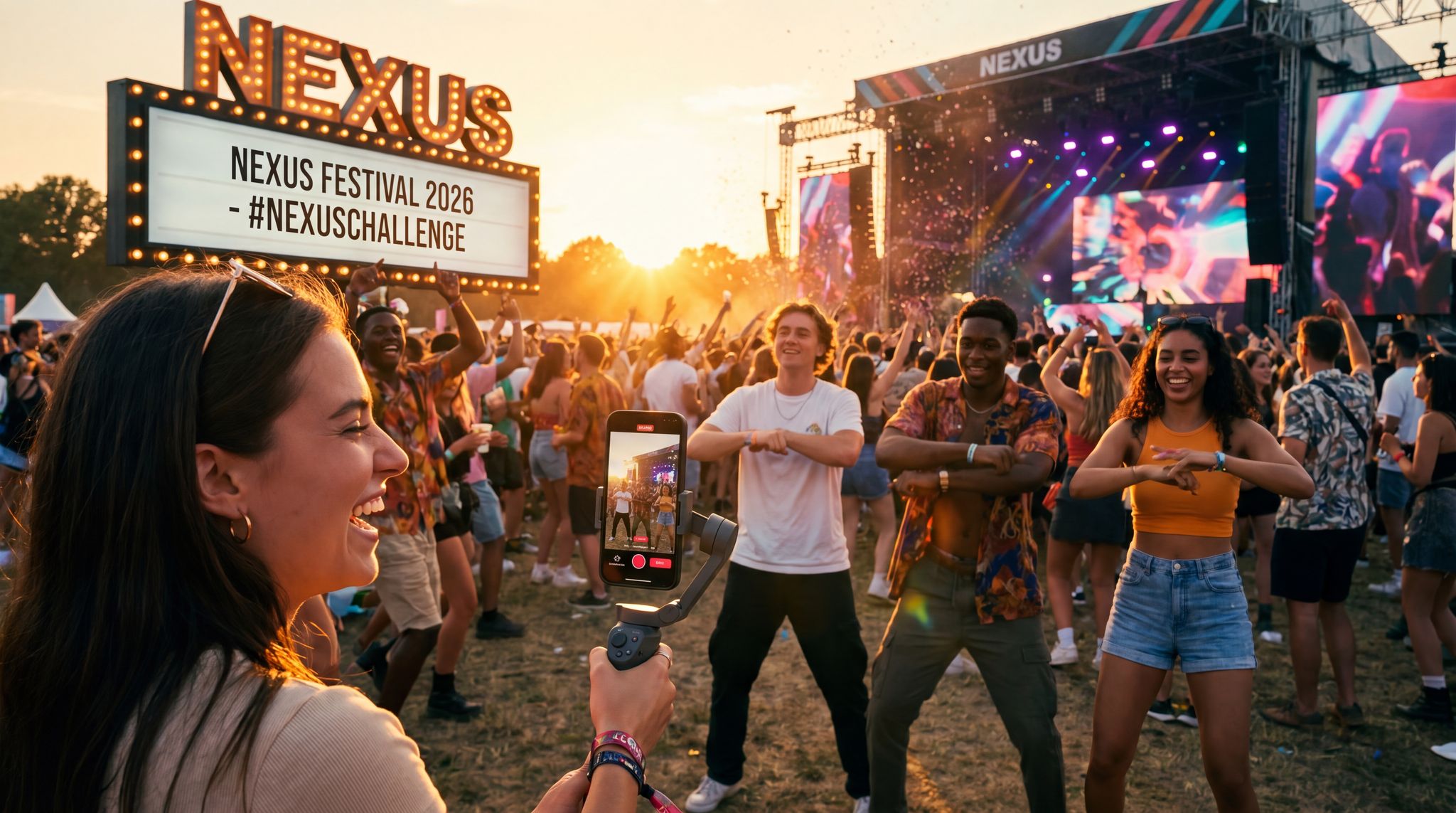
The beauty of AR filters is how they energize word-of-mouth marketing through user-generated content. Every time someone posts a Story with your event’s AR effect – whether it’s a virtual festival wristband on their arm, a 3D stage backdrop behind them, or a funny mixed-reality character dancing next to them – they broadcast your event to their entire social circle. It’s essentially free advertising, but it feels organic because it’s coming from a peer, not a brand. AR makes these posts inherently eye-catching: a glowing virtual halo with your festival’s logo is more likely to spark curiosity than a plain photo. This translates into higher share rates and impressions. For example, at Lollapalooza Berlin, branded Snapchat filters and lenses drove record engagement – one official festival geofilter was shared by 33% of users who tried it, the highest share rate Snap had ever recorded in Germany, as detailed in Ticket Fairy’s guide to mastering Snapchat ads. That kind of engagement is gold for event marketers: each shared snap or story not only creates FOMO among viewers but also serves as social proof that “people are excited about this event.” The viral chain reaction can be dramatic. It’s not uncommon to see a well-crafted AR lens generate millions of impressions through shares. Coachella provided a great example of remote virality: the festival offered custom Instagram AR filters that virtually placed fans (at home) into scenes like Coachella’s famous ferris wheel; the result was millions of impressions online, effectively blurring the line between attending in person and participating virtually, a strategy central to mastering metaverse event marketing in 2026. By turning fan social posts into playful event promos, AR filters amplify your reach exponentially. In 2026’s algorithm-driven social media environment, this kind of organic buzz is invaluable – it cuts through paid ad fatigue and delivers your message via genuine fan enthusiasm.
Ready to Sell Tickets?
Create professional event pages with built-in payment processing, marketing tools, and real-time analytics.
Case in Point: Festivals & Concerts Winning with Social AR
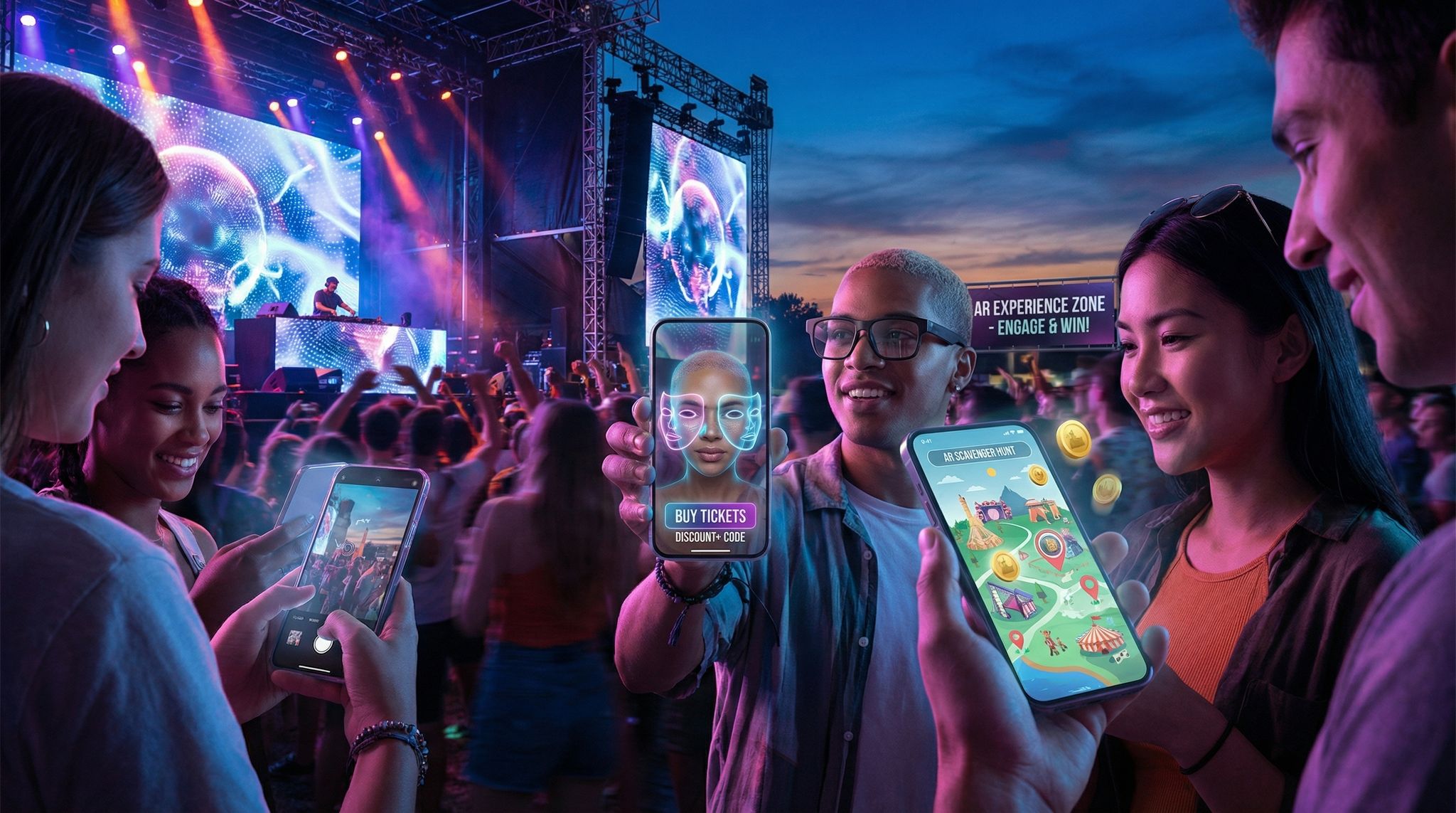
Major festivals and concerts have jumped on the AR bandwagon with impressive results. One rock festival in Europe created a Snapchat lens that put users on a virtual stage with lights and pyrotechnics. The lens was wildly popular – over 1 million people tried it in the month leading up to the festival, and tens of thousands shared videos of themselves rocking out virtually. This translated to millions of impressions among friends-of-fans, many of whom had never heard of the festival before. Crucially, the organizers didn’t stop at branding – they embedded a call-to-action in the fun. The Snap lens included a floating text with a promo code for tickets. As fans saw their friends using the lens, they also saw “Use code ROCK10 for 10% off tickets” hovering in the AR scene. The results were direct and measurable: hundreds of ticket purchases were attributed to that Snapchat lens campaign, more than covering the cost of developing the AR filter, proving that AR lenses can spark buzz and drive sales. It turned a neat piece of content into an actual sales generator. Another creative example comes from a pop concert tour in Asia, where the promoter launched an Instagram AR face filter challenge: fans posted stories with a filter that put the artist’s signature neon face paint on them, tagging the tour for a chance to win meet-and-greet passes. Within a week, thousands of fans had posted their AR selfies, reaching an audience of millions and firmly cementing the tour’s hashtag across social channels. These case studies highlight a key lesson – tying AR usage to incentives (like discount codes, contests, or exclusive content) can move the needle from just engagement to conversion. When fans become your marketers through AR, the excitement they generate is genuine, and it not only bolsters your branding but can directly lead to more tickets sold.
AR Scavenger Hunts & Gamified Challenges: Engaging Fans Before the Event
City-Wide Augmented Reality Treasure Hunts
Imagine turning an entire city into your event’s playground. City-wide AR scavenger hunts are emerging as an incredibly engaging pre-event promotion strategy. Using mobile AR apps, event marketers hide virtual “treasures” or clues across a geographic area – landmarks, parks, venue surroundings – and challenge fans to find them. In 2024, Nike provided a blueprint for this with a spectacular AR activation in Paris tied to the Olympics. They transformed Paris into a giant AR sports arena, where users could open Snapchat and see virtual athletes and markers around the city, competing in challenges. The campaign reached an estimated 90% of Parisian youth and garnered 23 million+ impressions in just weeks, showcasing the power of Snapchat AR lenses and geofilters. Event promoters can adopt similar concepts on a smaller scale to generate buzz. For example, a festival might create an AR treasure hunt around its host city a month before gates open: fans use an app or social lens to find AR tokens at hip locations (record stores, cafes, sponsor retail outlets). Each found token could unlock a reward – perhaps a discount code, a snippet of the lineup revealed, or collectible AR badges. Not only does this get fans literally walking around the city spreading the word, it creates a story that local media often loves to cover (free PR!). Participants will share their AR find screenshots on social (friends see “what’s that about?” – more buzz). The key is to keep it accessible: make clues manageable and the experience fun even for those who aren’t AR geeks. Thanks to tools like WebAR (which works via a simple browser link or QR scan, with no app install), even smaller events can set up a basic city AR hunt without investing in a custom app. By gamifying the anticipation phase, you stoke fan excitement and word-of-mouth well before the event, all while cementing your event’s presence in the local community in a novel way.
Turning Promotion into Play: Pre-Event AR Challenges
The success of AR scavenger hunts underscores a broader point: play is a powerful motivator. Pre-event AR challenges tap into that by turning promotion into a game. This can take many forms beyond city treasure hunts. Some events do interactive AR puzzles or riddles online. For instance, a comic-con might release an AR-enabled teaser poster: scanning it with your phone reveals a hidden message or 3D object. Fans who collect all pieces of the message (maybe released weekly via AR clues) could unlock the final lineup announcement or win VIP access. In 2026, we also see more crossover between AR and other emerging tech like blockchain – e.g., completing an AR challenge might earn participants a digital collectible (NFT) related to the event, which doubles as a loyalty reward or early access token. Coachella trialed something like this with its “Coachella Quest” in 2024: attendees who completed AR tasks through the festival’s app were rewarded with digital collectibles and surprises, illustrating effective gamified attendee engagement tools. The genius of such challenges is that they get fans deeply invested in your event narrative. Instead of passively seeing ads, fans are actively solving, exploring, and unlocking bits of your story. That investment can translate into higher intent to attend (they’ve put in effort, now they have to go!), plus it generates a trove of user content and chatter. A well-designed AR promotion game can also capture valuable data – as fans register or share to participate, you learn who your most engaged audience is. Experienced event promoters know that these immersive pre-event engagements are marketing gold: they build a community feeling before anyone walks in the door.
Example: Sponsor-Powered AR Adventures with Huge ROI
AR challenges can also be a boon for sponsors and partners, essentially turning advertising into an interactive adventure. A striking example came from a recent pharmaceutical conference, where organizers worked with a tech partner to create an AR treasure hunt in the expo hall. Attendees used their phones to find virtual objects and clues around sponsor booths. The outcome was astounding: sponsor engagement jumped 340%, and average booth dwell time went from 47 seconds to 8.3 minutes as attendees played the AR game at each station, demonstrating how AR scavenger hunts generate sponsor value. Sponsors reported gaining so many more leads and meaningful interactions that it translated to an estimated $2.3 million in new business – all from a modest $18,000 AR investment (a 12,700% ROI on that activation), proving that gamification leads to deeper relationship depth. These numbers prove that AR gamification isn’t just fun for fans – it’s serious business strategy. By involving sponsors in an AR scavenger hunt or challenge, you can offer them a creative way to get attention beyond a static logo on a banner. Fans willingly engage with sponsor content because it’s part of the game, not a forced pitch. For your event, this can mean happier sponsors (which could lead to increased sponsorship revenue in the future) and an offset of costs to implement the AR experience. For example, a beer festival could have an AR quest where each brewery sponsor is a “station” to collect a virtual token – complete the set and the attendee gets a real prize, like a free T-shirt, at the last booth. In 2026, these kinds of brand activations are increasingly common, because they create a win-win-win: attendees have fun, sponsors get engagement, and the event gains buzz (and possibly funding). When pitching to sponsors, highlight those success stories and stats – a sponsor might be far more inclined to support your AR scavenger hunt knowing it drove 8-minute interactions and massive ROI elsewhere.
Smart Promo Codes & Presale Access
Create percentage or flat-rate discount codes with usage limits, date ranges, and ticket type restrictions. Plus unlock codes for private presales.
Mixed Reality Magic On-Site: Activations That Wow Attendees
Augmented Stage Shows and Live AR Effects
The impact of AR and MR truly comes alive when integrated into the event itself. One of the most buzzworthy uses is augmented stage production. Here, AR is used to enhance the live performance – either through attendees’ devices or through venue displays. A pioneering example was at Coachella, where the Sahara Tent featured an AR experience during certain DJ sets. Concert-goers could point their phones at the massive LED screens on stage and see extra visuals – the app generated planets, astronauts, and other psychedelic imagery floating over the stage, as reported in coverage of Coachella’s augmented reality Sahara Tent. Fans in the crowd were effectively seeing a different show through their screens, one layered with fantastical AR overlays, and they could capture videos that looked straight out of a sci-fi movie. Rather than discouraging phones, Coachella encouraged this AR interaction, knowing it resulted in shareable videos and a cutting-edge reputation. Sports events have also embraced mixed-reality spectacles. At SoFi Stadium in Los Angeles, a partnership between the LA Rams, Snap, and sponsor Princess Cruises treated fans to a stadium-wide AR show. During halftime, the jumbotron and an AR-enabled app transformed the entire field into a virtual ocean, with giant 3D whales and surfers appearing to splash through the stadium, a prime example of strategies for augmented reality in events. Over 70,000 astonished fans watched virtual Rams players “surf” a wave to the end zone in a 3D race, cheering for their favorites as if it were a real competition, showing how AR is integrated into the venue’s experience. The winning surfer even rode a wave up to a virtual Princess Cruises ship, seamlessly blending the sponsor into a jaw-dropping moment. This illustrates the potential of MR: done right, it can turn a standard interlude into a memorable highlight that fans rave about. For event marketers, the takeaway is that AR can be more than a sidelight – it can be central to the show. While not every event can project whales on a stadium screen, even smaller venues can get creative: think AR-enabled projection mapping in a theater, or a dance club that uses an AR app to let the crowd trigger special effects on screens by performing certain moves picked up by the camera. These on-site AR experiences give attendees a feeling that they’re part of something truly futuristic and special – a surefire way to boost satisfaction and word-of-mouth.
Interactive AR Installations and Photo Ops
Beyond the stage, AR can turn various corners of your venue into interactive attractions. AR photo booths or installation walls are one flexible option. Instead of a traditional photo booth, imagine a station where attendees step in front of a screen or iPad, and are instantly surrounded by AR graphics related to the event theme. Perhaps at a fantasy convention, the screen shows them standing next to a fire-breathing dragon that isn’t physically there, but looks real on camera. They snap a photo or video, and with one tap, they can share that unique memory to social media. These installations effectively serve as “Instagrammable” moments upgraded with AR, extending the concept of cool decor backdrops by adding motion and surprise. (They tie into the broader strategy of making events inherently shareable, much like creating eye-catching venues that encourage social posting in every way possible.) AR kiosks can also be sponsored: for example, a tech sponsor might provide an AR mirror that lets fans try on virtual merch or costumes related to the event. Another on-site approach is deploying AR markers and QR codes around the venue. Attendees can scan a code on a poster or sign and unlock hidden content – maybe a video message from the headliner thanking them for coming, or a 3D model of the stage that appears on their phone with a setlist teaser. These little Easter eggs reward exploration and make the venue feel like a digitally-enhanced space. Some forward-thinking events create venue-wide AR games: e.g. a scavenger hunt within the festival grounds. We saw Coachella do this – the 2024 Coachella Quest had fans use the festival app to solve puzzles and find AR objects at different stages and art installations, resulting in nearly 50,000 quests completed during the weekend, a massive success for gamified attendee engagement strategies. This kept attendees engaged during downtime and led them to discover sponsored areas they might have otherwise missed. The message is clear: on-site AR/MR activations can significantly heighten the attendee experience, giving fans more to do and share beyond just watching the main act. It turns an event into an immersive playground – and when people feel immersed and entertained at every turn, they’re far more likely to leave glowing reviews and become repeat attendees.
Another emerging trend for on-site engagement is the “alive effect” in AR event photography. By 2026, venue operators are moving beyond static step-and-repeats by utilizing software that animates physical prints or digital photo booth captures when scanned with a smartphone. This dynamic approach to event photography not only delights attendees but also creates highly shareable, branded video assets that extend the event’s digital footprint long after the doors close.
To truly elevate the on-site atmosphere, promoters must look beyond isolated gimmicks and design a holistic mixed reality fan experience. This means connecting various digital touchpoints—from the moment an attendee scans their ticket to the interactive stage visuals during the headline set—into one seamless narrative. When fans feel completely immersed in a blended physical and digital environment, their emotional connection to the event deepens, transforming casual ticket buyers into fiercely loyal brand advocates.
Scaling Augmented Reality for Festivals
Deploying augmented reality for festivals presents unique operational challenges compared to indoor club nights or corporate summits. Festival producers must account for massive crowds, sprawling outdoor footprints, and notoriously spotty cellular service. To ensure these activations succeed, organizers are increasingly relying on WebAR solutions that require minimal bandwidth and caching heavy 3D assets locally on the device once loaded. When planning AR in festivals, it is crucial to position interactive markers or QR codes in high-traffic, well-lit areas—such as VIP lounges, food courts, or dedicated sponsor villages—where temporary Wi-Fi networks can be reinforced. By strategically mapping out these digital touchpoints, promoters can deliver seamless, large-scale immersive experiences without overwhelming local cell towers.
Wearables and MR Devices: Are We There Yet?
When we think of “mixed reality,” many picture futuristic goggles or holograms – essentially, tech that goes beyond holding up a phone. While smartphone-based AR is currently the most practical for reaching the masses, AR wearables and MR headsets are on the horizon and starting to appear at events in limited ways. In 2026, fully interactive AR glasses (like the long-rumored Apple Vision or advanced versions of Snapchat Spectacles) are still emerging technologies, but they’re worth watching for larger events and VIP experiences. A few innovative conferences have piloted using AR glasses for guided tours of expo floors – attendees wearing the headsets would see floating navigation cues, exhibitor info, or even live subtitles next to keynote speakers. Early trials show potential, though hardware cost and complexity mean this isn’t widespread yet. Another take on MR devices is the use of holographic projections. While not exactly AR that attendees control, some events have wowed crowds by projecting 3D visuals that appear holographic – for instance, a music festival “hologram” performer or a product launch with a life-size 3D model rotating in mid-air on stage. These can be thought of as mixed reality spectacles, where the audience doesn’t need any device to see the augmented content. Sports stadiums have begun experimenting with this as well; we’re seeing a trend of high-tech stadiums incorporating AR overlays and 3D visuals to amp up the show. The bottom line: while wearables like AR glasses aren’t commonplace yet, we’re heading toward a future where a portion of your audience might come equipped to see rich MR content. It’s wise for event marketers to stay informed (and even collaborate with AR hardware startups if the opportunity arises) so you’re ready to integrate these cutting-edge experiences. Pilot something small if you can – perhaps an AR glasses station for VIPs to try out – just to learn how it resonates. Even as you plan for today’s tech (phones), keep an eye on tomorrow’s, because AR/MR is a fast-evolving field.
Grow Your Social Following With Every Sale
Require social media follows, shares, or playlist adds to unlock presale access or special pricing. Turn every ticket purchase into audience growth.
From Engagement to Conversion: How AR/MR Drives Ticket Sales
FOMO and Social Proof: The Psychology of Immersive Experiences
Beyond the cool factor, AR and MR ultimately serve a marketing purpose: getting more people to buy tickets and attend. One of the biggest indirect benefits is how these technologies fuel FOMO (fear of missing out) and social proof, which are powerful motivators for prospective attendees. When someone sees their friend’s video of an amazing AR moment at an event – whether it’s a dragon flying over a stage or their friend wearing a crazy AR costume in a pre-event challenge – it triggers curiosity and a bit of envy. They think, “That looks so fun, I want to be a part of that.” Immersive tech gives events a cutting-edge, exclusive aura. In 2026, an event that leverages AR is seen as innovative and fan-centric, which enhances its reputation. This effect compounds as more people share their AR experiences: if your feed is suddenly filled with posts of people all interacting with an upcoming festival’s AR filter or talking about the citywide scavenger hunt they joined, you naturally conclude that this event is a big deal. Social psychologists note that seeing others participate is a form of social proof that can heavily influence decision-making – it’s the digital-age equivalent of seeing a line around the block for a club and deciding it must be worth checking out. By designing AR campaigns that encourage sharing (and we’ve outlined many that do), you are essentially letting your current fans sell the experience to future fans. The hype and buzz generated can directly correlate to an uptick in interest and, ultimately, ticket purchases. In short, AR/MR can turn your marketing from a monologue (“please buy a ticket to my event”) into a fan-driven conversation (“look what we’re doing – you should join us!”). And nothing sells tickets quite like authentic excitement from peers.
Embedding CTAs: Converting AR Engagement into Sales
To truly boost ticket sales, savvy event marketers go a step further than generating buzz – they embed calls-to-action (CTAs) and trackable hooks into AR experiences to convert engagement into purchases. We saw a great example earlier with the Snapchat lens that included a ticket discount code and led to hundreds of tracked ticket sales, highlighting the effectiveness of Snapchat AR lenses for event promotion. That tactic can be adapted across platforms. For instance, an Instagram AR filter could subtly include the event date and a short URL or QR code in a corner that leads to the ticket page. TikTok AR effects might end with a final reveal frame that says “See this live at X Festival – Tickets in Bio”. The key is to make the CTA a natural part of the fun, not an intrusive ad. One approach is to reward AR engagement with ticket incentives: perhaps completing an AR scavenger hunt gives a fan a coupon code for the event, or using the event’s AR lens enters them into a contest for a free ticket (with a link to buy more for friends). On the back end, it’s crucial to have the right tools to capture these conversions. Ensure your ticketing platform can handle unique promo codes and track redemptions – this is where using a robust system like Ticket Fairy gives an edge, since you can easily generate custom discount codes and see how many sales each code drove. (In the earlier example, the organizers knew the Snapchat lens worked because their ticketing system showed how many orders used that specific code.) Additionally, integrating tracking pixels (Snap Pixel, Facebook/Meta Pixel, TikTok Pixel, etc.) on your ticket checkout page allows you to attribute purchases to those who engaged with your AR content. Platforms such as Ticket Fairy support these marketing integrations out-of-the-box, so you can retarget users who, say, swiped up on your AR lens but didn’t complete a purchase – a gentle reminder ad might convert them later. The takeaway: AR engagement can lead directly to sales if you plan for conversion. Always ask, “What action do I want excited fans to take, and how can I make it seamless for them to go from playing with this AR experience to buying a ticket?” Then build that pathway, whether it’s a promo code, a link in bio, or a QR scan to purchase.
Grow Your Events
Leverage referral marketing, social sharing incentives, and audience insights to sell more tickets.
Metrics That Matter: Measuring AR/MR Campaign Success
As with any marketing effort, you need to measure AR and MR activations to understand their impact. Fortunately, AR campaigns generate a wealth of actionable metrics. Here are some key ones event marketers should track:
– Impressions/Views: How many times was your AR effect viewed or used? (e.g., 1 million Snapchat lens plays, or 500 shares of an AR photo)
– Engagement Rate: For social lenses, look at the share rate or interaction rate. High share rates (like that 33% share stat from Lolla Berlin mentioned in Ticket Fairy’s Snapchat advertising guide)) indicate the content really resonated.
– Dwell Time: If it’s an AR game or activation, how long are people spending on it? (Remember the conference AR hunt example: increasing dwell time from under a minute to over 8 minutes, as seen in successful AR scavenger hunt case studies)!). More time generally means deeper engagement.
– Redemptions/CTA clicks: If you include a promo code or link, track how many used it. This directly ties the AR campaign to revenue. For AR lenses with codes, you might see a spike in usage of that code – a clear win.
– Ticket Sales Uplift: Compare sales before, during, and after the AR campaign window. In some cases, you can run A/B tests (e.g., one region saw the AR promo and another didn’t) to isolate the effect. One festival noted a measurable bump in ticket sales that they attributed to their viral Snapchat lens, proving that AR lenses spark buzz and drive sales).
– Social Mentions and Hashtag Growth: AR will often spark conversation. Track if your event hashtag usage jumped while the AR promo was running, or if mentions of your event increased with keywords related to the experience.
– Qualitative Feedback: Don’t underestimate this. Check comments, or directly ask participants for feedback (“Did you enjoy the AR hunt? Did it make you more excited for the event?”). Fans might tell you exactly what they loved or if anything was confusing – invaluable for refining future campaigns.
By monitoring these metrics, you build a case for AR/MR ROI. For example, you might find that your AR face filter campaign yielded 2 million impressions and a 10% increase in web traffic to your ticket page during that period – strong indicators it boosted awareness. Or that 500 people used the scavenger hunt discount code, which translates to $30,000 in ticket revenue – against maybe a $5,000 cost to create the AR content, that’s a fantastic return. Tracking also helps internal buy-in: showing hard numbers such as “AR users spent 5x longer interacting with our brand” or “Snapchat lens drove X ticket sales” will impress any skeptical stakeholders or sponsors. In sum, treat AR/MR like you would any major marketing effort: set goals, track performance, and learn from the data to make each activation better than the last.
Creating Immersive Experiences on Any Budget
Low-Cost Tools and Platforms to Get Started
A few years ago, developing an AR experience might have required a hefty budget and a specialized developer team. Not so in 2026 – today there’s an array of affordable (even free) AR creation tools accessible to event marketers. If you’re new to AR, a great entry point is using the built-in platforms from major social media. Snapchat’s Lens Studio and Meta’s Spark AR Studio (for Instagram/Facebook) are powerful software that allow you to design custom AR filters and effects. They provide templates and an asset library, so you don’t have to start from scratch. You can, for example, easily create a face paint lens with your event’s logo or a 3D object that appears in the background. Plenty of online tutorials exist, and a simple effect can be made with almost no cost aside from your time (or a freelancer’s fee if you outsource it). TikTok’s Effect House is similarly lowering the bar for AR effects on that platform. For AR scavenger hunts or more interactive content, WebAR platforms like 8th Wall (now part of Niantic) or WebXR APIs enable you to publish AR experiences that anyone can access via a web link or QR code, with no app needed. Many have free tiers or low-cost plans for basic projects. The advantage of WebAR is broad accessibility – perfect for things like putting a QR on a poster that triggers an AR video when scanned. Also, don’t forget what you might already have: some event apps or ticketing platforms include AR modules or integrations. Check if your event app provider has an AR feature (for instance, an app that can scan badges for AR info at conferences). If so, leverage it since it’s already in your toolkit. For physical events, some interactive tech companies rent AR devices or kiosks at day-rates which might be cheaper than custom development. The bottom line is that you can start small: maybe allocate a few thousand dollars (or even just a few days of your team’s time) to create one neat AR effect as a pilot. As noted in Ticket Fairy’s metaverse marketing guide, a simple Snapchat AR filter might be created for only a few thousand dollars by an AR freelancer – or virtually free if you have an in-house design whiz, as suggested in Ticket Fairy’s metaverse marketing insights). You don’t need a Silicon Valley budget to dip your toes into AR; clever use of these tools can produce a highly polished experience on a shoestring budget.
If you are looking for the easiest way to build interactive AR ads for marketing in 2026, several drag-and-drop platforms have emerged specifically for B2B event promoters. Software suites like Blippar and ZapWorks offer intuitive, no-code interfaces where marketers can upload 2D event flyers and instantly attach 3D ticket-purchase buttons or video trailers. These tools streamline the ad creation process, allowing your marketing team to launch highly engaging, conversion-focused augmented reality advertisements in a matter of hours rather than weeks.
Full Pixel & Analytics Integration
Install Meta Pixel with Conversions API, Google Analytics, TikTok Pixel, Reddit Pixel, and Spotify Pixel on your event pages. Server-side tracking for accurate attribution.
Evaluating the Best AR Platforms for Interactive Venue Experiences in 2025 and 2026
As technology rapidly advances, promoters and operators frequently ask how to choose the best AR platforms for interactive venue experiences heading into 2025 and 2026. The ideal solution depends heavily on your specific operational needs and budget. For massive, frictionless deployments, WebAR platforms like 8th Wall remain top contenders because they bypass app store downloads entirely, allowing fans to access the latest AR experiences instantly via a simple QR scan. Conversely, if your goal is deep social media integration and viral reach, leveraging the native AR studios of Meta (Spark AR) or Snap (Lens Studio) is often the most effective route. For highly customized, venue-specific mixed reality—such as persistent spatial anchors in a stadium—enterprise-grade engines like Unity or Unreal Engine, paired with specialized AR SDKs, provide the robust architecture required to build truly groundbreaking, location-based activations.
Working with AR Creators and Agencies
If you have a bit more budget or need a complex activation, partnering with experienced AR creators or specialized agencies can be a smart move. There’s now a growing ecosystem of AR developers and studios who understand both the tech and the marketing side. Many freelance AR creators can be found on platforms like LinkedIn or communities such as Spark AR creators’ groups – their portfolios often showcase fun filters they’ve made for brands or artists. Commissioning a custom lens or effect from them might cost a few hundred to a few thousand dollars depending on complexity, which is quite reasonable for the potential reach (remember the earlier example: ~$5K for a lens that yielded hundreds of ticket sales – a great ROI). For larger-scale projects, AR/VR agencies can handle everything from concept to deployment. For example, if you want to do an interactive mixed-reality game at a festival, an agency might provide the app, on-site support, and creative design. When evaluating partners, look for those with relevant experience – if you’re a music festival, find those who’ve done AR for concerts or youth-focused campaigns; if you’re a trade show, maybe someone who did AR product demos or wayfinding. Always discuss metrics and integration: a good AR partner will help you include tracking, maybe even integrate a mini CRM to capture user info from the AR experience (e.g., “play the AR game and enter your email to win prizes”). They should also be able to advise on the creative direction that fits your audience. Perhaps they’ll suggest a gamification approach to keep attendees engaged if your goal is boosting engagement, or a shareable filter if your goal is broad awareness. One tip: consider local AR talent as well, especially if your event is location-specific. Universities and design schools sometimes have AR programs; a student team might jump at building a cool AR installation for the experience and portfolio, at a fraction of commercial cost. Just ensure any partner understands your event timeline (the AR must be ready before your marketing push or event date!) and has tested their product thoroughly – you don’t want a buggy AR app on show day.
For promoters managing multi-city tours or massive destination events, hiring a dedicated immersive tech agency for marketing and events is often the most efficient route. These specialized firms do more than just code filters; they provide end-to-end strategic consulting, hardware procurement, and on-site technical support. An experienced agency will ensure your digital activations integrate flawlessly with your existing ticketing CRM and sponsor deliverables, taking the technical burden off your core production team.
Integrating AR into Your Marketing Game Plan
To maximize impact, AR/MR shouldn’t sit in a silo – integrate it into your overall marketing strategy and timeline. Start by mapping out where an AR activation fits in the event promotional timeline. For example, about 6–8 weeks before the event (early in the campaign), you might launch a fun AR face filter challenge to boost early buzz, a tactic for engaging audiences in virtual worlds). Then 3–4 weeks out, as urgency builds, perhaps roll out an AR scavenger hunt in the city or a mini-game that reveals a special guest announcement, building on early promo strategies for metaverse events). The idea is to use AR to complement each phase: early on for awareness and social reach, closer to the event for conversion and on-site engagement prep. Make sure to promote your AR experiences across channels. If you’ve built a cool AR lens, don’t just hope people find it – push it. Post about it on your socials (“Try our new AR filter and see yourself on our festival stage!”), put QR codes on your flyers and website that link directly to it, ensuring you make the AR experience accessible), mention it in email newsletters to fans (“Have you played our AR treasure hunt yet? Winner gets a backstage tour!”). Align it with any influencer or artist partnerships: perhaps the headliner can be shown using the AR filter on their own Instagram, challenging fans to do the same. Also, coordinate AR with your traditional marketing. For instance, if you’re running Facebook Ads and also have an AR game ongoing, you could retarget people who interact with the AR (via pixel data) with ads to remind them to get tickets. Conversely, an email to your ticket waitlist might mention the AR game as additional excitement to keep them warm. If using Ticket Fairy or a similar platform, leverage features like referral tracking alongside AR: you could encourage those participating in an AR challenge to share a referral link to friends for extra contest entries – blending AR fun with a referral program that boosts sales (Ticket Fairy’s built-in referral system has driven 15-25% sales lifts for events, a nice stat to keep in mind in planning). Lastly, ensure your team is prepared operationally. If the AR activation is at the event, brief your staff so they can assist attendees (“Here’s how to open the AR viewer if people ask”). Have contingency plans: technology can be fickle, so if an AR element fails, have a backup engagement ready (maybe a non-AR version of the game or a manual contest) to avoid technology failures backfiring on the big day). By weaving AR/MR seamlessly into your broader campaign, you make it a natural extension of your event’s story rather than a one-off trick. That consistency helps reinforce your messaging and gives fans multiple touchpoints – visual, interactive, experiential – all driving toward the same goal: a sold-out event and happy attendees.
Getting Creative: Ideas for Any Event Type
No matter what kind of event you’re promoting, there’s likely a creative AR or MR idea that can amplify your marketing. A few brainstorming starters:
– Music Festivals & Concerts: AR face paint with festival vibes (e.g., virtual glitter, band logos), AR “try on” of merch or outfits, a virtual backstage pass that places the user next to a 3D avatar of the artist for a selfie.
– Conferences & Trade Shows: AR business card scavenger hunt (find and scan AR codes at booths), AR demos where pointing your phone at a product displays its features in 3D, an MR keynote where remote speakers appear as holograms (the tech from hologram keynote setups is evolving fast!).
– Sports Events: Team-branded filters that add virtual facepaint or jerseys onto fans, AR mini-games during halftime (kick a virtual field goal through your phone), MR player intros with virtual effects in-stadium.
– Theater & Arts: An AR drama poster that plays a scene when scanned, or a mixed-reality pre-show where the audience with an app can see extra visual elements on stage. Even AR playbills with interactive content can engage audiences.
– Community & Cultural Festivals: City landmark AR history tour (for example, an AR app that shows historic photos when you aim at buildings as part of a heritage festival), or an AR fireworks display in places where real fireworks might be impractical.
– Nightclubs & EDM Events: Use AR markers on wristbands – point your phone and see live stats of how many people are dancing, or AR visuals throbbing to the music. Perhaps a mixed-reality DJ set where club screens show fans’ AR avatars dancing when they use the event’s filter from the dance floor.
Smooth Entry With Mobile Check-In
Scan tickets and manage entry with our mobile check-in app. Supports photo ID verification, real-time capacity tracking, and multi-gate coordination.
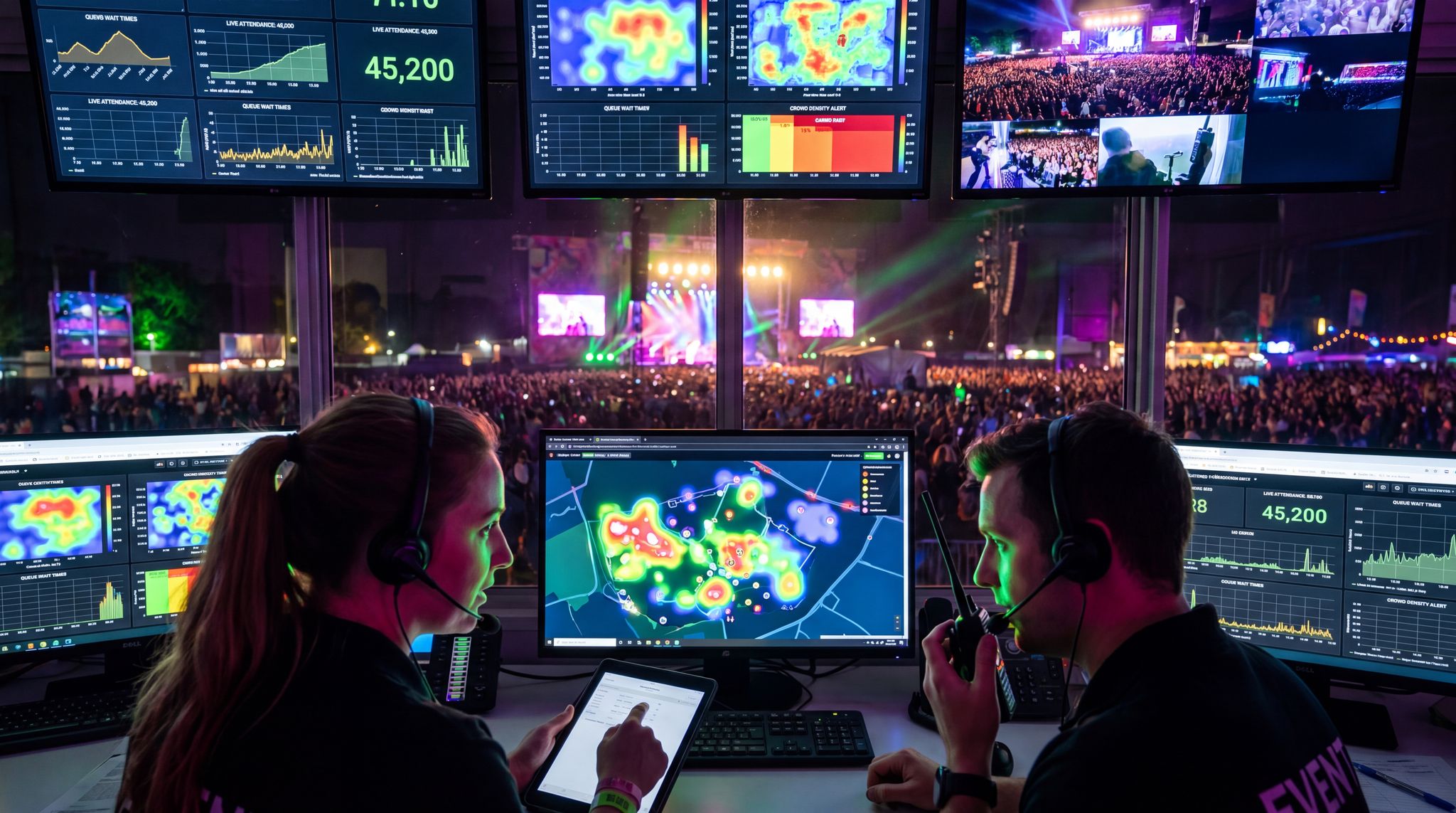
When brainstorming creative event marketing ideas, remember that the most successful applications of AR in festivals and corporate gatherings alike focus on utility and shared joy. Whether it’s a virtual map guiding attendees through a massive outdoor venue or an interactive art installation, these concepts prove that augmented reality is no longer just a novelty—it’s a core promotional tool.
The possibilities are as endless as your imagination. The important thing is to ensure the AR/MR idea enhances the fan experience and ties back to your event’s theme or objectives. A good test is to ask, “Would I be excited to do this? Would I tell friends about it?” If yes, you’re onto something. Also consider your target audience’s demographics and comfort with tech: a youthful, tech-savvy crowd might love a complex AR game, whereas an older audience for a classic rock show might prefer something simpler like an AR photo booth with nostalgic overlays. Always design with the user in mind. Many successful AR event campaigns in 2026 have come from audience-centric thinking – essentially, adding an interactive layer to what that audience already enjoys. By tapping into those interests with AR, you make the experience more memorable and shareable.
Partnering with Tech Platforms and Sponsors for AR Success
Collaborating with AR-Friendly Platforms
When venturing into AR marketing, don’t overlook the value of partnerships with the big tech platforms that specialize in AR. Snapchat, Meta (Instagram/Facebook), TikTok – each of these companies is actively pushing AR features and often eager to showcase success stories. For major events or tours, you might be able to work with platform reps on an official campaign. For example, Snapchat has a program for sponsored lenses that get featured to targeted users. While a sponsored national lens can be expensive, Snapchat sometimes co-promotes innovative uses of AR, especially if you tie into something timely (like holiday events or cultural moments). If you have a bit of ad budget, consider Snapchat geofilters or AR lenses that are promoted in the city of your event during key dates; this can guarantee your AR effect is seen by a wider local audience. Instagram doesn’t outright “sponsor” filters in feeds, but you can use Instagram Ads to prompt people to try your AR effect. The advantage of working through platforms is leveraging their distribution power – your AR content can be inserted into the streams of users who might not otherwise encounter your event. Also, keep an eye on newer AR-enabled platforms or features. For instance, Facebook AR ads allow users to try something in AR right from their newsfeed ad (like seeing a 3D object or a game); an ad could let people “place” a miniature festival stage on their desk in AR and then click to buy tickets. Another angle is engaging AR communities: participating in official Lens Studio or Spark AR community showcases can get your filter highlighted by the platform. Ultimately, the platforms want engaging content that keeps users excited, and if your AR idea is novel, it can catch their attention. Don’t be shy to reach out – even a quick case study submission to Snap or TikTok about your successful AR campaign might lead to a blog feature or extra love from their algorithm. The clout from being promoted by a major platform not only expands reach but also adds credibility to your event (people think, “If Snapchat is featuring this, it must be cool!”). Just ensure you plan timelines appropriately: if coordinating with big tech for a special feature, start conversations early, as approvals and development can take longer than purely in-house efforts.
Brand Sponsorships and Co-Creative Campaigns
AR and MR activations present ripe opportunities for sponsorship integration. Brands are always looking for fresh, engaging ways to connect with audiences, and an AR experience at a live event is a perfect vehicle. The key is to approach it as a collaboration where both your event and the sponsor get value. Take the earlier mentioned Rams/Princess Cruises example: the sponsor’s theme (ocean travel) was woven naturally into a fun AR experience that enhanced the game-day show, illustrating how AR is integrated into venue experiences). Similarly, think about what brands align with your event’s theme or audience. If you’re running a marathon event, a sportswear company might sponsor an AR feature where spectators can point their phone at runners and see live stats or a fun visualization of pace – branded naturally with the company’s logo and colors. Or a beer sponsor at a music festival could fund an AR tent where users scan a beer can and see a 3D animation of the brewery process, winning a free sample. The possibilities are endless, but the best partnerships involve brainstorming together. The sponsor might have ideas or assets (maybe they already have a mascot that could be made into a 3D AR character). When pitching AR opportunities to sponsors, use language of benefits: explain how the AR activation will draw more people to their booth, increase brand recall (remember Snap’s data on AR yielding 1.3× higher brand recall than other media, according to Snapchat’s data on AR attention impact), and generate social media mentions with the sponsor’s name attached. You can reference cases like the conference AR hunt that yielded big business for sponsors, proving AR scavenger hunts generate significant value) as proof of concept. Another form of partnership is with local tourism boards or city organizations, especially for city-wide AR initiatives. A tourism board might love the idea of an AR historical hunt that brings visitors to landmarks (which doubles as promoting your event); they might help promote or even fund it as part of city marketing. We also see artists and performers themselves collaborating on AR: a DJ might create an exclusive AR filter for your festival that drops a snippet of their new track – co-branded between the artist and event. Collaboration multiplies reach: the sponsor or partner will promote the AR activation to their audience, adding to yours. Just make sure to keep the experience audience-first; a rule of thumb is that the AR content should stand on its own as entertaining or useful, with the branding as a plus, not the core. When the partnership is executed right, the sponsor message is amplified by the cool factor of the AR, and fans don’t feel like it’s an ad – they feel like it’s part of the show.
For B2B organizers, the latest AR and VR software features offer incredible value for sponsors looking to conduct an immersive product demonstration in 2026. Instead of shipping heavy machinery or building massive physical prototypes, a tech or automotive sponsor can use mixed reality headsets or tablet-based AR to let attendees explore a 3D model of their newest product right on the expo floor. This not only reduces logistical costs but also provides a cutting-edge AR experience that attendees will remember long after the event concludes.
Tapping Global Tech Innovators
Event technology is a global field, and innovative AR/MR ideas might come from unexpected places. In 2026, some of the most cutting-edge AR applications are emerging in markets like East Asia – for example, Chinese and Korean entertainment companies have pioneered AR concerts and fan experiences via superapps and 5G networks. European festivals are collaborating with AR art collectives for city-wide art walks. Don’t hesitate to reach out beyond your local tech scene. If you come across a news story about a cool AR at an event in, say, Japan or Australia, track down the company or individuals behind it. Perhaps they have a platform or service you can bring to your event. Going global can also mean leveraging platforms popular in other regions: for instance, if your event caters to an international crowd, consider integrating AR on WeChat or LINE (major messaging apps in Asia) which have AR filter capabilities and could engage overseas fans. Another angle is to participate in or observe global events like Expo fairs or tech conferences (CES, SXSW, etc.) where new AR event solutions are often showcased. Many startups demo AR products for events, like interactive badges, AR navigation apps, or mixed-reality games. You could be an early adopter and differentiate your event. Partnering with a tech vendor from another country might also garner media interest (“Festival X is first in the country to use Y company’s AR translation glasses for attendees”). When adapting any AR tech for local use, ensure content is culturally appropriate and accessible (e.g., if instructions were in another language, get them translated and localized). Global collaboration can be a win-win: the tech innovators get a case study in your market, and you get a fresh attraction. Just be mindful of logistical factors like support and time zones – if you’re working with a team halfway around the world, schedule ahead for any live support you might need. By casting a wide net and being open to tech partnerships worldwide, you tap into a rich vein of creativity that keeps your event marketing on the cutting edge. In a fast-moving field like AR/MR, that willingness to explore globally can put you ahead of the competition.
Go Cashless With RFID Technology
Enable contactless payments, faster entry, and real-time spending analytics with RFID wristbands and NFC-enabled ticketing for your events.
The Future: What’s Next for AR, MR, and Event Marketing
Rising Trends: AR Glasses and Beyond
Peering a few years ahead, it’s clear that AR and MR will only grow more immersive and commonplace in events. AR glasses are a big one on the horizon. Companies like Apple, Meta, and others are heavily investing in wearable AR/MR devices. By the late 2020s, we may see affordable glasses that can project digital info into our view – imagine attendees getting real-time subtitles or player stats floating in front of them, or an AR arrow guiding them to the nearest food stall, all without holding a phone. This could transform how we design event experiences (and marketing around them). Early adopters in 2026 might start testing VIP AR glasses sections at events – perhaps a VIP concert package comes with use of an AR headset that provides an exclusive visual show layered onto the performance. Event marketers should watch for pilot programs from these tech giants; they often look for partners to trial new hardware at live events. 5G and eventually 6G networks will also boost what’s possible, supporting more users doing AR simultaneously with lower latency – crucial for things like mass participatory AR where thousands might point phones (or glasses) at once without lag. We’re also seeing the fusion of AR with AI. AI can dynamically personalize AR content – for example, an AI might generate a custom AR scene for each user based on their interests or behavior. In marketing, this could mean AR ads that tailor themselves to each fan’s profile, potentially increasing relevance and engagement. Another future trend is persistent AR worlds: digital content that stays anchored in a location across time and for all users. A city might build a persistent AR layer where, say, your event’s mascots or logos remain virtually “graffitied” on the city walls via AR for months, visible to anyone with the app. This could turn into a long-term marketing asset or a city-wide art installation tied to your brand. The metaverse concept also overlaps – virtual spaces accessible via AR (think Pokemon Go’s next evolution, where virtual venues overlay real ones). All this suggests that the boundary between event marketing and entertainment will further blur. Every poster, every ticket, every physical space could be a gateway to an AR experience. For event marketers, the takeaway is to stay curious and keep experimenting. Today’s AR face filter might evolve into tomorrow’s holographic meetup. By building competency in AR/MR now, you’re laying the groundwork to thrive in a future where immersive tech is everywhere.
For promoters looking to stay ahead, the latest AR experiences in 2026 focus heavily on frictionless entry. Attendees no longer need to download a bulky, single-use app to participate. Web-based augmented reality (WebAR) and instant social integrations are making it easier than ever to deploy these cutting-edge activations directly from a standard smartphone browser, significantly increasing adoption rates on-site.
Venue operators are also looking ahead to how these technologies will shape physical spaces. The future of facility and venue event promotion (a concept gaining global traction, sometimes discussed in international tech circles as ?? ???? ??????? ???? ??) relies heavily on permanent AR infrastructure. Imagine stadiums or convention centers equipped with persistent spatial anchors, allowing any touring festival or corporate summit to instantly “plug in” their custom augmented reality overlays the moment they rent the space.
Balancing Tech and Reality: Ensuring Meaningful Experiences
With all the excitement around AR and MR, it’s important to remember a core principle: technology should enhance, not replace, the magic of live events. The last thing you want is an AR gimmick that distracts from the actual experience or frustrates users. Heading into the future, successful event marketers will be those who find the sweet spot between high-tech and human connection. This means continuing to listen to attendee feedback – if fans say a particular AR game was confusing or they prefer enjoying a concert without phones up all the time, take note. It’s all about using AR/MR thoughtfully. For instance, phone-free concerts have become a niche trend for intimacy, which is key to picking the right tech). so maybe you wouldn’t push AR during an acoustic unplugged set meant to be savored in the moment. But you might use AR in the lobby or pre-show to build energy, then ask attendees to pocket devices during the show for immersion – each approach in its right place. Another consideration is accessibility and inclusivity. As AR becomes widespread, ensure people who can’t or won’t use it still have a great experience. Always offer an alternative way to participate in a challenge or access info if possible (as mentioned, have a non-AR fallback for scavenger hunts to ensure gamified attendee engagement remains inclusive) or provide some loaner devices for those without compatible phones). Privacy and security will also remain critical. Be transparent about any data you collect through AR apps (especially important in Europe with GDPR, etc.) and avoid overly intrusive experiences. Trust is part of your brand, so an AR activation should respect that trust – no sneaky data grabs or misleading content. On a positive note, bridging AR with reality also means creating more meaningful moments. AR/MR is a tool to evoke emotions – wonder, joy, nostalgia. Strive to design experiences that resonate. A mixed reality tribute at a music festival, for example, could let the crowd see a beloved artist who passed away “perform” one more song via a hologram – a deeply emotional moment if done respectfully. Or a cultural festival could use AR to share stories from community elders at locations around the venue, enriching attendees’ connection to the culture. In summary, as AR and MR become commonplace, the differentiator will be creativity and authenticity. Everyone might have AR gimmicks, but those who craft truly engaging, story-driven, and audience-centric AR experiences will stand out. Keep your focus on what makes events magical – bringing people together – and let AR/MR serve that goal. Do that, and these technologies will indeed be powerful tools to engage fans and boost ticket sales, not just in 2026, but for many years to come.
Frequently Asked Questions
What is the difference between augmented reality and mixed reality in event marketing?
Augmented Reality (AR) overlays digital content like graphics or filters onto a user’s real-world view via smartphones, while Mixed Reality (MR) blends virtual objects that interact with and anchor to the physical environment. By 2026, MR represents advanced AR integrations where digital elements respond to real-world surroundings to enhance immersion.
How can AR face filters help sell event tickets?
AR face filters drive ticket sales by turning fans into promoters who share branded content, creating organic buzz and social proof. Marketers can embed calls-to-action, such as discount codes or direct links, within the AR experience. For example, a Snapchat lens with a promo code can directly attribute ticket purchases to the campaign.
How do city-wide AR scavenger hunts work for event promotion?
City-wide AR scavenger hunts engage fans before an event by hiding virtual clues or tokens at real-world locations like landmarks and sponsor shops. Participants use mobile apps or WebAR to find these items, unlocking rewards like discounts or lineup reveals. This gamification generates local buzz, media coverage, and extended social sharing.
What are effective examples of on-site mixed reality activations?
Effective mixed reality activations include augmented stage productions where attendees see 3D visuals floating over performers via their phones, and stadium-wide AR shows featuring virtual objects interacting with the field. Other examples involve interactive AR photo booths and holographic projections that create immersive, shareable moments without requiring wearable devices.
What tools are available for creating low-cost AR event campaigns?
Event marketers can create affordable AR experiences using free tools like Snapchat’s Lens Studio, Meta’s Spark AR, and TikTok’s Effect House. Simple filters can be built in-house or by freelancers for minimal cost. WebAR platforms also allow events to publish browser-based AR content without requiring expensive custom app development.
Which metrics measure the success of an AR marketing campaign?
Key metrics for AR campaigns include impressions, engagement rates, and dwell time, which measures how long users interact with the experience. Marketers should also track share rates to gauge virality and redemption rates for embedded promo codes or calls-to-action to directly measure the campaign’s impact on ticket sales and ROI.
How is AR in festivals changing the landscape of creative event marketing?
Implementing AR in festivals provides organizers with highly creative event marketing ideas that go beyond traditional advertising. By offering interactive experiences—such as virtual art installations, gamified scavenger hunts, and immersive sponsor activations—promoters can drive organic social sharing, increase attendee dwell time, and ultimately boost ticket sales.
How is augmented reality used in fairs and large consumer expos?
Integrating augmented reality in fairs modernizes traditional agricultural, state, or county events by adding interactive digital layers. Organizers can deploy AR wayfinding to help attendees navigate massive fairgrounds, create 3D educational overlays for livestock and craft exhibits, or gamify the midway experience to drive foot traffic to specific food vendors and sponsor booths.
How does a cohesive mixed reality fan experience impact attendee loyalty?
A well-designed mixed reality fan experience connects multiple digital touchpoints—such as AR wayfinding, interactive sponsor booths, and augmented stage visuals—into a single, immersive narrative. This seamless blend of physical and digital environments deepens emotional engagement, turning casual attendees into loyal advocates who are more likely to return for future events.
What’s the most affordable way to monetize AR experiences?
The most affordable way to monetize AR experiences is by integrating them into existing sponsorship packages. Instead of building a standalone paid app, organizers can offer sponsors branded AR scavenger hunts, interactive 3D product demos, or sponsored social media filters. This approach requires minimal upfront capital, offsets development costs, and provides sponsors with highly measurable engagement data, effectively turning a promotional expense into a revenue-generating asset.
What is the easiest way to build interactive AR ads for marketing in 2026?
The easiest approach is utilizing no-code, drag-and-drop WebAR platforms like ZapWorks or Blippar. These tools allow event marketers to upload standard promotional assets and overlay 3D elements or direct ticket-purchasing links without needing a dedicated developer, drastically reducing campaign turnaround times.
Why should promoters hire an immersive tech agency for marketing and events?
Partnering with a specialized agency ensures that complex augmented reality activations run smoothly at scale. These firms handle everything from custom 3D asset creation to on-site network troubleshooting, allowing festival organizers and venue operators to focus on core event logistics while delivering a flawless digital experience.
How can promoters leverage AR in special events and VIP galas?
Using augmented reality for special events allows organizers to deliver highly personalized, high-touch experiences without cluttering the physical venue. Promoters can deploy AR to create interactive 3D table centerpieces, digital silent auction catalogs, or bespoke mixed reality photo backdrops that elevate the exclusivity and sophistication of galas, brand pop-ups, and corporate anniversaries.