Introduction: The Overlooked Opportunity of Older Audiences
The Spending Power of Baby Boomers & Seniors
Older audiences (ages 50 and up) are emerging as one of the most influential consumer segments in 2026. In the US alone, baby boomers (born 1946–1964) command around 70% of the nation’s disposable income, and globally seniors hold unprecedented wealth. For example, over-50s in the UK represent one-third of the population but hold 80% of household wealth. These fans aren’t just affluent – they’re willing to spend on experiences. Festivals and concerts that cater to their tastes often see premium VIP packages and upgrades sell out thanks to boomers’ spending power. At 2016’s Desert Trip “Oldchella” festival (headlined by 1960s rock legends), 3-day passes at $399 and VIP tickets at $1,599 completely sold out, generating massive revenue for organizers. Organizers noted this audience “will gladly pony up for a nicer meal if given the opportunity” – according to festival organizers – a testament to boomers’ readiness to invest in comfort and quality.
For promoters asking exactly what are boomers in a ticketing context, this demographic refers to individuals born between 1946 and 1964. When advertising to boomers and seniors, it is crucial to understand that they are not a monolith; they span a wide age range with varying mobility levels, musical tastes, and technological proficiencies. Recognizing these nuances allows organizers to craft highly targeted campaigns rather than relying on broad, ineffective stereotypes.
When developing a strategy for marketing to baby boomers and seniors, event organizers must recognize that this demographic values straightforward communication and high-quality customer service. Unlike younger cohorts who might buy a ticket based on a fleeting viral trend, older ticket buyers often require multiple touchpoints that build trust over time. Successfully marketing to seniors and baby boomers means shifting your promotional focus from FOMO (Fear Of Missing Out) to JOMO (Joy Of Missing Out on the hassle), emphasizing how your venue or festival provides a seamless, premium experience.
Overlooked in Marketing Budgets (But Not for Long)
Despite their economic clout, older demographics have historically been under-addressed in event marketing. Shockingly, only an estimated 5–10% of marketing budgets target older adults, even though they often hold the majority of spending power, yet marketing strategies often ignore them. Many brands remain fixated on chasing youth, risking a huge missed opportunity. Seasoned event promoters know that neglecting the 50+ crowd leaves money on the table. By tailoring campaigns to boomers and seniors, events can tap into a high-potential segment that competitors often ignore. In fact, forward-thinking marketers are refocusing on these fans as aging populations grow (by 2030, 20%+ of most developed countries will be 65+ according to demographic projections). The takeaway: older audiences aren’t a niche – they’re a sleeping giant of ticket sales waiting to be awakened.
Smart Promo Codes & Presale Access
Create percentage or flat-rate discount codes with usage limits, date ranges, and ticket type restrictions. Plus unlock codes for private presales.
The Digital Shift Among Older Audiences
It’s a mistake to assume that boomers and seniors live entirely offline. 2025 media forecasts show boomers (55–64) spending over half their media time on online channels – a huge shift from a decade ago. Today’s “silver surfers” order concert tickets on smartphones, join Facebook groups for music fans, and stream nostalgic playlists on Spotify. Nearly 94% of boomers use search engines to research brands (far more than Gen Z’s 64% based on recent search behavior studies), indicating that older consumers actively seek information online. They’ve also embraced social platforms in their own way: around 7 in 10 boomers use Facebook according to social media usage data and many regularly watch YouTube videos. This means digital marketing can reach older audiences – if done on the right platforms with the right approach. The key is recognizing that boomers are tech adopters, not digital natives. They use online media, but differently than younger generations. Smart event marketers update their playbook accordingly, rather than lumping boomers into outdated stereotypes. As we’ll explore, winning over older fans means combining modern digital tactics with trusted traditional outreach.
Modern senior and boomer marketing must pivot away from outdated tropes. Today’s organizers are targeting the “new senior”—active, engaged older adults who travel for festivals, attend premium cultural events, and expect high-end hospitality. Marketing to this vibrant demographic means showcasing dynamic experiences rather than passive entertainment.
Ready to Sell Tickets?
Create professional event pages with built-in payment processing, marketing tools, and real-time analytics.
For organizers of niche gatherings—such as wellness retreats or specialized cultural festivals—improving Google rankings and organic traffic is the SEO workhorse that drives consistent ticket sales. Older adults frequently use search engines to find highly specific experiences, meaning a well-optimized event landing page can capture high-intent traffic long before traditional advertising kicks in.
Media Habits of Boomers & Seniors in 2026
Traditional Media Still Going Strong
Traditional media channels remain highly effective for reaching older demographics. Many boomers grew up with TV, radio, newspapers, and mail, and these channels still command their attention and trust. For instance, Americans over 55 spend an average of 3 hours 39 minutes per day consuming audio, and 56% of that time is on AM/FM radio according to audio consumption reports. Terrestrial radio – from classic rock stations to talk radio and oldies – is a daily habit for many seniors, whereas younger listeners devote only ~30% of their audio time to radio compared to older demographics. Local television is similarly popular; evening news programs and morning shows often have loyal followings among the 50+ crowd. Print media, while declining overall, retains an engaged boomer readership in many communities – whether it’s the local newspaper, community magazines, or event listings in print. The credibility factor of traditional media is vital: older audiences tend to trust what they hear on a familiar radio station or read in a reputable paper. For event promoters, this opens opportunities to use radio spots, newspaper ads, billboards, and mailed flyers to cut through the digital noise. In 2026’s landscape, old-school channels may not be sexy, but they work – a fact proven by promoters who’ve sold out shows via savvy radio campaigns and eye-catching print ads, segmenting your event marketing strategy. Don’t write off media like direct mail; response rates for physical mailers have increased as inboxes overflow – leading many marketers to rediscover direct mail and print advertising for event promotion, especially to reach older ticket buyers.
Digital Platforms They Actually Use
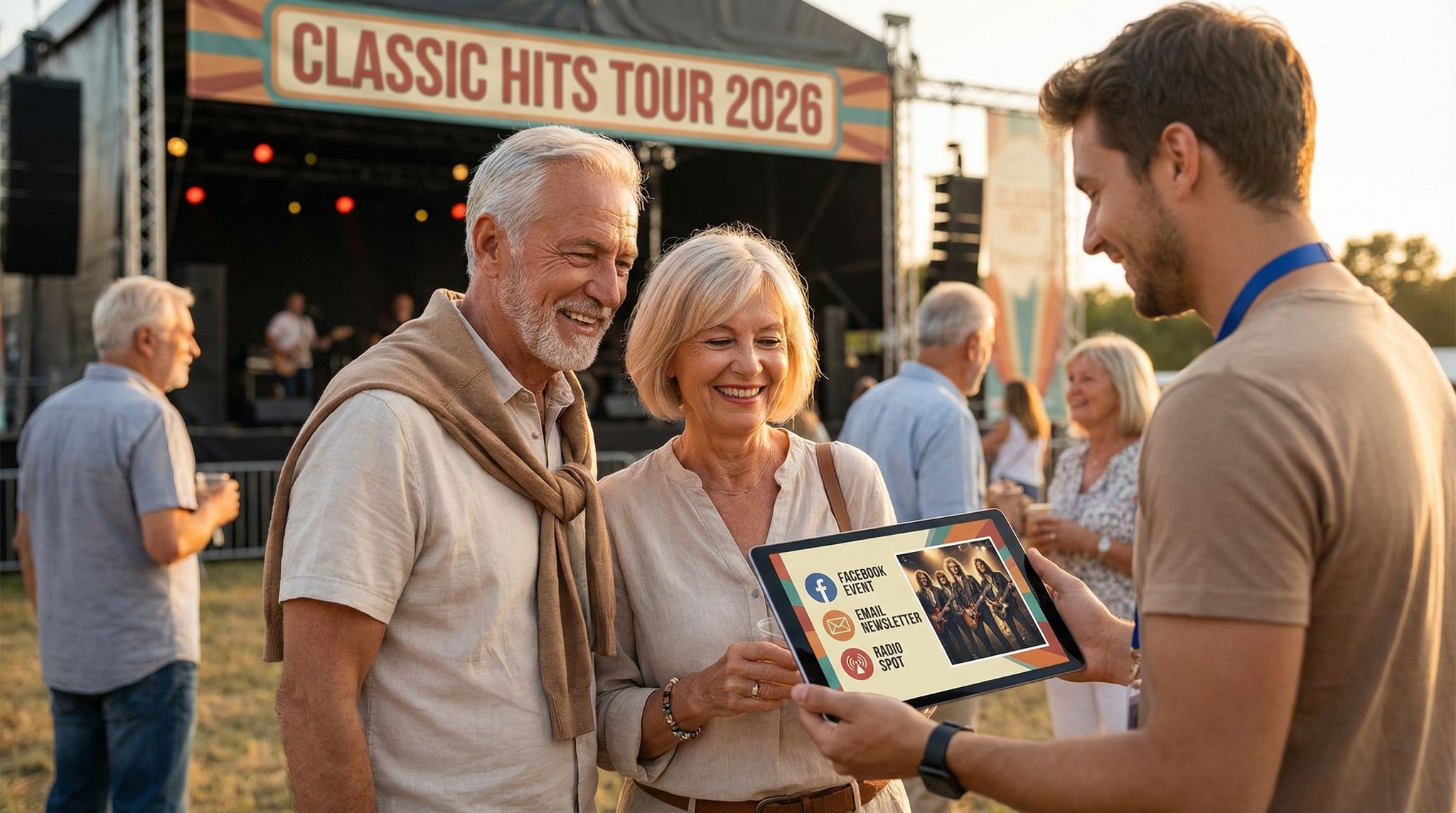
While boomers might not be doing viral TikTok dances, they are active on certain digital platforms. Facebook is by far the dominant social network for older audiences – over 70% of baby boomers use Facebook regularly making it a primary social channel, making it an ideal channel to reach them with event news. Many in their 50s, 60s and beyond use Facebook to stay in touch with family and old friends. They join Facebook Groups (e.g. a “Classic Rock Fan Club” or local community groups) and follow pages related to their interests, including event pages. Promoted posts and Facebook Events can perform especially well for reaching 50+ users, given the platform’s mature user base. YouTube is another underrated channel for seniors – instructional videos, music clips from past eras, and news content draw in older viewers. Promoting an event with a short video or pre-roll ad on YouTube (e.g. targeting fans of 60s/70s music) can capture boomer attention in a format they enjoy. Email also falls under “digital platform,” and it remains a powerhouse for older audiences. Boomers were early adopters of email and still check their inbox daily – often with a sense of trust in well-crafted email newsletters. A professionally written email invitation or newsletter can engage seniors more deeply than a fleeting social post. Just be sure to avoid spam pitfalls – ensuring strong email deliverability practices will keep your event announcements out of their junk folder. Finally, Google Search plays a huge role in how older consumers discover events. In a recent survey, Google was the most-used app for 76% of boomers – even ahead of Facebook as shown in app usage statistics. Unlike many younger people who might learn about a concert via TikTok or Instagram trends, older fans often actively search for events (“Andrea Bocelli concert near me” or “food festival this weekend”). This means your SEO matters. Make sure your event website, Ticket Fairy listing, and any press releases are optimized to rank for the keywords boomers might search. Think straightforward: artists’ names, “live in [City]”, dates, and phrases like “family-friendly festival” or “classic hits tour” that align with older fans’ interests. In short, meet boomers on the digital platforms they use: Facebook, email, YouTube, and search engines – rather than chasing them on Snapchat or Gen-Z apps they’re unlikely to frequent.
Community & Offline Channels
For many seniors, community-oriented channels are just as important as mass media. Think offline word-of-mouth and local networks. Older demographics often rely on recommendations from friends, community bulletin boards, or their existing memberships in clubs and organizations. Community centers, churches, senior citizen clubs, and hobby groups (like classic car clubs, gardening societies, Alumni associations, etc.) are powerful avenues to spread event news. Savvy promoters forge relationships with these networks – for example, providing posters or brochure stands at senior centers and libraries, or arranging group ticket packages with a local retirement community. Grassroots outreach, such as posting flyers at local diners, libraries, golf courses, and places boomers frequent, can capture attention where digital ads might be missed. Many boomers also subscribe to city newsletters, parks & recreation guides, or listen to community radio hours. By getting your event mentioned in these local outlets – a write-up in the town paper, a spot on an AM talk show, or an announcement in a community bulletin – you tap into the trusted information sources for older residents. Importantly, older audiences highly value in-person info sessions and customer service touchpoints. Hosting a booth at a community fair or sponsoring a local senior activity (like a morning walking group or a charity bingo night) can be a low-cost way to engage directly. Some event marketers even organize “Senior preview” meetups – for example, a museum hosting a seniors-only preview day for an exhibit, or a festival inviting older residents to a pre-event coffee chat with organizers. These intimate offline interactions build credibility and excitement in a way no Facebook ad can replicate. The bottom line: integrate into the offline community fabric. By being visible and accessible in seniors’ everyday world, you earn the kind of word-of-mouth that no amount of ad spend can buy.
Turn Fans Into Your Marketing Team
Ticket Fairy's built-in referral rewards system incentivizes attendees to share your event, delivering 15-25% sales boosts and 30x ROI vs paid ads.
Crafting Messaging That Resonates: Trust, Comfort & Nostalgia
Building Trust and Credibility
When marketing to boomers and seniors, trust is the ultimate currency. This generation grew up with slick advertising and has seen every marketing trick in the book – they can spot a gimmick a mile away. To win them over, your messaging must exude honesty, transparency, and reliability. First and foremost, address safety and security concerns head-on. In the post-2020 era, many older attendees remain cautious about health and crowd safety. Prominently communicate the measures in place: medical staff on-site, spacious seating, enhanced venue ventilation, security protocols, etc. (Our guide on marketing event safety to build attendee trust details how highlighting safety can actually boost sales.) For example, emphasizing “accessible venues with ample sanitation and security” in ads or emails can reassure a 65-year-old that they’ll be in good hands at your event. Transparency in pricing and policies is another trust signal. Avoid bait-and-switch tactics or excessive fine print. Older buyers are especially sensitive to feeling “scammed” by hidden fees – making it vital to show all costs upfront. Some venues have begun embracing transparent ticket pricing to eliminate junk fees, a move that resonates strongly with older fans who remember when a $50 ticket cost exactly $50. Likewise, clearly state refund policies or contingency plans (e.g. rain or shine, rescheduling) so they feel secure in their purchase. Credibility cues like testimonials and reviews carry a lot of weight, too. Featuring quotes from past attendees – especially if they are peers in the same age group – can be incredibly persuasive. A line like “I hadn’t been to a festival in years, but XYZ Fest made me feel comfortable and young again!” from a 62-year-old attendee will speak volumes to a hesitant prospect. Social proof builds trust, so incorporate fan testimonials and buzz in your promotion (on your website, emails, and social content). Finally, professionalism and consistency in your messaging strengthen credibility. Use a respectful, clear tone – avoid teen slang or overhyped lingo that might feel off-putting. Provide accurate, detailed information (event times, parking, what to bring, etc.) because experienced attendees will notice if details are sloppy. When boomers feel that you’re a trustworthy organizer who values their attendance, they’re far more likely to hit that “Buy Tickets” button.
Emphasizing Comfort and Ease
A winning value proposition for older audiences can be summed up in two words: comfort and ease. Boomers and seniors will enthusiastically attend events that make them feel taken care of. In your marketing, highlight the practical features that make the experience comfortable. Does the venue have seating areas or bleachers? Mention that! Many older fans worry about standing for long periods; simply noting “plenty of seating available” or “seated sections” in your event description can remove a major barrier. Promote any VIP or upgraded options that provide extra comfort, such as lounge areas, air-conditioned tents, or premium seating with better views. Older concert-goers often splurge on VIP if it includes seating or shorter lines, as seen with Desert Trip’s audience happily paying for comfort upgrades, as noted in coverage of the event. Also emphasize convenience: parking and accessibility in particular. If your event offers on-site parking or shuttle service, underscore that benefit (e.g. “free parking just steps from the entrance” is a strong selling point to someone who can’t walk long distances easily). If there are senior or ADA accommodations – wheelchair access, golf cart shuttles, dedicated viewing areas – make sure your promotional materials clearly communicate this inclusive design. Boomers appreciate well-organized logistics, so even mentioning “easy, hassle-free check-in” or “plenty of restrooms and break areas” can differentiate your event. Another angle is ease of ticket purchase and support. Provide a frictionless buying process – large, legible text on your ticketing page, simple navigation, and multiple ways to buy. Many older folks are comfortable online, but some prefer alternatives. Consider adding a note like “Need help? Call our ticket hotline at 1-800-XXX” to capture those who’d rather purchase by phone or have questions. Responsive pre-sale customer service is crucial: a quick, friendly answer to a question can be the difference between an unsure boomer and a satisfied ticket-buyer. (Indeed, fast pre-sale support that turns questions into sales is a recommended best practice for this reason.) In short, bake comfort messaging into your campaign. Show visuals of happy older attendees relaxing at the event. Use copy that stresses ease: “stress-free day out,” “enjoy at your own pace,” “everything handled for you.” Let them know they won’t have to struggle or feel out of place – and you’ll remove the biggest objections seniors have to attending large events.
Nostalgia and Emotional Appeal
If there’s one thing that can instantly light up the eyes of a baby boomer, it’s nostalgia. Tapping into fond memories and “the good old days” is a time-tested strategy for engaging older audiences. After all, events are not just about what’s happening now – they’re about reliving cherished moments. Craft your marketing content to evoke positive memories. For a music event, that might mean highlighting songs or artists from the era when your target audience came of age. We’ve seen 70s and 80s reunion tours thrive on this approach: promotional videos and radio ads play the classic hits, instantly transporting listeners back to their youth. The messaging should invite them to “relive the magic” or “experience the soundtrack of your younger years – live once again.” One example is the Let’s Rock retro festival series in the UK, which explicitly brands itself as “the UK’s most iconic 80s festival” and features lineups of legendary 1980s chart-toppers. Its 2022 Liverpool edition boasted acts like Billy Ocean, Belinda Carlisle, and The Human League – artists who “project a lot of the audience back to their teenage years of the 1980s” according to festival reviews. By leveraging nostalgic branding and artists, Let’s Rock has expanded to multiple cities and draws tens of thousands of attendees (many in their 50s and 60s) annually. Even for non-music events, nostalgia works wonders. A classic car show can market itself as “a trip down memory lane” for those who remember the ‘60s muscle car era. A food festival might include a “throwback pricing” day with items at 1970s prices to generate buzz and local news coverage. Visual marketing materials should align with this emotional appeal: use retro-themed graphics, vintage photos, or references to historical milestones (“celebrating 50 years of Woodstock’s spirit” etc.) to create an instant connection. Storytelling is powerful here – share stories of past editions of your event or famous acts that have history. Many boomers also respond to messaging around family and legacy – for instance, positioning an event as a chance to bring the grandkids and share the music you love with the next generation. Nostalgia marketing must be done authentically; it works because it triggers genuine emotions. When done right, it gives older fans not just an event to attend, but an experience that feels deeply personal and meaningful. That emotional resonance is what transforms a casual interest into a must-buy ticket.
Event organizers can also take cues from adjacent industries that excel at demographic targeting. For instance, successful wine advertising campaigns often rely heavily on storytelling to bridge different age groups and demographics. In 2026, a food and beverage festival might weave a narrative about the heritage of local vineyards or the generational craft of winemaking. This kind of rich, narrative-driven advertising to boomers and seniors elevates the perceived value of the event, turning a simple tasting into a meaningful cultural experience.
Additionally, while older demographics appreciate detailed information, they are still subject to modern digital fatigue. When designing digital ads, promoters must craft attention-grabbing slogans for a short attention span American audience in 2026. Keep your initial hooks concise and impactful—such as “Relive the Magic. Reserve Your Seat Today.”—before leading them to a landing page with the comprehensive details they need to make a confident purchase.
Choosing the Right Marketing Channels
Facebook & Social Media: Where Seniors Socialize
When targeting ages 50+, Facebook is your MVP social channel. This platform has become the digital home base for many boomers and seniors – a place to catch up with friends, follow interests, and yes, discover events. To leverage Facebook effectively, create content optimized for how older adults use it. Many engage through Facebook Groups and shared posts rather than trending hashtags. Thus, a good approach is to post in community groups (with permission) related to your event’s theme. For example, if you’re promoting a jazz festival, engage with local “Jazz Appreciation Society” or “Over-50s Social Club” Facebook groups by sharing event announcements or behind-the-scenes content. Facebook’s advertising tools also allow granular targeting for older demographics. You can run ads targeted to users aged 50-65+ in your geographic area who have interests in relevant topics (e.g. “classic rock,” “wine tasting,” “ballroom dancing,” depending on your event). When crafting these ads, use clear, easy-to-read visuals and fonts – avoid tiny text or chaotic collages. A photo of an older couple enjoying a similar event can be very effective, as seniors will picture themselves in the scene. One pro tip: emphasize the Facebook Event page. Older users are quite familiar with Facebook Events and often trust information there more than random web ads. Encourage people to mark “Interested” or “Going” on your Facebook Event; this not only serves as a reminder for them, but also shows their friends (generating gentle peer awareness). Outside of Facebook, YouTube and Instagram also have pockets of older users. On YouTube, consider targeting ads or organic content towards how-to or nostalgia content that older viewers watch (for instance, an interview with an artist they love, or a short documentary clip about the event topic). Instagram skews younger, but interestingly many boomers do lurk on Instagram, often to see family photos. If you use Instagram, keep the content simple and visually clear – older eyes may not catch tiny details on a phone screen. TikTok and Snapchat are generally not worth significant spend for reaching 60-year-olds, but don’t completely discount newer platforms; occasionally a clever nostalgia-themed TikTok (like a compilation of ’70s dance moves at your disco event) can catch viral wind across generations, including grandkids showing their grandparents. Overall, prioritize Facebook and possibly YouTube, keep social content accessible and shareable, and let fans do the rest by sharing with their own networks. Social media can indeed reach older audiences, but it works best when combined with the personal touch and trust factors we’ve discussed.
Grow Your Social Following With Every Sale
Require social media follows, shares, or playlist adds to unlock presale access or special pricing. Turn every ticket purchase into audience growth.
Effective social media optimization for baby boomer outreach requires a deliberate shift in content design. Promoters should focus on high-contrast visuals, legible typography in graphics, and slower-paced video edits that allow the message to sink in. When you optimize your social feeds to connect with the 50+ audience, you reduce friction, making it easier for them to read event details, click through to your ticketing page, and share the experience with their network.
Email Newsletters & Personal Outreach
Email is a workhorse channel for marketing to older attendees. While younger folks might ignore email in favor of DMs, many boomers treat their inbox as the primary way to get updates from organizations. The key is to respect their inbox and provide value. Build a dedicated segment of your email list for older subscribers if possible – for instance, through signup checkboxes or past ticket purchase data (your ticketing CRM can help identify which customers are in the 50+ age range). Then you can tailor content that speaks directly to them. An effective strategy is creating a “VIP Insider Newsletter” for your event that frames subscribers as special insiders. In this newsletter, share content like artist spotlights focusing on legacy acts, sneak peeks of amenities (e.g. “look at our comfortable new seating area!”), and practical tips (parking maps, what to bring, etc.). Older readers love informative content. Don’t shy away from longer copy if it’s genuinely useful; a detailed event FAQ or a heartfelt letter from the organizer about what makes this event special can engage them more than a terse flashy email. However, structure is important – use clear headings, larger font options, and bullet points so they can easily scan. One pro move: segment further by interest or behavior. For example, if some of your older subscribers clicked on a link about VIP packages, send a follow-up email highlighting “premium comfort experiences” at the event. If others bought early-bird tickets, email them a “thank you – here’s what to expect” with inside info. Automation and segmentation tools (available in many platforms and integrated with Ticket Fairy’s event CRM features, for instance) allow you to customize messaging without manual effort. Additionally, consider a direct personal outreach layer for high-value older patrons. For a conference or high-end event, a personal email (or even a phone call) to long-time attendees who are older can go a long way: “Hi Jane, we noticed you’ve come every year – we’d love to see you again and have a special senior discount code for you as thanks.” This kind of white-glove approach fosters incredible loyalty. Finally, since deliverability is crucial, maintain clean lists and use authentication protocols so your emails land in inboxes, not spam. A well-crafted email program not only sells tickets but also builds a relationship, turning older attendees into repeat customers who eagerly await your emails year after year.
Grow Your Events
Leverage referral marketing, social sharing incentives, and audience insights to sell more tickets.
Radio Spots and Local Press
When aiming for boomers & seniors, “airwave marketing” is often worth its weight in gold. Well-targeted radio advertising, for instance, can yield excellent results for events that appeal to older demographics. The strategy here is to identify the radio stations/formats that skew older in your market. Classic rock, oldies (50s/60s music), classic hits from the 70s/80s, jazz and classical stations, and talk radio programs tend to have higher 50+ listenership. A 30- or 60-second radio spot timed during peak hours (morning drive, midday, or evening shows) can reach tens of thousands of potential attendees. The messaging should include the key facts (event name, date, location) with a clear call-to-action – e.g. “Tickets available now at TicketFairy.com or call 1-800-XXX”. Many older listeners will appreciate hearing a phone number option alongside a web URL. It’s also smart to add a line about any senior discount or special perk (“Seniors 65+ get 10% off!”) to motivate action. If possible, have the ad voiced by a familiar radio personality or in a voice tone that resonates with the target age group (authoritative yet warm). Beyond ads, earned media on local radio and TV can be powerful. Talk shows or community segments often welcome interesting event organizers for quick interviews. A promoter of a nostalgia tour, for instance, might get a 5-minute morning show feature to chat about the upcoming concert – effectively a free promo reaching thousands. The same goes for local TV news spots, community cable channels, or public radio cultural programs. Prepare a human-interest angle: maybe a story about a 70-year-old fan planning to attend, or how the event is reviving music from the city’s past, etc., to pitch to journalists. Newspapers and magazines remain relevant too. Many cities have a senior-focused publication or the main newspaper prints a special “50+” section periodically; placing your event ad or story there is directly hitting your target. Press releases sent to local news desks (TV, radio, print) should emphasize what makes the event noteworthy for the community or older residents specifically. For example: “Local Big Band Festival Expects Record Turnout of Seniors – Area Retirement Communities Arranging Buses” is a headline that might catch a local editor’s eye. In summary, leverage legacy media channels where older audiences are already engaged. A mix of paid ads and PR in radio/TV/print not only boosts awareness among boomers, it also adds an aura of legitimacy to your event (if they hear about it on their favorite radio show, it must be worth checking out!).
To maximize these broadcasts, promoters must define clear airwave marketing strategy goals for 2026. Rather than just buying generic airtime, your objectives should include tracking specific call-in promo codes, measuring spikes in website traffic during drive-time slots, and securing a set number of earned media interviews. Establishing these targets ensures your radio and local TV investments directly correlate with measurable ticket sales.
Direct Mail and Print Collateral
In 2026, getting a physical invitation or flyer in the mail is increasingly novel – which makes direct mail a high-impact tactic for older recipients. While younger generations might immediately toss junk mail, many seniors still check and read postal mail diligently. A beautifully designed postcard or brochure about your event can grab their attention in a way that a fleeting digital ad might not. Consider creating a targeted mailing campaign for neighborhoods or demographics with a high proportion of older adults. For instance, if there are specific ZIP codes known for 55+ communities or senior housing in your area, a mail drop there could yield great results. The design should feature large, easy-to-read text and appealing imagery (e.g. smiling attendees, or the headline performer). Include a clear call-to-action such as a phone number to call for tickets, alongside a website – giving options for both phone and online response. Personalization helps: using the recipient’s name in the greeting or tailoring the content to their interest (“As a fan of classic country music, you won’t want to miss…”) can increase engagement. According to industry insights, savvy promoters are finding direct mail effective again because it cuts through the clutter of online marketing with a tangible touchpoint.
Beyond mail, think print collateral in places seniors encounter. Flyers and posters at community centers, coffee shops, libraries, VFW halls, grocery stores, and on community bulletin boards can steadily build awareness. Unlike a fast-scrolling online ad, a poster in a senior center can linger in view for weeks, reinforcing your event in people’s minds. Also, if your event justifies it, printed brochures or booklets can be great handouts at partner venues (like a local theater handing out your concert flyer to their older season subscribers). One successful tactic some event marketers use is a “letter from the director” format mailer – essentially a letter-style invitation on nice stationery, personally inviting the recipient to the event, possibly even with a promo code or early-bird offer. This personable approach can make the reader feel valued and spoken to directly, which is refreshing in an age of impersonal digital blasts. Finally, ensure any print materials include all essential info (what, when, where, pricing) and next steps (how to get tickets). Older readers will appreciate a “tear-off” detail or a fridge-friendly design, something they can save as a reminder. Marrying print tactics with your digital efforts (for example, mailing a discount code that they then redeem online, allowing you to track it) blends the best of both worlds and maximizes reach among boomers who engage across both mediums.
Built-In Email Marketing for Events
Send targeted campaigns, automated purchase confirmations, and post-event follow-ups directly from your ticketing dashboard.
Comparison of Key Channels for Older Audience Marketing
| Marketing Channel | Reach & Usage (Older Audiences) | Strengths for 50+ Segment | Considerations |
|---|---|---|---|
| Facebook & Social Media | ~71% of Boomers use Facebook according to eMarketer data; YouTube popular for how-to & nostalgia content. |
Great for community building and sharing; Visual nostalgia content performs well. |
Use larger text/clear images; Target via interests (classic music, etc.); Less effective on youth-centric platforms. |
| Email Newsletters | High daily email use; many boomers treat email like news. | Allows detailed info & direct call-to-action; Can personalize and segment (e.g. senior discounts). |
Avoid spammy formatting; Ensure mobile-friendly (many use tablets); Monitor deliverability closely. |
| Radio Advertising | 56% of 55+ audio time is AM/FM radio based on listening habits; AM talk and classic hits stations popular. |
Wide local reach & high trust in familiar voices; Good for driving urgency (e.g. “tickets on sale now!”). |
Needs repetition (run multiple spots); Include phone contact option for non-internet buyers. |
| Print & Direct Mail | Seniors more likely to read mail & local papers; Community bulletin boards are widely seen. |
Tangible and memorable; Targets specific locales or groups (e.g. retirement communities); Less competition in mailbox than inbox. |
Printing/mailing costs can add up; Lead time needed for design, print, distribution; Track response via unique codes or URLs. |
(Sources: Edison Research, MarketingProfs, Statista; internal campaign data)
Community Outreach and Partnerships
Partnering with Senior Communities & Groups
One of the most effective ways to reach older audiences is through the organizations and communities they already belong to. Rather than marketing to individuals one by one, savvy promoters form partnerships that let them market through trusted groups. Start by identifying the key senior communities in your area. This might include retirement communities and 55+ living complexes, seniors’ activity centers, and even active adult communities in suburbs. Many of these communities have coordinators who plan outings or events for their residents – an excellent entry point for collaboration. For example, if you’re promoting a weekday matinee concert or a theater show, reach out to local retirement homes with a group ticket offer (like “Buy 10, get 2 free for your group”). It’s a win-win: they can offer a fun excursion to their residents, and you get a busload of attendees with one partnership. Some festivals have successfully arranged shuttles from senior communities directly to the venue, eliminating transportation worries for older attendees. In marketing materials, highlight these partnerships: e.g. “Residents of Sunny Acres Retirement Community – ask your activities director about our special package!” – this not only nudges those residents but also signals to others that the event is explicitly welcoming to seniors.
Beyond residential communities, look at senior social clubs and associations. There are countless groups where boomers gather: Rotary clubs, Lions & Elks lodges, Red Hat Society chapters, AARP local chapters, church senior ministries, veterans associations (American Legion, VFW), and hobby clubs (bird-watching, bridge, knitting, etc.). Research which of these exist in your market and reach out with tailored proposals. For instance, a local AARP chapter might allow a brief presentation or flyer distribution at their next meeting if your event is relevant (and perhaps in exchange for a small discount for members). A dance club for adults might co-host a “swing dance night” at your event. Always approach with mutual benefit in mind: what’s in it for their members? Perhaps early access to tickets, reserved seating section for the group, or even a shout-out from stage (“welcome to the XYZ Club members joining us tonight!”). These gestures make the partnership feel exclusive and valued. Word-of-mouth spreads quickly in tight-knit groups – if one bridge club member had a great time at your event because they came as a group, she’ll tell her friends in the next town over. Overall, forging ties with senior communities turns them into your event ambassadors. It’s the community marketing equivalent of bulk sales: cultivating one partnership could yield dozens (or hundreds) of attendees and ongoing goodwill in the older adult network.
Leveraging Local Businesses & Media that Boomers Trust
Another avenue is to team up with the businesses and media outlets that already have older adults’ attention. Consider sponsorship or cross-promotion with local businesses that cater to a mature clientele. Examples: travel agencies that organize group tours for 50+ customers, insurance companies or financial planners (many advertise to seniors and might sponsor arts events to reach them), health and wellness brands (a local audiologist, eyewear store, or physical therapy clinic might love to sponsor a “Senior Appreciation Concert”). These businesses can help promote your event through their own customer mailing lists or in-store signage, giving you access to a pre-qualified audience. It’s important that any co-marketing feels authentic; choose partners whose brand and values align with your event. For instance, if you’re organizing a classical music festival, partnering with the local classic radio station or a high-end restaurant (perhaps offering a “dinner + show” package) targets the right crowd.
Local media partnerships can be especially fruitful. Many areas have niche publications like a “Senior Times” newspaper or a regional magazine that skews older in readership. Negotiate a media sponsorship deal: they provide advertising space or run feature articles about your event, and you acknowledge them as an official media partner. This often comes at reduced cost and lends credibility, since readers see the media outlet endorsing or supporting the event. We’ve also seen creative approaches like ticket giveaways on a senior radio show – the radio host quizzes listeners on 1960s trivia and gives free event tickets to callers, for example. This drums up excitement among exactly the people you want and leverages the trust they have in that radio program. Another idea: involve local influencers who resonate with older audiences – not “Instagram influencers” per se, but community figures like a well-known retired news anchor, a beloved radio DJ from back in the day, or even a well-respected music teacher or historian. If they genuinely enjoy your event’s theme, having them endorse it (through a quote, a social media post, or showing up to host a portion of the event) can lend an authentic stamp of approval that boomers pay attention to. In summary, think about where seniors already spend their money and attention locally – then extend a hand to those entities. By aligning your event with the businesses and media seniors trust, you effectively borrow trust to amplify your reach.
Free Tool: Split Tickets for Max Gross
Given capacity and a target price, the optimizer proposes Early Bird / GA / VIP allocations and prices — with projected gross at 100%, 80% and 60% sell-through.
Word-of-Mouth & Referral Programs for the 50+
Never underestimate the power of word-of-mouth among older attendees. This demographic is less swayed by “influencer culture” and more by personal recommendations from friends, family, or peers. Many event marketers have noticed that once a group of boomers decides to attend, they often bring along more friends the next time – it can snowball into an entire social circle becoming loyal attendees annually. To encourage this, make it easy (and rewarding) for them to refer others. Simple tactics work: for instance, include a line in your email or mailer like “Share the fun: invite your friends!” with perhaps an incentive such as “Refer a friend and you each get a free drink coupon” or a small discount. With a platform like Ticket Fairy, you can even implement a built-in referral tracking program – each ticket buyer gets a unique referral link to share, and if others buy through it, the referrer earns rewards (merch, upgrades, even cash back). Interestingly, referral programs aren’t just for tech-savvy kids; older fans will participate if it’s straightforward. Many will simply call up a friend to recommend the event – so ensure when that friend goes to buy tickets, there’s an easy way to credit the referral (even just a field “who referred you?” can work). Our data shows referral initiatives can boost overall sales by 15-25% by turning fans into ambassadors, with especially high ROI in tight-knit communities where people talk often.
Another approach is organizing “bring-a-friend” promotions or group discounts tailor-made for older groups. For example, a special “Golden Ticket Bundle – admit 4 seniors for the price of 3” encourages group outings. Many boomers prefer attending events with friends or spouses rather than solo, so incentivizing group attendance directly drives word-of-mouth. You can also host contests where fans share a nostalgic story or a photo from “back in the day” related to your event theme, and give tickets to winners plus their friends. These kinds of campaigns naturally encourage them to talk about your event. And don’t forget family: a lot of event discovery for seniors now happens through their children or grandchildren sharing on social media or via email. You might target middle-aged adults (Gen X who are often the kids of boomers) with messaging like “Treat your parents to a night of music they’ll love – tickets on sale now.” That way the word-of-mouth can work inter-generationally. In all cases, make sharing simple. Provide pre-written email templates an enthusiastic attendee can forward to their friends, or printable invites they can hand out at their club meeting. When you get older fans excited and give them the tools to spread the word, they become your best marketers, gladly championing the event to everyone they know.
Influencers and Ambassadors That Resonate
Typical influencer marketing – relying on a 22-year-old TikTok star – probably won’t move the needle for older audiences. But that doesn’t mean influencer strategy is off the table. It’s about choosing ambassadors who genuinely influence boomers and seniors. These might be local personalities or celebrities from their generation. For instance, if you can get a shoutout from a classic rock radio DJ or a well-known singer from the era, that can be gold. Some events partner with veteran musicians or actors (even if they aren’t performing at the event) to act as spokespersons. Picture a short Facebook video of a beloved TV actor from the 1970s inviting people to “come join me at the festival – I’ll be there enjoying the music I grew up with!” Such endorsements feel nostalgic and trustworthy. Even having them do a meet-and-greet at the event can draw their fan base out.
On a community level, tap into peer influencers. Identify a few passionate older fans of your event (or your genre) and empower them as ambassadors. For a community theater, this could be a long-time season subscriber in her 60s who is active in local arts circles – give her some promo codes or flyers to share, maybe even a small referral bonus or free tickets for helping promote. For a dance event, maybe a popular dance instructor in town can promote it to all his 50+ students. You might formalize a simple ambassador program where these folks get insider info and swag, and in return they spread the word at the golf club, the community center, their bridge club, etc. This is essentially grassroots influencer marketing. It works because recommendations come from within their social circle or community, which carries a lot of weight. Another tactic: invite local senior bloggers or columnists as VIP guests. Many areas have lifestyle bloggers in their 50s+ or newspaper columnists who write about community events – if they attend and enjoy, they’ll likely write positive reviews or social media posts after. Lastly, consider micro-influencers on platforms seniors use. On Facebook, for example, there are often a few individuals who run popular community pages or nostalgia-themed pages. Collaborating with the admin of a “Growing up in [City] in the 60s” Facebook page (which might have thousands of local boomer followers) to promote your event can reach a concentrated pool of interested seniors. The big picture: find the voices older audiences already listen to, and let those voices tell your story. It lends instant credibility and often achieves far more than broad, unpersonalized ads could.
Programming & Experience Tailoring for Older Attendees
Senior-Friendly Scheduling & Timing
How you schedule your event can significantly influence older attendees’ interest. Late-night showtimes or marathon-length programs might deter someone in their 60s, even if they love the content. Promoters have found success by incorporating senior-friendly scheduling. This could mean earlier start times – for instance, starting a concert at 7:00 PM instead of 9:00 PM, or offering a daytime matinee performance in addition to an evening show. Daytime programming is especially appreciated by retirees who prefer not to drive at night. We see many performing arts venues schedule matinees for theater shows or film screenings specifically to attract older patrons on weekdays. If your event spans multiple days or has multiple sessions, explicitly designate a senior-friendly option (like “Sunday afternoon is Golden Oldies Day – featuring music from the ’60s, with gates opening at 12 noon”). Even festivals are getting creative: some multi-stage music festivals now include a “morning nostalgia” set or dance session, from say 10 AM to noon, targeting older fans with classic tunes before the younger crowd shows up later. Communicate these options clearly in your marketing: e.g. “Don’t like late nights? Join us for the special 3 PM matinee show on Saturday – perfect for those who prefer an earlier outing.” On the flip side, be mindful to schedule older-targeted content at times they’re most likely to attend. Avoid overlapping with typical dinner hours (5-7 PM) or too early in the morning if travel is involved. Also consider the pacing of your schedule. Older audiences might appreciate short intermissions to rest, opportunities to sit and chat, or a less crammed itinerary. If you’re running a conference or multi-session event, build in slightly longer breaks so people can comfortably use restrooms or grab a coffee without rushing. Once you implement these schedule tweaks, promote them as features: “Our festival offers a relaxed pace and earlier programming so you can enjoy more and stress less.” When boomers see that you’ve thoughtfully designed the timing with them in mind, they’re more likely to commit, knowing they won’t be exhausted by the end.
Beyond just timing, consider the actual content of your daytime programming. Curating engaging presentation topics for senior citizens—such as historical deep-dives, wellness workshops, or interactive Q&A sessions with artists—can transform a standard festival into an intellectually stimulating experience. Older adults often seek out events that offer both entertainment and enrichment, making educational panels a strong draw for early-arriving attendees.
Free Tool: When Should You Announce?
Pick your event date and genre — the free planner outputs a recommended announce, presale, on-sale and reminder schedule anchored to how your audience actually buys.
Amenities & Accessibility: Designing a Comfortable Experience
Event experience can be a make-or-break factor for older attendees – no matter how great the content, if the environment is too physically demanding or uncomfortable, they won’t return (and might not attend in the first place if they anticipate issues). So, highlight the amenities and accessibility features you offer, both in planning and in marketing. Start with the basics: ensure your venue is easily navigable with clear signage, ample seating, and accessible facilities (ramps, handrails, ADA-compliant restrooms). If any portion of your audience might use mobility aids (canes, wheelchairs), be explicit in promotions that the event is accessible (“Wheelchair-accessible venue, with seating reserved for those who need it – we’ve got you covered”). If it’s a standing-room concert, consider adding a seated section or a few rows of chairs at the back for seniors – you can label it “Senior/Accessible Seating” and mention limited availability to encourage early arrival or reservation. Another crowd-pleaser is climate control and weather accommodations. Older folks are more sensitive to heat, cold, and rain. For outdoor events, provide shaded areas, misting fans in heat, or heaters in cooler weather, and mention these in your event guide (“Cooling tents and water stations available”). If rain or strong sun is possible, offering free ponchos or sunscreen at info booths is a small touch that signals you care about attendees’ comfort.
Seating and rest areas cannot be over-emphasized. Even at standing festivals, creating a chill-out zone with benches or picnic tables will attract older guests (and truthfully, attendees of all ages appreciate it). If your event is large, maybe operate golf cart shuttles or pedicabs between distant areas and note this service in your map and program. Furthermore, think about sound and sight considerations: older audiences might have some hearing or vision challenges. Ensure that audio quality is top-notch (they will notice muffled sound or too much bass – clarity is key). If you can, include options like hearing assist devices (commonly available at theaters) or simply ensure speakers are appropriately placed so that sound is evenly distributed without being earsplitting in the front. On the visual side, use larger font on all signage, schedules, or name badges. If you have presentations or projected content, bigger text and high-contrast colors help everyone. In your marketing communications, mention these efforts: e.g. “Large-print programs available” or “on-site hearing assistance upon request,” which can tip someone on the fence to feeling welcomed. Remember, comfort = value in the eyes of older customers. They will gladly pay a bit more or choose your event over another if they feel they’ll be comfortable and cared for. By promoting concrete amenities (seating, shade, accessible routes, etc.), you not only reassure them, but also differentiate your event as one that truly values guest experience – something veteran event-goers notice and talk about.
Simplified Ticketing & On-Site Support
For many seniors, the ticket buying process and on-site logistics are potential pain points. Simplifying these and providing support removes barriers that might otherwise keep them home. Let’s start with ticketing: ensure that the online purchase process is as straightforward as possible – minimal steps, clear pricing (no surprise add-ons at checkout), and obvious instructions for how to retrieve tickets. Some older attendees get nervous with digital-only tickets on their phones. While mobile QR codes are convenient, consider also offering print-at-home PDF tickets or even physical ticket pickup options. Explicitly say in your communications, “Prefer a paper ticket? You can print at home or request one at our box office.” If your event allows, having a walk-up box office or phone line for ticket purchases can capture folks who just don’t like online payments. Leverage customer support here: Ticket Fairy’s platform gives organizers full customer data, so you or your team can proactively reach out if needed – for example, calling an incomplete order to assist (sometimes an older buyer might abandon a cart if confused by a step; a quick call can help salvage that sale and impress them with service).
When optimizing the flow for boomers buying tickets online, promoters should audit their checkout process for friction points. The “new senior” is perfectly capable of e-commerce, but they abandon carts quickly if faced with tiny fonts, aggressive countdown timers, or confusing multi-step account creations. Streamlining the digital purchase path ensures you capture these high-value online sales without requiring them to call a box office.
On-site, make the check-in smooth. Long queues are a huge deterrent for older attendees who may not be able to stand for extended periods. Implement separate or expedited entry lines for seniors or those with mobility needs – and advertise this perk: “Express entry for seniors 60+ available at Gate B.” Staff these areas with patient, friendly volunteers who can help scan tickets or answer questions without rushing. It also helps to have a clearly marked Information or Help Desk near the entrance where anyone can ask questions. You’d be surprised how many older guests will use it to verify where things are or what time a certain act is – having that human touchpoint improves their confidence in navigating the event. Training your staff and volunteers on being courteous and attentive to older patrons is key: simple things like offering a hand when climbing a stair, giving clear verbal directions (instead of pointing vaguely), and being ready to assist with carrying items can really stand out. If your event is large, consider a volunteer ambassador program where volunteers roam with “Ask Me” badges to assist folks – something jazz and folk festivals have employed to help older fans in crowds find seating or facilities.
Finally, consider additional services that sweeten the deal: For example, some events have partnered with ride-share or taxi companies to provide discounted rides for seniors (tackling the “how do I get home at night?” concern). Others offer “companion tickets” where if a senior needs a younger companion to assist them, that companion gets a discounted ticket – recognizing that some may need a caregiver or just a friend to feel comfortable going. Think creatively about what might hold an older person back from attending (transportation, lack of someone to go with, fear of tech, etc.) and then find a solution. Even offering an orientation email or video (“Here’s what to expect when you arrive, and how to use your e-ticket”) can alleviate anxieties. By smoothing out the ticketing and entry experience and talking up those efforts, you send a clear message: everyone is welcome, even if you’re not a tech whiz or marathon runner – we’ve got you covered. That message will travel through the senior community and enhance your reputation for being an accessible, inclusive event.
Tailored Pricing & Value Offers
While older audiences generally have more disposable income overall, many are also value-conscious – they want to feel they’re getting their money’s worth (who doesn’t?). Crafting ticket offers and packages that speak to their needs can improve conversion. One approach is offering senior discounts or special pricing tiers, which not only provide value but also make older fans feel appreciated. For instance, setting a “60+ admission” price that’s 10-15% lower, or having a promo code like “SENIOR10” available through senior centers, can be an effective nudge. Not every event can afford to discount across the board, but even a limited promo (say, first 100 senior tickets at a discount) can generate goodwill and urgency in that segment. If you do implement this, be sure to publicize it in channels where seniors will see it (community newsletters, radio ads, direct mail, etc., as discussed). Another tactic is early-bird specials that play into boomers’ tendency to plan ahead. Many experienced event marketers observe that older ticket buyers tend to purchase earlier than younger ones – they like to secure their plans in advance. Rewarding that behavior with cheaper early-bird tickets or even just advertising “Early bird pricing ends soon – don’t wait!” can spur action. It gives the planner personality type (common among boomers) a clear reason to act now rather than later.
On the flip side, some seniors are spontaneous but cost-sensitive. For those on fixed incomes, you might promote weekday or off-peak discounts (if applicable, like a preview night that’s cheaper). Group bundles mentioned earlier also effectively lower the cost per person when they bring friends. Additionally, consider the total value package: older attendees often evaluate an event by the overall experience, not just the ticket. If you can include extras, it enhances their perception of value. For example, a wine tasting event could include a free souvenir glass for senior ticketholders, or a festival might throw in a meal voucher for seniors. These perks can sometimes be sponsored (e.g. a sponsor covers the cost of coffee and you advertise “free coffee for seniors courtesy of X Sponsor”). Such added value disproportionately appeals to those who remember when events came with more hospitality, and it differentiates you in a competitive market. Communication is key – explicitly list what’s included with tickets so they’re aware of the value. Lastly, be transparent about pricing to maintain trust. If dynamic pricing or surge pricing is something your event could do, think twice: those practices often alienate older fans who feel it’s gouging. In fact, many independent events now avoid dynamic pricing altogether to keep fan trust (Ticket Fairy’s platform, for instance, does not use surge pricing, ensuring fans pay the advertised price). Highlight any price guarantees or refund/cancellation flexibility if you offer them; those remove the financial risk concerns that prudent boomers might have. By structuring pricing and promotions with seniors in mind, you make them feel that someone thought about people like me, which is a strong motivator in choosing to attend.
Designing for Older Audience Comfort: Needs & Solutions
| Common Concern for 50+ Attendees | Why It Matters | Event Marketing/Experience Solution |
|---|---|---|
| Late or Lengthy Schedule | Older adults may avoid late-night events or all-day marathons that are tiring. | Schedule earlier shows or matinees; offer seating breaks and intermissions; highlight these senior-friendly time slots in promotions (e.g. “Afternoon show available!”). |
| Physical Comfort & Accessibility | Seniors worry about standing too long, excessive walking, or lack of facilities. | Provide plenty of seating, rest areas, and accessible routes; promote amenities: “chair seating available,” “easy parking & shuttle service,” “ADA accessible venue.” |
| Complex Ticket Purchasing | Some aren’t comfortable with complicated online processes or mobile-only tickets. | Simplify checkout with clear steps; offer phone support or in-person box office options; allow print-at-home tickets or mailed tickets on request; communicate these options clearly (“Need help? Call us!”). |
| Safety & Health Concerns | Higher vulnerability to health risks; safety worries (especially post-pandemic). | Emphasize safety protocols (sanitization, security, first aid presence); ensure venue has good lighting and ventilation; use messaging like “safe, secure environment” to reassure. |
| Value for Money | Many are on fixed incomes or simply budget-conscious, seeking good value. | Offer senior discounts or early-bird deals; include extras (free coffee, souvenir) to enhance value; transparently list what ticket includes; avoid surprise fees. |
| Feeling Out of Place | Fear that event is “only for young people” or they won’t fit in. | Use inclusive messaging and visuals showing older attendees; create designated chill zones; possibly have an official “Senior Day” or ambassador to welcome them; highlight aspects like nostalgia and comfortable atmosphere. |
Case Studies: Events That Won Over Older Fans
“Oldchella” – Desert Trip’s Boomer-Focused Bonanza
One of the most famous examples of successfully courting older music fans is the Desert Trip festival in Indio, California – dubbed “Oldchella” by media. Held in 2016 over two weekends, it featured rock legends the Rolling Stones, Paul McCartney, Bob Dylan, The Who, and more – essentially a dream lineup for 60s and 70s rock enthusiasts. The promoters (who also run Coachella) took a calculated risk focusing on Baby Boomers, and it paid off enormously. They marketed largely through classic rock radio, newspaper features, and targeted online ads reaching fans of those artists. The result? Desert Trip smashed records: with over 150,000 attendees across two weekends, it grossed approximately $160 million in ticket sales. Single-day tickets were priced around $199 and 3-day passes at $399 – hefty sums that older attendees were willing to pay for a once-in-a-lifetime nostalgic experience, according to Chicago Sun-Times reporting. Notably, the festival experience was tailored accordingly: promoters offered premium amenities like $10,000 air-conditioned “glamping” tents, gourmet dining experiences, morning yoga sessions, and plenty of comfortable seating, as detailed in event reviews and market providing luxury amenities. In other words, they created a festival that was Woodstock meets luxury retreat. And it struck a chord: VIP packages ($1,599 and up) sold out quickly as boomers treated the weekend as both a trip down memory lane and a mini-vacation splurge, selling out VIP tiers rapidly. The marketing tapped into nostalgia with taglines like “once in a lifetime” and visuals of the iconic artists in their heyday. Post-event surveys indicated a huge chunk of attendees were age 50+, many of whom hadn’t been to a large festival in decades. Desert Trip proved that if you deliver the artists they love and an experience that’s comfortable (and even indulgent), older music fans will come out in force – and spend big. It’s a case study that resonates for promoters: align everything – lineup, messaging, channels, on-site perks – to your target age group’s tastes, and even a demographic often assumed to prefer staying home can fuel a sell-out success.
Let’s Rock – Retro Festivals Reeling in the 80s Generation
The Let’s Rock festival series in the UK offers a master class in leveraging nostalgia to capture an older audience. These one-day summer festivals, held in multiple cities each year, celebrate 1980s pop and rock music. The target demographic is largely people who were teens or 20-somethings in the ’80s – now in their 50s and 60s. Let’s Rock markets itself unabashedly as a retro party: bright neon designs, iconic ’80s fonts, and messaging like “The UK’s biggest 80s festival.” Their lineups are packed with 80s chart-topping acts – think bands like Human League, Level 42, or singers like Billy Ocean and Belinda Carlisle – artists who “project a lot of the audience back to their teenage years of the 1980s” based on festival coverage. Marketing-wise, Let’s Rock combines modern digital with old-school outreach. They advertise on Facebook, targeting users 45+ with videos of last year’s crowd dancing to 80s hits. They concurrently run ads on local radio stations that play 70s/80s music and partner with those stations for ticket giveaways. In communities, they distribute flyers through record stores and music memorabilia shops. Importantly, they promote the festival as a family-friendly day out – children are welcome (under 12 often free) – which encourages 50-somethings to bring their kids or grandkids along, making it a multi-generational outing. This touches on an insight: many boomers find extra joy in sharing nostalgia with family. The result? Let’s Rock festivals routinely draw 10,000–15,000 attendees per city, many of them repeat attendees year after year in their region. The brand has expanded to over a dozen locations, indicating strong demand. Surveys show a significant portion of the crowd are 40s, 50s, even 60s – a rarity for pop festivals. By giving the 80s generation exactly what they crave (their favorite bands, a safe inclusive vibe, and even era-themed fancy dress encouragement), Let’s Rock turned nostalgia into a thriving franchise. It illustrates how understanding the cultural touchstones of your audience’s youth – and building an event around that – can foster incredible loyalty and word-of-mouth momentum among older fans.
Community Jazz & Arts Festivals – Growing with the Gray Audience
Not every success story is a big-budget blockbuster; many local events have blossomed by consciously engaging the older segment of their community. Community jazz festivals and arts fairs are prime examples. Take the fictitious (but representative) example of the “River City Jazz & Art Fest.” Five years ago, it was a modest two-day city festival struggling to expand attendance. Organizers noticed a lot of residents 50+ loved jazz and blues – genres with traditionally older followings – yet the marketing was mostly on Instagram and youth-oriented media. They pivoted to reach these mature aficionados. The festival formed partnerships with the city’s Jazz Society club and a local senior travel company which began organizing day-trip packages for suburban seniors to attend the fest. They also added a Sunday afternoon “Jazz Legends” stage featuring older, renowned jazz artists to specifically appeal to longtime jazz fans. Marketing appeared in the local newspaper’s events section, on the public radio jazz hour, and via a direct mail brochure sent to past ticket buyers and club members. Within two years, attendance had doubled, with the majority of new growth coming from attendees over 50 (according to ticket surveys). These guests cited the comfortable seating areas and daytime scheduling as factors that encouraged them. Businesses took note: soon an insurance company and a healthcare provider signed on as sponsors, explicitly because the festival was delivering the 50+ audience in significant numbers. This influx of sponsorship further helped the festival keep tickets affordable, a perk which again pleases seniors. Now, River City Jazz & Art Fest is a beloved annual tradition, drawing not only the young music students and families it always did, but also retirees from across the region who come by the busload. This kind of organic growth story demonstrates that even smaller-scale events can “go gray to grow.” By identifying an overlap between their content (say, jazz music) and an under-tapped audience (boomers who love jazz), then adjusting programming and outreach to welcome that audience, local events can significantly boost their turnout and financial sustainability. Crucially, they earned loyalty: older attendees return yearly and often bring new friends, providing a stable, predictable attendance base that every event organizer dreams of.
If you find yourself asking what to do when a cultural activity fails to bring in third-age participants and how to increase responsiveness, the first step is auditing your outreach channels. Often, a cultural event struggles to attract older attendees not because of the programming, but due to a mismatch in promotional platforms. Shifting budget from youth-centric social media toward targeted local print, radio, and direct community partnerships can quickly reverse low turnout and boost engagement among the 50+ demographic.
Conclusion: Embracing the Golden Generation’s Potential
The Payoff of Prioritizing Older Audiences
In 2026 and beyond, event marketers who proactively court Baby Boomers and senior attendees are discovering a rewarding truth: when you make older fans feel valued, they respond with enthusiasm (and purchases). This is a demographic with time to enjoy themselves, significant spending power, and a deep well of passion for the music, arts, and culture that shaped their lives. They are eager to relive great moments and create new memories – as long as promoters meet them halfway with relevant programming and considerate marketing. Yes, tapping the 50+ segment may require stepping outside the usual digital-heavy playbook. You might invest in radio jingles instead of just TikTok videos; you might design print flyers and actually pick up the phone for customer support. It means crafting messages that speak to their values – trust, comfort, nostalgia, community – rather than the latest slang. But the payoff comes in multiple forms. First, you cultivate an immensely loyal fan base. Older attendees, once they find an event they love and trust, tend to become repeat customers and powerful word-of-mouth ambassadors (they’ll tell all their friends at the golf club or book club about the great time they had). Second, you often unlock higher ROI per attendee. Boomers generally have more disposable income for upgrades like VIP passes, merch, food & beverage, and return visits, especially if you’ve tailored offerings to their preferences. We’ve seen how a festival like Desert Trip could command premium pricing because it delivered exactly what boomers wanted, in the way they wanted it. Moreover, as younger audiences become harder and costlier to reach (fragmented across apps, with shorter attention spans), the relatively under-targeted older segment can be a breath of fresh air: they pick up the phone, open their mail, read emails, and show up early to events. In short, they are reachable if you use the right channels and message.
It’s also worth noting that prioritizing older audiences doesn’t mean alienating younger ones – often, the improvements you make for seniors (better seating, clear info, fair pricing) are appreciated by all ages. By aiming for inclusivity across generations, you can broaden your event’s appeal and reputation. And with global demographics shifting older, the importance of this segment will only grow in coming years. The most successful event promoters of the next decade will likely be those who create experiences where grandparents, parents, and kids can all feel welcome together. As you implement the strategies outlined here – from targeted media buys and nostalgic storytelling to comfort-centric on-site design and community partnerships – you’re not just selling a ticket; you’re extending an invitation to a generation that’s ready to have some fun again. Make them feel seen, heard, and appreciated, and watch as your events become the ones that entire families (and friendship circles) put on their calendar every year. Winning over baby boomers and seniors isn’t just a nice-to-have, it can be a game-changer for achieving sell-outs in 2026.
Frequently Asked Questions
What are the most effective marketing channels for reaching baby boomers?
Facebook and email are top digital channels, as over 70% of boomers use Facebook regularly and check email daily. Traditional media remains highly effective, with Americans over 55 spending 56% of their audio time on AM/FM radio. Direct mail and local print advertising also perform well due to high trust and engagement levels among older demographics.
How does nostalgia marketing influence older event audiences?
Nostalgia marketing engages older audiences by evoking positive memories of their youth, often through classic hits or retro themes. Strategies like the “Let’s Rock” festival series use 80s chart-toppers to transport fans back to their teenage years. This emotional connection, combined with vintage visuals, transforms casual interest into ticket sales by promising a chance to relive cherished moments.
Why is accessibility crucial when planning events for seniors?
Accessibility features like ample seating, clear signage, and climate control are critical because older attendees prioritize comfort and ease. Highlighting amenities such as shuttle services, ADA-compliant restrooms, and shaded areas removes physical barriers to attendance. Promoting these features reassures seniors they will be taken care of, directly influencing their decision to purchase tickets.
Do baby boomers use search engines to find local events?
Baby boomers are active digital searchers, with nearly 94% using search engines to research brands and events. Google is the most-used app for 76% of this demographic, surpassing even Facebook. Older fans actively search for specific terms like artist names, tour dates, and “near me” queries, making SEO optimization essential for reaching this audience.
How can event organizers simplify the ticketing process for older attendees?
Organizers can simplify ticketing by offering print-at-home options and maintaining a phone line for support, as some seniors prefer alternatives to mobile-only tickets. Providing a frictionless online interface with large text and clear instructions reduces anxiety. Additionally, offering on-site box office services and expedited entry lines for seniors ensures a smooth, stress-free experience from purchase to arrival.
Are older audiences willing to purchase VIP event packages?
Older audiences, particularly baby boomers holding 70% of US disposable income, are highly willing to spend on premium experiences that offer comfort. Events like Desert Trip saw VIP packages sell out quickly because they included luxury amenities like gourmet dining and seating. This demographic values convenience and quality, often upgrading tickets to ensure a hassle-free, comfortable environment.
What are the best practices for advertising to boomers and seniors in 2026?
Successful advertising to boomers and seniors requires a multi-channel approach that blends traditional media (like radio and direct mail) with targeted digital efforts (such as Facebook and email). Key practices include using clear, legible fonts, transparent pricing, and messaging that emphasizes comfort, safety, and nostalgia. Organizers should also focus on social media optimization for baby boomer outreach by designing easily navigable content with straightforward calls to action.
What are the core principles of marketing to baby boomers and seniors for live events?
The core principles of marketing to baby boomers and seniors involve prioritizing clear communication, emphasizing comfort and accessibility, and utilizing a mix of traditional and digital channels. Event promoters should focus on building trust through transparent pricing and highlighting safety measures, while also leveraging nostalgia and community partnerships to drive ticket sales among older demographics.
What should organizers do if a cultural event fails to attract older attendees?
If your cultural activities are struggling to bring in 50+ participants, start by auditing your outreach channels and accessibility. Often, low responsiveness stems from relying too heavily on youth-centric digital platforms or failing to communicate comfort features. To increase engagement, pivot to trusted community partnerships, utilize direct mail, and ensure your messaging clearly highlights seating, safety, and easy ticketing options.
How can promoters effectively connect with the 50+ audience using traditional media?
To successfully connect with the 50+ audience, organizers should establish clear airwave marketing strategy goals for 2026. This involves moving beyond generic radio buys to targeted placements on classic hits or talk radio stations, tracking specific call-in promo codes, and securing earned media interviews on local morning shows to build authentic community trust.
What are boomers in the context of event marketing demographics?
In event marketing, baby boomers are defined as the demographic cohort born between 1946 and 1964. Understanding what this generation values is essential for promoters, as this group possesses significant disposable income and a strong desire for premium live experiences. Effective advertising to boomers and seniors requires moving away from FOMO-driven youth marketing and instead focusing on comfort, accessibility, and high-quality customer service.
How does the concept of the “new senior” change event marketing?
Marketing to the “new senior” requires promoters to abandon frail or passive stereotypes. Today’s older adults are highly active, travel frequently for entertainment, and seek out premium, dynamic live experiences. Event marketing must reflect this vitality by showcasing engaging, high-quality event footage and emphasizing premium hospitality rather than just accessibility.
What are the best practices for selling boomers tickets online?
To successfully sell boomers tickets online, organizers must optimize the digital checkout experience by removing friction. This includes using high-contrast, legible fonts, minimizing mandatory account creation steps, avoiding aggressive countdown timers, and clearly displaying customer support contact information on the ticketing page.
How does “new senior” marketing differ from traditional approaches for older adults?
Marketing to the “new senior” involves treating older adults as active, experience-driven consumers rather than passive spectators. Instead of focusing solely on accessibility or discounts, this approach highlights premium hospitality, engaging programming, and dynamic social experiences that appeal to their vibrant lifestyles.
What are engaging presentation topics for senior citizens at live events?
Popular presentation topics for senior citizens include historical retrospectives, wellness and longevity workshops, artist Q&A sessions, and interactive storytelling panels. Integrating these educational and culturally rich topics into your event programming provides the intellectual stimulation that many older attendees value.