Introduction
In 2026, event organizers face a fundamental choice when planning ticket sales: reserved seating vs general admission. This decision isn’t just about chairs or standing room – it affects the technology you’ll need, the experience attendees will have, and how smoothly your operations will run. Each approach offers distinct advantages and challenges, and choosing the right seating type for event tickets can make the difference between a sell-out success and a logistical headache. This guide breaks down the tech implications, attendee experience impacts, and operational considerations of each approach, along with real-world examples from venues and festivals. By understanding how factors like event size, venue type, audience expectations, and ticketing software capabilities influence your seating strategy, you can maximize attendee satisfaction and your event’s efficiency in 2026.
Reserved Seating vs General Admission: What’s the Difference?
Reserved (Assigned) Seating means every ticket corresponds to a specific seat or space. Attendees select or are assigned a seat number, often through an interactive venue map during purchase. This structured approach is common in theaters, seated concerts, sports games, and conferences where orderly seating and sightlines are critical. In a reserved seating setup, fans know exactly where they’ll be and can plan accordingly – whether it’s front-row seats or a specific table at a gala.
General Admission (GA), in contrast, means tickets grant entry to a venue or section but not a particular spot. Attendees are typically free to stand or sit wherever they find space, often on a first-come, first-served basis. GA is common for festivals, club shows, standing-room concerts, and other open-floor events where a more free-flowing, “choose your own spot” atmosphere is desired. Instead of seat numbers, GA tickets might designate just a zone or section (like “Floor GA” or “Lawn Area”), if the venue is segmented at all.
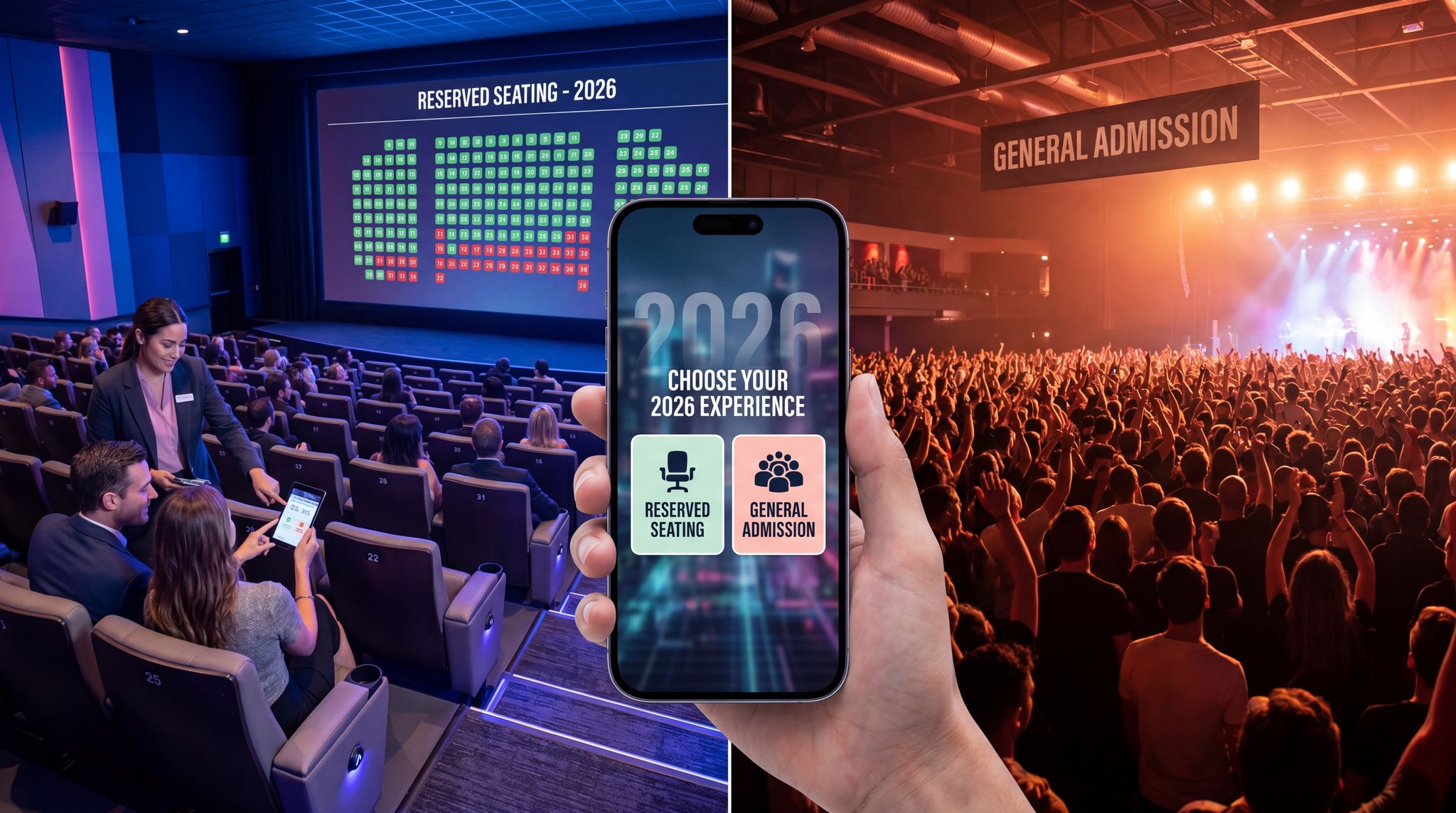
The core difference boils down to structure versus flexibility: assigned seating vs general admission is essentially a choice between a guaranteed spot for each attendee or a more open experience where the crowd self-distributes. This choice has a huge impact on the visitor experience and the overall atmosphere. It also drives many decisions about ticketing technology and on-site logistics, which we’ll explore in depth.
At a Glance: Reserved vs. GA Comparison
To illustrate the key differences, the table below provides a side-by-side comparison of reserved seating and general admission across important factors:
| Factor | Reserved Seating | General Admission |
|---|---|---|
| Common Event Types | Theaters, seated concerts, sports games, conferences, galas. | Festivals, club shows, standing concerts, general sessions. |
| Ticket Purchase | Select specific seat from venue map; often tiered pricing by location. | Buy entry ticket (no seat selection); sometimes separate tiers (e.g. GA vs VIP area). |
| Attendee Arrival | Arrive closer to showtime – seat is guaranteed and held. | Arrive early to claim a good spot; first-come, first-served pressure. |
| Crowd Atmosphere | More structured and personal; attendees stay in assigned places. | High energy and social; attendees can move, mingle, and adjust position. |
| Entry & Access | Ushers direct ticket holders to specific seats; less rushing at doors. | Potential entry rush when doors open; strong access control needed to prevent crowd surges. |
| Revenue Opportunities | Tiered seat pricing (charge premium for best seats); VIP sections with added perks. | Fewer built-in upsell options (mostly GA vs VIP tiers); relies on volume and add-ons for extra revenue. |
| Tech Requirements | Advanced ticketing software with interactive seating charts, seat inventory management, and seat-specific scanning. | Scalable ticketing system to handle high volume, fast entry (turnstiles or scanners), RFID for large crowds. |
| Staffing Needs | Ushers and support to guide seating and handle issues like duplicate seat claims. | More security and crowd management staff to manage queues, floor crowd flow, and safety in open areas. |
This overview highlights that neither option is “better” universally – each has trade-offs. Next, let’s dive into the benefits and drawbacks of reserved seating and general admission, and how they play out in real events.
Reserved Seating: Premium Experience, Higher Complexity
Reserved seating offers an organized and personal experience for attendees but comes with added complexity for organizers. Understanding the pros and cons of reserved seating will help determine if this strategy fits your event.
Benefits of Reserved Seating at Events
- Guaranteed Spots & Comfort: Every attendee knows they have a place waiting. This assurance reduces anxiety about finding a spot. Guests can arrive closer to the event start without worrying about jostling for space. For events where comfort is key (like theater shows or business conferences), assigned seats offer peace of mind.
- Optimized Sightlines: With assigned seating, you can ensure that every seat has an adequate view of the stage or focal point. Venues are designed with sightlines in mind. Attendees who value a clear view – for instance at a Broadway show or a eSports tournament – appreciate knowing exactly what view they’re paying for.
- Personalized Experience: Reserved seating allows for personal touches. Organizers can designate VIP rows, create group seating blocks, or accommodate special requests (e.g. keeping a few seats together for a large party). This segmentation enables VIP premium experiences like front-row packages or tables with bottle service, without requiring entirely separate viewing areas.
- Tiered Pricing & Revenue Uplift: When seats are reserved, you can charge different prices for different sections. Prime seats near the stage can command higher prices, while seats further back can be lower-priced. This price differentiation often increases total revenue. By monetizing the best viewing areas (which a one-price GA model can’t do directly), events capture extra value. For example, many sports and concert venues offer “platinum” seats at 2x or 3x the standard ticket price, knowing some fans will pay a premium for proximity.
- Early Sales Urgency: The benefits of reserved seating include motivating earlier purchases – fans know the best seats might sell out first. This creates urgency to buy tickets sooner rather than later. Organizers can better forecast attendance and cash flow when more tickets sell in advance. (In contrast, GA events often see more last-minute sales, which can be nerve-wracking for planners.)
- Data and Analytics: Every ticket corresponds to a specific seat, giving organizers granular data. You can analyze which sections sold fastest or which price tiers underperformed – insights that inform future pricing and seating plans. It’s easier to identify patterns (e.g. if balcony seats often remain empty) and adjust your strategy or venue layout over time.
- Accessibility Accommodations: With a seating chart, it’s straightforward to designate wheelchair-accessible seats, companion seats, or easy-access rows for attendees with disabilities. You ensure these spots are held and properly equipped with no obstructions and good sightlines. This level of planning is harder to guarantee in free-for-all environments. An assigned setup lets you integrate accessible seating throughout the venue so that disabled patrons can sit with the crowd, not isolated off to the side of the venue.
Challenges of Reserved Seating
- Higher Complexity & Setup: Managing seat assignments requires additional planning and coordination for event organizers. You’ll need to create or obtain a detailed venue seating map in your ticketing system, ensure it’s accurate, and possibly coordinate holds (for VIPs, sponsors, or technical needs). Any seating software must be set up correctly to prevent double-booking seats. This upfront work is more intensive than simply selling GA tickets.
- Ticketing Software Requirements: Not all ticketing platforms handle reserved seating well. To do it right, you need event ticketing software for reserved seating that supports interactive seat selection, real-time seat availability updates, and easy modifications. The purchase process must be seamless – if selecting seats online is frustrating or slow, it can deter potential buyers. Modern platforms (for example, an advanced event ticketing platform with seat map functionality) make this smoother, but organizers should ensure their technology is up to the task.
- Less Flexibility for Attendees: While many enjoy knowing their seat, some attendees might feel locked in. If a group of friends didn’t book together, they may end up sitting apart – which can diminish the social aspect of attending as a group. Unlike GA where friends can just meet and stand together, reserved seating requires planning to sit together. This can be a drawback for highly social events.
- Changes and Customer Service: With identified seats, requests like “Can I move to a better seat?” or “Our group grew from 4 to 6 people, can we rearrange to sit together?” become common. Staff must be ready to handle seating change requests, upgrades, or issues like someone finding their seat occupied. On event day, ushers might need to resolve disputes if someone sits in the wrong place (deliberately or accidentally). These scenarios don’t exist with free-roaming GA tickets.
- Empty Seat Optics: If parts of the venue don’t sell out, empty seats are very visible with reserved seating. Blocks of empty chairs can dampen the mood. At least with GA, attendees tend to cluster and fill gaps, making an event appear full even if not every ticket sold. For this reason, some promoters will drape or close off unsold sections in a reserved seating venue to maintain atmosphere.
- Potential for Resale/Scalping Issues: Specific seat tickets (especially front-row or premium seats) are prime targets for scalpers on secondary markets. If your event is high-demand, brokers may buy out great seats to resell at a markup. Popular concerts with reserved seating have faced extreme scalping and even skyrockets face values through controversial dynamic pricing. (We’ll discuss later how to counter this with tech like anti-scalping measures.) The point is, reserved seating tickets need strong fraud prevention and possibly identity verification to ensure they stay in the hands of genuine fans.
- Inflexible Capacity: With reserved seating, capacity is typically fixed by the seat count. You can’t really oversell or adjust capacity on the fly. For instance, if 500 seats exist, you sell 500 max. GA events sometimes have more flexibility to adjust space or layout (within safety limits) to accommodate extra attendees or to reconfigure areas. If a reserved-seating show is in high demand, you can’t just “add more chairs” without regulatory approval and re-mapping – whereas a GA venue might add an extra standing row or open a minor extension area if needed.
Despite these challenges, reserved seating remains the go-to choice for many event types where experience and comfort justify the complexity. A classical concert or awards ceremony would hardly be GA – the expectation is a designated seat. Organizers just need to be prepared with the right tools and team to manage the intricacies.
Real-World Example: Most movie theaters worldwide shifted to fully reserved seating over the past decade, reflecting consumer preference for picking seats in advance. This has virtually eliminated the old practice of arriving an hour early to claim good spots. Similarly, major concert tours in arenas frequently use reserved seating for stands and sometimes even for the floor. Taylor Swift’s 2024 “Eras Tour,” for instance, sold all tickets as assigned seats in stadiums – fans knew their exact seat locations months ahead. On the flip side, some general admission devotees in the fan community missed the tradition of camping out early for the front row, but the sheer scale of demand made assigned seating the only viable option. These examples show that as events grow, reserved seating can impose order and fairness (everyone gets a seat) at the cost of a bit of spontaneity.
General Admission: Energized Atmosphere, Flexible Logistics
General admission ticketing offers flexibility and a communal vibe, but demands careful planning to ensure safety and satisfaction. Let’s examine the pros and cons of GA events and how to make this approach successful.
Smooth Entry With Mobile Check-In
Scan tickets and manage entry with our mobile check-in app. Supports photo ID verification, real-time capacity tracking, and multi-gate coordination.
Benefits of General Admission
- Flexible, Social Experience: GA gives attendees freedom to choose where to stand or sit upon arrival. Friends can easily stick together even if they bought tickets at different times. Attendees can move around during the event – for example, drifting closer to the stage for a favorite song and then heading to the back to relax. This flexibility creates a dynamic, festival-like atmosphere where movement and mingling are part of the fun.
- High-Energy Atmosphere: With no seats between them, GA crowds often have a higher energy level. People standing shoulder-to-shoulder can generate an electric crowd synergy – think of a mosh pit at a rock gig or fans dancing freely at a EDM festival. The lack of fixed seating can make the event feel more like a shared, immersive experience rather than a series of individual spectators. Certain types of shows (punk rock, DJ raves) thrive on the unrestrained vibe that only a GA floor can provide.
- Simpler Ticketing Logistics: Selling GA tickets is straightforward – you’re typically selling a quantity of entries without worrying about mapping each to a seat number. This can make on-sale setup faster and less technically intensive. Organizers don’t need to upload seating charts or manage seat inventory. Entry management can also be simpler in terms of scanning – any valid ticket allows entry through any gate, with no need to direct people to specific doors based on seat location. Overall, fewer ticketholder questions like “I can’t find my seat” means staff can focus on other critical event tasks.
- Capacity Flexibility: GA areas can sometimes accommodate slight adjustments in capacity. For instance, if an event is selling out quickly and the venue has space, organizers might increase the ticket allotment by a small percentage (staying within fire code limits, of course). Or they can condense one area to allow more room for another (e.g. shrink a VIP area to increase GA standing room). While safety is paramount, GA has some fluidity – you’re not as rigidly locked to a seat count. This can be useful if you experience higher demand than expected and need to release a few extra tickets or if you want to reconfigure space on event day.
- Encourages Early Arrival & Ancillary Sales: Because attendees want a good spot, GA events often see fans lining up hours early. While long lines can be a challenge to manage, early arrival isn’t always negative – those fans are on-site and potentially spending on concessions or merchandise once doors open. At festivals, early queueing builds buzz and a sense of community. And when doors open, the rush to secure spots means many attendees will explore the venue after they stake their claim – again driving them toward food, drinks, or merch booths in a way that seated patrons (who come right at showtime and head straight to their seat) might not.
- Easier Blending of Sections: GA areas can be combined with other ticket types more fluidly. For example, a festival might have General Admission plus a “VIP viewing area” that is still first-come within that zone, just less crowded. Or a concert might offer Premium GA tickets that let fans enter earlier or access a pit area, while general GA stands behind a barrier. These are ways to add tiers without creating a fully separate reserved seating section, maintaining the all-together vibe for the main audience but still monetizing extra perks. (We’ll talk more about hybrid models later.)
Challenges of General Admission
- Uncertainty for Attendees: Not everyone loves the first-come, first-served approach. Some attendees – especially more casual fans or older audiences – feel anxious about not having an assigned spot. They may worry about having to stand for long periods or ending up stuck at the back. This uncertainty can deter people who aren’t prepared to compete for space. For any event where comfort and predictability are selling points (e.g. a formal conference, a classical music show), GA can be a tough sell.
- Potential Entry Rush & Queuing Issues: GA events often face a big rush when doors open as everyone races to secure the best viewing spots. If not managed carefully, this can lead to disorganized queues or even dangerous surges. Major festivals and concerts have well-documented cases where poorly managed GA entry resulted in injuries – for example, lack of crowd control at entry gates. A historically significant example: in 1979, 11 fans died in a crush trying to rush unassigned seats at a Cincinnati arena concert. More recently, in 2021, Houston’s Astroworld festival saw a tragic crowd surge in a standing-room area with no seat boundaries. These incidents underscore that safety planning is paramount for GA events. Organizers must have robust queuing systems, plenty of trained security staff, staggered entry methods, and emergency protocols to prevent chaos.
- Crowd Management During the Event: Without seats, crowds can shift and swell, which poses unique challenges. People may push forward toward the stage, causing pressure at barricades. Interior crowd flow (like moving to bathrooms or food stalls) can be difficult when the audience is tightly packed. You might need buffer zones or barriers to break up large crowds into sections – a technique used at large festivals to prevent dangerous density. Continuous monitoring is required: experienced crowd managers or even real-time tech (like overhead cameras or RFID data to spot crush risks) might be employed to spot and alleviate potential crush risks. In essence, GA requires constant vigilance; it’s a more fluid environment than a seated one.
- Lower Early Commitment (Sales Pattern): GA tickets are all equal, so there’s less fear of “missing a good seat” to drive early purchases. Fans might procrastinate on buying, assuming tickets will be available until closer to the event. It can be harder for organizers to instill urgency. Many GA events see a sales spike right before the event, which complicates planning (staffing, facilities) due to late surges in attendance. To counter this, promoters must be proactive with marketing – limited-time price tiers (like Early Bird discounts) or incentives such as referral programs can encourage advance buying. (For example, boost early GA sales by 15 to 25 percent by turning fans into active event ambassadors.) Without such tactics, you might find a GA event has sluggish early sales and a nerve-wracking last-minute rush.
- Revenue Limitations per Head: Unlike reserved seating where you can charge extra for VIP seats or suites, GA typically means one price for all in that section. Yes, you can have VIP or early-entry tickets as separate categories – but within the main GA, everyone pays roughly the same. This limits your ability to extract higher revenue from those willing to pay more for a better experience. Some tours solve this by adding a separate VIP area or meet-and-greet packages, but the core GA ticket remains one price. If maximizing income per attendee is a goal, GA can leave money on the table compared to a fully tiered reserved plan. The flip side is GA feels more egalitarian – which might actually boost volume of sales due to a lower average price, depending on the event and audience price sensitivity.
- No Guaranteed View or Comfort: In GA, attendees might end up in less desirable spots (way in the back, or stuck behind a very tall person!). Shorter attendees or those who arrive late simply won’t have as good a view. Also, there’s usually more standing and less personal space – a drawback for anyone who isn’t prepared for a potentially long period on their feet or in a crowded environment. This can affect attendee satisfaction, especially for events longer in duration. Organizers must consider offering amenities like occasional seating in back areas, relief zones, or at least communicate clearly that it’s standing-room so attendees can make an informed decision.
- Accessibility Challenges: While GA crowds self-distribute, organizers have to make provisions for disabled attendees amidst a standing crowd. Frequently, this means creating a reserved accessible viewing platform or section for wheelchair users and others who can’t stand for long. It’s somewhat paradoxical – even at GA festivals, you end up with at least one reserved section (for accessibility). Many large GA events do this: for example, big music festivals often have an elevated viewing platform off to the side for ADA access. It works, but it requires staffing and planning. And if not handled well, accessible patrons may feel isolated. Efforts should be made to allow companions and ensure the disabled section has an equitable experience (some events now allow wheelchair users to be in various GA spots with a clear sightline, using minor raised platforms so they aren’t all relegated to the far back of the venue, ensuring equity in the live event experience). In short, GA requires thoughtful accommodations to be inclusive.
Even with these challenges, general admission is often the lifeblood of high-energy events – festivals, club nights, certain concerts – where the crowd experience is as important as the performance on stage. The key for organizers is to harness the excitement of GA while mitigating the risks through smart planning and technology. We’ll next explore how technology and operations differ for GA vs reserved setups, and how to decide which approach aligns with your specific event.
Real-World Example: The iconic outdoor festival Glastonbury (UK) is a general admission event – 200,000 attendees with not a seat in sight (other than in tent arenas, where seating is still unassigned). Fans accept they’ll be standing or sitting on the grass, and many even camp for days. The result is a legendary communal atmosphere. In contrast, Wimbledon (UK’s famous tennis championship) uses fully reserved seating for its main courts – spectators have assigned seats, leading to a polite, orderly viewing experience (aside from the rush for unreserved lawn spots to watch on the big screen!). Each event’s nature dictates the approach: a rowdy music festival embraces GA to let the crowd move and dance, while a sports or performing arts event uses reserved seating to ensure fairness and comfort for all. Many events mix approaches: large arenas often have GA standing room on the floor with reserved seating in the stands, combining energy below with structure above. For instance, a recent tour at London’s O2 Arena featured a standing GA floor (5,000 capacity) with 15,000 reserved seats in the bowl – fans could choose their preferred experience.
Ready to Sell Tickets?
Create professional event pages with built-in payment processing, marketing tools, and real-time analytics.
Technology & Operations: Ticketing Tools and On-Site Logistics
Whether you opt for reserved seating or general admission, the decision heavily influences your event’s technology needs and operational plan. Ticketing platforms, entry systems, and crowd management protocols must align with the seating strategy. Below we outline the key tech implications and operational considerations for each approach, and where they converge.
Ticketing Software & Seating Management
Choosing the right ticketing platform is critical. Not all systems are equally adept at both reserved and GA ticketing. Some older or basic ticketing software might handle a simple GA on-sale well but struggle with creating a complex seat map, or vice versa. In 2026, organizers increasingly favour flexible, API-driven ticketing systems that can handle both reserved and GA ticketing seamlessly – meaning the platform can sell both GA passes and assigned seats in one interface, and integrate with other tools. When evaluating providers, consider:
- Interactive Seat Maps: If you need reserved seating, look for a platform with an easy-to-use seat map interface for buyers. Attendees should be able to pick seats on a visual map on desktop or mobile without frustration. A clunky map that doesn’t load or is hard to navigate will hurt sales and frustrate potential buyers. Modern solutions use responsive design and even 3D views (for arenas) to enhance this experience. Also, ensure the platform supports marking seats as accessible, holds, different price tiers by color-coding, etc.
- Real-Time Inventory & Sync: In reserved seating scenarios, once a seat is sold, it should instantly be unavailable to others. The tech must prevent double bookings and allow rapid adjustments (e.g., if you want to release some held seats to public sale). For high-demand shows, consider if your system can handle choice as well as volume. It’s one thing to process thousands of GA orders at once; it’s another to handle thousands of users simultaneously picking seats without crashing. Industry-leading ticketing platforms have invested in load testing to ensure seat map transactions are smooth during on-sale peaks.
- GA Ticket Sales Scaling: For GA events, the focus is on handling high transaction volumes and possibly queueing systems. If you expect a huge surge (say tens of thousands of fans hitting your site at once for a festival GA ticket drop), your ticketing solution should offer virtual waiting rooms or queue management to avoid overload. Nothing upsets fans more than a website crash at on-sale. Also, consider platforms that allow you to filter bots and enforce purchase limits – both reserved and GA on-sales need anti-bot measures, but bots often target reserved seating events (to grab the best seats) even more intensely. Fan-first ticketing platforms now emphasize transparent, fair access to tickets during high-demand sales by choosing platforms that put fans first.
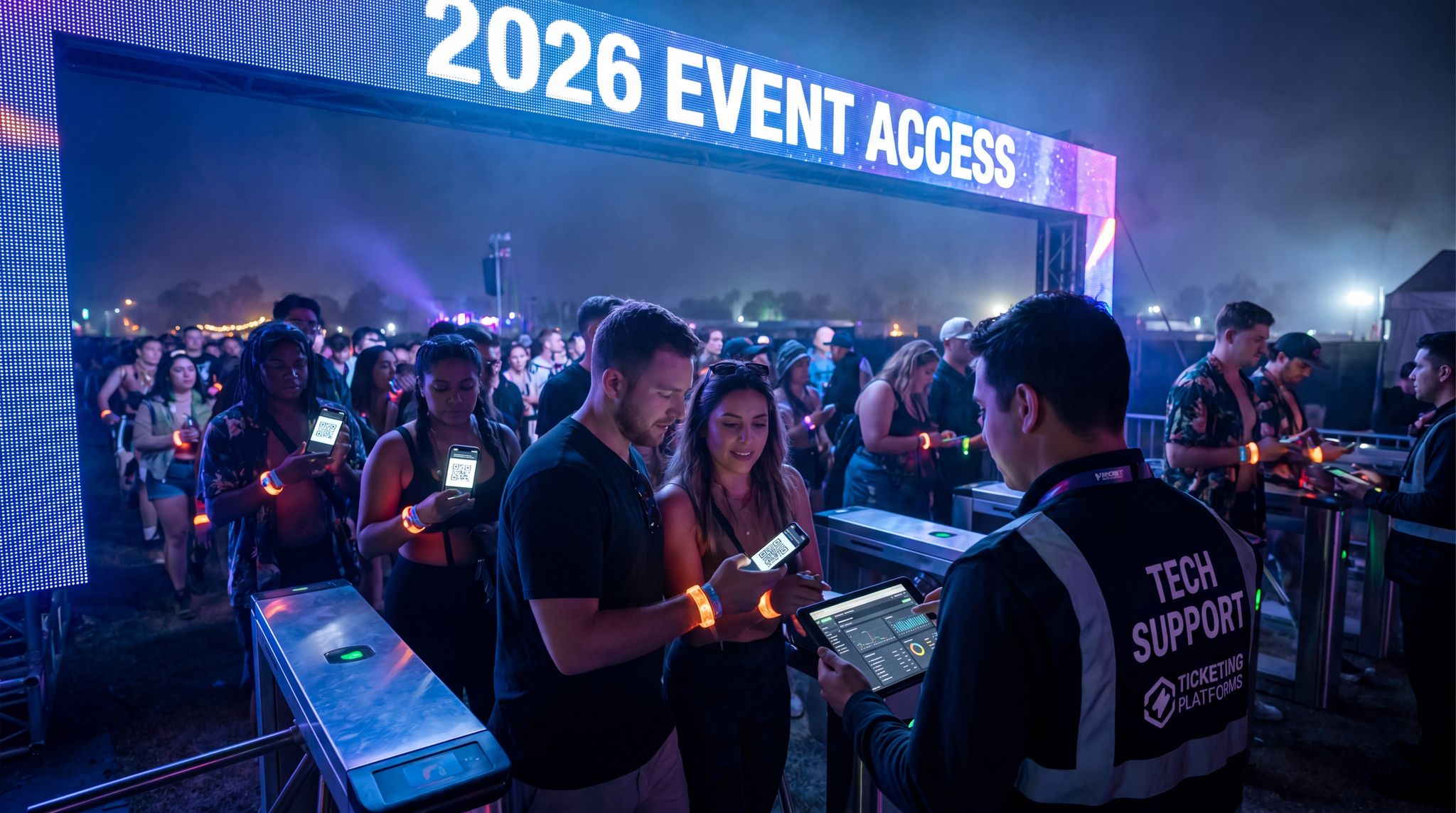
- Onsite Ticket Scanning & Validation: Regardless of seating type, you’ll need reliable entry scanning. However, the requirements differ slightly. In a reserved seating event, scanning mainly ensures one entry per ticket and might direct the attendee to the correct door or section. For GA, scanning is pure access control (often at fewer entry points but for a massive volume in a short time). In 2026 many organizers use a mobile ticket scanning app with offline mode to speed up check-in at venues without perfect connectivity – for example a scanning app that supports offline sync and real-time entry counts is essential at remote festival sites. GA festivals often train dozens or even hundreds of volunteers with smartphone scanners to achieve throughput, whereas a reserved theater might have just a couple of ushers with scanners at doors. Offline capability is critical for outdoor GA events where Wi-Fi/cellular can be overloaded; you don’t want scanning to stop if connection drops. The system should catch duplicate tickets and update counts in real time across gates to prevent any gatecrashing or ticket pass-backs.
- RFID Integration: Many GA-based events (especially large festivals) now deploy RFID wristbands for entry instead of paper or digital tickets. By 2026, nearly every major festival issues RFID-enabled wristbands or passes, because they eliminate fraud and speed up entry by allowing tap-and-go access. If you plan to use RFID for a GA event, ensure your ticketing platform can integrate with an RFID cashless event system or has a partnership with an RFID provider. Reserved seating events are less likely to use RFID entry (since scanning a seated ticket is straightforward and there’s less need for multi-day re-entry), but some hybrid events like multi-day conventions or VIP programs might. RFID shines for multi-entry scenarios (in/out privileges, multiple stages) and when adding cashless payments. For instance, at a multi-day GA festival, an RFID system can both control access to various zones (VIP area, artist backstage, etc.) and serve as a digital wallet for attendees’ food and drink purchases. This can reduce queue times by 60% or more on transactions, which is a boon when tens of thousands of GA attendees are on-site.
- White-Label & Branding: If branding and seamless user experience are important (often for higher-end reserved events like corporate conferences or galas), consider a platform that offers white-label ticketing. This means the ticket purchase process can live on your own website domain with your branding fully front-and-center. It avoids redirecting buyers to a third-party site that might confuse them or add fees unexpectedly. White-label solutions make the process feel like a natural extension of your event, which can build trust – attendees of formal events might expect a polished purchase flow that reflects the event’s brand. GA events can benefit too (everyone likes a smooth, branded checkout), but the impact on conversion is especially noted in scenarios where the audience may not be as ticket-tech savvy or is paying premium prices (they want to feel they’re in good hands).
- Data and CRM: Ensure whichever system you opt for, you retain access to your attendee data. For both GA and reserved, this is gold for marketing and fan engagement. Reserved seating data gives you nuanced info (like “Section A premium seats buyers” who might be VIP segment). GA data is more whole-audience but still critical (for remarketing next year’s festival, for example). Many modern ticketing options, including all-in-one event operating systems, offer integrated CRM, email tools, and analytics dashboards so you can consolidate data without juggling spreadsheets. Data ownership is a big theme in 2026 – organizers are moving away from platforms that silo customer emails or prevent easy data export. Whether your event is GA or seated, make sure you can reach your attendees directly for future promotions.
In summary, align your platform choice with your format. Some systems are purpose-built for reserved seating (like performing arts venue systems with sophisticated seat maps) whereas others shine for massive GA events (handling millions of ticket registrations and RFID). There are also modern platforms (such as Ticket Fairy’s) that are versatile enough to handle both GA festivals and seated shows, with features like anti-scalping resale, referral tracking, and payment plans that work across the board. A 2026 venue ticketing guide recommends choosing a solution aligned to your specific event format and capacity needs – in other words, match the tool to the job. If in doubt, consult a comprehensive event ticketing software comparison to see which platforms support the features you need for each seating style.
Entry, Security & Crowd Control
The day-of-show operations differ significantly between reserved seating and general admission, particularly in how you manage entry and crowd flow:
Free Tool: Split Tickets for Max Gross
Given capacity and a target price, the optimizer proposes Early Bird / GA / VIP allocations and prices — with projected gross at 100%, 80% and 60% sell-through.
- Entry Staggering: At reserved seating events, arrival times tend to be spread out. Since people have seats, there’s no need to come super early for position. Many arrive just before showtime. This can create a peak just before the event starts, but it’s usually manageable with orderly queues. GA events, conversely, often have fans lining up hours early to rush in when gates open. You may need more extensive queuing infrastructure outside: e.g. barriers forming zig-zag lines, staff handing out wristbands or doing security checks long before doors. Some festivals issue timed entry or numbers in advance to reduce overnight camping in lines. Others open the gates far earlier than the show time (e.g. open festival grounds in the morning for an evening headliner) to spread out entry.
- Security Screening: Both event types require bag checks and security screening, but GA events might require stricter screening (pat-downs, metal detectors, etc.) because of the potential for items that could be dangerous in a dense crowd (sharp objects, etc.) or even just because attendees will be in very close quarters. Also, GA shows with passionate fans might need more careful screening to prevent people from sneaking in prohibited items (since they feel less “observed” without ushers around). In reserved seating, people are a bit more stationary and perhaps feel more “watched,” which can actually deter misbehavior slightly – whereas a packed GA floor offers more anonymity.
- Ushers vs. Crowd Managers: In a reserved seating environment, you’ll deploy ushers at section entrances to check tickets and help attendees find seats. These staff are also your eyes on any issues in their sections (spills, disturbances, someone in the wrong seat). In GA, you replace ushers with floor security and crowd managers who roam through the crowd or stand at key points (like front of stage barricades or sound mix areas) to monitor conditions. Their job is to scan for things like overly packed areas, distress (patrons who might be getting crushed or unwell), or altercations. The skillsets overlap but are not identical – a crowd manager in GA might need training in crowd psychology and emergency evacuation procedures, whereas an usher might focus on customer service and seating etiquette.
- Signage and Communication: With reserved seating, signage focuses on directing people to the correct section, row, and seat (e.g. “Sections 101-120 this way”). You’ll have seat numbers clearly marked, often with lighting for row numbers in dark arenas. Communication is about making it easy to find your spot – including printed seat info on the ticket and maps in the venue. For GA, signage instead might indicate zones or amenities (“Main Stage ->”, “Water Refill Station”, “GA Entrance Here”, “ADA Viewing Platform”), since attendees aren’t tied to a spot. Effective wayfinding is crucial at big GA events so people can navigate without bottlenecks. Many events now use mobile apps featuring interactive digital wayfinding maps – for GA this can be a lifeline, helping attendees find less crowded areas or meet up with friends by pin-dropping locations, since there’s no fixed seat to rendezvous at.
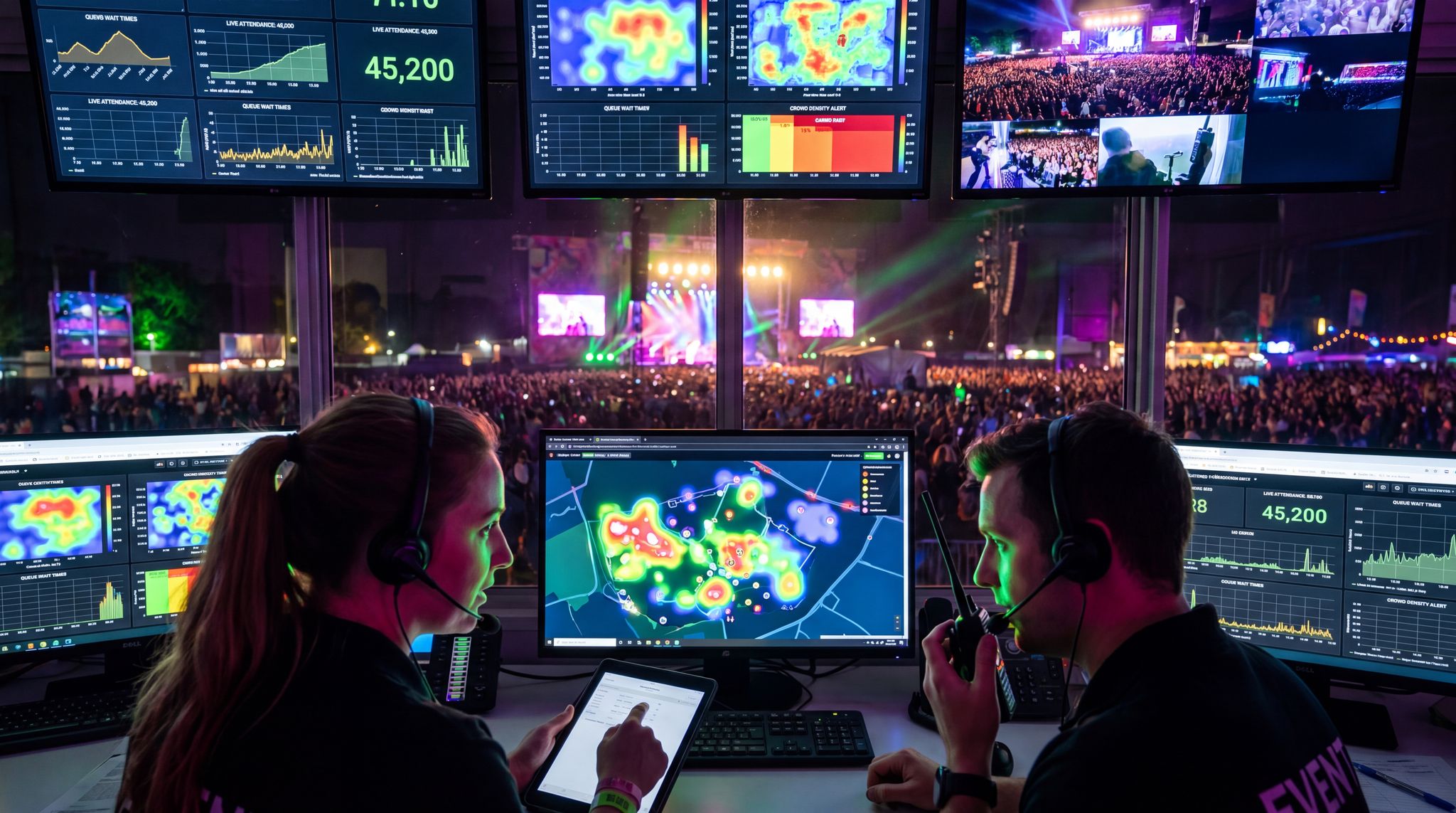
- Emergency Planning: Emergency egress plans differ between seating layouts. A seated venue has fixed aisles and known calculations for how fast it can be evacuated. A GA crowd can potentially exit quickly if outdoors (lots of open space), but in a confined space, a dense GA crowd actually can take longer to evacuate because people funnel through fewer exits from a packed floor. Crowd disaster experts always emphasize proper exit lane widths and having some aisles or pathways in GA sections. Many large GA events create a central divider in the crowd with an aisle, so people can move out more easily. You might not have that flexibility in a small GA club, but you can still plan multiple exit points and have security actively guide people in an evacuation. In 2026, we even see use of IoT sensors and AI to monitor crowd density in real time using IoT sensors – some smart venues adjust entry flows or open extra gates on the fly if they detect crowding, an innovation especially useful for GA events to prevent bottlenecks.
- On-Site Adjustments: One advantage of GA is that if a section is getting too crowded, you can sometimes redirect attendee flow to another area. For example, if the front lawn is jam-packed, staff might temporarily hold the flow and encourage new arrivals to go to a side area. At times, security may pause entry to the main GA floor until earlier arrivals disperse further into the venue. These tactics require coordination – fast communication between ground staff and control center. For reserved seating, such crowd flow control is less needed (since each person’s space is defined), but you might have to adjust on-site if, say, one entry gate gets overwhelmed with a late-arriving crowd – then you’d open additional doors or cross-train staff to scan at other points.
- Facilities & Amenities: With GA, particularly all-standing events, think about attendee comfort differently. People might appreciate chill-out zones or a small seating area at the back to rest (even if it’s just some picnic tables or an open grassy section). Also, hydration and free water become critical – when people stand packed together they can overheat or dehydrate quicker than if seated comfortably. Many festivals provide water stations and misting areas for GA crowds. In a reserved seating scenario, attendees typically have a seat to take a break and are less physically strained, but you still consider amenities like restrooms and concessions – their usage patterns might differ (e.g. an intermission at a theater causes simultaneous restroom rush, whereas GA festival usage is steady throughput). Planning for crowd comfort is crucial: a happy GA crowd will stay energetic (and safe) if you give them ways to take brief breaks and avoid excessive discomfort.
Hybrid Approaches: Combining Reserved and GA
Some events don’t strictly choose one or the other but rather mix both reserved seating and general admission within the same event. A common hybrid model is a venue with a GA floor and reserved seated sections in the stands or balcony. This is seen in many arena concerts and even some festivals that add a limited seated area. The hybrid approach aims to get the “best of both worlds,” but it too needs strategic planning:
- Clearly Define Zones: If you offer both, your ticketing should clearly differentiate them (attendees should know if they bought GA or a reserved seat). There should be physical separation at the venue – e.g. wristbands or checkpoints to ensure GA floor crowds don’t flood into reserved seat areas and vice versa. For example, a concert might have a wristband for floor GA access in addition to the ticket, and ushers at stairwells only allow those with reserved seat tickets into the seated sections.
- Match Audience to Preference: Often, younger or more enthusiastic fans opt for GA for closer access or a pit experience, while families or older attendees might prefer a seat. Offering both can broaden your market. It’s important to price appropriately (GA might actually be more expensive if it’s a coveted pit area, or it might be cheaper if seats are more desirable – it depends on the show). Research your audience segments: for a pop artist, maybe the die-hards want the floor (so you can price GA high as a premium experience), whereas for a laid-back acoustic show, GA floor might be the budget option and many will choose seats.
- Operational Balance: Hybrid means you have to manage both at once. You’ll need ushers for the reserved sections and dedicated crowd managers for the GA part. The front-of-stage barrier with GA behind it and seats beyond can be tricky – ensure you have security at the division points. Also, if the GA section fills up, have a protocol (don’t let GA ticket holders into the seat rows to “overflow” – that’s a recipe for conflict). In worst-case scenarios, you might have to stop GA entry if capacity is reached and hold people until some exit (like a one-in-one-out policy), which needs good communication.
- Preventing Visible Empty Gaps: One risk of hybrid seating is if your reserved seats don’t sell as well as GA (or vice versa), you might have a half-empty area that’s very obvious. For instance, if a festival sells tons of GA tickets but the VIP seated platform is half-empty, GA attendees will notice and may feel resentful seeing open prime seats they can’t use. To avoid this, some events release unsold reserved seats to GA fans at the last minute. A great example is the Toronto International Film Festival (TIFF): they reserve blocks of good seats for VIPs/industry, but shortly before showtime, any that aren’t claimed are given to fans waiting in dedicated rush lines for last-minute entry. This ensures a full house and prevents frustrated fans from staring at empty chairs. It’s a smart policy to maximize atmosphere and goodwill. If you plan a hybrid model, consider a similar approach – make it clear that unfilled VIP or reserved areas may be opened up to general attendees after a cutoff time. Just ensure those fans in GA know to queue for the chance, and that your staff coordinates the release smoothly.
- Premium General Admission: Another twist on hybrid is offering a “premium GA” tier instead of fully reserved VIP. For example, Splendour in the Grass festival in Australia added a “Gold Pass” premium GA option – it wasn’t a reserved seat, but it gave access to a special viewing area and nicer amenities and exclusive viewing areas. This kept the festival mostly GA while still monetizing an upgrade for those who wanted a slightly cushier experience. The key was the perks (exclusive bar, shade, better view) without completely segregating VIPs from the main crowd. This approach can sometimes satisfy both groups: VIP-minded attendees get something extra, but the vibe remains inclusive and no one sees large empty VIP sections since the premium area is used dynamically by Gold Pass holders coming and going throughout the event. Such hybrid thinking might be useful if you’re on the fence – you don’t have to opt for numbered seats to offer an upgrade; you can enhance within a GA context.
- Use Tech to Your Advantage: Hybrid events can benefit from a robust ticketing system that handles multiple ticket types (GA, reserved, VIP, etc.) in one event listing. Awareness of who bought what is crucial. Scanning apps should ideally display ticket type so staff can direct the person accordingly (“GA floor that way, balcony seating upstairs”). If using RFID wristbands, encode access permissions into the wristband so a VIP or reserved seat holder’s wristband lets them into certain zones. Technology is your friend here – it can automate what would otherwise require manual checks. For instance, in an app attendees could see directions to their seat or to their GA section based on the ticket type they purchased.
In short, mixing GA and reserved strategies can be very effective if done thoughtfully – it can increase your potential audience and revenue. Just be deliberate in design: avoid giving one group a vastly superior experience at the cost of the other’s enjoyment. The goal should be enhancing experience options, not creating a class divide that breeds dissatisfaction. Done right, hybrid seating can truly offer “something for everyone.”
Choosing the Right Ticketing Strategy for Your Event
Now that we’ve broken down reserved vs general admission in detail, how should you decide which ticketing strategy is best for your event in 2026? It ultimately comes down to aligning the ticketing format with your event’s unique needs and goals. Here are key factors to consider when choosing the seating type for your event tickets:
- Event Size & Capacity: For massive events (10,000+ attendees) like music festivals or stadium concerts, general admission can simplify crowd movement and maximize capacity (standing crowds take up less space per person than seats). However, these events require top-notch crowd control. For smaller events or venues (under a few thousand), reserved seating might be feasible and can elevate the guest experience. Many mid-sized theaters and concert halls (1,000–3,000 seats) utilize reserved seating because they have fixed infrastructure and it adds a premium feel.
- Venue Layout: The physical venue often dictates the logical choice. If the venue has fixed seating (like a classic concert hall or sports arena with bolted seats), leaning into reserved seating makes sense – you might as well take advantage of the existing seats and numbering. Conversely, if you’re in an open field, a standing-room club, or a multipurpose space, GA is often the default. Some venues offer flexibility (retractable seating or flat floor sections). In those cases, think about the event’s purpose: will attendees want to dance and move (lean GA) or sit and focus on a performance (lean reserved)? Venues that support both formats might even allow you to configure partially – e.g. for a trade show keynote, bring in chairs (assigned or unassigned), but for an after-hours party in the same hall, remove seating for a GA dance floor.
- Audience Expectations & Demographics: Know your attendees. Audience preference is huge. If you’re targetting young music fans who love the mosh pit, they might actually prefer GA – it feels more authentic and exciting. On the other hand, an older, professional, or family-oriented audience likely expects a chair or at least a clearly defined spot. Cultural norms matter too: In some countries or communities, even general admission concerts are seen as less desirable – fans might be used to reserved seats for everything. For instance, K-pop concerts often have a mix but many fans pay extra for seated sections because the culture values that orderly experience. Meanwhile, EDM festivals globally are overwhelmingly GA and the community embraces it. Consider running polls or looking at similar events’ formats to gauge what your audience will respond well to.
- Event Type & Content: The nature of the event is one of the biggest determinants. High-production performances, formal events, and sports lend themselves to assigned seating (people stay put and watch intently). Interactive or high-energy events lean GA (people move around, dance, explore). A classical symphony concert would never be GA for the main seating – the quiet appreciation and formality align with sitting in assigned seats. A multi-stage rock festival, by contrast, must be GA because thousands of people will wander between stages and acts – you couldn’t assign seats for that kind of free-form schedule. If your event features multiple concurrent content (like a convention with breakout sessions), having GA entry allows freedom of movement (attendees choose sessions freely). But if it’s one stage at a time, reserved can work (like a single-track conference where everyone’s watching the keynote together). Match the seating to the style of experience you want to create.
- VIP and Tier Options: Do you plan to offer VIP tickets or special packages? If yes, think about how seating plays into it. VIP can be achieved in both models but differently. In a reserved seating context, VIPs might get the first few rows or a private box. In GA, VIPs might get a dedicated viewing area or early entry. If your monetization strategy relies on VIP upsells, consider which model supports it best. Also, consider whether having a mix of GA and reserved (hybrid) could maximize sales – perhaps GA for general fans and a small reserved VIP section for high spenders or sponsors. Just ensure to execute it fairly (as discussed, avoid large empty VIP areas that irritate general admission attendees with empty spaces).
- Pricing Strategy: Your projected ticket pricing can influence the choice. Reserved seating enables more granular pricing – you can have multiple tiers (balcony vs mezzanine vs orchestra, etc.) and potentially yield more revenue if there’s demand for the best seats. GA usually means fewer price points (maybe just GA and a VIP upgrade). If your event’s financial success hinges on extracting maximum willingness-to-pay, reserved seating offers more levers to pull. On the other hand, GA can be seen as more egalitarian and transparent; one price for all is simple and can appeal to fans’ sense of fairness. Post-pandemic, there’s been blowback from fans over complex pricing schemes and “dynamic pricing” where the cost can surge unpredictably due to dynamic pricing. If you want to keep it simple and fan-friendly, GA with straightforward pricing might help avoid those pitfalls. (Many organizers are moving towards fan-first pricing practices, such as up-front all-in pricing and strict anti-scalping, to maintain trust through fan-first pricing practices and strict anti-scalping measures.) Consider what pricing approach aligns with your event’s brand and the message you want to send to fans.
- Available Technology & Expertise: Be realistic about your team’s capability and the tech resources at hand. Do you have access to a ticketing platform that can elegantly handle reserved seating? Do you have the budget and time to set up a seat map, train staff, and manage the raised complexity? If not, it might be safer to opt for GA, which is simpler to execute. Conversely, if you have a sophisticated system and an experienced staff (or a partner) who has managed seating charts and complex ingress before, you could leverage that to deliver a polished reserved-seat experience even for events that might traditionally be GA. Sometimes the decision is made for practical reasons: a smaller promoter with limited infrastructure might keep it GA to avoid the potential pitfalls of messing up seat allocations. A large experienced organizer might push toward reserved to elevate an event that previously was GA, because they have confidence in execution (and see the revenue upside).
- Attendee Comfort & Safety: While both formats can be run safely with good planning, consider specific safety or comfort issues of your event. In hot climates or multi-hour events, keeping people seated (and thus with personal space and easier access to water breaks) could reduce medical incidents versus a packed GA crowd in the sun. Alternatively, if your event expects a lot of dancing and physical activity, forcing people to remain in seats could create its own safety issues (people might dance in aisles, trip over chairs, etc.). Know your content – if an artist is likely to prompt a mosh pit, GA is expected but you’ll need to fortify safety measures (barriers, medical staff at front). If an event requires focus or note-taking (like a seminar), reserved seating (or at least guaranteed seating) is almost mandatory for comfort and attentiveness.
- Regulatory and Licensing Factors: In some jurisdictions, certain venues or event types have legal requirements on seating. For example, some city councils or licensing authorities might limit standing capacity for safety. In the UK, “standing” at football (soccer) matches was long banned in top divisions after past disasters – only recently have safe-standing sections been trialed with strict controls. If you’re operating in a highly regulated context (like sports or municipal events), check local rules: you may be mandated to have seats or to adhere to festival seating guidelines. Conversely, some venues might not have enough chairs or the load-bearing capacity for seating if they’re historically always GA. Work with local authorities early if you plan to deviate from the norm (e.g., converting a seated venue to GA for a special show might need sign-off from fire marshals or extra security plans, and vice versa).
To illustrate how these factors come together, here’s a brief chart with examples of events and which strategy tends to fit best:
| Event Type | Recommended Ticketing | Rationale |
|---|---|---|
| Large outdoor music festival (multi-stage, 50,000+ attendees) | General Admission (perhaps with VIP areas) | Attendees roam freely between stages; GA fosters a communal festival atmosphere and simplifies movement and scheduling. VIP perks can be added via special zones without assigning seats. |
| Arena concert for a pop/rock artist (15,000–20,000 capacity) | Hybrid – Reserved Seating in stands + GA floor | Common approach: fans who want to dance choose floor GA, those wanting a guaranteed view choose a seat. Balances energy on the floor with comfort in the seats. Maximizes ticket options and revenue tiers. |
| Theater performance or musical (e.g., 1,000–3,000 seat theater) | Reserved Seating only | Audience expects a classic seated experience with an assigned seat. Ensures everyone can see the stage and enjoy the performance without distractions. Critical for formal shows where sightlines and acoustics matter. |
| Multi-day fan convention (expo + panels) – moderate attendance | General Admission (GA badges) with some session seating | Typically, one ticket grants GA entry to the whole con. Individual panels might be first-come seating in rooms, or require separate reservations (not usually assigned seats, but sometimes ticketed for popular panels). GA allows freedom to explore; reserved seating would be impractical across many sessions. |
| Corporate conference summit (500 attendees in a ballroom) | Reserved Seating (or Assigned Tables) | Often name badges or table assignments are given. For a focused single-track conference, assigning tables or seats (especially at meals) adds professionalism and helps networking (“find your name on the table”). It also streamlines logistics for organizers (knowing VIPs are front and center, etc.). |
| Nightclub DJ event (1,000 capacity standing club) | General Admission | Club events thrive on a dance floor vibe. Seating is typically limited to VIP booths. GA tickets for entry, with perhaps table packages sold separately. A reserved seating layout would kill the energy and isn’t expected by attendees. |
| Family show (e.g., Disney on Ice in an arena) | Reserved Seating | Family-oriented events prefer reserved seats so parents and kids know they’ll sit together and have an assigned spot. It reduces stress for groups and ensures little ones aren’t overwhelmed by crowding. |
| Fundraiser Gala or Banquet (dinner event) | Reserved Seating (assigned tables/seats) | For formal dinners, guests usually have assigned tables, if not specific seats, often determined by sponsorship level or group. This arrangement maximizes the attendee experience and donation potential (e.g., VIP donors get the best table location). |
| General admission festival adding a VIP upgrade | Hybrid (GA + some reserved/vip) | The event remains GA for most, but introduces, say, a VIP section with seating or capacity limits. Ensures GA spirit stays intact but offers an upsell. Must handle carefully to avoid optics of empty VIP areas and upset general admission attendees with empty prime spots. |
Of course, there are exceptions and innovative approaches beyond these general patterns. The key is to choose the model that aligns with your event’s DNA and then execute it with excellence. If in doubt, start with the attendee experience you want to create and work backwards – will people enjoy it more if they have free run of the venue, or if they have certainty of a seat and section? Also consider a quick SWOT analysis (Strengths, Weaknesses, Opportunities, Threats) for each option in your specific scenario. Sometimes it helps to imagine the event day in each scenario: walk through the attendee journey as if it’s GA, then as if it’s reserved, and note where things shine or could go wrong.
Last but not least, learn from others. See what peer events or competitors are doing. If similar festivals all stick to GA, there may be good reasons (attendee expectations, logistics) – you might differentiate by adding an innovative twist, but be cautious about completely breaking the mold unless you’re confident it addresses a real pain point. Conversely, if all comparable events use reserved seating and yours doesn’t, ask why – is it an improvement to go GA or will it be seen as a downgrade? Industry reports, case studies, and even reaching out to other organizers can provide insight. In the events community, most people are willing to share war stories about what worked or didn’t when they attempted shifts in seating strategy.
In the end, the reserved seating vs general admission debate in 2026 comes down to a balancing act between attendee satisfaction, operational feasibility, and revenue optimization. Use the technology tools at your disposal – many modern platforms make it easier than ever to implement either approach successfully – and stay attuned to your audience’s feedback. Some organizers even pilot a different seating approach at a smaller event to gauge response before rolling it out to their flagship event. No matter which route you choose, clarity and communication with your attendees are paramount. If you choose GA, communicate what that entails (“standing room only, arrive early for best view, amenities available on-site”). If you choose reserved, ensure ticket buyers know how to select seats and what perks come with different sections.
And remember: you can always adjust for future editions. Many festivals and venues have tweaked their approaches over the years. One year you might try a reserved VIP section; if it doesn’t sell or wasn’t worth the hassle, pivot next time. Or if you kept it GA and saw issues like crowd complaints or too many early queue campers, maybe next event you introduce some reserved elements. The goal is to find the sweet spot where your attendees feel valued and comfortable, and your operations run smoothly as a result.
Frequently Asked Questions
What is the difference between general admission and reserved seating?
Reserved seating assigns every ticket to a specific seat number, guaranteeing a spot for the attendee. General admission grants entry to the venue or a designated section without an assigned spot, operating on a first-come, first-served basis where attendees choose where to stand or sit.
What does general admission mean for a concert?
General admission at a concert means your ticket provides entry to the venue but does not guarantee a specific seat. Fans typically stand or sit in open areas like a floor or lawn, creating a high-energy, flexible atmosphere where the best viewing spots go to those who arrive earliest.
Why do event organizers choose reserved seating?
Organizers choose reserved seating to provide attendees with guaranteed spots, optimized sightlines, and a more comfortable experience. This structured approach allows venues to implement tiered pricing for premium locations, motivates earlier ticket purchases, and provides granular data on section performance to maximize overall event revenue.
How do you manage crowd control for general admission events?
Effective crowd control for general admission requires extensive queuing infrastructure, staggered entry times, and dedicated floor security. Organizers utilize barriers to break up large crowds, deploy trained crowd managers to monitor density, and increasingly use RFID technology or IoT sensors to track real-time crowd flow and prevent dangerous bottlenecks.
Can you have both general admission and reserved seating at the same event?
Venues frequently use a hybrid ticketing model that combines a general admission standing floor with reserved seating in the stands or balconies. This strategy caters to different audience preferences by offering a high-energy pit experience alongside guaranteed, comfortable seats, requiring clear physical separation and specialized ticketing software.
What ticketing software features are needed for reserved seating?
Reserved seating requires advanced ticketing platforms equipped with interactive, mobile-responsive seat maps and real-time inventory synchronization. The software must instantly update availability to prevent double bookings, support tiered pricing by color-coding sections, and handle high transaction volumes without crashing during peak on-sale periods.
Does reserved seating generate more revenue than general admission?
Reserved seating typically offers higher revenue potential per attendee by enabling granular, tiered pricing models. Organizers can charge premium rates for front-row spots, club boxes, or aisle seats, whereas general admission usually relies on a single price point and depends more on volume and ancillary sales.
How do event organizers prevent dangerous crowd surges at general admission shows?
Organizers prevent crowd surges by implementing robust queuing systems, staggered entry methods, and strict access control at the gates. Inside the venue, they utilize buffer zones, physical barricades, and continuous monitoring by trained security staff or overhead cameras to identify and alleviate dangerous crowd pressure before it escalates.
How do you provide accessible seating at a general admission event?
Providing accessibility in a general admission setting involves creating dedicated, reserved viewing platforms or raised sections specifically for wheelchair users and disabled attendees. These designated areas ensure unobstructed sightlines and safe spacing amidst a standing crowd, requiring careful pre-planning and dedicated staff to manage access equitably.
How can organizers encourage early ticket sales for general admission events?
Organizers drive early general admission sales by implementing limited-time price tiers, such as early bird discounts, and utilizing fan referral programs. Because general admission lacks the urgency of securing a specific seat, these proactive marketing incentives are crucial to prevent sluggish advance sales and last-minute purchasing surges.