Introduction
The nightmare scenario for any event promoter: your headline act pulls out at the last minute. Whether it’s a superstar DJ for a 5,000-strong festival or the keynote speaker for an international conference, a sudden headliner cancellation can throw months of planning into chaos. In 2026’s hyper-connected world, news of a cancellation spreads within minutes on social media, and fan frustration can boil over just as quickly. How you respond in the next few hours can make the difference between a salvageable show and a PR disaster. Seasoned event marketers know that with swift, transparent crisis communication and creative re-planning, it’s possible to save the event – protecting both your ticket revenue and your brand’s reputation.
To understand the gravity of this situation, it helps to clarify the headliner meaning in music and live entertainment. A headliner is the main draw—the marquee artist whose name sells the majority of the tickets and anchors the promotional campaign. When an artist embarks on a headline tour, they are the primary focus of the entire run of shows, with support acts serving only to warm up the crowd. Because the core value proposition of the ticket is tied directly to this specific performer, their sudden absence doesn’t just alter the schedule; it fundamentally changes what the attendee purchased.
The stakes are high. Attendees often buy tickets largely to see the headliner, and a late cancellation might trigger refund requests or bad publicity. In one high-profile case, online searches for festival refunds spiked nearly 500% after an A-list act disappointed fans, underscoring how quickly trust can erode. But crises also present an opportunity: handle the situation with professionalism, and you can actually reinforce fan loyalty. This playbook draws on real-world examples of headline artists canceling – from festivals that found last-minute savior acts to those that fumbled communications. We’ll walk through step-by-step strategies to communicate openly with ticket holders, secure a replacement or backup plan, and implement damage-control marketing tactics that keep fans on your side. By the end, you’ll have a practical crisis marketing plan to ensure that even if your star cancels, the show (and the revenue) can still go on.
Rapid Response: Mobilize Your Crisis Team Immediately
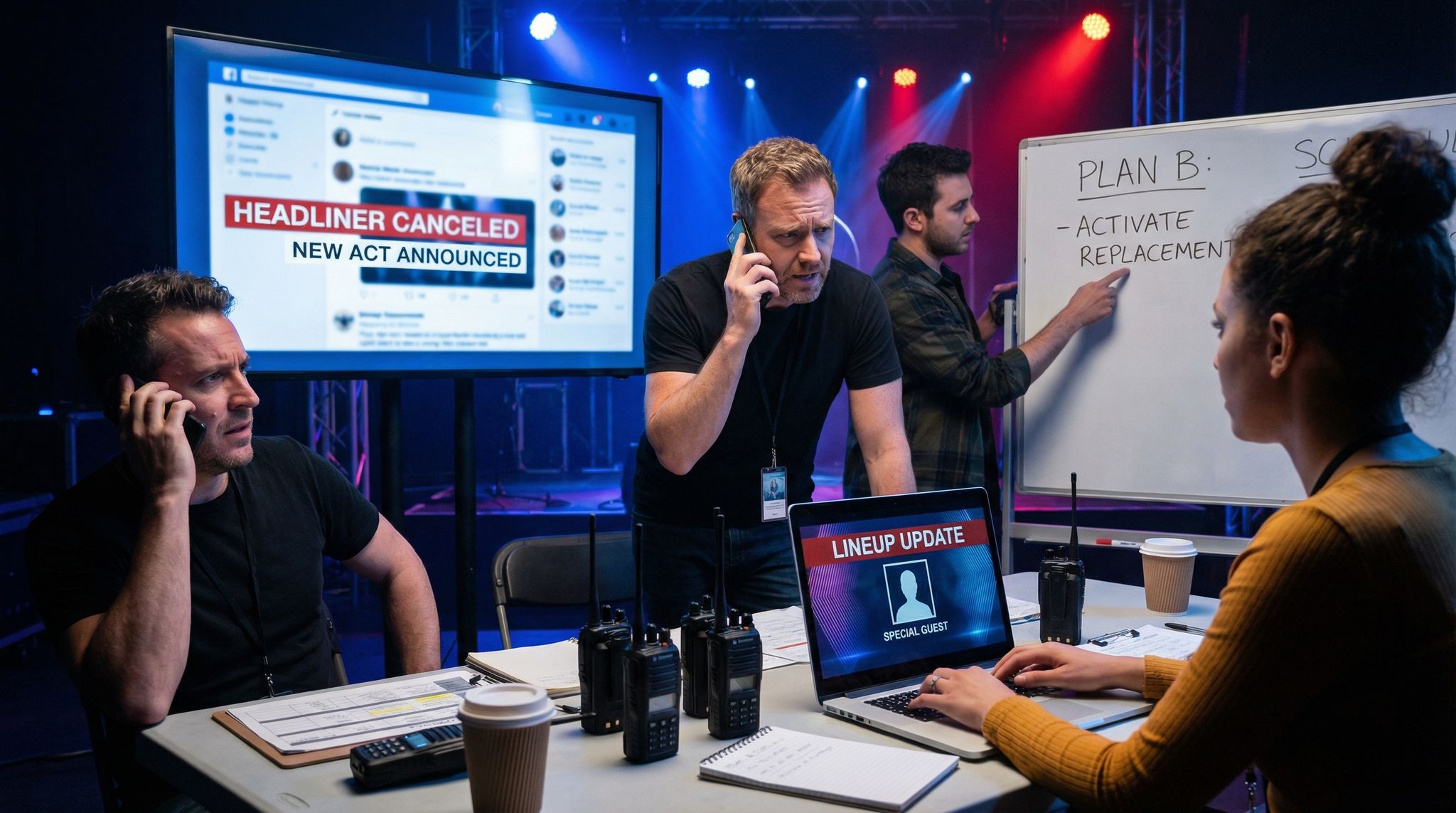
When the dreaded call comes in – your headliner is canceling – every minute counts. The first step is to activate your event’s crisis response plan without delay. Importantly, you must meet your audience where they are to prevent misinformation. Smart event promoters don’t wait to “see what happens”; they immediately rally the key team members and start executing a plan.
Grow Your Social Following With Every Sale
Require social media follows, shares, or playlist adds to unlock presale access or special pricing. Turn every ticket purchase into audience growth.
Confirm the Facts & Situation
Before anything goes public, get absolute clarity on why the headliner canceled and whether there’s any room to save the appearance. Is it a medical emergency, travel issue, weather delay or a contractual dispute? Knowing the exact reason (and whether it’s final) guides your communications. Speak directly with the artist’s management to confirm that the cancellation is definite. In past crises, confusion has made things worse – you don’t want to announce a cancellation if there’s still a slim chance the artist might perform later, and vice versa. Gather any proof or statements (e.g. a doctor’s note for illness, a flight cancellation notice) that explain the situation. These facts will help you craft an honest message for fans. Being transparent also means providing clear reasons rather than vague excuses. If the reason is sensitive (like a personal emergency), discuss with the artist’s team what you can disclose. Transparency is important, but so is respecting privacy – sometimes saying “due to unforeseen medical issues” is appropriate if details can’t be shared.
Activate Your Crisis Communication Team
An organized team response is vital. Hopefully, you’ve prepared a crisis communication plan in advance so you can expect the unexpected and respond quickly. When things go awry, having assigned roles ensures speed. If not, quickly designate the following roles:
– Decision Lead: Usually the event director or senior promoter who has authority to make tough calls (e.g. show goes on with changes, or part of event canceled). This person coordinates all teams.
– Communications Lead: The point person to draft statements and social posts. They’ll craft the messaging we send out through all appropriate channels with speed and accuracy.
– Spokesperson: A public-facing figure (perhaps the Communications Lead or the promoter) who will speak in interviews or live announcements if needed. Consistency is key – one voice to address attendee concerns quickly online. A crucial appointment is the human face of your response.
– Artist Liaison: Someone to stay in contact with the headliner’s team for updates and permission to mention certain details. They might also coordinate any goodwill messages from the artist’s side (for example, the artist posting an apology to fans).
– Operations Lead: A representative (production manager or stage manager) to handle on-site logistics resulting from this change – e.g. adjusting schedules, coordinating a replacement act’s setup.
– Customer Support Lead: If you have a customer service or community manager, assign them to monitor incoming fan questions on social media, email, and at the venue. They’ll need to respond quickly with the info you provide, maintaining a two-way dialogue.
Ready to Sell Tickets?
Create professional event pages with built-in payment processing, marketing tools, and real-time analytics.
With roles assigned, hold a quick huddle (in person or virtual) to align on the plan. In this briefing (which might last just 10-15 minutes), cover the facts, decisions made (is the event continuing with a change? any refunds or not?), and immediate next steps for each role. For example, decide “We are going to replace the headliner with another act if possible, or extend other sets. Communications Lead will draft an announcement for social and email within 30 minutes. Customer support standby to answer queries. Operations check which acts can extend their set.” Having this internal clarity before blasting messages ensures all channels are giving consistent info.
Execute Pre-Planned Templates (If Available)
Crisis mode is no time to write clever prose from scratch. One lifesaver in a crisis is having pre-drafted content. This allows you to state if and when a solution is available. Many veteran promoters keep boilerplate statements on file for scenarios like “artist no-show” so they aren’t staring at a blank page during chaos. For instance, a template might read:
“Important Update: We regret to announce that [Headliner] will not be able to perform as scheduled due to [brief reason]. We share your disappointment, as we know how excited everyone was. But the show will go on – [Replacement plan or next steps]. All other performances will proceed as planned. Thank you for understanding and sticking with us.”
Because you confirmed the facts first, you can fill in those blanks accurately: e.g., “due to a sudden illness” or “due to unexpected travel delays.” Within the first 15-30 minutes of learning about the cancellation, aim to have this initial announcement message drafted. Speed matters – fans will start hearing rumors or posting online as soon as they notice something’s amiss, so you want to get ahead of the story with a factual and calm announcement. An old PR adage holds true: if you don’t inform people, someone else will, potentially with misinformation. Having a ready template will save precious time.
Turn Fans Into Your Marketing Team
Ticket Fairy's built-in referral rewards system incentivizes attendees to share your event, delivering 15-25% sales boosts and 30x ROI vs paid ads.
If you don’t have a template prepared, use a simple structure for your first message: the news, a brief reason (if known), empathy, and a promise of next steps. For example: “We’re sorry to share that tonight’s headliner, DJ Thunder, cannot perform due to flight cancellations. We know this is disappointing – we’re huge fans too. Our team is working on a surprise replacement to keep the party going, and we’ll update you shortly on the new lineup. Thank you for bearing with us!” This shows transparency, remorse, and proactivity, all within a few sentences.
Table: Crisis Response Timeline – First 2 Hours
| Time (Approx) | Action | Description |
|---|---|---|
| T = 0 (Cancellation) | Internal Alert & Team Huddle | Headliner’s cancellation confirmed. Crisis team assembles immediately (in person or via call) to discuss facts and assign roles. |
| T + 15 minutes | Draft Initial Public Statement | Communications Lead prepares a short “holding statement” announcing the cancellation and assuring fans that a solution is in the works. Uses template if available. |
| T + 30 minutes | Announce on Social & App | Post the official announcement on Twitter/X, Instagram, Facebook, etc., and via push notification or SMS through the ticketing platform. Ensure the message is identical across channels. |
| T + 30-45 minutes | Update Ticketing Site & Email | Update your event website with a prominent notice. Send an urgent email to all ticket holders with the announcement and any immediate instructions (e.g. “stand by for replacement info”). |
| T + 1 hour | Press Outreach (if large event) | If it’s a high-profile event likely to draw media attention, send a brief press release or directly inform key media outlets with your official statement to control the narrative. |
| T + 1-2 hours | Secure Replacement / Plan B | Parallel to comms, talent bookers reach out to potential replacement artists or coordinate alternative programming. Aim to have a plan within 2 hours to announce to attendees. |
| T + 2 hours | Second Update to Fans | Provide a follow-up announcement: ideally reveal the replacement or new plan. If still in progress, at least update that you’re working on it and reinforce that the event is continuing (if applicable). |
Transparent Communication with Ticket Holders (and Everyone Else)
Once your internal team is in motion, getting the word out to attendees quickly and clearly is top priority. In a crisis like a headliner cancellation, transparent communication isn’t just the ethical choice – it’s the smartest marketing move. Fans will remember how you made them feel in this moment of disappointment. By communicating promptly, honestly, and empathetically, you can turn anger into understanding. Remember that every communication during a crisis matters.
Grow Your Events
Leverage referral marketing, social sharing incentives, and audience insights to sell more tickets.
Crafting an Honest, Empathetic Announcement
The tone and content of your first public message set the stage. Be clear and factual: state that the headliner “will not perform”, avoiding any vague language that might confuse (don’t say “might not” if it’s definite). Briefly state the reason if you can: e.g., “due to a sudden illness” or “due to unexpected travel visa issues.” Providing a reason, even a broad one, helps fans accept the news – it shows this was out of your control and not a whim. Never lie or spin a false story; if you don’t know the full reason or can’t share details, it’s better to say “due to unforeseen circumstances” than to concoct something. Fans have a nose for dishonesty and nothing destroys trust faster than a misleading excuse.
Equally important is expressing empathy. Acknowledge the fans’ excitement for the headliner and that you share their disappointment. A simple line like “We know many of you were looking forward to [Headliner]’s set – we were too.” shows that you’re not just a faceless organizer, but fellow fans who understand their feelings. If appropriate, include a personal touch: perhaps the headliner themselves has sent a message to fans. For example, when a band cancels due to illness, often the artist will post an apology on their socials – you can reference that: “[Headliner] sends their love and an apology to everyone.” Displaying empathy and regret (without being overly dramatic) goes a long way in diffusing frustration. Never shift blame to fans or anyone in this announcement – even if behind the scenes you’re upset with the artist, your public stance should be professional and compassionate. (A notorious example: a UK festival organizer angrily blamed a singer for canceling and banned her, which sparked public backlash and sympathy for the artist. Don’t let emotions drive your messaging.)
After the apologetic opening, outline what happens next as clearly as possible. Being specific about next steps reduces anxiety. If you’ve secured a replacement or alternative entertainment, announce it now with an upbeat tone (more on replacements in the next section). If you’re still working on a plan, at least confirm that the event isn’t over: “But don’t worry – the rest of the show will go on as planned, and we’re arranging something special to fill [Headliner]’s spot.” Give any instructions attendees need immediately: for instance, “Set times for other acts are unchanged,” or “Keep your wristbands/tickets – they’ll be valid for the rescheduled date” if postponing. If you know some fans will want refunds (more on that later), you can mention “We’ll be emailing all ticket holders about refund options, so stay tuned.” The key is to answer the burning question on everyone’s mind: “What now?” People are remarkably forgiving when you take responsibility and are transparent.
Finally, keep the tone calm, respectful, and positive about the solution. Even as you acknowledge the bummer, you can set a forward-looking tone: “We’re as disappointed as you are, but we’re going to make the best of this and still deliver an amazing night.” Thank the fans for their understanding and patience. A little appreciation at the end of your announcement (“thank you for sticking with us” or “we appreciate your support despite this unexpected change”) reinforces that you value your audience. Many event-goers will respond to that goodwill in kind, showing support in return rather than anger, especially if they sense you’re genuinely doing your best.
Keep Tickets in Fans' Hands
Our secure resale marketplace lets attendees exchange tickets at face value, eliminating scalping while keeping you in control of the secondary market.
Multi-Channel Messaging: Reaching Everyone
In 2026, you can’t assume that a single Facebook post will reach all ticket holders. Use every communication channel at your disposal to ensure the message hits all audiences quickly. Ensure all channels are giving the same information:
– Social Media (Twitter/X, Facebook, Instagram): Post your announcement text on all major platforms where your event or brand has a presence. Social media is public and fast – it will catch the attention of attendees and media alike. Pin these posts or put them in Stories as needed. Encourage sharing by being clear and factual (fans will tag each other to spread the word). This is your real-time megaphone, so it should be the first place you publish the news once the message is ready.
– Email to Ticket Holders: Not everyone will see social media immediately, especially older or less online attendees. Send a dedicated email blast to all ticket purchasers via your ticketing system or CRM. The email can slightly expand on the situation with a few more details or FAQs (e.g., how to request a refund if you’re offering them, what to do if you have a multi-day pass, etc.). Make the subject line clear and urgent but reassuring (e.g., “Important Event Update – Headliner Change for [Event Name]”). Email ensures the message is in attendees’ inboxes where they can refer back to it.
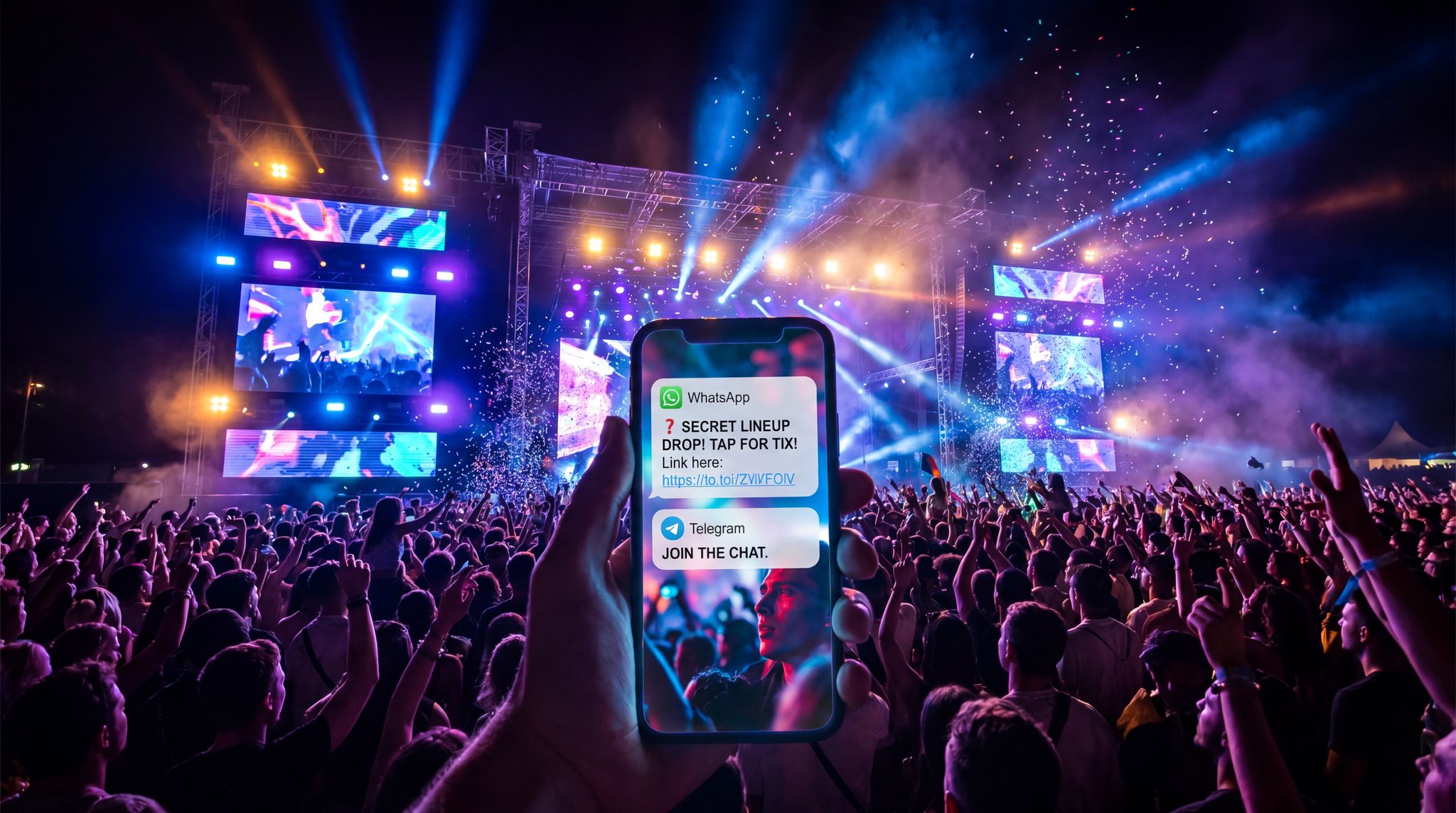
– SMS or Push Notifications: If you have phone numbers or an event app, send text alerts or app push notifications. A short message like “Urgent Lineup Update: [Headliner] can’t perform – check your email or our website for info on the new plan” can immediately reach those on-site or on the go. For example, promoters using ticketing platforms with built-in communication tools (like Ticket Fairy’s Instant Update feature) can broadcast a push message or text to all attendees in minutes. This is especially useful if many ticket holders are already at the venue, as you can send urgent alerts to their phones.
– Event Website & App: Update your official event website homepage with a prominent notice (e.g., a pop-up or banner: “Headliner Update: [Artist] will not perform due to illness. See full details >”). If your event has a mobile app or online schedule, push an update there too (change the lineup listing, add an alert). This ensures anyone looking up the schedule or info sees the news. It also acts as a source of truth for media or fans who seek confirmation of what’s happening.
– On-Site Announcements: If the cancellation is happening during the event (e.g., a festival day-of), use audio announcements and display screens to inform the crowd. For instance, have the stage MC or announcer make a calm announcement: “Ladies and gentlemen, we have an important lineup change to share…” Alternatively, display a message on stage screens or LED boards if possible. On-site, speed is critical – you don’t want rumors and panic spreading through the crowd. Hearing it directly from the organizers via the PA system can quell confusion. Make sure security and staff are briefed so they can answer attendees’ questions on the ground.
– Press and Media: If this is a high-profile event or artist, assume media outlets (local news, music blogs, radio) will report it. It’s often wise to release a short press statement or tweet tagging media once you have your public announcement ready. This might read: “Official Statement: Due to a medical emergency, [Headliner] will not perform at [Event]. [Replacement Artist] will headline. Full info: [link].” By proactively informing press, you help control the story and ensure accurate information is circulated, rather than speculative or exaggerated reports.
Keep all these channels coordinated. It’s crucial that everyone hears the same message. Before posting, double-check that your wording in social posts matches the email and the on-site announcement talking points. Inconsistency can create confusion (“the tweet says illness, the Facebook post says unforeseen circumstances – what’s the truth?”). To avoid mix-ups, some crisis communication teams designate one person to copy-paste the final approved text across all channels, or use integrated tools to broadcast the same update everywhere.
Table: Communication Channels During a Crisis
| Channel | Speed & Reach | Role in Headliner Cancellation |
|---|---|---|
| Twitter/X & Facebook | Instant, public; high shareability | Announce news broadly; media and fans will share. Ideal for quick text updates and official statements. |
| Fast, high engagement (especially Stories) | Share a graphic or text story with the update. Use captions for clarity. Good for reaching younger attendees quickly. | |
| Email Blast | Direct to ticket holders; not instant but reliable | Provide detailed info and instructions (e.g., refund process, updated schedule). Ensures all ticket buyers get the news in their inbox. |
| SMS / Push Notification | Immediate, attention-grabbing on personal devices | Send urgent alerts for critical info (e.g., lineup change, “check email for details”). Great for attendees already at or heading to event. |
| Website / Event App | Official source; reaches those who seek info | Post full details on FAQ or news section. Update schedule page. Acts as central reference for attendees and media. |
| On-Site PA & Screens | Reaches attendees on location in real time | Make stage announcements or screen bulletins to directly inform the present crowd. Prevents rumors and guides attendee reactions on-site. |
| Press Release/Media | Slower but amplifies to wider public | For major events, issue a short statement to press or wire. Helps control narrative in news reports and demonstrates transparency. |
Consistency and Two-Way Communication
After the initial blast, be prepared to engage with your audience’s responses and questions. Monitor your social media replies and comments. Inevitably, fans will have questions: “What about refunds?”, “Who’s replacing them?”, “Why did they cancel?” Ensure your team (Customer Support Lead or Social Media Manager) is ready with polite, factual answers. You might even prepare a mini FAQ to post in comments or as a follow-up post, tackling common queries: “We see questions about refunds – all ticket holders will get an email by tomorrow with options.” or “Replacement act will be announced shortly, we’re working on it – thanks for your patience!”. Quickly addressing fan questions in a helpful tone can turn frustrated commenters into understanding ones. Even if an individual’s outcome isn’t what they wanted (e.g. no full refund unless event is canceled), responding shows you’re not hiding.
Also, listen to feedback. You might discover through comments that many people are particularly upset about one aspect (“I only came to see that artist!”). Acknowledging that sentiment (“We completely understand some of you bought tickets primarily for [Headliner]. We’re heartbroken too. We hope you’ll still join us for [Replacement], but if not we’ll take care of you – see your DMs for options.”) shows empathy on a personal level. You could even directly outreach via DM to particularly upset fans to offer a token of goodwill (like a promo code for a future event). Turning a public complaint into a one-on-one resolution not only helps that fan, it also shows others that you care.
Keep communications transparent every step of the way. If your initial announcement said “we’ll update you soon” – stick to that. Don’t go radio silent for half a day. Even if the update is “still working on it,” post that within the hour you promised: “Quick update: we’re still finalizing the replacement act. Hang tight, announcement coming as soon as it’s confirmed!”. Regular, honest updates prevent an information vacuum that could be filled by rumors or frustration. In crises, no news is not good news, so even a “we’re on it” message is better than being kept in the dark. And once you do have good news (like a new headliner or plan), broadcast it loudly and celebrate it – more on that in the next section.
Securing a Replacement Act or Plan B Program
While the communications team is handling messaging, another critical workstream is underway: figuring out how to fill the void in your event schedule. The best outcome is you find an equal or even bigger replacement headliner on short notice. But real life doesn’t always grant that, so you need creative plan B options to keep attendees entertained. Here we delve into how veteran promoters line up last-minute talent and other programming tricks to save the show. Sometimes a festival’s sponsor conflicts with a replacement, so check details.
Smart Promo Codes & Presale Access
Create percentage or flat-rate discount codes with usage limits, date ranges, and ticket type restrictions. Plus unlock codes for private presales.
Tapping Your Talent Network for a New Headliner
When your main act falls through, your talent buyers and agent contacts become your heroes. Immediately have your booking team reach out to artists who could potentially step in. Ideally, you want someone with similar draw or appeal to the original headliner’s audience. Some strategies:
– Call Artists Already on the Bill: If this is a festival or multi-act show, see if one of the high-profile support acts can move into the headliner slot. Often your second-billed artist might be willing and able to go on last as the main act. This happened famously at Glastonbury 2015: when Foo Fighters canceled days before their headlining slot (Dave Grohl broke his leg), Florence + The Machine – originally booked as a sub-headliner – was bumped up to headline Friday night. The festival organizers publicly expressed full confidence in her, and she delivered a fantastic set, turning a potential let-down into a triumph.
– Find Touring Artists Nearby: Check if any artists of similar caliber are on tour in your region and might have a day off. Sometimes a band playing in a nearby city can be flown in. For example, if a festival’s rock headliner cancels, an agent might quickly slot in another band who is touring the same circuit and can adjust their schedule. Have relationships with booking agents across genres – a friendly agent might move mountains to get another one of their artists to fill in for you (especially if it’s a favor that could be returned later).
– Consider Local Heroes or DJ Sets: If an equivalent replacement isn’t available, think outside the box. Is there a popular local band or surprise guest who could do an extended set? In some cases, festivals have brought in unannounced special guests or unique collaborations to create a “one-time only” experience when a headliner fell through. Alternatively, a renowned DJ might fill the slot even if the event is not primarily a DJ event – they can keep the crowd energy up with a party set as a placeholder. While it might not draw exactly the same fans, it preserves the overall experience.
– Industry Connections and Sponsored Replacements: Sometimes sponsors or industry partners can help. If a brand is sponsoring your event, they might pull in favors with an artist they have connections to. Or use your promoters’ network – this is where years of relationship-building with artists and managers pays off. One festival promoter described how having a standby list of artists helped them ring up a last-minute act. This is crucial when storms or high winds cause cancellations.
When reaching out for replacements, move fast but also negotiate the essentials. Last-minute doesn’t always mean cheap – be prepared that you might pay a premium to get an act to drop everything and come perform. However, some artists may give you a break if they sympathize (especially if the cause was something like a health issue – musicians often support each other in a pinch). You may need to handle extra logistics: for example, rushing through a contract via email, arranging immediate transport (maybe chartering a flight or helicopter if time is short), and setting up the stage requirements on short notice. Empower your operations team to solve these quickly – perhaps have a budget set aside for emergencies like this.
Creative Alternatives When an Equal Replacement Isn’t Available
What if you simply can’t get another headliner-quality act in time? Instead of giving up, get creative with your schedule and programming:
– Extended Sets by Other Artists: Coordinate with the other performers on your lineup to fill the time. Perhaps the act before the headliner is willing to play an extra 15-20 minutes. Maybe you can bring back a performer from earlier in the day for a short bonus set. Fans often appreciate longer performances or encore sets from artists they already saw. It creates a feeling that they got a special treat, offsetting disappointment. Be sure to ask artists nicely and maybe offer an incentive (like a bonus payment or future favor) for those who step up.
– All-Star Jam or Collaborative Set: If it’s a music event, one exciting plan B is to create a “superjam” – gather members of various bands/DJs from the festival to do a collaborative performance in the headliner slot. For example, if a rock band cancels, maybe invite all the other rock musicians across different acts that day to come together for a one-off jam session covering classic hits. This can be marketed as a unique experience that will only happen because of these circumstances. It turns a negative into a once-in-a-lifetime positive.
– After-Party Upgrade: Consider adding some experience to make up for the lost act. If a headliner is off, maybe you announce a free after-party or an extended curfew with DJs to keep the night going for those who want more. If you have multiple stages, you could schedule a “surprise set” at another stage by a performer still around. Creating additional entertainment eases the sense of loss.
– Programming a Different Attraction: If music isn’t the only attraction, divert attention elsewhere. For instance, some festivals have pulled in fireworks shows, special effects, or interactive games for the crowd when an act canceled. One festival faced a day cancellation due to weather and refunded tickets, but still hosted a free on-site fan carnival with meet-and-greets and merch giveaways for those who stayed – salvaging some goodwill. At a conference, if a keynote speaker cancels, you might quickly organize a panel discussion or Q&A with other experts as an alternative highlight.
– Reschedule (If Viable): In some cases, if an artist cancels a standalone concert (like a solo tour date) and it’s impossible to replace them, the best option may be to postpone the event to a later date when the artist can perform (or cancel outright and refund). This is common in concerts – fans generally prefer a reschedule over a replacement if they bought a ticket specifically for that artist. But for festivals or multi-artist events, rescheduling the whole event is usually not feasible. Use postponement only as a last resort in a multi-artist scenario, since it affects all other logistics and attendees’ plans.
If you determine that rescheduling is the only viable path, knowing exactly how to announce postponement of an event is critical to retaining ticket revenue. A postponement announcement should immediately clarify that the event is delayed, not canceled, and provide the new date (or a firm timeline for when the new date will be revealed). Start with a clear, empathetic subject line, explain the unavoidable reason for the delay, and explicitly state that all current tickets will be honored for the future date. By framing the postponement as a necessary step to deliver the high-quality experience fans expect, you can minimize immediate refund requests and keep your audience engaged while you finalize the new logistics.
Whatever alternative you choose, communicate it as a positive change, not a consolation prize. Publicly praise the artists who step up: “We want to thank [Band Y] for heroically doubling their set tonight to keep the energy high!” or “Our lineup might look a bit different, but you’re in for a treat with this special once-in-a-lifetime jam session we’ve cooked up.” By owning the change confidently, you signal to fans that they’re still going to have a great experience. Many attendees will roll with the punches if they sense you’re making an effort to give them value for their time and money.
Logistics of Last-Minute Changes
Don’t underestimate the operational juggling required when swapping a headliner or changing the schedule day-of. As you implement Plan B, keep these logistical considerations in mind:
– Stage & Technical Setup: A new artist might have different equipment needs. Your production team should be alerted immediately to adjust stage plots, soundcheck times, etc. If the replacement is simpler (say a DJ instead of a full band), it might be easier; but if it’s another band, you may need to hustle their gear in. Flexibility is key – maybe the replacement can use the original headliner’s backline or share gear with others to speed things up.
– Schedule Coordination: Inform all other acts about the change. Maybe you need to shift set times slightly. Clear it with artists and stage managers quickly. Artists are usually cooperative in crises, but make sure no one is caught off guard about when they’re going on stage. If, for example, everyone’s set moves 30 minutes earlier to accommodate a longer closing set by someone else, publish a revised schedule on all channels and physically at the venue.
– Staff and Volunteer Briefing: Update your staff (security, info booth, volunteers) on the situation. They are the front line for fan questions on-site. A quick one-page brief or group radio call like, “Headliner X canceled, we’ve announced Y as new headliner at 10pm. The show will end at normal time. Direct any upset attendees to customer service tent for assistance,” will equip them to handle inquiries professionally.
– Vendors and Sponsors: If the headliner had meet-and-greets planned with sponsors or any special activation, inform those stakeholders about the change and adjust accordingly. Perhaps a sponsor was entitled to some on-stage mention by the headliner – you might arrange for the replacement to fulfill that if appropriate. Keep your partners in the loop so they don’t feel blindsided; they’ll appreciate the transparency.
– Ticketing/Access Adjustments: In rare cases, a headliner cancellation might lead you to open the event to more people (for instance, if a replacement is a local act with local fans, maybe you allow door sales or offer a promo to boost last-minute attendance). Conversely, if a portion of the event is canceled (like one day of a festival), deactivate scanning for that day’s tickets and ensure refund logistics or ticket transfer options are in place (more on this next section). Work closely with your ticketing provider on these adjustments in real time.
Free Tool: When Should You Announce?
Pick your event date and genre — the free planner outputs a recommended announce, presale, on-sale and reminder schedule anchored to how your audience actually buys.
By thinking through these details, you’ll prevent a chaotic backstage or front-of-house scene. A lineup change is disruptive, but with a solid contingency plan (many festivals actually build contingency time into schedules or have a list of standby performers ready), you can execute it smoothly. Communication is key to keeping attendees informed. Attendees might be impressed at how efficiently the change occurred, which boosts your credibility.
Marketing the New Lineup & Controlling the Narrative
With a replacement act or alternative program secured, the next challenge is getting attendees excited about the updated plan. You don’t want the conversation to fixate on the loss of the headliner; you want it to shift to the great things still in store. This is where your marketing savvy comes into play, even under crisis conditions. Let’s explore how to promote your changes in a positive light and manage PR to keep the event’s reputation intact.
Flip the Script: Announce the Replacement with Enthusiasm
Once your new headliner or plan B is confirmed, treat that announcement almost like a fresh marketing campaign. Frame it as exciting news, not merely a sad necessity. For example, instead of posting “We found a replacement: Artist Y will play,” go for an enthusiastic tone: “SURPRISE HEADLINER ADDED: [Artist Y] is now closing out [Event Name] tonight!” If the replacement is well-known, play up their accolades: “GRAMMY-winner [Artist Y] is coming through for us all – get ready for an electrifying set!” Even if it’s a lesser-known act, highlight what makes them special: “[Artist Y], one of the most talked-about up-and-comers, is stepping in to deliver a one-time-only set you don’t want to miss.” By marketing the change as an opportunity for fans rather than just a loss, you help shift attendee mindset from disappointment toward curiosity or excitement.
Use compelling visuals if possible. Update your promotional graphics or create a quick splash image for social media featuring the new act’s photo and name as “Special Guest” or “Tonight’s Headliner”. Fans will share these updates, spreading the word. If time permits, consider running a short video message from the replacement artist: a 15-second clip of them saying “Hey [Event] fans, I heard your headliner can’t make it – so I’m jumping in and I can’t wait to party with you all tonight!” This personal touch can seriously boost fan excitement and goodwill.
Also, publicly thank the replacement in your communications. For example: “Huge thanks to [Artist Y] for stepping up on short notice – let’s show them a massive welcome!” This not only makes the replacement feel appreciated (they did do you a big favor), but it signals to fans that something special is happening. The subtext is that the music community cares about the fans and the event enough to save the day.
If your event isn’t until tomorrow or later, you have a bit more time to do mini-marketing pushes. Consider targeted promotion to the replacement’s fan base: run a quick geo-targeted ad or blast on social media like “[Artist Y] added to [Festival Name] lineup this weekend – tickets available.” You might even gain some new attendees if the replacement has their own draw. In 2023, when a major festival’s headliner pulled out last-minute, their replacement (a popular rock band) drew in local fans who weren’t originally planning to attend, once they heard about the last-minute addition. Leverage the replacement as a marketing hook to potentially boost last-minute sales if you have capacity — promote that “tickets are still available” to fans of the new act, emphasizing that this is a rare chance to see them on this lineup.
Free Tool: Model Promoter Payouts
Flat-percentage, flat-per-ticket, or tiered-bonus commission structures — get per-promoter payouts and total commission as % of gross. Free calculator.
Manage the Media and Public Perception
In a high-profile headliner cancellation, local and sometimes national media will pick up the story. Your goal is to ensure coverage focuses on how well you’re handling it, rather than just the cancellation itself. By promptly issuing a press release or social media statement with all key info (cancellation reason, replacement or plan, refund policy), you give journalists a clear narrative: “Headliner X cancels due to illness, Festival Y announces Z as replacement and assures fans show will go on.” Often, media will even use your wording if it’s concise and factual.
Consider reaching out directly to influential music journalists or bloggers who cover your scene. If you have a PR agency or in-house PR, have them do quick outreach offering a brief interview with your spokesperson about the situation. The talking points for any press interaction should be:
– Emphasize fan experience is still a priority: “Our fans come first, so we moved quickly to make sure they’ll still have an amazing time.”
– Highlight the solution, not the problem: “It’s unfortunate [Headliner] couldn’t make it, but we’re thrilled [Replacement] was able to join on such short notice. It’s going to be a special night.”
– Be transparent about the cause (and if appropriate, express well-wishes to the headliner): “We understand [Headliner] had a serious conflict/medical issue, and while we’re disappointed, we wish them the best and hope to have them at a future event.” This prevents any narrative of bad blood. It shows you’re respectful, which media will pick up on.
– State any compensation in place: If you’re offering refunds or discounts, mention it: “Attendees who no longer wish to attend are being offered [X].” This demonstrates you’re treating fans fairly, likely earning a positive nod in coverage.
Also, monitor social media chatter and trending topics. If you see misinformation spreading (“Rumor: event might be canceled!”), quickly counter it with official posts: “Just to clarify, the event is absolutely NOT canceled – only [Headliner]’s performance is off, and we’ve added [Replacement]. Everything else is on schedule.” Don’t let false rumors go unchecked. In 2026’s environment, a single tweet can go viral and create confusion among thousands, so you may need to insert yourself into conversations. Where appropriate, reply from your official account to people speculating or panicking with a calm correction.
One advanced tactic: if the cancellation becomes a big discussion topic, lean on influencers or community advocates to shape the narrative. For example, if you have a good relationship with a local music influencer or a prominent fan group, get in touch and provide them the inside scoop (“Hey, as you’ve heard [Artist] canceled, but we’ve got [New Artist] – it’d be awesome if you can help spread the word that the show’s still on and tickets are being handled fairly.”). Often, influential voices can reassure hesitant fans more effectively than the official account. This aligns with broader event PR strategies where partnering with external voices helps amplify your message. For instance, some festivals have “fan ambassador” programs that quickly mobilize trusted community members to share official updates and positive messages in fan forums.
Social Proof: Turning Attendee Sentiment in Your Favor
After you’ve communicated the solution and while the event is happening (or once it concludes), capitalize on any positive fan feedback to rebuild hype. Social proof is powerful: if attendees start posting “Can you believe how [Replacement Artist] whipped up that set last minute? Unreal!” or “Huge respect to the organizers for handling that so well,” amplify those voices. Retweet or share positive posts from attendees where they praise the event’s handling or express excitement about the replacement. This not only boosts morale for your team, it shows on-the-fence ticket holders (if it’s a multi-day event or future event) that the audience is still having a blast.
You can encourage this subtly by engaging fans online: for example, post during/after the replacement’s performance something like “How about that [Replacement] set, huh?! ? Tell us what you thought!” Fans who enjoyed it will reply with their highlights. These testimonials become mini case studies proving that even a crisis couldn’t stop your event from delivering joy. In marketing terms, you’re generating social proof that can counteract the negative chatter from earlier. This requires internal coordination during pauses. In fact, you might use this in future promotions: “When our 2026 headliner bowed out hours before the show, fans dubbed the impromptu jam session that followed ‘legendary’ – proving that at [Event], the magic always finds a way to happen.” Such narratives can strengthen your brand. You can even highlight it in post-event content.
On the flip side, if negativity is still strong, don’t try to censor it – address it. If some fans remain angry or unconvinced, you can respond or at least show that you hear them (without getting defensive). For example: “We hear you – some of you are understandably upset. We’re truly sorry about the situation. Our team did everything possible to make it right, and we’re still open to your feedback on what else we could do.” Sometimes just feeling heard will temper a critic. However, avoid getting into protracted arguments online with trolls or extremely angry individuals; respond politely and offer an offline channel (like “DM us and we’ll see how we can help you”). This moves the conflict out of the spotlight.
By the time the dust is settling, ideally the story fans tell is how the community came together to overcome the setback – e.g. “It sucked that the headliner canceled, but the organizers found a cool replacement and the crowd energy was amazing anyway!” You can even explicitly shape that narrative in post-event communication (see Post-Event Follow-up section). Many festivals actually create content celebrating how they handled a challenge: posting a recap video that includes a nod to “even a cancellation couldn’t stop us” with shots of the crowd cheering for the replacement. This reframes the incident as part of the event’s lore in a positive way, not a black mark.
Managing Refunds, Transfers & Goodwill Gestures
One of the trickiest areas of crisis marketing when a headliner cancels is handling the financial side: Will you offer refunds or other compensation to disappointed fans? This is a delicate balance. On one hand, you don’t want to hemorrhage ticket revenue or admit defeat by encouraging refunds; on the other, rigidly saying “no refunds, lineup subject to change!” can anger patrons and damage trust. Let’s walk through strategies for managing refunds and keeping fans on board, including using ticket transfer or resale options as a pressure valve.
Know Your Obligations (and Your Audience’s Expectations)
Start by reviewing the terms and conditions on your tickets or event policy. Most festivals and multi-artist events have a “lineup subject to change” clause stating that tickets are non-refundable if an artist cancels as long as the event itself isn’t canceled. This gives you legal cover not to offer refunds. However, just because you can deny refunds doesn’t always mean you should. Consider the context:
– Single-artist concert? If people bought a ticket mainly to see one headliner (e.g. a solo arena show), a cancellation usually means the show is rescheduled or refunded, period. Fans expect it. You likely have to refund or honor tickets for the new date, because the product they bought (that artist’s show) isn’t delivered otherwise.
– Festival or multi-artist event? If one out of many acts cancels, especially if you find a solid replacement, many fans will still attend. The value proposition (a full day/weekend of music) is largely intact. In this case, outright refunds to everyone might be unnecessary and financially crippling. Instead, you could handle on a case-by-case basis or offer partial refunds/credits to those who complain the loudest.
– High-ticket-price VIP experiences? If the headliner was part of a VIP package (like a meet-and-greet or exclusive viewing), you should prepare something to compensate those high-paying fans specifically – maybe a partial refund of the VIP upcharge, extra perks, or a credit toward another event. These fans paid top dollar expecting that headliner.
Also consider goodwill: How badly will not offering refunds hurt your brand among this audience? For example, if your event caters to a niche community that values fairness, a hard-nosed approach might spark a larger boycott or bad press. Meanwhile, some events have built a reputation for zero refunds but still sell out due to the overall experience (think of legendary festivals – losing one act doesn’t deter their hardcore attendees). Gauge the sentiment on your social feeds: if you see widespread outrage and “I want my money back” comments even after you announced a replacement, leaning toward a refund option might save you from long-term reputation damage. Remember the importance of crisis management planning. Remember, a few refund requests are normal; but if it looks like a significant portion of fans feel betrayed, it’s better to offer an olive branch than to dig in and potentially lose those customers forever.
Offering Refunds (Full or Partial) vs. Incentives
If you decide to offer refunds or have to due to policy, communicate the process very clearly. Usually, you’d email all ticket holders explaining: “If you no longer wish to attend because of this lineup change, here’s how to request a refund by X date.” Make the window finite (e.g. within 7 days) to avoid lingering uncertainty on your final attendance numbers. Be upfront about timing (refunds will process in Y days back to their original payment method) and any conditions. It might be wise to only offer partial refunds if the event is still happening – e.g. if it’s a multi-day festival and one day’s headliner canceled but you replaced them, maybe you don’t refund at all; or if you do, you refund just that day’s portion or allow a single-day ticket trade for another day.
However, there are alternatives to full refunds that can protect revenue while showing goodwill:
– Ticket Transfers or Credits: Allow fans to transfer their ticket to someone else or to a future event. For instance, “If you’re really not interested anymore, we can offer you a credit equal to your ticket value to use for any of our concerts this year.” This way, you keep the money in-house and hope to reconvert it later, rather than losing the customer entirely. Or let them switch to another day if it’s a multi-day festival. This flexibility can placate some people.
– Partial Refund or Rebate: Perhaps offer a partial refund (say 20-30% of the ticket value) or a rebate in the form of a drink voucher, merch coupon, or upgrade. The message is “we know it’s not the full experience you expected, so here’s some value back.” For example, a festival in Europe once gave all attendees €10 voucher for food/drinks when a much-anticipated headliner canceled last-minute. It wasn’t cash back, but it softened the blow and kept people on-site spending time and money anyway.
– Free or Discounted Future Upgrade: Offer those who are upset something for the future. It could be “We’ll give you first dibs and 50% off tickets for next year’s event” or “Here’s a code for 1 free ticket to any of our smaller shows this coming year.” This turns a current negative into an opportunity to get them back. When framed as a VIP gesture (“because you stuck with us, we want to make it up to you”), it can turn ire into anticipation for the next thing.
– VIP Perks for Remaining Attendees: If you can’t refund, perhaps reward those who still attend. Announce that all attendees will get some bonus at the event: free parking, a merch item, a meet-and-greet with some other artist, a complimentary upgrade to a VIP area for a portion of the show, etc. These perks don’t refund money, but they add experiential value. For example, upgrade some random ticket holders to side-stage viewing for the replacement act, or have your staff roam the crowd handing out free swag during the time the headliner would have played. It shows you care about delivering joy despite the situation.
No solution will please 100% of people, but many will appreciate the gesture. The key is to communicate it as a “thank you for your understanding” rather than an obligation. For instance: “We’re incredibly grateful to all of you who are rolling with these changes. As a token of our appreciation, everyone at tonight’s show will receive [perk].” That feels like a reward for loyalty. Or “For anyone who decides not to attend because of this change, we understand and are offering [credit/refund option] – we hope to see you at another show down the line.” This acknowledges their disappointment and keeps the door open for future business.
One scenario to be prepared for: if your replacement act appeals to a different audience segment than the original, you might actually sell some new tickets last-minute, while some original fans want refunds. You may choose to facilitate a fan-to-fan ticket exchange instead of doing refunds yourself. For example, promote that fans who don’t want to attend can resell their tickets through your official resale platform (at face value, to keep it fair). Using a safe resale system – many ticketing platforms (like Ticket Fairy) support face-value resale where you can transfer tickets securely. This way, you don’t lose revenue; it just changes hands. It’s also a goodwill gesture to say, “We’ve enabled our fan resale portal for this event if you wish to sell your ticket to someone else, and we’re waiving any transfer fees.” In crisis situations, waiving fees or bending normal rules (like removing a resale restriction) can help alleviate frustration. Just be cautious about secondary market chaos – by centralizing it in an official system, you prevent price gouging or scammers. In fact, pointing fans to a secure fan-to-fan resale solution can be spun as “we want to do right by you and ensure anyone who wants a refund can get one safely by selling to another fan.”
Table: Options for Handling Tickets & Refunds
| Approach | Pros (Fan Trust) | Cons / Considerations |
|---|---|---|
| Full Refunds on Request | Shows maximum goodwill; removes buyer risk | Revenue loss; some fans may still attend if not refunded. Need clear process to avoid confusion. |
| Partial Refund/Credit | Middle-ground: offers value back while keeping some revenue. Fans feel acknowledged. | Some will argue it’s not enough. Must decide fair percentage or amount. Use if headliner was a big part but not whole event. |
| Future Event Credit | Retains customer for future; no immediate cash outflow | Fan might prefer cash; only works if your future events interest them. Clearly communicate how to redeem credit. |
| No Refund, Added Value Perks | Fans still attending get something extra (free merch, drink, upgrade) which boosts goodwill on-site. | Doesn’t help those truly upset or those who skip event; seen as token by some. Best paired with strong apology. |
| Official Resale/Transfer Option | Allows unhappy fans to recoup money by selling tickets to new attendees; you keep the sale and fill the venue with willing fans. | Requires demand from other fans to buy; need a secure platform to manage transfers. Monitor pricing to avoid gouging. |
| Strict No Refund (Policy Enforcement) | Protects revenue fully (short-term); clear stance might discourage refund demands if policy was known. | High risk of fan anger, social media backlash, and lost long-term loyalty. Only consider if replacement is equal or event value remains high, and if policy was made clear upfront. |
Communicating the Policy Clearly
Whatever route you choose, proactive communication about it is crucial. Don’t make fans hunt for refund info or wonder what their options are. In your initial announcement (or very soon after), include a line like “For those with questions about tickets and refunds: [brief summary].” If details are too long, at least say “check the email we sent to ticket holders for information on refunds or exchanges,” or “visit our FAQ page for details on ticket options in light of this change.” Then ensure that email or FAQ is sent/published at roughly the same time as your public posts.
In communications:
– Use straightforward language. For example: “All Friday single-day ticket holders may request a refund by emailing us at X by [deadline]. 2-Day pass holders are not eligible for a refund since Saturday’s lineup is unaffected, but as a goodwill gesture we’re offering a $20 merchandise voucher for 2-Day guests – pick yours up on-site.” This kind of clarity leaves little room for misunderstanding.
– If you are not offering any refunds (fully relying on “lineup subject to change”), still address it head-on: “We understand some of you bought a ticket specifically to see [Headliner]. While tickets remain non-refundable per our policy, we want to assure you we’re doing everything to deliver a fantastic experience with a great replacement. We hope you’ll join us, but if not, you have the option to transfer your ticket to someone else via our official platform.” By acknowledging the disappointment and pointing to an alternative (transfer or simply the policy), you’re not ignoring the issue. The worst approach is to say nothing about refunds and just hope it goes away – that will fuel more anger on social media.
– Be consistent across channels. If customer support gets inquiries, give them an FAQ or script with the exact wording of the policy and options, so every fan gets the same answer whether they ask on Twitter or by email. Mixed messages will amplify frustration.
Keep records of who takes you up on refunds or credits, and be public about it only to the necessary degree. You don’t need to blast “we refunded 500 people” (that might look bad); just quietly handle those requests and focus your public messaging on the excitement for what’s still happening. If media ask, you can say, “We offered refunds to those who felt strongly about not attending, but the majority of our attendees are still coming and we’re anticipating a nearly full house.” That frames it as a net positive and emphasizes fan loyalty rather than loss.
In summary, handling the ticketing fallout is about being fair and seen as fair. You might not make everyone 100% happy, but if the general sentiment is “Well, it was a tough break, but the organizers did right by us with their response,” you’ve succeeded in protecting your brand for the long term, so fans remember when an organizer did right. To quantify the stakes: surveys show trust is essential.
Preserving Trust and Brand Reputation
Beyond the immediate logistics of replacement acts and refunds, there’s a bigger picture to mind: your event’s reputation. How you handle this headliner crisis will be remembered by attendees and even those watching from afar. In the live events industry, trust is currency – fans need to trust that your event will deliver a good experience, even if things go wrong. Let’s talk about how to retain (and even build) that trust during crisis marketing, and ensure your brand emerges intact or stronger.
Staying Positive & Professional (No Blame Games)
It’s natural to feel upset or even betrayed if an artist cancels on you last minute – especially if the reasons are murky. However, under no circumstances should you publicly vent blame toward the artist or anyone else. Not only can that burn bridges with the talent and industry, it also makes you look unprofessional to fans. Even if the artist is at fault (say they skipped a flight or had a self-inflicted issue), keeping a professional tone is key. Fans may have mixed feelings – some might blame the artist, but if you join the pile-on, it becomes a bad look. A case in point: the Isle of Wight Festival organizer who slammed Jess Glynne for canceling in 2019 (“shocking behavior”) faced criticism himself for lacking empathy. Instead of winning fans over, it sparked debate about mental health and professionalism that overshadowed the festival itself. The lesson: take the high road. If asked about the artist’s cancellation, stick to statements like “It’s unfortunate and we’re disappointed too, but these things happen. We wish them well and we’re focused on making the night great for everyone here.”
The no-blame approach extends to your communications with fans. Don’t blame the weather, the government, the airline, or anyone in a whiny tone – even if one of those triggered the cancellation. You can state facts (“[Headliner]’s flight from London was canceled due to an aircraft issue, making it impossible for them to arrive in time”), but then pivot to how you’re handling it. Keep your messaging solution-focused, not blame-focused, to maintain transparency. This shows maturity and reliability. Adding to the pressure, trust is hard to regain.
Also, guard against negative tone internally that could slip out externally. Train any team members who speak on behalf of the event – whether on social media or at the info booth – to remain courteous and understanding, never defensive or snappy. It’s easy for a stressed staffer to reply to a complaining tweet with “Read our policy, no refunds,” which would pour fuel on the fire. Instead, a model response is: “We’re truly sorry you’re disappointed. We’re heartbroken about it too. Please check the email we sent – we’re trying our best to make it up to you.” That kind of tone consistently applied will mitigate anger.
Showcasing Your Values: Safety, Integrity, Community
Crises are moments where your event’s values should shine. If you have a brand built on “fans first” or “safety and inclusivity” or “community vibe,” make sure your actions in this scenario reflect that. For example:
– If safety or well-being was a factor (say the artist canceled due to health or you had to cancel a day for weather), emphasize that “Attendee safety and artist well-being come first, always. We support [Artist] in taking care of themselves, and we know a healthy, happy artist will come back stronger for a future show.” This aligns with marketing event safety and building trust through your ticketing system, turning a crisis into a message about your priorities. Fans generally respect organizers who put human concerns above the show when necessary (they just want you to also take care of them, which you are doing through your replacement and/or refunds).
– If community and authenticity are your brand, lean into how the community is rallying. “Moments like these remind us what the [Event] family is all about – coming together and supporting each other. Seeing you all embrace the change and still rock out means everything to us.” It might sound a bit sentimental, but it fosters that sense of “we’re all in this together,” strengthening loyalty.
– If integrity and transparency are touted, then absolutely be transparent. Perhaps share a short behind-the-scenes anecdote in follow-up communication: “When we got the call about [Headliner] at 2pm, our team immediately started speed-dialing every agent we knew. It was a wild six hours, but we did it – [Replacement] is here now. We want you to know how much effort went into making sure your night wasn’t ruined.” This kind of candor (to a reasonable extent) shows fans you won’t hide stuff and that you truly work hard for them. It humanizes the organizers.
Also, consider putting a face to the situation. A quick video message from the festival director or promoter speaking directly to attendees can be very effective at conveying sincerity. For example, a 1-minute video posted to socials: “Hi everyone, John from [Festival]. It’s been a crazy day, as you know. I wanted to personally update you: unfortunately [Headliner] can’t be here – we’re gutted – but I’m so proud of our team for securing [Replacement] to keep the show going. I promise we’re going to give you an unforgettable night despite this hurdle. Thank you for sticking with us – it means the world to me and the whole crew.” The visual of a calm, honest person speaking can do wonders to maintain trust compared to impersonal text. It shows accountability and puts a leader out front, which audiences appreciate. (Just ensure the spokesperson has media training and stays on message.) This aligns with having a designated spokesperson in crisis plans – use them to put out a steadying presence.
Long-Term Damage Control: After the Event
Once the event is over and you’ve made it through, your crisis marketing isn’t quite done. There are a few steps to take to solidify trust and learning:
– Thank the Audience: Send a follow-up thank-you message to attendees (via email and/or social) acknowledging the weird journey. “Thank you for being the most amazing crowd in the face of an unexpected change. Your energy and understanding turned a challenging night into something special. We’re beyond grateful.” This kind of note reinforces that communal bond and shows you don’t take their patience for granted. Many fans will respond positively, perhaps even reminiscing about how the replacement was awesome – which is great word-of-mouth.
– Recap the Success: In your post-event press release or recap blog, mention how the majority of fans stuck with the event and how the replacement act delivered. Frame it as a successful save: “What started as a potential disappointment ended in a triumph as [Replacement] delivered a powerhouse performance to an ecstatic crowd, proving that the spirit of [Event] is unstoppable.” By controlling the final narrative, you cement a positive takeaway in people’s minds, possibly even earning some media praise for handling it well. Many festivals actually create content celebrating how they handled a challenge: highlighting it in post-event content. Many industry folks respect promoters who can handle adversity – it shows experience and reliability.
– Address Unresolved Issues: If there were any particularly bad hitches (say the replacement also had tech issues, or some fans are very upset still), consider reaching out individually to those affected. Perhaps there are a handful of vocal detractors on social media; you might DM them offering a personal apology and perhaps a free ticket to next year. It might turn them around, or at least quiet them. Additionally, if the crisis revealed a gap in your planning (maybe you realized you didn’t have a good backup for a certain scenario), be honest about it internally and in some cases externally: “We learned a lot from this. You can bet we’re adding a clause in our planning to have a standby option for next time.” Fans appreciate when you learn and improve (just like any product or service, owning mistakes and fixing them builds credibility). Update your crisis communication plan with these lessons to maintain a two-way dialogue. For instance, you might formalize having a standby list or communication protocol.
– Share Behind-the-Scenes (Optional): If the story of how you saved the event is interesting, you might later share a behind-the-scenes anecdote on your blog or socials: “Fun fact: Do you know how we got [Replacement] on board in 5 hours? Our talent booker literally caught him right before he boarded a plane to leave town. One frantic call later, he rerouted to our stage instead – talk about dedication!” These little stories can become part of your brand lore and give fans insight into the effort made. It turns a crisis memory into a more affectionate story over time.
– Evaluate and Document: Internally, gather your team and do a post-mortem. What went well (communication timing, securing [Replacement])? What could be improved (e.g., maybe the initial announcement could have come sooner)? Update your crisis communication plan with these lessons. For instance, you might formalize having a “backup headliner list” for future events, or decide to invest in an event insurance policy that covers headliner no-shows so you can afford refunds if needed. Showing that you take these crises seriously and evolve from them will prepare you for any future incidents.
The ultimate goal is that after all is said and done, fans still trust your event and are even more loyal because of how you handled the adversity. There’s a saying in customer service: people often become more loyal after a company successfully resolves a problem than if they never had a problem at all – because they’ve seen proof of commitment. The same can hold true for events. If attendees feel you truly cared and went above and beyond to salvage their experience, they’ll remember that and are more likely to buy tickets to your events in the future, confident that you’ll have their back if anything goes wrong.
Post-Event Engagement & Future Prevention
After navigating the immediate crisis, take time to engage with your community and implement changes that will help in the future. This not only solidifies goodwill, but it also turns the crisis into a learning experience that strengthens your marketing and operations going forward.
Community Debrief and Engagement
It can be valuable to initiate a dialog with your attendees about the event. Consider sending a post-event survey or starting a forum thread asking for feedback: “We’d love to hear your thoughts on how everything went – especially given the lineup change. Your feedback helps us improve.” By inviting attendees to share their perspective, you demonstrate openness. You might get some criticism, but you might also gather great insight or even testimonials of what you did well. Plus, it gives any still-grumbling attendees a place to vent directly to you (which is better than them venting on their own social media where you can’t capture it). Respond or summarize the feedback publicly: “Many of you told us that once the music started, you ended up loving the night. A few were understandably still disappointed. We hear you. We’re taking notes and will strive to make it up to you by securing an even bigger lineup next time – and perhaps a surprise or two as thanks for the support!” This kind of communication closes the loop and shows you truly listen to your community, a key trait for building engaged event audiences.
Public Relations Follow-Up
If the headliner cancellation made waves in news outlets, consider a follow-up PR push highlighting the event’s successful outcome. A human-interest angle can work: “What could have been a disaster turned into a night to remember, as fans and organizers rallied together…” Sometimes local media love to report on how things went after the initial doom news. It closes the story on a high note. For example, get a quote from the replacement artist about how much they enjoyed stepping in, or a quote from a fan (“I was upset at first, but it ended up being one of the best concerts I’ve attended, they really pulled it off!”). Including those in a press release or blog can encourage outlets to cover the positive side, not just “Headliner X canceled.” It also sets a precedent in the public record that your team handles crises well – useful for your reputation with stakeholders like sponsors or city officials.
Strengthening Partnerships
Reach out to any key partners that were affected by the change – sponsors, vendors, the venue, etc. Thank them for their flexibility (e.g., if a beer sponsor stayed late to accommodate a schedule shift, acknowledge that). If any partners took a hit (maybe a sponsor was counting on the headliner’s presence for something), discuss how you can make it up, perhaps by offering them extra visibility at your next event. A strong promoter knows that their relationships behind the scenes need care after a crisis too. By debriefing with your venue or city officials about how the changes were handled, you show professionalism, which helps next time you want to host an event – they’ll remember you managed a tough situation responsibly.
Future-Proof Planning
Finally, bake the lessons learned into future event planning and marketing. Some actionable steps:
– Contract Clauses & Insurance: In artist booking contracts, there are often clauses about cancellation – like the artist might agree to play a make-up show or record a video message to fans if they cancel, etc. Make sure you have something in there for future headliners if possible. Also, explore event insurance that covers “non-appearance” of key performers. It could help you recover costs or fund last-minute replacements. If you had insurance this time, great – make use of it. If not, evaluate it as a safeguard for next time.
– Standby Plans: Develop a list of potential backup artists for critical slots, as mentioned. Keep relationships warm with artists who live locally or DJs who can fill in. Some festivals even secretly book a backup artist on hold (not announced, only called upon if needed). It’s an extra expense but can be a lifesaver. You might not afford that for every event, but for big ones, consider it in the budget – essentially an insurance policy in talent form.
– Crisis Communication Drills: Now that you’ve lived through this scenario, update your crisis comms protocols. Make sure your team has a current phone tree so you can reach everyone instantly. Save those template messages you wrote and refine them. If you noticed any delay or confusion in who should post what, fix that in training. Doing a quick drill in the future (e.g., “surprise, let’s simulate our headliner canceling a week before the show – what do we do?”) could reveal gaps when there’s less pressure, which you can address calmly.
– Transparency in Marketing: Without overemphasizing the negative, you might subtly communicate in future marketing materials that your event is resilient. For instance, some events highlight how they handle things well: “Rain or shine – or even surprise lineup changes – [Festival] always delivers unforgettable moments.” Returning fans who experienced the cancellation will nod knowingly at that, and new fans see it as a sign of reliability. It can be a differentiator in a world where some events have failed catastrophically (Fyre Festival, anyone?). You’re signaling: we’re not fair-weather organizers; we can handle storms.
Inviting the Canceled Headliner Back
As a final note, if the headliner canceled for reasons beyond anyone’s control (illness, emergency), it’s wise to keep that relationship positive. Publicly and privately, express that you’d love to have them at a future event. Often artists feel bad about canceling – it’s their reputation too – so they might be very willing to rebook at a discounted rate or give you first priority on their next tour date. If appropriate, tease to fans the possibility: “We’re already talking to [Headliner] about a performance at one of our future events – stay tuned, we’ll make it happen when the time is right!” This tells fans the artist and you are on good terms and you intend to deliver on that missed promise eventually. It turns disappointment into anticipation. Just be cautious not to promise what you can’t guarantee; only hint if you have reasonable confidence the artist will return.
By thoroughly engaging in these post-crisis steps, you ensure that a headliner cancellation doesn’t just become an isolated “bad memory,” but rather a catalyst for improving your resilience and deepening fan trust. You turn the page with your audience, together, and move forward stronger.
Frequently Asked Questions
How quickly should event organizers respond to a headliner cancellation?
Event organizers must activate their crisis response plan immediately, aiming to draft an initial public statement within 15 to 30 minutes of confirmation. Rapid mobilization involves assembling a crisis team to verify facts with artist management and preparing a factual, empathetic announcement to prevent misinformation from spreading on social media.
What are the best channels for announcing a lineup change to attendees?
Organizers should utilize a multi-channel approach including social media for public reach, email blasts for detailed instructions to ticket holders, and SMS or push notifications for urgent alerts. Consistency across all platforms is vital to avoid confusion, ensuring the website, app, and on-site screens all display the same accurate information simultaneously.
Are event organizers legally required to refund tickets if a headliner cancels?
Most festivals include “lineup subject to change” clauses that protect organizers from mandatory refunds if the event itself isn’t canceled. However, offering partial refunds, future event credits, or facilitating fee-free ticket transfers via official resale platforms are recommended strategies to maintain fan trust and prevent long-term reputational damage.
What are effective strategies for finding a last-minute replacement act?
Talent buyers should immediately contact agents for touring artists nearby or elevate high-profile support acts already on the bill to the headline slot. Creative alternatives include organizing “superjam” collaborations with existing lineup members, extending set times for other performers, or booking local talent to ensure the show continues without canceling.
How should promoters market a replacement headliner to maintain excitement?
Promoters must frame the replacement as exciting news rather than a consolation prize, using enthusiastic language like “Special Guest Added” or “Surprise Headliner.” Leveraging positive social proof, sharing video messages from the new artist, and publicly thanking them for stepping up helps shift attendee sentiment from disappointment to anticipation.
What is the best tone for crisis communication during an event cancellation?
Communications must remain calm, transparent, and empathetic without shifting blame to the artist or external factors. A professional “no-blame” approach that focuses on solutions and attendee safety preserves brand integrity. Organizers should express shared disappointment while confidently outlining next steps to reassure fans that the event experience remains a priority.
How should you announce the postponement of an event?
When announcing an event postponement, communicate promptly across all channels with a clear, empathetic message. State the reason for the delay, confirm that existing tickets will be honored for the rescheduled date, and provide a specific timeline for when fans can expect further details or refund options if they cannot attend the new date.