About Tiger Tiger London
Tiger Tiger London is permanently closed under that name. The Haymarket flagship announced its closure in October 2024 after approximately 26 years of trading. Although some old event listings and venue directories remain online, visitors should not travel to 29 Haymarket expecting to find the original Tiger Tiger nightclub, restaurant or box office operating there.
Opened in December 1998, Tiger Tiger was the first venue in what became a national nightlife chain. Its appeal was scale and variety rather than specialist club culture: several themed rooms, multiple bars, restaurant service, private booths and different DJs operated under one roof. This made it particularly popular with students, office parties, birthdays, tourists and groups wanting a straightforward late-night destination near Piccadilly Circus.
Published capacities varied as rooms, licences and operating layouts changed. A 2007 report gave a maximum of 1,170, later promotions described space for more than 1,500, and event-hire directories quoted whole-venue reception capacities approaching 1,770. It is therefore more accurate to describe Tiger Tiger as a roughly 1,200-to-1,700-capacity venue than to present one figure as universally applicable.
History, Architecture and Redevelopment
Tiger Tiger occupied the lower levels of Haymarket House, an eight-storey, Art Deco-influenced building dating from 1939. The nightclub spread through basement, lower-ground, ground and mezzanine areas. A recent property schedule records approximately 19,905 square feet across those levels, including an 8,221-square-foot ground floor and 4,476-square-foot mezzanine. Some interiors offered clear heights approaching six metres. Exact room lengths and widths were never published reliably.
The interior was repeatedly refreshed rather than preserved as a single architectural scheme. Its best-known later spaces included Tiger Bar, Decadia, LUXE, Opal Bar, the Cloud Lounge and restaurant areas. Decadia drew on 1980s, 1990s and early-2000s nostalgia, including a light-up dance floor, whilst LUXE provided a glossier environment for R&B, hip-hop, house and table service. Large windows in upper public areas helped distinguish the venue from London clubs located entirely underground.
A rapid £1 million refurbishment reported in 2015 closed the venue for only ten days. It modernised the restaurant, rebuilt the back bar, converted the White Room into LUXE and devoted more than £200,000 to upgraded sound and lighting. Earlier technical work across the Tiger Tiger estate used BSS Soundweb digital processing; a 2013 programme introduced Soundweb London BLU-100 processors, expanded audio networking and simplified local source and level controls.
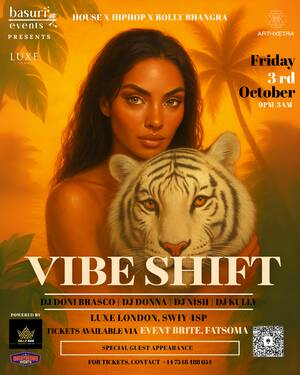
The original nightclub’s closure did not end interest in the site. A temporary successor identity, LUXE, was promoted at the same address. In January 2026, a new lease and multi-million-pound redevelopment were announced for a dual-concept venue combining Bonnie Rogues with Barbara’s Bier Haus. Plans call for all-day food and drink, live entertainment, singalong elements, immersive après-ski styling and late-night operation. As of 23 August 2026, no confirmed public opening date located during this research established that the new dual venue had begun trading.
Events and Programming
Tiger Tiger was primarily a DJ-led club rather than a conventional concert venue. Programming typically ran several nights each week, with rooms simultaneously covering commercial pop, house, club classics, R&B, hip-hop, UK garage, reggaeton, Latin music, Bollywood, Bhangra and nostalgic 1990s or 2000s hits. Resident and promoter DJs were more common than touring live bands, although guest DJs, MCs, themed performers and occasional specialist dance events appeared.
Following pandemic restrictions, 2021 programming included advertised welcome-back parties, A-level celebrations, student freshers events, throwback raves and a large Halloween house party. Promoters made active use of the multi-room format, separating commercial and house music from hip-hop, grime, R&B and retro club classics. Production advertisements mentioned UV lighting, CO2 effects, strobes, lasers, confetti and the illuminated disco floor.
During 2022, the calendar expanded to student sessions, freshers parties, St Patrick’s Day celebrations, A-level events, soca, World Cup screenings and a multi-room New Year’s Eve party. The 2023 programme continued with Enclosure Saturdays, weekly reggaeton parties, Latin Explosion, Bollywood and Bhangra rooms, Halloween events and novelty programming such as a Shrek-themed rave.
In 2024, recurring listings included Manic Mondays, Toxic Tuesdays, reggaeton Wednesdays, Thursday Motives and weekend BollyMad parties, alongside an Independence Day celebration and a trance appearance by XiJaro & Pitch. The surviving listings show that Tiger Tiger’s final identity remained broad, accessible and promoter-driven rather than artist-led. Listings carrying the Tiger Tiger name after October 2024 should be treated cautiously because the original business had closed and some events continued under LUXE or legacy venue data.
There is no verified Tiger Tiger programme for 2026 or beyond. Future entertainment at the property belongs to its replacement concepts, not a revived Tiger Tiger. Announced ideas point towards live singalongs, themed hospitality, group celebrations, immersive décor and late-night DJs rather than a return to the old six-room club exactly as it was.
Tickets and Booking
Tiger Tiger no longer sells valid admission tickets. Historically, advance club entry often ranged from about £3 to £15, with cheaper student and before-11pm releases. Major dates such as New Year’s Eve could reach approximately £30 before table packages and booking charges. Tickets commonly had a strict last-entry time, and arriving late could invalidate admission even when a ticket had been purchased.
Old ticket pages are not evidence that an event remains active. Anyone finding a current-looking listing should check that it clearly names the operator and present venue identity. Do not buy a ticket described only as “Tiger Tiger London” without confirmation that it relates to a genuine successor event at 29 Haymarket rather than an expired, duplicated or automatically repeated listing.
Seating and Former Layout
Tiger Tiger did not have fixed theatre seating. Most club nights used standing dance floors, bars, perimeter seating and reservable booths. Private events could introduce dining, cabaret or theatre-style chairs. Later hire information listed Tiger Bar for approximately 400 standing or 60 seated; Decadia for 350 standing or 140 seated; LUXE for 250 standing or 80 seated; and Opal Bar for 350 standing or 100 seated.
The best room depended on the experience required. Tiger Bar suited big commercial anthems and large-scale production; Decadia was the nostalgic choice; LUXE offered a more intimate VIP atmosphere; and Opal or Cloud Lounge frequently carried Bollywood, mixed-party or overflow programming. Sightlines were generally secondary to dancing and socialising. Areas beside bars and connecting routes could become congested, whilst quieter seats were usually found away from the main DJ positions.
Getting There and Parking
The former venue is at 29 Haymarket, London SW1Y 4SP , near the junction with Coventry Street. Piccadilly Circus Underground station, served by the Piccadilly and Bakerloo lines, is about 125 metres away. Leave towards Coventry Street or Haymarket, then walk south along Haymarket; the building stands on the right near Shaver’s Place.
Leicester Square station is roughly a ten-minute walk, whilst Charing Cross Underground and National Rail stations are approximately 700 metres away. Numerous daytime and night buses serve Piccadilly Circus, Regent Street and Trafalgar Square. On Friday and Saturday nights, the Piccadilly, Bakerloo-connected and other central Night Tube services can simplify journeys, although planned engineering work should always be considered.
Driving is rarely the easiest option. Haymarket has heavy traffic, loading restrictions, taxi activity and very limited kerbside parking. Public car parks can be found around Whitcomb Street, Spring Gardens and Leicester Square, but charges vary considerably by duration and time. Blue Badge bays are available in parts of Suffolk Street and Charles II Street. A licensed black cab or pre-booked private-hire vehicle should use a safe legal stopping point rather than obstructing Haymarket.
Inside the Former Venue
Entry normally involved a queue, ticket and identification check, followed by possible bag or personal searches. Historical events were strictly 18-plus and generally accepted an original passport or driving licence rather than photographs or photocopies. Some promotions prohibited solo entry, enforced smart-casual clothing and refused tracksuits, hats, sportswear or work-style boots. Trainer rules varied, with clean, smart trainers accepted on some later nights.
Facilities included several bars, restaurant or bar-food service, reservable tables, toilets and a cloakroom. Wi-Fi and in-house audiovisual facilities were advertised for private functions. Recent visitor feedback before closure was sharply mixed: some people valued the central location, spacious multi-room layout, music variety and relatively inexpensive student offers; recurring complaints concerned door decisions, queues, cloakroom delays, drink quality, toilets, cleanliness and deteriorating interiors.
The venue also strengthened security monitoring during its final period, including CCTV surveillance and participation in drink-spiking awareness measures. Its history nevertheless included serious incidents: an attempted car bombing outside the club was discovered and made safe on 29 June 2007, and the operator was fined following a 2021 incident in which caustic soda was mistakenly served with tequila.
Nearby Amenities
Haymarket is surrounded by West End theatres, cinemas, restaurants and bars. St James’s Market, Leicester Square, Chinatown, Regent Street and Trafalgar Square are all within walking distance, making the area convenient for pre-event meals. Nearby dining ranges from quick casual food to restaurants such as Fallow, Toba, Scully and ’O Ver. Accommodation is plentiful around Piccadilly Circus, Leicester Square and Trafalgar Square, though central rates are usually highest at weekends and during holidays.
What Made Tiger Tiger Special
Tiger Tiger’s importance lay in its mainstream accessibility. It was not an underground music institution; it was a large, conspicuous West End meeting place where groups could eat, drink and move between contrasting music rooms without changing venue. For generations of students and young workers, its neon, themed interiors and uncomplicated party soundtrack became shorthand for a central London night out.
Its closure was raised formally at the London Assembly and became part of a wider debate about the loss of affordable late-night venues. London’s night-time economy has been valued at £26 billion and supports approximately 1.32 million night workers, so the disappearance of a high-capacity club in Theatreland carried economic as well as nostalgic significance. The planned reinvestment in the property reflects an effort to adapt the address to changing social habits rather than abandon nightlife altogether.
Visitor Tips and Accessibility
England does not use the American ADA framework; relevant access duties arise principally under UK equality legislation. Historical hire material advertised disabled access, but no detailed, reliable Tiger Tiger access guide was published. A wheelchair user reviewing the venue in 2023 reported being directed between entrances and finding that an allegedly accessible toilet required four steps. The original venue should therefore not be described as fully step-free.
Piccadilly Circus station is close but is not a dependable step-free choice for every journey. Wheelchair users should plan a step-free route in advance, consider an accessible bus or taxi, and obtain current information directly from whichever new operator eventually opens at 29 Haymarket. Accessibility, toilets, lifts, sensory conditions and assistance policies may all change during redevelopment.
Frequently Asked Questions
Is Tiger Tiger London still open?
No. The original Tiger Tiger London announced its closure in October 2024 after roughly 26 years. Old directory pages, photographs and repeating event listings remain visible, but they do not mean that Tiger Tiger continues to trade. The Haymarket property has subsequently been associated with LUXE and a separate redevelopment involving two new hospitality concepts.
What is replacing Tiger Tiger London?
Plans announced in 2026 combine Bonnie Rogues, a modern pub-style concept with live entertainment, and Barbara’s Bier Haus, an immersive après-ski party bar. The redevelopment includes new layouts, interiors, lighting and sound. It is a replacement operation rather than a renamed Tiger Tiger, and visitors should wait for a confirmed opening announcement before planning a trip.
Are there any Tiger Tiger events in 2026?
No verified 2026 events are being presented by Tiger Tiger London itself. Listings using the old name may relate to LUXE, a successor promoter or outdated venue data. Announced future programming at the property belongs to the incoming dual-concept operation and is expected to mix food, drinks, live participation and late-night entertainment rather than revive Tiger Tiger’s programme.
What was Tiger Tiger London’s capacity?
Capacity changed with licensing, room use and event configuration. Published figures ranged from 1,170 in 2007 to more than 1,500 in later promotional material, with some event-hire listings quoting 1,770. A practical description is that it was one of the West End’s larger multi-room clubs, capable of accommodating well over 1,000 guests.
Did Tiger Tiger have fixed seating?
No. It was a flexible nightclub and hospitality venue rather than a seated theatre. Seating consisted mainly of restaurant tables, booths and perimeter lounge furniture. Private functions could use theatre, cabaret or dining arrangements, but ordinary club admission usually provided access to standing dance floors without an allocated chair, table or guaranteed resting place.
What music did Tiger Tiger play?
Music varied by room and promoter. Typical choices included commercial pop, house, club classics, R&B, hip-hop, UK garage, reggaeton, Latin music, Bollywood, Bhangra and 1990s or 2000s throwbacks. This breadth was the venue’s main programming feature: groups with different tastes could move between rooms without leaving the building.
Was Tiger Tiger London strictly over 18?
Late-night club events were normally restricted to guests aged 18 and over. Promoters generally required original photographic identification, most commonly a passport or driving licence. Student identification could unlock drink offers but did not replace proof of age. Daytime restaurant rules sometimes differed, although those arrangements are irrelevant now that the original venue is closed.
What was the Tiger Tiger dress code?
The usual policy was smart casual or “dress to impress”. Tracksuits, sportswear, hats, hoods and Timberland-style work boots were commonly refused. Policies on trainers changed over time: older guidance discouraged them, whilst some final-period events accepted clean, smart pairs. Door management retained discretion, so a ticket never guaranteed entry if dress or behaviour breached the policy.
Could you enter Tiger Tiger alone?
Some nights specifically prohibited solo entry and required guests to arrive as part of a group. This was particularly common on promoter-led student, Bollywood and weekend club events. The rule was not necessarily identical every day, but visitors could be refused without a refund if their event stated “no single entry” or if door staff applied group-admission controls.
Did Tiger Tiger search bags?
Guests could be subject to searches on arrival, particularly during late-night and ticketed events. No consistent public maximum bag size was verified. Historically, the safest approach was to carry only a small bag, avoid outside drinks and prohibited objects, and allow extra time for security and cloakroom queues. Policies at any replacement venue will be newly determined.
Was Tiger Tiger wheelchair accessible?
Historical venue-hire information advertised disabled access, but this did not establish complete step-free circulation through every room. A 2023 visitor reported difficulties between entrances and steps leading to the toilet described as accessible. Anyone visiting a future business at this address should request current, room-specific information covering the entrance, lifts, toilets, evacuation procedures and wheelchair turning space.
Which Tube station is nearest?
Piccadilly Circus is the closest Underground station, approximately 125 metres from 29 Haymarket, and serves the Piccadilly and Bakerloo lines. From the station, walk towards Coventry Street and continue south down Haymarket. Leicester Square and Charing Cross provide useful alternatives, particularly when there are closures, heavy crowds or connections to National Rail.
Is there parking at Tiger Tiger London?
The former nightclub did not have a convenient visitor car park. Central London street parking is scarce, controlled and unsuitable for most late-night visits. Public car parks around Leicester Square, Whitcomb Street and Spring Gardens are within walking distance, but prices vary. Public transport is normally faster, especially when Theatreland traffic, road restrictions and evening queues are considered.
Did Tiger Tiger serve food?
Yes. For much of its history, Tiger Tiger combined a restaurant or kitchen with nightclub operations, serving daytime and early-evening meals, bar snacks and group packages. The restaurant received a substantial refit during the £1 million refurbishment. Food availability later became event-dependent, so nightclub admission did not always imply that a full menu would be served late at night.
Why was Tiger Tiger London famous?
It was famous for bringing several versions of a mainstream night out into one enormous West End building. Its themed rooms, multiple dance floors, bright production, student nights and proximity to Piccadilly Circus made it instantly recognisable. It also entered national history when an attempted car bombing outside the club was discovered and safely disabled in June 2007.
Can the former Tiger Tiger building be hired?
Tiger Tiger itself cannot be hired because it no longer operates. The property has historically accommodated private parties, presentations, dinners and promoted events, and replacement operators intend to continue hospitality and entertainment use. Capacity, available rooms, technical equipment and hire conditions will depend on completion of the redevelopment, so old Tiger Tiger brochures should not be used for present planning.