About Ascension Wine Estate Function Centre & Winery
Ascension Wine Estate was a picturesque vineyard and events venue in Matakana, Auckland. Founded by Daryl and Bridget Soljan in the mid-1990s, the estate spanned about 19 acres (7.6 hectares) of rolling, iron-rich pasture . Its main feature was a Tuscan-inspired complex of buildings (nicknamed “The Belfry”) complete with a chapel, bell tower, formal fountain garden and rustic courtyards . Situated roughly 45 minutes north of central Auckland, it offered panoramic vineyard views while remaining easily accessible via State Highway 1 . The winery cultivated boutique-quality grapes, and prided itself on “small quantities of distinctive, terroir-driven wines” made with artisanal techniques like hand pruning and harvest . In fact, Ascension promoted an award-winning Italian-inspired restaurant and cellar door on-site , making it a destination for both wine tasting and fine dining in a unique rural setting.
Architecturally, Ascension combined Mediterranean themes with functional design. Its signature facility – the Belfry Function Centre – was described as “stylish and impressive,” featuring high ceilings, natural light with blackout blinds, and even a large schist-clad fireplace to create a warm ambience . The Belfry also included a private bar and built-in sound and PA systems, extensive lighting rigs, and its own restrooms, essentially acting as a self-contained events building . A brochure noted that each room offered air conditioning, soundproof partitions, wireless Internet and ergonomic furnishings , underscoring the venue’s conference-capable design. The estate also featured a formal fountain and ornamental gardens, plus a charming stone “Bell Tower” structure and vine-covered arbors, all of which underscored Ascension’s unique character. Together, these elements made Ascension Wine Estate not just a working vineyard but also a distinguished venue for weddings, corporate functions and public events .
Early promotional copy proudly declared “Ascension is a beautiful vineyard in Matakana” and emphasised that it combined winemaking with hospitality . Visitors were attracted by the hands-on wine philosophy: the owners grew unusual varietals in clay soils and applied techniques like intensive leaf plucking and careful crop thinning to craft nuanced wines . Reviews from visitors often mentioned the rustic cellar door and Italian-style menu. For example, one traveller guide notes that Ascension was “perfect for wine tasting and lunch,” serving high-quality house wines that could otherwise only be bought on site . Overall, Ascension’s blend of vineyard ambience, upscale food-and-wine service, and ample event infrastructure made it a notable landmark on the Matakana Coast.
It’s important to note, however, that the Ascension Wine Estate no longer operates as it once did. In recent years ownership changed and the hospitality side faced challenges. By 2023 the business was listed for sale, and reports indicated it had “been largely closed to the public for a number of years” . Visitor guides and travel forums now explicitly state that Ascension has “permanently closed” . In fact, a 2025 report revealed the property at 480 Matakana Road is now occupied by a new Catholic church . In other words, while Ascension’s vineyard and event heritage are well remembered, the venue is not open for touring or booking today. Nevertheless, its legacy lives on in Matakana’s character – as one of the region’s first winery-restaurants to marry fine winemaking with large-scale events – and aficionados still seek out related wines and memories of its unique setting.
Events and Programming
When Ascension Wine Estate was active, it was known for a broad array of public events, especially music and festival-style gatherings. Its Amphitheatre and lawns served as an outdoor concert site each summer, hosting everything from electronic dance festivals to tribute concerts under the stars . One recurring highlight was the annual “Highlife NYE Festival” on New Year’s Eve. Promoted as a “boutique Ibiza-style experience,” Highlife returned each year with international DJs, dancers, gourmet food vendors and even fireworks to ring in the new year . (For example, a 2023 event blurb advertised “world-class DJs and entertainers…mesmerising dancers…gourmet food…amazing…fireworks” as the attractions .) Highlife’s sell-out parties drew crowds well into the night, exploiting the estate’s large capacity and open-air dancing areas.
In addition to the NYE festival, Ascension’s calendar often included summer concerts by local and touring artists. The venue’s events blog and listings featured everything from jazz and blues showcases to rock and pop cover shows. Past line-ups include New Zealand acts like Fat Freddy’s Drop (which played there in 2016) and tribute shows such as “The Hendrix Project,” which paid homage to Jimi Hendrix in both 2017 and 2016 . Classical and folk acts appeared as well – for example, dual shows in 2018 and 2019 were titled “The Music of Leonard Cohen” to commemorate the songwriter’s legacy . The diversity of music (and even theatrical) events was unusual for a winery – Ascension essentially ran its own summer concert series, akin to a small amphitheatre, complete with large stage and professional sound.
Beyond music, Ascension hosted various other recurring events. Each year it held weddings fairs and open days (one listing shows an “Ascension Wedding Fair” in May 2015 ), as well as charity galas and auctions. Local community events appeared on the schedule, such as sports fundraisers or “Warkworth Music Concerts” for local ensembles . The Belfry center was often used for corporate conferences, business meetings, and seminars: for example, the estate’s website marketing mentions generic “sales conferences” and notes that companies could rent their suites. A January 2018 news post even advertised a “Networking for Women in Business” breakfast at Ascension , indicating its use as an upscale meeting venue. And of course, dozens of weddings took place here: Ascension was one of Matakana’s top-rated wedding venues, with couples choosing from settings like its indoor chapel or garden arbor . In short, the Ascension grounds saw a very busy mix of functions.
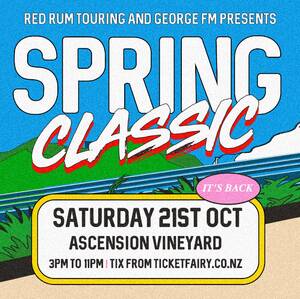
When it was open, event admission varied widely by program. Free daytime wine tastings and tours at the cellar door were (originally) available by appointment, while ticketed events ranged from small-film screenings to festivals. Concert prices depended on scale: small concerts might cost in the range of NZ$40–$70, while full-day festivals like the Spring Classic (an October 2023 dance event) had multi-tier, mid-three-figure tickets. (For example, the Spring Classic 2023 flyer simply stated “Tickets are now on sale” for an Oct 21 event – official pricing was handled through an online ticket platform www.ticketfairy.com .) Certain events had age limits (e.g. Highlife parties were 18+), while many community concerts were family-friendly. Generally, shows could sell out, so tickets often went on sale weeks or months in advance via Eventfinda, TicketFairy or similar sites. Box-office sales on the day might only exist for small events – for major shows, pre-purchase was advisable.
Tickets and Booking
Ascension itself did not operate a public box office. Buying admission to concerts and festivals held at the estate required going through third-party ticket vendors or the event organizers. For instance, ticket search sites like TicketFairy listed Ascension events; as one example, the “Spring Classic 2023” event page showed an August 11 public onsale date for an October concert at Ascension www.ticketfairy.com . This means that to get tickets you typically needed to visit the specific event page (e.g. on TicketFairy or Eventfinda) and purchase online in advance. Smaller events might sometimes have limited walk-up sales if not sold out, but generally popular shows (especially multi-act festivals) recommended buying early.
Box-office pickup at the venue was generally not advertised; instead all tickets were digital or printed from home. Likewise, Ascension did not sell tickets to outside audiences for its private weddings or corporate functions – those were by invitation only. For those types of functions, the venue adopted a “request a quote” system. Wedding and corporate clients had to contact Ascension directly (by phone or email through their website) to arrange private bookings and catering. The official site provided a contact number and “request a quote” form for weddings . If you were planning a private event like a wedding or conference, you would engage Ascension’s event sales team well in advance: couples could download wedding information packs or call the office to reserve dates. In that sense, the estate behaved like a dedicated events complex, handling all arrangements in-house once booked, rather than selling individual tickets to an open public.
Ticket prices for public events generally varied by event size and format. Smaller evening shows at Ascension (such as acoustic concerts or comedy nights) might be quite affordable (likely in the NZ$30–60 range), whereas major outdoor festivals were considerably higher. For example, springtime dance festivals and New Year’s parties at Ascension often sold $80–120 “full event” tickets. VIP or early-entry packages might push prices higher. Note that all such information was event-specific: potential attendees were expected to check the particular show’s ticket listing. The key takeaway is that Ascension’s own role was venue provider – ticketing logistics were handled entirely by promoters, and events typically sold out well before doors.
Seating and Layout
The layout at Ascension Wine Estate combined indoor and outdoor areas. The centerpiece was the Belfry Function Centre – a large indoor hall that could seat up to about 220 guests wedding-style . Internally, this hall featured a raised stage area, sliding soundproof dividers, and flexible seating. For example, the venue’s own marketing notes that the Belfry could be configured to “suit your group event layout”, with ergonomic chairs and modular floor-to-ceiling partitions . In practice, this meant the space could be set up with theatre-style rows for a presentation, or round tables for a banquet. The side seating or balcony (if used) might have slightly limited sightlines, but the room was rectangular so most tables would face the stage. A private bar and restrooms were part of this indoor complex .
Amenities in the Belfry enhanced the seating experience. In addition to chairs, there was built-in sound (PA) and professional lighting infrastructure, meaning acoustics and sightlines were usually well addressed. The design even accounted for light control: large windows gave natural light during the day but could be fully blacked out for show presentations . Climate was comfortable too, thanks to air conditioning. Overall, the indoor hall was quite modern and theatre-like for a country venue, so audiences seated there enjoyed a controlled environment. The spacious high ceiling and warm fireplace (in the adjoining dining space) also gave the hall a memorable atmosphere, unlike a typical conference hall .
Outside, the estate’s rolling lawn and courtyard areas served as the main general-admission zones for big concerts and festivals. There were no fixed seats outdoors – people stood, brought folding chairs or blankets, and mingled casually. The main stage for these events was usually set up at one end of a grassy field or near the orchard. Sightlines in the outdoor space were generally good if you stayed toward the center; the site was essentially flat with only a slight gradation upwards, so even distant viewers could usually see the stage over the heads of those in front. Sound was projected from professional PA stacks, so even attendees at the spread-out cocktail tables and lawns could hear fairly clearly (though open air means some bass is absorbed). The venue sometimes laid down temporary seating (fold-up chairs) or picnic tables around the gardens for casual events, but for most music events the layout was open. In between these large lawn spaces and the main building were landscaped courtyards and a vineyard terrace. While these weren’t formal seating zones, they provided small clusters of tables or benches for drinking and resting – good vantage points for the stage sound with a glass of wine in hand.
A visitor’s view depends on the event: indoor audiences can choose a front row or side row seat for clear views of a speaker or performer, whereas outdoor attendees might prefer standing near the center stage or seated at the picnic benches for balanced audio. There were no “bad” section per se – the entire outdoor lawn was used. Inside, front and center rows of tables normally got the best views during presentations, while those seated farther back might rely more on large video screens (when provided) or complementary sightlines. The venue did avoid obstructive pillars, and the fact the Belfry could be blacked out meant no glare. In sum, the venue was designed to keep everyone comfortably engaged with the event: the built-in AV and handsome interior chief among the features everyone could appreciate .
Getting There and Parking
Ascension Wine Estate sat at 480 Matakana Road, Matakana, Rodney (postcode 0985), on the northern side of Warkworth. Google Maps or GPS refer to it simply as Ascension Wine Estate, Matakana. From central Auckland, it is roughly 40-45 minutes away (about 60 km) via State Highway 1 and access roads . Visitors headed from the city would take SH1 north to Warkworth, then turn onto Matakana Road and follow it a few kilometers east toward the village. To avoid missing signs, look for the large vineyard entryway and the stone bell-tower structure. Because Matakana is a well-loved wine region, roads are generally drivable by any car, but watch out for holiday traffic on summer weekends.
By public transportation, Matakana is slightly off the main transit routes but still reachable. Travelers can take a coach to Warkworth and then catch a local bus (Auckland Transport route 997) to Matakana . The bus ride from Warkworth to Matakana is very short (about 10–15 minutes); the Rome2Rio travel planner notes the 997 bus costs around NZ$4–$6 and takes roughly 14 minutes for the 9.2 km trip . The bus stop in Matakana (Riverglade Lane) is a few blocks from Ascension, so it would require a 10-minute walk. There is no train station near Matakana – the nearest major train station is in central Auckland, so public transit users typically need to transfer to bus or shuttle in Warkworth. During special events or festivals, Ascension organizers sometimes offered chartered shuttle buses from Auckland, Warkworth, Mangawhai or Omaha www.ticketfairy.com ; those ran only on event days.
For those driving, there is ample free parking onsite. An extensive gravel and lawn lot lay in front of the function center and restaurant building. In fact, the new church now on the site still advertises “ample parking” as one of its improved facilities , which reflects the original design. Parking spots included a few marked accessible spaces near the main entrance. On a regular day with lunch service, overflow parking crept up onto the grass aisles, but it never appeared constrained for large events; for big concert nights, attendants directed cars tightly but orderly around the fields. Rideshare drop-off (e.g. Uber or safety driver drop-off) was usually at the front gate, and taxis could line up on Matakana Road in front if needed. Keep in mind that after dark the rural road to Matakana is narrow and winding, so drive slowly. In peak visitor season, allow at least an extra 10–15 minutes to find parking and gate entry.
Inside the Venue
Upon arrival at Ascension, guests would enter through a main gate or through a large parking area adjacent to the function centre building. Security and bag-check screening typically occurred at this initial entry for ticketed events. Once inside, one found a relaxed and rustic-chic country atmosphere. The first thing many noticed was the high-ceilinged main hall (the Belfry). Inside that hall, rows of lighting trusses and a stage area (with professional sound and lighting) dominated for performances. Decor included elegant wooden beams, oak doors and a wrought-iron chandelier, which together gave a winery-meets-hall aesthetic. If one entered the Osteria restaurant area (usually off to the side or first floor), there was a large schist stone fireplace that provided a cozy centerpiece . Both spaces were furnished with high-quality wooden tables (often set with wine glasses and menus) and padded chairs that guests praised for comfort. Being prepared for different seasons, the hall had air-conditioning for humidity and heat, as well as ceiling fans and the fireplace for cooler weather, so comfort was consistently managed.
For large events, access to the field and amphitheatre was through double doors off the rear of the hall or via a side patio. Those outdoor lawns were lawn and gravel, so the venue recommended flat-soled shoes. Concession stands were set up nearby for drinks and festival foods. During music festivals, multiple fixed bars popped up along the veranda outside, offering beer, wine and mixers. Alternatively, private functions might instead open the indoor bar. Restrooms were conveniently located just off the lobby of the Belfry, away from the main traffic, and separate ones for women and men meant short lines even after a show . Some events also provided portable toilets in the back fields, but the goal was to keep patrons near indoor facilities if possible. There was no cloakroom area in normal operation (guests usually left coats on chairs or hung them at their tables), but high-value item storage was not encouraged when bookings were by reservation. Overall, the layout kept all key amenities within a minute’s walk no matter where you were in the compound.
The food and drink experience inside Ascension was an important aspect. On typical days, the venue’s restaurant (often referred to as The Larder or Osteria) was the focus – known for wood-fired flatbreads, artisanal cheese platters and charcuterie to pair with wine. Patrons at lunchtime could enter the cellar door tasting bar to try Ascension’s own Pinot Gris, Verdelho, or Riesling by the glass, then wander into the dining room for a Mediterranean-style meal. Large events took advantage of these options: weddings featured multi-course dinners from the kitchen, while public concerts had multiple gourmet food trucks parked nearby (lawns allowed plenty of space). In all cases, the on-site catering team aimed to meet high standards: on their promotions Ascension boasted “award-winning food” service . However, visitor comments were mixed – some praised the cuisine as “innovative and delicious,” while a few reviews noted portion sizes for event parties could feel small for the price. In any event, the focus was on quality ingredients (often local) and good wine pairings rather than fast-food fare.
Connectivity inside the venue was modern for a rural winery. The Belfry’s boardroom spaces and main hall were equipped with complementary Wi-Fi for guests . This was very useful for corporate events and media crews during concerts who needed internet access. Of course, mobile phone coverage varied: in good weather one could usually get 4G service in the restaurant and near the parking area, but in some spots among the vines it was weaker. Ascension also had space for on-site merchandise or displays during ticketed events: typically a souvenir table or local artists’ stall by the lobby in daylight. By evening though, the focus shifted to lights and music, and these areas were cleared for dancing or mingling between sets. A small coat closet might be set up for weddings (the space off the main bar could be repurposed) but generally, coat checks were informal.
Nearby Amenities
Matakana is a tight-knit town well known for its dining and artisanal shops, and many visitors to Ascension combined a show with other local attractions. For example, excellent restaurants are just minutes down the road. Notably, Plume Restaurant (about 2 km away) is a celebrated fine-dining spot; Aldo’s bistro (1.5 km away) offers modern Italian fare; and Charlie's Gelato Garden (also 1.5 km) serves house-made sweet treats. The popular Bridgehouse Lodge (2 km out) is both a boutique B&B and has a New Zealand cuisine menu at its on-site restaurant. Many event attendees would arrive a few hours early to enjoy lunch or an early dinner at one of these spots, or grab coffee at the nearby cafes. For casual pre-show bites, the town center also hosts pizza shops and meat-and-three stands, as well as the small Matakana Co-op supermarket if you need snacks or supplies.
As an area famed for wine, Matakana offers dozens of vineyards within a short drive. If time allows, one could tour additional wineries or art galleries in the afternoon before a show. Nearby friends might recommend visiting characterful venues like Brick Bay (1 km north) or Parakai Springs (10 km) on the way, to make a full day of it. As for accommodations, Matakana has a few boutique lodgings and B&Bs (like Plume Village lodges or boardwalk cottages), but no large hotels. Usually guests coming from far afield would either stay overnight in Matakana’s few farm stays or return to Warkworth (~10 km west) for motels and hotels of all categories. Warkworth has major supermarket options and chain restaurants, in contrast to Matakana’s more rural charm.
Regarding the timing of arrival, it was generally advised to show up at least 30–60 minutes before ticketed events. Rural roads can be trickier in low light, and concert parking lots often filled up quickly. If you had a dinner reservation at the venue’s own restaurant, arriving an hour before was wise. Post-event departures could be slow when many cars left at once, so bear in mind the return trip might take a bit longer if everyone is headed back to Auckland at midnight. Taxi and ride-share services in Rodney are available but limited; on weekends they book fast. There was a local “Matakabs” service for taxi/shuttle (as the community encourages), but in practice most public event crowds drove themselves or used event buses. A tip for late-night travelers: keep your phone charged for taxi calls, and know that the new church site’s phone number (0800 XXX, now on Google) is often monitored by community volunteers who could help if needed.
What Makes This Venue Special
Ascension Wine Estate stood out in the Auckland region for its rare combination of elements. Visually, its architecture evoked an old-world European estate more than a typical NZ winery. The name “Belfry” itself hinted at the bell tower and chapel motif, and visitors often remarked on feeling as if they’d stepped into the Tuscan countryside . The presence of a schist church-like tower and arch actually fit the name and foreshadowed its eventual fate as a church site. Moreover, Ascension was one of the first Matakana vineyards to invest heavily in an independent events centre, rather than just hosting events in a tent or adjacent farm. Its in-built meeting rooms and dedicated catering team meant it could deliver “world-class” service in a rural setting, blending Auckland business culture with a vineyard retreat. These high standards, along with the promise of award-winning cuisine and artfully made wines, gave Ascension a genuinely upscale aura among the region’s typically rustic venues .
Culturally, Ascension made local history by hosting notable international-level events. Highlife Festival, for example, became a magnet for the country’s club scene – a festival brand that moved here after outgrowing smaller venues. For the local community and beyond, hearing big names or tribute shows under Matakana’s night sky was a novelty, making Ascension a pilgrimage site for music fans. Weddings held there also generated local lore: many couples specially remembered saying vows in the vineyard rows or dancing under the stars with the vineyard lights on. When word of its closure came, it was quite a blow to the Auckland events scene, showing how cherished the venue’s “wine-country party” image had become. One journalist even labeled it a “gateway to Auckland’s northern coastal playground” to indicate its signature status .
Inside or outside, Ascension’s ambience had a relaxed but festive vibe. The combination of rolling vines, the ornamental courtyard fountain and Italian flavors (including oak taste in the wines themselves) made an atmospheric whole. Artists and performers often commented on how the setting itself – vines glowing at dusk, scents of herbs from the potager garden, the rustic gravel paths – put audiences in a good mood before the show even started. Local traditions grew around this: for example, it was not uncommon for concertgoers to sip a glass of Ascension’s Verdelho or Rose beforehand on the lawn or to picnic among native plantings if the weather was fine. And from an operational perspective, the venue’s technical capabilities in sound and lighting impressed touring crews – it was easier than many suburban venues to rig up a full-production concert inside the Belfry. In short, artists loved playing there and guests loved the unique blend of vineyard relaxation and city-standard event production. That synergy of laid-back authenticity with polished execution is what made Ascension Wine Estate special.
Visitor Tips and Information
Accessibility: The main function centre was designed with accessibility in mind. There were ramps at building entrances, and the ground floors (including the restaurant and gift shop areas) were wheelchair-friendly. The new church media release even notes “improved accessibility” at this location . Two accessible car parks were reserved near the front entrance. Bathroom facilities in the Belfry included wheelchair-access stalls. Outdoors, some lawns had gentler paths to the stage, but the vineyard rows and gardens were on gravel/dirt, which could be uneven – a plus would be adequate traction footwear. Infants in strollers could wheel around the patios easily, though navigating between tables in crowded events could be tight.
What to bring: For daytime visits or warmer shows, bring sun protection (hat, sunscreen) – Matakana’s north-facing vineyards get strong sun. Bring insect repellent too, especially in spring/summer evenings; a few mosquitoes can circulate around dusk. A folding chair or picnic blanket was handy for outdoor concerts or casual lounging, though the venue sometimes provided bench seating. For indoor events, jacket the attire up a bit (smart casual) – the ambiance was elegant but not stiff. Since prices for food and drink skewed gourmet, some guests pack extra cash or card. Don’t forget some cash for off-menu wine glasses or cash-only vendors; while major purchases accepted card, festival kiosks might not. A small bag or backpack is fine, but large coolers were not permitted. If attending a party, check the event’s age policy – many music festivals required 18+ ID at the gate.
Arrival and parking: Allow extra travel time – even though Ascension is close to the motorway, the last few kilometers through rural Rodney can be slower, particularly with holiday or weekend traffic. Arrive early for popular events so you can find an easy parking spot nearest the venue. The on-site parking was free and plentiful, but spilled into grass lots on busy nights. Keep noise and speed low when parking so as not to disturb wildlife or neighbours. If you must drive after an evening event, remember that the drive back on Matakana/Warkworth roads is mostly winding and dark – a sober designated driver or taxi is advised if you plan to drink.
Avoid common mistakes: Check event details carefully before showing up. Since Ascension is now closed, some older websites may still list it – always verify the current schedule via the event organizer. If planning to use Ascension’s restaurant (formerly open by booking), note that bookings were required in advance – you couldn’t just walk in. (Since closure, the restaurant is no longer operating.) Also, Matakana can be quite a wine-tourist area on weekends, so roads and the single general store in town fill up fast. It pays to combine a winery visit or town stroll with your event trip if time allows. Finally, remember that many events were weather-dependent – outdoor concerts would often proceed rain or shine (with cancellations only in extreme cases), so bring a waterproof jacket or umbrella for drizzle, but avoid folding umbrellas that block others’ views.
Age and COVID policies: Age restrictions varied by show. If attending a festival like Highlife or Spring Classic, you needed to be 18 or older (ID checked at entry). Some daytime wine tasting events were family-friendly. During 2020-22, Ascension followed New Zealand’s COVID guidelines: masks indoors when required, scanning in via the government QR app, and hand sanitizer stations were available. If attending an older event listing, note that policies have since changed. As of 2025 these pandemic measures are off, but for historical events Ascension had always adhered to government event rules at the time.
Emergencies and contact: Since the venue was in a rural area, cell reception could drop in some spots. In an emergency, dial 111 (NZ emergency services). The venue phone (09-422-9601) was staffed during open hours, but check online if it’s been decommissioned. First aid kits were on site during events, and security personnel or on-duty managers could assist if needed. As with any large event, take note of your nearest exit when you arrive. Lastly, if looking for the estate’s brochure or wine info now, note that their website says tours were by appointment (Wed–Sun, 11am–4pm for groups of 4+) – a practice that ceased when the business closed, but a useful benchmark of their old schedule.
Frequently Asked Questions
Is Ascension Wine Estate still open?
No. Ascension Wine Estate function centre ceased operating around 2023. In early 2025 the site was repurposed as the Holy Name Catholic Church at Matakana . All concert and dining operations have ended, and the buildings no longer offer public tours or events. Visitors should verify any planned activities, because the former winery is now closed to the public.
How do I get tickets for concerts or events at Ascension?
When Ascension was operating, tickets were sold through third-party promoters (such as Eventfinda or TicketFairy) rather than at the venue itself. You would typically purchase in advance from the specific event’s page, or via the event organizer’s official site. For example, the Spring Classic 2023 festival had tickets on sale through TicketFairy starting weeks before the show www.ticketfairy.com . If an event was not sold out, limited door sales might have been possible, but this was rare for large shows.
Where and how can I buy tickets for private functions or weddings?
Ascension’s private functions (weddings, conferences, etc.) were arranged by direct inquiry rather than traditional ticketing. Couples or companies had to contact the venue (by phone or online form) to request a quote for their date, as shown on the original website . In other words, there was no public ticket – you booked the entire venue for your event through the Ascension events team. Note that since the venue is now closed, these booking options are no longer available.
What are the seating arrangements inside the Belfry Function Centre?
The Belfry was a versatile hall with a capacity for roughly 200–220 guests. Seating could be arranged banquet-style (for dinners or ceremonies) or theatre-style (for presentations or performances). The hall was modular – it had floor-to-ceiling soundproof partitions, allowing it to be split into smaller rooms if needed . Generally, front tables/chairs closest to the stage gave the best view. For conference events, rows of chairs with aisles were common; for weddings, round tables were placed with the head-table at the front. All seats inside had clear sightlines to the stage or main area, as the space was unobstructed by pillars. .
Where can I sit or stand for the best view during outdoor concerts?
All outdoor concerts at Ascension were held on the open lawns, so there were no fixed seats. Best viewing spots were generally on the central lawn area near the stage, or along the paved pathways where portable chairs might be set up. Some people preferred standing or lawn chairs close to the sound speakers (which were usually left and right of the stage) for fuller audio. Attendees would often spread out on the grass or used benches at the back. The venue was mostly flat, so even those further back could see over the crowd. Because it was a festival-style setup, bring a folding chair or blanket if you want guaranteed seating.
Is Ascension Wine Estate wheelchair accessible?
Originally, Ascension made efforts to be accessible. The main building entrances were on level ground, with ramps for wheelchair access. Inside the Belfry, there was an accessible restroom stall. Parking lots included designated accessible spaces near the entrance. The building’s event areas (restaurant and function hall) had no steps. However, be aware that outdoor lawn areas were on grass and gravel; navigating a wheelchair or stroller on uneven ground could be challenging. A source describing the site’s later use as a church even mentions “improved accessibility” and “ample parking” , which suggests the property was generally accommodating to mobility needs.
What transportation options are there besides driving?
Matakana is somewhat off the main transit corridor, but you can reach it without a car. A local Auckland Transport bus (Route 997) runs from Warkworth to Matakana several times daily . From Auckland, one could take a bus or coach to Warkworth and transfer onto the 997 for the short ride to Matakana. Taxi and rideshare services (Uber, etc.) can also be used, but availability is limited outside Warkworth. Notably, special event shuttles were offered during some festivals (e.g. pre-booked buses from Auckland, Mangawhai, Omaha and Warkworth to Ascension on event day) www.ticketfairy.com . In general, driving in is easiest; otherwise plan to catch a Matakana-bound bus from the Warkworth station area.
Is there parking available and is it free?
Yes. Ascension had a large free car park that could accommodate hundreds of cars. It was located immediately in front of and beside the main function centre and restaurant. There was no charge to park. On big event nights, parking attendants sometimes guided vehicles to maximize space, but at most times there was plenty of room. The lot included a few marked accessible spots near the entrance. Since the property has become a church, this “ample parking” is still advertised for parishioners .
How can visitors with wheelchairs or strollers access the venue?
Guests with mobility aids could enter the main buildings via ramped or level entrances. The indoor event areas and restrooms were on ground level, so a wheelchair could move around inside. However, the outdoor areas and gardens had gravel paths and grass, which are less smooth. During private events, staff could often prepare a clearer route outside, but it was not guaranteed. If you require assistance, contacting the venue ahead of time was advised. (After closure, the new owner mentions “improved accessibility” at the site , but in practice the vineyard terrain may still present some difficulty.)
What time do gates typically open for events?
Gate opening times depended on the event. For outdoor concerts or festivals, gates often opened a couple of hours before showtime. For example, a typical evening music event at Ascension might start at 7pm with gates at 5 or 6pm, allowing guests to arrive early and explore the venue. For daytime wine tours or restaurant visits, Ascension used to operate roughly 11am–4pm on weekends , so bookings or tastings started around 11am. Always check the specific event’s instructions – organizers usually include the door time on tickets or event pages.
What items are prohibited inside Ascension during events?
Standard venue rules applied. Visitors were not allowed to bring their own alcohol, weapons, or large coolers. Outside food was usually not permitted during ticketed concerts, though personal water bottles were fine. Flash photography or video recording with professional equipment was typically prohibited unless specified (especially for paid public shows). Small purses and cameras were allowed. For large events, management would post a list of banned items (commonly no umbrellas in seated areas, no glass bottles on lawns, etc.). In summary, treat it as you would any concert/festival: bring minimal bags and leave yourself mostly free to enjoy the show. Excess luggage or picnic baskets were discouraged.
Are there food and drink options available at the venue?
Yes. On normal days, Ascension operated a resort-style restaurant (sometimes called The Larder or Osteria) and a cellar door for wine tasting. Guests could enjoy Italian-inspired pastas, gourmet platters and Ascension’s own wines indoors. During public events, the venue usually set up multiple food and beverage stations outdoors. Festival-goers could find hot food trucks (burgers, pizzas, ethnic cuisine, etc.) as well as licensed bars serving beer, cider and wine. The onsite bar in the function centre also served drinks for private bookings. Keep in mind that local drink suppliers are upscale, so prices are generally on the higher side (as of the last operations, a glass of wine might be NZ$12–15, and dinner entrees NZ$30+). Cheaper snacks or BYO was not standard practice at ticketed events, though souvenir bottled water was always sold at small cost.
What accessibility features does the venue have?
The venue provided several accessibility accommodations. There were two designated disabled parking spaces right at the entrance. Ramps and wide doors allowed wheelchair access into the main buildings. Once inside, the floors were mostly level with no steps. Indoor restrooms included an accessible stall. Signage was visible and clear. Staff were also trained to assist patrons with limited mobility if requested. For example, the property’s later use as a church stated it offers “improved accessibility” and “ample parking” , reflecting the original design. Visitors could move around the cafe and bar areas freely. Outdoor areas were more challenging due to gravel paths, but volunteers or staff often could help move wheelchairs through the main lawn gate if needed.
Can I bring children or pets to events?
Age rules varied by event. Many concerts (especially dance festivals or evening shows) were 18+ only. However, some concerts and community events were family-friendly and allowed all ages (often with cheaper kids’ tickets or free entry for littlies). Always check the event’s policy. As for pets, Ascension did not generally allow animals on the grounds, except service dogs. The estate was not a pet-focused park; grass and livestock smelled might be stressful to some animals, and pets can disturb wine country operations. If you wanted to stroll the wineries in Matakana with your dog, other vineyards might be more pet-friendly. For Ascension, it was safest to assume no pets unless explicitly advertised.
Is photography allowed inside the venue or during concerts?
For private events (weddings, functions), guests often took photos freely. The estate’s picturesque setting made it popular for photo shoots. However, for paid concerts and festivals at Ascension, photography rules were stricter. Typically, only mobile phone snapshots for personal use were allowed. No professional cameras or video recording was permitted without media credentials. The venue often posted clear “No Professional Photo/Video” signs at gates. Always respect the on-site signage or staff instructions. Remember that flash lighting can be a distraction to performers, and many artists require no flash in their contracts. In short, mobile casual photos were fine, but leave your DSLR or camcorder in the car unless given explicit permission.
Is there a coat check or locker service?
There was no permanent coat-check counter. For most events (like concerts and weddings) guests simply kept personal items under their chairs or at their tables. The venue staff did not usually offer a coat-check service unless it was a large indoor banquet or reception, in which case they might temporarily hang coats in a back room. That said, it was wise not to bring valuables you needed secured. If coming in winter, bring a sturdy hanger or small bag for your jacket, as jackets often piled onto seats or were draped over chair backs. For larger items or anything not meant to get wrinkled, leaving them safely in your car was best.
Does the venue have Wi-Fi or cell reception?
Inside the Belfry function centre, complimentary Wi-Fi was provided to guests and was generally reliable . This allowed conference attendees or event staff to stay connected. Mobile phone reception was mixedeven. In the restaurant and main hall areas, you could usually get 4G coverage from New Zealand’s major carriers. However, once you moved to the farther lawns or vineyard fields, signal could weaken (especially if the weather was poor). For emergency cell service, there were usually at least 2 bars of 4G near the main building, but plan accordingly if you need constant data outdoors. Some event organizers also set up their own temporary Wi-Fi hotspots for attendees as needed.
Are restrooms and other facilities available throughout the venue?
Yes. The indoor function centre contained its own restrooms (separate men’s and women’s facilities) that attendees could use during events . Additional portable toilets were often stationed near the outdoor fields during large concerts. Water fountains were not mentioned – expect to rely on the bathroom sinks or bring a water bottle. Behind the scenes there were staff restrooms for employees. For conferences, there were likely small breakout lounge areas or foyers by the lobby to it. Coat racks might appear for a gala, but no locked lockers or showers were on site. Basically, once you’re inside or near the building you have a restroom at hand; otherwise, just plan short trips to the building during an event.
What is the capacity of the venue for events and concerts?
The indoor Belfry hall could comfortably accommodate about 200–220 seated guests for a wedding or banquet . For standing-room concerts or festivals on the lawns, the capacity was much larger – thousands could theoretically fit on the open space. In practice, event organizers usually capped outdoor festivals at a few thousand for safety. The SharedSpace listing even indicated capacity “10–2,000 people” overall , reflecting that wide range. So you could think of the hall itself as a few hundred maximum, while the grounds are only limited by local council event thresholds and available parking. Always check the specific event’s stated capacity; but in any case, the space was designed to flex for both intimate dinners and large outdoor shows.
When was Ascension Wine Estate opened?
Ascension Wine Estate was established in the mid-1990s. That is, founding owner Darryl (or Daryl) Soljan and his wife Bridget opened the winery and function centre around 1994 . Over the next two decades it developed a reputation and gradually expanded its facilities (the Belfry complex and restaurant were added later on). It remained privately operated until the 2010s, when it faced financial troubles and was eventually taken over by new owners after a 2013 receivership . The venue continued under their management for another decade before closing in the early 2020s.
Give a brief timeline of Ascension’s history.
The estate opened in the mid-1990s (around 1994) by Darryl & Bridget Soljan . It thrived as a winery/restaurant venue before financial issues hit. In 2013 it went into receivership and was sold to new owners who reopened it in 2014 . The Sipka family later took full control. By 2019 the hospitality side was struggling again (even offered for lease), and it effectively stopped public operations during the Covid years. A 2023 article reported it was “largely closed to the public” and on the market . Finally, in early 2025 the property was granted as a new Catholic church, officially ending Ascension’s run .
What amenities does the surrounding Matakana area offer?
Matakana village is rich with amenities. Dining options include high-end restaurants (like Plume and Aldo’s), casual cafes, and a famous gelato shop . There are boutique shops, galleries and a Saturday farmers’ market in town. Accommodations range from bed-and-breakfasts to lodges (e.g. The Bridgehouse). The region is dotted with other wineries (Brick Bay, Parakai, Providence, etc.) which often welcome guests for tastings and have their own cafes. The local Warkworth (10 km away) has larger hotels, supermarkets, and services. In short, as a visitor you are well served by food, art and wine-country options when in Matakana on an Ascension outing.
Are there any famous or notable performances that took place here?
Yes. Ascension attracted a number of well-known acts and productions over the years. For example, New Zealand’s top band Fat Freddy’s Drop played there in 2016, and internationally minded events like Highlife featured overseas DJs from the UK . Tribute shows for rock legends (Queen, Hendrix, Leonard Cohen) drew attention in the late 2010s . While Ascension was not a world-famous stadium, within Aotearoa it was recognized as a premier regional venue – many performers mentioned the unique vineyard setting as a highlight. Dedicated followers often recall its stage as a memorable site for mid-sized gigs.