About HUE Lounge & Nightclub
HUE Lounge & Nightclub was an upscale dance club and lounge in San Francisco’s historic North Beach neighborhood (447 Broadway, between Montgomery and Kearny Streets) . Owned by entertainment entrepreneur Bennett Montoya, the venue originally opened as “Atmosphere” in 2008 and was rebranded as Hue in 2015 . The name “Hue” reflects its signature color-changing LED lighting system that bathes the white interior in vibrant colors . It spanned roughly 8,000 square feet with a capacity on the order of 400 patrons . As a two-room club, HUE combined a front lounge (the “Blue Room”) for cocktail-style socializing with a back performance space (the “Red Room”) for dancing and live music . Opening night featured a DJ set by Taboo of the Black Eyed Peas , and in the years that followed HUE hosted hip-hop, R&B and Latin dance parties, aiming to reinvigorate Broadway’s nighttime scene . The interior was designed to be sleek and modern – for example, the lounge was outfitted with white leather sofas and bar tables and promises of light bites like sushi – creating a lounge-like atmosphere for pre-dance socializing. Notably, after its 2015 debut HUE became known as one of San Francisco’s few remaining clubs catering to hip-hop and R&B crowds; the owner even filed a federal discrimination lawsuit alleging the venue was unfairly targeted by police because of its predominantly African-American clientele and music focus . Overall, Hue stood out as a modern, high-energy hotspot intended to inject new color and vibrancy into North Beach nightlife .
Events and Programming
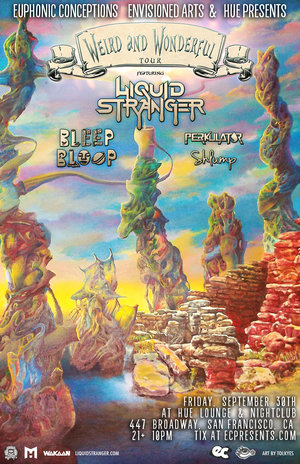
HUE hosted a wide variety of events, from DJ dance nights to live music performances. The club’s calendar often featured local and regional DJs spinning Top 40, hip-hop, EDM and Latin beats, as well as guest artists and themed parties. It gained a reputation for festive, late-night events – for example, reviewers recall a popular Halloween dance party that kept guests dancing past 1 a.m. . Regular programming included themed nights such as Sunday Latin dance socials (bachata nights) complete with dance lessons . Notable past acts included hip-hop artist Jidenna, who headlined a show on March 30, 2019 , as well as after-parties for Bay Area R&B stars (the owner had hosted post-show events for artists like G-Eazy and Miguel under the club’s earlier incarnation) . Concerts and special events often required tickets or cover charges; for example, HUE’s grand opening was ticketed through an outside sales outlet . In general, cover charges and ticket prices varied by event – small weekly dance parties typically had modest door charges (often in the low tens of dollars), while big-name concerts or one-off shows could be more expensive. Bottle service and table packages were an upscale option, with reserved seating areas available for large groups. Because the club drew an energetic crowd, shows and parties at HUE tended to start late (often around 10–11 p.m.) and continue into the early morning. (City permits eventually restricted live music to earlier hours – for example, in 2017 a six-month ban on after-midnight live music was imposed – but by 2019 the club had demonstrated good neighbor relations and the Entertainment Commission allowed entertainment until 1:45 a.m. .) Ticket sales and event announcements were typically handled via HUE’s official channels and affiliated promoters; advance purchase was recommended for popular shows.
Tickets and Booking
Tickets for HUE events were usually sold in advance through the club’s own promotions or authorized sellers (e.g. an online ticket vendor was used for the 2015 grand opening ). For many dance nights, patrons could also pay cover at the door if space allowed. In practice, popular or ticketed shows often sold in advance, so the safest approach was to buy early once an event was announced. As with most nightclubs, a guest list or group table reservation could sometimes reduce or waive the cover, but advance purchase ensured entry. When HUE was active, entry fees typically fell in the range of roughly $10–20, though prices varied by event and night of the week. Bottle service and VIP table packages were available on most nights; pricing for these depended on the bottles selected (customer-reported bottle prices ranged from a few hundred dollars to over $1,000 ). Since HUE is currently closed (as noted below) there are no active event schedules or ticket sales; historically, the best way to hear about upcoming events was to follow the club’s official listings and local nightlife calendars.
Seating and Layout
The venue was broken into two main areas. In front was the intimate “Blue Room” lounge, with white leather sofas, high-top tables and a bar – designed for casual mingling . In back was the larger “Red Room” dance hall: a multi-level space with tiered white seating, mirrored walls and a stage for DJs and performers . This arrangement meant most of the action was focused around the dance floor and stage. In practice, HUE operated primarily as a general-admission, open dance club, with no fixed theater-style seating. Deposit-holding groups could reserve VIP tables along the side aisles (the airline-style benches) near the stage. One reviewer notes that “a lot of priority has been given to the dance floor” and that the venue felt “a little small” with most guests on their feet . In other words, if you wanted guaranteed seating or a table, you typically had to book in advance. From an audio/visual standpoint, the sound system was powerful enough to generate complaints early on – in fact, regulators once forced Hue to keep sound at “ambient” levels after midnight . The good news for concertgoers was that once admitted, most vantage points had clear views of the stage: dance floor spots offered ear-level immersion, while the raised platforms gave VIP guests a higher overlook. In summary, the best experience depended on preference: up-close to the DJ for booming bass, or in the lounge sections for a conversation-friendly setting. A travel guide even highlights Hue’s total space as about 8,000 square feet with “two spacious rooms” – reflecting this lounge-plus-dancehall split .
Getting There and Parking
HUE Lounge was located at 447 Broadway in North Beach . It was easily reached from throughout the city via public transit. The nearest BART stop is Montgomery Station (Yellow Line), about a 5–10 minute walk southeast . Many Muni buses serve nearby stops: for example, buses 12, 114, 132, and the 8AX/BX Express routes all pass close by, typically at the corner of Broadway and Montgomery . Two Powell Street cable car lines (the Powell-Hyde and Powell-Mason lines) also run within a few blocks, dropping off passengers near Washington and Taylor Streets, which is a short walk west. For drivers, parking on Broadway itself is metered and limited (pay-meter rules and time limits apply, with some free parking late at night). A more reliable option is nearby paid parking. The private North Beach Parking lot at 470 Broadway (one block east of Hue) offers about 21 spaces at roughly $4 for two hours , and it even lists several disabled-access spots . Another option is the North Beach Garage at 460 Columbus Avenue (a 5-minute walk, ~$8 for 2 hours) . Several smaller lots and garages in North Beach charge between $5–$15 for a few hours. Many guests find rideshare or taxis convenient for late-night returns. If driving, note that North Beach streets can be congested by closing time and valuables are best not left in cars.
Inside the Venue
Upon arrival at Hue, guests went through ID check and security. The club strictly enforced age verification (21+ only ) and had a visible security presence. Security staff performed bag checks and pat-downs to prevent weapons – owner Bennett Montoya himself noted that mandatory pat-downs were implemented to keep the venue safe . Expect a lively, lounge-like atmosphere inside. The lighting was dim except for the colorful LED accents, and music levels were high (especially near the speakers). Reviewers emphasize Hue’s “great vibe” and friendly staff in its modern, clean setting . The club did not serve full restaurant meals, but there was a full bar offering a wide range of cocktails . According to an event guide, “the bartender is trained to provide any modern or classic cocktails” , and the venue is known for high-end bottle service (patrons have cited this as “top notch” ). Initially, the lounge also served light snacks (one source mentions catered sushi bites for early guests ). Restrooms were available on-site (as in most clubs), and coat check was likely offered (though not widely advertised). The crowd was often diverse and energetic, with people dancing on the main floor and others relaxing in the sofa areas. Hue’s staff and bartenders were praised for being professional – in one account they were described as attentive and skilled at serving drinks . In sum, visitors should anticipate a modern nightclub experience: lively DJs or performers, a strong sound system, color-shifting lights, and a well-stocked bar. (Large purses or backpacks were probably discouraged due to security scanning.) Mobile phones and cameras were typically allowed for casual pictures, but on Instagram-heavy nights people mostly focused on the music and dance floor.
Nearby Amenities
North Beach offers many amenities within walking distance of HUE. For dining before a show, visitors could choose from a variety of Italian restaurants, delis and pizzerias along Columbus and Greenwich (a few blocks away) – North Beach is San Francisco’s famous “Little Italy.” Notable choices include casual pizza shops and sidewalk café spots for quick bites. There are also adjacent cocktail lounges and bars on Broadway itself and nearby streets: for example, one block east on Broadway is the Inn on Broadway hotel (with its bar/restaurant), and a block north on Columbus are several lively bars. Hotel options close by included small boutique inns (such as nearby Broadway Inn) and chain hotels in the Fisherman’s Wharf area (a 5–10 minute walk north or on Beach Street). Public transit (as described above) makes it easy to connect to other neighborhoods: the Powell Street cable car can take you to Union Square, and Market Street transit is just a short ride away for connections city-wide. Taxis and rideshares have drop-off points on Broadway right in front of the club. Late-night food options included pizza parlors and diners that stay open fairly late in North Beach, though hours can be limited – planning ahead is best. In general, most amenities in North Beach are oriented around the tourist and nightlife crowd, so the area around HUE is active at night. (If you need shelves or cash, ATMs are sprinkled along Broadway, but note some reviewers complained of broken machines at the club itself .)
What Makes This Venue Special
HUE Lounge stood out in San Francisco’s club scene for several reasons. Architecturally, it was designed to be bright and contemporary: critics noted its “white and shiny” motif, multi-level seating and programmable LEDs . This modernist look was a sharp contrast to the grittier dive bars surrounding it, signifying a new era for Broadway. Culturally, Hue held special significance as one of the city’s very few remaining venues focused on hip-hop, R&B and a predominantly Black audience . Owner Bennett Montoya had deep roots in the local music scene (he previously ran Atmosphere), and under Hue he continued that legacy by celebrating diverse music and dance styles. In fact, Hue’s high-profile status put it in the headlines: for example, the owner filed a civil-rights lawsuit alleging police discrimination against the club for its clientele . In 2019, local entertainment officials and neighbors publicly praised Hue’s turnaround, noting that it had become one of “the best year[s] on Broadway” with very few complaints . Many artists who played or partied there loved its energy: one reviewer calls it the “best spot to enjoy hip hop in San Francisco” . Longtime locals also felt Hue helped revive Broadway’s nightlife after years of decline . Its name and lighting system were iconic – the club was literally named for the “hue” of its ever-changing colored lights. Finally, Hue generated several memorable moments in the neighborhood’s nightlife lore, from headline concerts (like Jidenna’s 2019 show ) to dance battles and themed nights. All these factors made HUE not just another bar, but a landmark for SF’s late-night culture in the 2010s.
Visitor Tips and Information
Planning a night at Hue? Here are some practical tips. First, remember the strict age and dress rules. The club was 21+ only , so bring a valid ID. In line with its upscale image, Hue enforced a smart dress code: no athletic gear, baggy clothing, hats, or sneakers . Carry cash for tips and small purchases – multiple visitor reports mention Hue operated largely cash-only despite advertised card minimums (so have a few bills on hand for the bar or lockers). Check the clock – Hue’s events typically started late (often around 10–11pm) and ran until the early morning. By 2019, shows were allowed until about 1:45 a.m. , so plan on staying late if it’s an event you like. If you arrive at peak time (midnight hour), expect lines and a crowd – arriving around opening time can help avoid long waits. For safety, keep your belongings close. The neighborhood is generally lively but always use common sense with valuables and parking. Speaking of parking, consider using the official lot (470 Broadway) or a garage to avoid meter feeding – it can be hard to find curb spots late at night. Finally, stay connected: Hue (when open) sometimes posted schedule changes on social media, so fans would check Facebook or Instagram for the latest updates. Unfortunately, since Hue is no longer operating, any current “events” purported at 447 Broadway should be verified carefully – as of late 2025, the venue has been reported permanently closed . In any case, treating HUE like a typical San Francisco nightclub (ID, dress up, and ride-share is helpful) will help you blend right in and enjoy the night.
Frequently Asked Questions
What is the address of Hue Lounge & Nightclub?
Hue Lounge was located in San Francisco’s North Beach at 447 Broadway (between Montgomery and Kearny Streets) .
What was the capacity of Hue Lounge & Nightclub?
Hue held roughly 400 people across its two main rooms . It was a moderately sized venue – larger than a small bar but more intimate than a huge stadium. The floor plan (a 40x100-foot space split into lounge and dance areas) gave it a cozy yet spacious feel when it was full.
What kind of music and events did Hue feature?
Hue was known for high-energy nightlife. Most nights featured popular music genres – DJs spinning hip-hop, R&B, EDM and Top 40 dance music. It also hosted themed events (for example, Latin dance nights on Sundays with lessons) . Special concerts took place occasionally; for instance, hip-hop artist Jidenna headlined Hue in March 2019 . In short, Hue’s programming focused on dancing and live DJs, with the occasional live act or celebrity guest.
How did ticketing and cover charges work at Hue?
When it was open, Hue sold tickets through its official partners for big events (for example, its 2015 opening night was ticketed via an external vendor ). Many regular club nights simply had a cover charge at the door. Typical covers were in the low-to-mid tens of dollars for standard nights; special concerts or holidays could be higher. Advance purchase was recommended for popular shows. VIP bottle service options were also available for an added fee, typically booked by contacting the club’s event staff in advance.
What is Hue’s dress code?
Hue enforced a stylish, upscale dress code. Guests were expected to dress “sexy, classy, and modern” . This meant no athletic wear or baggy clothes – specifically, reviewers note that hats, shorts, sneakers and casual sports gear were not allowed . A neat pair of jeans or dress pants, a collared or fitted shirt for men, and stylish dresses or tops for women would have been appropriate. Essentially, treat it like an upscale nightclub and avoid workout or street clothing.
What age limit did Hue Lounge have?
Hue was strictly a 21-and-up venue . No minors were admitted, and patrons were required to show valid photo ID at the door. This is typical for late-night clubs in San Francisco.
Is Hue Lounge wheelchair accessible?
According to venue listings, Hue Lounge was recognized as a location for wheelchair rentals , suggesting it had at least basic accessibility (such as street-level access and perhaps an accessible restroom). That said, detailed ADA info wasn’t broadly published. If you require wheelchair access or other accommodations, it’s wise to inquire directly with the venue for the most up-to-date information.
How can I get to Hue Lounge by public transportation?
Hue was well-served by transit. The nearest BART stop is Montgomery Station (Yellow Line); it’s only a few blocks from Hue . Multiple Muni bus routes stop at or near Broadway & Montgomery – for example, routes 12, 114, 132 and the 8AX/8BX run through that corridor . In addition, the Powell Street cable cars (Powell-Hyde and Powell-Mason lines) stop a few blocks away on Montgomery Street. All of these options make Hue easy to reach by transit from Downtown or other parts of the city.
Where can I park if I drive to Hue Lounge?
Street parking on Broadway can be hard to find at night. A convenient paid lot is North Beach Parking at 470 Broadway, about one block from the club . It’s a small lot (~21 spaces) charging roughly $4 for 2 hours . That lot even has a few disabled spots . Other paid options include the North Beach Garage (460 Columbus Ave) for about $8 per 2 hours , or various overnight parking garages in North Beach (rates vary). If possible, using a rideshare or taxi is often easier late at night to avoid parking hassles.
What were the interior seating options at Hue?
Hue had no fixed auditorium seating. The front lounge (“Blue Room”) had sofa seating and high-top tables for casual gathering . In the dancehall (“Red Room”), there were stepped bench seats along the sides and back, but the center was open for dancing. In practice most guests stood or danced. VIP table packages (with reserved seating) were available to book ahead, though one commentator warns that the club prioritized the dance floor over tables – meaning you generally should reserve a table if you want guaranteed seats.
Did Hue have a coat check or storage?
While official details weren’t widely published, many San Francisco clubs (especially those opening in 2015 like Hue) typically offer a coat check for a small fee. It’s likely Hue had a coat check or lockers, but we would advise bringing as little as needed. (No source explicitly confirms this, so treat it as a common practice rather than a guaranteed service.)
Did Hue serve any food?
Hue was primarily a nightclub, but when it first opened it did offer light bites in the lounge area. For example, early reports mention sushi rolls and snacks being served to guests . However, it was not a full-service restaurant; most of the emphasis was on drinks and dancing. After HUE’s closure, nearby eateries on Columbus and Broadway would be the places to eat instead of inside the club.
What made Hue Lounge & Nightclub unique in San Francisco?
Hue was unique for its combination of modern design, high-energy programming and cultural significance. Its all-white interior with programmable LEDs (the “Hue” theme) set it apart visually . It filled a niche as one of the few SF clubs focusing on hip-hop/R&B and a diverse, largely Black audience, which even led to a high-profile discrimination lawsuit . Locals recall it as a lounge that revived Broadway’s nightlife, complete with VIP bottle service and big-city acts like Jidenna . Fans loved its “great vibe” and top-notch cocktails – in short, Hue combined upscale flair with a party atmosphere in a way that few other SF venues did.
Is Hue Lounge & Nightclub still open?
No. As of late 2025, Hue is listed as permanently closed . After operating through the 2010s, it shut down (like many clubs due to licensing issues and the pandemic). There have been no public announcements of a reopening. Always check the latest local listings if there’s any change.