About Berhta
Berhta is an active music, nightlife, arts, and production venue at 1237 W Street NE in Washington’s Brentwood neighborhood. Some property and licensing records use 1301 W Street NE, but visitors should use the 1237 W Street entrance; access is from W Street rather than T Street or V Street. The complex contains three principal event areas: the large indoor BERHTA room, the smaller indoor BETTE warehouse, and the open-air BANANAS stage.
The venue’s identity is tied to one of the most important stories in Black American media. The property formed part of Black Entertainment Television’s former Washington campus. BET, founded in Washington in 1979 by Robert and Sheila Johnson, produced programming in Northeast DC before relocating its headquarters operations to New York and leaving the W Street campus in 2017. The former campus was sold in 2021, and the soundstage is now operated by Berhta under a lease.
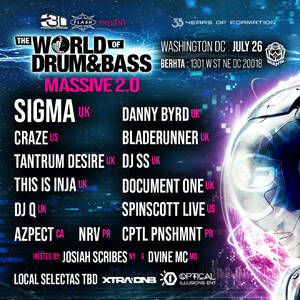
Berhta began presenting public events under its current name in 2025; no Berhta-branded programming was found for 2021 through 2024. Early listings included a January 2025 Horse Meat Disco event, followed by Flash-OFF with Sasha and Monolink, Morabito, John Digweed, WorldPride celebrations, Boiler Room DC, Sub Focus, Danny Tenaglia with Hernan Cattaneo, and a New Year’s Eve appearance by Deep Dish.
In January 2026, the District’s film and entertainment office named Berhta its Location of the Month, recognizing both the building’s BET legacy and its renewed role as a film-ready soundstage, concert hall, convention site, and creative gathering place. The government describes a 16,000-square-foot dark-room stage with green rooms and dedicated hair, makeup, and dressing facilities. The property has also been promoted as a production location with a connection to “Bridgerton.”
Architecture, Layout and Technical Specifications
Berhta retains the raw scale of a purpose-built production campus rather than resembling a conventional theater. Industrial surfaces, high ceilings, dark rooms, loading access, projection areas, outdoor yards, shipping-container bars, and flexible floors allow the complex to change substantially between events. A property brochure for the former production building lists a 32-foot clear height, an 82-foot-wide column-free area, two drive-in doors, covered loading docks, and 2,000-amp, 480/277-volt electrical service.
BERHTA , the principal indoor room, is advertised with a standing capacity of approximately 3,500 and a completely flexible open-floor plan. It can support a single large stage, multiple performance zones, or reduced-capacity immersive installations. Its sound-isolation construction includes floating floors, double walls, and professional blast doors inherited from or suited to soundstage operations.
The main room uses a custom large-format stereo point-source system designed for high output with low perceived distortion. Published specifications list 26 subwoofers, separate 12-driver and 36-driver mid-bass sections, 48 midrange drivers, and 48 high-frequency drivers. Visitors repeatedly praise the clarity and physical bass response in the central dance-floor area, although the front-of-house control position and rear partitions can create circulation obstacles and quieter areas toward the back.
BETTE is an approximately 850-capacity indoor room with tall ceilings and large projection surfaces. Its four-point, four-way digital system operates at 96 kHz and incorporates double 18-inch subwoofers, Levan horn extensions, quad 15-inch mid-bass arrays, slant-fin horns, and suspended tweeter arrays. Published peak amplification is approximately 230,000 watts. The installed Pioneer GS-WAV system is based on old-school club-speaker principles and has a pronounced dance-floor sweet spot; sound can become more reflective away from the stacks.
BANANAS is the roughly 2,000-capacity open-air area used for day parties, festivals, markets, food vendors, and evening dance events. Its horn-loaded stereo system runs four-way digital processing at 96 kHz, with 12 horn-loaded 21-inch subwoofers positioned beneath the DJ booth and published amplification of approximately 195,000 watts. Reviews have praised the outdoor atmosphere while noting that coverage can be weaker near the sides than in the center.
Lighting and visual production vary by promoter. Events have employed lasers, large-scale projection, haze, suspended artwork, immersive LEDs, moving scenery, and in-the-round DJ positions. Berhta has not published a permanent house-lighting inventory, so touring professionals should not assume that equipment used for one production will remain installed for another. The 15-ton Fluffy Cloud residency, for example, brought its own 360-degree sound, light, laser, and kinetic system rather than representing the standard house rig.
Events and Programming
Electronic music dominates Berhta’s calendar, particularly house, techno, tech house, drum and bass, bass music, disco, UK garage, and experimental club music. The venue also accommodates live electronic performances, hip-hop-oriented day parties, LGBTQ+ circuit events, community markets, wellness sessions, immersive art, film work, conventions, and private productions.
The 2026 program demonstrated the range of the complex. Bookings included Jeff Mills, Moodymann, Kölsch, Purple Disco Machine, Sven Väth, LTJ Bukem, Honey Dijon, Tiga, Avalon Emerson, Fcukers, SG Lewis, Aluna, Of The Trees, Mura Masa, Mind Against, Big Gigantic, KAYZO, Andy C, Sam Gellaitry, Deep Dish, and Rico Nasty. Multi-stage productions such as Sprung and VENUS combined international artists, local DJs, food trucks, art, and outdoor programming.
Other programming has included a tequila festival, an over-30 block party, Afro-centric day raves, Burning Man fundraisers, sound baths limited to 20 participants, and an all-ages sensory exhibition. These events show that Berhta is not simply a weekend nightclub: the rooms can operate as a warehouse rave, daytime festival site, wellness environment, film studio, or experimental gallery.
As of August 23, 2026, announced programming extended through December 2026, with future bookings including Mochakk, Floorplan, Cassian, Sasha and John Digweed, Dombresky, Hybrid Minds, TroyBoi, horsegiirL, Parra for Cuva, William Basinski, Juelz, BEAUZ, and Chus & Ceballos. No verified Berhta announcements beyond 2026 were found during research.
Tickets and Booking
Tickets are generally released through the event listing connected to Berhta’s calendar or through the presenting promoter. There is no consistently advertised walk-up box office schedule. If a show is popular, purchasing during the first advance tier is safer than relying on door sales; larger electronic bookings, Pride events, and multi-stage festivals can sell quickly.
Recent entry-level listings have commonly started around $45 to $60, while high-demand headliners, late purchases, VIP access, and specialized immersive experiences can approach or exceed $90 to $100. Prices differ considerably by promoter, room, entry time, and ticket tier. VIP reservations and table areas are offered for selected events, but food, alcohol, and drink packages are not automatically included unless the event description specifically says otherwise.
Some productions use timed admission, discounted early-arrival tickets, or separate entry for indoor and outdoor programming. Read the conditions before buying, especially age limits, arrival deadlines, rain-or-shine language, and refund restrictions. Door tickets should be treated as a possibility rather than a guarantee.
Seating and Viewing
Most music events are general admission and standing. Berhta is not a traditional seated concert hall, and no permanent public seating chart applies across the complex. Stages, barriers, bars, art installations, VIP platforms, and front-of-house positions move according to the production.
For the main BERHTA room, the most consistent sound is generally in front of and near the centerline of the control booth. The rear corners and areas behind partitions can feel quieter, while the booth itself may create a pedestrian choke point. In BETTE, the strongest experience is usually on the dance floor between or directly in front of the speaker stacks rather than along the reflective side and rear walls.
BANANAS offers room to circulate and is more relaxed during daylight events. The center of the outdoor dance floor normally provides the fullest sound. Raised wooden areas, VIP sections, and side structures can improve views, but access depends on the event and ticket type. For immersive in-the-round productions, there may intentionally be no front, rear, tables, or VIP zone.
Getting There and Parking
Berhta is in an industrial section of Brentwood at 1237 W Street NE, close to Rhode Island Avenue and the rail corridor. The nearest Metrorail station is Rhode Island Avenue–Brentwood on the Red Line, approximately a 10-minute walk. From the station, use the ramp toward the Rhode Island Avenue shopping center, cross the commercial parking area, descend toward W Street, and follow the event crowd to the marked property entrance.
The Metro station is also a bus interchange and has bicycle parking and a commuter garage. Rail is often the easiest arrival option, but many nightclub events continue until 3 or 4 a.m., after regular train service has ended. Late-night visitors should plan a rideshare, taxi, designated driver, or other return arrangement rather than assuming Metro will still be operating.
On-site parking is available for many events, but capacity and price change when the outdoor yard is used as a stage or festival area. The wider former studio property has been marketed with 168 parking spaces. Recent visitors have commonly reported approximately $20 for reserved parking, although certain events have offered free or first-come spaces. The entrance and exit can bottleneck immediately before and after large shows.
The Rhode Island Avenue–Brentwood Metro garage provides another option and has approximately 221 spaces. Weekend parking has generally been free, while weekday rates and payment rules are set by the transit authority. Avoid using private retail lots unless you are patronizing those businesses; reports of informal use do not guarantee that a vehicle will not be ticketed or towed.
For rideshare, enter the full 1237 W Street NE address rather than relying on the phone’s location pin. After a major event, walking several minutes toward Rhode Island Avenue before requesting pickup can avoid the queue at the gate. Stay with your group and remain aware of traffic, uneven industrial approaches, and comparatively quiet streets after the crowd disperses.
Inside the Venue
Entry procedures depend on the promoter, but visitors should expect ticket scanning, identification checks for age-restricted events, and security screening. Berhta’s published safe-space language rejects harassment, discrimination, non-consensual conduct, and harm, and asks guests to report problems to staff. Most club nights are 21 and older, although selected immersive programs have admitted guests aged 16 and older or all ages.
Berhta has promoted a fully cashless system at major events, with purchases made through an RFID wristband loaded electronically. Bring a working payment card and charged phone rather than relying on cash. The complex can contain several bars, including outdoor shipping-container service points, and selected festivals add food trucks, snack vendors, and local pop-ups. Regular late-night club events may have more limited food.
Electronic lockers or clothes-check systems have been offered at certain events, particularly winter parties and productions where guests arrive in elaborate outfits. Availability, price, and advance reservation requirements vary, so do not assume a conventional staffed coat check will operate every night. Merchandise is similarly event-specific.
Outside food and beverages are generally prohibited. Bag, camera, re-entry, and photography rules can change by production, and no reliable universal size limit has been published. The safest approach is a small bag containing only essentials. Professional cameras, detachable lenses, props, and bulky festival gear should be left at home unless expressly authorized.
Accessibility and Inclusive Facilities
Official listings for several Berhta immersive events describe the venue as ADA compliant. The broad ground-level floors can support wheelchair movement, and an elevator has reportedly been used to reach an upper area. However, visitors have also reported inconsistent elevator availability, floor cable obstacles, limited suitable seating, and difficulty obtaining a reserved viewing accommodation.
Guests who require a chair, wheelchair platform, companion location, low-sensory route, or step-free access should request a specific accommodation well before the event rather than relying on general accessibility language. Berhta’s normal configuration is predominantly standing, and a permanently designated accessible viewing platform has not been publicly documented. Sensory-sensitive guests should also note that many productions use intense bass, strobes, lasers, fog, and sudden effects.
Nearby Amenities
The immediate blocks around Berhta are more industrial and commercial than restaurant-oriented. Day festivals frequently compensate with food trucks and vendors. For a wider pre-show meal, Union Market and La Cosecha are a short rideshare away and offer numerous independent food counters, bars, and communal seating. Ivy City is another practical choice for breweries, distilleries, and restaurants.
NoMa and the Union Station area provide the most convenient concentration of hotels. Options include the Courtyard near the NoMa Metro, Hilton Garden Inn, Hyatt Place, and the Kellogg Conference Hotel at Gallaudet University. They are close by DC standards, but a rideshare is usually more comfortable than walking back through industrial streets late at night.
Arrive 30 to 45 minutes before the advertised doors for a normal club show and earlier for a festival, timed installation, or sold-out headliner. For late-night transportation, arrange a pickup before the final set ends or walk toward the better-lit Rhode Island Avenue commercial area before calling your ride.
What Makes Berhta Special
Berhta combines three qualities rarely found together in Washington: a genuine television soundstage, large-scale festival grounds, and club sound systems built for electronic music. Its industrial architecture is not decorative imitation; it comes from a working production campus whose rooms helped build BET’s cultural influence.
The venue has also given Washington promoters room to attempt formats that are difficult in conventional nightclubs: nine-hour indoor-outdoor festivals, 360-degree concerts, international techno double bills, community markets, queer multi-room events, projection-led exhibitions, wellness sessions, and film shoots. That flexibility has helped attract audiences from across the DMV and farther along the East Coast.
Visitor opinion is not uniformly positive. Complaints have involved crowded nights, circulation around the control booth, uneven sound at the edges of certain stages, parking congestion, and inconsistent disability accommodations. Nevertheless, repeated praise for the main room’s low-distortion sound, welcoming dance crowds, ambitious production, and sense of discovery explains why Berhta quickly became a significant part of DC’s electronic-music landscape.
Frequently Asked Questions
Is Berhta still open?
Yes. As of August 23, 2026, Berhta remains open and is actively presenting indoor concerts, outdoor day parties, immersive installations, and private productions. Its public calendar extends through late 2026. The venue began operating under the Berhta name in 2025, so older references to the site may identify it as the former BET campus or BET soundstage.
What is the correct address for Berhta?
Use 1237 W Street NE, Washington, DC 20018 for visitor entry and rideshare navigation. Alcohol licensing and property documents sometimes list 1301 W Street NE because the venue occupies part of a larger former production campus. Public entry is from W Street; there is no normal event entrance from T Street or V Street.
How many people does Berhta hold?
Published event-industry specifications list approximately 3,500 standing in the main BERHTA room, 850 in BETTE, and 2,000 outdoors at BANANAS. These figures describe the individual spaces, not necessarily a guaranteed combined event capacity. Actual attendance limits can be reduced by staging, barriers, art, VIP platforms, production equipment, and the number of rooms opened.
Is Berhta indoors or outdoors?
It is both. BERHTA and BETTE are indoor warehouse or soundstage rooms, while BANANAS is an open-air yard. Some events use only one room; festivals may connect all three. Outdoor programs are often advertised as rain or shine, but severe-weather procedures, schedule changes, and movement indoors are determined separately for each production.
What kind of music does Berhta book?
The calendar centers on house, techno, tech house, disco, drum and bass, bass music, and experimental electronic performance. Berhta also hosts hip-hop personalities, Afro-centric day parties, LGBTQ+ circuit events, live electronic acts, community markets, immersive art, and wellness programming. Its history shows a preference for long sets, international DJs, unusual pairings, and multi-stage events.
Are all events at Berhta restricted to guests 21 and older?
No, although most nightclub and alcohol-centered events are 21 and older. Selected immersive exhibitions have been all ages, and some sound-bath sessions have used a minimum age of 16. Always follow the age requirement printed for the specific production and bring valid government-issued photo identification when an age limit applies.
Does Berhta have seats?
Most concerts and dance events are standing general admission with little or no conventional seating. Art objects, swings, couches, VIP furniture, temporary chairs, or raised platforms may appear, but their presence changes by event. Guests who medically require seating should arrange an accommodation in advance rather than assuming that casual lounge furniture will provide a safe, unobstructed view.
Where is the best place to stand for sound?
In the main room, aim for the central dance floor in front of the sound-control booth. In BETTE, stay within the speaker system’s intended dance-floor area rather than against the rear or side walls. At BANANAS, the center generally provides stronger coverage than the edges. High-fidelity earplugs are advisable even where the system sounds clean.
Is there parking at Berhta?
Yes, on-site parking is offered for many events, but it may be paid, reserved, free, or unavailable depending on how much of the campus is being used. Recent visitors commonly report charges around $20 for reserved spaces. The lot can fill or become congested, particularly when BANANAS is operating as an outdoor stage.
Can I take Metro to Berhta?
Yes. Use the Red Line to Rhode Island Avenue–Brentwood and allow roughly 10 minutes to walk. The most direct route passes through the shopping-center side of the station toward W Street. Metro is excellent for arrival, but late events may finish after rail service ends, so establish a return plan before entering.
Where should a rideshare drop me off?
Enter 1237 W Street NE manually and use the designated approach to the W Street gate. Location pins placed from inside the complex can send drivers toward blocked or inaccessible sides of the property. For departure, walking toward Rhode Island Avenue or the nearby commercial area can reduce delays caused by the single-lane post-show queue.
Is Berhta cashless?
Berhta has advertised major events as fully cashless, with an RFID wristband used for drinks, food, and other on-site purchases. Procedures may differ for independently promoted programs, but carrying a payment card is safer than relying on cash. If a wristband wallet is used, review the event’s rules concerning loading, bonus credit, and unused balances.
Does Berhta have food?
Food is most dependable during daytime parties, markets, and multi-stage festivals, when food trucks and local vendors are commonly brought into the outdoor yard. A regular late-night club show may offer only limited snacks or no substantial meal. Eat beforehand if food service is not specifically mentioned, and do not bring outside food or beverages through security.
Is there a coat check or locker area?
Selected events provide electronic lockers or a clothes-check system, sometimes requiring advance purchase. This has been particularly useful for winter parties and events with elaborate dress. It is not a guaranteed nightly amenity, and capacity can be limited. Travel light if the event information does not expressly confirm storage, especially when arriving with a large coat or bag.
What should I wear to Berhta?
There is no universal formal dress code. Comfortable dance clothes and closed, supportive shoes suit most events, while Pride, circuit, Burning Man, and themed parties may encourage expressive outfits. Outdoor programs require weather-appropriate layers. Avoid clothing or accessories that could create a safety issue in a dense crowd, and check whether the individual promoter has announced a theme.
Is Berhta accessible for wheelchair users?
Official event descriptions call the property ADA compliant, but visitor reports identify inconsistencies involving seating, elevator availability, cables, and designated viewing space. A wheelchair user should request precise information about the room, route, elevator, restroom access, and viewing accommodation before attending. Do not assume that an upper VIP area or temporary platform will be accessible at every production.
Are strobes, lasers, or loud effects used?
Frequently. Electronic shows may include high-output bass, strobes, lasers, haze, fog, projection, and rapid lighting changes. Immersive productions can add sudden effects and extremely low frequencies. People with epilepsy, photosensitivity, sensory-processing concerns, hearing conditions, or balance problems should review the event warning carefully and consider ear protection or a less intense location near an exit.
How early should I arrive?
For a normal club night, arriving within 30 minutes of doors usually allows time for identification checks, ticket scanning, and exploring the room before the headline crowd arrives. Allow 45 to 60 minutes for sold-out shows, festivals, or unfamiliar parking arrangements. Timed immersive sessions can prohibit late admission, making the stated check-in time especially important.